Category: Dog lessons

Tricks for us seniors

Eleven tricks you can teach a senior dog.

The household here in Oregon has a number of seniors, both dogs and humans. And while I’m pretty sure that this senior human is practically past the point of learning new tricks, apparently it doesn’t apply to our old dogs.

So enjoy this recent article that appeared on Mother Nature News.

oooooh

Teaching an old dog new tricks is not only possible, but a lot of fun!

By: Jaymi Heimbuch, November 30, 2015

Old dogs can learn new tricks with ease! (Photo: Annette Shaff/Shutterstock)

The old saying goes that you can’t teach an old dog new tricks, but we know a lot of old sayings are wrong — this one included. Of course we can teach old dogs new tricks! In fact, it’s a great way to keep your dog mentally stimulated and having fun throughout his life.

One important thing to keep in mind about teaching senior dogs new tricks and behaviors is the dog’s level of physical ability. Many senior dogs are perfectly able, but if your dog is getting achy in the joints or has other limitations that come with age, keep these in mind. Older dogs may have joint pain or arthritis and have a harder time jumping or even sitting for long periods. They may also have dental issues which may limit the tricks they can do using their mouths. And they may also have hearing or vision problems which alter not only what kinds of tricks you want to teach them but also the way in which you teach them. So it’s important to know what your dog’s physical limitations are when you’re thinking up new tricks, and not push him to the point of possible injury.

While your dog may be past the days of learning to jump through hoops or leap over walls, there is a huge range of tricks that keep mobility issues in mind, and which senior dogs will have a lot of fun learning. Some of the tricks listed here build on each other and gain complexity, so you can keep things interesting for your dog for weeks at a time while training.

Touch

This is such a great trick to use as a foundation for other tricks, from flipping light switches on or off to coming back to your side. And it’s incredibly easy for your dog to learn and do. This is great for older dogs because you can make it really simple at first and build complexity into it after your dog has it down. To start out, you train your dog to do hand targeting. Here’s a video that shows not only how to train your dog to touch your hand, but many of the uses of the behavior:

http://www.youtube.com/watch?v=RWSJVwZybwo

Yawn

Teaching your dog to yawn is all about “capturing behavior” with clicker training. It’s much like training your dog “touch” but this time, you have to wait for your dog to offer the behavior and capture it when it happens. Click — or say a key word like “Yes” — whenever you catch your dog yawning, and then reward him with treats or a game with a toy. After awhile, your dog begins to associate the yawn as being a trick that earns a reward. Here’s a video that demonstrates capturing different behaviors that you can turn into cute tricks, including yawning on command:

http://www.youtube.com/watch?v=ybL0mkN0ZYA

Put toys away

Even when you’re a grown-up, you have to pick up your toys when you’re done playing. Teaching your dog this tidy behavior will keep him or her a little more active in a low-key way, and thus help loosen up those stiff joints and muscles without putting a strain on their body. Plus, it’s a fun game that you can play over and over, not just on clean-up duty.

http://www.youtube.com/watch?v=LjfjzhErIF4

Names of objects

Stretch your dog’s mental abilities by teaching him the name of different objects or toys. This is a great way to teach your dog to fetch certain items from the toy box or even various objects from around house. You can start off with a few items from the toy box or simply get rolling with items you may want him to fetch for you, including hats, keys, shoes, blankets and so on.

Though it may take a while for your dog to truly grasp the name for each item at first, soon he will catch on to what the name game is all about and will likely grasp names faster when introduced to new objects.

Here’s a video that shows how to begin teaching a dog the name of an item, and how to add more items into the mix:

http://www.youtube.com/watch?v=9cDzgEa4Ado

Ring a bell to go out

Your senior dog may be house-trained, but is he also trained to tell you precisely when he wants or needs to go out? You can give your older dog a great tool to tell you what he needs by teaching him to ring a bell as a cue to go outside. This video shows the progression of teaching a dog to touch the bell, and then eventually transition to learning that ringing the bell means their human opens the door for them.

http://www.youtube.com/watch?v=cjve4nuw7So

oooooh

The balance of this fascinating article comes out tomorrow.

Stillness!

One of the classic lessons we can learn from our dearest dogs.

In yesterday’s post, towards the end of the essay by Russell McLendon was the following paragraph:

All this may seem like an esoteric quest for neuroscientists, but it’s about more than just academic curiosity. By knowing which parts of the human brain generate our sensation of happiness, we might develop more accurate ways to test methods of becoming happier, like travel, exercise or meditation.

I have written before on the subject of stillness and how important it is for us humans. That was a post back in August where I shared an interesting talk by Pico Iyer The Art of Stillness.

Anyway, back to yesterday’s post and the essay that was linked to from the word “meditation”. An essay that I am going to republish in full, within the terms of Mother Nature Network.

ooOOoo

Russell Simmons says meditation is the key to greater happiness

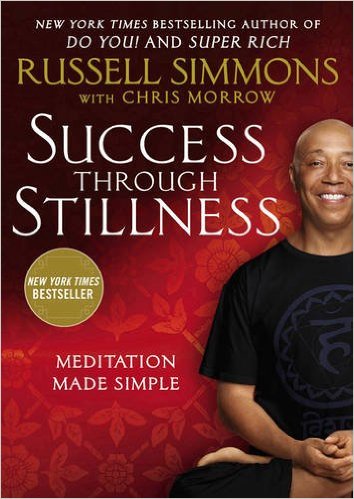
Business magnate shares the benefits and practice of daily meditation in his new book ‘Success Through Stillness.’

By: Michael d’Estries, March 6, 2014

Book cover of "Success Through Stillness"
Book cover of “Success Through Stillness”

For those wondering if the daily practice of meditation really works, Russell Simmons has both a succinct response and a more in-depth answer totaling more than 220 pages.

“Today my new book ‘Success Through Stillness: Meditation Made Simple’ comes out,” he recently wrote in a blog post. “As the title suggests, it is a very straight-forward, easy-to-digest guide on how to get past whatever misconceptions or apprehensions you might have about meditation and learn how to use this simple yet incredibly effective tool.
“As I move around talking about the book, one question I seem to get asked over and over again is, ‘Does meditaion really work?’ And my answer is always an unequivocal ‘YES!'”

The 56-year-old vegan and healthy living guru, who has built a net worth estimated at more than $340 million, says he was skeptical at first that 40 minutes of daily meditation could do anything to stem the anxiety he was feeling.

“The idea of being still and operating from a calm place is one that I never would’ve thought would’ve suited my lifestyle or my goals or the way that I pursue life, ’cause I pursue everything with a vigor,” he told Yahoo! News.

Simmons explains that he practices mantra-based meditation, in which one repeats a word or sound for a period of 20 minutes. Simmons repeats the word “Rum” over and over, a process he says has led him to greater happiness.

“I come out of meditation, and sometimes I just start giggling, I feel so happy, right in the mornings,” he shares.

According to a study released earlier this year, while feelings of happiness may not necessarily occur for all practitioners of meditation, reductions in anxiety, depression and possibly pain are possible.

“Meditation helps young people and adults to get control of the noise,” says Simmons. “The noise is the cause of almost all sickness and sadness. If we can calm the noise, our relationship with the world benefits tremendously.”

ooOOoo

51Ui6mnp6pL._SX352_BO1,204,203,200_

If you would like to buy a copy of Simmons’ book, in Kindle, Hardback or Paperback formats, then do click on the link below.

Success Through Stillness: Meditation Made Simple

Finally, to underline how dogs are such wonderful examples of being still, do enjoy the following photograph that was taken earlier yesterday morning.

P1150822
From left-to-right: Cleo; Oliver; Sweeny; Hazel; Jeannie; Pedy.

I truly envy a dog’s ability to be still so easily!

More and more learning from dogs!

This was sent to me by neighbour Jim Goodbrod.

(Jim also wrote the foreword to my book!)

It comes from a post over on The Brandbuilder Blog: here is a link to the original article.

ooOOoo

Twenty-one things my dog taught me about being a better man.

June 7, 2010 by Olivier Blanchard

sasha003

We had to put our golden retriever to sleep this weekend, our friend of fifteen years, our family’s faithful guardian and companion, and one of the kindest, most loyal and giving souls I have ever met. True to her breed, Sasha was courageous, tender and selfless until the end.

I was trying to figure out how to give her a worthy send-off here on The BrandBuilder blog, and settled on some of the things she taught me over the years. Or rather, the things I didn’t realize she had taught me until this past week, much of which I spent caring for her, as she could no longer take care of herself. She and I had some long chats, in our own way, and the old girl was much wiser than I gave her credit for.

Are there business lessons in this list? Yes. There are. But all are deeply human lessons at the core. If being human can make a business better, if it can fuel its soul (or even simply give it one), then yes, let these be business lessons. But don’t ever forget that what makes a business truly great isn’t technology or design or a fancy logo. Those are expressions of something deeper. Something more visceral and powerful and true. What makes a business great, what makes it special, worthy of a connection, worthy of trust and loyalty, admiration and respect, even love, always starts with a beating heart, not a beeping cash register. (One is the cause, and the other one of many effects. Don’t lose sight of that distinction. Horse before cart: Soul drives love. Love drives business.)

It’s so easy to lose sight of what’s important in our lives. And this isn’t me being overly sentimental because I just lost my dog. I mean, yes, sure, okay… But there’s also something to this: That sentimentality, that emotion, these things that make us connect with other souls is at the heart of EVERYTHING this blog has been about these last few years: Business, design, marketing, social media, communications, corporate responsibility, best practices… No company can ever be great unless it can tap into the very essence of what makes us want to connect with each other, and no executive or business manager or cashier can ever truly be great at their jobs unless they also tap into the very thing that makes genuine human connections possible. If ever there was a secret to successfully building a brand, a lovebrand, the kind that people will fight for and whose mark they will tattoo on their bodies, it is this. The rest is merely execution.

If you only walk away with one bit of wisdom from this post, let it be this: You cannot build a better business unless you first become a better human being. Everything that strips you of your humanity, of your empathy, of your ability to connect with others is bad for business. It’s bad practice. It is doomed to fail in the end.

As my good friend John Warner noted yesterday, “If more people were as loyal and loving as dogs the world would be a better place.” (source) And he’s right. How do you become a better human being then? Well, that’s up to you, but if you had asked Sasha, she might have given you a few pointers of her own. Granted, she was never a Fortune 500 C.M.O. She didn’t design the iPad. She didn’t invent the internet or write a book. She never presented at a conference. All she did was hang out with me and Chico. We went on car rides. She watched me work. She lived the simple life of a dog, uncluttered by Twitter followers and Hubspot rankings and the drive to publish and present case studies. She was a dog, and so her perspective is a little different from what you may be used to. At any rate, here are twenty-one she and I discussed at length last week. I hope they will be as valuable to you as they now are to me.

Twenty-one things my dog taught me about being a better man:

1. Be true to your own nature. There’s no point in faking it. A golden retriever isn’t a chihuahua or a pug or a greyhound, and for good reason. Being comfortable in your own skin is 90% of the trick to rocking out your life. Not everyone is meant to be Rintintin or a seeing-eye dog or an Iditarod racer. It’s okay. Find yourself and embrace your nature. That’s always a great place to start.

2. Be true to the ones you love. Your friends, your family, your tribe, your pack. A life lived for others is a life well-lived. Selfish pursuits aside, ambition often grows hollow when turned inwardly instead of outwardly. It’s one thing to want to be pack leader, but there is just as much value and honor in serving than in leading. When in doubt, see item number one.

3. Never say no to a chance to go on a car ride. When the days grow short, I guarantee you’ll wish you’d have gone on more car rides.

4. Leashes are the enemy. Avoid them at all cost.

5. People are strange. So much potential, yet here they are, doing everything they can to complicate rather than simplify their lives. It’s puzzling.

6. Belly scratches.

7. The end isn’t pretty, but if you can face it with dignity and grace, none of your body’s weaknesses will matter. Your heart, your courage, your spirit is what people will see and remember. This isn’t only applicable in your last days and weeks. It’s applicable every day of your life. Adversity happens. It’s how you deal with it that matters.

8. Forgiveness is easier for dogs than for humans, but humans have opposable thumbs and the ability to speak, so it all balances out in the end.

9. Your bark is your own. No one has one quite like yours. Own it. Love it. Project it.

10. Trust your instincts. They rarely steer you wrong. The feeling in your gut though, that’s probably just something you ate.

11. Just because you’re meant to live on land doesn’t mean you can’t feel at home in water. Play outside the safety zone. Swim in the deep end. Dive in. We’re all designed to do more than the obvious.

12. Play more. The game is irrelevant. Just play. Tip: Exploring is play. Having adventures is play. Finding out what’s behind the next hill is play.

13. Your body growing old doesn’t mean you can’t be a puppy at heart. Actually, the first should have no impact on the latter. If you find that it does, take a step back, regroup, and restart. Always be a puppy at heart.

14. Humans aren’t all bad. But they aren’t all good either. Choose yours wisely.

15. Always keep that 20% wolf in you. If you ever give it up, you’re done. A dog without a little wildness in the blood isn’t a dog. It’s a furry robot. The beauty of a great dog doesn’t lie in its obedience but in its loyalty. Loyalty is a choice. Dogs choose to be dogs and not wolves. That’s what makes them so special.

16. Running full bore across a field in the rain.

17. There are no mysteries. Take cats, for example: Half rat, half badger. Crap in a box. Eat rodents. Where’s the mystery in that? If you look hard enough, you can figure most things out for yourself. The world isn’t as complicated as it sometimes seems.

18. Sometimes, you have to back up your growl with a bite. Go with it. Some people like to test your bark-to-bite ratio. With those “inquisitive” types, a little education goes a long way. As much as it sucks to have to go there, it is sometimes necessary. (It’s what the fangs are for.) Your territory, your space, your safety… They’re worth defending. Make a show of it once, and chances are you’ll never have to teach anyone a lesson again.

19. Being alone is no way to go through life. We’re pack animals. Humans, dogs, same thing. We need others to make all of this worthwhile. As an aside, if we live through others, why not also live for others, even if only a little bit? It isn’t that much of a stretch.

20. When you chase the ball, CHASE the fucking ball. Two reasons: a) It’s a chase. You don’t half-ass a chase. You go all out. It’s what you do. It’s the point. b) You don’t want some other mutt to get to the ball before you and slobber it all up, do you?

21. In the end, you will revisit your adventures, your battles, your chases, your voyages and all the excitement of your life with bemused pride, but it’s the quiet moments with loved ones that your mind will settle on. The comfort of those days when all you did was spend lazy hours with them, your head on their lap, their’s on yours, taking in the afternoon sun and the hundreds of fleeting stories carried like whispers on the breeze, those are the memories that will stay with you to the end and beyond.

Never give up on your thirst for life, on the beauty subtle moments, and on chasing that ball as hard and fast as your legs and heart will carry you.

Godspeed, Sasha.

Sasha (1995 - 2010) R.I.P.
Sasha (1995 – 2010) R.I.P.

ooOOoo

Shortly after completing today’s post, I read the following. It seemed appropriate to include it today.

When you talk, you are only repeating what you know,

But if you listen, you may learn something new.

It is one of the Dalai Lama’s sayings.

You all take care out there.

Forgive the introspection, Part One

This is not some intellectual exercise; far from it!

As often happens, a number of seemingly disconnected articles and reports seem to have provided a common theme. A theme that has previously been aired on Learning from Dogs yet a theme that always needs to be in the front of our faces: integrity.

Here are some of those articles.

Firstly, I presented recently in this place an essay from George Monbiot that proposed (my italics):

The revelation that humanity’s dominant characteristic is, er, humanity will come as no surprise to those who have followed recent developments in behavioural and social sciences. People, these findings suggest, are basically and inherently nice.

Patrice Ayme, however, pointed out in a reply:

Saying that “people are good, while tolerating bad things” is an ineffective morality. The crux, indeed, is the moral nature of institutions, controlled by a few, not whether humans are kind or not.

That struck me as central to the theme: it is the terrible lack of integrity that we see in those who hold positions of power that totally overrides the premise that people are fundamentally good.

The next article read was an essay by Professor Michael Perelman published on Naked Capitalism. Perelman is a professor of economics at California State University. He also writes at Unsettling Economics.  Here is a little from that essay:

The architecture of inequality must be carefully constructed. As the founding fathers of the United States clearly understood, democracy must be kept in check. For this purpose, they invented the Electoral College to prevent the president from being elected by popular vote.

To ensure an effective electoral system, an obsequious media must be skilled in drowning the public with a flood of misinformation to maintain a constant level of fear to make them more likely to side with the CS (corporate system).

If there is ever one example of how that lack of integrity manifests itself in our world it is through inequality. Professor Perelman’s essay is clearly written “tongue-in-cheek” but that doesn’t lessen the impact of his essay. Try his closing paragraphs: (CES = a subset of CS; WEM = The Wondrous Efficiency of Markets)

Regulators are not the only ones to see the benefits of working with the CES. Politicians who resign or are defeated are almost inevitably destined to enjoy the benefits of their dedication to the WEM with the returns from taking a rewarding position with a major corporation, lobbying, or even a lucrative contract to write a book that virtually no one would want to read.

When done correctly, this system works magnificently, although it periodically it seems to fall apart until the detested government apparatus rescues it. In the meantime, huge amounts of wealth and income fall into the hands of the top 1%, the people of greatest importance, while the rest of the public can enjoy watching the spectacular performance of the CES, a reward worthy of their place in society especially because envy of the wealthy brethren will obviously make them work harder to succeed, adding to WEM.

All power to WEM!

Does this have anything to do with dogs?

Yes!

Let me steal a little from Chapter 16: Community from my forthcoming book:

When dogs lived in the wild, their natural pack size was about fifty animals and there were just three dogs that had pack status: the mentor, minder and nanny dogs, as described in Chapter 5. [Pharaoh: the Teaching Dog] As was explained in that chapter, all three dogs of status are born into their respective roles and their duties in their pack are instinctive. There was no such thing as competition for that role as all the other dogs in that natural pack grouping would be equal participants with no ambitions to be anything else.

Anyone who has had the privilege of living with a group of dogs will know beyond doubt that they develop a wonderful community strength. Let’s reflect on the lessons being offered for us in this regard by our dogs.

To reinforce the fact that this is not a new phenomena, at the time I was drafting my book last November, a new report was issued by the Center of Economic Policy Research (CEPR) on the latest (American) Survey of Consumer Finances. It painted a picture very familiar to many: the rich becoming richer while those with less wealth are falling further and further behind.

David Rosnick of the CEPR, and one of the report co-authors, made this important observation:

The decline in the position of typical households is even worse than the Consumer Finances survey indicates. In 1989, many workers had pensions. Far fewer do now. The value of pensions isn’t included in these surveys due to the difficulty of determining what they are worth on a current basis. But they clearly are significant assets that relatively few working age people have now.

Sharmini Peries, of The Real News Network, in an interview with David Rosnick, asked:

PERIES: David, just quickly explain to us what is the Consumer Finance Survey. I know it’s an important survey for economists, but why is it important to ordinary people? Why is it important to us?

ROSNICK: So, every three years, the Federal Reserve interviews a number of households to get an idea of what their finances are like, do they have a lot of wealth, how much are their house’s worth, how much they owe on their mortgages, how much they have in the bank account, how much stocks do wealthy people own. This gives us an idea of their situations, whether they’re going to be prepared for retirement. And we can see things like the effect of the housing and stock bubbles on people’s wealth, whether they’ve been preparing for eventual downfalls, how they’ve reacted to various economic circumstances, how they’re looking to the long term. So it’s a very useful survey in terms of finding out how households are prepared and what the distribution of wealth is like.

PERIES: So your report is an analysis of the report. And what are your key findings?

ROSNICK: So, largely over the last 24 years there’s been a considerable increase in wealth on average, but it’s been very maldistributed. Households in the bottom half of the distribution have actually seen their wealth fall, but the people at the very top have actually done very well. And so that means that a lot of people who are nearing retirement at this point in time are actually not well prepared at all for retirement and are going to be very dependent on Social Security in order to make it through their retirement years.

PERIES: So, David, address the gap. You said there’s a great gap between those that are very wealthy and those that are not. Has this gap widened over this period?

ROSNICK: It absolutely has. As, say, the top 5 percent in wealth, the average wealth for people in the top 5 percent is about 66 percent higher in 2013, the last survey that was completed, compared to 1989. By comparison, for the bottom 20 percent, their wealth has actually fallen 420 percent. They basically had very little to start with, and now they have less than little.

PERIES: So the poorer is getting poorer and the richer is getting extremely richer.

ROSNICK: Very much so.

To my way of thinking, if in the period 1989 through to 2013 “the average wealth for (American) people in the top 5 percent is about 66 percent higher” and “for the bottom 20 percent, their wealth has actually fallen 420 percent” it’s very difficult not to see the hands of greed at work and a consequential devastating increase in inequality.

In other words, the previous few paragraphs seemed to present, and present clearly, the widening gap between the ‘haves’ and the ‘have-nots’, comparatively speaking, and that it was now time for society to understand the trends, to reflect on where this is taking us, if left unchallenged, and to push back as hard as we can both politically and socially.

I wrote that shortly before another item appeared in my email ‘in-box’ in the middle of November (2014), a further report about inequality that, frankly, emotionally speaking, just smacked me in the face. It seemed a critical addition to the picture I was endeavouring to present.

Namely, on the 13th October, 2014, the US edition of The Guardian newspaper published a story entitled: US wealth inequality – top 0.1% worth as much as the bottom 90%. The sub-heading enlarged the headline: Not since the Great Depression has wealth inequality in the US been so acute, new in-depth study finds.

The study referred to was a paper released by the National Bureau of Economic Research, Cambridge, MA, based on research conducted by Emmanuel Saez and Gabriel Zucman. The paper’s bland title belied the reality of the research findings: Wealth Inequality in the United States since 1913.

As the Guardian reported:

Wealth inequality in the US is at near record levels according to a new study by academics. Over the past three decades, the share of household wealth owned by the top 0.1% has increased from 7% to 22%. For the bottom 90% of families, a combination of rising debt, the collapse of the value of their assets during the financial crisis, and stagnant real wages have led to the erosion of wealth. The share of wealth owned by the top 0.1% is almost the same as the bottom 90%.

The picture actually improved in the aftermath of the 1930s Great Depression, with wealth inequality falling through to the late 1970s. It then started to rise again, with the share of total household wealth owned by the top 0.1% rising to 22% in 2012 from 7% in the late 1970s. The top 0.1% includes 160,000 families with total net assets of more than $20m (£13m) in 2012.

In contrast, the share of total US wealth owned by the bottom 90% of families fell from a peak of 36% in the mid-1980s, to 23% in 2012 – just one percentage point above the top 0.1%.

The report was not exclusively about the USA. As the closing paragraphs in The Guardian’s article illustrated:

Among the nine G20 countries with sufficient data, the richest 1% of people (by income) have increased their income share significantly since 1980, according to Oxfam. In Australia, for example, the top 1% earned 4.8% of the country’s income in 1980. That had risen to more than 9% by 2010.

Oxfam says that in the time that Australia has held the G20 presidency (between 2013 and 2014) the total wealth in the G20 increased by $17tn but the richest 1% of people in the G20 captured $6.2tn of this wealth – 36% of the total increase.

I find it incredibly difficult to have any rational response to those figures. I am just aware that there is a flurry of mixed emotions inside me and, perhaps, that’s how I should leave it. Nonetheless, there’s one thing that I can’t keep to myself and that this isn’t the first time that such inequality has arisen; the period leading up the the Great Depression of the 1930s comes immediately to mind.

What on earth is coming down the road this time!

If only we truly could learn from our dogs!

Afraid of the light!

Back to learning from our wonderful dogs.

Last week, on the 9th to be exact, I published a post under the title of What a funny lot we all are! The thrust of that post was the republication of a recent Tom Dispatch essay by Michael Klare: Tipping Points and the Question of Civilizational Survival. Professor Michael T. Klare is professor of peace and world security studies at Hampshire College and the author, most recently, of The Race for What’s Left. Those who read his essay will have found it a gloomy report on the future of mankind on this planet.

Back to my sub-title.

One of the golden pieces of advice for all of us who succumb to a fear of the future is to live in the present. Living in the now, in the present, is what our dogs do so very well, and it is a fabulous example for us humans. Because there is such a volume of news about so many things going wrong in our world, that it is easy to become overly negative, possibly to the point of causing us ill health, for there is strong link between mind and body.

When circumstances actually do change then dogs are incredibly quick to adapt to those changed times. Dogs, however, do not worry about the future.

All of which is my preamble to an essay that was published under The Conversation header on Sunday. It was an essay by Melanie Randle, and the link goes to a page that offers:

Melanie is an Associate Professor of Marketing in the School of Management, Operations and Marketing in the Faculty of Business at the University of Wollongong. Her primary research areas are social and non-profit marketing, particularly in the areas of volunteering and foster care. Other research interests include marketing to children, obesity and gambling.

That profile doesn’t give much of a heads-up to the theme of her essay. That theme, to my way of thinking, is that right now change is underway. A change in the awareness of people that change has to take place.

Which is why I chose part of a saying attributed to Plato for the title to this post. The full saying being:

We can easily forgive a child who is afraid of the dark; the real tragedy of life is when men are afraid of the light.

So to Melanie’s essay.

ooOOoo

Many fear the worst for humanity, so how do we avoid surrendering to an apocalyptic fate?

Melanie Randle, October 11, 2015

A new, four-nation study has found people rate the risks of global threats to humanity surprisingly high. These perceptions are likely to be important, socially and politically, in shaping how humanity responds to the threats.

The study, of more than 2000 people in the US, UK, Canada and Australia, found:

  • 54% of people surveyed rated the risk of our way of life ending within the next 100 years at 50% or greater;
  • almost one in four (24%) rated the risk of humans being wiped out within a century at 50% or greater;
  • almost three in four (73%) believe there is a 30% or greater risk of our way of life ending (30% said that the risk is 70% or more); and
  • almost four in ten (39%) believe there is a 30% or greater danger of humanity being wiped out (10% said the risk is 70% or more).

Perceptions of risks to way of life and humanity by country

Percentage support for propositions that existing way of life and humanity have a 50% or more chance of ending in a century. University of Wollongong, Author provided

The study also asked people about different responses to the threats. These responses were categorised as nihilism (the loss of belief in a social or moral order; decadence rules), fundamentalism (the retreat to certain belief; dogma rules), or activism (the transformation of belief; hope rules). It found:

  • a large majority (78%) agreed “we need to transform our worldview and way of life if we are to create a better future for the world” (activism);
  • about one in two (48%) agreed that “the world’s future looks grim so we have to focus on looking after ourselves and those we love” (nihilism); and
  • more than one in three (36%) said “we are facing a final conflict between good and evil in the world” (fundamentalism).

Findings were similar across countries, age, sex and other demographic groups, although some interesting differences emerged. For example, more Americans (30%) believed the risk of humans being wiped out was high and that humanity faces a final conflict between good and evil (47%). This presumably reflects the strength in the US of Christian fundamentalism and its belief in the “end time”, a coming Apocalypse.

Perceptions of risk to way of life and humanity by generation

Percentage support for propositions that existing way of life and humanity have a 50% or more chance of ending in a century. University of Wollongong, Author provided

A world of threats coming to a head

There is mounting scientific evidence and concern that humanity faces a defining moment in history – a time when it must address growing adversities or suffer grave consequences. Reputable journals are canvassing the possibilities; the new study will be published in a special issue of Futures on “Confronting catastrophic threats to humanity”.

Most focus today is on climate change and its many, potentially catastrophic, impacts. Other threats include depletion and degradation of natural resources and ecosystems; continuing world population growth; disease pandemics; global economic collapse; nuclear and biological war and terrorism; and runaway technological change.

Many of these threats are not new. Scientists and other experts have warned of the dangers for decades. Nevertheless, the evidence is growing stronger, especially about climate change, and never before have actual events, including natural disasters and calamities, and their sustained and graphic media coverage so powerfully reinforced the possible impacts.

Not surprisingly, then, surveys reveal widespread public pessimism about the future of the world, at least in Western countries. This includes a common perception of declining quality of life, or that future generations will be worse off.

However, there appears to have been little research into people’s perceptions of how dire humanity’s predicament is, including the risk of collapse of civilisation or human extinction. These perceptions have a significant bearing on how societies, and humanity as a whole, deal with potentially catastrophic futures.

How does loss of faith in the future affect us?

People’s responses in our study do not necessarily represent considered assessments of the specific risks. Rather, they are likely to be an expression of a more general uncertainty and fear, a loss of faith in a future constructed around notions of material progress, economic growth and scientific and technological fixes to the challenges we face.

This loss of faith is important, yet hardly registers in current debate and discussion. We have yet to understand its full implications.

At best, the high perception of risk and the strong endorsement of an activist response could drive a much greater effort to confront global threats. At worst, with a loss of hope, fear of a catastrophic future erodes people’s faith in society, affecting their roles and responsibilities, and their relationship to social institutions, especially government.

It can deny us a social ideal to believe in – something to convince us to subordinate our own individual interests to a higher social purpose.

There is a deeply mythic dimension to this situation. Humans have always been susceptible to apocalyptic visions, especially in times of rapid change; we need utopian ideals to inspire us.

Our visions of the future are woven into the stories we create to make sense and meaning of our lives, to link us to a broader social or collective narrative. Historians and futurists have emphasised the importance of confidence and optimism to the health of civilisations and, conversely, the dangers of cynicism and disillusion.

Despite increasing political action on specific issues like climate change, globally the scale of our response falls far short of matching the magnitude of the threats. Closing this gap requires a deeper understanding of how people perceive the risks and how they might respond.

This article was co-authored by Richard Eckersley, founding director of Australia21.

ooOOoo

Now there’s nothing in the essay from Randle and Eckersley to say that these are not critically important times for all of humanity. Yet, I detect that among the many people one meets on a day-to-day basis there is a growing understanding that we can’t just lie down and let the future ride on over us. That living in the present and responding to the world around us here and now is the healthiest way to be, and the most effective. No more powerfully expressed than by Thich Nhat Hanh

“Fear keeps us focused on the past or worried about the future. If we can acknowledge our fear, we can realize that right now we are okay. Right now, today, we are still alive, and our bodies are working marvelously. Our eyes can still see the beautiful sky. Our ears can still hear the voices of our loved ones.”

No way to run a world!

Why we have to learn integrity from our dogs, and soon!

After yesterday’s post about the ice dagger poised to fall on the heads of humanity, I was hoping to offer something more cheerful for today. Indeed, I had a guest post ready for publication but then ran into a small technical hitch that stopped it being scheduled for today.

So I turned to this recent article that appeared on The Conversation blogsite that is, unfortunately, another reminder of these mad times. It is republished within the terms of articles that appear on The Conversation.

ooOOoo

How could VW be so dumb? Blame the unethical culture endemic in business.

Author: Edward L Queen, Director of Ethics and Servant Leadership Program, Emory University.

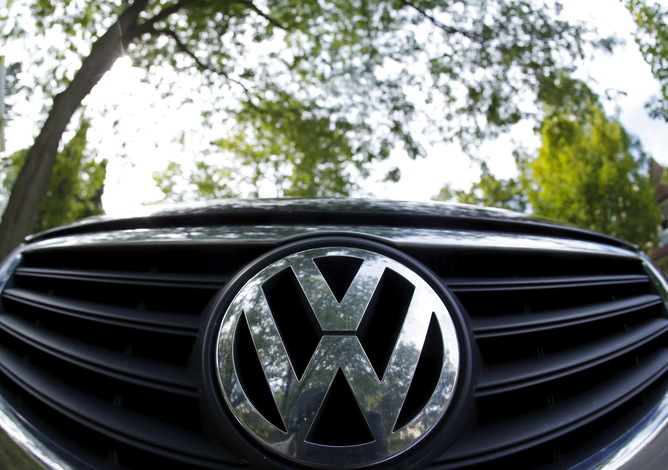
How much can corporate culture explain VW’s deception? Jim Young/Reuters

That far too much of the world’s corporate leadership is driven by moral midgets who have been educated far beyond their capacities for good judgment should be obvious after observing the events of the past week.

The financial industry-led economic collapse of 2008 should have taught us this lesson, but the specificity and clarity of it was brought home by news of price-gouging in the pharmaceutical industry and, even more blatantly, by the announcement that Volkswagen intentionally programmed thousands of its diesel automobiles to cheat emissions testing.

We should be outraged by such behavior and demand appropriate punishments and sanctions as well as restitution and correction. But we should not be shocked. As an ethicist who has looked at the behavior of individuals in business and corporations, I can point to a number of troubling trends that help explain these transgressions.

Impaired moral imaginations

For the past five to six decades, epigones of Milton Friedman have been emphasizing that the only duty of a corporation is return on investment (regularly ignoring his caveat of doing so within the law and social norms).

This lesson, drilled into generations of business school graduates, now drives tsunamis of corporate malfeasance. Data regularly demonstrate that business school students are more likely to cheat on examinations and assignments than their peers, although – and this is of interest for the Volkswagen case – they are closely followed by engineering students.

Are business school teaching the right values? mleiboff/flickr, CC BY-NC-ND

Additionally, some evidence suggests that not only are business students more impaired in their moral judgments in a broader sense than are those in other majors and professional schools, but that business schools themselves may be responsible.

More disturbing, observational and anecdotal evidence suggests that business students are not only impaired in their moral judgments but that significant percentages of them have severely impaired moral imaginations. By this I mean not only do they make bad ethical decisions, but they actually are incapable of identifying an ethical situation when they are presented with one.

Numerous interviews with business ethics faculty I have had over the past decade suggest that when business students are presented with an ethics case, that is a case where they have been told that there is an ethical problem, 20% to 30% of the students cannot find or identify the ethical issue. This has been borne out by my personal experience when teaching business students.

Unmistakable malfeasance

With regards to the Volkswagen scandal, let us be clear about the nature of the company’s activities. This was not a mistake, an error, an ethical lapse or poor judgment. This was an intentionally designed and executed violation of the law in both its letter and its spirit. It also was an ethical violation of the highest level.

Volkswagen intentionally deceived those to whom it owed a duty of honesty. It fraudulently misrepresented its automobiles to be other than what they were. Most significantly, it intentionally chose to do so and went out of its way to commit the wrong.

This last fact may make it far more difficult for VW to recover from the reputational hit than it perhaps has been for GM or Toyota. Even though the latter’s product defects cost people their lives, they did not intentionally produce such parts.

The sheer brazenness and conniving that went into Volkswagen’s actions are probably what shocked people the most. This was a highly technical and sophisticated operation that basically taught the emissions system how to distinguish between road travel, typical idling and idling while undergoing an emissions test.

No spin can mitigate that fact. There is and can be no claims of confusion or misunderstanding, no failures to communicate. This will erode people’s trust in Volkswagen as a company to a degree that the failures of other companies may not have experienced. In the Volkswagen scandal, just like the story about price gouging in pharmaceuticals that broke the same week, consumers are confronted with the stark reality of corporate malfeasance.

In both instances, the wrongdoing was exacerbated by the responses of the companies’ CEOs. The now former CEO of Volkswagen, Martin Winterkorn, basically acknowledged his incompetence and failure of leadership by claiming that he was unaware of the actions taken by his employees. Martin Shkreli, the CEO of Turing Pharmaceuticals, in a series of tweets responding to criticisms of its pricing of the drug Daraprim demonstrated a level of knowledge of moral and social norms that can only be described as clueless.

Redefining success

These events – and others – make clear that there is a need to look at the broader cultural realities that drive unethical decisions in business, particularly the perception that the only way of determining value and worth is money.

This situation is not new – as early as 1906 William James wrote in a letter to H G Wells, “The moral flabbiness born of the exclusive worship of the bitch-goddess SUCCESS. That – with the squalid cash interpretation put on the word success — is our national disease.”

When a person’s worth is determined only by money, only by success as it is and can be monetized, when one has no sense of being without the BMW, the Rolex, the Armani suits, the yacht, etc, the moral flabbiness emerges. Indeed, it engulfs entire organizations and perhaps even entire societies.

ooOOoo

Those last two sentences of that essay need repeating over and over again. This may just be a blog about learning from our beloved dog companions but as my home page spells out, this is not some silly romantic notion:

As man’s companion, protector and helper, history suggests that dogs were critically important in man achieving success as a hunter-gatherer. Dogs ‘teaching’ man to be so successful a hunter enabled evolution, some 20,000 years later, to farming, thence the long journey to modern man. But in the last, say 100 years, that farming spirit has become corrupted to the point where we see the planet’s plant and mineral resources as infinite. Mankind is close to the edge of extinction, literally and spiritually.

Dogs know better, much better! Time again for man to learn from dogs!

So there!

Never stop fighting for a better world.

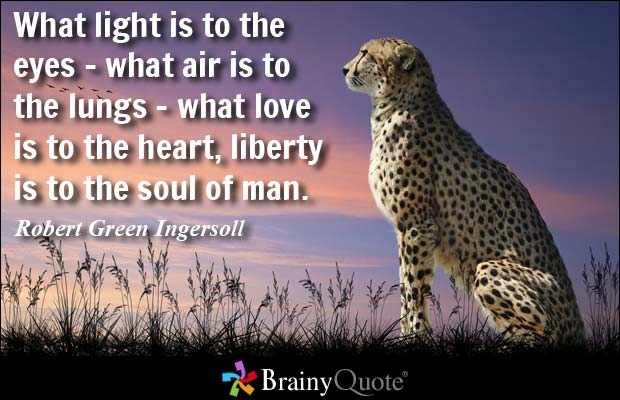
Protecting our right to breathe good, clean air.
robertgreeningersoll118442

Fundamentally, today’s post is not about dogs. But it is about the qualities that we can see in our dogs: trust, honesty, openness, and the core quality that inspires my writings about dogs: integrity.

I’m speaking of the disgusting news that has been headlined in the world’s media in recent days, no better summarised than by this extract from a current (1pm PDT yesterday)) BBC news report:

Volkswagen chief executive Martin Winterkorn has resigned following the revelation that the firm manipulated US diesel car emissions tests.

Mr Winterkorn said he was “shocked” by recent events and that the firm needed a “fresh start”.

He added that he was “not aware of any wrongdoing on my part” but was acting in the interest of the company.

VW has already said that it is setting aside €6.5bn (£4.7bn) to cover the costs of the scandal.

The world’s biggest carmaker admitted last week that it deceived US regulators in exhaust emissions tests by installing a device to give more positive results.

The company said later that it affected 11 million vehicles worldwide.

As ever, the voice of George Monbiot speaks a little clearer than most, and I am referring to his recent essay published both on his blog and in The Guardian newspaper.  I am very pleased to have Monbiot’s permission to republish his essay here on Learning from Dogs.

ooOOoo

Smoke and Mirrors

22nd September 2015

Pollution, as scandals on both sides of the Atlantic show, is a physical manifestation of corruption.
By George Monbiot, published in the Guardian 23 September 2015

In London, the latest figures suggest, it now kills more people than smoking. Worldwide, a new study estimates, it causes more deaths than malaria and HIV-Aids together. I’m talking about the neglected health crisis of this age, that we seldom discuss or even acknowledge. Air pollution.

Heart attacks, strokes, asthma, lung and bladder cancers, low birth weight, low verbal IQ, poor memory and attention among children, faster cognitive decline in older people and – recent studies suggest – a link with the earlier onset of dementia: all these are among the impacts of a problem that, many still believe, we solved decades ago. The smokestacks may have moved to China, but other sources, whose fumes are less visible, have taken their place. Among the worst are diesel engines, sold, even today, as the eco-friendly option, on the grounds that their greenhouse gas emissions tend to be lower than those of petrol engines. You begin to wonder whether any such claims can still be trusted.

Volkswagen’s rigging of its pollution tests is an assault on our lungs, our hearts, our brains. It is a classic example of externalisation: the dumping of costs that businesses should carry onto other people. The air that should have been filtered by its engines is filtered by our lungs instead. We have become the scrubbing devices it failed to install.

Who knows how many people have paid for this crime already, with their health or with their lives? In the USA, 200,000 deaths a year are attributed to air pollution. For how many of those might Volkswagen be responsible? Where else was the fraud perpetrated? Of what proportion of our health budgets has this company robbed us?

The fraud involves the detection of nitrogen oxides (NOx), of which diesel engines are the major source in many places. This month, for the first time in our history, the UK government estimated the impact of NOx emissions on public health, and discovered that they are likely almost to double the number of deaths from air pollution, adding 23,000 to the 29,000 attributed to particulates (tiny particles of soot).

The government released this discovery, alongside its useless proposals for dealing with the problem, on Saturday 12 September, a few minutes before Jeremy Corbyn’s election as Labour leader was announced. How many government press releases are published on a Saturday? How many are published on a Saturday during an event on which everyone is focused? In other words, as a Labour press officer once notoriously advised, this was “a good day to bury bad news”. Not only was the number of deaths buried by this means, but so was the government’s consultation on its feeble plans for reducing this pollution: a consultation to which it evidently wanted as few respondents as possible. Liz Truss, the environment secretary, has some explaining to do.

She has her reasons for keeping us in the dark. In April, the Supreme Court ruled that the UK is in breach of the European air quality directive, and insisted that the government draw up a plan for compliance by the end of this year. Instead, Truss produced a plan to shed responsibility. Local authorities, her consultation suggests, should create clean air zones in at least eight cities, in which diesel engines are restricted or banned. But she has given them neither new money nor new powers. Nor has she offered an explanation of how this non-plan is going to address the issue in the rest of the country, as the ruling demands.

Already, the UK has missed the European deadline by six years. Under Truss’s proposals, some places are likely still to be in breach by 2025: 16 years after the original deadline. I urge you to respond to the consultation she wanted you to miss, which closes on November 6.

The only concrete plan the government has produced so far is to intensify the problem, through a new programme of airport expansion. This means more nitrous oxides, more particulates, more greenhouse gas emissions.

Paradoxically, the Volkswagen scandal may succeed where all else has failed, by obliging the government to take the only action that will make a difference: legislating for a great reduction in the use of diesel engines. By the time this article is published, we might know whether the company’s scam has been perpetrated in Europe as well as North America: new revelations are dripping by the hour. But whether or not this particular deception was deployed here, plenty of others have been.

Last week the Guardian reported that nine out of ten new diesel cars break European limits on nitrous oxides – not by a little but by an average of sevenfold. Every manufacturer whose emissions were tested had cars in breach of the legal limit. They used a number of tricks to hotwire the tests: “stripping components from the car to reduce weight, using special lubricants, over-inflating tyres and using super-smooth test tracks.” In other words, the emissions scandal is not confined to Volkswagen, not confined to a single algorithm and not confined to North America: it looks, in all its clever variants, like a compound global swindle.

There are echoes here of the ploys used by the tobacco industry: grand deceptions smuggled past the public with the help of sophisticated marketing. Volkswagen sites advertising the virtues of “clean diesel” have been dropping offline all day. In 2009, the year in which its scam began, the TDI engine at the centre of the scandal won the Volkswagen Jetta 2.0 the green car of the year award. In 2010, it did the same for the Audi A3.

There’s plenty that’s wrong with corporate regulation in the United States, but at least the fines, when they occur, are big enough to make a corporation pause, and there’s a possibility of guilty executives ending up in prison. Here, where corruption, like pollution, is both omnipresent and invisible, major corporations can commit almost any white-collar crime and get away with it. Schemes of the kind that have scandalised America are, in this country, both commonplace and unremarked. How can such governments be trusted to defend our health?

www.monbiot.com

ooOOoo

I found myself having two emotional reactions to Monbiot’s essay. The first was that for many years, when I was living and working in England, I drove diesel-powered cars on the (now false) belief that they were better for the environment.

My second reaction was to Monbiot listing the likely impacts from air pollution,”Heart attacks, strokes, asthma, lung and bladder cancers, low birth weight, low verbal IQ, poor memory and attention among children, faster cognitive decline in older people and – recent studies suggest – a link with the earlier onset of dementia. . . “, for the reason that at the age of 70, I am already noticing the creeping onset of reduced verbal IQ, cognitive decline, and worry about the onset of dementia. To think that my earlier decisions about what cars to drive might be a factor in this is disturbing.

I am going to close this post by highlighting how fighting for what we want is important, critically so. By republishing an item that was posted on AmericaBlog just over a year ago, that fortuitously is a reward for living in the State of Oregon.

ooOOoo

Climate win: Appeals court in Oregon rules state court must decide if atmosphere is a “public trust”

6/16/14 10:00am by Gaius Publius

Two teenagers from Eugene, Ore. filed suit against Governor Kitzhaber and the State of Oregon for failing to protect the “atmosphere, state waters, and coast lines, as required under the public trust doctrine.”

They lost the first round, where the state court said that climate relief was not a judicial matter. But they won on appeal. The case goes back to the original court, which now has orders to decide the case on its merits and not defer to the executive or legislature.

The gist of the appeals court decision:

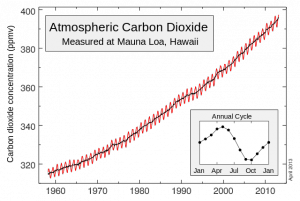
Their lawsuit asked the State to take action in restoring the atmosphere to 350 ppm of CO2 by the end of the century. The Oregon Court of Appeals rejected the defenses raised by the State, finding that the youth could obtain meaningful judicial relief in this case.

That’s quite a nice victory. Here’s the full story, from the Western Environmental Law Center (my emphasis throughout):
Keeling-curve_CO2_ppm_Mauna_Loa_Carbon_Dioxide_Apr2013.svg_-300x201

In a nationally significant decision in the case Chernaik v. Kitzhaber, the Oregon Court of Appeals ruled a trial court must decide whether the atmosphere is a public trust resource that the state of Oregon, as a trustee, has a duty to protect. Two youth plaintiffs were initially told they could not bring the case by the Lane County Circuit Court. The trial court had ruled that climate change should be left only to the legislative and executive branches. Today, the Oregon Court of Appeals overturned that decision.

Two teenagers from Eugene, Kelsey Juliana and Olivia Chernaik, filed the climate change lawsuit against Governor Kitzhaber and the State of Oregon for failing to protect essential natural resources, including the atmosphere, state waters, and coast lines, as required under the public trust doctrine. Their lawsuit asked the State to take action in restoring the atmosphere to 350 ppm of CO2 by the end of the century. The Oregon Court of Appeals rejected the defenses raised by the State, finding that the youth could obtain meaningful judicial relief in this case. …

In reversing the Lane County trial court, the Oregon Court of Appeals remanded the case ordering the trial court to make the judicial declaration it previously refused to make as to whether the State, as trustee, has a fiduciary obligation to protect the youth from the impacts of climate change, and if so, what the State must do to protect the atmosphere and other public trust resources.

The implications of this are broad, and similar cases are pending in other states, as the article describes.

Make no mistake; decisions like this matter. It places the court squarely in the mix as a power player in the climate war, the fight for “intergenerational justice” as James Hansen puts it — or the war against intergenerational betrayal, as I put it.

This is a cornerstone decision from the Oregon Court of Appeals in climate change jurisprudence. The court definitively ruled that the question of whether government has an obligation to protect the atmosphere from degradation leading to climate change is a question for the judiciary, and not for the legislative or executive branches. The Court did not opine as to how that question should be answered, only that it should be answered by the judiciary.

We can win this; it’s not over. If we reach 450 ppm and we’re still not stopping with the CO2, then it’s over and I become a novelist full-time. But we’re not there yet, and please don’t surrender as if we were.

The courts are now a powerful tool, as is divestment. James Hansen has a way to restore the atmosphere to 350 ppm CO2 in time to stop slow feedbacks from kicking in. It’s a doable plan, but we’ll need to use force. Using the courts, as with using divestment campaigns, counts as force. Stay tuned.

(Want to use force at the national level? Find a way to challenge Obama publicly to stop leasing federal land to coal companies. He’s a hypocrite until he stops federal coal from being mined and sold abroad. A simple and obvious challenge for him. You too can be the activist.)

GP

Twitter: @Gaius_Publius
Facebook: Gaius Publi

(Facebook note: To get the most from a Facebook recommendation, be sure to Share what you also Like. Thanks.)

ooOOoo

 Never forget that you, me and every other good-minded person on this planet can make a positive difference. Need inspiration? Gain it from our dogs! Let’s use the liberty we enjoy to make a difference.
With power comes responsibility.

“The price of greatness is responsibility.”

So said Sir Winston Churchill. It applies equally to the price of power.

There was an essay recently written and published by Hariod Brawn over on her blog Contentedness.net that was incredibly thought-provoking and very beautiful besides. Hariod has given me permission to republish it and it follows shortly.

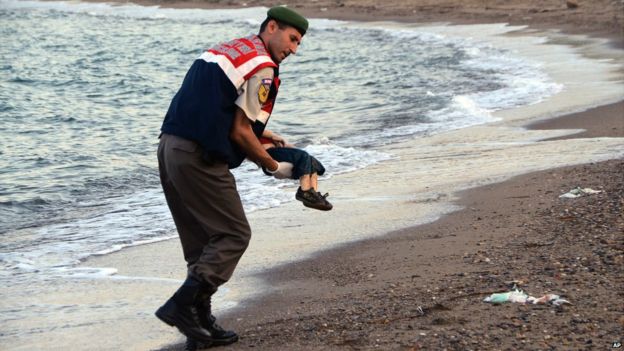
I have no doubt that Hariod’s essay was, in part, inspired by that terrible photograph that has been circulated and commented upon by thousands around the world.

_85332393_full-pic

In the words of the BBC, “The pictured boy is reported to be three-year-old Aylan, who drowned along with his five-year-old brother Galip and their mother, Rihan. Their father, Abdullah Kurdi, survived.”

The emotions created by this and other tragic photographs are disturbing, and I am no exception to having those same emotions. But as friend, Chris Snuggs, mentioned in a telephone call between us yesterday morning, what has been happening in Syria is no less terrible, perhaps even more so when one looks at the blood that is, metaphorically, on the hands of a number of western governments. The old saying of reaping what we sow comes to mind.

None of which takes away the intense beauty of Hariod’s essay: Empathetic apes.

ooOOoo

Empathic apes

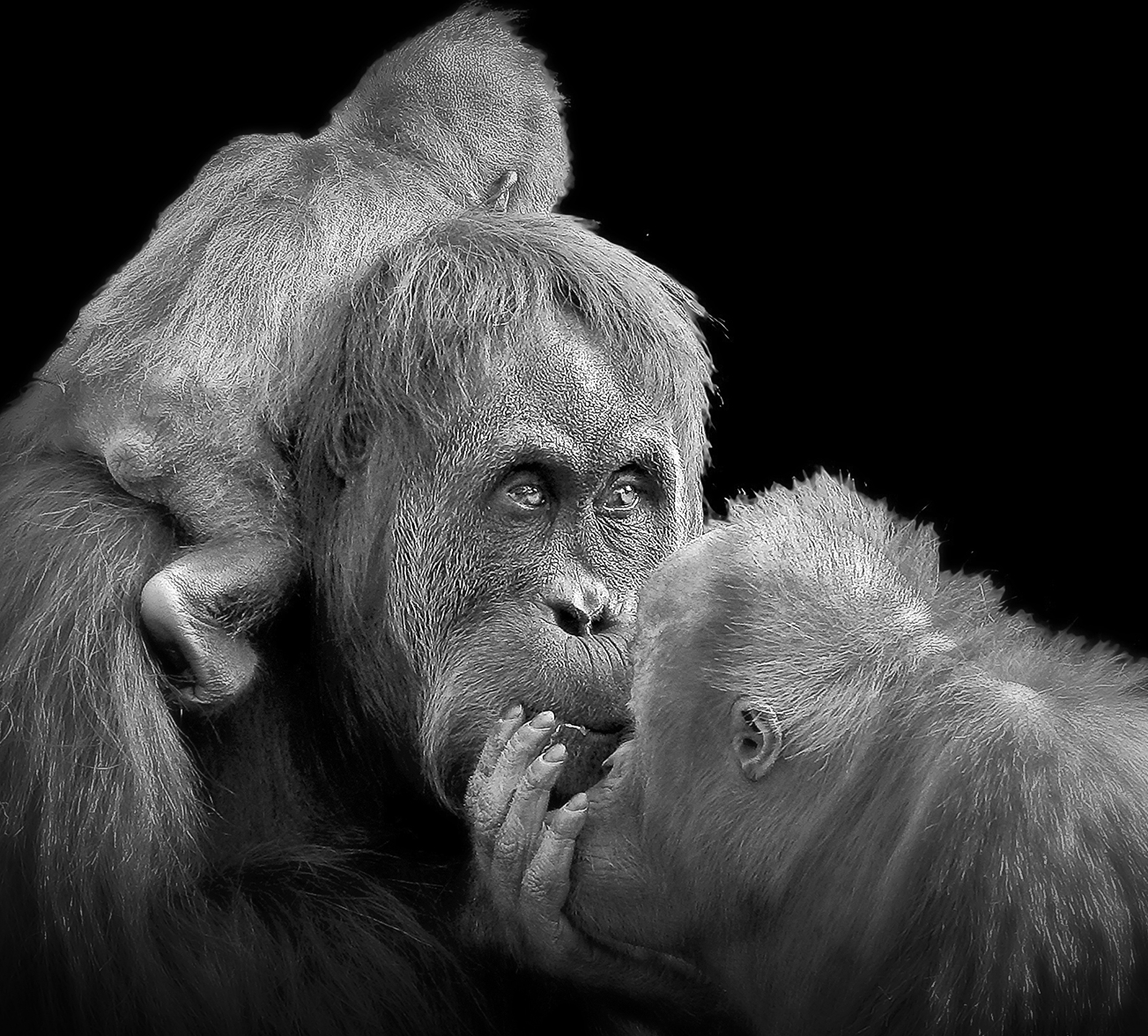
Orangutan mother and kids. By Patrick Bouquet, Chantilly.

The year is 1955, and far from the nearest village, somewhere within the Northwestern jungle region of Thailand, a 48 year-old Englishman and ordainee to the Buddhist monkhood sits quietly in studious attention. A few feet away, a female ape sits, arms carefully wrapped around some precious possession. The monk first chanced upon her the previous day, and due to the curiosity roused in observing her melancholic countenance, has remained respectfully nearby to her. A trust has developed, the ape sensing the monk’s gentle disposition and harmlessness. He really ought to be making his way to the village for alms, yet somehow senses that he should stay. A silent, palpable communication has developed between the two, and slowly, carefully and deliberately, the ape, her sadness still etched upon her face, finally unfolds her arms and offers a first sight of what she has been protecting. The monk slowly approaches to within a pace or two, sensing the invitation, only to catch sight of her lifeless and terribly deformed baby.

Two empathic apes, ancestrally and psychologically speaking, separated by little more in this moment than a distant, lineage-splitting, speciation event. Opposable thumbs, one hers and one his, in turn chase away a monk’s tear and a delicately mottled butterfly as it alights from the baby’s forehead, though cannot do the same for their conjoined feelings. Eyes meet, evincing as they do a deepening rush of sadness. Nothing can be done – is this what she is thinking in her way? In his unknowing, the saffron-robed wanderer radiates compassion, yet knows he has nothing to do with it; an offering from wisdom, not from the self. All that need be known arrives in the fullest of measures. What use now the venerable elder’s sagacity, his knowledge of emptiness, renunciation, equanimity, the void? She inhabits the void, is the void, her bleak knowing piercing its veils. Without turning, the monk slowly retreats, still reverently holding her gaze alongside a shared understanding. A slight suggestion of a bowing head betokens what passes between them.

It is the ability to empathise which in part distinguishes the psychopathic mind from its otherwise healthy state, and the primary orbit of empathy is that of feeling, not the mere gyrations of intellect. This is why many species of sentience can empathise, and we human animals are but one of them. We may erroneously presume that an ability to reflect upon others’ situations facilitates human empathic capacity; yet the state of those others and their situations need not be known as verbally abstracted objects in the mind – little stories packaged in words. We may just as well occupy others’ frames of reference by intuited means; and vitality, morbidity, distress and joy may all be recognised across species in differing ways; one need not indulge any anthropomorphisation, for clear evidence abounds. What is intuited here, or instinctively known, is the nature of the other’s felt emotional condition; and in this way, 60 years ago, the grieving mother ape and mendicant monk shared that intense experience – a wordless world of deep, primate feeling.

Engraving of Orangutan. By Willem Piso (1611-1678). Courtesy Wellcome Trust

Was the mother ape empathic? Well, she came to appreciate the monk’s amity; she felt able to extend trust; she intuited the monk’s concern for her as well as his desire for understanding as to the reasons for, and significance of, her sadness; and finally, she recognised that the monk would feel something of that sadness in revealing its causes to him. This is all to say that she significantly placed herself within the monk’s frame of reference and innately understood that emotions can be matched in shared experience – the personal does not expire at the boundary of the body. Her empathic appreciation was sophisticated, certainly moreso than any psychopathic human ape. Now, one way to cheat the system is to mimic expressions and gestures, which results in a like proprioceptive sense. This means our feelings echo the other’s, so affecting an emotional contagion of sorts, whether volitionally induced or not. Yet neither jungle dweller did so, their empathic link being forged in mind purely intuitively, and silently.

Empathy subsists in knowledge; it is in part to know the mind of the other, and whilst its currency is both cognitive (knowing) and emotional (feeling) in nature, it is the latter that strengthens the connective link to altruistic and prosocial leanings, as well as ameliorating aggressive traits. Primates’ mirror-neuron systems help forge innate empathic leanings, with research suggesting that empathy evolved in part as a survival mechanism. Right now, tens of thousands of refugees are fleeing war-torn regions of Africa and the Middle East so as to seek sanctuary, and survival, in Europe. A few hours ago, a three year-old Syrian boy, Aylan Kurdi, drowned and was washed up on the shores of the Greek island of Kos. Equally tragically, his five year-old brother met a similar fate. Whilst Europe’s politicians exhibit an ongoing empathy gap, innocent children are dying. We live, not literally, though metaphorically, in a jungle, sharing the empathic faculties of the monk and bereaved mother ape. Are we wise enough to nurture the same?

ooOOoo

We need leaders who understand the integrity that is required from them. We need leaders that accept and understand the responsibilities that they have embraced, indivisible from the power that society has lent to them. We need leaders that understand a different aspect of their power, the power of those unanticipated consequences from their actions.

Until we the people understand that electing leaders who do not embrace integrity then Aylan Kurdi and thousands of others in those ‘hot spots’ around the world will continue dying in vain.

Integrity equates to being truthful, to being honest. It doesn’t mean being right all the time, of course not, but integrity does mean accepting responsibility for all our actions, for feeling remorse and apologising when we make mistakes. Integrity means learning, being reliable, being a builder rather than a destroyer. It means being authentic. That authenticity is precisely and exactly what we see in our dogs.

The starting point for what we must learn from our dogs is integrity.

That most precious bond.

Why we turn to dogs when disaster strikes.

With the memory of Hurricane Katrina refreshed in our minds as we acknowledge the recent passing of the tenth anniversary of that ghastly disaster, a link to an item from May, 2013 that was published on Mother Nature Network seems perfect for this place.

ooOOoo

Why we turn to dogs when disaster strikes

From aiding search-and-rescue missions to lending a shoulder to cry on, man’s best friend can often be found at the site of tragedy.

By: Laura Moss, May 21, 2013.

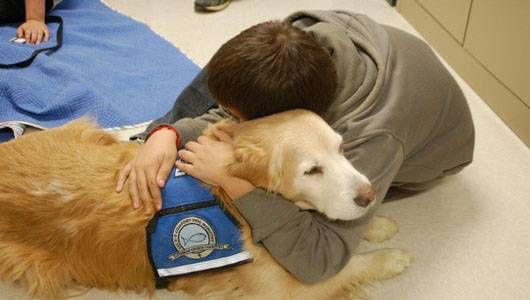
Photo: K-9 Parish Comfort Dogs/Facebook

Disaster relief is flooding into Moore, Okla., but along with volunteers and supplies, there are dogs.

Some, including the 11 canine disaster search teams trained by the Search Dog Foundation or SDF, are scouring tornado debris for survivors. Others are en route to comfort the devastated city’s residents. Lutheran Church Charities, whose therapy dogs have worked with victims of the Boston bombings and the Newtown, Conn., shootings, is sending six dogs from its Chicago headquarters.

When disaster strikes, man’s best friend is often there, working on the frontlines of rescue efforts, as well as behind the scenes, helping people cope with trauma and loss.

Super sniffers

Experts estimate that one search-and-rescue (SAR) dog can accomplish the work of 20 to 30 human searchers. Because of these unparalleled abilities, the number of trained SAR dogs has been rising across the United States.

Dogs make efficient searchers due to their superior vision, hearing and sense of smell. A dog’s nose is about 100 times more sensitive than a human nose, and SAR dogs are trained to locate human scents amid countless other smells. They track our scents by the 30,000 to 40,000 dead skin cells we drop every minute.

“Dogs aren’t miracle workers, but their noses are so precious,” said SDF founder Wilma Melville. “They can find those people who survived a horrific ordeal.”

Air-scent dogs are trained to work in specific types of terrain. Some search in wilderness settings while others search urban environments, which often can involve scouring Moss2collapsed buildings.

Because they must navigate unstable terrain, urban SAR dogs are some of the most highly trained canines. The only national standards for such dogs are the Federal Emergency Management Agency’s certification standards for urban disaster work. Currently, fewer than 100 dog-handler teams in the U.S. have this certification.

In addition to air-scent dogs, there are dogs taught to seek out both skin cells and the smell of human decomposition. During major disasters, such as the 1995 Oklahoma City bombing and the 2001 collapse of the World Trade Center, both air-scent dogs and cadaver dogs were used to search for people.

This caused problems for SAR dogs because they became discouraged when they found only dead bodies. At both Oklahoma City and Ground Zero, handlers hid in rubble so that dogs could occasionally find a living person. The dogs’ desire to elicit a response from a found person may be a result of their training, which involves seeking feedback and rewards, but experts say it could also speak to a deeper connection with humans.

Man’s best friend

When disasters occur, dogs do much more than just aid search-and-rescue missions. They’re often there to provide a source of comfort for us in ways that only an animal can.

In an interview with American Thinker, Debra Tosch, executive director of SDF, explained how her SAR dog Abby was able to console a firefighter at Ground Zero. “When someone was found, work would stop, and I watched as the tears rolled down the firefighters’ faces. I remember one firefighter who hugged Abby and buried his face in her neck after just finding out a fellow firefighter was found,” she said.

Research show that petting dogs can lower anxiety, regulate breathing and decrease blood pressure, and a Japanese study found that simply looking at a dog can increase Moss3oxytocin levels. Oxytocin is a chemical released by the pituitary gland that’s associated with human bonding and affection.

But while the firefighter may have found comfort in Abby’s presence, was the dog able to empathize? Research says it’s very likely.

A 2012 study at Portugal’s University of Porto found that dogs yawn even when they hear only the sound of a person yawning, providing strong evidence that dogs are able to empathize with us.

And a study at the University of London Goldsmiths College found that dogs comforted people — both their owners and strangers — when the person pretended to cry.

“I think there is good reason to suspect dogs would be more sensitive to human emotion than other species,” Custance told Discovery News. “We have domesticated dogs over a long period of time. We have selectively bred them to act as our companions. Thus, dogs that responded sensitively to our emotional cues may have been the individuals that we would be more likely to keep as pets and breed from.”

ooOOoo

Time and time again, the facts support what the vast majority of those who care for and love dogs truly know: the bond between dog and human is the most special that there has ever been between an animal and mankind.


The greatest journey of them all

….. is the journey within.

Today’s video creates a small emotional break between the loss of our Lilly and returning to life as usual.

It was sent across to me by Dan Gomez. It is very compelling indeed.

Ara and Spirit travel across the country in their sidecar motorcycle and learn about some of life’s toughest lessons.