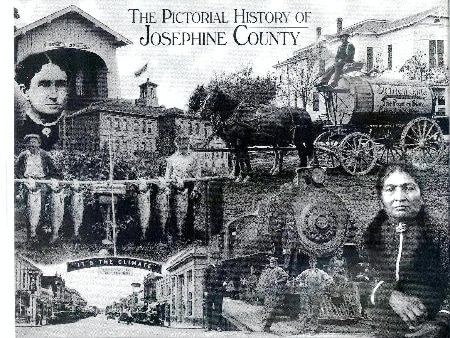
The photographs from Historical Merlin.

oooo
oooo
oooo
oooo
oooo

oooo

Dogs are animals of integrity. We have much to learn from them.
Category: Culture
The photographs from Historical Merlin.
oooo
oooo
oooo
oooo
oooo
oooo
A continuation of yesterday’s Part One.
Again, a fascinationg account.
ooOOoo
Merlin Oregon,
Gateway To The Wild & Scenic Rogue River
The little hamlet of Merlin is located northwest of Grants Pass and is the home base for many outfitters and fishing guides. This and the fact that Merlin is close to the 84-mile segment of the Rogue River set aside by Congress under the National Wild and Scenic Rivers Act of 1968, is why Merlin is known as the “Gateway To The Wild & Scenic Rogue River.”
Located nearby is the famous Hellgate Canyon (on Galice Hwy.) where Rooster Cogburn with John Wayne and many other Westerns were filmed. Above Merlin is Grave Creek, the starting point for the 32 mile “wild” section of the Rogue River.
Great Fishing and rafting on the white waters are but some of the activities available in the Merlin area. One of the best hiking trails around is the famous Rogue River Wild and Scenic Trail which starts at Grave Creek above Merlin and runs downstream 40 miles through the Wild and Scenic section of the Rogue River to Foster Bar.
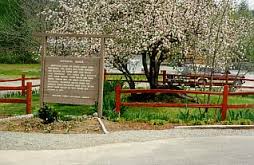
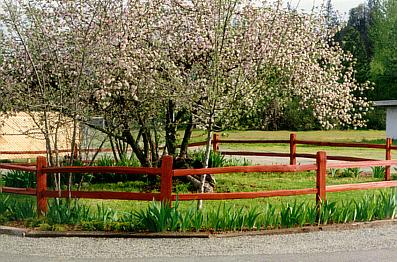
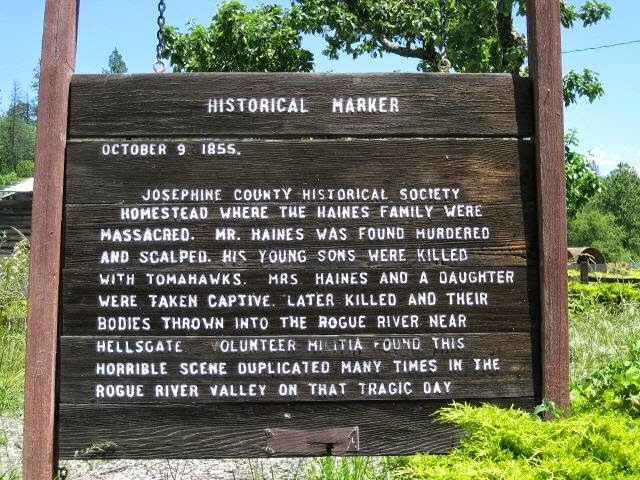
Located in Merlin Oregon, (PH: picture of tree on Sunday) this tree is Oregon’s 2nd oldest apple tree. It was planted by the Haines family in the either 1852 or 1854 (accounts vary), the tree stood throughout the Indian wars. The fighting began in 1855 when white vigilantes attacked a group of peaceful Indians-mostly women, children and elderly men-(at present day Eagle Point). Under the direction of a man who titled himself Major James A. Lupton, a group of ” hair brained enthusiast and professed ruffians” butchered the Indians, according to A.G. Walling’s story “A History Of Southern Oregon,” published in 1884.
The Indians in the area struck back, working their way down the Rogue River and attacking white homesteads. Their thirst for vengeance had not been quenched by the time they reached Merlin, according to the recently published “An Arrow In The Earth”: General Joe Palmer and the Indians of Oregon.”
Although Haines tried to fight off the Indians, they were one family against a band of angry warriors. When volunteers arrived to help, according to contemporary accounts, they found Mr. Haines and his young son murdered at the home site. The Indians took Mrs. Haines and her daughter captive, presumed to have been thrown into Hellgate Canyon on the Rogue River. Taking in account that white accounts of Indian atrocities were nearly always exaggerated.
The tree was reported to have died in August, 1973, a few months after Josephine County Commissioners held a ceremony celebrating its antiquity. But three years later, branches of the old three were still alive, and the State Forestry Department declared it a historic site.
A special thanks to Marilyn Luttrell, who over the years has looked after and help raise money to protect this historical tree and site.” We thank you Marilyn”
Life
Peters’s father, known as Umpqua Joe, was a member of the Grave Creek band of the Umpqua people who was known for warning settlers and miners in the Grants Pass area of an impending attack from local Indians in 1855.
Peters’s father was reportedly allowed to stay on his land after the end of the Rogue River Wars rather than be removed to a reservation. Mary Peters, popularly known as “Indian Mary” – not to be confused with a different Native American woman also living in Oregon during the same period (Kalliah Tumulth, a WatlalaChinook) and also known as “Indian Mary”– lived on the land where her father had operated a ferry to transport miners and supplies in Southern Oregon until his death on November 13, 1886. After his death, Peters applied for a claim for the land under the Dawes Act, also known as the “Indian Homestead Act.” Eight years later, she received a little more than 72 acres.
Her 25-year land deed has often been described as the smallest Indian reservation in the United States. In 1958, the land was converted by Josephine County to Indian Mary Park, named after Peters.
She continued to operate her father’s ferry business after his death. In 1894 she leased the ferry to William Massie and moved with her two surviving daughters to Grants Pass. She moved to Salem in 1920 to be near her daughters. Peters died in 1921 and is buried in Salem‘s City View Cemetery.
ooOOoo
I hope you will view the photographs this Sunday.
A fascinating find!
I was browsing the internet over the last weekend and came across this account of Historical Merlin. I trust it is alright to republish the article. It was originally published by the Merlin North Valley Business Association.
ooOOoo
Merlin is an unincorporated community in Josephine County, Oregon, United States. The area is known for sport fishing and whitewater rafting on the Rogue River Merlin’s ZIP code is 97532.
A new railroad station in this location in 1883 was called “Jump Off Joe” for a local stream. The station was renamed Merlin in October 1886. The name came from a railroad civil engineer who named it for the Merlins he saw in the area.
“McAllister” post office was established about a mile north of Merlin in 1885, then moved to the vicinity of the railroad station and renamed Merlin in 1891.[1]
On the original application for a post office on October 11, 1885, the name “McAllister” is crossed out and Brandt is used. The name was changed back to McAllister on November 23, 1885. The name was later changed to Merlin–after the Pigeon Hawks in the area–on March 21, 1891.
The founder of Merlin was postmaster John C. Lanterman in 1885; the first post office was established on November 23, 1885. The first Merlin townsite was platted by Sarah E. Lanterman and registered in the courthouse on March 31, 1888, as the town of Azalia. Also stated on the platt, “Streets and alleys donated” (lot owners usually had to pay for streets and alleys, as well as, maintain them). In 1905 the Merlin township was founded by A.B. Cousins and the Merlin Land Development Company. This platt enlarged the original townsite of Azalia considerably.
J.W. Mitchell, pioneer merchant, purchased property in the center of the Azalia subdivision in 1888 and constructed a large mercantile store and was the leading merchant until the main part of the town burned in October of 1915, thus ending 27 years as Merlin’s leading merchant.
The Southern Pacific Railroad established the Jump-Off Joe Station in the early 1880’s. The name Merlin came from a railroad employee named David Loring after seeing the area inhabited by pigeon hawks also known as merlins. Mr. Loring’s imagination is also responsible for naming several other towns as well, including the city of Medford. Postmaster Lanterman changed the name of the post office to Merlin on March 21, 1891. Following Lanterman as postmaster were George A. Guild, followed by his daughter, Mattie. Ruth Lendberg was postmaster from 1930 to 1967, serving seven presidents. Mrs. Lendberg’s little green house served as the post office and it still stands with flagpole on Pleasant Valley Road, just down the street from the present day post office.
Merlin had two school districts in 1886: the Jump Off Joe School District had 54 children educated at a cost of $77.00; the Louse Creek School District had 26 pupils with a cost of $63.00. These two districts combined to form Merlin School District #24 in May of 1894. There was a brick school house built in 1912 on the spot where the present day elementary school sits. A bell from an older school was placed in the brick building and when it was demolished in 1963, it was given to the Merlin Community Baptist Church where it hangs today.
Merlin expanded rapidly after the townsite was platted in 1905. There was a grocery store, a three-story hotel, daily train stops, and even a hanging dentist sign guaranteeing no pain. But once again tragedy struck when on the morning of October 24, 1915 a fire destroyed a block of buildings including the post office and the train depot.
There is an interesting letter addressed to Debbie Lard who has done much on preserving the history of Merlin. This letter tells how it was in 1911 traveling to Grants Pass. Long time resident Ted Stiewig tells of a trip to see the Barnum and Bailey Circus in Grants Pass. At that time, Mr. Stiewig was about four years old and lived in Rand, just past Galice. He describes taking Massie’s stagecoach at 6:30 in the morning, stopping at Indian Mary’s ranch at about 12 noon to change horses, then arriving at the train depot in Merlin at about 2:00 in the afternoon. Since the train didn’t arrive until 6:30 p.m., they would stay and have lunch and dinner at Massie’s Hotel in Merlin before departing for Grants Pass.
Mr. Stiewig also describes going to Grants Pass with his friends while living in Merlin. After taking the train to Grants Pass and finding entertainment playing the pool halls, they would make sure they had at least 25 cents for train fare left between them so they could “ride the blinds;” that is, they would jump between the cars unseen. One friend would pay so the train would be sure to stop in Merlin on the way back so they all could jump off.
ooOOoo
Part Two of the history of Merlin will be published tomorrow and the photographs in the article will be published next Sunday.
Close to home.
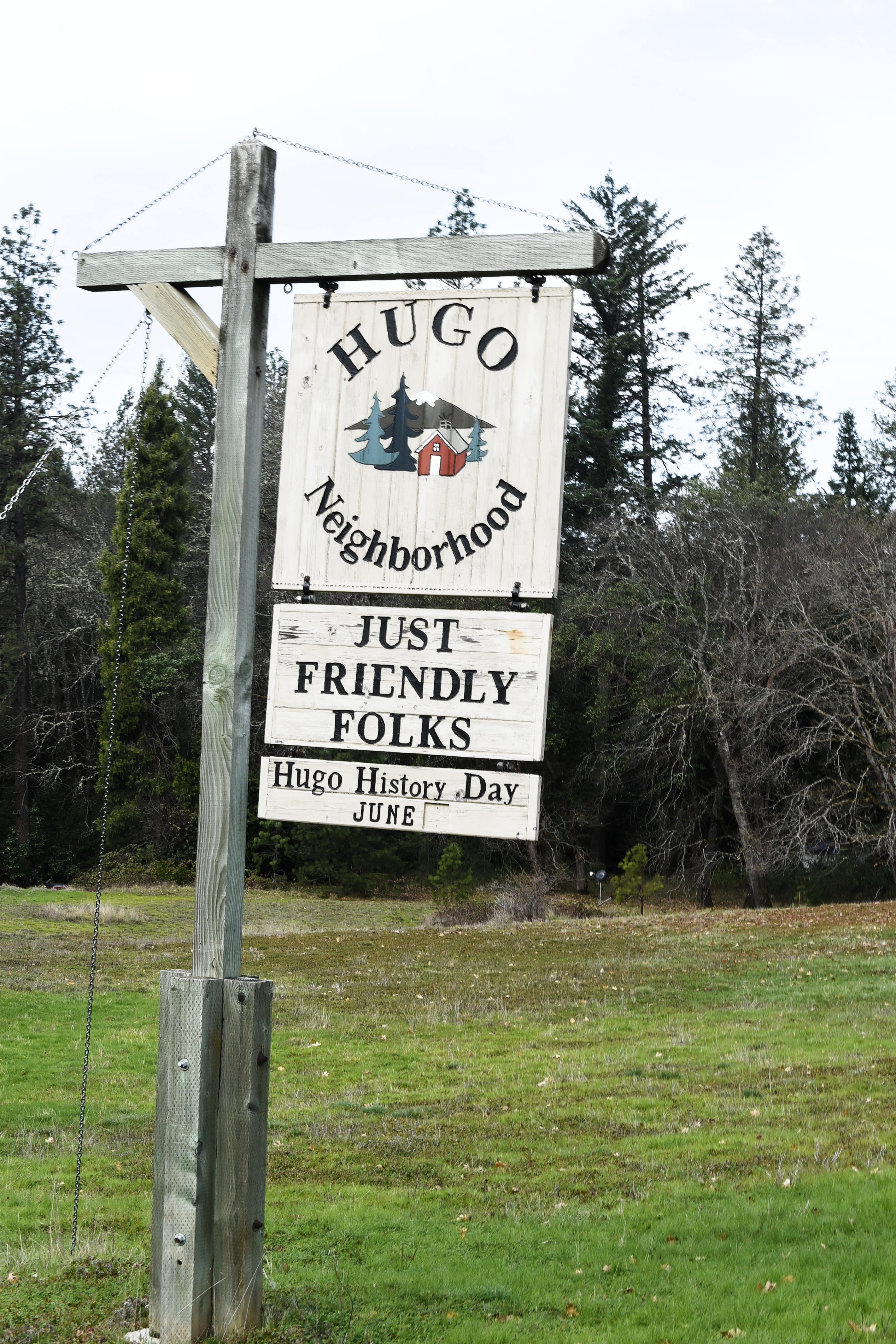
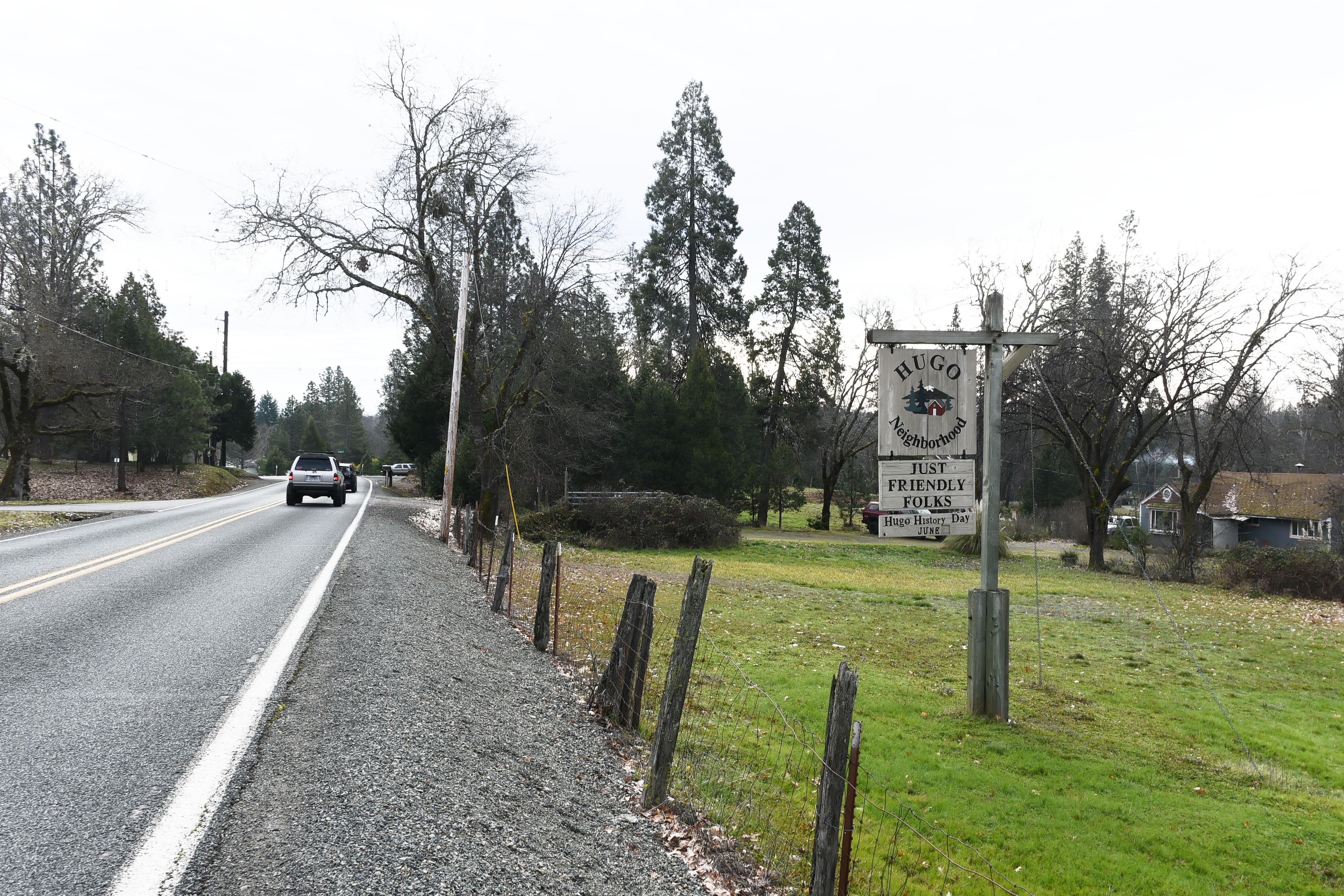
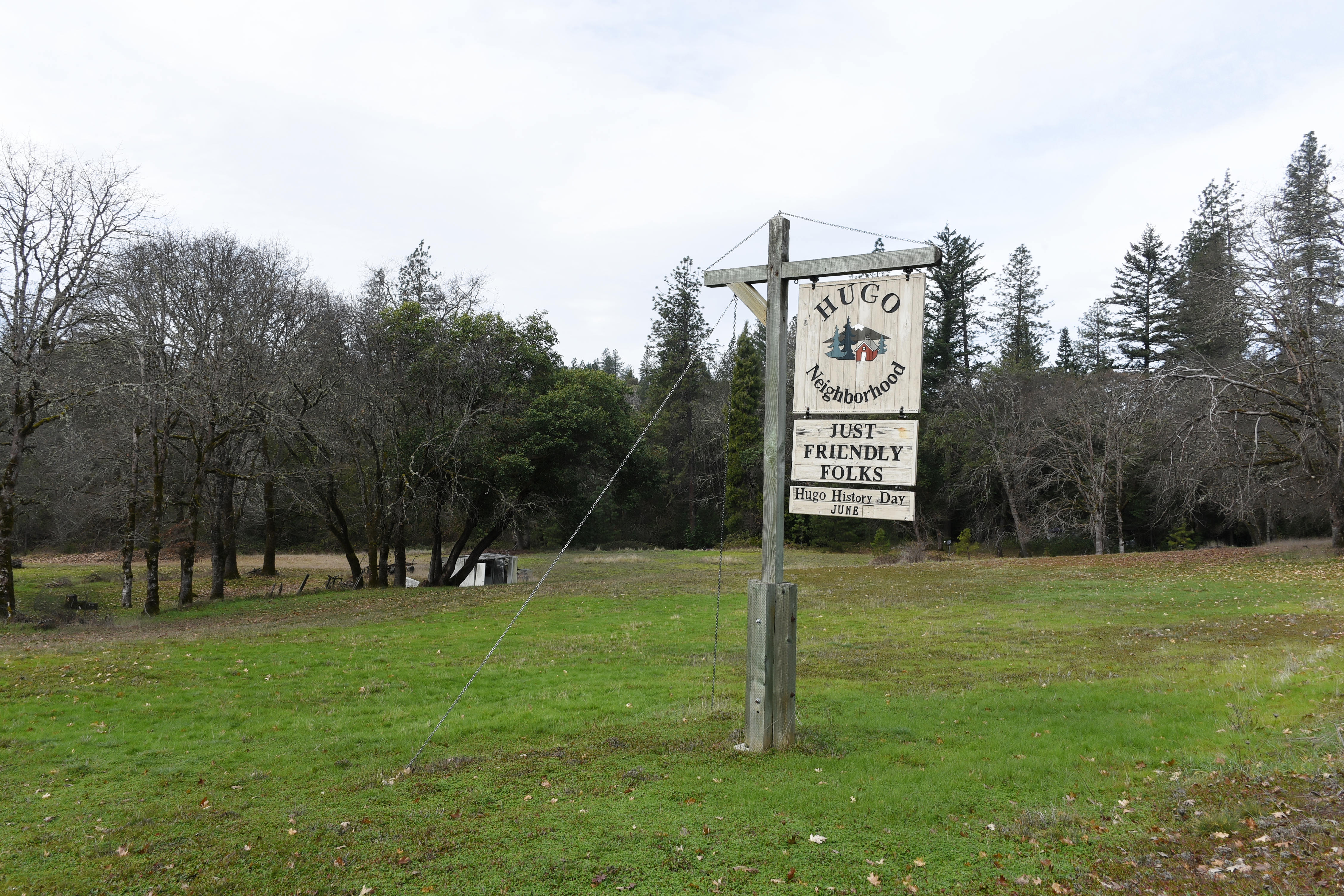
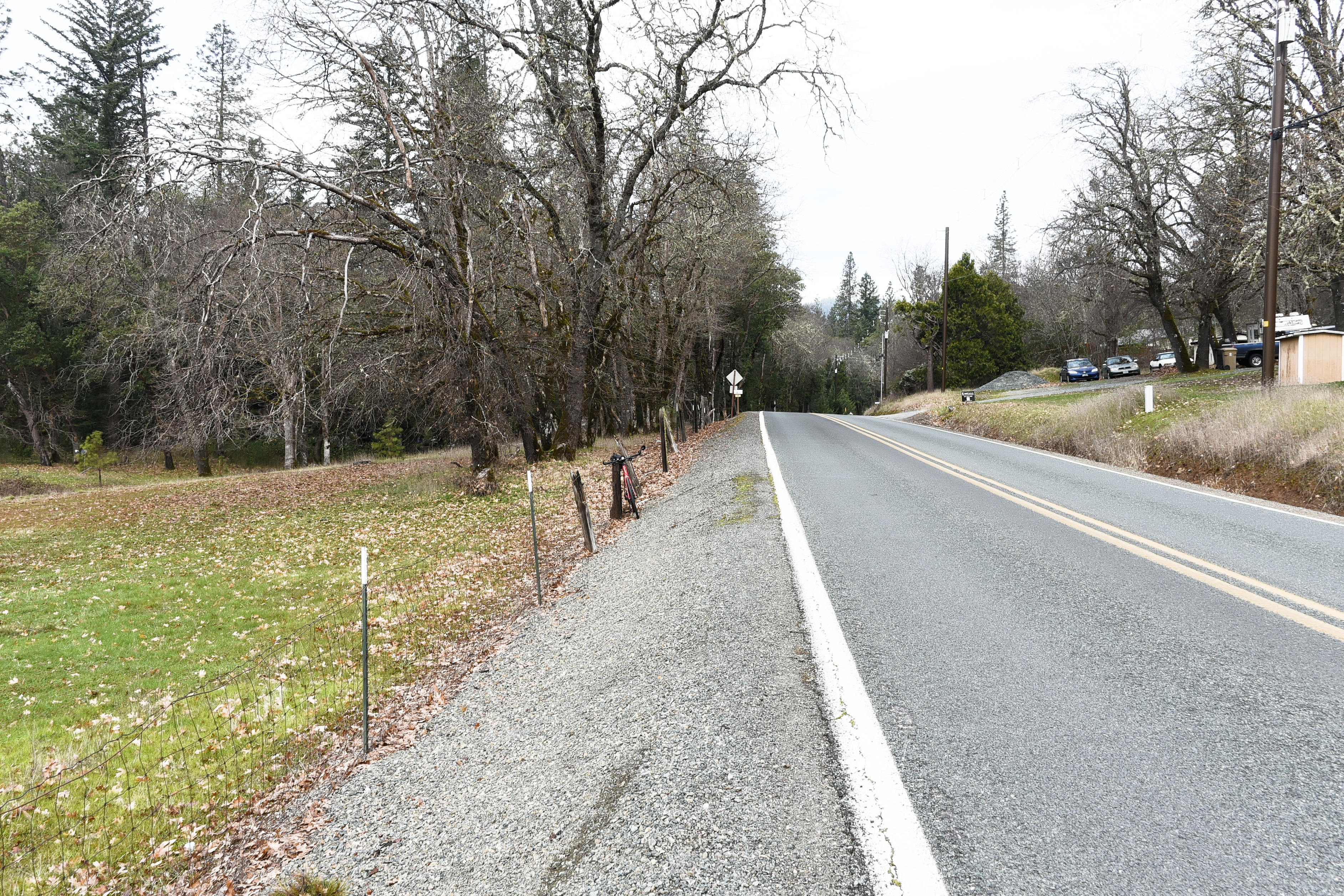
Of my three cycle rides a week, about once a week I turn left on Hugo Road, rather than turning right. After a very few miles I then turn right onto Three Pines Road. Less than a mile further on I pass a sign that speaks of our neighbourhood.
For those that live in this area are the friendliest Jeannie and I have ever known. And we are not the only ones to know this, as you will see from the following photos.
oooo
oooo
oooo
oooo
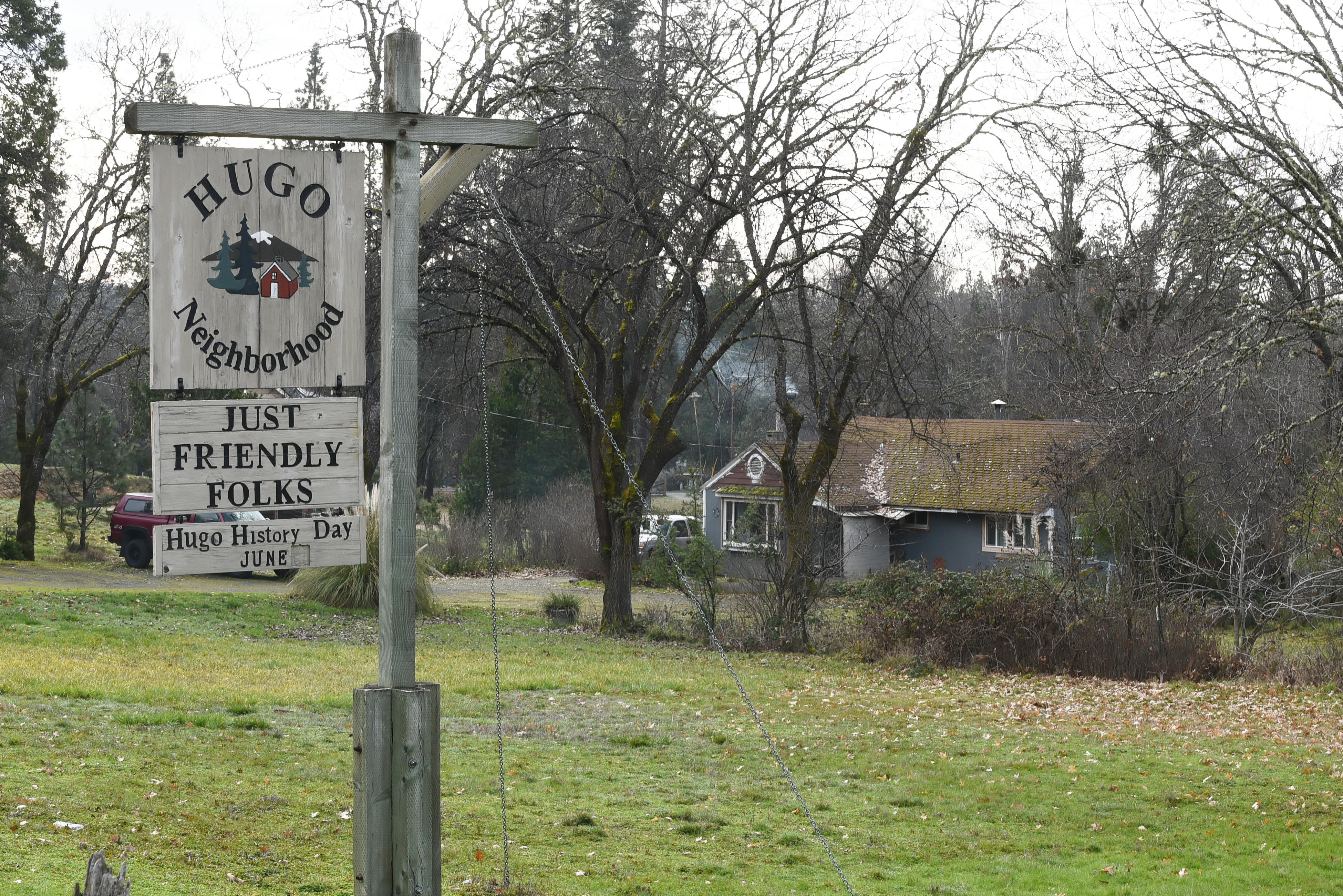
What the precise area is and why the locals are so, so friendly is beyond us. But to say we are grateful is an understatement. As the sign says:
“JUST FRIENDLY FOLKS”
A recent article in The Conversation prompted this post.
The human brain is quite amazing. Actually I would extend that statement to include the brains of all ‘smart’ animals.
As more and more research is undertaken, the discoveries learned about the human brain are incredible. Take this story:
ooOOoo

Joanna Fong-Isariyawongse, University of Pittsburgh
If you have ever lifted a weight, you know the routine: challenge the muscle, give it rest, feed it and repeat. Over time, it grows stronger.
Of course, muscles only grow when the challenge increases over time. Continually lifting the same weight the same way stops working.
It might come as a surprise to learn that the brain responds to training in much the same way as our muscles, even though most of us never think about it that way. Clear thinking, focus, creativity and good judgment are built through challenge, when the brain is asked to stretch beyond routine rather than run on autopilot. That slight mental discomfort is often the sign that the brain is actually being trained, a lot like that good workout burn in your muscles.
Think about walking the same loop through a local park every day. At first, your senses are alert. You notice the hills, the trees, the changing light. But after a few loops, your brain checks out. You start planning dinner, replaying emails or running through your to-do list. The walk still feels good, but your brain is no longer being challenged.
Routine feels comfortable, but comfort and familiarity alone do not build new brain connections.
As a neurologist who studies brain activity, I use electroencephalograms, or EEGs, to record the brain’s electrical patterns.
Research in humans shows that these rhythms are remarkably dynamic. When someone learns a new skill, EEG rhythms often become more organized and coordinated. This reflects the brain’s attempt to strengthen pathways needed for that skill.
For decades, scientists believed that the brain’s ability to grow and reorganize, called neuroplasticity, was largely limited to childhood. Once the brain matured, its wiring was thought to be largely fixed.
But that idea has been overturned. Decades of research show that adult brains can form new connections and reorganize existing networks, under the right conditions, throughout life.
Some of the most influential work in this field comes from enriched environment studies in animals. Rats housed in stimulating environments filled with toys, running wheels and social interaction developed larger, more complex brains than rats kept in standard cages. Their brains adapted because they were regularly exposed to novelty and challenge.
Human studies find similar results. Adults who take on genuinely new challenges, such as learning a language, dancing or practicing a musical instrument, show measurable increases in brain volume and connectivity on MRI scans.
The takeaway is simple: Repetition keeps the brain running, but novelty pushes the brain to adapt, forcing it to pay attention, learn and problem-solve in new ways. Neuroplasticity thrives when the brain is nudged just beyond its comfort zone.

Just like muscles, the brain has limits. It does not get stronger from endless strain. Real growth comes from the right balance of challenge and recovery.
When the brain is pushed for too long without a break – whether that means long work hours, staying locked onto the same task or making nonstop decisions under pressure – performance starts to slip. Focus fades. Mistakes increase. To keep you going, the brain shifts how different regions work together, asking some areas to carry more of the load. But that extra effort can still make the whole network run less smoothly.
Neural fatigue is more than feeling tired. Brain imaging studies show that during prolonged mental work, the networks responsible for attention and decision-making begin to slow down, while regions that promote rest and reward-seeking take over. This shift helps explain why mental exhaustion often comes with stronger cravings for quick rewards, like sugary snacks, comfort foods or mindless scrolling. The result is familiar: slower thinking, more mistakes, irritability and mental fog.
This is where the muscle analogy becomes especially useful. You wouldn’t do squats for six hours straight, because your leg muscles would eventually give out. As they work, they build up byproducts that make each contraction a little less effective until you finally have to stop. Your brain behaves in a similar way.
Likewise, in the brain, when the same cognitive circuits are overused, chemical signals build up, communication slows and learning stalls.
But rest allows those strained circuits to reset and function more smoothly over time. And taking breaks from a taxing activity does not interrupt learning. In fact, breaks are critical for efficient learning.

Among all forms of rest, sleep is the most powerful.
Sleep is the brain’s night shift. While you rest, the brain takes out the trash through a special cleanup system called the glymphatic system that clears away waste and harmful proteins. Sleep also restores glycogen, a critical fuel source for brain cells.
And importantly, sleep is when essential repair work happens. Growth hormone surges during deep sleep, supporting tissue repair. Immune cells regroup and strengthen their activity.
During REM sleep, the stage of sleep linked to dreaming, the brain replays patterns from the day to consolidate memories. This process is critical not only for cognitive skills like learning an instrument but also for physical skills like mastering a move in sports.
On the other hand, chronic sleep deprivation impairs attention, disrupts decision-making and alters the hormones that regulate appetite and metabolism. This is why fatigue drives sugar cravings and late-night snacking.
Sleep is not an optional wellness practice. It is a biological requirement for brain performance.
Exercise strengthens the brain as well as the body.
Physical activity increases levels of brain-derived neurotrophic factor, or BDNF, a protein that acts like fertilizer for neurons. It promotes the growth of new connections, increases blood flow, reduces inflammation and helps the brain remain adaptable across one’s lifespan.
This is why exercise is one of the strongest lifestyle tools for protecting cognitive health.
The most important lesson from this science is simple. Your brain is not passively wearing down with age. It is constantly remodeling itself in response to how you use it. Every new challenge and skill you try, every real break, every good night of sleep sends a signal that growth is still expected.
You do not need expensive brain training programs or radical lifestyle changes. Small, consistent habits matter more. Try something unfamiliar. Vary your routines. Take breaks before exhaustion sets in. Move your body. Treat sleep as nonnegotiable.
So the next time you lace up your shoes for a familiar walk, consider taking a different path. The scenery may change only slightly, but your brain will notice. That small detour is often all it takes to turn routine into training.
The brain stays adaptable throughout life. Cognitive resilience is not fixed at birth or locked in early adulthood. It is something you can shape.
If you want a sharper, more creative, more resilient brain, you do not need to wait for a breakthrough drug or a perfect moment. You can start now, with choices that tell your brain that growth is still the plan.
Joanna Fong-Isariyawongse, Associate Professor of Neurology, University of Pittsburgh
This article is republished from The Conversation under a Creative Commons license. Read the original article.
ooOOoo
That last section of the article is most powerful. I’m speaking of the section that is headed Train, recover, repeat.
The human brain notices when even small changes to our normal routine occur. Also that exercise strengthens the brain plus our brains stay adaptable throughout our lives. Amazing!
Our survival isn’t enough.
I make no apologies for providing little of my own words and just going straight to this video and the accompanying text.
ooOOoo
What if the deepest human drive isn’t happiness, survival, or even love, but the need to matter?
Philosopher and MacArthur Fellow Rebecca Newberger Goldstein joins Michael Shermer to discuss The Mattering Instinct, her argument that the desire to feel significant lies at the core of human behavior. That drive helps explain our greatest achievements, from creativity and moral courage to scientific and artistic excellence. It also helps explain some of our darkest outcomes, including extremism, violence, and ideological fanaticism.
Goldstein examines why people will give up comfort, status, and sometimes even their own lives to feel that they matter. She questions why meaning cannot be captured by happiness metrics or self-help formulas, and why the same psychological force can produce saints, scientists, athletes, cult leaders, and terrorists. The conversation moves through free will, entropy, morality without God, fame, narcissism, and the crucial difference between ways of mattering that create order and those that leave damage behind.
Rebecca Newberger Goldstein is an award-winning philosopher, writer, and public intellectual. She holds a Ph.D. in philosophy of science from Princeton University and has taught at Yale, Columbia, NYU, Dartmouth, and Harvard. A fellow of the American Academy of Arts and Sciences, her work has been supported by the MacArthur “Genius” grant and fellowships from the Guggenheim, Whiting Institute, Radcliffe Institute, and the National Science Foundation. She is the author of ten books of acclaimed fiction and non-fiction. Her latest book is The Mattering Instinct: How Our Deepest Longing Drives Us and Divides Us.
ooOOoo
So, please watch this video!
The science of looking at other worlds is amazing.
With so much going wrong, primarily politically, in the world, I just love turning to news about distant places; and by distant I mean hugely so. That is why I am republishing this item from The Conversation about other stars.
ooOOoo

Daniel Apai, University of Arizona
On Jan. 11, 2026, I watched anxiously at the tightly controlled Vandenberg Space Force Base in California as an awe-inspiring SpaceX Falcon 9 rocket carried NASA’s new exoplanet telescope, Pandora, into orbit.
Exoplanets are worlds that orbit other stars. They are very difficult to observe because – seen from Earth – they appear as extremely faint dots right next to their host stars, which are millions to billions of times brighter and drown out the light reflected by the planets. The Pandora telescope will join and complement NASA’s James Webb Space Telescope in studying these faraway planets and the stars they orbit.
I am an astronomy professor at the University of Arizona who specializes in studies of planets around other stars and astrobiology. I am a co-investigator of Pandora and leading its exoplanet science working group. We built Pandora to shatter a barrier – to understand and remove a source of noise in the data – that limits our ability to study small exoplanets in detail and search for life on them.
Astronomers have a trick to study exoplanet atmospheres. By observing the planets as they orbit in front of their host stars, we can study starlight that filters through their atmospheres.
These planetary transit observations are similar to holding a glass of red wine up to a candle: The light filtering through will show fine details that reveal the quality of the wine. By analyzing starlight filtered through the planets’ atmospheres, astronomers can find evidence for water vapor, hydrogen, clouds and even search for evidence of life. Researchers improved transit observations in 2002, opening an exciting window to new worlds.
When a planet passes in front of its star, astronomers can measure the dip in brightness, and see how the light filtering through the planet’s atmosphere changes.
For a while, it seemed to work perfectly. But, starting from 2007, astronomers noted that starspots – cooler, active regions on the stars – may disturb the transit measurements.
In 2018 and 2019, then-Ph.D. student Benjamin V. Rackham, astrophysicist Mark Giampapa and I published a series of studies showing how darker starspots and brighter, magnetically active stellar regions can seriously mislead exoplanets measurements. We dubbed this problem “the transit light source effect.”
Most stars are spotted, active and change continuously. Ben, Mark and I showed that these changes alter the signals from exoplanets. To make things worse, some stars also have water vapor in their upper layers – often more prominent in starspots than outside of them. That and other gases can confuse astronomers, who may think that they found water vapor in the planet.
In our papers – published three years before the 2021 launch of the James Webb Space Telescope – we predicted that the Webb cannot reach its full potential. We sounded the alarm bell. Astronomers realized that we were trying to judge our wine in light of flickering, unstable candles.
For me, Pandora began with an intriguing email from NASA in 2018. Two prominent scientists from NASA’s Goddard Space Flight Center, Elisa Quintana and Tom Barclay, asked to chat. They had an unusual plan: They wanted to build a space telescope very quickly to help tackle stellar contamination – in time to assist Webb. This was an exciting idea, but also very challenging. Space telescopes are very complex, and not something that you would normally want to put together in a rush.

Pandora breaks with NASA’s conventional model. We proposed and built Pandora faster and at a significantly lower cost than is typical for NASA missions. Our approach meant keeping the mission simple and accepting somewhat higher risks.
Pandora is smaller and cannot collect as much light as its bigger brother Webb. But Pandora will do what Webb cannot: It will be able to patiently observe stars to understand how their complex atmospheres change.
By staring at a star for 24 hours with visible and infrared cameras, it will measure subtle changes in the star’s brightness and colors. When active regions in the star rotate in and out of view, and starspots form, evolve and dissipate, Pandora will record them. While Webb very rarely returns to the same planet in the same instrument configuration and almost never monitors their host stars, Pandora will revisit its target stars 10 times over a year, spending over 200 hours on each of them. https://www.youtube.com/embed/Inxe5Bgarj0?wmode=transparent&start=0 NASA’s Pandora mission will revolutionize the study of exoplanet atmospheres.
With that information, our Pandora team will be able to figure out how the changes in the stars affect the observed planetary transits. Like Webb, Pandora will observe the planetary transit events, too. By combining data from Pandora and Webb, our team will be able to understand what exoplanet atmospheres are made of in more detail than ever before.
After the successful launch, Pandora is now circling Earth about every 90 minutes. Pandora’s systems and functions are now being tested thoroughly by Blue Canyon Technologies, Pandora’s primary builder.
About a week after launch, control of the spacecraft will transition to the University of Arizona’s Multi-Mission Operation Center in Tucson, Arizona. Then the work of our science teams begins in earnest and we will begin capturing starlight filtered through the atmospheres of other worlds – and see them with a new, steady eye.
Daniel Apai, Associate Dean for Research and Professor of Astronomy and Planetary Sciences, University of Arizona
This article is republished from The Conversation under a Creative Commons license. Read the original article.
ooOOoo
It may not be for everyone but for me I find this news from NASA incredible. Well done The Conversation for publishing this article.
A recent article in The Conversation prompted today’s post.
More and more I get concerned at some of the ways we are going.
ooOOoo

Siwei Lyu, University at Buffalo
Over the course of 2025, deepfakes improved dramatically. AI-generated faces, voices and full-body performances that mimic real people increased in quality far beyond what even many experts expected would be the case just a few years ago. They were also increasingly used to deceive people.
For many everyday scenarios — especially low-resolution video calls and media shared on social media platforms — their realism is now high enough to reliably fool nonexpert viewers. In practical terms, synthetic media have become indistinguishable from authentic recordings for ordinary people and, in some cases, even for institutions.
And this surge is not limited to quality. The volume of deepfakes has grown explosively: Cybersecurity firm DeepStrike estimates an increase from roughly 500,000 online deepfakes in 2023 to about 8 million in 2025, with annual growth nearing 900%.
I’m a computer scientist who researches deepfakes and other synthetic media. From my vantage point, I see that the situation is likely to get worse in 2026 as deepfakes become synthetic performers capable of reacting to people in real time.
Several technical shifts underlie this dramatic escalation. First, video realism made a significant leap thanks to video generation models designed specifically to maintain temporal consistency. These models produce videos that have coherent motion, consistent identities of the people portrayed, and content that makes sense from one frame to the next. The models disentangle the information related to representing a person’s identity from the information about motion so that the same motion can be mapped to different identities, or the same identity can have multiple types of motions.
These models produce stable, coherent faces without the flicker, warping or structural distortions around the eyes and jawline that once served as reliable forensic evidence of deepfakes.
Second, voice cloning has crossed what I would call the “indistinguishable threshold.” A few seconds of audio now suffice to generate a convincing clone – complete with natural intonation, rhythm, emphasis, emotion, pauses and breathing noise. This capability is already fueling large-scale fraud. Some major retailers report receiving over 1,000 AI-generated scam calls per day. The perceptual tells that once gave away synthetic voices have largely disappeared.
Third, consumer tools have pushed the technical barrier almost to zero. Upgrades from OpenAI’s Sora 2 and Google’s Veo 3 and a wave of startups mean that anyone can describe an idea, let a large language model such as OpenAI’s ChatGPT or Google’s Gemini draft a script, and generate polished audio-visual media in minutes. AI agents can automate the entire process. The capacity to generate coherent, storyline-driven deepfakes at a large scale has effectively been democratized.
This combination of surging quantity and personas that are nearly indistinguishable from real humans creates serious challenges for detecting deepfakes, especially in a media environment where people’s attention is fragmented and content moves faster than it can be verified. There has already been real-world harm – from misinformation to targeted harassment and financial scams – enabled by deepfakes that spread before people have a chance to realize what’s happening. https://www.youtube.com/embed/syNN38cu3Vw?wmode=transparent&start=0 AI researcher Hany Farid explains how deepfakes work and how good they’re getting.
Looking forward, the trajectory for next year is clear: Deepfakes are moving toward real-time synthesis that can produce videos that closely resemble the nuances of a human’s appearance, making it easier for them to evade detection systems. The frontier is shifting from static visual realism to temporal and behavioral coherence: models that generate live or near-live content rather than pre-rendered clips.
Identity modeling is converging into unified systems that capture not just how a person looks, but how they move, sound and speak across contexts. The result goes beyond “this resembles person X,” to “this behaves like person X over time.” I expect entire video-call participants to be synthesized in real time; interactive AI-driven actors whose faces, voices and mannerisms adapt instantly to a prompt; and scammers deploying responsive avatars rather than fixed videos.
As these capabilities mature, the perceptual gap between synthetic and authentic human media will continue to narrow. The meaningful line of defense will shift away from human judgment. Instead, it will depend on infrastructure-level protections. These include secure provenance such as media signed cryptographically, and AI content tools that use the Coalition for Content Provenance and Authenticity specifications. It will also depend on multimodal forensic tools such as my lab’s Deepfake-o-Meter.
Simply looking harder at pixels will no longer be adequate.
Siwei Lyu, Professor of Computer Science and Engineering; Director, UB Media Forensic Lab, University at Buffalo
This article is republished from The Conversation under a Creative Commons license. Read the original article.
ooOOoo
I hope with all my heart that lines of defense will rise to the challenge.
Meditation.
I saw this article towards the end of December and wanted to share it with you. It was on The Conversation.
ooOOoo
Jeremy David Engels, Penn State
A popular New Year’s resolution is to take up meditation – specifically mindfulness meditation. This is a healthy choice.
Regular mindfulness practice has been linked to many positive health benefits, including reduced stress and anxiety, better sleep and quicker healing after injury and illness. Mindfulness can help us to be present in a distracted world and to feel more at home in our bodies, and in our lives.
There are many different types of meditation. Some mindfulness practices ask meditators simply to sit with whatever thoughts, sensations or emotions arise without immediately reacting to them. Such meditations cultivate focus, while granting more freedom in how we respond to whatever events life throws at us.
Other meditations ask practitioners to deliberately focus on one emotion – for example, gratitude or love – to deepen the experience of that emotion. The purpose behind this type of meditation is to bring more gratitude, or more love, into one’s life. The more people meditate on love, the easier it is to experience this emotion even when not meditating.
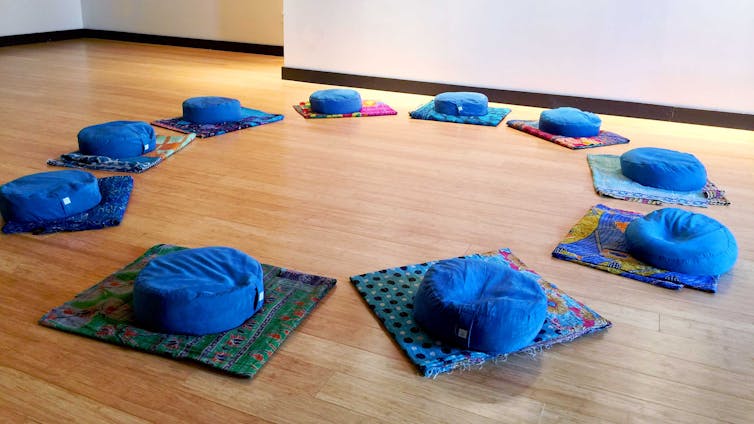
One such meditation is known as “metta,” or loving-kindness. As a scholar of communication and mindfulness, as well as a longtime meditation teacher, I have both studied and practiced metta. Here is what loving-kindness means and how to try it out for yourself:
Loving-kindness, or metta, is the type of love which is practiced by Buddhists around the world. Like many forms of meditation today, there are both secular and religious forms of the practice. One does not need to be a Buddhist to practice loving-kindness. It is for anyone and everyone who wants to live more lovingly.
Loving-kindness, the feeling cultivated in metta meditation, is very different from romantic love. In the ancient Pali language, the word “metta” has two root meanings: The first is “gentle,” in the sense of a gentle spring rain that falls on young plants, nourishing them without discrimination. The second is “friend.”
Metta is limitless and unbounded love; it is gentle presence and universal friendliness. Metta practice is meant to grow people’s ability to be present for themselves and others without fail. https://www.youtube.com/embed/FyKKvCO_vSA?wmode=transparent&start=0 A guided loving-kindness meditation practice.
Metta is not reciprocal or conditional. It does not discriminate between us and them, rich and poor, educated and uneducated, popular or unpopular, worthy and unworthy. To practice metta is to give what I describe in my research as “the rarest and most precious gift” – a gift of love offered without any expectation of it being returned.
In the fifth century, a Sri Lankan monk, Buddhaghosa, composed an influential meditation text called the “Visuddhimagga,” or “The Path of Purification.” In this text, Buddhaghosa provides instructions for how to practice loving-kindness meditation. Contemporary teachers tend to adapt and modify his instructions.
The practice of loving-kindness often involves quietly reciting to oneself several traditional phrases designed to evoke metta, and visualizing the beings who will receive that loving-kindness.
Traditionally, the practice begins by sending loving kindness to ourselves. It is typical during this meditation to say:
May I be filled by loving-kindness
May I be safe from inner and outer dangers
May I be well in body and mind
May I be at ease and happy
After speaking these phrases, and feeling the emotions they evoke, next it’s common to direct loving-kindness toward someone – or something – else: It can be a beloved person, a dear friend, a pet, an animal, a favorite tree. The phrases become:
May you be filled by loving-kindness
May you be safe from inner and outer dangers
May you be well in body and mind
May you be at ease and happy
Next, this loving-kindness is directed to a wider circle of friends and loved ones: “May they …”
The final step is to gradually expand the circle of well wishes: including the people in our community and town, people everywhere, animals and all living beings, and the whole Earth. This last round of recitation begins: “May we …”
In this way, loving-kindness meditation practice opens the heart further and further into life, beginning with the meditator themselves.
Clinical research shows that loving-kindness meditation has a positive effect on mental health, including lessening anxiety and depression, increasing life satisfaction and improving self-acceptance while reducing self-criticism. There is also evidence that loving-kindness meditation increases a sense of connection with other people.
The benefits of loving-kindness meditation are not just for the individual. In my research, I show that there are also tremendous benefits for society as a whole. Indeed, the practice of democracy requires us to work together with friends, strangers and even purported “opponents.” This is difficult to do if our hearts are full of hatred and resentment.
Each time meditators open their hearts in metta meditation, they prepare themselves to live more loving lives: for their own selves, and for all living beings.
Jeremy David Engels, Liberal Arts Endowed Professor of Communication, Penn State
This article is republished from The Conversation under a Creative Commons license. Read the original article.
ooOOoo
This is terrific and Jeremy Engels offers a very professional view of loving-kindness meditation. Personally I was not aware of the meaning of Metta.
The challenge is to adjust one’s daily routine to enable meditation to become part of our daily experience.
The pictures from my grandson.
My grandson, Morten, is quite an accomplished photographer. He uses my son’s previous camera, a Lumix DMC G7. Morten is fourteen. These photographs are locations in Southern England.

oooo

oooo

oooo

oooo

Beautiful, Stunning, and Perfect.
It’s stating the obvious but all the above photographs are Copyright 2025 Morten Ronning, and All Rights Are Reserved.

