This is an article that was recently published in The Dodo. Indeed, published on the 11th November this year.
I started this post late in the day yesterday and was anxious to have it published before the evening took over. But the story is so clear and obvious, and lovely, that further rambling words of introduction would have got in the way.
So, here we are:
ooOOoo
Rescue Dog Waits All Day For The Man Who Saved Her To Get Home From Work
Earlier this year, Sara Fitzwater’s husband arrived to one of the coal mines he visits for work when he spotted a dog nearby, seemingly alone. He wasn’t sure where she’d come from, but after seeing her there again on later visits, it became obvious.
“Someone had dropped her off in the area,” Fitzwater told The Dodo. “Each time [my husband] would go to this mine, she would run to him and smile at him.”
The dog had won his heart. And he had landed a special place in hers.
Sara Fitzwater
During one fateful visit to that mine, Fitzwater’s husband decided to bring the sweet dog home with him to keep her safe and loved as his family’s new pet. They named her Sadie Kate.
The abandoned pup’s eager wait to be rescued was over. But each and every day since, there’s still something Sadie Kate so clearly looks forward to.
And that’s her hero coming home.
“I work from home, so I started noticing her just looking down the street waiting on him and thought it was cute,” Fitzwater said. “I never dreamed she would continue doing it every day.”
For Sadie Kate, it’s the sweetest homecoming.
Sara Fitzwater
The dog, once without a friend in the world, had found her soulmate.
And he’s always worth the wait.
For Fitzwater, it’s no surprise that Sadie Kate is so smitten with her husband. It seems he’s the type of man whose kind, caring spirit is easy to love.
“I tell her all the time she hit the jackpot when she smiled at him,” Fitzwater said.
ooOOoo
Sadie Kate is quite clearly now the name of the dog.
Many years ago I found myself teaching at a unit attached to Exeter University. I was teaching sales and marketing. I can’t remember clearly the events that produced the meeting between myself and Chris Snuggs. But I recall the outcome.
Chris was the director of studies at a French institute named ISUGA. Let me borrow from their website:
The ISUGA Europe-Asia International BBA Bachelor’s degree is a 4-year cursus following the Baccalaureate or High School diploma which combines studying International Business and Marketing with learning an Asian or English language and comprising university exchange stays, as well as internships in French and International businesses.
ISUGA is located in Quimper, Western Brittany relatively close to Devon in England where I was living.
In Chris’ words: “It must have been through them that we got your name when we needed someone to teach Selling. Now I come to think of it, we HAD someone lined up for a whole week and he CANCELLED on us, so you were a last-minute replacement.”
For quite a few years I went across to Quimper to teach for Chris. Mainly by ferry from Plymouth to Roscoff. During the summer months I flew to Quimper from Exeter in our group-owned TB20. (The picture below is of the type only not our aircraft.)
A Socata TB20
Since that day we have remained in reasonable contact and I regard Chris as good friend.
A few days ago Chris published on his blog his account of his journey from Quimper back to Ramsgate, in east Kent. It was hilarious and I asked Chris if I could publish it and share with everyone.
Chris not only said yes but insisted on improving it (his words) including expanding it to what it is below.
So with no further ado, here is Chris’ post.
ooOOoo
“A DOG’s Travel Across Northern France” … as in “Doddering Old Git”
I am officially a “Senior Citizen”, but as such prefer much of what passes for “The Good Old Days” when in this case we were called “Old Age Pensioners” – MUCH less PC and wokeish AND more realistic – but DOGS sounds much better (and more informative) than OAPs.
A simple trip to Blighty to see the family for XMAS was not supposed to be a saga, but it turned out to be one:
Like ET, I was going home, though not quite as far – though it probably seemed like it.
I got about 3 hours sleep max Thursday night/Friday morning; worried about oversleeping even though I had THREE electronic wake-up devices.
I got up at 04:30 to finalize packing and clean up (the worst of) my mess.
I went out into the street in front of the house at 06:45 to await the taxi – it was raining, albeit not heavily.
The taxi was 5 minutes late, but the driver didn’t apologize. (I was going to say “woman driver” but I believe that sex differentiation is no longer allowed.)
I tried to help her (it, hir, shim?) load my heavy suitcase into *** boot (car, not footwear).
I lightly touched the car with the suitcase, and shim said: “Mind my car. Your suitcase is too heavy.”
I nearly said: “So are you, but it’s probably your hormones or your genes.” but decided that discretion was the better part of insult as I had to catch a train ……
We got to the station in plenty of time, only for me then to find that the train was due to go from platform C (usually it’s A as you leave the entrance hall).
I then found out/remembered that there is no lift at Quimper station. “This is not going to be my day,” I thought …
As I approached the stairs down to the access tunnel, I pretended to be a Doddery Old Git on the point of collapse (no comments please) and a nice young man helped me with the case.
Same procedure with a different bloke to go up to platform C. I actually tried this ploy with a pretty young lady first, but just got a funny look ….
Eventually got onto the right and very crowded train; my “This is not a gasmask” COVID mask was very reassuring as the virus probably had a field day circulating the carriage. I got some more funny looks, but two people asked me where I got my mask, so I am thinking of merchandising them ….
Got to Paris 4 hours later – showed a railway worker my little map where the taxi was supposed to be waiting and he pointed me in direction X saying authoritatively: “Tout au bout.” (“right at the end” for those who left school at 14).
Seemed a bit iffy to me (I vaguely remembered having gone somewhere else the last time I had done the journey, but couldn’t remember where. Does that happen to you?), but I followed his directions in the obviously-idiotic belief that someone actually working in a place would know where the taxis would be.
Of course, there was no sign of a taxi area at the distant far end of the HUGE Montparnasse Station, so I asked another railway bod.
He pointed in the 180° opposite direction and said the same as the first bloke, so I had to retrace my steps and go another 200 metres past where I had started to one of the no doubt multiple exits.
On exiting I was surrounded by some Middle Eastern gentlemen (without beards as it happens) who were desperate to take me somewhere.
I told them I had booked a taxi already and they suddenly lost interest.
I then got a call on my posh new mobile, but as with every other mobile I have ever owned it is specifically designed so that one cannot easily answer a call – first there is always some other leftover screen on the thing which by the time you have got rid of the caller has given up, and second you have to SWIPE to even see a green button which you then press – and I don’t know who invented SWIPE but hanging, drawing and quartering while being burned alive in oil over a period of several hours would be a suitable punishment.
This was all way beyond me, so I missed the call.
Miraculously, however, I did manage to call back and it was in fact the driver.
After two or three calls in each direction we managed to find each other physically as well as phonally.
We set off for La Gare du Nord, which should be about 15 minutes max by road – but it took us an hour and a quarter … (This was Paris in the rain on Friday at lunchtime – but I did learn a few new French swearwords from the driver.)
Fortunately, I had plenty of time between trains and so managed to find and embark on my TER to Calais.
This was an uneventful trip except that I was opposite a young mother with an inquisitive baby who kept looking at me for some reason (the baby not the woman ….).
I thought about playing with the baby but did not want to be arrested as a paedophile. I did plonk a small orange on the little table between us thinking she might want to play with it, but I got a funny look from her mother …. so I picked it up (the orange not the baby) and ate it – getting more funny looks. Strange … I get that all the time.
There was no internet on the TER so I tried to doze, but dozing with a high-decibel baby one metre away is a skill I have not yet mastered – and probably never will.
Arrived at Calais station – it took me 10 minutes to find the lift to get to the exit: in fact, one has to be led across an actual line by a railway bod and then take the lift – which is conveniently hidden.
But once outside the station I got a taxi right away. (a rare plus chalked up!)
I was dropped at the port outside a little hut marked “Billets”: (“tickets” for the linguistically-challenged).
This was weird – there used to be a big hall full of foot-passengers, but it has all changed – there IS a big hall, but it is empty except for two WWI biplanes. “Perhaps they want to fly us over?” I thought.
Went into the ticket office to be told my boat was cancelled (no explanation was offered) and they would try to get me on the next one. I never did understand why they would “try” (there was hardly anyone else there), but it seems they had to wait for a phone call.
It was a very small cabin with four guichets (Would you like a French dictionary for XMAS?) and three simple chairs, on one of which – after having my particulars scrutinized and recorded – I was invited to sit – which I did, not sure whether I should show appreciation or keep going with the scowl I could feel coming on ….
Behind the desks several women came and went, but spent all the time yacking to one another about women stuff while three of us sat waiting in stony and in my case exhausted silence (it was by now 18:00 and I had been up since 04:30).
I eventually got up and complained, something that comes naturally to we DOGs. I said I did not understand the delay, that I needed a coffee and a toilet break and that the least they could do was install some beds in their little office for those in my situation (and condition) who had to wait overnight for information about getting on a replacement ferry. I wanted to add a question about whether they had been trained in defibrillation techniques but by then I had run out of breath.
The charming young lady smiled and said they had none of the things that might alleviate my stress (adding the word “understandable” would have been nice) but that the large hall opposite might be open, and if not she could lend me a key to open it and visit the convenience.
I couldn’t be bothered to try to work out why she wouldn’t know whether the hall was open or not and that what I in fact most urgently needed was to get out of there without bothering with keys I would probably lose – which I did.
I then walked round the large hall three or four times admiring the WWI planes and wondering if the Red Baron had ever flown one of them. The fresh air and exercise refill renewed the oxygen supply to my needy brain.
I eventually staggered back to the ticket office and sat down on my hard chair again. I was tempted to feign a loud snore but as with the taxi driver in the morning decided that discretion was the better part of valour.
15 minutes later a phone call came and I was summoned to the guichet and given my ticket.
“Great,” I thought. “At last we can get outta here.”
THEN she told us that in 40 minutes someone would come to drive us to the boat.
I was fast losing the will to live, but thought that another dose of circling the large airplane hall might at least get my blood circulating again.
I told her where I was going and mentioned the hall and the planes (to be fair she did laugh at my joke about flying us across the Channel), but said: “That’s all run by the Chamber of Commerce.”, and of course we all know that no lunacy is beyond THAT organization.
I left after asking if she could send out a rescue party if I did not return – and she smiled again …. Smiles don’t of course achieve anything practical but they do at least make the pain somewhat more tolerable.
I came back half an hour later, having admired the bi-planes once again and wondered whether the Red Baron had ever flown one – and indeed a lady driver soon turned up as predicted to drive us to the boat. (another rare plus chalked up …)
We had to go up and down two or three kerbs (nowhere lowered for people to wheel their too-heavy suitcases) and eventually got onto a bus.
Had to go up a multiply-zig-zagged ramp to get onto the boat, but I played the Doddery Old Git card again and someone helped with my case.
I had thought of taking my walking-stick on this trip to boost the DOG sympathy factor, but could not work out how I could possibly carry it simultaneously with the rest of my baggage.
I asked a boatbod what time we would be leaving and then arrive in Dover, and he said: “in 15 minutes and 20:00.”
40 minutes later we still had not left, so I asked someone else when we would be leaving and was told in 15 minutes.
We actually left 30 minutes later, and I decided that being 100% wrong in a prediction was not actually that bad as these things go.
When I asked yet anOTHER bod WHY there had been another delay he just rolled his eyes and said something about the Captain which I didn’t understand – but was past caring.
Ten minutes later I asked the next available bod what time we would arrive in Dover and was told 20:30.
This was well past the time my taxi was booked, so I called to inform Eddy, the driver.
Fortunately, making calls on mobiles is easier than receiving them, so that was OK.
On the boat I got talking to a foot-passenger couple (there were only EIGHT of us!).
They were very nice and I gave them Taxi Supremo Andy’s phone number as they had nothing arranged for their arrival.
When we eventually got to Dover, there were no more checks (even though they made us walk through a maze of corridors in the totally empty border-control and customs instead of going straight to the taxi area – maybe they were filming us secretly?) and we eventually got to where I hoped to find Eddy the Driver.
However, there are huge roadworks going on just inside the port entrance and all the usual roads are blocked off and/or rerouted.
There was of course no sign of Eddy – OR any other taxis. Foot-passengers have a VERY low priority …..
Grateful for my phone once again, I called Eddy who said he was ALREADY in the port but had got lost.
Taxi-drivers getting lost is a bit ominous, so I assumed he was even more of a DOG than I am. Still, we DOGs have to stick together …..
I told him where we were ….. right near the entrance just past the roundabout at the bottom of the long clifftop descent to the port. For those who know Dover this is the easiest part of the entire port (or indeed of England) to find …..
Three exchanged calls later we finally met up physically as well as phonally – which was a reminder of Paris. In future, I am going to fix a GPS signal to myself and ensure my driver has military-standard tracking equipment. Perhaps Nathalie can arrange that?
Eddy was as suspected a bit of a DOG – but like me, very nice …… I asked if he could drop off my friends from the boat at Dover railway station before taking me back to Ramsgate – which he agreed to.
So we took them up the road to the station, where they unloaded their stuff from the boot.
I did think about getting out to check they didn’t take any of my four bits of luggage, but I was very tired and also thought that it would be impossible to confuse the grotty things I was carrying with any of their posh stuff from Parisian shops.
They gave Eddy an extra £8 for the slight detour. As I said they were very nice even if the lady’s perception and memory banks were highly undeveloped.
We then at last set off for Ramsgate, but Eddy took a wrong turn and we ended up driving towards Canterbury.
It takes a really advanced stage of dodderation to get lost driving from Dover to Ramsgate, so I will be contacting “The Guinness Book of Records”.
I decided against advising Eddy to do a U-turn in the pitch dark, and after driving four miles up a dual-carriageway we eventually got to a roundabout, retraced our wheels and made our way back to Dover.
Miraculously finding the right road to Ramsgate this time, we set off on the last lap. By now I was desperately hanging onto life by a thread.
Halfway to Ramsgate Eddy got a call from Taxiboss Andy’s Missus:
“The couple you dropped off at the station just rang; it seems they have got a package belonging to one of the other passengers.” ME! NO, I AM NOT MAKING THIS UP …..
…. but they were nice people and apparently said they would wait at the station for us to come and pick up the bag.
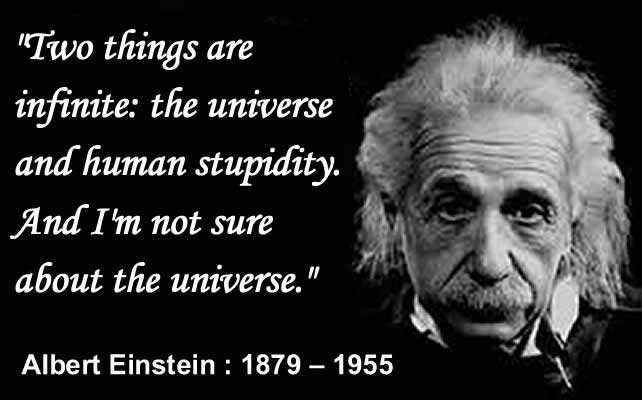
I tried to keep calm, but remembered Einstein’s famous dictum. (SEE BELOW)
We stopped to check the boot and I saw that they had taken a plastic bag with two boxes of wine for my sister Maggie and another box of boiled eggs and fishsticks essential for my diet.
I asked Eddy if he minded going back, and he agreed to instantly – even without being promised any more dosh.
So back we went to the station, picked up the bag and Eddy collected another £10 for his trouble. (As I said, nice people …)
Off we set for Ramsgate again, and this time Eddy did not get lost ……. even we DOGs are capable of learning.
I eventually got to Ramsgate around 22:30 instead of the anticipated 20:00 – and of course I felt obliged to give Eddy a generous tip even though he DID get lost twice. Actually, everything in France had gone pretty smoothly as planned; it only went really tits-up when we got to Dover. I of course blame BREXIT ……
How was your day?
PS No insult to real dogs is intended in this account. As we know, if the world were ruled by dogs we would all be safer and happier, though the absence of tv and the internet would be a shame.
PPS I was fortunate to be able to employ Paul for brief periods over a number of years to teach business students about Selling and Marketing during my time as Director of Studies of a business school in France. His teaching was highly impressive, but even more so his habit of flying his own plane to Quimper. In this and many other ways he was and remains unique. As I told the students: “Listen to Paul’s advice and one day you will fly your own plane.”
Let me say straight away that I am an atheist. Apart from a couple of wobbles in my life I have always been that way. I believe in the sanctity of the truth and wherever possible that is a scientific truth. Jean also is a non-theist. That’s why we enjoy so much the meetings of our local Rogue Valley Humanists & Freethinkers Group. Indeed, this video was first shown to the group at the last meeting.
Now Kurt Andersen, born August 1954, is an American writer and he has his own website as well as a long entry on Wikipedia.
In January, 2020 Kurt made a video. It is nearly 50 minutes long and it is on YouTube. I have inserted this video below. If you can, please watch it and, even better, give me your thoughts.
How can we make sense of America’s current “post-factual,” “post-truth,” “fake news” moment? By looking to America’s past. All the way back. To the wishful dreams and make-believe fears of the country’s first settlers, the madness of the Salem witch trials, the fantasies of Hollywood, the anything-goes 1960s, the gatekeeper-free internet, the profusion of reality TV….all the way up to and most especially including President Donald Trump. In this fascinating and lively talk, Kurt Andersen brings to life the deep research behind and profound implications of his groundbreaking, critically acclaimed and bestselling latest work. Connecting the dots in a fresh way to define America’s character—from the religious fanatics and New Age charlatans to talk-radio rabble-rousers and online conspiracy theorists—Andersen explains our national susceptibility to fantasy and how our journey has brought us to where we are today. Kurt Andersen is a brilliant analyst and synthesizer of historical and cultural trends, a bestselling novelist, a groundbreaking media entrepreneur, and the host of public radio’s Studio 360. Join CFI and find out how we are protecting critical thought and science by visiting: https://centerforinquiry.org This talk took place at the CSICon 2019 in Las Vegas on October 19, 2019
I saw this article on the Sustainability at Harvard website and read it with great interest. I wanted to republish it to share with you but couldn’t readily see a copyright statement or an instruction regarding republishing. I sent an email but I was warned that Harvard receive a great deal of emails every day and a reply might not be forthcoming.
So ….. I have made a decision. I will publish the article and hope that it doesn’t infringe the copyright.
Before I do that let me ‘promote’ Sustainability at Harvard by giving you a little from their About page.
Together we are building a healthier, more sustainable community
Harvard University is devoted to excellence in teaching, learning, and research, and to developing leaders in many disciplines making differences globally.While Harvard’s primary role is to address global challenges, such as climate change and sustainability, through research and teaching, the University is also focused on translating research into action. Harvard is using its campus as a living laboratory for piloting and implementing solutions that create a sustainable and resilient community focused on health and well-being.
ooOOoo
Do food miles really matter?
March 7, 2017
By Molly Leavens, College ’19
Leavens breaks down the nuances of how a food’s carbon footprint relates to the distance it travels from farm to plate.
The local food movement, with the goal of consuming food produced and grown within a close geographic region, has been gaining traction in recent years as a way of eating fresh and high quality foods and reducing one’s environmental impact. However, public messaging about the outcomes of this movement is divided and often leads to confusion and misunderstanding among consumers. This short article will attempt to break down some of the nuances of how a food’s carbon footprint relates to the distance it travels from farm to plate (commonly referred to as food miles).
So, do food miles really matter? Yes and no.
For most American diets, the carbon cost of transportation is slight compared to the carbon costs of production (running the tractors, producing chemical fertilizer, pumping irrigation…). Therefore, the most effective way for most Americans to reduce their diet’s carbon footprint is not by buying local, but rather eliminating or reducing their consumption of animal products.
the most effective way for most Americans to reduce their diet’s carbon footprint is not by buying local, but rather eliminating or reducing their consumption of animal products.
For a vegan, food miles contribute to a larger portion of their food’s carbon footprint. Plant-based foods have lower production footprints, so transportation is comparatively more significant. Even then, the raw mileage is hardly informative for determining carbon footprints; the mode of transportation is the key variable. Cargo ships are the most efficient, followed by trains, then trucks, and lastly planes.
That means a product flown from Chicago to Boston has a significantly larger carbon footprint than one shipped 11,000 miles from Asia to California.
Although exact numbers vary across analyses, flying one ton of food is close to 70 times more carbon intensive than transporting that same weight via a large cargo ship (source). That means a product flown from Chicago to Boston has a significantly larger carbon footprint than one shipped 11,000 miles from Asia to California. As a result, locality is more important for perishable foods that are often flown like raw fish, asparagus, and berries. Foods such as tomatoes, bananas, pears, and apples can all be harvested before ripening, stored for long periods of time, then inoculated with ethylene gas (the naturally occurring hormone produced by fruits that causes the change in color and flavor profile associated with ripening) before entering a supermarket. In many cases, these shelf-stable foods have lower carbon footprints when produced internationally because the carbon cost of production far outweighs that of transportation.
Another frequently cited comparison is that of lamb produced in England verses lamb produced in New Zealand. For a consumer in England, the New Zealand lamb actually has a lower carbon footprint. Our intuition failed us. Why? Sheep in New Zealand are generally raised on farms run by hydroelectric power. This energy saving is so immense that it overrides the fuel output of the 11,000 mile cruise to England (source).
A similar story unfolds here in Boston. Local meat production could be more carbon intensive because the animals must be housed in heated facilities during the cold winter months. For a large portion of the year, we are better off shipping in a tomato from South America than growing one in a local greenhouse.
A similar story unfolds here in Boston. Local meat production could be more carbon intensive because the animals must be housed in heated facilities during the cold winter months.
Looking exclusively at carbon footprints neglects other important issues like water usage and farmer rights but it is none the less a valuable metric. Purchasing local food has many social benefits like boosting local economies, and increasing community cohesion and self-reliance. In conclusion, local food is not ‘good’ or ‘bad’, but it is important for consumers to define the values they hope to support through their purchasing decisions and think critically about when and where local foods support those values.
Looking exclusively at carbon footprints neglects other important issues like water usage and farmer rights but it is none the less a valuable metric.
ooOOoo
Like so many things in life they are frequently more complicated than they first appear.
I have long followed George Monbiot and was delighted to find that he is the narrator on this video. The film was shot by Sustainable Human, an organisation that I hadn’t come across before. But I will look more closely at their website.
It is not long but it is full of surprises.
When wolves were reintroduced to Yellowstone National Park in the United States after being absent nearly 70 years, the most remarkable “trophic cascade” occurred. What is a trophic cascade and how exactly do wolves change rivers? George Monbiot explains.
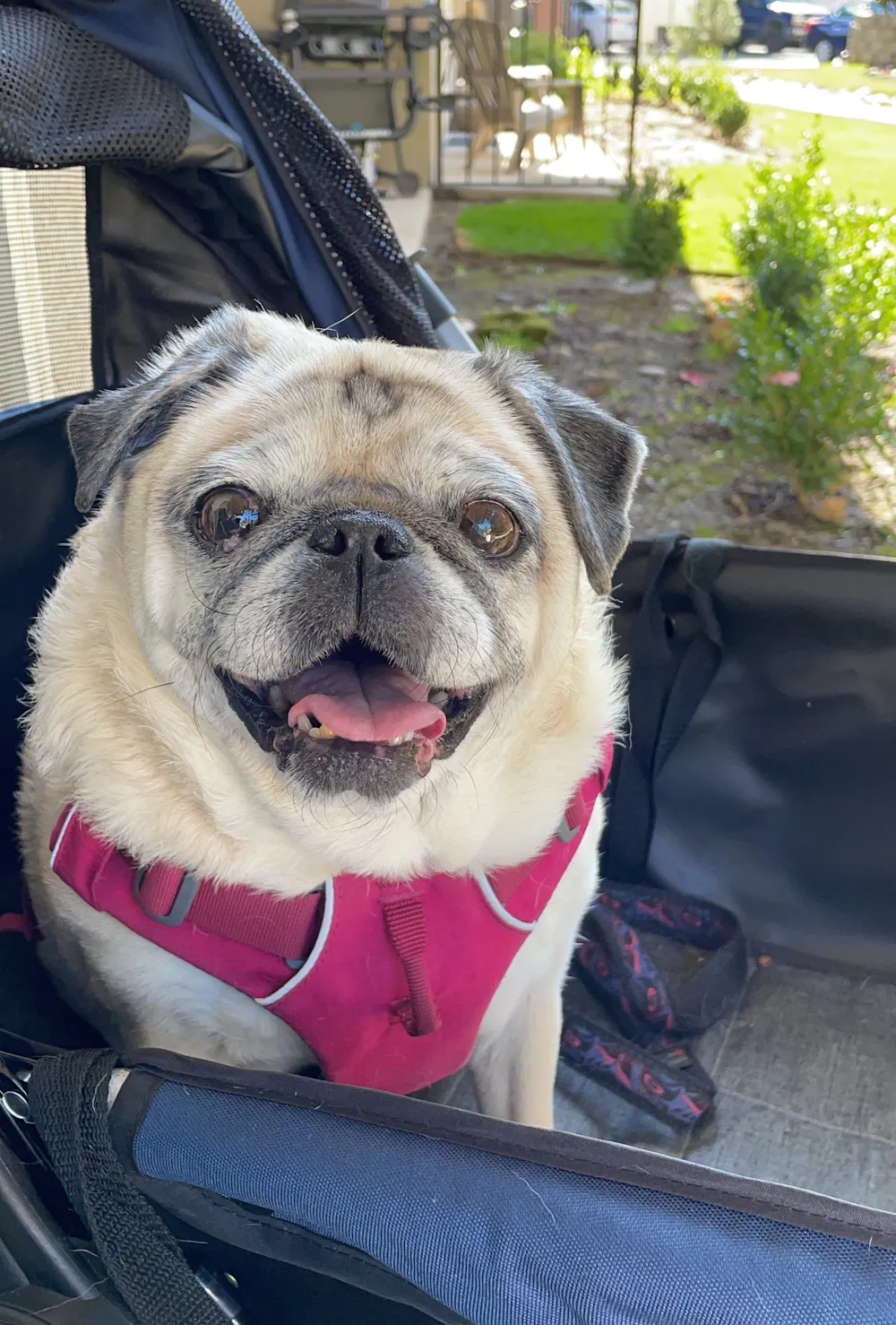
A pup out for a stroll, without paws touching the ground. Shelly Volsche, CC BY-ND
Have you noticed more cats riding in strollers lately? Or bumper stickers that read, “I love my granddogs”? You’re not imagining it. More people are investing serious time, money and attention in their pets.
It looks an awful lot like parenting, but of pets, not people.
Can this kind of caregiving toward animals really be considered parenting? Or is something else going on here?
I’m an anthropologist who studies human-animal interactions, a field known as anthrozoology. I want to better understand the behavior of pet parenting by people from the perspective of evolutionary science. After all, cultural norms and evolutionary biology both suggest people should focus on raising their own children, not animals of a completely different species.
More child-free people, more pet parents
The current moment is unique in human history. Many societies, including the U.S., are experiencing major changes in how people live, work and socialize. Fertility rates are low, and people have more flexibility in how they choose to live their lives. These factors can lead people to further their education and value defining oneself as an individual over family obligations. With basics taken care of, people can focus on higher order psychological needs like feelings of achievement and a sense of purpose.
The scene is set for people to actively choose to focus on pets instead of children.
In earlier research, I interviewed 28 self-identified child-free pet owners to better understand how they relate to their animals. These individuals pointedly shared that they had actively chosen cats and dogs instead of children. In many cases, their use of parent-child relational terms – calling themselves a pet’s “mom” for instance – was simply shorthand.
They emphasized fulfilling the species-specific needs of their dogs and cats. For example, they might fulfill the animal’s need to forage by feeding meals using a food puzzle, while most children are fed at the table. These pet owners acknowledged differences in the nutrition, socialization and learning needs of animals versus children. They were not unthinkingly replacing human children with “fur babies” by treating them like small, furry humans.
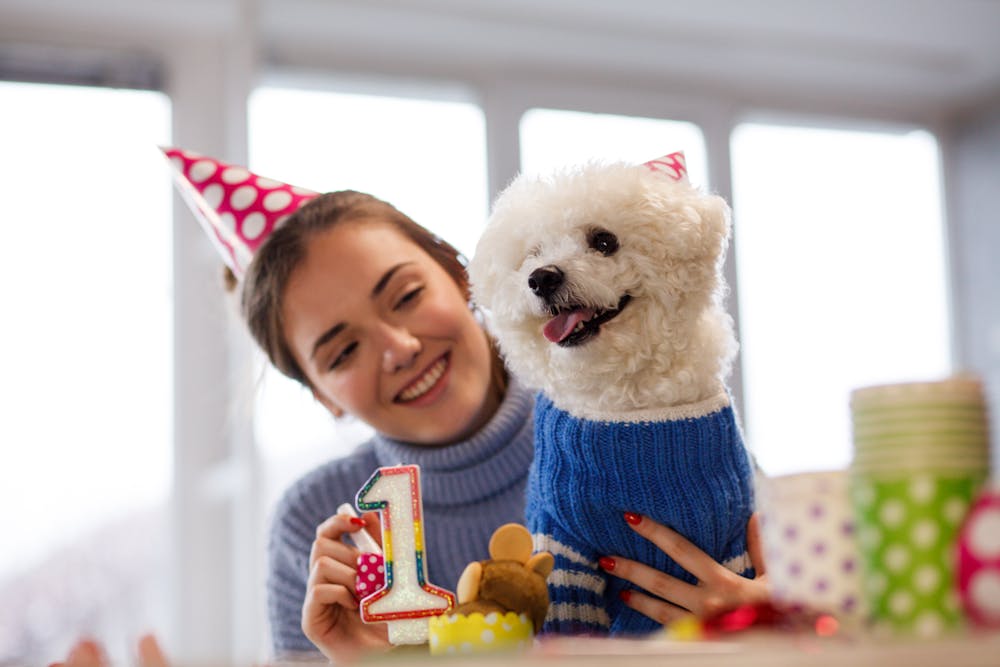
Pet parents might celebrate their dog’s big day – but with a doggy treat and not chocolate cake. fotostorm/E+ via Getty Images
Yet, these findings still do not answer this question: Are people who choose pets over children truly parenting their pets? To answer, I turned to the evolution of parenting and caregiving.
Evolutionary anthropologist Sarah Hardy wrote in 2009 that humans are cooperative breeders. This means it is literally in our DNA and our ancestral history to help care for offspring who are not our own. Anthropologists and biologists call this trait alloparenting. It is an evolutionary adaptation that helped human beings who cooperatively raised children survive. For early humans, this ancient environment was likely made up of small, foraging societies in which some people exchanged child care for food and other resources.
I propose that it is this evolutionary history that explains pet parenting. If people evolved to alloparent, and our environment is now making caring for children more difficult or less appealing to some, it makes sense for people to alloparent other species entering their homes. Alloparenting companion animals can offer a way to fulfill the evolved need to nurture while reducing the investment of time, money and emotional energy compared to raising children.
To further understand this phenomenon of child-free adults parenting pets, I launched an online survey via social media, seeking responses from U.S.-based dog and cat owners over the age of 18. The survey included questions about attachment and caregiving behaviors using the Lexington Attachment to Pets Scale. It also asked a series of questions I developed to probe specific human caretaking behaviors oriented toward pets – things like feeding, bathing and training – as well as how much autonomy companion animals had in the home.
The final sample of 917 respondents included 620 parents, 254 nonparents and 43 people who were undecided or did not answer. Most of the respondents were also married or in a domestic partnership for over one year (57%), between the ages of 25 and 60 (72%) and had at least a bachelor’s degree (77%). They were also mostly women (85%) and heterosexual (85%), a common situation in human-animal interactions research.
Both parents and nonparents reported high amounts of training and play with their pets. This finding makes sense given that all pet owners need to help their dogs and cats learn how to navigate a human world. Survey respondents reported socializing, training and enrichment, including play, for their animals.
Nonparents were more likely to be the one providing general care for the animal. This finding also makes sense since parents often adopt or purchase companion animals as a way to help their children learn responsibility and to care for others. Child-free animal owners invest time, money and emotional energy directly in their pets.
Nonparents reported higher rates of general attachment to their animals. They more frequently viewed their pets as individuals. Nonparents were also more likely to use family terms such as “parent,” “child,” “kids” and “guardians” when referring to their relationships with their pet.
It is this difference, combined with the evidence from my earlier research that these individuals address the species-specific needs of the dogs and cats in their care, that suggests pet parenting is, truly, parenting pets. Though the details may look quite different – attending training classes instead of school functions, or providing smell walks for dogs instead of coloring books for children – both practices fulfill the same evolved function. Whether child or pet, people are meeting the same evolved need to care for, teach and love a sentient other.
My colleagues and I continue to collect data from all over the world about how people live with animals. For now, this study provides evidence that, perhaps rather than being evolved to parent, humans are evolved to nurture. And as a result, who and when we parent is much more flexible than you might initially believe.
Shelly does a fabulous job of looking more closely at the science and it is a science that has a very wide appeal. For in the UK, according to the RSPCA, “In the UK, it’s estimated that 12 million (44 percent of) households have pets with around 51 million pets owned.“
Here in America The Washington Post reported that: “Google the U.S. pet population, and you’re quickly confronted with two oft-cited, and contradictory, sources. The American Pet Products Association (APPA) found that 68 percent of U.S. households owned some sort of pet in 2016 — “equal to the highest level ever reported,” it gushed in the executive summary. Among those pets were about 90 million dogs and 94 million cats, the group said.“
That is just two countries. The worldwide population of dogs and cats must be gigantic.
We had a break from the rain yesterday and I went for a bike ride in the morning and then in the afternoon it was a case of going to the recycling depot. All pretty humdrum stuff but nevertheless what our life, in the main, is made up of plus the many other things that we have to do, indeed enjoy doing, with our six dogs, two horses and thirteen acres in rural Southern Oregon.
So I got to my iMac pretty late on in the day and found a delightful article about a dog who has a fascination with a commercial laundromat.
Read it for yourself.
ooOOoo
Dog Who Works At Laundromat Can’t Stop Taking Naps On All The Machines
“He figured out a way to climb from the chair to the smaller washers and then to the bigger ones.”
By Lily Feinn, Published on the 11th October, 2021
If you walk into Larkin Street Laundry around closing time, you might get an extra-special greeting.
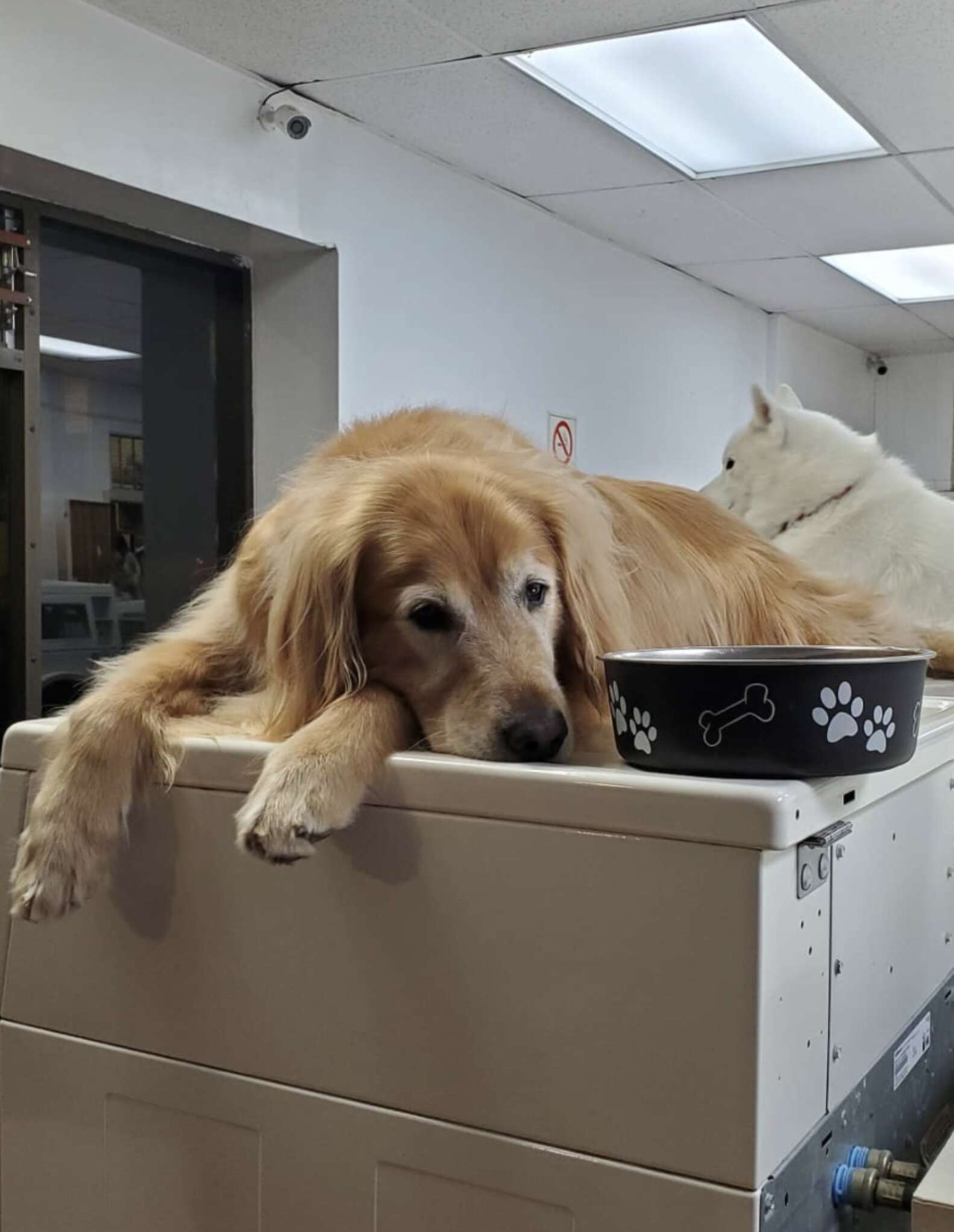
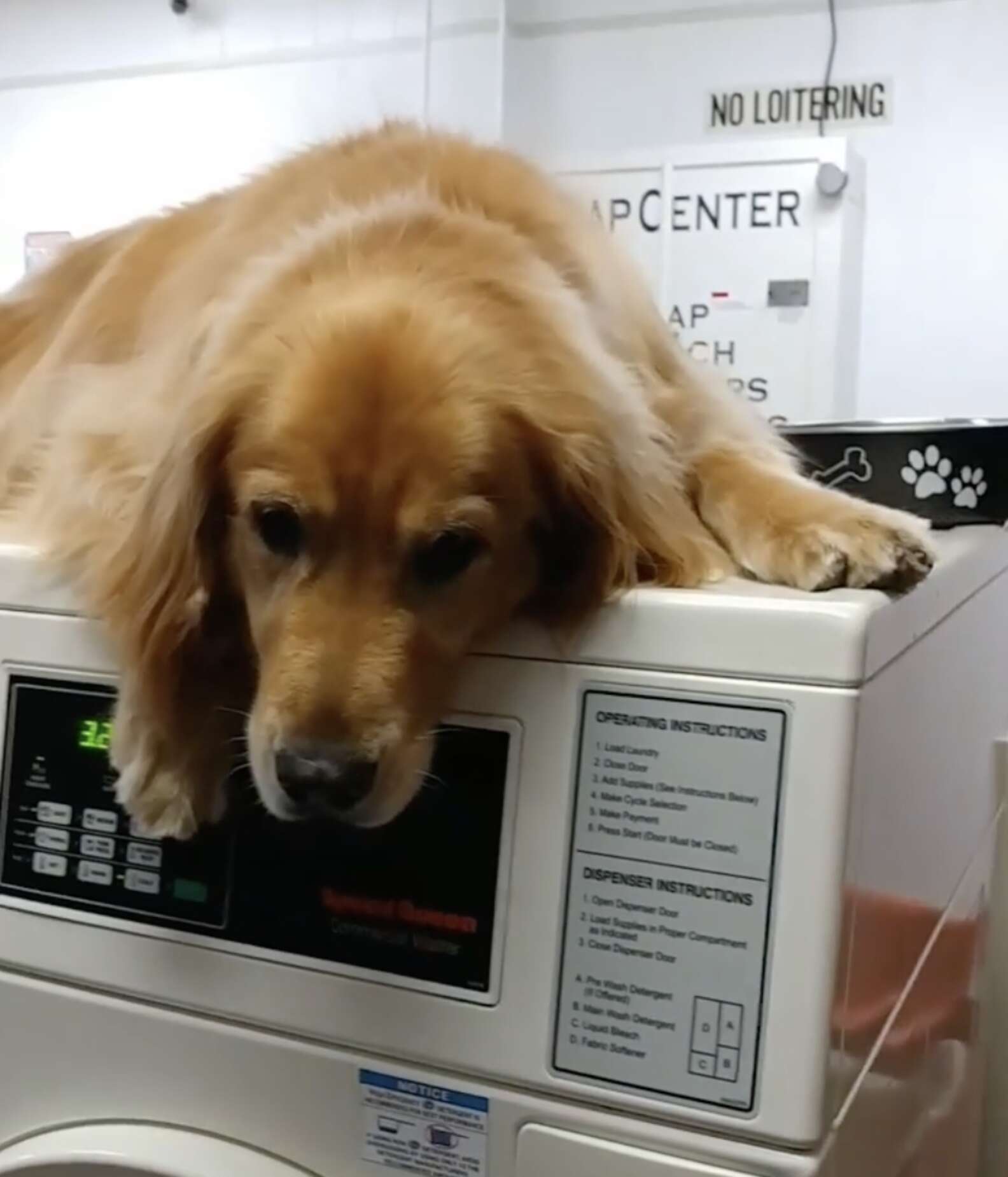
Every night, an 8-year-old golden retriever named Cody helps his dad close up the laundromat. Cody takes his job very seriously: While his dad cleans and puts everything away, Cody takes a nap on top of the washing machines.
INSTAGRAM/CODYTHERETRIEVER
Luckily, his dad doesn’t mind that Cody isn’t the best worker.
“My dad owns the laundromat and has always taken our dogs there with him when he closes up at the end of the day,” Stephanie, Cody’s sister who asked that her last name not be used, told The Dodo. “Our old dog loved to sit in the chairs to watch customers and people pass by, but Cody is more nimble than him.”
“After we tried to get him to just sit on the chairs, he figured out a way to climb from the chair to the smaller washers and then to the bigger ones,” she added. “He’s a little lazier than our old dog, so he’d rather lay down and wait for pets and treats.”
Instagram/Reichenyoo
Cody has become the main attraction at the laundromat, providing the perfect distraction for customers waiting for their clothes to finish drying.
This arrangement works out for the independent Cody, who loves attention but prefers people come to him. “His motto has always been: ‘I do what I want,’” Stephanie said.
INSTAGRAM/CODYTHERETRIEVER
And from his high-up vantage point, Cody can keep watch on everything going on at the laundromat.
“I think he likes how he can see everyone at eye level when he’s on top of the washers,” Stephanie said. “He’s also kinda snobby for a dog, so I have a theory he likes to feel like a king up there.”
INSTAGRAM/CODYTHERETRIEVER
After years of laundromat service, Cody has become a local celebrity — and even the subject of a few memes. But the good boy doesn’t let fame distract him. After all, he has a job to do, and those washers aren’t going to sit on themselves.
ooOOoo
That Larkin Street Laundromat is at Nob Hill in San Francisco. I looked it up by clicking on the link in the text.
It is just fascinating what dogs will do. They have a will of their own and yet they seem to be happiest when in the company of people.
Indeed until a short time ago it was thought that the dog evolved from the grey wolf but recently I read that the dog evolved as its own species.
But the following is a republication of an article on Oregon Wild about wolves returning to the State of Oregon.
ooOOoo
Wolves in Oregon
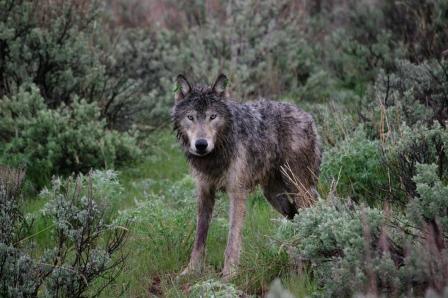
Gray wolves (Canis lupus) were once common in Oregon, occupying most of the state. However, a deliberate effort to eradicate the species was successful by the late 1940s.
In fact, trouble for wolves began almost 100 years earlier, in the years before Oregon became a state. In 1843 the first wolf bounty was established and Oregon’s first legislative session was called in part to address the “problem of marauding wolves.” By 1913, people could collect a $5 state bounty and an Oregon State Game Commission bounty of $20. The last recorded wolf bounty was paid out in 1947.
After an absence of over half a century, wolves began to take their first tentative steps towards recovery. Having dispersed from Idaho, the native species is once again trying to make a home in Oregon. One of the first sightings came in 1999 when a lone wolf was captured near the middle fork of the John Day River, put in a crate and quickly returned to Idaho by government wildlife agents. In 2000, two wolves were found dead – one killed by a car, the other illegally shot.
In 2006, a flurry of sightings led biologists to believe a number of wild wolves were living in Northeast Oregon near the Wallowa Mountains and the Eagle Cap Wilderness. Sadly, a wolf found shot to death near La Grande in May 2007 clearly indicated wolves had arrived in the area.
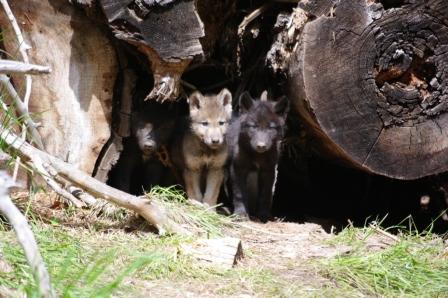
After that sad chapter, wolves began to establish a fragile foothold in the state. In July 2008 pups were confirmed to a wolf named Sophie by the Oregon Wild wolf pack (and B-300 to government biologists). Those pups represented the first wolves in Oregon in nearly 60 years! A second set of six pups were confirmed and videotaped in November 2009. The following July, a third litter of pups was confirmed.
Unfortunately, the news was tempered with additional poaching and heavy-handed state management. After peaking at 26 confirmed wolves, wolf recovery stalled out in 2011. While some wolves dispersed from the Imnaha Pack, only one pup was confirmed to Oregon’s best-known pack, and two pups were confirmed in one of the state’s other two packs (the Walla Walla and Wenaha). Oregon’s confirmed wolf population fell to 17, and then to 14, when the state killed three more wolves (two on purpose) and poachers killed a fourth.
In 2011, wolves in Eastern Oregon lost their federal protections due to an unprecedented congressional budget rider sponsored by Montana Sen. John Tester. Hours later, Oregon used their new authority to kill two wolves and issue dozens of landowner kill permits at the request of the livestock industry.
Meanwhile, anti-wildlife interests and their political allies pushed over half a dozen bills in Salem aimed at making it easier to kill wolves and undermine wolf recovery. Most of the bills were defeated, but a compensation fund and new predator killing fund were approved.
Wolf hunts in nearby states also threaten the region’s fragile recovery. When wolves were federally delisted the region was home to an estimated population of about 1,700 wolves. Over 1,000 were killed in the first two seasons alone.
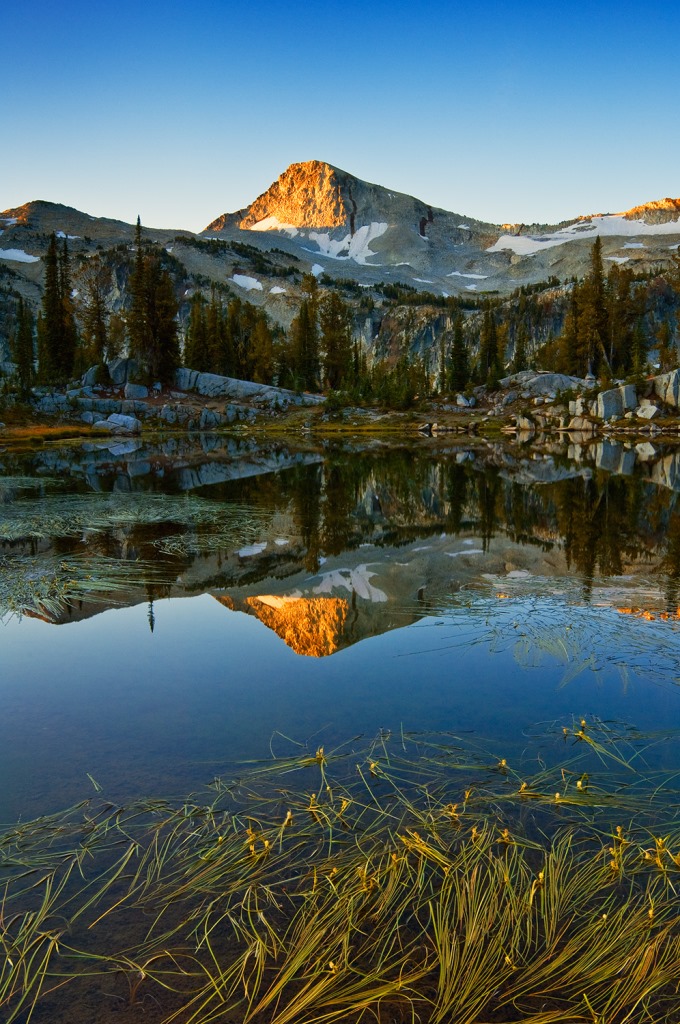
The large tracts of pristine and unspoiled Wilderness and roadless areas in Northeast Oregon are vital components in the successful recovery of wolves, and other wildlife too. (Ed: see the photograph below of the wild lands of Oregon.) The reappearance of wolves, wolverines, and other endangered wildlife in Oregon further underscores the importance of protecting those roadless areas that remain on public land.
Anticipating the eventual return of wolves, the state of Oregon completed a Wolf Conservation and Management Plan in 2005 aimed at making rational decisions in the light of day that would lead to wolf recovery. Though state polling put support for wolf recovery at over 70 percent, the plan was weak, allowed the state to kill wolves, and set scientifically indefensible recovery goals.
Even so, the plan was actively opposed by the Oregon Cattlemen’s Association. They argued in their minority report that “wolves are being used as a biological weapon” and that wolves are a non-native species that citizens should have the right to shoot without permits.
Oregon Wild and other conservationists generally – if reluctantly – agreed to honor the compromise embodied in the plan. Most believed lethal control would be an option of last resort and conservation would be a priority.
After the state shot two young wolves in response to the first livestock depredations in over half a century, it was clear the state was willing to address the concerns of the livestock industry by killing wolves.
In 2010, the plan was reviewed and revised. The public process took the better part of a year and demonstrated that support for wolf recovery had grown. Over 90 percent of a staggering 20,000 public comments were in favor of stronger protections for Oregon’s endangered gray wolves. Oregon Wild joined other conservationists and the Oregon public in defending the plan against continued attacks. Though the plan survived relatively intact, most of the approved changes made it easier to kill wolves.
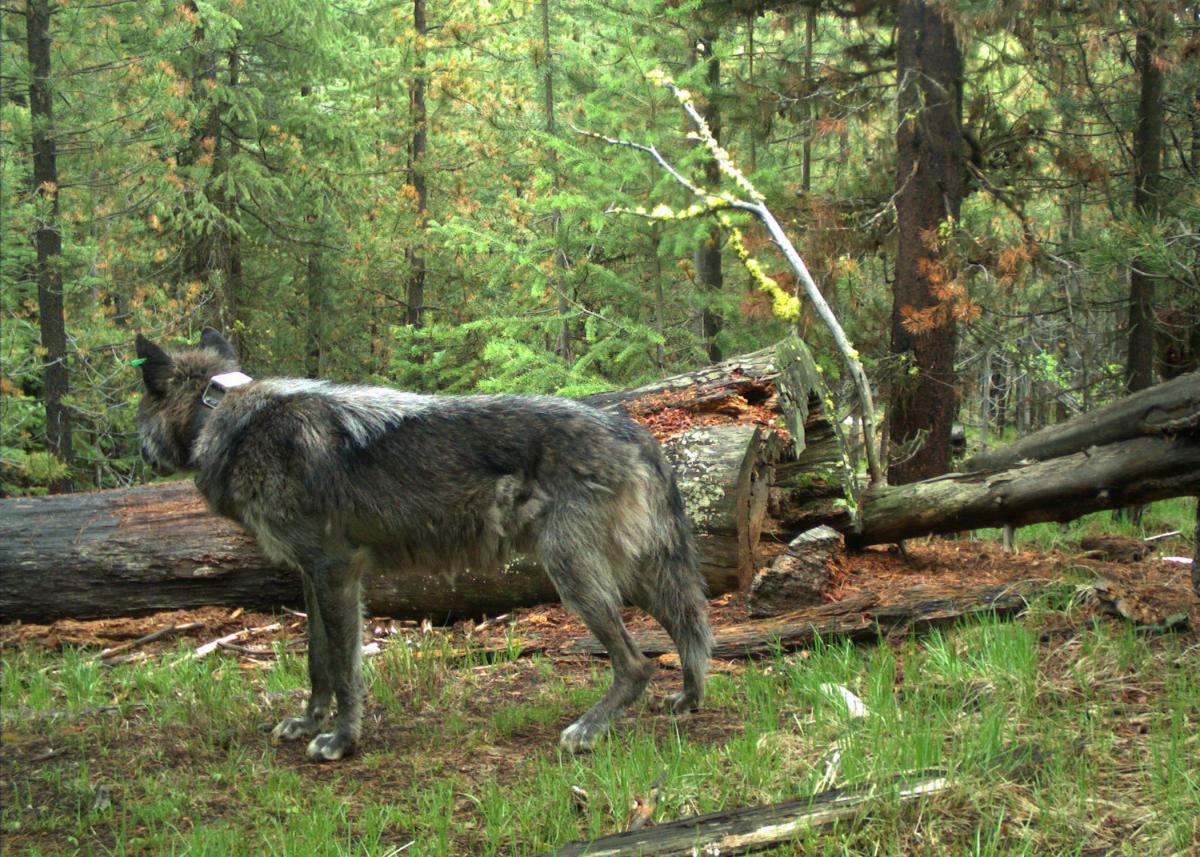
In 2011, a lone wolf from the Imnaha Pack generated international headlines when he became the first in Western Oregon since 1947, and then the first in California in nearly a century. The story of Journey (OR-7) provided a welcome opportunity to step away from the unnecessary controversy manufactured by those opposed to wolf recovery and instead reflect on the positive story of a native species retaking its rightful place on the landscape.
Since 2012, wolf recovery in Oregon has slowly started to get back on track. Although the population has increased over the last several years, in 2015, and with only 78 known adult wolves in the state, the Oregon Department of Fish and Wildlife and its Commission decided to prematurely strip wolves of state Endangered Species Act protections — despite what peer reviewed, independent scientists recommended. Shortly after, lawmakers in Salem passed HB 4040: a bill that statutorily affirmed the delisting of Oregon’s wolves. The passage of HB 4040 essentially blocked the ability of conservation organizations to bring forth a lawsuit challenging the merits of the Commission’s decision.
The latest update to the Wolf Conservation and Management Plan — which was approved by the Commission in June of 2019 — significantly erodes protections for wolves by lowering the threshold for when the state can kill wolves, removing requirements for non lethal conflict deterrence, and opening the door toward public hunting and trapping.
For many, wolves are a symbol of freedom, wilderness, and the American west, and Oregon’s wolf country contains some of the most spectacular landscapes in the world. Science continues to demonstrate the positive impacts of wolves on the landscape and the critical role played by big predators, and interest in their return is fueling tourism in Oregon’s wolf country and elsewhere in the west.
Still, wolves are threatened by a purposeful campaign of misinformation and fear. This webpage shoots down many of the common myths about wolves. A small number of vocal anti-wolf activists, along with industry lobbyists and their political allies, continue to work to undermine already weak protections for wolves and other wildlife.
The Future
For a state that prides itself on its green reputation, the extermination of wolves is one of our greatest environmental tragedies. Their return represents an opportunity at redemption.
Most Oregonians value native wildlife and believe wolves have a rightful place on the landscape. We are happy to know the silence of a hike in the Eagle Cap might be broken by the lonely howl of a wolf. If that howl is to remain, it’s critical that those who value wolves and other native wildlife stand up and speak up on their behalf.
ooOOoo
Plus there were photographs embedded within the text that I thought would be better appreciated if they were offered separately. Here they are:
oooo
oooo
oooo
oooo
Finally a collection of wolf photographs from a link on Oregon Wild that is no longer in use. I downloaded these pictures in 2016!
I came late to my desk yesterday and therefore shall be rather circumspect regarding my introduction. I saw the following story on The Dodo, yet again, and thought it just showed perfectly the unconditional love of dogs.
ooOOoo
Smart Dog Sneaks Away From Home To Surprise Her Mom At Work
Just about every day for the past year and a half, this sweet dog named Indy has been accompanying her owner, Liza Thayer, to an assisted living facility in Connecticut. That’s where Thayer works — but it’s become a home away from home for the pup.
“She loves it here, and all the residents adore her!” Thayer told The Dodo.
Recently, Indy proved just how true that is.
LIZA THAYER
The other day, Thayer took a day off from work to attend a friend’s wedding. She asked her dad to dog-sit while she was away. It was a change of routine, but Indy apparently didn’t get the memo.
The smart pup, it seems, assumed that Thayer had simply forgotten to take her to work that day.
So, she walked there herself.
LIZA THAYER
Incredibly, Indy managed to slip away from Thayer’s dad and walk 2 miles to where she works, all on her own.
There, staff and residents were surprised to see Indy at the door, knowing that Thayer was off for the day. They called Thayer to let her know about her dog’s attempt at surprising her at work.
“I truly didn’t believe it!” Thayer said. “She takes the drive with me every day, but I never imagined she would do this.”
Thayer wasn’t in that day, as Indy may have been expecting. But any disappointment about that was surely short-lived. The pup was greeted with open arms anyway.
“The residents let her in and waited with her, feeding her all her favorite treats,” Thayer said.
For Indy, the trip was worth it.
LIZA THAYER
Thankfully, the adventurous pup didn’t have to walk herself all the way back home. After enjoying her off-duty time at work, Indy was driven back home by Thayer’s boss.
By then, her dad had realized she was missing and started searching, so learning she was safe and sound came as welcome news all around.
Indy and Thayer were reunited when she returned from the wedding — made all the more special given the lengths Indy had gone to surprise her.
“She must’ve really missed me!” Thayer said.
ooOOoo
Our Brandy, a 150-pound cross of a Great Pyrenean and a Mastiff, sometimes goes walkabout and did so yesterday. Luckily being seen by a friendly soul and returned. It was just one of the things that made the day rather hectic.
All our six dogs are beautifully friendly but there’s one dog that just loves to be kissed and returns the favour just as much. That is Oliver!
Oliver
I don’t have a photograph of Oliver and Jean kissing and that’s me being lazy rather than anything else.
Now for whatever deep-seated reason I won’t give Oliver or any of the other dogs a tongue-to-tongue kiss but I am envious of Jean and Oliver; they both love it!
All of which serves as a preamble to an article from The Dodo on dogs’ mouths! Here it is, and it is quite a lengthy one, so settle yourself down and quietly read it completely:
ooOOoo
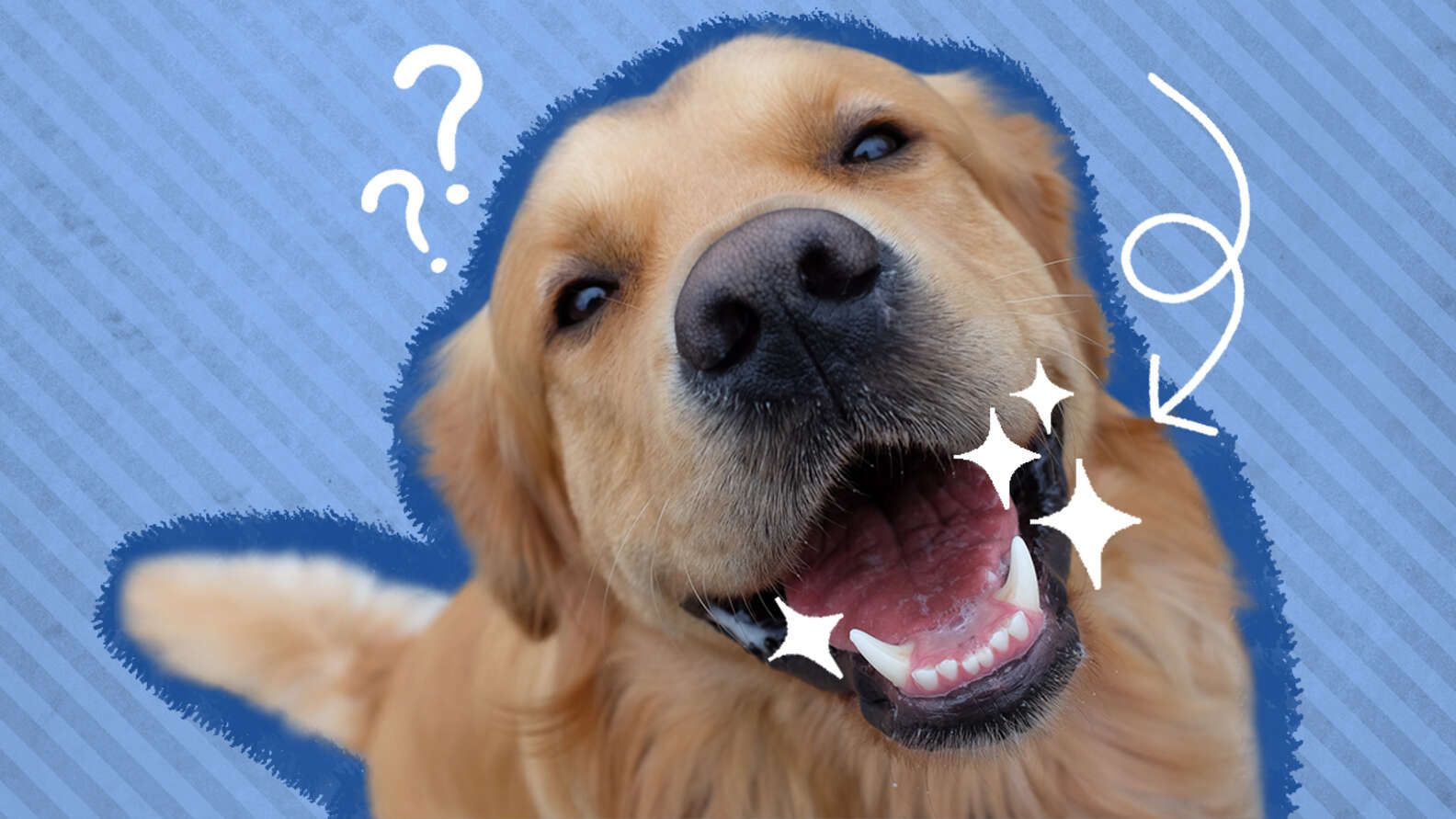
Are Dogs’ Mouths Cleaner Than Humans’?
For everyone who kisses their pup on the mouth 😘
By LAUREN TAYLOR, Published on the 24th September, 2021
If anyone has ever shamed you for letting your dog give you a kiss, you might have told them that dogs’ mouths are cleaner than humans’ mouths. But is that actually true, or is it just something obsessed dog parents made up to justify letting their dogs lick them?
The truth is that dogs’ mouths actually aren’t cleaner than human mouths — but they’re not really dirtier either. We just have different germs.
The Dodo spoke to Dr. Jonathan Roberts, a remote veterinarian with DoggieDesigner.com, to find out everything you need to know about dog saliva.
Why dogs’ mouths aren’t cleaner than human mouths.
Your dog’s mouth isn’t exactly clean. Just like people have bacteria living in our mouths, dogs do too.
“Multiple studies have discovered that dogs have many unique and potentially dangerous bacteria and other parasites lurking in their mouths,” Dr. Roberts told The Dodo. “Around 600 different species of bacteria have been discovered in both canine and human mouths.”
The type and amount of bacteria living in a dog’s mouth depends on the level of periodontal (dental) disease present, which is determined by a number of factors, including:
Diet
Breed (smaller dogs tend to be at greater risk because they have smaller teeth and mouths, leading to more food getting stuck, and they have less bone mass, leading to tooth loss)
Frequency of teeth brushing
Frequency of professional dental cleaning by a vet
What diseases can you get from dog saliva?
There are lots of bacteria in a dog’s mouth that are different from what humans have in our mouths. Some of these are harmless, but some could make you sick.
Some of the bacteria found in dogs’ mouths that can be dangerous to people include:
E. coli, Clostridia, Salmonella and Campylobacter — “[These are] bacteria that can cause severe gastrointestinal illness in people,” Dr. Roberts said. “Dogs are often carriers of these bacteria, yet they do not become ill from them. They usually get these bacteria in their mouths through licking their anuses or ingesting other animals’ feces. Another common source of these illness-causing bacteria is from ingesting raw food.”
Pasteurella — This can cause skin infections that can travel to your lymph nodes and cause severe disease, such as cellulitis or meningitis.
Capnocytophaga canimorsus — “[This] enters the wounds in skin after being licked by a dog’s tongue,” Dr. Roberts said. “Mostly only immune-compromised people are susceptible to this disease that develops into septicemia [blood poisoning].”
Giardia and Cryptosporidium — These are actually protozoa, not bacteria, but they can still make you sick by your dog licking your face and can cause gastrointestinal illnesses.
Parasites — If your dog has parasites, such as worms, and licks his anus and then your face, you could contract the parasite.
So what is the risk of getting sick from your dog licking you? Even with all those germs, if you’re healthy and don’t have a compromised immune system, the risk is luckily pretty low.
“Most human immune systems will neutralize these parasites before they can cause illness,” Dr. Roberts said. “Those with weakened immune systems, such as persons going through chemotherapy, persons with HIV, very young and very old people should be more careful around pets.”
Ultimately, it’s up to you to determine if it’s a risk you want to take.
But to be safe, you can follow these steps to avoid getting sick from dog saliva:
Get checked out by a doctor if you get bitten or scratched by a dog.
Don’t let a dog lick your wounds.
Frequently wash items that your dog’s mouth touches, like toys and food and water bowls.
Don’t let your dog lick you if you’re immunocompromised, and don’t let him lick others who are immunocompromised.
Does dog saliva heal wounds?
It’s an old belief that dog saliva heals wounds. But is it actually true?
“There may be some truth to this after all,” Dr. Roberts said. “The action of licking helps to remove debris and necrotic tissue from the wound.”
Dog saliva also contains proteins that can be beneficial in healing.
“Mammal saliva contains a protein called histatin,” Dr. Roberts said. “This protein is able to kill bacteria before they can cause infection.”
Histatins have antimicrobial and antifungal properties and are part of the immune system. They have been found to play a role in wound closure.
But while it’s possible that dog saliva could help to heal a paper cut, you shouldn’t let your dog lick all of your cuts and scrapes — there are much better ways to take care of your injuries, and you always run the risk of infecting your wound instead of making it better.
“I would still not allow my dog to lick my wounds,” Dr. Roberts said. “We have excellent wound care products on the market these days that not only do a better job of keeping wounds clean but also come without the risk of introducing nasty infections or potential parasites.”
How to keep your dog’s mouth clean
If you do let your dog give you occasional kisses (and even if you don’t), you should try to keep his mouth as clean as possible since it’s also important for his health.
You can do this by regularly brushing his teeth and by providing toys that help clean his teeth.
“The most important way to keep your dog’s mouth clean and healthy is (just like humans) through regular teeth brushing and dental cleaning by a professional,” Dr. Roberts said. “Start introducing your dog to teeth brushing from a young age and aim to brush at least twice a week.”
You can also let your dog chew on dental treats to clean his teeth in between brushing. (These treats received The Dodo’s Paw of Approval, and you can get them from Amazon for $4.98.)
So dogs’ mouths aren’t actually cleaner than people’s, and you shouldn’t let your dog lick your wounds. But if you keep your dog’s mouth and teeth clean, a kiss from your pup every now and then should be fine (if it’s something you’re comfortable with).
We independently pick all the products we recommend because we love them and think you will too. If you buy a product from a link on our site, we may earn a commission.
ooOOoo
I suggest that if you want to purchase any of the products described above then you go directly to The Dodo website and place your order via The Dodo.
Overall I find this a very useful article and I am grateful to The Dodo for allowing me to republish it.










 Learning from Dogs