Category: Culture

Spices

A fascinating insight and a reminder, courtesy of Alistair Cooke

Jeannie recently gave me the book Alistair Cooke’s America.  The book was published in 1973 and was born out of the scripts that Cooke wrote for the television series America: A Personal History of the United States shown in both countries in 1972.  I can’t recall when I first started listening to the BBC Radio programme Letter from America, broadcast by Cooke, but it was a long time ago considering that the 15-minute programme started to be broadcast on the BBC in March 1946, just 18 months after I was born!


Alistair Cooke Nov 1908 - Mar 2004


Anyway, the motivation to start into the book was born out of a desire to know a lot more about this new country of mine.  But quickly there was a fascinating detour.

Early in Chapter One, The New-found Land, Cooke writes of the consequences of the Turks capturing Constantinople:

In 1453, there was a decisive turn in the centuries of warfare between the Christians of Europe and the Moslems of Asia.  Their common market, bridge, and gateway was Constantinople, our Istanbul.  In 1453, the Turks conquered it, and in so doing shut off the commerce between East and West, the exchange of cloth, leather wines and sword blades of Europe for the silks, jewels, chessmen, and spices of Asia.  All things considered, the stoppage was much harder on the court treasuries of Europe that those of Asia and, in one vital item, harder on all Europeans.  That item was spice.

Cooke then writes about historic change often being caused by the denial of a simple human need.  Shortage of water, total absence of timber for the Egyptians since the time of Solomon, for example.

What I hadn’t realised that for Europeans, spices were regarded as “fundamental to human survival”.  That was simply because in the 15th century spices made food edible.  Cooke writes,

Even in rich houses, the meals came putrid to the table. (Dysentery, by the way, seems to have been considered through most of the last five centuries a hazard as normal as wind and rain.)

Think about that the next time you reach for the pepper!

That led me to think about the enormous benefit that electricity and therefore domestic refrigeration has had on the health and life expectancies of mankind.  It is almost inconceivable to imagine the consequences of a widespread loss of electricity for, say a week, let alone a few months.

Patrice Ayme wrote a guest post for Learning from Dogs that was published on the 26th.  In it he wrote,

But then, after an auspicious start, Mars lost most of most of its atmosphere (probably within a billion years or so). Why? Mars is a bit small, its gravitational attraction is weaker than Earth (it’s only 40%). But, mostly, Mars has not enough a magnetic field. During Coronal Mass Ejections, CMEs, the Sun can throw out billions of tons of material at speeds up to and above 3200 kilometers per seconds. It’s mostly electrons and protons, but helium, oxygen and even iron can be in the mix.

The worst CME known happened during the Nineteenth Century, before the rise of the electromagnetic civilization we presently enjoy. Should one such ejection reoccur now, the electromagnetic aspect of our civilization would be wiped out.It goes without saying that we are totally unprepared, and would be very surprised. Among other things, all transformers would blow up, and they take months to rebuild. we would be left with old books in paper, the old fashion way. A CME can rush to Earth in just one day. (Fortunately the Sun seems to be quieting down presently, a bit as it did during the Little Ice Age.)

So let’s just hope and pray that our continued interest in spices remains a flavouring desire and doesn’t return as a critical need for human survival.

By Paul Handover

Welcome to America

A meaningful Thanksgiving at so many levels.

In September 1620, a small ship, the Mayflower, left Plymouth, England carrying a 102 passengers.  After a difficult crossing lasting 66 days, the Mayflower anchored near the tip of Cape Cod. One month later, the Mayflower crossed Massachusetts, where the Pilgrims, as they are now commonly known, began the work of establishing a village at a new Plymouth.

In November 1621, having produced a successful corn harvest, the settlers organised a celebratory feast.

The First Thanksgiving at Plymouth" By Jennie A. Brownscombe.

In December 2007 a Virgin flight pushed back from the stand at Gatwick Airport in England en route to Los Angeles airport.  On board was yours truly. Two days later, a Aeromexico flight, again with me on board, pushed back from the stand at LAX for the short flight down to Hermosillo Airport in the State of Sonora, Mexico.

That same afternoon, around 2pm, I was met by Sue at Hermosillo airport ready for the relatively short drive down to San Carlos.  I was there for a Christmas holiday courtesy of Sue and Don, her husband.

With Sue to meet me at the airport was Jean, a good friend of many years standing.  Jean was originally a Londoner, having been born just a few miles from where I was born.  Now she was settled in San Carlos after her American husband died in 2005.

Sue and Jean

We all headed off in Sue’s car for the journey to San Carlos.

Little did I know that just a few days later at a local dinner and dance spot in San Carlos when I got up and asked Jean for a dance something magical would happen when I put my arm around Jean’s waist.  That evening was a 20th.

Fast forward 35 months, not only to the day but practically to the hour and that magic in our lives is still there in abundance.

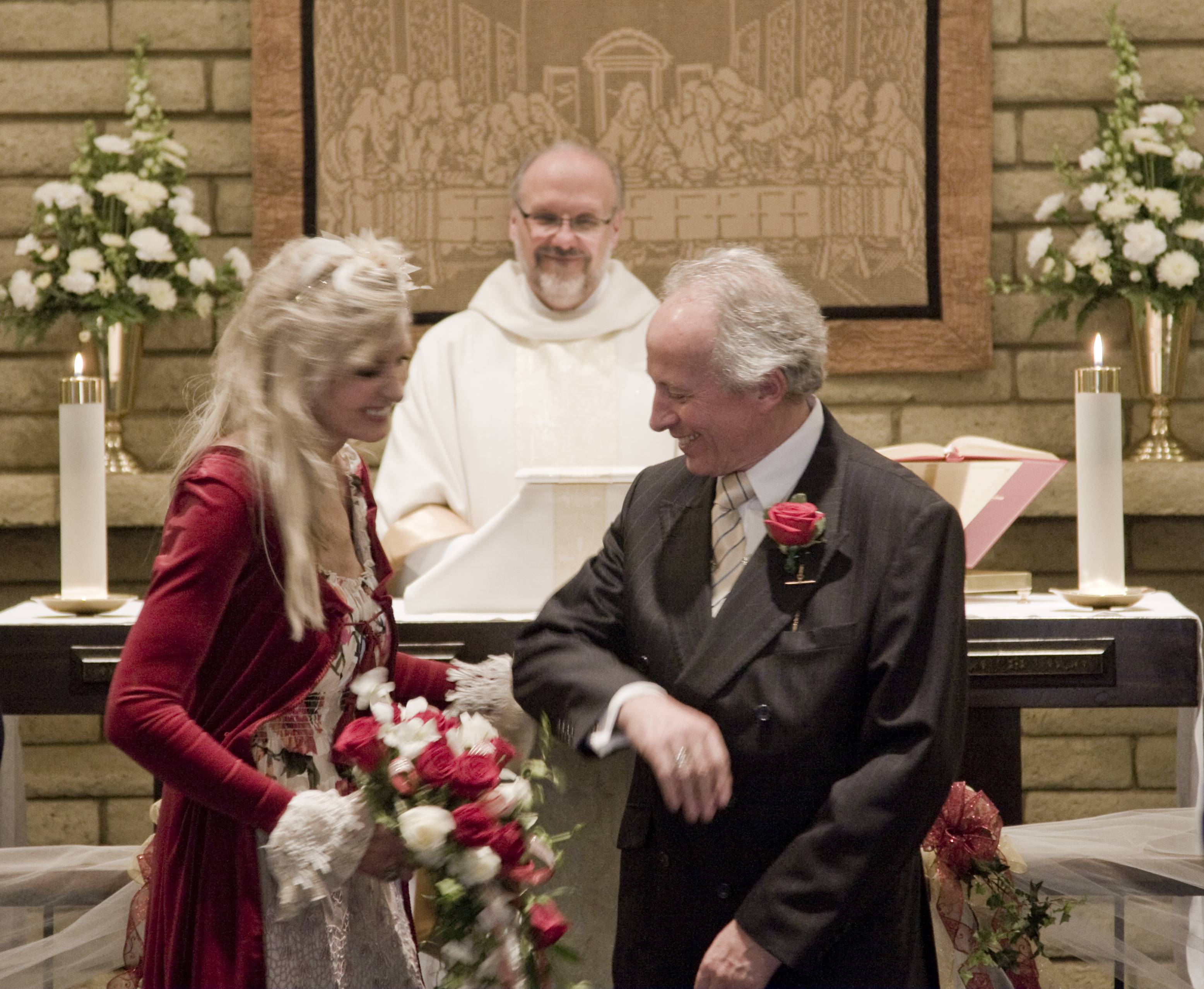
For Jean and I were married in St Paul’s Episcopal Church, Payson, Arizona on the 20th November in front of the Reverend Dan Tantimonaco.

Mr and Mrs Handover

That marriage gives me the right to apply to the US Government for Resident status and so, today, Thanksgiving Day 2010, Jean and I will also have our first celebratory feast in gratitude to starting our married lives as new Americans.

By Paul Handover

Future for Societies

The glass is filled half-way.  Is it half-full or half-empty?

This is a rhetorical question, of course.  It is what comes to mind as I write this simply because of a small half-full/half-empty experience in the last 10 minutes.  Let me explain.

I had started watching a video on TED.com.  This one was entitled Jared Diamond on why societies collapse.  Within a few minutes I started drifting to the comments, and read:

Jared Diamond talks of how societies choose (unwittingly) to collapse. William McDonough with his Cradle to Cradle concept also talks about choices and provides ‘Love of all children of all species for all time’ as a positive conscious choice.

With goals or missions in place (for example profit for businesses) humans have achieved amazing things.

So what would happen if all groups, families and individuals followed a mission of ‘Love of all children of all species for all time’?

I rather liked that.  We always have choices. A positive conscious choice is always better.

So I stopped the Jared Diamond lecture and found the William McDonough one, also on TED.com, and conveniently shared on YouTube.  It’s just 20 minutes long, so settle down somewhere, perhaps with a glass filled half-way with something!

By Paul Handover

Days of Hope

Today, like every day, is a beautiful day of hope!

At 3.30pm US Mountain Time – 10.30pm UK time – the marriage service between me and Jean Susan will commence at the Episcopal Church in Payson, Arizona.  It represents a wonderful day of hope.

But hope is something much bigger than a couple getting married.  See it from this perspective. From the eyes of Shimon Schocken.

There’s that word ‘love’ again.

By Paul Handover

Off topic!

Just a little distraction for today!


The unmistakeable Woody Allen


“More than any other time in history, mankind faces a crossroads. One path leads to despair and utter hopelessness. The other, to total extinction. Let us pray we have the wisdom to choose correctly.”

Woody Allen (1935 – ), My Speech to the Graduates

Read a few days ago on Baseline Scenario and I couldn’t resist using it.  Not the first time, I’m sure, you have read this dear readers but still well worth another airing.

Plus it gives me a chance to remind people that Baseline really is a Blog worth following.

by Paul Handover


Will Hutton, Them and Us

Changing Britain – Why We Need A Fair Society


Will Hutton


I have been reading Will Hutton‘s latest book for the last couple of weeks and am now through the first 5 chapters, at the time of writing this Post!  To my mind, it’s a very powerful and extremely well-argued summary of the sickness that has engulfed Britain, and by implication, other countries who have had similar experiences over the last 20 years.

There was a long extract published by the Guardian on the 26th September 2010 which gives one a good feel for the book.  Here’s how that extract starts:

The British are a lost tribe – disoriented, brooding and suspicious. They have lived through the biggest bank bail-out in history and the deepest recession since the 1930s, and they are now being warned that they face a decade of unparalleled public and private austerity. Yet only a few years earlier their political and business leaders were congratulating themselves on creating a new economic alchemy of unbroken growth based on financial services, open markets and a seemingly unending credit and property boom. As we know now, that was a false prospectus. All that had been created was a bubble economy and society. Yet while the country is now exhorted to tighten its belt and pay off its debts, those who created the crisis — the country’s CEOs and bankers, still living on Planet Extravagance, not to mention mainstream politicians — all want to get back to “business as usual”: the world of 1997 to 2007.

There are many, many sentences in the book that have one gasping for breath.  One of them that particular struck me was one on Page 13, see below for the sentence in italics.  But let me include sufficient text to put the sentence into context:

Today, philanthropy or living according to a particular moral code does not confer status.  Only money is able to do that.  People start to question whether vocational career choices – in farming, teaching, medicine or science – make any sense when society rewards them so lowly while rewarding finance so high.  Material values start to crowd out altruism, philanthropy and restraint.

Then comes this staggering reflection:

Two incidents in September 2007 highlighted the new values.  Lance Bombardier Ben Parkinson, who lost both legs after a landmine exploded in Afghanistan, was offered £152,000 compensation by the Ministry of Defence.  The very same week, Eric Nicoli left his job as CEO of EMI – having failed to turn around the company – with a pay-off of £3 million. [My italics]

Earlier, on page 6, Hutton writes of Richard Lambert, head of the Confederation of British Industry, the CBI as having said in March 2010, “for the first time in history officers of a company can become seriously rich without risking any of their own money.”   Here’s another piece from that extract published in the Guardian:

We need a shared understanding of what constitutes fairness in order to restore our society. At present, there is none. The rich argue that it is fair for them to be so wealthy, in much the same way as Athenian noblemen believed that their riches were signifiers of their worth. They believe they owe little or nothing to society, government or public institutions. They accept no limit or proportionality to their wealth, benchmarking themselves only against their fellow rich. Philanthropic giving is declining; tax avoidance is rising; and executive pay is rising exponentially. All three are justified by the doctrine that the rich simply deserve to be rich. Meanwhile, the poor, in their view – and that of a virulent right-wing media – largely deserve their plight because they could have chosen otherwise. The mockery of chavs is premised on the assumption that they could be different if they wanted to be. The poor could work, save and show some initiative. So why should we indulge them by giving them state handouts?

This lies behind the arrogance with which bankers still defend their bonuses, in spite of everything that has happened over the past few years.

OK, you get my drift! I could go on and on but, hopefully, my point is made.  This book by Hutton is going to be another of his classics and may well be seen as the ‘tipping point’ when society looks back in a decade’s time with that wonderful 20:20 hindsight!

Finally, are there other conclusions to be made of Hutton’s approach?  Yes, of course.  Reading the comments posted on the Guardian web page will show you many.

By Paul Handover

Faith in a (new) future.

“Faith is not simply a patience that passively suffers until the storm is past. Rather, it is a spirit that bears things – with resignations, yes, but above all, with blazing, serene hope.” Corazon Aquino.

Yes, I cheated.  I looked for a quotation to suit the mood of this post and came across the above.  Corazon Aquino was the woman who led the revolution which toppled the authoritarian regime of the late strongman Ferdinand Marcos and restored democracy in the Philippines.

Anyway, to the theme of this Post.

Those that are regular readers of Learning from Dogs know that at one level I am not optimistic about the future over the coming years.  A quick trawl through this Blog will find quite a few articles showing that things are going to get a lot worse before they get better.

One of the forecasters who has consistently been on the money, so to speak, is Gerald Celente.  He runs an organisation known as Trends Research Institute.

Here’s 14 minutes from a recent interview on the Alex Jones Show.  Do watch it to the end.

Despite being US focussed this interview still has massive implications for the rest of the world.

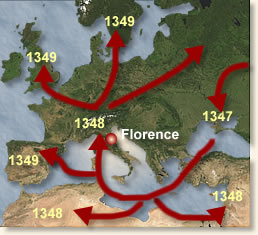
This Post is about faith.  Around minute 10:30 in the above video, Celente talks of those people that have the faith in themselves to bring about change.  Celente talks that from all great disasters comes change.  He talks of the Black Death that in the three years from 1348 wiped out up to 50% of Europe’s population.

From the Eye Witness to History website:

Coming out of the East, the Black Death reached the shores of Italy in the spring of 1348 unleashing a rampage of death across Europe unprecedented in recorded history. By the time the epidemic played itself out three years later, anywhere between 25% and 50% of Europe’s population had fallen victim to the pestilence.


Plague's progress


So here’s the point.  In the Celente interview, he predicts that 20% of Americans will reject the way that they see their society going. Fascinating!  That 20% figure.

Dr David Hawkins in his seminal book Power vs Force writes on page 77:

… 85% of the [world] race is below the critical level of 200, while the overall average level of human consciousness is approximately 204.  The power of the relatively few individuals near the top counterbalance the weakness of the masses towards the bottom to achieve the overall balance.

Hawkins is saying that 15% of the world’s population has the integrity required to bring up the level of consciousness of all the rest.

I have the faith that we are on the verge of another renaissance for mankind, one based on integrity and truthfulness, honesty and love.  In my faith, I see this next renaissance being born in America, still the land of the free.


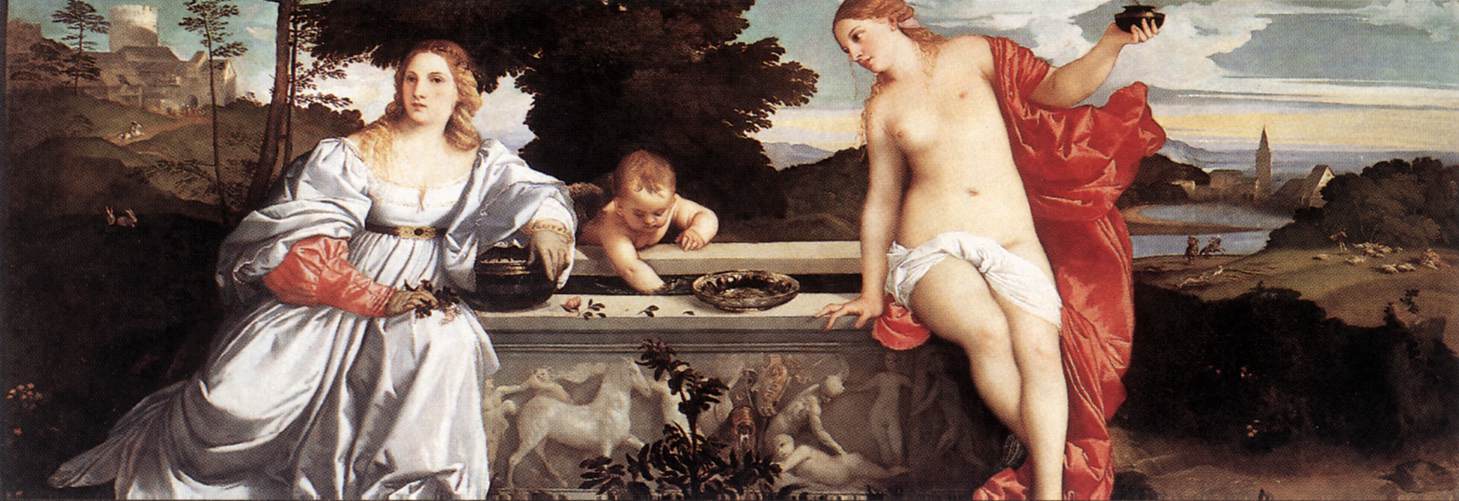
"Sacred and Profane Love" by Tiziano Vecellio, otherwise known as Titian


Titian was born in 1488 just 100 years after Europe was ravaged by the Plague.

Keep the faith – there is a wonderful new world just around the corner.

By Paul Handover

Dolphins – truly innocent victims

This just makes me weep!

Watch.

Read and be Educated.

In Japan, fishermen round up and slaughter hundreds and even thousands of dolphins and other small whales each year.In the small fishing village of Taiji, entire schools of dolphins are driven into a hidden cove after a prolonged chase. Once trapped inside the cove, the fishermen kill the dolphins, slashing their throats with knives or stabbing them with spears. The water turns red with their blood, and the air fills with their screams.

Now go here and here.

Take action.

By going here.

Not for your sake, not for my sake but for the sake of this magnificent creature.

I tried to insert a picture of dolphins being slaughtered in Japan but just couldn’t handle the negativity that the picture sent out.

Read this and focus on the beauty of these creatures – and let that inspire you to take action. Please.

By Paul Handover

We are all together

A wonderful reminder of the power of community

Hopefully, by the time this Post is published (it’s being written on the 12th) the steel rescue chamber above the trapped Chilean miners will be in action, carefully and steadily bringing the men to the surface, one by one.  The event will be mainstream news so Learning from Dogs will simply watch from the side.

(And to the huge joy of millions, we now all know the miners are safe! Jon)

But there was something that caught my eye from the BBC News website on the 12th.  Here’s the extract:

Meanwhile, Alejandro Pino, a journalist who has been in daily contact with the miners and advising them on handling interviews, revealed that he had been helping them prepare a speech.

“I asked them to give me just one word and with that word I would show them how to create a speech,” he said.

“It was just a try, so I can repeat to you what happened because I was touched by it and they were touched by it too, not because I made the speech but because the word they chose to start with was extraordinary: it was ‘comradeship’.”

Comradeship!

It doesn’t take very long to realise that mining is one of those crafts that relies on comradeship.

Here’s a quote from Antoine de Saint-Exupery, “The greatness of a craft consists firstly in how it brings comradeship to men.”

From the word ‘comradeship’ it seems a small step to the word ‘community’ and all that is implied for the health and welfare of mankind.


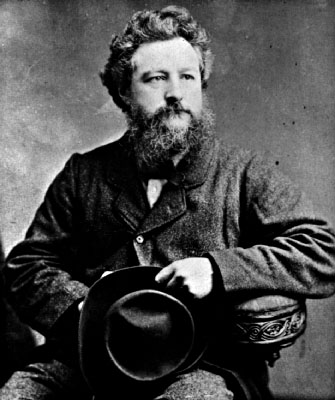
William Morris


Here’s a lovely reminder from William Morris in a paper on community by Mark K Smith published on the Infed website (for citation see end of post).

Fellowship is heaven, and lack of fellowship is hell; fellowship is life, and lack of fellowship is death; and the deeds that ye do upon the earth, it is for fellowship’s sake ye do them. (A Dream of John Ball, Ch. 4; first published inThe Commonweal 1886/7)

Fellowship, community, comradeship – call it what you will, it will have to be the essence of mankind’s future.

By Jon Lavin

(Full citation is: Smith, M. K. (2001) ‘Community’ in the encyclopedia of informal education

http://www.infed.org/community/community.htm)

No, it’s not only me!

The power of human networking.

My article published yesterday referred to a post on Baseline Scenario entitled After The Recession: What Next For The Fed? Do go across and read it.

I had been in a bit of a rant mood and contributed a comment to that Post.  I wrote:

I don’t have the knowledge to respond to Simon’s excellent Post in detail but his comments reinforce what feels like a constant throbbing in my mind – how can the citizens of so many countries have abdicated so much interest and concern in how they/we are governed. Wish I had even a clue as to the answer to that question.

Significant social unrest would be very scary – the ‘law’ of unintended consequences and all that – but there are times when I wonder if this, in the end, might be the only form of real progress for the hard-working, tax-paying majority.

End of rant! 😉

Interestingly, that stimulated some replies which were, in my opinion, worth sharing with you; kind reader of Learning from Dogs that you are!

Sir, you raise a sad but true point when you ask how a majority of us citizens, on a worldwide basis, could have lost true “by the people” control of our own governments.

For most of us the loss of healthy economic functioning has been the main consequence of this, something that has been very painful. But I also find myself reflecting on the unspeakable genocides in our collective human history. One gets an awful sense of how such things were permitted to arise…ZeroInMyOnes

And

Well spoken Paul Handover. The system cannot and will not be changed politically or judicially because the malevolent forces who conjured the system own and control both the political and judicial operations and operators. Those operators work to advance the interests of the predatorclass whose operations, operators, and structures are malevolent.

The people are the abused victims of predatorclass criminal enterprises bent on total control of the earths wealth and resources, and the enslavement or eradication of the rest of the population.

The peoples only hope for implementing the changes necessary to form a more perfect union is best described here:

(“We hold these truths to be self-evident, that all men are created equal, that they are endowed by their Creator with certain unalienable rights, that among these are life, liberty and the pursuit of happiness. That to secure these rights, governments are instituted among men, deriving their just powers from the consent of the governed. That whenever any form of government becomes destructive to these ends, it is the right of the people to alter or to abolish it, and to institute new government, laying its foundation on such principles and organizing its powers in such form, as to them shall seem most likely to effect their safety and happiness.”) TonyForesta

And

Paul Handover, that was not a rant. You are simply talking common sense.

Scary is right. And it’s scarier by the day.

We have to try to work constructively for change. I keep urging people to check out the potential for an economy based not on constant growth, which is impossible on a finite planet, but on some sane principles of equity and sustainability.

If you go to http://www.steadystate.org and look at their position statement, you can see that people from all over the world are signing on–yes, just three or four people a day–but they are from every continent and just about every country.

Now, can you help this “go viral”? Carla

These are strong, powerful views.  I have joined Casse, the organisation referred to in Carla’s comment – see second Post from me today – and Tony’s comment motivated me to look up the history of the United States Declaration of Independence, the subject of a separate article on this Blog.

Powerful stuff!

By Paul Handover