Category: Culture

Faith in a (new) future.

“Faith is not simply a patience that passively suffers until the storm is past. Rather, it is a spirit that bears things – with resignations, yes, but above all, with blazing, serene hope.” Corazon Aquino.

Yes, I cheated.  I looked for a quotation to suit the mood of this post and came across the above.  Corazon Aquino was the woman who led the revolution which toppled the authoritarian regime of the late strongman Ferdinand Marcos and restored democracy in the Philippines.

Anyway, to the theme of this Post.

Those that are regular readers of Learning from Dogs know that at one level I am not optimistic about the future over the coming years.  A quick trawl through this Blog will find quite a few articles showing that things are going to get a lot worse before they get better.

One of the forecasters who has consistently been on the money, so to speak, is Gerald Celente.  He runs an organisation known as Trends Research Institute.

Here’s 14 minutes from a recent interview on the Alex Jones Show.  Do watch it to the end.

Despite being US focussed this interview still has massive implications for the rest of the world.

This Post is about faith.  Around minute 10:30 in the above video, Celente talks of those people that have the faith in themselves to bring about change.  Celente talks that from all great disasters comes change.  He talks of the Black Death that in the three years from 1348 wiped out up to 50% of Europe’s population.

From the Eye Witness to History website:

Coming out of the East, the Black Death reached the shores of Italy in the spring of 1348 unleashing a rampage of death across Europe unprecedented in recorded history. By the time the epidemic played itself out three years later, anywhere between 25% and 50% of Europe’s population had fallen victim to the pestilence.
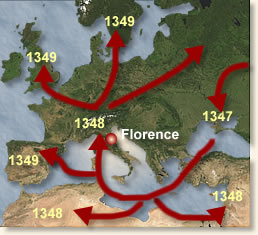
 

Plague's progress


So here’s the point.  In the Celente interview, he predicts that 20% of Americans will reject the way that they see their society going. Fascinating!  That 20% figure.

Dr David Hawkins in his seminal book Power vs Force writes on page 77:

… 85% of the [world] race is below the critical level of 200, while the overall average level of human consciousness is approximately 204.  The power of the relatively few individuals near the top counterbalance the weakness of the masses towards the bottom to achieve the overall balance.

Hawkins is saying that 15% of the world’s population has the integrity required to bring up the level of consciousness of all the rest.

I have the faith that we are on the verge of another renaissance for mankind, one based on integrity and truthfulness, honesty and love.  In my faith, I see this next renaissance being born in America, still the land of the free.

 

"Sacred and Profane Love" by Tiziano Vecellio, otherwise known as Titian


Titian was born in 1488 just 100 years after Europe was ravaged by the Plague.

Keep the faith – there is a wonderful new world just around the corner.

By Paul Handover
Dolphins – truly innocent victims

This just makes me weep!

Watch.

Read and be Educated.

In Japan, fishermen round up and slaughter hundreds and even thousands of dolphins and other small whales each year.In the small fishing village of Taiji, entire schools of dolphins are driven into a hidden cove after a prolonged chase. Once trapped inside the cove, the fishermen kill the dolphins, slashing their throats with knives or stabbing them with spears. The water turns red with their blood, and the air fills with their screams.

Now go here and here.

Take action.

By going here.

Not for your sake, not for my sake but for the sake of this magnificent creature.

I tried to insert a picture of dolphins being slaughtered in Japan but just couldn’t handle the negativity that the picture sent out.

Read this and focus on the beauty of these creatures – and let that inspire you to take action. Please.

By Paul Handover

We are all together

A wonderful reminder of the power of community

Hopefully, by the time this Post is published (it’s being written on the 12th) the steel rescue chamber above the trapped Chilean miners will be in action, carefully and steadily bringing the men to the surface, one by one.  The event will be mainstream news so Learning from Dogs will simply watch from the side.

(And to the huge joy of millions, we now all know the miners are safe! Jon)

But there was something that caught my eye from the BBC News website on the 12th.  Here’s the extract:

Meanwhile, Alejandro Pino, a journalist who has been in daily contact with the miners and advising them on handling interviews, revealed that he had been helping them prepare a speech.

“I asked them to give me just one word and with that word I would show them how to create a speech,” he said.

“It was just a try, so I can repeat to you what happened because I was touched by it and they were touched by it too, not because I made the speech but because the word they chose to start with was extraordinary: it was ‘comradeship’.”

Comradeship!

It doesn’t take very long to realise that mining is one of those crafts that relies on comradeship.

Here’s a quote from Antoine de Saint-Exupery, “The greatness of a craft consists firstly in how it brings comradeship to men.

From the word ‘comradeship’ it seems a small step to the word ‘community’ and all that is implied for the health and welfare of mankind.


William Morris


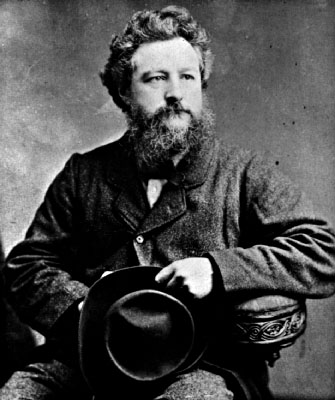
Here’s a lovely reminder from William Morris in a paper on community by Mark K Smith published on the Infed website (for citation see end of post).

Fellowship is heaven, and lack of fellowship is hell; fellowship is life, and lack of fellowship is death; and the deeds that ye do upon the earth, it is for fellowship’s sake ye do them. (A Dream of John Ball, Ch. 4; first published inThe Commonweal 1886/7)

Fellowship, community, comradeship – call it what you will, it will have to be the essence of mankind’s future.

By Jon Lavin

(Full citation is: Smith, M. K. (2001) ‘Community’ in the encyclopedia of informal education

http://www.infed.org/community/community.htm)

No, it’s not only me!

The power of human networking.

My article published yesterday referred to a post on Baseline Scenario entitled After The Recession: What Next For The Fed? Do go across and read it.

I had been in a bit of a rant mood and contributed a comment to that Post.  I wrote:

I don’t have the knowledge to respond to Simon’s excellent Post in detail but his comments reinforce what feels like a constant throbbing in my mind – how can the citizens of so many countries have abdicated so much interest and concern in how they/we are governed. Wish I had even a clue as to the answer to that question.

Significant social unrest would be very scary – the ‘law’ of unintended consequences and all that – but there are times when I wonder if this, in the end, might be the only form of real progress for the hard-working, tax-paying majority.

End of rant! 😉

Interestingly, that stimulated some replies which were, in my opinion, worth sharing with you; kind reader of Learning from Dogs that you are!

Sir, you raise a sad but true point when you ask how a majority of us citizens, on a worldwide basis, could have lost true “by the people” control of our own governments.

For most of us the loss of healthy economic functioning has been the main consequence of this, something that has been very painful. But I also find myself reflecting on the unspeakable genocides in our collective human history. One gets an awful sense of how such things were permitted to arise…ZeroInMyOnes

And

Well spoken Paul Handover. The system cannot and will not be changed politically or judicially because the malevolent forces who conjured the system own and control both the political and judicial operations and operators. Those operators work to advance the interests of the predatorclass whose operations, operators, and structures are malevolent.

The people are the abused victims of predatorclass criminal enterprises bent on total control of the earths wealth and resources, and the enslavement or eradication of the rest of the population.

The peoples only hope for implementing the changes necessary to form a more perfect union is best described here:

(“We hold these truths to be self-evident, that all men are created equal, that they are endowed by their Creator with certain unalienable rights, that among these are life, liberty and the pursuit of happiness. That to secure these rights, governments are instituted among men, deriving their just powers from the consent of the governed. That whenever any form of government becomes destructive to these ends, it is the right of the people to alter or to abolish it, and to institute new government, laying its foundation on such principles and organizing its powers in such form, as to them shall seem most likely to effect their safety and happiness.”) TonyForesta

And

Paul Handover, that was not a rant. You are simply talking common sense.

Scary is right. And it’s scarier by the day.

We have to try to work constructively for change. I keep urging people to check out the potential for an economy based not on constant growth, which is impossible on a finite planet, but on some sane principles of equity and sustainability.

If you go to http://www.steadystate.org and look at their position statement, you can see that people from all over the world are signing on–yes, just three or four people a day–but they are from every continent and just about every country.

Now, can you help this “go viral”? Carla

These are strong, powerful views.  I have joined Casse, the organisation referred to in Carla’s comment – see second Post from me today – and Tony’s comment motivated me to look up the history of the United States Declaration of Independence, the subject of a separate article on this Blog.

Powerful stuff!

By Paul Handover

Being in love

Science explains what our hearts feel

Love for all!

Yesterday, I posted an article based on a lecture given by Dr Helen Fisher presented to the TED Conference in 2006.  It included some fascinating evidence about the nature of love and why it is such a powerful human emotion.

Then in 2008, Dr Fisher gave a second lecture, again at the TED Conference, that continued to reveal more amazing findings about how the brain functions when in love.  As the presentation summary says:

Why do we crave love so much, even to the point that we would die for it? To learn more about our very real, very physical need for romantic love, Helen Fisher and her research team took MRIs of people in love — and people who had just been dumped.

Included in the lecture is something that I had wondered about and was delighted to see confirmed – animals fall in love as well.  Here’s the extract from that part of the presentation (min:sec 50:50):

I would also like to tell the world that animals love. There’s not an animal on this planet that will copulate with anything that comes along. Too old, too young, too scruffy, too stupid, and they won’t do it. Unless you’re stuck in a laboratory cage –and you know, if you spend your entire life in a little box,you’re not going to be as picky about who you have sex with –but I’ve looked in a hundred species,and everywhere in the wild, animals have favorites.

As a matter of fact ethologists know this. There’s over eight words for what they call animal favoritism:  selective proceptivity, mate choice, female choice, sexual choice. And indeed, there are three academic articlesin which they’ve looked at this attraction, which may only last for a second, but it’s a definite attraction, and either this same brain region, this reward system, or the chemicals of that reward system are involved. In fact, I think animal attraction can be instant — you can see an elephant instantly go for another elephant. And I think that this is really the origins of what you and I call, “love at first sight.”

Do watch it.

And a quote to conclude this post.

True happiness and a fullness of joy can be found only in the tender and intimate relationships of the family. However earnestly we may seek success and happiness outside the home through work, leisure activities, or large bank accounts, we will never be fully satisfied emotionally until we develop deep and loving relationships.
~ by James J. Jones Ph.D. ~

By Paul Handover

Guys, beware of rickshaw drivers!

Watch the video to the end to make sense of the title!

The digitally connected world that is now so much a part of our lives brings lots of new issues, dangers and irritations.  But it also brings us a great number of tremendous opportunities.  TED is one of them.

For those that haven’t come across the TED website it offers a wonderful range of “Riveting talks by remarkable people, free to the world” as summarised here.

Dr Fisher

Thus it was via the TED website that I came across a fascinating talk by Dr Helen Fisher who is a Biological Anthropologist who has specialised on romantic love and connected areas.

Anyway, without any more waffle from me, if you want to be surprised by a number of Dr Fisher’s findings then do watch the TED video that may be found here.

And the reference to the rickshaw driver?  Watch the video to the end (23 minutes) to find out.

P.S. since writing the above, I found a YouTube copy of the TED video, which is below.  I haven’t watched it to the end to see if the reference to the rickshaw is in it, but I suspect it is.

By Paul Handover

Facebook, 70 years ago.

A modern adaptation of World War II for the American teenager.

Hat tip George Foster on Facebook. The source is the website College Humor.

How it might have been reported

Rather neat!

By Paul Handover

2001: A Space Odyssey

Even today, still an amazing film

Jean and I watched this film the other evening.  I have seen it a number of times but Jean just once before when it first was released in 1968!  Yes, over 40 years ago!

What struck me watching it today was how beautifully slow the film was.  I mean in the sense of camera and scene changes.  I had forgotten just how beautiful the film was from a technical perspective.  It held the eye and brain in a way that seemed so foreign to the way that films have been made in the last so many years.

WikiPedia has a very good summary of the film.

And there are more summaries on the INDB website, here’s an example:

“2001” is a story of evolution. Sometime in the distant past, someone or something nudged evolution by placing a monolith on Earth (presumably elsewhere throughout the universe as well). Evolution then enabled humankind to reach the moon’s surface, where yet another monolith is found, one that signals the monolith placers that humankind has evolved that far. Now a race begins between computers (HAL) and human (Bowman) to reach the monolith placers. The winner will achieve the next step in evolution, whatever that may be.

The sign!

What is just as interesting is remembering the feelings that I had when I first saw the film, probably in 1968 or 1969, when I was living out in Australia, aged mid-twenties!

I was incredibly fascinated by the US expeditions out to the moon with the actual landing in July 1969.  Indeed, I rented a TV and took a complete week’s holiday from work just to watch every minute of this historical event.

So the film, 2001: A Space Odyssey, seemed to capture, for me anyway, the feelings and mood of a brave new world reaching out beyond Planet Earth.  The year 2001 felt like aeons away.  It was obvious that when we eventually got to the 21st century, mankind would be unbelievably advanced in many exciting and positive ways.

Ah, the dreams of the naive young!

Now here we are heading towards the year 2011 and the world, I mean mankind, seems to be going where?  Here’s Jon Lavin’s rather sombre view:

Have been musing about the part failure of the Russian grain harvest and the resultant speculation, that has forced the grain price up astronomically, the impact on bread/food/beer etc., evidence of the same mentality that kicked the banks/investments recession off.

Also, the fact that Lloyds TSB are 43% owned by the British people and are charging interest on non-approved loans of 165% and have a bonus fund of half billion pounds that certainly they have not asked my permission about.

This continuing lack of integrity, in the face of food shortages, untold hardship for millions of people, just goes to show that until an absolute calamity strikes to stop the whole of mankind in our tracks, it’s business as usual for the financially-led people and get-rich-on-the-back-of-anything-and-anybody crowd.

Are we still at consciousness level 204 or have we crossed back below the threshold, back below integrity 200, where falsehood rules?

The answer is to retain faith in the future, faith in the power of love and compassion, and faith in the fact that being the best that we can be today, now, in the present, just as dogs are so wonderful at doing, will bring us the better tomorrows we all dreamed about in 1968.  Here’s a reminder:

By Paul Handover

P.S. Serendipity at work.  Saw this from the BBC less than 5 minutes after completing this Post!

Battle of Britain, memories

Seventy years on – many still remember.

Many of the English readers of Learning from Dogs will comfortably skip this Post as already much of the news has been reporting the fact that we are 70 years after the Battle of Britain in 1940.

But for those that are from other places, where the BoB is not in the psyche of their national bloodstream, these links may be of interest.

The BBC has been doing well in presenting material.

Here’s a good piece setting the scene:

While memories of the Battle of Britain remain fresh in the minds of The Few who flew, and the staff who supported them, veterans fear its significance could soon be forgotten by others.

A Messerschmitt ME-110 bomber is shot down by a Hurricane The Luftwaffe lost 1,733 aircraft and the RAF 915 in the Battle of Britain
Seventy years ago the RAF was locked in a life and death struggle with the Luftwaffe in the skies over England.

The three weeks between mid-August and early September in 1940 were decisive for the Battle of Britain.

The bravery of the RAF pilots was captured in Winston Churchill’s speech on 20 August when he said “never in the field of human conflict was so much owed by so many to so few”.

Those left of The Few, as those pilots became known, are now in their 90s. Some of them fear they will soon not be around to remind people of the events that summer.

And if you want a flavour of what it was like to fly a Spitfire, then click here – excellent piece from Evan Davis of the BBC.

Seventy years on from the Battle of Britain, can the current generation comprehend what it is like to fly a Spitfire?

To find out, BBC Radio 4 Today programme presenter Evan Davis took a flight with The Aircraft Restoration Company’s chief engineer and test pilot John Romain.

See more on the Today website.

Well done, lads. And thank you!

And a thank-you to my Uncle who, despite being rather ill, is still alive.  He was in the RAF and stationed at Biggin Hill during those demanding months in 1940.

By Paul Handover

Green shoots

New thinking is our only solution

Came across an interesting organisation the other day, the Centre for the Advancement of the Steady State Economy.

Do drop in to the web site and read what they are all about.

Common sense!

And then reflect about Easter Island.

It’s almost unimaginable that Planet Earth could go the same way.  Then again, anyone over the age of, say 60, would find where we are today, in terms of mankind’s long-term survival, equally unimaginable from how the world looked 40 years ago.

An early predictor of Planet Earth?

By Paul Handover