Category: Culture

Or a song or three?

A few days ago I published an article that had first appeared on the CASSE Blog site entitled Top Ten Songs for a Steady State.  A long-term contributor to this Blog, Per Kurowski, then added a comment to that post that I thought deserved being made into a separate item on Learning from Dogs.  Here it is.

This is also a contender:

Where Do the Children Play?
Cat Stevens, Tea for the Tillerman (1970)

Well I think it’s fine, building jumbo planes.
Or taking a ride on a cosmic train.
Switch on summer from a slot machine.
Yes, get what you want to if you want, ’cause you can get anything.

Chorus: I know we’ve come a long way,
We’re changing day to day,
But tell me, where do the children play?

Well you roll on roads over fresh green grass.
For your lorry loads pumping petrol gas.
And you make them long, and you make them tough.
But they just go on and on, and it seems that you can’t get off.

Well you’ve cracked the sky, scrapers fill the air.
But will you keep on building higher
’til there’s no more room up there?
Will you make us laugh, will you make us cry?
Will you tell us when to live, will you tell us when to die?

By the way the following song should also classify as a contender… though excuse me if when I also use music to keep sane… I might drive others insane

http://ayearofsongs.blogspot.com/2010/06/color-of-wind.html

Thanks Per!

Essence Of The Civilizational Crisis.

A guest Post from Patrice Ayme.

(Well I say ‘guest’ in the sense that Patrice has very kindly allowed me to publish a post he recently published on his own Blog. It’s very much appreciated. I should add that the minor changes that I have made, in my editorial role, are gently to improve the clarity of this fine piece of work, not in any way to amend meaning. Ed.)

THE PRIVATIZATION OF MONEY CREATION IS THE ENGINE OF PLUTOCRACY.

To understand the present financial and economic crisis, we need the clarity of deep philosophy.

The situation is actually simple, in its grossest outline. To create public money, the money everybody uses (be it cash, electronic transfers, swaps, whatever) we use a private system, with proprietary money creating devices inside (say subprime, or derivatives). Civilization has never worked this way before, as the state previously was careful to stay the one and only money creator.

Now society, worldwide, uses a privately-managed public-money ‘system’ creating what is known as a fractional reserve system. [Wikipedia explanation of fractional reserve system, Ed]

That puts huge power in the hands of underground private individuals we don’t even know the names of. Those cloaked powers in turn corrupt the visible political socio-economy, from below. The whole metastasis is not even described, because intellectuals would have to do so, but most are paid by institutions subservient to the present global corruption.

We saw a similar situation in the Roman empire, when the intellectual class was at its richest, but its critical ability had been corrupted.

The modern banking system is a Faustian bargain (as in a deal with the Devil) with the bankers; in exchange for the immense powers the private bankers were given with money creation, they were supposed to loan it back to society for its development.

This worked reasonably well in the Nineteenth Century. But in the Twentieth Century, bankers observed they could support fascism regimes, and get away with it (only Dr. Schacht, one of the “Lords of Finance”, sat in Nuremberg tribunal, and he was exonerated). Now bankers think they can engineer a depression, and get even richer from it: just keep the profits, and make taxpayers pay for the losses.

By Patrice Ayme

Note 1: Paul Krugman observes, with many others, that the crisis of the West needs “intellectual clarity” to be resolved, and, meanwhile we are “overmatched“. I made preceding comment in answer to Krugman’s cogent remarks. (The New York Times had the kindness to publish what I wrote within two minutes! )

Note 2: HOW THE FINANCIAL CRISIS IS TURNING CIVILIZATIONAL:

China just established another train speed record for “unmodified’ train sets (481 km/h). OK, some will claim China stole a lot of Japanese and European technology. And some French engineers have sneered that the very high speed system in China is not as high performing as it looks (France has much higher average speeds, the highest in the world). However, this is not the point. The point is that China is trying very hard to progress and improve. Meanwhile some of the colossal technological edge of the West is eroding away quickly. The result will be world war, or global plutocratic peace (as plutocracy furthers its deal with China).

How does China improve so much and so fast? Because Chinese banks, the largest in the world, operate according to the fiduciary duty, the Faustian bargain, that the fractional reserve system ought to impose, and used to impose in the West.

Top Chinese bankers know all too well that if they cheated, they may end up with a bullet in their skull. China is led by scientists and engineers who turned to politics, but know that they cannot make mistakes in their calculations. Mao made many mistakes, and dozens of millions died.

The history of China, in the 26 centuries before that, was spoiled by a well meaning, but meek philosophy, which left too small a place to deliver progress of the material, and intellectual kinds.

Civilization is not about “leaving it at that”, the way Confucius mostly had it. Civilization is also about the dream, and implementing it. Indeed, civilization cannot stand still, anymore than a biker can stand still, because resources run out always (as Rome and the Mayas found out). Thus moving on is the price of sustainability. Progress is the price of sustainability.

Note 3: It may seem a curious thing that Karl Marx did not make a strident version of the preceding critique (instead he modestly accused tangentially bankers of “monopoly” powers).

But this Marxist discretion proves the point I alluded to above, namely that bankers were better behaved in the 19C. So Marx talked about other things.

Ironically, early American presidents had perfectly well seen the danger bankers posed, and worried more about them than Marx himself! And let no one call Andrew Jackson a communist: that would be serious mistake…

In the 21st Century, by capturing the states (USA, EU), and various institutions above them (IMF, World Bank, BIS), the bankers have established a monopoly of power early American presidents rightly feared (and Jackson, wounded at 13 by an English sword, later a proud carrier of several bullets, and a general in the field, feared very little). The wise know what to fear. The mentally simple just smile, thinking only about themselves, as they can’t think much further than that.

*********************************

From the Ed.

Dear Readers, I really hope that you read Patrice’s post in full and in a quiet place where you could reflect on the meaning and underlying implications of what Patrice is saying.  Those in the UK may have been able to watch a typically fabulous BBC Television series, Ancient Worlds.  It’s still available on BBC iPlayer.

What comes out from the message of mankind over the centuries is that wonderful French expression plus ça change, plus c’est la même chose – the more that changes, the more it stays the same thing.  But where we are as we approach the New Year of 2011 A.D. is possibly at a cross-roads – and I intend to write a little more on this idea over the coming days.

Spices

A fascinating insight and a reminder, courtesy of Alistair Cooke

Jeannie recently gave me the book Alistair Cooke’s America.  The book was published in 1973 and was born out of the scripts that Cooke wrote for the television series America: A Personal History of the United States shown in both countries in 1972.  I can’t recall when I first started listening to the BBC Radio programme Letter from America, broadcast by Cooke, but it was a long time ago considering that the 15-minute programme started to be broadcast on the BBC in March 1946, just 18 months after I was born!


Alistair Cooke Nov 1908 - Mar 2004


Anyway, the motivation to start into the book was born out of a desire to know a lot more about this new country of mine.  But quickly there was a fascinating detour.

Early in Chapter One, The New-found Land, Cooke writes of the consequences of the Turks capturing Constantinople:

In 1453, there was a decisive turn in the centuries of warfare between the Christians of Europe and the Moslems of Asia.  Their common market, bridge, and gateway was Constantinople, our Istanbul.  In 1453, the Turks conquered it, and in so doing shut off the commerce between East and West, the exchange of cloth, leather wines and sword blades of Europe for the silks, jewels, chessmen, and spices of Asia.  All things considered, the stoppage was much harder on the court treasuries of Europe that those of Asia and, in one vital item, harder on all Europeans.  That item was spice.

Cooke then writes about historic change often being caused by the denial of a simple human need.  Shortage of water, total absence of timber for the Egyptians since the time of Solomon, for example.

What I hadn’t realised that for Europeans, spices were regarded as “fundamental to human survival”.  That was simply because in the 15th century spices made food edible.  Cooke writes,

Even in rich houses, the meals came putrid to the table. (Dysentery, by the way, seems to have been considered through most of the last five centuries a hazard as normal as wind and rain.)

Think about that the next time you reach for the pepper!

That led me to think about the enormous benefit that electricity and therefore domestic refrigeration has had on the health and life expectancies of mankind.  It is almost inconceivable to imagine the consequences of a widespread loss of electricity for, say a week, let alone a few months.

Patrice Ayme wrote a guest post for Learning from Dogs that was published on the 26th.  In it he wrote,

But then, after an auspicious start, Mars lost most of most of its atmosphere (probably within a billion years or so). Why? Mars is a bit small, its gravitational attraction is weaker than Earth (it’s only 40%). But, mostly, Mars has not enough a magnetic field. During Coronal Mass Ejections, CMEs, the Sun can throw out billions of tons of material at speeds up to and above 3200 kilometers per seconds. It’s mostly electrons and protons, but helium, oxygen and even iron can be in the mix.

The worst CME known happened during the Nineteenth Century, before the rise of the electromagnetic civilization we presently enjoy. Should one such ejection reoccur now, the electromagnetic aspect of our civilization would be wiped out.It goes without saying that we are totally unprepared, and would be very surprised. Among other things, all transformers would blow up, and they take months to rebuild. we would be left with old books in paper, the old fashion way. A CME can rush to Earth in just one day. (Fortunately the Sun seems to be quieting down presently, a bit as it did during the Little Ice Age.)

So let’s just hope and pray that our continued interest in spices remains a flavouring desire and doesn’t return as a critical need for human survival.

By Paul Handover

Welcome to America

A meaningful Thanksgiving at so many levels.

In September 1620, a small ship, the Mayflower, left Plymouth, England carrying a 102 passengers.  After a difficult crossing lasting 66 days, the Mayflower anchored near the tip of Cape Cod. One month later, the Mayflower crossed Massachusetts, where the Pilgrims, as they are now commonly known, began the work of establishing a village at a new Plymouth.

In November 1621, having produced a successful corn harvest, the settlers organised a celebratory feast.

The First Thanksgiving at Plymouth" By Jennie A. Brownscombe.

In December 2007 a Virgin flight pushed back from the stand at Gatwick Airport in England en route to Los Angeles airport.  On board was yours truly. Two days later, a Aeromexico flight, again with me on board, pushed back from the stand at LAX for the short flight down to Hermosillo Airport in the State of Sonora, Mexico.

That same afternoon, around 2pm, I was met by Sue at Hermosillo airport ready for the relatively short drive down to San Carlos.  I was there for a Christmas holiday courtesy of Sue and Don, her husband.

With Sue to meet me at the airport was Jean, a good friend of many years standing.  Jean was originally a Londoner, having been born just a few miles from where I was born.  Now she was settled in San Carlos after her American husband died in 2005.

Sue and Jean

We all headed off in Sue’s car for the journey to San Carlos.

Little did I know that just a few days later at a local dinner and dance spot in San Carlos when I got up and asked Jean for a dance something magical would happen when I put my arm around Jean’s waist.  That evening was a 20th.

Fast forward 35 months, not only to the day but practically to the hour and that magic in our lives is still there in abundance.

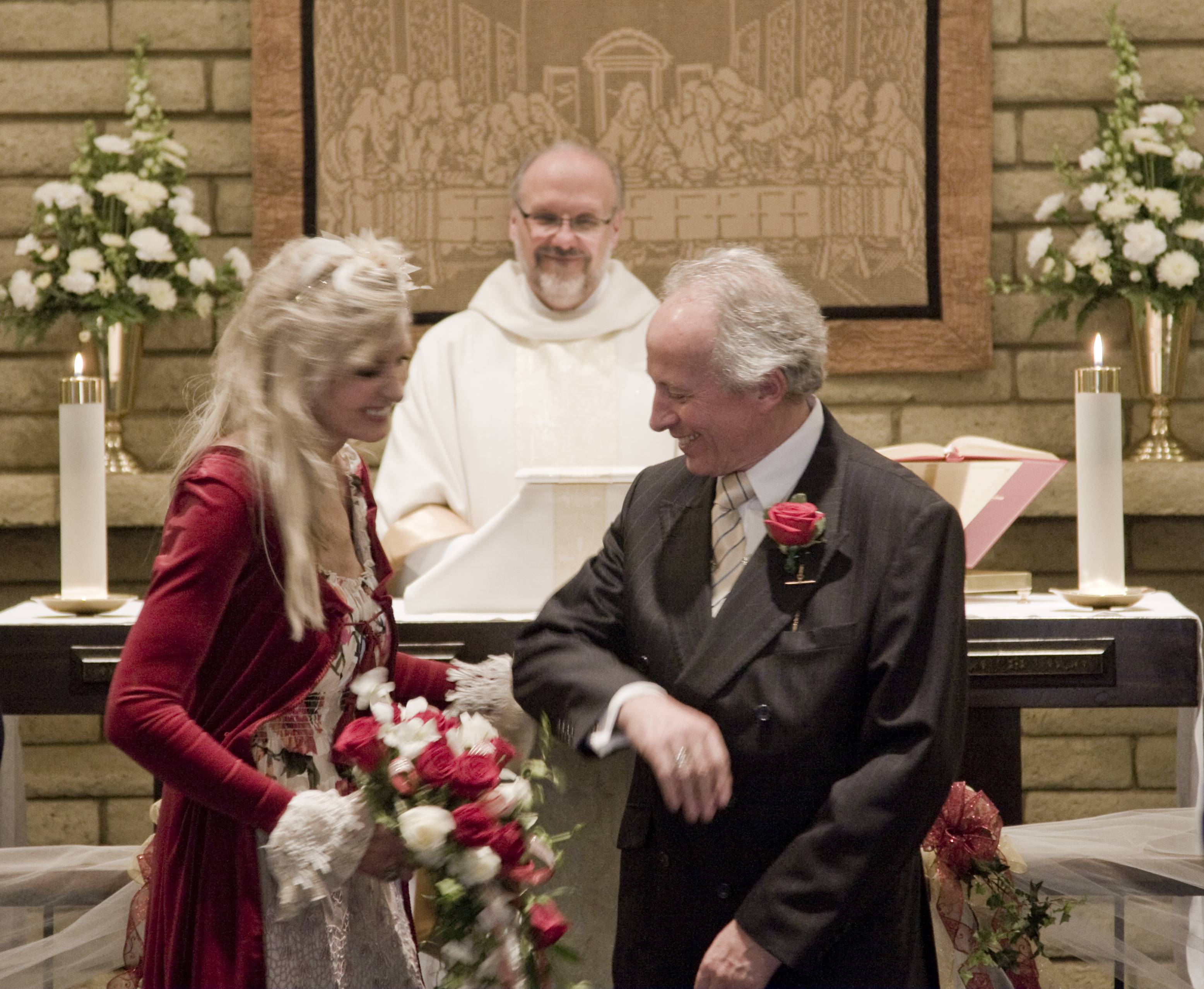
For Jean and I were married in St Paul’s Episcopal Church, Payson, Arizona on the 20th November in front of the Reverend Dan Tantimonaco.

Mr and Mrs Handover

That marriage gives me the right to apply to the US Government for Resident status and so, today, Thanksgiving Day 2010, Jean and I will also have our first celebratory feast in gratitude to starting our married lives as new Americans.

By Paul Handover

Future for Societies

The glass is filled half-way.  Is it half-full or half-empty?

This is a rhetorical question, of course.  It is what comes to mind as I write this simply because of a small half-full/half-empty experience in the last 10 minutes.  Let me explain.

I had started watching a video on TED.com.  This one was entitled Jared Diamond on why societies collapse.  Within a few minutes I started drifting to the comments, and read:

Jared Diamond talks of how societies choose (unwittingly) to collapse. William McDonough with his Cradle to Cradle concept also talks about choices and provides ‘Love of all children of all species for all time’ as a positive conscious choice.

With goals or missions in place (for example profit for businesses) humans have achieved amazing things.

So what would happen if all groups, families and individuals followed a mission of ‘Love of all children of all species for all time’?

I rather liked that.  We always have choices. A positive conscious choice is always better.

So I stopped the Jared Diamond lecture and found the William McDonough one, also on TED.com, and conveniently shared on YouTube.  It’s just 20 minutes long, so settle down somewhere, perhaps with a glass filled half-way with something!

By Paul Handover

Days of Hope

Today, like every day, is a beautiful day of hope!

At 3.30pm US Mountain Time – 10.30pm UK time – the marriage service between me and Jean Susan will commence at the Episcopal Church in Payson, Arizona.  It represents a wonderful day of hope.

But hope is something much bigger than a couple getting married.  See it from this perspective. From the eyes of Shimon Schocken.

There’s that word ‘love’ again.

By Paul Handover

Off topic!

Just a little distraction for today!


The unmistakeable Woody Allen


“More than any other time in history, mankind faces a crossroads. One path leads to despair and utter hopelessness. The other, to total extinction. Let us pray we have the wisdom to choose correctly.”

Woody Allen (1935 – ), My Speech to the Graduates

Read a few days ago on Baseline Scenario and I couldn’t resist using it.  Not the first time, I’m sure, you have read this dear readers but still well worth another airing.

Plus it gives me a chance to remind people that Baseline really is a Blog worth following.

by Paul Handover


Will Hutton, Them and Us

Changing Britain – Why We Need A Fair Society


Will Hutton


I have been reading Will Hutton‘s latest book for the last couple of weeks and am now through the first 5 chapters, at the time of writing this Post!  To my mind, it’s a very powerful and extremely well-argued summary of the sickness that has engulfed Britain, and by implication, other countries who have had similar experiences over the last 20 years.

There was a long extract published by the Guardian on the 26th September 2010 which gives one a good feel for the book.  Here’s how that extract starts:

The British are a lost tribe – disoriented, brooding and suspicious. They have lived through the biggest bank bail-out in history and the deepest recession since the 1930s, and they are now being warned that they face a decade of unparalleled public and private austerity. Yet only a few years earlier their political and business leaders were congratulating themselves on creating a new economic alchemy of unbroken growth based on financial services, open markets and a seemingly unending credit and property boom. As we know now, that was a false prospectus. All that had been created was a bubble economy and society. Yet while the country is now exhorted to tighten its belt and pay off its debts, those who created the crisis — the country’s CEOs and bankers, still living on Planet Extravagance, not to mention mainstream politicians — all want to get back to “business as usual”: the world of 1997 to 2007.

There are many, many sentences in the book that have one gasping for breath.  One of them that particular struck me was one on Page 13, see below for the sentence in italics.  But let me include sufficient text to put the sentence into context:

Today, philanthropy or living according to a particular moral code does not confer status.  Only money is able to do that.  People start to question whether vocational career choices – in farming, teaching, medicine or science – make any sense when society rewards them so lowly while rewarding finance so high.  Material values start to crowd out altruism, philanthropy and restraint.

Then comes this staggering reflection:

Two incidents in September 2007 highlighted the new values.  Lance Bombardier Ben Parkinson, who lost both legs after a landmine exploded in Afghanistan, was offered £152,000 compensation by the Ministry of Defence.  The very same week, Eric Nicoli left his job as CEO of EMI – having failed to turn around the company – with a pay-off of £3 million. [My italics]

Earlier, on page 6, Hutton writes of Richard Lambert, head of the Confederation of British Industry, the CBI as having said in March 2010, “for the first time in history officers of a company can become seriously rich without risking any of their own money.”   Here’s another piece from that extract published in the Guardian:

We need a shared understanding of what constitutes fairness in order to restore our society. At present, there is none. The rich argue that it is fair for them to be so wealthy, in much the same way as Athenian noblemen believed that their riches were signifiers of their worth. They believe they owe little or nothing to society, government or public institutions. They accept no limit or proportionality to their wealth, benchmarking themselves only against their fellow rich. Philanthropic giving is declining; tax avoidance is rising; and executive pay is rising exponentially. All three are justified by the doctrine that the rich simply deserve to be rich. Meanwhile, the poor, in their view – and that of a virulent right-wing media – largely deserve their plight because they could have chosen otherwise. The mockery of chavs is premised on the assumption that they could be different if they wanted to be. The poor could work, save and show some initiative. So why should we indulge them by giving them state handouts?

This lies behind the arrogance with which bankers still defend their bonuses, in spite of everything that has happened over the past few years.

OK, you get my drift! I could go on and on but, hopefully, my point is made.  This book by Hutton is going to be another of his classics and may well be seen as the ‘tipping point’ when society looks back in a decade’s time with that wonderful 20:20 hindsight!

Finally, are there other conclusions to be made of Hutton’s approach?  Yes, of course.  Reading the comments posted on the Guardian web page will show you many.

By Paul Handover