Category: Culture

Man’s first orbit around Planet Earth.

A wonderful tribute to Yuri Gagarin and all his team.

When I recently wrote of it being 41 years since Swigert on board Apollo 13 transmitted “Okay, Houston, we’ve had a problem here.” I also included a closing reflection as follows,

Finally, this Post is published, not only on the 41st anniversary of that memorable Apollo Flight but the day after the 50th anniversary of Yuri Gagarin’s first flight of a human into space, the 12th April, 1961.

Coincidentally, our favourite documentary film website, Top Documentary Films, featured on April 14th the new film First Orbit.  We watched the film that night.  It was a most unusual format for a film, yet a most haunting experience.  Watching the credits, it then became clear that the film was a co-operative venture made especially for the 50th anniversary of that remarkable, historic flight.

Of course, had I previously been aware of the venture and this remarkable film then it would have been promoted on Learning from Dogs in good time before the anniversary date.  However, better late than never!

Indeed, there is a dedicated website in recognition of this First Orbit.  Here’s the background to the film,

April 12th 1961 – Yuri Gagarin is about to see what no other person has seen in the history of humanity – the Earth from space. In the next 108 minutes he’ll see more than most people do in a lifetime. What sights awaited the first cosmonaut silently gliding over the world below? What was it like to view the oceans and continents sailing by from such a height?

In a unique collaboration with the European Space Agency, and the Expedition 26/27 crew of theInternational Space Station, we have created a new film of what Gagarin first witnessed fifty years ago.

By matching the orbital path of the Space Station, as closely as possible, to that of Gagarin’s Vostok 1spaceship and filming the same vistas of the Earth through the new giant cupola window, astronaut Paolo Nespoli, and documentary film maker Christopher Riley, have captured a new digital high definition view of the Earth below, half a century after Gagarin first witnessed it.

Weaving these new views together with historic, recordings of Gagarin from the time, (subtitled in Englsih) and an original score by composer Philip Sheppard, we have created a spellbinding film to share with people around the world on this historic anniversary.

The music in the film is most beautiful, quite moving.  Here’s the background to the music from the First Orbit website,

The music in our film is all composed by Philip Sheppard and comes from his album Cloud Songs.

First Orbit’s producer Christopher Riley first worked with Philip in 2006 on the Sundance Award winning feature documentary film ‘In the Shadow of the Moon‘ and since then Philip had been working on a new suite of music inspired by spaceflight.

“We’d been working with some of these tracks on another project” says Chris, “and we suddenly realised how perfectly they could compliment ‘First Orbit’ as well. We contacted Philip to ask his permission to use them, only to find that his entire Cloud Song album was already in orbit onboard the International Space Station!”

“NASA astronaut Cady Coleman, had them on her iPod” says Philip. “Her husband Josh Simpson is a friend of mine and they’d listened to a lot of my music together before she left, so I made up a playlist for her!”

Quite by coincidence Cady had been listening to the music in ‘First Orbit’ at one end of the Space Station whilst European Space Agency astronaut Paolo Nespoli was shooting for the film at the other end, without either of them knowing the connection!

Back on Earth Chris and the film’s editor Stephen Slater took Philip’s tracks from Cloud Song and weaved them together with Paolo’s new views of the Earth to create the different moods of the film; from the first views of snowy Siberia to the darkness of night over the Pacific Ocean and the homecoming over Africa, as Gagarin starts to re-enter the atmosphere.

The result is a mesmerising combination of imagary and music which we hope convey the spectrum of emotions which no doubt went through Yuri’s mind as he gazed down upon the Earth.

Finally, here’s the film. It’s an hour and thirty-nine minutes and, as I said, an unconventional film experience.  But if any part of you either remembers the event or wonders what it was like, those 50 years ago, then find somewhere out of reach of interruptions and watch the film.

Socrates and self-confidence

A presentation by Alain de Botton.

On April 12th, I introduced to you, dear reader, the philosopher, Alain de Botton. I promised that I would soon give you more.

On Top Documentary Films, there are links to all six parts of a series on philosophy presented by this popular British philosopher  featuring six thinkers who have influenced history, and their ideas about the pursuit of the happy life.

The first part is about Socrates; Socrates and self-confidence.  But before linking to that specific programme, a little about this enigmatic man, Socrates, who lived about 2,500 years ago (469–399 B.C.E).  Here’s an extract from the Stanford Encyclopaedia of Philosophy.

The philosopher Socrates remains, as he was in his lifetime (469–399 B.C.E.), an enigma, an inscrutable individual who, despite having written nothing, is considered one of the handful of philosophers who forever changed how philosophy itself was to be conceived. All our information about him is second-hand and most of it vigorously disputed, but his trial and death at the hands of the Athenian democracy is nevertheless the founding myth of the academic discipline of philosophy, and his influence has been felt far beyond philosophy itself, and in every age. Because his life is widely considered paradigmatic for the philosophic life and, more generally, for how anyone ought to live, Socrates has been encumbered with the admiration and emulation normally reserved for founders of religious sects—Jesus or Buddha—strange for someone who tried so hard to make others do their own thinking, and for someone convicted and executed on the charge of irreverence toward the gods. Certainly he was impressive, so impressive that many others were moved to write about him, all of whom found him strange by the conventions of fifth-century Athens: in his appearance, personality, and behavior, as well as in his views and methods.

Full entry may be read here, and very interesting it is, by the way.

Anyway, back to the programme from Alain de Botton.  The part on Socrates is introduced thus,

Why do so many people go along with the crowd and fail to stand up for what they truly believe? Partly because they are too easily swayed by other people’s opinions and partly because they don’t know when to have confidence in their own.

You can either watch the video by clicking here, or view it as three sections from YouTube, as follows.

Apollo 13 – who remembers?

55:55:20 – Swigert: “Okay, Houston, we’ve had a problem here.”

Apollo 13

Probably one of the most famous phrases from the whole Apollo program, these immortal words were uttered shortly before 10.10 PM EST on April 13th, 1970.

There is so much material around that it would be pointless covering too much ground in this Post.  So why the Post today?

Because today, too, is the 13th April.  So on this day, 41 years ago, the world came together held its collective breath and prayed for a successful outcome to this scary disaster.

There are some wonderful archives around from NASA.  Here’s one that covers the chronology of events of that famous accident.

The following includes events from 2.5 minutes before the accident to about 5 minutes after. Times given are in Ground Elapsed Time (G.E.T.), that is, the time elapsed since liftoff of Apollo 13 on April 11, 1970, at 2:13 PM Eastern Standard Time (EST). 55:52:00 G.E.T. is equal to 10:05 PM EST on April 13, 1970.

Also, those who want more information, may wish to go here, here and here

And 41 years ago, this coming Sunday, i.e. April 17th 1970, with the whole world praying for their safe return, Apollo 13 splashed down near Samoa.

Four hours before landing, the crew shed the service module; Mission Control had insisted on retaining it until then because everyone feared what the cold of space might do to the unsheltered CM heat shield. Photos of the Service Module showed one whole panel missing, and wreckage hanging out, it was a sorry mess as it drifted away. Three hours later the crew left the Lunar Module Aquarius and then splashed down gently in the Pacific Ocean near Samoa. From here.

In a very real sense, Apollo 13, like a number of the other historic Apollo flights, is a wonderful reminder of something that this Planet needs right now.  A coming together of all the peoples of this beautiful planet, a unity of mankind, to remind us in these fragile and difficult times of the saying, ‘United we stand, divided we fall.’

Finally, this Post is published, not only on the 41st anniversary of that memorable Apollo Flight but the day after the 50th anniversary of Yuri Gagarin’s first flight of a human into space, the 12th April, 1961.

Alain de Botton

An excursion into the nature of self!

I had not heard of Alain de Botton before coming across a series of his TV programmes via Top Documentary Films.  But, clearly, that has been my loss because he appears to have quite a following.  So over the next 10 days or so, I’m going to include some of his material in upcoming articles in the hope that you enjoy them as much as we have.

But first, an introduction to Alain de Botton from a TED Talks video from July 2009.  Enjoy.

Mogollon culture in Payson, AZ

In fact, within a few steps of our front door.

The son of one of our neighbours called us round last Thursday to show us the skeletal remains he recently found in their front garden together with a most beautiful pot.  Here are a few pictures.

Discovery site
Mogollon culture pot?
Ancient and modern!

On the website Desert USA there is a section dealing with the culture of the Prehistoric Desert Peoples including the peoples of The Mogollon.  Here’s an extract.

In addition to wild edible and utilitarian plants, the mountain flanks and desert basins harbored a thriving community of game, including bighorn sheep, elk, mule deer, white-tail deer, antelope, beaver, badger, blacktail jackrabbits, desert cottontails, turkeys and various other species. Rock exposures served as quarries for the raw materials for making projectile points and tools. Clay exposures provided the raw material for making ceramic vessels and figurines.

Even as the Mogollon people gradually adopted village life and farming, they would continue to count on the ranges and basins to supplement their larder and provide essential material resources. They would never be able to rely on corn, beans, squash and other crops to the exclusion of wild plant foods because the Mogollon region held relatively few areas suitable for agriculture. Most of them occurred along lower mountain river valleys, along the few desert river basins and near a few desert playas. Even those areas which were suitable experienced erratic rainfall year in and year out.

The article includes the following photograph which shows how close the resemblance of the pot found next door to the one in the article.

All very fascinating. Indeed, when one reflects that European descendants have only been in the area for about 500 years and Payson considers it’s founding year as recent as 1882 it really isn’t that long ago, in historical terms, that the land around here will have borne the footprints of peoples very different to us today.

Maybe on still, dark nights, their memories are very close to us.

Unintended consequences!

Europe’s fishing quotas turning a seemingly good idea into apparent madness.

The European Union formally came into being in 1993 although co-operation in the form of the European Coal and Steel Community and then the European Economic Community went well back before then, back to the 1950’s.

As far back as 1957 when the Treaty of Rome was established, an Article stated that there should be a common policy for fisheries.  That became known as the Common Fisheries Policy.  Fish catches in many European waters were reducing stocks of many species to the point of extinction, so something had to be done.

Now watch this.

If you feel sufficiently perplexed to want to learn more, then Hugh Fearnley-Whittingstall,  a food and cookery writer and broadcaster, as well as a campaigner for real food, has a Campaign Website here.  There is a Facebook page here.

How on earth would one explain such actions to, say, these two kids?


Ready for a fish meal!


Think you understand money?

This documentary may, probably WILL,  enlighten you.

On the 30th March I wrote about the film Inside Job.  Then a few days ago James Kwak of Baseline Scenario, a blog that I have been reading for some time now, also wrote a piece about the film, opening his Post thus,

I finally saw Inside Job at a friend’s house tonight. I don’t have anything original to say about it. I thought it was a very, very good movie. There were lots of little things that weren’t quite right (many of which were probably conscious decisions to simplify details for the sake of comprehension), but I don’t think any of them were substantively misleading.

As always with Baseline Scenario, the comments are as interesting and educational as the article, and that was just as valid in this case.  One of the comments was from Carla who wrote,

I think Inside Job is no longer available to view for free now that the DVD is for sale at Amazon (well worth the purchase, BTW).

But at the same site I found “The Money Fix,” which you can watch for free: http://topdocumentaryfilms.com/money-fix/

Also, there’s another site with some good free docs:http://www.freedocumentaries.org.

Anyway, we watched the film on Tuesday evening and, boy oh boy, was it an eye-opener.

I promise you, the full film is so well worth watching.   (And do read to the end of this Post!)

The film also makes reference to the website The Money Fix which has a great number of resources for those that wish to explore further this fascinating subject.  Thanks Carla.


20:20 hindsight

One of the great aspects of modern web-based communications is that much of what is said, written and recorded is available to peruse long after the item was ‘broadcast’.

Prof. Ehrenfeld

A few days ago, I introduced Prof. David Ehrenfeld via a short, but stunningly clear, five-minute YouTube video.  I promised to follow that up with more material.

So here’s a book review undertaken by Prof. Ehrenfeld.  The book in question is The Long Emergency: Surviving the Converging Catastrophes of the Twenty-First Century. James Howard Kunstler. x + 307 pp. Atlantic Monthly Press, 2005. $23.  Here’s the review in full from The American Scientist website.  Read it carefully and ponder that this review goes back to Autumn 2005, about five and half years ago. Great foresight.

James Howard Kunstler begins The Long Emergency with the hope that “the American public will wake up from its sleepwalk and act to defend the project of civilization” while there is still time. “Throughout this book,” he writes, “I will concern myself with what I believe is happening, what will happen, or what is likely to happen, not what I hope or wish will happen.” The reality that our society is currently refusing to face, Kunstler says, is that time is just about up for industrial civilization as we have known it.

Kunstler’s thesis is straightforward: Malthus was right, but cheap oil has postponed the day of reckoning, creating a century-long “artificial bubble of plenitude” and generating a host of intractable problems partly or entirely related to our prolonged energy spending spree. These problems include serious damage to our agricultural infrastructure, global climate change and the reorganization of living places into unsustainable suburbs and cities. Now cheap oil is disappearing fast, leaving only the problems behind.

What sets The Long Emergency apart from numerous other books on this theme is its comprehensive sweep—its powerful integration of science, technology, economics, finance, international politics and social change—along with a fascinating attempt to peer into a chaotic future. And Kunstler is such a compelling, fast-paced and sometimes eloquent writer that the book is hard to put down.

Beginning with the story of Edwin L. Drake, who drilled the world’s first oil well in northwestern Pennsylvania in August 1859, Kunstler takes us through the development of the global oil-based economy of the 20th and early 21st centuries. He carefully traces the origins of the idea, first proposed by geologist M. King Hubbert, that oil consumption by modern industrial society will draw down current and potential supplies in a predictable way. Hubbert’s 1956 prediction of the date of “peak oil” production in the United States (which he put at sometime between 1966 and 1972) was strikingly accurate—the peak occurred in 1970. After Hubbert’s death in 1989, the distinguished petroleum geologists Colin Campbell and Jean Laherrère, Princeton geologist Kenneth Deffeyes, University of Colorado physicist Albert Bartlett and others adapted his model and applied it to global oil production, yielding a prediction that the global peak would occur between 2000 and 2010.

As pointed out by Richard A. Kerr and Robert F. Service in the July 1, 2005, issue of Science, petroleum geologists tend to accept this “pessimistic” prediction of the date when the global peak will be (or has been) reached, whereas “optimistic” dates farther in the future are being advanced primarily by resource economists. Kunstler sides with the geologists, and his fast-paced but detailed discussion of the economics of oil supports this position. In his chapter “Geopolitics and the Global Oil Peak,” he comes to grips with a complex mix of elements: Middle Eastern and Islamic nationalism, terrorism, Chinese industrial growth and the overwhelming problems of Russia, the world’s second-largest producer of oil. These are set against a backdrop of diminishing supply, as one country after another, including Saudi Arabia, passes its oil peak. Kunstler’s explanations of why the Saudis can no longer control world oil prices (they lack the reserves to increase production much beyond what they are already pumping) and of the immense significance of that loss of control are particularly insightful. American politicians have not yet grasped this new reality.

The book’s lengthy discussion of the alternatives to cheap oil that are so beloved by techno-optimists is straightforward and sobering. Kunstler gives all of the alternatives a critical but fair inquiry, from conventional energy sources such as coal and natural gas, through oil shales and tar sands, synthetic oil, renewable energy (including wind, solar and hydroelectric power and biomass), nuclear fission and nuclear fusion, hydrogen, thermal depolymerization (turning organic waste into oil), methane hydrates and even zero-point energy.

Most of these technologies founder on “the classic problem of energy economics: energy returned over energy invested (ERoEI). “The figure in the case of tar sands and oil shale is approximately three barrels of oil produced for every two barrels of oil-equivalent invested. In the case of ethanol produced from agribusiness corn or sugar cane, the ratio may be less than one. Some alternatives, such as methane hydrates, are dangerous to handle. Hydrogen is not a primary fuel: Its production requires considerable energy. Also, because of the low density of hydrogen gas, it must be stored and transported under high compression, or liquefied at very low temperatures, or combined with other compounds. Each of these options costs still more energy, and they introduce an assortment of complications and hazards into the delivery system. Although hydrogen will have its uses, Kunstler says, his verdict is unequivocal: “There is not going to be a ‘hydrogen economy.'” Nor is he sanguine about such far-out schemes as a process for deriving zero-point energy from the dark matter of the universe; he reminds us that “A useful maxim in engineering states that when something sounds too good to be true, it generally is not true.”

Kunstler’s moderate treatment of nuclear power (fission) has angered some environmentalists. I think he makes a good case, however, that during the transition period to a post-petroleum economy, the United States, which produces much of its electricity from a rapidly declining supply of natural gas, will not be as well off as France, which gets 80 percent of its electric power from nuclear energy. Nevertheless, he does not see nuclear power as more than a short-term stopgap. Its ultimate limitations come first from safety issues with regard to plant operations and the disposal of waste fuel (although he points out that coal has cost far more lives than nuclear power, especially in the West). Second is the large amount of oil needed to mine and process nuclear fuel and to build and maintain nuclear plants. And the third, formidable objection Kunstler makes is that “Atomic fission is useful for producing electricity, but most of America’s energy needs are for things that electricity can’t do very well, if at all. For instance, you can’t fly airplanes on electric power from nuclear reactors”—although, as he notes, the U.S. military has tried.

Kunstler describes a host of natural disasters that will interact with the energy crisis to cause social upheaval on a global scale. No country will be exempt, he says. Some of these disasters, such as climate change, are the direct result of our profligate use of cheap energy. Others, including the widespread shortage of fresh water, have been greatly augmented by the drain on resources brought about by the explosion of high-oil-input agriculture, industrialization and changes in living habits. All of those natural disasters, however, including the emergence of new infectious diseases and the re-emergence of old ones, will be much harder to cope with when cheap energy is no longer available. Our efforts will also be confounded by diminishing returns on technology and by “technological regress—the loss of information, ability, and confidence.”

The Long Emergency is more than a list of disasters, present or impending. It is an attempt to understand how we got to where we are. Nearly 100 years of cheap oil have allowed us, even prompted us, to construct an economic and social system that depends utterly (often without our knowledge) on a continuous, never-failing energy subsidy. The system cannot stand on its own feet. It is unstable, lacking internal restraints and negative feedbacks, and most of all it undermines all stabilizing alternatives, such as diverse small businesses and local community support systems. Kunstler’s understanding of history and economics helps him delineate this clearly.

My only complaint about the book is that it lacks an index, which is inexcusable for a text so crammed with names and facts. Kunstler’s use ofentropy as a synonym for social disorder may bother readers who prefer that the term be reserved for discussions of thermodynamics, but an accepted definition of the word is “inevitable and steady deterioration of a system or society.”

One question that most readers of this review will ask is, When will the coming collapse occur? As Kunstler notes, Deffeyes—perhaps not entirely in jest—has predicted on National Public Radio that the global oil peak will occur on Thanksgiving Day, 2005, with “‘an uncertainty factor of only three or four weeks on either side.'” But the closest thing to a hint of Kunstler’s position on the subject is found in his remark in the last chapter that “The denizens of Bergen County, New Jersey, or Fairfield County, Connecticut, today may never believe how desperate their localities may become in 2025.” He is probably wise to be vague. As the great biochemist Erwin Chargaff remarked in his 1978 autobiography, Heraclitean Fire, “On the whole, professional pessimists prove right at the end if one does not hold them too tightly to a time scale.”

The last (and longest) chapter of The Long Emergency is also the most innovative and controversial one. Having made a powerful case that it is too late to avoid serious trauma, Kunstler speculates on what life will be like during the painful transition period, as cheap petroleum wanes. The question is well worth asking, if only to stimulate creative thinking about alternatives to a high-energy lifestyle. The book is not a survivalist tract, but Kunstler argues persuasively that life will be better in some geographic regions of the country than in others and better in some kinds of communities than in others. Factors such as the availability of water, the degree of dependence on automobiles and air-conditioning, the regional tolerance for violence and the persistence of strong communities lead him to conclude that the states of New England, the mid-Atlantic, and the upper Midwest that make up the “Old Union” of the Civil War period, along with the Pacific Northwest, will fare much better than the Southwest, the Rocky Mountain states and the Southeast.

Within each region, however, conditions will not be uniform. Kunstler, whose earlier book The Geography of Nowhere established him as heir presumptive to the intellectual legacy of Lewis Mumford, describes America’s automobile-dependent suburbs as “the greatest misallocation of resources in the history of the world.” It is the suburbs, he thinks, that will suffer the most during the coming energy crisis. (I concur, having taught the same message in field courses in suburban New Jersey for 30 years.) And cities, with their skyscrapers and total food dependence, will not, Kunstler claims, be far behind the suburbs in misery.

There is much more in the final chapter than I can do justice to in a review: The many topics discussed include, among others, the new economy and new commerce that will accompany the end of oil-dependent consumer culture (he predicts the demise of the chain stores and the rise of scavenging), possible political fragmentation of the nation, changes in education, the end of romantic childhood and changes in race relations. The picture he paints is incomplete—he doesn’t say what will happen to health care, the arts or entertainment in the long emergency—but there is material enough to provoke scientists and laypeople alike into considering what lies ahead.

Kunstler, like George Orwell, understands that being honest about the past and present is the only way to prepare ourselves for an uncertain future. Civilization, he believes, will survive the end of cheap oil, but not without great loss. “How many … familiar things in time may go?” he wonders. “What will abide in our collective memory?” Not all readers will accept his answers to these questions, but I think we must be grateful to him for showing us the need to ask them.

A timely reminder that so very often it is knowing what questions to ask that matters most!
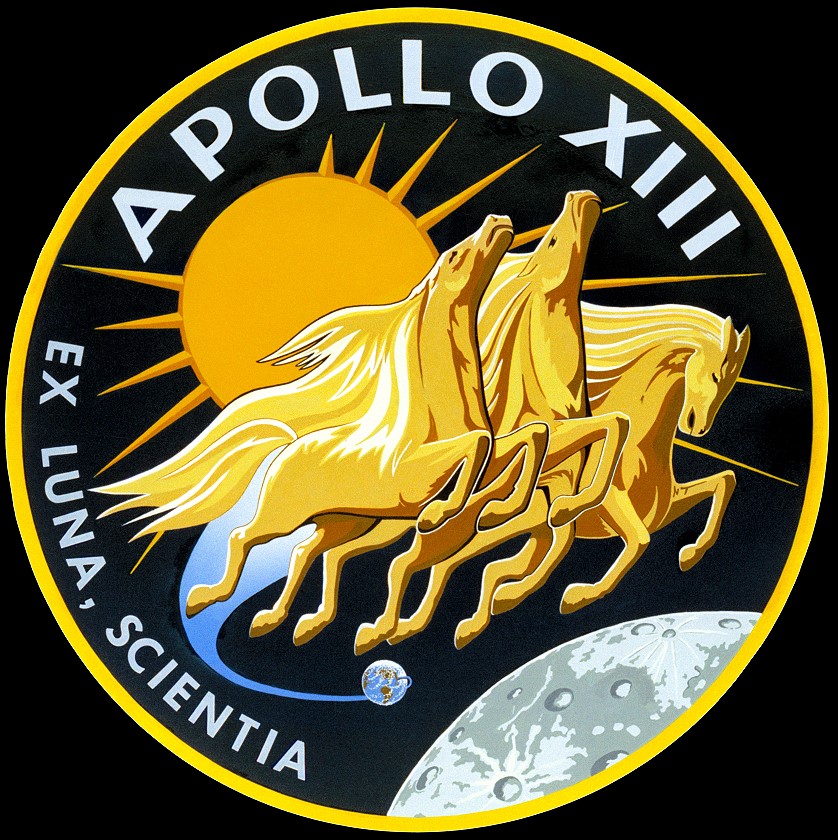
David Ehrenfeld

Five minutes of pure sanity

I can’t recall how I came across this wise Professor but it was in recent times.  Not going to say any more at this stage. Just watch the following.

There will be more from David Ehrenfeld over the coming weeks.

Humanity is on the march, earth itself is left behind.

David Ehrenfeld, The Arrogance of Humanism, 1978

Inside job

The shocking documentary film about the global financial crisis.

I’m sure many have already see the film Inside Job but we only watched it a few nights ago.  Here’s the trailer.

The film is also available to watch on Top Documentary Films and is summarised on that website thus:

As he did with the occupation of Iraq in No End in Sight, Charles Ferguson shines a light on the global financial crisis in Inside Job.

Accompanied by narration from Matt Damon, Ferguson begins and ends in Iceland, a flourishing country that gave American-style banking a try – and paid the price.

Then he looks at the spectacular rise and cataclysmic fall of deregulation in the United States. Unlike Alex Gibney’s fiscal films,Enron: The Smartest Guys in the Room and Casino Jack, Ferguson builds his narrative around dozens of players, interviewing authors, bank managers, government ministers, and even a psychotherapist, who speaks to a culture that encourages Gordon Gekko-like behavior, but the number of those who declined to comment, like Alan Greenspan, is even larger.

Though the director isn’t as combative as Michael Moore, he asks tough questions and elicits squirms from several participants, notably former Treasury secretary David McCormick and Columbia dean Glenn Hubbard, George W. Bush’s economic adviser.

Their reactions are understandable, since the borders between Wall Street, Washington, and the Ivy League dissolved years ago; it’s hard to know who to trust when conflicts of interest run rampant.

If Ferguson takes Reagan and Bush to task for tax cuts that benefit the wealthy, he criticizes Clinton for encouraging derivatives and Obama for failing to deliver on the promise of reform. And in the category of unlikely heroes: former governor Eliot Spitzer, who fought against fraud as New York’s attorney general (he’s the subject of Gibney’s documentary Client 9).

Sony have available on their website a useful study guide.  It appears to be written with students in mind but there is much valuable background information there for all.  The guide, in pdf, may be seen here.

It would all have been worthwhile, if that’s the correct term, if we had seen effective regulatory responses from strong governments but, as the film points out, the millions of people on the receiving end of harsh, downward adjustment of personal wealth are still waiting.

Meanwhile, Europe continues to bleed, American housing is still trending downwards and the real effect of the Japanese earthquake is far from clear.

We are living in interesting times!