Category: Culture

Summer Solstice 2011

Let’s all pause for a moment (and my apologies for the late posting!)

The precise time of the summer solstice today is 17.16 Greenwich Mean Time (GMT/UTC).

Our sun, giver of life

In terms of local times that will be 10.16 here in Arizona and also in California, 13.16 in New York, 18.16 in London, and 03.16 (Wed) in Sydney, Australia, to pick just a few places.

What a year it has been so far!

So let’s just pause for a moment, as the Sun appears to pause, and put out our combined thoughts across this wonderful Planet Earth and pray for peace and tranquillity for all during the rest of this ‘interesting’ year.

Crazy, dangerous and very, very beautiful

I love taking photographs but this takes the cake!

(Note: there’s an option in WordPress to insert a ‘read more‘ link, the effect of which is to limit what you, dear reader, can see when you first come to a Blog article.  I prefer normally not to insert that link.  But for reasons that will soon be very obvious, it has to be used in this Post.)

Just watch this.

OK, more about this amazing man follows,

Continue reading “Crazy, dangerous and very, very beautiful”

More from Lester Brown

The president of Earth Policy Institute presents his thesis on how best to save mankind.

Before turning to the theme of this Post, just a personal message.  I arrived back home in Payson, Arizona yesterday and, as much as I love the huge number of readers that now regularly visit Learning from Dogs, I love my dear wife rather more 😉  So for the next few days, please understand why this Blog will be tending to ‘republish’ the fine works of others, to lessen the creative load on yours truly.

Here’s the Lester Brown article that was recently published on the Earth Policy Institute website.

JUNE 09, 2011
Turning Toward the Sun for Energy

Lester R. Brown

One key component of the Plan B climate stabilization strategy is solar energy. Solar is even more ubiquitous than wind energy and can be harnessed with both solar photovoltaics (PV) and solar thermal collectors.

Solar PV—both silicon-based and thin film—converts sunlight directly into electricity. The growth in solar cell production climbed from an annual expansion of 38 percent in 2006 to an off-the-chart 89 percent in 2008, before settling back to 51 percent in 2009. At the end of 2009, there were 23,000 megawatts of PV installations worldwide, which when operating at peak power could match the output of 23 nuclear power plants. Germany, with an installed PV power generating capacity of almost 10,000 megawatts, is far and away the world leader in installations.

On the manufacturing front, the early leaders—the United States, Japan, and Germany—have been overtaken by China, which produces more than twice as many solar cells annually as Japan. World PV production has roughly doubled every two years since 2001 and exceeded 20,000 megawatts in 2010.

Historically, photovoltaic installations were small-scale—mostly residential rooftop installations. Now that is changing as utility-scale PV projects are being launched in several countries. The United States, for example, has under construction and development some 77 utility-scale projects, adding up to 13,200 megawatts of generating capacity. Morocco is now planning five large solar-generating projects, either photovoltaic or solar thermal or both, each ranging from 100 to 500 megawatts.

More and more countries, states, and provinces are setting solar installation goals. Italy’s solar industry group is projecting 15,000 megawatts of installed capacity by 2020. Japan is planning 28,000 megawatts by 2020. The state of California has set a goal of 3,000 megawatts by 2017. Solar-rich Saudi Arabia recently announced that it plans to shift from oil to solar energy to power new desalination plants that supply the country’s residential water. It currently uses 1.5 million barrels of oil per day to operate some 30 desalting plants.

With installations of solar PV climbing, with costs continuing to fall, and with concerns about climate change escalating, cumulative PV installations could reach 1.5 million megawatts (1,500 gigawatts) in 2020. Although this estimate may seem overly ambitious, it could in fact be conservative, because if most of the 1.5 billion people who lack electricity today get it by 2020, it will likely be because they have installed home solar systems. In many cases, it is cheaper to install solar cells for individual homes than it is to build a grid and a central power plant.

The second, very promising way to harness solar energy on a massive scale is a large-scale solar thermal technology, often referred to as concentrating solar power (CSP), that uses reflectors to concentrate sunlight on a liquid, producing steam to drive a turbine and generate electricity. One of the attractions of utility-scale CSP plants is that heat during the day can be stored in molten salt at temperatures above 1,000 degrees Fahrenheit. The heat can then be used to keep the turbines running for eight or more hours after sunset.

CSP first came on the scene with the construction of a 350-megawatt solar thermal power plant complex in California. Completed in 1991, it was the world’s only utility-scale solar thermal generating facility until the completion of a 64-megawatt power plant in Nevada in 2007.

Although solar thermal power has been slow to get under way, utility-scale plants are being built rapidly now, led by the United States and Spain. The United States has more than 40 solar thermal power plants operating, under construction, and under development that range from 10 to 1,200 megawatts each. Spain has 60 power plants in these same stages of development, most of which are 50 megawatts each. The American Solar Energy Societynotes that solar thermal resources in the U.S. Southwest can satisfy current U.S. electricity needs nearly four times over.

In July 2009, a group of 11 leading European firms and one Algerian firm, led by Munich Re and including Deutsche Bank, Siemens, and ABB, announced that they were going to craft a strategy and funding proposal to develop solar thermal generating capacity in North Africa and the Middle East. Their proposal would meet the needs of the producer countries and supply part of Europe’s electricity via undersea cable.

This initiative, known as the Desertec Industrial Initiative, could develop 300,000 megawatts of solar thermal generating capacity—huge by any standard. Caio Koch-Weser, vice chair of Deutsche Bank, noted that “the Initiative shows in what dimensions and on what scale we must think if we are to master the challenges from climate change.”

Even before this proposal, Algeria—for decades an oil exporter—was planning to build 6,000 megawatts of solar thermal generating capacity for export to Europe via undersea cable. The Algerians note that they have enough harnessable solar energy in their vast desert to power the entire world economy. This is not a mathematical error. The German government was quick to respond to the Algerian initiative. The plan is to build a 1,900-mile high-voltage transmission line from Adrar deep in the Algerian desert to Aachen, a town on Germany’s border with the Netherlands.

At the global level, Greenpeace, the European Solar Thermal Electricity Association, and the International Energy Agency’s SolarPACES program have outlined a plan to develop 1.5 million megawatts of solar thermal power plant capacity by 2050. For Earth Policy Institute’sPlan B to save civilization, we suggest a more immediate world goal of 200,000 megawatts by 2020, a goal that may well be exceeded as the economic potential becomes clearer.

The pace of solar energy development is accelerating as the installation of rooftop solar water heaters—solar thermal collectors on a smaller scale—takes off. This technology is sweeping China like wildfire, with an estimated 1.9 billion square feet of rooftop solar thermal collectors installed, enough to supply 120 million Chinese households with hot water. Other developing countries such as India and Brazil may also soon see millions of households turning to this inexpensive water heating technology. Once the initial installment cost of rooftop solar water heaters is paid back, the hot water is essentially free.

In Europe, where energy costs are relatively high, rooftop solar water heaters are also spreading fast. Systems typically pay for themselves in electricity savings within 10 years. In Austria, 15 percent of all households now rely on them for hot water. As in China, in some Austrian villages nearly all homes have rooftop collectors. And some 2 million Germans are now living in homes where water and space are both heated by rooftop solar systems.

The U.S. rooftop solar water heating industry has historically concentrated on a niche market—selling and marketing 100 million square feet of solar water heaters for swimming pools between 1995 and 2005. The industry was poised to mass-market residential solar water and space heating systems when federal tax credits were introduced in 2006. Led by Hawaii, California, and Florida, annual U.S. installation of these systems has more than tripled since 2005. The state of Hawaii requires that all new single-family homes have rooftop solar water heaters. California aims to install 200,000 solar water heaters by 2017, and New York State aims to have 170,000 residential solar water systems in operation by 2020.

With the cost of rooftop heating systems declining, many other countries will likely join Israel, Spain, and Portugal in mandating that all new buildings incorporate rooftop solar water heaters. Worldwide, Plan B calls for a total of 1,100 thermal gigawatts of rooftop solar water and space heating capacity by 2020.

Moving fast to harness the world’s enormous solar potential would bring a clear win for local economies and for the climate.

Adapted from World on the Edge by Lester R. Brown. Full book available online atwww.earth-policy.org/books/wote

There are a couple of videos well worth watching on YouTube, one that’s just under 10 minutes,

and a full-length one of 1 hr 7 minutes,

Consciousness, science or God?

More of Peter Russell’s insightful ideas.

It was back in March, the 8th to be precise, when I first wrote about Peter Russell.  Well just over a week ago, I came across another article by Russell from the Huffington Post.  It was then a moment’s work to find it on Peter Russell’s own website.  (This links to various essays on the topic.)

Here’s a ‘taste’ from the first essay.

The Anomaly of Consciousness

Excerpted from book From Science to God

Science has had remarkable success in explaining the structure and functioning of the material world, but when it comes to the inner world of the mind science falls curiously silent. There is nothing in physics, chemistry, biology, or any other science that can account for our having an interior world. In a strange way, scientists would be much happier if there were no such thing as consciousness.

David Chalmers, professor of philosophy at the University of Arizona, calls this the “hard problem” of consciousness. The so-called “easy problems” are those concerned with brain function and its correlation with mental phenomena: how, for example, we discriminate, categorize, and react to stimuli; how incoming sensory data are integrated with past experience; how we focus our attention; and what distinguishes wakefulness from sleep.

It would be wrong to publish anything more so if you are interested in more, then go here and pick away or better still buy the book!

If you have a quiet 30 minutes, settle down and watch these videos

Part One

Part Two

Part Three

Disconnected.

Travelling the 5,200 miles, give or take, between Payson (AZ) and London (UK)

Apologies for a slightly reduced service over the next 10 days but Monday 6th June finds me travelling from Phoenix to Dallas, and then Dallas to London Heathrow.  This as a result of the U.S. Citizenship and Immigration Service (USCIS) granting me permanent residence (the Green Card) in April and thus me being able to travel back to England to see my new grandson for the first time.

So just a few thoughts, courtesy of Terry Hershey.  I subscribe to his weekly Sabbath Moment and they always contain some beautiful sayings and other gems.  Take these for example, from his Sabbath Moment of the 30th May.

Anything I’ve ever done that ultimately was worthwhile. . .initially scared me to death.  Betty Bender

Betty Bender

Or what about this?

To dare is to lose one’s footing momentarily. To not dare is to lose oneself. Soren Kierkegaard

A quick search reveals from the Stanford Encyclopaedia of Philosophy that,

Soren Kierkegaard

Søren Aabye Kierkegaard (b. 1813, d. 1855) was a profound and prolific writer in the Danish “golden age” of intellectual and artistic activity. His work crosses the boundaries of philosophy, theology, psychology, literary criticism, devotional literature and fiction. Kierkegaard brought this potent mixture of discourses to bear as social critique and for the purpose of renewing Christian faith within Christendom. At the same time he made many original conceptual contributions to each of the disciplines he employed. He is known as the “father of existentialism”, but at least as important are his critiques of Hegel and of the German romantics, his contributions to the development of modernism, his literary experimentation, his vivid re-presentation of biblical figures to bring out their modern relevance, his invention of key concepts which have been explored and redeployed by thinkers ever since, his interventions in contemporary Danish church politics, and his fervent attempts to analyse and revitalise Christian faith.

OK, dear readers, from somewhere over who knows where!

More poetic praise for dogs

A poem by George Crabbe.

I don’t recall who it was who passed this poem to me so apologies for that.

Also a trawl around the Internet can’t find the name of the poem although it is referred to several times as a quote from the late George Crabbe.

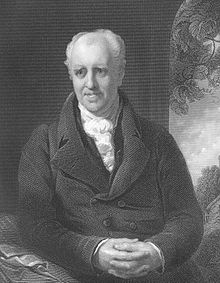
George Crabbe

Anyway, quote or poem, here it is:

With eye upraised his master’s look to scan,
The joy, the solace, and the aid of man:
The rich man’s guardian and the poor man’s friend,
The only creature faithful to the end.

George Crabbe

However my trawl for more details about the poem did lead to some interesting background information about this writer.

From the website, Our Civilisation

George Crabbe

(1754-1832)

George Crabbe combined three careers: doctor, minister, and writer. Born in Aldeburgh, a fishing village in Suffolk, he served his apprenticeship to an apothecary, and then set up as a surgeon-apothecary in 1775. He abandoned this career four years later and went to London to earn his living as a writer. In 1782 he was ordained priest and became chaplain to the Duke of Rutland. He held several livings thereafter, and finally in 1814 became rector of Trowbridge, Wiltshire, where he spent the rest of his life.

Crabbe’s long literary career divides into two parts: the poems, — notably ‘The Village‘ (1783), published during or shortly after his early stay in London; and the long series of works beginning with ‘Poems‘ (1807), which includes ‘The Parish Register‘ and ‘Sir Eustace Grey‘;’The Borough‘ (1810), ‘Tales in Verse‘ (1812), ‘Tales of the Hall‘ (1819), and the inferior ‘Posthumous Tales‘ (1834). This series shows Crabbe moving from static description and portrait toward narrative, until he achieves something which approaches a group of linked short stories in verse. His work, in its low-keyed, realistic, unsentimental picture of rural life, represents less the last gasp of eighteenth-century poetry than a reaction to it different in direction from Wordsworth’s. It is indicative of the kind of work Crabbe produced that Thomas Hardy admired and was influenced by him.

Also Wikipedia has an extensive entry for Crabbe that starts,

George Crabbe (24 December 1754 – 3 February 1832) was an English poet and naturalist.

He was born in AldeburghSuffolk, the son of a tax collector, and developed his love of poetry as a child. In 1768, he was apprenticed to a local doctor, who taught him little, and in 1771 he changed masters and moved to Woodbridge. There he met his future wife, Sarah Elmy, who accepted his proposal and had the faith and patience not only to wait for Crabbe but to encourage his verse writing. His first major work, a poem entitled “Inebriety”, was self-published in 1775. By this time he had completed his medical training, and had decided to take up writing seriously. In 1780, he went to London, where he had little success, but eventually made an impression on Edmund Burke, who helped him have his poem, The Library, published in 1781. In the meantime, Crabbe’s religious nature had made itself felt, and he was ordained a clergyman and became chaplain to the Duke of Rutland at Belvoir Castle in Leicestershire.

The two works for which Crabbe became best known were The Village (1783) and The Borough (1810), both lengthy poems dealing with the way of life he had experienced. In 1783, he also married Sarah. In 1814, he became Rector of Trowbridge in Wiltshire, where he remained. By the time of his death, he was well regarded and a friend of William Wordsworth, Sir Walter Scott and other major literary figures of the time.

Praise poetic for man’s best friend

Thanks to Neil K in Devon for drawing my attention to this poem.

Four-Feet by Rudyard Kipling

I have done mostly what most men do,
And pushed it out of my mind;
But I can’t forget, if I wanted to,
Four-Feet trotting behind.

Day after day, the whole day through —
Wherever my road inclined —
Four-feet said, “I am coming with you!”
And trotted along behind.

Now I must go by some other round, —
Which I shall never find —
Somewhere that does not carry the sound
Of Four-Feet trotting behind.

Rudyard Kipling

Practice makes perfect

A personal musing about the value of training.

A good friend here in Payson, himself a former ‘lamplighter’ forwarded me an email with a link to a video taken using the Head-Up-Display (HUD) camera which  also has a voice recorder.

F-16 fighter/attack aircraft

This is the email,

Here’s the F-16 dead stick into Elizabeth City, NC: A fairly short  RWY for jets, (about 6000 ft long), but qualifies for an  “Emergency landing field” in the grand scheme of US  aviation.

You’ll probably have to watch the video several times to appreciate  how intense the situation and how busy the pilot was all the way to  stopping on the runway.  Very apparently, the pilot was one-of-four  F-16s in a flight returning to their base, (most probably from  the Navy Dare bombing range south of Manteo), and the F-16  in question had already reported a “Ruff-Running Engine” to his flight  leader before the start of the video.
A few comments not readily apparent are:

  • The whole episode, from start-to-finish only takes about 3 1/2  minutes!
  • The video begins as the flight is being followed on radar.
The flight leader asks for the Elizabeth City tower UHF freq which  is repeated as 355.6 and the entire flight switches to that freq: Just  one-more-task for the pilot to execute in the cockpit as he reports that  his engine has QUIT.  He has to activate the Emergency Unit to  maintain electric and hydraulic power.  This unit is powered by  Hydrazine:  (the caustic fuel that Germany created in WW II to  power their V-2 Rockets and their ME-163 rocket fighters among  others.) Thus, the last call about requesting fire support after the  jet is safe on deck, and pilot breathing easy.

Meanwhile, back in the cockpit, the pilot is busily attempting to  “Re-light” his engine: (Unsuccessfully, of course) while tending to  everything else.  The video is taken using the Head-Up-Display (HUD) camera which  also has a voice recorder.

The HUD is a very busy instrument, but among things to notice  are the ‘circle’ in the middle which represents the nose of the aircraft  and where it is ‘pointed’: “The velocity Vector”.

The flight leader reports they are 7-miles out from the airport and  at 9000 ft altitude.  Since the weather is clear and the airport is  in sight, this allows for adequate “Gliding distance” to reach a  runway with the engine OFF.  Rest assured, jet fighters glide sorta like a rock.  They don’t enjoy the higher lift design of an airliner like that which allowed Sullenburger to land in the  NY river.

Coming down 9000 ft in only 7-miles requires a helluva rate of  descent, so the pilot’s nose remains well below the “Horizon” until just  prior to touching down on the runway.  The HUD horizon is a solid,  lateral bar, and below the horizon, the horizontal lines appear as dashes.  You’ll see a “10” on the second dashed line below the horizon which =  10-degrees nose low.

Radio chatter includes the flight leader calling the  tower and the tower stating runway 10 with wind 070 @ 5 mph with the altimeter setting of 30.13, yet  another step for the pilot to consider.
The flight leader calls for the pilot to jettison his external fuel  tanks and askes another pilot in the flight to “Mark” where they  dropped.  The tower later tells the pilot to land on any runway he  chooses.
Pilot reports “Three in the green” indicating all three gear  indicate down and locked which the flight leader acknowledges.
You will hear the computer voice of “Bitchin’-Betty” calling out  “Warnings”.  More confusing chatter when none is welcome or even  necessary.  (That’s “Hi-Tech” for ya.)

The pilot has only ONE CHANCE to get this right and must also slow  to an acceptable landing speed in order to stop on the short runway.   You’ll see Black rubber on the rwy where “The rubber meets the road” in  the touchdown area.  Note that during rollout, he gets all the way to the far end which you can see by all the black skid marks where planes have landed heading in the opposite direction.

OK: That’s more than ya probably wanted to know, but you have to  appreciate the fine job this guy did in calmly managing this emergency  situation.  He is a “USAF Reserve” pilot and those guys generally have plenty of experience.  That really pays off.

Please scroll down for the link  + Enjoy.

The pilot just saved  about $20+m at his own  risk…….Great job!  Note  the breathing rate on the hot mic and also the sink rate  (airspeed  tape on the left side of the heads up  display.)

Pretty  cool guy!!!

See  if you can keep all of the radio transmissions  straight.

Probably  the coolest sounding voice in the whole mix is the pilot of the  engine out aircraft.

Just  a reminder an F-16 has only one engine.  When  it goes, you are coming down. It  is just a matter of figuring out where the airplane will come to  rest on terra firma.

(Cut N Paste if a click doesn’t open this link )

http://www.patricksaviation.com/videos/SUPERGT/3384/

Note: For  those not familiar, the EPU (Electrical Power Unit) provides  hydraulic and electrical power in event of failure of the engine,  electrical or hydraulics.  The  EPU is powered by Hydrazine which decomposes into hot gasses as it  passes across a catalyst bed or engine bleed air (if  available).  The  hot air passes through a turbine which drives the emergency  hydraulic pump and generator through a gear  box.

The video is also on YouTube, as below,

Most people are aware of the value of training and experience that saved, in this case, the US taxpayer a large pile of money.

Now onto a much more tragic case, the loss of Air France Flight AF 447 that went down on 1 June 2009 after running into an intense high-altitude thunderstorm, four hours into a flight from Rio de Janeiro in Brazil to Paris.  AF 447 was an Airbus A330-203 aircraft registered F-GZCP.

Many will recall that earlier on in May the second of the ‘black boxes’ or flight recorders was found.  Here’s how Bloomberg reported that,

Air crash investigators retrieved the second of two black boxes from the Air France jet that plunged into the Atlantic in 2009, which may help them unlock the mysteries of the crash after two years.

“They appear to be in a good state,” said Jean-Paul Troadec, head of the BEA, the French air crash investigator that has been probing the accident that killed all 228 people aboard a flight from Rio de Janeiro to Paris. “The first thing is to dry them, prepare them, which needs about a day.” Once the boxes arrive in BEA’s offices, in about 10 days, “the reading of information would be pretty fast,” he said.

Full article is here.

Those who wish to read the report issued by the French Authorities may find it here.  The summary from the report concludes,

NEW FINDINGS

At this stage of the investigation, as an addition to the BEA interim reports of 2 July and 17 December 2009, the following new facts have been established:

  • ˆ The composition of the crew was in accordance with the operator’s procedures.
  • ˆ At the time of the event, the weight and balance of the airplane were within the operational limits.
  • ˆ At the time of the event, the two co-pilots were seated in the cockpit and the Captain was resting. The latter returned to the cockpit about 1 min 30 after the disengagement of the autopilot.
  • ˆ There was an inconsistency between the speeds displayed on the left side and the integrated standby instrument system (ISIS). This lasted for less than one minute.
  • ˆ After the autopilot disengagement:
    • „ the airplane climbed to 38,000 ft,
    • „ the stall warning was triggered and the airplane stalled,
    • „ the inputs made by the PF were mainly nose-up,
    • „ the descent lasted 3 min 30, during which the airplane remained stalled. The angle of
    • attack increased and remained above 35 degrees,
    • „ the engines were operating and always responded to crew commands.
  • ˆ The last recorded values were a pitch attitude of 16.2 degrees nose-up, a roll angle of 5.3 degrees left and a vertical speed of -10,912 ft/min.

If my maths is correct a descent speed of 10,912 feet per minute is the equivalent of 124 miles per hour!

Anyway, I am advised by someone who is a very experienced Airbus captain that the odds of a stall in the cruise for a commercial airliner are extremely low, sufficiently so that it is not something that is regular covered during crew recurrent training sessions.

Here’s a short news video from ABC News.

The ballad of a burnt biscuit

Striving to be better is a key lesson of life!

I’m normally pretty cautious about promoting the sorts of emails that circulate around the virtual globe carrying universal lessons for all and sundry but this one is an exception.  It was sent to me last Monday by my dear friend, Dan G. from Southern California, with whom I have had the great honour and pleasure to be close friends for forty years.  Here it is.

Burned Biscuits-author unknown

When I was a kid, my Mom liked to make breakfast food for dinner every now and then. And I remember one night in particular when she had made breakfast after a long, hard day at work. On that evening so long ago, my Mom placed a plate of eggs, sausage and extremely burned  biscuits in front of my dad. I remember waiting to see if  anyone noticed! Yet all
my dad did  was reach for his biscuit, smile at my Mom and ask me how my day was at school. I don’t remember what I told him that night, but I do remember watching him smear butter and jelly on that  biscuit and eat every bite!

When I got up from the table that evening, I remember hearing my Mom apologize to my dad for burning the biscuits. And I’ll never forget what he said: “Honey, I love burned biscuits.” Later that night, I went to kiss Daddy good night and I asked him if he really liked his biscuits burned. He wrapped me in his arms and said, “Your Momma put in a hard day at work today and she’s real tired. And besides – a  little burned biscuit never hurt anyone!”

Life is full of imperfect things and imperfect people. I’m not the best at hardly anything, and I forget birthdays and anniversaries just like everyone else. But what I’ve learned over the years is that learning to accept each others faults – and choosing to celebrate each others differences – is one  of the most important keys to creating a healthy, growing, and lasting relationship.

And that’s my prayer for you today. That you will learn to take the good, the bad, and the ugly parts of your life and lay them at the feet of God.  Because in the end, He’s the only One who will be able to give you a relationship where a burnt biscuit isn’t a deal-breaker!

We could extend this to any relationship. In fact, understanding is the base of any relationship, be it a husband-wife or parent-child or friendship!

Don’t put the key to your happiness in someone else’s pocket – keep it in your own.

So, please pass me a biscuit, and yes, the burned one will do just fine. Be kinder than necessary because everyone you meet is fighting some kind of battle.

Thanks Dan for sharing that.

Believe nothing but …

Just a snippet for this Sunday.
Nipper - the listening dog.

Believe nothing just because a so-called wise person said it. Believe nothing just because a belief is generally held. Believe nothing just because it is said in ancient books. Believe nothing just because it is said to be of divine origin. Believe nothing just because someone else believes it. Believe only what you yourself test and judge to be true. From the sayings of the Buddha.

You all have a great week ahead.