Back on the 25th April I ran a Post called Dogs and the Mathematics of Calculus that had been prompted by a lovely email from Richard Hake who is Emeritus Professor of Physics at Indiana University. (Now here’s a question for yours truly; what does it mean for a Professor to be an Emeritus Professor? Answers as comments please.)
It was very well received. Then just a few days ago Professor Hake, who admits to being a dedicated lurker of this blogsite, sent me another email with a number of fascinating links. So here goes with one of those links.
Talking to Your Dog About Physics
A conversation with Chad Orzel
So, why do you talk to your dog about physics?
Lots of reasons, but the main one is that I’m a physics professor. Talking about physics is what I do. Sooner or later I talk to everybody about physics.
I bet that’s a big hit at parties.
You might be surprised. I mean, sure, I get a lot of people making faces and saying how much they hated physics when they took it in college. But some of those same people turn right around and start asking interested questions about the subject.
OK, but why the dog?
Talking to the dog about physics is worthwhile because it can help me see how to explain physics to my human students. Humans all come at the subject with the same set of preconceptions about how the world works, and what “should” happen, and it can be very hard to shake those off. That’s a big barrier to understanding something like quantum physics.
Dogs look at the world in a very different way. To a dog, the world is a neverending source of wonder and amazement. You can walk your dog past the same rock every morning, and every morning, she’ll sniff that rock like she’s never sniffed it before. Dogs are surprised by things we take for granted, and they take in stride things that would leave us completely baffled.
Can you give an example?
Well, take the dog’s bowl, for example. Every now and then, we put scraps from dinner in the bowl when she’s not looking, and she’s become convinced that her bowl is magic– that tasty food just appears in it out of nowhere. She’ll wander over a couple of times a day, and look just to see if anything good has turned up, even when we haven’t been anywhere near the bowl in hours.
This puts her in a better position to understand quantum electrodynamics than many humans.
It does?
Sure. One of the most surprising features of QED, in Feynman’s formulation, is the idea of “virtual particles.” You have an electron that’s moving along, minding its own business, and every now and then, particle-antiparticle pairs just pop into existence for a very short time. They don’t stick around very long, but they have a real and measurable influence on the way electrons interact with each other, and with other particles.
You’re making this up, right?
No, not at all. One set of these interactions is described by a number called the “g-factor” of the electron, and this has been measured to something like fifteen decimal places, and the experimental measurement agrees perfectly with the theoretical prediction. If there weren’t electrons and positrons popping out of nowhere, there’s no way you could get that sort of agreement.
So, what’s this have to do with the dog?
Well, like I said, the dog is perfectly comfortable with the idea of stuff popping into existence out of nowhere. If a great big steak were to suddenly appear on your dining room table, you’d probably be a little perturbed. The dog, on the other hand, would feel it was nothing more than her due.
So she’s perfectly ok with the idea of virtual particles, unlike most humans, who tend to say things like “You’re making this up, right?” She was already convinced that there were bunnies made of cheese popping in and out of the backyard, and just regards QED as a solid theoretical justification for her beliefs.
And this helps humans, how, exactly?
Physics has a reputation as a difficult and unapproachable subject, especially in fields like quantum mechanics, where the predictions of the theory confound our human preconceptions. If you can put aside a few of your usual notions of how the world works, and think about how things look to a dog, some aspects of physics that seem absolutely impossible to accept become a lot more approachable.
Why does this matter, though? Isn’t this all stuff that you need a billion-dollar particle accelerator to see?
Actually, no. It’s a common misconception, but most of the really cool aspects of quantum mechanics that we talk about in the book are experiments that are done on a table-top scale. One of them, the “quantum eraser,” you can even do yourself with a laser pointer and a couple of pairs of polarized sunglasses.
OK, but what is it good for, in a practical sense?
Lots of things. It’s not an exaggeration to say that modern life as we know it would be impossible without an understanding of quantum phyiscs. You need to understand quantum ideas to build the lasers we use in modern telecommunications, and the transistors that are the basis of all modern electronics. The computer I’m typing this on wouldn’t exist without quantum physics.
And there are a whole host of future technologies that are based on quantum ideas. There are exotic applications like quantum computers that can do calculations that would be impossible with any normal computer, and quantum cryptography systems that allow us to make unbreakable codes. But even relatively mundane “green” technologies like more efficient light bulbs, batteries, and solar panels rely on quantum ideas to work.
Quantum physics is everywhere, and drives a huge amount of modern science and technology.
So that’s why people should teach quantum physics to their dogs?
Exactly. Also, it’s just about the coolest thing ever.
OK, two thoughts to close this off. The first is to remind you of an early sentence that Chad Orzel wrote, “Talking to the dog about physics is worthwhile because it can help me see how to explain physics to my human students.” and to add that in my next life, I wouldn’t mind coming back as one of Chads dogs!
The second thought is that Chad’s talks with his dogs are pretty relaxed affairs, as the picture above bears out!
The full quotation is “This sight…is by far the noblest astronomy affords…” and was reputed to have been made by Sir Edmond Halley of Halley’s Comet fame, see here. But today’s Post is about Venus.
Venus has been referred to as the sister or even twin to Earth by many because of its similar chemical composition, density and size. That, however, is where the similarities end. Venus is not only the hottest planet in the solar system, but also the brightest. Both of these characteristics are the result of the atmosphere that surrounds the planet, which is mainly composed of carbon dioxide and some sulfuric acid. This composition allows for the greenhouse effect to be astronomical causing the planet to have a constant temperature of 864°F. The planet is the brightest because the clouds, composed of sulfur dioxide and sulfuric acid, are highly reflective. The pressure of the atmosphere that surrounds Venus is 90 times that of the atmosphere around Earth, crushing any probes that land on Venus in a matter of hours.
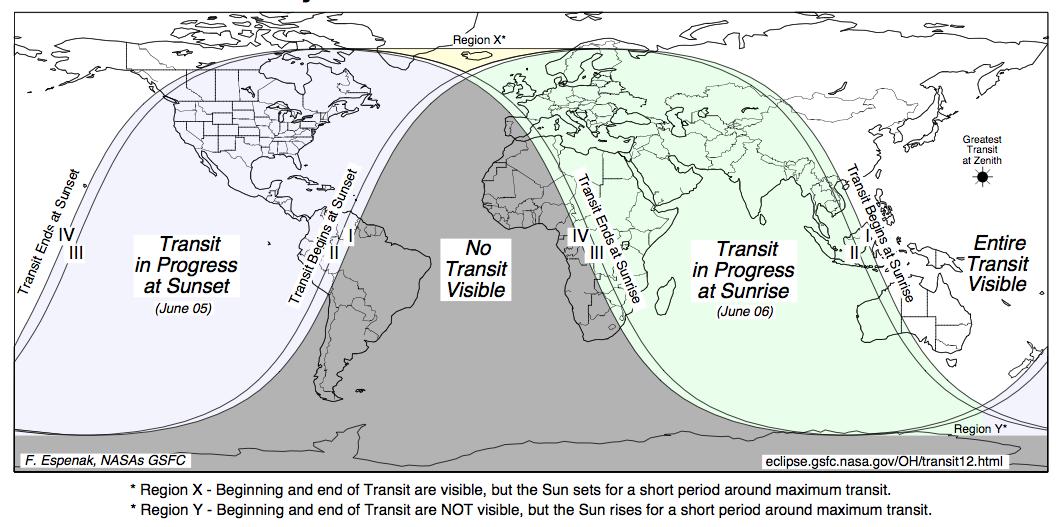
Depending on where you live on Planet Earth you will see the transit on the 5th June, the 6th June or not at all!
Courtesy of Fred Espenak (NASA GSFC), who provides additional transit of Venus data from NASA.
(That additional data referred to above may be found here.)
That transit diagram plus mounds of other interesting stuff is on the Transit of Venus website and on that website this page has the details allowing you to work out what day and time the transit occurs depending on where you are.
To close let me be a little cheeky and reproduce, in full, what appeared on the Science Daily website on the 1st May.
Venus to Appear in Once-In-A-Lifetime Event
ScienceDaily (May 1, 2012) — On 5 and 6 June this year, millions of people around the world will be able to see Venus pass across the face of the Sun in what will be a once-in-a-lifetime experience.
It will take Venus about six hours to complete its transit, appearing as a small black dot on the Sun’s surface, in an event that will not happen again until 2117.
In this month’s Physics World, Jay M Pasachoff, an astronomer at Williams College, Massachusetts, explores the science behind Venus’s transit and gives an account of its fascinating history.
Transits of Venus occur only on the very rare occasions when Venus and Earth are in a line with the Sun. At other times Venus passes below or above the Sun because the two orbits are at a slight angle to each other. Transits occur in pairs separated by eight years, with the gap between pairs of transits alternating between 105.5 and 121.5 years — the last transit was in 2004.
Building on the original theories of Nicolaus Copernicus from 1543, scientists were able to predict and record the transits of both Mercury and Venus in the centuries that followed.
Johannes Kepler successfully predicted that both planets would transit the Sun in 1631, part of which was verified with Mercury’s transit of that year. But the first transit of Venus to actually be viewed was in 1639 — an event that had been predicted by the English astronomer Jeremiah Horrocks. He observed the transit in the village of Much Hoole in Lancashire — the only other person to see it being his correspondent, William Crabtree, in Manchester.
Later, in 1716, Edmond Halley proposed using a transit of Venus to predict the precise distance between Earth and the Sun, known as the astronomical unit. As a result, hundreds of expeditions were sent all over the world to observe the 1761 and 1769 transits. A young James Cook took the Endeavour to the island of Tahiti, where he successfully observed the transit at a site that is still called Point Venus.
Pasachoff expects the transit to confirm his team’s theory about the phenomenon called “the black-drop effect” — a strange, dark band linking Venus’s silhouette with the sky outside the Sun that appears for about a minute starting just as Venus first enters the solar disk.
Pasachoff and his colleagues will concentrate on observing Venus’s atmosphere as it appears when Venus is only half onto the solar disk. He also believes that observations of the transit will help astronomers who are looking for extrasolar planets orbiting stars other than the Sun.
“Doing so verifies that the techniques for studying events on and around other stars hold true in our own backyard.. In other words, by looking up close at transits in our solar system, we may be able to see subtle effects that can help exoplanet hunters explain what they are seeing when they view distant suns,” Pasachoff writes.
Not content with viewing this year’s transit from Earth, scientists in France will be using the Hubble Space Telescope to observe the effect of Venus’s transit very slightly darkening the Moon. Pasachoff and colleagues even hope to use Hubble to watch Venus passing in front of the Sun as seen from Jupiter — an event that will take place on 20 September this year — and will be using NASA’s Cassini spacecraft, which is orbiting Saturn, to see a transit of Venus from Saturn on 21 December.
“We are fortunate in that we are truly living in a golden period of planetary transits and it is one of which I hope astronomers can take full advantage,” he writes.
Editors note: Looking directly at the sun can cause severe and permanent eye damage. Do not look directly at Venus’ transit of the sun.
I’m going to republish this in full on Monday, 4th June at the usual Learning from Dogs release time of 0700 UTC so to increase the odds of all my readers who would like to see the Transit having the information in good time!
It’s amazing to think that anyone lived here, that this valley was once green. Now it is sun-blasted, scorching hot, and the only life is the circling vultures and the rainbow-colored iguanas, like something out of a desert hallucination, skittering across the rocks.
The reminders of past life rise up around me, however, eroded to look more like drip castles than the pyramids they once were. I am in Túcume, the once-grand capital of the Sican culture, Peru’s mythical Valley of the Pyramids.
I am not far from Chiclayo, and even closer to the city of Lambayeque, where the Royal Tombs of Sipán Museum serves as one of the major tourist attractions on the north coast. Here at Túcume however, there are few visitors.
It is not hard to get to the site. Combis leave regularly from Chiclayo and Lambayeque, dropping passengers in the modern village of Túcume, from which an quick mototaxi ride leads to the ruins. By car or taxi, it is about a 30 minute ride from Chiclayo.
There are two main trails marked out across the desert plain in Túcume. One leads to Cerro Purgatorio, a craggy hill overlooking the 26 pyramids that comprise the site. The trail winds across the scorched valley, between several of the pyramids, before arriving at a staircase leading to different scenic overlooks on the face of Purgatorio.
Then there’s a long and revealing article on the InkaNatura Travel Site, which I recommend you go to.
So what happened at Túcume to cause the civilisation to fail? Maybe this 10-minute film gives the answers, but just a note to say that there are some potentially upsetting scenes for the younger or more sensitive among us.
So anyone sufficiently brave to say that history won’t repeat itself.
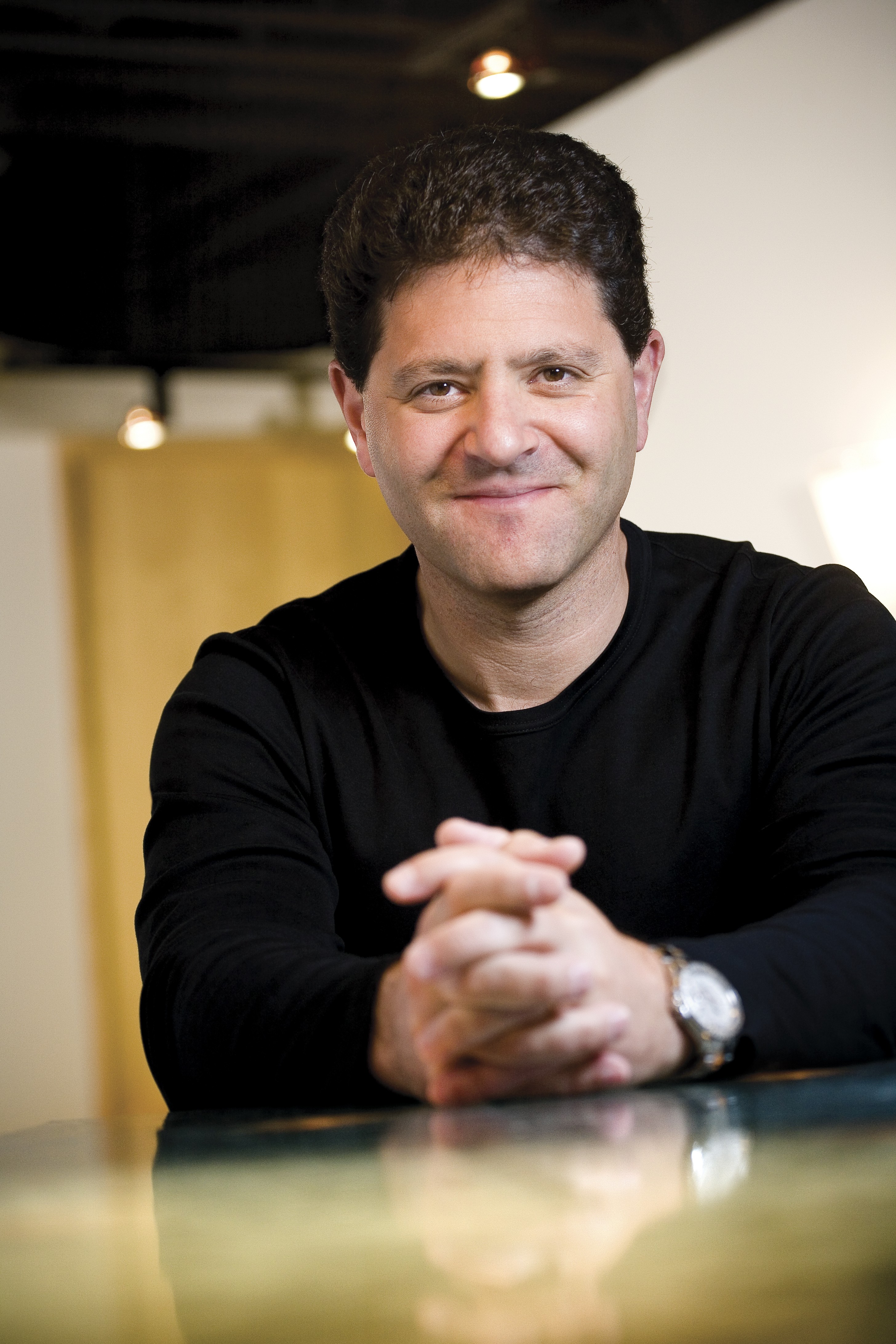
I hadn’t come across Mr. Hanauer before but thanks to some Facebook comments by Patrice Ayme found this YouTube video that is well-worth watching. That’s an understatement!
The fundamental message that is contained in this short video seems critical, well to me it does, to society (that’s all of us, by the way) understanding why so many things seem to be going so very wrong for so many people. But let me stop there before it becomes another of my rants!
Who is Nick Hanauer? Here is a small extract from Nick Hanauer’s website,
Nicolas J Hanauer is a partner with Second Avenue Partners, a Seattle venture capital partnership specializing in early state startups and emerging technology. He has had a hand in such companies as Amazon.com and aQuantive among others.
Hanauer’s career began with a position as executive VP of Sales and Marketing at Pacific Coast Feather Company, a family owned manufacturer of basic bedding. In his time in that role, he helped grow Pacific Coast from several million dollars to more than $300 million in sales. Hanauer subsequently served as the company’s Co-Chairman and Chief Strategy Officer and remains Chief Executive Officer.
In 1988, Hanauer co-founded Museum Quality Framing Company, a company that has emerged the largest of its kind on the west coast with 60 locations. Hanauer was also one of the first investors in Amazon.com in 1995, where he served as a Board Advisor until January of 2000.
In 1996, he founded and served as CEO of internet media company Avenue A Media (later re-named aQuantive, Inc.) and became Chairman of the Board upon the first public offering in 2000. aQuantive was purchased by Microsoft in August of 2007 for 6.4 billion dollars; the largest acquisition in Microsoft history.
Now the video; less than 6 minutes long – do watch it!
As a one-time entrepreneur back in the 80’s I can vouch for much of what Mr. Hanauer proclaims in his video. The essence of successful marketing for any business, large and small, is understanding your market. Seeing the customer’s world through the customer’s eyes would be another way of putting that.
In plain language that means carefully and closely understanding what your customers, both actual and prospective, require, objectively and subjectively, and providing it to them profitably. As the middle-classes (don’t like the term but it will have to do) are often the largest market opportunity, then it does follow that a healthy and vibrant middle-class is going to be best overall for the health and vibrancy of a country. Indeed, in this very inter-connected world, that really equates to the health and vibrancy of our planet.
Which so easily leads on to a core truth. This one. If all the Governments democratically elected on this planet truly acknowledged the democratic foundation, as Lincoln so ably put it, “government of the people, by the people, for the people” then those governments would be united in the one most important task facing the people – creating a sustainable way for us to live on the only planet we have!
A stray dog has completed a 1700km journey across China after joining a cycle race from Sichuan province to Tibet.
The dog, nicknamed “Xiaosa”, joined the cyclists after one of them gave him food.
He ran with them for 20 days, covering up to 60km a day, and climbing 12 mountains.
Cyclist Xiao Yong started a blog about Xiaosa’s adventures, which had attracted around 40,000 fans by the end of the race.
Yong now hopes to adopt Xiaosa.
Luckily, someone smart grabbed the BBC footage and uploaded it to YouTube thus allowing me to include that below:
I did several Google searches for Xiao Yong’s blog but failed to come across it – never mind, it doesn’t detract from a delightful story this Memorial Day week-end here in America.
A republication of a powerful essay from Martin Lack.
Martin and I haven’t seen eye-to-eye on everything, as each of us would readily admit. But there’s no taking away the power contained in many of Martin’s essays over on his Blog Lack of Environment. Unlike me, Martin has strong academic credentials that he uses well to support his position.
Martin recently published a strong Post called It doesn’t have to be like this and has kindly given written permission for it to be republished on Learning from Dogs.
Tomorrow, I plan to expand on the fruit crop disaster that Martin refers to below. So here is the essay,
—————
Planet Earth is not just another business!
It doesn’t have to be like this
In 1974, the former World Bank economist Herman E Daly published an article on ‘The Economics of the Steady State’, beginning with a quote from the famous scientist Sir Arthur Eddington: “But if your theory is found to be against the Second Law of Thermodynamics, I can give you no hope; there is nothing for it but to collapse in deepest humiliation.” Daly is also on record as having quoted Aleksandr Solzhenitsyn (from Letter to the Soviet Leaders [i.e. published in 1974]), who said: “Society must cease to look upon ‘progress’ as something desirable. Eternal ‘progress’ is a nonsensical myth. What must be implemented is a not a steadily expanding economy but a zero growth economy; a stable economy.”
The essential point of Thomas Malthus’ (1798) ‘Essay on the Principle of Population’ was that populations increase faster than the supply of food can be made available to meet their needs. With this in mind, in 1972, Meadows et al predicted that the biophysical limits to growth would be exceeded at some point within 100 years: “If the present growth trends in world population, industrialization, pollution, food production, and resource depletion continue unchanged, the limits to growth on this planet will be reached sometime within the next one hundred years. The most probable result will be a rather sudden and uncontrollable decline in both population and industrial capacity.”
Recent strange weather in the USA – specifically a very warm March followed by unseasonal frosts in May – has all but wiped out all kinds of fruit crops. This may not have been the industrial collapse envisaged by Meadows et al (that is yet to come), but it is evidence of the way in which anthropogenic climate disruption (ACD) – or what some would have us be more precise and call human induced rapid global overheating (HIRGO) – threatens our ability to feed ourselves.
In 1992, the Meadows et al team summarised their revised conclusions as follows:
— 1. Human use of many essential resources and generation of many pollutants have already surpassed rates that are physically sustainable. Without significant reductions in material and energy flows, there will be in the coming decades an uncontrolled decline in per capita food output, energy use and industrial production.
— 2. This decline is not inevitable. To avoid it two changes are necessary. The first is a comprehensive revision of policies and practices that perpetuate growth in material consumption and in population. A second is a rapid, drastic increase in the efficiency with which materials are used.
— 3. A sustainable society is still technically and economically possible. It could be much more desirable than a society that tries to solve its problems by constant expansion. The transition to a sustainable society requires a careful balance between long-term and short term goals, and an emphasis on sufficiency, equity, and quality of life rather than on quantity of output. It requires more than productivity and more than technology; it also requires maturity, compassion, and wisdom.
In general, Meadows et al have been consistently ignored. In 1993, frustrated by the absence of discussion on population growth in international politics, Garrett Hardin pointed out that: “Two centuries of intermittent wrestling with population problems have produced useful insights about the reality and nature of limits… Four centuries of sedation by the delusion of limitlessness have left humanity floundering in a wilderness of rhetoric… From this it must be inferred that someday political conservatism will once again be defined as contented living within limits. The limitless world view will have to be abandoned.”
In this context, the words growth and development should not be confused. As Daly has pointed out: “the Earth may be developing but it is not growing.”!
In their 30-year update of Limits to Growth, in a section entitled ‘Why Technology and Markets Alone Can’t Avoid Overshoot’, the Meadows et al team pointed out that if we put off dealing with limits to growth we are more likely to come up against several of them simultaneously. With regard to the computer modelling undertaken, they observed that in most cases the simulations ran out of the ‘ability to cope’ when too much industrial output has to be diverted to solving problems; and concluded: “Growth, and especially exponential growth, is so insidious because it shortens the time for effective action. It loads stress on a system faster and faster, until coping mechanisms that have been adequate with slower rates of change finally begin to fail.”
Just because Meadows et al have not yet been proven right does not mean that they were wrong.
In Small is Beautiful (1973), E. F. Schumacher wrote: “The illusion of [mankind’s] unlimited powers, nourished by astonishing scientific and technological achievements, has produced the concurrent illusion of having solved the problem of production… based on the failure to distinguish between income and capital where this distinction matters most… A businessman would not consider a firm to have solved its problems of production and to have achieved viability if he saw that it was rapidly consuming its capital…”
What he meant was:
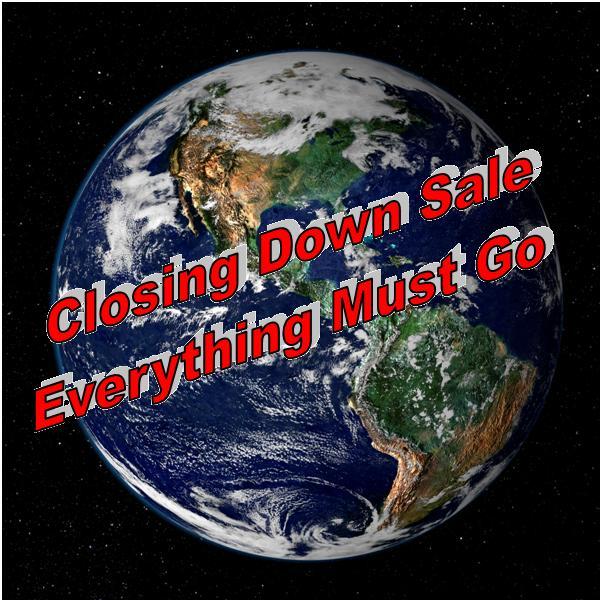
There is something fundamentally wrong in treating the Earth as if it were a business in liquidation. ― (Herman E. Daly)
Center for American Progress Action Fund plea to all Americans
Friends,
For the first time in history, the Environmental Protection Agency has proposed to limit industrial carbon pollution from new power plants. This important action will slow the growth of the major pollutant responsible for global climate change. These new limits will have far-reaching public health impacts.
Power plants dump more than two billion tons of carbon and other toxic pollutants into the air each year—nearly 13,000 pounds for every man, woman, and child in the United States. With the proposed standard, though, a typical new coal-fired power plant would have to reduce its carbon pollution by 40 percent to 60 percent. Natural gas power plants should be able to comply with this standard without additional controls.
President Barack Obama has endorsed limits on carbon pollution from motor vehicles, which will ultimately reduce tailpipe emissions by six billion metric tons over the life of the program.
I proudly served as the administrator of the Environmental Protection Agency for eight years, and I know from experience how vitally important it is that citizens who support proposed public health standards that reduce pollution make their voices heard. Certainly, many of the companies emitting the pollution and other interests that oppose clean air standards will do so.
During the first month available for public comments, more than one million Americans took action to express their support for cleaner air, but we need your voice today!
Carol M. Browner
Distinguished Senior Fellow, Center for American Progress Action Fund
Just in case you want a reinforcing viewpoint, please do read this article from the Key Correspondents (KC) team website.
Coal-fired power damages health and the environment
Coal-fired power generation damages people’s health and contributes to climate change, according to a new study by academics at the University of Pretoria.
The study shows how coal-fired power stations run up large costs as a result of coincidental but often unavoidable side-effects electricity generation.
These ‘externalities’ include the creation of carbon dioxide, carbon monoxide, methane, oxides of nitrogen, sulphur oxide, mercury and a wide range of carcinogenic radio-nuclides and heavy metals during the combustion process.
The Business Enterprises department of the University of Pretoria conducted the study for Greenpeace Africa and Greenpeace International at Kusile power station in Emalahleni in September 2011.
According to the report: “In the generation of coal-fire power, the objective is electricity production, yet, as a side effect, emissions are also produced.
“Various epidemiological studies found that the mentioned pollutants contribute to the incidence of mortality.”
The study also measures the cost to the environment by determining the amount of potentially damaging emissions from a power station.
According to the report, Kusile power station emits 30m tons of carbon dioxide per year, on an annual consumption of 17m tons of coal.
The analysis provides strong evidence of the need for Eskom, the largest energy provider in Africa, to invest in alternative renewable energy sources and for the government to support such investment initiatives.
But Eskom is building more coal-fired power stations to add to new power stations in Kusile and Medupi in Lephalale, Limpopo, with the support of the Department of Energy.
Building new power plants also requires the construction of new coal mines and the expansion of existing coal mines.
There are fears that coal fired power plants like Kusile in South could severely contribute to climate change.
Just re-read that sentence above that spoke of Kusile power station, “Kusile power station emits 30m tons of carbon dioxide per year, on an annual consumption of 17m tons of coal.”
So, please, if you are an American who cares for the future of your children and grandchildren, take action.
Our fate is also wrapped up in the ocean – another cause for tears.
In a very real sense, this Post continues from my writings of yesterday concerning James Hansen.
A year ago, the BBC reported the shocking state of our oceans. It included this:
“The rate of change is vastly exceeding what we were expecting even a couple of years ago,” said Ove Hoegh-Guldberg, a coral specialist from the University of Queensland in Australia.
“So if you look at almost everything, whether it’s fisheries in temperate zones or coral reefs or Arctic sea ice, all of this is undergoing changes, but at a much faster rate than we had thought.”
But more worrying than this, the team noted, are the ways in which different issues act synergistically to increase threats to marine life.
Some pollutants, for example, stick to the surfaces of tiny plastic particles that are now found in the ocean bed.
This increases the amounts of these pollutants that are consumed by bottom-feeding fish.
Plastic particles also assist the transport of algae from place to place, increasing the occurrence of toxic algal blooms – which are also caused by the influx of nutrient-rich pollution from agricultural land.
In a wider sense, ocean acidification, warming, local pollution and overfishing are acting together to increase the threat to coral reefs – so much so that three-quarters of the world’s reefs are at risk of severe decline.
We have always been fish eaters, from the dawn of civilization, but in the last twenty years we have transformed the oceans beyond recognition. Putting our exploitation of the seas into historical context, Roberts offers a devastating account of the impact of modern fishing techniques, pollution, and climate change, and reveals what it would take to steer the right course while there is still time. Like Four Fish and The Omnivore’s Dilemma, The Ocean of Life takes a long view to tell a story in which each one of us has a role to play.
That book was recently reviewed in The Economist, from which I reproduce the following extracts,
The Ocean of Life: The Fate of Man and the Sea. By Callum Roberts.
Traditional attitudes towards the sea, as something immutable and distant to humanity, are hugely out of date. The temperature change that harmed the corals was not caused by human activity; yet it was a foretaste of what man is now doing to the sea. The effects of overfishing, agricultural pollution and anthropogenic climate change, acting in concert, are devastating marine ecosystems. Though corals are returning to many reefs, there is a fair chance that in just a few decades they will all be destroyed, as ocean temperatures rise owing to global warming. The industrial pollution that is cooking the climate could also cause another problem: carbon dioxide, absorbed by the sea from the atmosphere, turns to carbonic acid, which is a threat to coral, mussels, oysters and any creature with a shell of calcium carbonate.
The reviewer explains that, “The enormity of the sea’s troubles, and their implications for mankind, are mind-boggling. Yet it is equally remarkable how little this is recognised by policymakers—let alone the general public.” and then adds, to the author’s credit, ” There is also a dearth of good and comprehensive books on a subject that can seem too complicated and depressing for any single tome. Callum Roberts, a conservation biologist, has now provided one.”
The book review then continues,
He [Callum Roberts] starts with a bold claim: that anthropogenic stresses are changing the oceans faster than at almost any time in the planet’s history. That may be putting it too strongly. Yet there is no quibbling with the evidence of marine horrors that Mr Roberts presents.
Take overfishing. The industrialisation of fishing fleets has massively increased man’s capability to scoop protein from the deep. An estimated area equivalent to half the world’s continental shelves is trawled every year, including by vast factory ships able to put to sea for weeks on end. Yet what they are scraping is the bottom of the barrel: most commercial species have been reduced by over 75% and some, like whitetip sharks and common skate, by 99%. For all the marvellous improvements in technology, British fishermen, mostly using sail-power, caught more than twice as much cod, haddock and plaice in the 1880s as they do today. By one estimate, for every hour of fishing, with electronic sonar fish finders and industrial winches, dredges and nets, they catch 6% of what their forebears caught 120 year ago.
Overfishing is eradicating the primary protein source of one in five people, many of them poor. It also weakens marine ecosystems, making them even more vulnerable to big changes coming downstream.
For example, there is the matter of chemical pollution, mostly from agricultural run-off. This has created over 400 dead-zones, where algal tides turn the sea anoxic for all or part of the year. One of the biggest, at the mouth of the Mississippi Delta in the Gulf of Mexico, covers 20,000 square km (7,700 square miles) of ocean. An annual event, mainly caused by the run-off of agricultural fertilisers from 40% of America’s lower 48 states, it makes the one-off Deepwater Horizon oil-spill look modest by comparison.
Global warming is another problem. Hitherto, the sea has been a buffer against it: because the heat capacity of water is several times that of air, the oceans have sucked up most of the additional heat, sparing the continents further warming. Yet this is now starting to change—faster than almost anyone had dared imagine.
One effect of the warming ocean, for example, is to increase the density difference between the surface and the chilly deep, which in turn decreases mixing of them. That means less oxygen is making it down to the depths, reducing the liveability of the oceans. Off America’s west coast, the upper limit of low-oxygen water is thought to have risen by 100 metres. Where strong winds bring this water nearer to the surface, there are mass die-offs of marine life. Such events will proliferate as the climate warms.
This is a poor lookout for already put-upon fish. “Fish under temperature and oxygen stress will reach smaller sizes, live less long and will have to devote a bigger fraction of their energy to survival at the cost of growth and reproduction,” writes Mr Roberts. And that is before he gets to the effects of ocean acidification, which could be very bad indeed. Without dramatic action to reverse these processes, he predicts a catastrophe comparable to the mass extinctions of the Palaeocene-Eocene Thermal Maximum, when carbon-dioxide levels, temperature and ocean acidity all rocketed. He writes: “Not for 55m years has there been oceanic disruption of comparable severity to the calamity that lies just a hundred years ahead.” That would be hard to prove; it would be better not to try.
So what is to be done? Mr Roberts provides a hundred pages of answers, occupying roughly a third of the book. They range from the obvious—curbing carbon emissions—to technical fixes, like genetic improvements to aquaculture stocks. None is impossible; and Mr Roberts, almost incredibly, describes himself as an optimist. He writes, “We can change. We can turn around our impacts on the biosphere.” We had better do so.
Amen to that!
So want to know where to start? Here’s a snippet of advice in terms of protecting our fish stocks,
Whatever the outcome of the US elections, a real change is desperately needed.
I stay neutral in terms of American party politics. As a ‘alien resident’, otherwise known as a Green Card holder, I am not eligible to vote anyway plus I readily admit to neither following nor understanding American politics.
But the focus on the late Ernest Callenbach’s words the last two days on Learning from Dogs has left me feeling pretty uncertain about the future for the USA. In reading those words, despite the many elements of hope and optimism that Callenbach engenders, it is difficult not to feel the scale of the challenges facing this great nation. Take these words toward the end of Callenbach’s essay,
Since I wrote Ecotopia, I have become less confident of humans’ political ability to act on commonsense, shared values. Our era has become one of spectacular polarization, with folly multiplying on every hand. That is the way empires crumble: they are taken over by looter elites, who sooner or later cause collapse. But then new games become possible, and with luck Ecotopia might be among them.
Humans tend to try to manage things: land, structures, even rivers. We spend enormous amounts of time, energy, and treasure in imposing our will on nature, on preexisting or inherited structures, dreaming of permanent solutions, monuments to our ambitions and dreams. But in periods of slack, decline, or collapse, our abilities no longer suffice for all this management. We have to let things go.
I have subscribed to the print version of The Economist for many years. Indeed, it is the only broad-reaching newspaper that I read on a regular basis. So in the last edition (May 12th), I couldn’t ignore the interesting position taken by Lexington under the title of Declinism resurgent. [NB. Not sure if you will be able to access that link without a subscription, Ed.]
The sub-heading sets the theme – The election campaign encourages America to feel worse about itself than it needs to
The third paragraph reads thus,
America is prone to bouts of “declinism”. In the 1980s the country was in a funk about the rise of Japan and its own vanishing competitiveness. Another bout was bound to follow China’s rise, two grinding wars and the deep recession of 2008. The gloom is nourished by a fountain of declinist literature. In “Time to Start Thinking” Ed Luce of the Financial Times ponders an America “in descent”. Norm Ornstein of the American Enterprise Institute and Thomas Mann of Brookings claim in a book on America’s politics (reviewed here two weeks ago) that “It’s Even Worse Than It Looks”.
Immediately followed by,
Yet anyone who prefers their glass half-full can find grounds for optimism. The first Boeing 787 Dreamliner has just landed in Washington, DC. It will be decades before China can make such a machine. The IMF is predicting average growth of over 2% for 2012 and 2013, not meteoric but not bad for a mature economy. America has a young workforce, with plenty of skilled people knocking at the door to come in. It still has more of the world’s best universities than any other country. It is the world’s largest producer of natural gas and its biggest food exporter. Amid the gloom, the economy is getting “Better, Stronger, Faster”, argues Daniel Gross, in a book of that name published this week.
Lexington then concludes,
The binary illusion
People tend to think in black and white. America is either in decline or it is ordained to be for ever the world’s greatest nation. Government is either paralysed or it is running amok, stifling liberty and enterprise and snuffing out the American dream. The election campaign accentuates the negative and sharpens this binary illusion. The Republicans say that Mr Obama is leading America into socialised serfdom; the Democrats retort that Mr Romney would restore the conditions that caused the recession. Little wonder that, according to polls, most voters do not believe that either man has a clear plan for fixing the economy.
Charles Dickens said of the United States that if its citizens were to be believed America “always is depressed, and always is stagnated, and always is at an alarming crisis, and never was otherwise.” On a variety of objective measures, it is in an awful mess right now. And yet America of all countries still has plenty of grounds to hope for a better future, despite its underperforming politics, and no matter who triumphs in November.
So a different perspective than the one articulated by Ernest Callenbach. But whatever the political result later in this year’s US presidential elections, if that new government doesn’t address the need for urgent attention to what mankind is doing to Planet Earth then the rest of the political agenda will become increasingly irrelevant.
I’ll close with that old saying, “Will the last person to leave Planet Earth, please turn the lights off!“
A moving, insightful postscript to the life of the late Ernest Callenbach.
This is a continuation of the republication of a recent TomDispatch Tomgram. As I explained in Part One published yesterday I have been a follower of Tom Dispatch for some time and frequently find the essays most interesting. However, reading the words of Ernest Callenbach touched me in many ways, some of which are still evolving. Callenbach was clearly a man who many years ago not only foresaw how our world was heading but via his writings was able to articulate the solutions. Today, as the video at the end of the Post so clearly exemplifies, those solutions are spot on.
The other point that strikes me is that in leaving this ‘message’ on his computer asking for it to be released after his death, Callenbach isn’t trying to prove anything. We are reading the words of a person who feels so strongly about the fate of mankind that he wants those words to be his epitaph for ever more. Trust me. When you read the words below you will be as touched as I was, indeed still continue to be. It is a rare privilege to republish them.
Ernest ‘Chick’ Callenbach Epistle to the Ecotopians
By Ernest Callenbach[This document was found on the computer of Ecotopia author Ernest Callenbach (1929-2012) after his death.]
To all brothers and sisters who hold the dream in their hearts of a future world in which humans and all other beings live in harmony and mutual support — a world of sustainability, stability, and confidence. A world something like the one I described, so long ago, in Ecotopia and Ecotopia Emerging.
As I survey my life, which is coming near its end, I want to set down a few thoughts that might be useful to those coming after. It will soon be time for me to give back to Gaia the nutrients that I have used during a long, busy, and happy life. I am not bitter or resentful at the approaching end; I have been one of the extraordinarily lucky ones. So it behooves me here to gather together some thoughts and attitudes that may prove useful in the dark times we are facing: a century or more of exceedingly difficult times.
How will those who survive manage it? What can we teach our friends, our children, our communities? Although we may not be capable of changing history, how can we equip ourselves to survive it?I contemplate these questions in the full consciousness of my own mortality. Being offered an actual number of likely months to live, even though the estimate is uncertain, mightily focuses the mind. On personal things, of course, on loved ones and even loved things, but also on the Big Picture.
But let us begin with last things first, for a change. The analysis will come later, for those who wish it.
Hope. Children exude hope, even under the most terrible conditions, and that must inspire us as our conditions get worse. Hopeful patients recover better. Hopeful test candidates score better. Hopeful builders construct better buildings. Hopeful parents produce secure and resilient children. In groups, an atmosphere of hope is essential to shared successful effort: “Yes, we can!” is not an empty slogan, but a mantra for people who intend to do something together — whether it is rescuing victims of hurricanes, rebuilding flood-damaged buildings on higher ground, helping wounded people through first aid, or inventing new social structures (perhaps one in which only people are “persons,” not corporations). We cannot know what threats we will face. But ingenuity against adversity is one of our species’ built-in resources. We cope, and faith in our coping capacity is perhaps our biggest resource of all.
Mutual support. The people who do best at basic survival tasks (we know this experimentally, as well as intuitively) are cooperative, good at teamwork, often altruistic, mindful of the common good. In drastic emergencies like hurricanes or earthquakes, people surprise us by their sacrifices — of food, of shelter, even sometimes of life itself. Those who survive social or economic collapse, or wars, or pandemics, or starvation, will be those who manage scarce resources fairly; hoarders and dominators win only in the short run, and end up dead, exiled, or friendless. So, in every way we can we need to help each other, and our children, learn to be cooperative rather than competitive; to be helpful rather than hurtful; to look out for the communities of which we are a part, and on which we ultimately depend.
Practical skills. With the movement into cities of the U.S. population, and much of the rest of the world’s people, we have had a massive de-skilling in how to do practical tasks. When I was a boy in the country, all of us knew how to build a tree house, or construct a small hut, or raise chickens, or grow beans, or screw pipes together to deliver water. It was a sexist world, of course, so when some of my chums in eighth grade said we wanted to learn girls’ “home ec” skills like making bread or boiling eggs, the teachers were shocked, but we got to do it. There was widespread competence in fixing things — impossible with most modern contrivances, of course, but still reasonable for the basic tools of survival: pots and pans, bicycles, quilts, tents, storage boxes.
We all need to learn, or relearn, how we would keep the rudiments of life going if there were no paid specialists around, or means to pay them. Every child should learn elementary carpentry, from layout and sawing to driving nails. Everybody should know how to chop wood safely, and build a fire. Everybody should know what to do if dangers appear from fire, flood, electric wires down, and the like. Taking care of each other is one practical step at a time, most of them requiring help from at least one other person; survival is a team sport.
Organize. Much of the American ideology, our shared and usually unspoken assumptions, is hyper-individualistic. We like to imagine that heroes are solitary, have super powers, and glory in violence, and that if our work lives and business lives seem tamer, underneath they are still struggles red in blood and claw. We have sought solitude on the prairies, as cowboys on the range, in our dependence on media (rather than real people), and even in our cars, armored cabins of solitude. We have an uneasy and doubting attitude about government, as if we all reserve the right to be outlaws. But of course human society, like ecological webs, is a complex dance of mutual support and restraint, and if we are lucky it operates by laws openly arrived at and approved by the populace.
If the teetering structure of corporate domination, with its monetary control of Congress and our other institutions, should collapse of its own greed, and the government be unable to rescue it, we will have to reorganize a government that suits the people. We will have to know how to organize groups, how to compromise with other groups, how to argue in public for our positions. It turns out that “brainstorming,” a totally noncritical process in which people just throw out ideas wildly, doesn’t produce workable ideas. In particular, it doesn’t work as well as groups in which ideas are proposed, critiqued, improved, debated. But like any group process, this must be protected from domination by powerful people and also over-talkative people. When the group recognizes its group power, it can limit these distortions. Thinking together is enormously creative; it has huge survival value.
Learn to live with contradictions. These are dark times, these are bright times. We are implacably making the planet less habitable. Every time a new oil field is discovered, the press cheers: “Hooray, there is more fuel for the self-destroying machines!” We are turning more land into deserts and parking lots. We are wiping out innumerable species that are not only wondrous and beautiful, but might be useful to us. We are multiplying to the point where our needs and our wastes outweigh the capacities of the biosphere to produce and absorb them. And yet, despite the bloody headlines and the rocketing military budgets, we are also, unbelievably, killing fewer of each other proportionately than in earlier centuries. We have mobilized enormous global intelligence and mutual curiosity, through the Internet and outside it. We have even evolved, spottily, a global understanding that democracy is better than tyranny, that love and tolerance are better than hate, that hope is better than rage and despair, that we are prone, especially in catastrophes, to be astonishingly helpful and cooperative.
We may even have begun to share an understanding that while the dark times may continue for generations, in time new growth and regeneration will begin. In the biological process called “succession,” a desolate, disturbed area is gradually, by a predictable sequence of returning plants, restored to ecological continuity and durability. When old institutions and habits break down or consume themselves, new experimental shoots begin to appear, and people explore and test and share new and better ways to survive together.
It is never easy or simple. But already we see, under the crumbling surface of the conventional world, promising developments: new ways of organizing economic activity (cooperatives, worker-owned companies, nonprofits, trusts), new ways of using low-impact technology to capture solar energy, to sequester carbon dioxide, new ways of building compact, congenial cities that are low (or even self-sufficient) in energy use, low in waste production, high in recycling of almost everything. A vision of sustainability that sometimes shockingly resembles Ecotopia is tremulously coming into existence at the hands of people who never heard of the book.
___________________
Now in principle, the Big Picture seems simple enough, though devilishly complex in the details. We live in the declining years of what is still the biggest economy in the world, where a looter elite has fastened itself upon the decaying carcass of the empire. It is intent on speedily and relentlessly extracting the maximum wealth from that carcass, impoverishing our former working middle class. But this maggot class does not invest its profits here. By law and by stock-market pressures, corporations must seek their highest possible profits, no matter the social or national consequences — which means moving capital and resources abroad, wherever profit potential is larger. As Karl Marx darkly remarked, “Capital has no country,” and in the conditions of globalization his meaning has come clear.
The looter elite systematically exports jobs, skills, knowledge, technology, retaining at home chiefly financial manipulation expertise: highly profitable, but not of actual productive value. Through “productivity gains” and speedups, it extracts maximum profit from domestic employees; then, firing the surplus, it claims surprise that the great mass of people lack purchasing power to buy up what the economy can still produce (or import).
Here again Marx had a telling phrase: “Crisis of under-consumption.” When you maximize unemployment and depress wages, people have to cut back. When they cut back, businesses they formerly supported have to shrink or fail, adding their own employees to the ranks of the jobless, and depressing wages still further. End result: something like Mexico, where a small, filthy rich plutocracy rules over an impoverished mass of desperate, uneducated, and hopeless people.
Barring unprecedented revolutionary pressures, this is the actual future we face in the United States, too. As we know from history, such societies can stand a long time, supported by police and military control, manipulation of media, surveillance and dirty tricks of all kinds. It seems likely that a few parts of the world (Germany, with its worker-council variant of capitalism, New Zealand with its relative equality, Japan with its social solidarity, and some others) will remain fairly democratic.
The U.S., which has a long history of violent plutocratic rule unknown to the textbook-fed, will stand out as the best-armed Third World country, its population ill-fed, ill-housed, ill-educated, ill-cared for in health, and increasingly poverty-stricken: even Social Security may be whittled down, impoverishing tens of millions of the elderly.
As empires decline, their leaders become increasingly incompetent — petulant, ignorant, gifted only with PR skills of posturing and spinning, and prone to the appointment of loyal idiots to important government positions. Comedy thrives; indeed writers are hardly needed to invent outrageous events.
We live, then, in a dark time here on our tiny precious planet. Ecological devastation, political and economic collapse, irreconcilable ideological and religious conflict, poverty, famine: the end of the overshoot of cheap-oil-based consumer capitalist expansionism.
If you don’t know where you’ve been, you have small chance of understanding where you might be headed. So let me offer a capsule history for those who, like most of us, got little help from textbook history.
At 82, my life has included a surprisingly substantial slice of American history. In the century or so up until my boyhood in Appalachian central Pennsylvania, the vast majority of Americans subsisted as farmers on the land. Most, like people elsewhere in the world, were poor, barely literate, ill-informed, short-lived. Millions had been slaves. Meanwhile in the cities, vast immigrant armies were mobilized by ruthless and often violent “robber baron” capitalists to build vast industries that made things: steel, railroads, ships, cars, skyscrapers.
Then, when I was in grade school, came World War II. America built the greatest armaments industry the world had ever seen, and when the war ended with most other industrial countries in ruins, we had a run of unprecedented productivity and prosperity. Thanks to strong unions and a sympathetic government, this prosperity was widely shared: a huge working middle class evolved — tens of millions of people could afford (on one wage) a modest house, a car, perhaps sending a child to college. This era peaked around 1973, when wages stagnated, the Vietnam War took a terrible toll in blood and money, and the country began sliding rightward.
In the next epoch, which we are still in and which may be our last as a great nation, capitalists who grew rich and powerful by making things gave way to a new breed: financiers who grasped that you could make even more money by manipulating money. (And by persuading Congress to subsidize them — the system should have been called Subsidism, not Capitalism.) They had no concern for the productivity of the nation or the welfare of its people; with religious fervor, they believed in maximizing profit as the absolute economic goal. They recognized that, by capturing the government through the election finance system and removing government regulation, they could turn the financial system into a giant casino.
Little by little, they hollowed the country out, until it was helplessly dependent on other nations for almost all its necessities. We had to import significant steel components from China or Japan. We came to pay for our oil imports by exporting food (i.e., our soil). Our media and our educational system withered. Our wars became chronic and endless and stupefyingly expensive. Our diets became suicidal, and our medical system faltered; life expectancies began to fall.
And so we have returned, in a sort of terrible circle, to something like my boyhood years, when President Roosevelt spoke in anger of “one third of a nation ill-housed, ill-fed, ill-clothed.” A large and militant contingent of white, mostly elderly, Anglo-Saxon, Protestant right wingers, mortally threatened by their impending minority status and pretending to be liberty-lovers, desperately seek to return us still further back.
Americans like to think of ours as an exceptional country, immune through geographical isolation and some kind of special virtue to the tides of history. Through the distorted lens of our corporate media, we possess only a distorted view of what the country is really like now. In the next decades, we shall see whether we indeed possess the intelligence, the strength, and the mutual courage to break through to another positive era.
No futurist can foresee the possibilities. As empires decay, their civilian leaderships become increasingly crazed, corrupt, and incompetent, and often the military (which is after all a parasite of the whole nation, and has no independent financial base like the looter class) takes over. Another possible scenario is that if the theocratic red center of the country prevails in Washington, the relatively progressive and prosperous coastal areas will secede in self-defense.
Ecotopia is a novel, and secession was its dominant metaphor: how would a relatively rational part of the country save itself ecologically if it was on its own? AsEcotopia Emerging puts it, Ecotopia aspired to be a beacon for the rest of the world. And so it may prove, in the very, very long run, because the general outlines of Ecotopia are those of any possible future sustainable society.
The “ecology in one country” argument was an echo of an actual early Soviet argument, as to whether “socialism in one country” was possible. In both cases, it now seems to me, the answer must be no. We are now fatally interconnected, in climate change, ocean impoverishment, agricultural soil loss, etc., etc., etc. International consumer capitalism is a self-destroying machine, and as long as it remains the dominant social form, we are headed for catastrophe; indeed, like rafters first entering the “tongue” of a great rapid, we are already embarked on it.
When disasters strike and institutions falter, as at the end of empires, it does not mean that the buildings all fall down and everybody dies. Life goes on, and in particular, the remaining people fashion new institutions that they hope will better ensure their survival.
So I look to a long-term process of “succession,” as the biological concept has it, where “disturbances” kill off an ecosystem, but little by little new plants colonize the devastated area, prepare the soil for larger and more complex plants (and the other beings who depend on them), and finally the process achieves a flourishing, resilient, complex state — not necessarily what was there before, but durable and richly productive. In a similar way, experiments under way now, all over the world, are exploring how sustainability can in fact be achieved locally. Technically, socially, economically — since it is quite true, as ecologists know, that everything is connected to everything else, and you can never just do one thing by itself.
Since I wrote Ecotopia, I have become less confident of humans’ political ability to act on commonsense, shared values. Our era has become one of spectacular polarization, with folly multiplying on every hand. That is the way empires crumble: they are taken over by looter elites, who sooner or later cause collapse. But then new games become possible, and with luck Ecotopia might be among them.
Humans tend to try to manage things: land, structures, even rivers. We spend enormous amounts of time, energy, and treasure in imposing our will on nature, on preexisting or inherited structures, dreaming of permanent solutions, monuments to our ambitions and dreams. But in periods of slack, decline, or collapse, our abilities no longer suffice for all this management. We have to let things go.
All things “go” somewhere: they evolve, with or without us, into new forms. So as the decades pass, we should try not always to futilely fight these transformations. As the Japanese know, there is much unnoticed beauty in wabi-sabi — the old, the worn, the tumble-down, those things beginning their transformation into something else. We can embrace this process of devolution: embellish it when strength avails, learn to love it.
There is beauty in weathered and unpainted wood, in orchards overgrown, even in abandoned cars being incorporated into the earth. Let us learn, like the Forest Service sometimes does, to put unwise or unneeded roads “to bed,” help a little in the healing of the natural contours, the re-vegetation by native plants. Let us embrace decay, for it is the source of all new life and growth.
Ernest Callenbach, author of the classic environmental novel Ecotopiaamong other works, founded and edited the internationally known journal Film Quarterly. He died at 83 on April 16th, leaving behind this document on his computer.
Copyright Ernest Callenbach 2012
The above video is 56 minutes long. It consists of Ernest Callenbach and Harvey Wasserman chatting together in front of a camera. But please don’t let that put you off watching it. The video is deeply fascinating. In it Ernest Callenbach (ECOTOPIA, 1975) and Harvey Wasserman (SOLARTOPIA, 2007) discuss the role of the visionary novelist in opening public discourse to ‘outside the box’ possibilities. They look at the many elements of Callenbach’s Ecotopian vision that have actually come into being (and some that haven’t yet) and explore the catalytic power of realistic hope to shape the present and the future. They agree the time has come to democratically enlarge our vision of sustainable society from local, national and regional spheres to the planetary context.
Finally, I was delighted to come across a review recently written in The New York Times that is recommended to you. Here’s how NYT author Mark Bittman closed that review:
Callenbach, who grew up in central Pennsylvania and lived to be 83, led a life as “American” — whatever that means — as any of us. The messages I take from him are these: hope is necessary, organizing is imperative, and a government by and for the vast majority of the people must not be considered impossible.






 Learning from Dogs