Category: Culture

The book! Part Four: The process of change.

“They didn’t bring us here to change the past!”

That opening quote to this chapter comes from the blockbuster film Interstellar that was drawing in the crowds when I was up to my neck in the first draft of the book. Jean and I had taken an afternoon off, together with neighbours, Dordie and Bill, to go and watch it. It was the middle of November, 2014.

I’ll resist the temptation to include a review of the film in this place; this is meant to be a book about what we can learn from dogs! But there were two spoken lines that really jumped off the screen at me; one of them being the opening quote to this chapter.

Why did that opening quote strike me so forcibly?

Simply because when it comes to making deep, fundamental changes in who we are, how we see ourselves and, flowing from that, how we behave, or better put, how we wish to change how we behave, we have to change the past.

Sorry, I was being ‘tricky’; we can’t change the past in any real sense! But what we can change is our understanding of our past and how it made us the person we are; at this present moment in our life. That self-understanding is paramount before we set out along any journey of personal change. That was my motivation in recounting, in the opening chapter of Part Four, my discovery of my fear of rejection that for so many years had remained out of sight; albeit not quietly so within me.

Before continuing, I am minded to issue a ‘health’ warning. My writings and my conclusions are purely and solely my personal view of my life and the world as I see and experience it. Don’t empower me with talents and skills that I don’t have! Phew!

Moving on.

Anyone who has attempted a change in their behaviour, from a New Year’s Resolution, to a metaphorically large slap on the wrist for being dumb about some aspect of their life, will appreciate the difficulty of achieving a lasting change in behaviour. Changing our behaviour is rarely simple, straightforward or even, surprisingly, logical. Very often it requires a major commitment of time, effort and, perhaps most importantly of all, an emotional commitment.

The other vital thing to appreciate is that what works for one person, in all likelihood, will not work for another. Even trickier than that; what worked for you one time, may not work another time! That, just for the avoidance of doubt, is not me downgrading the need for change, when your intuition is saying to you that a change or two wouldn’t do any harm at all! Not at all!

So don’t worry about it not ‘speaking’ to you clearly in the first instance, in the sense of you not being clear as to how it is that you need to change, just embrace the fact that it is a process of trial-and-error, and keep reminding yourself why it is that you wish to change an aspect or two of your behaviour.

This important aspect of being relaxed about achieving change for yourself is more easily understood, as in understood rationally, when one takes an overview of the models (note the use of the plural) of change as used by therapists, physicians, and teachers. The researchers, that therapists and others base their knowledge and understanding upon, have multiple theories to explain how change occurs.
One of these theories, a popular one known as the Stages of Change model, demonstrates that change is rarely easy and often requires a gradual progression of small steps toward a larger goal.
In other words, only through understanding the elements of change, the stages of change, and the ways to work through each stage, can help one achieve a lasting behavioural change.

I’m not going to go much further because I’m conscious of potentially over-stepping boundaries. This is a book about learning from dogs, not an amateur self-help manual on change!

But I do want round off with the following; the product of my research and from speaking to a couple of professionals in the field of change.

Apparently, about 20 years ago, two researchers into alcoholism, Carlo C. DiClemente and J. O. Prochaska, proposed a multi-stage model of change. Their aim was to help professional ’change consultants’ understand their clients who had problems of addiction and how to motivate those clients to change. It was a model that was not based on theories but on the observations by DiClemente and Prochaska into how people tackled problem behaviours such as smoking, overeating and excessive drinking.

The multiple stages of the model were called: precontemplation; contemplation; determination; action; maintenance and termination. Six stages in all.

I’m only going to dip into that first stage: Precontemplation.

Precontemplation

Individuals in the precontemplation stage of change are not even thinking about changing their drinking behavior. They may not see it as a problem, or they think that others who point out the problem are exaggerating.

There are many reasons to be in precontemplation, and Dr. DiClemente has referred to them as “the Four Rs” —reluctance, rebellion, resignation and rationalization:

Right that’s enough from me. But for anyone that would like to read the full article by M. Gold (2006) Stages of Change, there’s a footnote [APA Reference Gold, M. (2006). Stages of Change. Psych Central.] that includes a link to a website that can offer you more detailed information about this multi-stage approach to change; indeed has the full article from Mark Gold, MD.

It’s never too late to change.

Oh, nearly forgot! I noted that the film Interstellar offered “two spoken lines that really jumped off the screen at me”, using one, “They didn’t bring us here to change the past!”, as the opening line of this chapter. The second spoken line couldn’t be more appropriate to close a chapter entitled: The process of change.

“We all want to protect the world, but we don’t want to change.”

999 words. Copyright © 2014 Paul Handover

Scottish blood in ma veins.

Share a smile with me!

Another long day of writing left me with little time to do anything other than go through my blog folder and pick out something delightful for today.  I didn’t have far to go, for dear friend, Bob Derham, recently sent me the following:

An Arab Sheik was admitted to Hospital for heart surgery, but prior to the surgery, the doctors needed to have some of his blood type stored in case the need arose.

As the gentleman had a rare type of blood, one that couldn’t be found locally, so, the call went out. Finally a Scotsman was located who had the same rare blood type. The Scot willingly donated his blood for the Arab.

After the surgery, the Arab sent the Scotsman, as appreciation for giving his blood, a new BMW, a diamond necklace for his wife and $100,000 US dollars.

A couple of days later, the Arab had to go through a corrective surgery procedure. Once again, his doctor telephoned the Scotsman, who was more than happy to donate more of his blood.

After the second surgery, the Arab sent the Scotsman a thank-you card and a box of Quality Street chocolates. The Scotsman was a little disappointed that the Arab did not reciprocate his kind gesture of more donated blood as he had the first time around.

He decided to telephone the Sheik and asked him: “I thought you would be generous again, that you would give me another BMW, diamonds and money, but you only gave me a thank-you card and a box of Quality Street chocolates.”

There was a pause and then the Arab replied: “Aye laddie, but I now have Scottish blood in ma veins“.

oooo

Don’t blame me! I just published it! 😉

The beauty of flight.

Not, perhaps, in quite the way you might be anticipating!

A couple of weeks ago, I forwarded an item to my son, an airline Captain for some years now, that I read on the Big Think website. It was an item called The Accidental Beauty of Flight Paths.

The Accidental Beauty of Flight Paths
by FRANK JACOBS NOVEMBER 5, 2014

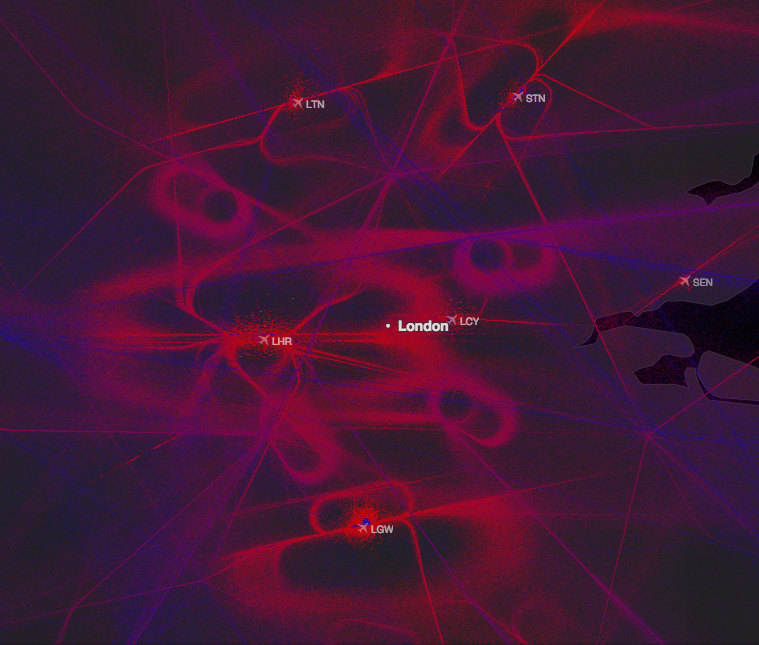
There is more between heaven and earth than bird migrations and weather fronts. These maps capture the poetic beauty of something utterly mundane and usually invisible: the flight patterns of the planes that bring us from airport A to airport B.

We live in the age of mass air travel. At any given moment, there are about 10,000 commercial planes airborne, carrying an estimated half a million passengers across the skies. We also live in the era of Big Data. Which means that the movements of those thousands of planes can be followed in real time on websites such as Plane Finder and Flightradar24.

London and the pretty holding patterns around its airports: Heathrow (LHR), Gatwick (LGW), City (LCY), Luton (LTN), Stansted (STN) and Southend-on-Sea (SEN).

You can read the full article here.

Alex, my son, then replied with a link to this item on the UK NATS website: Take a guided tour around UK airspace.

The skies above the UK have been brought to life like never before in a video showing a day of air traffic in less than three minutes.

Created from actual radar data showing over 7,000 flights, the video graphically illustrates the daily task facing air traffic controllers and the airspace features that help make it all work.


It finishes with an overview of the structure of UK airspace, highlighting the major air routes and showing how this ‘invisible infrastructure’ helps underpin the entire operation.

Matt Mills, NATS Head of Digital Communications, said: “We’ve made data visualisations in the past, but we wanted to now take people on a deeper journey into what makes UK airspace work and some of its important features.

Airspace might be the invisible infrastructure, but it is every bit as important as the airports and runways on the ground.”

Created by air traffic management company, NATS, the video takes viewers on a unique tour of some of the key features of UK airspace – from the four holding stacks over London and the military training zones above Wales, to the helicopters delivering people and vital supplies to the North Sea oil and gas rigs.

It is a fascinating video.

The book! Part Three: Greed, inequality and poverty

Note:

I read this out aloud to Jeannie last night, as I do with every post that is published, and found this chapter really didn’t flow.  I’m making the mistake of including too many words of direct quotations, many of which are not easy to follow.

So just wanted to let you know that if this strikes you the same way, you are not alone! 😉

It is, of course, just the first draft, but nonetheless …. wanted you to read this first.

oooo

Greed, inequality and poverty

Just three words: greed; inequality; poverty.

Just three words that metaphorically come to me like a closed, round, wooden lid hiding a very deep, dark well. That lifting this particular lid, the metaphorical one, exposes an almost endless drop into the vastness of where our society appears to have fallen.

That this dark well, to stay with the metaphor, is lined with example after example of greed, inequality and poverty is a given.

One might conclude that examining any of those examples is pointless, not in terms of the reality of our world, but in terms of influencing the views of a reader. If you are a reader who is uncertain about the current levels of greed, inequality and poverty then it’s unlikely that a few examples, or a few hundred examples, are going to change minds. (One might argue that you wouldn’t be reading this book in the first place!)

Thus when I was digging around, looking for insight into how and why we, as in society, are in such times, I was looking for core evidence. Very quickly, it struck me that the chapter title really should simply have been: Inequality. Because inequality, by implication, is the result of greed and results in poverty.

In November, 2014, at the time I was drafting this book, a new report was issued by the Center of Economic Policy Research (CEPR) on the latest (American) Survey of Consumer Finances. It painted a picture very familiar to many: the rich becoming richer while those with less wealth are falling further and further behind.

David Rosnick of the CEPR, and one of the report co-authors, made this important observation:

The decline in the position of typical households is even worse than the Consumer Finances survey indicates. In 1989, many workers had pensions. Far fewer do now. The value of pensions isn’t included in these surveys due to the difficulty of determining what they are worth on a current basis. But they clearly are significant assets that relatively few working age people have now.

Sharmini Peries, of The Real News Network, in an interview with David Rosnick, asked:

PERIES: David, just quickly explain to us what is the Consumer Finance Survey. I know it’s an important survey for economists, but why is it important to ordinary people? Why is it important to us?

ROSNICK: So, every three years, the Federal Reserve interviews a number of households to get an idea of what their finances are like, do they have a lot of wealth, how much are their house’s worth, how much they owe on their mortgages, how much they have in the bank account, how much stocks do wealthy people own. This gives us an idea of their situations, whether they’re going to be prepared for retirement. And we can see things like the effect of the housing and stock bubbles on people’s wealth, whether they’ve been preparing for eventual downfalls, how they’ve reacted to various economic circumstances, how they’re looking to the long term. So it’s a very useful survey in terms of finding out how households are prepared and what the distribution of wealth is like.

PERIES: So your report is an analysis of the report. And what are your key findings?

ROSNICK: So, largely over the last 24 years there’s been a considerable increase in wealth on average, but it’s been very maldistributed. Households in the bottom half of the distribution have actually seen their wealth fall, but the people at the very top have actually done very well. And so that means that a lot of people who are nearing retirement at this point in time are actually not well prepared at all for retirement and are going to be very dependent on Social Security in order to make it through their retirement years.

PERIES: So, David, address the gap. You said there’s a great gap between those that are very wealthy and those that are not. Has this gap widened over this period?

ROSNICK: It absolutely has. As, say, the top 5 percent in wealth, the average wealth for people in the top 5 percent is about 66 percent higher in 2013, the last survey that was completed, compared to 1989. By comparison, for the bottom 20 percent, their wealth has actually fallen 420 percent. They basically had very little to start with, and now they have less than little.

PERIES: So the poorer is getting poorer and the richer is getting extremely richer.

ROSNICK: Very much so.

To my way of thinking, if in the period 1989 through to 2013 “the average wealth for (American) people in the top 5 percent is about 66 percent higher” and “for the bottom 20 percent, their wealth has actually fallen 420 percent” it’s very difficult not to see the hands of greed at work and a consequential devastating increase in inequality.

In other words, the previous few paragraphs seemed to present, and present clearly, the widening gap between the ‘haves’ and the ‘have-nots’, comparatively speaking, and that it was now time for society to understand the trends, to reflect on where this is taking us, if left unchallenged, and to push back as hard as we can both politically and socially.

I wrote that shortly before another item appeared in my email ‘in-box’ in the middle of November (2014), a further report about inequality that, frankly, emotionally speaking, just smacked me in the face. It seemed a critical addition to the picture I was endeavouring to present.

Namely, on the 13th October, 2014, the US edition of The Guardian newspaper published a story entitled: US wealth inequality – top 0.1% worth as much as the bottom 90%. The sub-heading enlarged the headline: Not since the Great Depression has wealth inequality in the US been so acute, new in-depth study finds.

The study referred to was a paper released by the National Bureau of Economic Research, Cambridge, MA, based on research conducted by Emmanuel Saez and Gabriel Zucman. The paper’s bland title belied the reality of the research findings: Wealth Inequality in the United States since 1913.

As the Guardian reported:

Wealth inequality in the US is at near record levels according to a new study by academics. Over the past three decades, the share of household wealth owned by the top 0.1% has increased from 7% to 22%. For the bottom 90% of families, a combination of rising debt, the collapse of the value of their assets during the financial crisis, and stagnant real wages have led to the erosion of wealth. The share of wealth owned by the top 0.1% is almost the same as the bottom 90%.

The picture actually improved in the aftermath of the 1930s Great Depression, with wealth inequality falling through to the late 1970s. It then started to rise again, with the share of total household wealth owned by the top 0.1% rising to 22% in 2012 from 7% in the late 1970s. The top 0.1% includes 160,000 families with total net assets of more than $20m (£13m) in 2012.

In contrast, the share of total US wealth owned by the bottom 90% of families fell from a peak of 36% in the mid-1980s, to 23% in 2012 – just one percentage point above the top 0.1%.

The report was not exclusively about the USA. As the closing paragraphs in The Guardian’s article illustrated:

Among the nine G20 countries with sufficient data, the richest 1% of people (by income) have increased their income share significantly since 1980, according to Oxfam. In Australia, for example, the top 1% earned 4.8% of the country’s income in 1980. That had risen to more than 9% by 2010.

Oxfam says that in the time that Australia has held the G20 presidency (between 2013 and 2014) the total wealth in the G20 increased by $17tn but the richest 1% of people in the G20 captured $6.2tn of this wealth – 36% of the total increase.

I find it incredibly difficult to have any rational response to those figures. I am just aware that there is a flurry of mixed emotions inside me and, perhaps, that’s how I should leave it. Nonetheless, there’s one thing that I can’t keep to myself and that this isn’t the first time that such inequality has arisen, the period leading up the the Great Depression of the 1930s comes immediately to mind, and I doubt very much that it will be the last.

Unless!

Unless the growing catalogue of unsustainable aspects of this 21st century, a few of which have been the focus of this Part Three, brings about, perhaps in many different ways, a force for change that is unstoppable.

But before that is explored in Part Four, there is the one final element of the greed, inequality and poverty theme of this chapter that must be aired; the issue of poverty.

Contrary to my anticipation, the figures for poverty trends can be read in many ways and don’t give a clear-cut uniform picture. Nevertheless, it does’t take a genius to work out that the future, especially for young people, could be alarming.

Today, the poor people are the young. Today, the young are heading into a future that has many frightening aspects.

Take the present population numbers, the mind-boggling scale of the use of energy in these times, not to mention the levels of debt across so many countries (on the 14th November, 2014, the Federal Debt of the USA was about $18,006,100,032,000), possible unsustainable global climate change trends, and is it any wonder that those born in the period 1928 to 1945 (I was born in 1944), the generation that has been called the Silent Generation, must be wondering what the future holds for their children and grandchildren and what they or anyone can do today and tomorrow, to prevent these future generations sinking into oblivion.

I came across a quotation from Simon Caulkin, the award winning management writer: “It’s all the product of human conduct!”

Yes, Simon is right. Only human conduct will find that sustainable, balanced relationship with each other and, critically, with the planet upon which all our futures depend. Yet, something nags at me; a half-conscious doubt that starts with the word ‘but!’ Not that it doesn’t all come down to human conduct; not a moment’s hesitation on that one. But there’s still that half-conscious doubt. A doubt that starts to take shape on the back of that wonderful quotation from Einstein: “Insanity: doing the same thing over and over again and expecting different results.”

Then from that half-conscious place in one’s head comes another word. The word: Faith. Faith in us, as in faith in humanity. Faith that not only can we change our relationship with ourselves, with our communities and, above all, with our planet, but that we will. Faith that we, as in mankind, will embrace the many beautiful qualities of the animal that is so special to so many millions of us: our dogs. Not just embrace but pin our future on the premise that adopting the qualities of love, trust, honesty, openness and more, qualities that we see daily in our closest animal companions, is our potential salvation.

Thus comes the end of this set of depressing aspects of our 21st century. Time to move on in this story of learning from dogs and envelope ‘Of change in thoughts and deeds’; the title of the next section of this book. For we truly need a change to a better future.

1923 words Copyright © 2014 Paul Handover

The book! Part Three: Population and Energy.

Why a chapter on population and energy?

Because in a very real sense it is the measure of how many live on this planet and how much energy is used for our own purposes that brings into stark consideration the fundamental, inviolate rule: that we cannot sustain an existence that isn’t in balance with what our planet can provide for us. ‘Us’ of course meaning every living thing on the planet.

The story of our energy use is scary to the extreme. By using the term ‘our energy use’ I am offering it as a label, so to speak, for the number of people multiplied by the energy each person is using.

So, first let us start with global population.

The world did not reach a population of one billion until 1800. One hundred and twenty-three years later, in 1927, that global population figure passed two billion persons. That, in itself, isn’t remarkable. But what was remarkable was the continuing growth.

Thirty-three years later, in 1960, the global population reached three billion.
Twenty-four years later, in 1974, the population reached four billion.
Thirteen years later, in 1987, the world population is up to five billion.
Twelve years on, in 1999, up to six billion persons in the world.
Then just another thirteen years on for the population to reach, in 2012, seven billion.

Now that is not a cast-iron guarantee that the growth will continue on and on in a similar fashion. Recall that old saying, “I can predict anything except those matters involving the future!”

Indeed, the UN’s Economic & Social Affairs Department, in a report issued in 2013, under the title of World Population Prospects – 2012 Revision, offered in Figure 1. Population of the world, 1950-2100 (Page XV of the summary.), four possible outcomes, “according to different projections and variants.” Those being Medium; High; Low and Constant-fertility. Just to pick the extremes projected, a Constant-fertility growth would bring the global population in 2100 to twenty-eight billion persons, and a Low growth future delivering more or less today’s global population of seven billion persons.

What is the maximum carrying capacity of the planet? A number of estimates of the carrying capacity have been made with a wide range of population numbers. A 2001 UN report said that two-thirds of the estimates fall in the range of 4 billion to 16 billion (with unspecified standard errors), with a median of about 10 billion. More recent estimates are much lower, particularly if resource depletion and increased consumption are considered.

Now if seven billion people might be (and I do stress ‘might be’) more than Planet Earth can sustain today, then don’t even start to go to future population levels of the order of sixteen billion (High) or twenty-eight billion (Constant-fertility)!

However, this is a chapter on population and energy, not just population per se. Population growth is only one part of a complex energy nightmare. A huge nightmare. We must look at the other factor: our energy use. It is both a cause and a consequence of the population numbers.

The energy used by each person, measured in kilowatts on an annual basis, remained pretty constant right up to the middle of the Industrial revolution. For example, in 1800, the energy use per person was less than two kilowatts (A kilowatt is a thousand watts) of power a year. Today, that low figure from 1800 is almost beyond imagination in terms of the energy used today!

The Industrial revolution changed everything; irrevocably. By the end of that century, 1900, while the energy use per person was slightly up, the global population was steadily increasing; as explained a few paragraphs back. Thus the total energy being used in 1900 was the sum of energy used per person times the number of persons worldwide.

As it logically is the same total calculation used coming forward to the year 2000; where the energy use per person is up to three or four kilowatts a year (the chart being used was difficult to read precisely) and the population is now around seven billion! Seven billion people using three to four kilowatts of power produces a global use of energy of fifteen terawatts (The terawatt is equal to one trillion watts!) That’s fifteen trillion watts of energy!

Once more, looking into the future is challenging; to say the least. The awareness and uptake of solar electricity panels is expanding; the idea of cars being powered by other means than petroleum fuels is becoming a reality but the broader picture of total energy used across the world reveals an intense dependency of energy for some time. Indeed, we can use the UN’s forecast of population growth out to 2050 to construct a prediction of future energy needs, again on an energy per person energy equivalent.

This shows total global energy use peaking about now (2015), to the tune of 80 gigajoules per year (The equivalent of 22 megawatt-hours per year), of which 80 percent is from the use of fossil fuels, then slowly declining by 2050 to 30 gigajoules per year, of which nearly 70 percent would be from the use of non-fossil fuels.

Indeed, you may have heard about recent declines in energy consumption in both Europe and the US, but these declines have been more than offset by increases in energy consumption in China, India, and the rest of the “developing” world.

To put this into some form of historical perspective, using the assumptions chosen, the world per capita energy consumption in 2050 would be about equal to what the world per capita energy consumption was back in 1905.

Assuming we haven’t trashed the planet before then!

930 words. Copyright © 2014 Paul Handover

Never looking backwards!

“They didn’t bring us here to change the past!”

That quote is from the film Interstellar.  Last Thursday, Jean and me, with our neighbours Dordie and Bill, went into Grants Pass to watch the film.  Speaking for myself, even after three days have passed, I still haven’t settled on a clear opinion of the film. Don’t get me wrong, it was a magnificent production and held one’s attention for every minute of the three-hour performance.

All of which is a preamble for an insightful essay from George Monbiot published on November 11th and republished here with George’s kind permission.

ooOOoo

Better Dead Than Different

Our visions of the future are defined, like the film Interstellar, by technological optimism and political defeatism.

By George Monbiot, published in the Guardian 12th November 2014

“It’s like we’ve forgotten who we are,” the hero of Interstellar complains. “Explorers, pioneers, not caretakers … We’re not meant to save the world. We’re meant to leave it.” It could be the epigraph of our age.

Don’t get me wrong. Interstellar is a magnificent film, true to the richest traditions of science fiction, visually and auditorally astounding. See past the necessary silliness and you will find a moving exploration of parenthood, separation and ageing. It is also a classic exposition of two of the great themes of our age: technological optimism and political defeatism.

The Earth and its inhabitants are facing planetary catastrophe, caused by “six billion people, and every one of them trying to have it all”, which weirdly translates into a succession of blights, trashing the world’s crops and sucking the oxygen out of the atmosphere. (When your major receipts are in the US, you can’t afford to earn the hatred of the broadcast media by mentioning climate change. The blight, an obvious substitute, has probably averted millions of dollars of lost takings).

The civilisational collapse at the start of the film is intercut with interviews with veterans of the Dust Bowl of the 1930s. Their worn faces prefigure the themes of ageing and loss. But they also remind us inadvertently of a world of political agency. Great follies were committed but big, brave things were done to put them right: think of the New Deal and the Civilian Conservation Corps (1). That world is almost as different from our own as the planets visited by Interstellar’s astronauts.

They leave the Earth to find a place to which humans can escape or, if that fails, one in which a cargo of frozen embryos can be deposited. It takes an effort, when you emerge, to remember that such fantasies are taken seriously by millions of adults, who consider them a realistic alternative to addressing the problems we face on Earth.

NASA runs a website devoted to the idea (2). It claims that gigantic spaceships, “could be wonderful places to live; about the size of a California beach town and endowed with weightless recreation, fantastic views, freedom, elbow-room in spades, and great wealth.” Of course, no one could leave, except to enter another spaceship, and the slightest malfunction would cause instant annihilation. But “settlements in earth orbit will have one of the most stunning views in our solar system – the living, ever-changing Earth.” We can look back and remember how beautiful it was.

And then there’s the money to be made. “Space colonization is, at its core, a real estate business. … Those that colonize space will control vast lands, enormous amounts of electrical power, and nearly unlimited material resources. [This] will create wealth beyond our wildest imagination and wield power – hopefully for good rather than for ill.”(3) In other words, we would leave not only the Earth behind but also ourselves.

That’s a common characteristic of such fantasies: their lack of imagination. Wild flights of technological fancy are accompanied by a stolid incapacity to picture the inner life of those who might inhabit such systems. People who would consider the idea of living in the Gobi Desert intolerable – where, an estate agent might point out, there is oxygen, radiation-screening, atmospheric pressure and 1g of gravity – rhapsodise about living on Mars. People who imagine that human life on Earth will end because of power and greed and oppression imagine we will escape these forces in pressure vessels controlled by technicians, in which we would be trapped like tadpoles in a jamjar.

If space colonisation is impossible today, when Richard Branson, for all his billions, cannot even propel people safely past the atmosphere(4), how will it look in a world that has fallen so far into disaster that leaving it for a lifeless, airless lump of rock would be perceived as a good option? We’d be lucky in these circumstances to possess the wherewithal to make bricks.

Only by understanding this as a religious impulse can we avoid the conclusion that those who gleefully await this future are insane. Just as it is easier to pray for life after death than it is to confront oppression, this fantasy permits us to escape the complexities of life on Earth for a starlit wonderland beyond politics. In Interstellar, as in many other versions of the story, space is heaven, overseen by a benign Technology, peopled by delivering angels with oxygen tanks.

Space colonisation is an extreme version of a common belief: that it is easier to adapt to our problems than to solve them. Earlier this year, the economist Andrew Lilico argued in the Telegraph(5) that we can’t afford to prevent escalating climate change, so instead we must learn to live with it. He was challenged on Twitter to explain how people in the tropics might adapt to a world in which four degrees of global warming had taken place. He replied: “I imagine tropics adapt to 4C world by being wastelands with few folk living in them. Why’s that not an option?”(6)

Re-reading his article in the light of this comment, I realised that it hinged on the word “we”. When the headline maintained that “We have failed to prevent global warming, so we must adapt to it” (7), the “we” referred in these instances to different people. We in the rich world can brook no taxation to encourage green energy, or regulation to discourage the consumption of fossil fuels. We cannot adapt even to an extra penny of tax. But the other “we”, which turns out to mean “they” – the people of the tropics – can and must adapt to the loss of their homes, their land and their lives, as entire regions become wastelands. Why is that not an option?

The lives of the poor appear unimaginable to people in his position, like the lives of those who might move to another planet or a space station. So reducing the amount of energy we consume and replacing fossil fuels with other sources, simple and cheap as these are by comparison to all other options, is inconceivable and outrageous, while the mass abandonment of much of the inhabited surface of the world is a realistic and reasonable request. “It is not contrary to reason to prefer the destruction of the whole world to the scratching of my finger”, David Hume noted (8), and here we see his contemplation reified.

But at least Andrew Lilico could explain what he meant, by contrast to most of those who talk breezily about adapting to climate breakdown. Relocating cities to higher ground? Moving roads and railways, diverting rivers, depopulating nations, leaving the planet? Never mind the details. Technology, our interstellar god, will sort it out, some day, somehow.

George: this is a formula for the deferment of hard choices to an ever-receding neverland of life after planetary death.

No wonder it is popular.

www.monbiot.com

References:

1. http://www.cityprojectca.org/blog/archives/5392

2. http://settlement.arc.nasa.gov

3. http://settlement.arc.nasa.gov/

4. http://www.theguardian.com/science/2014/nov/01/sir-richard-branson-space-tourism-project-doubt

5. http://www.telegraph.co.uk/finance/economics/10644867/We-have-failed-to-prevent-global-warming-so-we-must-adapt-to-it.html

6. http://www.businessgreen.com/bg/james-blog/2337458/climate-adaptation-lobby-is-reckless-dangerous-and-partly-right

7. http://www.telegraph.co.uk/finance/economics/10644867/We-have-failed-to-prevent-global-warming-so-we-must-adapt-to-it.html

8. https://ebooks.adelaide.edu.au/h/hume/david/h92t/B2.3.3.html

ooOOoo

Do go and see Interstellar!

Picture parade seventy.

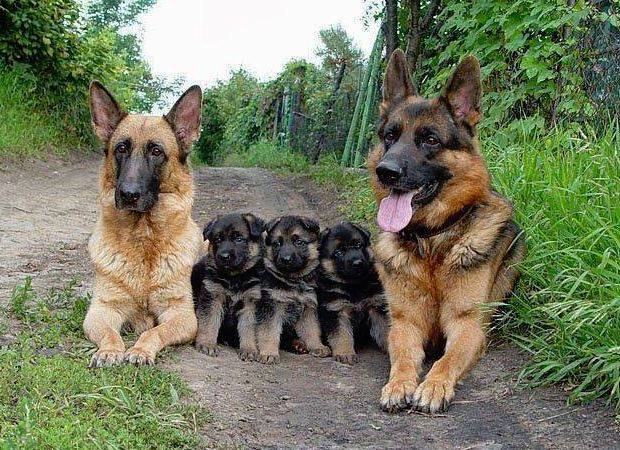
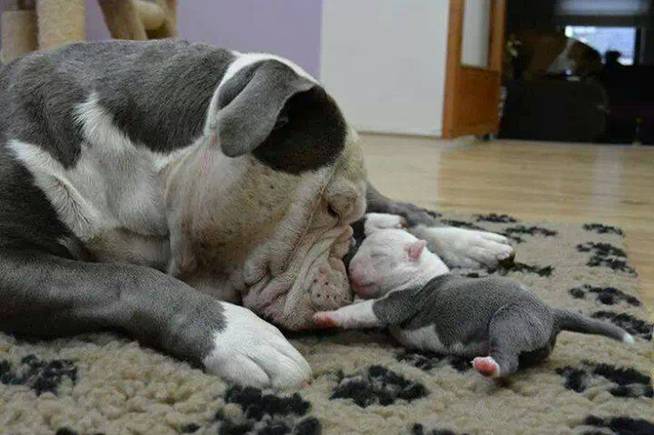
First set of wonderful dog pictures from neighbours, Jim and Janet!

This is what being a loving parent is all about!

JG1

oooo

JG2

oooo

JG3

oooo

JG4

oooo

JG5

oooo

JG6

oooo

JG7

oooo

Difficult to pick a favourite!

Happy Sunday everyone! (And Happy Birthday to my dear sister, Eleanor, who lives in South Africa!)

Saturday sayings!

Courtesy of Bob Derham from back across the ‘pond’.

Sure you will love these just as much as Jean and I did!

ooOOoo

APHORISM: A SHORT, POINTED SENTENCE EXPRESSING A WISE OR CLEVER OBSERVATION, OR A GENERAL TRUTH.

  1. The nicest thing about the future is … that it always starts tomorrow.
  2. Money will buy a fine dog, but only kindness will make him wag his tail.
  3. If you don’t have a sense of humor, you probably don’t have any sense at all.
  4. Seat-belts are not as confining as wheelchairs.
  5. A good time to keep your mouth shut is when you’re in deep water.
  6. How come it takes so little time for a child who is afraid of the dark to become a teenager who wants to stay out all night?
  7. Business conventions are important … because they demonstrate how many people a company can operate without.
  8. Why is it that at class reunions you feel younger than everyone else looks?
  9. Scratch a cat …. and you’ll have a permanent job.
  10. No one has more driving ambition than the teenage boy who wants to buy a car.
  11. There are no new sins; the old ones just get more publicity.
  12. There are worse things than getting a call for a wrong number at 4 a.m. – like, it could be the right number.
  13. No one ever says “It’s only a game” when their team is winning.
  14. I’ve reached the age where ‘happy hour’ is a nap.
  15. Be careful about reading the fine print … there’s no way you’re going to like it.
  16. The trouble with bucket seats is that not everybody has the same size bucket.
  17. Do you realize that, in about 40 years, we’ll have thousands of old ladies running around with tattoos – and rap music will be the Golden Oldies!
  18. Money can’t buy happiness – but somehow it’s more comfortable to cry in a Rolls Royce than in an old banger.
  19. After 60, if you don’t wake up aching in every joint, you’re probably dead..
  20. Always be yourself because the people that matter don’t mind …. and the ones that mind don’t matter.
  21. Life isn’t tied with a bow … but it’s still a gift.

and REMEMBER …”POLITICIANS AND NAPPIES SHOULD BE CHANGED OFTEN AND FOR THE SAME REASON.”

ooOOoo

Have a wonderful week-end!

The book! Part Three: Materialism

“Money has never made man happy, nor will it, there is nothing in its nature to produce happiness. The more of it one has the more one wants.” Thus, it is reputed, spoke Benjamin Franklin, one of the Founding Fathers of the United States and who in many ways could be regarded as “the First American”.

In my previous chapter on short-termism, I quoted from an article by Larry Elliot, Economics Editor of The Guardian newspaper. The closing paragraphs of that article read:

“The premise of the Global Commission on the Economy and Climate is that nothing will be done unless finance ministers are convinced of the need for action, especially given the damage caused by a deep recession and sluggish recovery.

Instead of preaching to the choir the plan is to show how to achieve key economic objectives – growth, investment, secure public finances, fairer distribution of income – while at the same time protecting the planet. The pitch to finance ministers will be that tackling climate change will require plenty of upfront investment that will boost growth rather than harm it.”

“ …. the plan is to show how to achieve key economic objectives ……. while at the same time protecting the planet.” [My italics]

That those two paragraphs and the phrase “key economic objectives” seem perfectly reasonable statements to me and, I don’t doubt, many, many others, illustrates how deeply we are entrenched in the money, or materialistic, world.

I have spent my whole life hearing the term ‘Gross Domestic Product’, or GDP as it is commonly described, and never ever stopped to wonder about the history of this well-known measure. Thus I was genuinely surprised to learn that the term is not yet one hundred years old, by some years. On the website Foreign Policy one finds a brief history of GDP: “One stat to rule them all.” It offers the following:

Out of the carnage of the Great Depression and World War II rose the idea of gross domestic product, or GDP: the ultimate measure of a country’s overall welfare, a window into an economy’s soul, the statistic to end all statistics. Its use spread rapidly, becoming the defining indicator of the last century. But in today’s globalized world, it’s increasingly apparent that this Nobel-winning metric is too narrow for these troubled economic times.

1937: Simon Kuznets, an economist at the National Bureau of Economic Research, presents the original formulation of gross domestic product in his report to the U.S. Congress, “National Income, 1929-35.” His idea is to capture all economic production by individuals, companies, and the government in a single measure, which should rise in good times and fall in bad. GDP is born.

1944: Following the Bretton Woods conference that established international financial institutions such as the World Bank and the International Monetary Fund, GDP becomes the standard tool for sizing up a country’s economy.

1959: Economist Moses Abramovitz becomes one of the first to question whether GDP accurately measures a society’s overall well-being. He cautions that “we must be highly skeptical of the view that long-term changes in the rate of growth of welfare can be gauged even roughly from changes in the rate of growth of output.”

1962: But GDP evangelists reign. Arthur Okun, staff economist for U.S. President John F. Kennedy’s Council of Economic Advisers, coins Okun’s Law, which holds that for every 3-point rise in GDP, unemployment will fall 1 percentage point. The theory informs monetary policy: Keep growing the economy, and everything will be just fine. [My italics]

Keep growing the economy and everything will be fine! Thank goodness we have unlimited resources on this planet! Please forgive my irony!

Management thinker Peter Drucker is often quoted as saying that “you can’t manage what you can’t measure” but my understanding was that the saying came from William Edwards Deming; October 1900- December 1993. Deming was fundamentally an American statistician although his bio reveals many other talents: engineer; professor; author; lecturer; and management consultant.

Irrespective of the origins of the saying, it misses one fundamental point! That is of being certain that what you wish to manage is being measured appropriately. Not measuring pears if you wish to manage apples!

Stay with this idea for a while longer.

There is an organisation known as the Social Progress Imperative. The organisation is described on their website, as follows:

THE IMPERATIVE
Numerous studies have found a high correlation between economic growth and a wide variety of social indicators, yet there is growing awareness that economic measures alone do not fully capture social progress.

The Social Progress Imperative’s mission is to improve the quality of lives of people around the world, particularly the least well off, by advancing global social progress. The Social Progress Index provides a robust, holistic and innovative measurement tool to guide countries’ choices to enable greater social progress and foster research and knowledge-sharing on the policies and investments that will best achieve that goal. Social progress is defined as the capacity of a society to meet the basic human needs of its citizens, establish the building blocks that allow citizens and communities to enhance and sustain the quality of their lives, and create the conditions for all individuals to reach their full potential.

The Social Progress Index is a tool that we hope will be widely used to inform and influence policies and institutions around the world. The Index is founded on the principle that what we measure guides the choices we make. By measuring the things that really matter to people — their basic needs, their food, shelter and security; their access to healthcare, education, and a healthy environment; their opportunity to improve their lives — the Social Progress Index is an attempt to reshape the debate about development.

“…. what we measure guides the choices we make.” Pretty flippin’ obvious when you think about it! As is understanding the “things that really matter to people”!

Michael Green is the Chief Executive Office (CEO) of the Social Progress Imperative. He gave a TED Talk in November, 2014 that is introduced:

The term Gross Domestic Product is often talked about as if it were “handed down from god on tablets of stone.” But this concept was invented by an economist in the 1920s. We need a more effective measurement tool to match 21st century needs, says Michael Green: the Social Progress Index. With charm and wit, he shows how this tool measures societies across the three dimensions that actually matter. And reveals the dramatic reordering of nations that occurs when you use it.

As Michael Green said at the October, 2014 TED Global conference: “GDP is imperfect and incomplete: The world urgently needs a measurement revolution.”

If now writing about the BBC radio show, The Goon Show, suggests I have lost the plot, just hang in with me for a few more moments.

The Goon Show ran from 1951 to 1960 and was broadcast by what was then known as the BBC Home Service. It was hilariously funny and became a comedy legend. It starred Spike Milligan, Peter Sellers and Harry Secombe, not forgetting the wonderful narratives from Wallace Greenslade. The Goon Show was an integral part of my ‘education’ during my formative years; I was seven in November of 1951 and the radio was the source of news, current affairs, education, and humour. Spike Milligan was an outstanding actor in The Goon Show and became a comedy legend in his own right.

A quotation from dear, dear Spike seems a very fitting way to round off this chapter on materialism. Namely: “All I ask is the chance to prove that money can’t make me happy.“

1,272 words. Copyright © 2014 Paul Handover

oooo

Now although it is not part of the book, I was so impressed by Michael Green’s TED Talk, that it now follows. You will love it!

Published on Nov 11, 2014
The term Gross Domestic Product is often talked about as if it were “handed down from god on tablets of stone.” But this concept was invented by an economist in the 1920s. We need a more effective measurement tool to match 21st century needs, says Michael Green: the Social Progress Index. With charm and wit, he shows how this tool measures societies across the three dimensions that actually matter. And reveals the dramatic reordering of nations that occurs when you use it.

Studs Terkel second essay.

NaNoWriMo sucked up my whole day!

I’m loving the writing that I’m doing just now.  I am, of course, referring to ‘the book’!

What is so delicious is taking a series of topics that, at heart, I know very little about in terms of any depth, and finding how internet web searches can unearth a trillion answers (OK, I exaggerated to make a point!) and allow one to learn the topic in some detail.  Specifically, I am authoring chapters on The Power of Negativity, Selfishness, Power and corruption, Short-termism, Materialism, Poverty and Greed. The drafts are being presented here on Learning from Dogs. (P.S. the chapters in most cases continue to be worked on after they have appeared in this place!)

Unfortunately, time is very short in terms of my own creative writings in this place. So, today, it is going to be the second essay from Studs Terkel.  The first one, in case any of you missed it, was yesterday. Me rapidly adding that the two essays were originally published as a TomGram: Studs Terkel on Death and Forgiveness in America.

ooOOoo

“You Got Into My Heart Violently, But You’re There”

Trauma, Death, and Forgiveness on the Front Lines of American Life
By Studs Terkel

[The following is excerpted from the new paperback edition of Studs Terkel’s oral history of death, Will The Circle Be Unbroken?: Reflections on Death, Rebirth, and Hunger for a Faith, with special thanks to his publisher, the New Press.]

“ER”
Dr. John Barrett

He is Chief of the Trauma Unit at Cook County Hospital, Chicago. He still has an Irish brogue.

“In 1966, the Trauma Unit here was actually the first of its kind in the nation. It’s dedicated to people who, more than being sick, are injured — patients who have been subjected to what we call intentional injury, violence. It’s gunshot wounds, stabbings, personal assaults. Other trauma centers see patients who predominantly are victims of unintentional injury: automotive wrecks and falls. Our experience here has been inner-urban, lower-socioeconomic groupings; predominantly young, predominantly male, and predominantly penetrating trauma: gunshot wounds and stabbings.”

I am the third of four sons. My father was a mail carrier, my mother was a dressmaker in Cork. The family really struggled to make sure that all of the sons went to university. My two elder brothers did science — chemistry and physics. I wanted to do something that was scientific in nature but more people-oriented. There was really no family tradition of medicine, but medicine seemed to fill my criteria. I can recall my eldest brother, Frank, saying, “This is a terrible waste of time — you don’t have to be intelligent to be a doctor.”

It’s not as if it’s rocket science. There’s nothing terribly difficult to understand in medicine, there’s just an awful lot of it that you have to remember. I always wanted to be a general practitioner. In my final year of medical school, I did a rotation with the then-professor of surgery, and I loved it. At the end of the rotation he said, “Well, Barrett, what are you going to do?” I said, “Well, Mr. Kiley, sir, I’m going to be a general practitioner.” He looked at me and said, “Barrett, there’s the makings of a great surgeon lost in you.” So that’s why I decided to do surgery. I realized that what I really, really enjoyed was the injured patient. It’s such an acute event: the patient is perfectly healthy, then something traumatic happens, and within a matter of seconds they are injured. They’re a great surgical challenge because they’re bleeding, they generally need surgical intervention. The epitome of those patients is the gunshot wound. Despite all the terrible things you hear about Northern Ireland and all the violence, where I was in the South we saw no gunshot wounds. I actually had to come to this country to see gunshot wounds.

I have found that surgeons have a certain personality. They tend to be very action-driven, very egocentric, frequently overconfident — especially trauma surgeons who will act very quickly with a minimal amount of information. That may not be the person you want to be your lawyer or your priest, but that’s the person you want to be your trauma surgeon. They tend to be supremely confident in themselves, and that’s why many people don’t like them. They tend to demean other people. It goes with the territory because you have to be damn confident in yourself if your job is to start cutting people open at the drop of a hat. People, when they hear that you’re a surgeon, they immediately look at your hands because they imagine there’s something unique about the surgeon’s technical ability. That’s not true at all. People have said you can teach educated apes how to operate — I’m not sure if that’s true — but it’s the decision-making process, not the technical stuff.

If you ask me to talk about life and death, the first thing I would think of is my patient. You begin to realize there’s not a sharp distinction between life and death. When is a person alive and when is a person dead? We have, for instance, patients who come in who are clinically dead: their heart has stopped beating, they are not breathing, their pupils are fixed and dilated. But we have them. The Chicago Fire Department paramedics are excellent — they get them in here fast. They’ve been without vital signs for a short period of time. You can still resuscitate some of them, you can bring them back…

Was it two weeks ago? — we had a man who was stabbed in the heart, came in clinically dead. We immediately opened his chest, released the pressure from his heart, sewed up his heart, and he actually recovered. He can’t have been dead because we got him back, but he was clinically dead. It’s not a very firm line; there’s a gradual blending from where you’re alive to where you’re dead. The people I see who are dead are in general young people who have suffered a calamitous event — they’ve been shot. You try your best. They’re either dead when they arrive or generally die fairly quickly after they’ve arrived. You can’t resuscitate them. The first thing that strikes me about it is, it seems such a waste… You’re looking at a human body, and as a surgeon you know its intimate details: the anatomy and the sinews and the arteries and the veins, and they’re now dead. This wonderful perfect machine is now no more. It’s frequently the smallest thing that has killed them. A stab wound to the heart will kill one person and it won’t kill the next. It seems to be such a capricious thing. What I really think a lot about is when children die. When adults die from trauma, you feel they have some degree of responsibility insofar as they chose to be in that place at that time. When a child dies, you think: Why did that happen? Five minutes’ difference would have changed the entire course of events. And parents ask you the same thing: “Why did it happen, doctor?” You try to explain: “He was shot, we did the best we can.” That’s not the answer they want. They want to know why this person who was awake, alive, and healthy this morning is now dead. You don’t have that explanation as a surgeon.

The first thing I feel, I feel angry, angry that they died, that I haven’t been able to save them. To me it’s almost like a personal defeat. I know in a logical sense that’s not true. I didn’t shoot them. It wasn’t my fault that there were guns on the street.
studsunbrokenRemember how I characterized the surgeon? The surgeon is supremely self-confident. We whip them back from the jaws of death, we have the scalpel, we have the decision, we have the technology, and we have a system in this hospital that’s supposed to save them. But you can’t save them all. We don’t lose a lot, but we do lose them. So initially I feel angry. That passes fairly quickly because I then say to myself: What could we have done that we didn’t do? Actually, we talk about it as a group: Could we have acted quicker, recognized this quicker? Because even though this particular patient is dead, we may be able to improve care for the next patient. Then I think: What a waste! A total, absolute waste. Especially now. I’m fifty-five years old. It makes you think about your own mortality. We really don’t realize what a precious gift life is. We take it for granted. I’ve always taken it for granted. My children are growing up, my daughter is going to college this year, I’m growing older, and I’m surrounded by people who are brought in, some of whom die. It is a very, very fragile thing we have that can disappear. The stuff that you worry about… Are you going to get the house painted? The basement floods occasionally. My God, the car keeps breaking down… It’s all so trivial… We should really realize that the greatest gift we have is time, and that means you’re alive.

When the patient comes in, you might see someone who’s covered in blood. I don’t see someone covered in blood, I see somebody who has technical challenges. A gunshot wound to the chest with hemothorax, we need to get a chest tube in, determine the rate of bleeding, and make effective interventions. So right then and there, I’m not thinking great philosophical thoughts — I’m in a mechanical, operative mode. You just go boom, boom, boom… It’s like a very organized, choreographed dance. But then at the end, he dies. Then you say, “Let’s look back at the dance. Did we do something wrong, could we have done something better?” You do tend to become a little philosophical as you grow older. I’m convinced that the solution to all this violence is not surgeons. We need to somehow prevent it.

I come from Ireland, a country that has national health insurance. Every resident is insured. I’m an American citizen and I love being one, but I can’t understand why we can’t ensure that every resident of the country actually gets adequate health care. I’m so happy to work here at the County Hospital, because that’s part of our mission statement: We will not turn you away. People refer to us as the hospital of last resort. I think that that’s a very noble thing.

People say, “Why did you stay?” It’s so perfectly logical to me. Here’s what I wanted: I wanted to be a surgeon who dealt with patients who required surgical intervention. Those are gunshot wounds. I also want to be able to teach people. I think it’s important that you pass on your skills. And to even do a little research, to maybe improve the care of the patients. Patient care, education, and the research, all three things I’m doing here. The money isn’t the greatest, and there are frustrations working in the public sector — but compared to what I’ve gotten out of it, I am one of the most fortunate people that you’ll ever meet. I would actually pay money to do this job. They pay me to do what I love to do.

When you lose a patient… I think every doctor has their own way. It’s not something they teach you in medical school, and they really, really should. Physicians and health-care people in general need to have a far greater degree of sympathy toward their patients, toward the patients’ family. No one ever taught me how to talk to a family and tell them that their loved one was dead, especially in a trauma situation. It’s one thing if a patient has, say, cancer and they become ill and then they die — it tends to be a process. You get to know your doctor, you finally realize the end is inevitable, you may have time to talk to your loved one.

Trauma is different. What happens in trauma is this eighteen-year-old leaves the house in the morning, perfectly healthy. Then the mother gets a call at two o’clock, it’s the Trauma Unit at Cook County Hospital: “Your son’s been shot. Please come in.” When she walks in, she’ll see me. She doesn’t know me, she’s never met me before, and I am now going to tell her that her son is dead. So how do I do it? The first thing that I do is I try to put myself into their situation. What they want to know is, is he alive or is he dead? I think you need to tell them that. Some people start telling them about he was shot and he came in and we did this and we did that. They’re really trying to impress the family with the work that they did to save him. That’s not what the family wants to know: they want to hear if he’s alive or if he’s dead. That’s what I tell them. I say: “You don’t know me, I’m Dr. Barrett, I’m the senior surgeon here tonight.” They won’t even remember my name. Sit them down. Sit down with them. Look into their eyes. If you can, hold on to them and say, “It’s bad news.” And they’ll say, “Is he dead?” Or they just look at you. You have to use the word, you have to say it: “He’s dead.” If you say he’s “expired,” he’s “passed away,” they don’t hear that. You have to say he’s dead. Then, then they react. They generally go into disbelief: “No, no, it’s not true — I can’t believe it… How could it happen…” Or they say, “It can’t be him. Are you sure? ” All you do then is you just let them grieve. I think it’s actually helpful for them to come and see the body. I think that’s important. He’s all covered in blood, there’s tubes in him. That doesn’t matter. They want to see that person, they want to see that face. I say to them, “It’s OK to hold him, if you want to kiss him, if you want to talk to him.” I think it’s important to do that because, afterwards, they’ll go through that scene in their mind over and over and over again. “I remember the night they called me from the County and I came in and this is what happened, and that is what happened…” It’s very important to put yourself into their shoes, but you’ve got to say the word “dead.” You’ve got to give them the finality of it.

I ask residents, “How would you do it?” They’re trying to explain to the family what they did: “He came in, we intubated him, we did this, we gave him blood, we gave him CPR.” The family isn’t even listening to that! They’re not listening to it. After you’ve said he’s dead, they won’t listen to anything for a long time. Once they’ve calmed down, it’s important to tell them the absolute truth. “I don’t know what the circumstances surrounding the shooting were, but as far as I can tell, he was unconscious very rapidly after he was shot. He never regained consciousness. I don’t think he suffered.” Just tell them the truth, it’s always the best thing.

When you die, you die. Your body rots. Everyone knows that. There’s no argument about that. But there is a spirituality to us. If you want to call it a soul, you can call it a soul. I think of it more as the thing that allows us to choose to do good or evil. You kind of fall on one side or the other. You tend to be on the side of the good or the side of the evil. You can personify this as being God and the Devil. You can call this spirituality your soul, or not your soul, but whatever it is, I do believe it continues after your body is dead. I’m not sure that thing that’s going to exist after I’m dead would say to itself, “I am John Anthony Patrick Barrett and I remember everything about John Anthony Patrick Barrett” — I don’t think it’s that simple. I do believe in an afterlife, but I don’t believe that it’s up there in the clouds somewhere with angels flying around beating their wings, and God is an old geezer with a long beard.

Let me try it a different way. You do things that live on after you. Each of us, as we pass through life, influences others. You leave behind you a legacy of things you did and people you influenced. So even if you don’t believe in a life after death, you’ve had an influence. And people say, “I haven’t had any influence. What did I do? I worked in a steel mill all my life, I didn’t actually do anything. Got married, had a few kids…” Well, you did — you had an effect as you went through life, and it was either a good effect or an indifferent effect or a bad effect. That effect continues on. I have two children, and they’re going to have influences on people and they’re going to do things. I’m also a teacher: I’ve taught lots of people, hundreds, perhaps even a thousand people that I have influenced in a very fundamental fashion. Many of them are now surgeons themselves. There’s little pieces of me that exist in all of that. So even though you’re dead, you’re not gone.

If you said, “What do I think makes me different from other surgeons?” the short answer is I don’t know… But I will tell you I think it’s a word called “empathy.” I have the ability to think and feel like the other person. I don’t know where I got that, but it’s something almost instinctive. Maybe that’s what doctors need to have. If doctors are supposed to comfort, you’ve got to understand that the person is suffering; you’ve got to kind of live in your patient’s shoes. I don’t care if you’re a Hindu or a Jew or an atheist, it’s all fine to me. I certainly don’t believe that there’s only one true religion and one true God and only one way of getting to Heaven. If you believe in your particular belief, I respect that. You’re gonna get to Heaven every bit as fast as I am, and in fact even faster probably.

I remember the first dead person I ever saw — my mother’s father. I would have been probably four or five years old. I remember a big commotion in the house, getting dressed up and washed and cleaned and being on my best behavior. He was laid out in a morgue. I recall the body. He was in the casket. It was an open casket, and he didn’t look like granddad. It was this pale waxen look — it wasn’t him. The second one I ever saw dead was in Ireland. I think I was probably eighteen or nineteen years of age, and I was out on my bicycle. There was a guy who had crashed his motorcycle into a car. As I arrived at the scene they were getting the body out — and he was dead. And they were getting him out and I remember he was covered in blood. I haven’t thought about this in a million years. I remember, as they took him out, he had his watch on. I remember the second hand of his watch was still ticking. Why do I remember that? I think it was the thing that I talked about before. He was fine, and now he’s dead… but his watch is still going on.

If you had been born a hundred years ago, Studs, you wouldn’t have lived this long. Yet you’re still living a very productive and fruitful life. There comes a time when we really do have to balance that, though. Now, how do you make those decisions? These are actually not decisions that your doctor alone can or should make. Especially those of us who are technologically driven. If you were dying from something that I think I can cure by operating on you, I am going to try and convince you to have the operation. You may have a totally different perspective on life. I think medicine needs to acknowledge that. Sometimes it’s not the patient, it’s the patient’s family who say, “I want everything done.” How much of that is driven by them because they want to be able to say afterwards, “Well, we did everything”? It makes them feel comfortable…

It isn’t a huge problem in trauma because we really do try to do everything, because the patients are young. But if I am at the stage where I’m absolutely convinced that the patient is going to die but I can keep the patient alive longer, I think what you need to say to the family is not, “What do you want me to do?” What I say to them is, “If the patient in the bed could talk to us, what would he say, do you think? You know him, he’s been your son or your husband. You know his approach to life. What do you think he’d say?” Then they begin to think: What would he say? They’re surrogates. I don’t want to know what they want to do because they’re filled with guilt and anguish, and half of them want to do this and half of them want to do that. I want them to tell me what they think he would do.

Then there’s the question about physician-assisted suicide. I can understand the sort of logic that says the patient is in absolute agony, the patient wants to die, and they want me to help them to die, but I don’t subscribe to that. I think there’s a huge difference between pushing someone into a river and having them drown, and seeing someone in the river drowning and doing nothing, letting them drown. If you look at the cases of physician-assisted suicide, man, you’d better be damn sure that you’re doing the right thing. You need to be damn sure. I mean, surer than capital punishment. You need to be sure that whatever it is the patient has is totally incurable and cannot be relieved. You’re dying because you’re in intractable pain? We can take care of it, I mean, we really can. This feeling that they’re turning to say, “Kill me, doctor…” They’re not depressed? There’s nothing we can do to help that depression? I don’t think I ever personally would feel so confident that I would do that.

I actually believe in capital punishment. It’s rare for a doctor to say that, because doctors are trained in the preservation of human life. And it’s probably even rarer for a professed Catholic doctor to say that. But I believe that there are some people who should be killed. There are justifications for taking human life — predominantly self-protection. If somebody is going to kill you and the only way you can save yourself is by killing them, then you are justified to kill them. That can be extrapolated into a just war, if there ever is such a thing. Now, let’s go to the individual. I don’t think we should execute people as a deterrent, although it is the ultimate deterrent for the person you’ve executed. I think there are some people in this world who are evil: they murder other people. So I would need to have a person who has committed heinous crimes, and I would include in those heinous crimes, rapes.

I also am very concerned about people who kill police officers, or even politicians, because they’re protecting us. I would also need to know that there is no way to rehabilitate him. So that might mean that he has committed the crime many times. I would need to know that he continues to be a risk. People say, “Well, why don’t you lock them up for the rest of their lives?” I’ve seen these people. They will try to kill other inmates. They will try to kill their custodians. They will try to kill the guards. They are intrinsically evil. They cannot be rehabilitated, and they continue to pose a risk to their captors. They deserve to die because they are a threat to us, not because we’re trying to frighten other people from committing the crime. They would have to be guilty much more than beyond a reasonable doubt. They exist — I’ve seen them. There are people like that in the world.

When I’m dead, there will be this thing that is left like the body of my grandfather. That I don’t care what you do with it. It’s like when I go to the barber, he cuts my hair. Do I worry about the hair? I don’t give a damn what he does with it. You want to burn me? I don’t care. Actually, whoever is left who’s going to be responsible for my dead body, they need a ritual to bury me. So, sure, I’m sure there’ll be a little ceremony and they’ll be singing songs and ringing bells and lighting candles and smoking incense. I don’t care what they do. Because that thing in that coffin, that is not me. Now that I’m fifty-five, I actually think about dying. I didn’t think about it when I was twenty, or thirty, or forty. But I’ll soon be sixty. And there’s a whole bunch of stuff I intend to do yet. I’ve got big plans. My mother, she’s alive and she’s ninety years old; my father lived until he was eighty-six. I hope that I’ll live a long time. But I can grapple with it now: I can see myself dying. I think the process would be messy, the actual dying, death. But I don’t think I would be particularly bothered by the fact that death is inevitable. I’m not embracing death, but I’m not afraid of it. There are also the things you’ve done during the time you’ve spent on this earth that are going to remain behind, in some way, shape, or form, forever. If I’m dead and people come to my graveside and look at my tombstone, do you know what they’re going to say? They’re going to say, “Who was he?” You want to know who I am? If I wanted to have anything written on my tombstone, I would have, “Ask my children or ask my students.” I actually never thought of it quite that way. That wouldn’t be a bad epitaph.

Studs Terkel (1912-2008) was an award-winning author and radio broadcaster. His books included: Division Street: America; Talking to Myself: A Memoir of My Times; “The Good War”: An Oral History of World War II; Working: People Talk About What They Do All Day and How They Feel About What They Do; and Hard Times: An Oral History of the Great Depression; all published by the New Press. He was a recipient of a Presidential National Humanities Medal, a George Polk Career Award, and the National Book Critics Circle 2003 Ivan Sandrof Lifetime Achievement Award. These two oral histories were excerpted from the new paperback edition of his oral history of death, Will The Circle Be Unbroken?: Reflections on Death, Rebirth, and Hunger for a Faith, also published by the New Press.

Follow TomDispatch on Twitter and join us on Facebook. Check out the newest Dispatch Book, Rebecca Solnit’s Men Explain Things to Me, and Tom Engelhardt’s just published book, Shadow Government: Surveillance, Secret Wars, and a Global Security State in a Single-Superpower World.

Copyright © 2001 by Studs Terkel. This excerpt originally appeared in Will the Circle Be Unbroken? published by The New Press. Reprinted here with permission.

ooOOoo

There were a number of links in Tom’s original post that were too awkward to carry across to here. Primarily the links were in the last chapters speaking of Studs Merkel. Please go here if you wish to follow those links.
Finally, if you wish to purchase the book then please use this link to Amazon so that Tom doesn’t miss out! Thanks!