Category: Core thought

Speechless!

Maybe it’s me but at any level this appears to be very wrong!

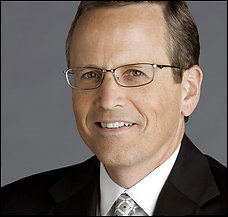
Haldeman - Freddie Mac
Williams - Fannie Mae

The US Government put huge amounts of taxpayer’s money into the two huge US Mortgage companies Fannie Mae (Federal National Mortgage Association) and Freddie Mac (Federal Home Loan Mortgage Corporation).

Now the BBC has reported that:

The heads of US mortgage giants Fannie Mae and Freddie Mac may each receive pay packages of up to $6m (£3.7m) for 2009, depending on company performance.

Now I’m not an American nor do I really understand the issues BUT when taxpayers put in $111,000,000,000 of THEIR money into these organisations (that’s $365 for every man, woman and child on the US Census!) and so many of those same US taxpayers are up the proverbial financial creek without a paddle, there has to be a better way of rewarding top bosses (of US publicly owned corporations) than the option of $6,000,000 each!

But the regulator which decided the pay levels said the awards were 40% lower than before the government bailout.

The sums involved reflected the need to attract and retain talent, it argued.

Frankly, I just don’t believe that there aren’t many other incredibly capable business leaders who would do these jobs for a fraction of six million dollars.  (The present incumbents are Michael Williams at Fannie Mae and Charles E. Haldeman Jr. at Freddie Mac who will receive a base of $900,000 in 2010 with the opportunity to earn $5.1 more if “certain targets are met“.)

Read the article here – I’m going to lay down in a dark, quiet room for a while!

By Paul Handover

The Singular Importance of Good Writing

“The time to begin writing an article is when you have finished it to your satisfaction.  By that time you begin to clearly and logically perceive what it is you really want to say.” ~Mark Twain

It is a bit intimidating to try to write a piece on the importance of good writing.  I feel self-conscious about my writing as I write about good writing.  After all, a post on good writing should be written especially well. Then again, maybe a poorly written post will do even more to illustrate the importance of good writing. I will have to leave that up to you, the reader.

I have been teaching graduate and undergraduate students for over twenty years now. I have read and graded thousands of papers and essays during that time. I can count on two hands the number that were exceptionally well written.  In each case, I sought out the students to compliment their writing, and to encourage them to keep honing their writing skills.

I doubt my words of encouragement had much effect.  This, I know from personal experience.

Years ago, in my third year of graduate school, I got a paper back from a professor with the words “You write well” written in the margin.  I was crushed.  I had worked so hard on that paper: reviewing the existing literature, developing the research design, and trying to make a substantive contribution to my field.  I yearned to hear something tangible about the quality of the research, the cleverness of the method, or the importance of the findings.  Instead, I got “you write well.” I honestly thought that the professor had said that because he couldn’t think of anything positive to say about the content of the paper.

Years later, something happened that made me realize how wrong I was.  I had taken a teaching job at Southern Methodist University in Dallas, Texas, even though I had yet to defend my doctoral thesis; it’s called “ABD,” or “all but

Merton Miller

dissertation.”  I had traveled to Chicago to meet with Merton Miller, my thesis chairman, about polishing up my dissertation and scheduling the defense.  As I waited outside his office door, I couldn’t help but notice how distracted Professor Miller seemed. He had always stood at a tall wooden lectern to write, but this day he paced to and from that lectern, rubbing his head, adjusting his shirt sleeves, writing, erasing, then erasing some more.

He was at the lectern when I entered his office for our meeting. I congratulated him again for winning the first Nobel Prize in financial economics and asked him about the upcoming trip to Stockholm.  He was taking his wife and daughters on the trip, who were very excited. He, on the other hand, was not ready for the trip.  He was worried, he said, because he was not going to have sufficient time to revise his acceptance speech.   He had only edited it seven times thus far, and his magic number was eight.  Not six, not seven, but eight rewrites were what he needed to be satisfied with his writing.

Professor Miller was known as one of the most gifted writers in all of economics.  His writing was disarmingly simple and clear. It flowed like a piece of music. It seemed effortless.  Everyone, myself included, assumed that he was just a naturally talented writer, lucky to have been blessed with that skill. Everyone was wrong.  I learned that day that Professor Miller worked hard at writing well.  He was well into his 60’s, had written hundreds of articles and had won the Nobel Prize, but he was still working at writing well.

Then I remembered the comment that a teacher had written in the margin of my paper years earlier. The teacher was Merton Miller.  And now I knew how much it really meant, coming from him.   So now when I see the rare student who writes really well, I make it a point to tell them.  Not that it means as much coming from me as it did coming from Professor Miller.  But it still means something, because good writing is very important, and it’s worth working for.

By Sherry Jarrell

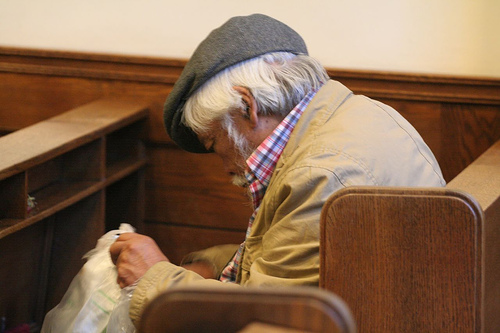
“Don’t worry, it’s only an old man!”

A passer by invokes a lesson for us all.

.

Recently while busy in the garden our two dogs started barking. This in itself is not unusual because they sit at the front gate waiting for passers by to stop and talk to them. It can be a horse, or cyclist that sometimes causes them to bark, and our children have grown to show the same awareness as the dogs in who is passing.  I didn’t see the cause this time but our young daughter did.

Don’t worry, Daddy, it’s only an old man!

Stephanie is only 8 years old, but without meaning any harm had given sufficient information to explain the risk to us and paint a quick picture in a few words as to why the dogs were barking.

Of late for some reason I have been more aware of people who are ageing. This generation do not normally stand around telling stories, this is left to the young who always seem to have something to shout about.

However all older people will have many interesting tales, often almost unbelievable, yet true. They have lived through war, happy, sad, interesting, and hard times. Each has learnt about life through experience that we can not buy.

Recently my ex Mother-in-law passed away. I thought I knew her very well, but it wasn’t until family stories started coming out that we all found out there had been much more in the life of this modest lady.

How it should be.

Christmas is coming and probably there will be family gatherings. This year I am going to try and turn the attention to the older generation, and see if they will open up and give us an insight into their childhood days and memories so that we can give them the respect they deserve, ask them to read stories to the children, ask them to tell their own tales.

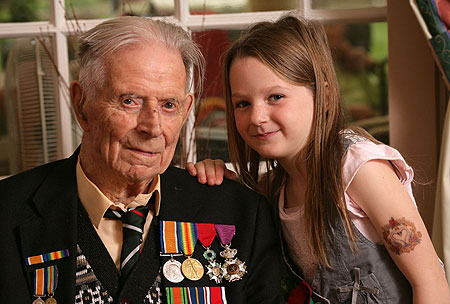
Oh and the old man? Yes I did see him again, in church at a Remembrance service, and he had some medals under his coat, so did have a story to tell!

By Bob Derham

Crimes and accidents: the extent of responsibility

How bad can a car accident be?

On 28 February 2001 a vehicle came off the M62 motorway at Great Heck, near Selby, [North Yorkshire, England. Ed] ran down the railway embankment and onto the East Coast Main Line, where it was struck by a passenger train. The passenger train was derailed and then struck by a freight train travelling in the opposite direction. 6 passengers and 4 staff on the trains were killed. The driver of the vehicle was found guilty of causing the deaths of 10 people by dangerous driving.

So begins the report “Managing the accidental obstruction of the railway by road vehicles” from the UK Department for Transport (DfT).

If you were aware of this incident at the time, you might remember that it attracted considerable discussion and press coverage, here are  some examples.

At the time,  a variety of causes were cited for the accident and for the failure of various mechanisms to prevent the accident.

“Whose fault was it?”

Most of the discussion seemed to be based on trying to find someone to blame for everything that happened and the main target was the driver of the vehicle who was alleged to have been driving while unfit to drive due to lack of sleep, and to have fallen asleep at the wheel.

However, I thought that the public response to the incident was a matter of considerable concern; and I continue to think so.

Clearly people can expect to be held responsible for their actions. When their action or lack of action causes damage, they can expect to be held responsible for that damage. However, there are surely limits to that responsibility.

Also, it is interesting that this incident was described at the beginning of the DfT report which was otherwise entirely about ways of reducing incursion of road vehicles onto railways. So, if it is accepted that insufficient fences, banks, ditches or other obstructions had been provided, the implication is that the motorist could expect some protection to exist and is therefore not wholly responsible for the consequences of it not existing.

Level of responsibility

If, as alleged, the driver was unfit to drive then he can expect to be held responsible for his actions. But, in much of the discussion about this incident, there was very little importance attached to the issue that the probability was infinitesimally small that he would fall asleep at exactly the location which resulted in his vehicle entering a railway line, and at the time when not one but two trains were about to pass that point. I would hazard a guess that he could not have planned it so accurately if he had intended to cause the incident!

Having, by extremely bad lack, ended up on a railway line and before the railway collision occurred, he was aware of the danger of collision and was already using this mobile phone to attempt to warn the authorities of the situation. But even if he had been injured and unable to warn anyone, to what extent was he responsible for the full range of consequences of this extremely unlikely incident?

According to one of the press reports:

The HSE report described the accident as ‘wholly exceptional’ and concluded: ‘There was nothing the railway industry could reasonably have done to prevent the collisions.’

Chief Inspector of Railways Vic Coleman said: ‘It’s clear that the chain of events that led to this catastrophe were determined by sheer chance.’

The DfT report, and the fact that the work to generate it was instigated, suggests that the Department for Transport did not agree with the Health and Safety Executive (HSE) that there ‘There was nothing the railway industry could reasonably have done to prevent the collisions.’

Distinguishing the criminal from the accident elements

How do we distinguish crimes from accidents? In particular, in complex incidents such as this, how do we distinguish the criminal elements from the accidental elements of an incident?

In my opinion, there is no benefit in penalising, or even reprimanding, people for actions which led to consequences which either they were completely unable to foresee or which were so improbable as to be bordering on fantasy. On the contrary, it is an opportunity to learn more about the consequences of one’s actions; this can be a positive process of extending one’s understanding, rather than a negative process of “not doing that again”.

In particular, in cases like the Selby incident, clearly someone should be penalised if it is determined that they were driving dangerously; but it seems to me that the severity of the penalty should be based on the severity of crime, which relates to the severity of the likely consequences of their actions and, presumably, whether this is a recurrence of this or other offences.

It also seems to me that the severity of crime is largely independent of the actual consequences of the incident. In other words, someone should expect to be penalised just as severely when there were no consequences as when there were.

I understand that many people would like to find someone to blame for all damage which occurs. But is this reasonable? There are, after all, such things as accidents!

Our blame culture

My view is not that held by the authorities, at least not in the UK. The sentencing guidelines of the Crown Prosecution Service in cases of dangerous driving take the view that the consequences are relevant.

As is probably apparent, I respectfully disagree. This blame culture does not, in my view, serve any purpose and may even reduce safety. Safety experts in the aviation industry seem to take a completely different view from that in the motoring world and reap the long term benefits of improved safety as a consequence.

You may take a different view!

By John Lewis

The Fatuous Obsession with Celebrities

The humungously uninteresting saga of Tiger Woods’ infidelities

The press has been full in recent days of the Tiger Woods saga. I have followed this with a combination of astonishment and disgust and touched on it yesterday’s Post.

Astonishment? Not at Woods’ extramarital adventures. Frankly, I am astonished that anyone could possibly be astonished to learn of his frailties.

I must have been about 13 when I took an interest in John F Kennedy, mostly because of his assassination. As a young teenager I read and listened to the news over the coming months and gradually realised that this great American hero and hope for the future was a serial philanderer. And as I grew up I realised that this is the kind of behaviour that rich and powerful men in particular get up to.

I soon realised that some men simply give in to their sexual drives; integrity, promises and faithfulness just go out of the window. Once again – just like the British MPs who filched public funds by the £1,000s –  BECAUSE they can do it (for a while) they DID do it.

This is regrettable for stable marriages and the happy upbringing of children, but it is a fact. And so Woods’ antics were

Paul Newman

not the slightest bit surprising. In fact, what IS surprising is to hear of famous people who have NOT given in to basic urges, the most famous recent example being the much-loved and missed Paul Newman.

No, what astonished and disgusted me was the press interest in Woods’ philanderings. Of course, the media only publicize what they think people want to hear or read about, and this in order to sell more copies and rack up more advertising revenue. And as the media are not stupid, it clearly IS true that many people ARE interested in the sexual antics of famous people.

But what does this tell us about the seriousness of the human race? All this fuss over one more weak, unfaithful and ultimately boring husband when on the same day hundreds of thousands died of treatable disease, when goodness knows how many more tons of ice melted, how many more tons of CO2 were released into the air, how many more victims of the hellish North Korean regime there were?

He’s a famous golfer? Oh dear ….  someone good at putting a ball into a hole? This is supposed to be IMPORTANT?

Sadly, the whole episode is just another example of the fatuous obsession with celebrities, as if they are somehow more interesting or important than anyone else. No, my local postman is far more interesting than Tiger Woods, and I don’t think he cheats on his wife either.

And as for comment about the business wisdom of Woods not talking to the press? Oh dear again – one weeps. Why should anyone CARE whether he talks to the press or loses sponsors? Who GIVES a damn? Well, apparently, millions. And this is fairly depressing when there is so much else to worry about. And if big name sponsors of the once “Mr Clean” of world sport are now looking rather foolish, well I for one won’t shed any tears. They peddle fantasy, shallowness and envy; it’s time we had a reassessment of priorities and bit more common-sense and realism.

Please Mr Murdoch et al; give us a break from Tiger Woods; he is just nanoscopically irrelevant in the grand scheme of things and what on earth has his private life got to do with his golf anyway? But I expect we will have to suffer months of reading about the vast settlement his wife will get as his divorce is dragged through the courts and the media. Oh dear, I need a drink ……

Despairing of Kempten in the Allgau

By Chris Snuggs

An Overview of the Study of Macroeconomics

A primer from Prof. Jarrell on this important subject

Macroeconomics is the study of aggregate supply and demand, and looks both internally to the workings of the economy and externally to how a domestic economy interacts with others worldwide.

Macro builds on the principles of microeconomics, which is the study of prices and quantities of individual goods and the markets where these goods are produced and sold.

In macro, “price” refers to some index of the prices of domestic goods and services, and “quantity” refers to some measure of the value of domestic production or “output.”  One common measure of output is gross domestic product (“a measure of the productive activity of a country computed on the basis of the ownership of the factors of production”). A country’s standard of living is usually directly correlated with its real output, or the value of total output corrected for inflation.

J M Keynes
John M Keynes

Unlike microeconomics, macroeconomics started with the idea that prices and markets do not continuously resolve all of the coordination requirements of a modern economy.   Such “failures of coordination” (Keynes) seem likely when one views the economy as the collective sum of thousands of microeconomic markets.

For example, although most economies around the world have experienced generally positive trends in their gross domestic product, short run positive and negative deviations (recessions and, in more dramatic examples of the failure of coordination, depressions) around the trend line, or “business cycles,” are common.

Inflation is the rate of change of the average level of prices, where the price level is usually measured as a price index.  Inflation rates are typically quoted in annualized percentages.  In normal times, the inflation rate is procyclical: it rises in periods of high growth and declines in periods of slow growth.  Unemployment, by contrast, is usually countercyclical.  The U. S. inflation rate was as likely to be negative as it was positive before World War II; since then, price levels have risen fairly consistently.

Read more about this important topic

Putting Admitted Terrorists on Trial

Khalid Sheikh Mohammed (KSH)

I must say that I am very confused about bringing an admitted terrorist into  our country and its court system, where everyone is presumed innocent until proven guilty, has an attorney assigned to them if they cannot afford one, and they enjoy the full rights and benefits of any other individual accused of a crime in the United States.

Evidence will be brought to bear on the case and, based on the preponderance of the evidence as presented skilfully by attorneys on both sides, and as adjudicated freely and with respect for the law, the judge and/or jury will find KSH innocent or guilty.

If, as Eric Holder, Obama’s choice for the U.S. Attorney General, has indicated ‘KSH’ should be found guilty of horrible crimes and should be brought to justice, I am wondering what is Holder’s real purpose of trying this mastermind here.  He must know that there is a chance that the well-meaning set of 12 honest, everyday jurors in this case, through legalese or side-deals or  bias,  might find to acquit.  Right? Then what?

Holder says he’s guilty, yet brings him here (while trying others in a military tribunal) to “try” him in a courtroom which Holder expects to find him guilty.  I see the twisted mess we are left with if this happens.  But where’s the upside?

Am I missing something?

By Sherry Jarrell

Greg Craven and his message

How to approach the global warming dilemma.

Yesterday, a Post was published a Post about Greg Craven.  It made the point that social media was becoming a very real force in influencing opinions and how that threatened traditional politics.  Here’s an extract:

I was doing some research for an earlier Post about Copenhagen and came across a YouTube video created by Greg.  More details and links later after making a more fundamental point.

This video of Greg’s has had 2,704,000 viewings! The information on that YouTube ‘page’ has had over 7,500,000 viewings. Greg has now written a book and so on, and so on.

Now I want to return to the core subject of how we deal with very complex issues that have the power to decimate humanity, e.g. global warming.

The fact is that the majority of people who think about such issues as global warming don’t have the skills and knowledge to determine what to do for the best.  It comes down to determining risks, which was the theme of an earlier Post acknowledging the work of Peter L Bernstein.

That’s also the theme of Greg Craven’s video on YouTube.  It’s a noble effort by a concerned citizen of Planet Earth.  Watch it.

By Paul Handover

Copenhagen – the unspoken issue

It’s getting crowded down here!

For those readers who are not regular BBC television viewers, the Beeb has for many years run an excellent factual/science & nature series under the name of Horizon.  Just recently there was a programme with the title of How Many People Can Live on Planet Earth?

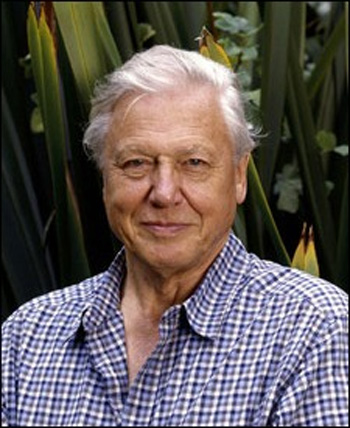
Sir David Attenborough

It was presented by that familiar face on the BBC in terms of the natural world, Sir David Attenborough.  It was an appropriate and worthy person to present the information.

But before getting into some of the details underpinning the programme, there seems to been an enormous and unspoken omission at Copenhagen – why no debate about global population trends?

Luckily the media noticed the rather obvious exclusion.  Here’s the UK Daily Telegraph newspaper (online version) of the 8th December, 2009. An extract:

Population growth is the one issue accused of causing driving climate change that no one at the Copenhagen climate summit dares to talk about.

The argument is that more people consume more resources, therefore producing more greenhouse gases that cause global warming.

The global population is currently at 6 billion and could rise to 11 billion by 2050 if fertility rates continue, not only threatening the climate, but food shortages and conflict as well.

Organisations like the Optimum Population Trust, that is backed by Sir Jonathan Porritt, Dame Jane Goodall and Sir David Attenborough, advocate birth control as a way of slowing climate change.

As Sir David has said: “I’ve never seen a problem that wouldn’t be easier to solve with fewer people, or harder, and ultimately impossible, with more.”

A study by the London School of Economics found contraception is almost five times cheaper as a means of preventing climate change than conventional green solutions such as investing in green technology.

Read more of this Post

Greg Craven and the power of social media

There’s a new power on the streets and it may make politicians feel very uncomfortable!

The Rt Hon Gordon Brown

Like me, you probably haven’t heard of Greg Craven.  I hadn’t until about 24 hours before starting to write this Post (that would be Friday afternoon, Mountain Time, on the 11th December).

I was doing some research for an earlier Post about Copenhagen and came across a YouTube video created by Greg.  More details and links later after making a more fundamental point.

This video of Greg’s has had 2,704,000 viewings! The information on that YouTube ‘page’ has had over 7,500,000 viewings. Greg has now written a book and so on, and so on.

In other words, the personal message that Greg is conveying has reached an unbelievable number of people.  That would have been impossible without the power and reach of modern social media software systems: YouTube, Facebook, Linked-In, Twitter, MySpace, Digg, at al.

In the past, information has flowed outwards in a much more ‘top down’ way.  Hierarchical, as it is called.   That has suited those that wish, in some way, to control the message.  While individuals would always chatter and gossip with their peers, there was a finite limit to that before “Send reinforcements, we are going to advance” morphed into “Send three and fourpence, we are going to a dance”!

The example of Greg Craven shows only too well how information can now flow.  Out of anyone’s control, spreading virally.

Having made my point, I want to return to the subject matter that Greg is championing – but will include that in a separate Post.

Politicians!  Be very careful what you say.  We are all listening now, in one way or another, and ready to pounce if we don’t trust your words!

By Paul Handover