Anyone, anywhere can celebrate Peace Day. It can be as simple as lighting a candle at noon, sitting in silent meditation, or doing a good deed for someone you do not know. Or it can involve getting your co-workers, organization, community or government engaged in a large event.
The impact if millions of people in all parts of the world, coming together for one day of peace, is immense, and does make a difference.
International Day of Peace is also a Day of Ceasefire – personal or political. Take this opportunity to make peace in your own relationships as well as impact the larger conflicts of our time. Imagine what a whole Day of Ceasefire would mean to humankind.
Can’t argue with that or with this year’s UN Secretary-General Ban Ki-moon’s message for today’s International Day of Peace.
So don’t forget!
Wherever you are in the world, take a minute off at mid-day and be at peace.
A further reminder of the power of positive thinking!
So much for fine ambitions! I’m recalling a post I published just one week ago; yes 7 tiny days past! That was the post that I named ‘Staying positive – the test.‘ Where I opened it, as follows:
Where hope and inspiration meets the cold world of reality!
Yesterday’s post Don’t frighten the horses was all about reminding me that fear is a very bad motivator. I promoted the Transition message, ”If we can’t imagine a positive future we won’t be able to create it.”
This small chastisement comes on the back of yesterday’s post where I had a ‘big dump’ of feelings about some of the madder aspects of our so-called modern life.
Then later on in the day, I just happened to come across a flurry of positive stories that I wanted to share.
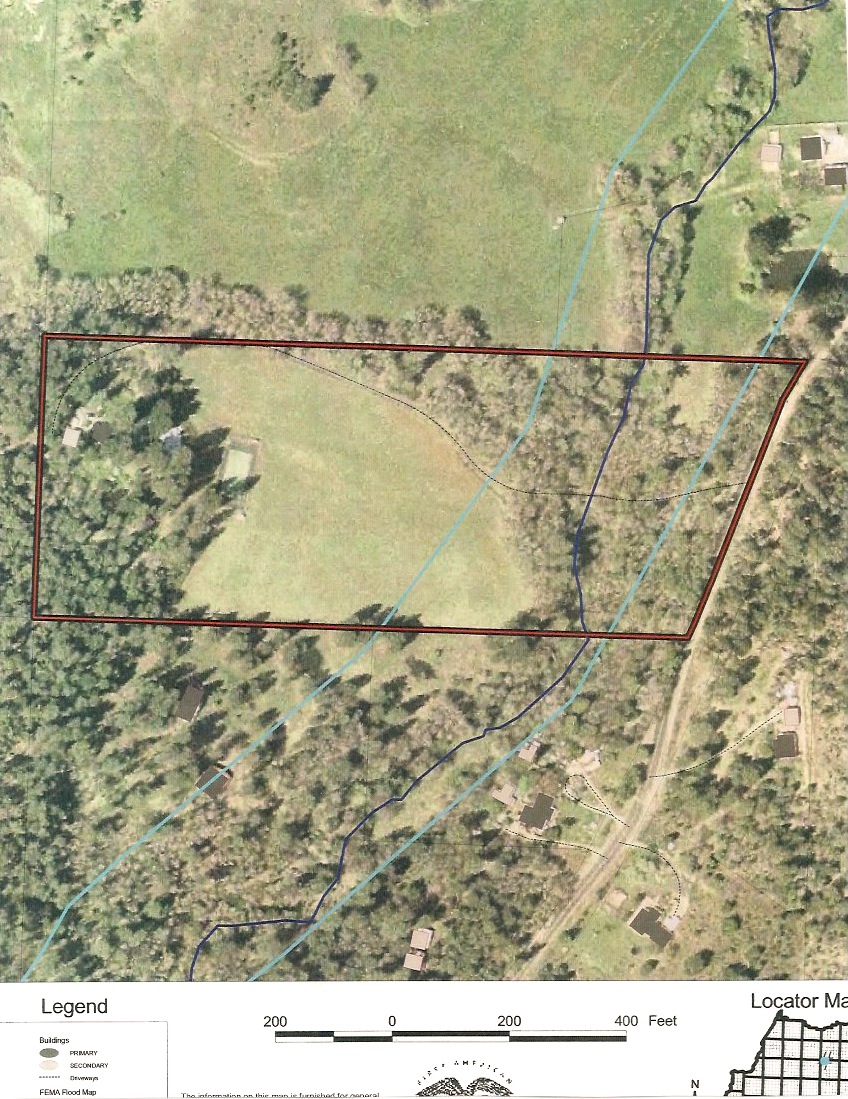
First, here’s a scan of the assessors map of our property, near Merlin, OR.
A little over 13 acres, orientated West-East.
NB: The blue line is the course of Bummer Creek, that historically has had a year-round flow, albeit a low flow during Summer months. The rectangular green area to the West of the open land was a tennis court, now removed. The main house is 200 feet West of that tennis court area, completely hidden by surrounding trees. It is a beautiful place for us and all our animals!
The first positive story was as a result of watching that TED Talk by Marla Spivak. Jean and I thought that as we have well over 4 acres of open grassland, let’s see what we can do to attract and assist our local bees.
Jean and I are supporters of Oregon Wild and a quick call to them about assisting local bees elicited this:
Hi Paul,
Nice speaking with you this morning. For your inquiries on how best to attract bees to your acreage, I would recommend the Xerces Society, a local Oregon group with a Pollinator Campaign. They have a lot of great info on their website, and you could also give them a call at 855.232.6639.
Also, Representative Earl Blumenauer here in Portland has been a big advocate for bee conservation and recently introduced the Save America’s Pollinators Act if you’re interested in bee conservation activism.
Hope this helps!
Cheers,
It was then an easy step to contact the Xerces Society, that very helpfully produced the following advice:
Hello Paul-
Thank you for calling the Xerces Society with your questions today. We have many resources available to landowners who wish to conserve pollinators and create habitat on their land. Here are links to several of our resources:
Attracting Native Pollinators
Pollinator Habitat Installation Guides
Regional guidance on site prep, planting, and management for pollinator habitat. We have guidelines for creating pollinator meadows and flowering hedgerows. Each guideline has an appendix with regionally appropriate bee magnet plants.
Conclusive evidence that mankind is part of nature!
Subtext = There are times when our arrogance and mindlessness beggars belief.
Sorry, if you pick up on a degree of emotion in today’s post. It’s impossible to hide!
Here’s what has fed that.
A few days ago, I came across some stunning images of bees, over on the Flickr website. Particularly, I was here and offer below a small sample of what was seen:
Chrysidid Wasp, U, Side, UT, Utah Co_2013-08-07-17.51.41 ZS PMax
Much more may be learned about bees by going to the USGS Bee Inventory and Monitoring Lab (BIML). The BIML website is here.
Then coincidentally (seems to be happening much of this week!) Jean and I watched the latest TED Talk by Marla Spivak. It was called: Why bees are disappearing.
Marla’s talk is just 15-minutes long, and I beg of you to watch it because the ramifications for all of warm-blooded life on this planet are frightening if we don’t amend our ways – and amend them pretty damn soon!
Honeybees have thrived for 50 million years, each colony 40 to 50,000 individuals coordinated in amazing harmony. So why, seven years ago, did colonies start dying en masse? Marla Spivak reveals four reasons which are interacting with tragic consequences. This is not simply a problem because bees pollinate a third of the world’s crops. Could this incredible species be holding up a mirror for us?
Marla Spivak researches bees’ behavior and biology in an effort to preserve this threatened, but ecologically essential, insect. Full bio »
You may also want to go across to the University of Minnesota‘s Bee Lab website, where there is much more from Marla about our bees.
Washington — The Centers for Disease Control on Monday confirmed a link between routine use of antibiotics in livestock and growing bacterial resistance that is killing at least 23,000 people a year.
The report is the first by the government to estimate how many people die annually of infections that no longer respond to antibiotics because of overuse in people and animals.
CDC Director Thomas Frieden called for urgent steps to scale back and monitor use, or risk reverting to an era when common bacterial infections of the urinary tract, bloodstream, respiratory system and skin routinely killed and maimed.
“We will soon be in a post-antibiotic era if we’re not careful,” Frieden said. “For some patients and some microbes, we are already there.”
The SFC report later goes on to say:
At least 70 percent of all antibiotics in the United States are used to speed growth of farm animals or to prevent diseases among animals raised in feedlots. Routine low doses administered to large numbers of animals provide ideal conditions for microbes to develop resistance.
“Widespread use of antibiotics in agriculture has resulted in increased resistance in infections in humans,” Frieden said.
It concludes, thus:
Legislation goes nowhere
Organic certification prohibits antibiotic use, but raising such animals is costly, he said.
Rep. Henry Waxman, D-Los Angeles, first introduced legislation in 1980 to restrict antibiotic use in livestock. For the past decade, Rep. Louise Slaughter, D-N.Y., has introduced similar bills, joined in recent years by Sens. Dianne Feinstein, D-Calif., and Kirsten Gillibrand, D-N.Y., but the measures have gone nowhere.
“We constantly hear from the pharmaceutical and livestock industry that antibiotic use in livestock is not a problem and we should focus on human use,” said Avinash Kar, a staff attorney at the San Francisco office of the Natural Resources Defense Council, an environmental group that has sued the FDA to force it to ban using antibiotics to promote growth in livestock. The case is now pending before the 2nd U.S. Circuit Court of Appeals.
Americans Are 110 Times More Likely to Die from Contaminated Food Than Terrorism
September 17, 2013 – This article first appeared on Truth-Out.org.
One of the most important revelations from the international drama over Edward Snowden’s NSA leaks in May is the exposure of a nearly lunatic disproportion in threat assessment and spending by the US government. This disproportion has been spawned by a fear-based politics of terror that mandates unlimited money and media attention for even the most tendentious terrorism threats, while lethal domestic risks such as contaminated food from our industrialized agribusiness system are all but ignored. A comparison of federal spending on food safety intelligence versus antiterrorism intelligence brings the irrationality of the threat assessment process into stark relief.
In 2011, the year of Osama bin Laden’s death, the State Department reported that 17 Americans were killed in all terrorist incidents worldwide. The same year, a single outbreak of listeriosis from tainted cantaloupe killed 33 people in the United States. Foodborne pathogens also sickened 48.7 million, hospitalized 127,839 and caused a total of 3,037 deaths. This is a typical year, not an aberration.
See what I mean about our mindlessness! That article continues:
We have more to fear from contaminated cantaloupe than from al-Qaeda, yet the United States spends $75 billion per year spread across 15 intelligence agencies in a scattershot attempt to prevent terrorism, illegally spying on its own citizens in the process. By comparison, the Food and Drug Administration (FDA) is struggling to secure $1.1 billion in the 2014 federal budget for its food inspection program, while tougher food processing and inspection regulations passed in 2011 are held up by agribusiness lobbying in Congress. The situation is so dire that Jensen Farms, the company that produced the toxic cantaloupe that killed 33 people in 2011, had never been inspected by the FDA.
I can’t stomach any more (whoops, pardon the pun!) so if you want to read to the end, it’s here.
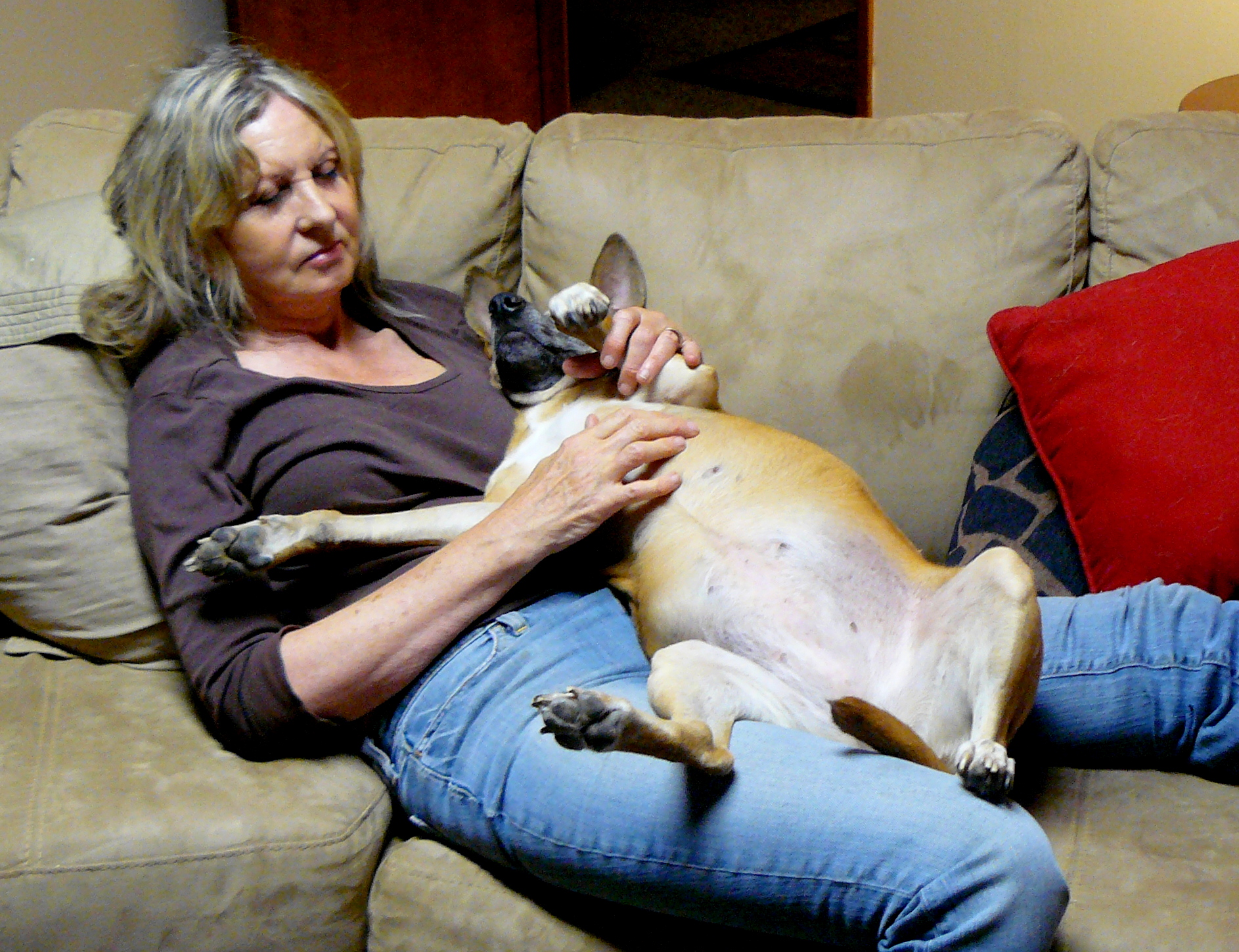
OK, sufficient for today! Need to find a dog to curl up with.
Regular followers will be aware that both Monday’s post, The growth of empathy, and Tuesday’s post, Questions without answers, had a common theme. That of “the rising consciousness of all the millions of ordinary people just trying to leave the world in a better place”, as I wrote on Monday, in contrast, even stark contrast, with the blindness, for want of a stronger term, of those charged with governing our societies.
Around 12:45 on Monday I received a note that there was another follower of Learning from Dogs. Here is that note:
dcardiff just started following you at http://learningfromdogs.com. They will receive an email every time you publish a post. Congratulations.
You might want to go see what they’re up to! Perhaps you will like their blog as much as they liked yours!
Like many other bloggers I try and go to whatever blog site that follower has and leave a ‘thank you’ message.
So off I went to Gotta Find a Home. The blogsite is by Dennis Cardiff and the sub-title of the blog is The plight of the homeless.
Here’s how Dennis introduces his blog:
Throughout the past few years I have come to know many people, now friends, who for various reasons are, or were, homeless. Antonio, slept on a park bench and was beaten, had his teeth kicked out, for no other reason than his choice to sleep outdoors. He is a small, gentle man who has a phobia about enclosed spaces.
Craig, slept on the sidewalk in the freezing cold. I see him every morning and am never sure if, when I lift the corner of his sleeping bag, I will find him dead or alive. Sometimes, he confided, he would prefer never to awake.
Joy is a friend who fell on hard times. She slept behind a dumpster in back of Starbucks. I have seen her with blackened eyes, bruised legs, cracked ribs, cut and swollen lips. I usually see her sitting on the sidewalk ‘panning’ for change.
I can’t do much for these people except to show them love, compassion, an ear to listen, perhaps a breakfast sandwich and a coffee. I would like to do more. To know them is to love them. What has been seen cannot be unseen. I have started to write an account of their daily lives. I intend to turn this into a book and have it published. That is my goal.
I am writing articles and biographies of Joy and other street people. They have been informed that they don’t have to use their real names, that any profits would go back to the homeless and that it could be a vehicle to say whatever they want to the population at large.
Not only does that stir one’s heart and conscience but more so the fact that there are 6,069 followers of Dennis’s blog.
Please, please go along to Gotta Find A Home and embrace what wonderful people like Dennis and countless others are doing in this world. Go and read how the blogsite came about:
My lungs ached, as frost hung in the bitterly cold December morning air, making breathing difficult. I trudged in the falling snow toward Place Bell where I work, in the city’s gray, concrete, office tower canyon. I dodged other pedestrians, also trying to get to work on time, I noticed a woman seated cross-legged on the sidewalk with her back against the wall of the library. A snow-covered Buddha wrapped in a sleeping bag, shivering in the below freezing temperature. I guessed her to be in her forties. Everything about her seemed round. She had the most angelic face, sparkling blue eyes and a beautiful smile. A cap was upturned in front of her. I thought,There but for the grace of God go I. Her smile and blue eyes haunted me all day.
In the past I’ve been unemployed, my wife and I were unable to pay our mortgage and other bills, we went through bankruptcy, lost our house, my truck. Being in my fifties, my prospects looked dim. It could have been me, on the sidewalk, in her place.
I’ve been told not to give money to pan handlers because they’ll just spend it on booze. I thought to myself, What should I do, if anything? What would you do? I asked for advice from a friend who has worked with homeless people. She said, “The woman is probably hungry. Why don’t you ask her if she’d like a breakfast sandwich and maybe a coffee?”
That sounded reasonable, so the next day I asked, “Are you hungry? Would you like some breakfast, perhaps a coffee?”
“That would be nice,” she replied.
When I brought her a sandwich and coffee she said to me, “Thank you so much, sir. You’re so kind. Bless you.” I truly felt blessed.
This has become a morning routine for the past two and a half years. The woman (I’ll call Joy) and I have become friends. Often I’ll sit with her on the sidewalk. We sometimes meet her companions in the park. They have become my closest friends. I think of them as angels. My life has become much richer for the experience.
Reflect on how when you see a homeless person with so little, how so often they have a dog.
The power of love.
To close, let me tell you more about the photograph. I saw it on the blogsite Erick’s Odyssey in the following post.
This is how a real man treats his best friend
A friend of mine posted this photo on their Facebook wall. Like most people when they first see it, I was overwhelmed with several emotions.
First of all, I felt a swell of compassion for these two. I don’t even know them, but I was immediately concerned with their wellbeing. I wanted them to be warm and fed, and protected.
Secondly, I was touched with the apparent love and friendship shared by the two, even though they are not even of the same species. I thought, “They may have nothing, but they have each other, so they have everything.” I don’t know by what circumstance this man and this dog came to be together, living on the streets, but I think it is a reflection of the callousness of our society.
Whatever the reason they are homeless, they are an opportunity for us, those who have the necessities of life in abundance, to show kindness and compassion. Remember this the next time you drive by a similar scene in your warm car. Remember that if you were in their shoes, you would want, or even if you would be too ashamed to ‘want,’ you would ‘need’ someone to help you.
Our apathy is what makes us truly destitute.
Yet another example of the power of this new world of interconnectedness and how, ultimately, those connections between all those millions who care will bring about a new caring era!
The fact that the Fukushima reactors have been leaking huge amounts of radioactive water ever since the 2011 earthquake is certainly newsworthy. As are the facts that:
If one of the pools collapsed or caught fire, it could have severe adverse impacts not only on Japan … but the rest of the world, including the United States. Indeed, a Senator called it a national security concern for the U.S.:
The radiation caused by the failure of the spent fuel pools in the event of another earthquake could reach the West Coast within days. That absolutely makes the safe containment and protection of this spent fuel a security issue for the United States.
Nuclear expert Arnie Gundersen and physician Helen Caldicott have both said that people should evacuate the Northern Hemisphere if one of the Fukushima fuel pools collapses. Gundersen said:
Move south of the equator if that ever happened, I think that’s probably the lesson there.
Former U.N. adviser Akio Matsumura calls removing the radioactive materials from the Fukushima fuel pools “an issue of human survival”.
So the stakes in decommissioning the fuel pools are high, indeed.
But in 2 months, Tepco – the knuckleheads who caused the accident – are going to start doing this very difficult operation on their own.
Thousands of workers and a small fleet of cranes are preparing for one of the latest efforts to avoid a deepening environmental disaster that has China and other neighbors increasingly worried: removing spent fuel rods from the damaged No. 4 reactor building and storing them in a safer place.
Tom Snitch, a senior professor at the University of Maryland and with more than 30 years’ experience in nuclear issues, said “[Japan officials] need to address the real problems, the spent fuel rods in Unit 4 and the leaking pressure vessels,” he said. “There has been too much work done wiping down walls and duct work in the reactors for any other reason then to do something…. This is a critical global issue and Japan must step up.”
Apologies, that’s more than sufficient to ruin your day! If you really want to read to the end, the item is here.
However, the next item carries a much more positive thread. It was an essay that was highlighted on Linked-In back in June.
The Number One Job Skill in 2020
What’s the crucial career strength that employers everywhere are seeking — even though hardly anyone is talking about it? A great way to find out is by studying this list of fast-growing occupations, as compiled by the U.S. Bureau of Labor Statistics.
Sports coaches and fitness trainers. Massage therapists, registered nurses and physical therapists. School psychologists, music tutors, preschool teachers and speech-language pathologists. Personal financial planners, chauffeurs and private detectives. These are among the fields expected to employ at least 20% more people in the U.S. by 2020.
Did you notice the common thread? Every one of these jobs is all about empathy.
In our fast-paced digital world, there’s lots of hand-wringing about the ways that automation and computer technology are taking away the kinds of jobs that kept our parents and grandparents employed. Walk through a modern factory, and you’ll be stunned by how few humans are needed to tend the machines. Similarly, travel agents, video editors and many other white-collar employees have been pushed to the sidelines by the digital revolution’s faster and cheaper methods.
But there’s no substitute for the magic of a face-to-face interaction with someone else who cares. Even the most ingenious machine-based attempts to mimic human conversation (hello, Siri) can’t match the emotional richness of a real conversation with a real person.
Coincidentally, that thought about the ‘magic of a face-to-face interaction’ really echoed in me. Why? Because, I was ruminating on the wonderful world of human interaction this world of blogging delivers. It seems to combine all the benefits of meeting real people with a global consciousness of those same real people spread way beyond our own local domains.
Hence the reason why I offer the next seemingly unrelated item. The recent post from Sue Dreamwallker that I am republishing in full.
This is just a short post to say a Big thank you to all of my readers and to those who visit regular and comment upon my posts. You Bring with you such light and encouragement, and I often at a loss to say how much your kind support means.
I logged onto my Blog today and discover that my readership has swelled to 400 followers and so I just want to say a Big thank you for all of my oldest friends who have been with me since my beginnings of Windows Live Spaces days when I started in 2007, My first real post after transferring was called Finding Answers here on WordPress. And I remember well spending the best part of a Day getting to know and personalise my header and Blog back then as everything was alien that day was in Oct 2010. A move I am so pleased to have made, as I just love the W.P. Community of friends we have gathered here and whom I have got to know and love.
And I just want to say a big thank you to all of my newest arrivals who have clicked the follow button.. I hope to get around to discovering your blogs as soon as time allows.And to say thank you to my email subscribers also.. And Welcome, I hope you enjoy my thoughts and if not please don’t be shy to air your opinions for that’s how we grow and learn by sharing knowledge and understanding.
Today I just want to post what I have been up to in recent days besides the ‘Day-job’ in picture format.. So if you click the photos, you should be able to read more in the caption headings.. [Photos available on Sue’s blogsite.]
Take care all of you and I have a busy week a head in my Day Job, so I will catch you when I can…
Love and Blessings
~Sue~
Still the resonances continued. For Rebecca Solnit published yesterday an incredibly powerful essay over on TomDispatch. It was called Victories Come in All Sizes. As always, Tom writes a wonderful introduction. Let me skip to Rebecca’s opening paragraphs.
Joy Arises, Rules Fall Apart Thoughts for the Second Anniversary of Occupy Wall Street
By Rebecca Solnit
I would have liked to know what the drummer hoped and what she expected. We’ll never know why she decided to take a drum to the central markets of Paris on October 5, 1789, and why, that day, the tinder was so ready to catch fire and a drumbeat was one of the sparks.
To the beat of that drum, the working women of the marketplace marched all the way to the Palace of Versailles, a dozen miles away, occupied the seat of French royal power, forced the king back to Paris, and got the French Revolution rolling. Far more than with the storming of the Bastille almost three months earlier, it was then that the revolution was really launched — though both were mysterious moments when citizens felt impelled to act and acted together, becoming in the process that mystical body, civil society, the colossus who writes history with her feet and crumples governments with her bare hands.
She strode out of the 1985 earthquake in Mexico City during which parts of the central city collapsed, and so did the credibility and power of the Institutional Revolutionary Party, the PRI that had ruled Mexico for 70 years. She woke up almost three years ago in North Africa, in what was called the Arab Spring, and became a succession of revolutions and revolts still unfolding across the region.
Such transformative moments have happened in many times and many places — sometimes as celebratory revolution, sometimes as terrible calamity, sometimes as both, and they are sometimes reenacted as festivals and carnivals. In these moments, the old order is shattered, governments and elites tremble, and in that rupture civil society is born — or reborn.
However, this further extract covering the closing paragraphs explains why it resonated so strongly with me in terms of the rising consciousness of all the millions of ordinary people just trying to leave the world in a better place:
Part of what gave Occupy its particular beauty was the way the movement defined “we” as the 99%. That (and that contagious meme the 1%) entered our language, offering a way of imagining the world so much more inclusive than just about anything that had preceded it. And what an inclusive movement it was: the usual young white suspects, from really privileged to really desperate, but also a range of participants from World War II to Iraq War veterans to former Black Panthers, from libertarians to liberals to anarchist insurrectionists, from the tenured to the homeless to hip-hop moguls and rock stars.
And there was so much brutality, too, from the young women pepper-sprayed at an early Occupy demonstration and the students infamously pepper-sprayed while sitting peacefully on the campus of the University of California, Davis, to the poet laureate Robert Hass clubbed in the ribs at the Berkeley encampment, 84-year-old Dorli Rainey assaulted by police at Occupy Seattle, and the Iraq War veteran Scott Olsen whose skull was fractured by a projectile fired by the Oakland police. And then, of course, there was the massive police presence and violent way that in a number of cities the movement’s occupiers were finally ejected from their places of “occupation.”
Such overwhelming institutional violence couldn’t have made clearer the degree to which the 1% considered Occupy a genuine threat. At the G-20 economic summit in 2011, the Russian Prime Minister, Dmitry Medvedev, said, “The reward system of shareholders and managers of financial institution[s] should be changed step by step. Otherwise the ‘Occupy Wall Street’ slogan will become fashionable in all developed countries.” That was the voice of fear, because the realized dreams of the 99% are guaranteed to be the 1%’s nightmares.
We’ll never know what that drummer girl in Paris was thinking, but thanks to Schneider’s meticulous and elegant book, we know what one witness-participant was thinking all through the first year of Occupy, and what it was like to be warmed for a few months by that beautiful conflagration that spread across the world, to be part of that huge body that wasn’t exactly civil society, but something akin to it, perhaps in conception even larger than it, as Occupy encampments and general assemblies spread from Auckland to Hong Kong, from Oakland to London in the fall of 2011. Some of them lasted well into 2012, and others spawned things that are still with us: coalitions and alliances and senses of possibility and frameworks for understanding what’s wrong and what could be right. It was a sea-change moment, a watershed movement, a dream realized imperfectly (because only unrealized dreams are perfect), a groundswell that remains ground on which to build.
On the second anniversary of that day in lower Manhattan when people first sat down in outrage and then stayed in dedication and solidarity and hope, remember them, remember how unpredictably the world changes, remember those doing heroic work that you might hear little or nothing about but who are all around you, remember to hope, remember to build. Remember that you are 99% likely to be one of them and take up the burden that is also an invitation to change the world and occupy your dreams.
Rebecca Solnit, author most recently of The Faraway Nearby spent time at Occupy San Francisco, Occupy Oakland, and Occupy Wall Street in 2011 and wrote about Occupy often for TomDispatch in 2011-2012. This essay is adapted from her introduction to Nathan Schneider’s new book, Thank You, Anarchy(University of California Press).
Copyright 2013 Rebecca Solnit
The final element was from an email yesterday in from Chris Snuggs. Chris has previously written guest posts on Learning from Dogs, the last one being In Defence of Politics back on July 8th. In that email was the following photograph.
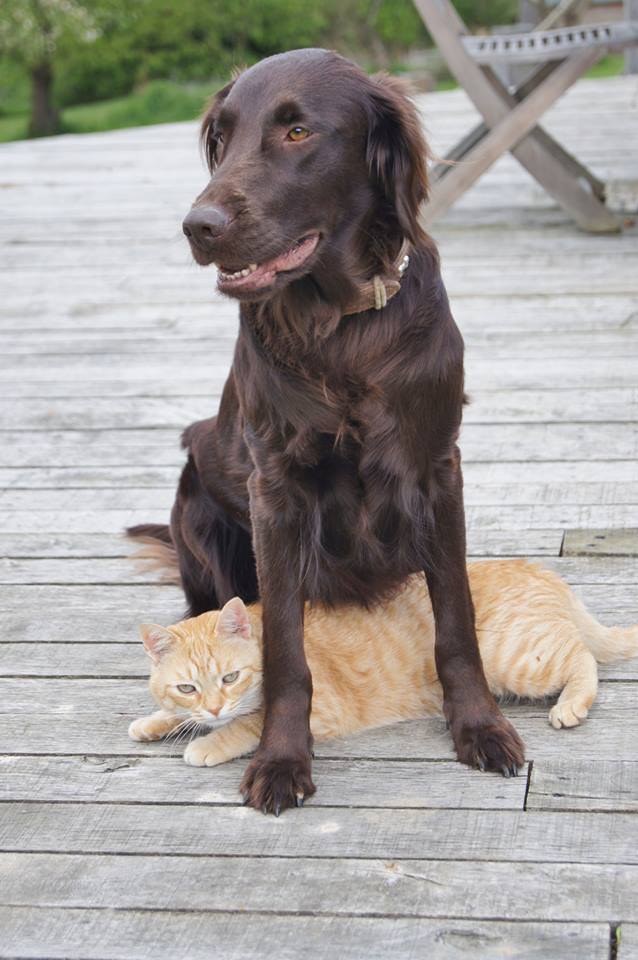
“You touch my mate and I’ll have ya.”
Let me draw out the thread that I saw in all these items.
That is that the 1% that Rebecca Solnit wrote about are incredibly powerful people, with access to more power, money and control than one can even imagine. But what that 1% cannot control is the growing consciousness, the growing mindfulness and awareness of millions of people across this planet that something as simple and pure and beautiful as unconditional love will conquer all.
The most fundamental lesson that we can learn from dogs!
The paramount importance of change coming from a positive vision.
Yesterday’s post, In the name of progress, was primarily a review of the documentary film Surviving Progress. As was made clear in that post, the film was a very tough view. Recall that I wrote:
The blunt truth is that the film is scary beyond belief. Like watching a giant wave about to engulf you, or a snake about to strike; nothing to do but be transfixed; to be mesmerized by these last few moments of your life.
I also mentioned that I had started to read the Transition Primerfrom Transition US. The primer is a guide to becoming a Transition Town. The first page of that document starts:
Something remarkable is happening …
All cross the country and around the world citizens in every locale are banding together to reinvent their communities. They are boldly looking at climate change, resource depletion and the economic crises and purposefully unleashing the collective genius of their communities to address these issues.
They are not waiting for government and they are not acting alone. Instead they are building connections in their community; they are reaching out to others and spurring each other into actions that are bold, poignant and exhilarating. Together they are creating a momentum, a groundswell, an empowered and active community movement. These groups are building their future by vision, by design and by intention.
Official Transition Initiatives (TIs) range in size from the TI in the Los Angeles basin with a population of 13 million to the TI in Micanopy, Florida that boasts a population of 653.
Well that’s all fine and dandy but doesn’t ‘smack me in the face’! But this does from Page 8 of that Primer.
The Guiding Principles of Transition
1. Positive Visioning
We can only create what we can first vision
If we can’t imagine a positive future we won’t be able to create it.
A positive message helps people engage with the challenges of these times.
Change is happening – our choice is between a future we want and one which happens to us.
Transition Initiatives are based on a dedication to the creation of tangible, clearly expressed and practical visions of the community in question beyond its present-day dependence on fossil fuels.
Our primary focus is not campaigning against things, but rather on positive, empowering possibilities and opportunities.
The generation of new stories and a new narrative are central to this visioning work.
“If we can’t imagine a positive future we won’t be able to create it.”
With so much going on that has the potential to upset, to undermine, and to disturb, this guiding principle of transition should be extended to be a guiding principle of life.
John Hurlburt is a frequent contributor to Learning from Dogs, as a quick search through the blog will reveal.
A few days ago, John sent Jean and me a film to watch. It was the documentary Surviving Progress. We watched it on Monday evening. Here’s more on the film and related information.
Here’s the trailer.
Published on Apr 6, 2012
Surviving Progress Trailer (Documentary 2012).
Directed by Mathieu Roy, Surviving Progress documentary film is based on the best selling book A Short History of Progress. From Executive Producer Martin Scorsese, this provocative documentary explores the concept of progress in our modern world, guiding us through a sweeping but detailed survey of the major “progress traps” facing our civilization in the arenas of technology, economics, consumption, and the environment….
“Every time history repeats itself the price goes up.”
Surviving Progress presents the story of human advancement as awe-inspiring and double-edged. It reveals the grave risk of running the 21st century’s software — our know-how — on the ancient hardware of our primate brain which hasn’t been upgraded in 50,000 years. With rich imagery and immersive soundtrack, filmmakers Mathieu Roy and Harold Crooks launch us on a journey to contemplate our evolution from cave-dwellers to space explorers.
Ronald Wright, whose best-seller, “A Short History Of Progress” inspired this film, reveals how civilizations are repeatedly destroyed by “progress traps” — alluring technologies serve immediate needs, but ransom the future. With intersecting stories from a Chinese car-driving club, a Wall Street insider who exposes an out-of-control, environmentally rapacious financial elite, and eco-cops defending a scorched Amazon, the film lays stark evidence before us. In the past, we could use up a region’s resources and move on. But if today’s global civilization collapses from over-consumption, that’s it. We have no back-up planet.
Surviving Progress brings us thinkers who have probed our primate past, our brains, and our societies. Some amplify Wright’s urgent warning, while others have faith that the very progress which has put us in jeopardy is also the key to our salvation. Cosmologist Stephen Hawking looks to homes on other planets. Biologist Craig Venter, whose team decoded the human genome, designs synthetic organisms he hopes will create artificial food and fuel for all.
Distinguished Professor of Environment Vaclav Smil counters that five billion “have-nots” aspire to our affluent lifestyle and, without limits on the energy and resource-consumption of the “haves”, we face certain catastrophe. Others — including primatologist Jane Goodall, author Margaret Atwood, and activists from the Congo, Canada, and USA — place their hope in our ingenuity and moral evolution.
Surviving Progress leaves us with a challenge: To prove that making apes smarter was not an evolutionary dead-end.
To say that it was compelling watching is both correct and, yet, emotionally disconnected.
The blunt truth is that the film is scary beyond belief. Like watching a giant wave about to engulf you, or a snake about to strike; nothing to do but be transfixed; to be mesmerized by these last few moments of your life.
Because a reasonable conclusion to the weight of evidence put forward by the film is that the time left to pull back from the certainty of the end of life on Planet Earth is minuscule. By that I mean we are speaking of a decade, perhaps two at most. Ninety-nine percent of the people reading this, living in your neighborhood, or your region, or your country will suffer the terrible consequences of the impending end of this planet as a home for life.
Unless?
Unless there is most incredible awakening of global consciousness in the next two or three years. Unless the free world, from the highest in those lands to the vast masses of decent, working people, say, “Enough is enough.”
Unless every level of society, from local and national Governments, from Universities, from Churches, from employers both large and small, recognize that this time it’s different. This is about to become a global crisis.
I taken the following from the Amazon page for Ronald Wright’s book A Short History of Progress, that inspired the film:
From Neanderthal man to the Sumerians to the Roman Empire, A Short History of Progress dissects the cyclical nature of humanity’s development and demise, the 10,000-year old experiment that we’ve unleashed but have yet to control. It is Wright’s contention that only by understanding and ultimately breaking from the patterns of progress and disaster that humanity has repeated around the world since the Stone Age can we avoid the onset of a new Dark Age.
“the 10,000-year old experiment that we’ve unleashed but have yet to control.”
Our world is increasingly spiritually, morally, mentally, physically and economically bankrupt. Many people would like to change the world one way or another. Most don’t really know why. Some folks simply don’t care. The idea is to leave life a bit better than we found it when we were born.
The fact is we’re all intrinsically sacred in a universe we didn’t create. We tend to prioritize illusion and delusion above reality. Playing God is a precursor of evil. A supreme faith in Money is self contradictory and ultimately fatal. Arrogance compounds the problem.
We connect in unified awareness through serene meditation. We experience harmony within an emerging celestial symphony. Answers flow from the inside out as we surrender to the eternal energy flow.
Be still and know…
an old lamplighter
I was going to close with a quotation from that most famous of Brits, Winston Churchill. The one that goes: “To improve is to change; to be perfect is to change often.”
But after I had put the post ‘to bed’, so to speak, I started to read the Transition Primer from Transition US. It was such a positive message that I decided to write about Transition tomorrow. Then there was a quote in the Primer that just had to be the one to close today’s post.
“Never doubt that a small group of thoughtful, committed citizens can change the world. Indeed, it is the only thing that ever has.”
Margaret Mead.
Ever noticed how quickly a dog returns to wagging its tail!
Philosopher Daniel Dennett offers a kind of self-help book for deep thinkers.
Those of you that are regular followers of Learning from Dogs know that I tend to offer posts for the week-end that are light-hearted. Certainly that’s easier for me, if you pardon me from saying, and hopefully a change for you, dear reader.
Well today’s offering is not exactly heavy but it is, nonetheless, not a typical Saturday topic.
However, trust you find it engaging.
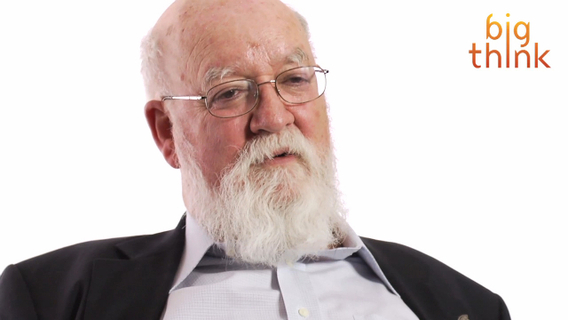
Of the many blogs and websites that I follow, I enjoy the regular mental stimulation that flows from the blog Big Think. Recently there was a piece from Daniel Dennett that tickled my interest and I wanted to share it here.
While Silicon Valley and Silicon Alley busy themselves making every aspect of our lives more efficient (except, perhaps, for the process of discovering these new technologies, learning them, and integrating them into our lives), Daniel Dennett sits up at Tufts University in Massachusetts, philosophizing. His latest book, Intuition Pumps and Other Tools for Thinking is an attempt to make transparent some of the tricks of the philosopher’s trade. In an accelerating age, it’s a self-help book designed to slow the reader down and improve our ability to think things through.
The kinds of things Mr. Dennett likes to think about include the nature of consciousness, evolution, and religious belief. But the mind-training his new book offers is applicable to any problem you want to consider thoroughly. In an age of quick fixes and corner-cutting, we’re in constant danger of bad decision making – of overreliance on what cognitive psychologist Daniel Kahneman calls “system 1”, and what most of us call intuition. This rapid decision making channel of the brain is helpful when we are in mortal danger, or pressed for a quick decision within our areas of expertise. But for most decisions, the slower, more deliberate channel (system 2) is much more reliable. What Dennett offers, then, in Intuition Pumps, is a workout for system 2 – a series of thought experiments you can apply to puzzles real and imagined to bulk up the slower, wiser parts of your consciousness.
Some of the tools Dennett offers in the book are more familiar than others. Reductio ad absurdum arguments, for example, in which we test the validity of a claim by taking it to its most outrageous illogical extreme (a: “all living things have a right to liberty.” b: “so let me get this straight – a blade of grass has a right to liberty? What does that even mean?”). But the true delights of the book are the far-out exercises Dennett and his colleagues have dreamed up in the course of their work, such as “Swampman Meets A Cow-Shark”, from Donald Davidson, which begins:
Suppose lightning strikes a dead tree in a swamp; I am standing nearby. My body is reduced to its elements, while entirely by coincidence (and out of different molecules) the tree is turned into my physical replica. My replica, The Swampman, moves exactly as I did; according to its nature it departs the swamp, encounters and seems to recognize my friends, and appears to return their greetings in English.
Walking us through Davidson’s considerations about whether and to what extent the Swampman is anything like Davidson, and related ones about a cow that gives birth to something that looks exactly like a shark (yet has cow DNA in all of its cells), Dennett teaches us a surprising lesson about the utility of wild philosophical speculation.
Cloaked in the breezy, familiar trappings of a self-help book, Intuition Pumps is in actuality a dark mirror of that genre – a field of rabbit holes designed to leave the reader with more questions than answers, and wiser for the long and indirect journey.
Watch for Daniel Dennett’s Tools For Better Thinking – a Big Think Mentor workshop coming soon.
oooOOOooo
Don’t know about you but Daniel Dennett’s book looks like one that deserves reading. If you feel the same way the book is called Intuition Pumps And Other Tools for Thinking and here’s the link to Amazon.
I have often noticed how ideas come along and are then reinforced by other materials and comments. This struck me (again) as follows. In my post about the fabulous, loving bond between Jeff Guidry and his eagle Freedom one of the comments was from Patrice Ayme, and I quote:
Birds have completely different brains. Still, the smartest birds are more clever than most primates. And many parrots speak (although we have not learned their language yet).
Then going on to add:
Parrot language studies have progressed enough to tell us that there is something huge going on. They apparently use names, as dolphins do.
Certainly Jean would verify the amount of talking that goes on between our two budgerigars here at home!
Mr. Green and Mr. Blu!
Then in yesterday’s post The knowing of dogs, I referred to research that indicated that empathy between those that we know and trust, (a) can be measured, and (b) that “our minds are partly defined by their intersections with other minds.” I went on in that post to speculate that maybe dogs ‘reading’ the minds of humans that they know and trust wasn’t so far-fetched.
Wolves Howl Because They Care: Social Relationship Can Explain Variation in Vocal Production
Aug. 22, 2013 — When a member of the wolf pack leaves the group, the howling by those left behind isn’t a reflection of stress but of the quality of their relationships. So say researchers based on a study of nine wolves from two packs living at Austria’s Wolf Science Center that appears in Current Biology, a Cell Press publication, on August 22.
The findings shed important light on the degree to which animal vocal production can be considered as voluntary, the researchers say.
“Our results suggest the social relationship can explain more of the variation we see in howling behavior than the emotional state of the wolf,” says Friederike Range of the Messerli Research Institute at the University of Veterinary Medicine Vienna. “This suggests that wolves, to a certain extent, may be able to use their vocalizations in a flexible way.”
Scientists have known very little about why animals make the sounds that they do. Are they uncontrollable emotional responses? Or do animals have the ability to change those vocalizations based on their own understanding of the social context?
At the Wolf Science Center, human handlers typically take individual wolves out for walks on a leash, one at a time. On those occasions, they knew, the remaining pack mates always howl.
To better understand why, Range and her colleagues measured the wolves’ stress hormone levels. They also collected information on the wolves’ dominance status in the pack and their preferred partners. As they took individual wolves out for long walks, they recorded the reactions of each of their pack mates.
Those observations show that wolves howl more when a wolf they have a better relationship with leaves the group and when that individual is of high social rank. The amount of howling did not correspond to higher levels of the stress hormone cortisol.
“Our data suggest that howling is not a simple stress response to being separated from close associates but instead may be used more flexibly to maintain contact and perhaps to aid in reuniting with allies,” Range says.
For those that want to read the original research paper then it is available over at Current Biology, a Cell Press publication.
Wolf Howling Is Mediated by Relationship Quality Rather Than Underlying Emotional Stress
We investigated the influence of social and physiological factors on wolf howling
Wolves howl more to keep contact with affiliated partners and with pack leaders
Howling is mediated by the social relationship not cortisol level of the howlers
This pattern indicates that wolves have some voluntary control of their howling
Summary
While considerable research has addressed the function of animal vocalizations, the proximate mechanisms driving call production remain surprisingly unclear. Vocalizations may be driven by emotions and the physiological state evoked by changes in the social-ecological environment [1,2], or animals may have more control over their vocalizations, using them in flexible ways mediated by the animal’s understanding of its surrounding social world [3,4]. While both explanations are plausible and neither excludes the other, to date no study has attempted to experimentally investigate the influence of both emotional and cognitive factors on animal vocal usage. We aimed to disentangle the relative contribution of both mechanisms by examining howling in captive wolves. Using a separation experiment and by measuring cortisol levels, we specifically investigated whether howling is a physiological stress response to group fragmentation [5] and whether it is driven by social factors, particularly relationship quality [6,7]. Results showed that relationship quality between the howler and the leaving individual better predicted howling than did the current physiological state. Our findings shed important light on the degree to which animal vocal production can be considered as voluntary.
So, don’t know about you, but it all seems to be suggesting how little we know about how animals communicate with the world around them.
A fascinating study on human empathy strikes a chord with man and dog, perhaps.
Let me start with a true account from the evening of Monday, 19th August.
That evening, at 7pm, I had an appointment with my doctor in Grants Pass. Jean stayed at home looking after our guests and preparing the evening meal.
The journey from the doctor’s clinic back to home, a distance of 20 miles, takes a little over half-an-hour. The last 3 miles are along Hugo Road; about 6 minutes including opening and closing the gate across our driveway.
Anyway, according to Jean shortly after 8pm Pharaoh sprang up barking and went across to put his nose against one of the windows that looks out over our front drive and garden. Jeannie looked at the clock on the kitchen wall and made a note of the time: it was 8:10pm. She also came over to the window that Pharaoh was looking out of and searched for any reason for his outburst of barking: squirrels, deer, any kind of wildlife or other distraction. There was none.
A little before 8:20pm Jeannie saw the headlights of my car pull up and moments later I came in through the front door.
It appeared that Pharaoh had sensed the point where I had turned into Hugo Road.
One could easily dismiss this, perhaps by thinking that Jean had unconsciously signalled to Pharaoh that I was on my way home. But Jean had only the vaguest idea of when I might be back.
Or one could be drawn to the research undertaken by Dr. Rupert Sheldrake, as this extract from a post back in May, 2011 explains.
What an amazing book this is.
Amazing!
I have written about Dr Rupert Sheldrake a few times on Learning from Dogs for pretty obvious reasons! You can do a search on the Blog under ‘sheldrake’ but here are a couple of links. Serious Learning from Dogs on January 10th, 2011 and Time for a rethink on the 14th April, 2011.
Anyway, I am now well towards the end of Sheldrake’s revised book, Dogs That Know When Their Owners Are Coming Home and it is more than fascinating. Bit short of time just now so please forgive me if I do no more than show this video which sets out some of the background to the book. Sheldrake’s website is here, by the way.
Anyway, what’s this all leading up to?
I can’t recall where it was that I read about a report posted on the Forbes website about the new findings of the power of human empathy.
Study: To The Human Brain, Me Is We
A new study from University of Virginia researchers supports a finding that’s been gaining science-fueled momentum in recent years: the human brain is wired to connect with others so strongly that it experiences what they experience as if it’s happening to us.
This would seem the neural basis for empathy—the ability to feel what others feel—but it goes even deeper than that. Results from the latest study suggest that our brains don’t differentiate between what happens to someone emotionally close to us and ourselves, and also that we seem neurally incapable of generating anything close to that level of empathy for strangers.
The research revealed:
“The correlation between self and friend was remarkably similar,” said James Coan, a psychology professor in U.Va.’s College of Arts & Sciences who co-authored the study. “The finding shows the brain’s remarkable capacity to model self to others; that people close to us become a part of ourselves, and that is not just metaphor or poetry, it’s very real. Literally we are under threat when a friend is under threat. But not so when a stranger is under threat.”
The findings back up an assertion made by the progenitor and popularizer of “Interpersonal Neurobiology,” Dr. Daniel Siegel, who has convincingly argued that our minds are partly defined by their intersections with other minds. Said another way, we are wired to “sync” with others, and the more we sync (the more psycho-emotionally we connect), the less our brains acknowledge self-other distinctions.
Later in that Forbes article Professor Coan is reported:
“A threat to ourselves is a threat to our resources,” said Coan. “Threats can take things away from us. But when we develop friendships, people we can trust and rely on who in essence become we, then our resources are expanded, we gain. Your goal becomes my goal. It’s a part of our survivability.”
So if science is discovering that our subconscious minds are connecting “psycho-emotionally” with the minds of others whom we trust, then it doesn’t seem like too great a leap to embrace human minds psycho-emotionally connecting with the animals that we trust, and vice versa. Because for thousands upon thousands of years, the domesticated dog and man have depended on each other for food, protection, warmth, comfort and love.
Footnote.
References for those who wish to follow up on this article are:
Professor Robin Ian MacDonald Dunbar, British anthropologist, evolutionary psychologist and a specialist in primate behaviour. His theory known as Dunbar’s Numberexplained here.