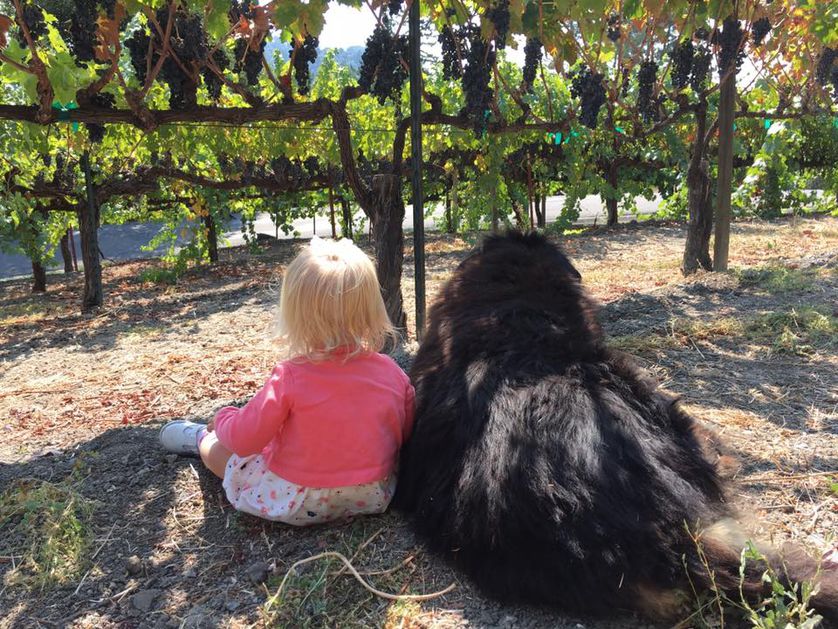
As beautiful as it ever gets!
(First seen over on Sue Dreamwalker’s blogsite.)
No words required from me!
We must never forget the power of true love!
(Thanks Sue!)
Dogs are animals of integrity. We have much to learn from them.
Category: consciousness
As beautiful as it ever gets!
(First seen over on Sue Dreamwalker’s blogsite.)
No words required from me!
We must never forget the power of true love!
(Thanks Sue!)
The message of common land.
I am far from certain but I have this notion in my head that ‘Common Land’ is an English thing. Here’s a Wikipedia extract:
Common land is land owned collectively by a number of persons, or by one person, but over which other people have certain traditional rights, such as to allow their livestock to graze upon it, to collect firewood, or to cut turf for fuel.[1]
A person who has a right in, or over, common land jointly with another or others is called a commoner.[2]
This article deals mainly with common land in England, Wales and Scotland. Although the extent is much reduced due to enclosure of common land from the millions of acres that existed until the 17th century, a considerable amount of common land still exists, particularly in upland areas, and there are over 7,000 registered commons in England alone.[3][4]
Common land or former common land is usually referred to as a common; for instance, Clapham Common or Mungrisdale Common.
Despite the idea of common land having an English ‘ring’ to it common land is also found in the USA. Back to that Wikipedia reference:
Common land, an English development, was used in many former British colonies, for example in Ireland and the United States. The North American colonies adopted the English laws in establishing their own commons. A famous example is the New Haven Green in New Haven, Connecticut.
When I was living in Devon it was not unusual to take a walk with Pharaoh on some very famous open access land: Dartmoor.

So where the devil am I going with today’s post?
Last Thursday week, the 12th, I published my review of George Monbiot’s valuable book Out Of The Wreckage.
This book struck me as the most important book I have ever read in my lifetime. Why? Because it gets to the heart of what is happening today. But it offers even more than that. For instead of a shrug of the shoulders or eyes turned skywards from a friend when one mutters about the fact that we are living in ‘interesting times’, George Monbiot offers hope and guidance.
The day after I published my review George Monbiot published an article in The Guardian newspaper that threw more light on the commons philosophy and why, as in his book, he “offers hope and guidance”.
It is republished here with Mr. Monbiot’s generous permission. Yes, the focus is on British politics but GM’s core message applies equally to the USA and other countries.
ooOOoo
13th October 2017
We should use the political space being opened by the Labour resurgence to develop a new, participatory economy
By George Monbiot, published in the Guardian 11th October 2017
We are still living in the long 20th Century. We are stuck with its redundant technologies: the internal combustion engine; thermal power plants; factory farms. We are stuck with its redundant politics: unfair electoral systems; their capture by funders and lobbyists; the failure to temper representation with real participation.
And we are stuck with its redundant economics: neoliberalism, and the Keynesianism still proposed by its opponents. While the latter system worked very well for 30 years or more, it is hard to see how it can take us through this century, not least because the growth it seeks to sustain smacks headlong into the environmental crisis.
Sustained economic growth on a planet that is not growing means crashing through environmental limits: this is what we are witnessing, worldwide, today. A recent paper in Nature puts our current chances of keeping global heating to less than 1.5°C of at just 1%, and less than 2° at only 5%. Why? Because while the carbon intensity of economic activity is expected to decline by 1.9% a year, global per capita GDP is expected to grow by 1.8%. Almost all investment in renewables and efficiency is cancelled out. GDP, the index that was supposed to measure our prosperity, instead measures our progress towards ruin.
But the great rupture that began in 2008 offers a chance to change all this. The challenge now is to ensure that the new political movements threatening established power in Britain and elsewhere create the space not for old ideas (such as 20th Century Keynesianism) but for a new politics, built on new economic and social foundations.
There may be a case for one last hurrah for the old model: a technological shift that resembles the Second World War’s military Keynesianism. In 1941, the US turned the entire civilian economy around on a dime: within months, car manufacturers were producing planes, tanks and ammunition. A determined government could do something similar in response to climate breakdown: a sudden transformation, replacing our fossil economy. But having effected such a conversion, it should, I believe, then begin the switch to a different economic model.
The new approach could start with the idea of private sufficiency and public luxury. There is not enough physical or environmental space for everyone to enjoy private luxury: if everyone in London acquired a tennis court, a swimming pool, a garden and a private art collection, the city would cover England. Private luxury shuts down space, creating deprivation. But magnificent public amenities – wonderful parks and playgrounds, public sports centres and swimming pools, galleries, allotments and public transport networks – create more space for everyone, at a fraction of the cost.
Wherever possible, I believe such assets should be owned and managed by neither state nor market, but by communities, in the form of commons. A commons in its true form is a non-capitalist system, in which a resource is controlled in perpetuity by a community, for the shared and equal benefit of its members. A possible model is the commons transition plan commissioned by the Flemish city of Ghent.
Land value taxation also has transformative potential. It can keep the income currently siphoned out of our pockets in the form of rent – then out of the country and into tax havens – within our hands. It can reduce land values, bringing down house prices. While local and national government should use some of the money to fund public services, the residue can be returned to communities.
Couple this with a community right to buy, enabling communities to use this money to acquire their own land, with local commons trusts that possess powers to assemble building sites, and with a new right for prospective buyers and tenants to plan their own estates, and exciting things begin to happen. This could be a formula for meeting housing need, delivering public luxury and greatly enhancing the sense of community, self-reliance and taking back control. It helps to create what I call the Politics of Belonging.
But it doesn’t stop there. The rents accruing to commons trusts could be used to create a local version of the citizens’ wealth funds (modelled on the sovereign wealth funds in Alaska and Norway) proposed by Angela Cummine and Stewart Lansley. The gain from such funds could be distributed in the form of a local basic income.
And the money the government still invests? To the greatest extent possible, I believe it should be controlled by participatory budgeting. In the Brazilian city of Porto Allegre, the infrastructure budget is allocated by the people: around 50,000 citizens typically participate. The results – better water, sanitation, health, schools and nurseries – have been so spectacular that large numbers of people now lobby the city council to raise their taxes. When you control the budget, you can see the point of public investment.
In countries like the UK, we could not only adopt this model, but extend it beyond the local infrastructure budget to other forms of local and even national spending. The principle of subsidiarity – devolving powers to the smallest political unit that can reasonably discharge them – makes such wider democratic control more feasible.
All this would be framed within a system such as Kate Raworth’s doughnut economics which, instead of seeking to maximise growth, sets a lower bound of wellbeing below which no one should fall, and an upper bound of environmental limits, that economic life should not transgress. A participatory economics could be accompanied by participatory politics, involving radical devolution and a fine-grained democratic control over the decisions affecting our lives – but I will leave that for another column.
Who could lead this global shift? It could be the UK Labour Party. It is actively seeking new ideas. It knows that the bigger the change it offers, the greater the commitment of the volunteers on which its insurgency relies: the Big Organising model that transformed Labour’s fortunes at the last election requires a big political offer. (This is why Ed Miliband’s attempts to create a grassroots uprising failed).
Could Labour be the party that brings the long 20th Century to an end? I believe, despite its Keynesian heritage, it could. Now, more than at any other time in the past few decades, it has a chance to change the world.
ooOOoo

The above photo was first seen on the South Downs Walking website.
All of you and all of your dogs have a wonderful weekend.
A wonderful sequel to yesterday’s post.
Needs no introduction from me except to say that this wonderful account of Izzy’s loyalty was first seen on the Mother Nature Network site.
ooOOoo
Christian Cotroneo
October 13, 2017.
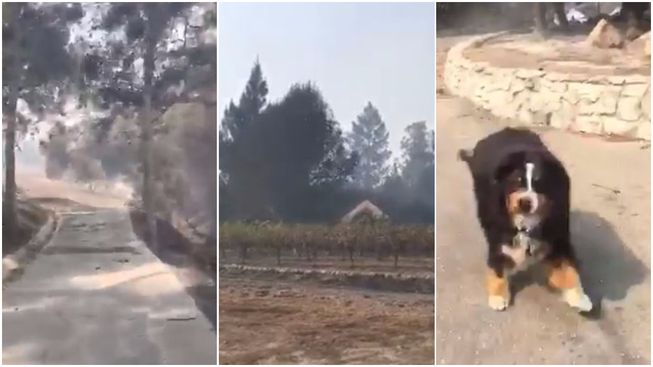
When the Weaver family woke up to flames outside their Santa Rosa home — a region ravaged this week by deadly wildfires — there wasn’t much time.
They had to get out.
But sometime during that panicked retreat from the house on Wikiup Bridge Way, the family dog, Izzy, bolted away.
Trying to find her amid the chaos of fire proved too dangerous.
And so this family, like countless others in California’s wine country, left more than just their home behind. When they drove through sheer walls of flame and across an uncertain wooden bridge to get to safety — they left their hearts back on Wikiup Bridge Way.
It turned out, it was the one thing they couldn’t leave behind.
A day and a half later, while the area was still smoldering and roads were still closed, Jack Weaver and Patrick Widen made the nearly-three-mile trek back to the house.
“It was incredibly important,” Weaver, who grew up in that house, tells MNN. “My mother was a wreck for having gone through that. Nobody wanted us to go back because they were worried we would get injured.”
In a video of their return, posted on Facebook and shared below, you can hear the men laboring to catch their breath amid blackened trees and still-crackling ruins.
“Izzy!” Weaver is heard calling into the smoky veil. Over and over again.
They push farther and farther ahead. “Izzy!”
“Almost to the house,” Weaver says in the video. “I can see … the gate. The gate’s still standing.”

A moment later, he adds, “I don’t see the house at all. F$#k.”
It had burned to the ground.
But someone was still standing.
“Izzy’s here!” Weaver calls, his voice choked with emotion. “Izzy!”
“Oh my God! Come here, baby!”
The giant dog bounces into view, her tail whirring like a helicopter.

“When she same running around — you can probably hear it in my voice — we were shocked and ecstatic,” Weaver says later. “I wish I could have filmed longer, the happy reunion, but I was so happy I dropped my phone.”
Since the family posted the video, it’s been shared more than 4,000 times. Maybe it’s a testament to the need for all of us to find a happy ending amid heartache.
In any case, Izzy is where she belongs now — in the arms of her family — a testament to faith under fire.
“She didn’t have a burn on her,” Weaver says. “It definitely lifted my family’s spirits.”
ooOOoo
YouTube also carried a video:
Well done, Izzy, and Jean and I send you fondest hugs!
As in Dog!
Towards the end of September in came an email addressed to learningfromdogs.
Hi Paul,
Pete here from The Goody Pet.
Firstly – A big thank you for writing all those amazing articles on dogs. Been sharing these articles with my friends and they really enjoyed reading them. Was wondering if I could contribute a guest post for your website? I have been a dog owner for the past 15 years and would love to share some of my tips to your readers.
If you are interested, please let me know? I will be more than happy to prepare a few topics to send across to you.
Kind Regards,
Pete
Goes without saying that I was delighted to receive Pete’s email and his offer of an article. Here it is!
ooOOoo
by Pete Decker, October 8th, 2017
Dog is a man’s best friend, this is something we have said and heard enough number of times. They can be better friends that any human can ever be, this is a fact that almost all dog owners can surely vouch for.
A dog’s loyalty has been seen and heard of in many famous incidents as well as stories like Hawkeye, the dog who grieved the death of his Navy SEAL owner by lying down near his casket day in and out. Or the story of Hachiko, the dog who greeted his owner at the train station every day and continued to look for his owner at the same place daily even after the sudden death of the owner.
What makes dogs so loyal?
There have been some people who say that they depend on humans for food and shelter and so have to be loyal without a choice. But when you see the dog of a street dweller loving him unconditionally or when you see the reaction of a dog after meeting his master who has been away for a long time, you know it’s not just about food and shelter.
They are colonial creatures who like to live together, whether it is a colony of humans, dogs or even other animals. They just want to love and be loved back.
Dogs are not like human beings, they are much better. They do not cheat or betray. They only need one master and that is enough for them to live happily. Unknowingly, dogs teach us many important lessons that help us be better and more loyal people. Let us consider some of them:
They teach you never to betray
Your closest human friend or companion may betray you when the time comes, but a dog never ever will. If needed he will lay his life for you, but betraying is out of question. A human being is capable of telling lies, manipulating, or twisting facts, a dog is not capable of any of that.
A dog can never lie
No matter how close you are to a person, they still may not tell you everything or all the truth. As humans, we think withholding information is not considered lying and do that all the time. But a dog can never lie, he doesn’t even know how to. There is no pretense or withholding information with a dog. For a dog the world is only about you. And it only has ways to show you how much it loves you, nothing more.
They teach you never to judge
Your dog does not care whether you are rich or poor, whether you are ugly or beautiful. It does not even care if you are thin, fat, or what nationality you belong to. A dog will not judge if you have failed at anything, or hold prejudices against you. With a dog you can never be scared of being ridiculed or humiliated. As long you it is with you, you mean the world to him, and he will never leave you no matter what.
Forgiving is another lesson they teach us
A dog is not capable of holding grudges, or being revengeful. These qualities are for us humans. Even if you hurt your dog knowing or unknowingly they will still forgive you at all times. They will not hold your mistakes against you. They will forget your flaws and love you as it always did.
Love is beyond everything
This is one thing that differentiates a human from a dog. Your best friend of one time may not be the same anymore, but a dog will be your best friend as long as you live. They will be by your side at all times, through thick or thin.
You can always repay the favor by ensuring that your dog is responsibly cared for, well fed with regular grooming.
These are some important lessons of loyalty that a dog teaches us. If only we humans imbibe even a part of their qualities, the world will be a much happier place to live in.

ooOOoo
That closing photograph, that was also supplied by Pete, says it all.
Naturally, I asked Pete to offer a little background information on his goodself and this is what he wrote me:
The author of this post is Pete Decker, the Lead Editor at The Goody Pet. Pete loves to share his passion for pets through snippets of interesting and helpful information. You can find more of Pete at his website, Twitter or Facebook.
The loyalty of dogs continues tomorrow!
This is one powerful book!
(Please note that I am letting this post run until Sunday, 15th Oct.)
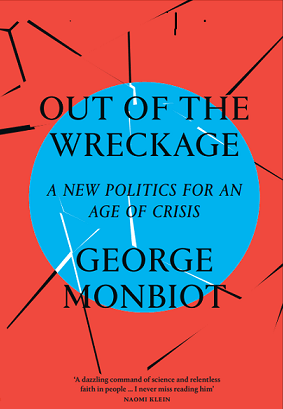
For many years I have both read George Monbiot’s writings, especially those published by The Guardian newspaper, and deeply respected his insight, intelligence and analysis of the world in which we now live.
So when I heard of his latest book, published by Verso Books both sides of the ‘pond’, it was ordered immediately. It was a book I badly wanted to read. I was not disappointed.
So what is Mr. Monbiot’s message?
To answer that question let me lean on a forthcoming talk being given by him in Edinburgh in eight days time. For he is speaking at a Scottish Green Party event on October 20th.
Here’s the thrust of what is to be covered at that meeting:
What does the good life—and the good society—look like in the twenty-first century?
A toxic ideology rules the world – of extreme competition and individualism. It misrepresents human nature, destroying hope and common purpose. Only a positive vision can replace it, a new story that re-engages people in politics and lights a path to a better world.
Join us for an evening of discussion with George Monbiot as he talks about his new book: ‘Out of the wreckage: a new politics in an age of crisis‘. New findings in psychology, neuroscience and evolutionary biology cast human nature in a radically different light: as the supreme altruists and cooperators. George argues that we can build on these findings to create a new politics: a ‘politics of belonging’.
So what does this mean for social and environmental justice campaigning in Edinburgh? How do we create a politics of belongings here in Scotland? There will be plenty of opportunity for George Monbiot and the audience to share their insights.
Doors open: 6pm
George Monbiot will speak from 7-7.30pm and there will then be a Q&A, plus a chance buy books, mingle and browse stalls.
This event is jointly hosted by Global Justice Now and the Scottish Green party.
To my mind, this book not only addresses, full on, the madness (my word) of these present times but also offers strong, positive recommendations as to how we, as in the societies of all the major nations, can turn it around and offer a decent future for future generations. That’s why I am so strongly recommending it.
Take this extract from the review of George Monbiot’s book published by the Guardian newspaper on the 14th September this year:
For George Monbiot, neoliberalism should best be understood as a “story”, one that was conveniently on offer at precisely the moment when the previous “story” – namely Keynesianism – fell to pieces in the mid-1970s. The power of stories is overwhelming, as they are “the means by which we navigate the world. They allow us to interpret its complex and contradictory signals”. The particular story of neoliberalism “defines us as competitors, guided above all other impulses by the urge to get ahead of our fellows”.
Or this extract from the review published by The New Statesman:
It should be said at once that we are desperately in need of new ideas for a society and a democracy where trust in all established institutions is at a record low and even a Tory prime minister admits the country doesn’t work for everyone. Monbiot’s ideas are clear, well-reasoned and sometimes compelling. Many will mock his attempt at a “story of hope and restoration”; even some of his Guardian colleagues call him “George Moonshine”. Human beings, his critics will say, are inherently selfish and self-maximising. Give them the opportunity to freeload off others’ efforts and they will take it.
Such objections are easily dismissed. Yes, there’s a self-interested streak in all of us but, as Monbiot observes, we also have instincts for co-operation and sensitivity to others’ needs. Think of the hundreds who volunteer to run food banks and of the thousands more who donate to them. Think of those Europeans who, at great risk to themselves, sheltered Jews from the Nazis during the Second World War. The altruistic instinct can be kindled in almost anybody. It is suppressed, however, in a society that rewards the selfish but penalises – and brands as “mugs” – those who are more mindful of our needs, and the planet’s. That society has led to loneliness, high levels of mental illness and increasingly discordant political discourse. Shouldn’t we at least try developing a society that does more to nurture the better angels of our nature?
Better still, settle down with a cup of tea, put your feet up for fifteen minutes and listen to this:
This book struck me as the most important book I have ever read in my lifetime. Why? Because it gets to the heart of what is happening today. But it offers even more than that. For instead of a shrug of the shoulders or eyes turned skywards from a friend when one mutters about the fact that we are living in ‘interesting times’, George Monbiot offers hope and guidance.
Take the very last two paragraphs from the final chapter of his book.
Coming Home to Ourselves
Through restoring community, renewing civic life and claiming our place in the world, we build a society in which our extraordinary nature – our altruism, empathy and deep connection – is released.
When we emerge from the age of loneliness and alienation, from an obsession with competition and extreme individualism, from the worship of image and celebrity and power and wealth, we will find a person waiting for us. It is a person better than we might have imagined, whose real character has been suppressed. It is one who lives inside us, who has been there all along.
“- our altruism, empathy and deep connection -”
I see these persons every day of my life. Via the pages of this blog.
Yes, I am referring to all of you who wander in and out of this place, who demonstrate your compassion, your love and your dedication to the dogs and all the other animals of this world.
Read this book!
Time and time again we see what dogs mean to us.
Not that long ago I received an email out-of-the-blue from Linley Achtenhagen. Linley wanted to tell me, and all of you, what having a dog had meant to her.
ooOOoo
by Linley Achtenhagen
Before I start talking about all of the things I have learned from having a dog, I should probably tell the story of how this crazy journey started.
My sophomore year of college was probably one of the most difficult years I’ve had. I was struggling with anxiety issues and I had just quit basketball, which was the hardest decision I’ve ever made. Why? Well, I had been playing basketball from the time I could walk and the day that I decided I was done was a very difficult, yet relieving day.
Me playing basketball had become unhealthy for me and caused me so much stress and anxiety that it was hurting me more than it was helping me, but that’s a different story.
Anyways, once I was done playing college basketball I felt relieved, but also empty. All I had really ever known was basketball, so now I felt like I wasn’t doing anything with my life other than going to school and studying things that I didn’t care about. I knew that something was missing!
I have always been an animal lover. Growing up we had everything from cats, to dogs, to horses and even a pet bird. Dogs were my favorite though (sorry cat lovers) and I thought, “why not see if there’s a dog that needs a home”.
So I went online and of course, I found, literally, thousands of dogs that needed homes. After months of searching and convincing my parents that I could do this, I adopted Luna.
Luna came from a high-kill shelter in Missouri, meaning that if she wasn’t adopted in a certain time frame she was going to be put to sleep. Lucky for me, Tiny Paws Small Dog Rescue in Milwaukee, Wi transported her and about 10 other dogs from the shelter up to Wisconsin.
Luna was about 15 pounds underweight and for a 40-pound dog that’s dangerously skinny. When I would pet her I could feel every single bone on her body. She was skinny, shy, and had patches of fur missing, yet the trust this animal gave me right from the start was amazing. This animal had gone through only God knows what, and trusted me immediately. It was an eye-opening thing to watch.
Now, I’m not going to lie and say that it was all butterflies and rainbows when I adopted Luna. The first few days I was panicked and thought, “what on earth did I get myself into”. But I knew that I had made a commitment to this dog and I couldn’t give her away. I have always hated change, in fact, it is one of the things that gives me pretty bad anxiety, and I knew that giving Luna back would be the easy way out. Sure enough, in about a week, this dog became my best friend and it’s like we had a mutual understanding that we were in this together.
Since getting Luna I went from not knowing what I wanted to do with my life to declaring my major as entrepreneurship and knowing that one day I want to open my own pet supply store.
I want to share all of the knowledge that I have gained about dogs from having Luna with other pet and dog lovers. I have found that big, franchise pet stores just don’t have the same knowledge that small, local pet stores do. I am also not saying that I know everything there is to know about dogs because I still learn new things every single day. But I want to share everything I have learned with dog owners and help them give their pet the best life possible. I also hope to learn new things from all the people that (hopefully) come in and out of my store every day.
In the posts to come, I will share everything I have learned about life, love, animals, and everything in between from my life with Luna.
ooOOoo
If only all decisions in life were as easy as me wanting to publish Linley’s account of her meeting Luna!
All we now need is a photograph of the happy couple!

May everything go well for you, Linley!
A plea to choose a shelter dog before other sources!
Of the six dogs that we have here at home only one, Cleo, came to us from a breeder. That was because we specifically wanted a GSD puppy to be a playmate for Pharaoh as he was getting into his final years.
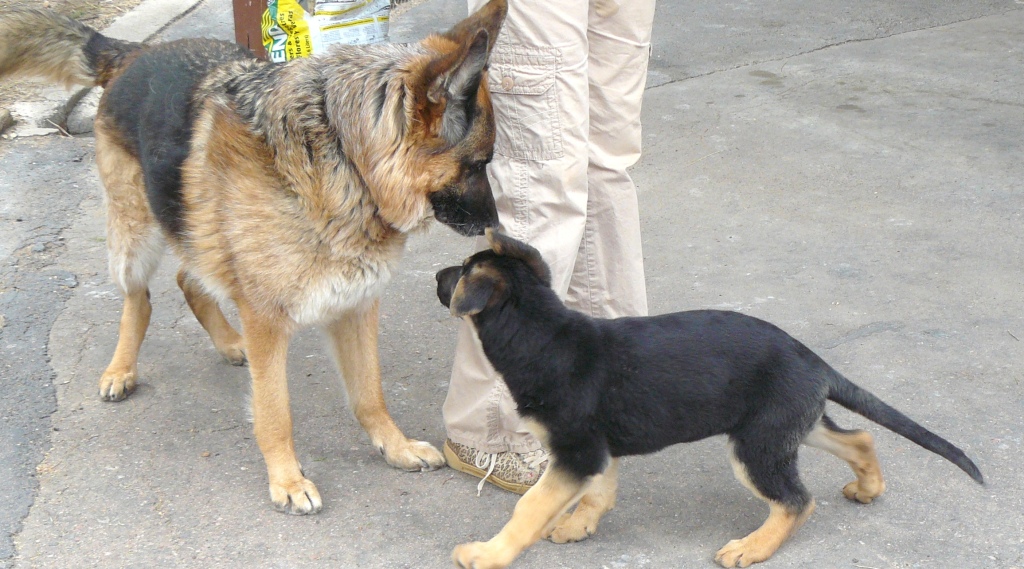
The other five are all dogs that we took from rescue shelters or, in the case of Brandy, from a couple that couldn’t handle such a big dog despite him being the most placid and loving dog one could ever come across.
The Care2 blogsite recently published an article that hammered home the reasons why everyone should (nay, must!) consider a shelter dog first.
Please read and share this. For the sake of those thousands of dogs that never have the joy of loving owners in their lives.
ooOOoo

Adopting a dog doesn’t mean you’re inheriting someone else’s problem. Learn the truth and some common myths about shelter animals.
It’s a sad fact that each year approximately 670,000 dogs are euthanized in animal shelters across the United States. It happens because too many dogs enter the shelter and too few people consider adoption when it comes to getting a new pet. Many buy into one of the most common myths that when you adopt a dog from a shelter you are inheriting someone else’s problem.
The truth is that shelters and rescues are brimming with happy, healthy pets just waiting for someone to take them home. Most shelter pets are surrendered because of a human problem like a move or a divorce, not because the animals did anything wrong. Many are already housetrained and used to living with families.
“When you adopt a shelter dog you are most likely bringing home a dog who has good manners, is leash trained and knows some commands,” said Ellen Ribitzki, kennel manager for the Bloomingdale Regional Animal Shelter Society (B.A.S.S.) in New Jersey. “In addition, shelter dogs are temperament tested so adopters will have an idea of a pet’s personality―whether he/she gets along with other dogs or with cats and young children.”
In late August the Herrera family visited B.A.S.S. to find a companion for their rescue dog, Charlie. The family had just lost their beloved Roxy, a 12-year-old boxer, and all of them―including Charlie―were mourning the loss.
“We started visiting our local shelters because we know what love rescue dogs can give,” Robin Herrera said. “We knew that we didn’t want a puppy but we were looking for a dog young enough to be playful. We also knew that Charlie had to approve of the new dog.”
At B.A.S.S. they fell in love with Sophia, an 18-month-old German shorthair pointer mix, an energetic fun-loving and playful dog. Luckily Charlie approved and Sophia is now a much-loved addition to the family.

“Sophia and Charlie are constantly hunting for chipmunks in our yard,” Herrera said. “They love long walks together and enjoy snuggling with us at night.”
Ribitzki said that dogs are rarely returned to B.A.S.S., and when it does happens it’s because of health or life changes―for example, allergies or a job change―and not behavioral issues.
“The majority of dogs and cats are surrendered to B.A.S.S. by heartbroken owners in tears because they can no longer care for their beloved pet,” Ribitzki said. “Unfortunately, with the recent catastrophic hurricanes, there will be a lot more animals impacted and more demands on rescues and shelters.”

October is Adopt a Shelter Dog Month and a perfect time to help dogs in shelters across the country find loving forever homes. If you’re thinking of adding a dog to the family, please consider adopting your next animal companion.
Truth: Some dogs do end up in shelters and rescue groups because their owners can’t handle their perceived behavior problems (which may be as easy to fix as an older puppy reluctant to housebreaking), but most of them end up in shelters because of a combination of these reasons:
Truth: When you deal with a reputable shelter or rescue group that gets all vetting done―spay/neuter, vaccinations, deworming and heartworm preventative―and temperament tests all of their adoptable pets, you do know what you’re getting!
Truth: Rescued pets are often noted as being “grateful” for their new lease on life. Forming a bond with an animal whose life you saved comes naturally for most people. Dogs become attached to the people who take care of their basic needs, no matter when those people came into their lives.

Truth: Not only is this untrue, but the conditions of many breeding facilities or puppy mills (which supply pet stores that sell dogs) are nothing short of horrific. Puppies born in puppy mills are usually removed from their mothers at just 6 weeks old and are housed in overcrowded and unsanitary wire-floored cages, without adequate veterinary care, food or water.
Truth: There’s no evidence that big dogs are more likely than small dogs to harm children. A dog’s behavior is a function of many factors including breeding, socialization, training, environment and treatment by owners.
Truth: As a result of their breeding, purebred dogs very often have genetic disorders and medical issue predispositions, certainly no less often than shelter dogs. Also, while bloodlines and histories are useful tools to assess an animal’s value, they are limited in terms of predicting behavior. On the other hand, shelters are motivated to save lives and make strong matches. Some use science and sophisticated tools to appropriately pair up animals and owners and are happy to share everything they know about each animal.
Sources: Second Chance for Pets in Clinton, IL, and the ASPCA
The Humane Society of the United States offers the top reasons to adopt a pet.
ooOOoo
Did you notice that link on the very last line of this article, the one regarding The Humane Society offering the reasons why everyone should adopt? If that link was followed then one would read the most important reason to adopt a pet (my emphasis):
Because you’ll save a life.
Each year, 2.7 million adoptable dogs and cats are euthanized in the United States, simply because too many pets come into shelters and too few people consider adoption when looking for a pet.
The number of euthanized animals could be reduced dramatically if more people adopted pets instead of buying them. When you adopt, you save a loving animal by making them part of your family and open up shelter space for another animal who might desperately need it.
Because you will save a life!
Here’s what HSUS are doing for the poor dogs out in Puerto Rico.
From time to time we do donate a few cents to The Humane Society of the United States (HSUS) because their size and huge support from so many people does allow them to step up to the really big needs.
And Hurricane Maria certainly left a big need in its wake for dogs.
So a recent item that was published over on Mother Nature Network just had to be shared with you all.
ooOOoo
One beach famous for its stray dogs is now hauntingly empty.
Christian Cotroneo, October 3, 2017.
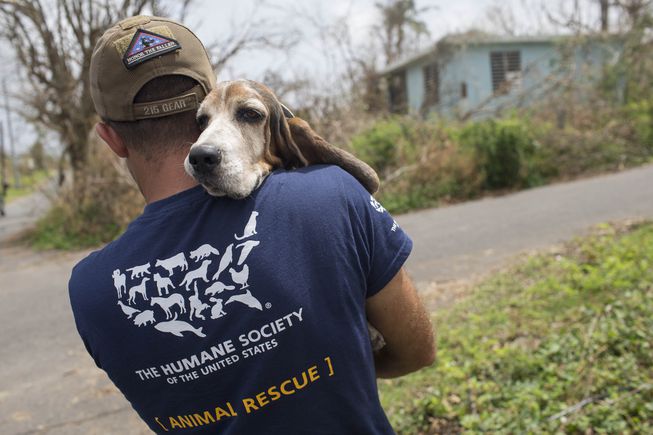
In the wake of Hurricane Maria, hundreds of dogs, as well as cats, horses and even a few pigs, are getting off the island.
Several rescue groups, including the Humane Society of the United States, have waded into the breach to rescue some of the island’s most defenseless residents: its burgeoning population of stray dogs, as well as those currently in shelters.
HSUS has a history with the territory, helping with law enforcement training and horse care, and working closely with animal shelters across the island.
“Since the storm hit, we’ve been doing our best to stay in contact, given the communication challenges, with all of our shelter partners and other partners on the island,” Inga Fricke, director of pet retention programs for HSUS, tells MNN.
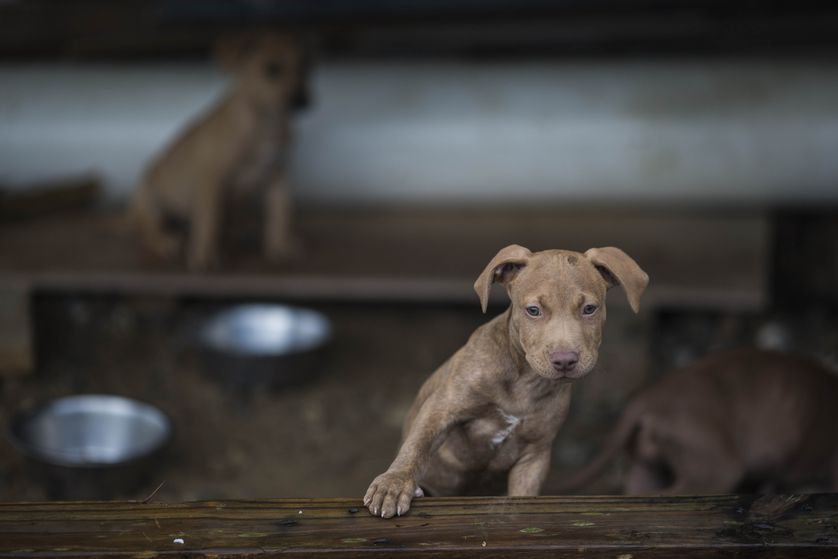
This week, the organization — with help from partners like Wings of Rescue and St. Hubert’s Animal Welfare Center — began airlifting dogs from stressed island shelters to a processing center in New Jersey.
“They get vetted there, get the care they need and then get parceled out to other partners around the country,” Fricke says.
Not every animal survived Maria’s onslaught. Notably, a southeast corner of the island once teeming with strays — nicknamed “Dead Dog Beach” — was found to be desolate when rescuers arrived.
“We’re hearing from our rescuers who have a feeding area where they go every day and we are hearing that most of those dogs have perished,” Twig Mowatt, co-founder of All Sato Rescue, tells MNN.
While the organization is based in San Juan, Puerto Rico, Mowatt is just outside of Boston, coordinating with the Humane Society of Puerto Rico to get vulnerable dogs airlifted to the mainland.
“I’m kind of like an air traffic controller these days,” she says. “My group is largely rescue and transport but we partner with the humane society for those really badly affected.”
“We were able to get dogs out on Friday and then yesterday,” Mowatt adds.

Described as “apocalyptic,” the hurricane left much of the island in the dark, without electricity or communications. And while the humanitarian relief effort is ongoing — much of the island was still without power in early October — the search for animals in distress may be even more complicated.
With an estimated 150,000 dogs in Puerto Rico and not enough animal shelters, there’s no space for dogs found roaming at large. As a result, many of them are put down immediately.
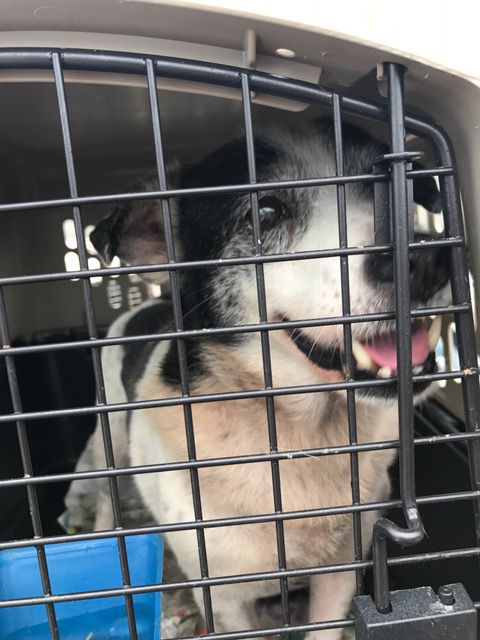
“We have even done several transports, even just this year, to try and alleviate some of the overcrowding and the pressures on the shelters across the island,” Fricke explains.
“But certainly our focus now, after the hurricane, is to try and remove as many of the sheltered animals as possible so we can allow them to make room for animals that unfortunately have been affected by the storm and can’t be kept by their families any more for any reason.”
If you would like to help HSUS in its efforts to to save Puerto Rico’s displaced animals, consider making a donation here.
ooOOoo
That’s a great way to end the week. See you all on Sunday!
This is where you all come in!!
From time to time I have let it be known that I had a second book stewing on the back burner. The title that had first come to me was: ‘Of Pets … And Of People’. The book idea and initial title had come to me from visits to our local Lincoln Road Vet Clinic where I had sat in on both Dr. Jim Goodbrod and Dr. Russel Codd as they saw pet patients. As I described it in my original post when I introduced the idea in June:
Some time ago, when we were visiting Lincoln Road, it struck me that the detail of what takes place ‘behind the counter’ of a busy vet clinic is most likely not commonly appreciated by those that visit said clinic.
I asked Russel one day if I might be allowed to spend time watching and listening to what goes on behind the scenes; so to speak. Russel said that he would be delighted for me to do that.

I subsequently started publishing posts under the general title of Visiting the Vet.
Back to the book.
Recently it came to me that the title was wrong. Because it didn’t speak directly to the potential reader about dogs.
So I came up with a different name: An Insight into Dogs and Owners.
Here is the Vision for this next book:
An examination of the world of the veterinary clinic including those who care professionally for our dogs and an insight into those people, from many varied backgrounds and circumstances, who have dogs in their own lives.
The first section, dipping into the extraordinary work that goes on in a modern vet’s clinic, is inspired by my belief that the majority of dog owners have very little idea of such work and the skills displayed by DVMs.
But let me move on by sharing with you the Introduction to the book. Firstly, these paragraphs:
There’s a tiny amount of domesticated wolf in all of us. The relationship between canids and humans goes back nearly 40,000 years, when dogs split away from wolves. With our dogs, we have traveled the ancient track from hunter-gatherers to modern humans. That track that in this 21st century sees us having untold numbers of dogs in our lives. In the USA alone there are: “In 2017, a total of about 89.7 million dogs lived in households in the United States as pets. In comparison, some 68 million dogs were owned in the United States in 2000.” 1
Yet a surprising number of those who have dogs as pets and are lovers of those same dogs admit to not really understanding what goes on behind the scenes in a busy veterinarian clinic. Yes, they know what happens when they take their dog to their vet but that view is almost certainly from the perspective of that dog and the specific reason why that animal had to to be seen by a vet.
An Insight into Dogs and Owners seeks to broaden the understanding of the reader to the range of treatments and procedures that are undertaken in a modern veterinarian clinic.
OK! More or less what I explained earlier on in this post.
But!!
But here’s where I do believe (fingers tightly crossed) many of you dear readers can help.
Back to the remaining part of that introduction:
But just as dogs do not live in isolation then nor do we humans. So the book sets out to explore the range of relationships that humans have with dogs. Perhaps better put as the book exploring the range of human circumstances that have led to people having a dog in their life. The homeless, those disabled persons who care for their dog, the service dogs that are, for example, the eyes and ears of the partially sighted and the hard-of-hearing. But not excluding exploring the relationship between police dogs and their handlers, those who work with cancer-sniffing dogs, and all the way through to Mr. and Mrs. Joe Public having a pet dog or two.
1The Statistics Portal
“.. explore the range of relationships that humans have with dogs.”
If, dear reader, you fancy working with me and can comfortably reply to the following questions, then I want to hear from you!
These questions can apply equally to persons who have a dog in their life as part of the family and to those who work with dogs in their professional lives, those who train dogs, hunt with dogs, and those who care for dogs.
If all of this hasn’t put you off then email me at paulhandover (…at…) gmail (…dot…) com putting ‘Book Two’ in the email title. I will then contact you directly looking at the best way to listen and record your answers to those questions.
THANK YOU!!
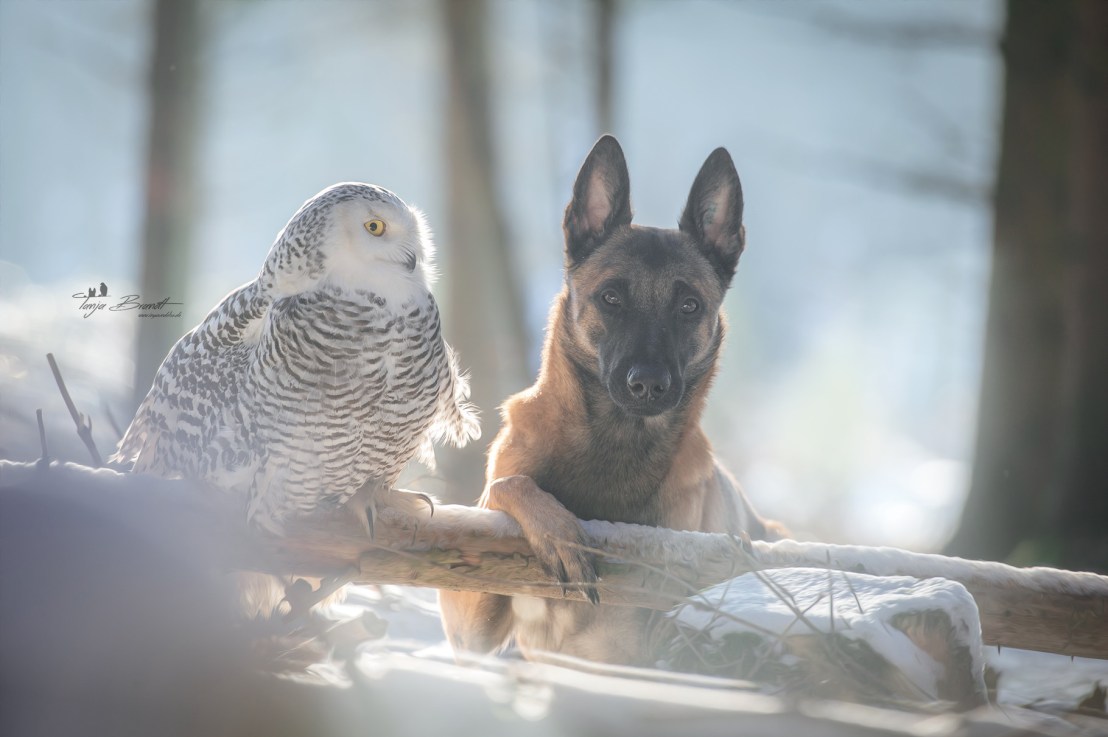
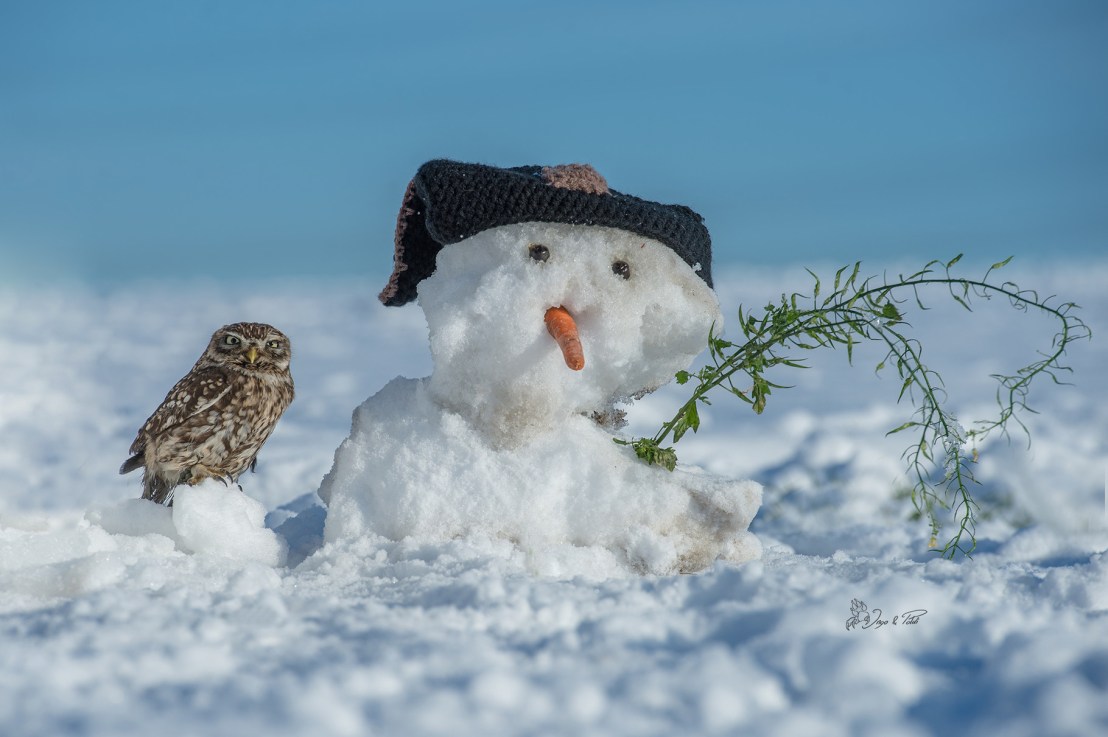
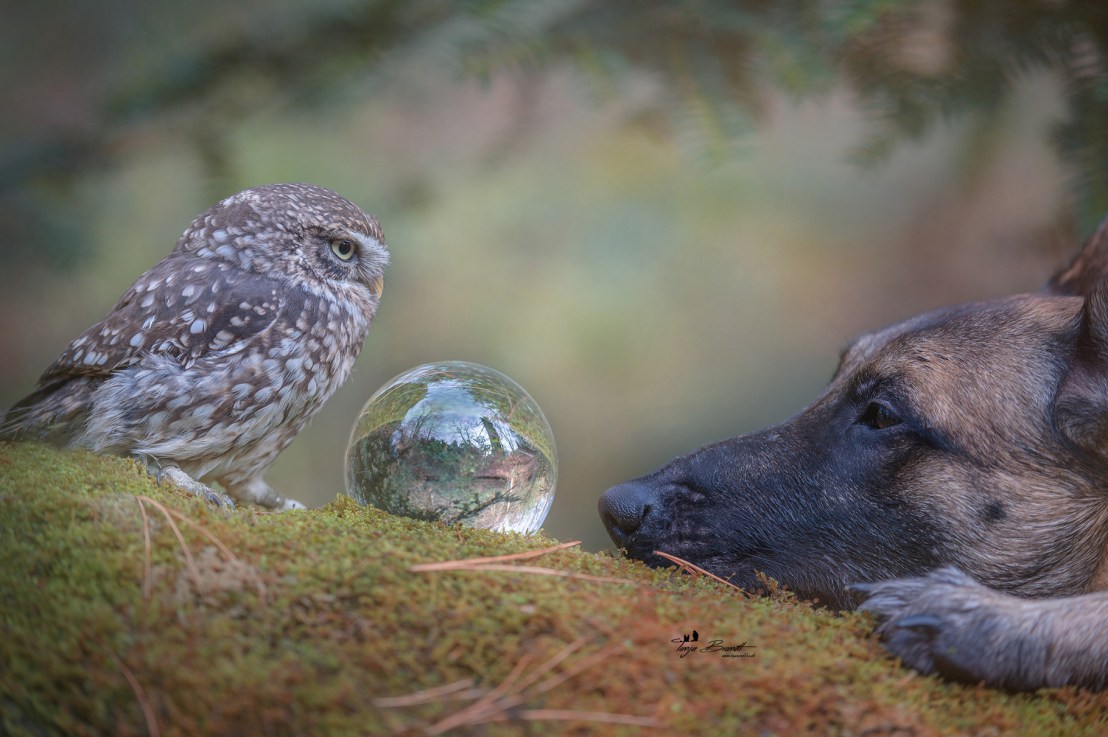
Yes, it’s photos from Tanja Brandt again!
(As per last week, all republished from here.)

oooo

oooo
oooo
oooo
oooo

Just supremely beautiful!
 Learning from Dogs