Category: consciousness

So much to learn from dogs

Beautiful images that will make appreciate the majesty of wild animals.

First a big thank you to Mary and Ed G. for passing me an email that contained fabulous photographs of the polar bear playing with a  husky dog.  From that email it was the matter of a few moments to find more on the Internet.

Let’s start with a YouTube video of a short talk by Stuart Brown called Animals at Play.

Then another YouTube video that is from FirstScience TV, which appears to be a defunct website.

Here’s Norbert Rosing’s website and here’s the website for the charity, Polar Bears International.

Enjoy your week-end.

These charming pictures were taken by renowned nature photographer Norbert Rosing, whose work has appeared inNational Geographic and other magazines, as well as several books including The World of the Polar Bear (Firefly Books, 1996), in which Rosing recounts the story of how these particular photographs came to be taken.

The location was a kennel outside Churchill, Manitoba owned by dog breeder Brian Ladoon, who kept some 40 Canadian Eskimo sled dogs there when Rosing visited in 1992. A large polar bear showed up one day and took an unexpected interest in one of Ladoon’s tethered dogs. The other dogs went crazy as the bear approached, Rosing says, but this one, named Hudson, “calmly stood his ground and began wagging his tail.” To Rosing and Ladoon’s surprise, the two “put aside their ancestral animus,” gently touching noses and apparently trying to make friends.

Just beautiful!

If you want to watch the whole sequence of photographs including background notes to each picture, click here.

Earth Day and The 11th Hour

Some very thought-provoking ideas.

John H, a good friend of us here in Payson, lent us the Leonardo DiCaprio film The 11th Hour.  More information on the film’s website.  Here’s the trailer,

The plot of the film, if plot is the right word, is as follows,

With contributions from over 50 politicians, scientists, and environmental activists, including former Soviet leader Mikhail Gorbachev, physicist Stephen HawkingNobel Prize winner Wangari Maathai, and journalist Paul Hawken, the film documents the grave problems facing the planet’s life systems. Global warming, deforestation, mass species extinction, and depletion of the oceans’ habitats are all addressed. The film’s premise is that the future of humanity is in jeopardy.

The film proposes potential solutions to these problems by calling for restorative action by the reshaping and rethinking of global human activity through technology, social responsibility and conservation.

Whether or not you watch the film, and I strongly suggest you do, the action website that supports making a difference is For the Love of Action.  Drop in and make your own mind up.

Following on from that film is this apt reminder of the world we have created.  I tend to write articles a few days ahead of the publish date, so it wasn’t possible to have this post come out on the 20th April, last Wednesday, which was Earth Day.  Shame.  Because as this email from the Alaska Wilderness League pointed out, it’s also a sad reminder of our love affair with oil.

Dear Paul,

The next Deepwater Horizon could be amid the broken sea ice and polar bear habitat of America’s Arctic: unless we prevent it now. Donate to the League.

It was one year ago today. I remember sitting in my living room after dinner when the news alert flashed across the screen:Deepwater Horizon oil rig explodes in the Gulf of Mexico; 11 workers dead or missing. 

Huddled around the office television the next morning, there was no way we could anticipate the true magnitude of the disaster. Images of ruined lives and tarnished lands poured out of the Gulf formonths on end. As the oil industry’s feeble attempts to contain the destruction grew evermore cartoony – ‘top hat,’ ‘junk shot,’ ‘top kill’ – we learned just how little they had prepared for the eventual catastrophe of an oil spill.

Our government rubber-stamped the faulty plans for this oil rig. They had a chance to prevent this disaster, but didn’t. What’s worse: they continue to approve plans for America’s Arctic that are functionally identical to the plans that caused the Gulf disaster. America’s Arctic could be our next Deepwater Horizon tragedy. The effects of deadly crude oil spilling into the broken sea ice and polar bear habitat of America’s Arctic would be disastrous: unless we stop it.

We are fighting the next horrifying oil spill every step of the way. Help us prevent it – donate now! 

When Deepwater Horizon exploded in the Gulf, the League had just completed a campaign to highlight the incredible annual migration of Arctic birds that begins in the Arctic Refuge and extends through each U.S. state. Some of these birds fly as far as the southern tip of Argentina! Many of them rely on critical nesting grounds around the Gulf of Mexico.

The League moved quickly to save these birds, distributing ‘Arctic Garden Kits’ to help donors across the country to provide sustenance and shelter to Arctic birds in their own backyards. Proceeds from the fundraiser helped us fight faulty plans from moving forward in America’s Arctic for the last two summers.

Shell Oil, the biggest threat for Arctic drilling, remains undaunted by our success. Their drilling plans for 2012 have ballooned from one drill rig to six. This is their big move – their cards are on the table. We need your help and support to go over the top to stop their escalating plans.

Help us stop the next disaster in America’s Arctic. Give today.

The way in which the League responded to the Gulf disaster – stemming the damage to wildlife and preventing the next disaster – was one of the most inspiring experiences of my life. You have a chance to be a part of this continuing work. Help us save America’s Arctic before it suffers the fate of another Deepwater Horizon.

Thank you for all that you do,

Cindy Shogan
Executive Director
Alaska Wilderness League

Finally, let me close rather pointedly, perhaps, by this video of the fires in Texas which are burning out of control and have already scorched 1.6 million acres.; long-term drought being part of the cause.

Why the Blog is called Learning from Dogs.

A reflection on the starting point of this Blog.

It struck me recently that many of you readers that come to Learning from Dogs on a regular basis, say, over the last 18 months, may not be clear as to why it’s called what it is, and the deeper issues behind the name.

First, the name.  Quite a few years ago I was sitting chatting with Jon Lavin, the co-founder of the Blog, in his home in South-West England.  My German Shepherd, Pharaoh (that’s him on the home page) was sleeping on the floor while Jon and I were nattering about the works of Dr David Hawkins of Veritas Publishing.  Jon mentioned that David Hawkins had measured the consciousness of dogs and that they came out about 205.  In other words they were integrous creatures and firmly on the truthful side of the boundary between truth and falsehood.

I was fascinated by that idea.  Later, back at my home, less than an hour away from Jon’s house, I was idly looking at domain names that were available, and imagine my glee when I discovered that learningfromdogs (dot) com was free.  It was rapidly grabbed.

A rather chaotic period of my life descended upon me but the notion that we have much to learn from dogs stayed with me.  Much later, when I was happily settled with Jean, the vision and purpose of the Blog got me under way.  The first post was published on 15th July, 2009.

The ideas behind the theme that dogs have an extraordinary relationship with man is contained in a very early piece written for the Blog back in July 19th, 2009.  That article is called Dogs and integrity.  But nothings stays still.  In that piece, I wrote,

Because of this closeness between dogs and man, we (as in man!) have the ability to observe the way they live.  Now I’m sure that scientists would cringe with the idea that the way that a dog lives his life sets an example for us humans, well cringe in the scientific sense.

However, on Sunday evening we watched a video from PBS that showed that scientists are now taking a very close interest in dogs and why they have such a special relationship with man, perhaps even a critical part in enabling man to prosper as hunter-gatherers.  Here’s a preview of that video programme.

Unfortunately, the video is not freely available from PBS.  However, it was based on the BBC Horizon programme, The Secret Life of the Dog, which I wrote about back in the 25th January, 2011.  (The YouTube link on that post appears to have been curtailed.)

Luckily there are a couple of options to watch this fascinating and very revealing documentary.  You can either watch it in sections from YouTube, the first 10 minutes is below, or you can watch it in full, if you don’t mind some Chinese translations here.  Your choice.

That’s enough for today, I shall return to this theme next week.

Beautiful minds; Hugh Everett

Two fascinating films about two very beautiful minds, Hugh Everett III and Stephen Hawking.

Hugh Everett III

A documentary on PBS entitled Parallel World, Parallel Lives traces in a deeply personal way, the efforts of the son of Hugh Everett, Mark Oliver Everett, to find out more about his father, who died in 1982, just 51 years old.  Mark Everett is an accomplished musician and much of his music makes it onto the soundtrack of the film. Here’s a brief extract from an article from Scientific American.

Hugh Everett III

Hugh Everett III was a brilliant mathematician, an iconoclastic quantum theorist and, later, a successful defense contractor with access to the nation’s most sensitive military secrets. He introduced a new conception of reality to physics and influenced the course of world history at a time when nuclear Armageddon loomed large. To science-fiction aficionados, he remains a folk hero: the man who invented a quantum theory of multiple universes. To his children, he was someone else again: an emotionally unavailable father; “a lump of furniture sitting at the dining room table,” cigarette in hand.

Here’s a taste of the film from YouTube.

But you may prefer to watch the whole programme, courtesy of Top Documentary Films.

A fascinating programme and one which shows great courage and bravery from Mark Everett in dealing with his memories and emotions about a brilliant but emotionally flawed father.

Thursday, Stephen Hawking.

Socrates and self-confidence

A presentation by Alain de Botton.

On April 12th, I introduced to you, dear reader, the philosopher, Alain de Botton. I promised that I would soon give you more.

On Top Documentary Films, there are links to all six parts of a series on philosophy presented by this popular British philosopher  featuring six thinkers who have influenced history, and their ideas about the pursuit of the happy life.

The first part is about Socrates; Socrates and self-confidence.  But before linking to that specific programme, a little about this enigmatic man, Socrates, who lived about 2,500 years ago (469–399 B.C.E).  Here’s an extract from the Stanford Encyclopaedia of Philosophy.

The philosopher Socrates remains, as he was in his lifetime (469–399 B.C.E.), an enigma, an inscrutable individual who, despite having written nothing, is considered one of the handful of philosophers who forever changed how philosophy itself was to be conceived. All our information about him is second-hand and most of it vigorously disputed, but his trial and death at the hands of the Athenian democracy is nevertheless the founding myth of the academic discipline of philosophy, and his influence has been felt far beyond philosophy itself, and in every age. Because his life is widely considered paradigmatic for the philosophic life and, more generally, for how anyone ought to live, Socrates has been encumbered with the admiration and emulation normally reserved for founders of religious sects—Jesus or Buddha—strange for someone who tried so hard to make others do their own thinking, and for someone convicted and executed on the charge of irreverence toward the gods. Certainly he was impressive, so impressive that many others were moved to write about him, all of whom found him strange by the conventions of fifth-century Athens: in his appearance, personality, and behavior, as well as in his views and methods.

Full entry may be read here, and very interesting it is, by the way.

Anyway, back to the programme from Alain de Botton.  The part on Socrates is introduced thus,

Why do so many people go along with the crowd and fail to stand up for what they truly believe? Partly because they are too easily swayed by other people’s opinions and partly because they don’t know when to have confidence in their own.

You can either watch the video by clicking here, or view it as three sections from YouTube, as follows.

Time for a rethink!

Things do not change; we change. Henry David Thoreau

To a great extent, my thoughts in this article will make less sense if one hasn’t watched the Rupert Sheldrake video included in the Post on the 10th January, 2011.  It’s 1 hour 20 minutes long but every minute will captivate you, trust me.

But if, for whatever reason, you don’t watch that video then the following YouTube videos are offered where Sheldrake speaks of the evidence supporting telepathy between cats and dogs and humans.  The demonstration of a dog knowing when their owner is coming home is enthralling.

The science behind this link between, for example, the dog and its owner, is what Dr. Sheldrake calls an example of Morphic Fields.

I must confess that if someone had said to me, say 10 or even 5 years ago, that some form of energy field links the brains of dogs and their owners, or of cats and their owners, I would have been at least confused, at best very skeptical.  Then comes the evidence, statistically valid, that being rung on the ‘phone by someone close to you can be anticipated frequently before the phone is picked up creates even more uncertainty.

Settle down and listen to these videos (they are sound recordings only but nonetheless fascinating),

The Extended Mind, Part One

The Extended Mind, Part Two

The Extended Mind, Part Three, final part.

Alain de Botton

An excursion into the nature of self!

I had not heard of Alain de Botton before coming across a series of his TV programmes via Top Documentary Films.  But, clearly, that has been my loss because he appears to have quite a following.  So over the next 10 days or so, I’m going to include some of his material in upcoming articles in the hope that you enjoy them as much as we have.

But first, an introduction to Alain de Botton from a TED Talks video from July 2009.  Enjoy.

20:20 hindsight

One of the great aspects of modern web-based communications is that much of what is said, written and recorded is available to peruse long after the item was ‘broadcast’.

Prof. Ehrenfeld

A few days ago, I introduced Prof. David Ehrenfeld via a short, but stunningly clear, five-minute YouTube video.  I promised to follow that up with more material.

So here’s a book review undertaken by Prof. Ehrenfeld.  The book in question is The Long Emergency: Surviving the Converging Catastrophes of the Twenty-First Century. James Howard Kunstler. x + 307 pp. Atlantic Monthly Press, 2005. $23.  Here’s the review in full from The American Scientist website.  Read it carefully and ponder that this review goes back to Autumn 2005, about five and half years ago. Great foresight.

James Howard Kunstler begins The Long Emergency with the hope that “the American public will wake up from its sleepwalk and act to defend the project of civilization” while there is still time. “Throughout this book,” he writes, “I will concern myself with what I believe is happening, what will happen, or what is likely to happen, not what I hope or wish will happen.” The reality that our society is currently refusing to face, Kunstler says, is that time is just about up for industrial civilization as we have known it.

Kunstler’s thesis is straightforward: Malthus was right, but cheap oil has postponed the day of reckoning, creating a century-long “artificial bubble of plenitude” and generating a host of intractable problems partly or entirely related to our prolonged energy spending spree. These problems include serious damage to our agricultural infrastructure, global climate change and the reorganization of living places into unsustainable suburbs and cities. Now cheap oil is disappearing fast, leaving only the problems behind.

What sets The Long Emergency apart from numerous other books on this theme is its comprehensive sweep—its powerful integration of science, technology, economics, finance, international politics and social change—along with a fascinating attempt to peer into a chaotic future. And Kunstler is such a compelling, fast-paced and sometimes eloquent writer that the book is hard to put down.

Beginning with the story of Edwin L. Drake, who drilled the world’s first oil well in northwestern Pennsylvania in August 1859, Kunstler takes us through the development of the global oil-based economy of the 20th and early 21st centuries. He carefully traces the origins of the idea, first proposed by geologist M. King Hubbert, that oil consumption by modern industrial society will draw down current and potential supplies in a predictable way. Hubbert’s 1956 prediction of the date of “peak oil” production in the United States (which he put at sometime between 1966 and 1972) was strikingly accurate—the peak occurred in 1970. After Hubbert’s death in 1989, the distinguished petroleum geologists Colin Campbell and Jean Laherrère, Princeton geologist Kenneth Deffeyes, University of Colorado physicist Albert Bartlett and others adapted his model and applied it to global oil production, yielding a prediction that the global peak would occur between 2000 and 2010.

As pointed out by Richard A. Kerr and Robert F. Service in the July 1, 2005, issue of Science, petroleum geologists tend to accept this “pessimistic” prediction of the date when the global peak will be (or has been) reached, whereas “optimistic” dates farther in the future are being advanced primarily by resource economists. Kunstler sides with the geologists, and his fast-paced but detailed discussion of the economics of oil supports this position. In his chapter “Geopolitics and the Global Oil Peak,” he comes to grips with a complex mix of elements: Middle Eastern and Islamic nationalism, terrorism, Chinese industrial growth and the overwhelming problems of Russia, the world’s second-largest producer of oil. These are set against a backdrop of diminishing supply, as one country after another, including Saudi Arabia, passes its oil peak. Kunstler’s explanations of why the Saudis can no longer control world oil prices (they lack the reserves to increase production much beyond what they are already pumping) and of the immense significance of that loss of control are particularly insightful. American politicians have not yet grasped this new reality.

The book’s lengthy discussion of the alternatives to cheap oil that are so beloved by techno-optimists is straightforward and sobering. Kunstler gives all of the alternatives a critical but fair inquiry, from conventional energy sources such as coal and natural gas, through oil shales and tar sands, synthetic oil, renewable energy (including wind, solar and hydroelectric power and biomass), nuclear fission and nuclear fusion, hydrogen, thermal depolymerization (turning organic waste into oil), methane hydrates and even zero-point energy.

Most of these technologies founder on “the classic problem of energy economics: energy returned over energy invested (ERoEI). “The figure in the case of tar sands and oil shale is approximately three barrels of oil produced for every two barrels of oil-equivalent invested. In the case of ethanol produced from agribusiness corn or sugar cane, the ratio may be less than one. Some alternatives, such as methane hydrates, are dangerous to handle. Hydrogen is not a primary fuel: Its production requires considerable energy. Also, because of the low density of hydrogen gas, it must be stored and transported under high compression, or liquefied at very low temperatures, or combined with other compounds. Each of these options costs still more energy, and they introduce an assortment of complications and hazards into the delivery system. Although hydrogen will have its uses, Kunstler says, his verdict is unequivocal: “There is not going to be a ‘hydrogen economy.'” Nor is he sanguine about such far-out schemes as a process for deriving zero-point energy from the dark matter of the universe; he reminds us that “A useful maxim in engineering states that when something sounds too good to be true, it generally is not true.”

Kunstler’s moderate treatment of nuclear power (fission) has angered some environmentalists. I think he makes a good case, however, that during the transition period to a post-petroleum economy, the United States, which produces much of its electricity from a rapidly declining supply of natural gas, will not be as well off as France, which gets 80 percent of its electric power from nuclear energy. Nevertheless, he does not see nuclear power as more than a short-term stopgap. Its ultimate limitations come first from safety issues with regard to plant operations and the disposal of waste fuel (although he points out that coal has cost far more lives than nuclear power, especially in the West). Second is the large amount of oil needed to mine and process nuclear fuel and to build and maintain nuclear plants. And the third, formidable objection Kunstler makes is that “Atomic fission is useful for producing electricity, but most of America’s energy needs are for things that electricity can’t do very well, if at all. For instance, you can’t fly airplanes on electric power from nuclear reactors”—although, as he notes, the U.S. military has tried.

Kunstler describes a host of natural disasters that will interact with the energy crisis to cause social upheaval on a global scale. No country will be exempt, he says. Some of these disasters, such as climate change, are the direct result of our profligate use of cheap energy. Others, including the widespread shortage of fresh water, have been greatly augmented by the drain on resources brought about by the explosion of high-oil-input agriculture, industrialization and changes in living habits. All of those natural disasters, however, including the emergence of new infectious diseases and the re-emergence of old ones, will be much harder to cope with when cheap energy is no longer available. Our efforts will also be confounded by diminishing returns on technology and by “technological regress—the loss of information, ability, and confidence.”

The Long Emergency is more than a list of disasters, present or impending. It is an attempt to understand how we got to where we are. Nearly 100 years of cheap oil have allowed us, even prompted us, to construct an economic and social system that depends utterly (often without our knowledge) on a continuous, never-failing energy subsidy. The system cannot stand on its own feet. It is unstable, lacking internal restraints and negative feedbacks, and most of all it undermines all stabilizing alternatives, such as diverse small businesses and local community support systems. Kunstler’s understanding of history and economics helps him delineate this clearly.

My only complaint about the book is that it lacks an index, which is inexcusable for a text so crammed with names and facts. Kunstler’s use ofentropy as a synonym for social disorder may bother readers who prefer that the term be reserved for discussions of thermodynamics, but an accepted definition of the word is “inevitable and steady deterioration of a system or society.”

One question that most readers of this review will ask is, When will the coming collapse occur? As Kunstler notes, Deffeyes—perhaps not entirely in jest—has predicted on National Public Radio that the global oil peak will occur on Thanksgiving Day, 2005, with “‘an uncertainty factor of only three or four weeks on either side.'” But the closest thing to a hint of Kunstler’s position on the subject is found in his remark in the last chapter that “The denizens of Bergen County, New Jersey, or Fairfield County, Connecticut, today may never believe how desperate their localities may become in 2025.” He is probably wise to be vague. As the great biochemist Erwin Chargaff remarked in his 1978 autobiography, Heraclitean Fire, “On the whole, professional pessimists prove right at the end if one does not hold them too tightly to a time scale.”

The last (and longest) chapter of The Long Emergency is also the most innovative and controversial one. Having made a powerful case that it is too late to avoid serious trauma, Kunstler speculates on what life will be like during the painful transition period, as cheap petroleum wanes. The question is well worth asking, if only to stimulate creative thinking about alternatives to a high-energy lifestyle. The book is not a survivalist tract, but Kunstler argues persuasively that life will be better in some geographic regions of the country than in others and better in some kinds of communities than in others. Factors such as the availability of water, the degree of dependence on automobiles and air-conditioning, the regional tolerance for violence and the persistence of strong communities lead him to conclude that the states of New England, the mid-Atlantic, and the upper Midwest that make up the “Old Union” of the Civil War period, along with the Pacific Northwest, will fare much better than the Southwest, the Rocky Mountain states and the Southeast.

Within each region, however, conditions will not be uniform. Kunstler, whose earlier book The Geography of Nowhere established him as heir presumptive to the intellectual legacy of Lewis Mumford, describes America’s automobile-dependent suburbs as “the greatest misallocation of resources in the history of the world.” It is the suburbs, he thinks, that will suffer the most during the coming energy crisis. (I concur, having taught the same message in field courses in suburban New Jersey for 30 years.) And cities, with their skyscrapers and total food dependence, will not, Kunstler claims, be far behind the suburbs in misery.

There is much more in the final chapter than I can do justice to in a review: The many topics discussed include, among others, the new economy and new commerce that will accompany the end of oil-dependent consumer culture (he predicts the demise of the chain stores and the rise of scavenging), possible political fragmentation of the nation, changes in education, the end of romantic childhood and changes in race relations. The picture he paints is incomplete—he doesn’t say what will happen to health care, the arts or entertainment in the long emergency—but there is material enough to provoke scientists and laypeople alike into considering what lies ahead.

Kunstler, like George Orwell, understands that being honest about the past and present is the only way to prepare ourselves for an uncertain future. Civilization, he believes, will survive the end of cheap oil, but not without great loss. “How many … familiar things in time may go?” he wonders. “What will abide in our collective memory?” Not all readers will accept his answers to these questions, but I think we must be grateful to him for showing us the need to ask them.

A timely reminder that so very often it is knowing what questions to ask that matters most!
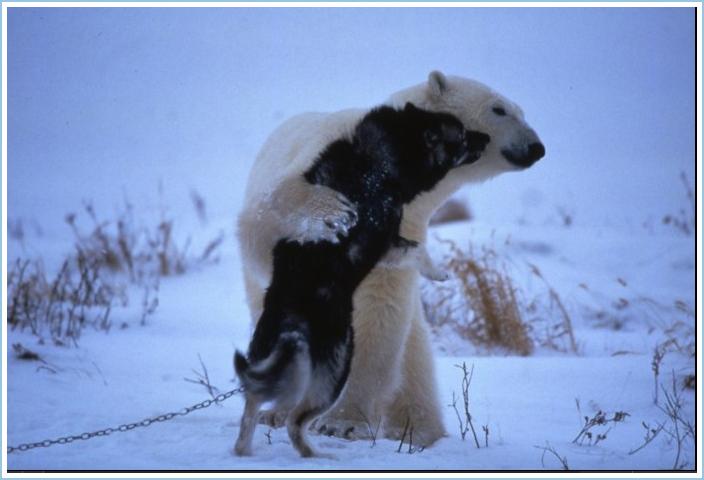
David Ehrenfeld

Five minutes of pure sanity

I can’t recall how I came across this wise Professor but it was in recent times.  Not going to say any more at this stage. Just watch the following.

There will be more from David Ehrenfeld over the coming weeks.

Humanity is on the march, earth itself is left behind.

David Ehrenfeld, The Arrogance of Humanism, 1978

Joseph Campbell interlude

Just ran out of time!

My apologies but events yesterday conspired to get in the way of me offering a more thoughtful article for today.  So I hope you will be happy with another video of Joseph Campbell.

For those wanting to explore more, this is the link to the Joseph Campbell Foundation.