Category: Communication

The healing power of dogs.

How dogs offer us humans health and happiness.

Many months ago, I was contacted by a Peter Bloch offering to write a guest post on the subject of the healing power of dogs.  Peter had read a post that I had published in July last year which prompted the email dialogue between us.

Not going to say much more at this stage except that today I am republishing that post from last July.  On Monday, I will introduce Peter and his guest post.  Then on Tuesday, I will speak of my own experiences both as entrepreneurial mentor and as a ‘customer’ of a wonderful psychotherapist back in Devon during 2007.  Hope that works for you.

So here’s that Learning from Dogs post.

000OOOooo

The bond between dogs and humans

Such a beautiful and mutually-important relationship.

I didn’t plan to write more about this subject thinking that my last two posts, Woof at the Door and Prof. Pat Shipman, more than covered the theme; indeed much more.

But then a flurry of other articles conspired to pass my desk.

In no particular order there was an article on the Big Think website, Do Dogs Speak Human?  As the article opened,

What’s the Big Idea?

Perhaps the better question is, do humans speak dog? Either way, the debate over whether language is unique to humans, or a faculty also possessed by wild and domestic animals from dogs to apes to dolphins, is an interesting one. The answer depends on exactly how we define “language,” and who’s doing the talking, says David Bellos, the Booker prize-winning translator.

The article includes this three-minute video,

and concludes,

Broadly, a language is a mode of expression. “The argument that only human language is language and that animal communication systems, however sophisticated they are — and some of them are quite sophisticated — are not languages because they consist of discrete signals is a circular argument,” he argues. “It’s a self-fulfilling thing. And I think we should be a little bit more interested in the complexity and the variability of animal communication systems and less rigid about this distinction between what is a language and what is not a language.”

For now, we’re happy with this:

The June 30th edition of The Economist had an article entitled, Can dogs really show empathy towards humans? (You may have to register (free) to view this.)  That report ends, as follows,

As they report in Animal Cognition, “person-oriented behaviour” did sometimes take place when either the stranger or the owner hummed, but it was more than twice as likely to occur if someone was crying. This indicated that dogs were differentiating between odd behaviour and crying. And of the 15 dogs in the experiment that showed person-oriented responses when the stranger cried, all of them directed their attention towards the stranger rather than their owner.

These discoveries suggest that dogs do have the ability to express empathetic concern. But although the results are clear enough, Dr Custance argues that more work needs to be done to be sure that such behaviour is true empathy. It is possible, she points out, that the dogs were drawing on previous experiences in which they were rewarded for approaching distressed human companions. Dog-owners, however, are unlikely to need any more convincing.

It was then an easy follow-up to that Animal Cognition article which is available online here; here’s the abstract,

Empathy covers a range of phenomena from cognitive empathy involving metarepresentation to emotional contagion stemming from automatically triggered reflexes.

An experimental protocol first used with human infants was adapted to investigate empathy in domestic dogs. Dogs oriented toward their owner or a stranger more often when the person was pretending to cry than when they were talking or humming. Observers, unaware of experimental hypotheses and the condition under which dogs were responding, more often categorized dogs’ approaches as submissive as opposed to alert, playful or calm during the crying condition. When the stranger pretended to cry, rather than approaching their usual source of comfort, their owner, dogs sniffed, nuzzled and licked the stranger instead.

The dogs’ pattern of response was behaviorally consistent with an expression of empathic concern, but is most parsimoniously interpreted as emotional contagion coupled with a previous learning history in which they have been rewarded for approaching distressed human companions.

It doesn’t get closer than this.

The fate of Europe!

A less than reverent view of the Euro.

This was sent to me by Richard Maugham from England.  Richard and I go back the thick end of 40 years or more.  He and I met when I was a salesman for IBM UK (Office Products Division) and Richard was a salesman for Olivetti UK.  Thus we were selling competitive products!

But that didn’t stop us from becoming great friends and remaining so ever since.  Indeed, Richard and Julie are out to see us in Oregon in just over 3 weeks time.

One of the bonds between Richard and me is a love for silliness and quirky humour.  Hence Richard sending me the following that, in turn, had been sent to him.

For those that are not familiar with the Blackadder comedy series on the BBC, more background provided later on.  Anyway, this is what I received from Richard.

oooOOOooo

The Euro according to Blackadder

blackadd

Baldrick: “What I want to know, Sir, is before there was a Euro there were lots of different types of money that different people used. And now there’s only one type of money that the foreign people use. And what I want to know is, how did we get from one state of affairs to the other state of affairs?”

Blackadder: “Baldrick. Do you mean, how did the Euro start?”

Baldrick: “Yes Sir”.

Blackadder: “Well, you see Baldrick, back in the 1980s there were many different countries all running their own finances and using different types of money. On one side you had the major economies of France, Belgium, Holland and Germany, and on the other, the weaker nations of Spain, Greece, Ireland, Italy and Portugal. They got together and decided that it would be much easier for everyone if they could all use the same money, have one Central Bank, and belong to one large club where everyone would be happy. This meant that there could never be a situation whereby financial meltdown would lead to social unrest, wars and crises”.

Baldrick: “But, Sir, isn’t this a sort of a crisis?”

Blackadder: “That’s right Baldrick. You see, there was only one slight flaw with the plan”.

Baldrick: “What was that then, Sir?”

Blackadder: “It was bollocks”.

oooOOOooo

blackadder
More about the Blackadder series can be read here, from which I republish:

Blackadder is the name that encompassed four series of a BBC 1 period British sitcom, along with several one-off instalments. All television programme episodes starred Rowan Atkinson as anti-hero Edmund Blackadder and Tony Robinson as Blackadder’s dogsbody, Baldrick. Each series was set in a different historical period with the two protagonists accompanied by different characters, though several reappear in one series or another, for example Melchett and Lord Flashheart.

The first series titled The Black Adder was written by Richard Curtis and Rowan Atkinson, while subsequent episodes were written by Curtis and Ben Elton. The shows were produced by John Lloyd. In 2000 the fourth series, Blackadder Goes Forth, ranked at 16 in the “100 Greatest British Television Programmes”, a list created by the British Film Institute. Also in the 2004 TV poll to find “Britain’s Best Sitcom”, Blackadder was voted the second-best British sitcom of all time, topped by Only Fools and Horses. It was also ranked as the 20th-best TV show of all time by Empire magazine.

Although each series is set in a different era, all follow the “misfortunes” of Edmund Blackadder (played by Atkinson), who in each is a member of a British family dynasty present at many significant periods and places in British history. It is implied in each series that the Blackadder character is a descendant of the previous one, although it is never mentioned how any of the Blackadders manage to father children.

There are many videos on YouTube of Blackadder sketches and it was a hard choosing what to include in today’s post.

See what you make of this:

Captain Blackadder is court-martialled for killing a pigeon and George provides counsel for the defence.

Future uncertainties!

Prediction is very difficult, especially if it’s about the future. Niels Bohr

I love this saying from Mr. Bohr and often repeat it, albeit at times with my own twist to it.  I was reminded of this uncertainty of the future from some comments to a recent post over at Lack of Environment.  The particular post was called Can technology save us? and was a reflection of Martin Lack, the blog’s author, watching a recent BBC Horizon special called Tomorrow’s World.  (There’s the YouTube of the broadcast at the end of this post.) Martin opened his post by saying:

I happened to stumble across a BBC TV Horizon special, entitled ‘Tomorrow’s World’ last Thursday.  It begins with a fascinating review of humankind’s history of – and propensity for – invention. It also explains some truly fascinating – and inspiring – developments in the spheres of space exploration, nanotechnology, biotechnology, and power generation.

In the introduction, the programme presenter and narrator Liz Bronnin explains how, after 100’s of thousands of years of technological stagnation, the fast-moving world of technological innovation is very definitely a modern invention.

Then a little later Martin goes on to say:

After about 32 minutes, Bronnin introduces the power of the Internet to promote innovation – crowd-sourcing research funding and the concept of open-source technology – the complete abrogation of intellectual copyright… It is a fundamental challenge to globalised Capitalism; but it may well be the solution to many of our problems…

However, to me, the final third of the programme is by far the most fascinating… It looks at the challenges of finding a replacement for fossil fuels. It provides a very clear message that this is a technological challenge driven by the reality of physics – not by ideology.

But, overall, Martin lets us know his perspective with his final paragraphs:

Re-engineering nature for our benefit will, without doubt, be very very useful. However, I still think the optimism of the comment at the very end of the programme “…I never worry about the future of the human race, because I think we are totally capable of solving problems…” is very unwise. This is because anthropogenic climate disruption is a problem that is getting harder to solve the longer we fail to address it effectively.

Bronnin concludes by saying that, “it is an exciting time to be alive…” However, I remain very nervous. This is because, as Professor Peter Styles of Keele University – a strong supporter of the hydraulic fracturing industry – recently acknowledged, it will be impossible for carbon capture and storage to remove enough CO2 from the atmosphere to prevent very significant changes to our climate. This is because of the collective hypnosis that deludes most people into seeing perpetual economic growth as the solution to all our problems.

In short, I am certain that technology alone cannot save us. In order to avoid the ecological catastrophe that all but the most ideologically-prejudiced and wilfully-blind can see developing all around us… we need to modify our behaviour: This primarily means that we need to acknowledge the injustice of a “use it up and wear it out” mentality and, as individuals, all learn to use an awful lot less energy.

Climate change “sceptics” have picked a fight with history and science – primarily with the concept of Entropy – and they will lose. The only question that remains is this: Are we going to let them put us all in (what xraymike79 recently called) ‘the dustbin of failed evolutionary experiments’.

Now Jean and I also watched the Horizon special and, to be perfectly frank, found it both uplifting and inspiring.  It seemed a great counter to the overwhelming volume of commentary these days along the lines of ‘The end of the world is nigh!‘ some of that coming from yours truly! That’s not to make light of the huge hurdles ahead.

But it was a couple of comments on Martin’s post from Patrice Ayme that got me thinking.  Here’s the exchange that went between Patrice and Martin following on from a comment from Thomas Foster.

Considering that it is technology which has enabled us to “conquer” nature and thus the degradation of the environment which is a consequence of that it seems most unlikely to this writer that the cause will also bring about a cure. Thomas Foster

—–

The genus Homo has been technological for 5 million years. Give or take two million. Homo is the cure for life. Patrice Ayme

—-

If we Homo Sapiens have been technological for 5 million years, we have spent most of that time being very unsuccessful; and have spent the rest being far too successful. Is there no scope for just living in harmony with our environment (as opposed to being at war with it)? Martin Lack

—-

Hominids have been masters of the environment for at least three million years. By a million years ago, only Homo was left (but for places like Flores). Dozens of megafauna species got annihilated. Homo’s technology has extended to the entire Earth for at least a million years. The Earth itself was turned into a tool. A tool we are not at war with, but that we use. Patrice Ayme

—-

A utilitarian attitude to Nature is one that does not recognise its inherent value (i.e. which it would have even if we did not exist). Seeing ourselves as superior to Nature rather than as part of it has resulted in our not living in harmony with it. This is, by definition, equivalent to being at war with Nature. QED. Refer: Nature is not your enemyMartin Lack

—-

Call it what you want, Martin. Man manipulates nature, and that nature one calls nature has not been “natural” for more than a million years. Except if one views man as part of nature! Patrice Ayme

Patrice is a very clear thinker even if, at times, pretty hard-hitting.  But this exchange confirmed in my mind that clearly looking out to the future must always be hard.  Most certainly in this period of mankind’s evolution predicting the future is especially difficult.  Hence my contribution to Martin’s post:

Jean and I watched the Horizon special a couple of evenings ago. To be honest, I’m not entirely sure what my overall thoughts are in response to your post, Martin. What does come to mind is that old saying, “Never underestimate the power of unintended consequences.

So it may be that we are at a particular point in time, or more likely an era, where seeing clearly into the future is challenging.

The one aspect of modern life that is a game-changer is what we are doing now. Sharing ideas and thoughts across a far-flung net. Not only as the Horizon programme illustrated but as ordinary people trying to make sense of the world.

These are incredibly uncertain times.  Undoubtedly not the first in man’s long history as an historian will explain (cue to Alex!).   But to all of us alive today, these are the most uncertain times we have ever experienced!

No wonder so many of us feel lost at times in today’s world.

Here’s that BBC Horizon, courtesy of YouTube.

I will close with this thought from one masterly ‘wordsmith’, William Wordsworth.

“Life is divided into three terms – that which was, which is, and which will be. Let us learn from the past to profit by the present, and from the present, to live better in the future.”

Shoulder to the wheel.

Today’s post is devoted entirely to a recent email received from Bill McKibben of 350.org

oooOOOooo

Dear friends,

Once a year or so, I write a piece that I really want people to read.

Last year it was an article called “The Terrifying New Math of Global Warming,” which helped fuel the divestment campaign that is now blanketing the country and even spreading overseas. Now I have a new long piece, also in Rolling Stone, called “The Fossil Fuel Resistance” that I was hoping you would read.

Here’s a quick summary from the article:

After decades of scant organized response to climate change, a truly powerful movement is quickly emerging, around the country and around the world. It has no great charismatic leader, and no central organization; it battles on a thousand fronts, many of them very local and small. But taken together, it’s now big enough to matter, and it’s growing fast.

So you could call it by many names. But for me it’s the Fossil Fuel Resistance.

I hope you’ll spread it around, because I think it will help people understand a few things about the climate movement.

First, it shows that we’re in a much bigger struggle than the fight against Keystone, crucial as that is. Across the country and around the world people are taking on the fossil fuel industry in remarkable ways that are starting to add up.

Second, it’s shows that we’re becoming a much broader movement tactically and organizationally than we’re used to thinking about.

The old-line environmental groups are playing their part, but powerful leadership is coming from all kinds of communities. There are a bunch of profiles that accompany the piece, and they focus on heroes from Indigenous nations, environmental justice organizations, and the clean tech industry, each of people doing amazing work.

What I hoped to do with this article is move past restating the problem, which I think most people understand, and show how we are working together towards solutions.

Those solutions take many forms, and I hope you’ll read about them and share the article around so that we can start to bring more people into this resistance movement.

It’s not all good news, of course. We’re still losing this fight, as the temperature rises. But I want everyone to know that it is going to be a real fight. This piece, I hope will help spread the word, and build our movement even bigger. Click here to read and share: 350.org/Resistance

We can’t outspend the fossil fuel barons, but we can out organize them, if we get to work.

Bill McKibben

P.S. Just a heads up that we’re planning a big push on sending comments to the State Dept. over the next few days. I wanted to make sure you knew that was coming, after these emails about new articles and films.

To the Sea of Cortez.

Journey to the Sea of Cortez.

John Steinbeck
John Steinbeck

I feel very guilty as I didn’t make a note of where I came across this film.  Whoever highlighted the film, thank you!  It’s truly beautiful.  So, please, settle yourself down and be enthralled.

In March 1940, the author John Steinbeck and his friend, marine biologist Ed Ricketts, sailed down the coast of California and Mexico to the Sea of Cortez. “The abundance of life here gives one an exuberance,” they wrote, “a feeling of fullness and richness.

Their stated purpose was to document the creatures that inhabit shallow waters and tide pools on the margins of the Sea of Cortez. But it became much more. In these mysterious, phosphorescent waters they sought an understanding of mankind’s relationship to the natural world and a wellspring of hope for a world headed toward war.

Looking beyond the events of the day, the two friends foresaw our rising impact on the oceans and the devastating impact that over fishing would have on this rich sea. And yet, in their journey, they encountered a periodic cooling of the eastern Pacific Ocean known as La Niña that can still set off an explosion of life.

Can the story of their journey inspire new efforts to preserve the Sea of Cortez? Down along the shores of western Mexico, the wind blows hot and dry. Beyond these barren landscapes, cold currents rush up from the deep and the ocean literally boils with life.

Following their journey down to the Sea of Cortez in March of 1940, John Steinbeck and Ed Ricketts searched for a way to describe what they saw. “Trying to remember this place,” they wrote, “is like trying to re-create a dream. It is fierce and hostile and sullen. The stone mountains pile up to the sky and there is little fresh water. But we know we must go back if we live, and we don’t know why.

The Sea of Cortez is one of the most diverse marine ecosystems on the planet. It’s shaped by the cool waters of the California Current flowing into the warm tropics and by a complex undersea terrain that rises up along a chain of islands and sea mounts. It was the shorelines, between the desert and the deep, that drew John Steinbeck, the author, and Ed Ricketts, a marine biologist and expert on coastal ecosystems.

Ricketts’ book, “Between Pacific Tides,” is a classic study of the inter-tidal zones of the California coastline and the myriad creatures that live in shallow pools, clinging to rocks to sift the rich nutrients carried in by the tides. Steinbeck and Ricketts sought to extend this work to the Sea of Cortez and to explore ideas at the core of their friendship. They shared a belief that man’s fate, like that of the animals they saw, is linked to the health of the natural world. [Ed. my emphasis]

Ricketts is said to have inspired some of Steinbeck’s most memorable characters, including Doc in Cannery Row, and the preacher Jim Casy in The Grapes of Wrath, published a year before their voyage. Set against the backdrop of drought and economic depression, the book describes the dustbowl conditions that gripped the American heartland in the 1930’s. “Now the wind grew strong and hard and it worked at the rain crust in the corn fields. Little by little the sky was darkened by the mixing dust, and carried away. The wind grew stronger. The rain crust broke and the dust lifted up out of the fields and drove gray plumes into the air like sluggish smoke.

In most years, southerly winds carry moisture into the midsection of the country from the Gulf of Mexico. In the 1930’s, according to a recent NASA study, those winds were diverted by a build up of warm water in the Western Atlantic and by a periodic cooling of the Eastern Pacific known as La Niña. This combination robbed the region of rain.

By the time Steinbeck and Ricketts began their journey, the historic backdrop had shifted to war. Fighting had engulfed Europe and was spreading to the western Pacific. While the United States was still officially neutral, American companies had begun supplying arms to the allied effort. In early 1940, John Steinbeck used money he earned from “The Grapes of Wrath” to hire a sardine boat called the Western Flyer. From Monterrey, California, he, his wife Carol, Ed Ricketts and a four-man crew headed south, charting a course along the Mexican coastline.

By all accounts, the journey was filled with adventure, camaraderie, and a sense of wonder at the diversity of living things they encountered. Over a six-week period, the two friends wrote journal entries, took notes on conversations, and catalogued specimens they collected on the way. They compiled these writings into a book: “Sea of Cortez, A Leisurely Journal of Travel and Research,” later changed to “The Log From the Sea of Cortez.”

The work amounts to a search for a way to understand nature, and humanity at large, in a world steadily coming apart at the seams.

Ed Ricketts
Ed Ricketts

The film was released last Feb 28, 2013. Directed by Thomas Lucas, the Producers were John Friday, Thomas Lucas and Adam Ravetch.

oooOOOooo

Will end with a couple of personal reflections.  First is that when I was invited out to Mexico for Christmas 2007 by Suzann and Don, I travelled to San Carlos, Mexico on the Eastern shores of the Sea of Cortez.  San Carlos is a little under 300 miles south of the Arizonan border with Mexico and was where Jean had been living for many years.  Meeting Jean changed my life forever!  Here’s a picture of the Sea of Cortez through the rear door of Jean’s house in San Carlos.

Not the longest walk in the world to the beach!

Second reflection is about dogs. Jean had spent many years rescuing Mexican feral dogs and finding homes for them; hundreds of them over her time in San Carlos.  We brought 13 of those dogs with us when we moved to Arizona and 9 came to Oregon.  Below is Hazel, one of the five remaining Mexican ‘rescue’ dogs that are still with us in Oregon.

Hazel doing what she does so well - sleeping.
Hazel doing what she does so well – sleeping.

Fancy lending a hand?

A new animated short film from Lucas Martell, the creator of Pigeon: Impossible.

Back on the 4th December, 2011 I published a post under the title of Pigeon: Impossible.  Here’s some of what I wrote:

A truly remarkable example of the level of film animation being produced.

The second item that came to me from Bob D. (yesterday’s is here) has clearly done the rounds; the YouTube video has been watched nearly 7 million times!  But if you haven’t seen this short film, just over 6 minutes long, then do watch it.  It shows just how close to reality film animation has become!  The story behind the film is from here, reproduced below.

Pigeon: Impossible is the tale of Walter, a rookie secret agent faced with a problem seldom covered in basic training: what to do when a curious pigeon gets trapped inside your multi-million dollar, government-issued nuclear briefcase.

The film took nearly 5 years to complete and is the first attempt at animation by writer/director Lucas Martell: “When the project started, it was mostly an excuse to learn 3D animation, but by the end of the project I had spent so much time reworking and polishing the story that I just wanted people to laugh.

The end-result is a hilarious 6-minute romp through the streets of Washington D.C. as our hero fights to save himself, and the world from the chaos reigned down by a hungry pigeon. Breathtaking visuals and a sweeping soundtrack showcase the work of nearly one-hundred talented artists and musicians, and the film stands as a testament to what can be accomplished by a team of dedicated volunteers working for the love of their craft.

Personally, I think that last sentence is still an understatement.  Just watch this – and be amazed.

If you haven’t seen the film then you can watch it here.

Anyway, yesterday Lucas Martell left a comment to that post, as follows:

Lucas Martell
Lucas Martell

Hi, I’m the creator of Pigeon: Impossible and am so glad you enjoyed the film! We’re trying to finish our next animated short, and would love it if you could check it out and help us spread the word.

Thanks!

It seemed a worthwhile thing to do just that.  That next animated short is called The OceanMaker. Enjoy 4 minutes of it:

This is the website associated with the venture that explains more and also gives details of the way you can financially support the project, starting from as little as $10.  The website is great fun! (I couldn’t resist republishing the following)

oooOOOooo

About the Film

The OceanMaker is a 9-minute animated short film that takes place after Earth’s oceans have disappeared. It tells the tale of one courageous pilot who fights against vicious sky pirates for control of the last remaining source of water: the clouds.

OceanMaker1

From a visual standpoint, we’re steering away from the air pirates often found in steampunk and going straight-up “Mad Max” in the sky. The film is packed with old, beat-up planes that have been cobbled together from spare parts found in airplane graveyards.

OceanMaker2

Tonally, The OceanMaker is filled with exciting action, but the ending is emotional and powerful in a way that even feature-length films rarely achieve. The film also contains no dialogue, which means that the visuals and soundtrack need to be top notch in order to tell this story properly.

Finally, this film is unique in that it’s a complete story which stands on its own as a self-contained short film, but it’s also part of a even larger, more epic tale. Contributing to this project means a double dose of good karma, as you’re not only helping us complete the short, you’re getting us one step closer to making the feature! Our sights are set high and it’s going to be an amazing ride. We hope you’ll come along and share the adventure with us!

Goals

  • $10,000 – We can finish the models! – At the moment we have our hero models finished, but the story requires several other assets in order to set up the world and show how the loss of the oceans has affected life on earth. At $10,000, we’ll be able to bring on two model/texture artists to finish these assets.
  • $20,000 – We can finish the animation! – Animation is about 70% completed, but the remaining shots are the most challenging ones in the film. We’ll need two animators to bring these awesome shots to life!
  • $30,000 – We can finish the lighting! – Lighting and rendering are what make things pretty. It’s also a very technically challenging process, with each frame taking about an hour to render. At 24 frames per second, that’s just under 13,000 frames!
  • $40,000 – We can finish the film! – The last major step is the effects. In a word: clouds. They’re very tough to do right, and they’re pretty important for this whole story to work. Plus, these aren’t just static clouds in the background. We’re flying through them, scooping them up and making them grow!
  • $50,000 – Post Production! – This first stretch goal would allow us to hire a professional sound designer, as well as doing the final mix, color correction and output in a proper studio. This is crucial in order to submit the film to festivals and put it up on the big screen. If we reach this stretch goal, then all donors will also recieve a PDF copy of the script!
  • $60,000 – Live orchestra! – With this stretch goal, we could record Chris Reyman’s amazing score with a real live orchestra. This would be HUGE, as the film is extremely reliant on music, and the production value will increase dramatically. All donors at every level would receive a DRM-free copy of the score.
  • $70,000 – Expanded cast! – One thing that will make the film even better, is a second character. We already have a temporary version of that character in our animatic, but she’s very difficult to create and quite expensive for the few shots she’s in. However, that small addition would take the emotion and complexity of the story to a whole new level.
  • $80,000 – $100,000 The OceanMaker extended universe – As you can imagine, the OceanMaker is a really BIG story… too big to fit entirely within a short, but we’ve done an excellent job capturing the essence of it in a way that feels complete and stands on its own. However, if we hit $80,000, we can start to explore this broader story. This would be in the form of a graphic novel that delves deeper into the world both before and after the short film. The higher into this range we get, the longer this graphic novel could be and the more of the expanded story we could tell. Donors at every level would get a free digital copy of the graphic novel.
  • $100,000 and up – Feature!!! – OK, I realize we’re really reaching for the stars here, but you don’t do something like this without being a dreamer. If we somehow manage to reach the 100k mark, we’ll be able to start working on the feature film! It would be based in part on the content from the extended universe. The first step would be a treatment, then a script, then visual development and finally an animatic. Should we be able to complete any of these stages with money raised from this campaign, all donors will receive a digital copy of the completed work. You can take a sneak peek or remain unspoiled, but its the least we can do if your hard-earned dollars end up funding development of the feature.

oooOOOooo

So I hope you can contribute whatever you can afford.

Oh, and I should make it clear that neither Jean nor I have any financial or commercial connection with the project.

What part of the argument are you missing?

Sometimes one just scratches the head and wonders!

In yesterday’s post, I wrote, “strongly resonated with a recent item on Peter Sinclair’s excellent blog Climate Denial Crock of the Week …”

Here is that item, republished with Peter’s kind permission:

oooOOOooo

Global Warming Continues to Accelerate

March 25, 2013

slide12

Skeptical Science:

A new study of ocean warming has just been published in Geophysical Research Letters by Balmaseda, Trenberth, and Källén (2013).  There are several important conclusions which can be drawn from this paper.

  • Completely contrary to the popular contrarian myth, global warming has accelerated, with more overall global warming in the past 15 years than the prior 15 years.  This is because about 90% of overall global warming goes into heating the oceans, and the oceans have been warming dramatically.
  • Some recent studies have concluded based on the slowed global surface warming over the past decade that the sensitivity of the climate to the increased greenhouse effect is somewhat lower than the IPCC best estimate.  Those studies are fundamentally flawed because they do not account for the warming of the deep oceans.
  • The slowed surface air warming over the past decade has lulled many people into a false and unwarranted sense of security.

The main results of the study are illustrated in its Figure 1.

Figure 1: Ocean Heat Content from 0 to 300 meters (grey), 700 m (blue), and total depth (violet) from ORAS4, as represented by its 5 ensemble members. The time series show monthly anomalies smoothed with a 12-month running mean, with respect to the 1958–1965 base period. Hatching extends over the range of the ensemble members and hence the spread gives a measure of the uncertainty as represented by ORAS4 (which does not cover all sources of uncertainty). The vertical colored bars indicate a two year interval following the volcanic eruptions with a 6 month lead (owing to the 12-month running mean), and the 1997–98 El Niño event again with 6 months on either side. On lower right, the linear slope for a set of global heating rates (W/m2) is given.

The Data

In this paper, the authors used ocean heat content data from the European Centre for Medium-Range Weather Forecasts’ Ocean Reanalysis System 4 (ORAS4).  A ‘reanalysis’ is a climate or weather model simulation of the past that incorporates data from historical observations.  In the case of ORAS4, this includes ocean temperature measurements from bathythermographs and the Argo buoys, and other types of data like sea level andsurface temperatures.  The ORAS4 data span from 1958 to the present, and have a high 1°x1° horizontal resolution, as well as 42 vertical layers.  As the authors describe the data set,

“ORAS4 has been produced by combining, every 10 days, the output of an ocean model forced by atmospheric reanalysis fluxes and quality controlled ocean observations.”

Accelerated Global Warming

As illustrated in Figure 1 above, the study divides ocean warming into three layers for comparison – the uppermost 300 meters (grey), 700 meters (blue), and the full ocean depth (violet).  After each of the Mt. Agung, Chichón, and Pinatubo volcanic eruptions (which cause short-term cooling by blocking sunlight), a distinct ocean cooling event is observed in the data.  Additionally, after the very strong El Niño event of 1998, a cooling of the upper 300 and 700 meters of oceans is visible as a result of heat being transfered from the surface ocean to the atmosphere.

One of the clearest features in Figure 1 is the rapid warming of the oceans over the past decade.  As we have previously discussed, the warming of the shallower oceans has slowed since around 2003, which certain climate contrarians have cherrypicked to try and argue that global warming has slowed.  However, more heat accumulated in the deeper oceans below 700 meters during this period.  The authors describe the ocean warming since 1999 as,

“the most sustained warming trend in this record of OHC.  Indeed, recent warming rates of the waters below 700m appear to be unprecedented.”

Their results in this respect are very similar the main conclusion of Nuccitelli et al. (2012), in which we noted that recently, warming of the oceans below 700 meters accounts for about 30% of overall ocean and global warming.  Likewise, this new study concludes,

“In the last decade, about 30% of the warming has occurred below 700 m, contributing significantly to an acceleration of the warming trend.”

The warming of the oceans below 700 meters has also been identified by Levitus et al. (2012) and Von Schuckmann & Le Traon (2011), for example.

Some ‘Missing Heat’ Found

Kevin Trenberth past comments about ‘missing heat’ drew considerable attention.  The phrase refers to the fact that the heat accumulation on Earth since about 2004 (e.g. from warming oceans, air, and land, and melting ice) that instruments were able to measure could not account for the amount of global heat accumulation we expected to see, based on the energy imbalance caused by the increased greenhouse effect, as measured by satellites at the top of the Earth’s atmosphere.

These new estimates of deeper ocean heat content go a long way towards resolving that ‘missing heat’ mystery.  There is still some discrepancy remaining, which could be due to errors in the satellite measurements, the ocean heat content measurements, or both.  But the discrepancy is now significantly smaller, and will be addressed in further detail in a follow-up paper by these scientists.

So what’s causing this transfer of heat to the deeper ocean layers?  The authors suggest that it is a result of changes in winds related to the negative phase of the Pacific Decadal Oscillation and more frequent La Niña events.

Good News for Climate Sensitivity?  Probably Not

Recently there have been some studies and comments by a few climate scientists that based on the slowed global surface warming over the past decade, estimates of the Earth’s overall equilibrium climate sensitivity may be a bit too high.  However, as we previously discussed, these studies and comments tend to neglect the warming of the deep oceans below 700 meters.

Does the warming of the deep ocean support these arguments for lower equilibrium climate sensitivity?  Probably not, as Trenberth explained (via personal communication),

“it contributes to the overall warming of the deep ocean that has to occur for the system to equilibrate.  It speeds that process up.  It means less short term warming at the surface but at the expense of a greater earlier long-term warming, and faster sea level rise.”

So the slowed warming at the surface is only temporary, and consistent with the ‘hiatus decades’ described by Meehl et al. (2011).  The global warming end result will be the same, but the pattern of surface warming over time may be different than we expect.

The real problem is that in the meantime, we have allowed the temporarily slowed surface warming to lull us into a false sense of security, with many people wrongly believing global warming has paused when in reality it has accelerated.

Global Warming Wake Up Call

Perhaps the most important result of this paper is the confirmation that while many people wrongly believe global warming has stalled over the past 10–15 years, in reality that period is “the most sustained warming trend” in the past half century.  Global warming has not paused, it has accelerated.

The paper is also a significant step in resolving the ‘missing heat’ issue, and is a good illustration why arguments for somewhat lower climate sensitivity are fundamentally flawed if they fail to account for the warming of the oceans below 700 meters.

Most importantly, everybody (climate scientists and contrarians included) must learn to stop equating surface and shallow ocean warming with global warming.  In fact, as Roger Pielke Sr. has pointed out, “ocean heat content change [is] the most appropriate metric to diagnose global warming.”  While he has focused on the shallow oceans, actually we need to measure global warming by accounting for all changes in global heat content, including the deeper oceans.  Otherwise we can easily fool ourselves into underestimating the danger of the climate problem we face.

oooOOOooo

“Global warming has not paused, it has accelerated.”

Now I should end it there.  But I can’t!

American readers worried about the drought? Do watch this short video from Paul Douglas. (Apologies for the ad. at the start.)

For worldwide readers who have seen the massive changes in ‘normal’ weather this winter, take a look at this, first published on the NASA Earth Observatory website:

arctic_oscillation_nasa_march_2013

arcticoscillation_2013

While a high-pressure weather system brought warmer than normal temperatures to Greenland and northern Canada in March 2013, much of North America, Europe, and Asia shivered through weeks of unseasonably cool temperatures. The contrasting temperatures are no coincidence: the same unusual pressure pattern in the upper atmosphere caused both events.

Atmospheric pressure patterns are constantly in flux, as air masses of differing temperatures and densities move around the skies. One key measure of pressure that meteorologists track closely is known as the Arctic Oscillation (AO) index, the difference in relative pressure between the Arctic and the mid-latitudes. Changes in the AO have can major impacts on weather patterns around the world.

When the AO index is in its “positive” phase, air pressure over the Arctic is low, pressure over the mid-latitudes is high, and prevailing winds confine extremely cold air to the Arctic. But when the AO is in its ”negative“ phase, the pressure gradient weakens. The pressure over the Arctic is not as low and pressure at mid-latitudes is not as high. In this negative phase, the AO enables Arctic air to flow to the south and warm air to move north.

In late March, the AO dropped as low as -5.6. (See this chart published by the Washington Post’s Capital Weather Gang to see how this compares with other periods when AO values reached record-low levels).

The temperature anomaly map above, based on data from the Moderate Resolution Imaging Spectroradiometer (MODIS) on NASA’s Aqua satellite, shows how this affected temperatures in the Northern Hemisphere. The map displays land surface temperature anomalies between March 14–20, 2013, compared to the same dates from 2005 to 2012. Areas with above-average temperatures appear in red and orange, and areas with below-average temperatures appear in shades of blue. Much of Europe, Russia, and the eastern United States saw unusually cool temperatures, while Greenland and Nunavut Territory were surprisingly warm for the time of year.

Many parts of the Northern Hemisphere saw near record-breaking cool temperatures as the value of the AO fell. The United Kingdom experienced its 4th coldest March since 1962. In late-March, two-thirds of weather stations in the Czech Republic broke records. Germany saw its coldest March since 1883. And Moscow had its coldest March since the 1950s.

NASA Earth Observatory image by Jesse Allen and Robert Simmon, using MODIS data from the Land Processes Distributed Active Archive Center (LPDAAC). Arctic Oscillation data from the NOAA National Weather Service Climate Prediction Center. Caption by Adam Voiland.

oooOOOooo

Sorry, I know I went on a bit!

2020 vision

A moving, sensitive video about the Arctic.

I won’t let on why I called this post ‘2020 vision’ but if you watch the video below to just before the 7-minute mark the use of the number 2020 will become clear.

This video came to my attention from a recent post on Climate Crocks.  It’s a strongly powerful message about the changes going on in Arctic region and the profound effect those changes will have on the rest of the planet.  Indeed, many experiencing the recent weather in North-West Europe will amend the future tense of my sentence to present tense!

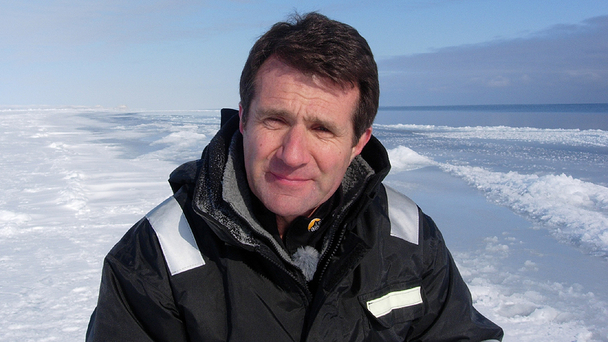
You can read more here about Professor Ken Dunton at the University of Texas where he is Professor, Department of Marine Science.

Professor Dunton
Professor Dunton


He is the sort of person that we should be listening to very carefully as the world changes in ways not seen for tens of thousands of years.

Case study?

Exquisitely lovely photograph.

Remember that wonderful picture of the young child teaching the dog to read.   Yet another beautiful picture found by Chris Snuggs on Facebook.

If only I could think of a neat caption!

Unplanned intermission!

Apologies for the silence!

Dear subscribers and readers,

After a number of days of intermittent service, the relay unit on a nearby mast that feeds the internet service to our house finally failed around noon, US Pacific Time, last Tuesday.

There is a temporary fix in place and tomorrow a new voltage transformer will be installed; that being the unit that failed, closely followed by the failure of the back-up unit.

Inevitably, it is going to take me 24 hours to get back into the swing of Learning from Dogs but at least you know why it was so quiet.

Best wishes,


Paul


p.s. the rest was lovely 😉