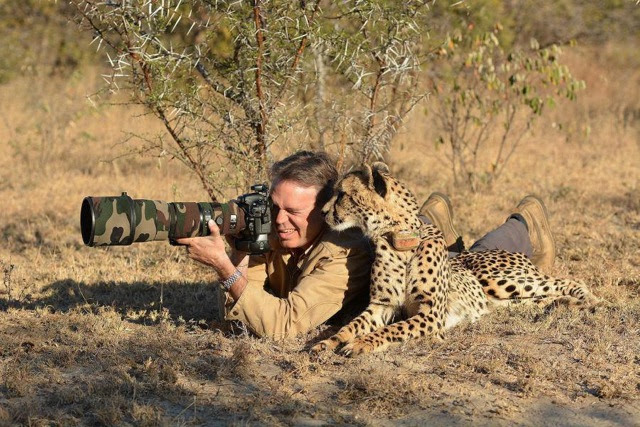
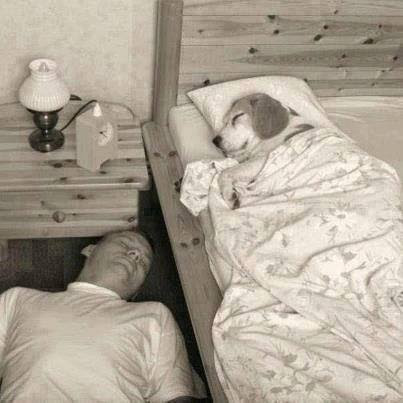
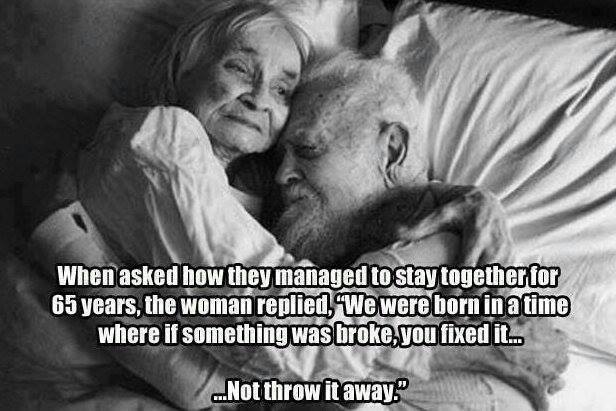
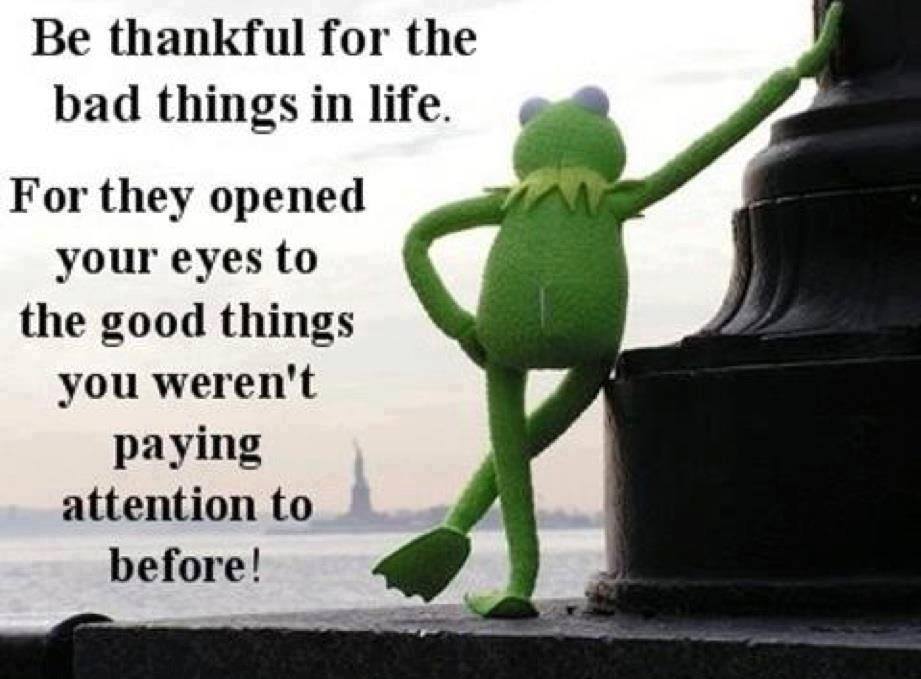
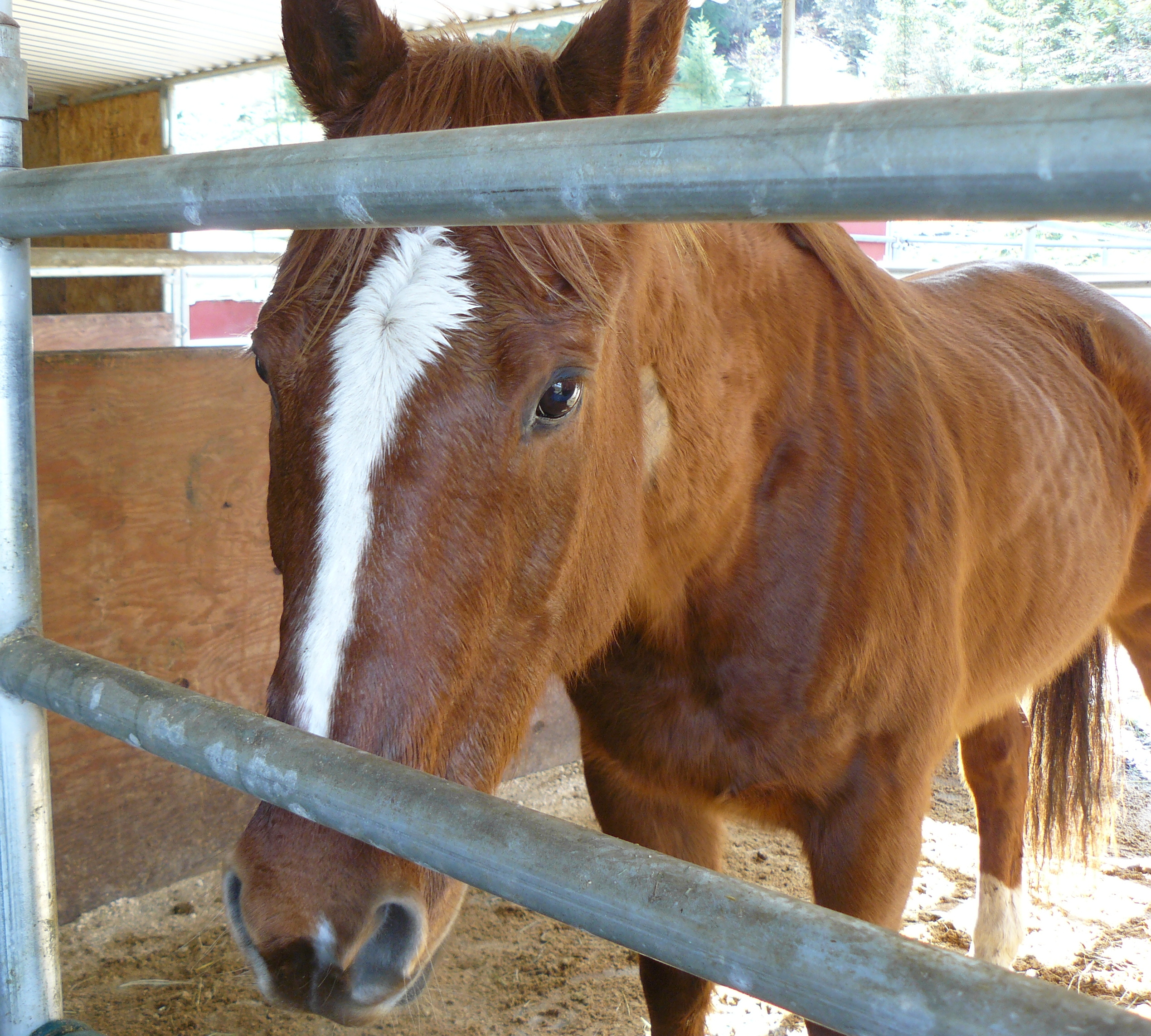
The two previous sets may be linked to via here. Bob D., who sent them to me, will be delighted with the number of comments and ‘Likes’. Fittingly, it’s dear Capt. Bob’s birthday today!
oooo
oooo
oooo
oooo
oooo
oooo
oooo
oooo
ooOOoo
Going to close today’s picture parade by adding a couple of pictures recently seen on Naked Capitalism. Each day Yves inserts an ‘antidote du jour’ and in the last week two of them were so wonderful that they just had to be shared with you.
Regular followers know that many of the items that get published here on Learning from Dogs are as a result of followers sending me stuff.
No less so than a recent item from Suzann where in a short email she included the link to a video.
Watch the video first.
I’m sure, like me, you were intrigued to find the background story. The YouTube page offers that background.
Elk vs. Photographer | Great Smoky Mountains National Park
Published on Nov 12, 2013
Update: I’ve been in contact with the photographer in the above video and we would both like to issue a statement regarding the news of the National Park Service’s decision to put the elk down. Vince M Camilo.
My statement:
I am deeply saddened by the fate of the elk. It has certainly pulled a black cloud over this whirlwind “viral video” experience.
I spoke to the reporter who broke the story and she assured me the decision was based on a pattern of aggressive behavior that began prior to the incident documented in this video. The behavior was the result of visitors feeding the elk and conditioning them to seek food from humans. This video only serves as an example of the elk’s dangerous behavior, not an impetus to it.
Again, it brings me great sadness to learn of this beautiful animal’s demise and the unfortunate circumstances surrounding it. I’m looking into a destination for proceeds from this video to help the NPS educate visitors on the dangers and consequences of feeding wildlife.
I also want to be clear that James, the photographer, was not complicit in a behavior that led to the elk’s demise, but rather was made an example of the result of such behaviors. The elk approached him from behind, likely looking for food as he was conditioned to do.
Statement from James (the photographer):
I love and respect animals and that’s why I photograph them and don’t hunt them. I am deeply hurt by the loss of such a beautiful creature that in its own way bonded with me. I looked forward to watching him grow to a mature bull as the years passed.
I’m truly heartbroken to know he is gone.
Original video description:
While photographing elk at sunrise in the Cataloochee Valley of Great Smoky Mountains National Park I turned around to see what appeared to be just a curious young bull sniffing a photographer’s camera. I snapped a few frames of the apparent harmless encounter.
But the elk became more interested in making trouble than simply the scent of a camera. He started physically harassing the photographer, escallating to full on head-butts.
I quickly switched the camera to video and let it roll (much of the time wondering when I should seriously consider intervening).
Most people who see this ask why the photographer seems to just take the abuse. I asked him in an email what was going through his head. This is his response:
“My first thoughts were “wow, he’s getting pretty damn close here.” But I’ve been up close before without incident. I hoped being still and passive would see him pass on. When he lowered his antlers to me, I wanted to keep my vitals protected and my head down. I felt that standing up would provoke him more and leave me more vulnerable to goring. I think that while protecting myself with my head down, having my head down was a signal that I was rutting with him. I was concerned at first, but when he started rearing back and lunging at me later on, I got scared and pissed off. That’s when I wagged my finger at him to cut that shit out. I was relieved to see the Ranger coming.
So I guess at some point if the Ranger hadn’t of pulled up, I would have had to disengage the best I could. I’ve joked with my friends that at least he took me for a buck and not a cow!”
This video is managed by Newsflare. To use this video for broadcast or in a commercial player email newsdesk@newsflare.com or call +44 (0)843 2895191.
“That’s why I photograph them and don’t hunt them.” Clearly, if I was to be objective in this post I would have to seek a explanation from the National Parks Service as to why the Ranger thought it necessary subsequently to kill the elk. You can tell that I am more than saddened by the outcome.
“Study nature, love nature, stay close to nature. It will never fail you.”Frank Lloyd Wright.
Until we learn that we are part of the natural order, that we don’t stand above it, then there is little hope for humanity.
Reason I state that is, as of yesterday morning, some 19,070,066 viewings of the following video had taken place.
But so what!
That number shows that despite the advertising insertions, despite the video promoting a commercial concern at the close, there are plenty of us who want to be reminded of the power of words.
Whatever words we utter should be chosen with care
for people will hear them and be influenced by them
for good or ill.
Buddha.
Footnote:
Jean and I were pottering around yesterday afternoon getting everything ready for Ranger’s arrival planned for Tuesday. In the back of my mind was some self-criticism for just sticking today’s post up in front of you, in the sense that it was just too easy. Not that the message isn’t powerful but does it relate to the essence of this blog – exploring what we can learn from dogs?
Then it struck me as blindingly obvious! Of all the things that dogs offer us humans, the one key aspect of their integrity is their unconditional love. The way that dogs love us acknowledges our existence at a ‘being-to-being’ level.
That’s the power of that short video. That the passing lady stopped and acknowledged the existence of the blind beggar-man.
Tried to find more background information but the best I could do was from here:
This is Sqwark the Australian Magpie, and Whiskey and the dog and they are the best of friends! Sqwark is Whiskey’s friend, not a chew toy. It may look rough, but they are just playing like they do all the time and having fun.
In addition, there was a comment on the YouTube page:
The “grey back” is an indication that it’s a juvenile. When it’s an adult, the grey bit will be snowy white.
Wherever you are in the world, have a peaceful and fun-loving day!
Or, perhaps I should have written that sub-heading, “Adding a gloss to what are mostly bright days!”.
What on earth am I rabbeting on about?
From time to time on Learning from Dogs I have touched on the topic of democracy. The most recent post of any relevance was on the 27th January this year in a post called Unconditional love. In essence that blog post was recording an email exchange between Martin Lack, Chris Snuggs and Patrice Ayme. Let me reproduce a part of that ‘discussion’:
Paul: Chris/Martin, To my way of thinking, there is a more fundamental issue at work. That is the corrupting effect of power. I’m certain you know the famous saying. Thus whatever fine motives propel a person to enter politics, that person seems unable to avoid the call of power and its corrupting effect. The only hope is that key countries, and none so key as the USA, evolve a better, more representative, political process. Otherwise, I fear for the coming years.
Patrice: I agree with Paul 100%. I saw the call of power. Unimaginable. People just get insane. There are also filtering systems to insure they get that way (it starts right away with one week retreats in extremely posh resorts; does not matter if you are capitalist, socialist, blueist, reddist, ecologist, independentist, etc.).
Chris: Agreed. It has been clear time and time again throughout history. Well, so much is obvious, but WHAT TO DO about it?
A) We must end the practice of having career politicians: you serve a maximum of TEN years, at the end of which you go.
B) Inherited wealth allowing the building up of immensely powerful family dynasties over generations must be ended. It is simply untenable. The rich-poor gap is getting obscene everywhere, and money is of course power. My “Abolish inheritance” idea will be wildly unpopular because we are naturally acquisitive and “greedy” and of course would hit those with most to lose who also therefore have the most power.
Patrice: With all due respect, Chris and Martin sound rather naïve… Huge wealth and power is where it’s at. And it attracts to politics first, foremost, and soon uniquely, those it attracts most, namely the basest sort.
Without in any way of knowing in a reliable manner, as in statistically reliable, the attitudes of folk, nonetheless there is no question that a huge number of the ordinary folk that live around us here in Merlin, Joesephine County, Oregon and others that one meets in the course of being ‘out and about’ are worried; frequently deeply worried.
Worried about the “Huge wealth and power ..” and the gross inequalities that flow from that.
So with that in mind, consider the pleasant surprise offered me when I read the day’s roundup from the Permaculture Research Institute email distribution and it included:
The Missing Part of the Internet – Collaborative Decision-Making Made Easy with Loomio
The world needs a better way to make decisions together
“The new era of digital democracy is one source of hope. New formats for web-based participation, like Loomio, and enablers of grassroots engagement… are flourishing.” —The Huffington Post
Democracy isn’t just about politics — it’s people getting together and deciding how things should be. It’s a skill we can practice with people wherever we are: in our workplaces, our schools, and our communities.
Loomio is a user-friendly tool for collaborative decision-making: not majority-rules polling, but actually coming up with solutions that work for everyone. We’re a small team in New Zealand, and we’ve built a prototype that people are already doing great things with. Now we’re crowdfunding so we can build the real thing: a new tool for truly inclusive decision-making.
It was but a hop and a skip to go to the Loomio website and read:
The world needs a better way to make decisions together.
Help us build it.
Loomio is free and open software for anyone, anywhere, to participate in decisions that affect them
and then with a further mouse-click on the Crowdfunding link to read:
THE WORLD NEEDS A BETTER WAY TO MAKE DECISIONS TOGETHER.
Democracy isn’t just about politics – it’s people getting together and deciding how things should be. It’s a skill we can practice with people wherever we are: in our workplaces, our schools, and our communities.
Loomio is a user-friendly tool for collaborative decision-making: not majority-rules polling, but actually coming up with solutions that work for everyone. We’re a small team in New Zealand, and we’ve built a prototype that people are already doing great things with. Now we’re crowdfunding so we can build the real thing: a new tool for truly inclusive decision-making.
At this point, I should declare an involvement. Jean and I decided to donate a modest amount. Thus it is not from an impartial position that I close today’s post with the following video. Bet you will be impressed!
If you enjoyed that video then do watch the following TED Talk.
Published on Aug 4, 2013
Ben Knight is part of a cooperative social enterprise building Loomio, an online tool for collaborative decision-making being used by thousands of people in more than 20 countries. Ben will be picking through ideas around how technology can enable everyday democracy.
(And a big thanks to Dan Gomez for sending it my way.)
ooOOoo
Went Fishing, Caught 4 Deer
A once in the history of mankind kind of thing. The Best Day Of Fishing Ever!
Some fishing stories are a little hard to believe but this guy has pictures to prove his story. Like me, you will heard of salmon jumping into boats, but never anything quite like this…
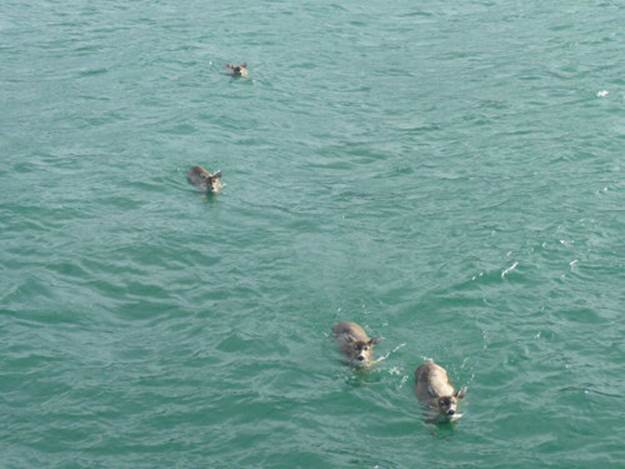
Tom Satre told the Sitka Gazette that he was out with a charter group on his 62-foot fishing vessel when four juvenile black-tailed deer swam directly toward his boat.
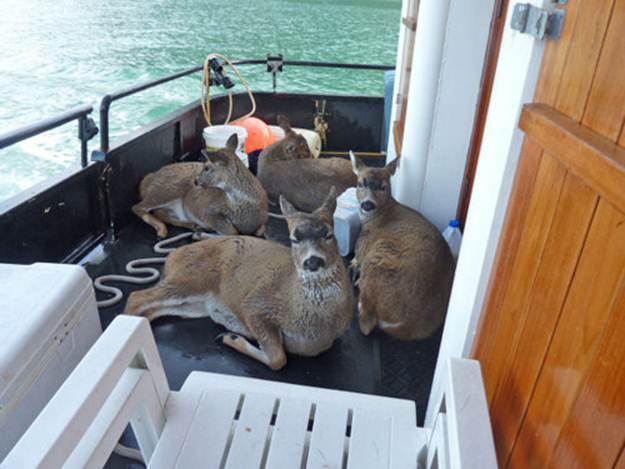
Once the deer reached the boat, the four began to circle the boat, looking directly at us. We could tell right away that the young bucks were distressed. I opened up my back gate and we helped the typically skittish and absolutely wild animals onto the boat. In all my years fishing, I’ve never seen anything quite like it! Once on board, they collapsed with exhaustion, shivering.
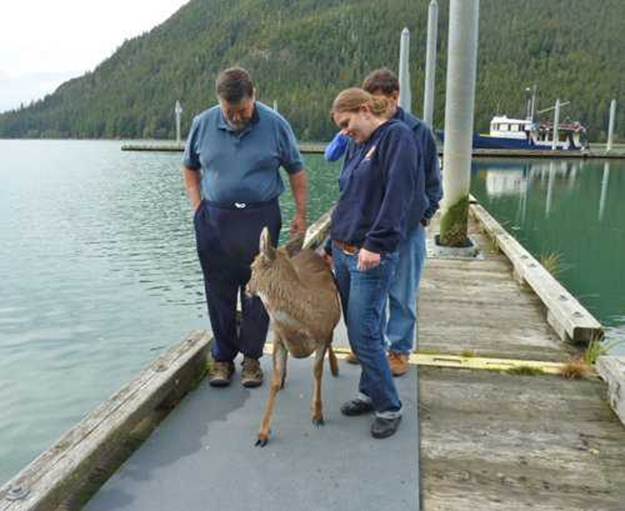
This is a picture I took of the rescued bucks on the back of my boat, the Alaska Quest. We headed for Taku Harbour. Once we reached the dock, the first buck that we had pulled from the water hopped onto the dock, looked back as if to say ‘thank you’ and disappeared into the forest. After a bit of prodding and assistance, two more followed, but the smallest deer needed a little more help.
This is me carrying the little guy.
oooo
My daughter, Anna, and son, Tim, helped the last buck to its feet. We didn’t know how long they had been in the icy waters or if there had been others who did not survive. My daughter later told me that the experience was something that she would never forget, and I suspect the deer felt the same way as well!”
“Kindness is the language the blind can see and the deaf can hear.” – Mark Twain
Story dated October, 2010
ooOOoo
I have no idea if it is a true story, although the photographs suggest it is, but so what! Any reminder of how precious our wild life is will always be welcomed on Learning from Dogs!
After the run of eye-wateringly beautiful pictures of dogs and small children, the third and final set being a week ago, I was gently panicking as to how to follow that up. Then dear friend, Bob Derham, came to the rescue, the first seven of which are offered today.
Never a day where there isn’t something new to learn; and an opportunity to make a difference.
What prompted the heading and sub-heading of today’s post?
Well, I’ll tell you (you knew I was going to, didn’t you!)
I have mentioned Melinda Roth before on Learning from Dogs, most recently on February, 20th in a post called Oregon wolves, and book writing.
I have also previously mentioned Strawberry Mountain Mustangs back on the 18th February, in a post called The lone Ranger. That was where we spoke of visiting Darla and Troy who own Strawberry Mountain Mustangs, near Roseburg in Oregon and coming to the decision, the very happy decision, to adopt Ranger; whom we hope to welcome to our home in Merlin in about 10 days time.
Ranger
Anyway, Darla was made aware of Melinda’s blog, Anyone Seen My (BLEEP)ing Horse? and left the following comment to one of Melinda’s posts, that comment from Darla being reproduced in full. Please read and absorb Darla’s comments because of the power of her words in relation to saving horses. Plus, later on there’s a plea from me for a competent web-programmer who could help Darla. But, please read on:
Hello Melinda!
What a wonderful blog… there are no words, but sometimes I guess when a mutual passion is shared, you don’t necessarily need them, do you? Thank you for sharing this.
It’s been a great honor to meet Paul & Jean, and we are working toward getting Ranger delivered to them in the coming weeks. While he is not a “mustang” in the common sense of the word, he is a rescue, once abandoned in the Ochoco National Forest, brought here for rehabilitation and care. He’s a sweet, kind gentle soul whose eyes will sometimes give you the hint of the abuse he suffered some time during his past. Now, more often than not, he lets his guard down and will melt into you for the treats and scratches that used to be so foreign to him.
By adopting Ranger, Paul & Jean open up a space for a more critical rescue to come in. Maybe a wild one, they seem to find their way here – often after being abused or mishandled by their first adopter – as you have seen. Those animals are not the clean slate that comes from the desert and they have often learned what it takes to survive against the humans who don’t understand them. Other times, we will get a wild one who’s heart will always be wild, who was never meant to survive in captivity, and we work hard to find a suitable sanctuary for those animals to live out there days. And… we also get those amazing beings who seem to forgive us all for our actions, and seem to meld into what we expect of them – and except for that glimmer in the eye – they seem to forget the wide open spaces. My boy Buddy was that way. (Read about him on our sadly outdated website… http://www.strawberrymountainmustangs.com)
If it’s not a wild one, it will surely then be a starving creature at death’s door, sent to us by one of the law enforcement agencies we work with. Regardless of breed, we’ll take them in. Make them well, learn “who” they are, and try to find them their human. Sometimes it takes months, sometimes years. We’re in no rush.
I look forward to some day meeting you. I sent Paul some links to information about the Sheldon wild herds, a group that is very near and dear to me. Maybe he can share them with you? Sadly, Fish & Wildlife plans to have them completely eliminated this year I believe.
Take care,
Darla
Melinda replied:
What an honor to have you comment here. And what beautiful words. I wish I could do what you do… I will visiting your site and hope to speak with you soon.
That reply from Melinda prompting this further comment from Darla (my emphasis, by the way).
I get the feeling you DO, do what I do. It takes a village. You may not be “hands on” – but you know horses. You spread the word. You encourage rescue. All of that IS what rescue IS. Don’t discount a bit of it just because you aren’t hanging out your shingle as a rescue organization. I appreciate the thought, but we’re all in this together.
Hope you found Buddy’s story – The Reason – and enjoyed it. The rest of the website is out of date since our web designer became ill. I’m not tech savvy, and prefer to be in the barn anyway…so there it sits.
That short sentence from Darla inspired me to write today’s post – hence the post title.
Born in the Nevada desert with a pedigree written in the sands, he was as pure as the air he breathed.
From the inside out, he was pure gold; soft and gentle, yet tough enough to survive the brutality that would have faced him in the wild. He belonged to Mother Nature & no one else, but he CHOSE me.
His amber eyes shone and melted the toughest of souls. If the eyes didn’t do the trick, a persistant lick would. He won over the heart of even the toughest cowboy.
Towering at 16.2 hands, some would call him a giant. I called him my friend.
He won no races, no ribbons, no trophies. Instead he won hearts. He never competed in a halter class. Instead he spent his time visiting elderly at assisted living centers. That was where he chose to stand at attention, perfectly still, for those in the wheelchairs to judge him.
He wasn’t a reining champion. He did no fancy rollbacks, sliding stops or quick turn arounds. Instead he chose to move carefully, cautiously and slowly so that he didn’t dislodge the rider from his back. Whether they were 2, or 62, Buddy took care of them. I think he earned more high points this way than any national champion ever could have.
Saddles and bridles didn’t fit. Maybe they were never meant to? After all, he had much more important things to do with his short life. Instead we went bareback and with a halter and lead. We didn’t need anything more. We had each other.
Buddy was a wild horse from the Sheldon National Wildlife Refuge in Nevada. His heritage was cavalry, old stock run by ranchers for our military. It was in his blood to serve, to protect. He did just that.
The lives he saved are countless. Mine was just the first. He showed me what true passion is, that there was more to life than a paycheck and that even a small town girl could make a difference.
Buddy went on to save hundreds of equine lives as well, many of them the wild horses on Sheldon. Lawmakers and the media have learned about the inadequacies of a poorly run adoption program there and the danger our wild horses are in. He also brought us the quiet survivors of abuse and neglect cases. The malnourished, the broken, the beaten and the forgotten. He stood back and watched them all come in, for us to care for and mend, and he waited patiently for his turn to shine.
Webster’s dictionary defines legend as: a person or thing that inspires. I struggled with the term I wanted to use when writing this. Was Buddy an icon? An idol? A legend? After reading the definition, it became clear. He was my dream, my hope, my love, my reason and my inspiration. He is, and will forever be, my legend.
Darla Clark September 8th, 2007
Buddy: The legacy
Buddy’s legacy lives on at Strawberry Mountain Mustangs, the rescue founded because of him and so many like him. Wild horses who roam on Fish & Wildlife, Forest Service, National Park or reservation lands have no federal protection under the Wild Horse and Burro act of 1971. Please help us save a part of American History. These are OUR living legends. Now we must honor them, and Buddy, by protecting them.
In Buddy’s memory, we are erecting a much needed hay storage barn. We’ve lost several ton of hay to mold already this year. The hay barn will protect the hay and keep our rescue horses safe from any illness caused by hay affected by inclimate weather. Will you help continue Buddy’s work? Please, give whatever you can to help carry on Buddy’s legacy. Buddy made a difference; you can, too.
ooOOoo
So here’s another great way you can really help.
Did you pick up what Darla wrote in her subsequent reply to Melinda? Here it is again:
The rest of the website is out of date since our web designer became ill. I’m not tech savvy, and prefer to be in the barn anyway…so there it sits.
The Strawberry Mountain website is not a complex one. Darla deserves support in so many ways. OK, are you a web programmer or do you know one? If not, could you share this post as widely as you can. Because there must be someone out there who could offer Darla some pro-bono help so that her website is updated. The many horses under Darla’s care deserve the best ‘voice’ in the universe.
Those that know this blog know that posts of just eleven words coming from yours truly are as rare as hen’s teeth. So stay with me!
The number of LfD followers has just passed 900. To say that I am amazed, grateful and humbled still feels like an inadequate response. Thank you: to everyone of you.
One of those new followers left a recent comment that said, ” I love this blog, dedicated to dogs ..” It struck me that as the number of new followers has increased significantly in recent times that it wouldn’t do any harm to return to the principles behind Learning from Dogs.
For it’s not a blog about dogs per se but about the qualities that we, as in mankind, have to learn from dogs.
The starting point is truth; as in what is truth? Such a straightforward question of just three words requires many more words, indeed a book, to answer. A little over two years ago, I published a post called The evolution of the domestic dog, that included the following:
Way back in 2007 I was working with a good friend of mine, Jon, who lives in SW England. Anyway, Jon spoke of the philosophies of Dr. David Hawkins. David Hawkins has written a number of books including Truth vs Falsehood: How to Tell the Difference which I read a few years ago and found very convincing.
Dr David Hawkins of Veritas Publishing, Sedona, Arizona.
Here’s how Amazon describes the book,
The exploration into the truth of man’s activities is unique, intriguing, and provocative. From a new perspective, one quickly grasps the levels of truth expressed by the media, the arts, writers, painters, architecture, movies, TV, politics, and war, as well as academia and the greatest thinkers and philosophies through the ages and up to present-day science and advanced theories of the nature of the universe. Most importantly, the ego and its structure are revealed to facilitate the understanding of religious and spiritual truths expressed by the mystics and enlightened sages over the centuries. It becomes apparent why the human mind, unaided, has been intrinsically incapable of discerning truth from falsehood. A simple test is described that, in seconds, can solve riddles that have been irresolvable by mankind for centuries. This book delivers far more than it promises.
Reveals a breakthrough in documenting a new era of human knowledge. Only in the last decade has a science of Truth emerged that, for the first time in human history, enables the discernment of truth from falsehood. Presented are discoveries of an enormous amount of crucial and significant information of great importance to mankind, along with calibrations of historical events, cultures, spiritual leaders, media, and more.
A science of consciousness developed which revealed that degrees of truth reflect concordant calibratable levels of consciousness on a scale of 1 to 1,000. When this verifiable test of truth was applied to multiple aspects of society (movies, art, politics, music, sociology, religion, scientific theories, spirituality, philosophy, everyday Americana, and all the countries of the world), the results were startling.
Trust me, I am (slowly) getting to the point!
Dr. Hawkins created a ‘map’ of those calibrated levels of consciousness, see details of that map here. Also, it wasn’t too difficult to find a plain B&W version on the Web, reproduced below.
Map of Consciousness, copyright Dr. David Hawkins
As you can see when you study the map, the boundary between ‘truth’ and ‘falsehood’ is the calibrated level of 200, the blue line in the above described as ‘The beginning of integrity’.
Anyway, back to Jon. When I used to visit him, I always had Pharaoh with me and he would settle down behind my chair and let the human talk just flow over him, happy at some dog level to be included.
One day Jon was talking about the different levels of consciousness and looked over at Pharaoh asleep on the floor and said, “Do you that dogs are integrous!” I responded that I didn’t know that, please tell me more.
Jon continued, “Yes, dogs have been calibrated as having a level of consciousness in the zone of 205 to 210.”
So dogs, horses, cats and many other warm-blooded species of animals are fundamentally integrous creatures. Creatures that display the qualities of unconditional love, trust, courage, integrity and forgiveness. Just see where those emotions appear on David Hawkin’s ‘map’ above. However of all those animals, dogs have been man’s longest companion by far, perhaps all the way back to neolithic times.
So what gets written about Learning from Dogs is what we, as in society, have to learn from dogs. Because the time for mankind to place integrity, as in integrity of thought, word and deed, at the highest pinnacle of our domain is fast running out.
Going to close with a photograph taken yesterday afternoon here at home in Oregon, showing a pair of geese that are giving every indication of using our ‘island’ in our so-called pond as their base for having their goslings!
The integrity of Nature!
Some content on this page was disabled on August 23, 2017 as a result of a DMCA takedown notice from Susan Hawkins. You can learn more about the DMCA here: