Over this day, the number of subscribers to Learning from Dogs has gone from 1,048 to 1,052!
Usually when a new person opts to follow these scribblings of mine, I have the opportunity to email them or go to their own blog and leave a note of grateful thanks.
But for reasons unknown, these recent new subscribers have signed up ‘anonymously’!
So whoever you are, I want you to know that readers and subscribers are the only reasons this blog has gone on for more than five years.
Delighted to introduce a guest picture parade for this week.
As you are aware, a great aspect of this world of blogging are the connections we make. Thus it was that as a result of Kristin signing up to follow Learning from Dogs I was made aware that she is the author of an Australian blog Fluidicthought and describes herself:
I became interested in Photography whilst creating a business site blog for Point Plaza Apartments.
I simply enjoy capturing a scene that moves me.
Photographs capture that moment in time. Here we have pieces of time that I have captured and can share with others.
Her photographs were delightful and Kristin readily agreed for me to use them for today’s picture parade. A picture parade with a story.
ooOOoo
My PLACE
WOODY POINT is a suburb on the western side of the Redcliffe Peninsula.
The first recorded English explorer to set foot on the Peninsula was Lt. Matthew Flinders, who landed near Woody Point on the 17th July 1799 while exploring Moreton Bay.
On 14th September 1824 the brig ‘Amity‘ brought a party of officials, soldiers, their wives and children, and 29 convicts. They landed on the beach near the mouth of Humpybong Creek to form a convict settlement.
Much of the peninsula was subdivided into farm lots in the early 1870s. The construction of the peninsula’s first significant jetty at Woody Point (1882) brought about some development. Visitors and holiday-makers came via a weekly ferry.
Woody Point Jetty.
The post office directory of 1901 recorded the Great Western Hotel (1883), three boarding houses, a school, a butcher and a store at Woody Point. In 1925 there were also the Belvedere and Woody Point Hotels.
The Hornibrook Bridge was opened by Queensland Premier Arthur Edward Moore on 14 October 1935, connecting the Redcliffe district at Clontarf and Brisbane City at Brighton. The bridge had a length of 2.684 kilometres. The toll for cars was one shilling per vehicle.
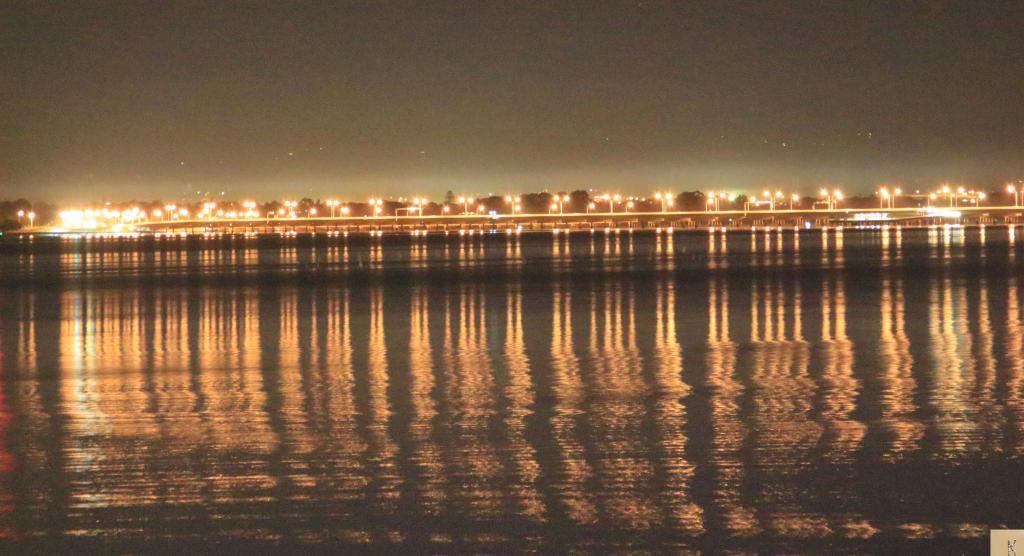
The Hornibrook Bridge was one of three bridges that crossed Bramble Bay. The second is the Houghton Highway, which was built to accommodate rising traffic levels in the 1970s. The third is the Ted Smout Memorial Bridge, which opened to traffic in July 2010.
The Ted Smout Memorial Bridge and its twin, the Houghton Highway, were Australia’s longest bridges, (as of 27 March 2013.) It is the first bridge in Australia designed to withstand Hurricane Katrina-type storm events. Ted Smout was born in 1898, joining the Royal Australian Army Medical Corps aged 17 (lied about his age to get in). He was awarded France’s highest honour, being made a Chevalier (Knight) of the Legion d’Honneur in 1998 and also received the Medal of the Order of Australia for service to the community. He died 106 years old.
The Ted Smout Memorial Bridge.
Woody Point’s Apex Park & Bicentennial Park were constructed by reclaiming land along the foreshore in the 1970s. A $9.5 million Woody Point Jetty and foreshore upgrade was completed in January 2009.
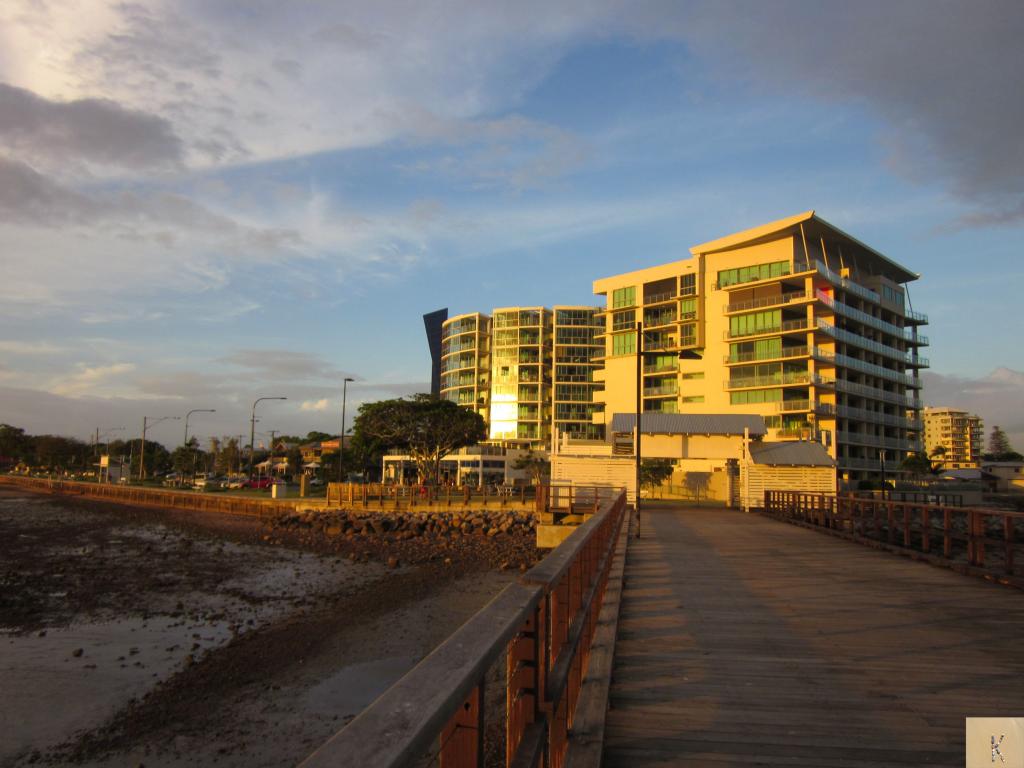
View of Woody Point Jetty from Point Plaza.
Woody Point’s current renovations include the construction of high-rise apartment buildings overlooking Bramble Bay, Moreton Bay, The Port of Brisbane and the Ted Smout Highway.
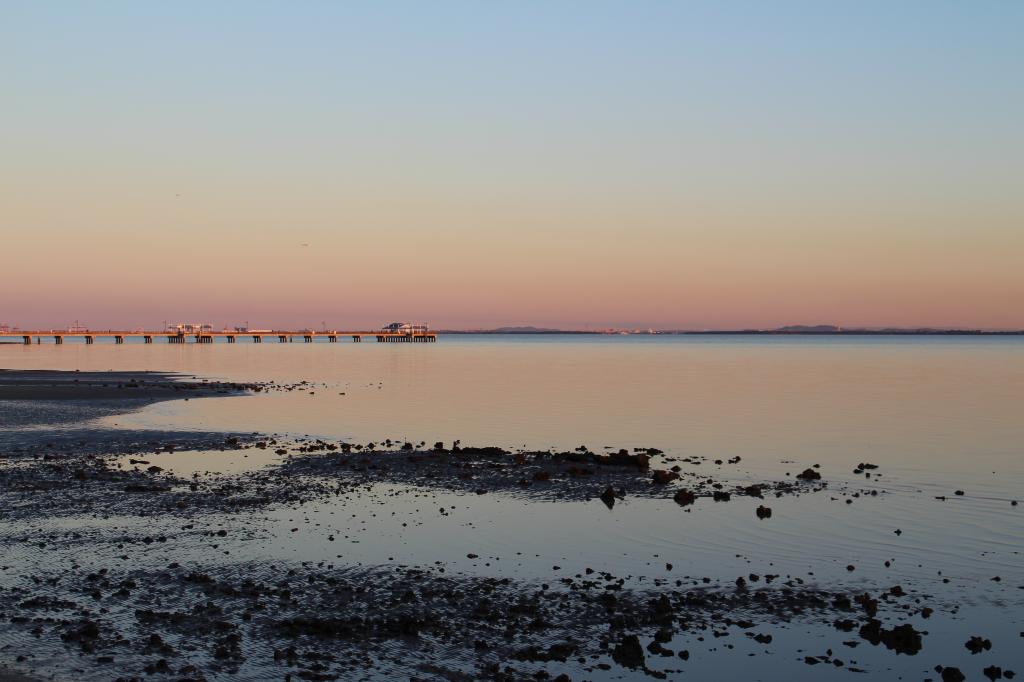
Point Plaza Apartments.Bramble Bay.Brisbane City from Woody Point.
Thus it was rather fun to come across, more or less by chance, an essay from the Perimeter Institute for Theoretical Physics under the title of Is The Universe A Bubble? The essay describes how Perimeter Associate Faculty member Matthew Johnson and his colleagues are working to bring the multiverse hypothesis, which to some sounds like a fanciful tale, firmly into the realm of testable science. It opens:
Never mind the big bang; in the beginning was the vacuum. The vacuum simmered with energy (variously called dark energy, vacuum energy, the inflation field, or the Higgs field). Like water in a pot, this high energy began to evaporate – bubbles formed.
Each bubble contained another vacuum, whose energy was lower, but still not nothing. This energy drove the bubbles to expand. Inevitably, some bubbles bumped into each other. It’s possible some produced secondary bubbles. Maybe the bubbles were rare and far apart; maybe they were packed close as foam.
But here’s the thing: each of these bubbles was a universe. In this picture, our universe is one bubble in a frothy sea of bubble universes.
That’s the multiverse hypothesis in a bubbly nutshell.
It’s not a bad story. It is, as scientists say, physically motivated – not just made up, but rather arising from what we think we know about cosmic inflation.
Cosmic inflation isn’t universally accepted – most cyclical models of the universe reject the idea. Nevertheless, inflation is a leading theory of the universe’s very early development, and there is some observational evidence to support it.
It includes this interesting video:
and concludes, thus:
Meanwhile, the team is at work figuring out what other kinds of evidence a bubble collision might leave behind. It’s the first time, the team writes in their paper, that anyone has produced a direct quantitative set of predictions for the observable signatures of bubble collisions. And though none of those signatures has so far been found, some of them are possible to look for.
The real significance of this work is as a proof of principle: it shows that the multiverse can be testable. In other words, if we are living in a bubble universe, we might actually be able to tell.
– Erin Bow
So that’s blown the dust off your Saturday brains! You can go and hug your dog now! 🙂
The more that man tries to interfere the more that man screws up.
Jeannie and I subscribe to Time Magazine. This week’s edition had a pretty eye-catching cover that required a second look.
Illustration by Justin Metz for Time. Photo reference for emerald ash borer courtesy of PDCNR—Forestry Archive, Bugwood.org
That cover referred to the lead article concerning invasive species, “From giant snails to Asian carp, alien wildlife is on the move.“, written by Bryan Walsh. The essence of the article is that man’s global activities are responsible, albeit often unwittingly, for the movement of a wide range of species across national borders. My own reaction to the article was that it was typical of the many ‘scare’ stories the media present but that at the end of the day, nothing will change. However the last two paragraphs of the article did resonate with me.
Human beings have become the dominant force on the planet, so much so that many scientists believe we’ve entered an entirely new geological epoch: the Anthropocene. We have already been shaping the planet unintentionally, through greenhouse-gas emissions and global trade and every other facet of modern existence. The challenge now is to take responsibility for that power over the planet and use it for the right ends – all the while knowing that there is no single correct answer, no lost state of grace we can beat back toward.
How we respond to the thickening invasions that we ourselves loosed will be part of that answer – which is only just. There is one species that can claim to be the most dominant invasive of all time. From its origins in Africa, this species has spread to every corner of the world and every kind of climate. Everywhere it goes, it displaces natives, leaving extinction in its wake, altering habitat to suit its needs, with little regard for the ecological impact. Its numbers have grown nearly a millionfold, and its spread shows no sign of stopping. If that invasive species sounds familiar, it should. It’s us.
Thus with that article from Time in mind, it was very pertinent to see the latest essay from George Monbiot. It reinforces, in spades, the sentiment expressed by Bryan Walsh in those paragraphs above and is republished here on Learning from Dogs with the generous permission of George Monbiot.
ooOOoo
A One Way Street to Oblivion
As soon as an animal becomes extinct, a new bill proposes, it will be classified as “non-native”.
By George Monbiot, published on the Guardian’s website, 21st July 2014
Can any more destructive and regressive measures be crammed into one bill?
Already, the Infrastructure Bill, which, as time goes by, has ever less to do with infrastructure, looks like one of those US monstrosities into which a random collection of demands by corporate lobbyists are shoved, in the hope that no one notices.
So far it contains (or is due to contain) the following assaults on civilisation and the natural world:
– It exempts fracking companies from the trespass laws
– Brings in a legal requirement for the government to maximise the economic recovery of petroleum from the UK’s continental shelf. This is directly at odds with another legal requirement: to minimise the UK’s greenhouse gas emissions
– Introduces the possibility (through Clauses 21 and 22) of a backdoor route to selling off the public forest estate. When this was attempted before, it was thwarted by massive public protest.
– further deregulates the town and country planning system, making life even harder for those who wish to protect natural beauty and public amenities
Enough vandalism? Not at all. There’s yet another clause aimed at suppressing the natural world, which has, so far, scarcely been discussed outside parliament. If the Infrastructure Bill is passed in its current state, any animal species that “is not ordinarily resident in, or a regular visitor to, Great Britain in a wild state” will be classified as non-native and subject to potential “eradication or control”. What this is doing in an infrastructure bill is anyone’s guess.
At first wildlife groups believed it was just poor drafting, accidentally creating the impression that attempts to re-establish species which have become extinct here – such as short-haired bumblebees or red kites – would in future be stamped out. But the most recent Lords debate scotched that hope: it became clear that this a deliberate attempt to pre-empt democratic choice, in the face of rising public enthusiasm for the return of our lost and enchanting wildlife.
As Baroness Parminter, who argued unsuccessfully for changes to the bill, pointed out, it currently creates
“a one-way system for biodiversity loss, as once an animal ceases to appear in the wild, it ceases to be native.”
She also made the point that it’s not just extinct species which from now on will be treated as non-native, but, as the bill now stands, any species listed in Schedule 9 of the Wildlife and Countryside Act 1981.
Among those in Schedule 9 are six native species that have already been re-established in Britain (the capercaillie, the common crane, the red kite, the goshawk, the white-tailed eagle and the wild boar); two that are tentatively beginning to return (the night heron and the eagle owl); and four that have been here all along (the barn owl, the corncrake, the chough and the barnacle goose). All these, it seems, are now to be classified as non-native, and potentially subject to eradication or control.
After the usual orotund time-wasting by aristocratic layabouts (“my ancestor Sir Ewen Cameron of Lochiel, who was known as the great Sir Ewen … killed the last wolf in Scotland” etc), the minister promoting the bill, Baroness Kramer, made it clear that the drafting was no accident. All extinct species, it appears, are to be treated as non-native and potentially invasive. At no point did she mention any of the benefits their re-establishment might bring, such as restoring ecological function and bringing wonder and delight and enchantment back to this depleted land.
Here is a list, taken from Feral, of a few of the animals which have become extinct recently (in ecological terms) and which probably meet the bill’s new definition of non-native: “not ordinarily resident in, or a regular visitor to, Great Britain in a wild state”. Some would be widely welcomed; others not at all, but it’s clear that a debate about which species we might welcome back is one that many people in this country want to have, but that the government wants to terminate. There’s a longer list, with fuller explanations and a consideration of their suitability for re-establishment, in the book.
European Beaver: became extinct in Britain in the mid-18th Century, at the latest. Officially re-established in the Knapdale Forest, Argyll. Unofficially in the catchment of the River Tay and on the River Otter, in Devon.
Wolf: The last clear record is 1621 (not 1743 as commonly supposed). It was killed in Sutherland. As far as I can determine, neither Sir Ewen Cameron nor any of the other blood-soaked lairds and congenital twits from whom Lord Cameron of Dillington is descended were involved.
Lynx: The last known fossil remains date from the 6th Century AD, but possible cultural records extend into the 9th Century.
Wild Boar: The last truly wild boar on record were killed on the orders of Henry III in the Forest of Dean, in 1260. Four small populations in southern England, established after escapes and releases from farms and collections.
Elk or Moose (Alces alces): The youngest bones found in Britain are 3,900 years old. Temporarily released in 2008 into a 450-acre enclosure on the Alladale Estate, Sutherland.
Reindeer: The most recent fossil evidence is 8,300 years old. A free-ranging herd grazes on and around Cairn Gorm in the Scottish Highlands.
Wild horse: The most recent clearly-established fossil is 9,300 years old. Animals belonging to the last surviving subspecies of wild horse, Przewalski’s (Equus ferus przewalskii), graze Eelmoor Marsh in Hampshire.
Forest bison, or wisent: Likely to have become extinct here soon before the peak of glaciation, between 15,000 and 25,000 years ago. A herd was temporarily established at Alladale in 2011.
Brown bear: probably exterminated around 2000 years ago.
Wolverine: survived here until roughly 8,000 years ago.
Lion: the last record of a lion in the region is a bone from an animal that lived in the Netherlands – then still connected to Britain – 10,700 years ago.
Spotted hyaena: around 11,000 years ago.
Hippopotamus: it was driven out of Britain by the last glaciation, around 115,000 years ago, and hunted to extinction elsewhere in Europe about 30,000 years ago.
Grey whale: the most recent palaentological remains, from Devon, belonged to a whale that died around 1610 AD.
Walrus: late Bronze Age, in the Shetland Islands.
European Sturgeon: possibly as recently as the 19th Century.
Blue stag beetle: probably 19th Century.
Eagle owl: the last certain record is from the Mesolithic, 9,000-10,000 years old . But a possible Iron Age bone has been found at Meare in Somerset. Now breeding in some places, after escaping from collections.
Goshawk: wiped out in the 19th Century. Unofficially re-established in the 20th Century, through a combination of deliberate releases and escapes from falconers.
Common crane: last evidence of breeding in Britain was in 1542. Cranes re-established themselves through migration in the Norfolk Broads in 1979, and have bred there since then. Now breeding in two other places in eastern England. Re-introduced in 2010 to the Somerset Levels.
White Stork: last recorded nesting in Edinburgh in 1416. In 2004 a pair tried to breed on an electricity pole in Yorkshire. In 2012 a lone bird built a nest on top of a restaurant in Nottinghamshire.
Spoonbill: the last breeding records are 1602 in Pembrokeshire and 1650 in East Anglia. In 2010 a breeding colony established itself at Holkham in Norfolk.
Night Heron: last bred here in either the 16th or 17th Century, at Greenwich. Today it is a scarce visitor.
Dalmatian Pelican: remains have been found from the Bronze Age in the Cambridgeshire Fens and from the Iron Age in the Somerset levels, close to Glastonbury. A single mediaeval bone has been found in the same place.
These and many others are now to be classified as officially non-native, unless this nonsense can be stopped.
Incidentally, determining what is and isn’t a native species, let alone what “should” or “should not” be living here, is a much more complicated business than you might imagine, as Ken Thompson’s interesting book, Where Do Camels Belong?, makes clear. He also points out that some species which are initially greeted with horror and considered an ecological menace soon settle down as local wildlife learns to prey on them or to avoid them. Sometimes they perform a useful ecological role by filling the gaps created by extinction. He overstates his case, and glosses over some real horror stories, but his book is an important counterweight to attempts to create a rigid distinction between native and non-native wildlife.
Many species introduced to this country by human beings are now cherished as honorary members of our native wildlife. Here are just a few I’ve come across. How many of you knew that they were all brought here by people?:
Brown hare
Little owl
Field poppy
Corncockle
Crack willow
Greater burdock
Pheasant’s eye
Cornflower
Wormwood
Mayweed
White campion
Isn’t this an interesting subject? Unfortunately government ministers seem to know to know nothing about it and to care even less. They are crashing through the middle of delicate interactions between people and the natural world like bulldozers in a rainforest.
I will close today’s post with another, very recent, story in The Guardian, that opens, thus:
Wild beaver kits born in Devon
Thursday 17 July 2014
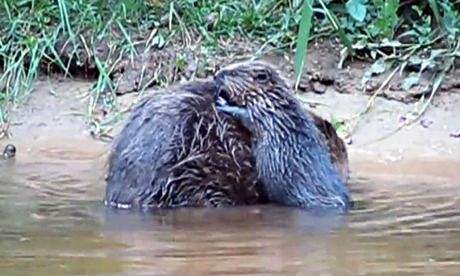
One of the first wild beavers to be seen in England in centuries and due to be taken into captivity has given birth to three young.
Local retired environmentalist Tom Buckley captured the three young beavers climbing all over their mother. Photograph: Tom Buckley/Apex
A wild beaver due to be taken into captivity has given birth to at least three young.
The young, known as kits, were born to the family of two adult and one juvenile European beavers (Castor fiber) that were spotted living on the river Otter in Devon earlier this year, in what was believed to be the first sighting of the species in the wild in England in 500 years.
All that is left for me to do is to quote a little from a recent letter from John Hurlburt.
Our future depends on the air we breathe. Our lives depend upon rivers of living water. Our health requires the blessings of organic agriculture. Our energy streams through us from the cosmos.
We are warrior animals. Peace must come from within. Non-violence is our best choice. We have the magnificent opportunity to wake up as an animal that is grateful and sings in harmony with the Earth.
The present is surrounded by the past and the future. We float on the wings of compassion and wisdom with a sacred responsibility for the Nature of all Creation.
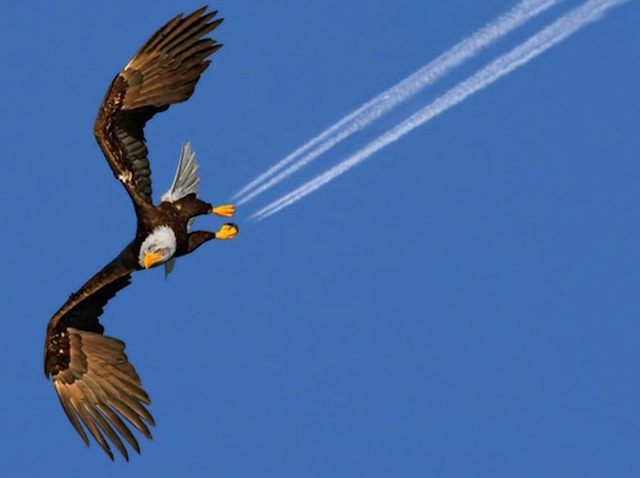
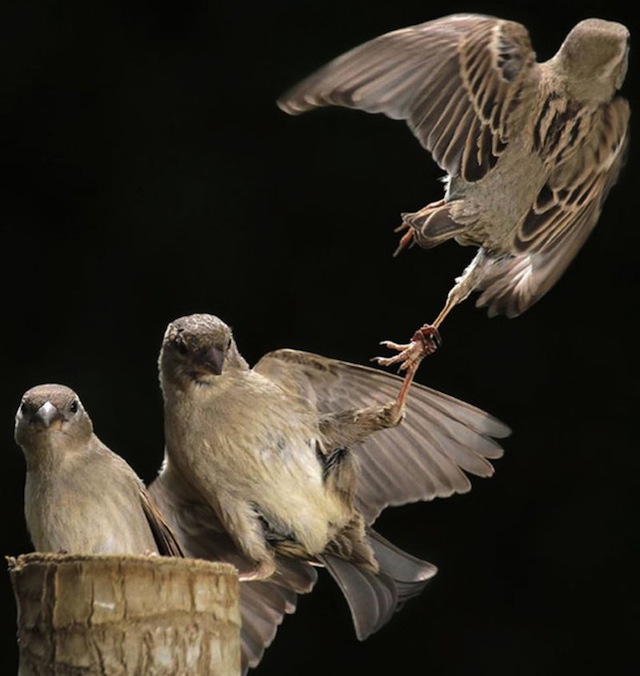
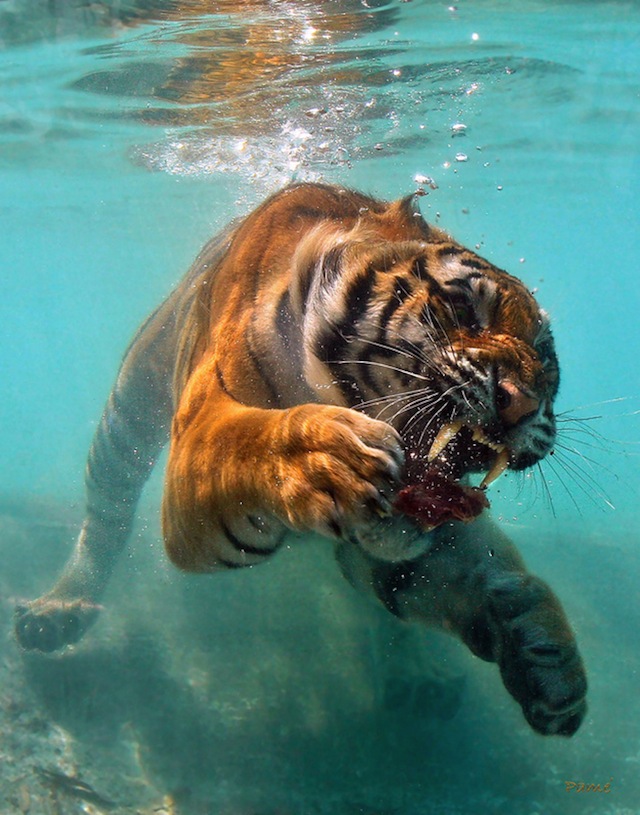
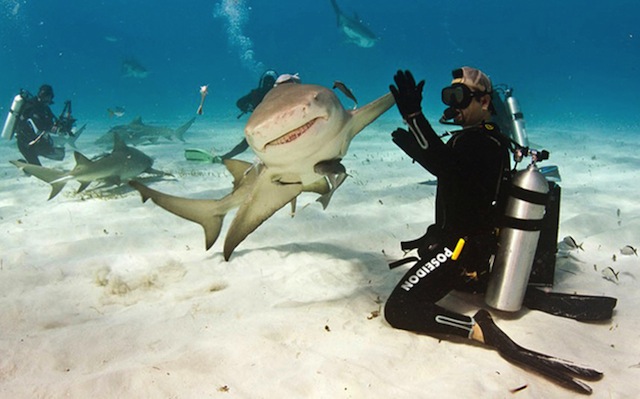
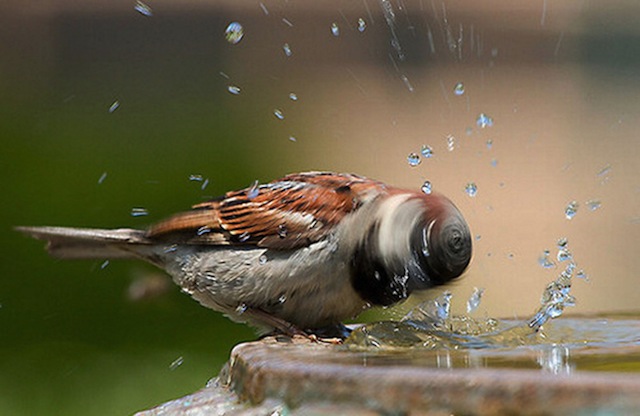
As I said in last week’s picture parade, “A friend from Payson, Arizona, Lew Levenson, recently sent across a set of 38 astounding photographs, all on the theme of perfectly timed shots.” Despite the fact that they had previously appeared in this place, your responses were do delightful that I have no problem in staying with these pictures over the next few Sundays.
oooo
oooo
oooo
oooo
oooo
oooo
oooo
oooo
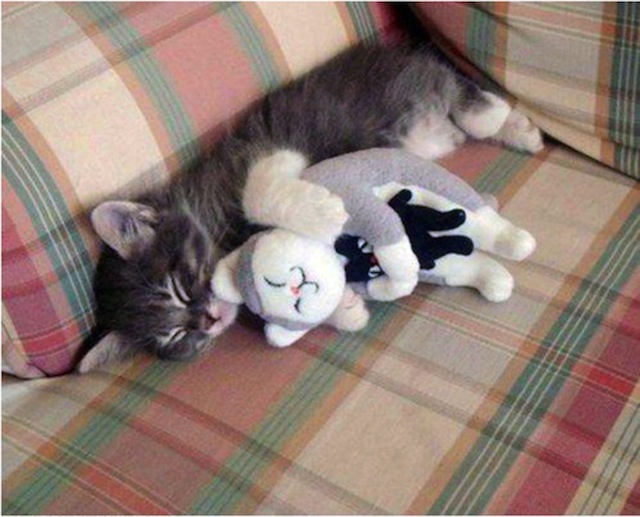
Each picture gives one such a warm and cuddly feeling!
A fascinating essay courtesy of Transition Network in the UK
I have very little doubt that I share with the majority of ‘common folk’ out there a feeling of these being dark and desperate times. I’m not even going to list the things that, on an almost daily basis, come along under the category of ‘doom and gloom’.
Yet it is also pretty widely known that change is embraced much more easily through reward. In other words, we commit to change, in a thousand different ways, from the expectation of reward: reward in many varied and numerous ways, many of them non-financial, of course.
The challenge for us all is that the negative has great pulling power. If we read news websites, watch television, read newspapers, and more, we are exposed essentially to wall-to-wall bad news.
So how on earth do we keep our spirits up? How on earth do we maintain hope in there being a positive way forward? Whatever ‘way forward’ translates to in terms of the individual?
Over in the UK there is the website of the Transition Network. From that home page one can link across to a number of blogs. Anyway, recently on Rob Hopkins’ blog there was a very interesting essay by Chris Johnstone about the power of celebration. Read it and reward yourself for so doing! 😉
Chris Johnstone works in the area of the psychology of resilience, sustainable happiness and is co-author, with Joanna Macy, of Active Hope: how to face the mess we’re in without going crazy. [1.] Chris appeared at both the Unleashing of Transition Town’s Totnes and Lewes, and has interacted with different Transition groups ever since. He’s also an accomplished musician (you can hear him playing briefly at the end of the podcast of our interview). I started by asking him why celebration matters:
“I’m just thinking about how important food is. Without food, we wither away. Food is nourishment. We also have needs for psychological nourishment or psycho-spiritual nourishment, emotional nourishment. I see celebration as one of those things that nourishes us psychologically, emotionally, spiritually. I was thinking about this also in terms of how important celebration is in keeping us going.
One of the thought blocks that people bump into sometimes is the voice that says “well what’s the point of doing this?” What celebration does is it gives us an answer to that. I think of it as helping shifting us from a going nowhere story where we feel we’re making no progress and have no direction to what I think of as a going somewhere story, where we feel that we’re on the way somewhere because we’re celebrating and marking important steps along the way.
What are the risks of not pausing to celebrate, do you think?
If you don’t pause to first of all notice that you’ve made any progress, it’s very easy to feel that you’re not making any progress. If you’re not making any progress, one of the risks for burnout is that loss of meaning where you lose the sense that there’s a point to what you do. Basically you run dry.
I see one of the parallels here as sustainable agriculture. One of the keys of sustainable agriculture is to nourish the soil. If you look after the soil, you get good crops. In terms of personal productivity, I think it would be to have sustainable activism. The parallel to topsoil is, I guess, our enthusiasm. We need to look after our enthusiasm for something. If we don’t, our enthusiasm gets thin like thin topsoil and you can get to a point where there’s no enthusiasm left and you just have that sense of, well what’s the point. You lose the oomph, you lose the energy, and you lose the plot.
What does good celebration look like? What for you would be the ingredients of a good celebration?
You can do it alone. It’s good to have ways where we notice the steps that we’re taking by ourselves and find some way of marking those and reinforcing those, but I’d say that celebration generally is much better in company. It’s also socially bonding and there’s very interesting research here about what really makes a difference in relationships.
There’s a psychologist called Shelley Gable who worked at the University of California, Los Angeles, and she was trying to work out what are the vital things that really make a difference and she recorded lots and lots of relationships. One area of communication that seemed to make a key difference in relationships was the response to good news.
If one person had good news and shared it with the other and the other person responded to the good news by being ‘joy in the joy of another’, by celebrating the good news, that deepened trust, that deepened the sense of satisfaction in the relationship. But if somebody shared good news and it passed by without notice or even worse, the person tried to persuade them that really it was bad news, that led to a drop in the level of satisfaction in the relationship that was so strong that Shelley Gable found that she could work who was at higher risk of breaking up over the next 12 months just by looking at their response to good news, whether somebody celebrated the good news when it was shared, or whether somebody passed it by or poured cold water on it.
There was a thing that I wrote for this month’s framing editorial that was my attempt at what some of the ingredients of good group celebrations might look like. What does celebration on a more day to day basis in a group like a Transition group – how can we design it into our meetings, our everyday rather than having something we just do once a year?
I’d say there’s something here about celebration needing to be meaningful. It’s asking yourself “what exactly is it that we are celebrating?” What we’re doing with celebration is celebrating the things we appreciate, the things that we value. By having a shared celebration, what you’re doing is reinforcing the system of values, the shared system of values within that group. In terms of what keeps us going, it’s really important to celebrate success. So what comes up there is we need to look at how do we notice success, how do we notice progress and how do we define that?
It’s particularly important when working for social change, for social and ecological justice, that we can often have a lot of disappointment and frustration along the way. If we only celebrate the really big things, the really big victories, we can have long gaps between the celebrations which makes us feel that we’re losing, that we’re not making progress. And so therefore I think what’s really important is to look at the mini victories along the way, and to both celebrate the positive outcomes that happen, but also to celebrate the effort put in, and one way of doing that is just to find some way of appreciating what has been done, so for example research on our mood shows that one of the things that improves mood is both the experience and also the expression of gratitude.
One of the ways that you can build celebration into everyday meetings and things is just finding some way to appreciate each other, appreciate the steps that we’ve been taking. If you’ve noticed that someone’s worked really hard on something, to have some gap in a meeting, some agenda item in the meeting where you just notice the things that have been done and the effort put in, and find some way of valuing them, marking them, noting them.
It might be first of all there’s a slot for anyone who’s got any good news to share and then to celebrate that, but also has anyone got any appreciations of gratitude to express. To actually build that into part of a group culture that we take time to notice and celebrate the steps we notice each other taking, and also if somebody has noticed a step that we’ve taken, for it to be completely more than fine, I’d say brilliant, for us to step forward and say – one thing I’m pleased about, you may not have seen this but one thing I’ve done is… where we take time to notice and to celebrate the steps we’ve taken ourselves.
It’s great when other people can notice it, but we don’t want to end up feeling resentful because no one cheered for this hard piece of work I did. We actually get better at stepping out there and saying – yes, I’m really pleased that I did this, I’m really pleased that I did that, because when we mark the steps that we’re taking, we reinforce that in a way that helps us keep taking those steps.
The environmental movement, in as much as I’ve been around it for the last 25 years or so, feels to be fairly spectacularly bad at stopping and celebrating. The culture is like a marathon, “got to keep going, got to keep going”, so there’s lots of burnout. Why do you think the environmental movement has been so poor at that?
Partly it’s the scale of the tasks that we face. We can’t have a party to celebrate climate change being sorted out, because that’s probably not going to happen in our lifetime. There’s already problems in the post, as it were, from the carbon that’s already been released into the atmosphere. The task is so huge that we could be working, well, there’s 168 hours in the week and we could be working all of those for a whole year and still feel that there’s more and more to do. There’s two things here.
There’s the to-date thinking which is where we look at what we’ve done so far, but there’s also to-go thinking where we look at what we’ve still got to go, the distance we’ve still got to cover. When we look at the distance we’ve still got to cover, it’s further than we can get in our lifetime, so that’s the trouble as I see it. We can just be working, working, working, and feel that there’s always more to go.
But also if we only focus on the work that’s still to be done, the danger is we just get exhausted. We become like what we’re doing to the fields of wheat around the world – we harvest them unsustainably and end up depleting the soil. I’d say that activist enthusiasm is a vital renewable resource, and we need to get much more skilful about how we treasure it. How we look after it in a way that can help it grow.
My last question is, can you think of one celebratory event that you were particularly moved by or inspired by which could be a story that might be useful for Transition groups to hear?
I’ve shared a number with you that I really delight in. One that comes to mind is when the two of us spoke together at the launch of Transition Town Totnes. It was the official unleashing of Transition Town Totnes and that was years ago now. But I think that was in 2006, so eight years ago now. What we do is celebrate launches of things in a way that we’re marking them and saying – hey, this is the beginning of something. We don’t know what will happen, but we’re marking our very clear intention.
There’s a form of energy, I call it ACACI which means A Clear and Committed Intention. It’s like a form of psychological energy. When you have strong, clear and committed intention, it drives you on. One of the ways of building that up is to have a launching celebration. I really enjoyed that event with you. We spoke together at the unleashing of Transition Town Lewes as well and we’ve both been back there since then. You wrote recently in your July 1st blog about being at their 7 year celebration and I was there at their 5 year celebration.
If you have a party to begin something, then you can also revisit that point some years on. So they become markers in time. We can say yes, we were here when this began, we celebrated the launch of this. And now here we are meeting again, this number of years later and we also celebrate the effort put in and the steps taken and the distance covered in that between time.
What you do there is build in the journey approach to change. This sense that we’re on a cultural migration. That’s why I love the term Transition. Transition is about moving from one place to another and we mark the steps along the way. So we celebrate when we begin this journey with the unleashing, the launch, but we keep coming back to that at periodic intervals and say – hey, we’re still on this journey. It’s still important to us.
While there might be some steps forward and some steps back and frustrations and disappointments along the way, there will always be things that we can look at and say yeah, that’s what we did and I feel really good about that.
When you mark the things that you feel good about, you get something which I call afterglow. This is the warm feeling of satisfaction after you’ve done something or noticed something that you feel good about. That’s what keeps us going, it’s fuel for the journey. So back to that original idea that celebration is a form of psychological nourishment and it’s absolutely vital to keep ourselves going.
You’re a very gifted musician and you managed to weave music and getting everybody moving and joining in as well. What’s the role of music in that, do you think?
It’s so interesting, because they’ve found bits of bone that have been turned into flutes that are 20,000 years old. I see music as a form of social glue. It draws people together. There’s something very remarkable that can happen when people move rhythmically together. It’s where we shift out of just seeing ourselves as separate individuals to where we sing and dance together it reinforces our connectivity, our sense of being part of something larger.
That’s great – actually ‘great’ is an understatement. I talked about psychological nourishment, also how do we reinforce and grow social capital? Social capital is the wealth that comes out of relationships. Shared music and dance is one of the ways that happens.
I wanted to know more about Chris and very quickly came to this place, from where I read:
Chris Johnstone
Chris Johnstone is a medical doctor, author, and coach who worked for nearly twenty years as an addictions specialist in the UK National Health Service. A former Senior Teaching Fellow at Bristol University Medical School, he trains health professionals in behavioral medicine and gives courses exploring the psychological dimensions of planetary crisis. Chris is known for his work pioneering the role of resilience training in promoting positive mental health, developing self-help resources and setting up the Bristol Happiness Lectures. He is author of Find Your Power: A Toolkit for Resilience and Positive Change (2nd Ed, 2010) and co-presenter of The Happiness Training Plan CD (2010).
Chris has been a trainer in the Work That Reconnects for more than two decades, working with Joanna on many occasions and running facilitator trainings in the United Kingdom. In 2004 he set up the free email newsletter [2.] The Great Turning Times, which is now read by thousands of people throughout the world. He has been active in the Transition movement since its very beginnings and contributed to a chapter on the psychology of change in The Transition Handbook by Rob Hopkins.
After many years living in Bristol, Chris recently moved to the North of Scotland, where he lives with his wife, Kirsty, their dogs and chickens, pursuing his love of growing fruit in their evolving forest garden. He continues his coaching and training work, as well as his writing and music. His website is at www.chrisjohnstone.info
He runs workshops and a facilitator training in the Work That Reconnects in the UK. Details at: www.facilitationforlifeonearth.org.
He also offers online courses in Active Hope, Resilience, Sustainable Happiness and Change-Making Skills at www.resiliencehappinesschange.com.
[1.] The following video is from the Active Hope theme.
[2.] If you wish to subscribe to the newsletter, then the link may be found on this page. (I have just done so.)
Yes, on the 15th July, 2009, I published my first post! Five years ago today! That first post was called Parenting lessons from dogs; a shortish post that I republish now.
Much too late to make me realise the inadequacies of my own parenting skills, I learnt an important lesson when training my GSD (who is called Pharaoh, by the way). That is that putting more emphasis into praise and reward for getting it right ‘trains’ the dog much quicker than telling it off. The classic example is scolding a dog for running off when it should be lots of hugs and praise for returning home. The scolding simply teaches the dog that returning home isn’t pleasant whereas praise reinforces that home is the place to be. Like so many things in life, very obvious once understood!
Absolutely certain that it works with youngsters just the same way.
Despite being a very dominant dog, Pharaoh showed his teaching ability when working with other dogs. In the UK there is an amazing woman, Angela Stockdale, who has proved that dogs (and horses) learn most effectively when being taught by other dogs (and horses). Pharaoh was revealed to be a Beta Dog, (i.e. second in status below the Alpha Dog) and, therefore, was able to use his natural pack instinct to teach puppy dogs their social skills and to break up squabbles within a pack.
When you think about it, don’t kids learn much more (often to our chagrin!) from other kids than they do from their parents. Still focusing on giving more praise than punishment seems like a much more effective strategy.
As was read somewhere, Catch them in the act of doing Right!
According to my stats page, Learning from Dogs has accumulated 1,000,624 viewings, with a ‘best-ever’ of 3,980 for Trust me, I’m an engineer, courtesy of Bob Derham in March, 2013. A total of 2,125 posts have been published. Plus, it has been a wonderful journey for yours truly with ever so many great connections made across the world of blogging over these last five years. As evidenced by the rest of today’s post.
Regular readers will have seen comments from Alex Jones. He is a Brit living in Colchester, Essex in England and is the author of the blog The Liberated Way. He and I follow each other’s blogs.
I discover my values and personal insights from how I react to what I see and experience in the world around me. I reacted in anger at the greed and vanity of money investors in business ideas in the US reality television series Shark Tank on YouTube. I reacted in dismay at the wasteful stupidity portrayed in a video on consumerism: people queuing for a week to get hold of the latest iPhone, whose only enhancement from the last was its colour; IKEA marketing telling consumers to throw out perfectly good possessions; Apple designing a new type of screw on its smartphones in order to prevent people repairing damaged phones, thus encouraging waste; the extensive scams brands go to called obsolescence to make objects the consumer buys break quickly increasing waste and needless replacement. The contempt the modern economic paradigm has to this planet is at odds with our human ancestors, and at odds with my worldview.
I am part of a new business paradigm, where I can compete against rivals on equal terms with innovation and clever strategies, but where I care for the planet earth in the same manner as I cared for the grasshopper this morning and my oak saplings. In thinking on these matters in the garden this morning, my garden fox Amber appeared, yawned, then went to sleep in the sun.
Two days ago, another blogger signed up to follow this place. He writes under the name of Cully and his blog is Ahaa. As I always do, I went across to take a look at Cully’s blog, liked what I saw, especially this ‘header’ post on Gaia. Very promptly I was given permission to republish that post here.
ooOOoo
Gaia
It’s Time To Stop Living On The Earth and Start Cohabitating With Her – The Earth is a Sentient Living Organism
We are saturated with information and we are used to clipping and selecting segments of what news is thrown our way every day. We can process very little of it for use later on and it is well known that we only see ‘pertinent’ information as information that already supports our existing belief system. This narrow mindset is one of the main reasons why things don’t change. It is why we are happy to listen to shallow news, we simply don’t have time to do anything else. In this we kid ourselves we really don’t need to know which celebrity is dealing with addiction or changing partners.
On this page we hope to introduce a topic that will inspire you to contemplate, even meditate on its importance.
Gaia is more widely accepted now than when it was first introduced, and you’re not being asked to believe it wholesale and certainly not see it as a part of the New Age or hippy movement. Hopefully though whatever you think about our planet you will find it to be a useful platform to consider AND TAKE ACTION on the health of the environment that we are leaving our children.
It is easy …as with all the other scares that we hear about every day to think that we are too small, or that it is a governmental or corporate problem, so why spend any time considering it.
Whatever your particular mindset, Gaia related activities will become increasingly connected and important to leaving a beautiful world behind us. The study of planetary habitability is partly based upon extrapolation from knowledge of the Earth’s conditions, as the Earth is the only planet currently known to harbour life
The Gaia hypothesis, also known as Gaia theory or Gaia principle, proposes that organisms interact with their inorganic surroundings on Earth to form a self-regulating, complex system that contributes to maintaining the conditions for life on the planet. Topics of interest include how the biosphere and the evolution of life forms affect the stability of global temperature, ocean salinity, oxygen in the atmosphere and other environmental variables that affect the habitability of Earth.
The hypothesis, which is named after the Greek goddess Gaia, was formulated by the scientist James Lovelock and co-developed by the microbiologist Lynn Margulis in the 1970s. While early versions of the hypothesis were criticized for being teleological and contradicting principles of natural selection, later refinements have resulted in ideas highlighted by the Gaia Hypothesis being used in subjects such as geophysiology, Earth system science, biogeochemistry, systems ecology, and climate science. In 2006, the Geological Society of London awarded Lovelock the Wollaston Medal largely for his work on the Gaia theory.
It will take an enormous amount of time to create a menu that covers everything related to Gaia, please be patient or if the time help out in any small way that you can 🙂
respect
[If you haven’t watched this BBC programme about James Lovelock and his history of scientific understanding about how our planet works then settle down and watch it. I assure you that you will be entranced. PH]
ooOOoo
What can I say!
Other than to be extremely grateful for the opportunity to ramble on and make so many good friends, WordPress style, over these last five years.
We are looking for a new person to take over WordPress support for Naked Capitalism. Even though our old WordPress person Kristin was technically skilled and did a fine job with the redesign, the professional relationship wasn’t working out.
The difficulty for finding a replacement is that the overwhelming majority of WordPress specialists have never worked on a site like NC. WordPress scales badly and its Achilles heel is its database. Most WordPress support staff have never encountered a site with large databases (close to 12,000 posts and over 500,000 comments) that loads them the way we do (hundreds of updates a day).
Please also bear in mind we are NOT looking for a host. We are happy with our webhost. But WordPress is complicated and breakage prone enough that any site that is run on a professional basis needs a WordPress expert in the mix.
So we need someone with experience in supporting a WordPress site with:
• Very large database that updates very frequently
• Advertising. We use a third party ad service and often have to change ad code and make layout adjustments
Aside from routine support, we also have some projects we’d like to undertake, like fixing categories and tags.
A WordPress specialist also needs to understand that we are in a news-driven business and work constantly to deadlines. So while there are often weeks where there is only routine activity (monitoring site performance and working on non-time-critical assignments), when we have problem, we have a sense of urgency about getting it fixed.
Kristin operated solo, but if the provider was in a small firm (as in had more than one person who could work on our account) that could be even better, particularly if it got us closer to 24/7 support.
If you have any ideas or leads, please e-mail me at yves-at-nakedcapitalism.com, with “WordPress” in the subject line. Thanks!
Another gem of an essay from guest writer John Hurlburt.
It was just a short while ago, on the 26th June, that I posted a guest essay from John under the title of Arrogance ‘R Us. It was very well received with twenty-two ‘Likes’ and, without exception, many favourable comments.
Therefore I am delighted to offer another of John’s essays; again beautifully crafted as you are about to see.
ooOOoo
Independence Day
Human beings on planet Earth are a tiny component of the Nature of the Cosmos. Life is an experiential opportunity which obeys Natural cycles and adapts in order to survive and grow. Cosmic awareness is unlimited. The statistical probability of consciousness awareness being a purely local phenomenon is so remote that it’s actually ridiculous to consider.
Human awareness is limited. We’re a very young cosmic species. Sometimes we don’t see much beyond the end of our own noses. We need to learn to play nicely with other children before we go much further beyond the living nest called Earth that we consistently befoul.
Time changes. In a consciously aware biological world, we may choose to build for the future or to ignore the future in favor of our short term lives. Those who accept change and make a coordinated effort to adapt have a better probability for a future than those who fear change. Responsibility to adapt to change comes with the territory.
What’s happening on Earth today is simply a matter of Mother Nature cleansing herself of an unhealthy species that’s lost track of the spiritual, natural and reasonable moral foundation necessary for equitable balance. Our problem today is that we tend to blindly follow the noisy mouthpieces of unified financial interests into bottomless pits. The pits are already dry or are rapidly drying.
We’re aware of the opportunity of each new day at the depth of our being. We’re aware that anything can happen and probably will sooner or later. It’s easy to develop a blasé attitude of acceptance without action. Why worry about it? It’s difficult to accept the truth about our self and make the effort necessary to change. What a drag ….
Nature is telling us that it’s time for Final Exams. How much have we learned? Are we aware or are we unaware of being unaware? Do we know that today is the tomorrow we dreamed of yesterday? What will be the harvest of our lives?
At a time when the Nature of our planet is changing rapidly, there’s an understandable cultural, social and economic churning taking place. Human history, particularly our wisdom tradition, record human successes and failures in adapting to the natural constant of change. Records of natural disasters date back to verbal histories of a great flood and beyond. We continue to ignore the obvious.
Ego keeps us in denial of our natural reality. Ego is our common villain as we lose what little that remains of our natural heritage through ignorance and arrogance. Ego is fear driven. We fear losing something we think we have or not getting something we believe we want or need.
Fear fuels anger. Anger fuels hate. Hate fuels war. War escalates the level of planetary destruction dramatically while doing relatively little to slow the relentless expansion of our ravenous species.
We are inclusively blessed at this very moment with the opportunity to make a positive difference in a negatively inclined world. Consider how attractive positive is to negative.
We need to proceed as the way opens and cross the next bridge as we come to it based on an emerging set of unifying human values which places the Nature of whatever we call God above and beyond the inventions and opinions of a species which has as yet to be proven trustworthy.
Speaking of trust, we have as yet to learn to trust our own realty as cosmically energized creatures sharing a transitory biological learning experience. Support for environmental suicide and global murder is insane.
We gain sanity and serenity through surrender. Recovery and healing follow surrender in direct relation to an increasing understanding of how everything fits together and an acceptance of our true purpose to live as stewards of Creation.
Yes, fifty-two Sundays ago, I had the idea of posting a set of photographs. That first set was published on the 30th June, 2013 and just for fun I’m going to repost them.
Plus, I can’t resist adding a photograph that Chris Snuggs sent me.
oooo
Sit back and be amazed!
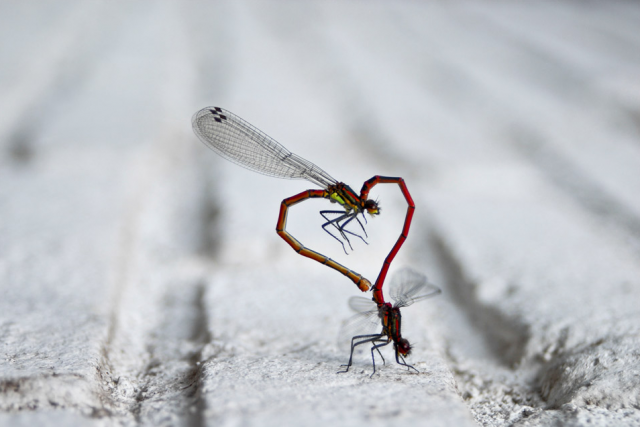
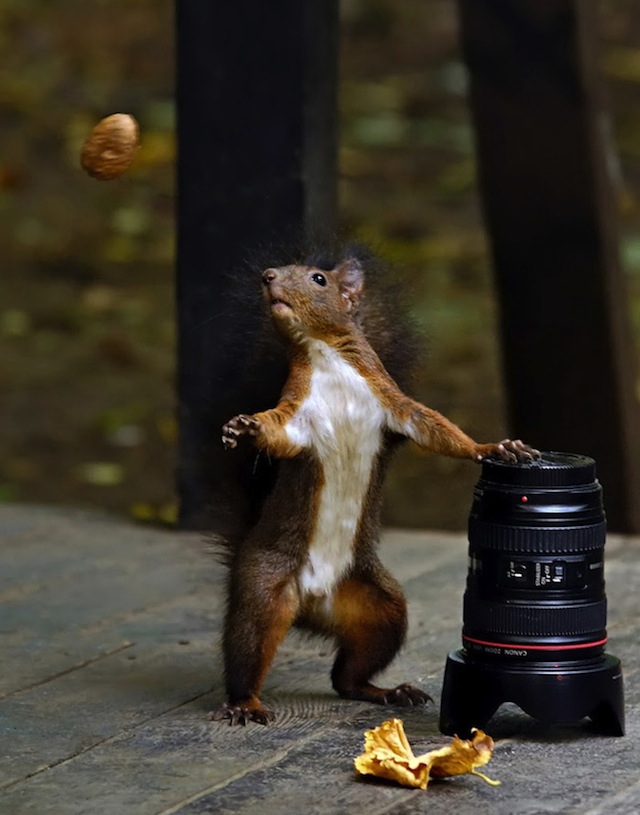
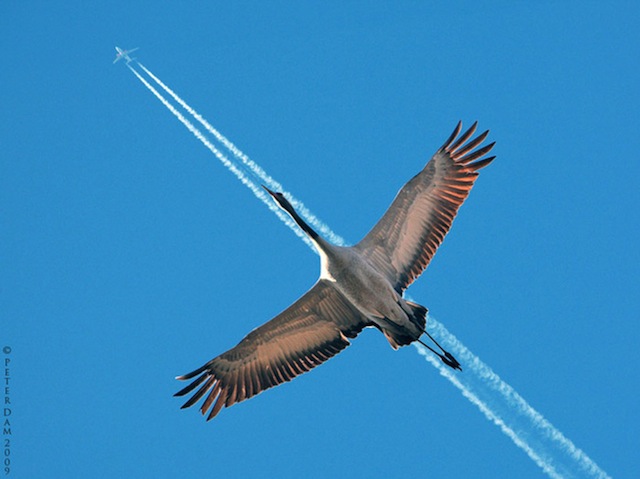
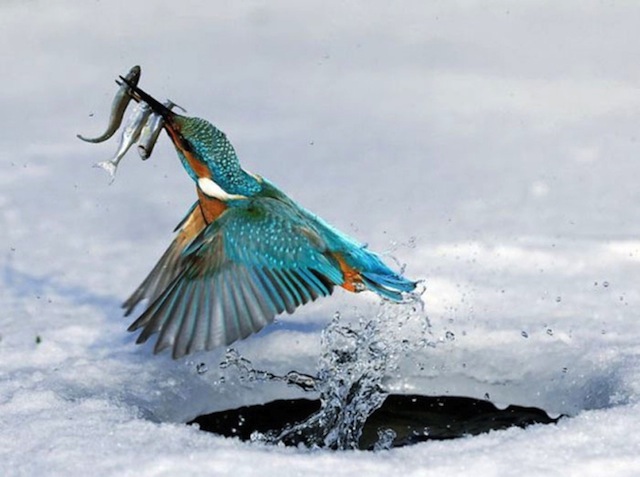
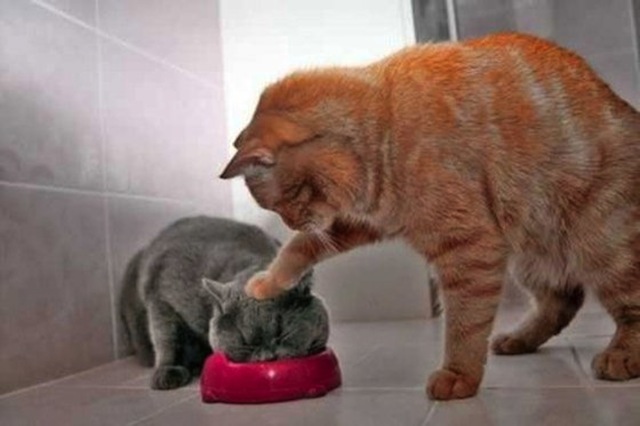
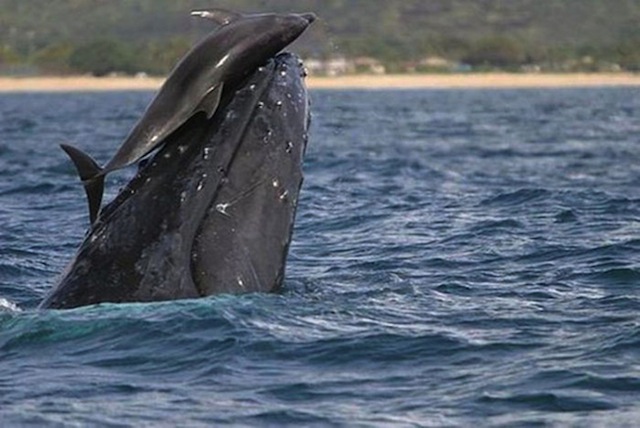
A friend from Payson, Arizona, Lew Levenson, recently sent across a set of 38 astounding photographs, all on the theme of perfectly timed shots.
They are so fabulous that I have decided that for today and the following four Sundays I will post a selection.
So today, the first set of 8 photographs. Trust me you will love them, so a big thank you to Lew. Do say which are your best ones!
oooo
oooo
oooo
oooo
oooo
oooo
oooo
oooo
To close here is that picture courtesy of Chris Snuggs.
By the way, if you would like see again the rest of Lew’s photographs just leave a comment to that effect.









 Learning from Dogs