This essay from George Monbiot just has to be read as widely as possible.
Dear followers of this blog know that from time to time I dip into politics. I do so because something I read strikes me with such force that I want others to read the article or essay. Not infrequently, my ‘dip’ is in the form of republishing an essay from George Monbiot who, long ago, gave me blanket permission to republish his essays. That is the case today.
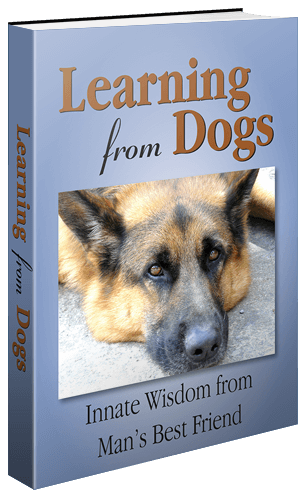
I was inspired to write my book, subsequently self-published last December, because I truly believe that the values that we see in our longest animal companions are values that we, as in our societies, from top to bottom, have to embrace if we are to stand any chance of surviving as a species.
Reflect on the fact that dogs do not lie, they do not set out to deceive or influence others for their own personal gain and they are utterly creatures of integrity.
OK, I can hear some of you thinking that dogs are dogs and humans are humans and it’s just plain daft to link the two in this fashion. My only answer to that is to read the book or, at the very least, download and read the first twenty-five pages (for free). Better still purchase the book and have 50% of my net income donated to the Rogue Valley Humane Society.
On the 28th July, George Monbiot published an essay entitled So Much For Sovereignty. I read the essay and, frankly, was apalled at what George was describing: the background of the UK’s new international trade secretary, Liam Fox, recently appointed by Theresa May.
Read it for yourself and see if you react the same way that I did!
ooOOoo
So Much For Sovereignty
28th July 2016
To this government, “taking back control” means handing Britain to a different set of foreign powers
By George Monbiot, published in the Guardian 27th July 2016
What does it mean to love your country? What does it mean to defend its sovereignty? For some of the leaders of the Brexit campaign, it means reducing the United Kingdom to a franchise of corporate capital, governed from head offices overseas. They will take us out of Europe to deliver us into the arms of other powers.
No one embodies this contradiction as much of the man now charged with determining the scope of our sovereignty: the new international trade secretary, Liam Fox. He explained his enthusiasm for leaving Europe thus: “We’ll be able to make our own laws unhindered by anyone else, and our democratic parliament will not be overruled by a European Court.” But of all the people Theresa May could have appointed to this post, he seems to me the most likely to ensure that our parliament and laws are overruled by foreign bodies.
Dr Fox looks to me like a corporate sleeper cell implanted in government. In 2011, he resigned his post as defence secretary in disgrace, after his extracurricular interests were exposed. He had set up an organisation called Atlantic Bridge, financed in large part by a hedge fund owner. Atlantic Bridge formed a partnership with a corporate lobbying group called the American Legislative Exchange Council, which is funded by tobacco, pharmaceutical and oil companies. Before it was struck off by the Charity Commission, it began assembling a transatlantic conclave of people who wished to see public services privatised and corporations released from regulation.
He allowed a lobbyist to attend his official meetings, without government clearance. He made misleading statements about these meetings, which were later disproved. It seems extraordinary to me that a man with such a past could have been brought back into government, let alone given such a crucial and sensitive role. Most newspapers have brushed his inconvenient history under the political carpet. He is, after all, their man.
This is the man who has been put in charge of making new trade agreements. What he wants to do with them is pretty clear. “We need to see a reinvigoration of our transatlantic relationship,” he argues. “We have a low regulation and low taxation environment which is only likely to improve outside the EU.” Improve, in this context, means becoming yet more hostile to human welfare, social mobility and the defence of the living world.
They threaten to reduce to the lowest common denominator the laws protecting us from predatory finance, the exploitation of workers, food adulteration, climate change and environmental destruction. They threaten to force the privatisation of public services. They would allow corporations to sue governments for compensation in offshore tribunals that – unlike the European Court Dr Fox professes to hate – are unaccountable, opaque and wildly imbalanced. The EU has no mandate to strike such agreements: a consultation on the offshore tribunals TTIP proposes attracted 150,000 responses, 97% of which were negative.
Leaving Europe should enable us to leave behind biased, destructive treaties of this kind; we will, after all, have to renegotiate most of our trade agreements. But by putting the Fox in charge of the chicken coop, Theresa May seems determined to replace them with something even worse.
The corporate army is already at the gates. The Republican senator Tom Cotton proposes that Britain should join the North American Free Trade Agreement (NAFTA). Using the kind of international tribunals that TTIP threatens to impose, NAFTA has undermined labour rights and environmental protection. It has blocked attempts to produce more progressive laws and greatly restricted legislative sovereignty. Whether we formally join NAFTA, or connect to that trading area through TTIP or another such agreement, the results will gravely threaten our sovereignty – unless negotiations are run on an entirely different basis.
In response to the Philip Green scandal, Theresa May says she wants to “tackle corporate irresponsibility” and “reform capitalism so that it works for everyone not just the privileged few.” We have no idea what she means, but here’s where it should begin. Before her government starts negotiating any new trade treaties, it should open a public consultation about their purpose and scope. The UK’s trading relationships should be debated in parliament and the people of this nation should be allowed to determine how much control over national life our representatives should retain, and how much should be ceded to international agreements and international bodies.
Does this mean a referendum? If we can be trusted to decide whether or not to share our sovereignty with Europe, should we not also be trusted to decide whether or not to share it with transnational capital?
But the Conservative vision of sovereignty is highly selective. People like Dr Fox appear to hate much of what others love about this country: the NHS, our public broadcasters, our social safety net, the protection of the countryside, the notion that power resides in the people, rather than in corporations and their shadowy lobbyists. There are traitors in our midst, who would rip down our most treasured institutions on behalf of the transnational elite and its offshore holdings. This, it seems, is what they mean by taking back control.
Sometimes the most obvious solutions take the longest to find.
I feel a little embarrassed that this introduction may come across as rather self-indulgent; I don’t intend that.
My purpose is to offer an introduction to a recent blogpost from Sue Dreamwalker that explains why her post really ‘spoke’ to me and why it felt important to share Sue’s post with all you good people.
Subsequently, I left a follow-up to my first comment, replying to a comment from Diane Husic. This is what Diane wrote:
Many of us realize what a critical junction the country faces in this election cycle. As an academic, I am trying to figure out the appropriate role I should play. We need to teach students to be respectful of difference, to be tolerant, to be problem solvers, and to be civically engaged, but we aren’t supposed to use our positions to “force” our political views on them. But given the magnitude of issues confronting the planet and humanity and the importance of having leadership that “gets it” (and displays compassion and empathy), this is a tough balance to try to find.
and this was my reply to Diane:
Diane, as someone who previously has run his own business and then, after selling it in 1986, spent a number of years as a mentor with the Prince’s Youth Business Trust in the UK, I have come to the conclusion that the best role model we adults can offer our ‘students’ is this: “Be the best you can be!” That flows from being fully aware of the person that one is. For self-awareness is the key to understanding oneself and, consequently, of understanding others. Understanding why people think and behave the way they do, for good and bad, is the only effective way of engaging with others and seeking that ‘civic engagement’ so critically important.
Apologies, that paragraph sounds like a damn speech! I didn’t intend it to be so. Plus, my own journey of self-awareness has been a long and tortuous one – but that doesn’t change my view just expressed.
Her recently released book on the effectiveness of Role Montage in building leadership skills is highly relevant to today’s students. In Jan’s words (and I have no commercial or financial link with Jan):
Role Montage: A Creative New Way to Discover the Leader Within You is written from Jan’s experience with her client work and her research. It helps leaders explore self-awareness and leadership using the role montage process.
I’ll creep back into my hole!
You can see why I offered a warning about coming across as self-indulgent!
But if you have stayed with me so far (and thank you) you will now understand why Sue’s post spoke so clearly to me. Republished here with Sue’s very kind permission.
ooOOoo
Set Yourself Free..
by Sue Dreamwalker. July 28th, 2016.
This morning I switched on the radio and the first record I heard was this one.. It was the very first time I had listened to this recording, never hearing it before.. It made me smile.. Especially when it mentioned taking Calcium and taking care of our knees.. So I decided to YouTube it to listen to again and to my delight found several versions..
Life has been busy within the Dreamwalker’s Domain this last week.. Last night I was so tired I went to bed at 7pm and slept for 12 hours.
Today the Universe thought to allow me to cool down in the showers of rain, so I thought I would share about my Busy time in the Sun on my Gardening Blog. And to share what brought such a smile to my face first thing this morning..
I particularly enjoyed the lyrics in the middle of this narrative of the inclusion of Rozalla’s Song Everybody’s Free to Feel Good, which is an old favourite of mine..
So Go On FEEL GOOD and DANCE.. LAUGH and SING..
And SHARE THE FEEL GOOD FACTOR
Sending Love and Blessings
Next time I will share with you the village I grew up in as we went back to see the Well Dressings.. Along with some of my thoughts..
Sue
ooOOoo
Feeling good about ourselves is the result of knowing and liking who we are. The foundation stone of knowing and liking all the many good people we interact with throughout our lives.
After a quick check to make sure that Emily wasn’t promoting a business I said that I would be delighted to publish a guest post from her.
So who is Emily? This is a short introduction to her:
Emily Parker is a cat parent to 2 lovely cats, Gus and Louis (Gus only has one eye, but we love him all the same!). She has lived with dogs in the past and can’t wait to add a dog to the family again. She writes about all things cats at her blog, Catological.com.
Don’t ask me how late February became late July but that doesn’t diminish in the slightest the quality of Emily’s guest post.
Before you read on let me present you with a picture of one of our cats that we have here at home.
ooOOoo
Cats, Dogs, and Kids: Who Teaches Who.
by Emily Parker, Catological.com
You’ve heard it as a kid, and if you have children of your own, you may have told your kids this.
“Having a dog is a big responsibility.”
This is absolutely true. A dog can teach kids how difficult it can be to take care of another living being, all while teaching them valuable life skills.
But little do we know that raising a dog is not a one-way street. Not only do dogs teach kids, but kids teach dogs, too. And if you’re a cat owner, it creates another web of teaching. Let’s break it down.
What Dogs Teach Kids
The Importance of Feeding, and Nutrition
What a dog will teach a kid is the importance of regular feeding. However, a kid can’t just dump some dog food in a bowl and call it a day. To raise a dog properly, the child needs to make sure the pup is getting the adequate nutrition it needs, all while not overeating.
If you have a kid, you must teach the child that proper nutrition is a must when feeding the dog. He or she will need to measure out the serving size, pay attention to ingredients, and become acquainted with the macronutrient profiles most beneficial for their dog. This can bleed into the child’s own eating habits as they learn to eat healthy and measure out portions.
Also, feeding a dog will teach a child that rewarding yourself is good if it’s done on occasion. Nothing wrong with the occasional treat!
Just be sure to keep up on the latest recalls.
Exercising
A child needs to have at least an hour each day dedicated to getting outside and playing. There are many ways to get a child outside, but perhaps the best way is to have a dog.
A dog needs to be walked every day, and by having your kid walk the dog, they’ll be getting exercise and learning to enjoy the great outdoors. Plus, it can get even more physical. Kids can chase dogs. Dogs can chase kids. Kids can run with their pets. The possibilities, as it turns out, are endless.
That Taking Care of a Pet Can Get Messy
This applies to cats as well. Children will have to scoop a cat’s litter, though it may seem a bit cleaner than picking up after a dog, who will of course be doing its business as the child takes it out for a walk, and the child will have to pick up after their pet.
It can seem a little a messy, and it will teach the child how to handle an animal’s waste, (which works out great if they ever decide to have children).
What Cats Teach Kids
The Importance of Consent
Most dogs are all over you, while some cats tend to want you to pet them at certain times.
Yes, we know that not all cats are like that, but a majority are. Sometimes, a cat doesn’t want to be held, pet, or bothered in general. And that’s okay!
You should teach your kid that sometimes, an animal, or indeed a human, needs their personal space, and that needs to be respected.
The Importance of Sleeping
Cats can sleep almost twice as much as humans can.
While your kid isn’t going to be sleeping for 16 hours a day, they still need 8 hours in most cases (or more if the child is younger), and may be neglecting that.
Having a cat around, who sleeps all the time, can teach the kid that sleep is important to anyone’s life, and they may soon be sleeping along with the kitty.
The Importance of Curiosity
Cats are always curious about their surroundings. If something changes, the cat will examine the surroundings incessantly. While some say that curiosity kills the cat, we believe that being curious about everything around you is a good thing, and should be taught to children.
As Fluffy examines her surroundings, kids will soon learn to examine what is around them. They’ll be aware of the people around them, look around their room when trying to find something, and be aware at all times. All of these are valuable tools for a child to have.
What Kids Teach Cats
How to Have a Little Fun
Despite learning the cat’s boundaries, some kids will still pick the kitty up, pet them excessively, and bother them. The cat may soon learn to be more sociable. They may have points where they don’t want to be bothered, sure, but they can learn to let loose once in a while.
What Dogs Teach Cats
How to Tolerate Each Other
Sure, cats and dogs can get along great, but at the end of the day, they are two different species with two different ways of behavior. Sometimes, an antisocial, sleeping cat can get annoyed by Fido’s constant need for attention. A dog may be confused by Fluffy scratching it whenever it tries to chase her.
Dogs and cats soon learn, however, to get along, or at least tolerate each other’s differences. This can teach children that they may have to be acquaintances with someone who is different than them and who may annoy them to death, like a coworker or a classmate. You may have to be with some people who are different than you. You’ll have to tolerate it. Heck, you may even grow fond of them after a while.
The Importance of Eating What is Yours
Cats can get into dog food, and vice versa. While cat food isn’t going to harm a dog and dog food won’t hurt a cat, the food doesn’t meet the nutritional needs of the opposite species. Dogs and cats will soon have to learn where their food is and not get into another animal’s food (though you should keep their feeders and dishes far apart from each other to prevent confusion and territorial fights). It’s a valuable lesson to learn for any pet.
Finally…
A kid raising a pet isn’t just a learning experience for the child. It can be a learning experience to the pet, as well as a learning experience from one pet to another. In life, you’ll learn different things from different people, and those who aren’t human can ironically be the best teachers.
ooOOoo
Wise words indeed, and a pleasure to publish. Thanks Emily.
The concluding photographs from the 10th annual Dog Photographer of the Year competition.
The first set were published a week ago, together with this introduction:
Incredible, prize-winning, images of dogs.
The following was read over on Mother Nature News on June 30th. They just have to be shared with you.
However, to ensure the integrity of republication and the identity of the photographers, I’m going to include the photographs and the words of the original MNN piece, and split it across today and next Sunday.
Trust me you will adore these photographs.
Here are the concluding photographs.
ooOOoo
These prize-winning images of dogs will steal your heart.
10th annual Dog Photographer of the Year competition drew entries from photographers in 90 countries.
Winner of the ‘I Love Dogs Because…’ category (Photo: Jade Hudson/Dog Photographer of the Year Competition)
Hugo the puppy is the subject of this winning image by 16-year-old Jade Hudson.
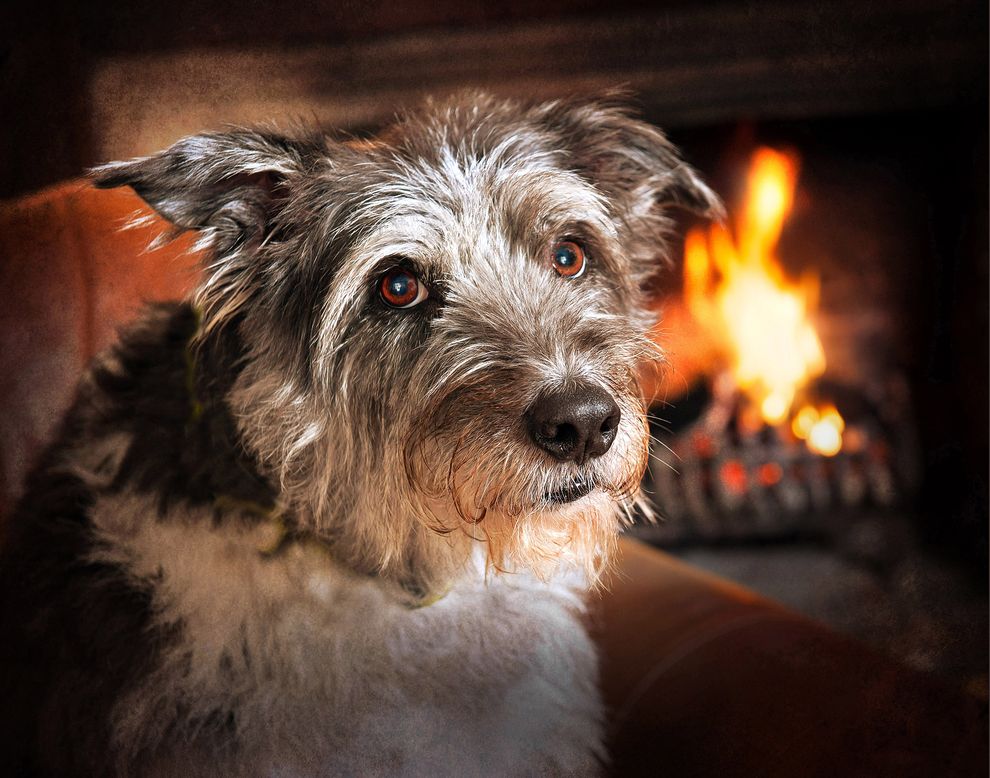
Winner of the Oldies category (Photo: Kevin Smith/Dog Photographer of the Year Competition)
The gray faces of old dogs speak to all the love and friendship they’ve provided over the years as Lizzie, a 12-year-old mixed breed dog, shows us. Curling up with a cracking fire and your four-legged BFF is one of life’s great joys.
Winner of the Dog Portrait category (Photo: Jamie Morgan/Dog Photographer of the Year Competition)
This portrait of two Afghan hounds named Ozzie and Elvis took first place for the Dog Portrait category. The setting is the idyllic Ashdown Forest in Sussex.
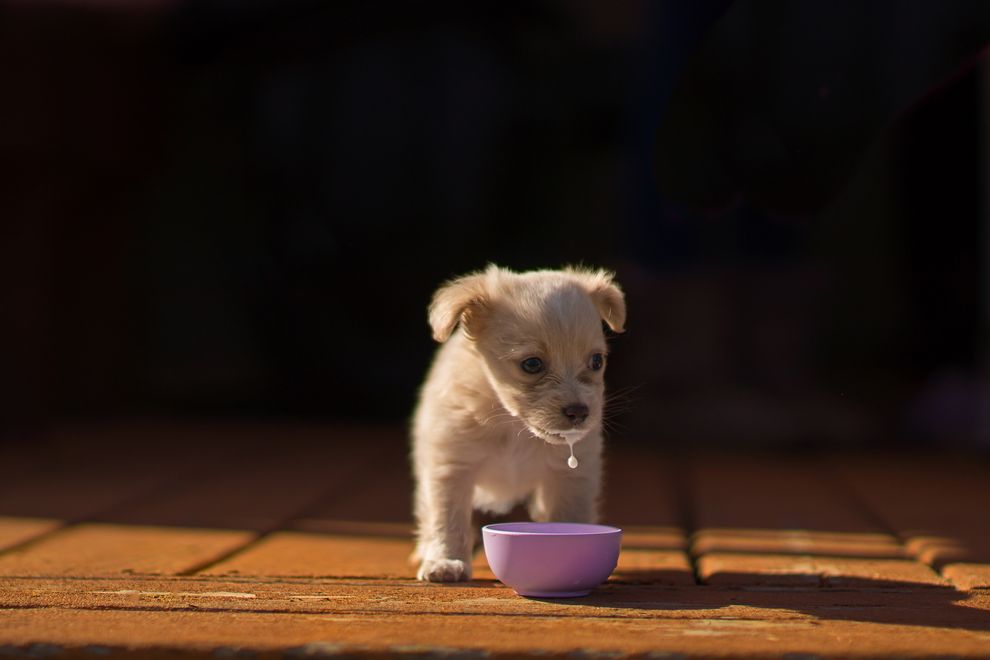
Winner of the Puppy category (Photo: Linda Storm/Dog Photographer of the Year Competition)
And finally, the winner of the Puppy category is little rescue puppy Buddy enjoying a bowl of milk. The photo was taken by Colorado-based photographer Linda Storm.
“The entries for this year’s Dog Photographer of the Year competition were some of the best we have ever seen,” says Rosemary Smart, Kennel Club chief executive. “Choosing the winners was an incredibly challenging task and we commend every photographer who entered. Each of the winning photographers beautifully captured the essence of their canine subjects on camera, demonstrating how important dogs are to us in every walk of life.”
If you’re a photographer who loves dogs as your subject, keep an eye on the opening date for next year’s competition!
ooOOoo
Going to repeat the words of Rosemary Smart as I can’t even come close to the power of what she said:
The entries for this year’s Dog Photographer of the Year competition were some of the best we have ever seen.
Choosing the winners was an incredibly challenging task and we commend every photographer who entered. Each of the winning photographers beautifully captured the essence of their canine subjects on camera, demonstrating how important dogs are to us in every walk of life.
Thus it seemed entirely appropriate to republish this lovely item that first appeared on Learning from Dogs in October, 2011.
ooOOoo
When I was living back in South-West England, in the Totnes area, I had plenty of time to get to know Neil K. Neil has the most wonderful sense of humour and an ability to look at the world rather differently than the rest of us. I offer this tribute in acknowledgement of the great items that Neil passes to me for inclusion in Learning from Dogs. This one is no exception.
——————–
The Story of Adam & Eve’s Pets
Adam and Eve said, ‘Lord, when we were in the garden, you walked with us every day. Now we do not see you any more. We are lonesome here, and it is difficult for us to remember how much you love us.’
And God said, I will create a companion for you that will be with you and who will be a reflection of my love for you, so that you will love me even when you cannot see me.
Regardless of how selfish or childish or unlovable you may be, this new companion will accept you as you are and will love you as I do, in spite of yourselves.’
And God created a new animal to be a companion for Adam and Eve.
And it was a good animal and God was pleased.
And the new animal was pleased to be with Adam and Eve and he wagged his tail.
And Adam said, ‘Lord, I have already named all the animals in the Kingdom and I cannot think of a name for this new animal.’
And God said, ‘I have created this new animal to be a reflection of my love for you, his name will be a reflection of my own name, and you will call him DOG.’
And Dog lived with Adam and Eve and was a companion to them and loved them.
And they were comforted.
And God was pleased.
And Dog was content and wagged his tail.
After a while, it came to pass that an angel came to the Lord and said, ‘Lord, Adam and Eve have become filled with pride. They strut and preen like peacocks and they believe they are worthy of adoration. Dog has indeed taught them that they are loved, but perhaps too well.’
And God said, I will create for them a companion who will be with them and who will see them as they are. The companion will remind them of their limitations, so they will know that they are not always worthy of adoration.’
And God created CAT to be a companion to Adam and Eve.
And Cat would not obey them. And when Adam and Eve gazed into Cat’s eyes, they were reminded that they were not the supreme beings.
As in the nutritional needs of those dear creatures.
Having said in yesterday’s post that this week would be a succession of repeat posts along comes an email from Susan Combs offering a guest post. It seemed a great post to share with you all.
She describes herself as:
Susan works as a Pet Health and Safety Expert and holds expertise in the area of animal/pet care. She has over 6 years of experience in pet healthcare and is a pet parent to a dog named Chilly.
How to Meet the Nutritional Needs of Pregnant Dogs
As a pet owner you should remain educated about the nutritional requirements of your dog at the time of her pregnancy. A pregnant dog needs precise nutrition and if proper care is not taken then it can lead to serious health issues.
How long does a dog’s pregnancy last?
It lasts for 63 days. The first 3-4 weeks she can be fed a regular diet, however the last weeks are important from nutrition point of view and she requires more calories. During the first 3-4 weeks, it is recommended to feed her green trippet which is made from high quality green tripe. It contains lots of digestive enzymes and ensures good health. You can mix tippet to high-quality kibble and feed to your dog.
What should I change in my dog’s diet during the 2nd half of pregnancy?
During the 2nd half of pregnancy, dog should be fed around 30-40% more calories than what she was being fed in the first half of pregnancy. Your dog’s weight should increase by 15-25% at the time of whelping in order to maintain optimal body weight after parturition, as she needs to produce sufficient quantities of milk and colostrums to support growth in the newborn pups until they are weaned.
By week 8-9, the meal should be a third more than the regular meal. Total food quantity should be divided into four or more servings per day and dog foods with minimum levels of 430 kilocalories/cup should be provided in order to supply adequate quantities of calories. If the dog is experiencing weight issues then it is recommended to consult a vet immediately.
It is absolutely okay if your dog is eating too little in one go. You can break the meal into little portions to be fed entire day. Actually, in the advanced stages of pregnancy, the stomach cannot take large quantities of food in one intake so it is better to allow eating several portions of light meal throughout the day.
How to spot potential problems?
If your dog is experiencing diarrhea then that’s an indication that you are feeding her high volumes of food. If this is the case then shift to energy dense food, preferably dry dog food.
How much should I feed her prior to parturition?
Once the bitch is ready to give birth, you should slowly increase her calorie intake to around 15 to 25 percent. It should be noted here that most bitches refuse to eat food 12 hours prior to whelping. You should keep attention and provide her to drink water in order to prevent dehydration.
How to increase the calorie intake depending on the number of puppies?
For every puppy, your dog will require a 25% increase in her caloric intake, up to 180-200% maximum increase can be done in case she has around 10-12 puppies. Increasing more than 200% is not recommended. For example, a dog eating 2 cups of a high quality dog food each day before breeding will now need about 6 cups of food a day, in order to feed herself and provide for 8-10 puppies.
What preparation do I need to do for the puppies?
Yes, there is certain preparation that you need to as a dog owner prior to the birth of the puppies. You must prepare a room for the birth to occur. Ensure that the floor should be easy to clean and the area should be calm and soothing. You should also prepare a bed for the mother to deliver the babies. Have lots of towels and encourage the mother to sit on them so they become comfortable with them and opt to use them when on labor. This would make the birth easier for both you and the mother. Also as a responsible pet owner, it is your duty to get them insured.
When should I wean the puppies?
Puppies will begin to start eating food once they achieve 3-4 weeks of age. Henceforth, weaning should be completed at 6-7 weeks of age. After 6-7 weeks, you should start giving puppy food to them.
It is important to note here that the energy content level in dog’s milk increases all the time until around day 40. After this, the level of milk drops down and this is the time when you should start feeding the pups with light puppy food.
Is puppy food different than adult food?
Yes, puppy food is different than adult food. It is high in proteins and contains higher amounts of fat soluble and water soluble vitamins, minerals, fats, and other essentials. It also has a controlled amount of calcium and phosphorus that helps in the overall growth and health of the newly born puppies.
Should I exercise my pet regularly?
Obesity is potential danger in pregnant dogs when delivery time comes so exercising should be done regularly during the first 4 weeks of pregnancy but during the later stages, light walk is preferred.
Any other precaution that I need to take?
Treatment for internal and external parasites is necessary. It is better to consult the veterinarian if there is any problem related to external parasites. Another important point to note is that soon after whelping, your dog will actually need to eat twice as much as normal – and three times the normal level during the peak lactation period, which occurs three to four weeks after whelping.
When should I visit my vet?
Visiting a vet should be a regular practice. If possible, take your dog to the vet during each week of her pregnancy. This will ensure that all her nutritional requirements are met. Your vet should also guide you regarding any complications and after pregnancy care tips.
Pregnancy is an important part in the life of your dog and making her comfortable is your duty. You should take complete care of her nutritional and emotional needs so that the pups born are healthy. Apart from healthy and nutritious food, you need to ensure that your dog is getting plenty of clean, fresh water, enough exercise and fresh air.
The following was read over on Mother Nature News on June 30th. The item, and especially the photographs, just had to be shared with you.
However, to ensure the integrity of republication and the identity of the photographers, I’m going to include the photographs and the words of the original MNN piece, and split it across today and next Sunday.
Trust me you will adore these photographs.
ooOOoo
These prize-winning images of dogs will steal your heart.
10th annual Dog Photographer of the Year competition drew entries from photographers in 90 countries.
Winner of the Man’s Best Friend category (Photo: Fiona Sami/Dog Photographer of the Year Competition)
The love of a dog is a universal joy, as the latest photography competition from The Kennel Club illustrates. The 10th annual competition drew over 13,000 entries from photographers in 90 countries. The photographs show the beauty, loyalty, companionship, dignity and, of course, the adorableness of dogs around the world.
The competition features eight categories, including Puppies, Oldies, Dogs at Work, Dogs at Play, Man’s Best Friend (winner pictured above), Assistance Dogs and Dog Charities, Dog Portraits and I Love Dogs Because.
Winner of the Dogs At Work category as well as overall winner of the competition (Photo: Anastasia Vetkovskaya/Dog Photographer of the Year Competition)
This image of Sheldon the English springer spaniel enjoying a mist-shrouded pond early one morning is the work of Anastasia Vetkovskaya from Russia. Not only did it win for the Dogs At Work category, but it also placed as the overall winner of the competition.
Vetkovskaya states, “I have loved animals from an early age, which is why I went to Moscow Veterinary Academy and became a veterinary surgeon in 2007. Around this period of time, my husband gave me my first SLR camera, and since then I have devoted all of my free time to photography. My specialty is pets, and I am inspired most by horses and dogs.”
Winner of the Dogs at Play category (Photo: Tom Lowe/Dog Photographer of the Year Competition)
Baxter the Westie inspired his photography-loving human, Tom Lowe, to snap this image of Baxter playing in the water of Loch Lomond in Scotland.
Winner of the Assistance Dogs and Dog Charities category (Photo: Michael Higginson/Dog Photographer of the Year Competition)
This poignant image was taken by Michael Higginson, and features his brother Dale with Esta the dog. The win not only benefits the photographer but also a charity of his choice. The Kennel Club is making a donation to Higginson’s favorite charity, Dogs for Good.
Higginson states, “Winning the Assistance Dog category has made it even more special. It’s an honor to be able to show the world what a difference a dog can make to someone else’s life.”
ooOOoo
Aren’t they breath-takingly beautiful!
The rest of these fabulous photographs in a week’s time.
My headline and sub-heading was me trying to catch your eye and persuade you stop what you are doing for eleven minutes and watch this video that was filmed earlier this year at the TEDxPSU conference. It’s all about being rational.
The presenter is Julia Galef described by WikiPedia (in part) as:
Julia Galef (born 1983) is president and co-founder of the Center for Applied Rationality. She is a writer and public speaker on the topics of rationality, science, technology and design. She serves on the board of directors of the New York City Skeptics and hosts their official podcast, Rationally Speaking, which she has done since its inception in 2010, sharing the show with co-host and philosopher Massimo Pigliucci until 2015. She also blogs with her brother Jesse on the website Measure of Doubt.
Biography
Galef received a B.A. in statistics from Columbia University. In 2010 she joined the board of directors of the New York City Skeptics. She co-founded and became president of the nonprofit Center for Applied Rationality (CFAR) in 2012. The organization also gives workshops to train people to internalize and use strategies based on the principles of rationality on a more regular basis to improve their reasoning and decision making skills and achieve goals. She was elected a fellow of the Committee for Skeptical Inquiry in 2015.
The problem I’m most interested in is how to change one’s mind. Starting from the premise that every human being is at least a little wrong about many things that matter — in our careers, or about health, science, politics, our self-image, and more — we should, in theory, be updating our views frequently as we learn more about the world. In practice, however, our opinions ossify.
So here’s that talk from Julia – I bet all of you will find it interesting! Rationally speaking, that is!
Published on Jul 11, 2016
Perspective is everything, especially when it comes to examining your beliefs. Are you a soldier, prone to defending your viewpoint at all costs — or a scout, spurred by curiosity? Julia Galef examines the motivations behind these two mindsets and how they shape the way we interpret information, interweaved with a compelling history lesson from 19th-century France. When your steadfast opinions are tested, Galef asks: “What do you most yearn for? Do you yearn to defend your own beliefs or do you yearn to see the world as clearly as you possibly can?”
If only our leaders and power-brokers across the world yearned for truth!
The great relationship that can exist between dogs and cheetahs.
Before you read on let me raise my hand in connection with this blog. Or to be clearer, next Monday Jean and I have the very great pleasure in welcoming my daughter, Maija (she of Sonic Journeys from SOUND UK), her husband, Marius, and my grandson Morten. They are staying with us until the 24th July.
Inevitably, and for all the right reasons, I will not be putting in anything like the normal time I usually spend on Learning from Dogs. It did cross my mind to stop blogging for those seven days but that seemed like a step too far.
However, what is certain is that the period from now right through to the last week in July is going to see me lowering the priority of this blog and being more random in nature in terms of if or how I respond to your comments and replies. You will also read a succession of repeats of posts from previous years. I’m hoping that because so many of you will not have been reading this place during my early years that the number of times you see something that you have previously read is kept to a minimum.
So why this note to you all today? Because the rest of this week is going to be pretty busy as we get the house all tidied up and fully prepared for our visitors.
Having got that off my chest do read the following that appeared recently over on Care2.com.
Cheetahs, the fastest land animals on Earth, have been disappearing almost as fast as they can run.
But in the African country of Namibia, the cheetah population has grown from 2,500 to 4,000 since 1994. And dogs are helping to keep those numbers rising.
Instead of trapping or shooting cheetahs that wander onto their property and kill livestock, some farmers are relying on Anatolian Shepherds and their fierce barking to scare away the predators.
“You may see in history that this dog can be responsible for saving the cheetah from extinction,” Jack Hanna, director emeritus of the Columbus Zoo, told CBS News. “That is one heck of a story right there.”
The dogs are provided to farmers and ranchers by the Cheetah Conservation Fund (CCF), the world’s leading organization dedicated to saving the lives of cheetahs in the wild.
The majority of cheetahs in the wild – over 90 percent of them, according to the CCF — live outside protected areas, surrounded by farming communities. And many of those farmers, especially poor ones, are more concerned about protecting their livelihood than an endangered species. About 10,000 cheetahs were killed during the 1980s, before CCF launched the Livestock Guarding Dog program in 1994.
Since then, the program has placed more than 500 dogs, helping to reduce the loss of livestock from 80 to almost 100 percent. The program is extremely popular — there’s a two-year wait to get in. It not only provides free Anatolian Shepherd puppies, but also training advice and free veterinary care.
“CCF research shows that the people’s attitudes towards predators are changing as a result of this and other CCF programs,” the organization said on its website.
Dogs and Cheetahs Aren’t Enemies in U.S. Zoos
As a way to promote “the life-saving role dogs play for cheetahs in the wild,” according to CBS News, some zoos in the United States are raising puppies with cheetah cubs.
“The number one question up here, this $40 million exhibit: ‘Are the dogs coming out?’” Suzi Rapp, director of the Columbus Zoo’s animal programs, told CBS News. “And I say the Columbus Zoo built the world’s most expensive Labrador retriever exhibit in the world… the biggest dog run.”
Dogs and cheetahs can also be found together at the Cincinnati Zoo. It was there, as you probably remember, where Harambe the gorilla was shot to death when a boy fell into his exhibit. His killing sparked international outrage and concern over keeping wild animals captive in zoos.
What are domesticated animals doing in these zoos? Like the Anatolian Shepherds in Africa, the zoos say, the dogs are helping to prevent cheetahs from becoming extinct. But instead of scaring cheetahs away from livestock, the zoo dogs are best buddies with the cheetahs. Their friendship, which begins when they’re about 3 months old, helps put the skittish cheetahs at ease so they can more easily be bred.
The San Diego Zoo, which has been raising dogs with cheetahs for over 30 years, gets many of its puppies from animal shelters. So in a way, the rescued dogs are paying it forward by helping save the lives of another species.
ooOOoo
That Care2 article by Laura Goldman included a short video from CBS News. However, despite me having a link to that video I couldn’t get it to play.
No problem because YouTube came up with a very good alternative.
Published on Apr 29, 2013
CCF Operations Manager Brian Badger explains how our Livestock Guarding Dog program works as part of the whole of CCF’s operations to help save the cheetah in the wild.
In fact, there was more than one interesting video and I couldn’t make up my mind which was best.
So you got two!
Published on Sep 25, 2013
In Gobabis, Namibia, these Kangal dogs guard the goats against predators, including the worlds largest population of wild cheetahs. This stops the farmers from targeting the cheetahs. Since the big dogs were introduced to Namibia, the cheetah population has reached a 30-year high ! Hurray!









 Learning from Dogs
Diane, as someone who previously has run his own business and then, after selling it in 1986, spent a number of years as a mentor with the Prince’s Youth Business Trust in the UK, I have come to the conclusion that the best role model we adults can offer our ‘students’ is this: “Be the best you can be!” That flows from being fully aware of the person that one is. For self-awareness is the key to understanding oneself and, consequently, of understanding others. Understanding why people think and behave the way they do, for good and bad, is the only effective way of engaging with others and seeking that ‘civic engagement’ so critically important.
Apologies, that paragraph sounds like a damn speech! I didn’t intend it to be so. Plus, my own journey of self-awareness has been a long and tortuous one – but that doesn’t change my view just expressed.
Coincidentally, I have been having some informal chats with Jan Schmuckle: http://www.janconsults.com/home
Her recently released book on the effectiveness of Role Montage in building leadership skills is highly relevant to today’s students. In Jan’s words (and I have no commercial or financial link with Jan):
Role Montage: A Creative New Way to Discover the
Leader Within You is written from Jan’s experience
with her client work and her research. It helps
leaders explore self-awareness and leadership using
the role montage process.
I’ll creep back into my hole!