The incredible story of one stray dog and a desert racer.
This has been widely reported in many other places but, nonetheless, seemed a perfect fit for a blog called Learning from Dogs!
This is the story of a stray dog that took a liking to a runner participating in the 2016 Gobi March 4 Deserts race in China. I first saw the story when it was carried on the Care2 Causes site.
How hard are you willing to work to improve your position in life? For one stray dog, the answer is: pretty darn hard.
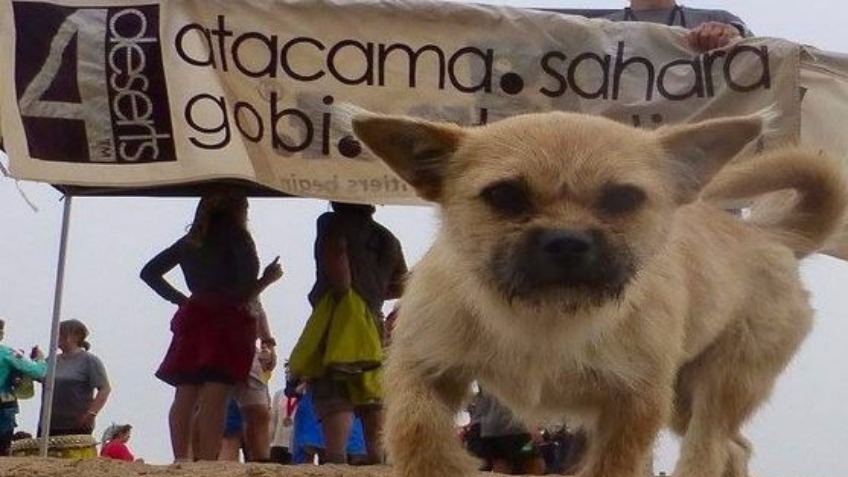
During the 2016 Gobi March 4 Deserts race in China, extreme runner Dion Leonard from Scotland was racing through the rugged terrain of the Tian Shan mountain range. That’s when a stray female pooch (eventually and aptly named) Gobi started following him.
The runner figured that she’d tire out eventually. She was a small dog, so keeping up with a life-sized human (who is an extreme jogger) probably didn’t seem likely. But amazingly, the little dog kept up.
Man who befriended stray dog during extreme desert marathon launches reunion appeal
The dog ran alongside Dion Leonard for 124 kilometres
May Bulman Tuesday 2 August 2016
Mr Leonard hopes to be reunited with the dog who ran with him during the 250 kilometre race in the Gobi desert 4Deserts.com / Omni Cai
An extreme marathon runner has launched an appeal to be reunited with a stray dog with whom he formed an “unbreakable bond” during a 250-kilometre (155 mile) race in the Gobi desert in China.
Dion Leonard, 41, hopes to raise the funds that will allow him to be reunited with the dog, named Gobi, who joined him during the annual 4 Deserts Race Series in March.
Gobi began running alongside the 101 competitors as they ran through the Tian Shan mountain range. Despite her small size the dog managed to run half of the race.
Later on in that Independent article it is reported:
Mr Leonard set up the crowdfunding page to raise funds towards organising for Gobi to be transported from China to live with him in Scotland.
The process will take up to four months and cost £5,000, with the dog having to be medically checked and quarantined before she can be cleared for entry.
A simple mouse click then takes the reader to that Crowdfunding page where the headline then shows that already over £19,000 has been raised.
That page explains:
Gobi, a friendly stray dog joined 101 other competitors running 250km over the Tian Shan Mountains down to the Black Gobi Desert during a 6 stage 7 day self sufficiency foot race. Gobi ran 4 stages including the final 10km stage to the finish line, showing unique strength and stamina for a little dog to keep up with the runners in such grueling conditions.
Everyone from the competitors, volunteers and race crew fell in love with this little dog that captured all our hearts. Gobi took a shine to me and over the week we developed an unbreakable bond as I shared my sleeping space, food/water and ultimately our companionship.
Now let’s hear from Dion.
Time and time again our wonderful dogs inspire us to reach out; to never say never!
Setting a fabulous example of what an animal shelter should be like!
The chances are that the great majority of domestic animal lovers have an impression of the standard animal shelter. The chances are that this impression is not one of wall-to-wall approval. It is tragic that animal shelters are required but it is a fact of life that they are needed. Many of them depend heavily on volunteers and donated money.
But that’s not to say that there can’t be a shelter setting a very high example of how a shelter should be.
The words “county animal services” don’t really evoke thoughts of luxury, comfort or state of the art anything, but Miami-Dade is about to change that.
In June, the county opened its first ever “adoption mall,” an air-conditioned, high tech building where potential adopters can “shop” for their new furry best friend without even realizing they’re in a shelter.
“The old shelter was outdated and we wanted more capacity and to improve the wellness of the shelter pets,” explains Alex Muñoz, Director of the Animal Services Department about the project. “We have both cages and free roaming rooms and all areas for pets are air-conditioned.”
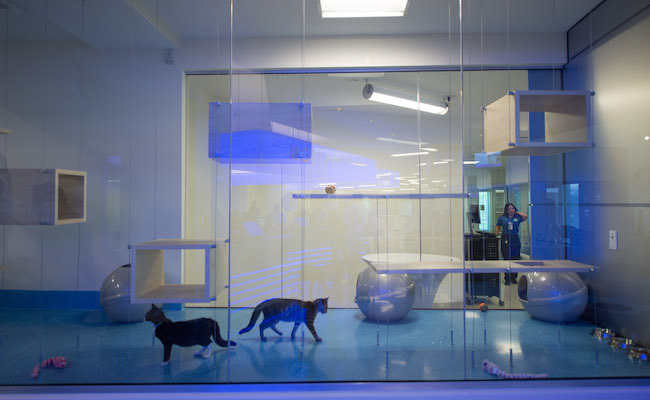
The Miami-Dade Animal Services Pet Adoption and Protection Center is a massive 72,000 square-foot facility that sits on five acres. Instead of sitting in kennels that don’t have much more than a small bed or sometimes just a couple of blankets on the concrete floor, adoptable dogs have plenty of space to move around and they stay stimulated in the outdoor canine exercise areas. When they’re done playing they can then retreat inside where the temperature controlled rooms keep them safe from the Florida heat.
For the kitties, a lounge area filled with toys allows them to play or just communally nap–after all, they are cats.
In 2015, Miami-Dade became a no-kill county, reaching a 90 percent save rate for all animals going into its shelters. Now with the larger building, the department was also able to expand the number of animals it houses. The new facility has 25 percent more dogs and 50 percent more cats than the previous shelter.
Since disease outbreaks are not uncommon in shelters, the new facility was built to prevent the spread of viruses among the animals.
“The HVAC System includes multiple air exchanges per hour to clean the air in order to avoid air borne diseases,” says Muñoz adding that “dogs are separated in different pods to avoid cross contamination.”
With the new spiffy location, the county is also hoping to fight the association people make of shelters being depressing and its animals sad or broken.
A 2013 study done by Best Friends Animal Society found that 46 percent of people considered shelter pets second-rate compared to dogs from breeders and only 31 percent of young people were willing to consider a shelter adoption.
In addition to happier and more comfortable animals, the building also houses professionals and volunteers who will spearhead programs advocating for rescuing, fostering, caring for neonatal kittens and working with Miami-Dade County Public Schools to teach kids about responsible pet care.
This new type of shelter comes with a hefty price tag of $15 million but Muñoz says it could definitely be implemented anywhere.
And, please, if anyone who reads this is thinking of getting another cat or dog then do make a visit to your nearest shelter your first step. For if all the dogs and cats in shelters were found good homes there would be no need for shelters. An idyillic dream, I know!
Anyone who has been close to dogs in their lives knows that they are frequently very vocal creatures. Likewise, anyone who has been close to a dog or two quickly learns to understand the basic emotions being conveyed by a dog’s vocal sounds.
But, nonethless, there was an item over on the Care2.com site recently that provided a comprehensive tutorial on listening and interpreting the sounds from our dogs. I wanted to share it with you today.
Your dog communicates with you and other dogs in a variety of ways — including growling. Depending on the context, a growl can be anything from a sign of enthusiastic play to a warning of an impending attack. It is important to understand why your dog growls and when you should be concerned about this behavior.
A growl doesn’t always signal an unfriendly dog. Here are some common reasons your dog might growl and some situations where you may need to seek outside help.
Growling in Play
Dogs often growl during friendly play with other canines. This type of growling is typically higher pitched and shorter in length than other growls. To ensure that play is friendly, watch for the proper play signals and keep arousal levels low by taking frequent breaks.
Your dog may also growl when he plays with you. Pay attention to your dog’s body language during play — sometimes growling can indicate discomfort. Avoid rough play with hands and physical wrestling. If you are unsure about the distinction between acceptable play interactions and aggression, seek help from a professional.
Growling as a Warning
A dog who is afraid of something may growl to fend off potential harm; the message he’s sending is that he will defend himself if necessary. Some dogs may growl at any unfamiliar person, while others may respond only to specific types of people, like men with beards, or to sights they are uncomfortable with, such as a horse. If your dog growls only at specific people or things, remedial socialization help is needed.
Or your dog may growl at another dog as a way to tell him to back off before a confrontation occurs. Many times, the other dog will heed the growl and give your dog the space he desires. There are dogs, however, who will not back down when they are growled at; in this situation, a fight may ensue.
If your dog’s warnings to back off go unheeded, his growling may increase into other aggressive behaviors, making it difficult for him to be around other canines. Some dogs do best with only select doggy playmates, while others should be limited to socializing only with humans.
Growling for Medical Reasons
If your dog suddenly starts to growl when he is approached or touched, it may be a sign that he is in pain. Dogs with arthritis, abscessed teeth or other forms of illness or injury may experience increased pain when they are moved or touched and may growl to avoid it. A pet in pain is also more likely to bite than a healthy pet.
Pregnant or lactating dogs, or dogs in false pregnancy, are more likely to be protective and defensive with people and other animals, and are also more likely to growl at approaching humans. If you think your dog is growling for medical reasons, talk to your veterinarian.
Growling Out of Frustration
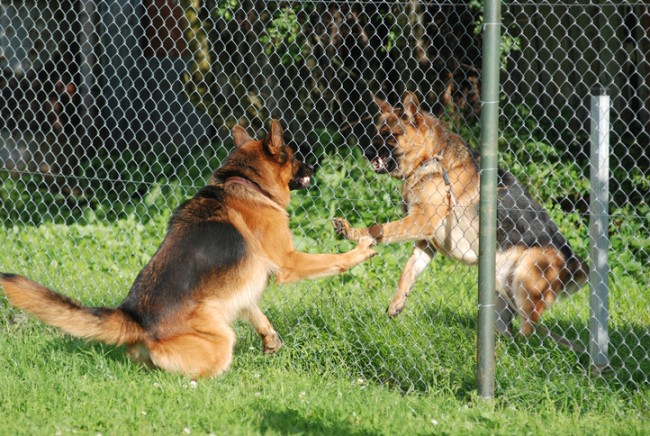
Your otherwise-friendly dog may growl as an expression of barrier frustration. A dog may growl or bark when he is on leash or behind a fence, even if he is comfortable with other dogs when he is off leash. Dogs who growl in these situations need to be trained to relax when on a leash or behind a fence, as territorial or frustration-based behavior can escalate over time. Your dog should never be chained up outside, as this can lead to extreme territorial and protective behavior, which puts the dog, other animals and people in danger.
When to Seek Outside Help
Growling is a way of communicating — for instance, his way of saying, “Give me space,” “Stop it,” or “Back off.” But certain situations — growling when approached or handled, and growling as part of resource guarding — require professional help. A dog who is engaging in resource guarding may be protecting food, toys or people, or his favorite places, like a sleeping space. Even with the best management plan in place, a guarding dog may escalate his aggression, which is why this behavior calls for professional intervention.
Your dog may also growl when he is handled, either because he is uncomfortable or afraid. He may growl when his collar is grabbed, his toenails are trimmed, his ears are touched or his mouth is opened. He may also be uncomfortable with direct eye contact, a person leaning over him, hugs or other forward greetings. Again, this behavior can escalate to something much more dangerous.
Talk with your veterinarian about these behaviors as soon as possible; have your pet’s health evaluated and, if necessary, ask for a referral to a behaviorist or trainer who can help you teach your dog strategies for coping with these situations.
By Mikkel Becker | Vetstreet.com
ooOOoo
You can imagine that with nine dogs here in the house there are times when Jean and I struggle to hear each other over the top of the doggy conversations.
A few weeks ago I had a comment left on a blogpost, “Hello Paul.. all the very best ex, 1234 lol“. The comment had been left by a Martin Lowe. That won’t mean anything to anyone until I explain that I have a pilot’s log book and the very first entry reads:
March 3rd, 1984/Cessna FA152/G-BGAF/Capt. M. Lowe/P u/t/IPSWICH – LOCAL/1325 Departure/1355 Arrival/ 0:30 mins dual/ Ex 4,5.
That was my very first flight in a powered aircraft and my instructor was Martin Lowe of the Suffolk Aero Club based at Ipswich Airport in Suffolk, England.
Yesterday, Martin and I had a great catch-up over the phone and I’m republishing an earlier post of mine as a way of saying how fabulous it was to remake contact with Martin once again.
ooOOoo
Keeping a balance on one’s state of mind.
Don’t know about you but I find that it is all too easy to get wound up by so much that is going on in this crazy world. That’s not to marginalise the threats to society that are all around us and there are some powerful writers out there who work so hard to inform the world as to the truth of those threats. (As an aside, one of my favourite authors is this context is Patrice Ayme, just see this recent Post of his as an example of his depth of analysis.)
But my dear friend of over 40 years, Dan Gomez, recently sent me a link to a video of the 10 most extreme airports in the world. That stirred some memories from my own flying days.
First settle back and enjoy 7 minutes of reasons why you don’t want to think about flying! 😉
The YouTube video has this information, which I republish below,
Pictures and videos of the top 10 most extreme airports in the world!
San Diego: Busy airspace lots of buildings on approach
Madeira: Difficult approach and did have a short runway
Eagle Vail: High altitude, short runway & mountainous approach & departure
Courchevel: Short runway, bumpy runway, high altitude
Kai Tak: Difficult approch, fly through tall buildings, short runway
Gibraltar: Short runway, building on approach, winds from the Gibraltar rock
St Maarten: Short runway, has to fly over the beach with alot of people on there, steep takeoff because of mountains
St Barts: Short runway, has to dive.
St Barts: To land, the low approach on that hill thingy
Toncontin: Difficult approach, short runway
Lukla, short runway, only was cemented a few years ago, no go around, if land too low you land into a cliff
First song: La Perla by Kobojsarna
Second song: Feel It – Explicit Album Version by Three 6 Mafia vs Tiesto with Sean Kingston and Flo Rida
Now to a personal recollection.
I was a private pilot for many years, first learning to fly at the Suffolk Aero Club at Ipswich Airport in Suffolk, England. My first lesson was on the 3rd March, 1984!
Some twenty years later, on the 13th August 2004 to be exact, I was checked out to land at Courchevel Airport in an aircraft type known as a TB20, a French-built aircraft. Here’s the page from my log book with the necessary authorisation stamp affixed.
Cleared to land at Courchevel, LFLJ!
The following year, 19th July, 2005, I added my wonderful Piper Super Cub to that authorisation. (See here for a part picture of the aircraft.)
So thanks to YouTube as someone has uploaded a film of a light aircraft operating into Courchevel. It really is rather thrilling!
Finally, back to Dan. Here’s his recollections included in the email that he sent with that first film.
Just found this. I’ve landed at two of these. Eagle Vail was a piece of cake compared to Toncontin as Marty and Bruce know. BAE146 and small Boeing jets. I flew in and out of Toncontin 5 times in the 90’s and had no idea it was as scary as it was. That is to say, I knew it was scary because my palms sweated and heartbeat was about 140 but when I look at it now I go “what was I thinking?”
Take offs were like Orange County, Full brake power straight up. The big difference was you were shuttling along the runway and then down the runway and finally, up the runway to get the wheels up.
One time, on a connecting flight from Medellin, we taxied in, were boarded by military police with drug dogs who sniffed their way through the aisle. Bags were searched while everyone waited in intense heat. It took about 2 hours, three time longer than necessary. Then the interior was fumigated with everyone aboard. All the big machine guns too. Nobody said a word!
There’s one thing about flying a light aircraft, especially into ‘interesting’ airfields, you don’t have a moment to worry about the state of the world!
ooOOoo
March 3rd, 1984 to August 2nd, 2016 – more than thirty-two years – just like that!
P.S. I had a 15-minute solo flight on April 25th, 1984.
This essay from George Monbiot just has to be read as widely as possible.
Dear followers of this blog know that from time to time I dip into politics. I do so because something I read strikes me with such force that I want others to read the article or essay. Not infrequently, my ‘dip’ is in the form of republishing an essay from George Monbiot who, long ago, gave me blanket permission to republish his essays. That is the case today.
I was inspired to write my book, subsequently self-published last December, because I truly believe that the values that we see in our longest animal companions are values that we, as in our societies, from top to bottom, have to embrace if we are to stand any chance of surviving as a species.
Reflect on the fact that dogs do not lie, they do not set out to deceive or influence others for their own personal gain and they are utterly creatures of integrity.
OK, I can hear some of you thinking that dogs are dogs and humans are humans and it’s just plain daft to link the two in this fashion. My only answer to that is to read the book or, at the very least, download and read the first twenty-five pages (for free). Better still purchase the book and have 50% of my net income donated to the Rogue Valley Humane Society.
On the 28th July, George Monbiot published an essay entitled So Much For Sovereignty. I read the essay and, frankly, was apalled at what George was describing: the background of the UK’s new international trade secretary, Liam Fox, recently appointed by Theresa May.
Read it for yourself and see if you react the same way that I did!
ooOOoo
So Much For Sovereignty
28th July 2016
To this government, “taking back control” means handing Britain to a different set of foreign powers
By George Monbiot, published in the Guardian 27th July 2016
What does it mean to love your country? What does it mean to defend its sovereignty? For some of the leaders of the Brexit campaign, it means reducing the United Kingdom to a franchise of corporate capital, governed from head offices overseas. They will take us out of Europe to deliver us into the arms of other powers.
No one embodies this contradiction as much of the man now charged with determining the scope of our sovereignty: the new international trade secretary, Liam Fox. He explained his enthusiasm for leaving Europe thus: “We’ll be able to make our own laws unhindered by anyone else, and our democratic parliament will not be overruled by a European Court.” But of all the people Theresa May could have appointed to this post, he seems to me the most likely to ensure that our parliament and laws are overruled by foreign bodies.
Dr Fox looks to me like a corporate sleeper cell implanted in government. In 2011, he resigned his post as defence secretary in disgrace, after his extracurricular interests were exposed. He had set up an organisation called Atlantic Bridge, financed in large part by a hedge fund owner. Atlantic Bridge formed a partnership with a corporate lobbying group called the American Legislative Exchange Council, which is funded by tobacco, pharmaceutical and oil companies. Before it was struck off by the Charity Commission, it began assembling a transatlantic conclave of people who wished to see public services privatised and corporations released from regulation.
He allowed a lobbyist to attend his official meetings, without government clearance. He made misleading statements about these meetings, which were later disproved. It seems extraordinary to me that a man with such a past could have been brought back into government, let alone given such a crucial and sensitive role. Most newspapers have brushed his inconvenient history under the political carpet. He is, after all, their man.
This is the man who has been put in charge of making new trade agreements. What he wants to do with them is pretty clear. “We need to see a reinvigoration of our transatlantic relationship,” he argues. “We have a low regulation and low taxation environment which is only likely to improve outside the EU.” Improve, in this context, means becoming yet more hostile to human welfare, social mobility and the defence of the living world.
They threaten to reduce to the lowest common denominator the laws protecting us from predatory finance, the exploitation of workers, food adulteration, climate change and environmental destruction. They threaten to force the privatisation of public services. They would allow corporations to sue governments for compensation in offshore tribunals that – unlike the European Court Dr Fox professes to hate – are unaccountable, opaque and wildly imbalanced. The EU has no mandate to strike such agreements: a consultation on the offshore tribunals TTIP proposes attracted 150,000 responses, 97% of which were negative.
Leaving Europe should enable us to leave behind biased, destructive treaties of this kind; we will, after all, have to renegotiate most of our trade agreements. But by putting the Fox in charge of the chicken coop, Theresa May seems determined to replace them with something even worse.
The corporate army is already at the gates. The Republican senator Tom Cotton proposes that Britain should join the North American Free Trade Agreement (NAFTA). Using the kind of international tribunals that TTIP threatens to impose, NAFTA has undermined labour rights and environmental protection. It has blocked attempts to produce more progressive laws and greatly restricted legislative sovereignty. Whether we formally join NAFTA, or connect to that trading area through TTIP or another such agreement, the results will gravely threaten our sovereignty – unless negotiations are run on an entirely different basis.
In response to the Philip Green scandal, Theresa May says she wants to “tackle corporate irresponsibility” and “reform capitalism so that it works for everyone not just the privileged few.” We have no idea what she means, but here’s where it should begin. Before her government starts negotiating any new trade treaties, it should open a public consultation about their purpose and scope. The UK’s trading relationships should be debated in parliament and the people of this nation should be allowed to determine how much control over national life our representatives should retain, and how much should be ceded to international agreements and international bodies.
Does this mean a referendum? If we can be trusted to decide whether or not to share our sovereignty with Europe, should we not also be trusted to decide whether or not to share it with transnational capital?
But the Conservative vision of sovereignty is highly selective. People like Dr Fox appear to hate much of what others love about this country: the NHS, our public broadcasters, our social safety net, the protection of the countryside, the notion that power resides in the people, rather than in corporations and their shadowy lobbyists. There are traitors in our midst, who would rip down our most treasured institutions on behalf of the transnational elite and its offshore holdings. This, it seems, is what they mean by taking back control.
Sometimes the most obvious solutions take the longest to find.
I feel a little embarrassed that this introduction may come across as rather self-indulgent; I don’t intend that.
My purpose is to offer an introduction to a recent blogpost from Sue Dreamwalker that explains why her post really ‘spoke’ to me and why it felt important to share Sue’s post with all you good people.
Subsequently, I left a follow-up to my first comment, replying to a comment from Diane Husic. This is what Diane wrote:
Many of us realize what a critical junction the country faces in this election cycle. As an academic, I am trying to figure out the appropriate role I should play. We need to teach students to be respectful of difference, to be tolerant, to be problem solvers, and to be civically engaged, but we aren’t supposed to use our positions to “force” our political views on them. But given the magnitude of issues confronting the planet and humanity and the importance of having leadership that “gets it” (and displays compassion and empathy), this is a tough balance to try to find.
and this was my reply to Diane:
Diane, as someone who previously has run his own business and then, after selling it in 1986, spent a number of years as a mentor with the Prince’s Youth Business Trust in the UK, I have come to the conclusion that the best role model we adults can offer our ‘students’ is this: “Be the best you can be!” That flows from being fully aware of the person that one is. For self-awareness is the key to understanding oneself and, consequently, of understanding others. Understanding why people think and behave the way they do, for good and bad, is the only effective way of engaging with others and seeking that ‘civic engagement’ so critically important.
Apologies, that paragraph sounds like a damn speech! I didn’t intend it to be so. Plus, my own journey of self-awareness has been a long and tortuous one – but that doesn’t change my view just expressed.
Her recently released book on the effectiveness of Role Montage in building leadership skills is highly relevant to today’s students. In Jan’s words (and I have no commercial or financial link with Jan):
Role Montage: A Creative New Way to Discover the Leader Within You is written from Jan’s experience with her client work and her research. It helps leaders explore self-awareness and leadership using the role montage process.
I’ll creep back into my hole!
You can see why I offered a warning about coming across as self-indulgent!
But if you have stayed with me so far (and thank you) you will now understand why Sue’s post spoke so clearly to me. Republished here with Sue’s very kind permission.
ooOOoo
Set Yourself Free..
by Sue Dreamwalker. July 28th, 2016.
This morning I switched on the radio and the first record I heard was this one.. It was the very first time I had listened to this recording, never hearing it before.. It made me smile.. Especially when it mentioned taking Calcium and taking care of our knees.. So I decided to YouTube it to listen to again and to my delight found several versions..
Life has been busy within the Dreamwalker’s Domain this last week.. Last night I was so tired I went to bed at 7pm and slept for 12 hours.
Today the Universe thought to allow me to cool down in the showers of rain, so I thought I would share about my Busy time in the Sun on my Gardening Blog. And to share what brought such a smile to my face first thing this morning..
I particularly enjoyed the lyrics in the middle of this narrative of the inclusion of Rozalla’s Song Everybody’s Free to Feel Good, which is an old favourite of mine..
So Go On FEEL GOOD and DANCE.. LAUGH and SING..
And SHARE THE FEEL GOOD FACTOR
Sending Love and Blessings
Next time I will share with you the village I grew up in as we went back to see the Well Dressings.. Along with some of my thoughts..
Sue
ooOOoo
Feeling good about ourselves is the result of knowing and liking who we are. The foundation stone of knowing and liking all the many good people we interact with throughout our lives.
After a quick check to make sure that Emily wasn’t promoting a business I said that I would be delighted to publish a guest post from her.
So who is Emily? This is a short introduction to her:
Emily Parker is a cat parent to 2 lovely cats, Gus and Louis (Gus only has one eye, but we love him all the same!). She has lived with dogs in the past and can’t wait to add a dog to the family again. She writes about all things cats at her blog, Catological.com.
Don’t ask me how late February became late July but that doesn’t diminish in the slightest the quality of Emily’s guest post.
Before you read on let me present you with a picture of one of our cats that we have here at home.
ooOOoo
Cats, Dogs, and Kids: Who Teaches Who.
by Emily Parker, Catological.com
You’ve heard it as a kid, and if you have children of your own, you may have told your kids this.
“Having a dog is a big responsibility.”
This is absolutely true. A dog can teach kids how difficult it can be to take care of another living being, all while teaching them valuable life skills.
But little do we know that raising a dog is not a one-way street. Not only do dogs teach kids, but kids teach dogs, too. And if you’re a cat owner, it creates another web of teaching. Let’s break it down.
What Dogs Teach Kids
The Importance of Feeding, and Nutrition
What a dog will teach a kid is the importance of regular feeding. However, a kid can’t just dump some dog food in a bowl and call it a day. To raise a dog properly, the child needs to make sure the pup is getting the adequate nutrition it needs, all while not overeating.
If you have a kid, you must teach the child that proper nutrition is a must when feeding the dog. He or she will need to measure out the serving size, pay attention to ingredients, and become acquainted with the macronutrient profiles most beneficial for their dog. This can bleed into the child’s own eating habits as they learn to eat healthy and measure out portions.
Also, feeding a dog will teach a child that rewarding yourself is good if it’s done on occasion. Nothing wrong with the occasional treat!
Just be sure to keep up on the latest recalls.
Exercising
A child needs to have at least an hour each day dedicated to getting outside and playing. There are many ways to get a child outside, but perhaps the best way is to have a dog.
A dog needs to be walked every day, and by having your kid walk the dog, they’ll be getting exercise and learning to enjoy the great outdoors. Plus, it can get even more physical. Kids can chase dogs. Dogs can chase kids. Kids can run with their pets. The possibilities, as it turns out, are endless.
That Taking Care of a Pet Can Get Messy
This applies to cats as well. Children will have to scoop a cat’s litter, though it may seem a bit cleaner than picking up after a dog, who will of course be doing its business as the child takes it out for a walk, and the child will have to pick up after their pet.
It can seem a little a messy, and it will teach the child how to handle an animal’s waste, (which works out great if they ever decide to have children).
What Cats Teach Kids
The Importance of Consent
Most dogs are all over you, while some cats tend to want you to pet them at certain times.
Yes, we know that not all cats are like that, but a majority are. Sometimes, a cat doesn’t want to be held, pet, or bothered in general. And that’s okay!
You should teach your kid that sometimes, an animal, or indeed a human, needs their personal space, and that needs to be respected.
The Importance of Sleeping
Cats can sleep almost twice as much as humans can.
While your kid isn’t going to be sleeping for 16 hours a day, they still need 8 hours in most cases (or more if the child is younger), and may be neglecting that.
Having a cat around, who sleeps all the time, can teach the kid that sleep is important to anyone’s life, and they may soon be sleeping along with the kitty.
The Importance of Curiosity
Cats are always curious about their surroundings. If something changes, the cat will examine the surroundings incessantly. While some say that curiosity kills the cat, we believe that being curious about everything around you is a good thing, and should be taught to children.
As Fluffy examines her surroundings, kids will soon learn to examine what is around them. They’ll be aware of the people around them, look around their room when trying to find something, and be aware at all times. All of these are valuable tools for a child to have.
What Kids Teach Cats
How to Have a Little Fun
Despite learning the cat’s boundaries, some kids will still pick the kitty up, pet them excessively, and bother them. The cat may soon learn to be more sociable. They may have points where they don’t want to be bothered, sure, but they can learn to let loose once in a while.
What Dogs Teach Cats
How to Tolerate Each Other
Sure, cats and dogs can get along great, but at the end of the day, they are two different species with two different ways of behavior. Sometimes, an antisocial, sleeping cat can get annoyed by Fido’s constant need for attention. A dog may be confused by Fluffy scratching it whenever it tries to chase her.
Dogs and cats soon learn, however, to get along, or at least tolerate each other’s differences. This can teach children that they may have to be acquaintances with someone who is different than them and who may annoy them to death, like a coworker or a classmate. You may have to be with some people who are different than you. You’ll have to tolerate it. Heck, you may even grow fond of them after a while.
The Importance of Eating What is Yours
Cats can get into dog food, and vice versa. While cat food isn’t going to harm a dog and dog food won’t hurt a cat, the food doesn’t meet the nutritional needs of the opposite species. Dogs and cats will soon have to learn where their food is and not get into another animal’s food (though you should keep their feeders and dishes far apart from each other to prevent confusion and territorial fights). It’s a valuable lesson to learn for any pet.
Finally…
A kid raising a pet isn’t just a learning experience for the child. It can be a learning experience to the pet, as well as a learning experience from one pet to another. In life, you’ll learn different things from different people, and those who aren’t human can ironically be the best teachers.
ooOOoo
Wise words indeed, and a pleasure to publish. Thanks Emily.
The concluding photographs from the 10th annual Dog Photographer of the Year competition.
The first set were published a week ago, together with this introduction:
Incredible, prize-winning, images of dogs.
The following was read over on Mother Nature News on June 30th. They just have to be shared with you.
However, to ensure the integrity of republication and the identity of the photographers, I’m going to include the photographs and the words of the original MNN piece, and split it across today and next Sunday.
Trust me you will adore these photographs.
Here are the concluding photographs.
ooOOoo
These prize-winning images of dogs will steal your heart.
10th annual Dog Photographer of the Year competition drew entries from photographers in 90 countries.
Winner of the ‘I Love Dogs Because…’ category (Photo: Jade Hudson/Dog Photographer of the Year Competition)
Hugo the puppy is the subject of this winning image by 16-year-old Jade Hudson.
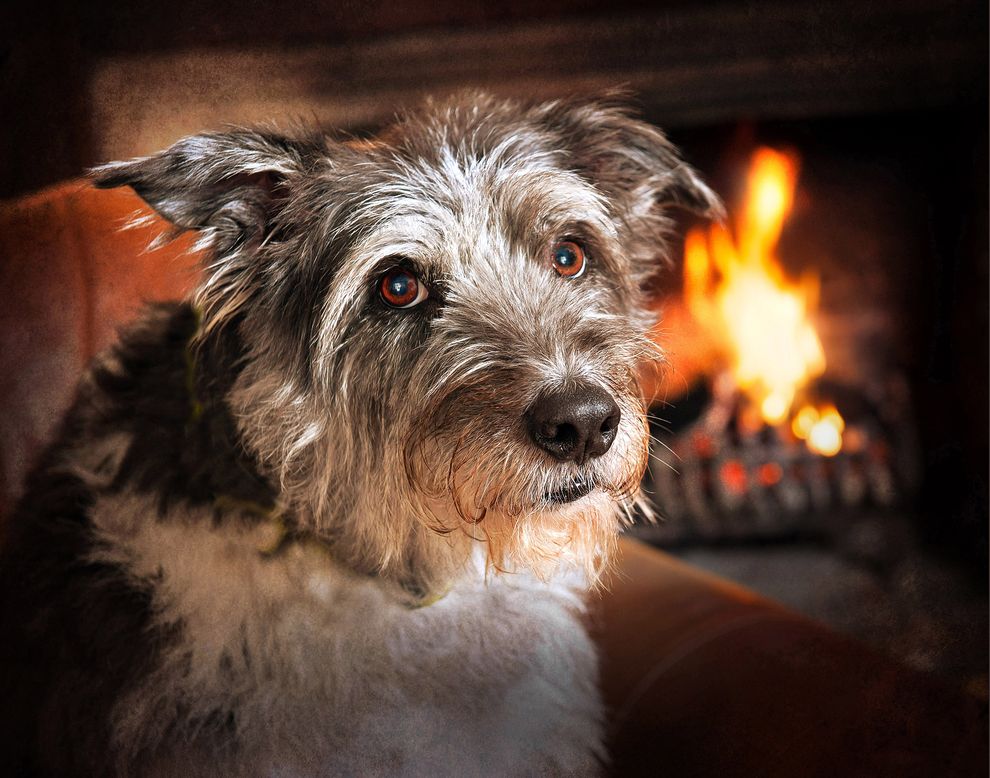
Winner of the Oldies category (Photo: Kevin Smith/Dog Photographer of the Year Competition)
The gray faces of old dogs speak to all the love and friendship they’ve provided over the years as Lizzie, a 12-year-old mixed breed dog, shows us. Curling up with a cracking fire and your four-legged BFF is one of life’s great joys.
Winner of the Dog Portrait category (Photo: Jamie Morgan/Dog Photographer of the Year Competition)
This portrait of two Afghan hounds named Ozzie and Elvis took first place for the Dog Portrait category. The setting is the idyllic Ashdown Forest in Sussex.
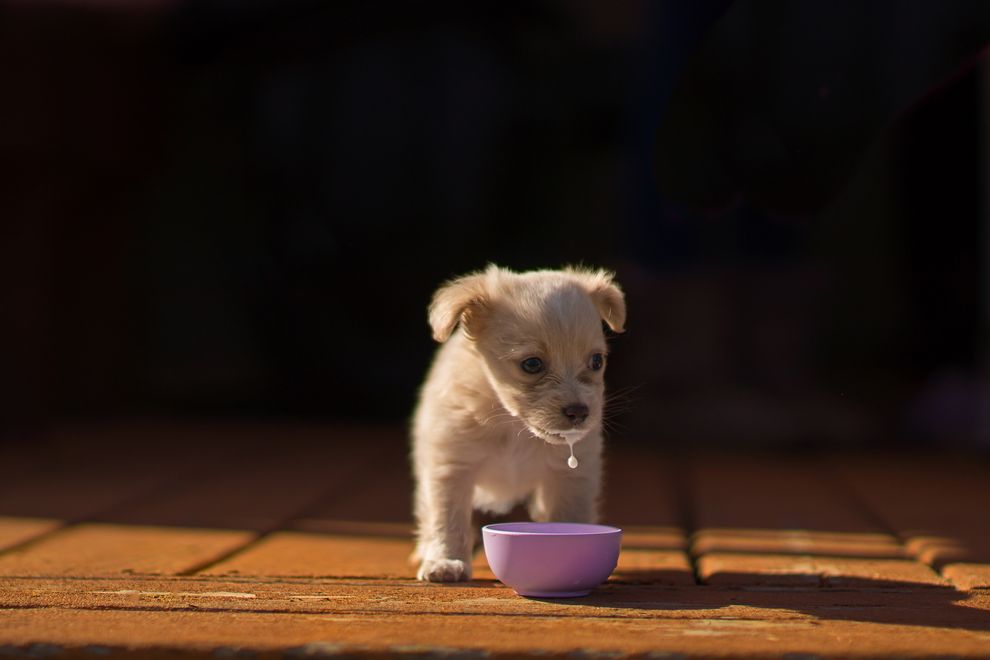
Winner of the Puppy category (Photo: Linda Storm/Dog Photographer of the Year Competition)
And finally, the winner of the Puppy category is little rescue puppy Buddy enjoying a bowl of milk. The photo was taken by Colorado-based photographer Linda Storm.
“The entries for this year’s Dog Photographer of the Year competition were some of the best we have ever seen,” says Rosemary Smart, Kennel Club chief executive. “Choosing the winners was an incredibly challenging task and we commend every photographer who entered. Each of the winning photographers beautifully captured the essence of their canine subjects on camera, demonstrating how important dogs are to us in every walk of life.”
If you’re a photographer who loves dogs as your subject, keep an eye on the opening date for next year’s competition!
ooOOoo
Going to repeat the words of Rosemary Smart as I can’t even come close to the power of what she said:
The entries for this year’s Dog Photographer of the Year competition were some of the best we have ever seen.
Choosing the winners was an incredibly challenging task and we commend every photographer who entered. Each of the winning photographers beautifully captured the essence of their canine subjects on camera, demonstrating how important dogs are to us in every walk of life.
Thus it seemed entirely appropriate to republish this lovely item that first appeared on Learning from Dogs in October, 2011.
ooOOoo
When I was living back in South-West England, in the Totnes area, I had plenty of time to get to know Neil K. Neil has the most wonderful sense of humour and an ability to look at the world rather differently than the rest of us. I offer this tribute in acknowledgement of the great items that Neil passes to me for inclusion in Learning from Dogs. This one is no exception.
——————–
The Story of Adam & Eve’s Pets
Adam and Eve said, ‘Lord, when we were in the garden, you walked with us every day. Now we do not see you any more. We are lonesome here, and it is difficult for us to remember how much you love us.’
And God said, I will create a companion for you that will be with you and who will be a reflection of my love for you, so that you will love me even when you cannot see me.
Regardless of how selfish or childish or unlovable you may be, this new companion will accept you as you are and will love you as I do, in spite of yourselves.’
And God created a new animal to be a companion for Adam and Eve.
And it was a good animal and God was pleased.
And the new animal was pleased to be with Adam and Eve and he wagged his tail.
And Adam said, ‘Lord, I have already named all the animals in the Kingdom and I cannot think of a name for this new animal.’
And God said, ‘I have created this new animal to be a reflection of my love for you, his name will be a reflection of my own name, and you will call him DOG.’
And Dog lived with Adam and Eve and was a companion to them and loved them.
And they were comforted.
And God was pleased.
And Dog was content and wagged his tail.
After a while, it came to pass that an angel came to the Lord and said, ‘Lord, Adam and Eve have become filled with pride. They strut and preen like peacocks and they believe they are worthy of adoration. Dog has indeed taught them that they are loved, but perhaps too well.’
And God said, I will create for them a companion who will be with them and who will see them as they are. The companion will remind them of their limitations, so they will know that they are not always worthy of adoration.’
And God created CAT to be a companion to Adam and Eve.
And Cat would not obey them. And when Adam and Eve gazed into Cat’s eyes, they were reminded that they were not the supreme beings.

 That page explains:
Everyone from the competitors, volunteers and race crew fell in love with this little dog that captured all our hearts. Gobi took a shine to me and over the week we developed an unbreakable bond as I shared my sleeping space, food/water and ultimately our companionship.











 Learning from Dogs
Diane, as someone who previously has run his own business and then, after selling it in 1986, spent a number of years as a mentor with the Prince’s Youth Business Trust in the UK, I have come to the conclusion that the best role model we adults can offer our ‘students’ is this: “Be the best you can be!” That flows from being fully aware of the person that one is. For self-awareness is the key to understanding oneself and, consequently, of understanding others. Understanding why people think and behave the way they do, for good and bad, is the only effective way of engaging with others and seeking that ‘civic engagement’ so critically important.
Apologies, that paragraph sounds like a damn speech! I didn’t intend it to be so. Plus, my own journey of self-awareness has been a long and tortuous one – but that doesn’t change my view just expressed.
Coincidentally, I have been having some informal chats with Jan Schmuckle: http://www.janconsults.com/home
Her recently released book on the effectiveness of Role Montage in building leadership skills is highly relevant to today’s students. In Jan’s words (and I have no commercial or financial link with Jan):
Role Montage: A Creative New Way to Discover the
Leader Within You is written from Jan’s experience
with her client work and her research. It helps
leaders explore self-awareness and leadership using
the role montage process.
I’ll creep back into my hole!