Communication seems to be a bit of a theme just at present!
About 18 months ago, I wrote a piece on Learning from Dogs about Rupert Sheldrake’s fascinating book Dogs That Know When Their Owners Are Coming Home. The reason that this has come up again (and, as it happens, I’m rereading Sheldrake’s book just now) is a recent item on the Big Think website called Can We Have Brain-to-Brain Communication? Here’s what was written.
Dr. Michio Kaku addresses the question of Collective Intelligence. Some people think that the next big innovation in the coming decades is not going to involve the Internet because we can already connect computers to the human mind. Therefore, Dr. Kaku says this brain-to-brain communication would involve not just the exchange of information, but also the transmission of emotions and feelings, “because these are also part of the fabric of our thoughts.”
There’s also an interesting 4-minute video by Dr. Kaku that may be accessed here.
But then again, many pet owners would probably take it for granted that our cats and dogs can read our mind, as Dr. Sheldrake rather entertainingly explains below.
Before closing today’s post, the research that Dr. Sheldrake has undertaken is very impressive. His website is here, from which one learns that,
Dr. Sheldrake
Rupert Sheldrake, one of the world’s most innovative biologists and writers, is best known for his theory of morphic fields and morphic resonance, which leads to a vision of a living, developing universe with its own inherent memory.
He worked in developmental biology at Cambridge University, where he was a Fellow of Clare College. He was then Principal Plant Physiologist at the International Crops Research Institute for the Semi-Arid Tropics (ICRISAT), in Hyderabad, India. From 2005 to 2010 he was Director of the Perrott-Warrick project. , funded from Trinity College, Cambridge.
One of the seven experiments concerned unexplained abilities of animals, and I published a series of papers on the unexplained powers of animals, see Papers on animals .
My research with Aimée Morgana into the telepathic powers of her African Grey Parrot, Nkisi, led to the celebrated debate at the London RSA with Prof Lewis Wolpert, which is featured on this website The Telepathy Debate
More information is available on Nkisi, including a tape of one of his conversations with Aimée in The Nkisi project
So if your pet is looking at you as though they know what you are thinking – they probably are!
I am indebted to the website Naked Capitalism for including in their ‘links’ on the 25th July, this story from the online version of the Daily Mail UK newspaper.
Locked in combat: Mother lion takes on deadly crocodile to give cubs safe swim across river
Scanning the surface of the water, her amber eyes alight upon a threat to her pride – a deadly crocodile lurking in the river that the family of lions must cross.
The fiercely protective lioness did not hesitate, leaping into the water and grappling with the reptile to allow the rest of the pride to cross the river in safety.
These images show the magnificent big cat fastening her front legs around the crocodile’s jaws and dunking it underneath the water before making a break for the river bank at the Okavanga Delta in Botswana.
The lioness’ brave diversion tactics were witnessed by wildlife photographer Pia Dierickx, who said the creature moved with such incredible speed she did not realise what had happened until she looked back at the pictures on her camera.
The photographer, from Antwerp in Belgium, had been peacefully observing the lioness and her pride going about their business around the river when the sudden clash between the big cat and the crocodile occurred.
The 48-year-old said the struggle took place within one second.
The images are powerful and stunning. I’m going to take the liberty of reproducing just one, as below, but do go across to the story here and view the full set of photographs taken by Pia Dierickx – you will not be disappointed!
Pat Shipman showing how animals were intimately involved in the development of early humans.
Yesterday’s fascinating post was predominately taken up by a long and deeply interesting essay by Prof. Pat Shipman, The Woof at the Door.
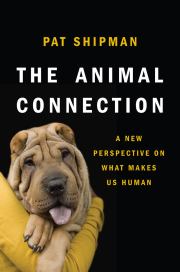
Today, I want to report further on Pat Shipman primarily by looking at her book The Animal Connection.
What makes us human?
Let me do no more than quote from page 259,
Domesticating animals provided a new sort of benefit. They were living tools first and meat sources later, only when their useful lives were over or circumstances required. The crucial importance of animal domestication in modern life shows that our relationship with animals selected for a set of communication skills and abilities to observe, draw conclusions and make connections among different observations that had been increasingly important since at least 2.6 million years ago. The relationship between such skills and modern behaviors that characterize humanity is clear.
Prof. Shipman also confirms that the first domestication was of the dog at 32,000 years ago and goes on to say,
Other types of domestic animals provide enhanced protection for people, dwellings, stored crops, and other livestock. Dogs and cats are the obvious examples, but herders have recently started touting llamas as guardians for flocks of sheep.
The domesticated carnivores also provide important assistance in hunting. Dogs are better trackers than humans; they are faster runners, take larger prey, and will hunt with humans. Cats hunt solitarily and are far superior to humans at catching rodents that can decimate crops or carry disease. Dogs hunt with you; cats hunt for you; but both offer an advantage. (p.254)
As I said, it’s a fascinating book and one that is already reshaping my knowledge about the early evolution of man. And in terms of reshaping knowledge about early man, do go across to Pat Shipman’s Blog, The Animal Connection.
You can read a full review with links to a number of book sellers here. Let me close by using this praise for the book by Jeffrey Moussaieff Masson. (Masson’s book Dogs Never Lie About Love is just a few feet from me as I write this, a deeply moving book for all dog lovers.)
This is what Jeffrey Masson wrote about The Animal Connection,
Pat Shipman has written one of the most important books on the human-animal connection ever. One might even say it is the single most important book, possibly the only one, to look at our deep connection to animals over the entire evolutionary history of our species.
How lady luck brought joy for a ‘down-and-out’ Londoner and a cat called Bob!
I was chatting with my son yesterday and he happened to mention that perhaps I should write about a cat for a change! Alex mentioned a book recently published in the UK called A Street Cat Named Bob: How One Man and His Cat Found Hope on the Streets.
This is how the book is described on Amazon (UK site),
When James Bowen found an injured, ginger street cat curled up in the hallway of his sheltered accommodation, he had no idea just how much his life was about to change. James was living hand to mouth on the streets of London and the last thing he needed was a pet. Yet James couldn’t resist helping the strikingly intelligent tom cat, whom he quickly christened Bob. He slowly nursed Bob back to health and then sent the cat on his way, imagining he would never see him again. But Bob had other ideas. Soon the two were inseparable and their diverse, comic and occasionally dangerous adventures would transform both their lives, slowly healing the scars of each other’s troubled pasts. A Street Cat Named Bob is a moving and uplifting story that will touch the heart of anyone who reads it.
A quick web search found volumes of material, so let’s start with this video,
The local London newspaper the Islington Tribune wrote this back in 2010,
Two cool cats… the Big Issue seller and a stray called Bob
Inseparable: musician James Bowen with Bob
Down-on-his-luck musician teams up with ‘wonderful loyal friend’ he rescued from streets
Published: 24 September, 2010
by PETER GRUNER
NOT since the legendary Dick Whittington has a man and his cat become such unlikely celebrities on the streets of Islington.
Big Issue seller James Bowen and his docile ginger cat Bob, who go everywhere together, have been attracting comments since they first appeared outside Angel Tube station.
The story of how they met – widely reported in blogs on the internet – is one of such extraordinary pathos that it seems only a matter of time before we get a Hollywood film.
James, 31, who lives off Seven Sisters Road, Holloway, is a musician who has fallen on hard times.
He ekes out a basic living selling the homeless people’s magazine Big Issue at Angel and Covent Garden.
Bob was a stray discovered by James outside his accommodation one day.
The cat was limping after apparently being attacked by another animal, possibly a fox.
After failing to discover the cat’s owner, James took him to the RSPCA hospital at Finsbury Park, which prescribed a course of antibiotics.
“I kept him for two weeks until he was well enough to go on his way,” said James. “But when I opened the front door to let him out Bob wouldn’t move. He seemed to me to be saying: ‘I want to stay with you.’
“Now we go everywhere together. I even have a cat harness when we go out and Bob gets really excited when I show it to him.”
Read the rest of the article here and if you want more information, a web search on Bob the Cat will finds loads more.
It’s a fabulous story with a great message of hope for not just for James and Bob but for all of us that find ourselves ‘up a creek without a paddle’ at points in our lives.
Here’s how the newspaper The Daily Mail wrote about it on their website,
[last half of the story]
But then Bob started following him and it became increasingly difficult to shoo him away, especially as there were dangerous roads to be crossed. One day there was nothing for it but to put Bob on a makeshift lead and take him along. Bob travelled sitting on James’s shoulders.
The trouble was, so many cat-mad passers-by stopped him to stroke the animal that James arrived late at his pitch, secretly cursing Bob for thereby costing him some of his usual £25-a-day takings. He couldn’t have been more wrong.
Within minutes, people who would normally have walked by without giving James a second glance were lingering to make a fuss of the cat sitting sedately in his guitar case, and most made a donation. By the end of the day, he’d racked up more than £60.
It was the beginning of a phenomenon as tourists and commuters befriended Bob and James, many bringing titbits for the cat. People were amazed at how placidly Bob would sit all day, quite happily watching the world go by while James earned a living. Not that it was always without a hitch; on a couple of occasions Bob bolted when startled, leading to a frantic chase through the crowded streets.
Bob’s popularity continued when James switched from busking to selling the Big Issue, the magazine produced and sold by homeless people. This change in direction was part of James’s growing sense of a need to get his life in order, which he puts down to the responsibility of looking after Bob, and the example the cat offered of the possibility of a second chance.
It enabled James to make the final push to end his drug dependency, going through the necessary cold turkey to get off heroin substitutes, and to mend broken contacts with his family. The final result of Bob’s influence came when a literary agent who passed the duo every day and had seen them on YouTube suggested James tell their story in a book. The result is this heart-warming tale with a message of hope that will appeal especially to the many cat obsessives out there.
Dear friend Dan Gomez sent this to me on the 9th but I split it into two parts, covering yesterday and today. Then found that the first part didn’t Post correctly; the pictures were missing.
So both parts are today – enjoy!
oooOOOooo
Part One: How many dogs does it take to change a light bulb?
1. Golden Retriever: The sun is shining, the day is young, we’ve got our whole lives ahead of us,
and you’re inside worrying about a stupid burned out bulb?
2. Border Collie: Just one. And then I’ll replace any wiring that’s not up to code.
3. Dachshund: You know I can’t reach that stupid lamp!
4. Rottweiler: Make me!
5. Boxer: Who cares? I can still play with my squeaky toys in the dark.
6. Lab: Oh, me, me!!!!! Pleeeeeeeeeze let me change the light bulb!
Can I? Can I? Huh? Huh? Huh? Can I? Pleeeeeeeeeze, please, please, please!
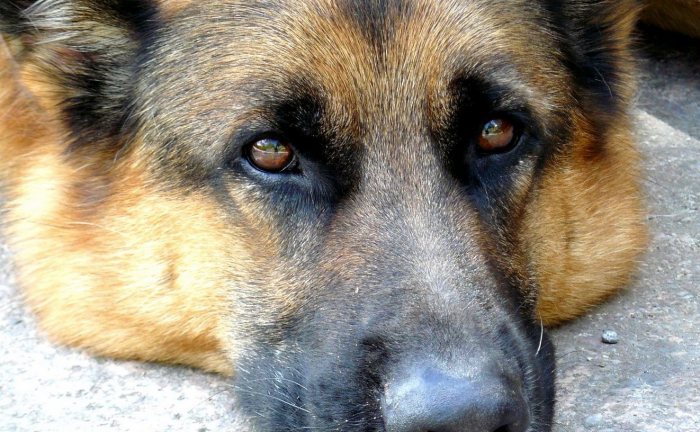
7. German Shepherd: I’ll change it as soon as I’ve led these people from the dark,
check to make sure I haven’t missed any, and make just one more
perimeter patrol to see that no one has tried to take advantage of the situation!
8. Jack Russell Terrier: I’ll just pop it in while I’m bouncing off the walls and furniture.
9. Old English Sheep Dog: Light bulb? I’m sorry, but I don’t see a light bulb!
10. Cocker Spaniel: Why change it? I can still pee on the carpet in the dark.
11. Chihuahua : Yo quiero Taco Bulb. Or “We don’t need no stinking light bulb.”
12. Greyhound: It isn’t moving. Who cares?
13. Australian Cattle Dog:First, I’ll put all the light bulbs in a little circle…
14. Poodle: I’ll just blow in the Border Collie’s ear and he’ll do it.
By the time he finishes rewiring the house, my nails will be dry.
How many cats does it take to change a light bulb?
Cats do not change light bulbs. People change light bulbs.
So, the real question is: “How long will it be before I can expect some light, some dinner, and a massage?”
ALL OF WHICH PROVES, ONCE AGAIN, THAT WHILE DOGS HAVE MASTERS, CATS HAVE STAFF!
oooOOOooo
Part Two: Why God made pets!
They help out around the house…
They protect our children…
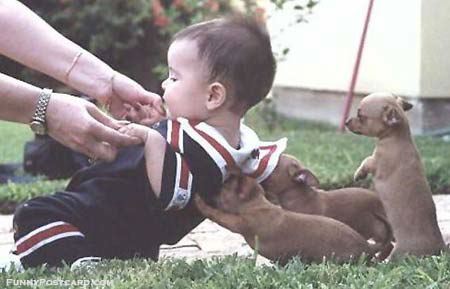
They look out for the smaller ones…
They show us how to relax…
They “converse” with each other.
They help you when you’re down…
They are great at decorating for the Holidays.
They have “great” expectations.
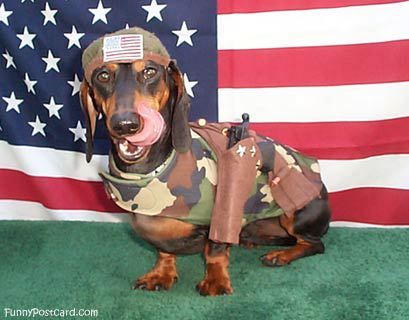
They are Patriotic.
They are happy to “test” the water.
They know who’s “BOSS.
AND – They know when we need a good LAUGH!
HAVE YOU SMILED TODAY? It is done by moving the corners of the mouth upward.
LET ME SHOW YOU HOW…
NOW PASS IT ON, AND MAKE SOMEONE ELSE SMILE!!!
Big thank-you, Dan, but more to the point a big thanks to ‘SKF’ who sent it to you.