While I follow a number of Blogs, there are few that I read avidly. One of them in that latter category is Baseline Scenario. I wish I understood more of the technical issues presented by the Blog authors and the dozens of brilliant commentors. But the essence of what is being discussed is clear. I thoroughly recommend subscribing.
Here’s a recent Post from James Kwak (see end of Post for bio details). It was called Free Books and Board Seats. James very kindly has given Learning from Dogs written permission to reproduce the article in full.
Here in the blogging world, some of us are very sensitive to the potential appearance of impropriety. A year ago, the FTC published new rules requiring bloggers to disclose cash and in-kind payments they receive for reviewing products. The upshot, for most of us, is simply that now, when we discuss a book, we say if we got a free copy of the book from the publisher. (Although it’s not clear that that disclosure is required, since getting a free copy is something that readers should expect; I don’t think the New York Times Book Review bothers pointing out that, for every book they review, they got a free copy, although they almost certainly did.)
All the more relevant, then, is Gerald Epstein’s post about conflicts of interest in the economics profession.
“Jessica Carrick-Hagenbarth and I did a study of 19 prominent academic financial economists who were members of two influential groups that have played a key role in the financial reform and regulation debate in the U.S. Of the 19 academic economists in these groups, 70% advised, owned significant stock in or were on the board of private financial institutions. But you wouldn’t know by looking at their self-identification in media appearances, policy work or academic papers.”
There are certainly economists who were talking up the housing market in the summer of 2008 without disclosing their financial ties to banks–who were desperately hoping that housing prices would not collapse.
C’mon, guys. I don’t even get very many free books (maybe one per month on average–I decline most of them), and I always disclose that. I know it’s not feasible to list every company that ever paid you to give a speech. But really, if you’re a paid director of a bank and you write about the banking industry, can’t you at least point that out?
Well put James.
—————————— James Kwak is a former McKinsey consultant, a co-founder of a successful software company, and currently a student at the Yale Law School. He is not, never has been, and never will be a member of the Yale Law Journal. He is a co-founder of The Baseline Scenario.
This Post for Learning from Dogs was inspired by a simple email. An email sent out automatically by Facebook inviting me to join a group committed to holding the Nobel prize in Economics accountably for the crisis.
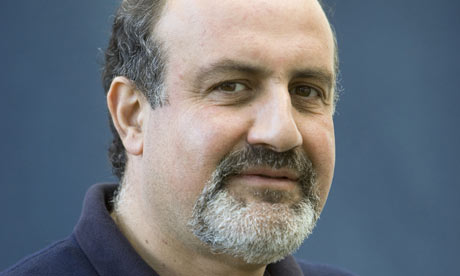
Nassim Nicholas Taleb
That intrigued me. Like thousands of others I had previously read The Black Swan, a book The Times newspaper describes as ” as one of the 12 most influential books since World War II”.
Wikipedia has a thorough description of Taleb much recommended if you have 10 minutes to read it.
Bryan Appleyard of The Times wrote an excellent piece on Taleb on the 1st June, 2008 which may be read here. Here’s an extract from near the front of that piece in The Times:
He spilt the tea – bear with me; this is important – while grabbing at his BlackBerry. He was agitated, reading every incoming e-mail, because the Indian consulate in New York had held on to his passport and he needed it to fly to Bermuda. People were being mobilised in New York and, for some reason, France, to get the passport.
The important thing is this: the lost passport and the spilt tea were black swans, bad birds that are always lurking, just out of sight, to catch you unawares and wreck your plans. Sometimes, however, they are good birds. The recorders cost $20 less than the marked price owing to a labelling screw-up at Circuit City. Stuff happens. The world is random, intrinsically unknowable. “You will never,” he says, “be able to control randomness.”
To explain: black swans were discovered in Australia. Before that, any reasonable person could assume the all-swans-are-white theory was unassailable. But the sight of just one black swan detonated that theory. Every theory we have about the human world and about the future is vulnerable to the black swan, the unexpected event. We sail in fragile vessels across a raging sea of uncertainty. “The world we live in is vastly different from the world we think we live in.”
Despite the article being over two years old, it is still an important piece for anyone trying to understand the causes of the financial mess we are all still in.
Finally, Taleb’s own website is a rich resource of much that will allow us all to better understand where we got to, where we are and what has to change if we are to have real hope for a better future.
Here’s a YouTube video of a TV interview taken in May, 2010.
Here’s an earlier video of Taleb explaining what his theory of black swans is about.
I don’t know about you but I’m picking up more and more ‘vibes’ from all over the place that strongly suggest an increasing awareness of the need for real change in society. Anyway, more of this another time.
My article today is base on an editorial in the Mole Valley Farmers Newsletter
MVF logo
for October 2010 (no. 557). First some background to this organisation.
Mole Valley Farmers was started in 1960 by a small group of farmers around South Molton* who were concerned by the discriminatory practices and the large margins being taken by many of their input suppliers. From the outset it was decided to treat all members equally, subject only to quantity allowance and that the Company would operate on the minimum margin to allow continuity and growth. Today it remains one of a few true co-operatives in the supply industry.
Mole Valley Farmers consists of:
Nine branches in the south west supplying a vast range of goods to farmers and the public alike. These range from farm requirements to clothing, footwear, garden supplies, pet food and accessories, domestic goods and power tools
Our own feed mills for all animal feeds
Fertiliser blending plants
A specialist mineral plant
A quality farm building division
Of special importance are our farmer customers who purchase animal feed, fertilisers and minerals, all manufactured to a high specification by Mole Valley Farmers and delivered direct from point of manufacture to farm or to branches for collection in small lots.
* South Molton is in Devon, England about half-way between Barnstaple and Tiverton and the history of this interesting firm may be found here.
I have to declare a certain interest in that when I lived in Harberton, Devon for a number of years, we were non-farmer Members of Mole Valley Farmers for feed for our chickens and ducks and later on for Pharaoh. So when I arrived to stay recently for a week with friends in Brixham, Devon, my eye quickly picked up the familiar look of the MVF Newsletter lying on the table.
This is the editorial, reproduced in full with the kind permission of the Newsletter editor, from the pen of David Burke, Chairman of MVF.
Commodity trading
Until relatively recently, the price of food was set by the forces of supply and demand for the food itself, which worked reasonably well in developed countries able to purchase in times of shortage. For the last century farmers have been able to reduce some of the market risk by forward selling crops to a trader in that market, at a price that fair to both parties.
This type of trading was tightly regulated and only those who were directly involved could participate and it worked well. At some time in the mid-90s, Goldman Sachs, with other financial institutions, successfully lobbied for the regulations to be abolished.
Forward contracts became derivatives, which could be bought and sold repeatedly by traders, which enabled the financial institutions to become involved. This type of investment really took off when the American and European pension market collapsed, together with that for normally traded derivatives like metals, prior to the recession, although actual food supply and demand remained relatively in balance. Last year Goldman Sachs reportedly made £3.2bn profit from derivatives trading.
In spite of Russia’s grain export ban and some other weather affected harvests, both the EU commission and the International Grains Council report more than adequate reserves of grain to meet demand and that the carry-over stocks are likely to be the second highest for years. The rumoured (but non-existent) wheat shortage that is driving up all feed prices, is entirely due to actions of the world’s principle investment bankers and their investors, which have serious implications throughout the globe. Whilst few in the developed world mostly in the Northern Hemisphere, will go hungry, it is a growing tragedy for the poorer countries in the Southern Hemisphere where three-quarters of the world’s population live. According to the Food and Agricultural Organisation, one third of the population lack food security and 792m people there are undernourished to varying degrees of starvation. But most damning of all, some 12m children die annually of malnourishment. Derivative speculation, which pushes up the cost of grains and in particular wheat, is responsible for food inflation that is proportionally greater for the impoverished nations.
Re-regulation of the basic food market to prevent a recurrence of the spikes of 2007 and 2010 would go some way to stabilising global food costs and help with developing nations, though without a great deal of pressure from compassionate people, this will be difficult, given the influence that the world’s richest investors have over governments. Alternatively, primary food producers worldwide are paid a high enough price for their produce to enable them to invest in research and best practice, as well as in efficient equipment. This concept received the approval of the European Parliament on 9th September and although they are considering legislation to ensure farmers receive a fairer share of the consumer price, it may be difficult to implement other than through a properly funded and regulated CAP.
Well said, Mr Burke.
NB. The web links in Mr Burke’s article have been inserted by me, they were not in the original article.
I read widely many Blogs out there because it seems that this channel is one which is more likely to offer real, valid commentaries on what is going on at present with regard to the economic crisis, that is the crisis in the broader sense.
Regulation remains largely ineffective (in fact, the industry has managed to demonize the word), the big banks are too important to fail, and interest rates are low across the yield curve. The Fed provides downside protection and there is no effective limit on the amount or nature of risks that the private financial sector can take. This is a recipe not for stagnation but rather for a metaboom in which we will receive warnings, including painful recessions – but consistently ignore them.
Then across the way we have a piece on The Daily Beast about Summers. I quote from the first two paragraphs with their permission (thanks guys.)
Washington is swirling with the usual rumors—the White House’s man was pushed! He jumped! But Summers is leaving because he made sure real reform was discussed—but not accomplished.
Thomas
The rumor that come November, when the mid-term elections are history, Lawrence Summers, administration’s quarterback on economic matters, will leave the White House, has been confirmed. The usual presumptions have been put in play: Summers is weary of the job; the president and his men and women feel the need for a new pair of hands under center; the man has done well; the man has done badly. There is no indication that, like Bush II’s ill-served first Treasury Secretary, Paul O’Neill, Summers is being canned for speaking truth to power. That is not the man’s style, not—let it be said—that there’s much evidence that the administration has better than a shaky grasp of the practical truths of American financial and economic life in the Age of Goldman Sachs.The bottom line is that we can expect the usual judgemental blahblahblah to grow in volume and marginality on the talk-show and Op-Ed circuit as the day calendared by the media for Summers’ leave-taking approaches.
Now go across to the article and read it in full. Read why Michael Thomas, the author and no stranger to Wall St., describes Summers as someone who “saw to it that the talk was talked, but the walk was never walked.”
And I’ll close by repeating a comment I made to the Baseline Scenario article:
I don’t have the knowledge to respond to Simon’s excellent Post in detail but his comments reinforce what feels like a constant throbbing in my mind – how can the citizens of so many countries have abdicated so much interest and concern in how they/we are governed. Wish I had even a clue as to the answer to that question.
Significant social unrest would be very scary – the ‘law’ of unintended consequences and all that – but there are times when I wonder if this, in the end, might be the only form of real progress for the hard-working, tax-paying majority.
“You’ve got to do your own growing, no matter how tall your grandfather was.” Irish quotation.
In England, inexplicable happenings are commonly ascribed to being ‘Irish’! It’s meant in a loving way; there is a great deal of warmth towards the different ways that Irish people appear to see the world. But what is facing Ireland (and other countries) as a result of some distinctly unfunny goings-on in the USA is potentially hugely damaging.
To many the way that the world has descended into a dark, economic abyss, which is likely to affect us all in so many ways, and in which we are going to remain for a long time (a la Japan?), is also inexplicable.
Thus a chance comment from Norm Cimon to a recent post on Baseline Scenario set off a chain of discovery that for me has been very interesting. Here’s how it ran.
I have subscribed to Baseline Scenario for some time. It describes itself thus:
The Baseline Scenario is dedicated to explaining some of the key issues in the global economy and developing concrete policy proposals. Since it was launched in September 2008, this blog has been cited by virtually every major newspaper, Internet site, and blog covering economic and financial issues.
It’s a great resource.
A recent Post on Baseline Scenario, Irish Worries For The Global Economy, had already attracted 135 comments at the time of writing this post. A recent one was from a Norm Cimon, who is described in Linked In as the owner of Info Synchronicity LLC. This is what he said:
That is the other side of the coin. William Black has been lucid on this topic, and clear on the morality of the current age and how to fix it. Put people in jail and let everyone know why they were sent there. If you want to change perceptions then change the reality. The anger of the general public and the disdain of Wall Street are tied to that one issue. No one has paid for the crime of the millenium and everybody knows it.
And included was this recording of Bill Moyers interviewing Bill Black, the author of The Best Way to Own a Bank is to Rob One.
Here’s the interview:
However, there’s more to this discovery than the YouTube video. If one clicks on the link behind Norm Cimon’s name on that Baseline post, then one is taken here. It’s a pdf of a paper written by Norm Cimon entitled, “Computing Power and Human Greed.” It seems to me to explain the tools, for want of a better word, that enabled the American banking system to behave in the way that Bill Black so roundly condemns in the Bill Moyer interview. Here’s how Cimon ends his paper:
With networked computers now cast by all organizations, including the financial sector, into the role of wizard-behind-the-curtain, we all live in Oz. It’s long past time we pull back the veil and call a halt to the mindless application of this supreme and supremely dangerous creation before the damage gets any greater.
Unfortunately, there isn’t a date to the paper but my guess was that it was written late in 2009. Whatever the date, it is a very apt observation.
The New York Times recently published a thought-provoking article on the development of farming for the Atlantic bluefin, the world’s largest tuna.
Bluefin Tuna
This is a magnificent fish, as a National Geographic website details:
The Atlantic bluefin tuna is one of the largest, fastest, and most gorgeously colored of all the world’s fishes. Their torpedo-shaped, streamlined bodies are built for speed and endurance. Their coloring—metallic blue on top and shimmering silver-white on the bottom—helps camouflage them from above and below. And their voracious appetite and varied diet pushes their average size to a whopping 6.5 feet (2 meters) in length and 550 pounds (250 kilograms), although much larger specimens are not uncommon.
Here’s some of what was written in that NYT article:
IN the wide expanse of the wild ocean, there is perhaps nothing more wild than the world’s largest tuna — the giant Atlantic bluefin. Equipped with a kind of natural GPS system that biologists have yet to decode, the bluefin can cross and recross the Atlantic’s breadth multiple times in the course of its life. Its furious metabolism enables the fish to sprint at more than 40 miles an hour, heat its muscles 20 degrees above ambient, and hunt relentlessly at frigid depths in excess of 1,500 feet.
I didn’t realise that these fish are warm-blooded, a rare trait among fish, but the more important fact is that a bluefin tuna is likely to eat between 5 lbs (2 kg) and 15 lbs (6 kg) of wildfish for every pound of body. Thus a fully grown bluefin of around 550 lbs (250 kg) represents a diet of anywhere between 2,750 and 8,250 lbs (340 -3,750 kgs) of wildfish. Back to the Greenberg article:
“Most forage fisheries,” Ms. Naylor wrote “are either fully exploited to overexploited or are in the process of recovering from overexploitation.”
If she is right — and if bluefin tuna farming is ramped up to the level of salmon farming, which produces more than two billion pounds a year — the effect on forage fish, the foundation of the oceanic food chain, could be devastating. A worldwide overharvest of forage fish could damage not just bluefin tuna populations but other important commercial species that also rely on these fish for sustenance.
In other words Rosamond Naylor is warning us, all of us that eat fish, that we could put at risk the entire ocean’s food chain. And what scares me is that humans have shown a real propensity to put their short-term needs totally above any long-term protection of the planet we all live on. How crazy is that!
The NYT article closes thus:
If Atlantic bluefin is not farmed, it will most likely become an even more scarce luxury item. Global fishing moratoriums on the species have been proposed (and then rejected by the many nations that catch bluefin). But other options being discussed include drastically reducing fishing quotas in the next few years and closing spawning grounds in the Mediterranean and the Gulf of Mexico to fishing entirely.
Perhaps, in the end, this is what the Atlantic bluefin tuna might really need. Not human intervention to make them spawn in captivity. But rather human restraint, to allow them to spawn in the wild, in peace.
I say that not because I have sufficient financial knowledge to evaluate his writings from a technical point of view but because he puts in huge effort, I mean hundreds of hours a month, to support his perspective.
An article published on the 10th demonstrates both Denninger’s commitment to his audience and some very specific dangers potentially coming out of Europe. Called “A Round-Up Of Current Idiocy” it includes this conclusion:
Since we keep drinking more as an economy (debt and deficits) the violence and incidence of these “undesirable outcomes” is going to continue to increase. We had one nasty in 2000, and then again in 2007. From the so-called “recovery” (2003) to the onset of the last mess was about four years. We’re now about two years in from the so-called “bottom” of this latest train wreck (Lehman), and if we keep on-path, and we are as the below chart shows, our fuse should go inside the box for this next mess somewhere between now and the end of 2011.
I hope you’re ready, because this next one, coming with no real recovery having taken place in employment or private economic activity, may be the one that takes us well beyond the misery we suffered in the 1930s.
And if it does, it will be our – that’s right – our – fault, since we simply will not accept that there is no such thing as a free lunch.
Note the copyright please.
Despite it being quite a technical piece with some aspects that weren’t clear to me, no surprise!, it’s still got many important messages for all those concerned about our savings and assets. Do read it.
Brits will be well aware that the Irish have been the source of many funny stories and ‘Irish’ humour is still a favourite with the English.
But this piece from Baseline Scenario is very troubling, and that’s putting it mildly.
The excellent article, as they all are from Baseline, is here.
I stole a small extract to underline the import of what BS are writing about.
However, let’s be clear: Europe’s headache remains large, and this should concern all of us – just look at Ireland to see how misunderstood and immediate the remaining dangers are. Ireland’s difficulties arose because of a massive property boom financed by cheap credit from Irish banks. Ireland’s three main banks built up loans and investments by 2008 that were three times the size of the national economy; these big banks (relative to the economy) pushed the frontier in terms of reckless lending. The banks got the upside, and then came the global crash in fall 2008: property prices fell more than 50 percent, construction and development stopped, and people stopped repaying loans. Today roughly one-third of the loans on the balance sheets of major banks are nonperforming or “under surveillance”; that’s an astonishing 100 percent of gross national product, in terms of potentially bad debts.
(That’s my italics, by the way.)
Anyway, do read it in full – it’s got important implications.
And then give yourself a proper laugh at the wonderful sense of humour that comes across from the Irish Sea ….
Focus warning! This is a longer piece that usual but also a more important piece than usual. Please find the time to read it and explore the links. Thank you.
Many, many years ago I lived in Tamarama Bay, just East of Sydney,
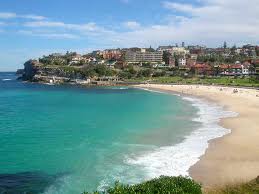
Bronte Beach, Australia
Australia. It was a very short walk to Bronte Beach which was much better experience than the famous Bondi Beach about half a mile North of where we lived.
Thus when I saw the name Bronte Capital it caught my eye because of old resonances from the word “Bronte”.
OK, to the point!
John Hempton is a principle at Bronte Capital, an Australian fund manager. John is no slouch having been in his past a Chief Analyst for the New Zealand Treasury and Executive Assistant to the CEO of ANZ Bank in New Zealand. John’s CV is here.
Bronte Capital have a Blog – well who doesn’t – and it was a link to that Blog from Naked Capitalism that caused me to read a recent article from John about deregulation.
Despite me not understanding many of the technical aspects, it struck me with some force, so much so that I wanted to reproduce chunks of it on Learning from Dogs. John was gracious enough to give me written permission to so do! Thanks John.
I have just read Daniel Amman’s excellent biography of Marc Rich – the oil trader notoriously pardoned by Bill Clinton. I don’t want to get into the politics and ethics of the pardon other than to note that few things in it are black-and-white when you finished reading the book.
and a couple of paragraphs later explains that Marc Rich has a rather appropriate surname – well this is how John writes:
Marc Rich exploited price fixing/import/export controls to make simply unbelievable profits trading oil. Marc Rich & Co (the Swiss vehicle) was started with just over $1 million in capital and a couple of years later was making in excess of $200 million in profit. This level of profitability exceeds – by far – any other trading operation I have ever seen – and was probably the most profitable trading operation in history. Marc Rich & Co (since renamed Glencore) is possibly the most valuable business in Switzerland within the lifetime of its founder.
Just stop here for a moment.
This man, Rich, goes from one million dollars in capital to two hundred million dollars in profits in 2 years, give or take! Read on:
A typical Marc Rich & Co trade involved Iran (under the Shah), Israel, Communist Albania and Fascist Spain. The Shah needed a path to export oil probably produced in excess of OPEC quotas and one which was unaudited and hence could be skimmed to support the Shah’s personal fortune. Israel – a pariah state in the Middle East – wanted oil. Spain had rising oil demand and limited foreign currency but was happy to buy oil (slightly) on the cheap. Spain however did not recognise Israel and hence would not buy oil from Israel – so it needed to be washed through a third country. Albania openly traded with both Israel and Spain. Oh, and there is an old oil pipeline which goes from Iran through Israel to the sea.
So what is the deal? The Shah sells his non-quota oil down the pipeline through Israel and skims his take of the proceeds. Israel skim their take of the oil. Someone doing lading and unlading in Albania gets their take and hence make it – from the Spanish perspective – Albanian, not Israeli oil. The Spanish ask few questions. The margins are mouth-watering – and they all come from giving people what they really want rather than what they say they want. We know what the Shah wanted (folding stuff). We know what Israel wanted (oil). We know what Spain wanted (cheap oil). Who cares that Spain was publicly spouting anti-Israel rhetoric. [Similar trades allowed South Africa to break the anti-Apartheid trade embargoes.]
John explains:
It also helped that Marc Rich & Co was a (highly) multilingual firm. Rich is fluent in Spanish (it is the language he talks to his children in). He speaks English, German, Yiddish and presumably Hebrew. His business partner (Pincus Green – pardoned the same day as Rich) speaks Farsi amongst many other languages. They could do this deal because they could negotiate it and – deep in their heart they hold the Ayn Rand view that trade is a moral virtue and hence they do not need to be concerned with other morality. [The only line that matters is the law – and then it might not be the law of his adopted country – Switzerland – rather than the United States where he was resident.]
My italics, by the way. Just stay with me for a short while longer to ‘get’ John’s important message. Here’s John again:
The regulatory regime for domestic American oil was also perverse. Old oil (meaning wells drilled before the first oil crisis) received one price. New oil (wells drilled after the crisis) received a higher price. Squeeze oil (oil that was extracted from wells that ran less than 10 barrels per day) received a higher price still. The oil could be chemically identical and the price difference over $20 per barrel. Obviously a trader with a method (any method) of changing the oil source could make a fortune. Again I am not commenting on legality or morality. That was just plain fact. Ayn Rand applies – you give a value and you receive a value.
What all this regulation did was that it allowed people to make simply grotesque profits by thwarting regulation. The regulation thus worked less well and it was socially unfair. Pincus Green was good at negotiating in Farsi. He was astoundingly brave going to Iran immediately after the Shah fell. He was good at organising shipping. He worked really hard – but he did not invent something that changed the world and he wound up a billionaire. Traders make money by intermediating real business solutions – but these were real business solutions to problems made by legislation. Bad regulation, moral indignation about “trading with the enemy” or “trading with Israel” or with racists in South Africa made people with Ayn Rand morals exceedingly wealthy because you could arbitrage your way around any of these regulations.
OK, you are probably getting the drift of this important article from John. If any of this ruffles your hair, then read it all – it’s a very important message. This is what John is saying:
As a plea then I want a debate about the right form of regulation – a regulation that controls agency problems but does not allow arbitrage opportunities to people with “Ayn Rand morals”.
We are not going to get that from the current Tea Party Republicans. They simply argue that regulation (they say but do not mean all regulation) impinges on “freedom” (something that is clearly a good but hard to define). However many of the same people want planning regulations to ban a mosque in downtown New York because it is an insult to the victims of 9/11 (and banning mosques is not a restriction on “freedom”).
If that is the level of debate we are not going to get good re-regulation – we are just going to get pandering to whichever lobby group manages to garner most support. And that is a real risk because we will leave agency problems in place (they benefit the rich and powerful) and we will introduce the same sort of (dumb) regulation that made Marc Rich and Pincus Green astoundingly wealthy. That sort of regulation also benefits the rich and powerful – especially those with “Ayn Rand morals”. [The rich and powerful – if you have not noticed – are good lobbyists. Unless we are careful many amongst them will get their way.]
You didn’t rush those last three paragraphs, did you?
John concludes thus:
I don’t know how to do this well – but I thought I would state the obvious. The most obvious things that need regulation are things with a government guarantee (implicit or explicit). If you have an implicit guarantee (as we now know almost all large financial institutions have) then regulation really matters. If there are large agency problems (small shareholders, large management) then regulation should be deliberately biased to put power in the hands of shareholders not managers (eg banning staggered board elections).
Likewise other agency problems should be strongly policed and the regulation should be of the form that allows that policing. When Elliot Spitzer found that Marsh – a large insurance broker – was participating in bid rigging against schools buying insurance that was shocking – and is precisely the sort of thing in financial markets that should be policed strongly. But it took Elliot considerable effort to find and prove his case. The rules should be established so that sort of behaviour is really difficult to hide.
And I do not think that I need to explain to anyone how much mortgage brokers contributed to the crisis by (a) deliberately misleading borrowers about conditions on their mortgage and (b) participating in the faking of borrowers income/assets/education level when they on-sold the loans to Wall Street. Agency problems were at the core of the crisis.
On the other side if there is no agency problem then deregulation should remain the order of the day. Trade restrictions create arbitrageurs – and the arbitrageurs ensure the trade restrictions don’t work anyway.
There are obviously going to be extensions to this rough rule – and this post is really to garner discussion. But for a start I expect agents who benefit from their agency (and the abuse of their agency) to join the Tea Party.
It is difficult to get policy right. And when and if the policy is got right we are in for a very long fight to implement it.
I take my hat off to Mr John Hempton. He’s in the ‘finance’ industry, probably doing well, and yet he has the courage to hold a mirror up to the desperately immoral happenings going on around him.
It’s a real pleasure and honour to publish this Post.
Let me close with a short piece from the Sydney Morning Herald of the 2nd January, 2010.
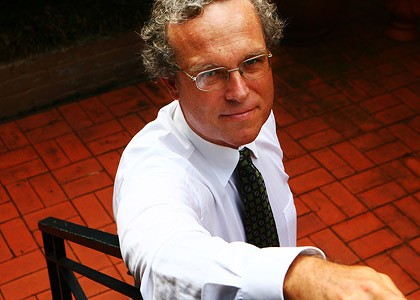
John Hempton ... blog locally, act globally. Photo: Domino Postiglione
WHEN John Hempton started a blog as he recovered from pneumonia, he did not expect to send shockwaves through the finance industry.
But that is exactly what the 42-year-old fund manager did through his Bronte Capital blog. His exposé of an unrelated US hedge fund would eventually lead to $426 million in investments being frozen and authorities seizing control of the Albury fund manager Trio Capital shortly before Christmas.
Let’s all pray to keep the flame of hope burning brightly for these guys.
On the 24th August, Learning from Dogs published a piece about 33 Chilean miners trapped underground. I’m sure many read that.
Well the BBC are still covering the event and their news web site has an informative update on what is happening.
The plan to rescue the 33 men trapped 700m (2,300ft) underground in the San Jose copper mine in Chile is a complex undertaking that could take engineers until the end of the year to achieve.
In a similar operation in 2002, American rescuers spent two days drilling a hole just wide enough to fit a man to rescue nine miners trapped underground.
The Americans had to drill down just 74m. By comparison, the plan to rescue the 33 men in Chile nearly three quarters of a kilometre underground is a much greater challenge. But, says John Urosek, who took part in the 2002 Quecreek mine rescue in Pennsylvania, it is not “mission impossible.”
“I would put this at the tough end of things. It’s not mission impossible but it’s a difficult mission,” says Mr Urosek who is now chief of mine emergency operations for the US Mine Safety and Health Administration.
The key to the operation is the use of a specialist drilling machine, designed to bore deep narrow holes through any rock to a depth of just over a kilometre.



 Learning from Dogs