This past Christmas, I helped my parents choose a water filter. The latest “smart” models all came with a smartphone app that promised to monitor filter life, track water quality and automatically request service. Yet my father, age 75, and mother, 67, were quick to reject them in favor of a nondigital model.
“Every time it updates or I forget how to use it, we’ll have to call you,” my dad said.
As an only child living 8,000 miles (12,875 kilometers) away, I didn’t need convincing. My parents are aging in place and don’t need traditional caregiving – they cook, drive and manage their home just fine. Instead, I provide what I call technology caregiving: helping them with their digital activities of daily living, from online banking to booking theater tickets.
But as the tech industry shifts toward artificial intelligence agents and generative user interfaces – promising to make devices smarter than ever – I am bracing for this invisible workload to become heavier, not lighter. In addition to being a technology caregiver, I’m a computer scientist who studies human-computer interaction.
Technology caregiving
Technology caregiving is the act of helping someone use digital tools. While this isn’t entirely new – people have long helped grandparents program VCRs and connect parents’ desktop computers to the internet – the stakes have changed.
Today, digitization is ubiquitous. Helping with these tools is no longer just occasional unpaid tech support – it is a form of continuous caregiving essential for maintaining independence. For example, even the simple act of clipping coupons has gone digital – marginalizing older adults who are unable to navigate store apps to access these discounts.
People often view older adults as resistant to technology, but recent years – particularly since the COVID-19 pandemic – have shattered that myth. While gaps in internet access and device ownership remain, they are no longer major barriers to technology access.
Today’s seniors are not tech-averse, but constant updates and interface changes make using technology more difficult for them. Jose Luis Raota/Moment via Getty Images
The emerging crisis is not about access, but effective use. Many older adults are now online and willing to use these tools, but they require frequent help from family, friends or communities.
The innovation tax
The problem isn’t just that devices and apps are getting complex; it’s that they are constantly changing. Frequent software updates and shifting interfaces can be frustrating for all users, but they turn familiar tools into foreign concepts for older adults.
This unpredictability is about to accelerate. Take generative user interfaces, which designers can use to dynamically generate an interface in minutes. Pair them with AI agents, and the system can assume the designer’s role, taking independent actions based on how it perceives a user’s intent or need.
If the “Pay Bill” button is in a different place every third time you open a particular app because an AI decided to optimize the interface, you might feel perpetually incompetent if you can’t quickly locate it. While the industry calls this personalization, for an older adult it is a moving target.
This relentless pace of change – even when intended to be helpful – is directly at odds with age-related cognitive changes. And this dynamic is continuing with the new generation of seniors. They may be more eager to adopt new tools than the last, but wanting to use technology is not the same as being able to use it when the rules are constantly changing.
To navigate a brand new or shifting interface, your brain relies on fluid intelligence: the ability to reason, solve novel problems and ignore distractions on the fly. Unlike the knowledge that people accumulate over time, fluid intelligence naturally declines with age.
When an app updates or an AI optimizes a layout, it forces the user to discard their hard-won mental models and start over. For an older adult, this isn’t just a minor inconvenience; it is a taxing job for their working memory.
As an older adult participant in a study my colleagues and I conducted put it:
“I had a computer on my desk in 1980, OK, when nobody else did. So this is not a foreign language, but the changes that are made with little to no explanation and then things that you knew how to do have either changed or disappeared completely, that is the stuff that absolutely drives me, and I will tell you, every other older adult in America nuts.”
Help the helper
I believe that the way forward is to stop treating tech support as an afterthought and start designing for the technology caregiver. Digital literacy training for seniors and encouraging designing technologies for all users are important but not enough; it’s important to build tools that share the burden.
An incredible fact, as in the truth, that almost nobody will accept.
Until the 22nd November, 2025, that is last Saturday, I believed this lie. A lie that spoke of the dangers, the hazards, the imminent end of the world as I believed it; as in Climate Change!
Very few of you will change your minds, of that I’m sure.
Nonetheless, I am going to republish a long article that was sent to me by my buddy, Dan Gomez.
ooOOoo
Latest Science Further Exposes Lies About Rising Seas
By Vijay Jayaraj
It’s all too predictable: A jet-setting celebrity or politician wades ceremoniously into hip-deep surf for a carefully choreographed photo op, while proclaiming that human-driven sea-level rise will soon swallow an island nation. Of course, the water is deeper than the video’s pseudoscience, which is as shallow as the theatrics.
The scientific truth is simple: Sea levels are rising, but the rate of rise has not accelerated. A new peer-reviewed study confirms what many other studies have already shown – that the steady rise of oceans is a centuries-long process, not a runaway crisis triggered by modern emissions of carbon dioxide (CO2).
For the past 12,000 years, during our current warm epoch known as the Holocene, sea levels have risen and fallen dramatically. For instance, during the 600-year Little Ice Age, which ended in the mid-19th century, sea levels dropped quite significantly.
The natural warming that began in the late 1600s got to a point around 1800 where loss of glacial ice in the summer began to exceed winter accumulation and glaciers began to shrink and seas to rise. By 1850, full-on glacial retreat was underway.
Thus, the current period of gradual sea-level increase began between 1800-1860, preceding any significant anthropogenic CO2 emissions by many decades. The U.S. Department of Energy’s 2025 critical review on carbon dioxide and climate change confirms this historical perspective.
“There is no good, sufficient or convincing evidence that global sea level rise is accelerating –there is only hypothesis and speculation. Computation is not evidence and unless the results can be practically viewed and measured in the physical world, such results must not be presented as such,” notes Kip Hansen, researcher and former U.S. Coast Guard captain.
New Study Confirms No Crisis
While activists speak of “global sea-level rise,” the ocean’s surface does not behave like water in a bathtub. Regional currents, land movements, and local hydrology all influence relative sea level. This is why local tide gauge data is important. As Hansen warns, “Only actually measured, validated raw data can be trusted. … You have to understand exactly what’s been measured and how.”
In addition, local tide-gauge data cannot be extrapolated to represent global sea level. This is because the geographic coverage of suitable locations for gauges is often poor, with the majority concentrated in the Northern Hemisphere. Latin America and Africa are severely under-represented in the global dataset. Hansen says, “The global tide gauge record is quantitatively problematic, but individual records can be shown as qualitative evidence for a lack of sea-level rise acceleration.”
A new 2025 study provides confirmation. Published in the Journal of Marine Science and Engineering, the study systematically dismantles the narrative of accelerating sea-level rise. It analyzed empirically derived long-term rates from datasets of sufficient length – at least 60 years – and incorporated long-term tide signals from suitable locations.
The startling conclusion: Approximately 95% of monitoring locations show no statistically significant acceleration of sea-level rise. It was found that the steady rate of sea-level rise – averaging around 1 to 2 millimeters per year globally – mirrors patterns observed over the past 150 years.
The study suggests that projections by the Intergovernmental Panel on Climate Change (IPCC), which often predicts rates as high as 3 to 4 millimeters per year by 2100, overestimate the annual rise by approximately 2 millimeters.
This discrepancy is not trivial. It translates into billions of dollars in misguided infrastructure investments and adaptation policies, which assume a far worse scenario than what the data support. Because we now know that local, non-climatic phenomena are a plausible cause of the accelerated sea level rise measured locally.
Rather than pursuing economically destructive initiatives to reduce greenhouse gas emissions on the basis of questionable projections and erroneous climate science, money and time should be invested in supporting coastal communities with accurate data for practical planning to adapt to local sea level rise.
Successful adaptation strategies have existed for centuries in regions prone to flooding and sea-level variations. The Netherlands is an excellent example of how engineering solutions can protect coastal populations even living below sea level.
Rising seas are real but not a crisis. What we have is a manageable, predictable phenomenon to which societies have adapted for centuries. To inflate it into an existential threat is to mislead, misallocate, and ultimately harm the communities that policymakers claim to protect.
This commentary was first published by PJ Media on September 10, 2025.
Vijay Jayaraj is a Science and Research Associate at the CO₂ Coalition, Fairfax, Virginia. He holds an M.S. in environmental sciences from the University of East Anglia and a postgraduate degree in energy management from Robert Gordon University, both in the U.K., and a bachelor’s in engineering from Anna University, India.
ooOOoo
I shall be returning to this important topic soon. Probably by republishing that 2025 Study referred to in the above article.
We live in a world that is rapidly becoming more and more digital. But we also live in a world where the criminals are becoming better at carrying out their crimes. So a recent article in The Conversation seemed appropriate to republish.
ooOOoo
Scams and frauds: Here are the tactics criminals use on you in the age of AI and cryptocurrencies
Scammers often direct victims to convert cash to untraceable cryptocurrency and send it to them. Joe Raedle/Getty Images
Scams are nothing new – fraud has existed as long as human greed. What changes are the tools.
Scammers thrive on exploiting vulnerable, uninformed users, and they adapt to whatever technologies or trends dominate the moment. In 2025, that means AI, cryptocurrencies and stolen personal data are their weapons of choice.
And, as always, the duty, fear and hope of their targets provide openings. Today, duty often means following instructions from bosses or co-workers, who scammers can impersonate. Fear is that a loved one, who scammers also can impersonate, is in danger. And hope is often for an investment scheme or job opportunity to pay off.
AI-powered scams and deepfakes
Artificial intelligence is no longer niche – it’s cheap, accessible and effective. While businesses use AI for advertising and customer support, scammers exploit the same tools to mimic reality, with disturbing precision.
Deepfake scams use high-tech tools and old-fashioned emotional manipulation.
Criminals are using AI-generated audio or video to impersonate CEOs, managers or even family members in distress. Employees have been tricked into transferring money or leaking sensitive data. Over 105,000 such deepfake attacks were recorded in the U.S. in 2024, costing more than US$200 million in the first quarter of 2025 alone. Victims often cannot distinguish synthetic voicesor faces from real ones.
Fraudsters are also using emotional manipulation. The scammers make phone calls or send convincing AI-written texts posing as relatives or friends in distress. Elderly victims in particular fall prey when they believe a grandchild or other family member is in urgent trouble. The Federal Trade Commission has outlined how scammers use fake emergencies to pose as relatives.
Cryptocurrency scams
Crypto remains the Wild West of finance — fast, unregulated and ripe for exploitation.
Pump-and-dump scammers artificially inflate the price of a cryptocurrency through hype on social media to lure investors with promises of huge returns – the pump – and then sell off their holdings – the dump – leaving victims with worthless tokens.
Pig butchering is a hybrid of romance scams and crypto fraud. Scammers build trust over weeks or months before persuading victims to invest in fake crypto platforms. Once the scammers have extracted enough money from the victim, they vanish.
Pig-butchering scams lure people into fake online relationships, often with devastating consequences.
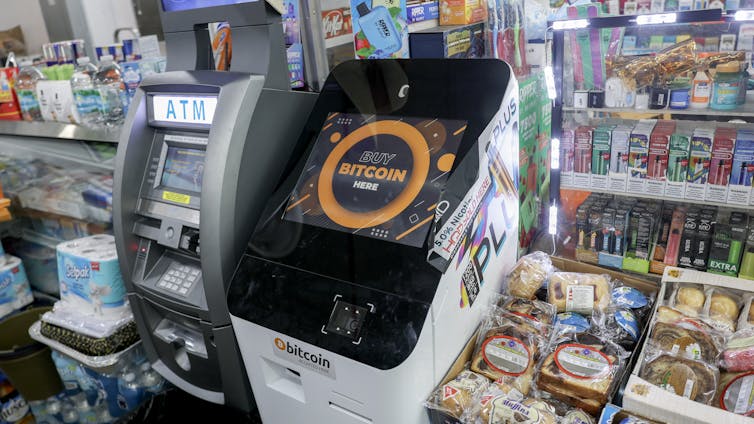
Scammers also use cryptocurrencies as a means of extracting money from people in impersonation scams and other forms of fraud. For example, scammers direct victims to bitcoin ATMs to deposit large sums of cash and convert it to the untraceable cryptocurrency as payment for fictitious fines.
Phishing, smishing, tech support and jobs
Old scams don’t die; they evolve.
Phishing and smishing have been around for years. Victims are tricked into clicking links in emails or text messages, leading to malware downloads, credential theft or ransomware attacks. AI has made these lures eerily realistic, mimicking corporate tone, grammar and even video content.
Tech support scams often start with pop-ups on computer screens that warn of viruses or identity theft, urging users to call a number. Sometimes they begin with a direct cold call to the victim. Once the victim is on a call with the fake tech support, the scammers convince victims to grant remote access to their supposedly compromised computers. Once inside, scammers install malware, steal data, demand payment or all three.
Fake websites and listings are another current type of scam. Fraudulent sites impersonating universities or ticket sellers trick victims into paying for fake admissions, concerts or goods.
One example is when a website for “Southeastern Michigan University” came online and started offering details about admission. There is no such university. Eastern Michigan University filed a complaint that Southeastern Michigan University was copying its website and defrauding unsuspecting victims.
The rise of remote and gig work has opened new fraud avenues.
Victims are offered fake jobs with promises of high pay and flexible hours. In reality, scammers extract “placement fees” or harvest sensitive personal data such as Social Security numbers and bank details, which are later used for identity theft.
How you can protect yourself
Technology has changed, but the basic principles remain the same: Never click on suspicious links or download attachments from unknown senders, and enter personal information only if you are sure that the website is legitimate. Avoid using third-party apps or links. Legitimate businesses have apps or real websites of their own.
Enable two-factor authentication wherever possible. It provides security against stolen passwords. Keep software updated to patch security holes. Most software allows for automatic update or warns about applying a patch.
Remember that a legitimate business will never ask for personal information or a money transfer. Such requests are a red flag.
Relationships are a trickier matter. The state of California provides details on how people can avoid being victims of pig butchering.
Technology has supercharged age-old fraud. AI makes deception virtually indistinguishable from reality, crypto enables anonymous theft, and the remote-work era expands opportunities to trick people. The constant: Scammers prey on trust, urgency and ignorance. Awareness and skepticism remain your best defense.
To all people that live outside the US, and quite a few as well who don’t!
The Federal Reserve is the central banking system of the USA. I am going to republish most of the article that appears on WikiPedia. It is yet another example of how the United States set itself up taking the best from all around the world.
(And apologies for not posting a Picture Parade yesterday.)
ooOOoo
The Federal Reserve System (often shortened to the Federal Reserve, or simply the Fed) is the central banking system of the United States. It was created on December 23, 1913, with the enactment of the Federal Reserve Act, after a series of financial panics (particularly the panic of 1907) led to the desire for central control of the monetary system in order to alleviate financial crises.[list 1] Although an instrument of the U.S. government, the Federal Reserve System considers itself “an independent central bank because its monetary policy decisions do not have to be approved by the president or by anyone else in the executive or legislative branches of government, it does not receive funding appropriated by Congress, and the terms of the members of the board of governors span multiple presidential and congressional terms.”[11] Over the years, events such as the Great Depression in the 1930s and the Great Recessionduring the 2000s have led to the expansion of the roles and responsibilities of the Federal Reserve System.[6][12]
Congress established three key objectives for monetary policy in the Federal Reserve Act: maximizing employment, stabilizing prices, and moderating long-term interest rates.[13] The first two objectives are sometimes referred to as the Federal Reserve’s dual mandate.[14] Its duties have expanded over the years, and include supervising and regulating banks, maintaining the stability of the financial system, and providing financial services to depository institutions, the U.S. government, and foreign official institutions.[15] The Fed also conducts research into the economy and provides numerous publications, such as the Beige Book and the FRED database.[16]
The Federal Reserve System is composed of several layers. It is governed by the presidentially appointed board of governors or Federal Reserve Board (FRB). Twelve regional Federal Reserve Banks, located in cities throughout the nation, regulate and oversee privately owned commercial banks.[17] Nationally chartered commercial banks are required to hold stock in, and can elect some board members of, the Federal Reserve Bank of their region.
The Federal Open Market Committee (FOMC) sets monetary policy by adjusting the target for the federal funds rate, which generally influences market interest rates and, in turn, US economic activity via the monetary transmission mechanism. The FOMC consists of all seven members of the board of governors and the twelve regional Federal Reserve Bank presidents, though only five bank presidents vote at a time: the president of the New York Fed and four others who rotate through one-year voting terms. There are also various advisory councils.[list 2] It has a structure unique among central banks, and is also unusual in that the United States Department of the Treasury, an entity outside of the central bank, prints the currency used.[23]
The federal government sets the salaries of the board’s seven governors, and it receives all the system’s annual profits after dividends on member banks’ capital investments are paid, and an account surplus is maintained. In 2015, the Federal Reserve earned a net income of $100.2 billion and transferred $97.7 billion to the U.S. Treasury,[24] and 2020 earnings were approximately $88.6 billion with remittances to the U.S. Treasury of $86.9 billion.[25] The Federal Reserve has been criticized for its approach to managing inflation, perceived lack of transparency, and its role in economic downturns.[26][27][28]
Purpose
The primary declared motivation for creating the Federal Reserve System was to address banking panics.[6] Other purposes are stated in the Federal Reserve Act, such as “to furnish an elastic currency, to afford means of rediscounting commercial paper, to establish a more effective supervision of banking in the United States, and for other purposes”.[29] Before the founding of the Federal Reserve System, the United States underwent several financial crises. A particularly severe crisis in 1907 led Congress to enact the Federal Reserve Act in 1913. Today the Federal Reserve System has responsibilities in addition to stabilizing the financial system.[30]
Current functions of the Federal Reserve System include:[15][30]
stable prices, interpreted as an inflation rate of 2 percent per year on average[31]
moderate long-term interest rates
To maintain the stability of the financial system and contain systemic risk in financial markets
To provide financial services to depository institutions, the U.S. government, and foreign official institutions, including playing a major role in operating the nation’s payments system
To facilitate the exchange of payments among regions
Banking institutions in the United States are required to hold reserves—amounts of currency and deposits in other banks—equal to only a fraction of the amount of the bank’s deposit liabilities owed to customers. This practice is called fractional-reserve banking. As a result, banks usually invest the majority of the funds received from depositors. On rare occasions, too many of the bank’s customers will withdraw their savings and the bank will need help from another institution to continue operating; this is called a bank run. Bank runs can lead to a multitude of social and economic problems. The Federal Reserve System was designed as an attempt to prevent or minimize the occurrence of bank runs, and possibly act as a lender of last resort when a bank run does occur. Many economists, following Nobel laureate Milton Friedman, believe that the Federal Reserve inappropriately refused to lend money to small banks during the bank runs of 1929; Friedman argued that this contributed to the Great Depression.[32]
Check clearing system
Because some banks refused to clear checks from certain other banks during times of economic uncertainty, a check-clearing system was created in the Federal Reserve System. It is briefly described in The Federal Reserve System—Purposes and Functions as follows:[33]
By creating the Federal Reserve System, Congress intended to eliminate the severe financial crises that had periodically swept the nation, especially the sort of financial panic that occurred in 1907. During that episode, payments were disrupted throughout the country because many banks and clearinghouses refused to clear checks drawn on certain other banks, a practice that contributed to the failure of otherwise solvent banks. To address these problems, Congress gave the Federal Reserve System the authority to establish a nationwide check-clearing system. The System, then, was to provide not only an elastic currency—that is, a currency that would expand or shrink in amount as economic conditions warranted—but also an efficient and equitable check-collection system.
Lender of last resort
In the United States, the Federal Reserve serves as the lender of last resort to those institutions that cannot obtain credit elsewhere and the collapse of which would have serious implications for the economy. It took over this role from the private sector “clearing houses” which operated during the Free Banking Era; whether public or private, the availability of liquidity was intended to prevent bank runs.[34]
Fluctuations
Through its discount window and credit operations, Reserve Banks provide liquidity to banks to meet short-term needs stemming from seasonal fluctuations in deposits or unexpected withdrawals. Longer-term liquidity may also be provided in exceptional circumstances. The rate the Fed charges banks for these loans is called the discount rate (officially the primary credit rate).
By making these loans, the Fed serves as a buffer against unexpected day-to-day fluctuations in reserve demand and supply. This contributes to the effective functioning of the banking system, alleviates pressure in the reserves market and reduces the extent of unexpected movements in the interest rates.[35] For example, on September 16, 2008, the Federal Reserve Board authorized an $85 billion loan to stave off the bankruptcy of international insurance giant American International Group (AIG).[36]
Obverse of a Federal Reserve $1 note issued in 2009
In its role as the central bank of the United States, the Fed serves as a banker’s bank and as the government’s bank. As the banker’s bank, it helps to assure the safety and efficiency of the payments system. As the government’s bank or fiscal agent, the Fed processes a variety of financial transactions involving trillions of dollars. Just as an individual might keep an account at a bank, the U.S. Treasury keeps a checking account with the Federal Reserve, through which incoming federal tax deposits and outgoing government payments are handled. As part of this service relationship, the Fed sells and redeems U.S. government securitiessuch as savings bonds and Treasury bills, notes and bonds. It also issues the nation’s coinand paper currency. The U.S. Treasury, through its Bureau of the Mint and Bureau of Engraving and Printing, actually produces the nation’s cash supply and, in effect, sells the paper currency to the Federal Reserve Banks at manufacturing cost, and the coins at face value. The Federal Reserve Banks then distribute it to other financial institutions in various ways.[37] During the Fiscal Year 2020, the Bureau of Engraving and Printing delivered 57.95 billion notes at an average cost of 7.4 cents per note.[38][39]
Federal funds are the reserve balances (also called Federal Reserve Deposits) that private banks keep at their local Federal Reserve Bank.[40] These balances are the namesake reserves of the Federal Reserve System. The purpose of keeping funds at a Federal Reserve Bank is to have a mechanism for private banks to lend funds to one another. This market for funds plays an important role in the Federal Reserve System as it is the basis for its monetary policy work. Monetary policy is put into effect partly by influencing how much interest the private banks charge each other for the lending of these funds.
Federal reserve accounts contain federal reserve credit, which can be converted into federal reserve notes. Private banks maintain their bank reserves in federal reserve accounts.
Bank regulation
The Federal Reserve regulates private banks. The system was designed out of a compromise between the competing philosophies of privatization and government regulation. In 2006 Donald L. Kohn, vice chairman of the board of governors, summarized the history of this compromise:[41]
Agrarian and progressive interests, led by William Jennings Bryan, favored a central bank under public, rather than banker, control. However, the vast majority of the nation’s bankers, concerned about government intervention in the banking business, opposed a central bank structure directed by political appointees. The legislation that Congress ultimately adopted in 1913 reflected a hard-fought battle to balance these two competing views and created the hybrid public-private, centralized-decentralized structure that we have today.
The balance between private interests and government can also be seen in the structure of the system. Private banks elect members of the board of directors at their regional Federal Reserve Bank while the members of the board of governors are selected by the president of the United States and confirmed by the Senate.
The Federal Banking Agency Audit Act, enacted in 1978 as Public Law 95-320 and 31 U.S.C. section 714 establish that the board of governors of the Federal Reserve System and the Federal Reserve banks may be audited by the Government Accountability Office (GAO).[42]
The GAO has authority to audit check-processing, currency storage and shipments, and some regulatory and bank examination functions–though there are restrictions to what the GAO may audit. Under the Federal Banking Agency Audit Act, 31 U.S.C. section 714(b), audits of the Federal Reserve Board and Federal Reserve banks do not include (1) transactions for or with a foreign central bank or government or non-private international financing organization; (2) deliberations, decisions, or actions on monetary policy matters; (3) transactions made under the direction of the Federal Open Market Committee; or (4) a part of a discussion or communication among or between members of the board of governors and officers and employees of the Federal Reserve System related to items (1), (2), or (3). See Federal Reserve System Audits: Restrictions on GAO’s Access (GAO/T-GGD-94-44), statement of Charles A. Bowsher.[43]
The board of governors in the Federal Reserve System has a number of supervisory and regulatory responsibilities in the U.S. banking system, but not complete responsibility. A general description of the types of regulation and supervision involved in the U.S. banking system is given by the Federal Reserve:[44]
The Board also plays a major role in the supervision and regulation of the U.S. banking system. It has supervisory responsibilities for state-chartered banks[45] that are members of the Federal Reserve System, bank holding companies(companies that control banks), the foreign activities of member banks, the U.S. activities of foreign banks, and Edge Act and “agreement corporations” (limited-purpose institutions that engage in a foreign banking business). The Board and, under delegated authority, the Federal Reserve Banks, supervise approximately 900 state member banks and 5,000 bank holding companies. Other federal agencies also serve as the primary federal supervisors of commercial banks; the Office of the Comptroller of the Currency supervises national banks, and the Federal Deposit Insurance Corporation supervises state banks that are not members of the Federal Reserve System.
Some regulations issued by the Board apply to the entire banking industry, whereas others apply only to member banks, that is, state banks that have chosen to join the Federal Reserve System and national banks, which by law must be members of the System. The Board also issues regulations to carry out major federal laws governing consumer credit protection, such as the Truth in Lending, Equal Credit Opportunity, and Home Mortgage Disclosure Acts. Many of these consumer protection regulations apply to various lenders outside the banking industry as well as to banks.
The Board has regular contact with members of the President’s Council of Economic Advisers and other key economic officials. The Chair also meets from time to time with the President of the United States and has regular meetings with the Secretary of the Treasury. The Chair has formal responsibilities in the international arena as well.
Regulatory and oversight responsibilities
The board of directors of each Federal Reserve Bank District also has regulatory and supervisory responsibilities. If the board of directors of a district bank has judged that a member bank is performing or behaving poorly, it will report this to the board of governors. This policy is described in law:
Each Federal reserve bank shall keep itself informed of the general character and amount of the loans and investments of its member banks with a view to ascertaining whether undue use is being made of bank credit for the speculative carrying of or trading in securities, real estate, or commodities, or for any other purpose inconsistent with the maintenance of sound credit conditions; and, in determining whether to grant or refuse advances, rediscounts, or other credit accommodations, the Federal reserve bank shall give consideration to such information. The chairman of the Federal reserve bank shall report to the Board of Governors of the Federal Reserve System any such undue use of bank credit by any member bank, together with his recommendation. Whenever, in the judgment of the Board of Governors of the Federal Reserve System, any member bank is making such undue use of bank credit, the Board may, in its discretion, after reasonable notice and an opportunity for a hearing, suspend such bank from the use of the credit facilities of the Federal Reserve System and may terminate such suspension or may renew it from time to time.[46]
National payments system
The Federal Reserve plays a role in the U.S. payments system. The twelve Federal Reserve Banks provide banking services to depository institutions and to the federal government. For depository institutions, they maintain accounts and provide various payment services, including collecting checks, electronically transferring funds, and distributing and receiving currency and coin. For the federal government, the Reserve Banks act as fiscal agents, paying Treasury checks; processing electronic payments; and issuing, transferring, and redeeming U.S. government securities.[47]
In the Depository Institutions Deregulation and Monetary Control Act of 1980, Congress reaffirmed that the Federal Reserve should promote an efficient nationwide payments system. The act subjects all depository institutions, not just member commercial banks, to reserve requirements and grants them equal access to Reserve Bank payment services. The Federal Reserve plays a role in the nation’s retail and wholesale payments systems by providing financial services to depository institutions. Retail payments are generally for relatively small-dollar amounts and often involve a depository institution’s retail clients—individuals and smaller businesses. The Reserve Banks’ retail services include distributing currency and coin, collecting checks, electronically transferring funds through FedACH (the Federal Reserve’s automated clearing house system), and beginning in 2023, facilitating instant payments using the FedNow service. By contrast, wholesale payments are generally for large-dollar amounts and often involve a depository institution’s large corporate customers or counterparties, including other financial institutions. The Reserve Banks’ wholesale services include electronically transferring funds through the Fedwire Funds Service and transferring securities issued by the U.S. government, its agencies, and certain other entities through the Fedwire Securities Service.
ooOOoo
There is more in that article including Structure, Board of Governors, the Federal Reserve Banks (there are 12), and more subjects. So if you want to read these then, please, go here.
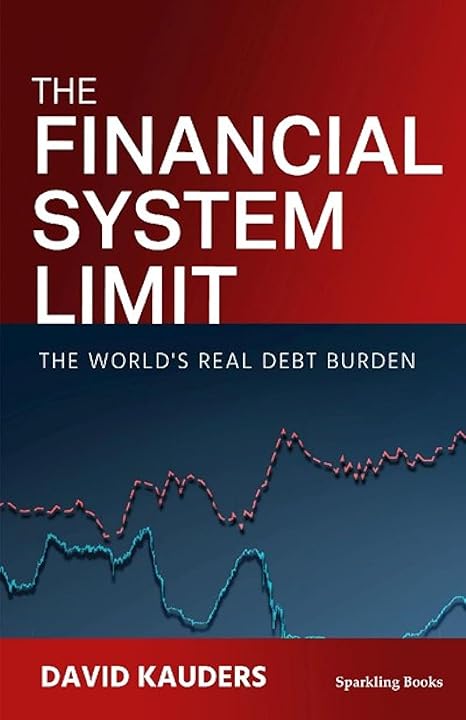
And I am bound to say that I have recently finished reading The FINANCIAL SYSTEM LIMIT by David Kauders. The sub-title of the book is The World’s Real Debt Burden. If you are at all interested in the subject then read the book.
As many of you know I was born exactly six months before VE Day on May 8th, 1945.
We soon moved from Acton to 16 Toley Avenue, in Preston Road, Wembley. A short distance down Toley Ave was Ledway Drive that led up to Barn Hill Pond.
A review of Barn Hill Pond by a dog walker, Tara Furlong, in 2020.
It’s a pond on top of a hill, which gets smaller depending on how hot and dry the summer is. It has been known to have sightings of its own grey heron, mallards on occasion, etc. Fish may lurk in its depths, and frogspawn in the spring. There are views of Wembley, and across to central London from the trig point nearby, and aspirations to open up the view to Harrow-on-the-Hill. Take a little wander and you may spy St Paul’s Cathedral. A small number of benches are available, and the bins overflow in fine weather. There’s nothing but green space and houses nearby. It’s accessible via a fairly short, steep uphill walk on uneven ground from the unserviced car park, which can get very busy; or from Wembley Park. Photos on a typical British day – i.e. a bit cloudy and soggy.
As a young boy I well remember looking out from Barn Hill and seeing the devastation of the property from the Nazi bombers.
There are twenty programmes on Radio 4 that are about this postwar period in Britain. I have listened to the first three and have found them deeply interesting. Anyone interested in British history is recommended to listen to them. That is the link.
Penny Martin regularly sends me content that I can publish as a post for you kind people.
And so it is with this one.
ooOOoo
Going Green with Fur and Grit: How to Launch an Eco-Friendly Pet Care Business That Actually Work
You’ve been sitting on the idea for a while now. Maybe it started with that pile of single-use plastic baggies after your dog’s walk, or the ingredient list on your cat’s kibble that read more like a chemistry project than actual food. Maybe you just got tired of feeling like you had to choose between loving your pet and loving the planet. Whatever the reason, you’re here now, staring down the reality of launching a business that’s not only built for animals—but built for good. You want to make something that matters. And you can. But you need to know exactly what you’re walking into.
Anchor Yourself in a Real Way
You can’t build this kind of business on good vibes and a cool logo. Before anything else—before the business plan, the branding, or the Instagram account—you’ve got to know exactly why you’re doing this. If your reason isn’t rooted in something deeply personal, something that makes your chest tighten when you think about it, you’ll burn out fast. Maybe it’s watching your senior dog react to over-processed treats, or maybe it’s the garbage island growing in the ocean—whatever it is, let that be your compass.
Streamline the Chaos with the Right Tools
When you’re building a mission-driven business from scratch, the backend can get messy fast. That’s where using an all-in-one business platform becomes a game-changer—it keeps your focus on your values instead of your paperwork. Whether you’re forming an LLC, managing compliance, creating a website, or handling finances, this type of platform can provide comprehensive services and expert support to ensure business success. Platforms like ZenBusiness are built for entrepreneurs like you, giving you the structure to stay organized while you pour your energy into the work that really matters.
Get Ruthlessly Local with Sourcing
If you’re serious about sustainability, you’ve got to look hard at where your products come from. Local sourcing doesn’t just reduce your carbon footprint—it tells your community that you care about it. Reach out to nearby farms, independent makers, and ethical manufacturers who align with your mission. Not only will this lower your shipping emissions, it’ll also create real relationships with partners who have skin in the game—and people can feel that authenticity the moment they walk through your door.
Know That Packaging Will Be a Battle
You’re going to lose sleep over packaging. You’ll try compostable options that fall apart in humid weather. You’ll learn that “recyclable” doesn’t mean the same thing in every city. And somewhere along the way, you’ll realize that the most sustainable solution might be the least convenient one. This is the part where you have to experiment, ask questions, and stay transparent with your customers. No one expects perfection—but they’ll appreciate your effort to figure it out.
Make the Community Your Co-Founders
You’re not building this business for yourself. You’re building it for every person who loves their animal and wants to do better by the planet. So bring them in early. Host small events, set up “ask me anything” nights, partner with local shelters, and turn your customer base into a real community. These people won’t just buy your products—they’ll give you feedback, advocate for your brand, and make you feel less alone when the grind gets real.
Ditch the Guilt, Offer Solutions
You’re not here to shame anyone. The pet parent buying big-box kibble isn’t your enemy—they’re someone who probably hasn’t been offered a better option yet. So don’t lecture. Instead, educate through action. Make eco-friendly choices feel fun, feel doable, and feel worth it. When you center your messaging on empowerment instead of guilt, people are way more likely to stick around—and tell their friends.
Teach Through Curiosity, Not Preaching
People want to learn, but they don’t want to be condescended to. Your job is to become the kind of brand that shares knowledge without turning it into a TED Talk. Drop bite-sized facts on your packaging, start conversations in-store, and use your social platforms to casually open people’s eyes. Think of it like planting seeds—not every customer will bloom overnight, but the ones who do will remember how you made them feel when they were just getting started.
Hire with Heart, Not Just Skill
You can train someone to trim nails or restock shelves, but you can’t teach them to care. The team you build needs to believe in the mission as much as you do. They’re the ones explaining the difference between corn-based and petroleum-based bags to a frazzled pet parent who’s late for pickup. If your staff is just collecting paychecks, your message won’t land. But if they’re aligned with your values? That’s when your business becomes a movement.
Don’t Let Perfect Be the Point
You will mess up. You’ll stock a “sustainable” product that turns out to be greenwashed. You’ll order packaging that gets held up in customs. You’ll have days where you wonder if any of this actually matters. That’s normal. Progress in this space is messy, nonlinear, and full of trade-offs. The key is to keep going, stay honest, and let your customers come along for the ride. They don’t need you to be flawless—they just need to believe you’re trying.
Starting an eco-conscious pet care business means doing things the hard way on purpose. It means waking up early to answer emails from suppliers and staying up late comparing compostable labels. It means showing up for your customers, your team, your animals—and the planet. But if your heart’s in the right place and your feet stay on the ground, you’ll build something that matters. And really, that’s the kind of work worth doing.
Discover the wisdom of our loyal companions and explore the journey of life with Learning from Dogs, where every post is a step towards understanding and fulfillment.
ooOOoo
As a very ex-entrepreneur, I can tell you that there is much in Penny’s article that applies to starting any business.
And as an ex-salesman, everything starts with the customer. The persons who are attracted to what you are selling. It is hard work but pleasing work. Before I started Dataview I worked for IBM UK in their office products division, as a salesman. I loved the job!
An extremely powerful new essay from George Monbiot.
While this post from G. Monbiot is about politics, I think it goes far beyond that. Hence my reason for republishing this essay, with George Monbiot’s permission. When I will die is not known but surely I will in the next ten years or so. I really want to leave this world seeing everything improving, from the lessening of the change in our climate, to a reduction in world fighting, to a greater equality for all.
Please, please be wrong, Mr. Monbiot.
ooOOoo
The Urge to Destroy
Posted on14th April 2025
It’s a cast-iron relationship: the more unequal a society becomes, the better the far right does. Here’s why.
By George Monbiot, published in the Guardian 13th April 2025
“He’s really gone and done it this time. Now everyone can see what a disaster he is.” How many times have we heard this about Donald Trump? And how many times has it been proved wrong? Well, maybe this time he really has overstepped. After all, his clowning around with tariffs, sparking trade wars, then suddenly reversing his position, could provoke a global recession, perhaps even a depression. Surely his supporters will disown him? But I’m not banking on it, and this is why.
Already, Trump has waged war on everything that builds prosperity and wellbeing: democracy, healthy ecosystems, education, healthcare, science, the arts. Yet, amid the wreckage, and despite some slippage, his approval ratings still hold between 43 and 48%: far higher than those of many other leaders. Why? I believe part of the answer lies in a fundamental aspect of our humanity: the urge to destroy that from which you feel excluded.
This urge, I think, is crucial to understanding politics. Yet hardly anyone seems to recognise it. Hardly anyone, that is, except the far right, who see it all too well.
In the US, a high proportion of the population is excluded from many of the benefits I’ve listed. Science might lead to medical breakthroughs, but not, perhaps, for people who can’t afford health insurance. A university education might open doors, but only if you’re prepared to carry tens or hundreds of thousands of dollars of debt. Art and theatre and music improve our lives: good for those who can buy the tickets. So do national parks, but only if you can afford to visit them.
Democracy, we are told, allows people a voice in politics. But only, it seems, if they have a few million to give to a political party. As the political scientist Prof Martin Gilens notes in his book Affluence and Influence: “Under most circumstances, the preferences of the vast majority of Americans appear to have essentially no impact on which policies the government does or doesn’t adopt.” GDP growth was strong under Joe Biden, but as the economics professor Jason Furman points out: “From 2019 to 2023, inflation-adjusted household income fell, and the poverty rate rose.” GDP and social improvement are no longer connected.
All those good things? Sorry, they’re not for you. If you feel an urge to tear it all down, to burn the whole stinking, hypocritical, exclusive system to the ground, Trump is your man. Or so he claims. In reality his entire performance is both a distraction from and an accelerant of spiralling inequality. He can hardly lose: the more he exacerbates inequality, the more he triggers an urge for revenge against his scapegoats: immigrants, trans people, scientists, teachers, China.
But such killer clowns can’t pull this off by themselves. Their most effective recruiters are centrist parties paralysed in the face of economic power. In hock to rich funders, terrified of the billionaire media, for decades they have been unable even to name the problem, let alone address it. Hence the spectacular uselessness of the Democrats’ response to Trump. As the US journalist Hamilton Nolan remarks: “One party is out to kill, and the other is waiting for its leaders to die.”
In the UK, Labour, like the Democrats, has long assured itself that it doesn’t matter how wide economic disparities are, as long as the poorest are raised up. Now it has abandoned even that caveat: we can cut benefits, so long as GDP grows. But it does matter. It matters very much. A vast array of evidence, brought together in 2009 in The Spirit Level by Richard Wilkinson and Kate Pickett and updated in 2024, shows that inequality exerts a massive influence on social, economic, environmental and political outcomes, regardless of people’s absolute positions.
If there is a such a thing as Starmerism, it collapses in the face of a paper published by the political scientists Leonardo Baccini and Thomas Sattler last year, which finds that austerity increases support for the radical right in economically vulnerable regions.(My emboldening. PH) Austerity, they found, is the key variable: without it, less-educated people are no more likely to vote for rightwing demagogues than highly educated people are. In other words, Keir Starmer and Rachel Reeves are busily handing their core constituencies to Nigel Farage.
Of course, they deny they’re imposing austerity, using a technical definition that means nothing to those on the sharp end. Austerity is what the poor experience, while they must watch the rich and upper middle classes, under a Labour government, enjoy ever greater abundance.
Starmer and his minions suggest there’s nothing they can do: wealthy people are already taxed to the max. As private jets and helicopters cross the skies, anyone can see this is nonsense. Of all the remarkable things I stumbled across while researching this column, the following is perhaps the most jaw-dropping. On the most recent (2022) figures, once benefits have been paid, the Gini coefficient for gross income in the UK scarcely differs from the Gini coefficient for post-tax income. In other words, the gap between the rich and the poor is rougly the same after taxes are levied, suggesting that taxation has no further significant effect on income distribution. How could this possibly be true, when the rich pay higher rates of income tax? It’s because the poor surrender a much higher proportion of their income in sales taxes, such as VAT. So much for no further options. So much for Labour “realism”.
The one thing that can stop the rise of the far right is the one thing mainstream parties are currently not prepared to deliver: greater equality. The rich should be taxed more, and the revenue used to improve the lives of the poor. However frantically centrist parties avoid the issue, there is no other way.
George writes about Britain but my judgement is that this issue is not limited to that country; I suspect it is a far wider problem. Did you know that Finland is the world’s happiest country?
An extract of that article: “Finland has been ranked as the world’s happiest country for the eighth successive year, with experts citing access to nature and a strong welfare system as factors.
It came ahead of three other Nordic countries in this year’s UN-sponsored World Happiness Report, while Latin America’s Costa Rica and Mexico entered the top 10 for the first time.
Both the UK and the US slipped down the list to 23rd and 24th respectively – the lowest-ever position for the latter.”
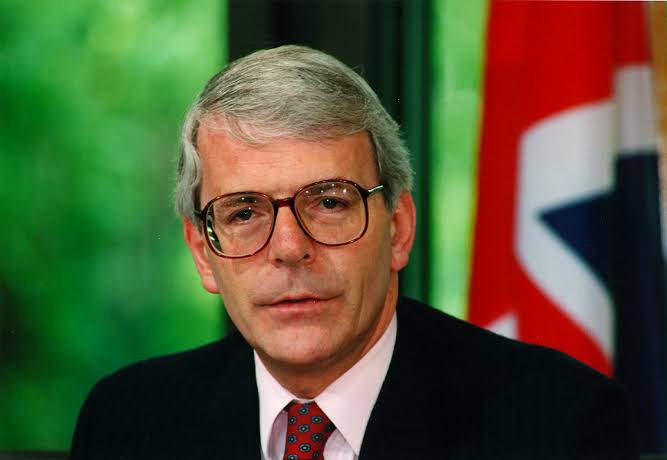
On yesterday’s World This Weekend the programme was entirely devoted to a speech that John Major gave on February 16th. His theme was: “We are moving into a more dangerous world“
Some of the best evidence for this comes from the behavior of two of the most powerful beings of the Maya world: The first is a creator god whose name is still spoken by millions of people every fall – Huracán, or “Hurricane.” The second is a god of lightning, K’awiil, from the early first millennium C.E.
As a scholar of the Indigenous religions of the Americas, I recognize that these beings, though separated by over 1,000 years, are related and can teach us something about our relationship to the natural world.
Huracán, the ‘Heart of Sky’
Huracán was once a god of the K’iche’, one of the Maya peoples who today live in the southern highlands of Guatemala. He was one of the main characters of the Popol Vuh, a religious text from the 16th century. His name probably originated in the Caribbean, where other cultures used it to describe the destructive power of storms.
The K’iche’ associated Huracán, which means “one leg” in the K’iche’ language, with weather. He was also their primary god of creation and was responsible for all life on earth, including humans.
Because of this, he was sometimes known as U K’ux K’aj, or “Heart of Sky.” In the K’iche’ language, k’ux was not only the heart but also the spark of life, the source of all thought and imagination.
Yet, Huracán was not perfect. He made mistakes and occasionally destroyed his creations. He was also a jealous god who damaged humans so they would not be his equal. In one such episode, he is believed to have clouded their vision, thus preventing them from being able to see the universe as he saw it.
Huracán was one being who existed as three distinct persons: Thunderbolt Huracán, Youngest Thunderbolt and Sudden Thunderbolt. Each of them embodied different types of lightning, ranging from enormous bolts to small or sudden flashes of light.
Despite the fact that he was a god of lightning, there were no strict boundaries between his powers and the powers of other gods. Any of them might wield lightning, or create humanity, or destroy the Earth.
Another storm god
The Popol Vuh implies that gods could mix and match their powers at will, but other religious texts are more explicit. One thousand years before the Popol Vuh was written, there was a different version of Huracán called K’awiil. During the first millennium, people from southern Mexico to western Honduras venerated him as a god of agriculture, lightning and royalty.
Illustrations of K’awiil can be found everywhere on Maya pottery and sculpture. He is almost human in many depictions: He has two arms, two legs and a head. But his forehead is the spark of life – and so it usually has something that produces sparks sticking out of it, such as a flint ax or a flaming torch. And one of his legs does not end in a foot. In its place is a snake with an open mouth, from which another being often emerges.
Indeed, rulers, and even gods, once performed ceremonies to K’awiil in order to try and summon other supernatural beings. As personified lightning, he was believed to create portals to other worlds, through which ancestors and gods might travel.
Representation of power
For the ancient Maya, lightning was raw power. It was basic to all creation and destruction. Because of this, the ancient Maya carved and painted many images of K’awiil. Scribes wrote about him as a kind of energy – as a god with “many faces,” or even as part of a triad similar to Huracán.
He was everywhere in ancient Maya art. But he was also never the focus. As raw power, he was used by others to achieve their ends.
Moreover, Maya artists always had K’awiil doing something or being used to make something happen. They believed that power was something you did, not something you had. Like a bolt of lightning, power was always shifting, always in motion.
An interdependent world
Because of this, the ancient Maya thought that reality was not static but ever-changing. There were no strict boundaries between space and time, the forces of nature or the animate and inanimate worlds.
Residents wade through a street flooded by Hurricane Helene, in Batabano, Mayabeque province, Cuba, on Sept. 26, 2024. AP Photo/Ramon Espinosa
Everything was malleable and interdependent. Theoretically, anything could become anything else – and everything was potentially a living being. Rulers could ritually turn themselves into gods. Sculptures could be hacked to death. Even natural features such as mountains were believed to be alive.
The illusion is not that different things exist. Rather it is that they exist independent from one another. Huracán, in this sense, damaged himself by damaging his creations.
Hurricane season every year should remind us that human beings are not independent from nature but part of it. And like Hurácan, when we damage nature, we damage ourselves.