Category: Business

The USA as leader of a new society.

Not quite as strange as one might think.

In Paul Gilding’s book, The Great Disruption, there is a chapter called When the Dam of Denial Breaks. On page 121 Paul Gilding writes this,

To argue we are naturally greedy and competitive and can’t change is like arguing that we engage naturally in murder and infanticide as our forebears the chimps do and therefore as we did.  We have certain tendencies in our genes, but unlike other creatures we have the proven capacity to make conscious decisions to overcome them and also the proven ability to build a society with laws and values to enshrine and, critically, to enforce such changes when these tendencies come to the surface.

So don’t underestimate how profoundly we can change.  We are still capable of evolution, including conscious evolution.  This coming crisis is perhaps the greatest opportunity in millennia for a step change in human society.

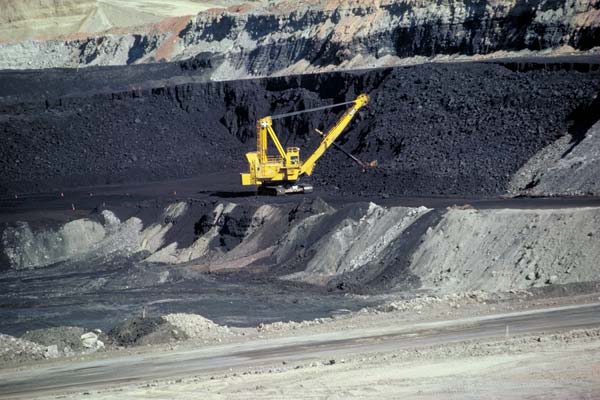
The United States of America gets a lot of stick, rightly so, for it’s greedy consumption of energy, especially the use of coal.  According to the World Coal Association, the USA in 2010 produced 932 million tons of hard coal, second in the world to China that produced 3,162 million tons.

Coal mine in Wyoming

But the one thing that the USA has shown time and time again is that it has the capacity to change very quickly, especially when the country, from its leaders to its entrepreneurs, senses a global leadership opportunity.  With that in mind, read the latest release from the Earth Policy Institute, reproduced below,

AUGUST 10, 2011
A Fifty Million Dollar Tipping Point?
Lester R. Brown

At a press conference on July 21, New York City Mayor Michael Bloomberg announced that he was contributing $50 million to the Sierra Club’s Beyond Coal Campaign. Michael Brune, head of the Sierra Club, called it a “game changer”. It is that, but it also could push the United States, and indeed the world, to a tipping point on the climate issue.

It is one thing for Michael Brune to say coal has to go, but quite another when Michael Bloomberg says so. Few outside the environmental community know who Michael Brune is, but every business person knows Michael Bloomberg as one of the most successful business entrepreneurs of his generation.

The Sierra Club’s Beyond Coal Campaign has two main goals. The first is to prevent the permitting and construction of new coal-fired power plants. So far 153 proposed power plants have been taken off the board. The second goal is to close the 492 existing plants. The Sierra Club lists 71 plants already scheduled for total or partial closure, most of them by 2016.

The efforts to stabilize climate will be won or lost with coal, the world’s largest source of carbon emissions. The effort to phase out coal is now well under way in the United States, the world’s second ranking coal user after China.

There are likely to be many ripple effects from the Bloomberg grant. To begin with, it may encourage other philanthropists to invest in climate stabilization.

The prospect for investment in coal, already deteriorating, will weaken even faster. In August 2010, the Rainforest Action Network (RAN) announced that several leading U.S. investment banks, including Bank of America and J.P. Morgan, had ceased lending to companies involved in mountaintop removal coal mining. Now with Bloomberg’s opposition, investors will be even more wary of coal.

The Bloomberg-Sierra initiative again focuses attention on the 13,200 lives lost each year in the United States due to air pollution from burning coal. If deaths from black lung disease among coal miners are included the number climbs even higher. The number of coal-related deaths in one year dwarfs total U.S. fatalities in the Iraq and Afghanistan wars. We invest heavily in protecting the lives of our troops in the Middle East, and rightly so. Bloomberg is saying let’s do the same for our people at home.

In addition, this initiative brings attention to the health care costs to society of burning coal. These are currently estimated at more than $100 billion per year, roughly $300 for every person in the United States or $1,200 for a family of four. These costs are real, but it is the American people, not the coal companies, who shoulder the burden.

Further reinforcing the urgency of phasing out coal are the more extreme weather events that climate scientists have been warning about for decades. During the first half of 2011 we watched TV news channels become weather channels. First it was a record number of tornadoes in one month, including the one that demolished Tuscaloosa, Alabama. Then, a few weeks later, an even more powerful tornado demolished Joplin, Missouri. As drought and heat sparked record or near-record wildfires in Arizona, New Mexico, and Texas, the lower Mississippi Basin was flooding. Searing heat waves scorched the southern Great Plains, the Midwest, and the East Coast. Intense heat has continued to break records across the country as Texas suffers its most severe one-year drought on record.

For coal, the handwriting is on the wall. Between 2007 and 2010, coal use in the United States dropped 8 percent. (See data.) Meanwhile, more than 300 new wind farms came online, totaling over 23,000 megawatts of generating capacity—the electricity output equivalent of 23 coal-fired power plants.

When people were asked in a national poll where they would like to get their electricity from, only 3 percent opted for coal. Despite the coal industry’s heavy expenditures to promote “clean coal,” it is still a loser in the public mind.

In addition to the Sierra Club, RAN, and a talented team of Earthjustice lawyers, the anti-coal movement also has allies in Friends of the Earth and Greenpeace, the latter with its highly developed capacity to focus public attention on environmental issues. This was evident in May when a Greenpeace team of eight daring activists scaled the 450-foot Fisk coal plant smokestack located in Chicago and painted “Quit Coal” on it. They were drawing public attention to the deadly air pollution in the city coming from the plant.

As the United States closes its coal-fired power plants, it sends a message to the world. With Michael Bloomberg’s grant bolstering the Sierra Club’s well-organized program to phase out coal, we can now imagine a coal-free United States on the horizon. The United States could again become a world leader, this time in stabilizing climate.

Copyright © 2011 Earth Policy Institute

The United States could again become a world leader, this time in stabilizing climate.”  That would be a dream come true, a dream of unimaginable consequences.

What is it you don’t understand?

Stating the obvious.

I am about a third into Paul Gilding’s book The Great Disruption.  It’s proving to be a very-thought provoking read that I will review in more detail over the coming weeks.

However, I just wanted to quote from the start of Chapter 5, Addicted to Growth,

Indeed, as argued by economist Kenneth Boulding: “Anyone who believes exponential growth can go on forever in a finite world is either a madman or an economist.”

Very little that can be argued about that statement.  It rather puts into context a couple of items read recently. Both from the blogsite New Economic Perspectives.  The first on June 10th by Stephanie Kelton,

Earlier this week, President Obama talked about the weakening state of the economy, telling us that he’s not worried about a double-dip recession and that the nation should “not panic.” It’s hard to imagine a more alarming assessment at this juncture.

The recovery is faltering. Our economy is growing at annual rate of just 1.8 percent. Manufacturing just grew at its slowest pace in 20 months. More than 44 million Americans – one in seven – rely on food stamps. Employers hired only 54,000 new workers in May, the lowest number in eight months. Jobless claims increased to 427,000 in the week ended June 4. The unemployment rate rose to 9.1 percent. Nearly half of all unemployed Americans have been without work for more than 6 months. About 25% of all teenagers who are looking for work are unemployed. Eight-and-a-half million Americans are underemployed – i.e. working part-time because their hours have been cut or because they can’t find full-time work. There are, on average, 4.6 unemployed people for every 1 job opening. And even if all the open positions were filled, there would still be 10.7 million people looking for work.

The second on July 8th by Marshall Auerback,

Today’s unemployment data suggests that we are experiencing something far worse than a mere “bump in the road”, as our President described it last month.  In fact, if last month was the time to panic, as Stephanie Kelton argued here, then today’s data should create real palpitations in the White House.  This isn’t just a “bump,” but a fully-fledged New York City style pot hole.

First the headline number everyone looks at: non-farm payrolls. Up 18,000 in June, the increase was 100,000 less than expectations.  In addition the prior two month payroll increases were revised down by -44,000 overall.  That’s weak – but not terrible.

Dig a bit deeper into the data and it looks absolutely awful:  The household measure of employment fell by -445,000.  Okay, it’s a noisy number. But, as Frank Veneroso has pointed out to me in an email correspondence, this measure of employment which is never revised now shows no employment growth over the last five months and very negative employment growth over the last three.

But it gets worse:  The work week was down one tenth.  Overtime was down one tenth.  The labor participation rate at 64.1% was the lowest since 1984.  The broad U6 unemployment rate rose from 15.8% to 16.2%.  In other words, as Frank suggested to me this morning, “many other employment indicators in this report confirm the deep disappointment in the payroll series and the much more negative message of the household series.”

Now here’s the latest item published by Paul Gilding in his Blog, The Cockatoo Chronicles. (I have republished it in full, hopefully without upsetting Mr. Gilding – couldn’t see advice on reproduction – but copyright remains, of course, fully with Paul Gilding.)

Like a Grenade in a Glasshouse

June 29, 2011

It’s going to hit hard and it’s going to hurt – made worse because most aren’t expecting it. They think the world is slowly returning to our modern “normal” – steadily increasing growth, with occasional annoying but manageable interruptions. After all, the global recession wasn’t so bad was it? Sure there was pain and things got shaky but Governments responded, bailed out companies, stimulated economies, got things back on track.  While it’s still a bit bumpy, Greek wobbles, US debt, extreme weather, high oil and food prices etc, it’ll work out. It always does….

If only it were so. In fact we are blindly walking towards the next in a series of inevitable system shaking and confidence sapping crises, deluded in the belief that the worst is behind us.

Each crisis will be a little worse than the last. Each one will shake our denial a little more. This is what happens when systems hit their limits. They don’t do so smoothly, but bump up against the wall, hitting hard, then bouncing off equally hard. It is the behaviour of a system trying to break through. But if the limits are solid, as is the case with our economic system hitting the limits of the planet – defined by unchangeable physical capacity and the laws of physics, chemistry and biology – then it can’t find its way through. So eventually, when the pain of hitting the wall gets too much, it stops.

Then it will hit. Like a grenade in a glasshouse, shattering denial and delusion and leaving it like a pile of broken glass on the floor of the old economic model. Then we’ll be ready for change.

I’ve been arguing the inevitability of this moment since 2005, mostly inside the business community. Before the 2008 financial crisis hit, the idea was almost universally rejected, with a belief in the indomitable power of globalised markets to overcome all challenges and keep growth on track. Most audiences believed that while markets always wobbled, they also always recovered. My suggestion, that this level of arrogance was the hallmark of empires before they fell, landed on deaf ears. They were the masters of the universe and markets and growth would always reign supreme.

Now the response is different. The financial crisis saw many break off from the pack and start to ask the difficult questions. I now find as I tour the world speaking about The Great Disruption to community gatherings, corporate executives and policy makers that minds are increasingly open. While not the dominant view, the previous confidence in the inevitably of growth has become shaky and the group asking the challenging questions is rapidly expanding.

As I argue in the book, the fundamental cause of what’s coming is resource constraint and environmental breakdown, which when combined with an overstretched financial system and high levels of debt puts unbearable tension into the global economy. While no one can know what event will pull the pin out of the grenade, the underlying pressures make that moment inevitable. Yes, the dominant commentary still blames each individual problem on unique circumstances, but the underlying systemic causes are clear for those who wish to look.

The continued level of denial still surprises me, especially given the pressures driving this are not esoteric and can be measured in clear economic indicators. A good example was recently published by one of the more interesting voices to join the growing chorus that we have a system-wide problem. The legendary contrarian and fund manager Jeremy Grantham is co-founder of the Boston based firm GMO, with over $100 billion of assets under management. So this guy is a solid capitalist and market advocate, pursuing wealth for the wealthy. But he sees the data and is raising the alarm, calling this moment “one of the giant inflection points in economic history” – referring to the end of a 100-year steady decline in commodity prices. His views were echoed by Stephen King, group chief economist at HSBC, who wrote in the FT: “After the biggest meltdown since the Great Depression, economic theory tells us that world commodity prices should not be this high. But they are and the West quickly needs to wake up to this new economic reality. Commodity prices are now permanently higher.”

Grantham provides the detail, pointing out that the 100 year trend of falling prices in the 33 most important commodities, except for oil, were wiped out with a price surge from 2002 to 2010 – a surge even greater than experienced in WW2. We have now reached what Grantham calls the Great Paradigm shift; not a price spike but a new reality. Within this new reality, Grantham says: “if we maintain our desperate focus on growth, we will run out of everything and crash.”

This is why hitting the wall is inevitable – because limits are not philosophies, they are limits. We can understand what to expect – and why the grenade will shatter the glasshouse of economic growth – by going back to how systems behave when they hit their limits. Our economic system first hit the wall in 2008 – that was when The Great Disruption began with food and oil prices hitting record highs and a credit crisis driven by reckless monetary policy pursuing growth at all costs. The resulting recession meant we backed away from those limits (bouncing off the wall), and then borrowed massive amounts of money from our children (think Greece) to try to get the economy moving again.

Now that the global economy is slowly entering a so-called “recovery”, the prices of commodities (representing our use of earth’s resources for food and materials) are on the way up, accelerated, in the case of food, by climate change. Of course if significant growth kicks in, the prices of oil, food and other commodities will surge, this timestarting from near record highs.  Then we will bounce back into recession and prices will back off again. Hit the wall, bounce off. Hit the wall, bounce off. Ouch.

By itself this would pose enough of a challenge to growth. But now we also have the debt we used to get the economy moving again. This debt can only be paid off with significant economic growth – but such significant growth is impossible as outlined above. So the debt itself becomes an enormous additional tension in the system, as argued by Richard Heinberg in his important forthcoming book The End of Growth. With the global economy and ecosystem now both burdened by unmanageable debt, effective global default is only a matter of time.

So we’re living in a glass house with the grenade sitting there for all to see. Who knows what will pull the pin. It could be Greece, a Chinese food crisis, peak oil or any number of other triggers. But it’s coming.

The question to ask yourself is simple. Are you ready?

Back to Kenneth Boulding: “Anyone who believes exponential growth can go on forever in a finite world is either a madman or an economist.

Precisely!

The Winston Churchill effect?

Forgive me for making this a much shorter contribution but the efforts of the previous two posts took rather a long time!

This is about the debt situation in the United States of America and, as always, Learning from Dogs trying to get to the underlying truth.

It’s from the BBC and it’s a radio programme that is included in this Post.

But why the headline referring to Churchill?  Well in the programme Justin Webb, of the BBC, reminds the world of a characteristic of the American Nation noted by Sir Winston Churchill, “Americans can always be counted on to do the right thing…after they have exhausted all other possibilities.”  (But caution about the precise wording of that quote – see here!)

Here’s the article that accompanied the BBC broadcast, the radio programme is after this article,

Is the US in denial over its $14tn debt?

Is America in denial about the extent of its financial problems, and therefore incapable of dealing with the gravest crisis the country has ever faced?

This is a story of debt, delusion and – potentially – disaster. For America and, if you happen to think that American influence is broadly a good thing, for the world.

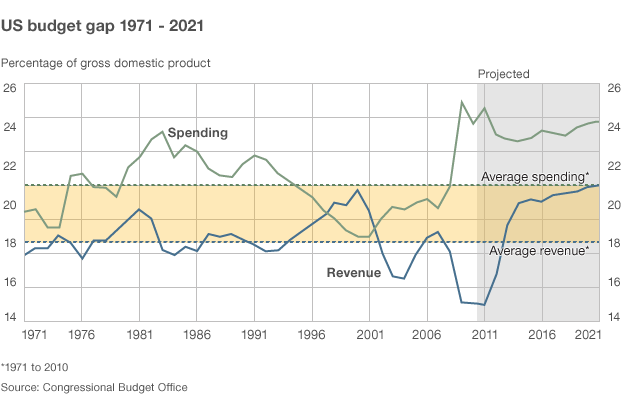
The debt and the delusion are both all-American: $14 trillion (£8.75tn) of debt has been amassed and there is no cogent plan to reduce it.

The figure is impossible to comprehend: easier to focus on the fact that it grows at $40,000 (£25,000) a second. Getting out of Afghanistan will help but actually only at the margins. The problem is much bigger than any one area of expenditure.

The economist Jeffrey Sachs, director of Columbia University’s Earth Institute, is no rabid fiscal conservative but on the debt he is a hawk: “I’m worried. The debt is large. It should be brought under control. The longer we wait, the longer we suffer this kind of paralysis; the more America boxes itself into a corner and the more America’s constructive leadership in the world diminishes.”

The author and economist Diane Coyle agrees. And she makes the rather alarming point that the acknowledged deficit is not the whole story.

The current $14tn debt is bad enough, she argues, but the future commitments to the baby boomers, commitments for health care and for pensions, suggest that the debt burden is part of the fabric of society:

“You have promises implicit in the structure of welfare states and aging populations that mean there is an unacknowledged debt that will have to be paid for by future taxpayers, and that could double the published figures.”

Richard Haass of the Council on Foreign Relations acknowledges that this structural commitment to future debt is not unique to the United States.  All advanced democracies have more or less the same problem, he says, “but in the case of the States the figures are absolutely enormous”.

Mr Haass, a former senior US diplomat, is leading an academic push for America’s debt to be taken seriously by Americans and noticed as well by the rest of the world.

He uses the analogy of Suez and the pressure that was put on the UK by the US to withdraw from that adventure. The pressure was not, of course, military. It was economic.

Britain needed US economic help. In the future, if China chooses to flex its muscles abroad, it may not be Chinese admirals who pose the real threat, Mr Haass tells us. “Chinese bankers could do the job.”

Because of course Chinese bankers, if they withdrew their support for the US economy and their willingness to finance America’s spending, could have an almost overnight impact on every American life, forcing interest rates to sky high levels and torpedoing the world’s largest economy.

Not everyone accepts the debt-as-disaster thesis.

David Frum is a Republican intellectual and a former speech writer to President George W Bush.

He told me the problem, and the solution, were actually rather simple: “If I tell you you have a disease that will absolutely prostrate you and it could be prevented by taking a couple of aspirin and going for a walk, well I guess the situation isn’t apocalyptic is it?

“The things that America has to do to put its fiscal house in order are not anywhere near as extreme as what Europe has to do. The debt is not a financial problem, it is a political problem.”

Mr Frum believes that a future agreement to cut spending – he thinks America spends much too big a proportion of its GDP on health – and raise taxes, could very quickly bring the debt problem down to the level of quotidian normality.

‘Organised hypocrisy’

I am not so sure. What is the root cause of America’s failure to get to grips with its debt? It can be argued that the problem is not really economic or even political; it is a cultural inability to face up to hard choices, even to acknowledge that the choices are there.

I should make it clear that my reporting of the United States, in the years I was based there for the BBC, was governed by a sense that too much foreign media coverage of America is negative and jaundiced.

The nation is staggeringly successful and gloriously attractive. But it is also deeply dysfunctional in some respects.

Take Alaska. The author and serious student of America, Anne Applebaum makes the point that, as she puts it, “Alaska is a myth!”

People who live in Alaska – and people who aspire to live in Alaska – imagine it is the last frontier, she says, “the place where rugged individuals go out and dig for oil and shoot caribou, and make money the way people did 100 years ago”.

But in reality, Alaska is the most heavily subsidised state in the union. There is more social spending in Alaska than anywhere else.

To make it a place where decent lives can be lived, there is a huge transfer of money to Alaska from the US federal government which means of course from taxpayers in New York and Los Angeles and other places where less rugged folk live. Alaska is an organised hypocrisy.

Too many Americans behave like the Alaskans: they think of themselves as rugged individualists in no need of state help, but they take the money anyway in health care and pensions and all the other areas of American life where the federal government spends its cash.

The Tea Party movement talks of cuts in spending but when it comes to it, Americans always seem to be talking about cuts in spending that affect someone else, not them – and taxes that are levied on others too.

And nobody talks about raising taxes. Jeffrey Sachs has a theory about why this is.

America’s two main political parties are so desperate to raise money for the nation’s constant elections – remember the House of Representatives is elected every two years – that they can do nothing that upsets wealthy people and wealthy companies.

So they cannot touch taxes.

In all honesty, I am torn about the conclusions to be drawn. I find it difficult to believe that a nation historically so nimble and clever and open could succumb to disaster in this way.

But America, as well as being a place of hard work and ingenuity, is also no stranger to eating competitions in which gluttony is celebrated, and wilful ignorance, for instance regarding (as many Americans do) evolution as controversial.

The debt crisis is a fascinating crisis because it is about so much more than money. It is a test of a culture.

It is about waking up, as the Americans say, and smelling the coffee. And – I am thinking Texas here – saddling up too, and riding out with purpose.

NB: Copyright BBC © 2011 The BBC is not responsible for the content of external sites. Read more.

Here’s the 30 minute broadcast under the Analysis series from Radio 4 on the BBC.(Just click on this link) analysis_20110628-1024a

Nature, big business and the future

Just maybe, economic activity and financial capital could align itself with the planetary demands!

A collection of items crossed my screen in the last few days that reinforced the interconnectedness of all life on Planet Earth.

First I saw an item on the BBC News website that demonstrated that climate change, global warming, or however one wants to describe man’s relationship with the planet, is not some crazy, fuzzy idea of a few liberal environmentalists.  This was a report of the significant drop in global wheat yields.

The report was entitled, Climate shifts ‘hit global wheat yields’ and was written by Mark Kinver, Science and environment reporter, BBC News.  Here’s a taste of what was written.

Shifts in the climate over the past three decades have been linked to a 5.5% decline in global wheat production, a study has suggested.

A team of US scientists assessed the impact of changes to rainfall and temperature on four major food crops: wheat, rice, corn and soybeans.

Climate trends in some countries were big enough to wipe out gains from other factors, such as technology, they said.

Professor David Lobell from Stanford University went on to say,

“In particular, you have to assume how non-linear the response will be and how different the crops of tomorrow will be from the crops of today,” he said.

He added that the study focused on historical data in order to strengthen confidence in the existing projections.

“I think it is very clear that climate is not the predominant driver of change over long periods of time in crop production.

“Across the board, you see crop yields going up over the past 30 years, but the question is how much is climate modified (and) what would have happened if the climate was not changing.

“In some countries, we see that climate has only affected things by a few percent. In other countries, we see that yields would have been rising twice as fast.

“On a global average, we see that wheat production would be about 5% higher if we had not seen the warming since 1980. We see about the same for maize or corn.

“Yet for rice and soybean, we actually find that production is about the same as if climate had not been trending.”

The report may be accessed here.

Sort of moving on, most people, when they stop and think about it, must realise that 6.9 billion people living (i.e. depending) on Planet Earth have to be causing changes.  The Inside Science News Service published a reminder from last December of a calculation that,

By Mary Caperton Morton, ISNS Contributor
Inside Science News Service

STRASBURG, Pa. — Next month, representatives from more than 190 nations will gather in Japan at the Nagoya Biodiversity Summit to develop a global strategy for staunching habitat and biodiversity loss around the world.

The statistics are sobering: Every 20 minutes a species goes extinct. At that rate — estimated to be a thousand times faster than pre-human impact background levels – in 300 years, half of all living species of mammals, birds, fish, reptiles and plants will be gone. [My italics]

This alarming decline has not gone unnoticed. In 1992, the United Nations Convention on Biological Diversity — or CBD — one of the most widely ratified treaties in the world, established lofty conservation goals to be met by 2010. But since then the decline in biodiversity has not slowed. Nearly 16,000 species are still listed as threatened, with more than 200 of them described as “possibly extinct.”

What we need, some might ask, is for big business to get behind and push!  Perhaps not so far fetched.

Last October, the British Guardian newspaper, published a very telling reminder that nothing ever in life stays the same.

The article was presented thus,

Biodiversity loss seen as greater financial risk than terrorism, says UN

Loss of ecosystems perceived by banks and insurance companies to be a greater economic risk than terrorism, finds UN report.

Written by Jonathan Watts in Nagoya.

A controlled burn of oil from the Deepwater Horizon well in the Gulf of Mexico. The report cites the Gulf of Mexico oil spill as an extreme example of the potential impact of inadequate environmental controls. Photograph: Ann Heisenfelt/EPA

The financial risks posed by the loss of species and ecosystems have risen sharply and are becoming a greater concern for businesses than international terrorism, according to a United Nations report released today.

From over-depletion of fish stocks and soil degradation caused by agricultural chemicals to water shortages and mining pollution, the paper – commissioned by the UN Environment Programme and partners – said the likelihood has climbed sharply that declines in biodiversity would have a “severe” $10bn (£6bn) to $50bn impact on business.

With the European Union and other regions increasingly holding companies liable for impacts on ecosystem services, it suggests banks, investors and insurance companies are starting to calculate the losses that could arise from diminishing supplies, tightened conservationcontrols and the reputational damage caused by involvement in an unsound project.

Achim Steiner, UN under-secretary general and Unep executive director, said: “The kinds of emerging concerns and rising perception of risks underlines a fundamental sea change in the way some financial institutions, alongside natural resource-dependent companies, are now starting to glimpse and to factor in the economic importance of biodiversity and ecosystems”.

The briefing paper cites the 55% crash of BP’s share price and the decline of its credit rating in the wake of the Gulf of Mexico oil spill as an extreme example of the potential impact of inadequate environmental controls.

Read the full article in the Guardian here.

The United Nations Environment Programme report may be found here.  The cover page says this,

“ As the global financial sector recovers and moves into the post financial crisis era,
there is one notion that crystallises before our eyes more acutely than ever: we need
to understand systemic risk in a much more holistic way. This CEO Briefing underscores
the critical natural capital that underpins our economic activity and financial capital.”
Richard Burrett, Partner in Earth Capital Partners
Co-Chair, UNEP Finance Initiative

Well put!

As I wrote at the very start, just maybe, economic activity and financial capital could align itself with the planetary demands!

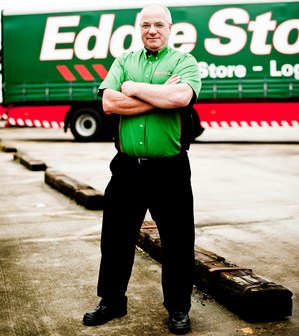
Edward Stobart, RIP.

Sad to read the loss of a giant of the UK’s hauliers.

I have no personal knowledge or experience of Eddie Stobart’s haulage firm.  But as someone who for many years operated as a salesman in the UK, with the associated high annual car mileages, seeing Eddie Stobart trucks on the road was a familiar experience.

This week’s copy of The Economist carried an obituary telling of the death, at the young age of 56, of Edward Stobart.

A Stobart truck, always spotlessly clean.

The UK Independent newspaper carried a report of Eddie’s death on the 31st March, as well as the BBC.  Here’s a flavour of the Independent’s report.

Edward Stobart, the trucking legend who brought the phenomenon of “Stobart spotting” to Britain’s motorways, has died from heart problems at the age of 56.

Mr Stobart turned his father Eddie’s agricultural seeds business into a multimillion-pound haulage empire and quirk of British culture.

“Edward built Eddie Stobart into the iconic brand and business we know today,” his brother William Stobart, who now runs the business, told staff yesterday with “great sadness and regret”.

Edward Stobart took over the business in the late 1960s and within a decade spotting the green-and-red livery of Eddie Stobart lorries had become a favourite way to while away long journeys.

As a sign of the company’s cult appeal, Twitter was flooded with condolences and messages of appreciation within minutes of the announcement of Mr Stobart’s death in hospital in Coventry

Great man, great entrepreneur, great loss.

Eddie Sobart.


Words fail one

Income inequality, when it becomes excessive, is very corrosive to a society.

This is clearly a complex subject because one man’s excess is another man’s just reward for building a successful business that employs his fellow citizens.

Nonetheless, I do want to touch on this sensitive area because, to my mind, they are connected with the tragic story that is the point of this article.

But first, a couple of quotes from an article by Prof. G. William Domhoff of the Sociology Department of the University of California at Santa Cruz.  It was entitled Wealth, Income, Power.

This document presents details on the wealth and income distributions in the United States, and explains how we use these two distributions as power indicators.

Some of the information may come as a surprise to many people. In fact, I know it will be a surprise and then some, because of a recent study (Norton & Ariely, 2010) showing that most Americans (high income or low income, female or male, young or old, Republican or Democrat) have no idea just how concentrated the wealth distribution actually is.

Later on, Prof. Domhoff writes:

The Wealth Distribution

In the United States, wealth is highly concentrated in a relatively few hands. As of 2007, the top 1% of households (the upper class) owned 34.6% of all privately held wealth, and the next 19% (the managerial, professional, and small business stratum) had 50.5%, which means that just 20% of the people owned a remarkable 85%, leaving only 15% of the wealth for the bottom 80% (wage and salary workers). In terms of financial wealth (total net worth minus the value of one’s home), the top 1% of households had an even greater share: 42.7%. Table 1 and Figure 1 present further details drawn from the careful work of economist Edward N. Wolff at New York University (2010).

That table and the whole article is powerful and a well-worth reading. Read it here.

Stay with me a little longer.  Here’s an extract from an article from Nicholos Kristof of the New York Times written in November last year.

Nicholas Kristof

In my reporting, I regularly travel to banana republics notorious for their inequality. In some of these plutocracies, the richest 1 percent of the population gobbles up 20 percent of the national pie.

But guess what? You no longer need to travel to distant and dangerous countries to observe such rapacious inequality. We now have it right here at home — and in the aftermath of Tuesday’s election, it may get worse.

The richest 1 percent of Americans now take home almost 24 percent of income, up from almost 9 percent in 1976. As Timothy Noah of Slate noted in an excellent series on inequality, the United States now arguably has a more unequal distribution of wealth than traditional banana republics like Nicaragua, Venezuela and Guyana.

C.E.O.’s of the largest American companies earned an average of 42 times as much as the average worker in 1980, but 531 times as much in 2001. Perhaps the most astounding statistic is this: From 1980 to 2005, more than four-fifths of the total increase in American incomes went to the richest 1 percent.

By the way, Kristof has his own blog site and added material from him about this topic and readers’ comments are here.

Now to the core of this article on Learning from Dogs which, I passionately believe, is closely tied in to the background theme already expressed here.  It’s from the blogsite Corrente and, once again, I am indebted to Naked Capitalism for having it in a recent set of links.

It concerns Jack, his family and their house.

The House that Jack’s Bank Took

Jack was a friendly man, who always had a pleasant word and a smile and handshake for everyone. The men hung with him at barbeques and discussed sports. He was strong, had a belly, and always wore a baseball cap. He was married to his high school sweetheart, Mary. He was good to his 4 kids and took care of his oldest child when he had a breakdown in his early twenties. He went to all school and family events and encouraged his children in their dreams. He took care of the family needs and finances. He was a small business owner and had invented his product, which a short while ago became outmoded. He always decorated the house with lots of Christmas decorations and candles. They are still up. He lost his house to foreclosure and the family was given 3 days to move out.

He drove into the deep woods and drank poison to make sure he was dead. I knew him. My family knew him; he lived within walking distance of one of us. At his funeral his childhood sweetheart and their children told a lot of Jack stories. The family did their best to resurrect him to our eyes. One of his kids sang and the eldest read a poem he’d written. Mary said she didn’t know what she was going to do and that she would now have to rely on those from town sitting in the packed chapel pews. There are other houses nearby that haven’t been foreclosed on but Jack’s house was nice and had a good view. The bank has now given Mary 3 weeks to move out.

It was written on the 15th February, 2011; you can read it here.  Click on the link and read some of the comments expressed – very powerful.

Wish I could think of something apt to say but I can’t.  All I can feel is great sadness and a horrible feeling in the pit of my stomach that this ‘Jack’ story is being echoed in many other places.

Flowers for your Valentine

This opened my eyes; thought I would share it with you.

I know that many of the several hundred readers of Learning from Dogs are not in the USA.  But many are.  Hence me deciding, after mulling it over, to publish in full the contents of an email that came in a short while ago from the organisation Change.

Here’s that email.

Dear Paul,

Valentine’s Day, which accounts for 40% of fresh flower sales annually, is fast approaching.

Not always a sweet smell.


If you’re planning to order a bouquet from 1-800-Flowers — the world’s largest florist — you should know where most of those flowers really come from.

At flower farms in Ecuador and Colombia — the countries that export the most to the U.S. — two-thirds of the workers are women. These women are routinely subjected to harassment and even rape from their male supervisors. They suffer eye infections and miscarriages from consistent contact with dangerous pesticides.

In the weeks leading up to Valentine’s Day and Mother’s Day, they’re routinely forced to work 80-hour weeks with no overtime pay. Attempts to form a union are met with opposition by police and armed forces.

Many retailers — such as Whole Foods and Stop & Shop — have taken the important first step of offering Fair Trade flowers to consumers who want no part of these abuses. Fair Trade certified farms must adhere to strict standards for workers’ rights, which prevents the abuses described above.

1-800-Flowers is the largest florist in the world. Yet they offer no Fair Trade flowers at all.

Tell 1-800-Flowers to join other major retailers in offering Fair Trade flowers.

1-800-Flowers uses a certifying agency called Florverde, which ensures that its flower farms measure up to certain environmental standards — this is a good thing. But Florverde has almost no labor standards: A farm can be certified even if it uses forced labor.Indeed, Florverde is owned by the Association of Colombian Flower Exporters, so it has a financial incentive to keep wages low and suppress workers’ rights.

This is the week before Valentine’s Day — more people will purchase flowers during the next seven days than any other week this year. This is our best opportunity to demand a promise from 1-800-Flowers to join its competitors in offering Fair Trade flowers. So after you sign the petition, please share this email widely and post on Facebook — do everything you can to pressure 1-800-Flowers to show a little respect for the women who toil in unbearable circumstances. The women without whom they’d have no flowers to sell.

Click the link below to tell 1-800-Flowers to make a promise this Valentine’s Day to sell Fair Trade flowers:

http://www.change.org/petitions/ask-1-800-flowers-to-offer-fair-trade-flowers-that-arent-picked-by-exploited-workers?alert_id=IiStMzHsCg_LCLOlfFAhl&me=aa

Since this campaign began, the company has emailed to tell us that it will post more information on its website about the farms that supply their flowers. But this is a far cry from selling fair trade products — and we have much more to do to make sure workers are protected. This is the week to do it.

Thanks for taking action,

Patrick and the Change.org team

If you feel so minded to sign the petition, which can be done by people outside the USA, then that may be done here.

Thanks.

The learning curve.

A guest post from Dr John W Lewis.  John and I have known each other for some years now, both of us sharing a group aircraft that was based in Exeter, SW England.  His areas of interest and competence are described here.  But these days when John and I chat about the world in general and nothing in particular we often come back to the topic of innovation.  So bear that in mind as John muses on the rather gloomy nature of a recent post on Learning from Dogs.

John writes:

John Lewis

Having read the recent Post, Group Human Insanity, my first instinct is that I have nothing particular worthwhile to say that has not been said before.  But, of course, the time to apply minds is exactly when the answers don’t readily come to mind, so I will continue!

In a way, it’s probably a case of applying the sentiment on the old wartime poster, “Keep calm and carry on!” or as Winston Churchill said, “I’f you’re going through hell, keep going!”.

That doesn’t mean that we don’t need to change, because we do. It doesn’t mean that we don’t need to put a lot more effort into things that matter, because we do. But, as has been said before, “you can’t connect the dots looking forward, only looking backwards”. In other words, “it is very difficult to make predictions, especially about the future”.

Reading about this kind of thing in books, such as  “Freakonomics” or “Drive” or “Switch” suggests that we don’t really understand the mechanism by which behavioural changes happen in populations, although some of the discoveries of Everett Rogers about the diffusion of innovations is relevant here. To refer to another book, there is probably going to be a lot of “Who moved my cheese?” hemming and hawing behaviour going on too.

All we really know is that when the environment (in the most general sense) is changing rapidly, populations are much better off if they are diverse in their characteristics and behaviour; also I believe (but am not sure) that it’s true to say that increased communication assists populations in adapting to changes in the environment.

So the most important thing to do is to let lots of different people do lots of different things in search of ways forward.  If you like, we need to split up (within the multidimensional behavioural space in which we operate) into smaller groups to dodge the big boulders.

We need to communicate lots of information and lots of ways of interpreting and verifying not only the information itself, but also the operational implications of that information (which may be very different things). Hopefully this will reduce (but it will never eliminate) instances of mass movements (as in stampedes) based on partial information which misdirect substantial resources into activities that turn out to be dead ends.

If we don’t believe that there are any viable ways forward, then we might as well give up and just enjoy what’s left of the good times!

But if there are ways forward, then the way to find them is to have lots of people scouting ahead on lots of fronts and passing information around so that we maximise the chances of finding those ways forward, and having lots of other people striving to find ways to make use of that information and testing out those ways forward.

Whether this is all obvious, or not, I don’t know; but it probably is. One thing we do know is that telling people what to do is emphatically not going to work! Just look at some of the stories on the Breaking The Mould website.

Instead, we are better off when people are asking questions, gathering information and passing it around. I believe that if these behaviours are adopted in a population, as a result of ‘external’ pressures building up, then changes and innovations will inevitably occur, and this is about the best that we can do! Fortunately, I think that is what tends to happen anyway.

So, in a sense, as I referred to above: “Keep calm and carry on”  (By the way, a Google search on that phrase unearths a variety of interesting stuff and variations such as “Get excited and make stuff”)

Regards,
John

Dr John W Lewis
holosoft

Email: john.lewis@holosoft.com
Skype: john_w_lewis
Twitter: @JohnWLewis

Blog: http://observations.johnwlewis.info
LinkedIn: http://www.linkedin.com/in/johnwlewis
FriendFeed: johnwlewis

The Future of Content

A fascinating piece by John Maudlin.

I came across John Maudlin’s web site some time ago and ended up subscribing to one of his Blogs, Outside the Box.  To be frank, much of what John writes is a little bit too technical for me but this item did catch my eye to the extent that I read the item in full and was intrigued by it.

The article was called, “Apple, Google, NewsCorp and the Future of Content”  You can read it directly here.  But just to whet your appetite, here’s a small extract of what is primarily an interview with Michael Whalen:

In this issue of The Institutional Risk Analyst, we speak to Michael Whalen, [Emmy] award winning composer and new media observer about the outlook for the business of creating and delivering content.  Since graduating from Berklee College of Music, Michael has taught a business for music class that has saved thousands of young artists from making terrible mistakes with content and other contractual rights.  Think Frank Zappa and Warner Brothers.   And yes, Michael is IRA co-founder Chris Whalen’s younger brother.

and later …

Whalen: Frankly, I think we’re going back to the 19th century in terms of the “status” of artists. They’ll be figureheads. Imagine: like Paris or Vienna of the 1900s, we’ll have wealthy patrons and small clutches of people who support the art of “real” artists. In this environment, the work we will try to sell is simply a loss leader and an inducement for us to perform or create a “custom” song, TV show or film… Yup, it’s all here now… What will be really interesting is what happens next… I am not pretending to be the “Grim Reaper” but I think the record business, the film studio system and the television networks are over as we think we know them. I think there is a new business emerging in gathering creative investment, content and creative marketing…. It will be in a structure that’s more akin to a stock market than the traditional structure we’ve seen for artistic and creative content and the platform for it will be the digital ocean we have already discussed. Based on the “buzz”, there will be a “futures” market and the idea is commoditized and funded in days – not months or years. For decades, most record companies and networks have been little more than funding sources for artists – now the truly visionary artist won’t even need these ancient businesses – the market itself will generate everything it needs to create content efficiently. It’s a little overwhelming the change that is here now vs. five years ago and that will be coming in torrents in the next few years. Amazing.

Read the full interview here – I promise you won’t regret it.

By Paul Handover