Category: Business

Future of the car?

The mistake we all make is to look behind us and think the future will be the same.

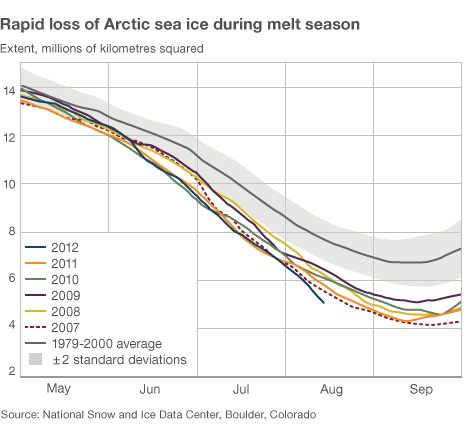
Let me start with something that is not really news.  Not news in the sense that it has been very widely reported.  I’m speaking of the probability, the high probability, that this year’s summer ice area in the Arctic will be a record low, with all the implications that this carries.  Let me refer to a recent BBC news item that included a stunningly powerful chart.

Scientists at the US National Snow and Ice Data Center said data showed that the sea ice extent was tracking below the previous record low, set in 2007.

Latest figures show that on 13 August ice extent was 483,000 sq km (186,000 sq miles) below the previous record low for the same date five years ago.

The ice is expected to continue melting until mid- to late September.

“A new daily record… would be likely by the end of August,” the centre’s lead scientist, Ted Scambos, told Reuters.

“Chances are it will cross the previous record while we are still in ice retreat.”

The US National Snow and Ice Data Center may be found here.

So to the piece that generated the title of this post, the future of the car.

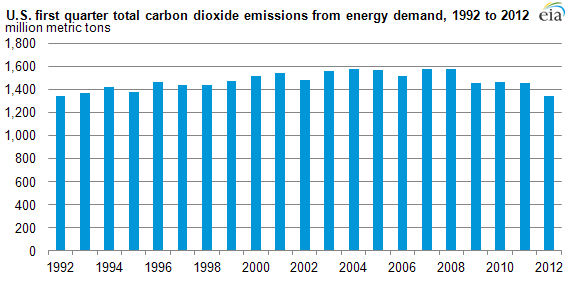
On the 17th August, I wrote an article highlighting the fact that the U.S. leads the world in cutting CO2 emissions.  That was endorsed by an item published on the U.S. Energy Information Administration’s (EIA) website, that said,

U.S. carbon dioxide (CO2) emissions resulting from energy use during the first quarter of 2012 were the lowest in two decades for any January-March period. Normally, CO2 emissions during the year are highest in the first quarter because of strong demand for heat produced by fossil fuels. However, CO2 emissions during January-March 2012 were low due to a combination of three factors:

  • A mild winter that reduced household heating demand and therefore energy use
  • A decline in coal-fired electricity generation, due largely to historically low natural gas prices
  • Reduced gasoline demand

It was the last item that caught my eye.  Because it resonated with an article on Chris Martensen’s Peak Prosperity blog just over a week ago.  That article, written by Gregor Macdonald, was called The Demise of the Car.

About a third of the way into the article, Gregor writes,

But it’s not just India that has incorrectly invested in automobile transport. The other giant of Asia, China, has also placed large resources into auto-highway infrastructure.

It appears that at least a decade ago, the developing world made the same assumption about future oil prices as was made in Western countries. The now infamous 1999 Economist cover, Drowning in Oil, reflected the pervasive, status-quo view that the global adoption of the car could continue indefinitely. A decade later, however, we find that after oil’s extraordinary price revolution, the global automobile industry is now starved for growth.

Then a little further down in this interesting article there is this,

More broadly, however, global governments are captured by sunk-cost decision making as the past 60-70 years of highway infrastructure investment is now a legacy just too painful to leave behind. Interestingly, whether citizens and governments want to face this reality or not, features of the oil economy are already going away as infrastructure is increasingly stranded. Moreover, there are cultural shifts now coming into play as young people are no longer buying cars – in the first instance because they can’t afford them, and in the second instance because it’s increasingly no longer necessary to own a car to be part of one’s group. See this piece from Atlantic Cities:

Young People Aren’t Buying Cars Because They’re Buying Smart Phones Instead

Youth culture was once car culture. Teens cruised their Thunderbirds to the local drive-in, Springsteen fantasized about racing down Thunder Road, and Ferris Bueller staged a jailbreak from the ‘burbs in a red Ferrari. Cars were Friday night. Cars were Hollywood. Yet these days, they can’t even compete with an iPhone – or so car makers, and the people who analyze them for a living, seem to fear. As Bloomberg reported this morning, many in the auto industry “are concerned that financially pressed young people who connect online instead of in person could hold down peak demand by 2 million units each year.” In other words, Generation Y may be happy to give up their wheels as long as they have the web. And in the long term, that could mean Americans will buy just 15 million cars and trucks each year, instead of around 17 million.

If future car sales in the US will be limited by the loss of 2 million purchases just from young people alone, then the US can hardly expect to return to even 15 million car and truck sales per year. US sales have only recovered to 14 million. (And that looks very much like the peak for the reflationary 2009-2012 period)

Indeed, the migration from suburbs back to the cities, the resurrection of rail, and the fact that oil will never be cheap again puts economies – and culture – on a newly defined path to other forms of transport and other ways of working.

It’s a long and interesting article that demonstrates an old truth, no better put than in this quotation reputed to have been said by John F. Kennedy,

Change is the law of life. And those who look only to the past or present are certain to miss the future.

Too hot to handle!

A stark reminder that more of the same will hurt us.

On the 14th August I published a post with the title of From feeling to doing.  The post was a 15-minute video presented by David Roberts of Grist showing, in essence, how fundamentally simple was the issue of climate change and how profound the implications if we didn’t halt the rise in the temperature of Planet Earth.

I’m not going to insert that video in this post because you can click on the link above and do that yourself.  What I will do is to draw your attention to the accompanying article on Grist under the title of Climate change is simple: We do something or we’re screwed. That article includes the slides that were in the video, such as this one:

So with that in mind, here’s what the BBC published on their news website yesterday morning,

Science advisor warns climate target ‘out the window’

Pallab GhoshBy Pallab Ghosh, Science correspondent, BBC News
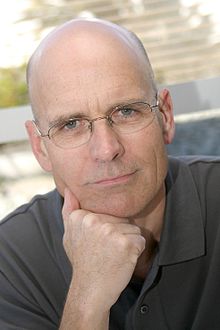
One of the Government’s most senior scientific advisors has said that efforts to stop a sharp rise in global temperatures were now unrealistic.

Professor Sir Robert Watson said that the hope of restricting the average temperature rise to 2C was “out the window”.

He said that the rise could be as high as 5C – with dire conseqences.

Professor Watson added the Chancellor, George Osborne, should back efforts to cut the UK’s CO2 emissions.

He said: “I have to look back (on the outcome of sucessive climate change summits) Copenhagen, Cancun and Durban and say that I can’t be overly optimistic.

“To be quite candid the idea of a 2C target is largely out of the window.”

As the BBC points out Professor Watson is a highly respected and world renown scientist on climate change policy and is currently Chief Scientist at the Department for Food and Rural Affairs (DEFRA) and a former Chair of the Intergovernmental Panel on Climate Change.  Professor Watson was also with the World Bank and an advisor to former Vice President Al Gore.  The BBC item goes on,

Professor Watson, who is due to step down from his role at Defra next month, suggested that the Chancellor, George Osborne, reconsider his opposition to tough measures to reduce carbon dioxide emissions.

Mr Osborne has said that the UK’s ambitious targets for CO2 should be relaxed so as not to drive businesses to countries which have set themselves much lower targets.

“I would say to George Osborne, ‘work with the public sector. Work with the public on behavior change. Let’s demonstrate to the rest of the world that we can make significant progress here” Professor Watson argues that the UK and Germany should continue to take the lead in driving efforts to reach an effective international treaty.

Hurt Poorest

“If we carry on the way we are there is a 50-50 chance that we will get to a 3 degree rise,” he said.

“I wouldn’t rule out a 5 degree world and that would be quite serious for the people of the world especially the poorest. We need more political will than we currently have”.

The IPCC 2007 assessment summarised the probable impact of various temperature rise sceanrios.

It shows that the impact on human health, the availability of food and water, the loss of coastlines becomes progressively worse as the average temperature of the planet rises.

The 2C target was agreed at the United Nations Framework Convention on Climate Change meeting in 2010.

The majority of countries though prefer a lower target of 1.5C.

A number of analyses have also concluded that the 2C would be missed. The most recent was by the International Energy Agency earlier this year.

Professor Watson added that deep cuts in CO2 emissions are possible using innovative technologies without harming economic recovery.

“This doesn’t take a revolution in energy technology, an evolution would get us there.”

What I would add to this report that has been widely circulated is that while it’s natural to assume, ‘We need more political will than we currently have‘, that political will flows from the will of the people.

Take the effect of a 4C rise, as David Roberts explains,

Which is described in the Grist article as,

Here’s the edition of the Royal Society journal that came out of the conference on 4 degrees C of warming. Read through it and see if you think “hell on earth” is an exaggeration. Desertification, water shortages, agricultural disruptions, rising sea levels, vanishing coral, tropical forest die-offs, mass species extinctions, oh my. Kevin Anderson, one of the lead scientists involved, was moved to say that “a 4 degrees C future is incompatible with an organized global community, is likely to be beyond ‘adaptation’, is devastating to the majority of ecosystems, and has a high probability of not being stable.”

So come on people, get real!  Make sure that the democratic systems work and that our leaders know the sort of change that has to take place.  As the wise Professor highlighted, ‘… deep cuts in CO2 emissions are possible using innovative technologies without harming economic recovery.’  Sort of makes sense to me.  How about you?

Avoiding the catastrophe of indifference.

Doing nothing is not an option.

Introduction

So back to non-doggy stuff although I hope the themes of truth and integrity continue to rein supreme though this blog!

In the last couple of weeks, I have devoted a number of posts to the subject of change, as in how do we humans change.  The first post was Changing the person: Me where I started examining the process of change; by process I mean the models of change commonly understood in, say, management change.

The next post was You have to feel it! which drew heavily on research from Ezra M. Markowitz & Azim F. Shariff regarding the psychological aspects posed by climate change to the human moral judgement system.

The final post was From feeling to doing.  In this post, David Roberts of Grist showed that one could put aside all the ‘head stuff’ about change and in just 15 minutes cover all that one would ever want to know about the biggest issue of all facing this planet.

So rather a long introduction to two guest posts that today and tomorrow set out the case for what we all have to consider; doing nothing is just not a viable option.  The first is from Martin Lack of the popular and hard-hitting blog Lack of Environment.

oooOOOooo

Avoiding the catastrophe of indifference.

by Martin Lack.

Paul has very kindly invited me to follow-up his recent post regarding David Roberts’ item on the Grist blog entitled ‘Why climate change doesn’t spark moral outrage, and how it could’ followed by a second post in which was embedded David Roberts’ excellent video ‘Climate change is simple – we do something or we’re screwed’.

So my guest post is an expansion of a comment I submitted in response to the first of those two posts, You have to feel it.  However it would be wrong not to first add my voice to all those that have applauded David Roberts for all his excellent work.

Clive Charles Hamilton

In 2010, the Australian social anthropologist Clive Hamilton published Requiem for a Species: Why we Resist the Truth About Climate Change – one of the scariest but most important books I think I have ever read.

Reading Hamilton’s book was one of the reasons I decided, as part of my MA in Environmental Politics, to base my dissertation on climate change scepticism in the UK.

In the process, I read much but Hamilton’s book was one of very few that I actually read from cover to cover – I simply did not have time to read fully all the books for my research. However, because I have a background in geology and hydrogeology, my greatest challenge was learning to think like a social scientist.

I was all for taking these climate change sceptics head on and demolishing their pseudo-scientific arguments or taking them to task for the ideological prejudices that drive them to reject what scientists tell us. Thus, it fell to my dissertation supervisor to mention politely but firmly that I needed to disengage with the issues and analyse patterns of behaviour and frequency of arguments favoured by different groups of people.  In short, I needed to stop trying to prove the scientific consensus correct and start understanding the views held by those that dispute that consensus.

Having said how I read Professor Hamilton’s book in full, I must admit to learning about a load of other equally-scary sounding books since subscribing to Learning from Dogs;  Lester Brown’s World on the Edge: How to Prevent Environmental and Economic Collapse being just one that comes to mind!

David Roberts

Then of course there is what David Roberts himself says, which is just as scary. I think we have good reason to be scared. However, as Hamilton points out, we must move beyond being scared, which is simply debilitating, and channel our frustration into positive action.

Because if we do not, there is a great deal of circumstantial evidence to suggest that civilisation may well fail. If that means engaging in acts of civil disobedience, as it has done for James Hansen and many others, well, so be it. I suspect that nothing worthwhile has ever been achieved without someone breaking the law in order to draw attention to injustice – the abolition of slavery and child labour, the extension for all of the right to vote including women, come to mind.

That is the conclusion of Hamilton’s book; that civil disobedience is almost inevitable (p.225). Just as turkeys won’t vote for Christmas, our politicians are not going to vote for climate change mitigation unless we demand that they do so.

So it was the steer from my dissertation supervisor that lead me to read David Aaronovitch’s Voodoo Histories: How Conspiracy Theory Has Shaped Modern History, and much more about psychology. All of which guided the Introductory section of my dissertation, which summarised the philosophical roots of scepticism, the political misuse of scepticism, and the psychology of denial; see a recent post on my blog Lack of Environment.   In terms of what I want to say here, it is an elaboration of the last of those topics, the psychology of denial.  Indeed, it formed the preamble to the findings of my research.

To help me research this unfamiliar subject, my dissertation supervisor sent me a PDF copy of a paper written by Janis L. Dickinson in 2009 and published in Ecology and Society.  It was called ‘The People Paradox: Self-Esteem Striving, Immortality Ideologies, and Human Response to Climate Change’ and dealt with a challenging, almost taboo subject, namely our own mortality.

Despite my initial reluctance to learn about psychology, the more I read the more I realised just how central psychology was to explaining why we humans have failed to address the problem of climate change.

I ended up summarising the work of Dickinson, together with other sources of material, in the following manner.

In considering reasons for the collective human failure to act to prevent anthropogenic global warming (AGW), a number of authors appear to have been influenced by Ernest Becker’s The Denial of Death (1973). For example, Aaronovitch proposed that we try to avoid the “catastrophe of indifference” that a world devoid of meaning or purpose represents (p. 340).  Hamilton suggested that climate disruption “has the smell of death about it” (p. 215).

Janis Dickinson elaborates a little more, exploring what she describes as “…one of the key psychological links between the reality of global climate change and the difficulty of mobilizing individuals and groups to confront the problem in a rational and timely manner”, then referring to what psychologists call terror management theory (TMT) – Dickinson also categorises denial of climate change; denial of human responsibility and immediacy of the problem as proximal responses (Dickinson 2009).

Furthermore, as referenced here, both Dickinson and Hamilton suggest that other distal TMT responses, such as focussing on maintaining self-esteem or enhancing self-gratification, can be counter-intuitive and counter-productive. Dickinson summarises the recent work of Tim Dyson by saying “[b]ehavioral response to the threat of global climate change simply does not match its unique potential for cumulative, adverse, and potentially chaotic outcomes” (ibid).

Based on the evidence of the most frequently used arguments for dismissing the scientific consensus regarding climate change, I collated the findings of my research and which might be summarised as follows:

Having analysed the output of such UK-based Conservative think-tanks (CTTs), along with that of scientists, economists, journalists, politicians and others, it would appear that the majority of CTTs dispute the existence of a legitimate consensus, whereas the majority of sceptical journalists focus on conspiracy theories; the majority of scientists and economists equate environmentalism with a new religion; and politicians and others analysed appear equally likely to cite denialist or economic arguments for inaction.

As I find myself saying quite frequently, the most persistent arguments against taking action to mitigate climate change are the economic ones.

However, as all the authors mentioned have suggested, or at least inferred, I think it is undoubtedly true that the most potent obstacle to people facing up to the truth of climate change is our psychological reluctance to accept responsibility for something that is obviously deteriorating – namely our environment!

Nevertheless, all is not yet lost.  We do not all need to go back to living in the Dark Ages to prevent societal and environmental collapse but we do need to accept a couple of fundamental realities:

  1. Burning fossilised carbon is trashing the planet. Therefore, fossil fuel use must be substituted in every possible process as rapidly as possible. Unfortunately, it is not substitutable in the most damaging process of all; aviation.  That merely increases the urgency of substituting where we can (i.e. power, lighting and temperature control).
  2. Poor people in developing countries have a legitimate right to aspire to having a more comfortable life but the planet definitely cannot cope with 7 to 10 billion people living like we do in the “developed” countries.

Once we accept these realities, we will learn to use less fossil fuels and, if we can become self-sufficient using renewable energy sources, we can have a flat-screen TV in every room and leave them on standby and the A/C on full power 24/7 and still have a clear conscience. However, we must get off fossil fuels ASAP.

oooOOOooo

I am indebted to Martin for writing such an insightful analysis of how we all have to change.  Tomorrow, another guest post further exploring the options that face us all as we work towards a sustainable future.  As I opened this post, doing nothing is not an option!

And now to do something.

The cumulative effect of millions of decisions brings about change!

Yesterday’s Post was about personal change.  It came on the back of a short series that was triggered by the Bill McKibben essay in Rolling Stone magazine that I republished on 31st July.  If you haven’t read it, do yourself a favour and read it soon.

The essay highlighted the challenge of how we change our ways, that is at a personal level, which is why I decided to devote a complete Post to the subject of change.  There was no doubt that the McKibben essay opened our eyes to the need for change, if they weren’t open already.  So being clear about the need for change and how, initially, it can make us feel less sure of ourselves, where do we go from here?  As John Fisher explains, within the change process, there is the stage where things start to happen.  This is what he writes about that stage,

Moving forward

In this stage we are starting to exert more control, make more things happen in a positive sense and are getting our sense of self back. We know who we are again and are starting to feel comfortable that we are acting in line with our convictions, beliefs, etc. and making the right choices. In this phase we are, again, experimenting within our environment more actively and effectively.

Keep this stage in mind as you journey along your individual path towards reducing your impact on the planet.  It really does act as a beacon for you, as a candle in the darkness.

OK, there’s an old saying in business ‘if you can’t measure it you can’t manage it!‘  So let’s start off by calculating the CO2 we are presently responsible for.

There are a number of CO2 calculators available on the Web but this one from The Resurgence Trust website seems as good as any.  Easy to use and it provides a starting point from which to plan your attack!  Make a promise to calculate your present CO2 output, soon!

Then to the plan of action!  A web search on reducing CO2 produces a huge number of results and I recommend that you undertake your own trawl to find the information that ‘rocks your boat’.  But on the Brave New Climate website there’s a summary that caught my eye, especially how it was introduced:

Top 10 ways to reduce your CO2 emissions footprint

Posted on 29 August 2008 by Barry Brook

Solving climate change is a huge international challenge. Only a concerted global effort, involving the governments of all nations, will be enough to avert dangerous consequences. But that said, the individual actions of everyday people are still crucial. Large and complex issues, like climate change, are usually best tackled by breaking down the problem into manageable bits.

For carbon emissions, this means reducing the COcontribution of each and every one of the six and a half billion people on the planet. But what can you, as an individual person or family, do that will most make a difference to the big picture? Here are my top ten action items, which are both simple to achieve and have a real effect. They are ranked by how much impact they make to ‘kicking the COhabit’.

Then follows ten solid recommendations:

  1. Make climate-conscious political decisions.
  2. Eat less red meat.
  3. Purchase “green electricity“.
  4. Make your home and household energy efficient.
  5. Buy energy and water efficient appliances.
  6. Walk, cycle or take public transport.
  7. Recycle, re-use and avoid useless purchases.
  8. Telecommute and teleconference.
  9. Buy local produce.
  10. Offset what you can’t save.

Each of these recommendations is supported by great web links and plenty of advice.  So don’t just skip through those 10 options, go here and commit to doing something!

And when you are ready to involve others beyond your family, 350.org has a great selection of resources for potential organizers.

We can make a difference!

Stop, read, reflect and Act!

The latest from Bill McKibben has to be read and shared.

Introduction

We live in a world where there’s a great fondness for shortness, whether it’s headlines, soundbites, Twitter length ‘conversations’, text messages, and the rest.  However, I’m introducing an essay from Bill McKibben that is long.  When I use the word long I mean both literally, the essay is a shade under 6,200 words, and subjectively, the essay is long, very long, on meaning.

It was published in the August 2nd, 2012 issue of Rolling Stone.  As Allyse of the 350.org team wrote in a widely distributed email,

Here at 350.org, we do a lot of our internal communication via online chat, and our written shorthand for “YES!” and “totally awesome!” and “you rock!” is “++”. Which is why I say to you: ++ Social Media Team, ++. You all rock.

Bill McKibben’s article in Rolling Stone—which we asked you to spread around the internet last week—has been shared on Facebook almost 100K times and seen by hundreds of thousands of people. Great work. If you haven’t read it yet, please do.

This article really lays out the intellectual framework for much of our work in the weeks, months, and years ahead. We want to keep pushing these ideas out there, especially this one: our objection to the fossil fuel industry is structural—these businesses are in fact planning to wreck the planet!

So we took a quote from Bill’s article and made it into a graphic that’s already been shared almost 2,500 times on Facebook. Will you help us push it past 5,000? Click here to share.

As you know if you’ve read the article, this is really an all-hands-on-deck moment for humanity. Thanks for doing your part—in ways both large and small.

Onward,

Allyse

Will you put aside some time, settle down in a comfortable chair, and read the article?  Please do!

It crossed my mind to split it over a couple of days but I decided against that.  But I have inserted a ‘click to reveal more’ about 1,100 words into the article – please do read on when you reach that point.  And just as important, do comment!

Oh, want to see that image on Facebook that has been shared so widely?  Here it is:

A’int that the truth!

Finally, feel free to share this as far and wide as you want.  Thank you.

oooOOOooo

(Apart from the first image from Edel Rodriguez, all the other photographs have been inserted by me and are not in the original Rolling Stone production – I decided to insert them to make reading the article more visually attractive on a screen.)

Global Warming’s Terrifying New Math

Three simple numbers that add up to global catastrophe – and that make clear who the real enemy is

Illustration by Edel Rodriguez

By Bill McKibben
July 19, 2012 9:35 AM ET

If the pictures of those towering wildfires in Colorado haven’t convinced you, or the size of your AC bill this summer, here are some hard numbers about climate change: June broke or tied 3,215 high-temperature records across the United States. That followed the warmest May on record for the Northern Hemisphere – the 327th consecutive month in which the temperature of the entire globe exceeded the 20th-century average, the odds of which occurring by simple chance were 3.7 x 10-99, a number considerably larger than the number of stars in the universe.

Meteorologists reported that this spring was the warmest ever recorded for our nation – in fact, it crushed the old record by so much that it represented the “largest temperature departure from average of any season on record.” The same week, Saudi authorities reported that it had rained in Mecca despite a temperature of 109 degrees, the hottest downpour in the planet’s history.

Not that our leaders seemed to notice. Last month the world’s nations, meeting in Rio for the 20th-anniversary reprise of a massive 1992 environmental summit, accomplished nothing. Unlike George H.W. Bush, who flew in for the first conclave, Barack Obama didn’t even attend. It was “a ghost of the glad, confident meeting 20 years ago,” the British journalist George Monbiot wrote; no one paid it much attention, footsteps echoing through the halls “once thronged by multitudes.” Since I wrote one of the first books for a general audience about global warming way back in 1989, and since I’ve spent the intervening decades working ineffectively to slow that warming, I can say with some confidence that we’re losing the fight, badly and quickly – losing it because, most of all, we remain in denial about the peril that human civilization is in.

When we think about global warming at all, the arguments tend to be ideological, theological and economic. But to grasp the seriousness of our predicament, you just need to do a little math. For the past year, an easy and powerful bit of arithmetical analysis first published by financial analysts in the U.K. has been making the rounds of environmental conferences and journals, but it hasn’t yet broken through to the larger public. This analysis upends most of the conventional political thinking about climate change. And it allows us to understand our precarious – our almost-but-not-quite-finally hopeless – position with three simple numbers.

Continue reading “Stop, read, reflect and Act!”

More reflection on being human!

The voice of reason from James Howard Kunstler.

Yesterday, I published a Post that I called What it is to be human.  It was inspired and based on the compelling film I AM‘ by Tom Shadyac.  As so often seems to happen, shortly after completing yesterday’s Post, an item from Chris Martensen’s Blog caught my eye.

Chris publishes the blog Peak Prosperity and on July 14th Chris had an item featuring James Howard Kunstler.

Let me give you an idea of that item from Chris.

Author and social critic James Howard Kunstler has been one of the earliest, most direct, and most articulate voices to warn of the consequences — economic and otherwise — of modern society’s profligate wasting of the resources that underlie its growth.

In his new book, Too Much Magic, Jim attacks the wishful thinking dominant today that with a little more growth, a little more energy, a little more technology — a little more magic — we’ll somehow sail past our current tribulations without having to change our behavior.

Such self-delusion is particularly dangerous because it is preventing us from taking intelligent, constructive action at the national level when the clock is fast ticking out of our favor. In fact, Jim claims that we are past the state where solutions are possible. Instead, we need a response plan to help us best brace for the impact of the coming consequences. And we need it fast.


James Howard Kunstler

Mr. Kunstler is the author of the very successful book The Long Emergency and his latest book, as mentioned above, Too Much Magic expands on his alarming argument that our oil-addicted, technology-dependent society is on the brink of collapse, ergo that the long emergency has already begun.  His website is here.

Anyway, back to the Chris Martenson’s piece.  Chris goes on to quote Mr. Kunstler, as follows:

[We now live in] this weird, peculiar period in American history when the delusional thinking has risen to astronomical levels — predictably, really — in response to the stress levels that our society feels. And it is expressing itself as sort of “waiting for Santa Claus and the Tooth Fairy” to deliver a set of rescue remedies to us so that we can continue running Wal-Mart, Walt Disney World, Suburbia, the U.S. Army, and the Interstate Highway System by other means. That is the great wish out there. It is kind of understandable, because that is the stuff that we have, and people tend to defend the stuff that they have in any given society and the systems and platforms that they run on. But it is probably a form of collective behavior that is not really going to benefit us very much and really amounts to simply wasting our time, and wasting our dwindling resources, and even our spiritual resources when we could be doing things that are a lot more intelligent.

Here is something I have detected as I travel around the country: There is a clamor for “solutions.” Everywhere I go, people say “Don’t be a doomer; give us solutions.” And I discovered that the subtext to all that is they really want solutions for allowing them to keep on living exactly the way they are living now. To keep on running Wal-Mart, and keep on running Suburbia, and keep on running the highway system, and the whole kit of parts. And what that really means is that they are looking for ways to add on additional complexity to a society that is already suffering from too much complexity.

(Read the full article here.)

There is a podcast of the interview with James Kunstler here and also on YouTube, as below.

My own reflection on this item, as with so many other articles, essays and items available to read online, is that the power of the Web is informing and educating millions of people around the world in a way that Governments and the media have failed to so do.

That promises change and, maybe, sooner than we might expect.

Food and health

The good, bad and the ugly.

Four days ago, there was a post on Learning from Dogs under the heading of We are what we eat!  As is often the way, subsequently after writing that article (back on the 8th), there was a flurry of other associated items that I wanted to bring to your attention today.

The first was on the website of The Permaculture Research Institute of Australia.  It was a very inspiring two-part article written by Anthea Hudson under the title of Preparing Our Children For a Resilient Future.

Part One was all about recycling and our role as facilitators.  Here’s a little challenge for you, lifted from that first part,

Landfill — Our Dirty Legacy

Let’s begin by understanding a bit about how long the things we send to landfill last, before they break down.

Have a look at the list below and see if you can guess the order these items should be placed in, from the things that break down quickest, to those that take the longest. Then have a guess as to how long you think each one will take to break down.

  • paper bag
  • plastic jug
  • cigarette butt
  • glass bottle or jar
  • banana
  • aluminium can (soft drink can)
  • leather boot or shoe
  • plastic 6-pack rings
  • Styrofoam cup
  • cotton pillowcase
  • rubber sole of the leather boot (above)
  • wool sock or scarf
  • tin can (e.g. baked beans or soup can)

Don’t cheat by looking at the answers below, until you have made your own list.

Think you have worked it out?  Now go here and check your answers!  You may be suprised.

Part One is very comprehensive and Part Two even more so.  Indeed, it serves as a wonderful check-list of all the reasons why and how we can be more responsible for what goes into our stomachs.  It really is a most comprehensive review, nay tutorial, on how to grow your own.  It includes such gems as this,

This video was created by the 2009 spring plant physiology class at Plymouth State University.

Next to the bad and ugly stuff.

Anyone who was shocked by the revelation of the harm being done to bees highlighted in my recent Post (the full article is on Food Freedom News) and to us humans,

A recent study showed that every human tested had the world’s best-selling pesticide, Roundup, detectable in their urine at concentrations between five and twenty times the level considered safe for drinking water.

will be further shocked, alarmed and (fill in your words) by this two-hour film introduced by Gary Null. We all need to watch it and yet I’m bound to say it will ruin your day!  Jean and I have watched it in full and to all my readers, especially American ones, I say this – do watch this video, Please!

Progressive Radio Network presents
A Gary Null Production
WAR ON HEALTH: The FDA’s Cult of Tyranny
Introduced by the director (from his speech at the world premiere in New York City, June 15, 2012)

In the near future, American medical practice may change dramatically for the worse. No longer will maximal dose natural supplements—vitamins, natural compounds, and scientifically proven medicinal herbs—be available over the counter in local health and grocery stores. Holistic practice, which relies upon non-prescription natural treatments instead of Big Pharma drugs prescribed life-long, will diminish. American healthcare will be imprisoned, patients will be forced to abide by a single medical paradigm defined by corporate drug and food executives and dictated by a government enforcement agency, the Food and Drug Administration (FDA). This is the bleak scenario if the FDA succeeds in limiting Americans’ options to prevent and treat diseases.

‘War on Health’ is the first documentary detailing and challenging the FDA agenda and its allegiance with the international Codex Alimentarius, which hopes to establish a monolithic food and health regime. Betraying its founding mandate to assure drug, food and chemical safety in the interests of public health, the FDA today is a repressive bureaucracy serving pharmaceutical and agricultural greed and profits. Vaccines, medical devices, prescription drugs are fast tracked at alarming rates through the FDA at the expense of scientific oversight to assure their efficacy and safety. The
result is hundreds of thousands premature deaths annually from pharmaceutical drugs, vaccines and medical devices and an epidemic of medical incompetence and fraud sanctioned by federal health officials.

Featuring many pioneering American and European attorneys, physicians, medical researchers and advocates of health freedom, War on Health lifts the veil on FDA’s militaristic operations against organic food providers and alternative physicians. The film’s conclusion is perfectly clear: the FDA is a tyrannical cult founded upon the denial of sound medical science with little intention to improve the nation’s health and prevent disease.

Written and Directed by Gary Null
Produced by Valerie Van Cleve
Associate Producer: Richard Gale
Editor: Richie Williamson
Offline Editing: Valerie Van Cleve, L.A. Jones
Camera Operators: Marcello Coppuchino, Peter Bonilla, David Grier, L.A. Jones
Gregory Jason Russ, Jake Hammer Mesmire, Edson Tanakae, Valerie Van Cleve, Richie Williamson

As my dear friend of many, many years, Richard M., has a habit of saying, “Must go now, need to get back to Planet Earth!

Trip down memory lane

The amazing development of electronics over 50 years.

(A republication of a post first shown on the 13th August, 2009)

The calendar reliably informs me that this is my 65th year.  My brain, of course, lags somewhat in accepting this!

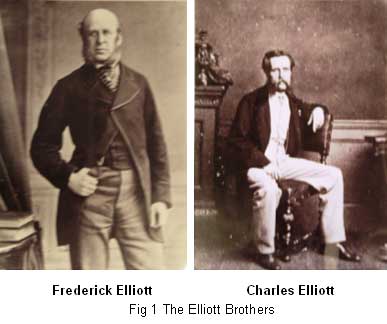
My step-father during my early teenage years worked for Elliott Brothers (the link goes to an interesting history of the firm that started in 1804) in Borehamwood, just north of London.  He encouraged me to fiddle with ‘steam’ radios and

try and understand how these basic circuits worked.  It was then a small step to deciding to become a radio amateur, popularly known as a radio ham!  In those days it was a case of some pretty intensive studying to pass a Theory exam as well as being able to pass an exam in sending and receiving Morse code.

So joining the local radio society seemed like a sensible idea.  That was (and still is!) called the Radio Society of Harrow.  That it is still in existence after all these years is truly delightful.  Those Friday night sessions at the Society and extra-curricular classes on Sunday morning at Ron Ray’s  (G2TA) house, an hour’s bicycle ride away from home, ensured that shortly after my 16th birthday I was granted a Licence, G3PUK.  It was a very proud moment.

Anyway, once granted a licence it was time to build my own radio transmitter.  Most of the details have been lost in the mists of time but what is recalled was that the final amplifier was a pair of 803s driving an 813 (These are radio valve numbers).  It sounds like something from the ark!  But again ploughing the inexhaustible files of the Web, it’s possible to see what these radio valves looked like.  Thanks to the National Valve Museum.

Here are pictures, courtesy of the National Valve Museum of those two radio valves:

803 – The substantial wide glass tube envelope is 58 mm in diameter (2 1/4 in) and, excluding the special five pin base pins, is 216 mm tall (8 1/2 in).

813 The classic envelope is substantial at 60 mm diameter (2 1/3 in) and 170 mm (6 2/3 in) long excluding the special base pins. The anode is 53 mm long and 48 mm wide. The metal is 1 mm thick.

803 radio valve
803 radio valve
813 radio valve
813 radio valve

It’s difficult, today, to imagine devices which are essentially diodes (well, technically the 803 was a pentode and the 813 a tetrode) being between 6 and 8 inches tall!

My own self-build transmitter had not really been successful emitting more heat than light, so to speak.  Literally, in the sense that these large radio valves kept me warm in my converted garden shed at the bottom of the garden.  They also completely wiped out TV reception for those households with a 1/4 mile range that had invested in early television sets!  It was time to move on to the R1155.

Around this era, less than 20 years after the end of the War in Europe in 1945, war-surplus equipment was widely available including ‘compact’ transmitter-receiver units.

One popular one was the RAF R1155 which had been fitted to RAF Lancaster bombers and RAF marine craft.  It was also fitted to the Sunderland flying boat.  This information plus the photos below is from this fascinating web site for those wishing to be ‘geeky’ about this.

RAF R1155B transreceiver
Internal view of the R1155B

Just compare the view on the right to the inside of your domestic radio or your cell phone.

A lot happens in 50 years!

My personal journey now leaps to 1978 and I have just left IBM UK having had 8 fabulous years with them as an Office Products salesman.  My fledging company, Dataview Ltd, has just become the 8th Commodore Computer (CBM) dealer in the UK, based in a small office in Colchester, Essex, about 50 miles north-east of London.

The CBM PET (Personal Electronic Transactor) released in 1977 initially with a calculator type keyboard was useless for any business application but soon came out with a typewriter sized keyboard, making it a more viable business

CBM computer, circa 1978

machine.  Today, as this is typed on an ‘old’ laptop with 2GB RAM, it seems unbelievable that these CBMs were sold with between 4k and 96k of RAM (memory) and no hard disk, although one could purchase an add-on that comprised dual 5 1/2 inch floppy disk drives.

YouTube obligingly finds  a short video on the Commodore PET for those really wishing to enjoy the nostalgia!

So to turn to the 21st century and to run out of understanding.  We appear to live in a world of multi-later printed circuit boards of unimaginable (to me) component density, assuming that the word ‘component’ is even relevant today.

Haven't a clue what this is but it's very modern.
Haven’t a clue what this is but it’s very modern.

What an amazing period it has been!

A long way from yesterday!

Now let me see was it Pin 920 to Pin 140, or Pin14 to Pin 860 connected to Pin 56 ………?

We are what we eat!

So why do we insist of manipulating the genetics of food!

I read somewhere recently, and of course now can’t find the reference, that the genetic modification of our food represents as big a danger to the long-term survival  of man as does the damage to our biosphere.

So a recent item on the blog Food Freedom News jumped out at me.  This was an item that was introduced as, “The author of Seeds of Destruction (about Monsanto) has a new piece out on pesticides and mass animal deaths… very sobering.

Clicking on the ‘new piece’ link takes one to here, from which I quote the opening paragraphs,

Death of the Birds and the Bees Across America

By F. William Engdahl
Global Research

“A recent study showed that every human tested had the world’s best-selling pesticide, Roundup, detectable in their urine at concentrations between five and twenty times the level considered safe for drinking water.”

Birds and bees are something most of us take for granted as part of nature. The expression “teaching about the birds and the bees” to explain the process of human reproduction to young people is not an accidental expression. Bees and birds contribute to the essence of life on our planet. A study by the US Department of Agriculture estimated that “…perhaps one-third of our total diet is dependent, directly or indirectly, upon insect-pollinated plants.”

The honey bee, Apis mellifera, is the most important pollinator of agricultural crops. Honey bees pollinate over 70 out of 100 crops that in turn provide 90% of the world’s food. They pollinate most fruits and vegetables–including apples, oranges, strawberries, onions and carrots.  But while managed honey bee populations have increased over the last 50 years, bee colony populations have decreased significantly in many European and North American nations. Simultaneously, crops that are dependent on insects for pollination have increased. The phenomenon has received the curious designation of Colony Collapse Disorder (CCD), implying it could be caused by any number of factors. Serious recent scientific studies however point to a major cause: use of new highly toxic systemic pesticides in agriculture since about 2004.

That first paragraph alone made me sit up, “A recent study showed that every human tested had the world’s best-selling pesticide, Roundup, detectable in their urine at concentrations between five and twenty times the level considered safe for drinking water.”  What a strange race we are!

Wlliam F. Engdahl

Then it was easy to find out more information about the author of the book Seeds of Destruction, William F. Engdahl, including his website.  Mr. Engdahl is clearly no stranger to controversy as this YouTube video illustrates,

Back to that Food Freedom article.  Further on, there is evidence of the size of the problem in the UK,

Alarming UK results

A private UK research organization, Buglife and the Soil Association, undertook tests to try to determine cause of the bee death. They found that the decline was caused in part by a group of pesticides called neonicotinoids. Neonicotinoids are “systemic” chemicals that kill insects by getting into the cell of the plant. In Britain it’s widely used for crops like oilseed rape and for production of potted plants.

The neonicotinoids are found in the UK in products including Chinook, used on oilseed rape and Bayer UK 720, used in the production of potted plants which then ends up in gardens and homes around the country. The new study examined in detail the most comprehensive array of peer-reviewed research into possible long-term effects of neonicotinoid use. Their conclusion was that neonicotinoid pesticides damage the health and life cycle of bees over the long term by affecting the nervous system. The report noted, “Neonicotinoids may be a significant factor contributing to current bee declines and could also contribute to declines in other non-target invertebrate species.” The organization called for a total ban on pesticides containing any neonicotinoids.

The president of the UK Soil Association, Peter Melchett, told the press that pesticides were causing a continued decline in pollinating insects, risking a multimillion pound farming industry. “The UK is notorious for taking the most relaxed approach to pesticide safety in the EU; Buglife’s report shows that this puts at risk pollination services vital for UK agriculture,” he said.

Indeed in March 2012 Sir Robert Watson, Chief Scientist at the British Government’s Department of Environment announced that his government was reconsidering its allowance of neonicotinoid use in the UK. Watson told a British newspaper, “We will absolutely look at the University of Stirling work, the French work, and the American work that came out a couple of months ago. We must look at this in real detail to see whether or not the current British position is correct or is incorrect. I want this all reassessed, very, very carefully.”  To date no policy change has ensued however. Given the seriousness of the scientific studies and of the claims of danger, a prudent policy would have been to provisionally suspend further uise of neonicotinoids pending further research. No such luck.

And if the harm to bees wasn’t serious enough, try this extract,

Effect on Human Brain?

But most alarming of all is the evidence that exposure to neonicotinides has horrific possible effects on humans as well as on birds and bees.

Professor Henk Tennekes describes the effects:

“Today the major illnesses confronting children in the United States include a number of psychosocial and behavioral conditions. Neurodevelopmental disorders, including learning disabilities, dyslexia, mental retardation, attention deficit disorder, and autism – occurrence is more prevalent than previously thought, affecting 5 percent to 10 percent of the 4 million children born in the United States annually. Beyond childhood, incidence rates of chronic neurodegenerative diseases of adult life such as Parkinson’s disease and dementia have increased markedly. These trends raise the possibility that exposures in early life act as triggers of later illness, perhaps by reducing the numbers of cells in essential regions of the brain to below the level needed to maintain function in the face of advancing age. Prenatal and childhood exposures to pesticides have emerged as a significant risk factor explaining impacts on brain structure and health that can increase the risk of neurological disease later in life.”

There is also growing evidence suggesting persistent exposure to plants sprayed with neonicotinoids could be responsible for damage to the human brain, including the recent sharp rise in incidents of autism in children.

This really is an article that you should read in full, which also includes a full bibliography and notes section.  Plus you can leave your responses as a comment – go for it!

Apis mellifera – the honey bee (family Apidae)

The doomsday virus

Take a few moments and read this.

Thanks to Naked Capitalism for including this item in today’s list of links.  One of those links was to an item in today’s Washington Post from which I quote,

Thousands could lose access to the Internet on July 9 due to a virus, DNSChanger, that once infected approximately 4 million computers across the world.

The Federal Bureau of Investigation first gave details about the virus last November, when it announced the arrest of the malware’s authors. The virus, as its name indicates, affected computers’ abilities to correctly access the Internet’s DNS system — essentially, the Internet’s phone book. The virus would redirect Internet users to fake DNS servers, often sending them to fake sites or places that promoted fake products. Once the FBI shut down the operation, it built a safety net of new servers to redirect traffic from those infected with the virus.

But that safety net is going offline next Monday meaning that anyone who is still infected with the virus will lose access to the Internet unless they remove it from their machine.

The Washington Post then goes to say,

To see if you have the virus, you can head to any number of checker Web sites such as the DNS Changer Working Group or the FBI itself to either enter your IP address or simply click a button to run a check against addresses known to have problems. With any luck, you’ll be free and clear and won’t have to worry about the problem any further.

I chose the FBI website that is here https://forms.fbi.gov/check-to-see-if-your-computer-is-using-rogue-DNS as it seemed to have comprehensive instructions on what to do.

Then chose the URL for English, that is this one http://www.dns-ok.us/ that directed me to a website that instantly confirmed that a) it was the correct website – DNS Changer Check-Up, and b) my result.

DNS Resolution = GREEN 

Your computer appears to be looking up IP addresses correctly!

Had your computer been infected with DNS changer malware you would have seen a red background.  Please note, however, that if your ISP is redirecting DNS traffic for its customers you would have reached this site even though you are infected. For additional information regarding the DNS changer malware, please visit the FBI’s website at:
http://www.fbi.gov/news/stories/2011/november/malware_110911

Seems to me to be a message worth circulating as widely as possible.

Footnote: 9th July, 06:40.

Noticed the following article on the BBC News website this morning, from which I quote:

More than 300,000 people, including many in the US and UK, could lose internet access later as the FBI shuts off servers used by cyber thieves.

The FBI seized the servers in November 2011 during raids to break up a gang of criminals who used viruses to infect more than four million victims.

Victims’ web searches were routed through the servers so they saw adverts that led to the gang being paid.

Many machines still harbour the gang’s malicious code.

Global clean up

The gang racked up more than $14m (£9m) by hijacking web searches and forcing victims to see certain adverts. They managed to do this because their servers were taking over a key web function known as domain name look-up.

Domain names are the words humans use, such as bbc.co.uk, for websites. These are converted into the numerical values that computers use by consulting domain name servers (DNS).

When a person types a name into a browser address bar, often their computer will consult a DNS server to find out where that website resides online.

The gang infected computers with malware called DNS Changer because it altered where a PC went to convert domain names to numbers.

Since the FBI raids the gang’s servers have been run by Californian company ISC. Over the last few months, the FBI has worked with many ISPs and security firms to alert victims to the fact that their PC was infected with DNS Changer. Online tools are available that let people check if they are infected.

This has meant the original population of four million infected machines has been whittled down to just over 300,000, according to statistics gathered by the DNS Changer Working Group.

The largest group of machines still harbouring the infection are in the US but many other nations, including Italy, India, the UK and Germany, have substantial numbers still checking in with the ISC servers.

These servers will be shut down on 9 July.

The result could be that some people lose net access because the PCs that are still victims of DNS Changer will suddenly have nowhere to go when they need to look up the location of a particular domain.

It might take some time for the problems to become apparent, said Sean Sullivan, a security researcher at F-Secure.

“Initially some domains will be cached which will mean web access will be spotty,” he said. “People will be confused about why some things work and some do not.”

Other security experts said it might take time for the remaining infected machines to be cleaned up.

“Reaching victims is a very hard problem, and something we have had issues with for years,” said Johannes Ullrich, a researcher with the Sans security institute.

He expected the impact to be “minimal” because many of these systems were no longer used or maintained.

If you have any doubt, do check your DNS as soon as possible.