The words of Jim and Janet Goodbrod. It was finally time to say the last goodbye to our old Buddy. Life had become an intolerable burden. His spirit wanted to keep going, but his failing body could not keep up. We ended his suffering and gently nudged him into that deep and eternal sleep last Wednesday.
Rest in peace old man! You made it 16-17 years. You aren’t in pain any longer and can run and play like you used to. We had you for only about 10 months, but loved you and we’re glad we could make your last year a good one. Forget the horrible abuse you suffered as a puppy, and remember only the love and joy you gave us in your last days on this planet.
A Dog’s Plea
Treat me kindly, my beloved friend, for no heart in all the world is more grateful for kindness than the loving heart of me.
Do not break my spirit with a stick, for although I should lick your hand between blows, your patience and understanding will quickly teach me the things you would have me learn.
Speak to me often, for your voice is the world’s sweetest music, as you must know by the fierce wagging of my tail when your footsteps falls upon my waiting ear.
Please take me inside when it is cold and wet, for I am a domesticated animal, no longer accustomed to bitter elements. I ask no greater glory than the privilege of sitting at your feet beside the hearth. Keep my pan filled with fresh water, for I cannot tell you when I suffer thirst.
Feed me clean food that I may stay well, to romp and play and do your bidding, to walk by your side and stand ready, willing and able to protect you with my life, should your life be in danger.
And, my friend, when I am very old, and I no longer enjoy good health, hearing and sight, do not make heroic efforts to keep me going. I am not having any fun. Please see that my trusting life is taken gently. I shall leave this earth knowing with the last breath I draw that my fate was always safest in your hands.
Last year I instigated a new ‘page’ on Learning from Dogs. It was entitled We Shall Not Forget Them. It was introduced by me as follows:
For millions, the relationship between a person and their dog is precious beyond words. Do you still grieve the loss of your wonderful dog? Let us all know what your dog meant to you. Write whatever you want. Leave it as a thought to this page.
Then it became clear that this was not going to work properly. Because each note of remembrance was, in effect, a comment. And I discovered that under WordPress it is not possible to insert a photograph. I struggled to think of a better way of doing it. Then earlier yesterday it came to me.
I will make each message of condolence, each reflection on how special the dog was, a new and separate blog post. In other words, each dog gets their own post for a full day.
Then each time a condolence is sent in, I will update the We Shall Not Forget Them post with the name of the departed dog, the date and a link to the blog post that has the details and memories of the animal.
I hope that makes sense!
To underline how it is going to work, I am starting off with the words of loss, and photographs, of Jim and Janet’s Buddy.
That post will be published in an hour’s time and will be linked to as I described above.
ooOOoo
So I am reaching out to Susan, Asha, Katrina and Whisperofthedarkness – each of you has left a memory as a comment to here.
Please do email me some photographs and any further recollections you would like me to post, and I will do for you as I have done for Buddy.
(Laura, I shall go to that link and republish what you wrote.)
I was emailed as follows back on the 25th January:
Hi Paul,
I hope all is well with you and Jean and the furry kids. About a month ago, you had mentioned that you would welcome a post about Maggie in honor of her 9th birthday.
Maggie was very enthusiastic about this venture and managed to write a little blog with her advice on aging. I have enclosed the result for your review.
Her birthday is on 2/3. Thank you so much for giving us this opportunity. Take care!
Kind Regards,
Susan & Maggie
Ergo, this coming Friday is Maggie’s birthday.
ooOOoo
Maggie’s Advice on Aging
Hello! My name is Maggie.
I have a much longer AKC registered moniker that Mom & Dad christened me with but it’s ridiculous so I just shortened it.
Anyway, Paul was so gracious to invite me to do a post for all of you good folks at Learning from Dogs. Since I have a birthday coming up (in case you are wondering, I’ll be 9), I thought what better topic to write about than aging.
To me, age is just a number. I know that is a cliché but it’s the truth! I don’t know what other dogs my age do but I’m not ready to just lay down on the couch. Not me! I’ve got too many things to do and way too many places to see.
Here are some of my tips on how you can feel like a puppy:
Take your vitamins – I will admit. After Mom and Dad replaced my favorite brand of fish oil with another one that didn’t taste so good, I refused to take the pill. They would try and hide it in my food but I would just find it and set it to the side. I mean, who do they think they are dealing with? They finally wised up and now I am back to my brand. Some of you might be thinking, fish oil, yuck! Seriously, I swear by it. It promotes heart health and it keeps my coat silky smooth. I also have these tasty Milk Bone vitamins that help me to stay healthy and they even improve joint mobility! That way I will be keeping the ‘rents on their toes for years to come.
Get off the couch – Yes, I like couch time with my Mom and Dad but I love nothing more than to lollygag in our gigantic backyard playing ball. I will do this for hours! My bipeds on the other hand, they have their limits. I also enjoy going for walks in this cool, new park near our house. It’s in the woods and I love all the places I can explore. Just being active is not only good for you but it keeps you engaged and learning new things all the time.
Annual checkups – Going to the vet isn’t fun. I don’t know anyone that enjoys it. However, I know that everything they do for me keeps me healthy. The ‘rents see to it that I get my yearly vaccinations and physical. It keeps me in tip top shape so I will be barking at them for years to come. Mom loves it when I yell at her.
Watch your diet – Okay. I will admit this one bites. If I had my way, I would be chowing down on all kinds of good things like meat, cheese, bacon…. the list goes on and on. I need to watch my girlish figure! I eat the best food with no preservatives and it’s also chockful of vitamins. Believe it or not, I love my yummy meals, they taste good!
It’s the little things – This is what happiness is for me. I love nothing more than playing with the really cool stuffed teddies Dad got me or going for rides in the car with Mom. I really like family time when we watch movies and cuddle on the couch. Just being with my two favorite people in the world keeps me going. We spend quite a bit of time hanging out and I wouldn’t have it any other way!
I hope you found these tips helpful. It was fun spending time with all of you. Take care and give your parents a hug! They deserve it.
Bob Derham and his wife, Julie, are long-term friends back in the UK.
They recently lost their two dogs.
Bob sent me this:
Millie and Summer both had a fun life.
They were cross breed dogs, partly Springer Spaniel and part Collie. They were born in Wales, but as there are quite a lot of similar dogs there, the owner advertised in a local paper, and brought them up to Dorset one weekend 13 years ago.
Initially we had been looking for only one dog, but it seemed such a shame to separate the two puppies so we decided to take both. Most people were of the opinion that two girls from the same litter was not a good idea, but nevertheless we trained them, and the two animals were always together.
Family holidays, walking the children to the school bus, visiting friends, etc., always included Millie and Summer.
Just over two years ago, Summer became diabetic. Had this been only ten years ago, nothing could have been done for her, but we were able to inject her twice a day, and keep her healthy, apart from failing sight as a result of the insulin. It was not long after that Millie developed the same problem, so both dogs had the same routine.
Summer went to the vets on the right day for her, and was put to sleep peacefully, and two weeks later Millie needed the same choice to be made.
They enjoyed an almost identical lifespan, and we enjoyed them to the full.
Bob and Julie’s daughter Stephanie then made the following video in memory of their two beloved dogs.
Back to me.
Going to close today’s post with this poem by Rudyard Kipling.
ooOOoo
The Power of the Dog
There is sorrow enough in the natural way
From men and women to fill our day;
And when we are certain of sorrow in store,
Why do we always arrange for more?
Brothers and Sisters, I bid you beware
Of giving your heart to a dog to tear.
…
Buy a pup and your money will buy
Love unflinching that cannot lie–
Perfect passion and worship fed
By a kick in the ribs or a pat on the head.
Nevertheless it is hardly fair
To risk your heart for a dog to tear.
…
When the fourteen years which Nature permits
Are closing in asthma, or tumour, or fits,
And the vet’s unspoken prescription runs
To lethal chambers or loaded guns,
Then you will find–it’s your own affair–
But…you’ve given your heart for a dog to tear.
…
When the body that lived at your single will,
With its whimper of welcome, is stilled (how still!);
When the spirit that answered your every mood
Is gone–wherever it goes–for good,
You will discover how much you care,
And will give your heart for the dog to tear.
…
We’ve sorrow enough in the natural way,
When it comes to burying Christian clay.
Our loves are not given, but only lent,
At compound interest of cent per cent.
Though it is not always the case, I believe,
That the longer we’ve kept ’em, the more do we grieve:
For, when debts are payable, right or wrong,
A short-time loan is as bad as a long–
So why in Heaven (before we are there)
Should we give our hearts to a dog to tear?
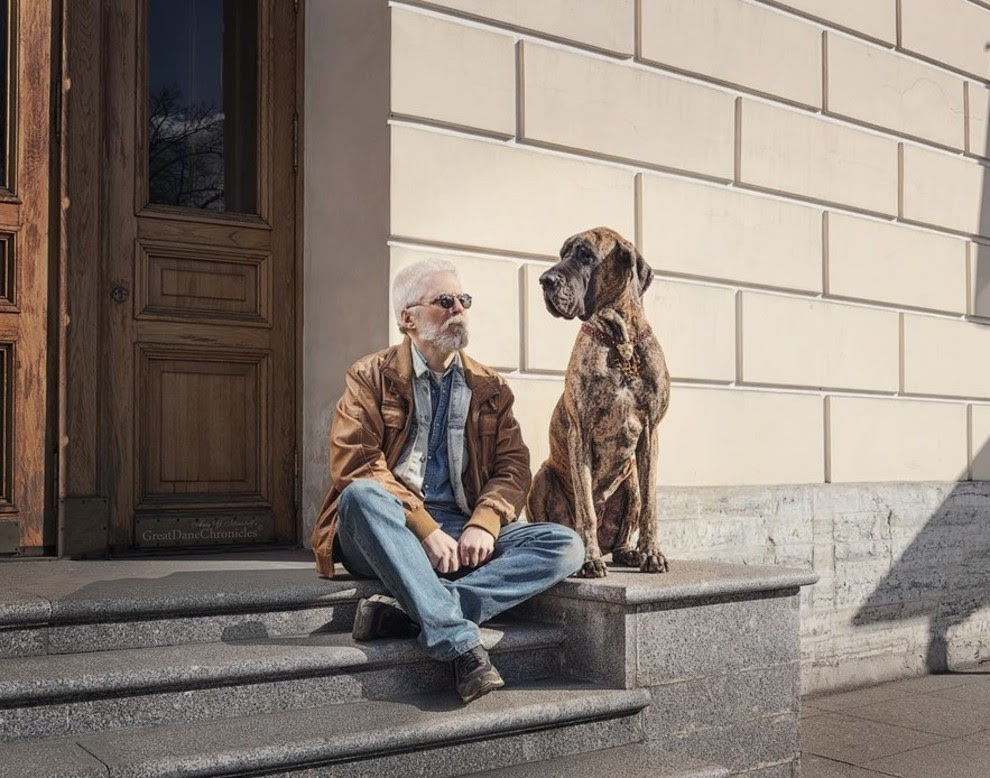
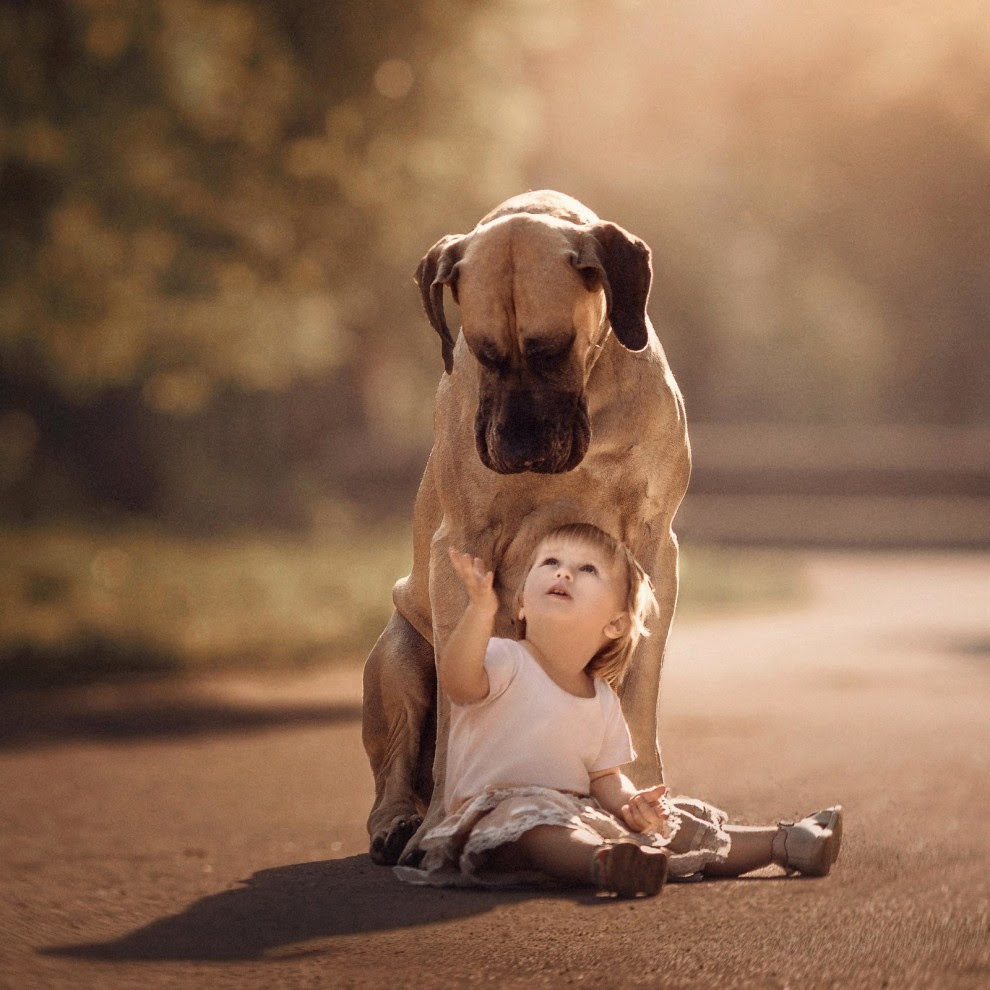
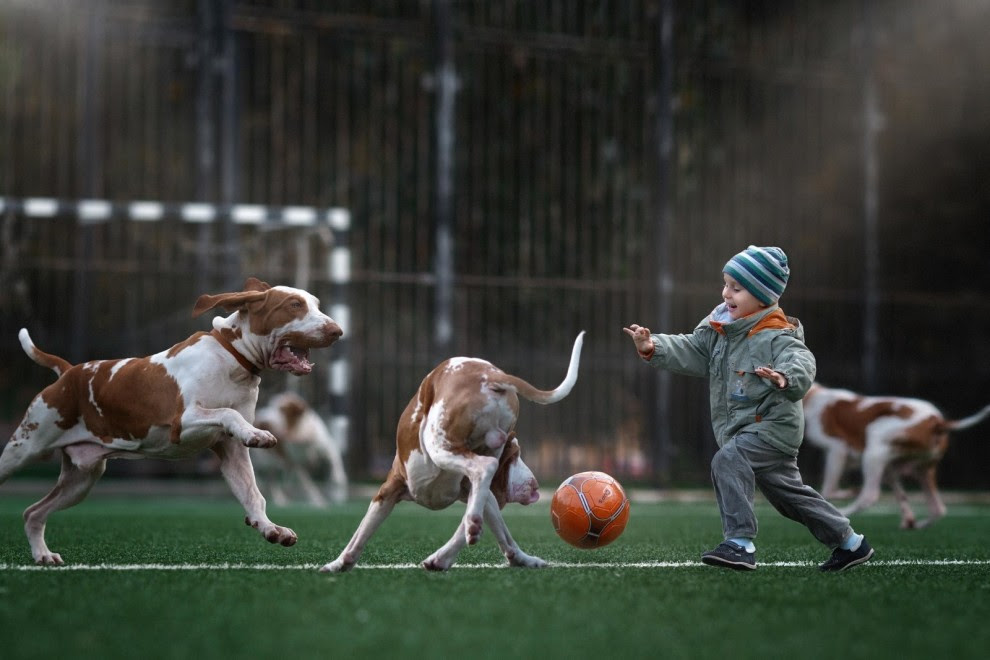
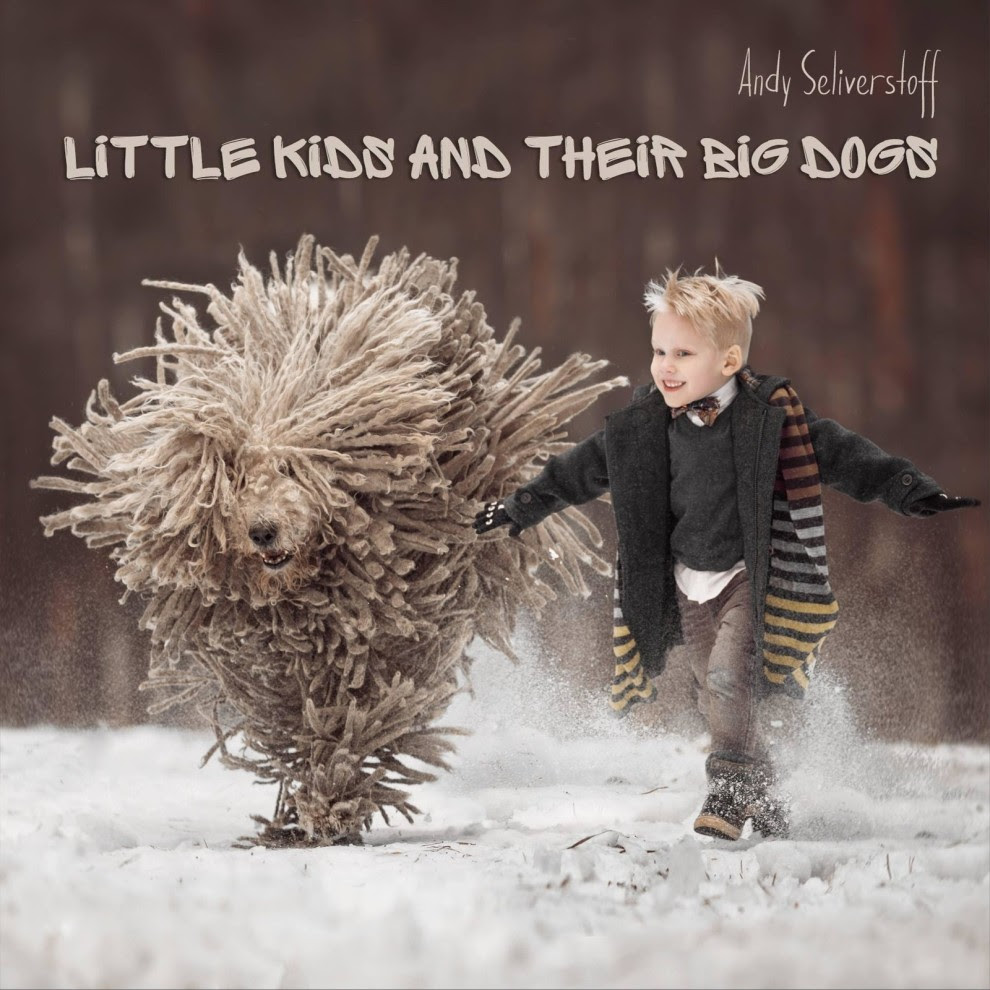
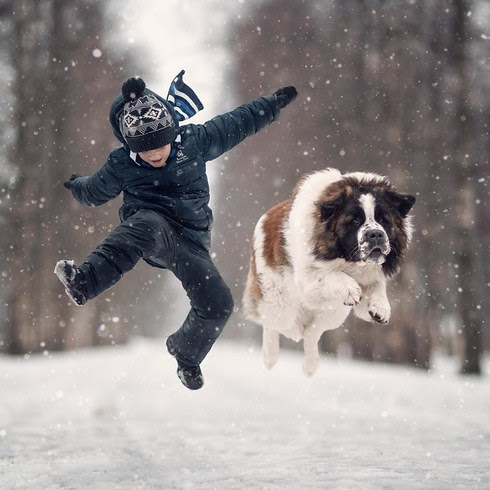
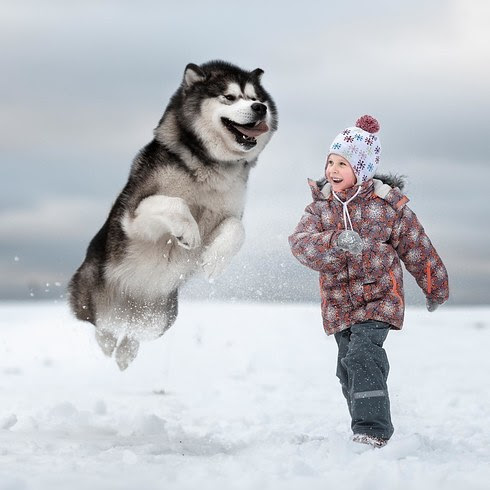
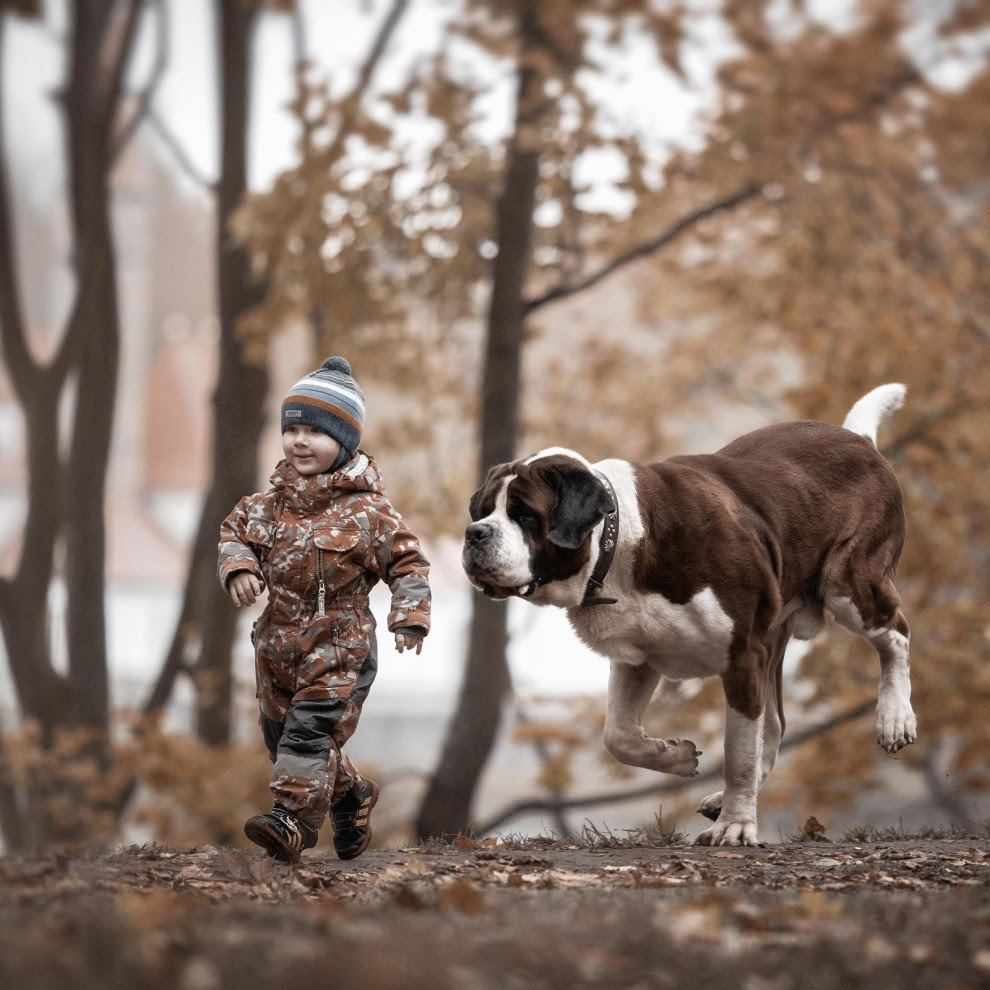
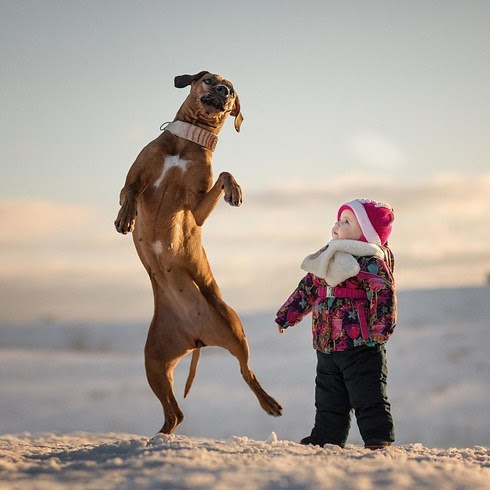
First some background to the pictures that are presented both today and in a week’s time.
Little Kids and Big Dogs
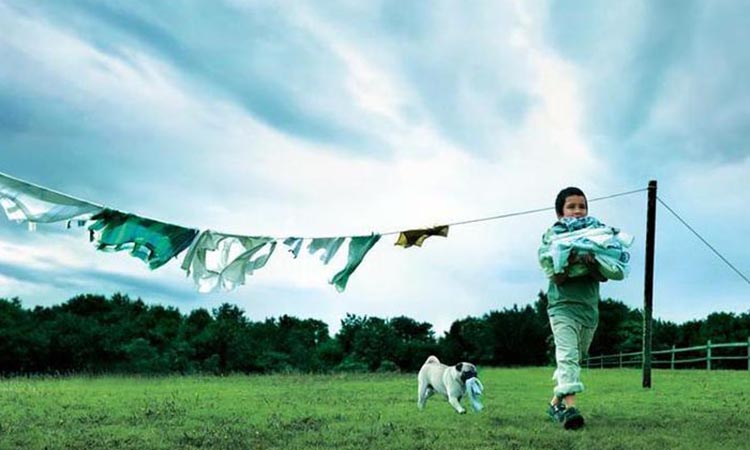
Andy Seliverstoff is a 58-year-old professional photographer from St. Petersburg, Russia. A few years ago some of Seliverstoff’s friends asked him to take photos of their daughter Alice in a park. They had their gigantic Great Dane, Sean, with them, so they decided to incorporate him into the photos. After seeing the results, he knew he was on to something special.
Seliverstoff did another shoot with a child featuring big dogs, and told BuzzFeed News that he was “deeply touched” by the work. That was four years ago and he’s been a dog photographer ever since.
The project has become his passion, which he chronicles in a book called “Little Kids and Their Big Dogs.“
All of the photos are taken in St. Petersburg. Its extensive parks and colder climate help create some spectacular shots.
Seliverstoff said the goal of the series wasn’t just to create beautiful pictures, but to capture the interaction between the children and the animals.
I have a marvellous blogging friend in New Mexico who has Rufina, a chicken who was shot in the head, sealed in a plastic bag, placed in a freezer for 24hrs, and lived! (albeit now blind).
I have a framed poster of Rufina up in my living room, and even one her feathers perched in one of my many, many, many St. Francis’s
Then in response to me wanting to republish that story replied: “Contact her, she’s wonderful, and her pottery is to die for.”
So I did and, with Laura’s permission here is that story of this most remarkable chicken.
ooOOoo
The Undead Chicken
by Laura Bruzzese, June 24th, 2013
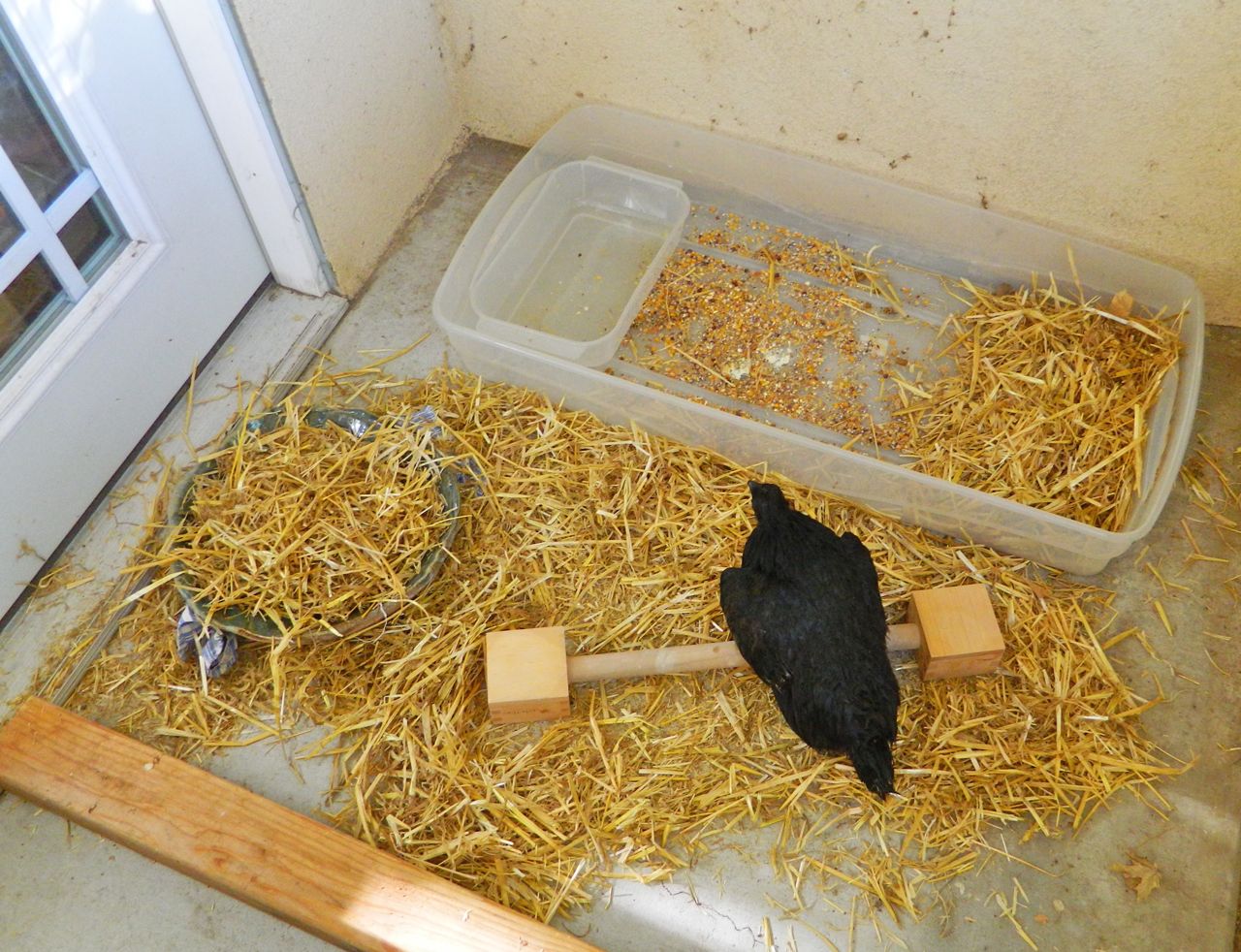
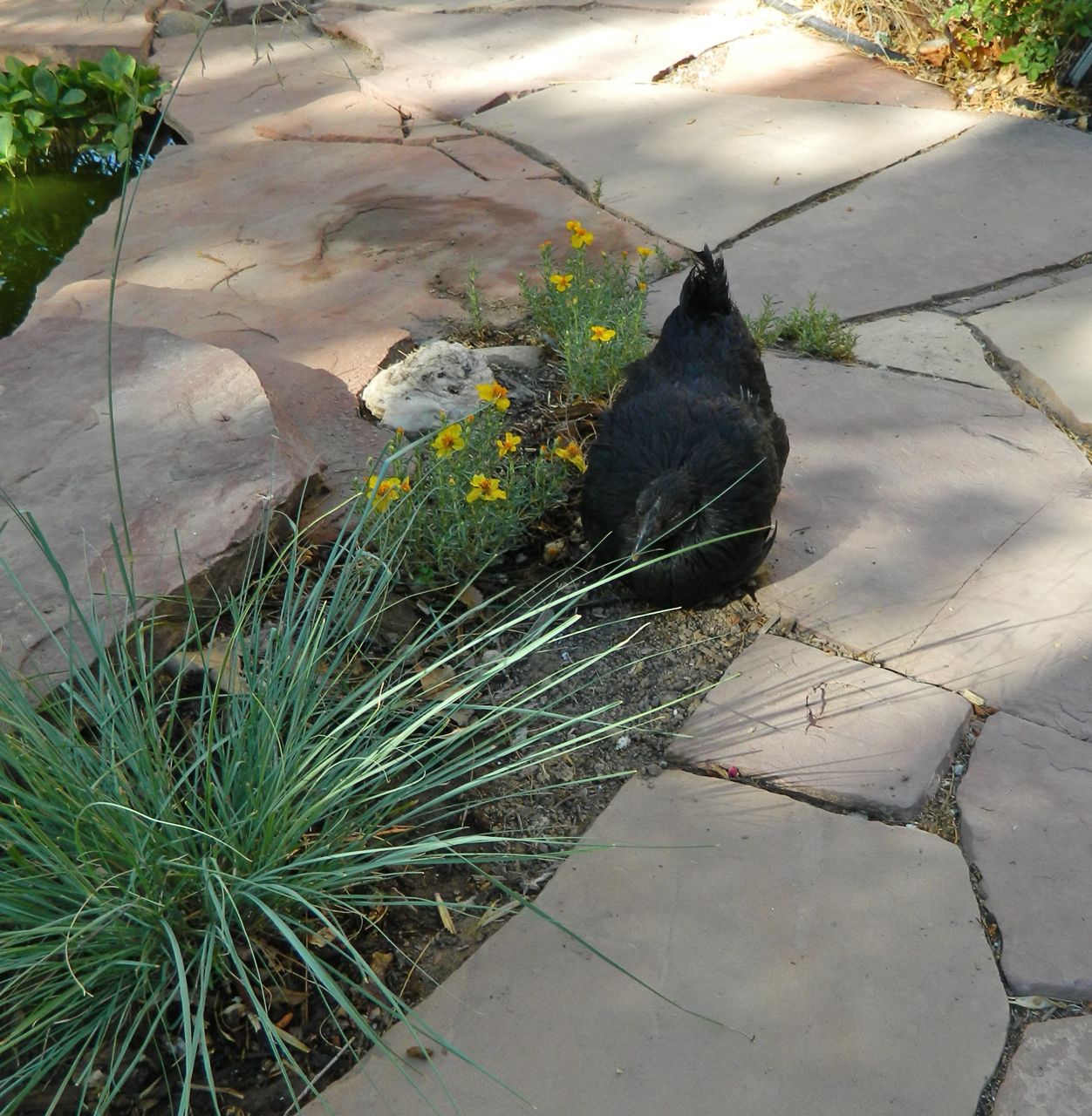
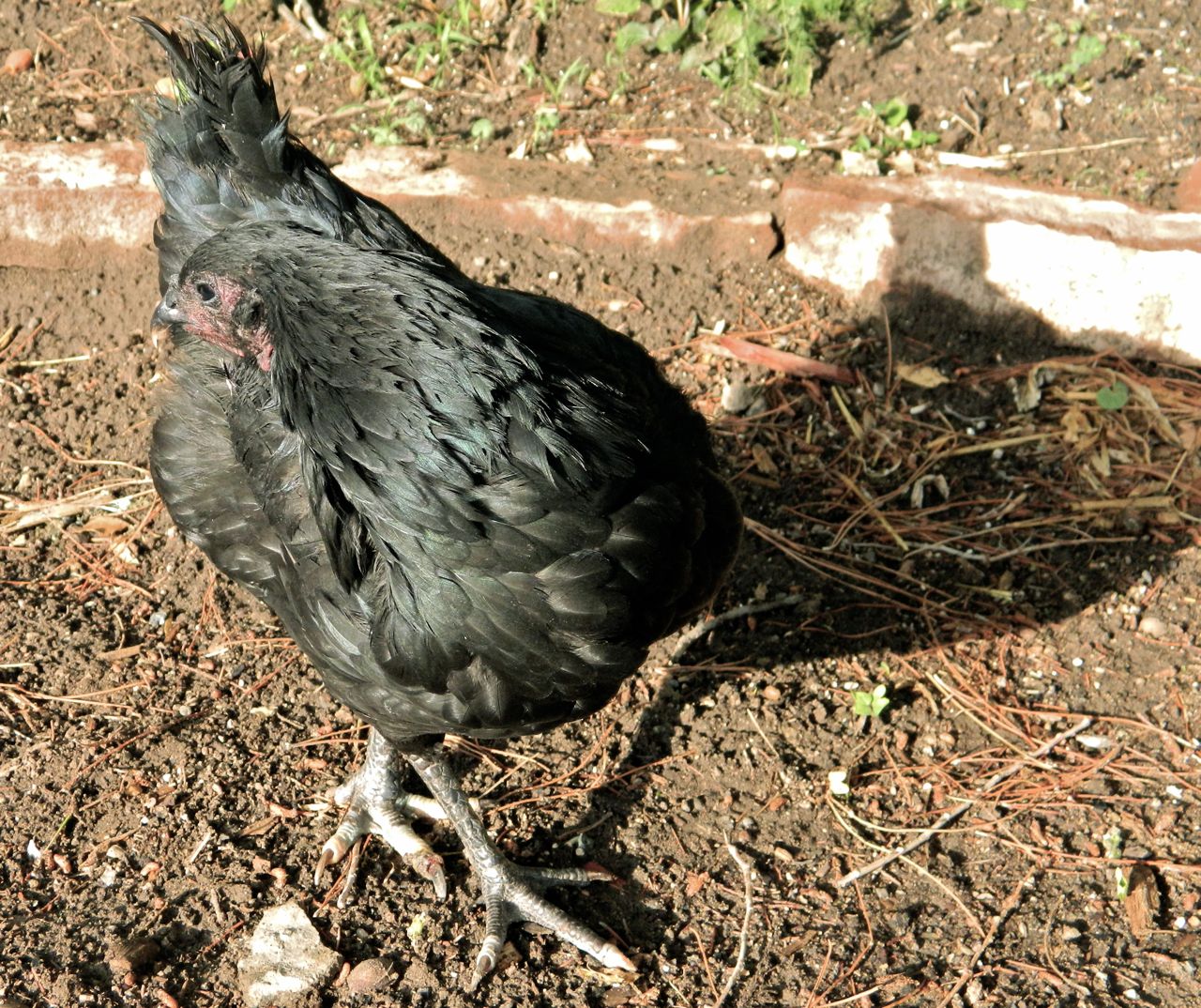
This is Rufina. She’s new to our household.
She’s quiet and doesn’t take up much space, mostly sits on her perch or in her ceramic nest all day. She moves around slowly. If you are really gentle, she lets you pick her up.
We sit by the pond together in the morning, before everyone else gets up.
Last Thursday, I answered a friend’s call on Facebook for someone to take this chicken. Isabella and I drove to my friend’s house in the South Valley, put her in a bin, and brought her home. I didn’t think she’d actually still be alive today.
My friend had posted this story Thursday morning:
The neighbor gave us fresh chickens last night for cooking up. He shot them in the head with gun and handed them over the fence. We bagged them and put in freezer for today. Evan gets home, opens freezer and one bird is perched fully alive, very cold, and pissed off.
Chase ensues… !! We now have a blind undead chicken in our yard.
Anybody want it?
I’m not sure why anyone would shoot chickens in the head.
But when I read the story, I couldn’t help but admire this chicken’s tenacity. She is courageous. She made her way out of a plastic bag inside a freezer and survived for thirty-six hours. After being shot in the head. I figured any animal that fought that hard to live deserved a little help, if only for a day or two.
The chicken hasn’t made any effort to eat like a normal chicken. Because, of course, she can’t see where to peck. (There isn’t much point in force-feeding a blind chicken.) But she does drink, so I’ve started blending up borrowed chicken food and water and giving her that. She seems content, grooming herself sometimes, showing no signs of pain or anxiety. And still, she will die.
But until then, we will enjoy each of her borrowed mornings by the pond, the sound of birds and running water, the sun on her feathers, expecting nothing.
I’m not sure why I have a blind, undead chicken in my studio. But here is one of my favorite poems, by Laura Gilpin.
The Two-Headed Calf
Tomorrow when the farm boys find this
freak of nature, they will wrap his body
in newspaper and carry him to the museum.
But tonight he is alive and in the north
field with his mother. It is a perfect
summer evening: the moon rising over
the orchard, the wind in the grass. And
as he stares into the sky, there are
twice as many stars as usual.
Now if you think that was remarkable then let me share what Laura posted a few weeks later, linked to via her Epilogue above.
ooOOoo
The Miracle of Re-Birth
by Laura Bruzzese, July 11th, 2013
Good news: it’s been three weeks since the attempted murder of Rufina, and she continues to dwell among the living!
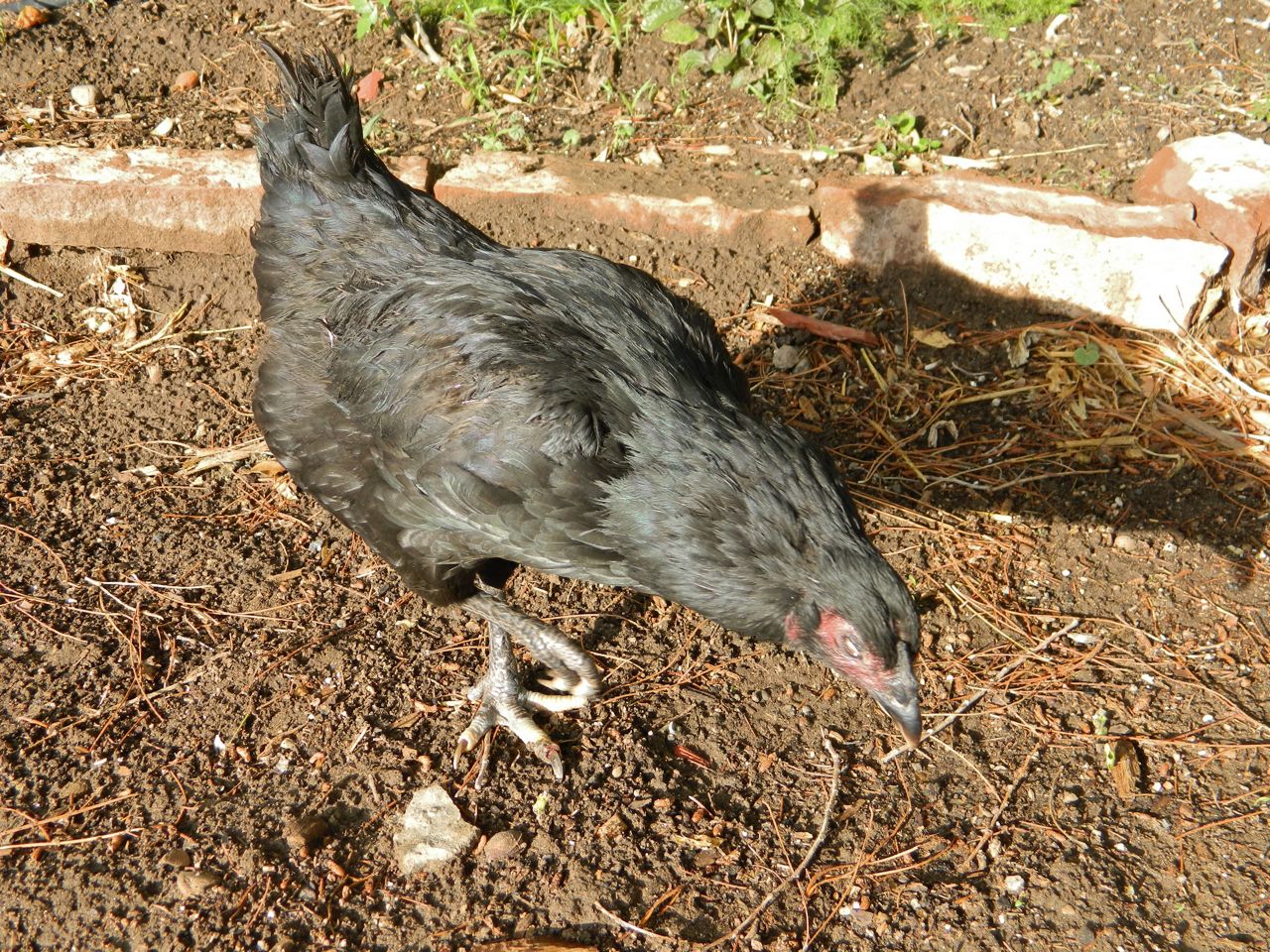
After loads of eye care, foot washing, antibiotics, food and vitamins, she has gained weight and is learning to find food and water by herself. Her remaining eye looks normal again but is still blind (I was hoping for a miracle), and the place of its former pair seems to have reached its majority in terms of healing–no eye, but no skin, either. Just a weird, green spot surrounded by red skin that looks not unlike a tiny sun-dried tomato.
But that does not prevent her daily forays into the garden where she walks around with her head craned forward to “feel” where she’s going, and from exhibiting other persisting chicken qualities that seem to evidence a contented life.
I’m still surprised, and slightly in awe of this traumatized chicken who is satisfied to reside indefinitely on my studio porch. Shiny, happy chicken.
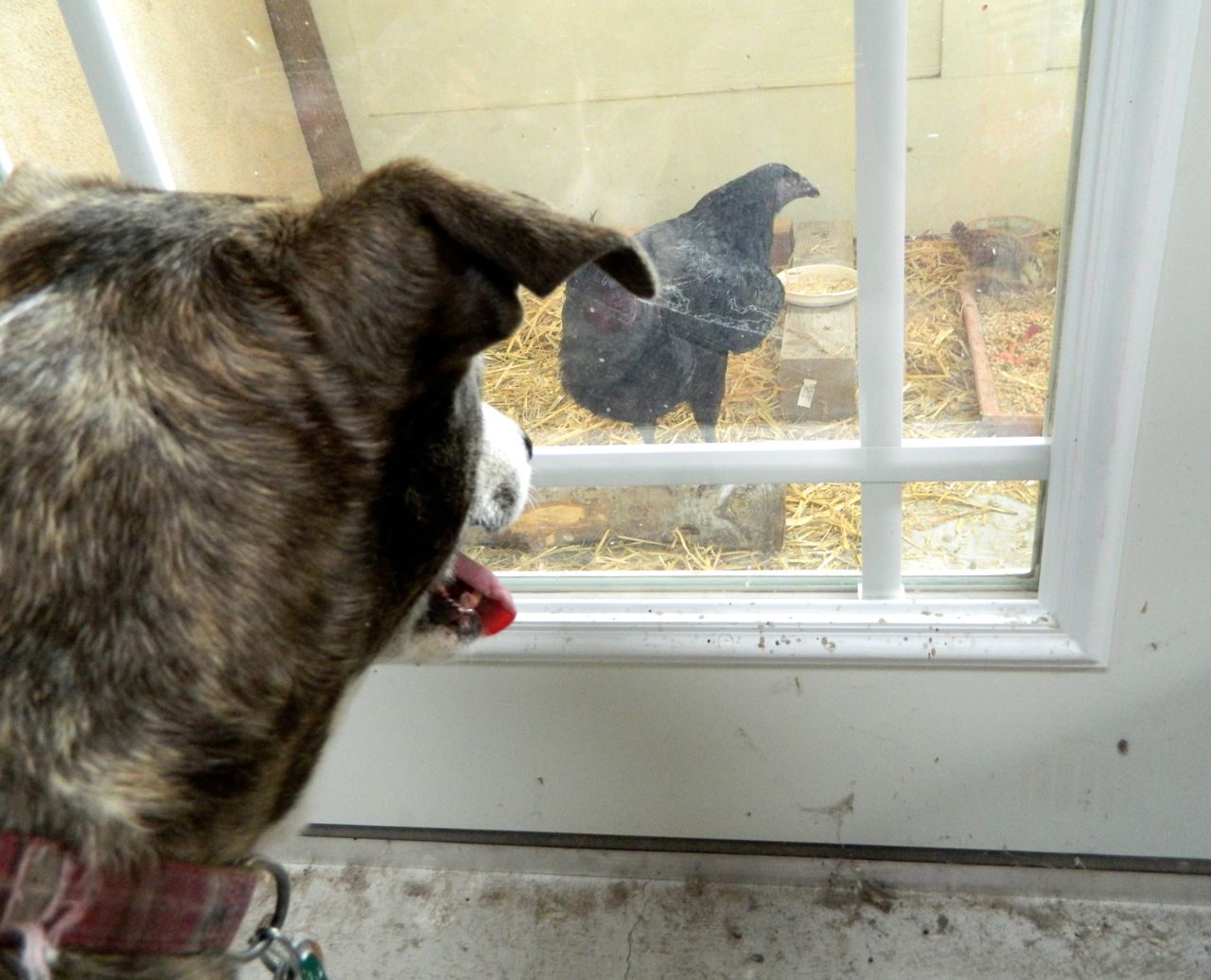
And so far, Velma the Rascally Whippet has not been the nuisance I was afraid she might be, but instead, a proud example of a bird-dog in defiance of her own natural instincts (save for one minor incident involving a tail feather. That was still attached to Rufina.). Perhaps Velma knows they are kindred spirits, she herself having survived a scary encounter with the Great Beyond earlier this year.
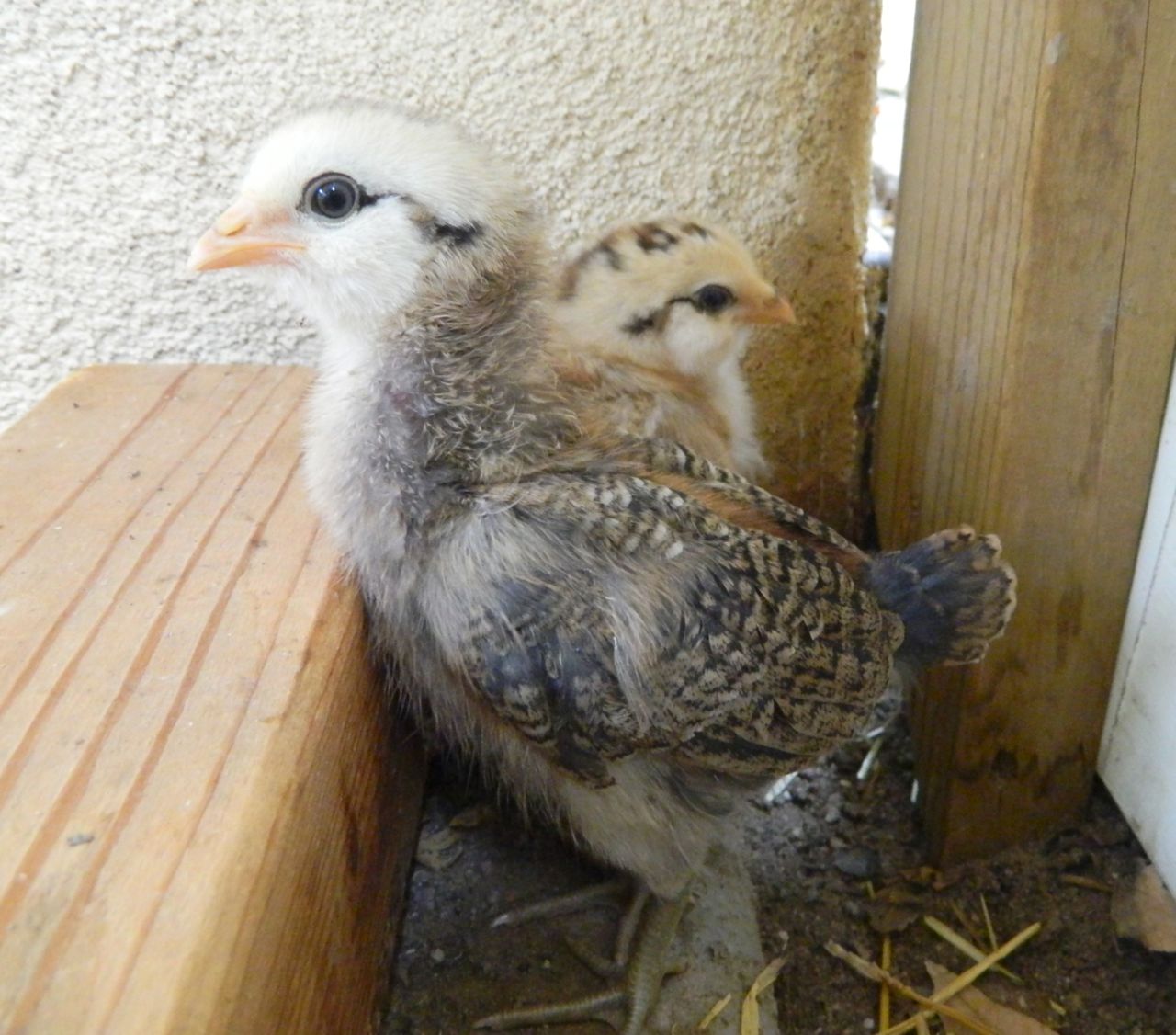
Thanks to everyone who has contributed free chicken advice, food, ER and vet consults, and even a couple of adorable, surprise chicks* (!) to keep Rufina company.
*Chicks will unfortunately be dispatched to some other venue because they are exploiting their sighted advantage: stealing food out of Rufina’s mouth, crowding the water dish, and mocking her by constantly blinking and sticking their tongues out. Also, they are filthy little creatures that walk in their own poop and then jump on me.
And finally, what’s in a name? When it became clear that chicken might live, I thought I should name her, and Rufina was the first thing that popped into my head. A few days later, I googled it to see what came up. This is what I found on Wiki:
Saints Justa and Rufina (Ruffina) (Spanish: Santa Justa y Santa Rufina) are venerated as martyrs. They are said to have been martyred at Hispalis (Seville) during the 3rd century.
Their legend states that they were sisters and natives of Seville who made fine earthenware pottery for a living, with which they supported themselves and many of the city’s poor. Justa was born in 268 AD, Rufina in 270 AD, of a poor but pious Christian family. During a pagan festival, they refused to sell their wares for use in these celebrations. In anger, locals broke all of their dishes and pots. Justina and Rufina retaliated by smashing an image of Venus.
The city’s prefect, Diogenianus, ordered them to be imprisoned. Failing to convince them to renounce their faith, he had them tortured on the rack and with iron hooks. This method also having failed, they were imprisoned, where they suffered from hunger and thirst.
They were then asked to walk barefoot to the Sierra Morena; when this did not break their resolve, they were imprisoned without water or food. Justa died first. Her body, thrown into a well, was later recovered by the bishop Sabinus. Diogenianus believed that the death of Justa would break the resolve of Rufina. However, Rufina refused to renounce her faith and was thus thrown to the lions. The lion in the amphitheatre, however, refused to attack Rufina, remaining as docile as a house cat. Infuriated, Diogenianus had Rufina strangled or beheaded and her body burned. Her body was also recovered by Sabinus and buried alongside her sister in 287 AD.
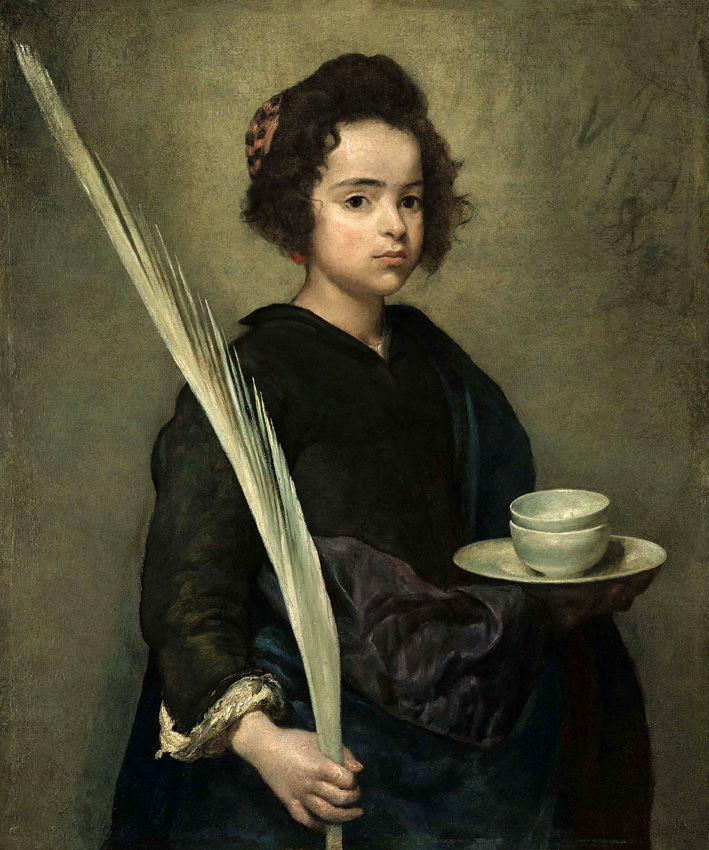
Saint Rufina, by Velázquez. See the likeness?? She’s even carrying a giant feather!
Just another name? Perhaps. Or: a dark-haired Spaniard and a Italian-New Mexican, two Christian potters separated by centuries, a saint, a chicken, and an ordinary human united in an extraordinary coincidence of the undead.
ooOOoo
Follow that!
Well I can’t but John Zande can.
For he was the first to leave a comment to Laura’s Rebirth post:
Here, i feel this song is in order. Listen carefully to the words, and who is singing them.
That is the language of love spoken by our beautiful dogs.
The present unreliability of our internet connection prompted me to think about re-posting whatever I had posted exactly a year ago. It only took me a minute to look it up and, bingo, what a perfect topic for these wintry days.
ooOOoo
As our dear dogs speak it.
You will recall that last Friday I featured an item under the title of Private First Class Lingo. The item had been brought to my attention by Constance Frankland.
Well here’s another really special story that Constance came across on a website called Arditor and I wanted to share it with you.
ooOOoo
The Language of Love
8 Ways Your Dog is Saying “I Love You“
Although dogs don’t speak our language, they are constantly trying to tell us that they love us and always showing love through their actions. Unfortunately, many shrug their shoulders or get annoyed over their dogs’ love gestures.
Here are 8 ways your dog is saying “I love you”…
Tail Wagging
Similar to a cat, a dog’s tail is a communication tool. In fact it is sometimes more accurate in translating its emotions than barking. Held at different positions, a dog’s wag could communicate excitement, fear, threat or submission. If your dog’s tail is held in a relaxed position and wagging all together with its entire butt, it means it is very happy to see you.
Face Licking
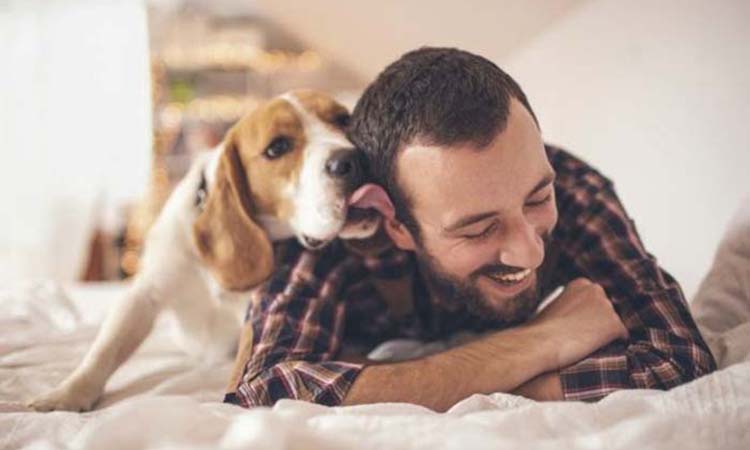
Warm, sticky, wet and stinky! We know this can get annoying but licking a person’s face is a love gesture from a dog. Dogs lick faces for a few reasons. Mainly, if your pet dog is licking your face, he is trying to groom you! Grooming is an intimate gesture only done after a strong connection is made between dogs (so now you know he sees you as one of his kind). On the other hand, if a stranger dog licks your face, it is simply trying to say that he is harmless and friendly.
Following You Wherever You Go
This is another behaviour that can get on your nerves, especially when your dog attempts to follow you to work! However, it is only a dog’s way to show his love, devotion and loyalty to you. Wherever you are, that is where your dog wants to be. Dogs are extreme social creatures and unlike humans, there is no need for solitude.
Sleeping with You
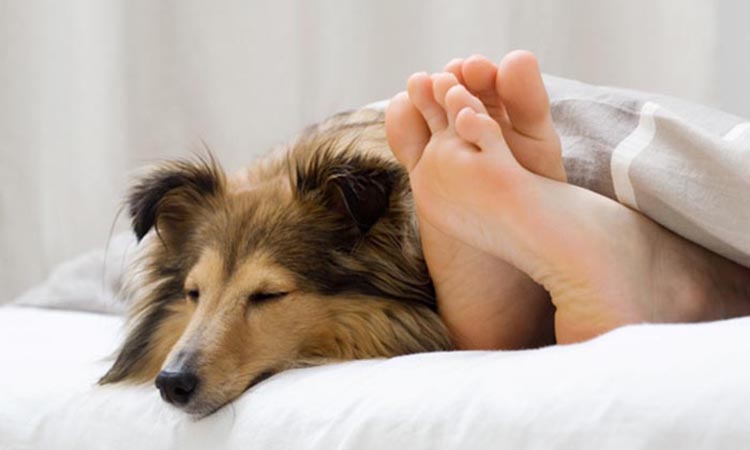
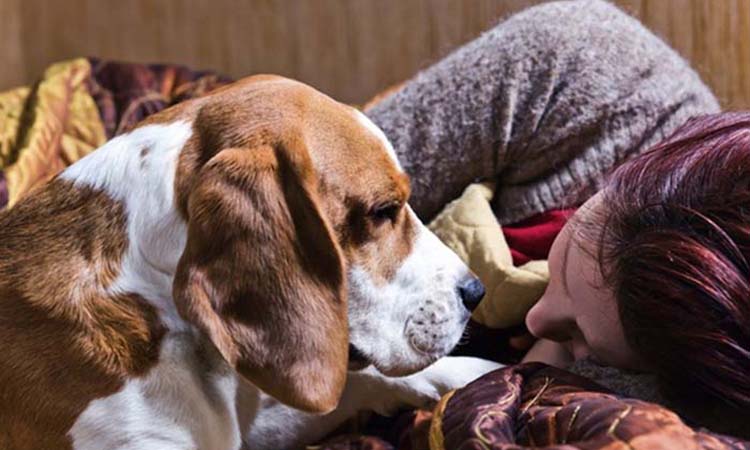
Similar to wild wolve packs, wild dogs curl up together to sleep in the night. Rather than sleeping alone in his designated corner, your dog prefers to snuggle right next to you in your bed. If you catch your dog sneaking onto your bed or falling asleep next to you in your couch, it implies that you are his family.
Smiling
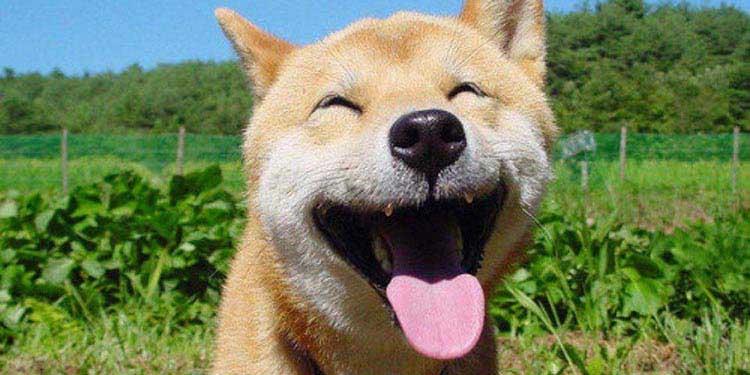
It is no surprise when you see something like a smile on your dog. Dogs do smile too! Research has found that dogs can also show and use facial expressions similar to how humans do. A dog’s smile is another way of showing his love and joy to his owner. Having said that, most of us are guilty of not recognizing our dog’s smile.
Crotch Sniffing
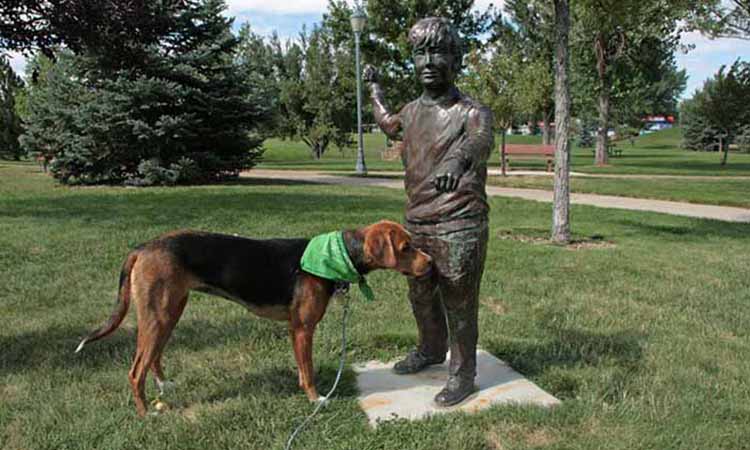
Argh, this is an embarrassing one and how we wished our dogs can quit going around sniffing crotches. But before you start screaming at your dog, try to understand it. This behaviour is in fact a dog’s perculiar way of greeting. More importantly, apart from a hello, it allows the dog to understand and remember you through your scent.
Taking Care of You When You are Sick
Does your dog stay by your bed and watch you the whole time while you are nursing a flu? This is its natural instinct to care for a sick or wounded family member, just as they would in the wild. A dog extends its love and care to its sick or injured owner by quietly and patiently watching over him/her. But make sure you hide any superficial wounds away from your dog! It might actually lick your wound as its form of first aid.
Leaning on You
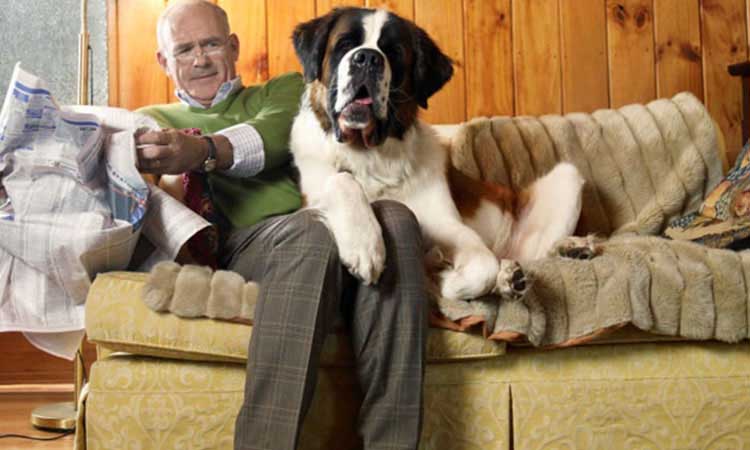
Whether you are sitting or standing, your dog is leaning on you and wouldn’t budge. You can’t move and you can’t get on with your daily routine. While you are wondering what they are up to, your dog has already got what they needed: your attention. Getting your attention and giving you their attention by leaning on you is their way of showing affection. Next time this happens, stop what you are doing and reciprocate with some love.
oooooooo
This turned out to be more of a Sunday Picture Parade but it seemed too special to hold it from you until the weekend.
No, our dogs don’t speak a language that we humans would recognise as such but, nonetheless, our dogs communicate in ways that still are as magical and special as our human poetry.
Speaking of poetry, let me close today’s post with this.
ooOOoo
Wherever you are in the world, with or without a dog in your life, please embrace the power of love.
We’re about to turn over a new leaf on a new year — something I think we’re all pretty excited about — and it’s a good time to sit back, take stock, and think about what we want to do for ourselves, and the world, in 2017.
New year’s resolutions don’t have to be big and fancy, and sometimes they work best when they’re small and manageable, so I rounded up seven totally free ways you can help animals next year, from something you can do weekly (like writing letters) to bigger projects (like fostering animals).
1) Keep an eagle eye on upcoming animal-related legislation.
Photo credit: Anthony
Chances are that there’s some animal-related regulation coming your way in 2017 on the local, state and even federal level. This includes laws and ordinances as well as rules, regulations and executive orders. You can make a big difference by weighing in on these issues — sometimes, surprisingly few members of the public comment!
You can take advantage of resources for animal welfare groups and sites like Care2 to keep track of big upcoming government actions. You may want to call or write to support legislation, to ask that it be more robust, or to oppose it, depending on the contents. For legislation, you need to contact your elected official to explain how you feel and provide a concrete action to take, like “Please cosponsor this bill” or “please vote against this bill.” Rules and regulations are opened to public comment by the agencies making them, allowing you to speak at public meetings or submit written comments.
The Federal Register is a great place to search for upcoming regulations — it’s a little bit intimidating at first, but don’t let that put you off!
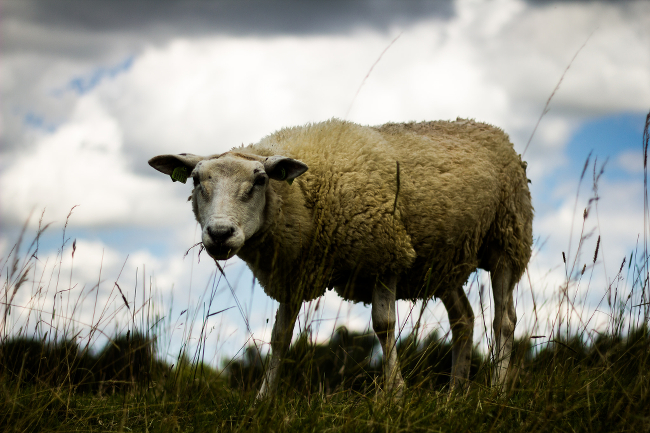
2) Don’t be sheepish — speak up about nonlethal solutions to predators and pests.
Photo credit: Lennart Tange
No matter where you live, there’s probably a battle brewing over feral cats, mountain lions, raccoons, coyotes, skunks, alligators, or someone else from the non-human world who’s getting squeezed by human incursion into its habitat. Historically, many areas have favored a lethal response to animals deemed “pests.” You can change that — and you already are, across the country. When you see animals on the agenda, speak up to request investigation into a nonlethal solution to a problem.
For example, maybe a feral cat colony is causing controversy in the community. You can talk about how responsible colony management should control numbers and limit annoying smells. You could also discuss how research shows that TNR can be more effective at long-term colony management than just trapping and removing cats — in Florida, they found that doing this just allowed other predators to move in, creating an even bigger headache!
Come backed with research and evidence, rather than emotion. You can look to advocacy groups for their data, but also explore scientific papers, and see how other municipalities are dealing with the same problem, because they may have tips to share.
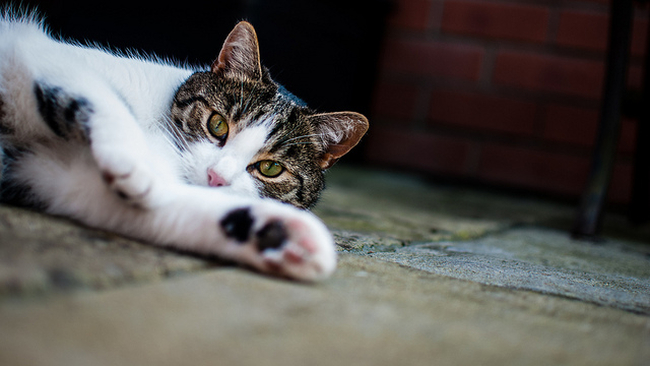
3) Lend a paw at a local animal welfare organizations.
Photo credit: Chris Perriman
Animal welfare groups can always use volunteer help. At the shelter, they don’t just need a hand with cuddling cats, walking dogs, and handling other species. They need all kinds of help, from more boring stuff like cleaning and filing to web design, social media management, legal counseling, accounting, event planning, and much more. Even something as simple as taking your camera (or your photography class) to the shelter once a week to photograph everyone who’s looking for a home can make a huge difference. It turns out that great shelter photos save lives!
Advocacy groups that don’t run shelters or don’t have one in your area also need help. Lots of mundane office stuff is time consuming, and volunteers can make it go more smoothly, whether you’re stuffing envelopes or answering phones. If you have special training or skills, offer those too, especially if you’re willing to get into a long-term relationship with the group. Pro-bono legal services, for example, are incredibly valuable. Your graphic design skills could help them relaunch an impressive, gorgeous website. You get the idea!
4) Don’t duck the issues — teach youth about animal welfare issues.
Photo credit: Danny Chapman
Many kids love animals, and the best time to hit people with humane messages is when they’re young. Some organizations actually offer humane educator training to help people learn about how to communicate with children about animal welfare issues. Humane educators can lead classes and mentor kids in the community, whether they’re taking people on bird walks and teaching them about ecology or working with kids who are learning to ride horses to teach them how to handle their mounts respectfully and kindly.
If you already are an educator, consider working humane topics into your curriculum. If you’re not, look into what might be required to teach classes at a community center, mentor students in programs like 4-H and FFA, lead educational sessions at a local museum (another great volunteer opportunity!), or come into classrooms with presentations. You may need some training and a background check to work with youth, but once you’re squared away, you can establish lasting relationships with teachers and schools to introduce humane coursework to the classroom and beyond.
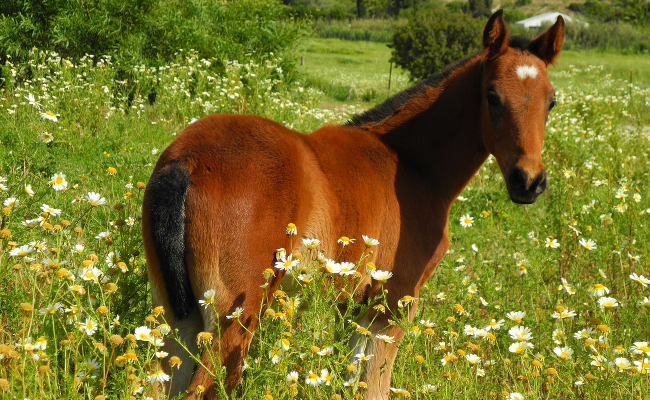
5) You’ve goat mail — or at least, someone will after you write a letter on behalf of animals!
Photo credit: Holly Occhipinti
Once a week — or every two weeks, or once a month — resolve to sit down and write a letter. It doesn’t have to be an epic, and you can establish a template, but pick a specific person to target, and go to town. Maybe you want to write a letter-to-the-editor once a month about an animal issue in your community that you’re concerned about. Perhaps you want to write a letter to a corporation to ask them to stop, or start, a practice related to animals — like dropping animal testing, or introducing tougher humane standards to the supply chain.
Keep your letter concise, polite and actionable. Explain why you’re writing, the basis for your concern, the solution you’re recommending and why. You can appeal to issues like cost efficiency, making your town more attractive for visitors, compassion for animals (that’s why we’re here, after all!), falling in line with industry-wide practices, setting an example for others, or any number of other things. Present a clear case for what you’re arguing so that the person reading your letter is moved to act, and has something to bring to other people while trying to convince them to get involved.
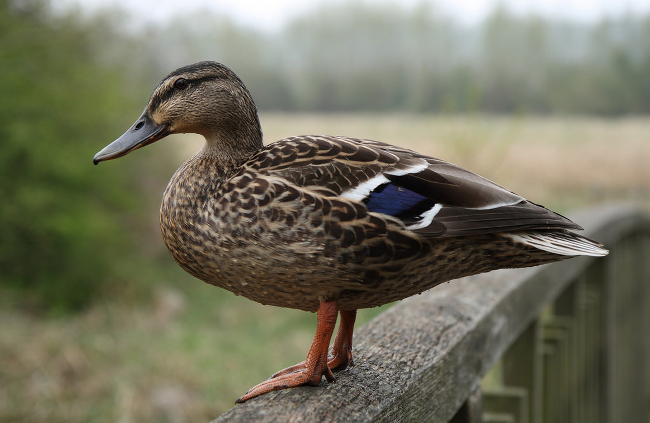
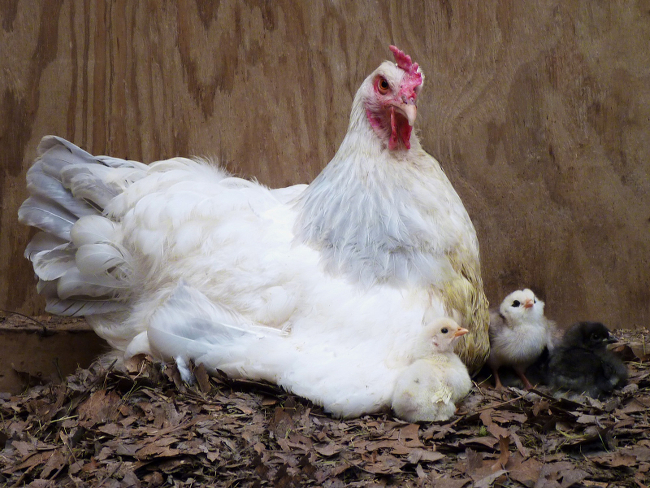
6) Be a mother hen — foster somebody in need.
Photo credit: normanack
If you can’t adopt more animals or don’t have room for a full-time friend in your life, consider fostering. Fostering saves lives, getting animals who can’t handle shelter stress or who need a little extra care to a safe place where they can unwind and grow into themselves. Some shelters have foster programs, and many animal welfare groups do — some run almost entirely on fosters, in fact!
Generally, participants in a foster program are provided with food, medication and veterinary expenses to keep things low-key for you. If you have a spare room, fostering can be a great fit for your life, although watch out for foster fail! (When that kitten you swore you were just fostering is still lying on the living room rug ten years later, you are definitely a victim of foster fail.)
When fostering, be honest about what you can and cannot take on: For example, if you have a barn, you might be able to handle horses and sheep, but not notoriously mischievous and curious goats. You might not be able to take a kitten who needs constant feeding, or a dog that has aggression issues.
That said, if you can stretch your comfort zone, do. Some animals need a little extra care because they’ve had a hard life. That makes them vulnerable to euthanasia, and a foster can make all the difference. Things like giving animals fluids or medications, managing diapers, or handling other vet stuff might sound scary, but it’s pretty easy to get the hang of it.
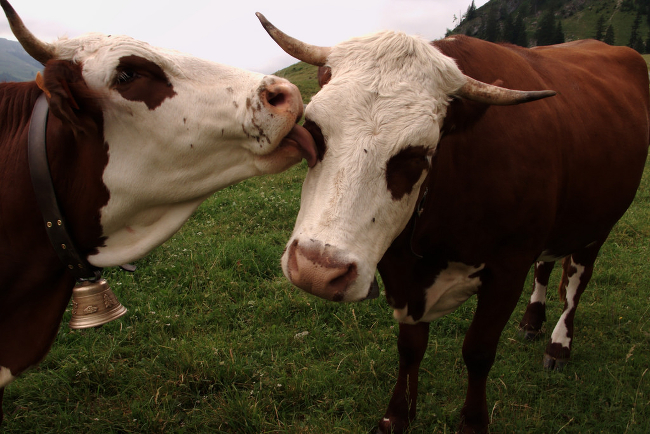
7) Don’t have a cow — on your plate or anywhere else.
Photo credit: Nicolas Vigier
We saved the easiest for last, because chances are that you’re already well on your way with this one. When it comes to what you eat, consider cutting animal products — or at least meat — out of your life. You’ll save a ton of suffering, and also, a ton of money, if you’re trying to cut back in 2017.
If you can’t cut animal products out entirely, consider moderating: Meatless Mondays are popular, for example! Something else that really works for me is a soup exchange — a group of us make huge batches of vegan soup and share them out once a month, so there’s always a go-to vegan meal hanging out in my fridge or freezer when I need it!
While you’re at it, think about what you wear and use, too. Leather is an obvious source of animal suffering, but some people also like to avoid fibers like wool and cashmere (cashmere also comes with a big environmental price tag). You’d also be surprised by where animal products sneak in, from bodycare products to that goop you waterproof your shoes with. (No really. Go look.)
And, of course, cutting animal testing out of your life is valuable too. Growing numbers of cosmetics are produced without the use of animal testing, though it’s always a good idea to independently verify to see if a company is skirting labeling conventions. For example, some companies say “made without animal testing” because they don’t test ingredients on animals, but third party contractors do. Ugh!
If you take medication, you’re caught in the animal testing trap — but it’s worth writing the manufacturer, as well as the FDA, which governs drug testing, to push for alternatives to animal testing so that you have cruelty free options for your health care needs.
You can also make your preference for cruelty free medical supplies clear to your health care providers as well, as they may be able to recommend alternatives if they’re aware that this is a concern for you. (For example, some sutures are made from animal products, which is weird and creepy, and pig valves are used in some valve replacement surgeries. Gross, right?)
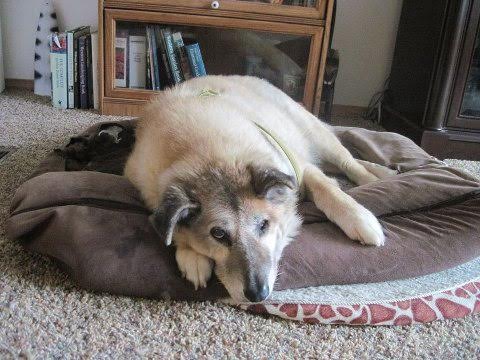 It was finally time to say the last goodbye to our old Buddy. Life had become an intolerable burden. His spirit wanted to keep going, but his failing body could not keep up. We ended his suffering and gently nudged him into that deep and eternal sleep last Wednesday.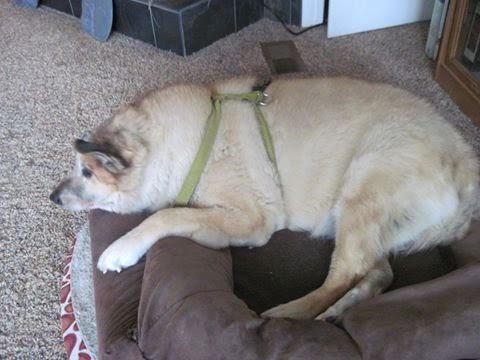











 Learning from Dogs