Light pillars over Whitefish Bay on the shore of Lake Superior as captured by nocturnal photographer Vincent Brady. (Photo: Vincent Brady)
At first glance, the mesmerizing light display that occurred on Oct. 16 over Whitefish Bay, Michigan, had all the hallmarks of a visual effect from a science-fiction film. Instead of “first contact,” however, this beautiful shimmer is actually a fairly common optical phenomenon called a light pillar.
Light pillars form when sources of light from the ground, sun or even the moon interact with horizontal concentrations of ice crystals in the atmosphere. When viewed from a distance, these crystals align in such a way as to create the optical illusion of a dazzling pillar of light.
“This is a shot north of Paradise, MI looking east over Whitefish Bay,” he wrote. “The red lights are around the Canadian island Ile Parisienne. I’m not entirely sure of the artificial light source of the pillars.”
These next couple of weeks are going to be challenging!
So ….. I am returning to a post I published a year ago.
Sabrina’s Loyalty
Lisa Mae DeMasi offers you all a beautiful guest post.
ooOOoo
How this Handler and Service Dog Nurture One Another
by Lisa Mae DeMasi
At two years old, Lady’s ribs protruded from her coat and her belly was swollen with milk.
Like the thirteen other Labs that had arrived at a rest stop in Union, CT on the straight 12½-hour drive from Muncie, IN, she was presented to us on a crisp autumn day amid the chaos of respective adopters.
My husband Dennis had never experienced the warmth and companionship of having a dog and well, I surprised him with Lady, who we quickly renamed to Sabrina. The very afternoon we picked her up, we raced to the park, wanting her to feel the joy of freedom and play. My husband’s face lit up and while I was thrilled at the opportunity to befriend and care for Sabrina; it meant closing the 20-year gap since our beloved German Shepard from my childhood passed away.
Until laying my eyes on Sabrina’s profile, my heart couldn’t entertain loving another dog.
And what canine isn’t after the same love?
In Sabrina’s case, she couldn’t know of the family members that awaited to embrace her presence. Within days of the initial hair-raising excitement, the cat sought out occasions to groom her ears. Our pet rat was free to waddle the kitchen floor un-bothered, and the pair of bonded bunnies in want of company stretched out beside her on the living room floor.
Dog, cat, rat, rabbit?
You bet.
And Dennis and me?
Like kids again.
Sabrina settled into the folds of our lives, well-nourished and exercised in Boston’s epic snowfall in the winter of 2009-2010, taking careful watch over all of us. The fear expressed in her eyes pre-adoption disappeared.
Eight years later, she watches over me in particular. Thirty years ago, I was struck and thrown from the passenger side of a car until my abdomen collided with the steering wheel—blunt force that called for iterative repair to my digestive system and caused permanent damage to the nerves that signal my bladder is full.
Today when I’m busy working away, Sabrina will alert me to get up every couple of hours to make a trip to the restroom by gently placing her head in my lap.
When I suffer acute intestinal cramping, Crohns-like symptoms, she’ll sit at my side and lean her body against mine. Her calm and steady source of nurturing, helps me to relax and mitigates the cramps.
In 2008, the Department of Justice amended the Americans with Disabilities Act (ADA). This was amended to include digestive, bowel and bladder impairments that limit major life activities as the disabled, calling for employers to make reasonable accommodations and if the individual elects, to allow task-oriented service animals [dog or miniature horse] to accompany them on the job.
Sabrina, serving in the capacity of a sensory/medical assist – alerting me to get up and take care of myself – qualifies.
The HR Director, Debra Susler of Reputation Institute in Cambridge, MA this past April would not allow Sabrina to accompany me on-the-job. I sent her an elaborate email explaining my condition and Sabrina’s certification. She did not reply to me but to my supervisor.
She said “no”.
My response?
I walked out of the place
Sabrina: rescue dog to devoted helper dog.
Respectively, Sabrina’s competencies and understanding of language cease to astound us and her behavior on-the-job at Dell EMC is so well-mannered, coworkers never run out of compliments.
And bystanders in public? The grocery store, pharmacy, gym, dentist, doctor?
Gazes from cell phones are broken, conversations fall short.
Then, come the smiles. A question. Praises. The feel-good moment.
Sabrina brings people together.
I recently read a distressing post from a woman who said every time she looks into a service dog’s eyes, she sees sadness. Even Ingrid Newkirk, CEO and Co-Founder of PETA, has told me, “the life of a typical service dog is a terrible one.”
It’s true. Any canine enslaved to servitude is doomed a dog’s life unlived.
Service animals are working animals, not pets.
The ADA confirms it.
But that’s not the relationship Sabrina and I share [and I understand it can’t be the same with other handlers and service dogs]. In addition to being my devoted helper, Sabrina teaches me to exist in the moment — just like she does. To enjoy the sight of the sun shimmering through the trees, the call of the birds, the fragrance of wildflowers, the feel of the soft soil I tread a few yards behind her when we’re on our hikes.
What more could a dog do for a girl?
ooOOoo
There is something rather special about Lisa’s guest post; special in an introspective way!
That will be better appreciated if you go across to Lisa’s blog site at Nurture Is My Nature.
In particular when you read, via her ‘About’ link, what Lisa offers about herself. Republished here in full.
ooOOoo
As time goes by and you’re getting older and stuff like that—getting older sucks. You know, I hear all this crap about, ‘Oh, you can age with dignity.’ Really? —Mickey Rourke
Lisa’s creative work has recently placed second in Fiftiness’s 2017 Writing Contest (Why I Love Bike Commuting in Boston) and been featured in the anthologies, Unmasked, Women Write About Sex & Intimacy After Fifty (9/17, print) and The Best of Vine Leaves Literary Journal (11/17, print). Her essays have been published in the lit journals and several other media outlets. She considers Massachusetts her home, but has lived in Connecticut, Vermont, New York State and two other planets called Wyoming and Arizona. She earned a B.A. from Regis College and an MBA from Babson College, and holds a Master certificate in Reiki.
Lisa is seeking a development editor [that gets her] to work on her collection of essays and her memoir.
I shall cut my waffling and just say that I saw this item on The Smithsonian ‘Smart News’ section last week and just knew it should be shared with you!
ooOOoo
Who’s a Good Archaeologist? Dog Digs Up Trove of Bronze Age Relics
While on a walk outside a small Czech village, Monty the dog and his owner found nearly two dozen 3,000-year-old artifacts
Monty, the dog that found the Bronze Age relics, unearthed 13 sickles, two spear points, three axes and several bracelets. (Hradec Králové Region)
Some archaeologists carry tools and painstakingly chip away at historic sites. Others might have fluffy bodies, keen senses of smell and an affinity for digging stuff up.
As Tom McEnchroe reports for Radio Praha, a very good dog named Monty recently unearthed a rare trove of Bronze Age artifacts near the Czech village of Kostelecké Horky. Monty was walking with his human, identified as “Mr. Frankota,” in a field when he began pawing frenetically at the ground. Soon, thanks to Monty’s hard work, metallic objects began to emerge in the soil.
The cache of relics includes 13 sickles, two spear points, three axes and several bracelets. The objects have been dated to the Urnfield period around 3,000 years ago. This late European Bronze Age culture is marked by the transition from inhumation burials to cremations; the remains of the dead were interred in urns, giving the era its name. According to Encyclopaedia Britannica, Urnfield culture first appeared in east-central Europe and northern Italy, but eventually spread “to Ukraine, Sicily, Scandinavia, and across France to the Iberian peninsula.”
It is rare to find a cluster of intact Urnfield objects, according to a press release. “The culture that lived here at the time normally just buried fragments, often melted as well,” Martina Beková, an archaeologist at the Museum and Gallery of Orlické who studied the artifacts after they were discovered by Monty, tells McEnchroe. So she suspects that the relics were tied to a ritual—“most likely a sacrifice of some sorts,” Beková says.
Additional evidence could help pin down the function of the objects, and according to Michelle Starr of Science Alert, local archaeologists have been searching the area in the hopes of finding more relics. They haven’t uncovered anything yet, but Sylvie Velčovská, a spokeswoman for the region, tells McEnchroe that there have been, “considerable changes to the surrounding terrain over the centuries, so it is possible that the deeper layers are still hiding some secrets.”
The newly uncovered objects will be on display at the Museum and Gallery of Orlické Mountains in the town of Rychnov until October 21, after which point they will undergo conservation and be moved to a permanent exhibition in the village of Kostelec.
Frankota, Monty’s owner, was awarded 7860 Czech Koruna (around $360) for his role in alerting archaeologists to the ancient treasures. One can only hope that Monty was given many treats and pets for his superb fieldwork
Brigit Katz is a freelance writer based in Toronto. Her work has appeared in a number of publications, including NYmag.com, Flavorwire and Tina Brown Media’s Women in the World.
The fifth and final selection of these wonderful photographs and the story behind each one.
ooOOoo
Third Place, I Love Dogs Because…
‘Hide and Seek’ featuring Fenrir, a Border Collie. (Photo: Kirsten van Ravenhorst)
“I am an 18 year old girl from the Netherlands who loves agility, traveling and photography. The dog in the photo is Fenrir, my youngest dog. He is the perfect model, and the reason why I picked up the camera again,” said Kirsten van Ravenhorst. “The camera that I normally use is the Nikon D500, but it needed to be repaired so I used my dad’s D5200 for this photo. This photo was taken in the forest near my house. I went there with my Border Collie Lad Fenrir to test my dad’s new camera.”
Third Place, Man’s Best Friend
‘Home’ featuring Ruby Roo, a Golden Retriever. (Photo: Cheryl Murphy)
“This picture of Ruby was taken whilst she was resting with my friend Chris after playing with her daughter Nellie. My greatest passion is capturing dogs playing and having fun in their natural environment, the camera is a great way of recording what the naked eye would miss,” said Cheryl Murphy.
Third Place, Oldies
‘Resting’ featuring Bentley, a German Shorthaired Pointer. (Photo: Philip Wright)
“This particular photo was taken during an afternoon walk through a local woodland. The ferns were looking wonderful and provided a perfect natural avenue to draw the viewers’ eye in to my subject,” said Philip Wright. “I asked Bentley to lay down and he did so with the most beautiful, almost grave expression. They say that eyes are the windows to the soul, and looking at Bentley here I’d be inclined to agree.”
Third Place, Portrait
‘A Winters Storm’ featuring Hugo, a Pomeranian. (Photo: Michael Sweeney)
“‘I photographed my dog at the window here in my tenement flat in Glasgow using available natural light during a winter’s storm of hailstones, wind and rain,” said Michael Sweeney.
Third Place, Puppies
‘Let’s call it Roly Poly Puppy’ featuring Snickers, a cross breed puppy. (Photo: Robyn Pope)
“In this image, I knew the moment Snickers began rolling around on the blanket that I had to embody his zest for life in a photo that would help him find the perfect playful home. I truly love working with dogs of all backgrounds to capture extraordinary photos worthy of even the most sophisticated pet parents and discerning commercial clientele,” said Robyn Pope. “At home, we have six gentle giants of our own who serve as ambassadors on our 7-acre pet photography property and the ultimate creative muses.”
Third Place, Rescue Dogs and Dog Charities
‘Over the sea of fog’ featuring Dania, a cross breed Portuguese Podengo. (Photo: Christina Roemmelt)
“My name is Christina and I was born in Munich. I moved to a small village next to Innsbruck in Austria together with my husband 11 years ago. After having settled down, we adopted two rescue dogs from Spain, thrown away like garbage, found in a dustbin. It wasn’t possible to literally touch Dania for the first six month. Now we spend all the time together. The dogs accompany us to work and in our leisure time we explore the nature together,” said Christina Roemmelt. “My wish was to fix the special mood of these moments, staying outside, enjoying nature together and acting as a team. For this reason, inspired by my husband, who is a landscape photographer, I got in touch with photography three years ago.”
“On the picture you can see one of these very special moments. We hiked on Keipen on Senja [Norway] last year and stood speechless on top when the nature was bathed in golden light by the midnight sun. Everything was calm and peaceful. The dogs and us were completely on our own. This is one of my absolutely all-time favourite pictures from our trips.”
Third Place, Young Pup Photographer
‘Monty’ featuring Monty, a German Shorthaired Pointer. (Photo: Maisie Mitford)
“I live in the North East of England with my Mum, Dad, Sister Millie and two dogs; Monty & Chester. I have always loved animals and I am constantly entertaining my dogs. I have my own lightweight camera which I carry with me most places and always photographing the dogs,” said Maisie Mitford. “Mum had given me her camera (which is really heavy) and set me a challenge to photograph either Monty or Chester for this competition, Chester wasn’t interested but Monty was willing and keen to please — lots of treats were involved!”
The Kennel Club in the U.K. was founded in 1873 and is the oldest recognized kennel club in the world. The organization is “dedicated to protecting and promoting the health and welfare of all dogs. Besides being a voluntary register for pedigree dogs and crossbreed dogs, we offer dog owners and those working with dogs an unparalleled source of education, experience and advice on puppy buying, dog health, dog training and dog breeding.”
ooOOoo
What an incredibly wonderful set of photographs and, in addition, the wonderful reflections of the photographers themselves.
If you missed the start of these photos then go here.
I shall miss these beautiful photographs and the background stories!
The fourth selection of these wonderful photographs and the story behind each one.
ooOOoo
Second Place, Portrait
‘Waiting Beauty’ featuring Thalia, a Nova Scotia Duck Tolling Retriever. (Photo: Katarzyna Siminiak)
“This photo was taken during session around Old Market Square in Poznań. I’m still amazed how Thalia was calm and focus despite the city noise,” said Katarzyna Siminiak.
Second Place, Puppies
‘Sticking Together’ featuring Beagle mix puppies. (Photo: Charlie Nunn)
“Since early last year, my partner Raymond Janis and I have had the honour of supporting the Vanderpump Dogs Foundation in Los Angeles by photographing their adoptable dogs. In July 2017, we met these adorable beagle mix puppies,” said Charlie Nunn. “As Raymond tried to wrangle them, something magical happened and I was able to capture a perfect moment of a puppy family sticking together.”
Second Place, Rescue Dogs and Dog Charities
‘Happy Girl Rescued’ featuring Magda, a rescue dog cross breed (Hungarian Vizsla and Labrador Retriever). (Photo: Leslie Plesser)
“This particular image is of my own rescue dog, Magda. She was a bit hesitant and shy when my husband and I came home with our baby, but when the baby went off to nursery school, she would curl up on his rocking chair and roll her fur all over, settling in for a nice nap,” said Leslie Plesser.
Second Place, Young Pup Photographer
‘Dinner?’ featuring Dallas, a Whippet. (Photo: Sienna Millward)
“My name is Sienna Wemyss, I’m 10 years old and I’m from England, UK. When I grow up, I want to be a fashion photographer and designer. I have loved dogs since I first encountered one! There are so many different kinds of dogs and they are all so unique,” said Wemyss. “My dream came true in January this year when I became the proud owner of Dallas, a pedigree Whippet puppy. I was overjoyed!”
“I was relaxing on the sofa one day when Dallas crawled beside me. I put my arms out, expecting him to come and cuddle me. Instead, he gazed at the kitchen dreamily! If he could speak then, I bet he would have said, ‘Dinner?’ He looked very curious, so I grabbed my mum’s phone and captured the moment.”
Third Place, Assistance Dogs and Dog Charities
‘A Veterans Best Friend’ featuring Delta, a White Swiss Shepherd. (Photo: Craig Turner-Bullock)
“I am an ambassador for the Kotuku Foundation for Assistance Animals Aotearoa, who source, train and place dogs with people who have any diagnosed condition that dogs are known to be capable of assisting with. This includes diabetes, head injuries, depression and PTSI and many more,” said Craig Turner-Bullock. “Dion is a veteran who fought, and was injured, at the battle of Baghak in 2012. He experienced PTSI and says that ever since Delta came into his life she has made a huge difference. Dogs assisting veterans are now common around the world, but Delta is the first of her kind here in New Zealand.”
Third Place, Dogs at Play
‘Snowy Shenanigans’ featuring Daffy, Taz, and Wile E., Nova Scotia Duck Tolling Retrievers. (Photo: Sarah Beeson)
“We had just moved from one of the snowiest cities (Erie, PA) to the middle of nowhere USA (yes, I love you dear Indiana). I didn’t expect much snow, but come on! It was nearly mid-February and not a flake! My boys were used to lots of snow having lived in Erie but Daffy hadn’t a clue,” said Sarah Beeson. “And then, it happened: Old man winter arrived. Shame on him, while I was at work, no less! By the time 5 pm rolled around, I was in our backyard – Frisbee soaring and camera in hand. Meet Daffy, Taz, and Wile E. We LOVE frisbee!”
Third Place, Dogs at Work
‘I’ve got your back’ featuring Nyx, a German Shepherd Dog. (Photo: Ian Squire)
“For me, the title sums up the image perfectly from both sides. This is a young trainee Police Dog undergoing some initial training. Taken on a miserable, damp day, it shows elements of the bond, trust and relationship that is vital for the partnership between Police Dog and handler,” said Ian Squire.
ooOOoo
Just one more Sunday’s worth to come. Don’t know about you but I shall miss these. They are going to be a hard act to follow!
Back in April, Mother Nature Networkcarried a wonderful item about the amazing fractals that can be found in nature.
Nothing to do with dogs but all to do with loving and caring for our planet!
I am not going to republish the full article with all the wonderful photographs so if the following piques your curiosity then go here to read the full piece.
ooOOoo
14 amazing fractals found in nature
Take a tour through the magical world of natural fractals and discover the joy of simple complexity.
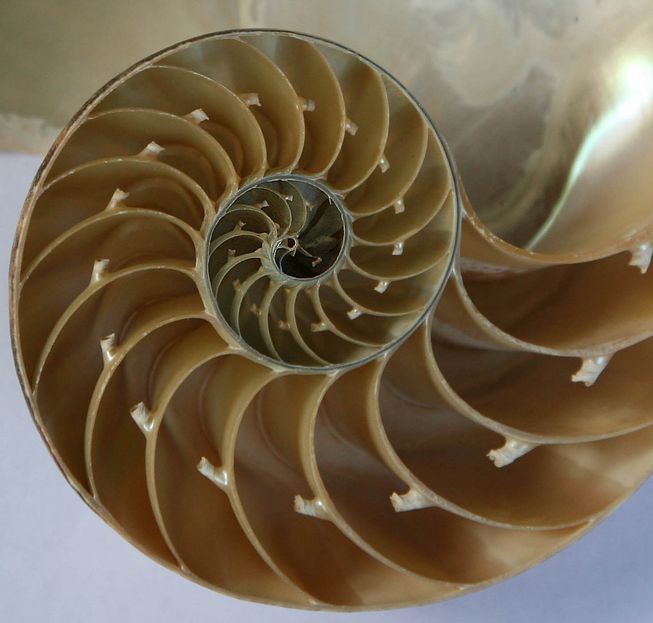
A chambered nautilus shell is an example of a fractal found in nature. (Photo: Jitze Couperus/flickr)
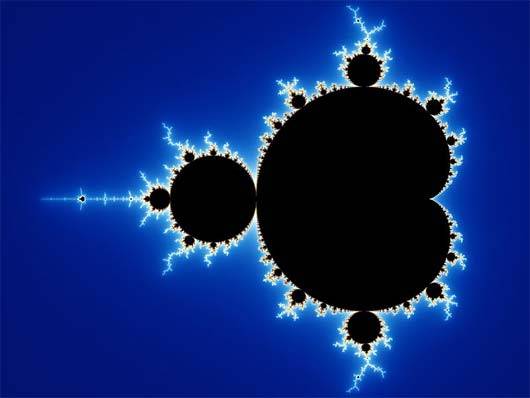
When you think of fractals, you might think of Grateful Dead posters and T-shirts, all pulsating with rainbow colors and swirling similarity. Fractals, first named by mathematician Benoit Mandelbrot in 1975, are special mathematical sets of numbers that display similarity through the full range of scale — i.e., they look the same no matter how big or how small they are. Another characteristic of fractals is that they exhibit great complexity driven by simplicity — some of the most complicated and beautiful fractals can be created with an equation populated with just a handful of terms. (More on that later.)
(Photo: Wikimedia Commons)
One of the things that attracted me to fractals is their ubiquity in nature. The laws that govern the creation of fractals seem to be found throughout the natural world. Pineapples grow according to fractal laws and ice crystals form in fractal shapes, the same ones that show up in river deltas and the veins of your body. It’s often been said that Mother Nature is a hell of a good designer, and fractals can be thought of as the design principles she follows when putting things together. Fractals are hyper-efficient and allow plants to maximize their exposure to sunlight and cardiovascular systems to most efficiently transport oxygen to all parts of the body. Fractals are beautiful wherever they pop up, so there’s plenty of examples to share.
In addition, Dr. Lee said to always THINK BIG! Big in voice, big in attitude, big in stature.
Finally, let me share with you what was posted on the Visible Procrastinations blog back in 2009. Reposted with the author’s permission.
Change.
Change is unavoidable for everyone one of us. Some changes are certainly wonderfully positive ones. Others not quite so. But the thing about change is that whatever the reason in one’s life for having to experience change it has a disruptive effect.
Today’s post leans heavily on that Visible Procrastinations (VP) post but the main theme is fully endorsed by yours truly!
Some notes from My Change Journey: This workshop is designed to help you understand your emotional and psychological needs during times of change and strategies you can use to take control of your own change journey. It also focuses on creating opportunities and seeing possibilities in the new world of work.
change – an event that occurs when something passes from one state or phase to another;
transition – the act of passing from one state or place to the next
Seeing the Big Picture
Many times we do not always see the bigger picture.
There are two examples of that; the first is this rather delightful 5-minute video that is just a bit of fun to watch. The second comes along shortly.
Experiencing Transitions
When change is implemented at any level in an organisation or personally, people typically respond by moving through a series of phases. People will spend different times in each phase. This is a crucial thing to understand and is at the heart of why change is always disruptive and frequently unsettling.
Take a few moments to reflect on the next item; this three-phase framework.
William Bridges (1995) Bridges’ three-phase transition framework: The first phase, the Ending phase, is about letting go of an old identity, an old reality or an old strategy. The Neutral Zone is akin to crossing the wilderness between the old way and the new. The final phase is making a new beginning and functioning effectively in a new way.
I am going to reinforce this message because it underpins everything to do with us understanding the business of change. Especially when we have to deal with unsettling events!
Ending – Letting go of what has been.
Neutral Zone or The Bridge – yes, it does feel like a ‘wilderness’ in some circumstances. Give it time!
Starting – Embracing the new way and making it work really well for you.
The key is to allow each phase plenty of time to take effect; frequently much longer than one senses!
The Process of Transition
John Fisher’s model of personal change – The Transition Curve – is an excellent analysis of how individuals deal with personal change.
“You should only worry about things that are within your sphere of influence.”
This is such a key message. So take a long hard look at the things that make you anxious or worry you. Then clearly identify those things over which you have no or very little control. Then walk away from them!
There’s a great book: The Seven Habits of Highly Effective People, from which is taken:
You should only worry about things in your “sphere of influence.” If you have no control over certain aspects of your life, why bother worrying about them?
Mental Models: our way of seeing the world
(NB. This includes the second example of seeing the bigger picture)
Mental models are usually tacit, existing below the level of awareness. Another way of thinking about them is as a paradigm. This is a big topic and I am going to return to it by way of a separate post, probably one day next week.
But this second example of not seeing the bigger picture is also stirring the deeper waters of one particular personal paradigm.
Take 1000
add 40 to it
Now add another 1000
Now add 30
Add another 1000
Now add 20
Now add another 1000
Now add 10
What is the total? Did you get 5000?The correct answer is actually 4100.
P.S. The number of times I did this, adding it up in my head, and finding it came to 5000. Then I did it on a calculator and it came to 4100. Talk about the eyes looking but not seeing!!
But there’s an important message. If you, as me and Jeannie did first time around, made it 5000 then you are demonstrating that what your eyes see, interpreted by your brain, isn’t necessarily correct.
So if it’s important: Give it a coating or two of thought!
Ethical work and life learning (Free online education for ethical work, business, career and life learning; training materials for entrepreneurs, organizations, seflf-development, business management, sales, marketing, project management, communications, leadership, time management, team building and motivation) www.businessballs.com

 At two years old, Lady’s ribs protruded from her coat and her belly was swollen with milk.
 In Sabrina’s case, she couldn’t know of the family members that awaited to embrace her presence. Within days of the initial hair-raising excitement, the cat sought out occasions to groom her ears. Our pet rat was free to waddle the kitchen floor un-bothered, and the pair of bonded bunnies in want of company stretched out beside her on the living room floor.
 Eight years later, she watches over me in particular. Thirty years ago, I was struck and thrown from the passenger side of a car until my abdomen collided with the steering wheel—blunt force that called for iterative repair to my digestive system and caused permanent damage to the nerves that signal my bladder is full.
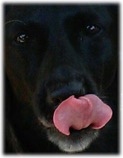 calling for employers to make reasonable accommodations and if the individual elects, to allow task-oriented service animals [dog or miniature horse] to accompany them on the job.
 Sabrina brings people together.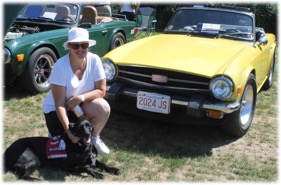
















 William Bridges (1995) Bridges’ three-phase transition framework: The first phase, the Ending phase, is about letting go of an old identity, an old reality or an old strategy. The Neutral Zone is akin to crossing the wilderness between the old way and the new. The final phase is making a new beginning and functioning effectively in a new way.



 Learning from Dogs