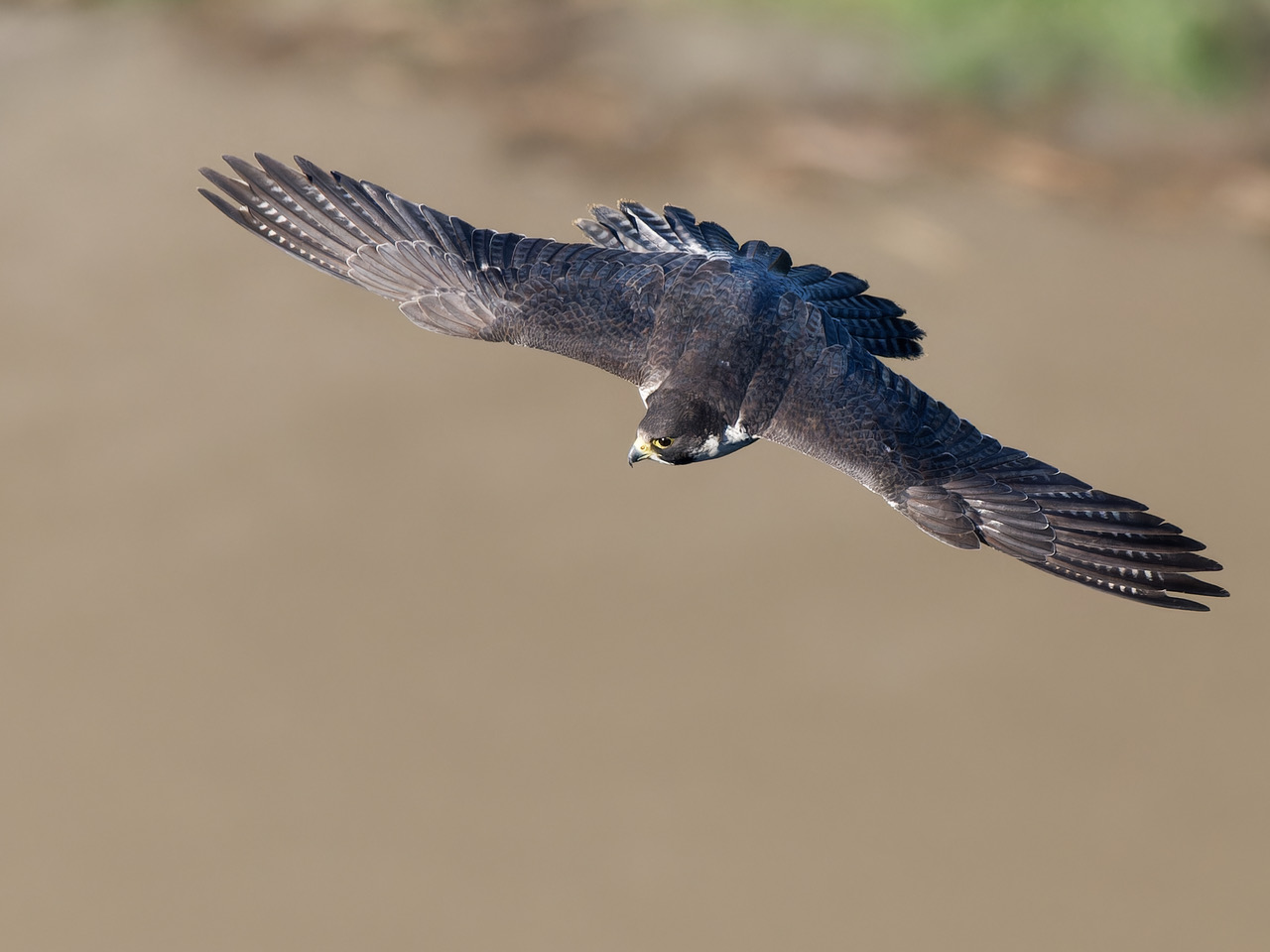
Back to birds, this time the Peregrin Falcon, courtesy of Alex!

oooo
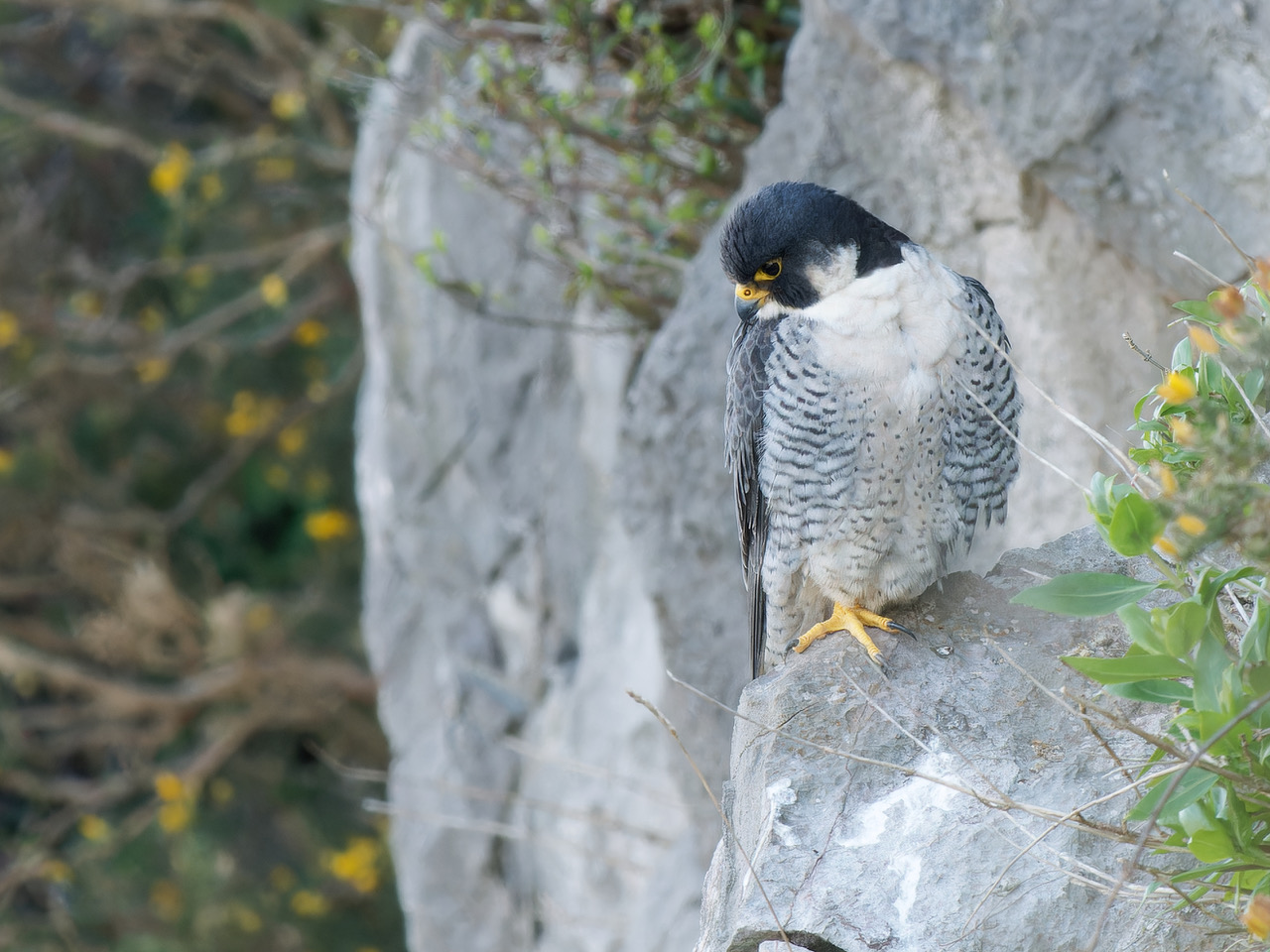
oooo
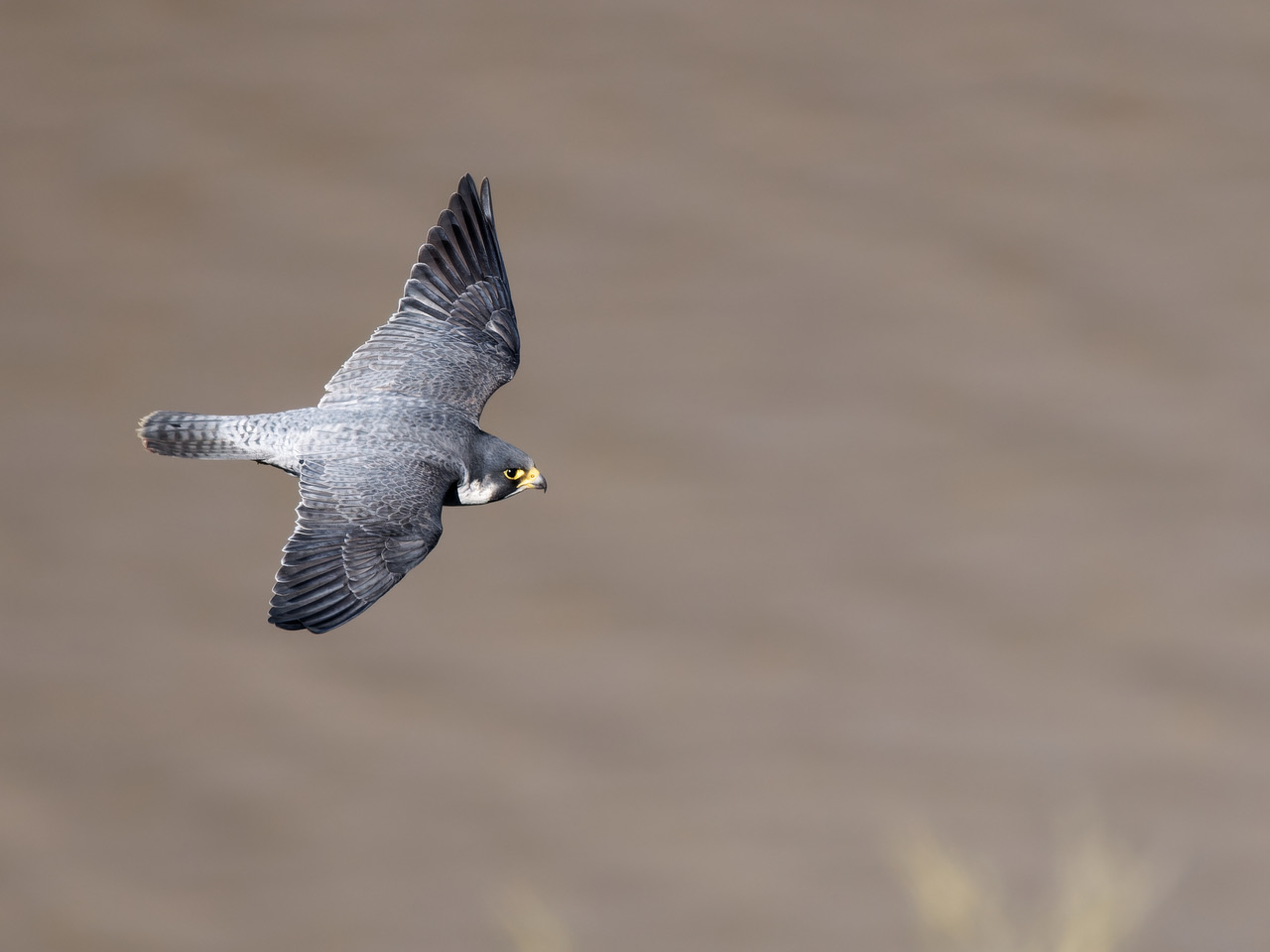
oooo
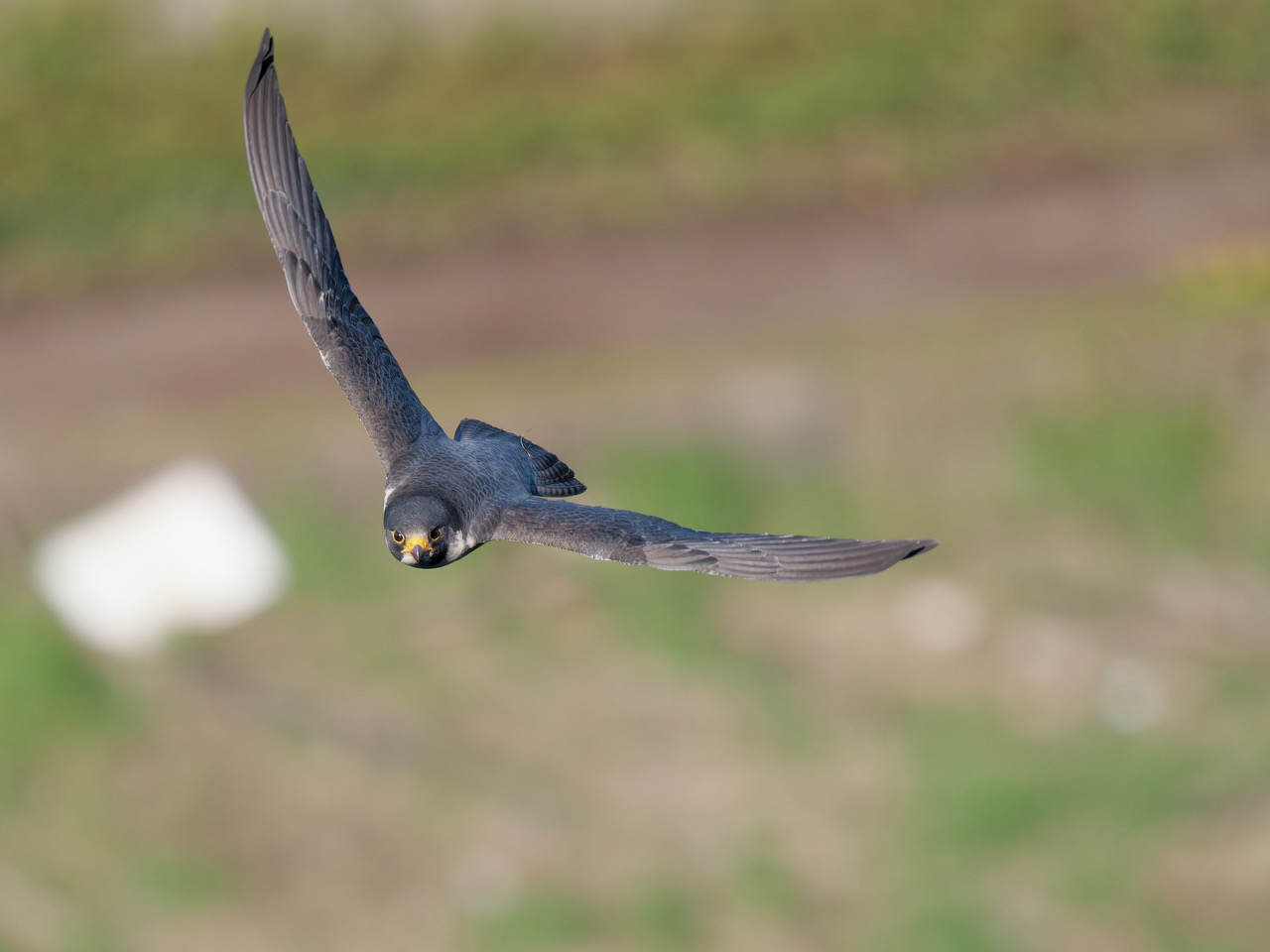
oooo
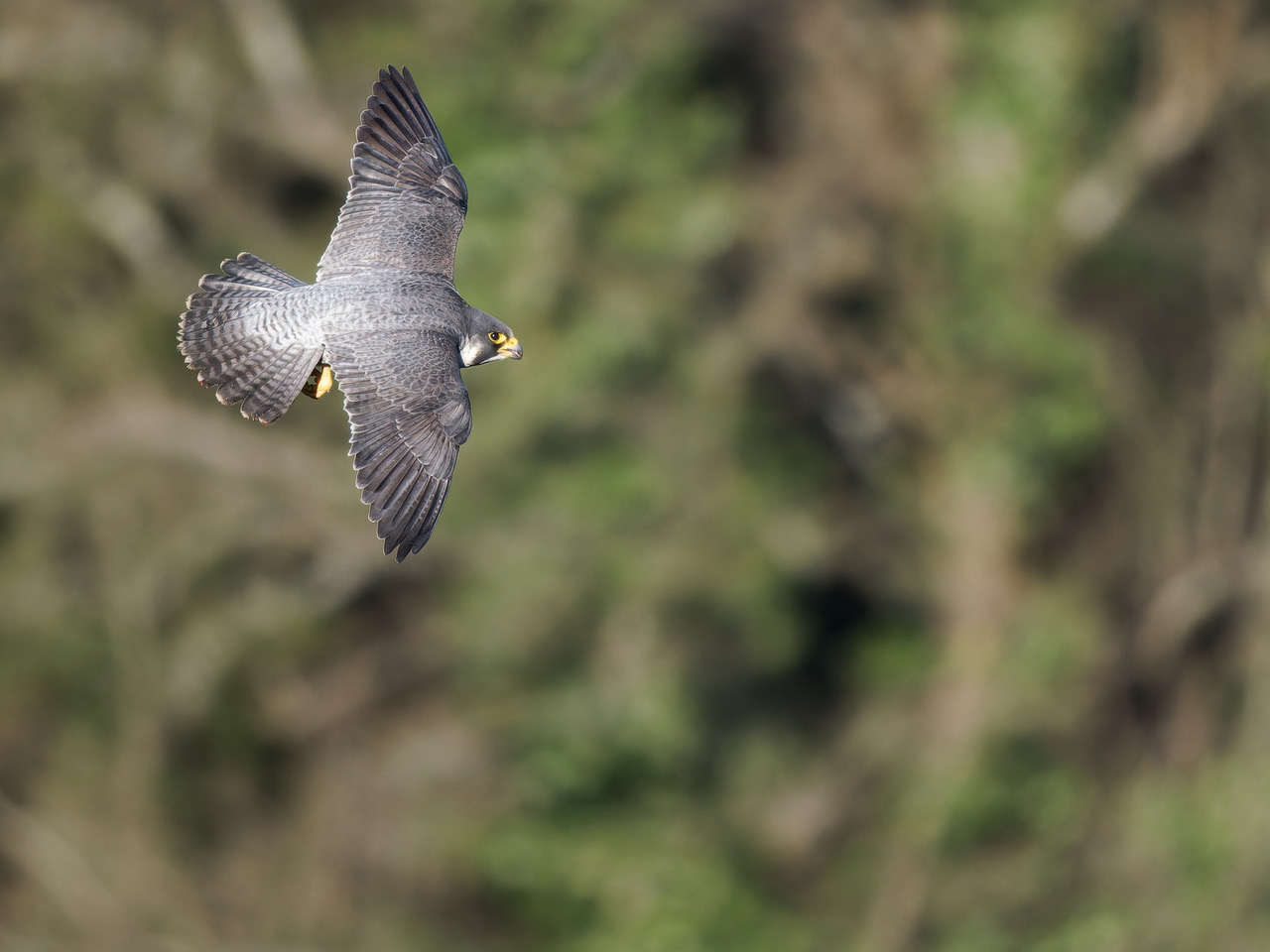
oooo
oooo
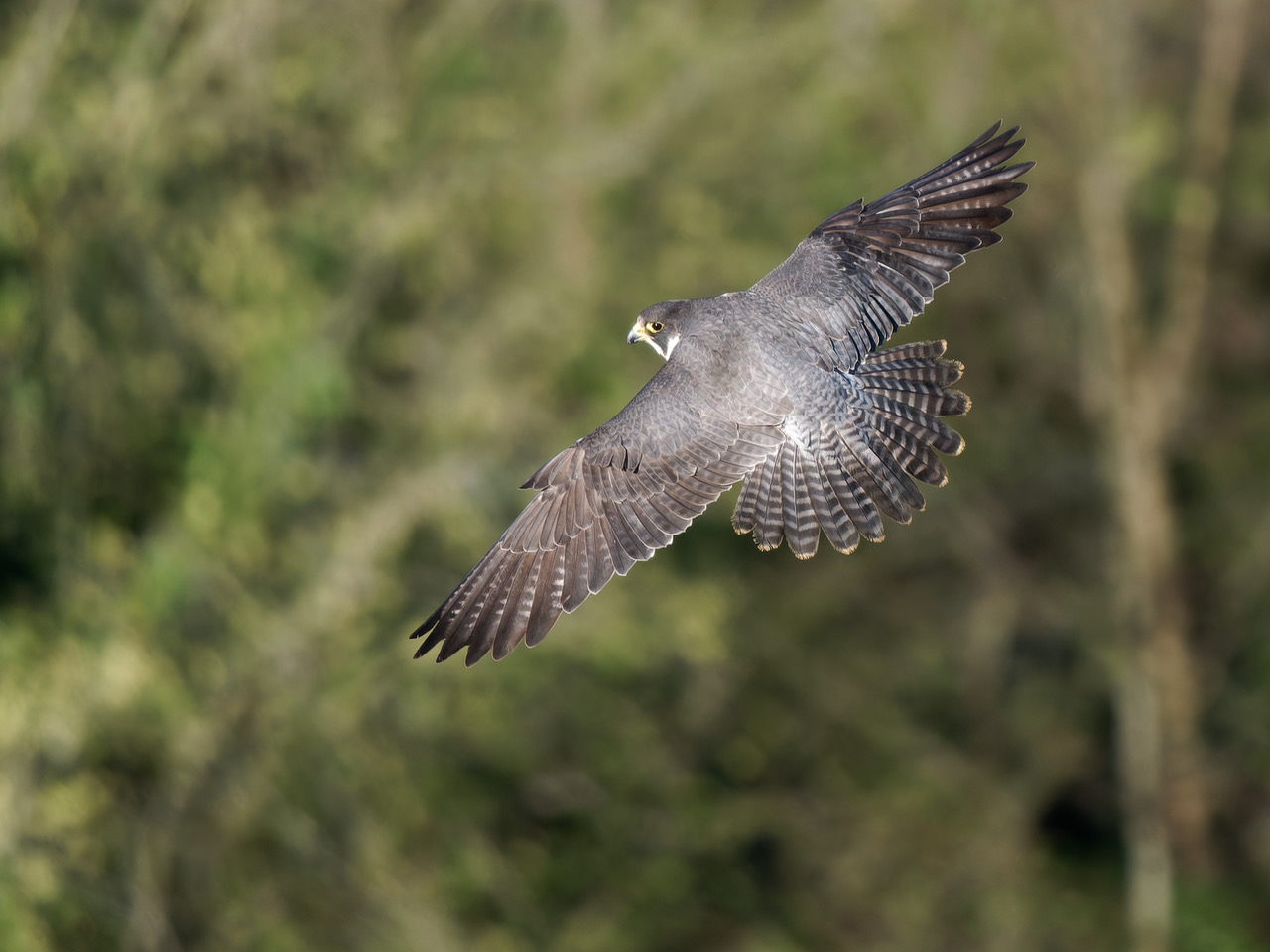
They are beautiful photographs of these incredible birds!
Dogs are animals of integrity. We have much to learn from them.
Category: Art
Back to birds, this time the Peregrin Falcon, courtesy of Alex!
oooo
oooo
oooo
oooo
oooo
oooo
They are beautiful photographs of these incredible birds!
Introducing a guest post from Gloria Peters.
Although this blog is 99% about dogs that doesn’t preclude a guest post; one that is really charming.
ooOOoo
Fun DIY Toys to Keep Your Cat Entertained
Keep your cat entertained with these easy DIY toys, including puzzle toys and toilet paper roll toys. Challenge your cat’s mind and provide hours of fun with these ideas
Fun DIY Toys to Keep Your Cat Entertained
Cats are known for being playful and curious, so it’s important to give them things to keep them occupied and their minds working. But store-bought toys can be expensive, and your cat may not always be interested in them.
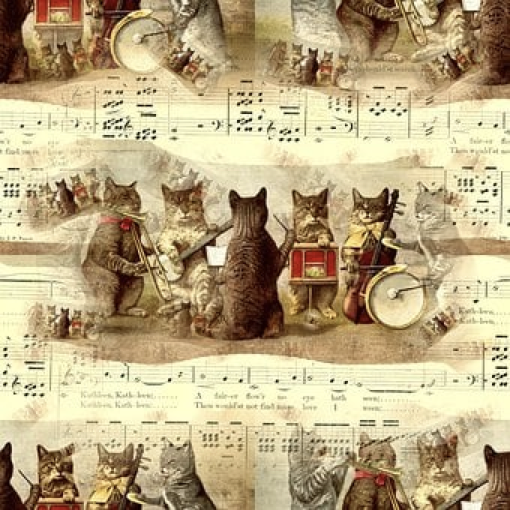
That’s why making your own toys is a good idea. Making your own cat toys is not only cheaper, but it also allows you to make them just the way your cat likes them. In this article, we’ll talk about ten fun toys you can make to keep your cat busy.
A cardboard box is one of the easiest and most useful toys you can make for your cat. You can make a box fortress by cutting holes and tubes in the box and filling it with soft bedding. Cats love to hide and look around, and a cardboard box fort is the right place for them.
Find a large cardboard box to start making your cardboard fort. Cut holes and tubes into the sides of the box, making sure the edges are even so the cat doesn’t get hurt.
You can cut the paper with scissors or a utility knife. Then put something soft inside the box, such as a blanket or towel. Your cat will love hiding in his new fort and exploring it.
Cats love feathers and you can make your own feather toy by tying the feathers to a string or stick. Your cat will enjoy chasing and pouncing on feathers, which will exercise them, keep their mind active, and remind you that cat shed.
Start by getting feathers to make a feather toy. You can use feathers you find on the street or feathers bought from a craft store. Use glue or tape to attach the feathers to a string or stick. Make sure the feathers are well attached so they don’t fall off when the kids play. Then hang a feather toy in front of your cat and watch it jump and run after it.
Cats love the natural catnip stimulant, and you can make your own catnip toy by placing dried catnip in a sock and tying a knot at the end. Your cat will enjoy rubbing and biting on the sock, and the smell of catnip will keep her interested.
Find a clean sock to use as the base for your catnip sock. Put the dried catnip in the sock and then tie a knot at the end so the catnip stays inside. You can also put bells or wrinkled paper inside the sock to make it more interesting. Then give your cat a sock and watch her rub and bite into it, enjoying the smell of catnip.
Cats naturally love to scratch, but if you give them room to scratch, they won’t scratch your furniture. You can make a scratching post by wrapping string or carpet around a cardboard tube or wooden pole.
Find a sturdy cardboard tube or wooden pole to start making your scratching post. Cut a piece of string or carpet long enough to go around the pipe or pole. Then wrap the rope or cloth tightly around the pipe or pole and glue or staple it to keep it in place. Make sure the scratching post is high enough so that the cat can stretch out its entire body when using it. Place the scratching post where your cat likes to scratch and rub it with catnip so the cat can use it.
Make a ping pong ball track a fun and responsive toy for your cat. Make a path for the ping pong ball by cutting holes in the cardboard box and attaching the cardboard tubes. Your cat will love trying to catch the ball when you hit him with the bat.
Find a wooden box to start making a ping pong ball track. After making holes in the sides of the box, make sure they are large enough for a ping pong ball to fit through. Then make a maze by inserting cardboard tubes into the holes. The tubes can be glued with hot glue or tape. Finally, place the ping pong ball in the maze and watch your cat try to catch it by hitting it.
A paper bag tunnel is another easy and cheap toy you can make for your cat. You can make a tunnel for your cat by cutting the bottom out of a paper bag and sticking several bags together. You can also crumple up some paper and put it in bags to make them rustle and make the animals more excited.
Collect some paper bags to start making the paper bag tunnel. Make a long tunnel by cutting out the bottom of each bag and taping them together. You can also put crumpled paper inside the bags so that the cat makes noise while playing inside. Your cat will have a great time exploring his new cave and hiding in the bags.
Another fun toy for cats that looks like their natural prey is playing with a fishing rod. Stretch a toy or some feathers and tie them to a stick or dowel. Your cat will enjoy chasing and jumping on the toy, which will keep her active and stimulate her brain.
Find a stick or fishing rod to start making a fishing rod toy. Use glue or tape to attach the toy or feathers to the string, and tie the other end of the string to the stick. Hang the toy in front of your cat and watch it run and jump on it.
A toy that gives treats is a fun way to give your cat a treat and keep them entertained at the same time. Cut holes in a plastic bottle and fill it with treats to make a toy that dispenses treats. To get a treat, your cat will break the bottle.
Find a plastic bottle to start making a toy that gives out treats. Use a utility knife or scissors to cut some small holes in the sides of the bottle. Then put the best treats for your cat into the bottle. Your cat will love to hit the bottle and try to get treats out of the holes.
Conclusion
After all, making your own cat toys is a great way to keep them entertained and stimulated while saving money. But when you make these toys, it’s important to put your cat’s safety first and give her a range of toys that stimulate different senses. Don’t forget to play with your cat to bond with her and give her some exercise.
ooOOoo
Here is Gloria’s bio that she also supplied:
Gloria Peters is an experienced pet writer and enthusiast, sharing valuable insights on gadgets to keep your feline friend healthy, happy, and entertained. Her expertise in technology and pet care is well-known in the industry, as seen on her popular website blog tulip.

Gloria Peters
I must say that Gloria has done a splendid job in writing the above guest post. It is excellent and way better than I could have done myself.
Thank you, Gloria.
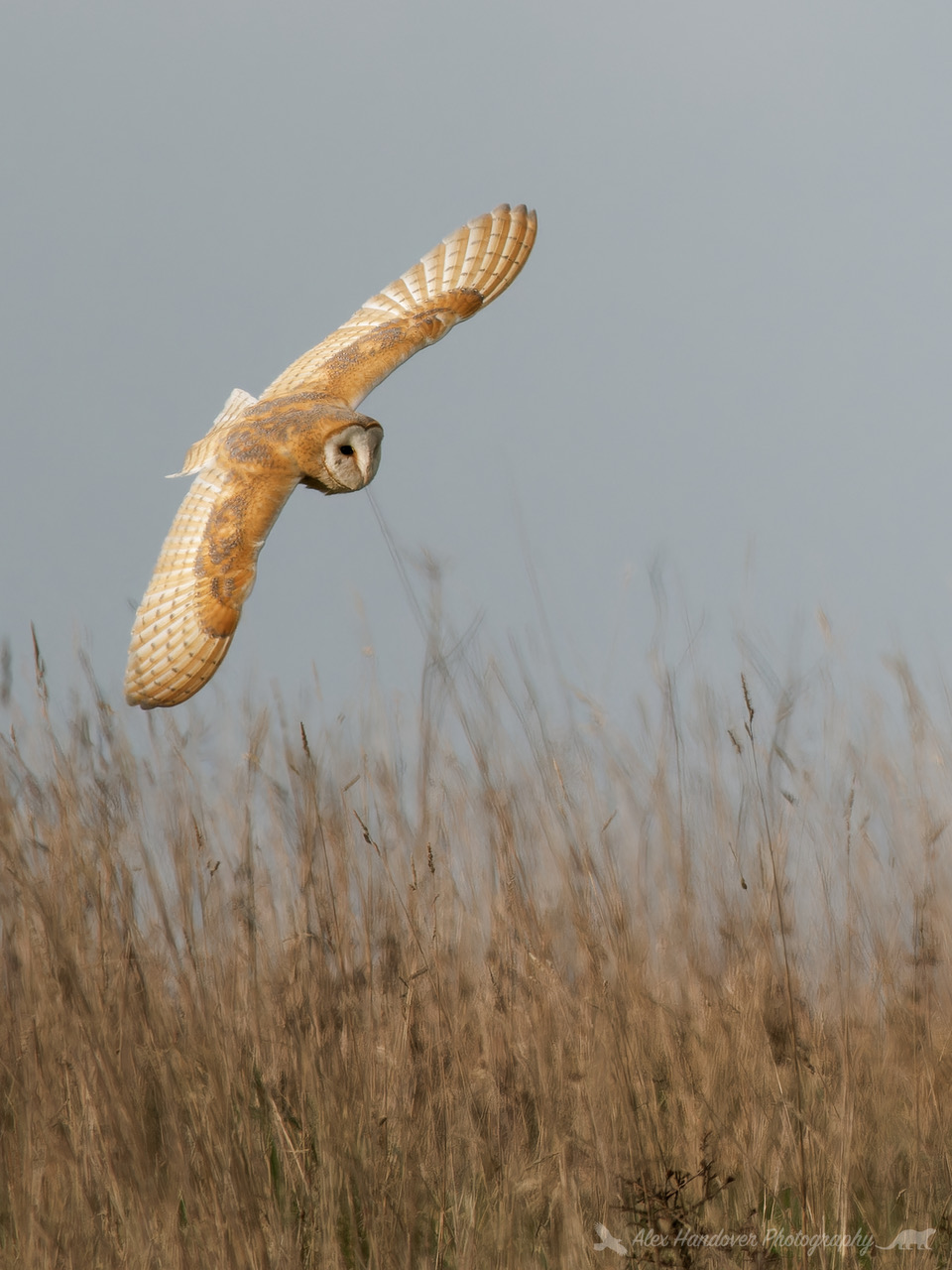
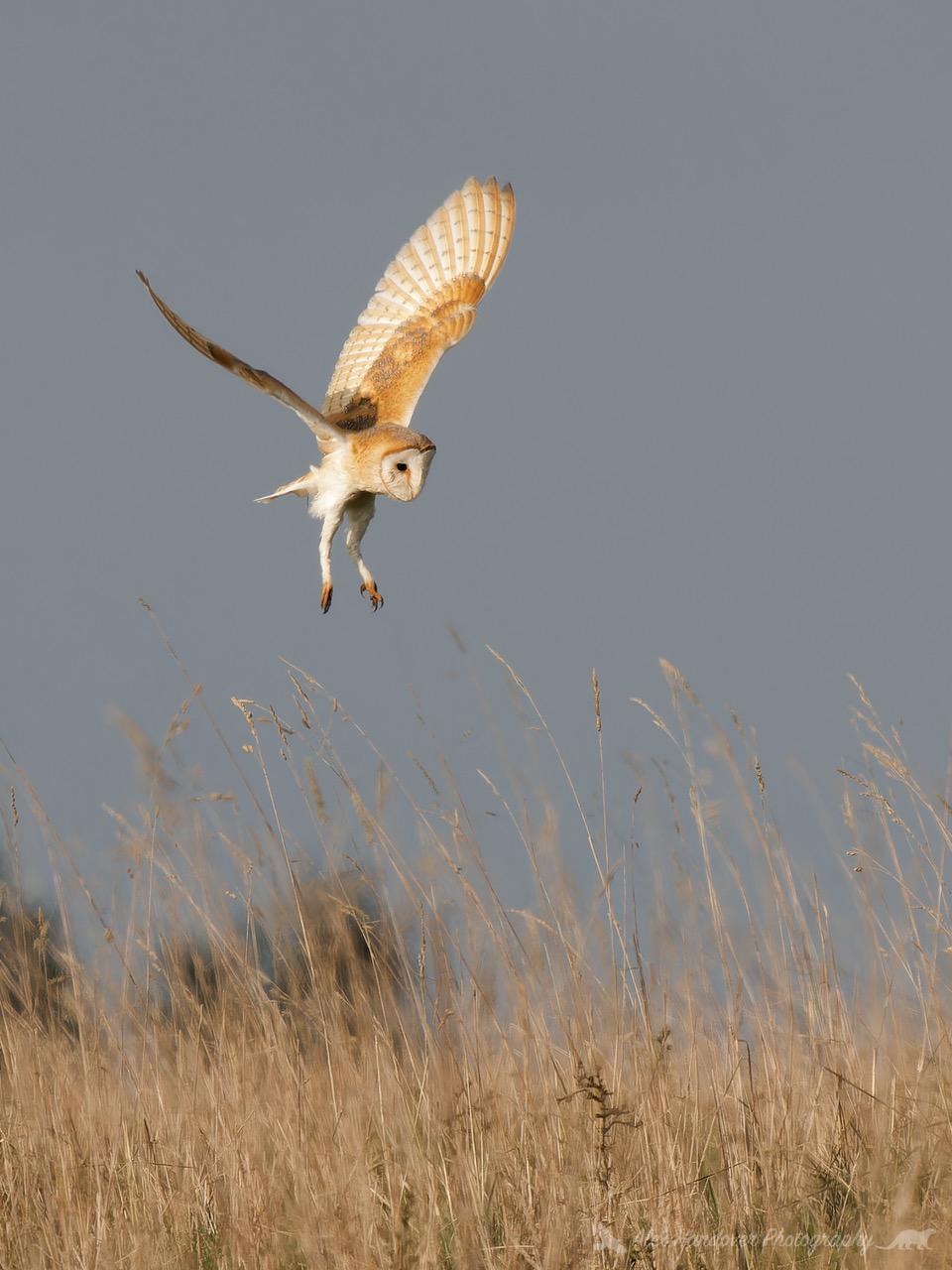
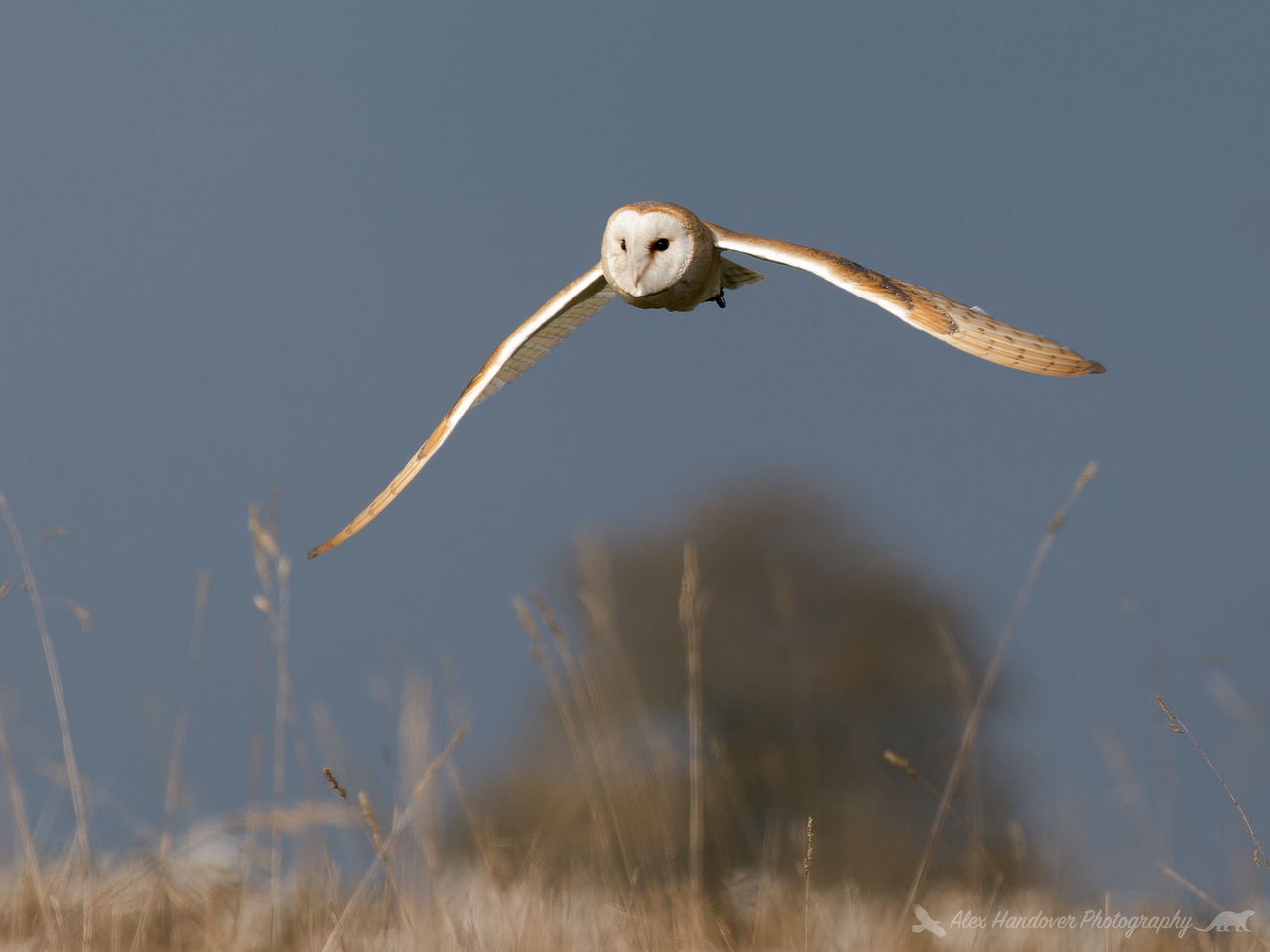
The last day of April, 2023, brings a change in the Picture Parades.
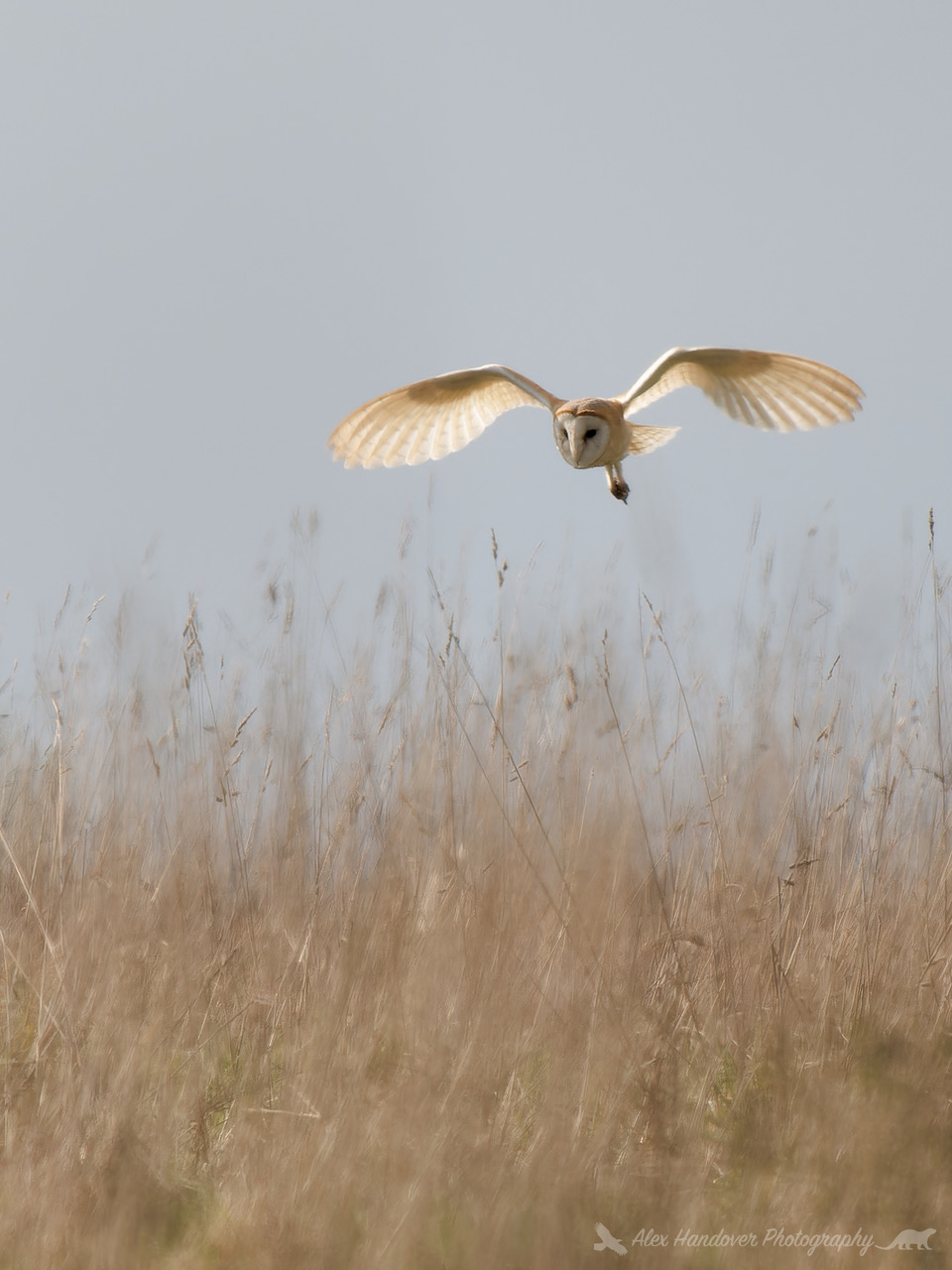
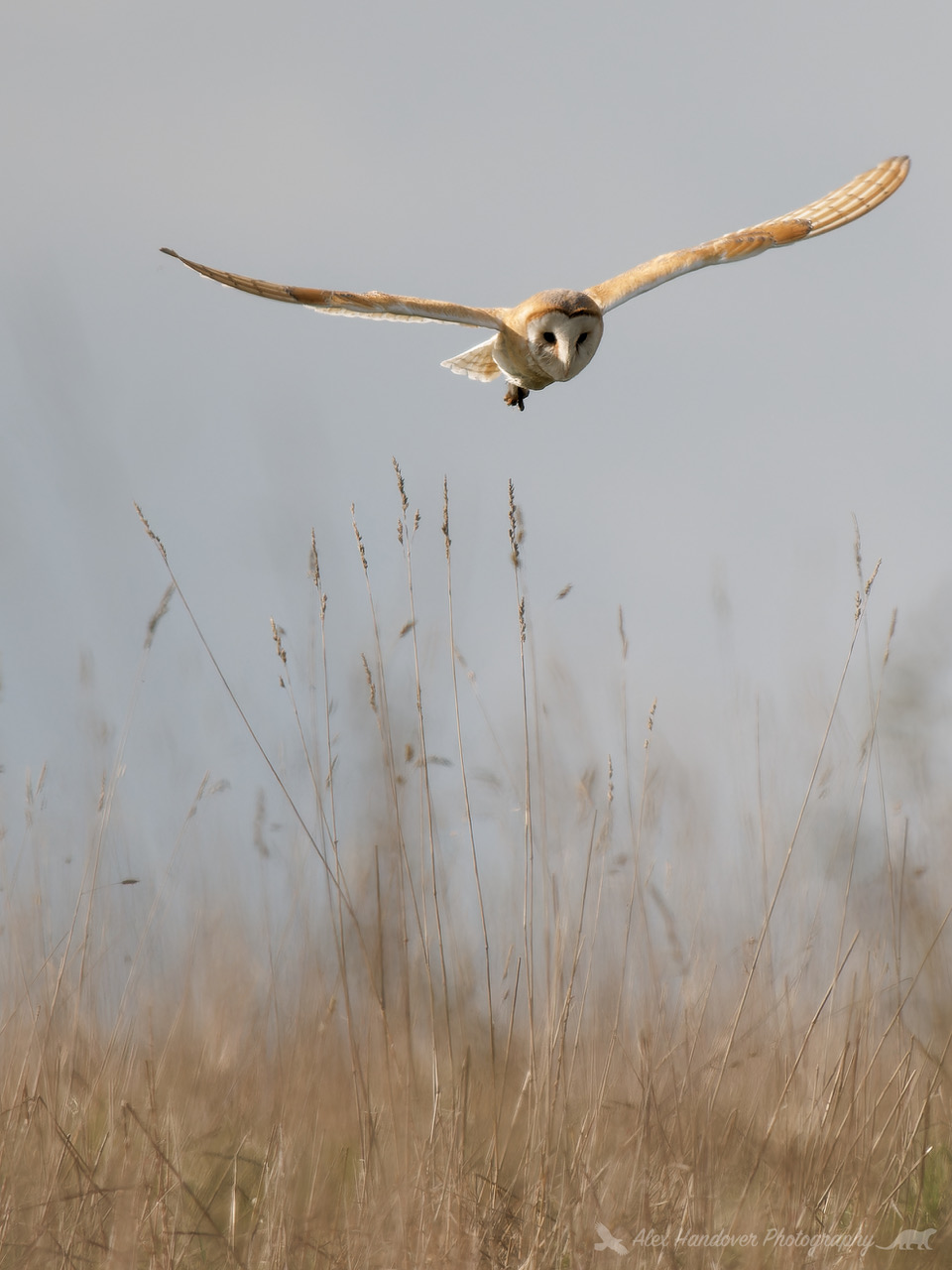
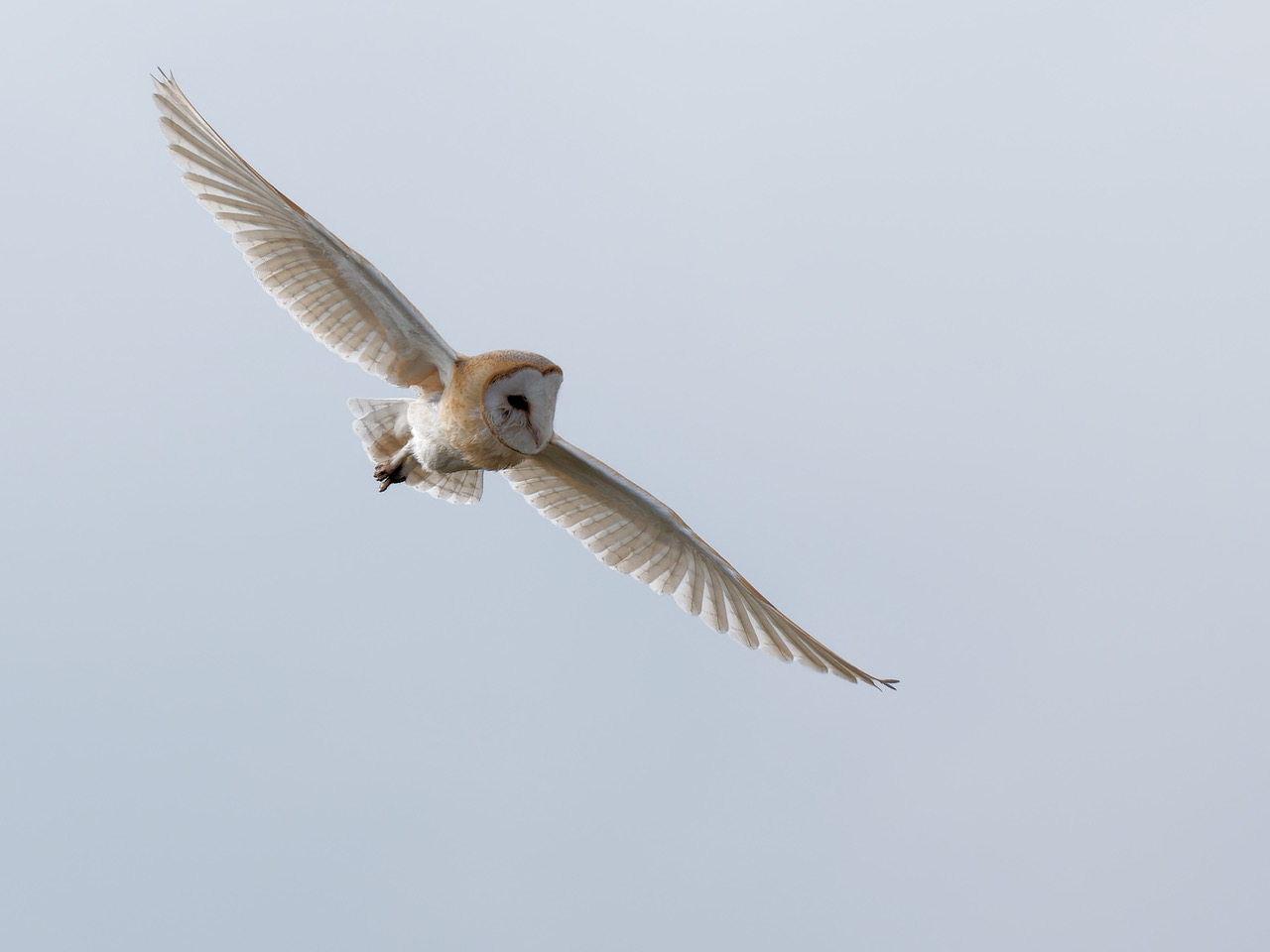
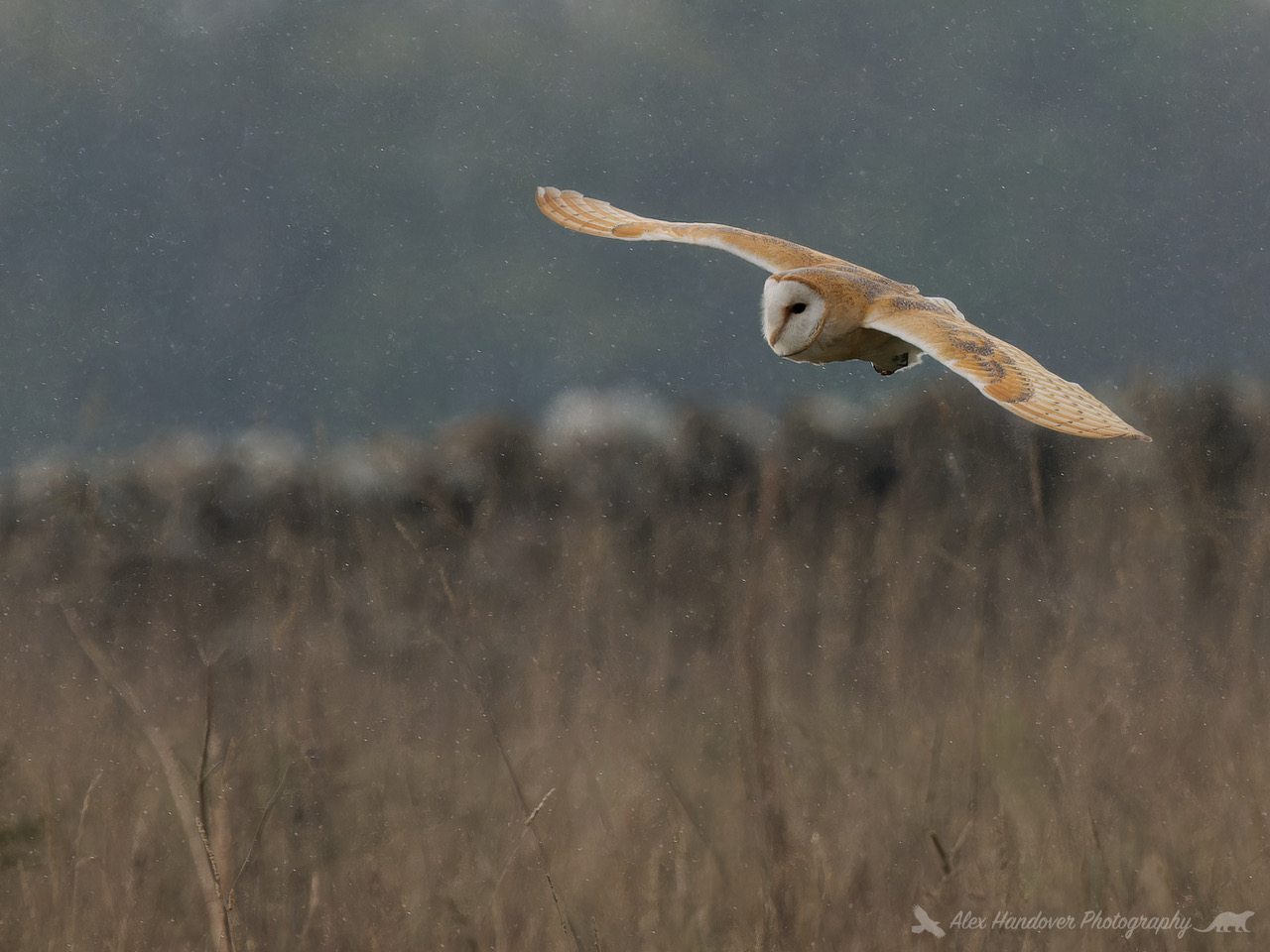
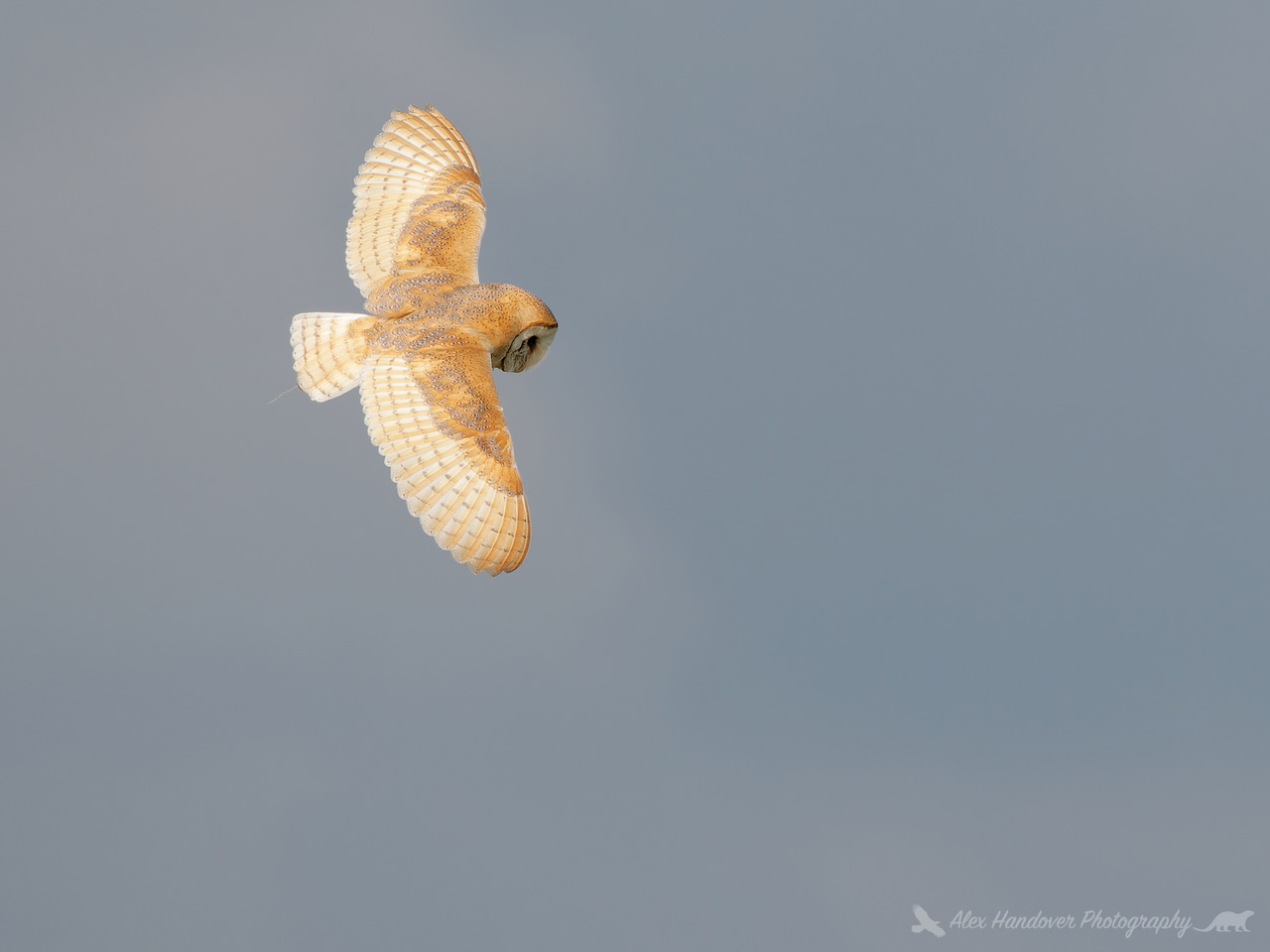
My son, Alex, is a very keen photographer and has taken many beautiful photos of birds. He wants to build his following especially on Instagram (that is a link to Alex’s page) and I was very willing to assist him in his endeavour.
So starting today I will be posting the photographs taken by Alex and repeating this every other Sunday. In other words, I shall now be alternating between birds and dogs for as long as is possible.
But first of all here is Alex’s QR code.

oooo
oooo
oooo
oooo
oooo
oooo
oooo
oooo
oooo
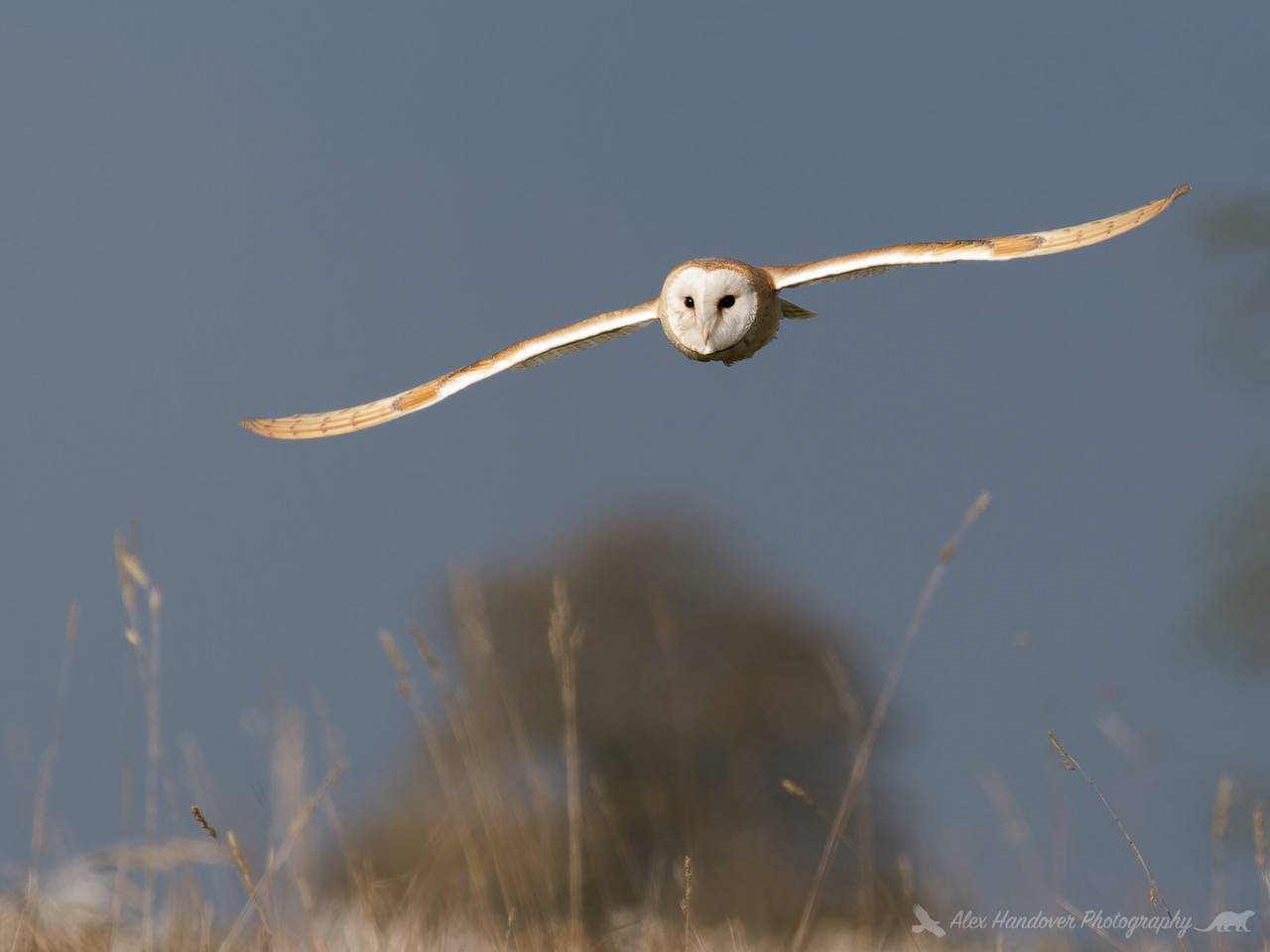
Alex uses an Olympus camera, an OM-1, and his lens is an Olympus M zuiko 150-400TC pro. A feature of the camera is the continuous shooting rate of 130 frames per second that Alex uses to good effect; as you can see.
So if you are interested in photography, please go across to this Instagram link and revel in the wonderful pictures featuring wildlife from the UK🇬🇧, mainly in the counties of Somerset, Gloucestershire and Bristol.
Next Sunday we are back to dogs!
More dogs from Unsplash.
This time Siberian Husky Dogs!
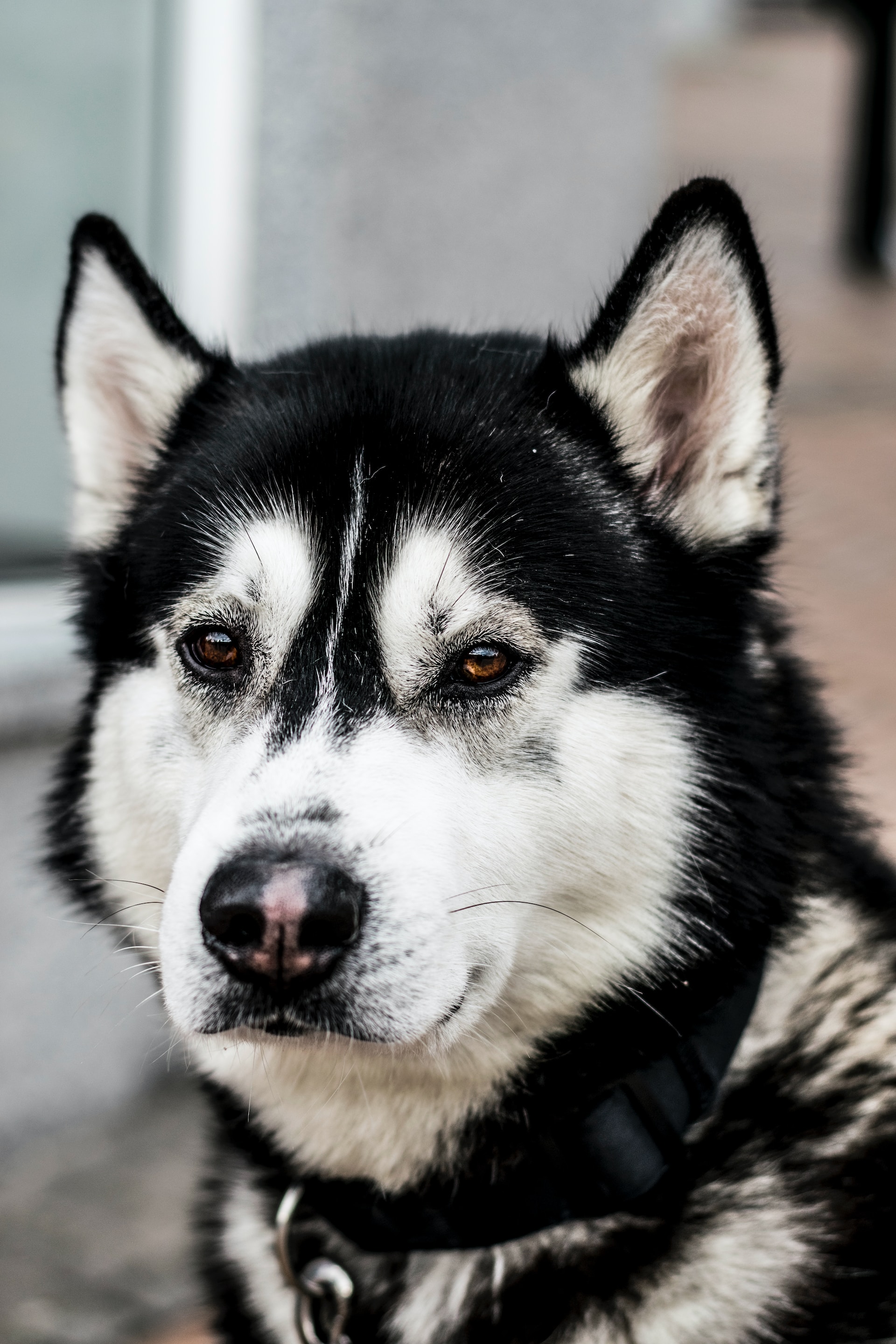
oooo

oooo

oooo

oooo

oooo

oooo

What a fantastic group of photographs; apologies if I have shown these before.
To apply to the UK’s Sound Generator.
This is the company that my daughter helps to run. She is Maija and together with Polly and Chloe they run Sound UK. I want to promote a recent item that appeared on their website.
ooOOoo
Now in its third year, Sound Generator is Sound UK’s research and development (R & D) programme that supports artists and seeds the development of an ambitious new project.
Each year six early career music and sound artists spend six months developing and testing their project, supported by mentoring from a range of experts.
By the end of the programme artists will have thoroughly explored their initial idea and tested that they can make it work, ready for the next stage of full commissioning and public engagement.
During the process artists will be able to try out new approaches, learn from others, increase their network and develop their practice.
Projects can be:
• For indoors or outdoors
• Suitable for venue touring or site specific
• Digital, installation or live
• Music, sound or multi-disciplinary
• Designed to reach a new audience, work with a specific community or respond to the world we live in.
Following an open call, six artists will each receive an award of £2200 to research and develop their idea across six months (June to November 2023).
In addition to £2200, the programme includes access to the Sound Generator Network with support sessions from a range of exceptional mentors, plus opportunities to connect with other artists on the programme.
The R & D will culminate in the creation of a short audio or video sample of the project, and a proposal for its delivery. These will be presented by each artist at a sharing event at the end of the programme and sent out to a wide network of industry contacts.
• UK* creators that reflect the full cultural diversity and gender spectrum of the UK
• Creators with 5 – 10 years professional experience
• Creators who want to develop a new idea that extends their practice, with public interaction in mind.
• Artists pushing the boundaries of contemporary music. Working within, but not exclusively, jazz, sound, folk, classical and electronic music, plus all points in between.
*we define a UK artist as someone who has been based and working in the UK for more than 5 years.
Find out more about our 2022 Sound Generator artists and our 2021 Sound Generator artists.
“We learnt so much and mentoring + support was very helpful in furthering our ideas. I think it also puts us in a better position to get further funding and for potential future collaborations.”
Daphnellc & Ambra, Sound Generator 2022
ooOOoo
Hopefully this is read by some people who either want to help share the message or want to apply.
Either way it was worth sharing!
Back to Unsplash and Sleeping Dogs!

oooo
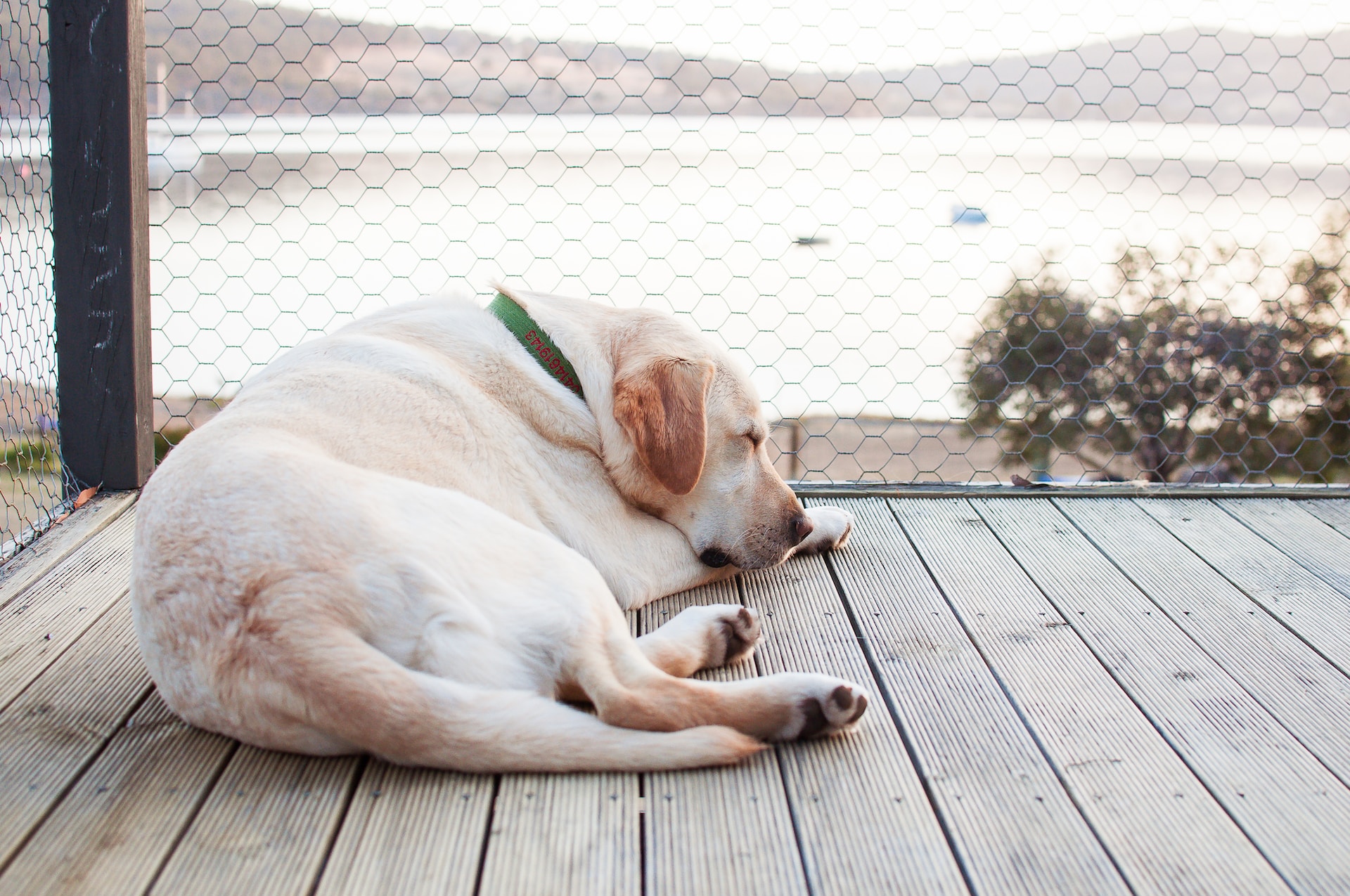
oooo

oooo

oooo
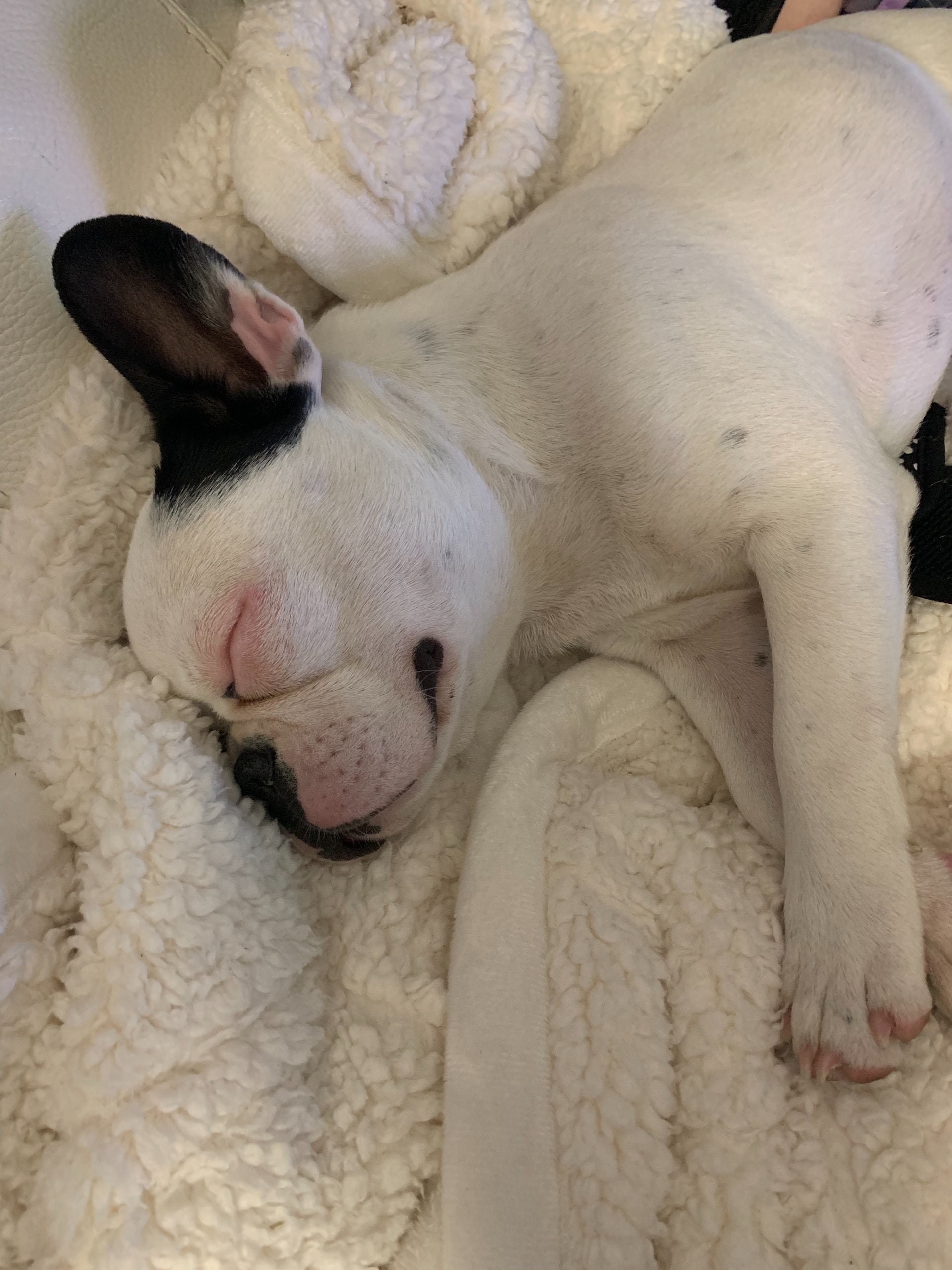
oooo

oooo
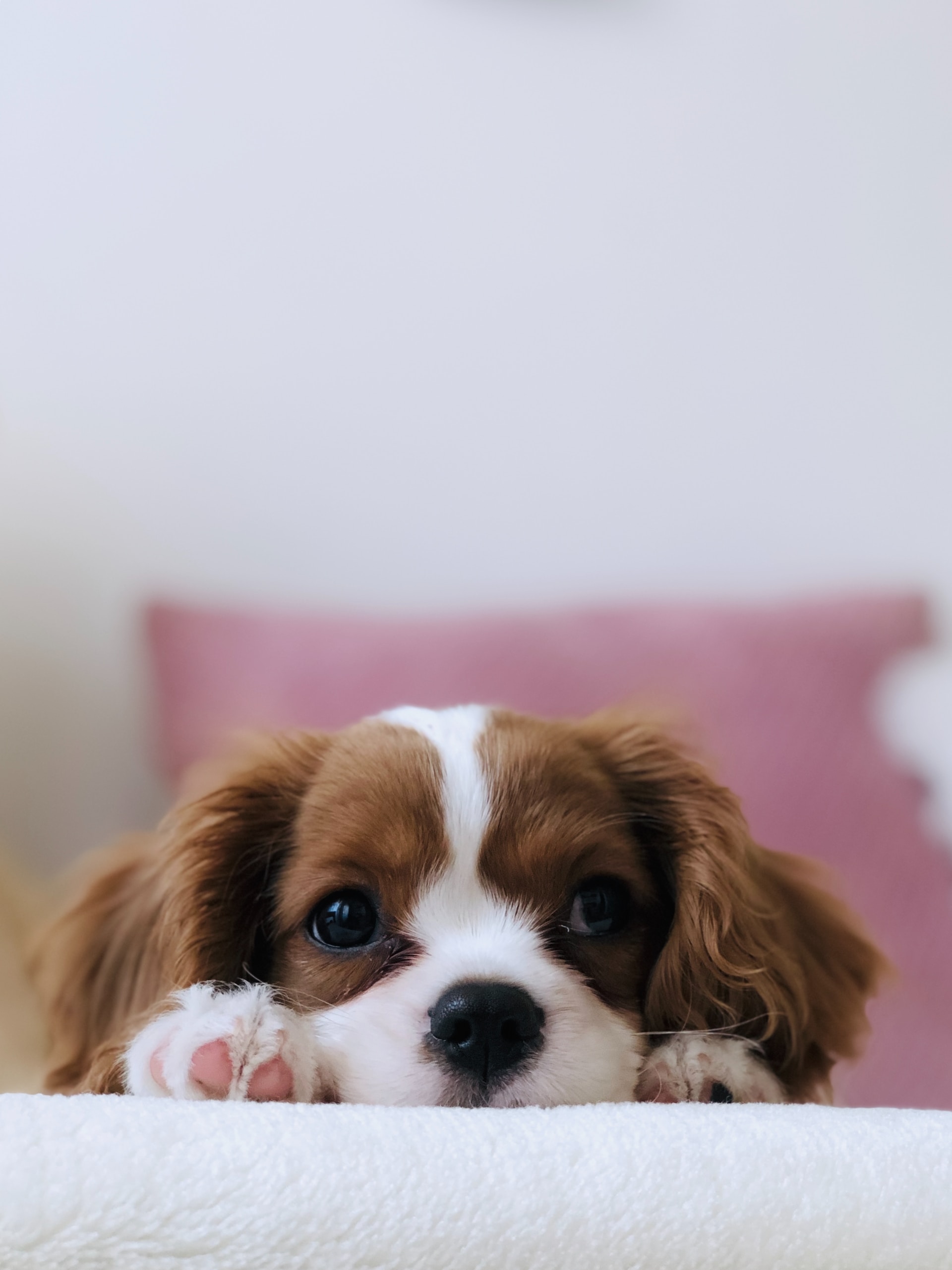
oooo

Perfect photographs! Thanks to Unsplash; it is a great site!
A fascinating insight into recovered plastic.
Like so many others we do our little bit regarding plastic but do not properly think about the issue. I have to admit that I am not even sure if all plastics are harmful or just some.
But I comprehend art!
That is why I am republishing, with permission, this article from The Conversation.
ooOOoo
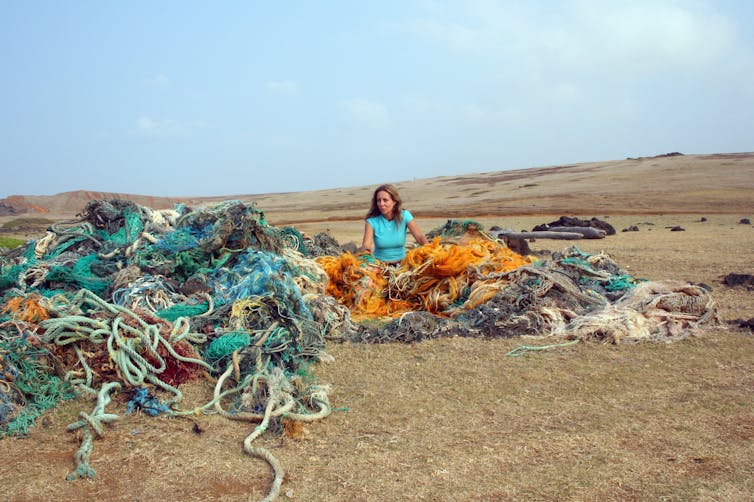
Pam Longobardi, Georgia State University
I am obsessed with plastic objects. I harvest them from the ocean for the stories they hold and to mitigate their ability to harm. Each object has the potential to be a message from the sea – a poem, a cipher, a metaphor, a warning.
My work collecting and photographing ocean plastic and turning it into art began with an epiphany in 2005, on a far-flung beach at the southern tip of the Big Island of Hawaii. At the edge of a black lava beach pounded by surf, I encountered multitudes upon multitudes of plastic objects that the angry ocean was vomiting onto the rocky shore.
I could see that somehow, impossibly, humans had permeated the ocean with plastic waste. Its alien presence was so enormous that it had reached this most isolated point of land in the immense Pacific Ocean. I felt I was witness to an unspeakable crime against nature, and needed to document it and bring back evidence.
I began cleaning the beach, hauling away weathered and misshapen plastic debris – known and unknown objects, hidden parts of a world of things I had never seen before, and enormous whalelike colored entanglements of nets and ropes.
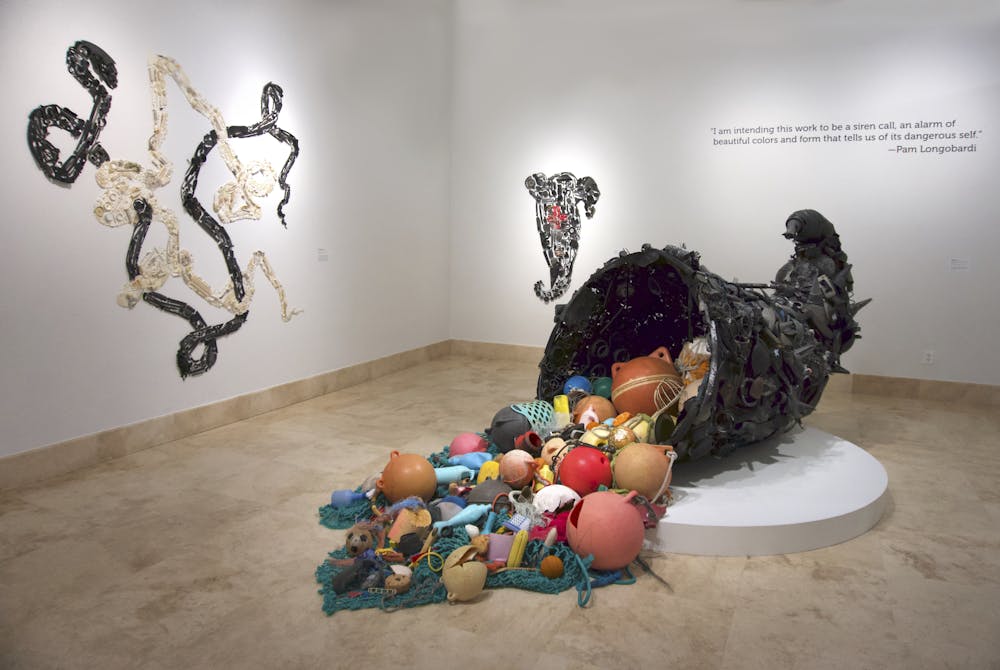
I returned to that site again and again, gathering material evidence to study its volume and how it had been deposited, trying to understand the immensity it represented. In 2006, I formed the Drifters Project, a collaborative global entity to highlight these vagrant, translocational plastics and recruit others to investigate and mitigate ocean plastics’ impact.
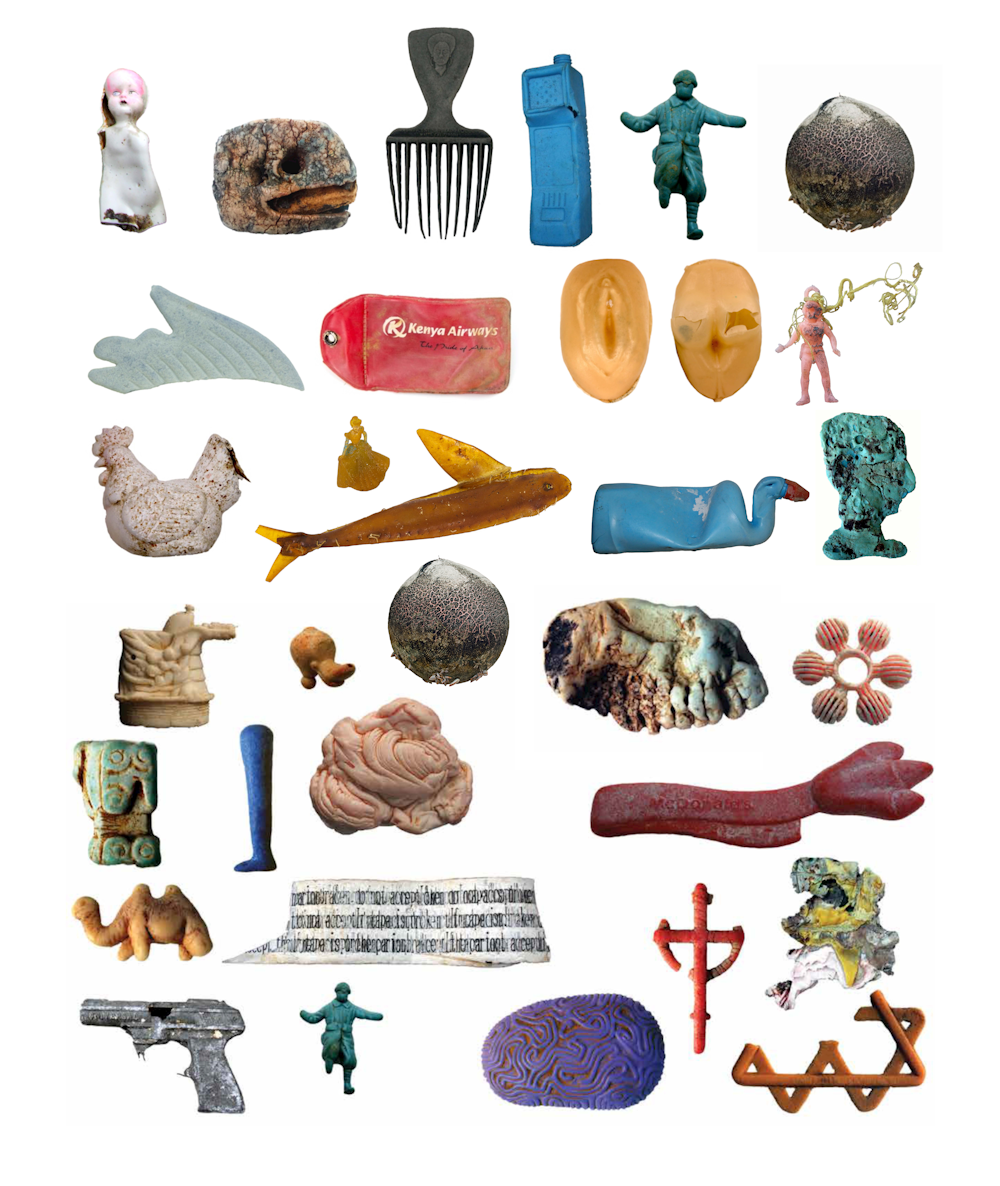
My new book, “Ocean Gleaning,” tracks 17 years of my art and research around the world through the Drifters Project. It reveals specimens of striking artifacts harvested from the sea – objects that once were utilitarian, but have been changed by their oceanic voyages and come back as messages from the ocean.
I grew up in what some now deem the age of plastic. Though it’s not the only modern material invention, plastic has had the most unforeseen consequences.
My father was a biochemist at the chemical company Union Carbide when I was a child in New Jersey. He played golf with an actor who portrayed “The Man from Glad,” a Get Smart-styled agent who rescued flustered housewives in TV commercials from inferior brands of plastic wrap that snarled and tangled. My father brought home souvenir pins of Union Carbide’s hexagonal logo, based on the carbon molecule, and figurine pencil holders of “TERGIE,” the company’s blobby turquoise mascot.
On the 2013 Gyre Expedition, Pam Longobardi traveled with a team of scientists, artists and policymakers to investigate and remove tons of oceanic plastic washing out of great gyres, or currents, in the Pacific Ocean, and make art from it.
Today I see plastic as a zombie material that haunts the ocean. It is made from petroleum, the decayed and transformed life forms of the past. Drifting at sea, it “lives” again as it gathers a biological slime of algae and protozoans, which become attachment sites for larger organisms.
When seabirds, fish and sea turtles mistake this living encrustation for food and eat it, plastic and all, the chemical load lives on in their digestive tracts. Their body tissues absorb chemicals from the plastic, which remain undigested in their stomachs, often ultimately killing them.

I see plastic objects as the cultural archaeology of our time – relics of global late-capitalist consumer society that mirror our desires, wishes, hubris and ingenuity. They become transformed as they leave the quotidian world and collide with nature. By regurgitating them ashore or jamming them into sea caves, the ocean is communicating with us through materials of our own making. Some seem eerily familiar; others are totally alien.
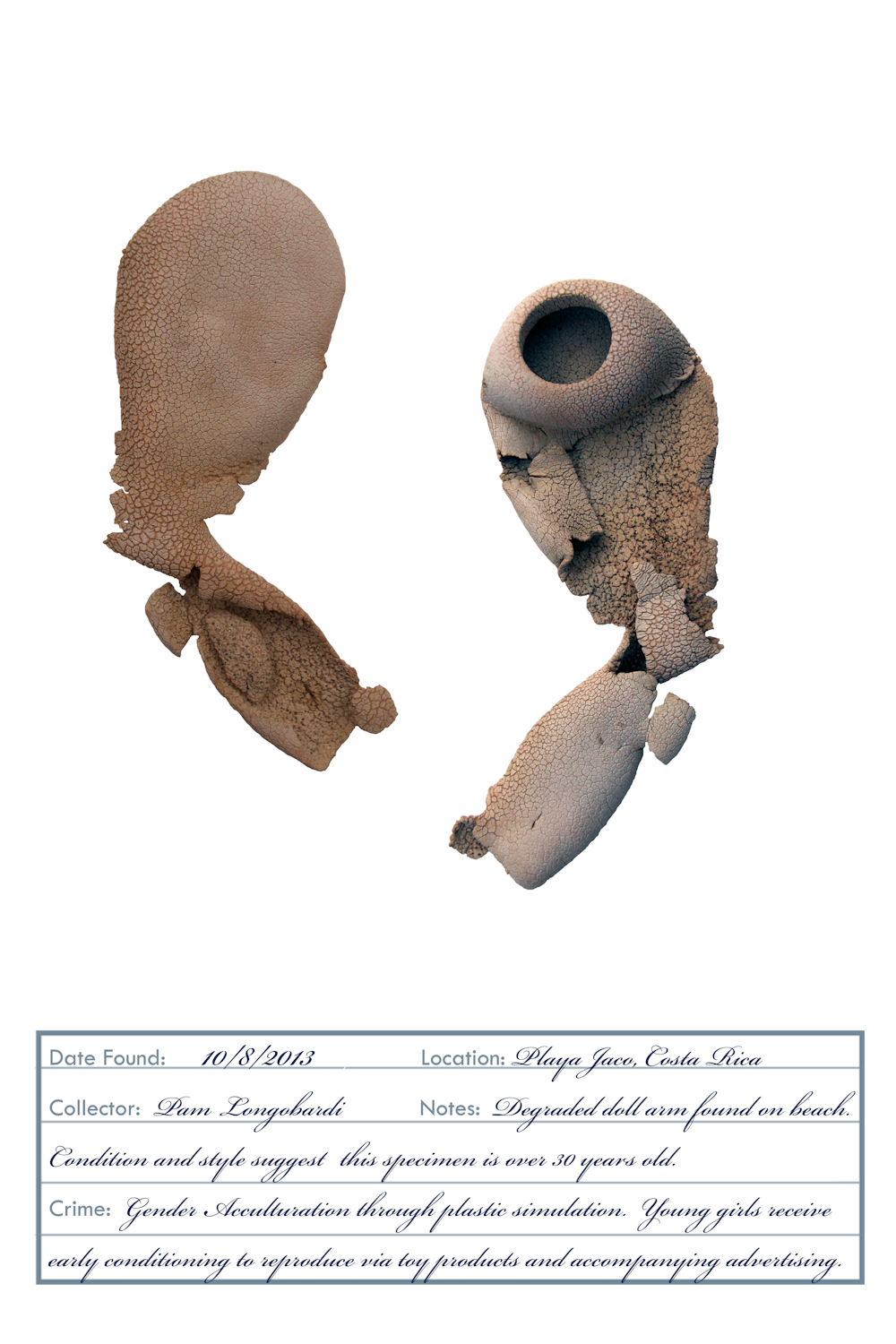
A person engaging in ocean gleaning acts as a detective and a beacon, hunting for the forensics of this crime against the natural world and shining the light of interrogation on it. By searching for ocean plastic in a state of open receptiveness, a gleaner like me can find symbols of pop culture, religion, war, humor, irony and sorrow.
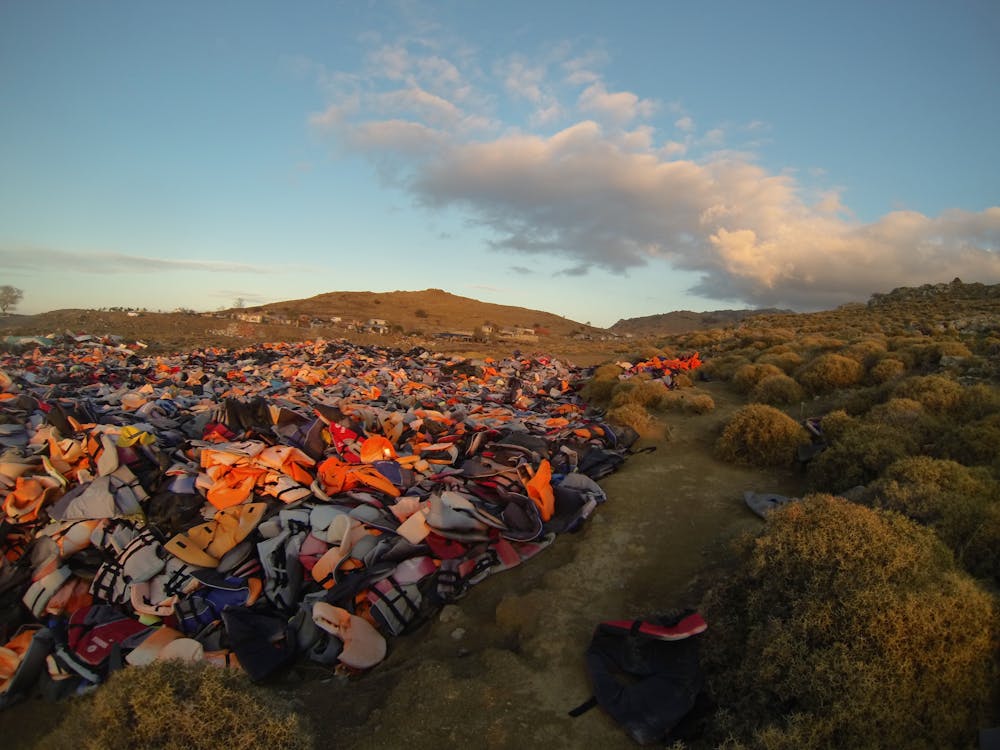
In keeping with the drifting journeys of these material artifacts, I prefer using them in a transitive form as installations. All of these works can be dismantled and reconfigured, although plastic materials are nearly impossible to recycle. I display some objects as specimens on steel pins, and wire others together to form large-scale sculptures.

I am interested in ocean plastic in particular because of what it reveals about us as humans in a global culture, and about the ocean as a cultural space and a giant dynamic engine of life and change. Because ocean plastic visibly shows nature’s attempts to reabsorb and regurgitate it, it has profound stories to tell.
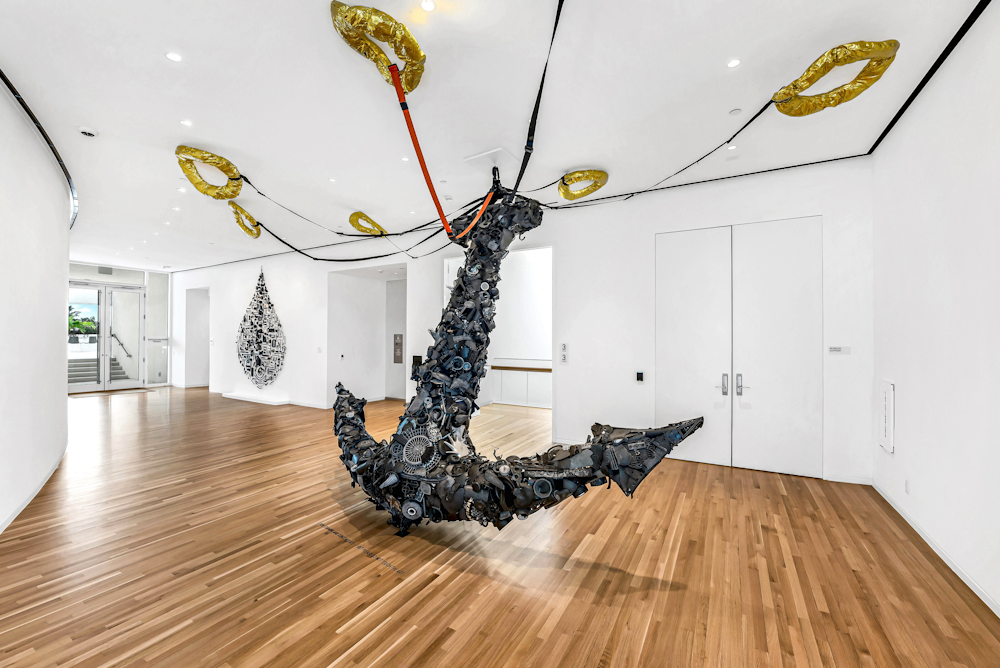
I believe humankind is at a crossroads with regards to the future. The ocean is asking us to pay attention. Paying attention is an act of giving, and in the case of plastic pollution, it is also an act of taking: Taking plastic out of your daily life. Taking plastic out of the environment. And taking, and spreading, the message that the ocean is laying out before our eyes.
Pam Longobardi, Regents’ Professor of Art and Design, Georgia State University
This article is republished from The Conversation under a Creative Commons license. Read the original article.
ooOOoo
Pam at one point describes the ocean plastic”… because of what it reveals about us as humans in a global culture, and about the ocean as a cultural space and a giant dynamic engine of life and change …”. It raises questions that I can only ponder the answer. Ultimately, are there too many inhabitants on this planet? What does the next generation think? Is there an answer?
So many tuneful memories.
I grew up with the songs of Burt Bacharach in my heart, my mind and my ears. He was born on May 12, 1928 and lived until quite recently; namely the 8th February, 2023. This may be Valentine’s Day for 2023 but I think the obituary of Bacharach comes first.
The Conversation had a brilliant item on him, published on February 10th and I am going to republish that piece now.
ooOOoo
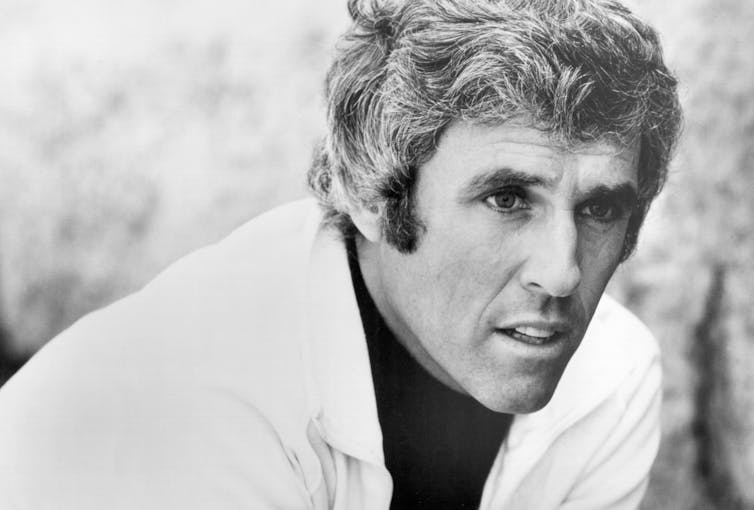 A pop pioneer whose songs were performed by the great and good for decades.
Easy on the ear, perhaps. But the label of “easy listening” often attached to the songs of Burt Bacharach belies the mastery of his talent in crafting perfect moments in music.
Yes, Bacharach’s back catalog is filled with memorable, catchy melodies – whether they were written with longtime partner and lyricist Hal David, former wife Carole Bayer Sager or in collaboration with more contemporary artists such as Elvis Costello, Adele and Dr. Dre.
But there is a harmonic and rhythmic complexity to his music that elevates it above the sweet, often saccharine arrangements that can typify easy listening. It is full of influences from jazz chord structures and progressions, as well as rhythms.
It is why Bacharach, who died on Feb. 8, 2023, at the age of 94, appealed to generations of listeners, as well as the diverse pool of singers who chose to work with him.
Bacharach began his long songwriting career in the 1950s, but it was the following decade that saw him come to prominence with a series of hit songs.
But with the 1960s as a backdrop – a time of immense innovation in popular music – Bacharach may not have been taken as seriously as many of his contemporaries. It was a time when rock ‘n’ roll and the British Invasion were at the forefront, with rhythm and blues, protest music and folk rock finding their way on the musical landscape.
While Bacharach’s musical counterparts were writing and performing music that responded to and reflected the political, social and cultural upheavals that defined the era, Bacharach and David’s songs focused on different themes: Theirs was music that dealt with relationships and matters of the heart.
They also stood apart from other notable songwriting partners of the age – Lennon and McCartney, Jagger and Richards, for example – in that the songs were written for others to perform. In that way, they were a throwback to an earlier age of popular music, when the likes of Rodgers and Hart provided hit after hit for a roster of singers.
Indeed, they were a late product of Tin Pan Alley – the music industry centered around midtown Manhattan. Bacharach met David in 1957 in the storied Brill Building in New York City – a place where a young songwriter could perhaps catch a break.
Not long after they began working together, Bacharach came across a young backup singer at a recording session who seemed to have promise. The first single he produced with her, “Don’t Make Me Over,” was the first of 38 songs he and David produced with Dionne Warwick.
Her warm tones and fluid phrasing made Warwick’s voice the perfect accompaniment to Bacharach’s music.
But she was one of many collaborators. Some, like Warwick, were plucked from relative obscurity. Others, like Perry Como, were already established singers.
The list of artists who found success with Bacharach songs in that era is astonishing: Aretha Franklin, The Carpenters, Dusty Springfield, Tom Jones and The 5th Dimension, to name just a few.
Through collaborators, Bacharach’s music was able to reach a fairly diverse audience. The songs were so well written that they could easily be reworked into different genres, and break the confines of “easy listening” – a genre often maligned as unhip. In the hands of Isaac Hayes, the sweet refrains of “Walk on By” becomes a psychedelic funk classic. Years later, The White Stripes transformed “I Just Don’t Know What To Do With Myself” into a stripped-down, guitar-heavy slice of rock.
The music of David and Bacharach also worked on a different level – as the background to movie soundtracks. The 1966 Michael Caine film “Alfie” is perhaps equally known today for the title track, with versions by Cher, Warwick and British singer Cilla Black all becoming hits on the back of the film.
In 1969, Bacharach and David’s “Raindrops Keep Falling on My Head,” sung by B.J. Thomas in the western “Butch Cassidy and the Sundance Kid,” won the Academy Award for best original song. Bacharach also won the Oscar for best original score.
Adding to success on the charts and on screen, Bacharach also won acclaim for his work on Broadway. The 1968 show “Promises, Promises” was groundbreaking in its use of amplification in the orchestra, which included a rock band. The show contained a number of songs that topped the charts, most notably Warwick’s version of the show-stopping “I’ll Never Fall in Love Again.”
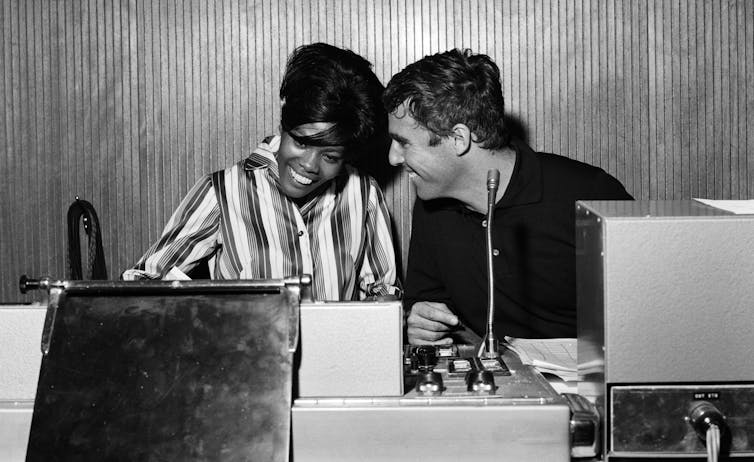
In an NPR “Fresh Air” interview in 2010 – when the musical was being revived on Broadway – Bacharach discusses the number of rhythmic meter changes in the title song, “Promises, Promises,” and the difficulties these rhythmic changes presented for singers and musicians in the show.
The interview is also notable in that it reunited him with David – the two had a much publicized split in 1973 after working on a failed movie. The breakdown of their successful musical partnership saw Bacharach lose interest in writing music for a spell, and affected his relationship with Warwick.
This was eventually resolved with her recording of one of Bacharach’s most memorable songs, 1985’s “That’s What Friends are For,” written with his then-wife, Carole Bayer Sager. Though the song had been first recorded by Rod Stewart for the film “Night Shift,” the Warwick & Friends’ version – the friends being none other than Elton John, Gladys Knight and Stevie Wonder – is the one that became a hit and helped revive Bacharach’s career.
Though best known for the songs he wrote in the 1960s through the 1980s, Bacharach continued to write music into his old age, collaborating with Elvis Costello, Adele and Dr. Dre.
You may have noticed the sheer number – and range – of artists Bacharach worked with. It speaks to the quality and endurance of his output. Yes, he will be remembered by some as the writer of exemplary “easy listening” songs. But Burt Bacharach’s legacy will prove that he was so much more.
Gena R. Greher, Professor of Music, UMass Lowell
This article is republished from The Conversation under a Creative Commons license. Read the original article.
ooOOoo
There are so many of his melodies on YouTube and you are free to do your own searching. But I just wanted to share one with you. It is Burt Bacharach with Barbra Streisand with Close To You and Be Aware.
Perfect!






 Learning from Dogs