A heart-rending, true story of a puppy. (Has a very happy ending!)
Those of you who have read today’s Chapter Eighteen of ‘the book’ will not have escaped the central role played by Philip’s German Shepherd: Pharaoh.
Well a few days ago the following video was sent to me by a good friend, Ginger, from our Payson days. Won’t say anymore until you have watched it.
Tried hard to find the Facebook page but failed. However, I did find this article on the Psychology Today website that not only refers to Daisy but offers more on the subject of animal emotions.
Animal Emotions
Do animals think and feel?
by Marc Bekoff – Professor Emeritus of Ecology and Evolutionary Biology at the University of Colorado, Boulder.
Daisy: The Injured Dog Who Believed She’d Walk Again and Did
Often, a simple video captures the essence of the deep nature of the incredibly close and enduring bonds we form with other animals and they with us. As a case in point, my recent essay called “A Dog and His Man” showed a dog exuberantly expressing his deep feelings for a human companion he hadn’t seen for six months. Another essay titled “My Dog Always Eats First: Homeless People and Their Animals” dealt with the relationship between homeless people and the animals with whom they share their lives.
Daisy: An unforgettable and inspirational symbol of dedication and hope
I just saw another video called “Daisy – the Little Pup Who Believed” that is well-worth sharing widely with others of all ages. There is no way I can summarize the depth of five-month old Daisy’s resolve to walk again after she was injured or of the devotion of the woman, Jolene, who found her on the side of a road – scared, malnourished, unable to walk or wag her tail, the people who contributed money to help her along, or the wonderful veterinarians and staff at Barrie Veterinary Hospital in Ontario, Canada, who took care of her. You can also read about Daisy’s remarkable and inspirational journey here.
Please take five minutes out of your day to watch this video, read the text, listen to the song that accompanies it, and share it widely. I am sure you will get teary as you watch Daisy go from an injured little ball of fur living in a ditch on the side of a road with a broken spine to learning to walk in water to romping around wildly as if life had been that proverbial pail of cherries from the start.
I’ve watched Daisy’s journey many times and every single time my eyes get watery. Among the many lessons in this wonderful video is “stay strong and never give up”. Clearly dogs and many other animals can truly teach us about traits such as trust, friendship, forgiveness, love, and hope.
OOOO
Daisy – a lesson for all!
Two closing thoughts.
When you next want a dog please, please think of those dogs who are in shelters. They must be our first priority.
If there is ever a time when we humans need to learn from dogs the qualities of trust, friendship, forgiveness, love and hope, it is now!
We have had a run of cold days here in Southern Oregon going down to the mid-twenties Fahrenheit at night (-4 deg C.)
So this first picture sent in by John H. seemed appropriate for today.
oooo
Then continuing with the series that started last Sunday.
oooo
Wise words indeed.
oooo
oooo
oooo
Finally, to a short but inspiring video sent to me by Dan Gomez.
A man, a dog, a cat and a rat…
This is a video of a homeless man in Santa Barbara and his pets.
They work State Street every week for donations.
The animals are pretty well fed and are mellow.
They are a family.
The man who owns them rigged a harness up for his cat so she wouldn’t have to walk so much (like the dog and the man himself).
At some juncture the rat came along, and as no one wanted to eat anyone else, the rat started riding with the cat, frequently on the cat.
For a few chin scratches the dog will stand all day and, let you talk to him and admire him.
So the Mayor of Santa Barbara decided to film this clip and send it out as a holiday card.
Just a collection of items that I hope you will enjoy.
So enough of the book this week for you dear readers.
It’s the week-end and time to offer you some odds and ends that have come my way in recent days.
First up is some really glorious singing.
Some years ago, I was working with a colleague and subsequently got to know that his wife was a brilliant singer/songwriter enjoying a good singing career. Her name is Rebecca Bains and there is a website here although still under construction according to the home page.
So to Rebecca’s singing.
Now for something completely different.
It’s an advertisement for Volvo Trucks. Sent to me by friend, Neil, from my Devon days. The short video has been seen over 45 million times! If you haven’t seen it, prepared to be wowed!
Now back to Rebecca’s singing. But with this introduction from me. Many know that here in Oregon we have nine dogs. Four of those are dogs that were rescued by Jean from earlier days in Mexico and two from the shelter in Payson, Arizona where we were living before coming to Oregon. There are many, many others who adopt rescue dogs or care for homeless dogs in countless ways.
So as we approach Christmas, the Season of Good Will, please do everything you can to help man’s best friend and companion for, literally, thousands upon thousands of years. If you are thinking of adopting a dog, or a cat, please visit your local shelter or the Pet Finder website.
OK, now to a short video with the singing from Rebecca Bains.
Trust me, this will rightly grab your heartstrings.
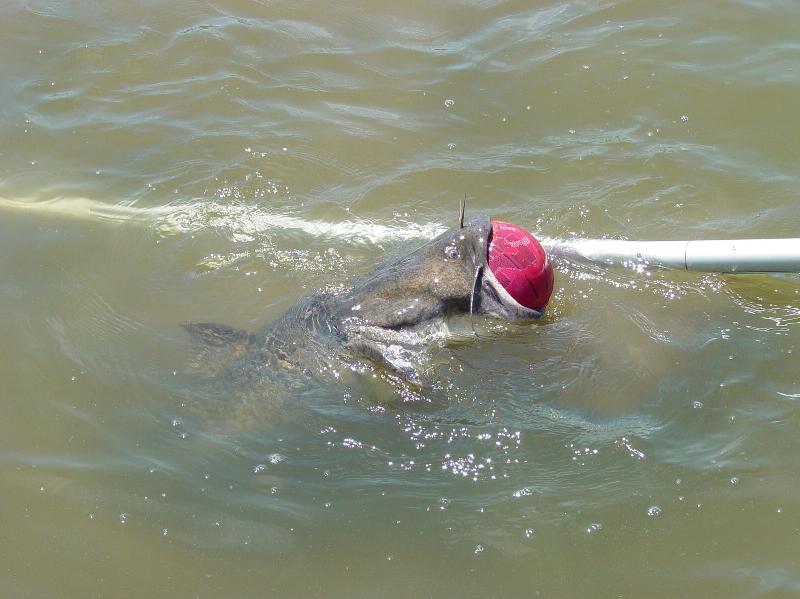
But on this Saturday in November it really is a fish story, or so I thought.
Earlier in the month, I received an e-mail from Dan Gomez. It told of this tale from Grand Lake St. Marys:
A guy who lives at Lake Saint Mary’s (60 miles north of Dayton, OH ) saw a ball bouncing around kind of strange in the lake and went to investigate.
It turned out to be a flathead catfish that had apparently tried to swallow a basketball which became stuck in its mouth!!
The fish was totally exhausted from trying to dive, but unable to, because the ball would always bring him back up to the surface.
The guy tried numerous times to get the ball out, but was unsuccessful. He finally had his wife cut the ball in order to deflate it and release the hungry catfish.
You probably wouldn’t have believed this, if you hadn’t seen the following pictures:
oooo
oooo
oooo
oooo
oooo
Be kinder than necessary because everyone bites off more than they can chew sometime in life…
oooOOOooo
I loved the story but then wanted to know: was it true?
Sadly, the story is true but the location is false. Snopes.com researched this back in 2005. Hoax-Slayer.com wrote about it in 2007 after it “went viral”.
The true story originated in the Whichita (Kansas) Eagle on May 30, 2004. The man in the photo turns out to be Bill Driver, a fisherman at Sandalwood Lake who discovered the catfish with a taste for hardwood glory.
Two wonderful lessons to be learned from both the story and the story behind the story!
Don’t believe everything you read on the Internet and there’s always something fishy about a fisherman’s tale.
With thanks to Cynthia for including me on her recent email.
oooOOOooo
FDA seeks pet owner help on dangerous jerky treats
From Associated Press October 23, 2013 8:17 AM EST
WASHINGTON (AP) — The Food and Drug Administration is appealing to dog and cat owners for information as it struggles to solve a mysterious outbreak of illness and deaths among pets that ate jerky treats.
In a notice to consumers and veterinarians published Tuesday, the agency said it has linked illnesses from jerky pet treats to 3,600 dogs and 10 cats since 2007. About 580 of those pets have died.
The FDA’s Center for Veterinary Medicine has run more than 1,200 tests, visited pet treat manufacturing plants in China and worked with researchers, state labs and foreign governments but hasn’t determined the exact cause of the illness, the FDA statement said.
“This is one of the most elusive and mysterious outbreaks we’ve encountered,” Bernadette Dunham, a veterinarian and head of the FDA vet medicine center, said in the statement.
Pets can suffer from a decreased appetite, decreased activity, vomiting and diarrhea among other symptoms within hours of eating treats sold as jerky tenders or strips made of chicken, duck, sweet potatoes or dried fruit.
Severe cases have involved kidney failure, gastrointestinal bleeding, and a rare kidney disorder, the FDA said.
Most of the jerky treats implicated have been made in China, the FDA said.
The FDA has issued previous warnings. A number of jerky pet treat products were removed from the market in January after a New York state lab reported finding evidence of up to six drugs in certain jerky pet treats made in China, the FDA said. The agency said that while the levels of the drugs were very low and it was unlikely that they caused the illnesses, there was a decrease in reports of jerky-suspected illnesses after the products were removed from the market. FDA believes that the number of reports may have declined simply because fewer jerky treats were available.
oooOOOooo
That FDA Notice is here. I have taken the liberty of republishing it in full.
oooOOOooo
Jerky Pet Treats
The problem
Since 2007, FDA has received reports of illnesses in pets associated with the consumption of jerky pet treats. As of September 24, 2013, FDA has received approximately 3000 reports of pet illnesses which may be related to consumption of the jerky treats. The reports involve more than 3600 dogs, 10 cats and include more than 580 deaths.
What we are doing
FDA is working with laboratories across the country to investigate causes. To date, testing for contaminants in jerky pet treats has not revealed a cause for the illnesses.
We have tested for:
Salmonella
Metals or Elements (such as arsenic, cadmium and lead, etc.)
Markers of irradiation level (such as acyclobutanones).
Pesticides
Antibiotics (including both approved and unapproved sulfanomides and tetracyclines)
Mold and mycotoxins (toxins from mold)
Rodenticides
Nephrotoxins (such as aristolochic acid, maleic acid, paraquat, ethylene glycol, diethylene glycol, toxic hydrocarbons, melamine, and related triazines)
Other chemicals and poisonous compounds (such as endotoxins).
Testing has also included measuring the nutritional composition of jerky pet treats to verify that they contain the ingredients listed on the label and do not contain ingredients that are not listed on the label. Another area of investigation includes the effects of irradiation and its byproducts.
Watch your pet closely. Signs that may occur within hours to days of feeding the jerky treat products are decreased appetite, decreased activity, vomiting, diarrhea (sometimes with blood or mucus), increased water consumption and/or increased urination. Severe cases are diagnosed with pancreatitis, gastrointestinal bleeding, and kidney failure or the resemblance of a rare kidney related illness called Fanconi syndrome.
If your pet has experienced signs of illness, please report it to FDA. Once a consumer has filed a report with their local FDA Consumer Complaint Coordinator, or electronically through our safety reporting portal, FDA will determine whether there is a need to conduct a follow-up phone call or obtain a sample of the jerky pet treat product in question. While FDA does not necessarily respond to every individual complaint submitted, each report becomes part of the body of knowledge that helps to inform FDA on the situation or incident.
What veterinarians can do
The “Dear Veterinarian” letter to veterinary professionals explains how they can provide valuable assistance to the agency’s investigation, requests that veterinarians report to FDA any cases of jerky pet treat-related illness that come to their attention and, when requested, that they also provide samples for diagnostic testing by the Veterinary Laboratory Investigation and Response Network (Vet-LIRN), a network of veterinary laboratories affiliated with FDA.
oooOOOooo
I just mentioned this to Jeannie who says that while we do feed our dogs jerky treats, she is careful to purchase only those brands that are made in the USA.
Yesterday’s long rant was the outcome of me promising ‘a debate’ with Patrice Ayme. Succinctly, I had disagreed with a comment from Patrice where he had written: “Force is the truth of man. Everything else is delusion, even the vegetarian style.” and wanted to respond within the space of a post rather than the more restrictive comment.
For my disagreement with Patrice had been essentially about his statement, ‘Force is the truth of man‘. I don’t recall a war in the last 50 years that has been a force for good.
But then it was Alex’s comment, see below, that stopped me short. For I realised that I was confusing ‘force’ with ‘war’ and that was probably a big mistake on my behalf. Of course, I’m writing this without the benefit of knowing better what Patrice meant in his comment! Blogging, as powerful a media as it is, does not provide for immediate interaction!
Nevertheless, Alex’s comment yesterday was powerfully inspirational. Because so many of us (and I include me in that ‘us’) all too often behave as though we are a species utterly divorced from Nature.
So what to do? Because I am fundamentally at odds with the sentiment expressed by Patrice Ayme; “Force is the truth of man. Everything else is delusion, even the vegetarian style.“
The answer takes us to tomorrow’s post, A return to integrity.
And, yes, it does mention dogs! Rather a lot as it happens!
Dogs are the one species that man has lived with longer than any other species. So when we refer to the qualities of the dog it is simply because we are so familiar with them. In no way does that exclude the numerous other species that bond with man and share the same wonderful qualities.
Qualities so easily seen: Love, Honesty, Loyalty, Trust, Openness, Faithfulness, Forgiveness and Affection. Together they are Integrity.
Of course dogs will kill a rabbit, for example, as readily as a cat will kill a mouse. In this respect force isthe truth of Nature.
The only way for species man to survive on this planet is for every element of man’s existence on this planet to be rethought of in terms of the natural order. Read the comment left by Alex in yesterday’s post:
Hi Paul, what you highlight are examples of disconnection between humanity with nature and each other. I have on my own blog highlighted a concept of Ubuntu – “I am because we are” – which is only possible when the self realises they are part of an inter-connected network of life. Your example of islands of fragmented forest where disconnected wildlife are dying out is how it is with disconnected humanity, we are doomed to destruction because we are cut off from the life-giving connection to nature.
All the problems you highlight are symptoms of the disease of disconnection, until there is reconnection to nature none of these symptoms can be successfully addressed.
War is an integral part of nature, when people seek to dismiss this then they add to the disconnection from nature. I was stung in the face by a drunken wasp a few days ago, this is how it is with nature, it is beautiful but also brutal. Peace and balance are illusions, life is in a becoming because of unbalance and strife. I advocate harmony, like a downhill skier we do not seek to control our surroundings, but instead act in harmony by moving around the obstacles such as rock and tree.
Disconnection can be as large as destroying whole forests by ignorant energy policies to those idiots who kicked a puffball to pieces before I could harvest it, or the new owners of my former home who have taken a chainsaw to all the trees and bushes in the garden. People who are disconnected do not consider how their actions impact nature or people contrary to the philosophy of Ubuntu.
“I am because we are!” Each and every one of us is where we are today, for good or ill, because of what we are: part of Nature. It’s so incredibly obvious – we are a natural species – yet who reading this wouldn’t admit at times to behaving “as though we are a species utterly divorced from Nature.”
Millions of us have pets and animals that we love. Yet we still miss the key truth of our pets. That we are a part of Nature, subject to Natural order, just as much as our pets are. We have so much to learn from our animals.
Take this rather sad story but, nonetheless, a formidable story of the integrity of one species for another. Watch the video.
oooo
Take this rather happier story about the integrity of one species for another. Watch the video.
oooo
Thus when we see the extraordinary benefits that arise from love and trust, from loyalty and faithfulness, and much more, why oh why is so much of our society fundamentally broken?
As John Hurlburt wrote in a recent email, it is because, “we are spiritual bankrupt. We spend too much of our time thinking about ourselves and what we want and too little of our time thinking about other people and what we all need.” John went on to add that this spiritual bankruptcy had preceded our moral and economical bankruptcy. He pointed out that the solution to our moral and financial problems, as well as our salvation as individuals and as a species, is spiritual. “We simply need to love the Nature of God, the earth and each other regardless of what we may believe God to be.”
Now whether you are a religious soul, or a heathen, or somewhere in the middle, it matters not. For if we continue to defy Nature and the natural laws of this planet we are going to be dust before the end of this century. Again in John’s powerful words:
Denying climate change is a death wish.
Nature always wins in the long run.
Nature is balanced. Are we?
As if to endorse the great examples that Nature offers us in terms of the benefits of love and trust, take a look at these three recent photographs from here in Oregon.
A young timid deer showing her trust of me as I sat quietly on the ground less than 30 feet away.
oooo
A mother and her fawn trusting Jean’s love for them, and getting a good feed!
oooo
Little Sweeny and Cleo converting trust to peace and happiness. (Not to mention Jean!)
Now these are not photographs to ‘ooh’ and ‘ah’ over, these are reminders that kindness, generosity, selflessness and trust are part of Nature. All the great virtues and values of man do not come from a vacuum, they come to us via Nature.
We have been blessed by an evolution that has allowed mankind to achieve remarkable things. Even to the point of leaving the confines of our planet and setting foot on the Moon and sending probes from out of our Solar System. There’s a sense, a distinctly tangible sense, that man has conquered all; that we have broken the link from being part of Nature; from being of Nature.
And now Mother Earth is reminding all of her species, every single one of them including species man, that everything is bound by her Natural Laws.
Does this mean that man has to revert to some form of pre-civilised stone-age era? Of course not! Progress can be as much within the Natural order than in competition with it, as it has been in recent times. In fact, Professor Pat Shipman explains our progress is benefited by being part of that Natural order. Here’s how Amazon describe her book, The Animal Connection.
The Animal Connection: A New Perspective on What Makes Us Human
A bold, illuminating new take on the love of animals that drove human evolution.
Why do humans all over the world take in and nurture other animals? This behavior might seem maladaptive—after all, every mouthful given to another species is one that you cannot eat—but in this heartening new study, acclaimed anthropologist Pat Shipman reveals that our propensity to domesticate and care for other animals is in fact among our species’ greatest strengths. For the last 2.6 million years, Shipman explains, humans who coexisted with animals enjoyed definite adaptive and cultural advantages. To illustrate this point, Shipman gives us a tour of the milestones in human civilization-from agriculture to art and even language—and describes how we reached each stage through our unique relationship with other animals. The Animal Connection reaffirms our love of animals as something both innate and distinctly human, revealing that the process of domestication not only changed animals but had a resounding impact on us as well.
It’s a powerful read and greatly recommended. Here’s an extract from the book [page 274, my emphasis]:
Clearly, part of the basis of our intimacy with tame or domesticated animals involves physical contact. People who work with animals touch them. It doesn’t matter if you are a horse breeder, a farmer raising pigs, a pet owner, a zoo keeper, or a veterinarian, we touch them, stroke them, hug them. Many of us kiss our animals and many allow them to sleep with us. We touch animals because this is a crucial aspect of the nonverbal communication that we have evolved over millennia. We touch animals because it raises our oxytocin levels – and the animal’s oxytocin levels. We touch animals because we and they enjoy it.
From the first stone tool to the origin of language and the most recent living tools, our involvement with animals has directed our course.
So to round this off. These last two posts came from my need to debate with Patrice the statement that “Force is the truth of man.” If Patrice’s meaning was that the truth of man is subject to the force of Nature, then I agree one-hundred percent.
For the time for man to recognise that the force of Nature is “the truth of man” is running out.
Each of us, whoever you are, for the sake of your children and for all of the children in the world, embrace today the qualities, the values of Nature.
A further reminder of the power of positive thinking!
So much for fine ambitions! I’m recalling a post I published just one week ago; yes 7 tiny days past! That was the post that I named ‘Staying positive – the test.‘ Where I opened it, as follows:
Where hope and inspiration meets the cold world of reality!
Yesterday’s post Don’t frighten the horses was all about reminding me that fear is a very bad motivator. I promoted the Transition message, ”If we can’t imagine a positive future we won’t be able to create it.”
This small chastisement comes on the back of yesterday’s post where I had a ‘big dump’ of feelings about some of the madder aspects of our so-called modern life.
Then later on in the day, I just happened to come across a flurry of positive stories that I wanted to share.
First, here’s a scan of the assessors map of our property, near Merlin, OR.
A little over 13 acres, orientated West-East.
NB: The blue line is the course of Bummer Creek, that historically has had a year-round flow, albeit a low flow during Summer months. The rectangular green area to the West of the open land was a tennis court, now removed. The main house is 200 feet West of that tennis court area, completely hidden by surrounding trees. It is a beautiful place for us and all our animals!
The first positive story was as a result of watching that TED Talk by Marla Spivak. Jean and I thought that as we have well over 4 acres of open grassland, let’s see what we can do to attract and assist our local bees.
Jean and I are supporters of Oregon Wild and a quick call to them about assisting local bees elicited this:
Hi Paul,
Nice speaking with you this morning. For your inquiries on how best to attract bees to your acreage, I would recommend the Xerces Society, a local Oregon group with a Pollinator Campaign. They have a lot of great info on their website, and you could also give them a call at 855.232.6639.
Also, Representative Earl Blumenauer here in Portland has been a big advocate for bee conservation and recently introduced the Save America’s Pollinators Act if you’re interested in bee conservation activism.
Hope this helps!
Cheers,
It was then an easy step to contact the Xerces Society, that very helpfully produced the following advice:
Hello Paul-
Thank you for calling the Xerces Society with your questions today. We have many resources available to landowners who wish to conserve pollinators and create habitat on their land. Here are links to several of our resources:
Attracting Native Pollinators
Pollinator Habitat Installation Guides
Regional guidance on site prep, planting, and management for pollinator habitat. We have guidelines for creating pollinator meadows and flowering hedgerows. Each guideline has an appendix with regionally appropriate bee magnet plants.
Conclusive evidence that mankind is part of nature!
Subtext = There are times when our arrogance and mindlessness beggars belief.
Sorry, if you pick up on a degree of emotion in today’s post. It’s impossible to hide!
Here’s what has fed that.
A few days ago, I came across some stunning images of bees, over on the Flickr website. Particularly, I was here and offer below a small sample of what was seen:
Chrysidid Wasp, U, Side, UT, Utah Co_2013-08-07-17.51.41 ZS PMax
Much more may be learned about bees by going to the USGS Bee Inventory and Monitoring Lab (BIML). The BIML website is here.
Then coincidentally (seems to be happening much of this week!) Jean and I watched the latest TED Talk by Marla Spivak. It was called: Why bees are disappearing.
Marla’s talk is just 15-minutes long, and I beg of you to watch it because the ramifications for all of warm-blooded life on this planet are frightening if we don’t amend our ways – and amend them pretty damn soon!
Honeybees have thrived for 50 million years, each colony 40 to 50,000 individuals coordinated in amazing harmony. So why, seven years ago, did colonies start dying en masse? Marla Spivak reveals four reasons which are interacting with tragic consequences. This is not simply a problem because bees pollinate a third of the world’s crops. Could this incredible species be holding up a mirror for us?
Marla Spivak researches bees’ behavior and biology in an effort to preserve this threatened, but ecologically essential, insect. Full bio »
You may also want to go across to the University of Minnesota‘s Bee Lab website, where there is much more from Marla about our bees.
Washington — The Centers for Disease Control on Monday confirmed a link between routine use of antibiotics in livestock and growing bacterial resistance that is killing at least 23,000 people a year.
The report is the first by the government to estimate how many people die annually of infections that no longer respond to antibiotics because of overuse in people and animals.
CDC Director Thomas Frieden called for urgent steps to scale back and monitor use, or risk reverting to an era when common bacterial infections of the urinary tract, bloodstream, respiratory system and skin routinely killed and maimed.
“We will soon be in a post-antibiotic era if we’re not careful,” Frieden said. “For some patients and some microbes, we are already there.”
The SFC report later goes on to say:
At least 70 percent of all antibiotics in the United States are used to speed growth of farm animals or to prevent diseases among animals raised in feedlots. Routine low doses administered to large numbers of animals provide ideal conditions for microbes to develop resistance.
“Widespread use of antibiotics in agriculture has resulted in increased resistance in infections in humans,” Frieden said.
It concludes, thus:
Legislation goes nowhere
Organic certification prohibits antibiotic use, but raising such animals is costly, he said.
Rep. Henry Waxman, D-Los Angeles, first introduced legislation in 1980 to restrict antibiotic use in livestock. For the past decade, Rep. Louise Slaughter, D-N.Y., has introduced similar bills, joined in recent years by Sens. Dianne Feinstein, D-Calif., and Kirsten Gillibrand, D-N.Y., but the measures have gone nowhere.
“We constantly hear from the pharmaceutical and livestock industry that antibiotic use in livestock is not a problem and we should focus on human use,” said Avinash Kar, a staff attorney at the San Francisco office of the Natural Resources Defense Council, an environmental group that has sued the FDA to force it to ban using antibiotics to promote growth in livestock. The case is now pending before the 2nd U.S. Circuit Court of Appeals.
Americans Are 110 Times More Likely to Die from Contaminated Food Than Terrorism
September 17, 2013 – This article first appeared on Truth-Out.org.
One of the most important revelations from the international drama over Edward Snowden’s NSA leaks in May is the exposure of a nearly lunatic disproportion in threat assessment and spending by the US government. This disproportion has been spawned by a fear-based politics of terror that mandates unlimited money and media attention for even the most tendentious terrorism threats, while lethal domestic risks such as contaminated food from our industrialized agribusiness system are all but ignored. A comparison of federal spending on food safety intelligence versus antiterrorism intelligence brings the irrationality of the threat assessment process into stark relief.
In 2011, the year of Osama bin Laden’s death, the State Department reported that 17 Americans were killed in all terrorist incidents worldwide. The same year, a single outbreak of listeriosis from tainted cantaloupe killed 33 people in the United States. Foodborne pathogens also sickened 48.7 million, hospitalized 127,839 and caused a total of 3,037 deaths. This is a typical year, not an aberration.
See what I mean about our mindlessness! That article continues:
We have more to fear from contaminated cantaloupe than from al-Qaeda, yet the United States spends $75 billion per year spread across 15 intelligence agencies in a scattershot attempt to prevent terrorism, illegally spying on its own citizens in the process. By comparison, the Food and Drug Administration (FDA) is struggling to secure $1.1 billion in the 2014 federal budget for its food inspection program, while tougher food processing and inspection regulations passed in 2011 are held up by agribusiness lobbying in Congress. The situation is so dire that Jensen Farms, the company that produced the toxic cantaloupe that killed 33 people in 2011, had never been inspected by the FDA.
I can’t stomach any more (whoops, pardon the pun!) so if you want to read to the end, it’s here.
OK, sufficient for today! Need to find a dog to curl up with.
The fact that the Fukushima reactors have been leaking huge amounts of radioactive water ever since the 2011 earthquake is certainly newsworthy. As are the facts that:
If one of the pools collapsed or caught fire, it could have severe adverse impacts not only on Japan … but the rest of the world, including the United States. Indeed, a Senator called it a national security concern for the U.S.:
The radiation caused by the failure of the spent fuel pools in the event of another earthquake could reach the West Coast within days. That absolutely makes the safe containment and protection of this spent fuel a security issue for the United States.
Nuclear expert Arnie Gundersen and physician Helen Caldicott have both said that people should evacuate the Northern Hemisphere if one of the Fukushima fuel pools collapses. Gundersen said:
Move south of the equator if that ever happened, I think that’s probably the lesson there.
Former U.N. adviser Akio Matsumura calls removing the radioactive materials from the Fukushima fuel pools “an issue of human survival”.
So the stakes in decommissioning the fuel pools are high, indeed.
But in 2 months, Tepco – the knuckleheads who caused the accident – are going to start doing this very difficult operation on their own.
Thousands of workers and a small fleet of cranes are preparing for one of the latest efforts to avoid a deepening environmental disaster that has China and other neighbors increasingly worried: removing spent fuel rods from the damaged No. 4 reactor building and storing them in a safer place.
Tom Snitch, a senior professor at the University of Maryland and with more than 30 years’ experience in nuclear issues, said “[Japan officials] need to address the real problems, the spent fuel rods in Unit 4 and the leaking pressure vessels,” he said. “There has been too much work done wiping down walls and duct work in the reactors for any other reason then to do something…. This is a critical global issue and Japan must step up.”
Apologies, that’s more than sufficient to ruin your day! If you really want to read to the end, the item is here.
However, the next item carries a much more positive thread. It was an essay that was highlighted on Linked-In back in June.
The Number One Job Skill in 2020
What’s the crucial career strength that employers everywhere are seeking — even though hardly anyone is talking about it? A great way to find out is by studying this list of fast-growing occupations, as compiled by the U.S. Bureau of Labor Statistics.
Sports coaches and fitness trainers. Massage therapists, registered nurses and physical therapists. School psychologists, music tutors, preschool teachers and speech-language pathologists. Personal financial planners, chauffeurs and private detectives. These are among the fields expected to employ at least 20% more people in the U.S. by 2020.
Did you notice the common thread? Every one of these jobs is all about empathy.
In our fast-paced digital world, there’s lots of hand-wringing about the ways that automation and computer technology are taking away the kinds of jobs that kept our parents and grandparents employed. Walk through a modern factory, and you’ll be stunned by how few humans are needed to tend the machines. Similarly, travel agents, video editors and many other white-collar employees have been pushed to the sidelines by the digital revolution’s faster and cheaper methods.
But there’s no substitute for the magic of a face-to-face interaction with someone else who cares. Even the most ingenious machine-based attempts to mimic human conversation (hello, Siri) can’t match the emotional richness of a real conversation with a real person.
Coincidentally, that thought about the ‘magic of a face-to-face interaction’ really echoed in me. Why? Because, I was ruminating on the wonderful world of human interaction this world of blogging delivers. It seems to combine all the benefits of meeting real people with a global consciousness of those same real people spread way beyond our own local domains.
Hence the reason why I offer the next seemingly unrelated item. The recent post from Sue Dreamwallker that I am republishing in full.
This is just a short post to say a Big thank you to all of my readers and to those who visit regular and comment upon my posts. You Bring with you such light and encouragement, and I often at a loss to say how much your kind support means.
I logged onto my Blog today and discover that my readership has swelled to 400 followers and so I just want to say a Big thank you for all of my oldest friends who have been with me since my beginnings of Windows Live Spaces days when I started in 2007, My first real post after transferring was called Finding Answers here on WordPress. And I remember well spending the best part of a Day getting to know and personalise my header and Blog back then as everything was alien that day was in Oct 2010. A move I am so pleased to have made, as I just love the W.P. Community of friends we have gathered here and whom I have got to know and love.
And I just want to say a big thank you to all of my newest arrivals who have clicked the follow button.. I hope to get around to discovering your blogs as soon as time allows.And to say thank you to my email subscribers also.. And Welcome, I hope you enjoy my thoughts and if not please don’t be shy to air your opinions for that’s how we grow and learn by sharing knowledge and understanding.
Today I just want to post what I have been up to in recent days besides the ‘Day-job’ in picture format.. So if you click the photos, you should be able to read more in the caption headings.. [Photos available on Sue’s blogsite.]
Take care all of you and I have a busy week a head in my Day Job, so I will catch you when I can…
Love and Blessings
~Sue~
Still the resonances continued. For Rebecca Solnit published yesterday an incredibly powerful essay over on TomDispatch. It was called Victories Come in All Sizes. As always, Tom writes a wonderful introduction. Let me skip to Rebecca’s opening paragraphs.
Joy Arises, Rules Fall Apart Thoughts for the Second Anniversary of Occupy Wall Street
By Rebecca Solnit
I would have liked to know what the drummer hoped and what she expected. We’ll never know why she decided to take a drum to the central markets of Paris on October 5, 1789, and why, that day, the tinder was so ready to catch fire and a drumbeat was one of the sparks.
To the beat of that drum, the working women of the marketplace marched all the way to the Palace of Versailles, a dozen miles away, occupied the seat of French royal power, forced the king back to Paris, and got the French Revolution rolling. Far more than with the storming of the Bastille almost three months earlier, it was then that the revolution was really launched — though both were mysterious moments when citizens felt impelled to act and acted together, becoming in the process that mystical body, civil society, the colossus who writes history with her feet and crumples governments with her bare hands.
She strode out of the 1985 earthquake in Mexico City during which parts of the central city collapsed, and so did the credibility and power of the Institutional Revolutionary Party, the PRI that had ruled Mexico for 70 years. She woke up almost three years ago in North Africa, in what was called the Arab Spring, and became a succession of revolutions and revolts still unfolding across the region.
Such transformative moments have happened in many times and many places — sometimes as celebratory revolution, sometimes as terrible calamity, sometimes as both, and they are sometimes reenacted as festivals and carnivals. In these moments, the old order is shattered, governments and elites tremble, and in that rupture civil society is born — or reborn.
However, this further extract covering the closing paragraphs explains why it resonated so strongly with me in terms of the rising consciousness of all the millions of ordinary people just trying to leave the world in a better place:
Part of what gave Occupy its particular beauty was the way the movement defined “we” as the 99%. That (and that contagious meme the 1%) entered our language, offering a way of imagining the world so much more inclusive than just about anything that had preceded it. And what an inclusive movement it was: the usual young white suspects, from really privileged to really desperate, but also a range of participants from World War II to Iraq War veterans to former Black Panthers, from libertarians to liberals to anarchist insurrectionists, from the tenured to the homeless to hip-hop moguls and rock stars.
And there was so much brutality, too, from the young women pepper-sprayed at an early Occupy demonstration and the students infamously pepper-sprayed while sitting peacefully on the campus of the University of California, Davis, to the poet laureate Robert Hass clubbed in the ribs at the Berkeley encampment, 84-year-old Dorli Rainey assaulted by police at Occupy Seattle, and the Iraq War veteran Scott Olsen whose skull was fractured by a projectile fired by the Oakland police. And then, of course, there was the massive police presence and violent way that in a number of cities the movement’s occupiers were finally ejected from their places of “occupation.”
Such overwhelming institutional violence couldn’t have made clearer the degree to which the 1% considered Occupy a genuine threat. At the G-20 economic summit in 2011, the Russian Prime Minister, Dmitry Medvedev, said, “The reward system of shareholders and managers of financial institution[s] should be changed step by step. Otherwise the ‘Occupy Wall Street’ slogan will become fashionable in all developed countries.” That was the voice of fear, because the realized dreams of the 99% are guaranteed to be the 1%’s nightmares.
We’ll never know what that drummer girl in Paris was thinking, but thanks to Schneider’s meticulous and elegant book, we know what one witness-participant was thinking all through the first year of Occupy, and what it was like to be warmed for a few months by that beautiful conflagration that spread across the world, to be part of that huge body that wasn’t exactly civil society, but something akin to it, perhaps in conception even larger than it, as Occupy encampments and general assemblies spread from Auckland to Hong Kong, from Oakland to London in the fall of 2011. Some of them lasted well into 2012, and others spawned things that are still with us: coalitions and alliances and senses of possibility and frameworks for understanding what’s wrong and what could be right. It was a sea-change moment, a watershed movement, a dream realized imperfectly (because only unrealized dreams are perfect), a groundswell that remains ground on which to build.
On the second anniversary of that day in lower Manhattan when people first sat down in outrage and then stayed in dedication and solidarity and hope, remember them, remember how unpredictably the world changes, remember those doing heroic work that you might hear little or nothing about but who are all around you, remember to hope, remember to build. Remember that you are 99% likely to be one of them and take up the burden that is also an invitation to change the world and occupy your dreams.
Rebecca Solnit, author most recently of The Faraway Nearby spent time at Occupy San Francisco, Occupy Oakland, and Occupy Wall Street in 2011 and wrote about Occupy often for TomDispatch in 2011-2012. This essay is adapted from her introduction to Nathan Schneider’s new book, Thank You, Anarchy(University of California Press).
Copyright 2013 Rebecca Solnit
The final element was from an email yesterday in from Chris Snuggs. Chris has previously written guest posts on Learning from Dogs, the last one being In Defence of Politics back on July 8th. In that email was the following photograph.
“You touch my mate and I’ll have ya.”
Let me draw out the thread that I saw in all these items.
That is that the 1% that Rebecca Solnit wrote about are incredibly powerful people, with access to more power, money and control than one can even imagine. But what that 1% cannot control is the growing consciousness, the growing mindfulness and awareness of millions of people across this planet that something as simple and pure and beautiful as unconditional love will conquer all.
The most fundamental lesson that we can learn from dogs!
I have long been a fan of George Monbiot as evidenced by a number of posts on Learning from Dogs from the said gentleman. The last one was The Great Unmentionable, and before that DDT all over again?
George Monbiot is a man of passion about the planet we all live on and securing a sustainable future for us all.
So settle down comfortably for 15 minutes and listen to him. You will understand both his passion and the vital message he offers us.
Published on Sep 9, 2013
Wolves were once native to the US’ Yellowstone National Park — until hunting wiped them out. But when, in 1995, the wolves began to come back (thanks to an aggressive management program), something interesting happened: the rest of the park began to find a new, more healthful balance. In a bold thought experiment, George Monbiot imagines a wilder world in which humans work to restore the complex, lost natural food chains that once surrounded us.
If you would like more of Mr. Monbiot’s writings, then here’s his website.