Category: Animal rescue

We are in and of nature itself!

Yet another powerful essay from George Monbiot.

I wonder at times why the most obvious things about us humans can be so easily overlooked. I have in mind that we humans are a product of a natural world, that we cannot survive without nature; however we examine our lives.

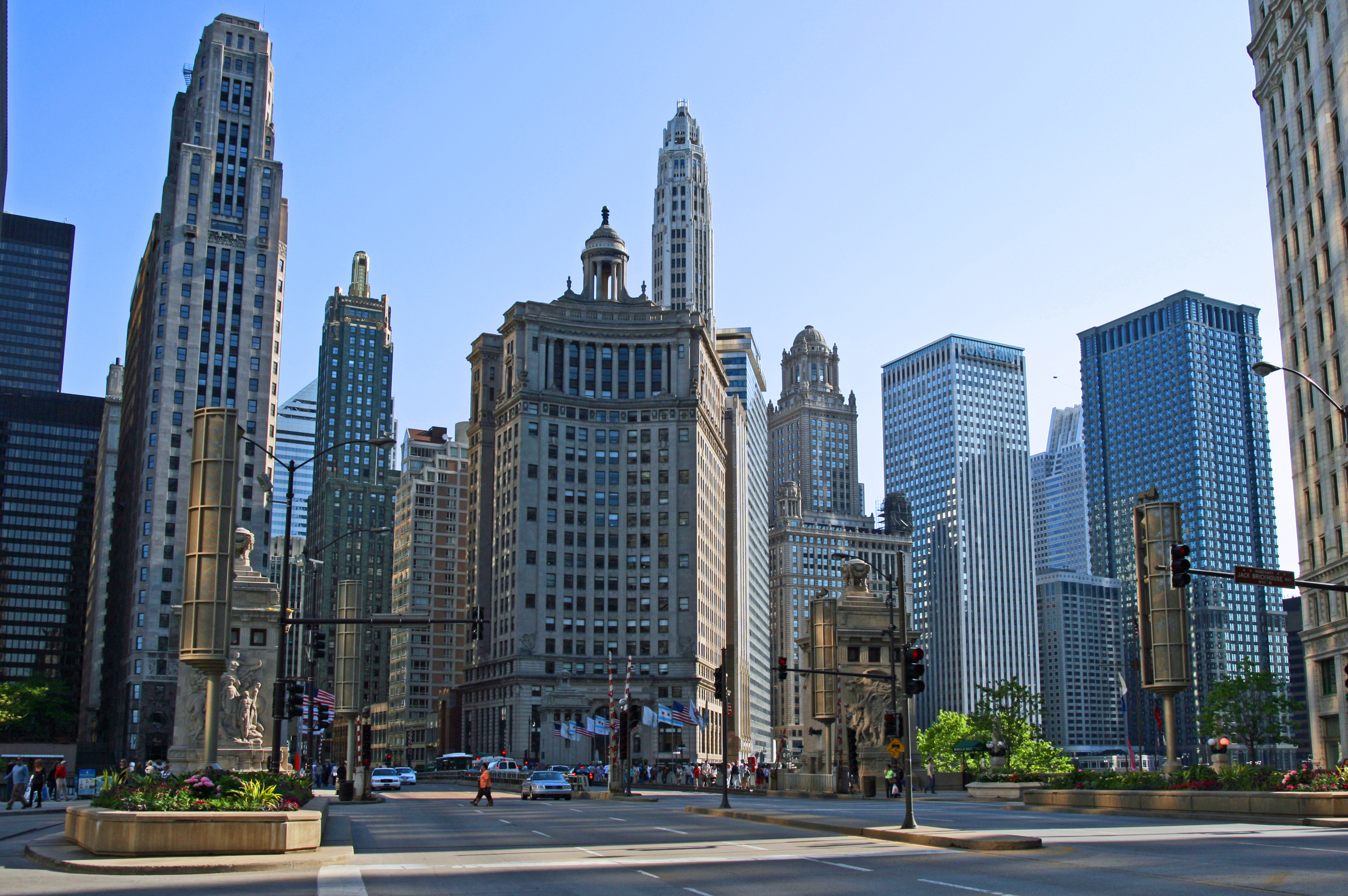
Take, for example, this picture of a city spread, in this case Chicago, where one might expect the natural world to be practically out of sight, reduced to a single point, metaphorically speaking. Yet nature is still hanging on, albeit courtesy of some local gardeners, I don’t doubt.

Chicago_cityscape_(5253757001)

All of which is my introduction to yet another powerful essay from George Monbiot, republished here with his very kind permission.

ooOOoo

Civilisation is Boring

December 9, 2014

We are pre-tuned to the natural world; wired to respond to nature.

By George Monbiot, published on BBC Earth, 8th December 2014

This is the first of BBC Earth’s longform essays about our relationship with the natural world.

One of the penalties of an ecological education is that one lives alone in a world of wounds,” the pioneering conservationist Aldo Leopold wrote. “An ecologist must either harden his shell and make believe that the consequences of science are none of his business, or he must be the doctor who sees the marks of death in a community that believes itself well and does not want to be told otherwise.”(1)

I remembered that when I read the news that the world has lost 52% of its vertebrate wildlife over the past 40 years(2). It’s a figure from which I’m still reeling. To love the natural world is to suffer a series of griefs, each compounding the last. It is to be overtaken by disbelief that we could treat it in this fashion. And, in the darkest moments, it is to succumb to helplessness, to the conviction that we will keep eroding our world of wonders until almost nothing of it remains. There is hope – real hope – as I will explain later, but at times like this it seems remote.

These wounds are inflicted not only on the world’s wildlife but also on ourselves. Civilisation is but a flimsy dust sheet that we have thrown over a psyche rich in emotion and instinct, shaped by the living planet. The hominims from whom we evolved inhabited a fascinating, terrifying world, in which survival depended on constant observation and interpretation. They contended not only with lions and leopards, but with sabretooths and false sabretooths, giant hyaenas and bear dogs (monstrous creatures with a huge bite radius).

As the work of Professor Blaire van Valkenburgh at UCLA suggests, predators in the pre-human past lived at much greater densities than they do today(3). The wear and breakage of their teeth show that competition was so intense that they were forced to consume the entire carcasses of the animals they killed, bones and all, rather than just the prime cuts, as top carnivores tend to do today. In other words, the animals with which we evolved were not just bigger than today’s predators; they were also hungrier.

Navigating this world required astonishing skills. Our ancestors, in the boom-and-bust savannahs, had to travel great distances to find food, through a landscape shimmering with surprise and hazard. Their survival depended upon reacting to the barest signals: the flicker of a tail in the grass, the scent of honey, a change in humidity, tracks in the dust. We still possess these capacities. We carry with us a ghost psyche, adapted to a world we no longer inhabit, which contains – though it remains locked down for much of the time – a boundless capacity for fear and wonder, curiousity and enchantment. We are pre-tuned to the natural world; wired to respond to nature.

In computer games and fantasy novels, we still grapple the monsters of the mind. In the film of Lord of the Rings: the Two Towers, the orcs rode on giant hyaenas(4). In the first Hunger Games film, bear dogs were released into the forest to prey on the contestants(5). I don’t believe these re-creations were accidental: the directors appear to have known enough of our evolutionary history to revive the ancestral terror these animals provoke. The heroic tales that have survived – tales of Ulysses, Sinbad, Sigurd, Beowulf, Cú Chulainn, St George, Arjuna, Lạc Long Quân and Glooskap – are those that resonate with the genetic memories lodged in our minds. I suspect that their essential form has remained unchanged for hundreds of thousands of years; that the encounters with monsters recorded in writing were a consolidation of stories we have been telling since we acquired the capacity to use the past tense.

You can see how such tales might have originated in a remarkable sequence in the BBC’s Human Planet series(6). Three men in southern Kenya, described by the programme as Dorobo people (though this is not a designation many ethnographers accept) stalk to within about 50 metres of a lion kill. Fifteen lions, blood dripping from their jaws, are eating the carcass of a wildebeest. The men suddenly stand and walk towards the pride. Rattled by their astonishing confidence, the lions flee. They watch from the bushes, puzzled and indecisive, as the three men walk up to the carcass, hack off one of the hind legs, then saunter away. That night, the adventurers roast the meat in their cave. “We really robbed those lions”, one of them boasts. “How many do you think there were?”, another asks. “Fifteen, but there might have been more.”

This, surely, is how sagas begin. Those men, led by a veteran of such ruses, are heroes of the old stamp. They outwitted a party of monsters, using guile and audacity, much as Ulysses did. A few hours later, they tell the first version of a story that might echo down the generations, every time with new flourishes and embellishments. Now imagine that, thousand of years hence, lions are long extinct, and the descendants of the Dorobo have only the haziest notion of what they were. They have become monsters even bigger and more dangerous than they were in life, and the feat becomes even more outrageous and unlikely. The saga remains true to its core, but the details have changed. We are those people, still telling the old stories, of encounters with the beasts that shaped us.

The world lives within us, we live within the world. By damaging the living planet we have diminished our existence.

We have been able to do this partly as a result of our ability to compartmentalise. This is another remarkable capacity we have developed, which perhaps reflects the demands of survival in the ever more complex human world we have created. By carving up the world in our minds we have learnt to shut ourselves out of it.

One of the tasks that parents set themselves is to train their children in linearity. Very young children don’t do linearity. Their inner life is discursive, contingent, impulsive. They don’t want to walk in a straight line down the pavement, but to wander off in the direction of whatever attracts their attention. They don’t begin a task with a view to its conclusion. They throw themselves into it, engage for as long as it’s exciting, then suddenly divert to something else.

This is how all animals except adult humans behave. Optimal foraging, the term biologists use to describe the way animals lock onto the best food supply, involves pursuing a task only for as long as it remains rewarding. Our own hunting and gathering would have followed a similar pattern, though it was complicated by our ability to plan and coordinate and to speculate about imagined outcomes. Broadly speaking, ours was a rambling and responsive existence, in which, by comparison to the way we live today, we had little capacity or inclination to impose our will on the world, to lay out a course of action and to follow it without deviation or distraction.

Only with the development of farming did we have to discipline ourselves to think linearly: following a plan from one point to another across weeks or months. Before long we were ploughing in straight lines, making hedges and ditches and tracks in straight lines, building houses and then towns in straight lines. Now almost every aspect of our lives is lived within grids, either concrete or abstract. Linearity, control and management dominate our lives. We fetishise progress: a continuous movement in the same direction. We impose our lines on the messy, contradictory and meandering realities of the human world, because otherwise we would be completely lost in it. We make compartments simple enough, amid the labyrinths we have created, to navigate and understand.

Thus we box ourselves out of the natural world. We become resistant to the experiences that nature has to offer; its spontaneity and serendipity, its unscripted delights, its capacity to shake us out of the frustrations and humiliations which are an inevitable product of the controlled and ordered world we have sought to create. We bully the living world into the grids we impose on ourselves. Even the areas we claim to have set aside for nature are often subjected to rigid management plans, in which the type and the height of the vegetation is precisely ordained and, through grazing or cutting or burning, nature is kept in a state of arrested development to favour an arbitrary assemblage of life over other possible outcomes. Nothing is allowed to change, to enter or leave. We preserve these places as if they were jars of pickles.

The language we use to describe them is also rigid and compartmentalised. In the UK we protect “sites of special scientific interest”, as if the wildlife they contain is of interest only to scientists. The few parts of the seabed which are not ripped up by industrial trawling are described as “reference areas”, as if their only value is as a baseline with which to compare destruction elsewhere. And is there a more alienating term than “reserve”? When we talk about reserve in people, we mean that they seem cold and remote. It reminds me of the old Native American joke: “we used to like the white man, but now we have our reservations.” Even “the environment” is an austere and technical term, which creates no pictures in the mind.

It’s not that we have banished our vestigial psychological equipment from our minds, or lost our instinct for engagement with wildlife. The tremendous popularity of nature programmes testifies to its persistence. I remember sitting in a café listening to a group of bus drivers talking, with great excitement and knowledge, about the spiders they had seen on television the night before, and thinking that, for all our technological sophistication, for all the clever means by which we shield ourselves from our emotions, we remain the people we have always been.

But we have suppressed these traits, and see the world through our fingers, shutting out anything that might spoil the view. We eat meat without even remembering that it has come from an animal, let alone picturing the conditions of its rearing and slaughter. We make no connection in our compartmentalised minds between the beef on our plates and the destruction of rainforests to grow the soya that fed the cattle; between the miles we drive and the oil wells drilled in rare and precious places, and the spills that then pollute them.

In our minds we have sanitised the world. WH Auden’s poem Et in Arcadia Ego describes how “Her jungle growths / Are abated, Her exorbitant monsters abashed, / Her soil mumbled,” while “the autobahn / Thwarts the landscape / In godless Roman arrogance”(7). But the old gods, the old fears, the old knowledge, have not departed. We simply choose not to see. “The farmer’s children / Tiptoe past the shed / Where the gelding knife is kept.”

Civilisation is boring. It has many virtues, but it leaves large parts of our minds unstimulated. It uses just a fraction of our mental and physical capacities. To know what comes next has been perhaps the dominant aim of materially-complex societies. Yet, having achieved it, or almost achieved it, we have been rewarded with a new collection of unmet needs. Many of us, I believe, need something that our planned and ordered lives don’t offer.

I found that something once in Cardigan Bay, on the west coast of Wales. I had stupidly launched my kayak into a ten-foot swell to fish a couple of miles from the shore. As I returned to land, I saw that the tide had risen, and ugly, jumbled breakers were smashing on the seawall. From where I sat, two hundred metres from the shore, I could see that the waves were stained brown by the shingle they flung up. I could hear them cracking and soughing against the wall. It was terrifying.

Behind me I heard a monstrous hiss: a freak wave was about to break over my head. I ducked and braced the paddle against the water. But nothing happened. Then a hooked grey fin, scarred and pitted, rose and skimmed just under the shaft of my paddle. I knew what it was, but the shock of it enhanced my rising fear. I glanced around, almost believing that I was under attack.

Then, from the stern, I heard a different sound: a crash and a rush of water. A gigantic bull dolphin soared into the air and almost over my head. As he flew past, he fixed his eye on mine. I stared at the sea into which he had disappeared, willing him to emerge again, filled with a wild exaltation, and a yearning of the kind that used to afflict me when I woke from that perennial pre-adolescent dream of floating down the stairs, my feet a few inches above the carpet. I realised at that moment that I had been suffering from a drought of sensation which I had come to accept as a condition of middle age, like the loss of the upper reaches of hearing.

I found that missing element again in the Białowieża Forest in eastern Poland. I was walking down a sandy path between oak and lime trees that rose for perhaps one hundred feet without branching. Around them the forest floor frothed with ramsons, celandines, spring peas and May lilies. I had seen boar with their piglets, red squirrels, hazel grouse, a huge bird that might have been an eagle owl, a black woodpecker. As I walked, every nerve seemed stretched, tuned like a string to the forest I was exploring. I rounded a curve in the path and found myself face to face with an animal that looked more like a Christian depiction of the Devil than any other creature I have seen.

I was close enough to see the mucus in her tear ducts. She had small, hooked black horns, heavy brows and eyes so dark that I could not distinguish the irises from the pupils. She wore a neat brown beard and an oddly human fringe between her horns. Her back rose to a crest then tapered away to a narrow rump, from which a black tail, slim as a whip, now twitched. She flared her nostrils and raised her chin. I fancied I could smell her sweet, beery breath. We watched each other for several minutes. I stayed so still that I could feel the blood pounding in my neck. Eventually the bison tossed her head, danced a couple of steps then turned, trotted back down the path then cantered away through the trees.

Experiences like these are the benchmarks of my life, moments in which dormant emotions were rekindled, in which my world was re-enchanted. But such unexpected encounters have been far too rare. Most of the lands in which I walk and the seas in which I swim or paddle my kayak are devoid of almost all large wildlife. I see deer, the occasional fox or badger, seals, but little else. It does not have to be like this. We can recharge the world with wonder, reverse much of the terrible harm we have done to it.

Over the past centuries, farming has expanded onto ever less suitable land. Even places of extremely low fertility have been cultivated or grazed, and the result has been a great disproportion between damage and productivity: the production of a tiny amount of food destroys the vegetation, the wild animals, the soil and the watersheds of entire mountain ranges. In the face of global trade, farming in such areas is becoming ever less viable: it cannot compete with production in fertile parts of the world. This has caused a loss of cultural diversity, which is another source of sadness.

But at the same time it means that the devastated land could be restored. In Europe, according to one forecast, 30 million hectares – an area the size of Poland – will be vacated by farmers by 2030(8). In the United States, two thirds of those parts of the land which were once forested, then cleared, have become forested again(9), as farming and logging have retreated, especially from the eastern half of the country. Rewilding, the mass restoration of ecosystems, which involves pulling down the redundant fences, blocking the drainage ditches, planting trees where necessary, re-establishing missing wildlife and then leaving the land to find its own way, could reverse much of the damage done to these areas. Already, animals like lynx, wolves, bears and moose, on both continents, are moving back into their former ranges.

There are also possibilities of restoring large parts of the sea. Public disgust at a fishing industry that has trashed almost every square metre of seabed on the continental shelves is now generating worldwide demands for marine parks. These are places in which commercial extraction is forbidden and the wildlife of the seas can recover. Even fishing companies can be persuaded to support them, when they discover that the fish migrating out of these places greatly boost their overall catches, a phenomenon known as the spillover effect. Such underwater parks are quickly recolonised by sessile life forms. Fish and crustacea proliferate, breeding freely and growing to great sizes once more. Dolphins, sharks and whales move in.

In these places we can leave our linearity and confinement behind, surrender to the unplanned and emergent world of nature, be surprised once more by joy, as surprise encounters with great beasts (almost all of which, despite our fears, are harmless to us) become possible again. We can rediscover those buried emotions that otherwise remain unexercised. Why should we not have such places on our doorsteps, to escape into when we feel the need?

Rewilding offers something else, even rarer than lynx and wolves and dolphins and whales. Hope. It offers the possibility that our silent spring could be followed by a raucous summer. In seeking to persuade people to honour and protect the living planet, an ounce of hope is worth a ton of despair. We could, perhaps, begin to heal some of the great wounds we have inflicted on the world and on ourselves.

George Monbiot is the author of Feral: rewilding the land, sea and human life. There’s an archive of his articles at http://www.monbiot.com

References:

1. Aldo Leopold, 1949. A Sand County Almanac. Oxford University Press.

2. http://www.theguardian.com/environment/2014/sep/29/earth-lost-50-wildlife-in-40-years-wwf

3. http://www.eci.ox.ac.uk/news/events/2014/megafauna/valkenburgh.pdf

4. https://www.youtube.com/watch?v=F3GFYKIwJ9Y

5. http://www.imdb.com/title/tt1392170/

6. http://vimeo.com/22616099

7. http://www.nybooks.com/articles/archives/1965/jun/03/et-in-arcadia-ego/

8. http://www.rewildingeurope.com/assets/uploads/Downloads/Rewilding-Europe-Brochure-2012.pdf

9. http://articles.chicagotribune.com/2012-11-16/features/ct-prj-1118-book-of-the-month-20121116_1_wild-animals-wildlife-wild-game-meat/2

ooOOoo

I’m sure that you will agree with me that this is a wonderful essay from Mr. Monbiot, an essay that speaks to us in ways that we all intuitively know makes huge sense.

There is hope for us!


Picture parade seventy-four

The second set of wonderful pictures from Tricia.

(If you missed last week’s set they are here.)

Trish6

 oooo

Trish7

oooo

Trish9

oooo

Trish10

oooo

Trish11

oooo

Trish12

oooo

Trish13

oooo

What incredible, wonderful, loving animals they are!

The book! Part Five: Sharing

Dogs share so much of themselves in such an easy fashion. Here’s a story that made me laugh.

A man in a casino walks past three men and a dog playing poker.
“Wow!” he says, “That’s a very clever dog!“
“He’s not that clever,” replies one of the other players.
“Every time he gets a good hand he wags his tail!“

This very clever dog playing poker couldn’t hide his happiness and had to wag his tail!

One of the remarkable things that is noticed by those that have a number of dogs in their lives is the very natural way that they share so much. In our own case, we live with nine dogs, seven of whom are ex-rescue dogs. It would be fair to imagine that any dog that had come either straight off the street, a feral dog in other words, or from a dog rescue centre, would have some behavioural issues. To a small extent, this has been noticed by us; that some dogs come to us with a few minor, anti-social issues.

But the way that existing dogs in the home quickly assess and welcome a new dog, how they instinctively know that they are going to fit in, is a model of openness and acceptance. But more on that in the forthcoming chapters on those topics of openness and acceptance. Here, I want to stick specifically to sharing.

Sharing is synonymous with selflessness. One couldn’t openly share much of our life if it wasn’t easy to push to the back of one’s mind, one’s consciousness, our need for self. In more easy terms, our egos. For if our egos are dominant then selfless sharing would be very difficult; some might say impossible.

A dog seems to know with certainty that its best interest lays down the pathway of getting on with other dogs in the family. Inevitably, the boundaries of sharing, from the perspective of the dog, indeed from a philosophical angle of this quality in the dog, are intermingled with all the other qualities previously written about, and many of the qualities coming up in the next few chapters. So we observe how dogs will lick each other, snuggle up and sleep together, play together and share; all the attributes of a trustful, loving community.

That natural sharing sense of a dog links effortlessly with our human need for sharing. I had to look up and remind myself who it was that coined the expression: “No man is an island.” It was the English poet John Dunne[1], by the way. A beautiful, masterful reflection on our human need for sharing.

There are numerous benefits for having a dog, or two, in one’s life but possibly the core benefit is the one of never feeling alone. Think how often one sees a homeless person by the side of the road begging for food, money or for a lift somewhere else, and nearby is their dog. Irrespective of the fact, the certainty, that being homeless is tough, is the added certainty that it is a great deal tougher if there is a dog to feed and look after. My strong sense is that the sharing of the lives of two creatures, man and dog, more than offsets the added challenges of having a dog in your life if you have no permanent home.

No better underlined than by an article seen on the online presence of Flagpole Magazine[2], the “locally owned, independent voice of Athens, Northeast Georgia.”

The article[3] was called: Dogs and Their Homeless Owners Share Love, if not Shelter, and was written by Stephanie Talmadge. It opened:

If you walk down Clayton Street, specifically near the College Avenue intersection, you may have received a furry greeting from a little brown, scraggly pup. Usually a blur, due to near-constant wagging, this tiny dog, Malika, spends many of her days guarding that corner for her owners, David and Dorothy Gardener, who are experiencing temporary homelessness.

Though the Gardeners are homeless, little Malika is far from it. She’s not in the pound, waiting to be adopted or rescued before her time runs out. She’s not running around in the streets or woods, fending for herself.

Stephanie Talmadge then makes an important point towards the end of her piece:

Homeless or not, owning a pet is a huge responsibility, and obviously it can be extremely rewarding, well worth the complications it creates. Plus, a person doesn’t have to be homeless to have financial barriers to providing good care. Plenty of dogs who live in permanent housing are neglected and mistreated daily.

Just because someone’s homeless shouldn’t mean they’re not allowed to have a companion animal,” Athens-Clarke County Animal Control Superintendent Patrick Rives says, “And there may be some good reasons for them to [have one]… There is a psychological impact of having a companion animal, and I wouldn’t want to take that away from someone.”

Around 1870, Senator George C. Vest delivered a powerful and moving eulogy for the dog; delivered to the jury at the Old Courthouse in Warrensburg. It was in response to his dog, Old Drum, being shot the previous year. Here are his words:

The best friend man has in the world may turn against him and become his enemy. His son, or daughter, that he has reared with loving care, may prove ungrateful. Those who are nearest and dearest to us, those whom we trust with our happiness and good name may become traitors to their faith. The money a man has he may lose. It flies away from him, perhaps when he needs it most. A man’s reputation may be sacrificed in a moment of ill-considered action. The people who are prone to fall on their knees when success is with us may be the first to throw the stone of malice when failure settles its cloud upon our head.

The one absolutely unselfish friend that man can have in this selfish world, the one that never deserts him, the one that never proves ungrateful or treacherous, is his dog. A man’s dog stands by him in prosperity and poverty, in health and in sickness. He will sleep on the cold ground when the wintry winds blow and the snow drives fiercely, if only to be near his master’s side. He will kiss the hand that has no food to offer, he will lick the wounds and sores that come in encounters with the roughness of the world. He guards the sleep of his pauper master as if he were a prince.

When all other friends desert, he remains. When riches take wing, and reputation falls to pieces, he is as constant in his love as the sun in its journey through the heavens.

If fortune drives his master forth, an outcast in the world, friendless and homeless, the faithful dog asks no higher privilege than that of accompanying him, to guard him against danger, to fight against his enemies. And when that last scene of all comes, and death takes his master in its embrace and his body is laid away in the cold ground, no matter if all other friends pursue their way, there, by the graveside will the noble dog be found, his head between his paws, his eyes sad, but open in alert watchfulness, faithful and true, even in death.

Now when it comes to us humans learning the quality of sharing from our dogs, there is no shortage of examples of humans engaged in wonderful acts of sharing. In undertaking research, I came across an article in the Houston Chronicle[4] headed: What makes us human? Teaching, learning and sharing.

We wanted to understand how all of these behaviors came about specifically for humans,” said Steven Schapiro, an M.D. Anderson professor at the Bastrop facility. “And we wanted to understand why our closest living relatives can’t do all of the kinds of things we do.”

Professor Schapiro went on to explain: “To address their question the scientists devised a series of puzzles with escalating difficulty, the solving of which would produce rewards – stickers of increasing attractiveness for kids; carrots, apples and then grapes for the monkeys.

Then observing:

During the experiment the researchers observed that the children treated the puzzles as a social exercise, working them together and giving verbal instruction to one another. When successful, they shared the rewards.

In contrast the chimpanzees and capuchins appeared to only see the puzzles as a means to obtain rewards, and worked mostly independently and did not learn from their efforts. They never shared.

Humans, then, have ratcheted up their culture by teaching one another, imitating the successful behaviours of others and altruism.

When successful, they shared the rewards.

Who knows if us humans uniquely having dogs in our lives over thousands of years, way back to the times when we depended on our survival through hunting and gathering, if learning to share the hunting and the gathering with our dogs, embedded within us the sharing of rewards? I would like to think so.

I want to end this chapter by promoting two wonderful modern examples of a culture of sharing. Firstly, I’m referring to the Buy Nothing Project[5] that has as it’s subheading: Random Acts of Kindness All Day Long.

As the ‘About’ page[6] explains:

Buy Nothing. Give Freely. Share Creatively.

The Buy Nothing Project began as an experimental hyper-local gift economy on Bainbridge Island, WA; in just 8 months, it has become a social movement, growing to over 25,000 members in 150 groups, in 4 countries. Our local groups form gift economies that are complementary and parallel to local cash economies; whether people join because they’d like to quickly get rid of things that are cluttering their lives, or simply to save money by getting things for free, they quickly discover that our groups are not just another free recycling platform. A gift economy’s real wealth is the people involved and the web of connections that forms to support them. Time and again, members of our groups find themselves spending more and more time interacting in our groups, finding new ways to give back to the community that has brought humor, entertainment, and yes, free stuff into their lives. The Buy Nothing Project is about setting the scarcity model of our cash economy aside in favor of creatively and collaboratively sharing the abundance around us.

It has become a social movement …. collaboratively sharing the abundance around us.

Secondly, to a completely different example, that of software. Let me explain or, better, let me quote from the home-page of the website Open Source Initiative[7]: “Open source software is software that can be freely used, changed, and shared (in modified or unmodified form) by anyone.” [My emphasis]

Here’s the opening paragraph of an article[8] in Forbes Magazine; written by George Bradt.

Why Open Leadership Has Become Essential

You would not be reading this if open source software did not exist. Without open source standards, the Internet would not exist. This article would not exist. Those of you whose parents met on Match.com would not exist. All of you should be thankful for open source software. Now, as the world has changed, open source software’s principles of openness, transparency and meritocracy have become essential standards for leadership in general.

… principles of openness, transparency and meritocracy have become essential standards for leadership in general.” Not just for leadership but for all of mankind! Sharing seems like the way to go!

If I was a dog, it would be impossible to stop my tail wagging!

1,930 words Copyright © 2014 Paul Handover

[1] It was a famous line from “Meditation XVII,”
[2] http://www.flagpole.com/about-us
[3] http://www.flagpole.com/news/news-features/2014/10/08/dogs-and-their-homeless-owners-share-love-if-not-shelter
[4] http://www.chron.com/news/houston-texas/article/What-makes-us-human-Teaching-learning-and-3375389.php
[5] http://buynothingproject.org
[6] http://buynothingproject.org/about/
[7] http://opensource.org
[8] http://www.forbes.com/sites/georgebradt/2014/11/25/why-open-leadership-has-become-essential/

A ‘growing’ awareness.

The pun is deliberate!

Just at the moment there seems to be an incredible explosion of awareness about the need to change. Won’t say anymore other than from the day of the Winter Solstice, less that two weeks away, I will be publishing a number of posts about this new awareness and the implications, the positive implications, for the coming years.

To set the tone, I am republishing an article that appeared on the website of the organisation Nature Needs Half. I am grateful for their permission to so do.

ooOOoo

Nature Needs Half in the Earth Island Journal

Originally published in the Earth Island Journal by William H. Funk

Conservation group promoting an ambitious new proposal for wilderness protection

During the last half century conservationists around the world have won some impressive victories to protect wild places. Here in the US, the Wilderness Act preserves some 110 million acres of public land. Private holdings by groups like The Nature Conservancy safeguard tens of millions of additional acres. The idea of protecting ecosystems from industrial development has spread around the world. There’s the Mavuradonha Wilderness in Zimbabwe, the El Carmen ecosystem in northern Mexico, Kissama National Park in Angola, and the Tasmanian Wilderness in Australia, to name just a few stunning parks and preserves; UNESCO’s world heritage list includes 197 sites of special beauty and/or biodiversity.

Photo by Trey Ratcliff Nature Needs Half has set out an unbelievable challenge: to formally, legally set aside one half of Earth’s land and water as interconnected natural areas.

But conservation biologists now recognize that these sanctuaries are limited in what they can accomplish precisely because they are special — which is to say, rare. Parks and preserves are all too often islands of biological integrity in a sea of human development. To really protect natural systems, healthy biomes need to be the rule, not the exception.

To achieve that vision, The WILD Foundation, a multinational NGO based in Boulder, Colorado, is pushing a bold concept called “Nature Needs Half.” In a world in which even the wealthiest governments routinely abdicate their responsibilities toward future generations and the environment, Nature Needs Half has set out an unbelievable challenge: to formally, legally set aside one half of Earth’s land and water as interconnected natural areas.

This is, of course, a hugely ambitious endeavor, opposing as it does the assumption that Earth’s resources are here to be exploited solely by humans. We live in what some have called the “Anthropocene,” the Age of Man, a world in which every aspect of physical being, from the oceanic depths to the troposphere, has been radically altered by humankind. Rivers are being dammed, forests leveled, oceans emptied and wildlife eradicated. It’s not a pretty picture, but as an empiric truth it’s difficult to refute. Consider a few facts:

The long-term acidification of the oceans by our ongoing buildup of industrial carbon dioxide is killing off coral reefs around the world, resulting in the loss of a critical barrier to storm surge and further endangering coastal areas at heightened risk from rising seas and stronger and more frequent storms.

Hydropower is increasingly being developed in South America, South Asia and sub-Saharan Africa, preventing the migration of anadromous fishes and destroying the elaborate flood-regime ecosystems of biomes like the Amazon.

The accelerating rate of animal and plants extinctions under the twin hammers of climate change and habitat loss is being compared to Earth’s five other extinction events that followed catastrophic geophysical change such as meteor impact or sudden tectonic shifts. In the case of the sixth great extinction, however, the root cause is purely biotic: us. Either from directly causing species decline through poaching, habitat conversion and the introduction of competitive exotic species, or by indirectly altering ecosystems through our industrial assault on the planet’s atmosphere, one in eight birds, one in four mammals, one in five invertebrates, one in three amphibians, and half of the world’s turtles are facing the eternal night of extinction.

Given those facts, the Nature Needs Half goal is startling in the grandiosity of its vision and the ambitious range of its projects. It is also, in a word, fair. “Half the world for humanity, half for the rest of life, to make a planet both self-sustaining and pleasant,” is how eminent naturalist E.O. Wilson explains the idea in his book The Future of Life. Other endorsers include marine explorer Sylvia Earle and the Zoological Society of London. And while the scope and scale of Nature Needs Half is unprecedented, conservation groups such as the World Wildlife Fund recognize that connecting biodiverse “hotspots” must guide preservation efforts.

The stated goal of Nature Needs Half is “to ensure that enough wild areas of land and water are protected and interconnected (usually at least about half of any given ecoregion) to maintain nature’s life-supporting systems and the diversity of life on Earth, to ensure human health and prosperity, and to secure a bountiful, beautiful legacy of resilient, wild nature.” Underlying this objective is the assumption that humanity, despite its often destructively “unnatural” behavior, is inescapably a part of life on Earth, and that efforts to preserve and protect untrammeled wilderness areas are ultimately means of assuring that the ecosystem services people depend upon are available to us in the distant future. We’re all in this together, and the sooner H. sapiens gets that through its pointy little head, the better off we’ll all be.

How is “protected” defined? The International Union for the Conservation of Nature defines it quite flexibly: “A protected area is a clearly defined geographical space, recognized, dedicated and managed, through legal or other effective means, to achieve the long term conservation of nature with associated ecosystem services and cultural values.” Thus any number of means may be put into play to preserve land, from conservation easements in Virginia to armed ranger patrols in Namibia; what matters is the end result, namely the retention of naturally functioning ecosystems over time.

During the past two decades scientists have determined that the planet’s ecoregions need at least 50 percent ecological integrity, and in some cases more, to ensure the survival of their biological productivity over the long term. (In plain language, “ecological integrity” means that an area’s biodiversity and basic processes are mostly intact.) The goals of Nature Needs Half simply echo the empirical scientific reality: to function over time the world’s biomes need at least half of their structural integrity preserved from human alteration. We are currently falling short of that. A recent report from Yale’s Environmental Performance Index states that just17 percent of Earth’s terrestrial areas and inland waters, and less than 10 percent of marine areas, are currently protected (though for many parks and refuges in poorer countries this protection is often illusory), while about 43 percent remains relatively open and undeveloped, with low human populations and generally undamaged ecosystems.

Nature Needs Half is pursuing its aim in two simultaneous directions: the protection of at least half of the planet’s mostly intact contiguous wilderness areas — concentrating on Eurasian boreal forests, the Amazon basin and Antarctica — and the identification and protection of those fragments or hotspots of abundant biodiversity that have become isolated islands in a sea of human activity.

The aims of Nature Needs Half are precisely the kind of bold approach, rooted in cutting-edge science, which our increasingly desperate times call for. In an Anthropocene of radical climate change and accelerating species extinctions, nothing less than a grand vision of what might yet be achieved will bring about the preservation of our remaining unspoiled landscapes. As the most farsighted wilderness preservation program on Earth, Nature Needs Half promises to be the kind of revolutionary undertaking that, if its aims are fully or even mostly achieved, will be looked back on centuries from now as perhaps the most important attainment in modern human history.

William H. Funk
William H. Funk is a freelance writer, documentary filmmaker and environmental lawyer living in Virginia’s Shenandoah Valley. His work explores the confluences of the natural world, history, culture, law and politics, and as an attorney he has had broad experience with land preservation and endangered species. He may be contacted at williamfunk3@icloud.com or williamhfunk.weebly.com

ooOOoo

Rather puts my next book chapter, Community, into perspective; that chapter being published in thirty minutes time.

The book! Part Five: Trust

A dog offers loyalty, trust and love in exchange for being treated with integrity and compassion.

What do we mean by trust? Roget’s Thesaurus defines the word (in part): “Trust – noun: Absolute certainty in the trustworthiness of another: belief, confidence, dependence, faith, reliance.”

Accepting that this is a book called Learning from Dogs doesn’t prevent me from using two examples of trust from other animals, a wolf and a horse, before offering a personal experience of a dog learning to trust.

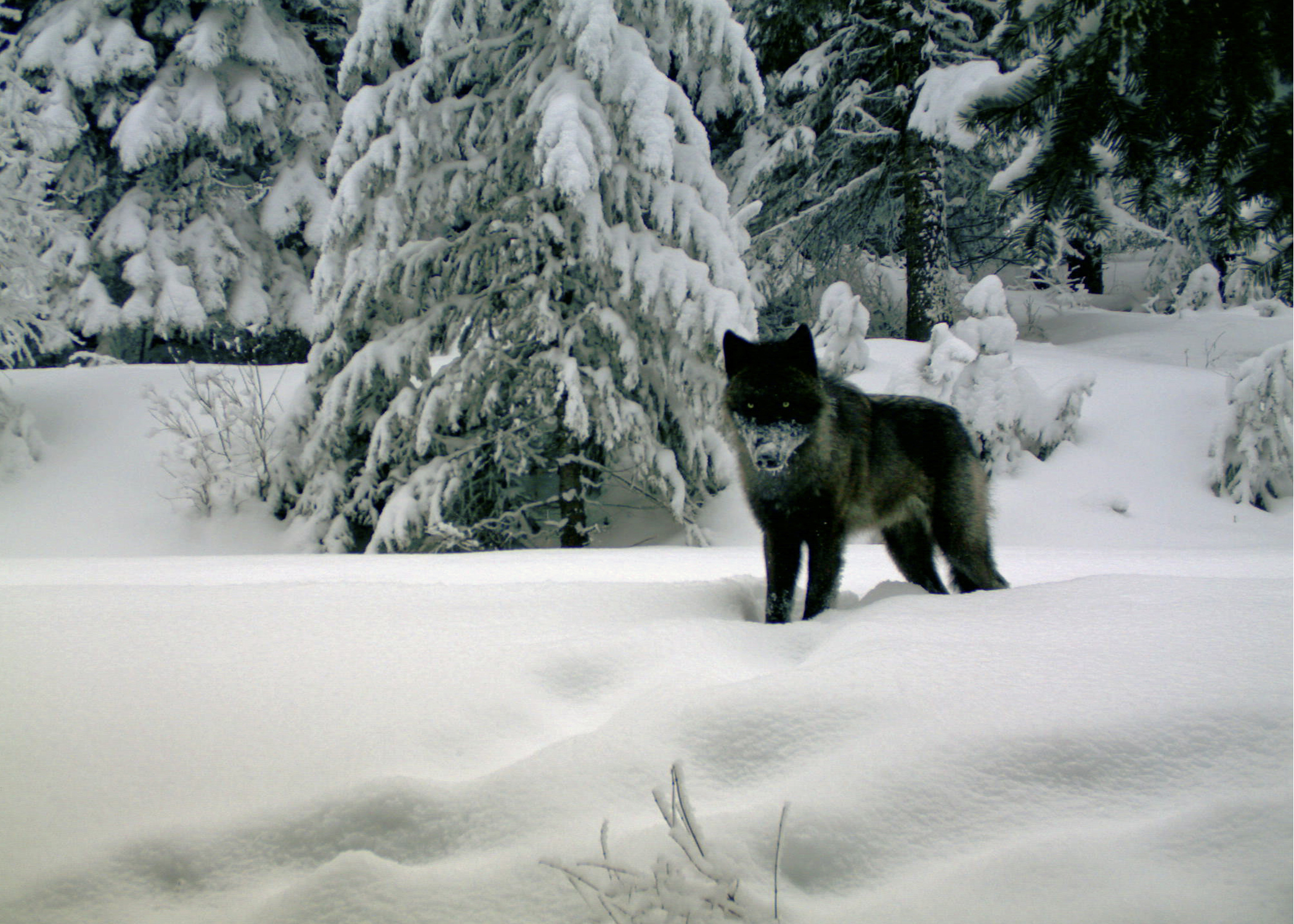
This true story was told to me by DR when we were living in Payson, Arizona. An amazing true story of a relationship between a wild wolf and a man. A story of a particular event in the life of Tim Woods; brother of DR.

It revolves around the coming together of a man sleeping rough, with his dog, on Mingus Mountain, and a fully grown female Grey Wolf. Mingus is in the Black Hills mountain range between Cottonwood and Prescott in the State of Arizona, USA.

DR and his brother, Tim, belong to a large family; there are 7 sons and 2 daughters. Tim had a twin brother, Tom, and DR knew from an early age that Tim was different.

As DR explained,

“Tim was much more enlightened than the rest of us. I remember that Tim and Tom, as twin brothers, could feel each other in almost a mystical manner. I witnessed Tom grabbing his hand in pain when Tim stuck the point of his knife into his (Tim’s) palm. Stuff like that! Tim just saw more of life than most other people.”

The incident involving the wolf was when Tim was in his late 40s and, as mentioned, was living rough in an old shack up in the Black Hill mountains. The shack was simply a plywood shelter with an old couch and a few blankets for the cold nights. The dog was a companion to Tim, his guard and a means of keeping Tim in food; the dog was a great hunter. But Tim was no stranger to living in the wild.

DR again,

“Tim was ex-US Army and a great horseman. There was a time when he was up in the Superstition Mountains, sleeping rough, riding during the day. At night Tim would get the horse to lay down and Tim would sleep with his back next to the horse for warmth.

Tim was up on Mingus Mountain using an old disk from an agricultural harrow as both a cook-pan and plate. After he had finished eating, Tim would leave his ‘plate’ outside his shack. It would be left out in the open over night.

Tim gradually became aware that a creature was coming by and licking the plate clean and so Tim started to leave scraps of food on the plate. Then one night, Tim was awakened to the noise of the owner of the ‘tongue’ and saw that it was a large, female grey wolf.”

DR went on to explain that the wolf became a regular visitor and Tim became sure that the wolf, now having been given the name Luna by Tim, was aware that she was being watched by a human.

Then DR continued, “Over many, many months Luna built up sufficient trust in Tim that eventually she would take food from Tim’s outstretched hand. It was only now a matter of time before Luna started behaving more like a pet dog than the wild wolf that she was. From now on, Luna would stay the night with Tim and his dog, keeping watch over both of them.

Not that I doubted DR’s retelling of the account of Tim and the wolf but, nevertheless, the next action by DR had me in floods of tears. For DR then showed me an unaltered photograph taken in 2006 showing Tim lying back on a blanket with his dog across his waist and there, sitting on its haunches just behind Tim and the dog, was Luna the wolf.

DR underlined this miraculous story by saying that he remembered Tim being distraught because, without warning, Luna stopped coming by. Then a few months later back she was. Tim never did know what lay behind her absence but guessed it might have been because she went off to have pups.

Unfortunately, this wonderful tale does have a sad ending.

Back to DR, “About two years ago, what would have been 2007, Tim lost his dog. He was awakened to hear a pack of coyotes yelping and his dog missing. Then tragically some 6 months later Tim contracted a gall bladder infection. Slowly it became worse. By the time he realised that it was sufficiently serious to require medical treatment, it was too late. Despite the best efforts of modern medicine, Tim died on June 25th, 2009, just 51 years young.

DR’s closing words to me were: “So if you are ever out on Mingus Mountain and hear the howl of a wolf, reflect that it could just be poor Luna calling out for her very special man friend.

One would have to go a very long way to come across a better story of such fabulous trust from an animal towards a human.

The second example of trust from an animal other than a dog is from the Spring of 2014. About that time, we decided that we had sufficient acres of pasture to have a horse. We were put in touch with a horse rescue centre, Strawberry Mountain Rescues, near Roseburg in Oregon; about an hour north from where we lived. Soon after arriving at Strawberry Mountain we took a liking to a 15-year-old gelding. His name was Ranger and he had been found abandoned in the Ochoco National Forest in central Oregon, subsequently arriving at Roseburg. Ranger had a delightful temperament plus his age was a bonus as both Jean and I were the wrong age to be taking on a horse that might outlive us.

A week before Ranger was brought down to us, there was a telephone call from Darla, who runs Strawberry Mountain, asking us if we could take two horses.

This other horse, Ben, was a younger horse that had been ‘rescued’ on the orders of Darla’s local Sheriff because of Ben being in private ownership. It turned out that Ben had been subjected to starvation, to beating and there was evidence that he had been fired at repeatedly in the chest with an air-gun. The Sheriff’s office took away Ben and placed him under the care of Darla. Very quickly, Ben had formed a close relationship with Ranger and Darla was in no doubt that Ben’s relationship with Ranger was part of his journey of returning to a healthy, confident horse. We couldn’t say no to taking both Ben and Ranger despite Darla explaining that Ben was a very wary horse, especially nervous of men and that I should never make any sudden movements around Ben, as much for my own safety.

Unlike Jean who had owned and ridden horses in her younger days, I hardly knew the front from the back of a horse. I decided to approach Ben as I would a new rescue dog.

In less than three weeks, Ben had recovered sufficient trust in men to allow me to stroke his neck. Six months after having Ben and Ranger with us, I can put my face against Ben’s muzzle and stroke the area on his chest that is covered in scars from the air-gun pellets fired into him.

If only us humans could learn to trust in such a manner. Indeed, many persons would harbour anger and distrust in their hearts forever.

So now to dogs.

It’s easy for me to understand the trust in a dog when I look at Pharaoh, my German Shepherd. For he has been part of my life since a few weeks after he was born in South Devon, England, on June 3rd, 2003.

So my experience of Pharaoh doesn’t really offer any insight as to how a dog that has been cruelly treated by other people learns to trust a new home. I had to wait until 2010 to learn the lesson of trust from a dog.

I first met Jean, my wife, in Mexico; to be precise, in San Carlos, Sonora, Mexico. We met just a few days before Christmas, 2007. Despite Jean, as with me, having been born in London, indeed we were born just twenty-three miles from each other, she had been living in Mexico for many years; since Jean and her American husband, Ben, moved down there twenty-five years previously. (Ben died in 2005.)

Very quickly I became aware that Jean was well-known for rescuing Mexican feral dogs. At that time that Jean and I met, she had sixteen dogs, all of them rescues off the streets in and around San Carlos.

In September, 2008, I travelled out to Mexico with my Pharaoh and, subsequently, in the February of 2010, we made plans to move from San Carlos to Payson, in Arizona; some 80 miles North-East of Phoenix. Primarily, because we wanted to be married, and to be married in the USA.

Just a few days before we were due permanently to leave San Carlos with all our animals and belongings and journey the 513 miles (827 km) to Payson, AZ, Jean went outside to the front of the house to find a very lost and disorientated black dog alone on the dusty street. The dog was a female who in the last few weeks had given birth to puppies that had been weaned. That was obvious to Jean because the dog’s teats were still somewhat extended.

The dog had been abandoned outside in the street. A not uncommon happening because many of the local Mexicans knew of Jean’s rescues over many years and when they wanted to abandon a dog it was done outside her house. The poor people of San Carlos sometimes resorted to selling the puppies for a few Pesos and casting the mother dog adrift.

Of course, the dog was taken in and we named her Hazel. Now, rationally, we humans can’t even start to imagine the emotional and psychological damage that a mother dog would incur from having had all her puppies stolen from her. It’s very unlikely that we could imagine the damage a human mother would receive from the violent loss of her young baby.

The one thing that it would be reasonable to assume is that our latest addition to our dog family, Hazel, would initially be a bit wary of ’the species that walks on two legs’!

Once Hazel had been fed and watered by Jean, her coat inspected for ticks and generally checked all over, the next step was to introduce her to some of the other dogs. It all went very smoothly. Then in the evening, when we were sitting down after our evening meal, Hazel came over to the settee and looked up at my eyes. In a way that couldn’t be put clearly into words, I sensed a lost soul in Hazel’s eyes and a desperate need for some loving. Those thoughts were paramount in my mind and, I hoped, available for Hazel to read via my eyes.
Then after a pause of half-a-minute or so, our eyes still locked together, Hazel climbed up next to me on the settee and carefully and cautiously settled her head and front paws across my lap. I caressed and stroked her for much of the rest of the evening. When Jean and I went to bed, Hazel jumped up and went to sleep, and stayed alongside my legs for the whole of the night. Setting a pattern that has continued to this very day.

How did Hazel know to trust me? Only Hazel knows the answer to that one. But ever since that day, nearly five years ago as I write this, the bond between Hazel and me has been perfect. In fact, as I write these words, Hazel is asleep on the rug just behind my chair.

Our society only functions in a civilised manner when there is a predominance of trust around and about us. When we trust the socio-politico foundations of our society. When we trust the legal processes. When we trust that while greed and unfairness are never absent, they are kept well under control.

Having trust in the world around us is an intimate partner to having faith in our world. For without trust there can be no faith and without trust there can be no love.

Unlike the previous chapter on love, no list of behaviours come to mind that allow the growth of unbridled trust. Maybe trust flows from the actions of love. As in one only gets back what you put out.

All that does come to mind is never wavering from offering trust to others and never accepting anything other than trustworthy actions from others.

For eventually that would lead, lead inexorably, to a world where trust was accepted as if it was the air we breathed.

The final thing that comes to mind is always remembering this lesson from our dogs and, by implication, from their ancient ancestor, the wolf.

Returning to that beautiful story of Tim and his wolf, Luna, may I plead that if you ever hear the howl of a wolf, please will you allow yourself to disappear into your inner thoughts for a few precious moments and know that tens of thousands of years ago there was another Tim and another wolf: the start of the long relationship between man and dog.

Or, perhaps, the next time you gaze deeply into your dog’s eyes, sense that first Tim cuddling up to that first Luna and know how far trust has brought us and our dogs.

2,318 words Copyright © 2014 Paul Handover

Picture parade seventy-three

With grateful thanks to Tricia for sending these on.

Trish1

The following goes with the picture above. It has been published before but so what! It deserves repeated postings!

“Dogs Welcome”

A man wrote a letter to a small hotel in a Midwest town he planned to visit on his vacation. He wrote:

I would very much like to bring my dog with me. He is well-groomed and very well behaved. Would you be willing to permit me to keep him in my room with me at night?”

An immediate reply came from the hotel owner, who wrote:

SIR: “I’ve been operating this hotel for many years. In all that time, I’ve never had a dog steal towels, bedclothes, silverware or steal pictures off the walls or use them as a coloring book. I’ve never had to evict a dog in the middle of the night for being drunk and disorderly. And I’ve never had a dog run out on a hotel bill.

Yes, indeed, your dog is welcome at my hotel. And, if your dog will vouch for you, you’re welcome to stay here, too.”

 Trish2

oooo

Trish3

oooo

Trish4

oooo

Trish5

oooo

You all have a great week and keeping loving those dogs of yours!

In respect of life.

The now widely shared story of saving some baby sharks.

baby sharks

I read about this amazing rescue of these baby sharks from the Daily Mail newspaper online.  The wonderful story has now been widely circulated.  This is what I read:

Jaws of life: Extraordinary footage emerges of beachgoer slicing open a pregnant dead shark to save her pups and lead them to the ocean

  • Beachgoer slices open pregnant dead shark to rescue her unborn pups
  • Family found the deceased mother shark washed up on Cape Town beach
  • After seeing movement inside, the man cuts the creature open to free pups
  • Carefully avoiding their teeth, video shows him saving three baby sharks
  • Witnesses shout ‘congratulations’ as the pups are carried to the ocean

This extraordinary video shows the moment a beachgoer sliced open a pregnant dead shark to save her pups and lead them to the ocean.

An American family found the deceased mother shark on a beach in Cape Town, South Africa, but noticed that something inside the creature was still moving.

Realising there could be baby sharks inside, the gruesome but remarkable footage shows the man using a knife to perform a makeshift C-section on the animal.

Here is that video:

The Daily Mail article concludes:

The video’s description reads: ‘This video is a good example of respect to all forms of life… You cannot help but admire the beach goers that helped the baby sharks live a life in the ocean.’

Despite their unconventional entrance to the world, the sharks are likely to live normal, healthy lives. Pups, who stay inside the womb for up to two years, do not stick around for long after birth in case their mother eats them and are capable of independence from the moment they are born.

That’s a lovely story as I’m sure you will all agree.

Faithful dog Masha.

Another wonderful dog story, courtesy of Chris Snuggs.

Over four years ago, I published a post under the title of Faithful dog Hachikō. It was the heart-wrenching story of a Japanese Akita dog called Hachi, Hachikō in Japanese, that continued to wait for his master’s return, Hidesaburō Ueno, for years after the professor’s death.  Here’s an extract from that post:

In 1924, Hidesaburō Ueno, a professor in the agriculture department at the University of Tokyo took in Hachikō as a pet. During his owner’s life Hachikō saw him out from the front door and greeted him at the end of the day at the nearby Shibuya Station. The pair continued their daily routine until May 1925, when Professor Ueno did not return on the usual train one evening. The professor had suffered from a cerebral hemorrhage at the university that day. He died and never returned to the train station where his friend was waiting. Hachikō was loyal and every day for the next nine years he waited sitting there amongst the town’s folk.

Hachikō was given away after his master’s death, but he routinely escaped, showing up again and again at his old home. Eventually, Hachikō apparently realized that Professor Ueno no longer lived at the house. So he went to look for his master at the train station where he had accompanied him so many times before. Each day, Hachikō waited for Professor Ueno to return. And each day he did not see his friend among the commuters at the station.

The permanent fixture at the train station that was Hachikō attracted the attention of other commuters. Many of the people who frequented the Shibuya train station had seen Hachikō and Professor Ueno together each day. They brought Hachikō treats and food to nourish him during his wait.

This continued for nine years with Hachikō appearing precisely when the train was due at the station

A few days ago, Chris sent me details of a faithful dog story that appeared in the English Daily Telegraph newspaper on the 26th November. The story was headed: Loyal dog waits for owner who will never return at hospital for two years. It opened, thus:

A loyal dog has shown up every day for two years at a hospital where her master passed away.

Masha appears at the Siberian hospital’s reception area every morning, the Siberian Times reports.

Her owner was admitted to the hospital in Novosibirsk region, south western Siberia, two years ago after falling ill.

Masha is well cared for by staff who make sure she has a warm bed and food every night. The faithful canine was the elderly man’s only visitor, staff say, and used to run home every night to stand guard before returning the next morning.

If we then go across to that Siberian Times story, we see that the wonderful Masha is linked to Hachikō.

Heartbroken little dog becomes Siberia’s own ‘Hachiko’

By Kate Baklitskaya and Derek Lambie – 24 November 2014

For past year devoted Masha has been waiting in a hospital for the beloved owner who will never return.

'One day, and we very much want this day to come soon, our Masha will trust somebody.' Picture: Svyatoslav Odarenko
‘One day, and we very much want this day to come soon, our Masha will trust somebody.’ Picture: Svyatoslav Odarenko

A little dog that waits in vain at a Siberian hospital for the owner who has already died has been dubbed Russia’s own Hachiko. Heartbroken Masha has been turning up looking for her beloved master every day since he passed away at the facility in Novosibirsk last year.

It is a tale mirroring that of the famously loyal Akita dog Hachiko in Japan, who arrived at a train station every evening for 10 years to greet its owner even though he had died.

Masha has become a well-known, and much loved, figure at the Novosibirsk District Hospital Number One, where patients and workers ensure she has a warm bed and food to eat.

But, aware of her obvious sadness at being unable to find her owner, staff are hoping an animal lover will come forward to adopt her and give her a new home.

Chief doctor Vladimir Bespalov told Novosibirsk Vesti TV: ‘You see her eyes, how sad they are – it’s not the usual shiny eyes for when a dog is happy. You can see this in animals in the same way as with people.

‘There is nothing medicine can do for her here, but we are still hoping that Masha will be able to find another owner. One day, and we very much want this day to come soon, our Masha will trust somebody.’

Masha, who looks like a dachshund with short legs, has been coming into the reception at the hospital in Koltsovo every day for the past two years since her owner was admitted. The man, a pensioner from the village of Dvurechie several kilometres away, had fallen ill and had turned up with his pet.

There are three heart-rending photographs of Masha that you really must look at. The article then concludes:

Whilst he was staying on the ward, Masha was his only visitor and she even trotted off home to guard the house before returning to the hospital in the morning.

Sadly he died a year ago but the loyal dog has continued to turn up every day, perhaps because she has nowhere to live, or because she believes her master is still there.

Nurse Alla Vorontsova said: ‘She is waiting for him, for her owner. Just recently a family tried to adopt her, but Masha ran away and returned to the hospital. She was taken on Friday evening, and at 3am on Saturday she was back here.’

Masha’s story is similar to that of the famous Japanese dog Hachiko, who used to greet his master on his return from work at the Shibuya train station in Tokyo.

When his owner, agricultural science professor Hidesaburo Ueno, died in 1925 he continued to visit the station every night for 10 years still expecting to meet him off his 4pm train.

In 1935 the dog’s body was found in a Tokyo street and his remains were stuffed, mounted and put on display in Japan’s National Science Museum, while a bronze statue was erected outside Shibuya. A Hollywood movie of the sad story, starring Richard Gere, was released in cinemas in 2010.

There are also similarities to Greyfriars Bobby, a little Scottish terrier who was unwilling to leave his dead master’s grave in Edinburgh, Scotland, for 14 years in the 19th century.

What wonderful, loyal, loving friends dogs are to us humans.

A Vision for Nature

Another powerful essay from George Monbiot.

Despite this now being December and NaNoWriMo is behind me, all 53,376 words of it, the next few weeks are still going to be demanding.

I have three more chapters to write plus adding a guest preface and an overhaul of Part One of the book.  In other words, December is still a busy book month, albeit without the word-count pressures of NaNoWriMo.

All a long-winded way of me saying that I will present articles seen elsewhere if I think they are of interest to all of you readers.

Which brings me to another powerful essay from George Monbiot that he published a few days ago and is republished here with George’s very kind permission.

ooOOoo

A Vision for Nature

November 27, 2014

As governments tear down the rules that defend our wildlife from extinction, here’s a positive attempt to stop the wreckage.

By George Monbiot. posted on the Guardian’s website, 21st November 2014

One of the fears of those who seek to defend the natural world is that people won’t act until it is too late. Only when disasters strike will we understand how much damage we have done, and what the consequences might be.

I have some bad news: it’s worse than that. For his fascinating and transformative book, Don’t Even Think About It: why our brains are wired to ignore climate change, George Marshall visited Bastrop in Texas, which had suffered from a record drought followed by a record wildfire, and Sea Bright in New Jersey, which was devastated by Hurricane Sandy. These disasters are likely to have been caused or exacerbated by climate change. He interviewed plenty of people in both places, and in neither case – Republican Texas or Democratic New Jersey – could he find anyone who could recall a conversation about climate change as a potential cause of the catastrophe they had suffered. It simply had not arisen.

The editor of the Bastrop Advertiser told him “Sure, if climate change had a direct impact on us, we would definitely bring it in, but we are more centred around Bastrop County.” The mayor of Sea Bright told him “We just want to go home, and we will deal with all that lofty stuff some other day.” Marshall found that when people are dealing with the damage and rebuilding their lives they are even less inclined than they might otherwise be to talk about the underlying issues.

In his lectures, he makes another important point that – in retrospect – also seems obvious: people often react to crises in perverse and destructive ways. For example, immigrants, Jews, old women and other scapegoats have been blamed for scores of disasters they did not create. And sometimes people respond with behaviour that makes the disaster even worse: think, for instance, of the swing to UKIP, a party run by a former City broker and funded by a gruesome collection of tycoons and financiers, in response to an economic crisis caused by the banks.

I have seen many examples of this reactive denial at work, and I wonder now whether we are encountering another one.

The world’s wild creatures are in crisis. In the past 40 years the world has lost over 50% of its vertebrate wildlife. Hardly anywhere is spared this catastrophe. In the UK, for example, 60% of the 3,000 species whose fate has been studied have declined over the past 50 years. Our living wonders, which have persisted for millions of years, are disappearing in the course of decades.

You might expect governments and officials, faced with a bonfire of this magnitude, to rush to the scene with water and douse it. Instead they have rushed to the scene with cans of petrol.

Critical to the protection of the natural world are regulations: laws which restrain certain activities for the greater public good. Legal restrictions on destruction and pollution are often the only things that stand between species and their extinction.

Industrial interests often hate these laws, as they restrict their profits. The corporate media denigrates and demonises the very concept of regulation. Much of the effort of those who fund political parties is to remove the regulations that protect us and the living planet. Politicians and officials who seek to defend regulation will be taken down, through campaigns of unrelenting viciousness in the media. Everywhere the message has been received.

The European Commission has now ordered a “review” of the two main pillars of the protection of our wildlife: the Birds Directive and the Habitats Directive. It’s likely to be the kind of review conducted by a large tracked vehicle with a steel ball on the end of a chain. The problem, the Commission says, is that these directives could impede the “fitness” of business in Europe.

But do they? Not even Edmund Stoiber, the conservative former president of Bavaria who was appointed by the Commission to wage war on regulation, thinks so. He discovered that European environmental laws account for less than 1% of the costs of regulation to business: the lowest cost of any of the regulations he investigated. “However, businesses perceive the burden to be much higher in this area.” So if these crucial directives are vitiated or scrapped, it will not be because they impede business, but because they are wrongly perceived to impose much greater costs than they do.

The UK chancellor, George Osborne, claimed in 2011 that wildlife regulations were placing ridiculous costs on business. But a review by the environment secretary, Caroline Spelman, concluded the claim was unfounded.

In the United Kingdom, whose leading politicians, like those of Australia and Canada, appear to be little more than channels for corporate power, we are facing a full-spectrum assault on the laws protecting our living treasures.

The Small Business, Enterprise and Employment Bill, now passing through the House of Commons, would oblige future governments to keep deregulating on behalf of business, regardless of the cost to the rest of society. The government’s Red Tape Challenge at first insisted that no new regulation could be introduced unless an existing one is scrapped. Now two must be scrapped in exchange for any new one.

Cameron’s government has set up what it calls a “Star Chamber”, composed of corporate executives and officials from the business department, before which other government departments must appear. They must justify, in front of the sector they regulate, any of the rules these business people don’t like. If they are deemed insufficiently convincing, the rules are junked.

Usually, governments go to some lengths to disguise their intent, and to invent benign names for destructive policies. Not in this case. A Star Chamber perfectly captures the spirt of this enterprise. Here’s how a website about the history of the Tudors describes the original version (my emphasis):

“The power of the court of Star Chamber grew considerably under the Stuarts, and by the time of Charles I it had become a byword for misuse and abuse of power by the king and his circle. … Court sessions were held in secret, with no right of appeal, and punishment was swift and severe to any enemy of the crown. Charles I used the Court of Star Chamber as a sort of Parliamentary substitute during the years 1628-40, when he refused to call Parliament. Finally, in 1641 the Long Parliament abolished the hated Star Chamber, though its name survives still to designate arbitrary, secretive proceedings in opposition to personal rights and liberty.”

Yes, that is exactly what we’re looking at. I suspect the government gave its kangaroo court this name to signal its intent to its corporate funders: we are prepared to be perfectly unreasonable on your behalf, trampling justice, democracy and rational policy-making to give you what you want. We are putting you in charge. So please keep funding us, and please, dear owners of the corporate press, don’t destroy our chances of winning the next election by backing UKIP instead.

Then there’s the Deregulation Bill, which has now almost run its parliamentary course. Among the many ways in which it tilts the balance even further against defending the natural world is Clause 83, which states this:

“A person exercising a regulatory function to which this section applies must, in the exercise of the function, have regard to the desirability of promoting economic growth.”

So bodies such as the Environment Agency or Natural England must promote economic growth, even if it directly threatens the natural wonders they are charged with protecting. For example, companies could save money by tipping pollutants into a river, rather than processing them or disposing of them safely. That means more funds for investment, which could translate into more economic growth. So what should an agency do if it is supposed to prevent pollution and promote economic growth?

Not that the government needs to bother, for it has already stuffed the committees that oversee these bodies.

Look, for example, at the board of Natural England. Its chairman, Andrew Sells, is a housebuilder and major donor to the Conservative Party, who was treasurer of the thinktank Policy Exchange, which inveighs against regulation at every opportunity. Its deputy chairman, David Hill, is also chairman of a private company called the Environment Bank, whose purpose is ”to broker biodiversity offsetting agreements for both developers and landowners.” Biodiversity offsetting is a new means of making the destruction of precious natural places seem acceptable.

The government has recently appointed to this small board not one but two Cumbrian sheep farmers – Will Cockbain and Julia Aglionby – who, my encounters with them suggest, both appear to be fanatically devoted to keeping the uplands sheepwrecked and bare. There’s also a place for the chief executive of a group that I see as a greenwashing facility for the shooting industry, the Game and Wildlife Conservation Trust. And one for a former vice-president of Citibank. The board members with current or former interests in industries that often damage the natural world outnumber those who have devoted their lives to conservation and ecology.

So what do we do about this? You cannot fight assaults of this kind without producing a positive vision of your own.

This is what the RSPB and the Wildlife Trusts have done with the publication of their Nature and Wellbeing Green Paper. It’s a proposal for a new act of parliament modelled on the Climate Change Act 2008. It obliges future governments to protect and restore the living world. It proposes targets for the recovery of species and places, a government agency (the Office for Environmental Responsibility) whose role is to ensure that all departments help to defend wildlife, and Local Ecological Networks, which devolve power to communities to protect the places they love most.

I have problems with some aspects of this proposal, not least its enthusiastic embrace of the Natural Capital Agenda, which seeks to persuade us to value nature by putting a price on it. This strategy is, I believe, astonishingly naïve. To be effective, you must open up political space, not help to close it down by accepting the premises, the values and the framing of your opponents. But I can see what drove them to do it. If the government accepts only policies or regulations that contribute to economic growth, it’s tempting to try to prove that the financial value of wildlife and habits is greater than the financial value to be gained by destroying them, foolish and self-defeating as this exercise may be.

But I’ll put this aside, because their proposal is the most comprehensive attempt yet to douse the bonfire of destruction on which the government is toasting our wildlife like marshmallows. The Climate Change Act and its lasting commitments are just about the only measures that oblige this government to restrict greenhouse gases. It remains a yardstick against which the efforts of all governments can be judged. Should we not also have similar, sustained protection for wildlife and habitats? Only lasting safeguards, not subject to the whims and fads of passing governments, can defend them against extinction.

The Nature and Wellbeing Act is a good example of positive environmentalism, setting the agenda, rather than merely responding to the policies we don’t like. We must do both, but while those who love wildlife have often been effective opponents, we have tended to be less effective proponents.

It will be a struggle, as the times have changed radically. In 2008 the Climate Change Act was supported by the three main political parties. So far the Nature and Wellbeing Act has received the support of the Liberal Democrats (so after the election both their MPs will promote it in parliament) and the Green Party. The Conservatives, despite the green paper’s desperate attempts to speak their language, are unreachable. And where on earth is Labour? So far it has shown no interest at all.

If you care about what is happening to the living world, if you care about the assault on the enthralling and bewitching outcome of millions of years of evolution for the sake of immediate and ephemeral corporate profits, join the campaign and lobby your MPs. The Nature and Wellbeing Act will succeed only through a movement as big as the one that brought the Climate Change Act into existence. Please join it.

www.monbiot.com

ooOOoo

Sometimes, I wonder if such essays, as powerful and well-written as they are, are not just too terrible a commentary on how things are just now.  My justification for republishing them is simply from the point of view that the more the awareness of good ordinary people is enhanced as to these present times, the better the odds that there will be a sufficient social and political reaction to bring this madness to a halt.

Picture parade seventy-two.

The final set of parenting pictures.

Just wish I had many more to share with you as they have been so well received over the previous two Sundays. My thanks to Jim and Janet for sending them to me so that they could be shared. If you missed the first two sets, then you will find links after the last picture.

JG15


oooo

JG16

oooo

JG17

oooo

JG18

oooo

JG19

oooo

JG20

oooo

JG21

oooo

The first of photographs was published on the 16th and the second on the 23rd.