(This was first posted on December 8th, 2016. It is being republished because of the mention of peanut butter in the article presented in my post that came out an hour ago.)
ooOOoo
Keep peanut butter away from your dogs!
Because it could kill your beloved companion.
Fellow author Judi Holdeman sent me an email that contained a warning that had been in a recent health newsletter from Jeff Reagan. Here’s the essence of that warning (and my emphasis in parts):
If your dog is anything like my dog, they probably love a good scoop of peanut butter.
As I’m writing this, my pup Ellie is actually snuggled up next to my leg and going to town on her peanut butter filled Kong. She’s in heaven…
But I want to warn you about a NEW problem with dogs and peanut butter.
There’s been a number of reports lately of dogs who are winding up dead because of their beloved peanut butter.
How is this happening?
It has to do with a new ingredient being used in certain peanut butters.
That ingredient is xylitol.
Xylitol is an artificial sweetener that you’ll recognize from things like gum and candy.
And while it’s generally “safe” for humans to eat, it can be deadly for dogs. Just a small amount of it can cause severe liver damage and can even kill your dog.
From my research, I’ve found 5 brands of peanut butter that have recently added xylitol to their ingredients. I’m listing these brands below…
– Go Nuts Co
– Hank’s Protein Plus Peanut Butter
– Krush Nutrition
– Nuts N More
– P28
Now luckily most of these are NOT the most popular brands.
These brands are usually sold at specialty shops or health food stores.
But I still wanted to alert you to this…
Because if your dog is anything like mine, they probably love peanut butter.
So make sure you’re staying away from the brands I listed above.
And double-check the label on your peanut butter to make sure it doesn’t have xylitol in it.
Feel free to forward this email on to your friends or family that have dogs so they are aware of this…
– Jeff Reagan. Editor, Patriot Health Alliance
Please, good people, do share this as far and wide as possible.
For both humans and, in consequence, for those dogs close to us.
Effectively, the whole of the New Year has been a tad challenging here in Merlin, OR. For even before the snows arrived early on in January, leading to power outages and frozen pipes, the local weather service was warning of unusually severe storms. Indeed, more than once we have heard locals speaking of this looking like a one-hundred-year-storm.
So it was inevitable that there were some anxious periods. Plus the challenging weather may not be not fully behind us. For this is the current (Sunday 18:00 PST) weather warning:
HYDROLOGIC OUTLOOK
NATIONAL WEATHER SERVICE MEDFORD, OR
134 PM PST SUN JAN 15 2017
…Flood Potential Outlook for main stem river flooding, snow melt flooding, and quick rises on rivers and streams in the following counties…in California…Siskiyou…and in Oregon…Coos… Curry…Douglas…Jackson…Josephine…
A strong atmospheric river event is expected to arrive in Southern Oregon and Northern California by Wednesday. While models have trended towards a faster progression of the front, and therefore lesser rainfall amounts, this event may still produce high snow levels, periods of heavy rain, and significant melting of lower level snow-pack Wednesday and into Thursday. With the extensive snow-pack, saturated soils and high river levels, there is a potential for flooding and rapid rises along main stem rivers and small creeks and streams. Urban areas may also experience high water from blocked culverts and runoff.
Continue to monitor forecasts for any updates as this potentially hazardous situation develops.
Anyone who has a dog (or several) in their lives will know how our anxiety is so quickly picked up by our dogs. Ergo, looking after our dogs, as in keeping them relaxed, is really important.
Now read this article that was published over on the Care2 site. I am republishing here for all you good people.
Does your dog suffer from anxiety? A lot of rescued dogs do, and often we don’t know the exact cause for their nervousness. Abuse, neglect or even a single bad experience before you adopted your dog could cause mild to debilitating anxiety. These natural remedies for dog anxiety have worked wonders for my very anxious dog.
We adopted my dog, Jenna, two years ago. Jenna was three years old when we rescued her, and her story still breaks my heart. Lifeline Animal Project rescued Jenna from an animal hoarder when she was six months old. For those first six months, she lived in a crate 24/7. They didn’t even take her out to pee and poop, they just changed the newspaper or laid new paper down. Jenna lived in Lifeline’s no-kill shelter for two and a half years before she was socialized enough to be adoptable.
Even after those years of care, Jenna was still incredibly fearful when we got her home. For the first 36 hours that we had her, she didn’t pee or poop at all. She basically sat on her bed, shaking. By the end of second day we could get her to eat and use the bathroom, but it took weeks for her to finally trust us.
We’ve had Jenna for two years now, and she is a completely different dog. She is still wary of strangers and has her nervous moments, but she loves to run and play. She’s even warmed up to family and friends who visit us often. Jenna is always going to have a high base level of anxiety, but thanks to the natural remedies I’m going to get into below, she also can relax and behave like a normal dog the vast majority of the time.
Look at this mellow, happy gal!
Natural Remedies for Dog Anxiety
Every dog’s situation is different, so what worked for Jenna may not work for your dog. If one of these natural remedies isn’t doing it for your nervous dog, try another one! This is a laundry list of everything that’s worked and one thing that didn’t work for us but does for too many other dog owners to leave out of the list. Pick and choose natural remedies as you find out what helps with your dog’s anxiety.
1. Obedience Training
I can’t recommend a good trainer enough. Training gives your anxious dog confidence, and a good trainer can help you with commands that are especially important. I’ve been taking Jenna to training on and off the entire time that we’ve had her, and it has been a miracle for us. It took a few months for us to start seeing results, so don’t expect a quick fix from this. The long-term benefits for you and your dog are well worth it.
2. Exercise
Getting exercise with your dog is a bonding experience, and it also helps her work off some of that nervous energy. Jenna and I run 9-15 miles a week together, when I can swing it, and she loves to run more than anything else. We had to stop running towards the end of my pregnancy, and on that first run back, she had a huge puppy grin on the whole time we were out.
Running is just one way to get your dog exercise. You can go for walks, play catch, or play training games like “touch.” Whatever you choose to do, talk to your vet first. Some breeds of dog are great runners, but others (like pugs) can overheat easily and need lower-key exercise.
3. Essential Oils
One fear that Jenna is definitely not over is thunderstorms. She shuts down during storms, which can be rough during spring and summer when it storms frequently here in Atlanta. Essential oils combined with Rescue Remedy (more on that below) have helped her out a lot. Choose a calming scent like lavender, and just put a couple of drops onto the dog’s collar. Putting it on the collar is key, because then your dog can smell the soothing oil but can’t eat it.
4. Rescue Remedy
Rescue Remedy is a blend of flower extracts, and they make blends for pets and for humans. We use the liquid for pets and feed it to her in a lump of peanut butter. (**** See my Footnote below) It calms her down considerably. Though, to be honest, I do wonder if getting her favorite treat (peanut butter) has something to do with it. You can find Rescue Remedy at natural food stores or online.
5. Focus Toys
Redirecting your dog’s attention when she’s feeling anxious can be a big help. You can try using commands that you learned in training class, or you can give your dog a focus toy. There are all varieties of these. You can go with a rawhide bone or one of those puzzle toys that dispenses treats when the dog gets it right. Jenna’s favorite toy is a Nylabone. She’s a 50 pound lab mix, so she tears through a rawhide in minutes. She’s had the same Nylabone for months, and it’s still pretty much intact.
6. Watching Your Tone
When your dog is scared, how do you react? Do you say, “It’s OK, sweetie!” in a higher-pitched voice than usual? This is a normal reaction, but it’s actually not the best one when your dog is scared. If your dog sees you as the alpha in the pack, she’s going to take her cues from you, and that kind of attention rewards your dog’s fear, reinforcing it.
Next time your dog is scared, try to react as if everything is normal. You can put a hand on her back, so she knows that you’re there, but try not to make a big deal out of the situation. Don’t say “It’s OK.” Instead, show her that everything is OK with your body language.
7. Crate Training
We were lucky that Jenna was crate trained when we adopted her. For an anxious dog, the crate can be a “safe place” they can retreat to. When there’s a thunderstorm or our neighbors decide to shoot off fireworks, Jenna often curls up in her crate. Dogs like a small, cozy space. If you’re not into crate training, I’d suggest setting up a dog bed in a quiet corner or even under an end table, so your dog has a cozy place that’s hers where she can go when she is scared.
8. The Thunder Shirt
This is the one natural remedy on this list that has not worked for us at all. Jenna is more afraid of the Thunder Shirt than she is of thunder! We are definitely outliers here, though. Every dog owner I know that has an anxious dog recommends the Thunder Shirt to me when I mention Jenna’s fear of storms. This is a great example of how different natural remedies work for some dogs and not others. The Thunder Shirt is definitely worth a shot! If it doesn’t work for you, you can pass it on to a fellow dog owner or donate it to your local shelter.
ooOOoo
Footnote!
Regarding feeding dogs peanut butter, do not, repeat not, do this until you are sure that the brand of peanut butter you are considering is free of the ingredient xylitol.
I wrote of the dangers of xylitol in a post last December 8th. It is being republished in an hour’s time just to make sure the widest number of readers of this place are aware of the danger.
Anyway, this seemed like a very useful article. Plus there’s another benefit of having one’s loved dogs in a relaxed state. It helps the people around those dogs remain relaxed as well!
Brandy and Jean enjoying mutual relaxation!
Chill out everyone! Both the two-legged and the four-legged ones!
We are on course for a warm, sunny day. We were starting to wonder what they felt like!
But there’s never any question what the love of a dog feels like!
I am now going to follow this image up with a video made in England by Sophie Hannah Richardson recording her experience of welcoming to her home a new puppy.
Enjoy (and please read my footnote!).
Say hello to Luna the french bulldog everyone! How cute is she?!
We’ve had our little Luna just over a month now and we absolutely adore her. She’s playful, loving and very sociable! And she’s slowly learning to love the camera!
Footnote: In the last couple of days the number of good people who are following this blog has gone over 2,000. I am truly lost for words and will just leave it like this: Thank you from the bottom of my heart!
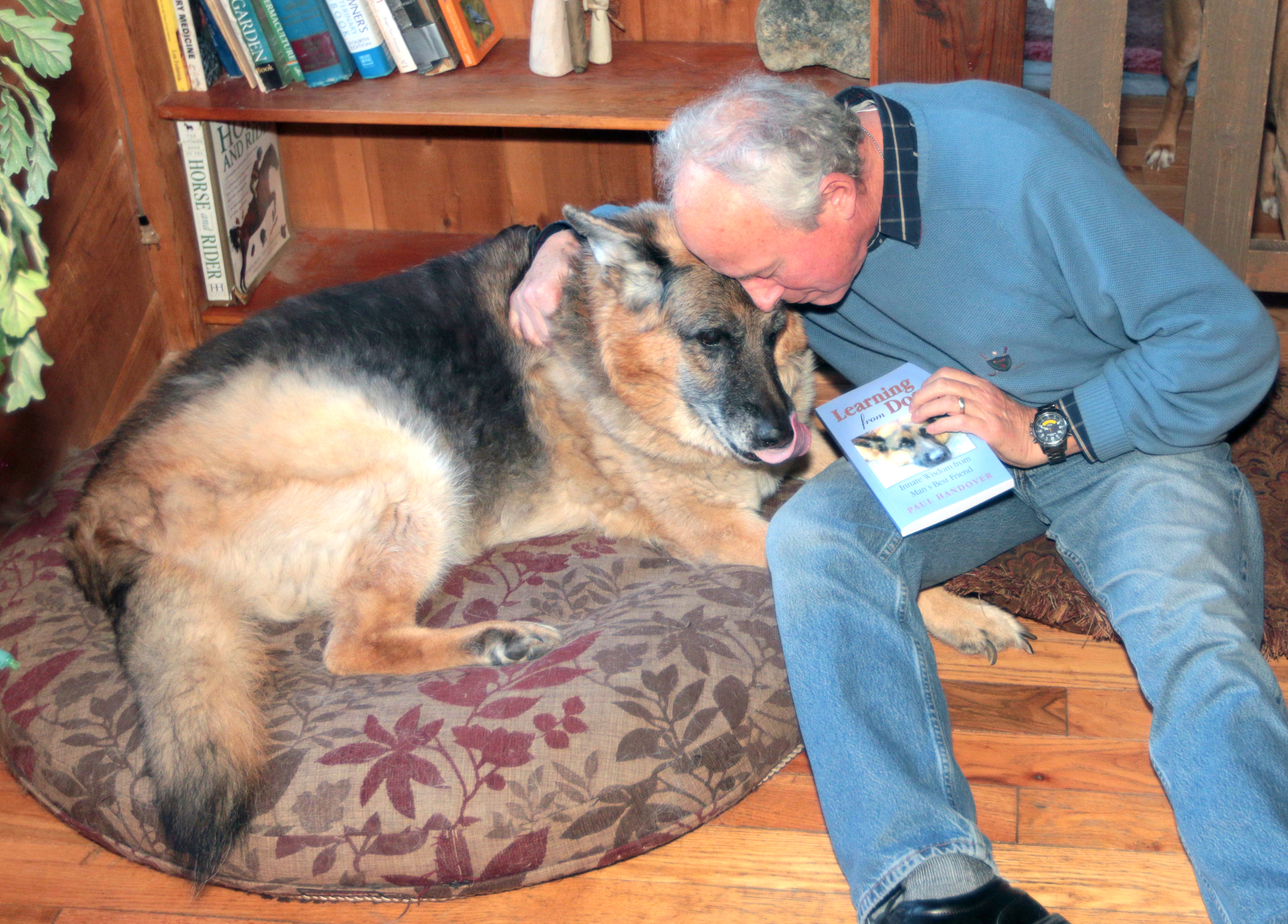
TIMOTHY BULLARD/Daily Courier Paul Handover with Pharaoh, a 12year-old German Shepard that he uses on the cover of his new book about man’s best friend.
The philosophy of hunting in terms of it being ‘right’ or ‘wrong’.
Anyone who comes here for more than a couple of visits will know that both Jean and I are opposed to hunting completely. Period!
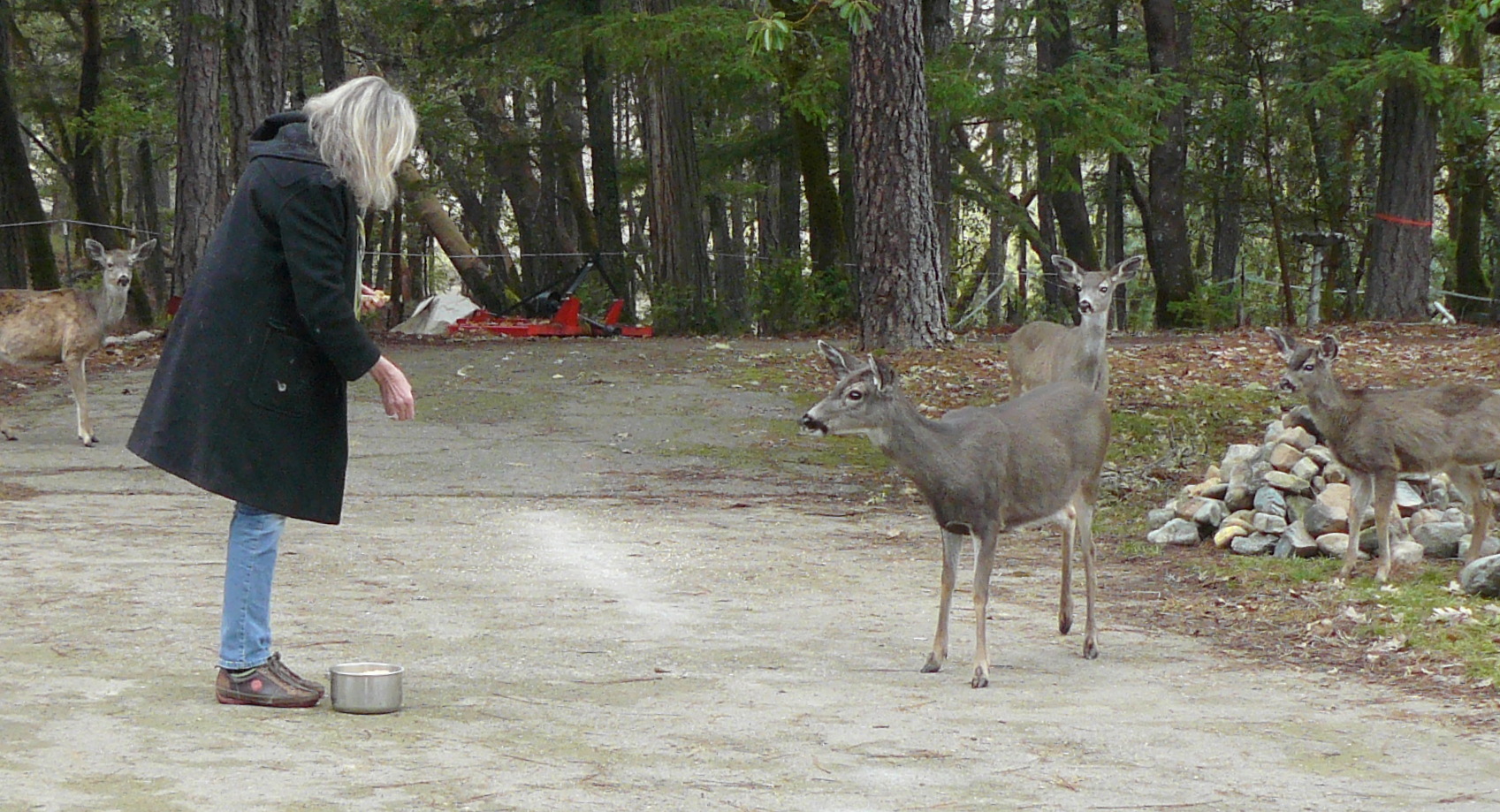
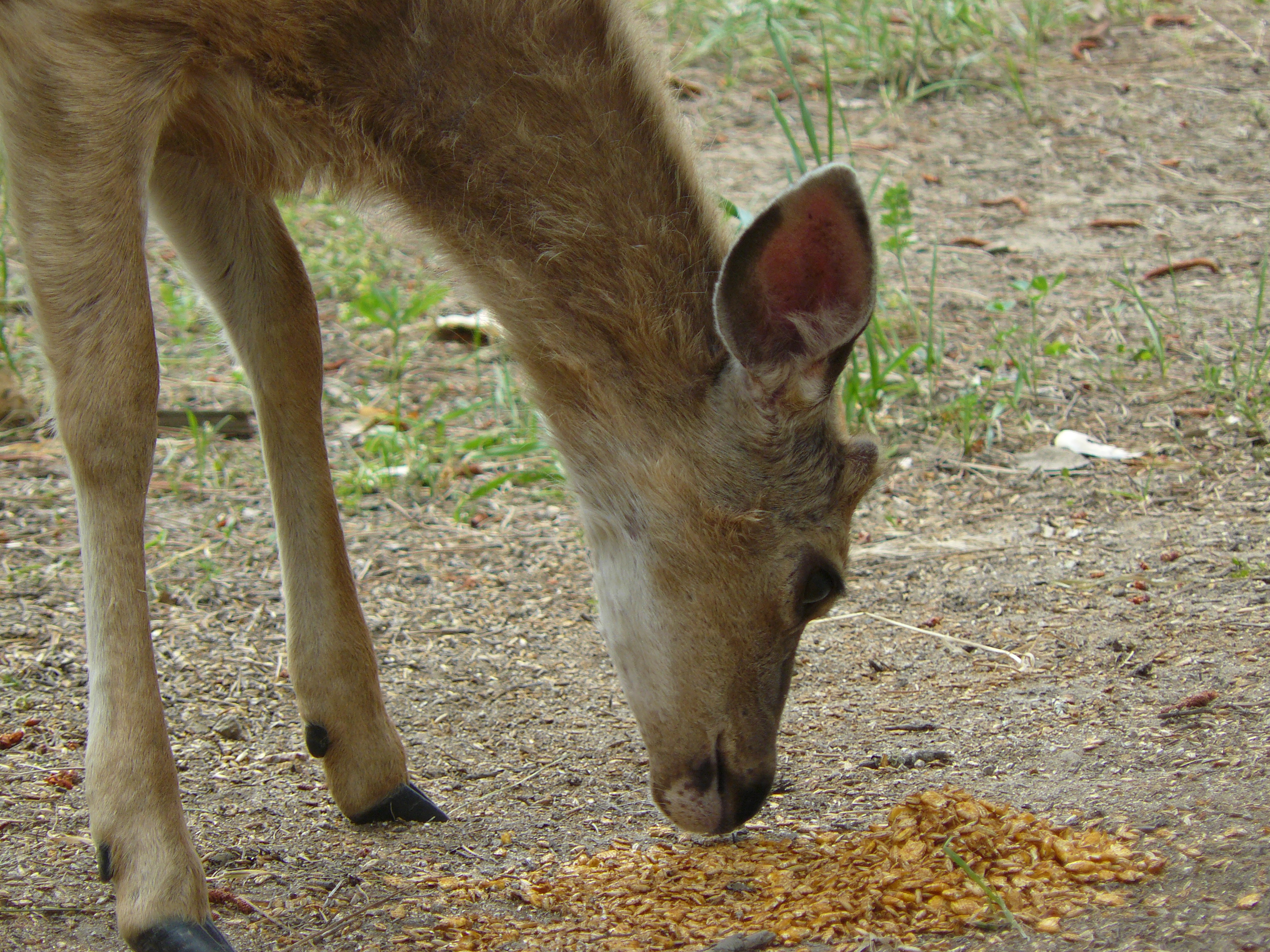
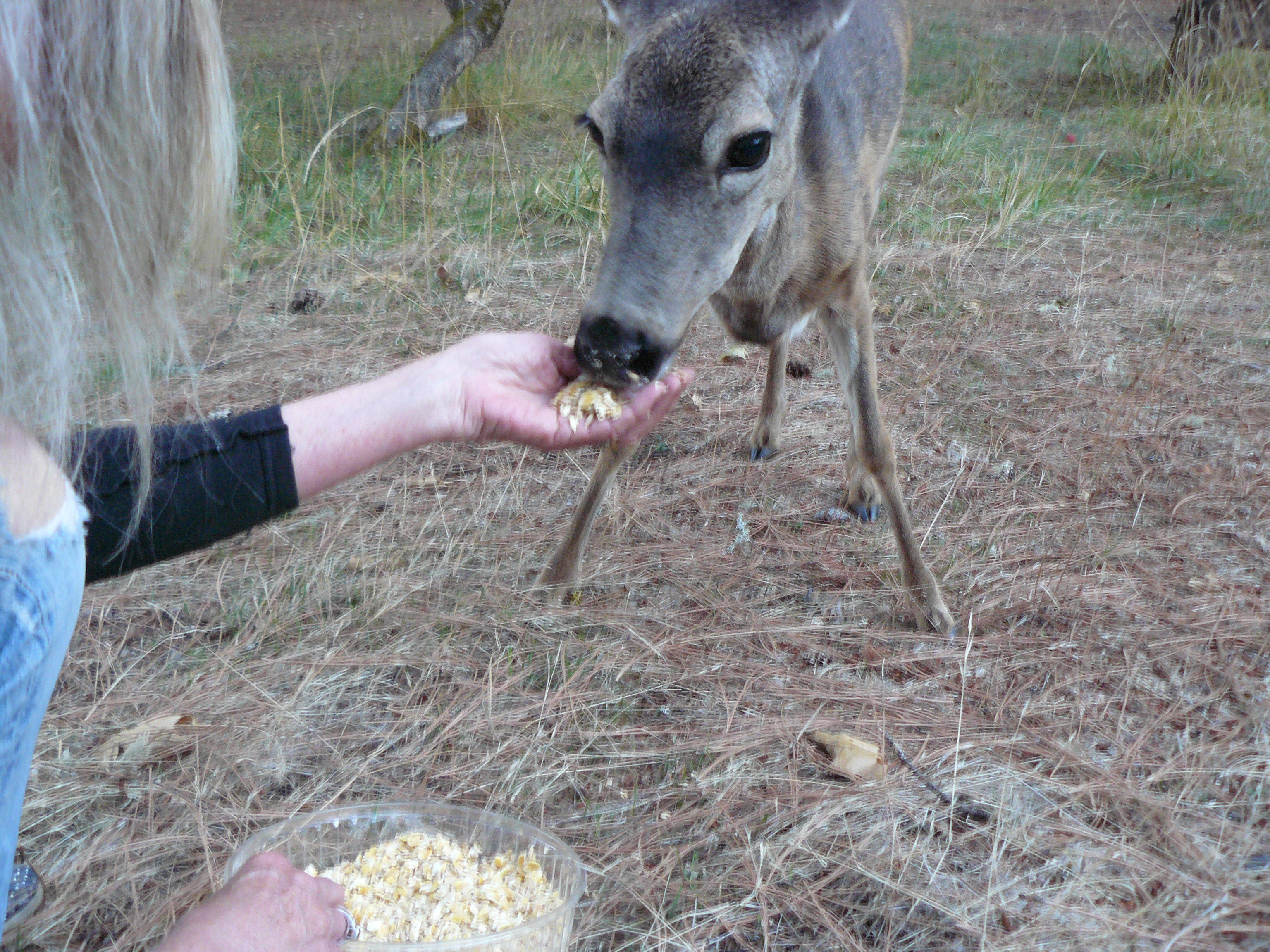
That’s not surprising as there have been a number of posts over the years describing how we feed the wild deer. Here’s three more photographs that haven’t previously been shared with you.
oooo
oooo
But, of course, the opinions of Jean and me are not, and should not be, the rule for the wider population of this part of Oregon.
All I would ask is that there is a proper, mature discussion as to the pros and cons of hunting wild animals in this, the twenty-first century.
Every year as daylight dwindles and trees go bare, debates arise over the morality of hunting. Hunters see the act of stalking and killing deer, ducks, moose and other quarry as humane, necessary and natural, and thus as ethical. Critics respond that hunting is a cruel and useless act that one should be ashamed to carry out.
As a nonhunter, I cannot say anything about what it feels like to shoot or trap an animal. But as a student of philosophy and ethics, I think philosophy can help us clarify, systematize and evaluate the arguments on both sides. And a better sense of the arguments can help us talk to people with whom we disagree.
Therapeutic hunting involves intentionally killing wild animals in order to conserve another species or an entire ecosystem. In one example, Project Isabella, conservation groups hired marksmen to eradicate thousands of feral goats from several Galapagos islands between 1997 and 2006. The goats were overgrazing the islands, threatening the survival of endangered Galapagos tortoises and other species.
Subsistence hunting is intentionally killing wild animals to supply nourishment and material resources for humans. Agreements that allow Native American tribes to hunt whales are justified, in part, by the subsistence value the animals have for the people who hunt them.
Crawford Patkotak, center, leads a prayer after his crew landed a bowhead whale near Barrow, Alaska. Both revered and hunted by the Inupiat, the bowhead whale serves a symbol of tradition, as well as a staple of food. AP Photo/Gregory Bull
In contrast, sport hunting refers to intentionally killing wild animals for enjoyment or fulfillment. Hunters who go after deer because they find the experience exhilarating, or because they want antlers to mount on the wall, are sport hunters.
These categories are not mutually exclusive. A hunter who stalks deer because he or she enjoys the experience and wants decorative antlers may also intend to consume the meat, make pants from the hide and help control local deer populations. The distinctions matter because objections to hunting can change depending on the type of hunting.
What bothers people about hunting: Harm, necessity and character
Critics often argue that hunting is immoral because it requires intentionally inflicting harm on innocent creatures. Even people who are not comfortable extending legal rights to beasts should acknowledge that many animals are sentient – that is, they have the capacity to suffer. If it is wrong to inflict unwanted pain and death on a sentient being, then it is wrong to hunt. I call this position “the objection from harm.”
If sound, the objection from harm would require advocates to oppose all three types of hunting, unless it can be shown that greater harm will befall the animal in question if it is not hunted – for example, if it will be doomed to slow winter starvation. Whether a hunter’s goal is a healthy ecosystem, a nutritious dinner or a personally fulfilling experience, the hunted animal experiences the same harm.
But if inflicting unwanted harm is necessarily wrong, then the source of the harm is irrelevant. Logically, anyone who commits to this position should also oppose predation among animals. When a lion kills a gazelle, it causes as much unwanted harm to the gazelle as any hunter would – far more, in fact.
Lions attack a water buffalo in Tanzania. Oliver Dodd/Wikipedia, CC BY
Few people are willing to go this far. Instead, many critics propose what I call the “objection from unnecessary harm”: it is bad when a hunter shoots a lion, but not when a lion mauls a gazelle, because the lion needs to kill to survive.
Today it is hard to argue that human hunting is strictly necessary in the same way that hunting is necessary for animals. The objection from necessary harm holds that hunting is morally permissible only if it is necessary for the hunter’s survival. “Necessary” could refer to nutritional or ecological need, which would provide moral cover for subsistence and therapeutic hunting. But sport hunting, almost by definition, cannot be defended this way.
Sport hunting also is vulnerable to another critique that I call “the objection from character.” This argument holds that an act is contemptible not only because of the harm it produces, but because of what it reveals about the actor. Many observers find the derivation of pleasure from hunting to be morally repugnant.
In 2015, American dentist Walter Palmer found this out after his African trophy hunt resulted in the death of Cecil the lion. Killing Cecil did no significant ecological damage, and even without human intervention, only one in eight male lions survives to adulthood. It would seem that disgust with Palmer was at least as much a reaction to the person he was perceived to be – someone who pays money to kill majestic creatures – as to the harm he had done.
The hunters I know don’t put much stock in “the objection from character.” First, they point out that one can kill without having hunted and hunt without having killed. Indeed, some unlucky hunters go season after season without taking an animal. Second, they tell me that when a kill does occur, they feel a somber union with and respect for the natural world, not pleasure. Nonetheless, on some level the sport hunter enjoys the experience, and this is the heart of the objection.
Is hunting natural?
In discussions about the morality of hunting, someone inevitably asserts that hunting is a natural activity since all preindustrial human societies engage in it to some degree, and therefore hunting can’t be immoral. But the concept of naturalness is unhelpful and ultimately irrelevant.
A very old moral idea, dating back to the Stoics of ancient Greece, urges us to strive to live in accordance with nature and do that which is natural. Belief in a connection between goodness and naturalness persists today in our use of the word “natural” to market products and lifestyles – often in highly misleading ways. Things that are natural are supposed to be good for us, but also morally good.
Setting aside the challenge of defining “nature” and “natural,” it is dangerous to assume that a thing is virtuous or morally permissible just because it is natural. HIV, earthquakes, Alzheimer’s disease and post-partum depression are all natural. And as The Onion has satirically noted, behaviors including rape, infanticide and the policy of might-makes-right are all present in the natural world.
Head-Smashed-In Buffalo Jump, a UNESCO World Heritage Site in Alberta, Canada, commemorates a place where indigenous peoples of the North American Plains killed buffalo for more than 6,000 years by driving them over a cliff.
Hard conversations
There are many other moral questions associated with hunting. Does it matter whether hunters use bullets, arrows or snares? Is preserving a cultural tradition enough to justify hunting? And is it possible to oppose hunting while still eating farm-raised meat?
As a starting point, though, if you find yourself having one of these debates, first identify what kind of hunting you’re discussing. If your interlocutor objects to hunting, try to discover the basis for their objection. And I believe you should keep nature out of it.
Finally, try to argue with someone who takes a fundamentally different view. Confirmation bias – the unintentional act of confirming the beliefs we already have – is hard to overcome. The only antidote I know of is rational discourse with people whose confirmation bias runs contrary to my own.
ooOOoo
This is a very important essay from Joshua. Well done, that man!
I will just leave you all with this further image.
Two young stags keeping it together. (Taken here at home in July, 2016.)
Best wishes to each of you; irrespective of your view on hunting!
Smaller creatures taking a break!Larger creatures taking a break!
See what the coming week has in store! (Oh, we live in Josephine County!)
FLOOD WATCH
NATIONAL WEATHER SERVICE MEDFORD OR
151 PM PST SAT JAN 7 2017

...HEAVY RAIN WILL COMBINE WITH MELTING SNOW TO CAUSE POSSIBLE
LOCAL FLOODING LATE TONIGHT THROUGH SUNDAY...

.ANOTHER FRONT MOVES INTO THE REGION LATE TONIGHT WITH MODERATE
TO HEAVY RAINFALL RATES. SNOW LEVELS WILL RISE WELL ABOVE THE
VALLEY FLOORS AND WILL COMBINE WITH SNOW MELT TO INCREASE RUN-OFF
THROUGH THE DAY SUNDAY AND INTO SUNDAY NIGHT.
...FLOOD WATCH NOW IN EFFECT FROM LATE TONIGHT THROUGH SUNDAY
EVENING...

THE FLOOD WATCH IS NOW IN EFFECT FOR

* PORTIONS OF THE COOS AND CURRY COUNTY COASTS...EASTERN CURRY
  AND JOSEPHINE COUNTY IN OREGON...AND WESTERN SISKIYOU COUNTY IN
  NORTHERN CALIFORNIA.

* FROM LATE TONIGHT THROUGH SUNDAY EVENING.

* 1 TO 3 INCHES OF RAIN...WITH HIGHEST AMOUNTS NEAR THE COAST AND
  LOWEST NEAR GRANTS PASS...ARE EXPECTED ON SUNDAY. THIS MODERATE
  TO HEAVY RAIN COMBINED WITH SNOW MELT MAY CAUSE URBAN AND SMALL
  STREAM FLOODING. CURRY AND JOSEPHINE COUNTIES ARE THE PRIMARY
  AREAS OF CONCERN...HOWEVER...PORTIONS OF WESTERN SISKIYOU COUNTY
  MAY SEE LOCALIZED FLOODING AS WELL.

* RECENT BROKEN BRANCHES AND OTHER DEBRIS FROM THE HEAVY SNOW
  COMBINED WITH ICE MAY CLOG STORM DRAINS AND CULVERTS IN THE
  WATCH AREA. HEAVY RAIN MAY ALSO CAUSE SLIDES OR DEBRIS FLOWS ON
  THE GAP WILDFIRE BURN SCAR NEAR HORSE CREEK...POSSIBLY REACHING
  HIGHWAY 96 BELOW THE BURN SCAR.

PRECAUTIONARY/PREPAREDNESS ACTIONS...

LANDSLIDES AND DEBRIS FLOWS ARE POSSIBLE DURING THIS FLOOD EVENT.
PEOPLE...STRUCTURES AND ROADS LOCATED BELOW STEEP SLOPES...IN
CANYONS AND NEAR THE MOUTHS OF CANYONS MAY BE A SERIOUS RISK FROM
RAPIDLY MOVING LANDSLIDES. A FLOOD WATCH MEANS THERE IS A
POTENTIAL FOR FLOODING BASED ON CURRENT FORECASTS.
Slowly getting back to normal although yesterday morning saw the water supply fail from the well. (Now restored!) Perhaps not surprising as overnight Thursday-through-Friday the outside temperature went down to 8.6 deg. F. or in ‘new money’ -13 deg. C. (In fact I’m writing this at 10am yesterday waiting for the well engineer to arrive!)
On January 4th, the Care2 site published what has to be one of the most remarkable examples of the loyalty of a dog. This is about as perfect an example of what we humans can learn from our dogs as it gets!
ooOOoo
Loyal Dog Protects Buddy Stuck on Tracks From Speeding Train
If you’ve ever had the slightest doubt about just how loyal dogs can be – not only to people but to other dogs – a pup who’s been named Panda really proved it on Christmas Day.
Panda and his pal, now named Lucy, apparently escaped from their home in western Ukraine and somehow ended up on railroad tracks in the town of Uzhhorod. Lucy had an injury and was unable to stand or move. Panda remained right by her side, warming her with his body in the freezing cold.
A train engineer contacted a group of animal rescue volunteers including Denis Malafeyev, telling them he’d seen the dogs on the tracks for two days. Malafeyev and the others took off to try to save them.
“I saw a train approaching and felt sick,” he wrote on Facebook. “The male dog heard the sound of the approaching train, came close to the female dog and laid down next to her. Both of them pushed their heads toward the ground and let the train pass.”
A viral video Malafeyev posted shows the dogs being run over by the speeding train. It’s chilling to think that this wasn’t the first time this happened to the dogs.
The video is disturbing and difficult to watch, but amazingly, both dogs survived with just minor injuries. It may also seem disturbing that, knowing a train would be approaching, Malafeyev didn’t put down his camera and save the dogs. He wrote in his Facebook post that he and the group had tried, unsuccessfully, to move them, but Panda would bark at them and refuse to let them get close to Lucy.
“Think about it. He was keeping her warm,” Malafeyev wrote. ” I don’t know what to call this: instinct, love, friendship, loyalty? One thing I know for sure is that not all people would do the same as this dog!”
The video has been viewed more than 1.5 million times, with many commenters agreeing with Malafeyev that humans have a lot to learn from this dog.
Four days later, Malafeyev posted new videos of Panda and Lucy on Facebook. The dogs were taken to an animal shelter and have been reunited their owners, UPI reports. (There are conflicting reports that the dogs were adopted and given the names Panda and Lucy by their new owners. Either way, the two dogs are in a forever home together.)
I am going to close this post by including another YouTube video of this incredible act together with the text supporting this video.
Incredible Story of Devotion Dog! 2017
Published on Jan 4, 2017
Incredible Story of Devotion Dog! The dog two days guarded wounded friend on the rails!
On Sunday, December 25 near the village of Uzhgorod in the district of Tyyglash a touching story took place in Ukraine. Two dogs spent about two days on the tracks, one of them was injured, and the other kept the injured dog warmed and protected from the passing trains.
The story was posted on his page on facebook user Denis Malafeev. His friends noticed two dogs lying on the tracks, one of them was injured. Later, the man himself arrived on the scene.
Several attempts to remove the animal from the rails were in vain, because the dog strongly defended her friend from the people!
When the animals heard an approaching train, the healthy dog lay next to a wounded dog and together they were pressed to the ground between the rails. This moment Malafeev managed to capture on video.
The dog did it for two days in a row! Just think! He warmed it for two days, so that it did not freeze and put himself in danger every time! I do not know how to call it: the instinct, love, friendship, loyalty? It is instructive for us!
Together with his friends, they took dogs and took them to the shelter. The Post reports that they are now waiting for their owners.
P.S. Shortly after the publication in social networks there were dog owners. It was learned that the Pandas and Lucy – so call the animals – there are no serious injuries, only bruises and hematomas. I found out that shaggy live in the home side’s S. Tseglovka in Transcarpathia for several years and are committed to each other from puppyhood. Dogs run away from home when someone from the house forgot to close the door on the site. They searched all over the village. But when the owners heard the story of “Romeo and Juliet” on track – immediately rushed to pick up pets from the shelter. Now dogs are at home, and their life is not threatened.
For two days that one dog protected the other. It is beyond imagination to think how frightening a speeding train would have been for those two precious dogs. Not just once but numerous times before rescue came to them.
Such a privilege to be able to share this with you.
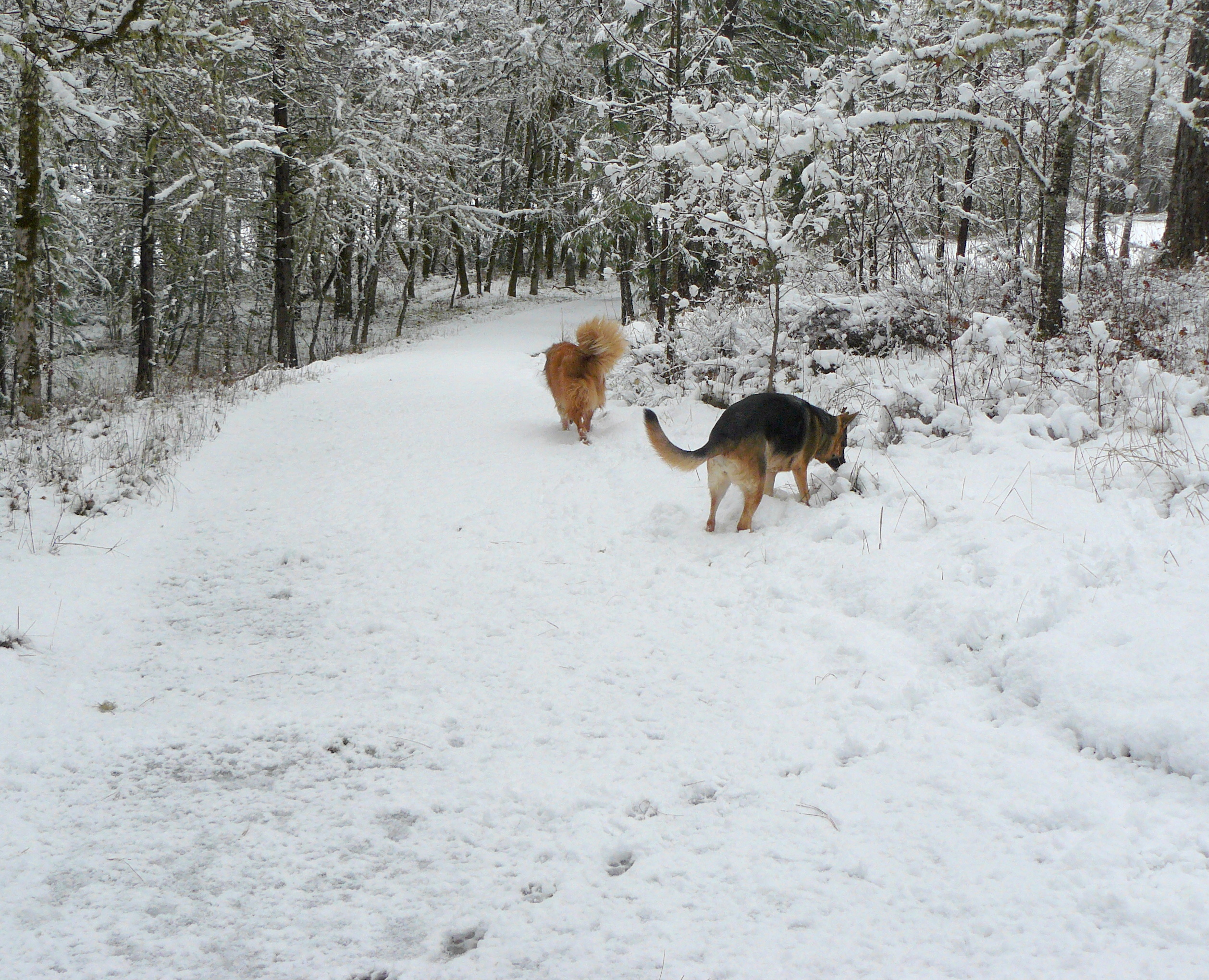
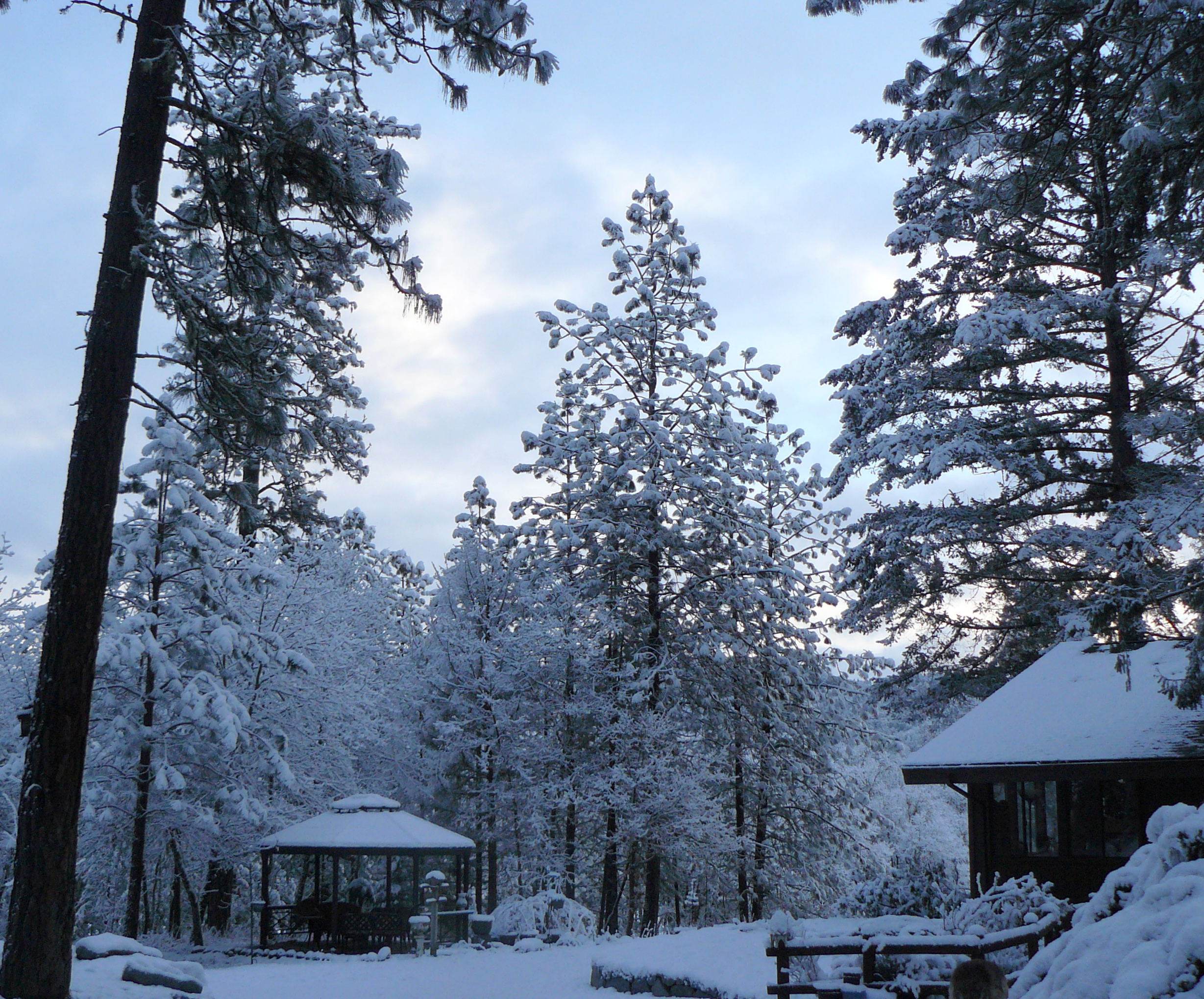
We woke yesterday on the first day of the New Year to a classic Winter’s scene: Snow!
Ben and Ranger enjoying a winter’s breakfast.
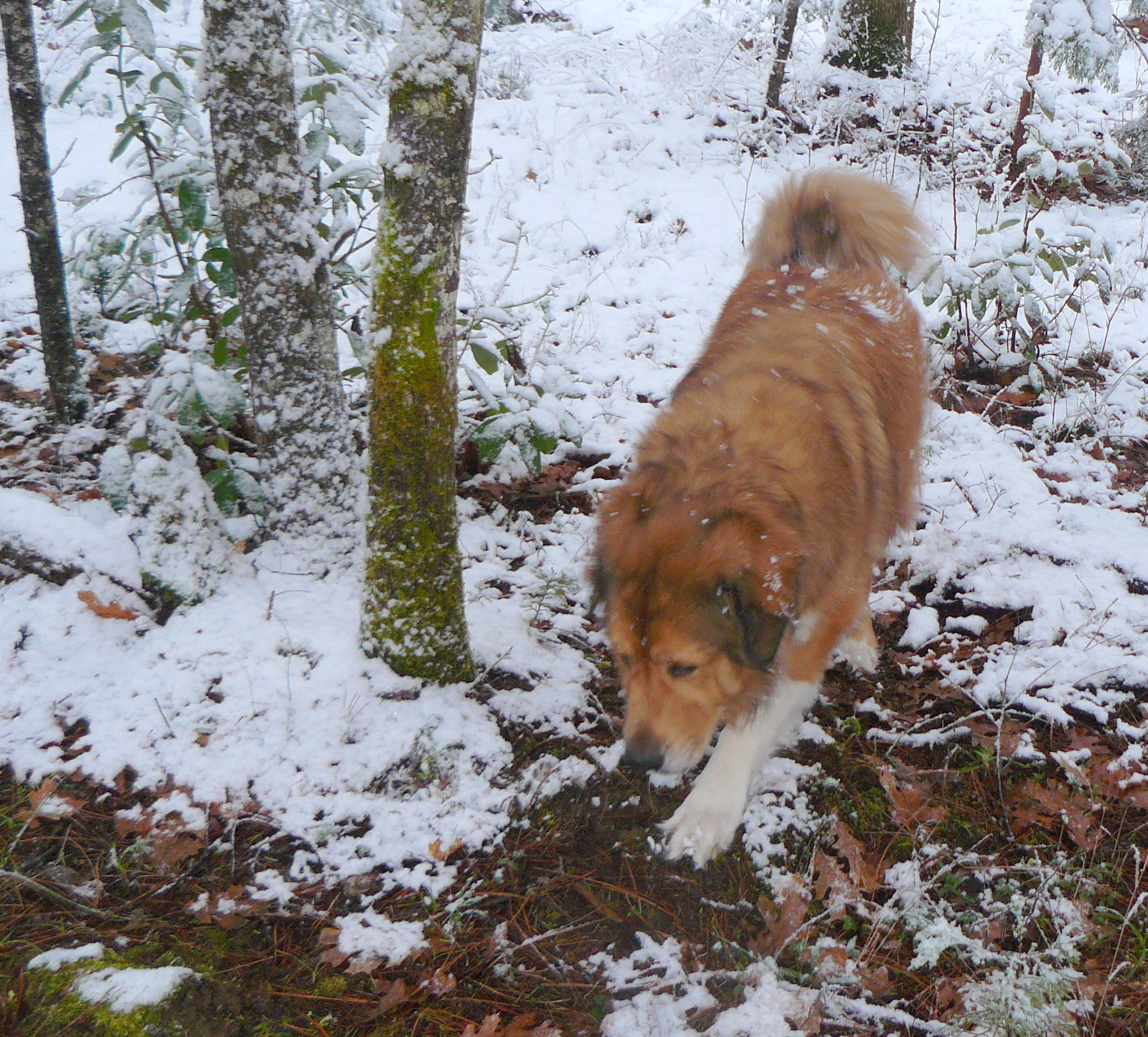
Not long after we were washed and dressed I let the dogs out. Typically, while all of them were quick to return to the warmth of the house, Brandy went off on one of his ‘walkabouts’. It was probably the first time he had seen snow.
Twenty minutes later, I started walking down our driveway (just visible in the photograph above running alongside the far tree line) because I knew that Brandy had walked down to the (closed) front gate to check everything out.
I saw Brandy coming back up the driveway and called to him. He looked up, wagged his tail, and I then crouched down holding my arms apart. Brandy started a wonderful, bouncy run that continued until he came right up to me and he then buried his wonderful, furry head between my thighs.
We walked together back to the house and went inside. As we walked together I was aware of a feeling of joyous happiness, a magic that was flowing from the way that Brandy chose to relate to me.
It really did make my heart sing and as I write these words some three hours later I hope you can pick up the gift of goodness that dogs, and so many other animals, offer us humans.
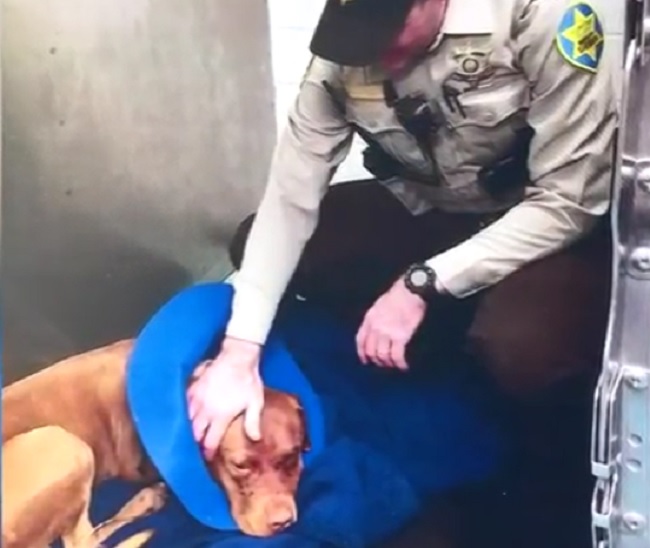
On his way to a call Dec. 17, Deputy Brian Bowling came across a dog stumbling down the middle of an Arizona road.
The pit bull mix named Ginger had been shot in the head by a neighbor who said he felt threatened after the dog dug a hole under her backyard’s fence and wandered into his yard.
Ginger was alive, but not for long.
“She was bleeding profusely from her head and neck,” Bowling told ABC15. In addition to being a deputy with the Maricopa County Sheriff’s Office, Bowling also happens to be a trained paramedic and a veteran who served in Afghanistan. He knew he had to act quickly.
“I had a little flashback, because we had seen military working dogs over there who were blown up by IEDs and shot, and that’s what went through my head,” he told ABC15. “I thought I had to do anything to save its life.”
When he approached Ginger to move her out of traffic, Bowling wasn’t sure how the injured dog would react. “But instead of running away from me or trying to bite me, she ran right up to me and started wagging her tail,” he told FOX 10. She then tried to climb up into the driver’s seat of his patrol car.
Bowling applied combat gauze to her wound, helping to stop the bleeding, and rushed her to a local emergency animal hospital.
His quick actions saved Ginger’s life. She was also fortunate that the bullet bounced off her skull instead of penetrating it.
Ginger and her hero, Deputy Brian Bowling. Photo credit: YouTube
Foster Mom Couldn’t Afford the Surgery
But Ginger’s luck seemed to be running out. When her foster mom, Hailey Miller, was told Ginger still needed surgery that would cost thousands of dollars, she made the difficult decision to have the dog euthanized. “If I had [the money], I wouldn’t even hesitate,” she told ABC 15.
Just as Bowling had saved Ginger from dying in the middle of the road, he decided he would save her from being put down.
“It just didn’t seem right for a dog that survived so much to die because the owner didn’t have the money to pay for it,” he told ABC15. He paid for her surgery himself, putting it on his credit card.
“If this man has this kind of empathy and love for a dog, imagine what he has for people and the rest of the world,” she told ABC 15. “There is such a lesson that can be learned from him.”
Ginger is recovering, Miller wrote on Facebook. She’s now able to walk and eat, and is “so sweet as usual.”
To reimburse Bowling, Miller has launched a GoFundMe campaign that has raised over $6,000.
“It is my Christmas wish that with the help of all animal lovers around the world, I can pay this deputy back,” Miller wrote. “Any remaining funds will go toward law enforcement charities, animal rescues and future rescue dogs that are always coming through my rotating door. Of course the officer will be involved in choosing these charities!”
One week ago it was Christmas Day and in the blink of an eyelid it is now New Year’s Day.
Here we are on the first day of the year 2017.
Where is the year going to go? As in where is humanity heading over the next twelve months? Who knows and, frankly, guessing isn’t going to offer clear answers. As that silly saying goes: “I can predict anything except those things involving the future!”
But what is certain is that the need to care for and love our dogs continues day after day. My introduction to an essay recently published over on the Care2 site.
ooOOoo
5 Simple New Year’s Resolutions to Improve Your Dog’s Life
When we think of New Year’s resolutions, we often think of changes in our lives we’ve been trying to make for years. Often they are massive changes. But, in reality, sometimes the smallest changes can make the biggest difference over time. The same can be said for changes we make in our pet’s lives. These five resolutions are simple and will be enjoyed by you just as much as Buster. And you will be improving both of your lives in the process.
1. Take a Sonic Inventory
Those of us who love our pets often assume that our environment is the best for our pets. However, sometimes it requires a different way of thinking. What works for us doesn’t always work best for our pets. Taking a sonic inventory of your environment is a good way to check for sounds in your house that may be causing stress to your pets. Sound is like air. We rarely notice these two common elements unless the air suddenly becomes polluted or the sound becomes chaotic.
The sonic inventory is one way of becoming aware of the noise in your pet’s environment. Simply sit on your sofa with pen and paper in hand. Jot down all of the sounds you hear and rate them from one to 10. Observe your pet’s response to these sounds. Ask yourself how you can make your home a calmer, more peaceful place, for yourself and for your pets. Often, just by listening, we become more sonically aware, an important first step. Small changes made in your sound environment can often make a big difference in your pet’s behavior.
2. Enjoy a Silent Meditation Hike
Have you ever walked with your dog in total silence? It’s very interesting trying to observe the world from their point of view. Allow Buster to stop and sniff as much as he wants. Taking in the scents gives him all sorts of information and provides him with enrichment. Take a break with Buster. Just sit still without any verbal communication and enjoy all the sights and smells. You’ll be amazed how bonding time in nature is with your furry friend when you aren’t speaking any words.
3. Teach Your Dog a New Trick
No matter how young or old your dog, she will love learning new tricks. Learning new things provides them with much needed mental stimulation. Use a clicker and positive reinforcement training, and it will be just as fun for you as your pup.
4. Teach Him to Tug
Tug is great exercise for dogs and is often a great stress reliever. Pat Miller, training editor of The Whole Dog Journal, wrote about the benefits of playing tug with your dog (when they follow the rules). A good game of tug provides:
a legal outlet for roughhousing
strengthens bonds
builds healthy relationships
offers incredibly useful reinforcement potential
redirects inappropriate use of teeth
teaches self-control
creates a useful distraction
builds confidence
Just make sure that you teach a release word and randomly have him release the tug toy throughout your playtime together.
5. Give Her a Massage
Dogs reduce our stress. Canine massage is a way of giving back to them so that we can reduce theirs. Veterinarian Narda Robinson, Director at Colorado State University’s Center for Comparative and Integrative Pain Medicine, teaches classes on canine massage. She believes that administered with science knowledge, canine massage can help dogs recover from injuries, illness and stress.
Do you have new year’s resolutions for your pets? Thanks for sharing them in a comment below.
ooOOoo
Please, all of you, have a very safe, peaceful and loving New Year.
Thank you for your companionship these last twelve months, and beyond.
One of the many things that we adore about living here in Merlin, Southern Oregon is the closeness of nature. Not just the nature of the slopes and mountains but the nature of the trees, creeks, grasses and wild plants.
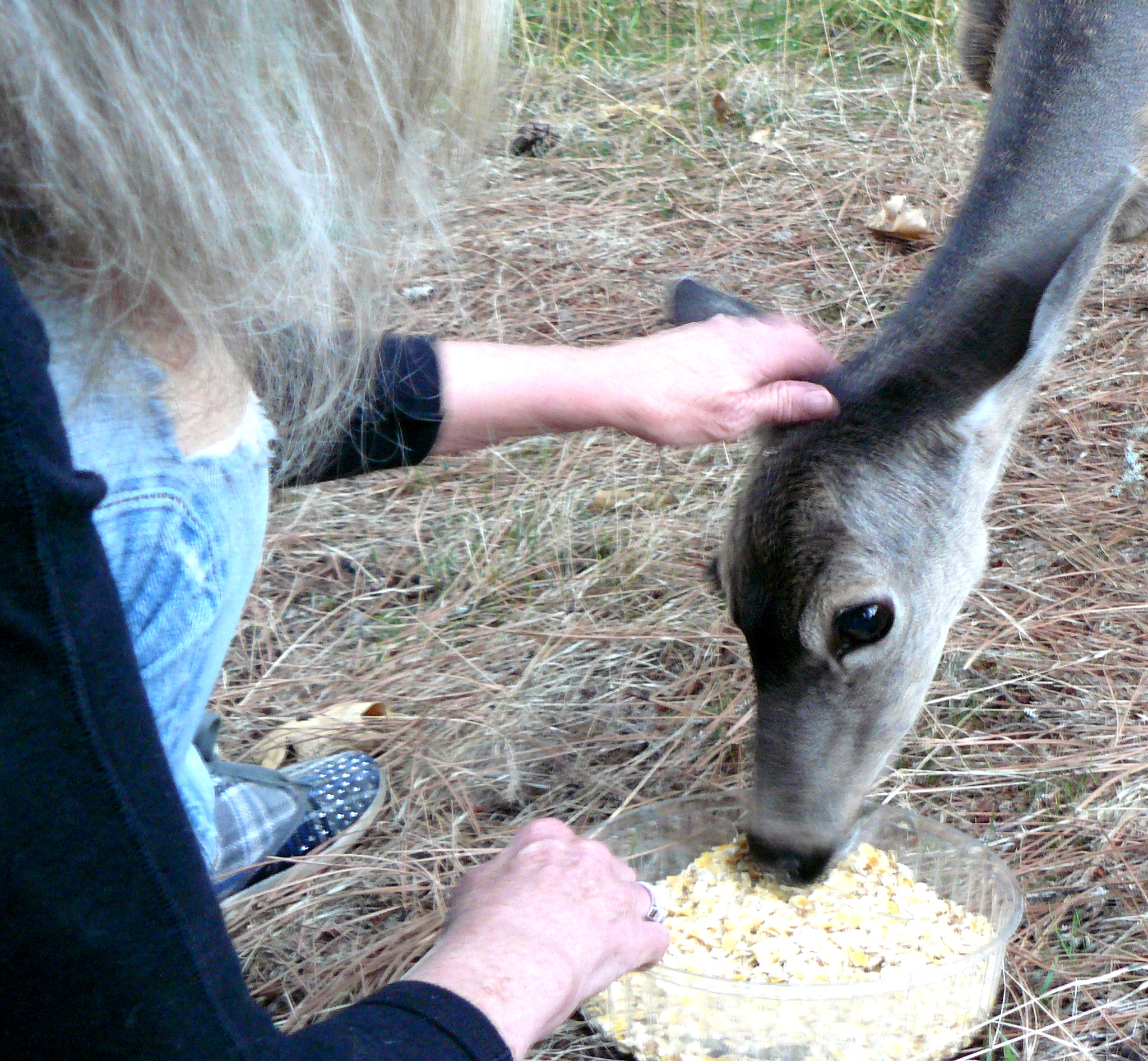
Plus the awareness over the 4+ years that we have been here of how easy it is to gain the trust of wild animals. I will go to my grave holding on to the sweet sensation of a wild deer trusting me and Jean to the point where we could stroke the deer’s neck when we were feeding her.
The trust between the deer and Jean then enabled the deer to feed from Jean’s hand.Then, unbelievably, the wild deer continues feeding as Jean fondles the deer’s ear.
(Both photographs taken in October, 2014 in the area of grassland near to our stables.)
The measure of how we, as in humanity, really feel about the only home we have, as in Planet Earth, is how we regard our planet.
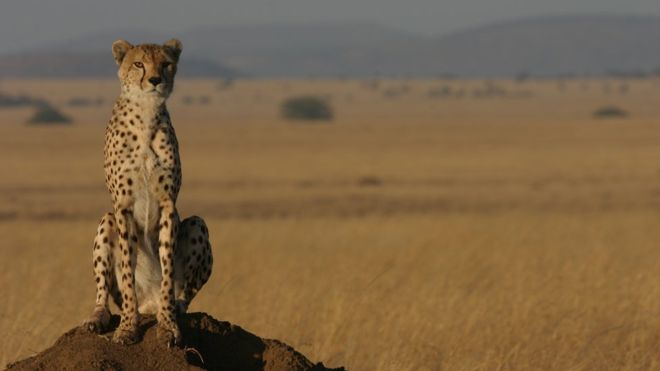
The pain that we feel when we read, as I did yesterday, about another animal species possibly heading towards extinction. In this case, an item on the BBC News website about Cheetahs.
Cheetahs heading towards extinction as population crashes
By Matt McGrath Environment correspondent
Protected parks and reserves for cheetahs are not sufficient as the animal ranges far beyond these areas.
The sleek, speedy cheetah is rapidly heading towards extinction according to a new study into declining numbers.
The report estimates that there are just 7,100 of the world’s fastest mammals now left in the wild.
Cheetahs are in trouble because they range far beyond protected areas and are coming increasingly into conflict with humans.
The authors are calling for an urgent re-categorisation of the species from vulnerable to endangered.
It’s no good tut-tutting; something different has to be done. For otherwise nature will have the last word to say about the future of vast numbers of species especially homo sapiens!
All of which leads me to the main theme of today’s post: holding nature in higher esteem as in higher legal esteem.
Read the following that was published on The Conversation blogsite on October 10th, 2016 and is republished here within their terms. The author is Chip Colwell , Lecturer on Anthropology, University of Colorado, Denver.
ooOOoo
What if nature, like corporations, had the rights and protections of a person?
October 10, 2016 8.16am EDT
The forest around Lake Waikaremoana in New Zealand has been given legal status of a person because of its cultural significance. Paul Nelhams/flickr, CC BY-SA
In recent years, the U.S. Supreme Court has solidified the concept of corporate personhood. Following rulings in such cases as Hobby Lobby and Citizens United, U.S. law has established that companies are, like people, entitled to certain rights and protections.
But that’s not the only instance of extending legal rights to nonhuman entities. New Zealand took a radically different approach in 2014 with the Te Urewera Act which granted an 821-square-mile forest the legal status of a person. The forest is sacred to the Tūhoe people, an indigenous group of the Maori. For them Te Urewera is an ancient and ancestral homeland that breathes life into their culture. The forest is also a living ancestor. The Te Urewera Act concludes that “Te Urewera has an identity in and of itself,” and thus must be its own entity with “all the rights, powers, duties, and liabilities of a legal person.” Te Urewera holds title to itself.
Although this legal approach is unique to New Zealand, the underlying reason for it is not. Over the last 15 years I have documented similar cultural expressions by Native Americans about their traditional, sacred places. As an anthropologist, this research has often pushed me to search for an answer to the profound question: What does it mean for nature to be a person?
The snow-capped mountain
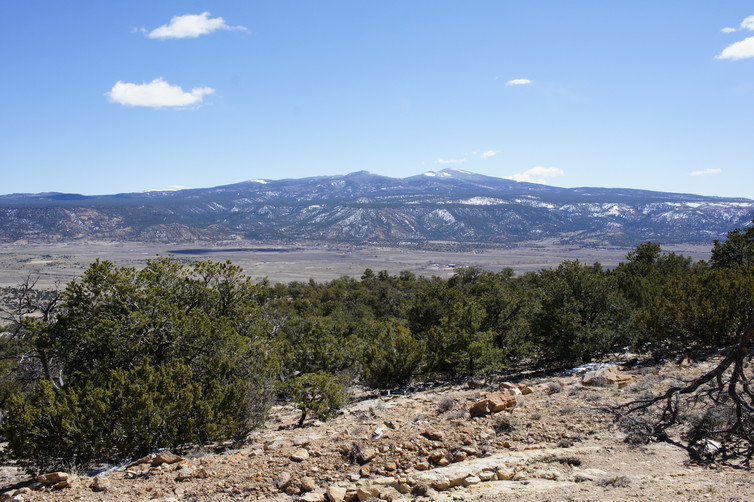
A majestic mountain sits not far northwest of Albuquerque, New Mexico. Like a low triangle, with long gentle slopes, Mount Taylor is clothed in rich forests that appear a velvety charcoal-blue from the distance. Its bald summit, more than 11,000 feet high, is often blanketed in snow – a reminder of the blessing of water, when seen from the blazing desert below.
The Zuni tribe lives about 40 miles west of Mount Taylor. In 2012, I worked with a team to interview 24 tribal members about the values they hold for Dewankwin K’yaba:chu Yalanne (“In the East Snow-capped Mountain”), as Mount Taylor is called in the Zuni language. We were told that their most ancient ancestors began an epic migration in the Grand Canyon.
Mount Taylor in New Mexico, a sacred site to the Zuni who believe it is a living being. Chip Colwell, Author provided.
Over millennia they migrated across the Southwest, with important medicine societies and clans living around Mount Taylor. After settling in their current pueblo homes, Zunis returned to this sacred mountain to hunt animals like deer and bear, harvest wild plants like acorns and cattails, and gather minerals used in sacrosanct rituals that keep the universe in order. Across the generations Dewankwin Kyaba:chu Yalanne has come to shape Zuni history, life, and identity no less than the Vatican has for Catholics.
But unlike holy places in the Western world, Zunis believe Mount Taylor is a living being. Zuni elders told me that the mountain was created within the Earth’s womb. As a mountain formed by volcanic activity, it has always grown and aged. The mountain can give life as people do. The mountain’s snow melts in spring and nourishes plants and wildlife for miles. Water is the mountain’s blood; buried minerals are the mountain’s meat. Because it lives, deep below is its beating heart. Zunis consider Mount Taylor to be their kin.
There is a stereotype that Native American peoples have a singular connection to nature. And yet in my experience, they do see the world in a fundamentally different way from most people I know. Whether it is mountains, rivers, rocks, animals, plants, stars or weather, they see the natural world as living and breathing, deeply relational, even at times all-knowing and transcendent.
In my work with Arizona’s Hopi tribe, I have traveled with cultural leaders to study sacred places. They often stop to listen to the wind, or search the sky for an eagle, or smile when it begins to rain, which they believe is a blessing the ancestors bestow upon them.
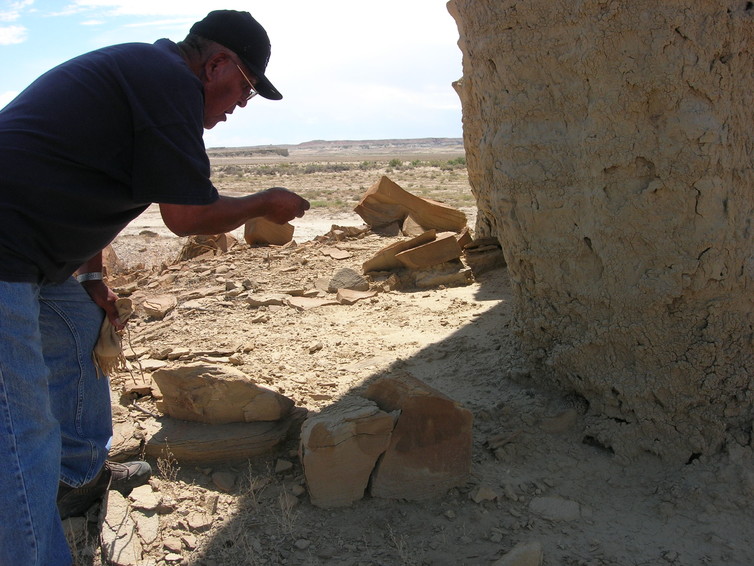
During one project with the Hopi tribe, we came across a rattlesnake coiled near an ancient fallen pueblo. “Long ago, one of them ancestors lived here and turned into a rattlesnake,” the elder Raleigh H. Puhuyaoma Sr. shared with me, pointing to the nearby archaeological site. “It’s now protecting the place.” The elders left an offering of corn meal to the snake. An elder later told me that it soon rained on his cornfield, a result from this spiritual exchange.
Violent disputes
Understanding these cultural worldviews matters greatly in discussions over protecting places in nature. The American West has a long history of battles over the control of land. We’ve seen this recently from the Bundy family’s takeover of the federal wildlife refuge in Oregon to the current fight over turning Bears Ears – 1.9 million acres of wilderness – into a national monument in Utah.
Yet often these battles are less about the struggle between private and public interests, and more about basic questions of nature’s purpose. Do wild places have intrinsic worth? Or is the land a mere tool for human uses?
A Hopi elder making an offering to a snake to protect a sacred space. Chip Colwell, Author provided.
Much of my research has involved documenting sacred places because they are being threatened by development projects on public land. The Zuni’s sacred Mount Taylor, much of it managed by the U.S. National Forest Service, has been extensively mined for uranium, and is the cause of violent disputes over whether it should be developed or protected.
Even though the U.S. does not legally recognize natural places as people, some legal protections exist for sacred places. Under the National Historic Preservation Act, for example, the U.S. government must take into consideration the potential impacts of certain development projects on “traditional cultural properties.”
This and other federal heritage laws, however, provide tribes a small voice in the process, little power, and rarely lead to preservation. More to the point, these laws reduce what tribes see as living places to “properties,” obscuring their inherent spiritual value.
In New Zealand, the Te Urewera Act offers a higher level of protection, empowering a board to be the land’s guardian. The Te Urewera Act, though, does not remove its connection to humans. With a permit, people can hunt, fish, farm and more. The public still has access to the forest. One section of the law even allows Te Urewera to be mined.
Te Urewera teaches us that acknowledging cultural views of places as living does not mean ending the relationship between humans and nature, but reordering it – recognizing nature’s intrinsic worth and respecting indigenous philosophies.
In the U.S. and elsewhere, I believe we can do better to align our legal system with the cultural expressions of the people it serves. For instance, the U.S. Congress could amend the NHPA or the American Indian Religious Freedom Act to acknowledge the deep cultural connection between tribes and natural places, and afford better protections for sacred landscapes like New Mexico’s Mount Taylor.
Until then, it says much about us when companies are considered people before nature is.














 Learning from Dogs