Yesterday, in came an email that brought a tear to my eye:
Dear Paul,
I came across your blog this morning and saw the post on ‘We shall not forget them’ to pay tribute to our fur babies.
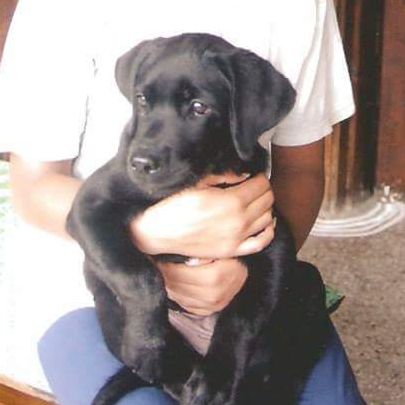
My black Labrador, Max, crossed the Rainbow Bridge on November 28th. He’s on my mind all the time and I have constantly been trying to do little things that make me feel his presence.
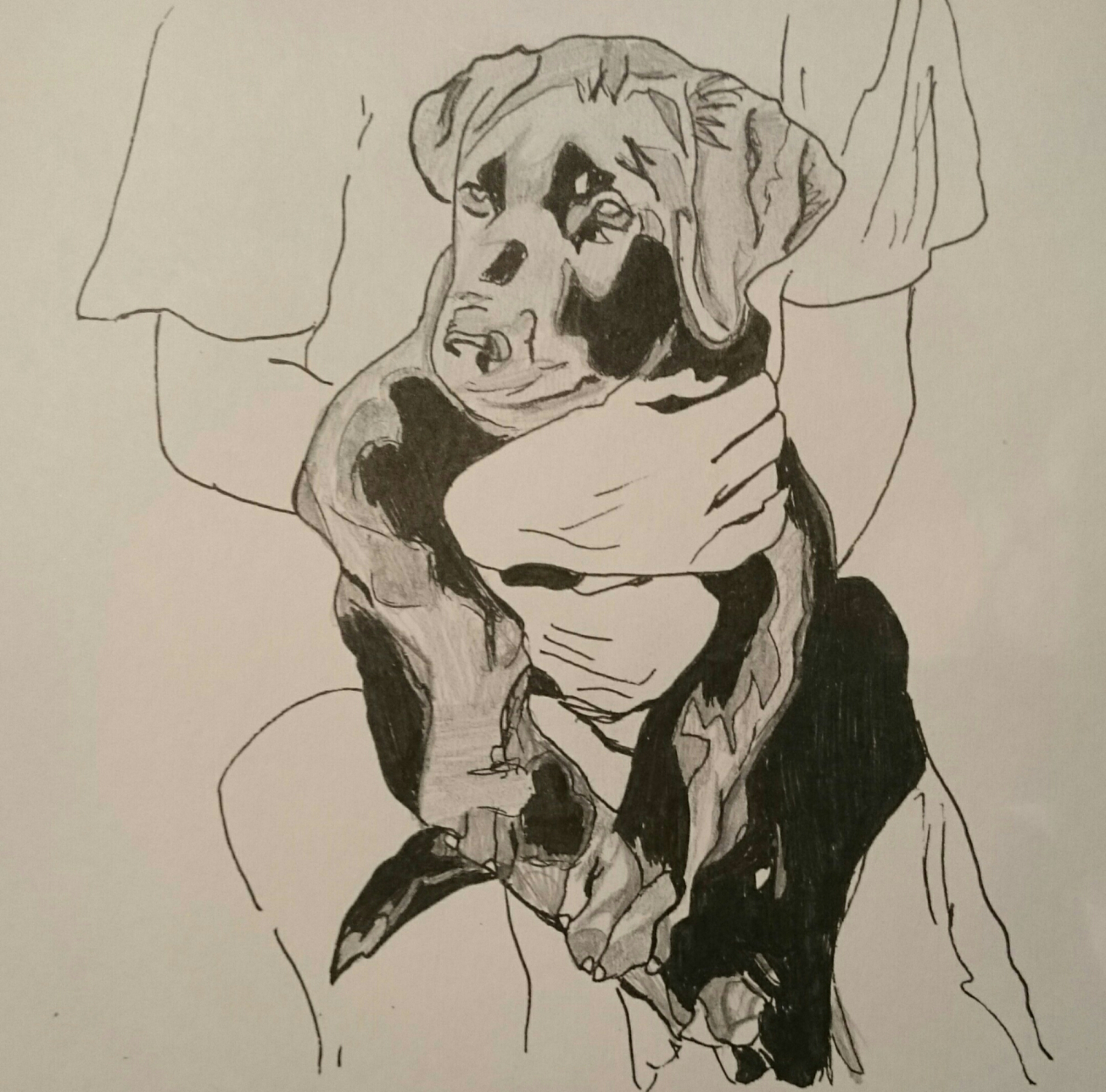
I was hoping I could pay a tribute to him on your blog. Please find a small poem and a portrait of him that I had penned down earlier. This is the original picture I sketched of him.
The email came from Samyuktha Sridharand it is a wonderful honour and privelege to offer Sam’s tribute to Max.
ooOOoo
Max, our dark Prince
by Samyuktha Sridhar
Max, our handsome black labrador who was eleven and a half years old crossed to the other side of the Rainbow Bridge on 28 November, 2016. We miss him like crazy and it hasn’t yet fully sunk in.
There is no way we can make the pain go away, but we need to move on and learn to live with the beautiful memories. Every person has a different way of dealing with loss and sadness. I like to put my thoughts on paper. It helps me get things out of my system.
So here’s what I did..
If memories could bring us closer, if tears could bridge the gap
I’d cross the oceans to see you, in warm wet hugs we’d wrap
I opened my eyes to reality, to warm wet tears instead
The pain in my heart was real, as the voices in my head
Echoed, “No teary goodbyes were exchanged, no words of farewell spoken,
Would it have made it easier, if we had that chance?” I’m torn!
If I knew t’was the last time, that you’d look into my eyes
I’d have cradled your head upon my lap, stayed by you as you lay.
Were you in pain that fateful night, when the big brown clock struck three?
Sadly I’ll never know, would I? If you’d reached out to me.
With every breath you took you filled, my heart with so much love
You took a piece of my heart with you, the piece that belonged to you.
ooOOoo
Again and again we are reminded of what our dogs mean to us. So beautifully expressed by Sam.
Please, if you want to offer a tribute to your dearly departed dog do share it on these pages.
Against the Grain Pulled Beef with Gravy Dinner for Dogs
12 ounce can
Lot Number: 2415E01ATB12
UPC Code (second half): 80001
Expiration Date: December 2019
About Pentobarbital
Oral exposure to pentobarbital can cause side effects such as drowsiness, dizziness, excitement, loss of balance, nausea nystagmus (eyes moving back and forth in a jerky manner), inability to stand and coma.
To date, no complaints have been reported to Against the Grain for this single lot number nor any of Against the Grain’s pet foods.
Where Was It Distributed?
The recalled product was distributed (in 2015) to independent pet retail stores in the following states:
Maryland
Washington
The company has verified that the affected lot is no longer on any store shelves.
What to Do?
Consumers may return any can with the relevant lot number to their place of purchase and receive a full case of Against the Grain food for the inconvenience.
Customers with questions may contact the company at 800-288-6796 between 11 AM and 4 PM Central Time, Monday through Friday.
U.S. citizens can report complaints about FDA-regulated pet food products by calling the consumer complaint coordinator in your area.
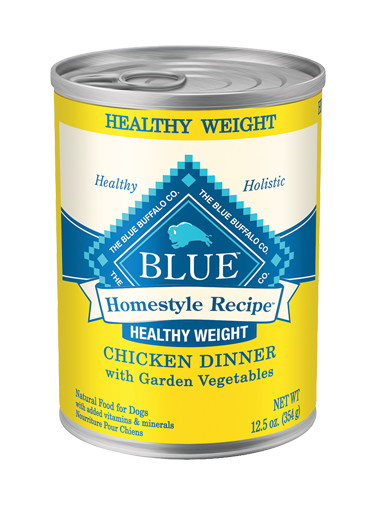
Blue Buffalo Homestyle Recipe Healthy Weight, Chicken Dinner with Garden Vegetables
12.5 ounce can
UPC: 8-40243-10017-0
Codes: Best By 08/03/2019
The “Best By” date is on the bottom of the can.
No other Blue Buffalo products are involved. The company has not received any reports of illness or injury as a result of the problems giving rise to this recall.
What to Do?
Customers are invited to return the impacted product to your local retailer for a full refund. For additional information, call 866-800-2917.
U.S. citizens can report complaints about FDA-regulated pet food products by calling the consumer complaint coordinator in your area.
One can never have too many examples of love in a life!
These are interesting times. If we took even a small percentage of what we read about or see in the news media to heart we would think that life is hardly worth living for. So stuff the bad news out of sight!
Over 80 percent of the students who attend Los Amigos Elementary School in Rancho Cucamonga, Calif., are from socioeconomically disadvantaged families, but that didn’t stop them from doing everything they could to raise money to save an animal in need.
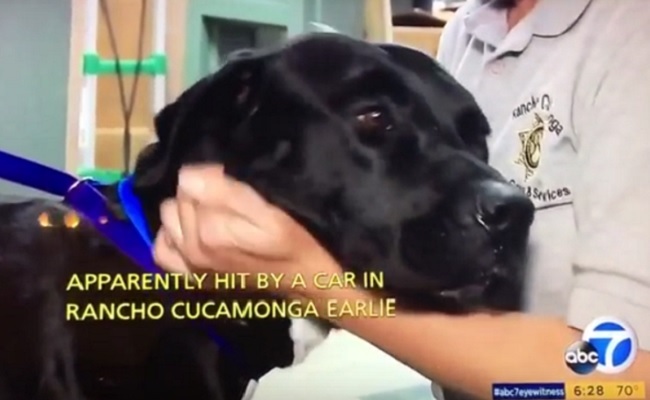
It began in early December, when a school employee found an injured black Lab mix hiding in bushes near the parking lot.
“There’s this really hurt dog,” Vice Principal Sharon Linville heard over a walkie-talkie, according to the Inland Valley Daily Bulletin. “I’m sure this dog is going to die, he’s in so much pain.” She and other employees brought the dog blankets and water, and contacted the Rancho Cucamonga Animal Care and Adoption Center.
The center’s staff veterinarian, Cynthia Servantez, visited the school a few days later to give the students a not-so-good update on the dog they’d named “Black Bart.” He’d been hit by a car and would probably survive, but he needed surgery that would cost about $3,000.
An X-ray had revealed that both of Bart’s hips were dislocated. As Dr. Servantez told the students, Bart’s “puzzle pieces had come undone.”
The schoolchildren immediately took action to help put those pieces back together. The school launched a “Pennies for Paws” campaign to collect spare change for Bart’s surgery.
Every single student made a donation. “They looked through sofa cushions, they gave up their allowance, some of them gave us IOUs,” Linville told KABC. “We have a bunch of Chuck E. Cheese coins that we got.”
One week later, the school gave the animal care center a check in the amount of $471.37.
Servantez told the Daily Bulletin it was the first time ever that anyone had offered to pay for the medical care of an injured stray dog.
The Los Amigos students continued their Pennies for Paws campaign and the momentum continued to build. Yvonne and Art Alvarez, owners of Doggie Couture in Rancho Cucamonga, were so impressed by the students’ efforts that they matched the funds that had been raised.
“We wanted them to know if they do something nice, it can make other people do it and then it becomes something big,” Yvonne Alvarez told the Daily Bulletin.
Several weeks after he’d been discovered at the school, “Who Let the Dogs Out” played over the speakers as Bart returned for a special guest appearance at a Jan. 23 rally in his honor.
Linville announced that the Los Amigos students had surpassed their $3,000 goal – by over $4,200. The extra money would be donated to the animal shelter to help other pets in need.
Veterinarian Victoria Impett, who accompanied Bart, told the schoolchildren to give themselves a pat on the back. Most of them complied. “It might not have seemed like big deal to go home and dig in the couch for a few pennies, but each and every one of you made a huge difference in someone’s life,” she told them.
Bart had no ID tag or microchip, and no one has come forward to claim him. He still needs surgery on his right hip. Once he recovers, he’ll be ready for adoption. “He’s starting to kind of blossom into a fabulous dog,” Impett said.
As Linville told the students, “This has been an incredible journey, and it’s really cool to be kind.”
(And please note my ‘excuse-me’ at the end of this post!)
The first:
PetSmart Grreat Choice Dog Food Recall of February 2017
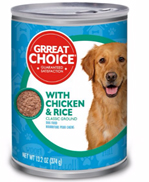
February 8, 2017 — PetSmart has issued a voluntary recall of one production lot of Grreat Choice Adult Dog Food with Chicken and Rice Classic Ground due to possible metal contamination.1
What’s Recalled?
The recalled product includes:
Grreat Choice Adult Dog Food with Chicken and Rice Classic Ground
Size: 13.2 ounce cans
UPC: 7-3725726116-7
Best By Date: 8/5/19
Lot Code: 1759338
The Best By date is found on the bottom of the can.
What to Do?
The company writes:
Please stop feeding this product to your pet and bring any remaining cans affected by this recall to your nearest PetSmart for a full refund. We recommend the other varieties of Grreat Choice canned dog foods as alternate options until this product is once again available.
For more information, please contact PetSmart Customer Service at 1-888-839-9638.
U.S. citizens can report complaints about FDA-regulated pet food products by calling the consumer complaint coordinator in your area.
No, that subtitle is wrong. It should be: Science brings to light the wonderful history of dogs and humans!
Approximately seven years ago I published a series of posts. Each post was a segment of a BBC Horizon documentary entitled: The Secret Life of the Dog. Inevitably as so often happens when BBC programmes unofficially find their way on to YouTube those videos have long disappeared from sight.
So imagine the joy when Jean and I were browsing the web site Top Documentary Films to find that the full BBC Horizon episode was available.
The documentary is an hour long and is unmissable viewing for anyone who is interested in the history of mankind back in the days of hunting and gathering. If you are also a lover of dogs and you haven’t seen the programme then, in two words WATCH IT!
Here’s a clip from the Horizon episode. A deeply emotional and moving clip.
Now I can’t insert the Top Documentary video as I can with a YouTube video.
But I can link to it, and republish the written introduction.
We have an extraordinary relationship with dogs – closer than with any other animal on the planet. But what makes the bond between us so special?
Research into dogs is gaining momentum, and scientists are investigating them like never before. From the latest fossil evidence, to the sequencing of the canine genome, to cognitive experiments, dogs are fast turning into the new chimps as a window into understanding ourselves.
Where does this relationship come from? In Siberia, a unique breeding experiment reveals the astonishing secret of how dogs evolved from wolves. Swedish scientists demonstrate how the human/dog bond is controlled by a powerful hormone also responsible for bonding mothers to their babies.
Why are dogs so good at reading our emotions? Horizon meets Betsy, reputedly the world’s most intelligent dog, and compares her incredible abilities to those of children. Man’s best friend has recently gone one step further – helping us identify genes responsible for causing human diseases.
Trust me, if you haven’t seen this documentary and you have dogs in your life it will change the way you appreciate and love your wonderful dogs.
I’m going to close this post with a photograph you have seen many times before, via the home page of this blog.
Simply because I know for thousands of you who have dogs in your lives there is nothing more special, nothing more intimate, nothing more magical than the eye-to-eye bond between your dog and you.
She grew and filled our lives with joy. We loved her Boxer curl and the way that she would sit on the couch with us and just lean against our sides. Then around her 7th year, we noticed that she lost her appetite. Concerned like any parents, we took her to the vet. We received the worst news possible.
She had cancer that had metastasized in her liver. Her last few months with us were precious.
Or, more specifically, what Diego meant for Laura Bruzzese. (This will be the second in the series We Shall Not Forget Them.)
ooOOoo
Dog Love In August
August is the start of the dying season. Garden things begin their slow shrink into the earth, the days grow shorter and cooler, lazy ocean- or mint-scented summer days snap into rigid schedules of work and school.
August is also the month that I lost Diego, my first dog. You can get acquainted with Diego here, a post I wrote a few days before he died. But I would like to share a little more now, on the second anniversary of his departure.
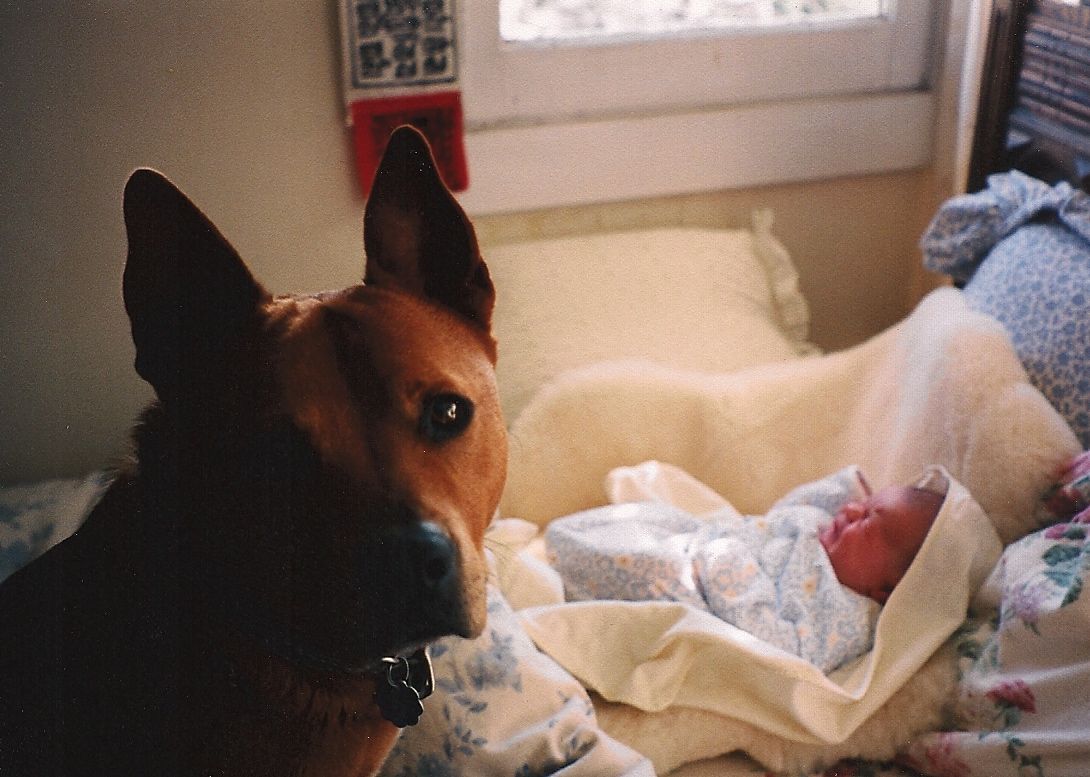
Diego was a poser, in a very literal sense of the word. He loved having his picture taken; in fact, he insisted on it whenever he saw me holding the camera. This picture, for example: it was taken the day I brought my daughter home from the hospital, the day after 21 hours of hard labor produced an eight-and-a-half-pound baby who actually stopped halfway out of my body, looked around, and scowled before resuming her reluctant journey onto the planet. (She was 12, twelve days overdue, FYI all you mothers out there who can surely feel my pain.)
There is something screaming in the bed. Please make it stop before it explodes.
I laid baby Isabella down, stepped back with the camera, looked up, and there he was: Diego, staring. Fifty-eight pounds of solid, unmoving dog. Insisting that I photograph him, too, with this creature that he wasn’t sure if he should guard against or lick. This child who personified the singular emotion of furious for the first nine weeks of her life (if she was not sleeping or eating, she was screaming).
Oh, hi Aunt Rosie. I know you’ve passed on, but I’ll bet you can still hear that screaming baby wherever you are.
When my doula told me that the colic or distemper or petite innards or whatever it was making Isabella so unhappy would resolve itself in about nine weeks, I said oh, that’s nice. But I won’t be alive for nine weeks of this. I’ll be in an asylum acquainting myself with a selection of opiates, or at the bottom of the mighty Rio Grande; so behold, an orphan.
But somehow, I survived. And Diego was part of it.
You see, from the very beginning, it was just us — the two of us, the three of us. I was abandoned by my husband before Isabella was born, a painful time that I don’t often write about.
Within a matter of weeks, the married-and-expecting life I’d known was gone, and I was left to fumble around with the pieces, a wreckage sitting on a pile of broken glass in the dark. The small hours of it were the worst, waking up alone and panicked in the middle of the night wondering how (or if) I would live through the next weeks and years. And Diego was always there, a silent and comforting presence curled at the foot of the bed or coming up to lick my tears if I was crying, which was basically all the time. He was always there.
I have a teenager now and those days seem ancient. While I rebuilt my life, Isabella grew up and Diego grew old. And finally, in his sixteenth year, he began to deteriorate to the point of pain. I knew he wouldn’t be with me much longer and I had already called the vet to ask her how it worked — when do you know it’s time? Do I take him to the office, or do you come to the house? Will he feel anything? I planned to schedule an appointment soon; I hadn’t had to make this decision before and it was a very painful.
On the morning of August 9 before I left for work, I told Diego that we would have to say good-bye soon because his body wasn’t working right anymore. I told him that I loved him and it was okay for him to go. Over and over I told him I loved him.
Less than two hours later, he drowned in the pond.
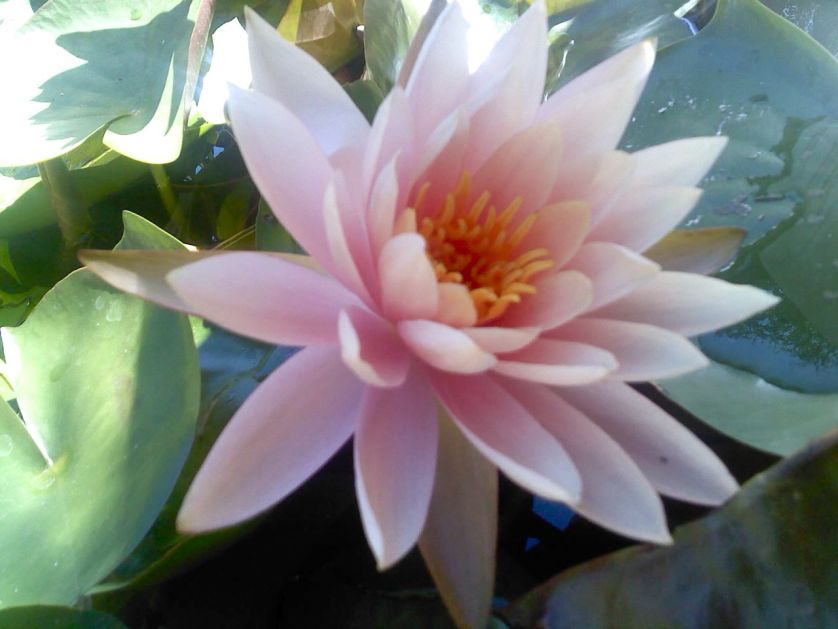
I think it was his way of avoiding the vet (he hated the clinic), and maybe sparing me that particular pain. I’m not going to say that I wasn’t devastated. But rather than remembering the urgent phone call at work from Isabella, or the vision of him when I got home, or my step-father struggling to carry the terrible weight of him away, I like to imagine Diego simply being received by the fish and toads. Delivered from his pain by warm water, wrapped in a blanket of lilies.
Anyone who has cared for pets perhaps knows that there is one, a special one, who will always occupy the largest piece of real estate in your heart, though others may follow. That was Diego for me.
But now we’re lucky enough to share our lives with another dog, the rascally, neurotic, road trip-loving Velma. I’ll end this post with a short video of her that reminds me of exactly what I love about dogs: their absolute and abundant connection with life, free of judgement, agenda, or desire to be anything other than what they are. That’s what I think of every time I see Velma in her Writhe of Exquisite Happiness. Perfect contentment of being.
ooOOoo
Laura wrote and published this back in August, 2012. But her words, emotions and feelings are those that never age. Indeed, I would add her courageous words.
The words of Jim and Janet Goodbrod. It was finally time to say the last goodbye to our old Buddy. Life had become an intolerable burden. His spirit wanted to keep going, but his failing body could not keep up. We ended his suffering and gently nudged him into that deep and eternal sleep last Wednesday.
Rest in peace old man! You made it 16-17 years. You aren’t in pain any longer and can run and play like you used to. We had you for only about 10 months, but loved you and we’re glad we could make your last year a good one. Forget the horrible abuse you suffered as a puppy, and remember only the love and joy you gave us in your last days on this planet.
A Dog’s Plea
Treat me kindly, my beloved friend, for no heart in all the world is more grateful for kindness than the loving heart of me.
Do not break my spirit with a stick, for although I should lick your hand between blows, your patience and understanding will quickly teach me the things you would have me learn.
Speak to me often, for your voice is the world’s sweetest music, as you must know by the fierce wagging of my tail when your footsteps falls upon my waiting ear.
Please take me inside when it is cold and wet, for I am a domesticated animal, no longer accustomed to bitter elements. I ask no greater glory than the privilege of sitting at your feet beside the hearth. Keep my pan filled with fresh water, for I cannot tell you when I suffer thirst.
Feed me clean food that I may stay well, to romp and play and do your bidding, to walk by your side and stand ready, willing and able to protect you with my life, should your life be in danger.
And, my friend, when I am very old, and I no longer enjoy good health, hearing and sight, do not make heroic efforts to keep me going. I am not having any fun. Please see that my trusting life is taken gently. I shall leave this earth knowing with the last breath I draw that my fate was always safest in your hands.
Last year I instigated a new ‘page’ on Learning from Dogs. It was entitled We Shall Not Forget Them. It was introduced by me as follows:
For millions, the relationship between a person and their dog is precious beyond words. Do you still grieve the loss of your wonderful dog? Let us all know what your dog meant to you. Write whatever you want. Leave it as a thought to this page.
Then it became clear that this was not going to work properly. Because each note of remembrance was, in effect, a comment. And I discovered that under WordPress it is not possible to insert a photograph. I struggled to think of a better way of doing it. Then earlier yesterday it came to me.
I will make each message of condolence, each reflection on how special the dog was, a new and separate blog post. In other words, each dog gets their own post for a full day.
Then each time a condolence is sent in, I will update the We Shall Not Forget Them post with the name of the departed dog, the date and a link to the blog post that has the details and memories of the animal.
I hope that makes sense!
To underline how it is going to work, I am starting off with the words of loss, and photographs, of Jim and Janet’s Buddy.
That post will be published in an hour’s time and will be linked to as I described above.
ooOOoo
So I am reaching out to Susan, Asha, Katrina and Whisperofthedarkness – each of you has left a memory as a comment to here.
Please do email me some photographs and any further recollections you would like me to post, and I will do for you as I have done for Buddy.
(Laura, I shall go to that link and republish what you wrote.)
 If memories could bring us closer, if tears could bridge the gap
 ooOOoo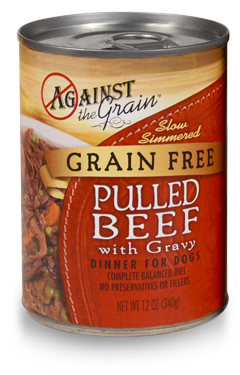


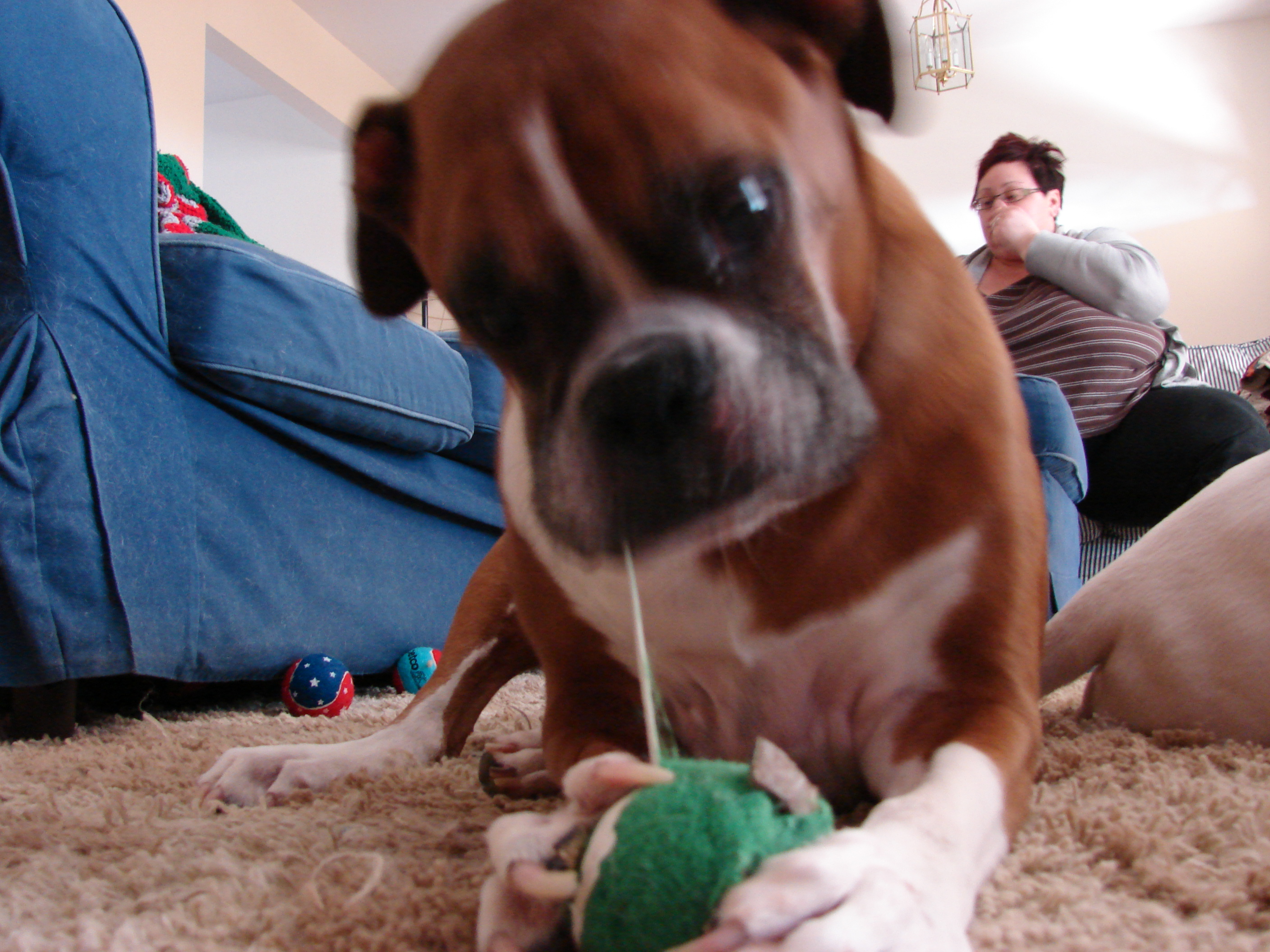 Once upon a time, there lived a beautiful Boxer named Sophie. My husband fell in love with her at first sight. He had to talk me into taking her home. It didn’t take long for me to see the light. The next thing I know I was carrying her in my arms.
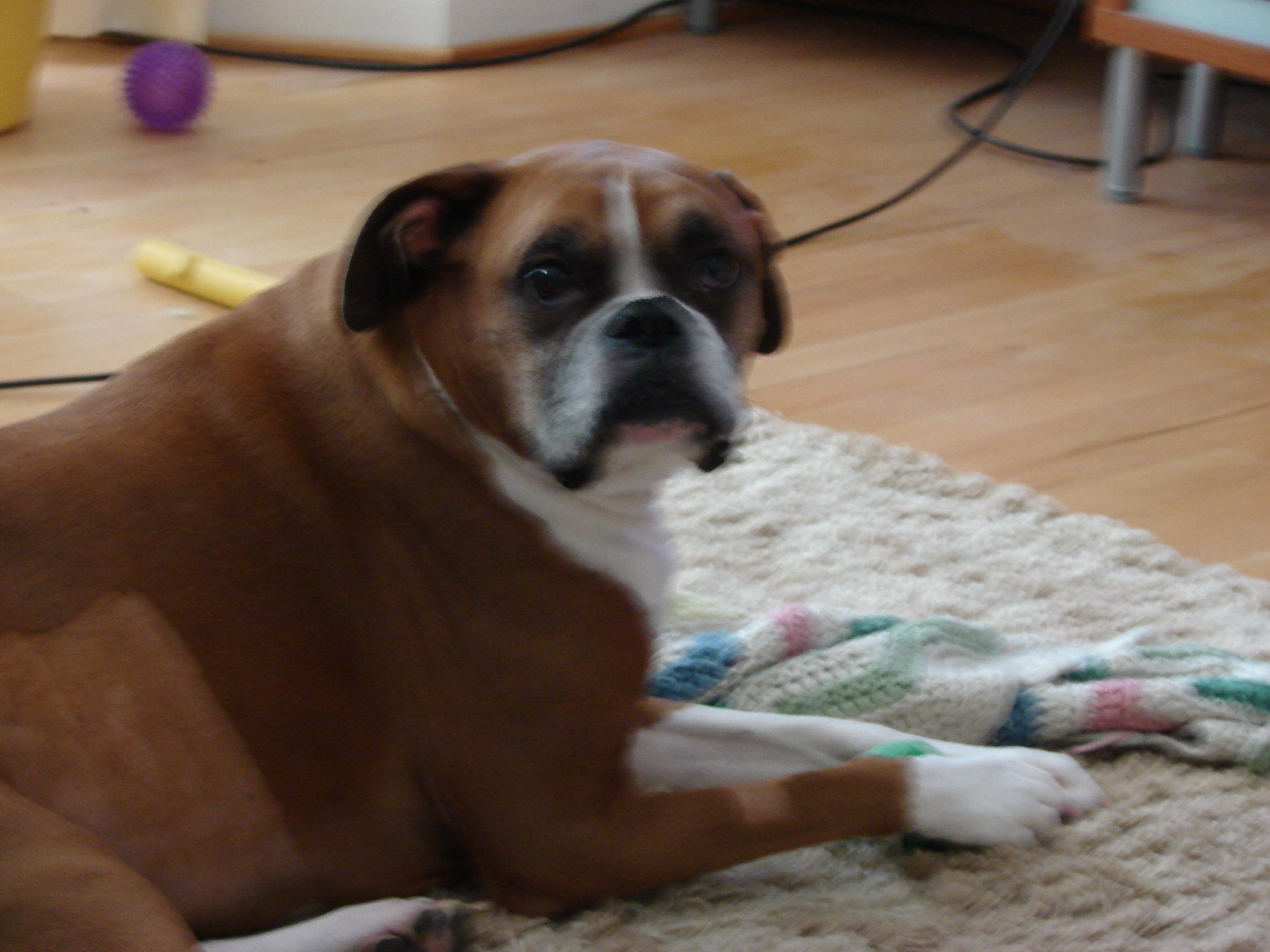 The vet had her on steroids and there for a time she returned to her happy-go-lucky Boxer self. We were fortunate to give her one last Christmas.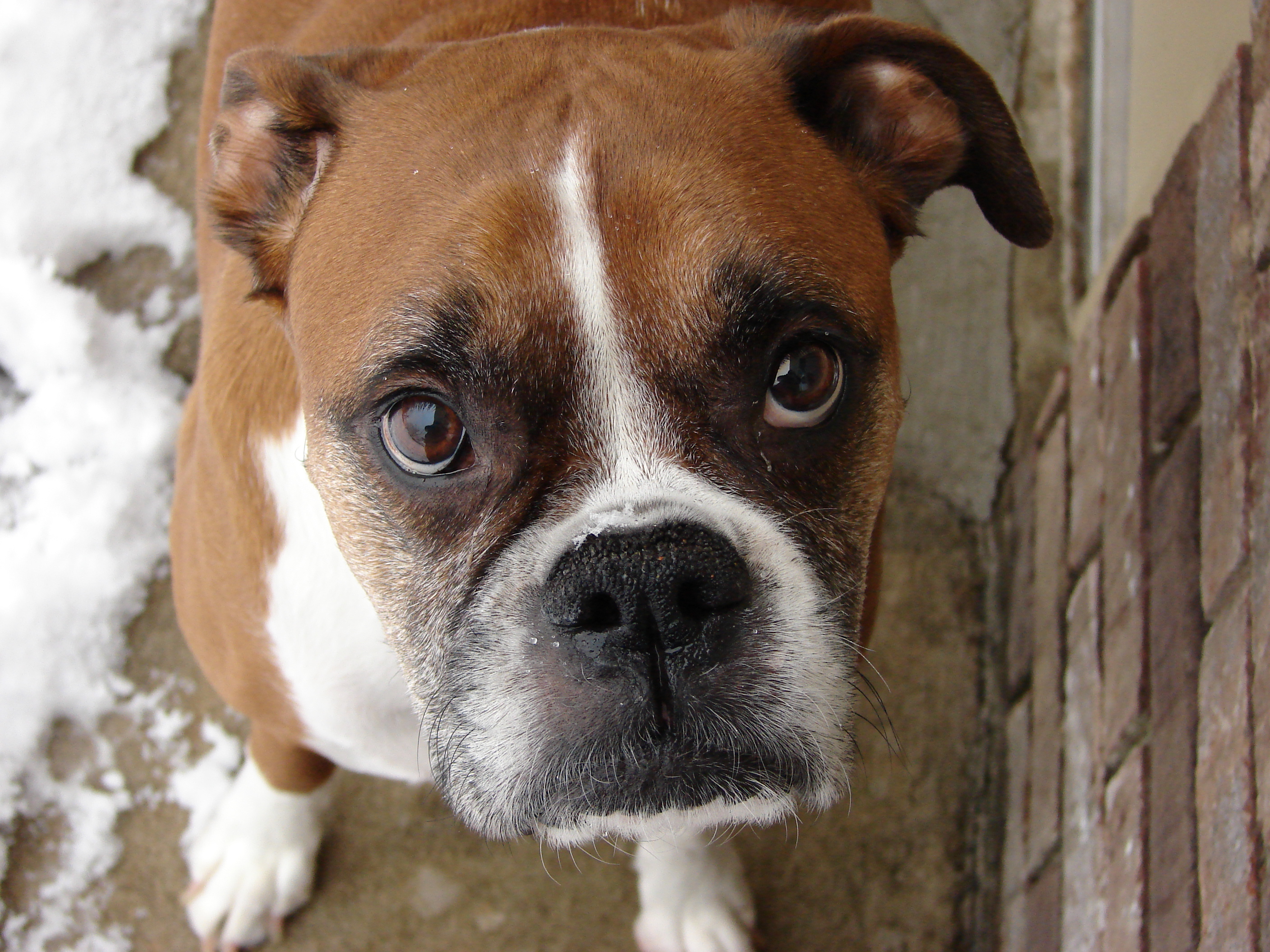
 Learning from Dogs