Category: Animal rescue

Summer and Millie

Now to the second of this week’s guest posts.

Bob Derham and his wife, Julie, are long-term friends back in the UK.

They recently lost their two dogs.

Bob sent me this:

Millie and Summer both had a fun life.

They were cross breed dogs, partly Springer Spaniel and part Collie. They were born in Wales, but as there are quite a lot of similar dogs there, the owner advertised in a local paper, and brought them up to Dorset one weekend 13 years ago.

Initially we had been looking for only one dog, but it seemed such a shame to separate the two puppies so we decided to take both. Most people were of the opinion that two girls from the same litter was not a good idea, but nevertheless we trained them, and the two animals were always together.
Family holidays, walking the children to the school bus, visiting friends, etc., always included Millie and Summer.

Just over two years ago, Summer became diabetic.  Had this been only ten years ago, nothing could have been done for her, but we were able to inject her twice a day, and keep her healthy, apart from failing sight as a result of the insulin. It was not long after that Millie developed the same problem, so both dogs had the same routine.
Summer went to the vets on the right day for her, and was put to sleep peacefully, and two weeks later Millie needed the same choice to be made.

They enjoyed an almost identical lifespan, and we enjoyed them to the full.

Bob and Julie’s daughter Stephanie then made the following video in memory of their two beloved dogs.

Back to me.

Going to close today’s post with this poem by Rudyard Kipling.

ooOOoo

The Power of the Dog

There is sorrow enough in the natural way
From men and women to fill our day;
And when we are certain of sorrow in store,
Why do we always arrange for more?
Brothers and Sisters, I bid you beware
Of giving your heart to a dog to tear.

Buy a pup and your money will buy
Love unflinching that cannot lie–
Perfect passion and worship fed
By a kick in the ribs or a pat on the head.
Nevertheless it is hardly fair
To risk your heart for a dog to tear.

When the fourteen years which Nature permits
Are closing in asthma, or tumour, or fits,
And the vet’s unspoken prescription runs
To lethal chambers or loaded guns,
Then you will find–it’s your own affair–
But…you’ve given your heart for a dog to tear.

When the body that lived at your single will,
With its whimper of welcome, is stilled (how still!);
When the spirit that answered your every mood
Is gone–wherever it goes–for good,
You will discover how much you care,
And will give your heart for the dog to tear.

We’ve sorrow enough in the natural way,
When it comes to burying Christian clay.
Our loves are not given, but only lent,
At compound interest of cent per cent.
Though it is not always the case, I believe,
That the longer we’ve kept ’em, the more do we grieve:
For, when debts are payable, right or wrong,
A short-time loan is as bad as a long–
So why in Heaven (before we are there)
Should we give our hearts to a dog to tear?

Rudyard Kipling
ooOOoo
Dogs bring out so much beauty and love in us.

Small miracles

It’s not just the rescuing of people that matters.

Last Thursday, the 26th January, the BBC News website published a short video under the heading of: Italian avalanche survivors tell how they stayed alive.

Colleen Barry and Eldar Emric of Associated Press reported in US News:

A couple among the nine survivors of an Italian avalanche that devastated a mountain hotel say they survived nearly 58 hours buried beneath feet of snow by sucking on glass- and mud-filled ice, comforting each other and those nearby, and praying.

Now there’s no way I am belittling that survival; far from it. But 58 hours is a tad under 3 days.

Now read the following that was published on the Care2 site.

ooOOoo

Puppies Rescued 5 Days After Devastating Avalanche in Italy

3199461-largeBy: Laura Goldman    January 26, 2017

After an avalanche buried central Italy’s luxury Hotel Rigopiano and its guests Wednesday, Jan. 18, rescue workers spent days digging in the snow in a desperate attempt to locate any survivors.

About 120,000 tons of snow, 16 feet deep, slammed into the hotel at 60 miles per hour. It took a while for emergency operators to believe the avalanche had occurred. The first man who called to report it was told that everything was fine at the hotel.

When they finally realized a disaster had in fact happened, first responders had to ski to the hotel, which took 12 hours. It took another day until the roads could be cleared with snowplows so emergency vehicles could finally get through.

Despite these circumstances, 11 survivors, including three children, were somehow able to keep themselves alive for over 40 hours by using their cellphones as flashlights to find water. The children, trapped in a game room, ate packets of Nutella and drank bottled water.

By Monday, rescuers were only pulling bodies from the snow and rubble. Discouraged and depressed, they were ready to give up hope.

The rescuers were told there were three puppies at the hotel. They had no idea where they were until they heard a noise in a boiler room inside what remained of the building. It was the three fluffy, white Abruzzo sheepdog puppies, only six weeks old, who had miraculously managed to survive both the avalanche and being stranded for five days.

“They just started barking very softly,” said Sonia Marini, one of the rescuers. “In fact, it was hard to find them right away because they were hidden. Then we heard this very tiny bark and we saw them from a little hole the firefighters had opened in the wall. We expanded the hole and we pulled them out.”

The puppies, born Dec. 4, had survived in an air pocket by eating snow, Walter Milan, the spokesman for Italy’s elite Alpine rescue squad, told the Daily Beast. They are the offspring of Nuvola (Cloud) and Lupo (Wolf), who lived at the hotel and were popular with guests.

Like their lucky litter, Nuvola and Lupo also survived the avalanche, according to a Facebook post by Martina Rossi, who was a bartender at the hotel.

Lupo e Nuvola, i pastori abruzzesi nati e cresciuti all'Hotel Rigopiano, non so come, sono riusciti a raggiungere la mia contrada, una frazione di Farindola (Villa Cupoli) sani e salvi. Questo non può di certo colmare il vuoto e la distruzione che attraversa un paese in ginocchio ancora speranzoso, nell'attesa soltanto di notizie positive, me in prima persona. Ma questi due bellissimi cagnoloni, rivedendoli, di certo sono riusciti a farmi tornare a battere il cuore, almeno per qualche secondo, riportando la speranza.
Lupo e Nuvola, i pastori abruzzesi nati e cresciuti all’Hotel Rigopiano, non so come, sono riusciti a raggiungere la mia contrada, una frazione di Farindola (Villa Cupoli) sani e salvi.
Questo non può di certo colmare il vuoto e la distruzione che attraversa un paese in ginocchio ancora speranzoso, nell’attesa soltanto di notizie positive, me in prima persona.
Ma questi due bellissimi cagnoloni, rivedendoli, di certo sono riusciti a farmi tornare a battere il cuore, almeno per qualche secondo, riportando la speranza.

The three puppies raised the hopes and spirits of the rescuers. “If the puppies survived, humans could as well,” Milan told the Daily Beast. Firefighter Fabio Jerman agreed. “It’s an important sign of life, which gives us hope,” he said.

Sadly, no one else has been found alive. A week after the disaster, 24 bodies have been found and five people are still missing.

In addition to unusually heavy snowfall, the avalanche may have been caused by a series of earthquakes that struck the area the day before.

Last year, devastating quakes killed more than 300 people in Italy. Another fortunate four-legged survivor, a border collie pulled from the rubble two days after an earthquake struck in late October, is being trained to pay it forward as a rescue dog.

Photo credit: YouTube

ooOOoo

Well done the team, as in Walter Milan the spokesman, and the rest of Italy’s elite Alpine rescue squad!

Stories like this put a real smile on my face!


Connections

Funny how things flow at times.

In yesterday’s post about the cleverness of chickens, John Zande, a long-time friend of this place, left this remark:

I have a marvellous blogging friend in New Mexico who has Rufina, a chicken who was shot in the head, sealed in a plastic bag, placed in a freezer for 24hrs, and lived! (albeit now blind).

I have a framed poster of Rufina up in my living room, and even one her feathers perched in one of my many, many, many St. Francis’s

Here’s the Huffington Post article on her

http://www.huffingtonpost.com/2014/08/14/zombie-chicken-freezer-alive_n_5675615.html

And here’s Laura’s first post on this gorgeous creature.

https://liveclayart.com/2013/06/24/the-undead-chicken

Then in response to me wanting to republish that story replied: “Contact her, she’s wonderful, and her pottery is to die for.

So I did and, with Laura’s permission here is that story of this most remarkable chicken.

ooOOoo

The Undead Chicken

by Laura Bruzzese, June 24th, 2013

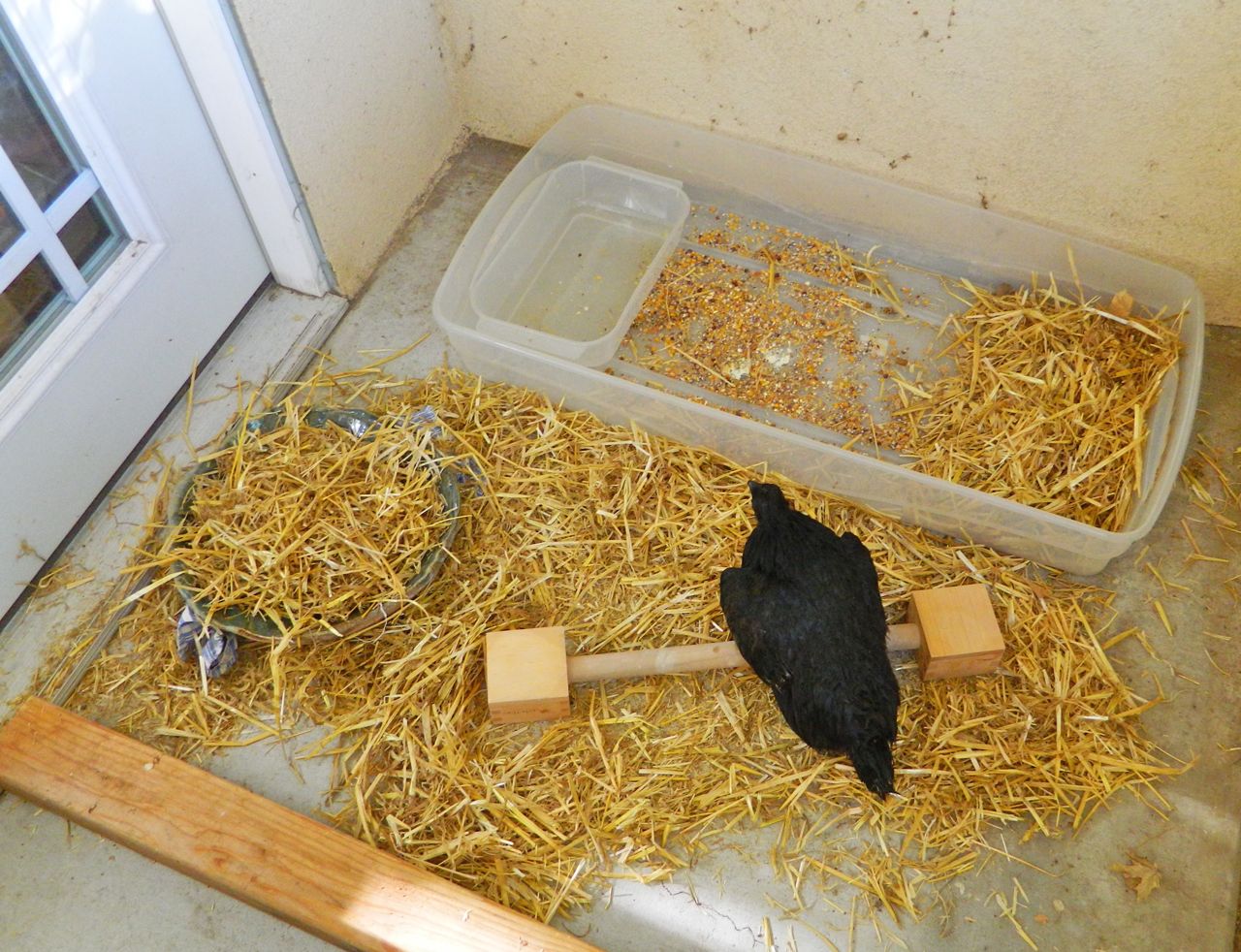
rufinaThis is Rufina. She’s new to our household.

She’s quiet and doesn’t take up much space, mostly sits on her perch or in her ceramic nest all day. She moves around slowly. If you are really gentle, she lets you pick her up.

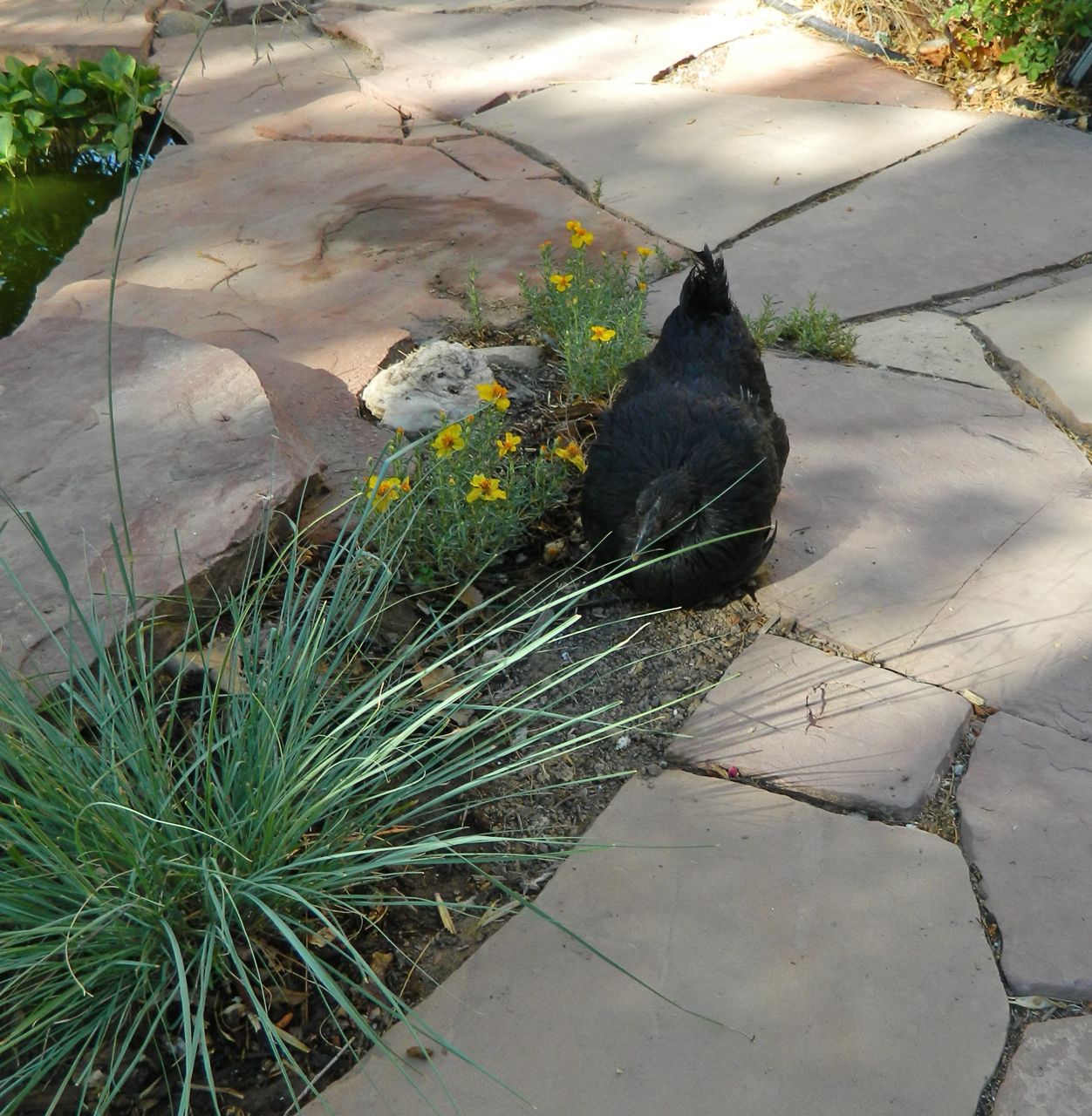
We sit by the pond together in the morning, before everyone else gets up.

rufina1Last Thursday, I answered a friend’s call on Facebook for someone to take this chicken. Isabella and I drove to my friend’s house in the South Valley, put her in a bin, and brought her home. I didn’t think she’d actually still be alive today.

My friend had posted this story Thursday morning:

The neighbor gave us fresh chickens last night for cooking up. He shot them in the head with gun and handed them over the fence. We bagged them and put in freezer for today. Evan gets home, opens freezer and one bird is perched fully alive, very cold, and pissed off.
Chase ensues… !! We now have a blind undead chicken in our yard.

Anybody want it?

I’m not sure why anyone would shoot chickens in the head.

But when I read the story, I couldn’t help but admire this chicken’s tenacity. She is courageous. She made her way out of a plastic bag inside a freezer and survived for thirty-six hours. After being shot in the head.  I figured any animal that fought that hard to live deserved a little help, if only for a day or two.

The chicken hasn’t made any effort to eat like a normal chicken. Because, of course, she can’t see where to peck. (There isn’t much point in force-feeding a blind chicken.) But she does drink, so I’ve started blending up borrowed chicken food and water and giving her that. She seems content, grooming herself sometimes, showing no signs of pain or anxiety. And still, she will die.

But until then, we will enjoy each of her borrowed mornings by the pond, the sound of birds and running water, the sun on her feathers, expecting nothing.

I’m not sure why I have a blind, undead chicken in my studio. But here is one of my favorite poems, by Laura Gilpin.

The Two-Headed Calf

Tomorrow when the farm boys find this
freak of nature, they will wrap his body
in newspaper and carry him to the museum.

But tonight he is alive and in the north
field with his mother. It is a perfect
summer evening: the moon rising over
the orchard, the wind in the grass. And
as he stares into the sky, there are
twice as many stars as usual.

[Epilogue]

ooOOoo

Now if you think that was remarkable then let me share what Laura posted a few weeks later, linked to via her Epilogue above.

ooOOoo

The Miracle of Re-Birth

by Laura Bruzzese, July 11th, 2013

Good news: it’s been three weeks since the attempted murder of Rufina, and she continues to dwell among the living!

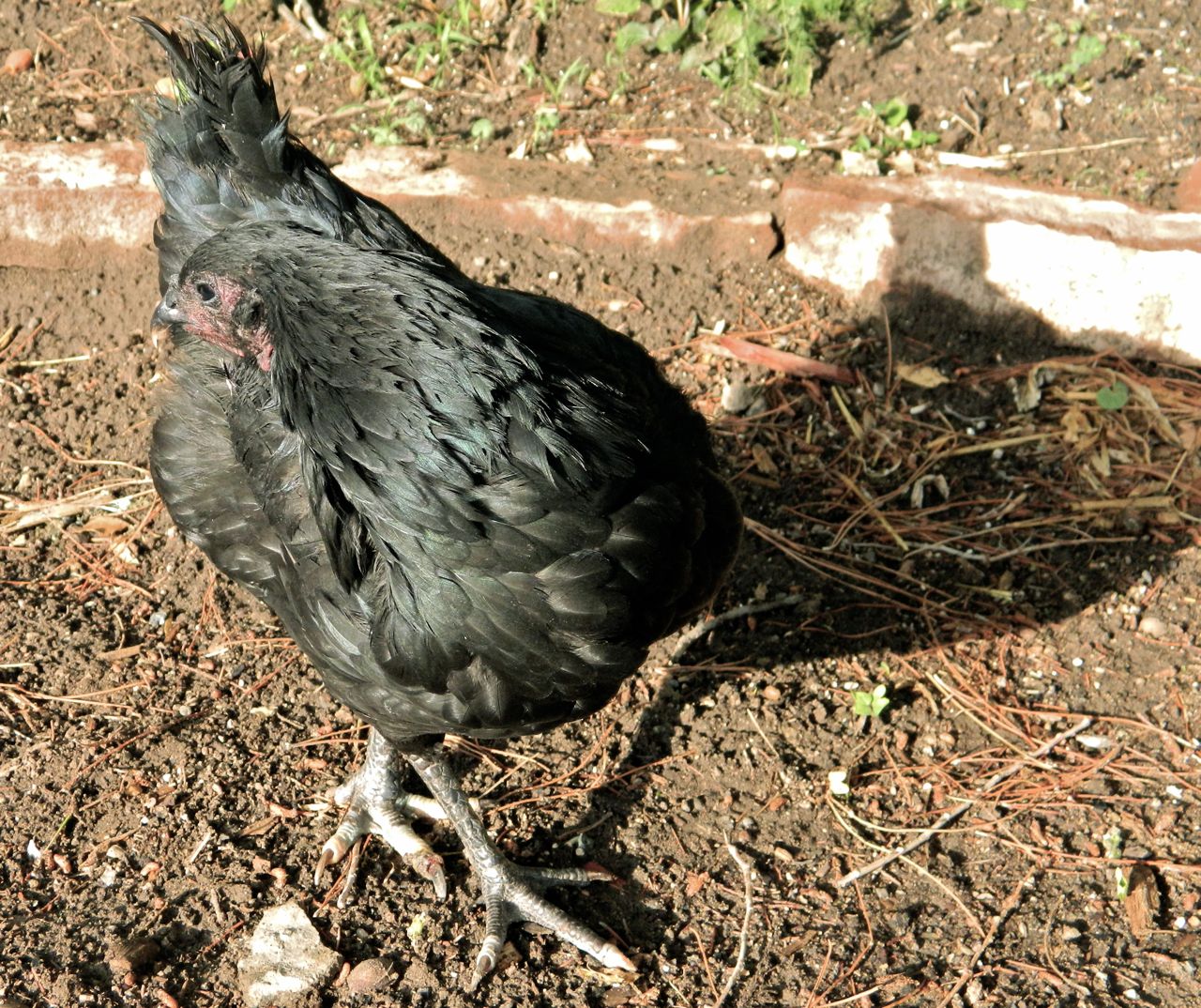
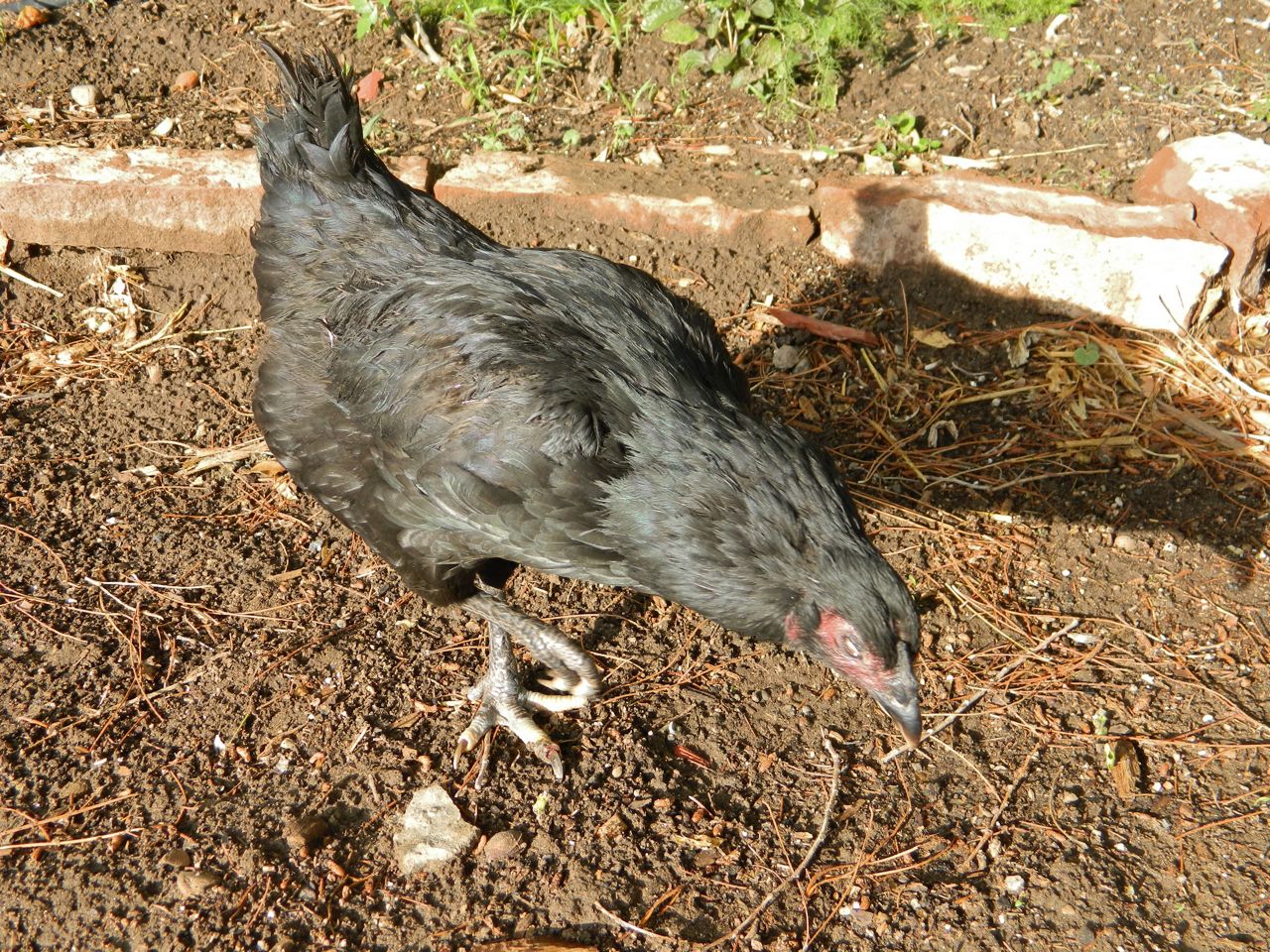
rufina2After loads of eye care, foot washing, antibiotics, food and vitamins, she has gained weight and is learning to find food and water by herself. Her remaining eye looks normal again but is still blind (I was hoping for a miracle), and the place of its former pair seems to have reached its majority in terms of healing–no eye, but no skin, either. Just a weird,  green spot surrounded by red skin that looks not unlike a tiny sun-dried tomato.

But that does not prevent her daily forays into the garden where she walks around with her head craned forward to “feel” where she’s going, and from exhibiting other persisting chicken qualities that seem to evidence a contented life.

rufinaagainI’m still surprised, and slightly in awe of this traumatized chicken who is satisfied to reside indefinitely on my studio porch. Shiny, happy chicken.

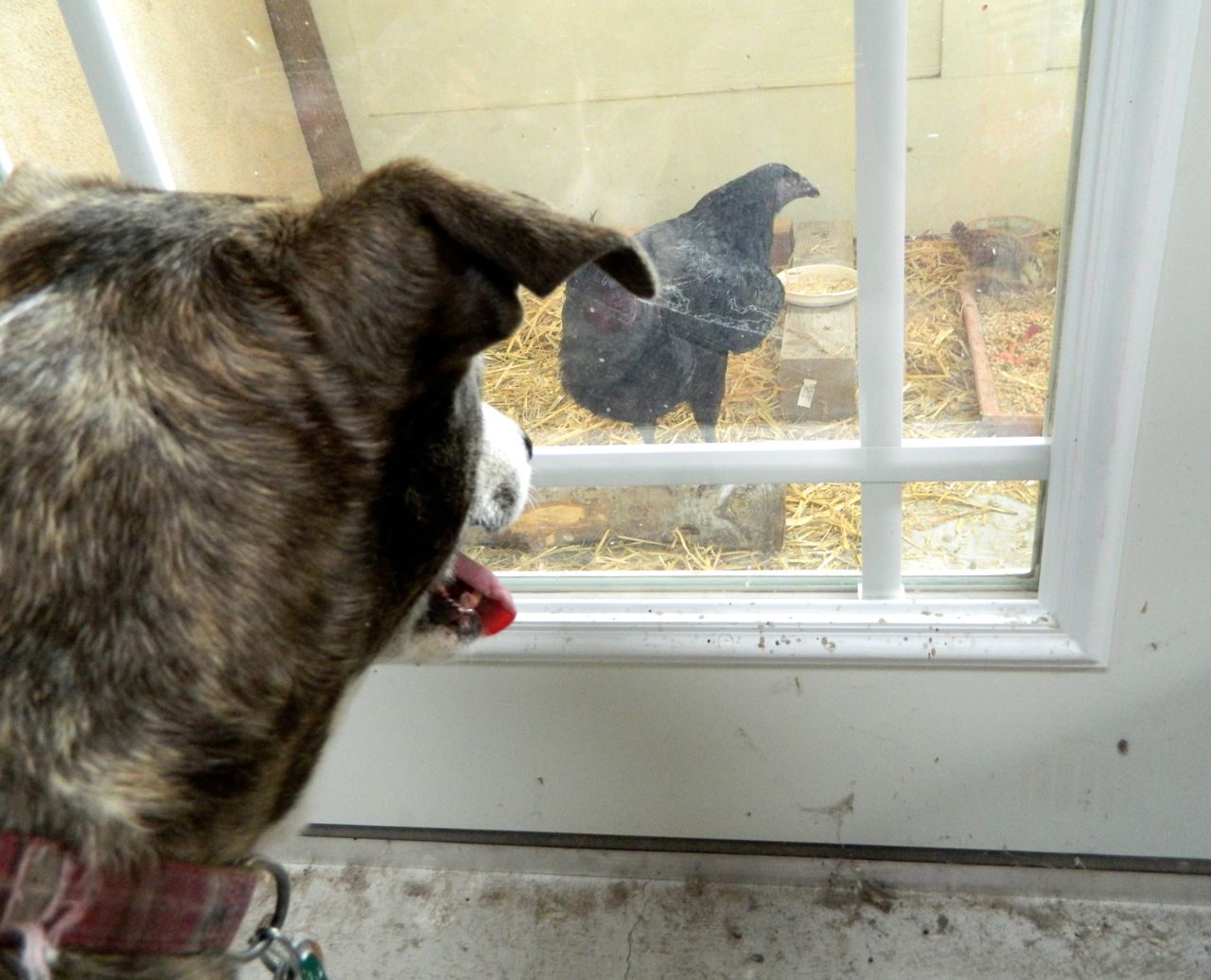
And so far, Velma the Rascally Whippet has not been the nuisance I was afraid she might be, but instead, a proud example of a bird-dog in defiance of her own natural instincts (save for one minor incident involving a tail feather. That was still attached to Rufina.). Perhaps Velma knows they are kindred spirits, she herself having survived a scary encounter with the Great Beyond earlier this year.

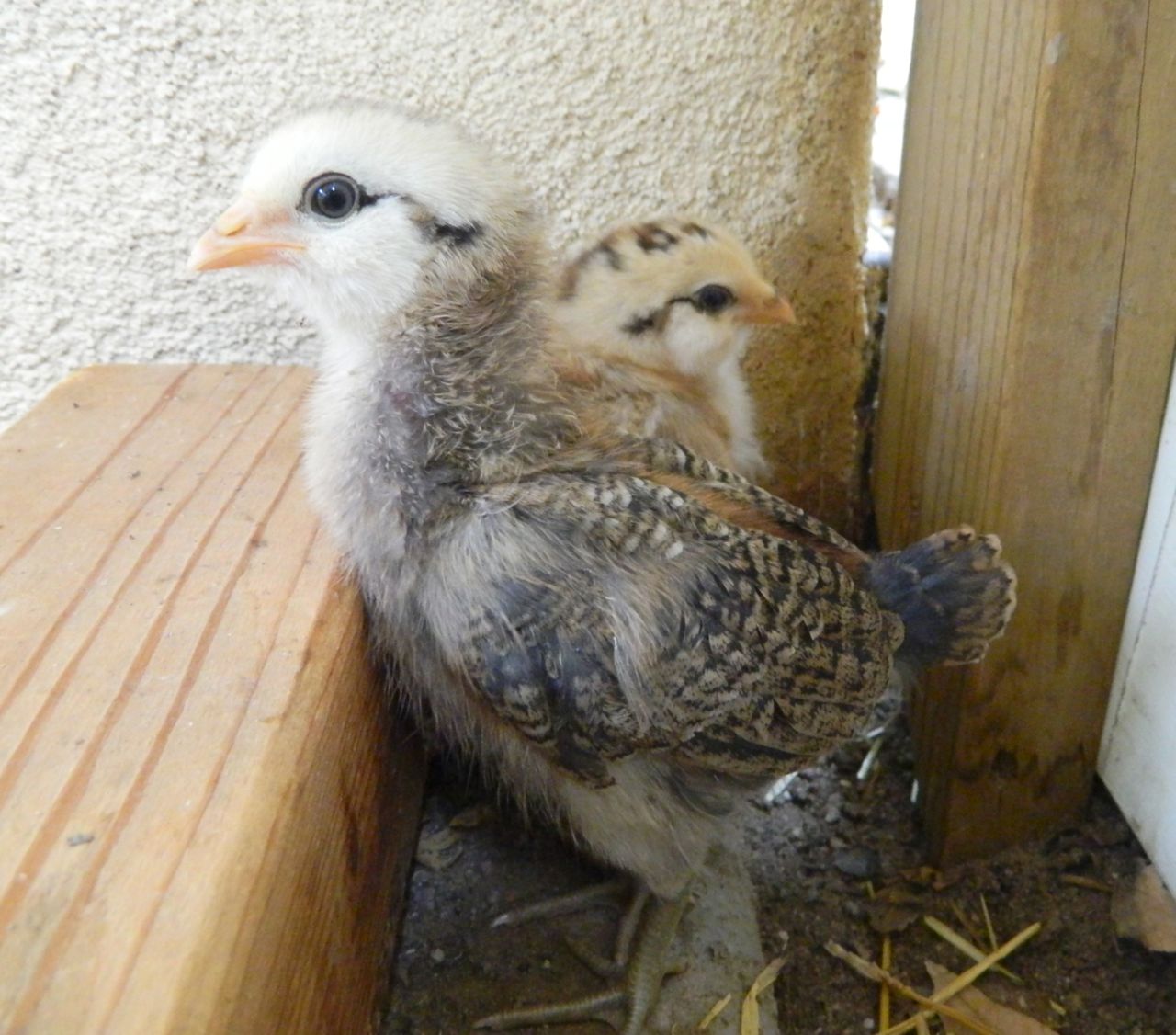
velmaThanks to everyone who has contributed free chicken advice, food, ER and vet consults, and even a couple of adorable, surprise chicks* (!) to keep Rufina company.

chicks*Chicks will unfortunately be dispatched to some other venue because they are exploiting their sighted advantage: stealing food out of Rufina’s mouth, crowding the water dish, and mocking her by constantly blinking and sticking their tongues out.  Also, they are filthy little creatures that walk in their own poop and then jump on me.

And finally, what’s in a name? When it became clear that chicken might live, I thought I should name her, and Rufina was the first thing that popped into my head. A few days later, I googled it to see what came up. This is what I found on Wiki:

Saints Justa and Rufina (Ruffina) (Spanish: Santa Justa y Santa Rufina) are venerated as martyrs. They are said to have been martyred at Hispalis (Seville) during the 3rd century.

Their legend states that they were sisters and natives of Seville who made fine earthenware pottery for a living, with which they supported themselves and many of the city’s poor. Justa was born in 268 AD, Rufina in 270 AD, of a poor but pious Christian family. During a pagan festival, they refused to sell their wares for use in these celebrations. In anger, locals broke all of their dishes and pots. Justina and Rufina retaliated by smashing an image of Venus.

The city’s prefect, Diogenianus, ordered them to be imprisoned. Failing to convince them to renounce their faith, he had them tortured on the rack and with iron hooks. This method also having failed, they were imprisoned, where they suffered from hunger and thirst.

They were then asked to walk barefoot to the Sierra Morena; when this did not break their resolve, they were imprisoned without water or food. Justa died first. Her body, thrown into a well, was later recovered by the bishop Sabinus. Diogenianus believed that the death of Justa would break the resolve of Rufina. However, Rufina refused to renounce her faith and was thus thrown to the lions. The lion in the amphitheatre, however, refused to attack Rufina, remaining as docile as a house cat. Infuriated, Diogenianus had Rufina strangled or beheaded and her body burned. Her body was also recovered by Sabinus and buried alongside her sister in 287 AD.

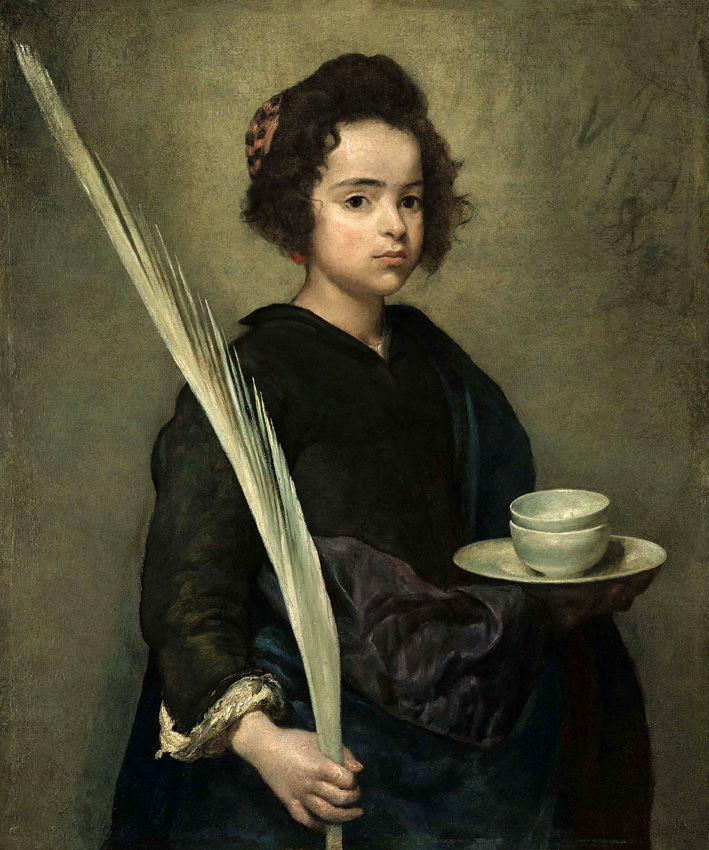
Old Master Paintings Sale Sotheby's, London - July, 4 , 2007 Velazquez (1599 - 1660) Saint Rufina Estimate: 6,000,000 - 8,000,000 Copyright in this image shall remain vested in Sotheby’s. Please note that this image may depict subject matter which is itself protected by separate copyright. Sotheby’s makes no representations as to whether the underlying subject matter is subject to its own copyright, or as to who might hold such copyright. It is the borrower's responsibility to obtain any relevant permissions from the holder(s) of any applicable copyright and Sotheby’s supplies this image expressly subject to this responsibility.
Saint Rufina, by Velázquez. See the likeness?? She’s even carrying a giant feather!

Just another name? Perhaps. Or: a dark-haired Spaniard and a Italian-New Mexican, two Christian potters separated by centuries, a saint, a chicken, and an ordinary human united in an extraordinary coincidence of the undead.

ooOOoo

Follow that!

Well I can’t but John Zande can.

For he was the first to leave a comment to Laura’s Rebirth post:

Here, i feel this song is in order. Listen carefully to the words, and who is singing them.

Including the following in his comment.

So what about chickens!

There’s more to chickens that we realise!

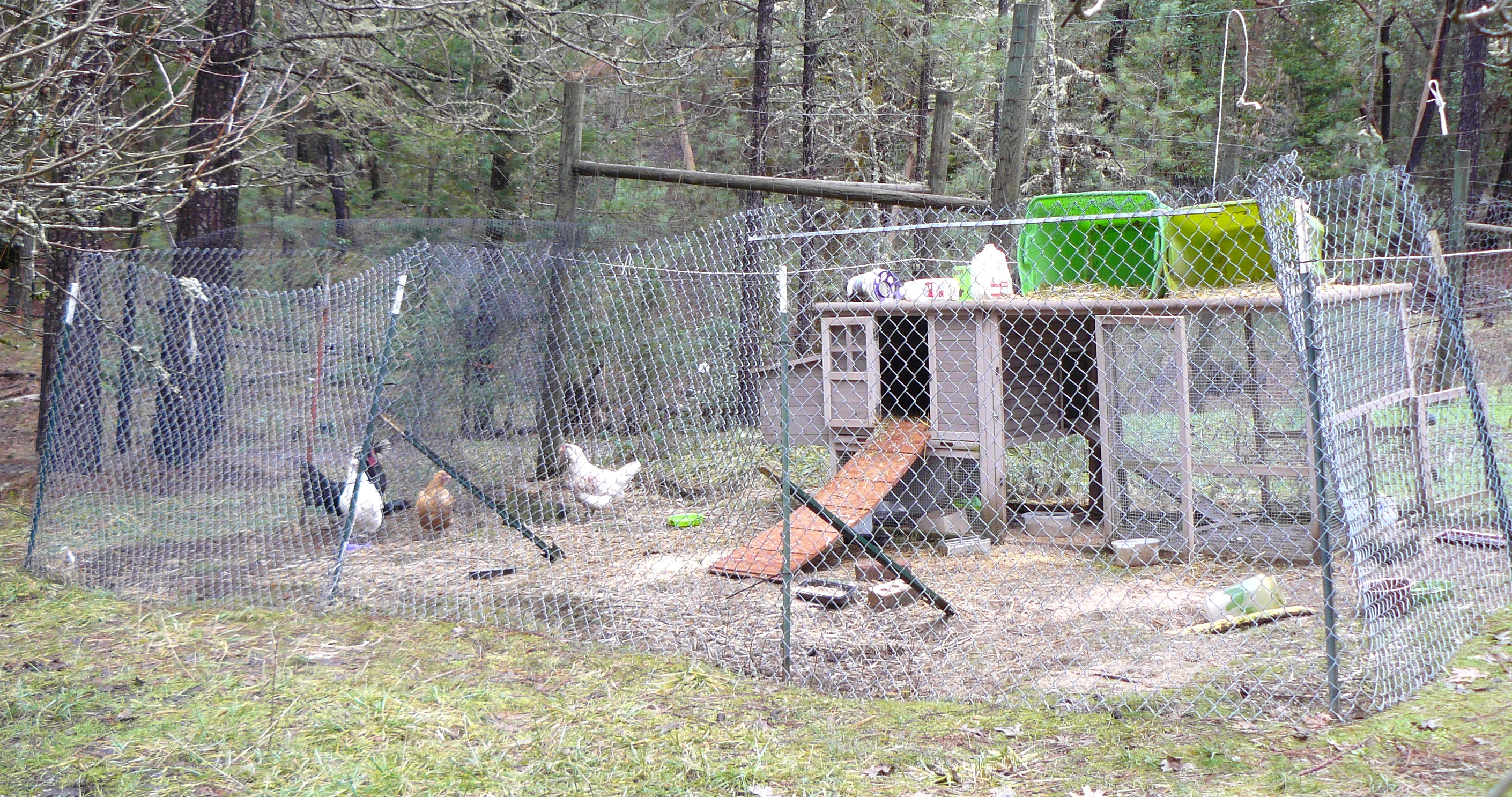
p1160876We have a rather run-down ‘home’ for our chickens close to the house. It was run-down before the snow fell and almost brought down the surrounding wire fence.

p1160875But, hopefully, this coming Thursday sees a new walk-in run being constructed for our birds so they are better protected.

So what has brought this topic to mind?

The answer is a recent item that appeared on the Care2 site about how badly we misunderstand chickens.

I thought you would enjoy reading it.

ooOOoo

6 Surprising Chicken Facts

3198775-large

Written by Katherine Martinko

It’s time we started paying attention to chickens, one of the most misunderstood and ignored species on Earth.

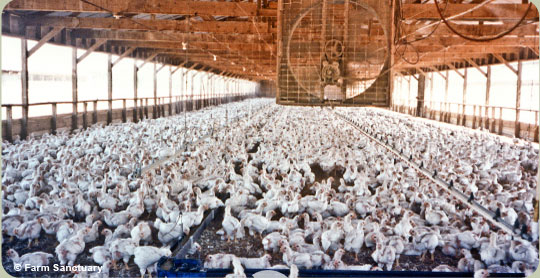
There was a time when chickens were viewed as exotic, fascinating birds. Descendants of exotic Asian jungle fowl, they were revered for their ferocity and intelligence, and domesticated around 8,000 years ago, more for cockfighting than eating. But then, we humans began eating them in ever-larger quantities, until we reached the point where we are now, with 20 billion (mostly white) chickens living in dirty, crowded barns, awaiting slaughter.

Chickens have been a part of human lives for millennia, and yet they are one of the most misunderstood, if not ignored, species on Earth. Lori Marino, an American neuroscientist and animal intelligence researcher, wants to change this. She is intrigued by the fact that chickens are so rarely recognized for their cognitive abilities and frustrated that studies about birds almost always focus on other, less-domesticated species, like crows and parrots.

“Arguably even the scientific community has been influenced by public perceptions of chickens as cognitively simple… This asymmetry in the literature is likely a reflection of, as well as a contributor to, the disconnect scientists and the public have between chickens as commodities and who they actually are as individuals.”

Chickens deserve more attention, and here are some quirky, interesting facts to get you thinking about chickens less as food and more as fascinating co-inhabitants of our world. These come via Marino’s recent paper, “Thinking Chickens,” published online in Animal Cognition in January 2017.

1. Chickens are a sub-species of the red jungle fowl that hails from southeast Asia.

The red jungle fowl (galls gallus) inhabit the edges of fields, scrubland, and groves. Domestication was well established 8,000 years ago, but some records suggest it could have started as much as 58,000 years ago.

2. Domestic chickens are similar to their wild counterparts.

Despite the intense breeding and genetic manipulation of recent years, chickens have not been cognitively or behaviorally affected by domestication. This stands in contrast to dogs and wolves, for example, which have diverged significantly due to domestication. Nor have chickens become less aggressive toward predators through domestication, which is a common outcome; in fact, some chickens are more aggressive even than red jungle fowl.

3. A chicken’s beak is highly sensitive to touch.

The beak, with numerous nerve endings, is used to explore, detect, drink, preen, and defend. This also means that when a bird is de-beaked, as often happens in industrial farming, it experiences great pain, sometimes for months, which changes its behavior. Marino writes, “At the end of the beak is a specialized cluster of highly sensitive mechanoreceptors, called the bill tip organ, which allows chickens to make fine tactile discriminations.”

4. Chickens have finely tuned senses.

They can see long distance and close-up at the same time in different parts of their vision. They can see a broader range of colors than humans. They can hear at low and high frequencies at a variety of pressure levels. They possess well-developed senses of taste and smell. They can orient to magnetic fields, like many other birds.

5. Chickens are surprisingly good at math.

Three-day-old chicks are able to perform basic arithmetic and discriminate quantities, always opting to explore a set of balls with the greater number, even when an object was visibly transferred from one set to another. Five-day-old chicks have been found to track up to five objects.

“When they were presented with two sets of objects of different quantities disappearing behind two screens, they were able to successfully track which screen hid the larger number by apparently performing simple addition and subtraction.”

6. Chickens can exercise self-control.

In an experimental setting, chickens have been given the choice between 2-second delay with 6 seconds of access to food, versus a 6-second delay with 22-seconds of access to food. The hens waited for the longer reward, “demonstrating rational discrimination between different future outcomes while employing self-control to optimize those outcomes.” Self-control usually doesn’t appear in humans until four years of age.

These are just a few of the remarkable discoveries described in Marino’s study, a highly readable, entertaining paper. It’s an important reminder that chickens, arguably the most ubiquitous animals in our world, deserve far more respect than they currently receive. Hopefully this will lead to more people questioning the horrific conditions in which most of them are kept.

Photo Credit: robertsharp/Flickr

ooOOoo

It’s easy to fall into the trap of looking for a humourous way to close today’s post. But a more responsible approach would be to repeat the words from the start of the article to serve as a reminder of trying, wherever possible, to think about the food we eat, especially when animals and birds have to be slaughtered to provide us with that food.

…. we reached the point where we are now, with 20 billion (mostly white) chickens living in dirty, crowded barns, awaiting slaughter.

broilerBut please don’t leave this page until you have watched the following video.

Published on Dec 3, 2014

After 22 years of raising chickens for Perdue, one brave factory farmer Craig Watts was at his breaking point and did something no one has done before. He invited us, as farm animal welfare advocates, to his farm to film and tell his story. Ask your supermarket for Better Chicken at http://better-chicken.org.

Yet another incredible hero!

The wonderful, inspiring story of what Janey Lowes is doing for dogs in need.

Janey Lowes loving a strteet dog in Sri Lanka
Janey Lowes caring for a street dog in Sri Lanka.

More accurately what Janey Lowes and a whole team are doing for the street dogs of Sri Lanka.

Jean and I saw this story featured on the BBC News website.

The English vet saving Sri Lanka’s street dogs

22 January 2017 Last updated at 00:17 GMT

A vet has left behind her home in England to care for Sri Lanka’s street dogs.

Janey Lowes from Barnard Castle, County Durham, has spent the past two years caring for the neglected animals.

There are about three million street dogs on the island – about 60% of puppies born on the street do not survive to adulthood.

The 28-year-old set up charity WECare Worldwide to raise money to buy the equipment needed to treat the animals and to set up her own clinic in Talalla.

I am pleased that the video clip that was included in the BBC News story has found its way to YouTube.

Inevitably the charity WECare Worldwide has its own website: the home page is here. Then you can read on the charity’s ‘About’ page: (Note: CNVR is the acronym standing for catch-neuter-vaccinate-release.)

CNVR

CNVR is carried out as it is the most humane way to reduce roaming dog populations and reduce the number of unwanted puppies that are dumped on the streets at a very young age. It also allows the females that would inevitably spend their whole lives pregnant to only have to worry about number one when thinking about limited food resources and shelter options, which transforms their lives.

Vaccinating the dog population against Rabies is the most effective way to eliminate the disease in the human population. As an island nation, eradication of Rabies in the near future is a very real possibility and will change the future of both animals and humans here, allowing improved relationships between the two.

CNVR is the backbone of everything we are trying to achieve in Sri Lanka.

But that’s only one part of what they do. Again, as the website sets out:


We focus on 3 main areas here in Sri Lanka.

  • CNVR (catch-neuter-vaccinate-release)
  • Treatment of sick and injured animals
  • Education and training


I shall be making contact with the charity very soon .

Not only to pass on our respect and admiration for what she has accomplished but to see if there are other ways we can help them in what they are doing. I use the word ‘we’ to cover not only Jean and me but also all of you who are close to this blog and who, so frequently, show how much love you have for dogs!

WECare Worldwide will help by providing free veterinary treatment, alongside love, compassion and respectful care of the Ceylon dogs, who make up such a huge part of Sri Lankan heritage and culture, both in the past and the current day.

You will adore this

We can never have too many heroes. Especially if they are dogs!

Just read this gorgeous story that appeared on the Care2 site on January 14th.

ooOOoo

Shelter Dog Nobody Wanted Alerts New Owners to Gas Leak

3198309-largeBy: Laura Goldman   January 14, 2017

The teaching dog in action

How Cleo was taught by Pharaoh

This post should be read in conjunction with the post that came out an hour ago: Dogs and Learning. It was first published on Learning from Dogs on March 19th, 2014.

Cleo

Cleo between guests Darla and Cody- picture taken yesterday.
Cleo between guests Darla and Cody- picture taken yesterday (March 18th, 2014).

Where to start this story about Cleo?

I guess by going back to the days when I was living in the village of Harberton, near Totnes in South Devon, England. That means going back to 2003, the year when it seemed the right time for me to get a dog. (Jean and I first met in December, 2007) There was always only one breed to be considered; the German Shepherd dog.

Thus that desire for a German Shepherd led me to Sandra Tucker who lived not too many miles away who owned the GSD breeders Jutone. It was at Jutone where I saw the wonderful puppy dog who became my Pharaoh.

But Sandra did better than breed the dog that has meant more to me than words can ever describe, she gave me some fantastic advice. That being that when Pharaoh was getting on in life, then bring in a German Shepherd puppy. There were two solid reasons why this made sense. The first was that Pharaoh would teach the new puppy many of the skills and disciplines that Pharaoh had learnt as a young dog and, secondly, the puppy would keep Pharaoh active.

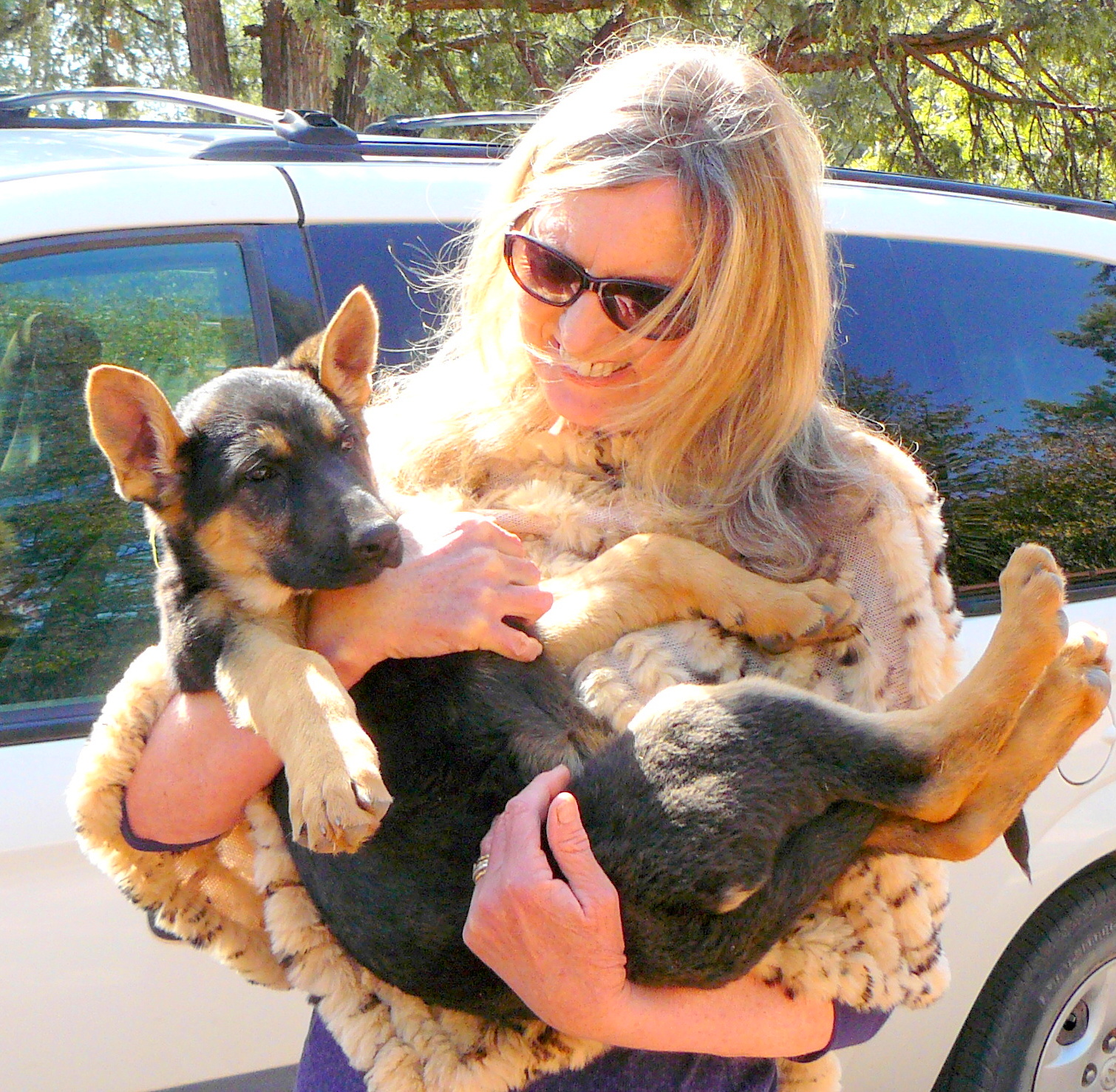
That puppy was Cleo.

First picture of our puppy - taken two days before we brought her home: 4th April, 2012
First picture of what was to be our puppy – 4th April, 2012, just two days before we brought her home.

oooo

Puppy Cleo coming home - April 6th, 2012
Puppy Cleo coming home – April 6th, 2012

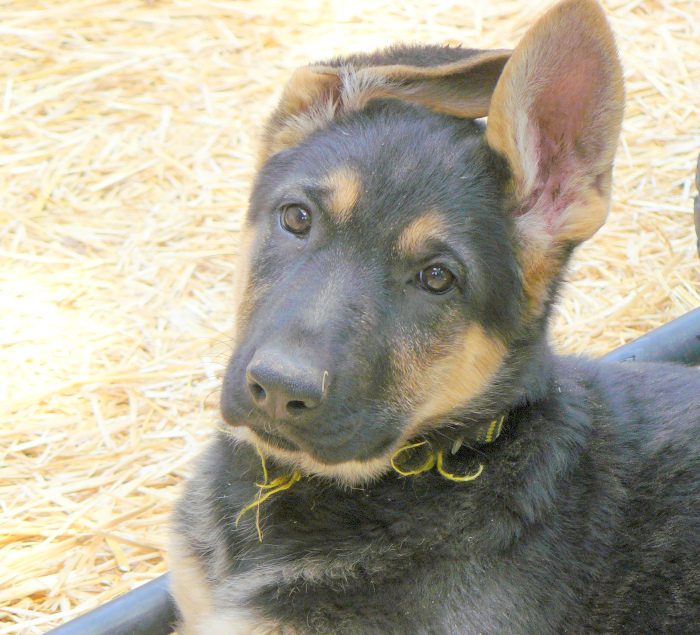
Cleo was born on the 23rd January, 2012. At that time we were still living down in Payson, Arizona. Right from the start she was, and still is, the most joyful, loving dog one could imagine. That top photograph shows in her eyes the openness of her heart and soul.

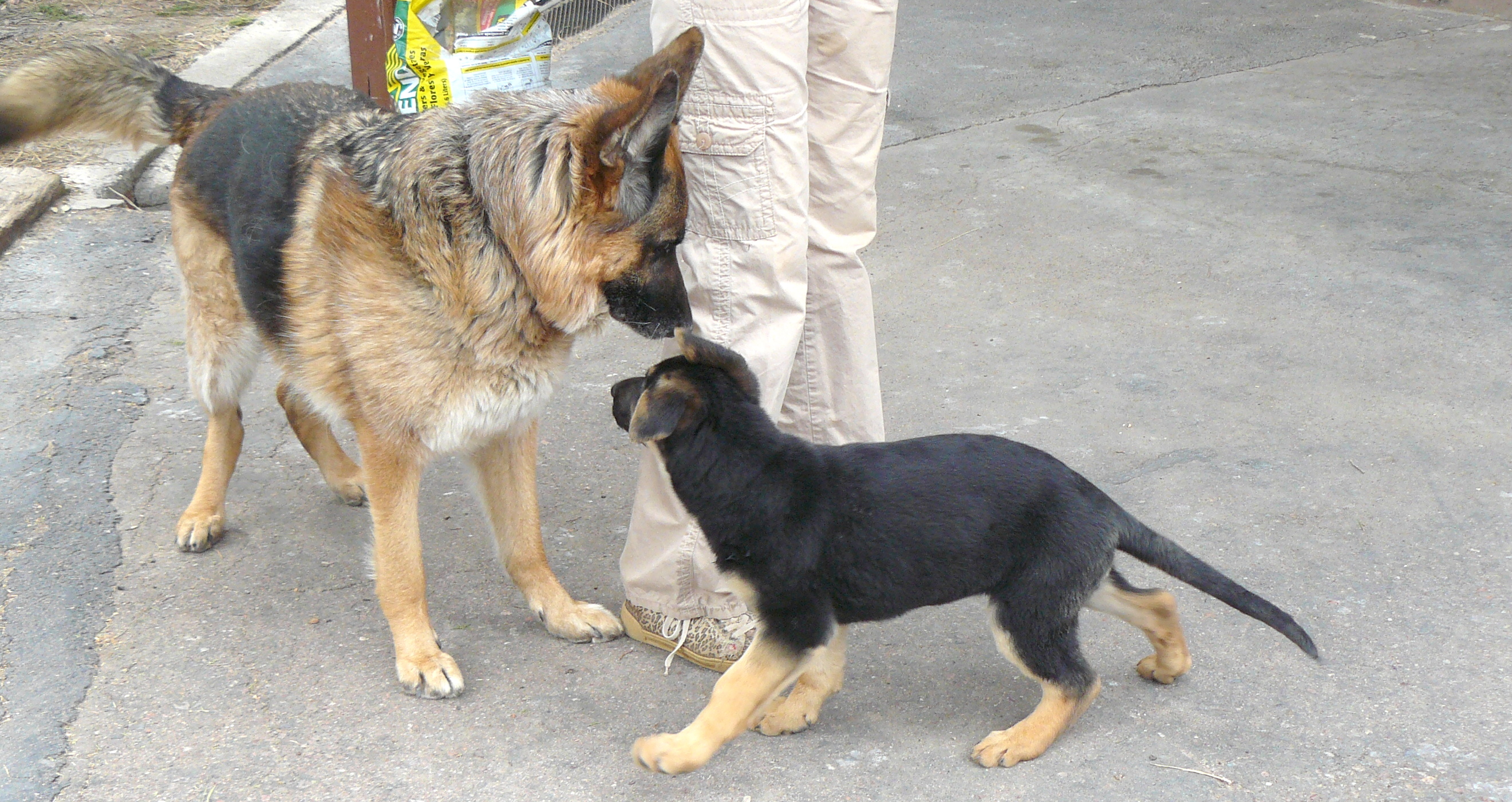
First meeting between Pharaoh and Cleo; April 7th, 2012.

So here we are coming rapidly up to the two-year anniversary (6th April, 2014) of when Cleo entered our lives.

Cleo continues to be the most loving, gentle, sweet German Shepherd.

However, as Sandra so correctly predicted, Pharaoh has ‘taught’ Cleo a number of commands such as Sit, Stay, Lie Down, Come, and more. Not a minute’s training of Cleo has come from Jean and me.

Cleo is very fond of Pharaoh and it’s obvious that Pharaoh gets a huge amount from having Cleo around him.

ooOOoo

Fast forward to now, as in January, 2017, and the relationship between Pharaoh and Cleo is still incredibly important. Cleo senses that Pharaoh is in the last ‘phase’ of his life but still shows him incredible respect.

Cleo is a very intuitive dog who appears at times to really understand what Jean and I are talking about, even when it has nothing to do with dogs. For instance, Cleo knows when I am finishing up my lunch and that the next thing that will follow is Jeannie and me taking the dogs out for their afternoon walk.

Cleo is almost certainly the most knowledgeable and obedient of all of our dogs and it’s all down to Pharaoh’s skills as a teaching dog.

What amazing animals they are!

Dogs and Learning

In thanks to Yvonne over at Pets, People and Life for prompting me to write this.

In yesterday’s post Yvonne Daniel, the author of the blog Pets, People and Life, said in a comment (my highlights):

Interesting article. When training any of my dogs to learn something ( I should write when TRYING to train my dogs something) I use a high pitched happy voice. I read about the voice thing many years ago and have no idea what book or article that was in. The motive is: to get the dog to understand that you sound happy and enthused. I’m not sure why the high pitched voice is needed, in fact I don’t use it all the time. Maybe I’m not consistent enough. Being able to train a dog is an art. I’m not good at it but my dogs come when I call and generally behave. I’ve taught a few tricks but I wish that I were really good at it.

That motivated me to blow the dust off a couple of blog posts from many years back. Firstly, this one coming up now and then in an hour’s time I will publish a further post about Cleo.

So here’s the first one that goes back to November 2014, when I wrote a post, Understanding the Dog’s World, that included this:

In 2012, the American Veterinary Medical Association reported that there were over 43 million [ 43,346,000] dog-owning households in the USA. That translated to over 36% of the total households in America. With an average of 1.6 dogs per household that came to the astonishing total of 62,926,000 dogs. In just one country!

It is therefore beyond doubt that millions and millions of people, of all ages, all around the world, understand what it is like to have a dog close to them. Likewise, those millions of dogs know what us humans are capable of. But of those millions of humans who have dogs in their lives, how many understand, really understand, the world of the dog?

In my book, in the next chapter after my Prologue, the Puppyhood chapter, I speak of the circumstances that brought me into contact with Angela Stockdale of The Dog Partnership in Devon and how from that association I became aware of the three roles that dogs could be born with: mentor, monitor and nanny.

How, generally speaking, out of every fifty dogs born there were just three born, on average, with those roles and that the bulk of dogs born were straightforward pack members all of equal status.

Irrespective of the fact that we don’t normally own anything like the number that would constitute a natural pack of dogs in the wild, around fifty animals, that doesn’t alter the fact that when a puppy is born it’s social place, from a pack perspective, is ‘hard-wired’ into that puppy.

I am indebted to Angela Stockdale for granting me permission to republish her descriptions of the mentor, monitor and nanny that are available on her website. In terms of man understanding the world of the dog, these descriptions are invaluable.

Here they are:

ooOOoo

What is a Teaching Dog?

A Teaching Dog is a dog who has an instinctive desire to guide and support dogs in their learning canine communication.

A Teaching Dog helps other dogs develop their canine communication skills by displaying different body language to convey different messages. Such as lowering their heads and curving on approach as a polite way to introduce themselves. These essential etiquette skills are invaluable in preventing social issues.

A Teaching Dog teaches dogs canine etiquette to other dogs so they develop their communication skills as they go through the natural ageing process i.e. the transition from puppyhood to adolescence and from adolescence to adulthood. At these essential times, their pupils develop their skills in canine communication to a high level, hence again preventing social issues.

A Teaching Dog has an instinctive desire to guide and support dogs who find communicating difficult. If a dog has an established social issue, a Teaching Dog will actively incite interaction with them in order to teach them how to relax and communicate with them. They will assess how the other dog feels and react accordingly. Keeping their distance if the dog is concerned and approaching thoughtfully when the dog relaxes. I say thoughtfully because that is really important to understand; they think about how to work with a dog.

When a Teaching Dog works, whilst there are some elements of instinctive body language, in the main they will consciously use appropriate body language for the specific situation. They will always maintain control of an interaction but will change their posture from assertive to more inviting in accordance to the other dog’s behaviour.

On sighting the dog they are working with, they will first watch and assess them. This can be done from quite a distance with an experienced Teaching Dog. Eye contact is made but the eyes are averted intermittently whilst the Teaching Dog decides how assertive they need to be, or not as the case may be, with that particular dog. What follows from thereon is purely dependent on the other dog and that particular Teaching Dog’s way of working.

Do all Teaching Dogs teach in the same way?

No. Different Teaching Dogs have different teaching skills and different preferred roles. It is essential to recognise the role each particular Teaching Dog prefers to take. There are three primary Teaching Dog roles – Mentor, Minder and Nanny.

Mentor

A Mentor is normally quietly assertive by nature. They rarely play unless flirting with the opposite sex. However, they generally build the strongest bonds with high ranking dogs of the same sex.

As a Teaching Dog they are passively dominant. They always meet a dog with assertiveness but never hostility. They tend not to use body language to relax a dog as such but often just their presence has a calming effect on most dogs anyway.

If working in a group, they watch from the sidelines and only become involved if absolutely necessary. Mentors can be quite lazy! They will support other Teaching Dogs where needed, showing by example what to do in difficult situations if the other Teaching Dog is not coping.

Other dogs reaction to Mentors vary. Some dogs take great confidence in a Mentor and whilst not necessarily submissive towards them, they are very respectful. Some dogs find a Mentor intimidating and will avoid making contact with them.

Minder

A Minder is totally different to a Mentor in their interaction with dogs they are teaching. When a Minder meets another dog, they actively approach with the intent of interacting with them. A Minder is also naturally assertive but not as strong as a Mentor. When they meet another dog, in the Teaching Situation, they assess the new dog as they approach and use appropriate body language in accordance to the other dog’s reaction to them.

They are more generally more demonstrative than a Mentor and will actively seek interaction within a few minutes of meeting a new dog. This does not necessarily mean that they invite play. If they feel the dog is not ready for that level of interaction, they will converse with them in a more subtle manner.

If the other dog is worried but shows signs of being ready to rush at them, the Minder will stand firmly with their head side on to the dog. Eye contact is made intermittently as the Minder ascertains whether the other dog is calming down or intending to rush at them.

They can stand firm and openly display assertiveness if they need to. Once ‘control’ of the situation has been achieved, a Minder will generally incite status based activities from the other dog. These can be by marking then walking away allowing them to investigate their scent. Or they may invite the other dog into a status game, often instigating a chase.

If the other dog shows signs at trying to drive them away, the Minder will turn their head towards them and eye contact becomes stronger. They do not reposition the rest of their body. If the other dog shows signs of moving away, the Minder will totally drop their body language and move away. They will then reassess the other dog from a distance, before approaching again.

In a group situation, a Minder will monitor the group closely and interrupt any unsociable or unruly behaviour. They interrupt unacceptable behaviour by physically placing themselves between the dogs and will remain there until the tension has reduced. When the dogs in question have calmed down, the Minder will usually walk away and monitor them from a distance. They tend not to interact with the other dogs after harmony has been restored. In effect, they police a group.

Other dog’s reaction to a Minder is either respectful or challenging. Most dogs recognise a Minder as a strong dog and usually respect them. Sometimes polite status games may be played when they first meet.

As the Minder does not naturally command respect in the way a Mentor does, some dogs who have limited canine communication skills and/or adolescents can challenge them. Once the dogs have learned how to ascertain status in a polite manner from the Minder, they will usually then settle and look to the Minder for guidance in future situations.

Nanny

The Nanny is the most amazing of all the Teaching Dogs. Although not their preferred choice, a strong Nanny can take the role of a Minder or Mentor if they need to. They are unique.

They are extremely generous dogs and are at their happiest when everyone else is happy, including other Teaching Dogs. They work very differently to a Mentor and a Minder.

They not only relax a dog who is uncomfortable or anti-social but they also help relax any Mentor or Minder in a group. Few Mentors get overly stressed in a teaching situation but Minders tend to take their job quite seriously, unless really experienced and so can become tense when working.

If they see another Teaching Dog, usually a Minder, showing stress they will also consciously use body language to reduce their tension as well.

Being happier working on a one to one basis or in a group is down to each dog’s personal preference. Although, of all the Teaching Dogs they are more likely to be equally happy in either situation.

When meeting a new dog, they will observe from a distance before making a thoughtful approach. Thoughtful being the operative word as everything a Nanny does is done with thought. The Nanny tends to assess a dog in more depth than the other Teaching Dogs. This means they often take longer in their approach. They rarely communicate with instinctive responses but with conscious body movements, using the eyes in particular, when conversing with another dog.

If a dog is confrontational with them, they will remain strong in their attitude but will incite play, in particular chase games. The game of chase can be a challenge, like the ‘Chase me Charlie’ game children play. Or a game of chase can be used to loosen up a dog who is so stressed they feel unable to move.

The Nanny knows exactly what distance to keep between them and the other dog. If they feel the other dog is too close for comfort or who is becoming too unsociable, they will stop and face the dog and take control again. Once they see the other dog is more relaxed, they will stop running and attempt to converse with them again. They repeat this routine until the other dog stays relaxed and sociable with them.

In a group situation, initially they will monitor from the edge of the group and then actively walk up to each dog individually and check they’re comfortable. This also gives the other dogs confidence as they know the Nanny is there for support should they need it.

Once they have seen every group member, including any other Teaching Dogs, they will then focus on the dogs that feel the most uncomfortable, this is not necessarily the dog who shows outwardly unsociable behaviour.

It could be a dog who becomes withdrawn because they are so stressed. Sometimes they will simply follow and walk alongside a dog who is not comfortable and other times they may invite play. It totally depends on the other dog and how, at that moment, they are feeling. The Nanny may walk alongside another dog and then invite play.

The Nanny will resolve conflict by approaching in a calmer manner than a Minder usually to interrupt the unsociable behaviour. Not necessarily by physically splitting the dogs. They may bark and then play bow and/or literally pat them on the shoulder to attract their attention. A strong confident Nanny will split if they need to but prefer to resolve any conflict by mediation.

When other dogs meet a Nanny, if they have a good command of the canine language they will greet them in friendly, but not submissive manner. A Nanny’s first response to a dog displaying aggression, is to increase the distance between them. But they do not turn their back on the other dog. This would show vulnerability.

They will move away at an angle and stand sideways on to the other dog. This indicates to the other dog that whilst they are not offended and are not going to retaliate, they are also not intimidated. Initially, this can be most confusing for the other dog.

A Nanny excels at being able to recognise signals of stress in other dogs. They will only advance towards the dog to the level the other dog can cope with. As the dog learns that the Nanny will not be coming close enough to pose a threat to them, they begin to relax. In time, the other dog will take confidence from the Nanny and will look to them for guidance in difficult situations.

Is a Teaching Dog the same as the Alpha, Beta and Omega in a wild dog pack?

No. The Teaching Dog is unique to the dog world. Whilst a Mentor is usually a dog of natural Alpha status, an Alpha is not necessarily a Mentor. In fact, many dogs of natural Alpha status can not or do not want to teach. They can not be compared to wolves or any other wild dogs. Teaching Dogs working together are not a pack. They can not be compared to dogs living in a group at home. Some Teaching Dogs do not want to work together with their own group but enjoy working with dogs they know from another family. All Teaching Dogs have equally important roles. There are situations where a Mentor is better able to resolve a conflict and another time a Nanny may be the better dog to the resolve the situation.

How can I find out more about these amazing dogs?

It may sound that it is impossible for dogs to consciously work in this way, particularly the Nanny. Seeing is believing and even then it is almost unbelievable. I run a four-day introductory course on the world of the Teaching Dog. On these courses, participants can bring along their own dog for assessment. But it is important to understand and to recognise that this is not whether your dog can teach but do they want to.

You will see experienced Teaching Dogs in practice. And also those who are at the beginning of their career. I can not, of course, guarantee how they will work as I have not met their pupils yet! You will learn about the Teaching Dog as an individual, see experienced and apprentice Teaching Dogs working on video as well where you can study their conscious body language in different teaching situations.

At this first level, we will cover identifying Teaching Dogs and offering them the right learning ground to develop their natural skills. You can not train a Teaching Dog. A Teaching Dog is born a Teaching Dog. It is dependent on their life’s experiences and living environment as to whether they develop to their full potential. Many allegedly aggressive dogs are actually true Teaching Dogs. In domestic society such dogs have not been able to do what they were born to do; help other dogs without the interference of people trying to tell them how to speak their own language. Their life of frustration has resulted in aggression. Once given the time and freedom to develop their natural teaching skills, any aggressive behaviour disappears.

Time to stop talking and start listening to the real teachers – The dogs themselves

Copyright © 2005 Angela Stockdale

ooOOoo

Thus one of the key learning aspects that Angela offers us humans is that dogs (and horses) learn most effectively when being taught by other dogs (and horses). This was observed countless times by me when Pharaoh was working as a minder teaching dog and using his natural pack instinct to teach puppy dogs their social skills and breaking up squabbles between dogs.

Some closing words from Angela.

I consider myself so lucky for dogs alone to have been my teachers. I learnt from watching how my own dogs responded to another dog’s body language and vice versa their language. Watching, learning and working with Teaching Dogs was the only way I knew. Seeing how these special dogs change the lives of less fortunate dogs, who never had the opportunity to really understand how to communicate with their own species.

I was and always will be in awe of a Teaching Dog’s ability consciously to adapt their body language in accordance to how the other dog was feeling. The result being that they could relax nervous dogs but at the same time maintain control of a problem situation. Remember, dogs talk dog far better than we do.

It came as quite a shock to me when I learnt about other approaches. It seemed foreign for people to have so much input in resolving what were described as ‘ behavioural’ issues. For me, working with these dogs was far more than resolving a behavioural issue. It was about improving the quality of lives of dogs who were not coping with everyday life. If they found dogs or people worrying, sometimes this was shown in displays of aggression. It is important to understand, these dogs were not aggressive, they simply displayed aggressive behaviour.

How on earth to follow that, you might be wondering?

Very simply! By recognising that as much as we have had dogs in our lives, for thousands of years, we do not understand their world, how they truly think, what they feel, and we probably never will.

My second post that was published a while ago follows in an hour’s time.


Blue Ridge Pet Food Recall

As released by Dog Food Advisor at 07:45 PST today.

Blue Ridge Beef of Eatonton, Georgia, has announced it is voluntarily recalling one lot of its raw frozen pet food due to its potential to be contaminated with Listeria monocytogenes bacteria.

To learn which products are affected, please visit the following link:

Blue Ridge Beef Pet Food Recall of January 2016

When one goes to that Blue Ridge web link this is what you will read:

ooOOoo

January 17, 2017 — Blue Ridge Beef of Eatonton, Georgia, has announced it is voluntarily recalling one lot of its Turkey with Bone raw frozen product due to its potential to be contaminated with Listeria monocytogenes.

What’s Being Recalled?

blue-ridge-beef-turkey-with-bone-recall-jan-2017The affected product is sold in 2 pound chubs and can be identified with the following manufacturing codes:

  • Blue Ridge Beef Turkey with Bone
  • Size: 2 pound chubs
  • UPC Code 854298001887
  • Lot #103 mfdga12716

About Listeria

Listeria can affect animals eating the product.

And there is a risk to humans from handling contaminated pet products, especially if they have not thoroughly washed their hands after having contact with the products or any surface exposed to these products.

Healthy people infected with Listeria monocytogenes should monitor themselves for some or all of the following symptoms: nausea, vomiting, diarrhea or bloody diarrhea, abdominal cramping and fever.

Consumers exhibiting these signs after having contact with this product should contact their healthcare provider.

Where Was It Distributed?

The affected products were distributed to retail stores in the following states:

  • Florida
  • Georgia
  • North Carolina
  • South Carolina

What Caused the Recall?

This recall was initiated as a result of an FDA inspection and sampling of the product. This recall is being made with the knowledge of the US Food and Drug Administration.

What to Do?

Consumers who have purchased the above lot of Blue Ridge Beef Turkey with Bone raw frozen product are urged to stop feeding the product and return it to the place of purchase for a full refund.

Or dispose of the affected product immediately.

Those with questions can email the company at blueridgebeefga@yahoo.com

U.S. citizens can report complaints about FDA-regulated pet food products by calling the consumer complaint coordinator in your area.

Or go to http://www.fda.gov/petfoodcomplaints.

Canadians can report any health or safety incidents related to the use of this product by filling out the Consumer Product Incident Report Form.

Get Dog Food Recall Alerts by Email

Get free dog food recall alerts sent to you by email. Subscribe to The Dog Food Advisor’s emergency recall notification system.

ooOOoo

As the email alert that came to me said; in closing:

Please be sure to share the news of this alert with other pet owners.

Mike Sagman, Editor
The Dog Food Advisor

Best wishes to you all.

Tensions abound in many societies.

Reader alert: This has nothing to do with dogs!

Then as soon as I started to write today’s post (as of yesterday afternoon) I realised the error in my sub-title. For one might argue that this does have a connection with how our dogs behave as a cohesive group. But I’m going to be ‘an arse’ (‘ass’ in American speak) and ask you to hold out until the end of today’s post to read the ‘doggie’ connection. (Note that today’s post is Part One. Part Two continues tomorrow.)

american-gridlock_0I am in the middle of reading American Gridlock written by H. Woody Brock and published in 2012. Here’s an extract of what the book is about, courtesy of Amazon:

A sensible solution to getting our economy back on track

Pessimism is ubiquitous throughout the Western World as the pressing issues of massive debt, high unemployment, and anemic economic growth divide the populace into warring political camps. Right-and Left-wing ideologues talk past each other, with neither side admitting the other has any good ideas. In American Gridlock, leading economist and political theorist H. Woody Brock bridges the Left/Right divide, illuminating a clear path out of our economic quagmire.

Arguing from first principles and with rigorous logic, Brock demonstrates that the choice before us is not between free market capitalism and a government-driven economy. Rather, the solution to our problems will require enactment of constructive policies that allow “true” capitalism to flourish even as they incorporate social policies that help those who truly need it.

Brock demonstrates how deductive logic (as opposed to ideologically driven data analysis) can transform the way we think about these problems and lead us to new and different solutions that cross the ideological divide. Drawing on new theories such as game theory and the economics of uncertainty that are based upon deductive logic, Brock reveals fresh ideas for tackling issues central to the 2012 U.S, Presidential election and to the nation’s long-run future:

It greatly influenced me and I sat down and wrote an essay. Mainly to clarify my own thinking ahead of a meeting last Saturday of our local Freethinkers Group where the topic was “Ideas for Improving our Democratic Processes”. The “our” being the US democratic process but just as valid for many other countries.

I first set out to see if there was a clear, unambiguous definition of what a democratic society is. Surprise, surprise there isn’t one. Very quickly I came up with three:

The first:

A democracy by definition is government through elected representatives. It is a form of society which favours equal rights, freedom of speech and a fair trial and tolerates the views of minorities. Civics and Citizenship website

The second:

A DEMOCRACY IS a society in which all adults have easily accessible, meaningful, and effective ways:

(a) to participate in the decision-making processes of every organization that makes decisions or takes actions that affect them, and;

(b) to hold other individuals, and those in these organizations who are responsible for making decisions and taking actions, fully accountable if their decisions or actions violate fundamental human rights, or are dishonest, unethical, unfair, secretive, inefficient, unrepresentative, unresponsive or irresponsible;

(c) so that all organizations in the society are citizen-owned, citizen-controlled, and citizen-driven, and all individuals and organizations are held accountable for wrongdoing. Democracy Watch website

And the third:

Better democracy, everywhere.

The Democratic Society (Demsoc) works for more and better democracy, where people and institutions have the desire, opportunity and confidence to participate together.

We work to create opportunities for people to become involved in the decisions that affect their lives and for them to have the skills to do this effectively. We support governments, parliaments and any organisation that wants to involve citizens in decision making to be transparent, open and welcoming of participation. We actively support spaces, places and processes to make this happen. Democratic Society website.

I went on to say in my essay:

Yes, there is some harmony between all three definitions but there are also significant differences in tone and language.

I am sure many of you are familiar with the book by H. Woody Brock American Gridlock. I started reading it a few days ago and cannot now put it down.

For the core message of the book is that we, as in society, must distinguish between inductive and deductive reasoning. Let me use the definitions as found on the Live Science website.

Deductive reasoning

Deductive reasoning is a basic form of valid reasoning. Deductive reasoning, or deduction, starts out with a general statement, or hypothesis, and examines the possibilities to reach a specific, logical conclusion, according to the University of California. The scientific method uses deduction to test hypotheses and theories. “In deductive inference, we hold a theory and based on it we make a prediction of its consequences. That is, we predict what the observations should be if the theory were correct. We go from the general — the theory — to the specific — the observations,” said Dr. Sylvia Wassertheil-Smoller, a researcher and professor emerita at Albert Einstein College of Medicine.

In deductive reasoning, if something is true of a class of things in general, it is also true for all members of that class. For example, “All men are mortal. Harold is a man. Therefore, Harold is mortal.” For deductive reasoning to be sound, the hypothesis must be correct. It is assumed that the premises, “All men are mortal” and “Harold is a man” are true. Therefore, the conclusion is logical and true.

That is, we predict what the observations should be if the theory were correct.

Let that really work it’s way through your consciousness. It’s an idea that is rooted in the great scientists and philosophers of many thousands of years ago. Think of Euclid, the Greek Socratic philosopher who founded the Megarian school of philosophy. He was a pupil of Socrates in the late 5th century BCE, and was present at his death. (I cheated and looked it up.)

It was Euclid who through Euclidian geometry came to understand the principles of angles and straight lines; as in the shortest distance between two points.

Moving on:

Inductive reasoning

Inductive reasoning is the opposite of deductive reasoning. Inductive reasoning makes broad generalizations from specific observations. “In inductive inference, we go from the specific to the general. We make many observations, discern a pattern, make a generalization, and infer an explanation or a theory,” Wassertheil-Smoller told Live Science. “In science there is a constant interplay between inductive inference (based on observations) and deductive inference (based on theory), until we get closer and closer to the ‘truth,’ which we can only approach but not ascertain with complete certainty.”

Even if all of the premises are true in a statement, inductive reasoning allows for the conclusion to be false. Here’s an example: “Harold is a grandfather. Harold is bald. Therefore, all grandfathers are bald.” The conclusion does not follow logically from the statements.

Inductive reasoning has its place in the scientific method. Scientists use it to form hypotheses and theories. Deductive reasoning allows them to apply the theories to specific situations.

Now for some of you this side trip into reasoning may have seen more like a complete departure. But the point is that, as American Gridlock makes so powerfully: There are two main problems to be solved if this nation is to get back on track. First, win-win policy solutions must be identified for the five real-world problems addressed in Chapters 2 through 6. Second, the Dialogue of the Deaf must come to an end, policy gridlock with it, and these solutions must be implemented. (Pages 7-8)

I closed my essay by setting out the following proposition:

Until we have a clear, universally acknowledged definition of what a democratic society is then it is impossible and utterly futile to debate the various processes including what is the best process for American society.

Is this relevant to the world outside the USA? You bet it is. For better or for worse, what the USA does today the rest of the world does soon thereafter.

And as you will see in Part Two that comes tomorrow democratising the economy is key.

For when we look at the way that dogs, and wolves, operate as a pack in the wild there are only three animals with status:

  • The alpha female who has first choice of the male dogs for mating purposes and makes the decision, as and when necessary, to move her pack to a new territory,
  • The beta dog, always a male, whose role is to keep the pack running smoothly as a cohesive group and not letting squabbles get out of hand, and,
  • The omega dog, that can be of either gender, whose role is to keep the pack happy.

All the other animals in the pack of around fifty are of equal status and work for the benefit of the pack. Now that is something we should learn from dogs!