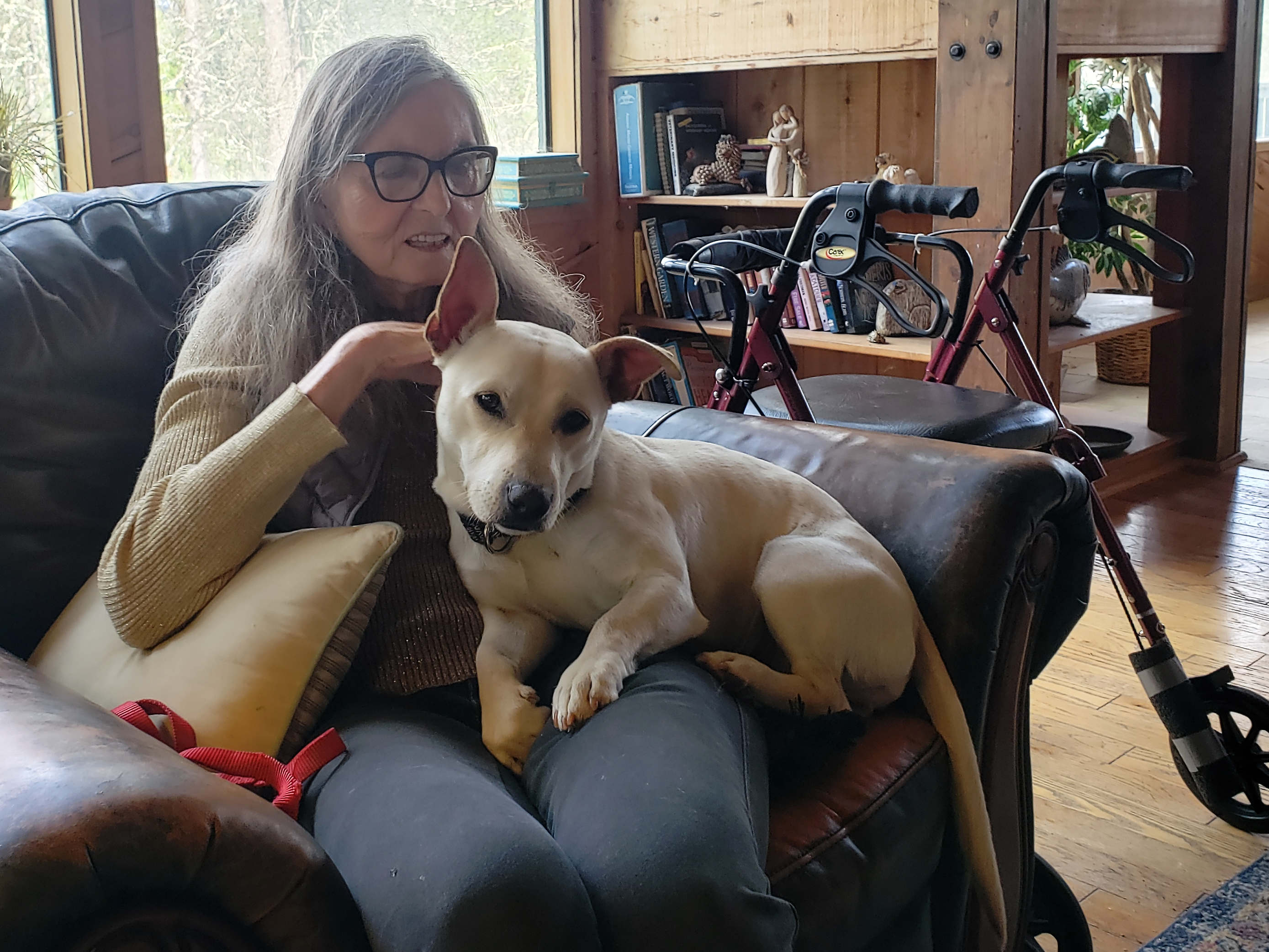
This photograph was taken by our neighbour, Margo, when she came to our house last Thursday.
Cloudy is from the local Josephine County Animal Shelter. After Cleo died we felt (including Oliver) that just one dog at home was too hard on everyone.
Cloudy is a bright, lively young dog who has quickly become very loving to all!
This article was published in The Conversation last Thursday, the 6th March, 2025.
Where we live in rural Southern Oregon is glorious and photos of our locale have been published before. However, I wanted to share this article with you all.
ooOOoo
Butterflies declined by 22% in just 2 decades across the US – there are ways you can help save them
We found declines in just about every region of the continental U.S. and across almost all butterfly species.
Overall, nearly one-third of the 342 butterfly species we were able to study declined by more than half. Twenty-two species fell by more than 90%. Only nine actually increased in numbers.
West Coast lady butterflies range across the western U.S., but their numbers have dropped by 80% in two decades. Renee Las Vegas/Wikimedia Commons, CC BY
Some species’ numbers are dropping faster than others. The West Coast lady, a fairly widespread species across the western U.S., dropped by 80% in 20 years. Given everything we know about its biology, it should be doing fine – it has a wide range and feeds on a variety of plants. Yet, its numbers are absolutely tanking across its range.
Why care about butterflies?
Butterflies are beautiful. They inspire people, from art to literature and poetry. They deserve to exist simply for the sake of existing. They are also important for ecosystem function.
Butterflies are pollinators, picking up pollen on their legs and bodies as they feed on nectar from one flower and carrying it to the next. In their caterpillar stage, they also play an important role as herbivores, keeping plant growth in check.
A pipevine swallowtail caterpillar munches on leaves at Brookside Gardens in Wheaton, Md. Herbivores help keep plant growth in check. Judy Gallagher/Wikimedia Commons, CC BY
Butterflies can also serve as an indicator species that can warn of threats and trends in other insects. Because humans are fond of butterflies, it’s easy to get volunteers to participate in surveys to count them.
The annual North American Butterfly Association Fourth of July Count is an example and one we used in the analysis. The same kind of nationwide monitoring by amateur naturalists doesn’t exist for less charismatic insects such as walking sticks.
What’s causing butterflies to decline?
Butterfly populations can decline for a number of reasons. Habitat loss, insecticides, rising temperatures and drying landscapes can all harm these fragile insects.
A study published in 2024 found that a change in insecticide use was a major factor in driving butterfly declines in the Midwest over 17 years. The authors, many of whom were also part of the current study, noted that the drop coincided with a shift to using seeds with prophylactic insecticides, rather than only spraying crops after an infestation.
The Southwest saw the greatest drops in butterfly abundance of any region. As that region heats up and dries out, the changing climate may be driving some of the butterfly decline there. Butterflies have a high surface-to-volume ratio – they don’t hold much moisture – so they can easily become desiccated in dry conditions. Drought can also harm the plants that butterflies rely on.
Only the Pacific Northwest didn’t lose butterfly population on average. This trend was largely driven by an irruptive species, meaning one with extremely high abundance in some years – the California tortoiseshell. When this species was excluded from the analyses, trends in the Pacific Northwest were similar to other regions.
The California tortoiseshell butterfly can look like wood when its wings are closed, but they’re a soft orange on the other side. Walter Siegmund/Wikimedia Commons, CC BY-SA
When we looked at each species by its historical range, we found something else interesting.
Many species suffered their highest losses at the southern ends of their ranges, while the northern losses generally weren’t as severe. While we could not link drivers to trends directly, the reason for this pattern might involve climate change, or greater exposure to agriculture with insecticides in southern areas, or it may be a combination of many stressors.
There is hope for populations to recover
Some butterfly species can have multiple generations per year, and depending on the environmental conditions, the number of generations can vary between years.
This gives me a bit of hope when it comes to butterfly conservation. Because they have such short generation times, even small conservation steps can make a big difference and we can see populations bounce back.
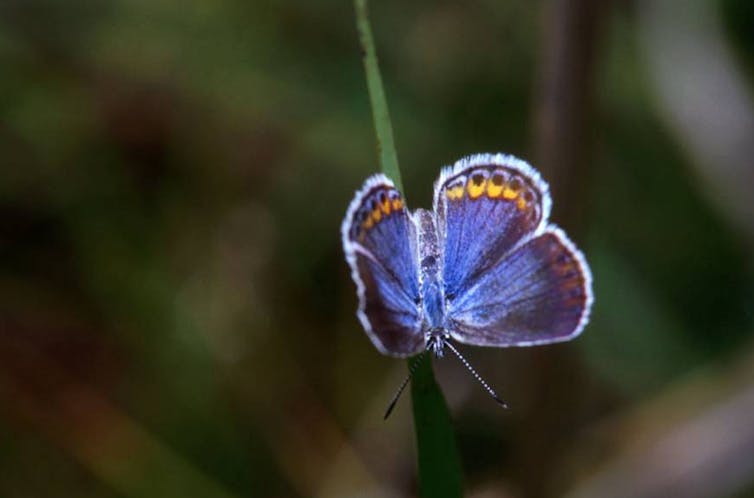
The Karner blue is an example. It’s a small, endangered butterfly that depends on oak savannas and pine barren ecosystems. These habitats are uncommon and require management, especially prescribed burning, to maintain. With restoration efforts, one Karner blue population in the Albany Pine Bush Preserve in New York rebounded from a few hundred individuals in the early 1990s to thousands of butterflies.
Similar management and restoration efforts could help other rare and declining butterflies to recover.
What you can do to help butterflies recover
The magnitude and rate of biodiversity loss in the world right now can make one feel helpless. But while national and international efforts are needed to address the crisis, you can also take small actions that can have quick benefits, starting in your own backyard.
Butterflies love wildflowers, and planting native wildflowers can benefit many butterfly species. The Xerces Society for Invertebrate Conservation has guides recommending which native species are best to plant in which parts of the country. Letting grass grow can help, even if it’s just a strip of grass and wildflowers a couple of feet wide at the back of the yard.
A patch of wildflowers and grasses can become a butterfly garden, like this one in Townsend, Tenn. Chris Light, CC BY-SA
Supporting policies that benefit conservation can also help. In some states, insects aren’t considered wildlife, so state wildlife agencies have their hands tied when it comes to working on butterfly conservation. But those laws could be changed.
The federal Endangered Species Act can also help. The law mandates that the government maintain habitat for listed species. The U.S. Fish and Wildlife Service in December 2024 recommended listing the monarch butterfly as a threatened species. With the new study, we now have population trends for more than half of all U.S. butterfly species, including many that likely should be considered for listing.
With so many species needing help, it can be difficult to know where to start. But the new data can help concentrate conservation efforts on those species at the highest risk.
I believe this study should be a wake-up call about the need to better protect butterflies and other insects – “the little things that run the world.”
Pratyush has been very patient with me. He first contacted me regarding sending in a guest post many months ago. At first I thought it was a spam email and then realised that was a mistake. Then stuff my end got in the way, and so on.
But I’m delighted to publish this today, and should add that Pratyush is based in India!
ooOOoo
Winter is here — When you have a golden retriever at home.
Golden Retrievers are great family dogs with a lovely personality, good intelligence, and adaptability. Golden Retrievers are built for colder climates and have plenty of thick, insulating double coats to keep them warm; however, special considerations should still be taken in winter weather to promote the health, comfort, and happiness of your Golden. Below is a complete guide outlining things to be aware of when looking after Golden Retrievers in winter.
Keep Their Paw Pads Safe From Cold and Salt
Although Golden Retrievers enjoy an outdoor adventure, winter can be tough on the pads of their sensitive paws. Winter storms bring snow and ice, which lead to dry skin, cracking and irritation — not to mention the damage from road salt. When they return from walks, be sure to wash their paws properly to get rid of salt or other chemicals. You can apply a paw balm to protect and moisturize your puppy’s paws, make sure you opt for a non-toxic product. Depending on how cold it gets where you live, you may resort to dog booties for their feet when they go outside.
Change Their Diet with the Seasons
Golden Retrievers are energetic, active dogs, and if they’re out in the cold playing during winter, they might need a boost in energy levels. This additional energy expenditure may require you to make minor adjustments in their calorie intake. Over feeding allows them to gain weight, so, consult your Veterinarian to make any alternate diet plan. And they have free fresh water forever, as well during chills when dehydration is possible.
Keep Them Warm Indoors
Golden Retrievers do have a thick double coat which insulates them against the cold but they still need an indoor space to feel warm and comfortable. Give them a warm bed in a wind-free part of your home. If your floors are tiled or wooden, place a blanket or mat under them when they sleep for additional warmth. Do not shave or trim coats too short in winter, it is their natural protection against the cold.
Limit Bathing During Winter
Now, bathing your Golden Retriever too often in winter will remove the natural oils on your dog’s skin which can cause drying of the skin and irritations. Rather, give them a bath only when needed and use a conditioning dog shampoo that helps restore their skin. If your kitty has a bath, be sure to dry them off well so that they don’t catch a chill. Until they are allowed to roam free, blow them dry using a pet safe hair dryer on low or towel drying set properly.
Monitor Their Time Outdoors
Golden Retrievers love to romp and play in the snow, however too much time spent out in freezing conditions can cause hypothermia or frostbite. Do not leave them outside too long and keep an eye on them for signs that they may be feeling cold like shivering or lifting their feet off the ground. On very cold days, keep them busy with something indoors, puzzle toys or activities.
Regular Grooming is Essential
The thick coat of a Golden Retriever can mat and tangle in winter weather. Grooming is also a great way to keep the insulation quality of their coat intact and helps to avoid skin problems. Groom at least three times a week to minimize loose fur, matting,and spread natural oils. Look for any possible drying or skin irritation and when in doubt contact your vet.
Ensure Proper Exercise
Golden Retrievers are energetic dogs that enjoy getting out, and they still need exercise in the winter. On the flip side — snowy or slick conditions may elevate the risk of injuries. Keep them on a leash so they cannot run onto frozen surfaces and only walk in safe areas. If you cannot take them outdoors for exercise, make opportunities indoors to play– fetch or hide-and-seek can help expend some energy.
Watch for Signs of Illness
Cold climates could contribute to Golden Retrievers developing a cold or respiratory infection. Look out for any coughing, sneezing or lethargy. If you observe unusual behavior or signs of illness, take action and contact your veterinarian. Make sure they are vaccinated against seasonal diseases.
Offer Enrichment and Mental Stimulation
When the weather grows chilly, it can restrain outdoor actions that need to be carried out in the hot sun so exercise for a Golden Retriever should be maintained indoor as well. Keep their mind active with interactive toys, treat-dispensing puzzles or by teaching them new tricks. Physical exercise is very important, especially during the colder season when outdoor playtime becomes scarce, but so does mental stimulation.
Watch Over Older Dogs
For older Golden Retrievers, the cold can aggravate any existing joint problems e.g. arthritis. Keep them a warm, cozy resting space and try orthopedic beds to relieve them of joint problems. Consider discussing with your vet promoting joint health, supplements that help in the cold months or medications.
Conclusion
Taking care of a Golden Retriever in winter is all about comfort, health and happiness. However, though their double coat does provide some protection against the cold, they need you to help them get through winter safely and comfortably. With the right protection for their paws, some diet changes, and keeping them warm and active, your golden retriever can enjoy the winter just like humans. Take good care of them and they will love the winter season as much as you do!
ooOOoo
There is great advice in this guest post and for anyone with Golden Retrievers this post is spot on. To be honest, the advice presented is applicable to all breeds of dogs.
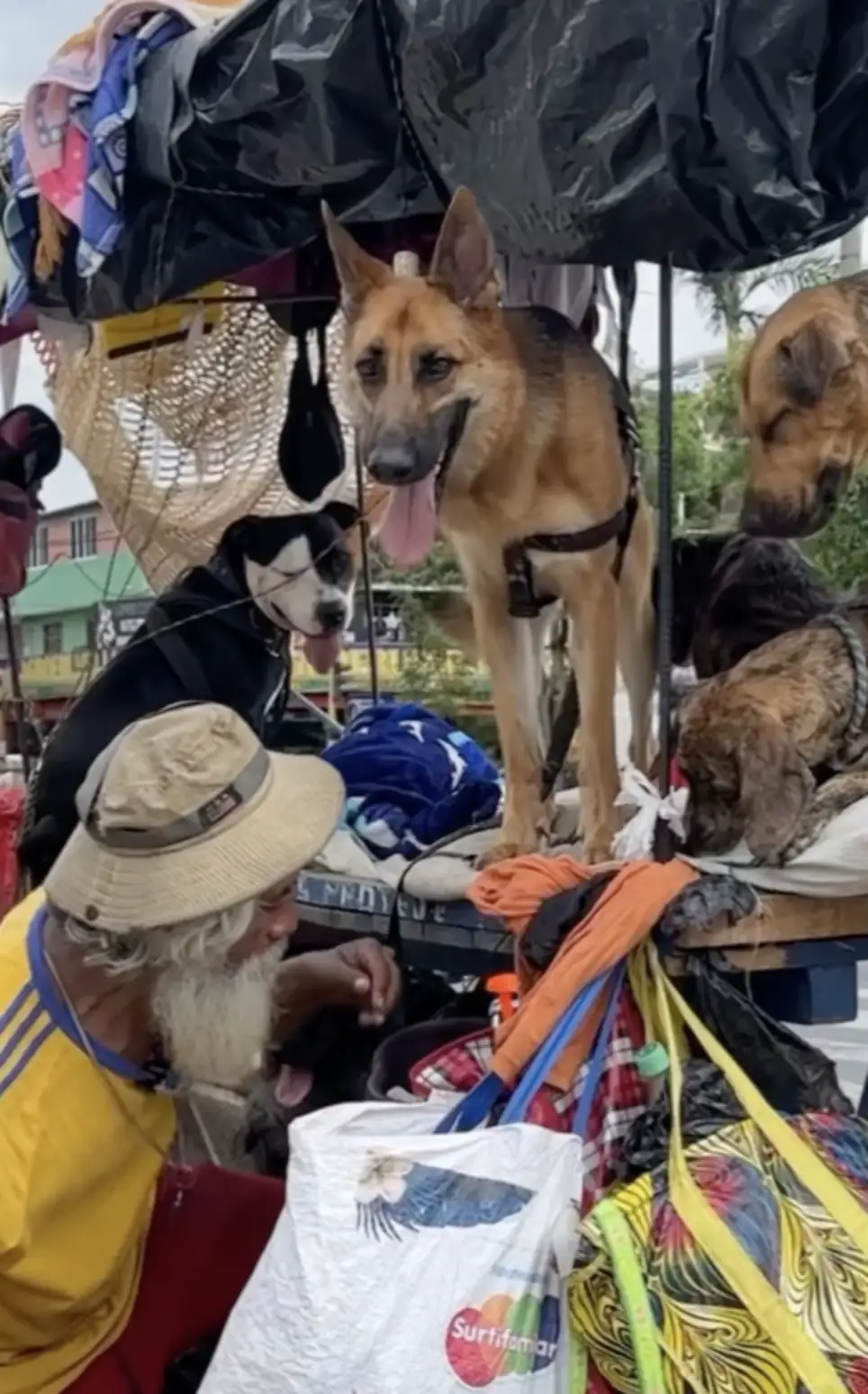
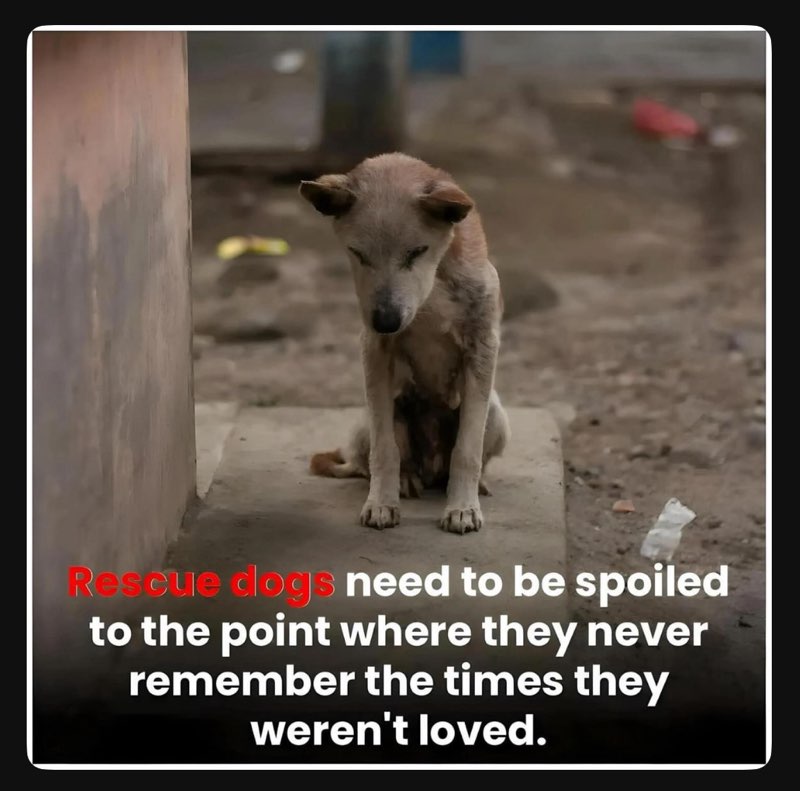
They say that home is where the heart is, and that couldn’t be more true for a man named Rubén and his pack of rescued dogs.
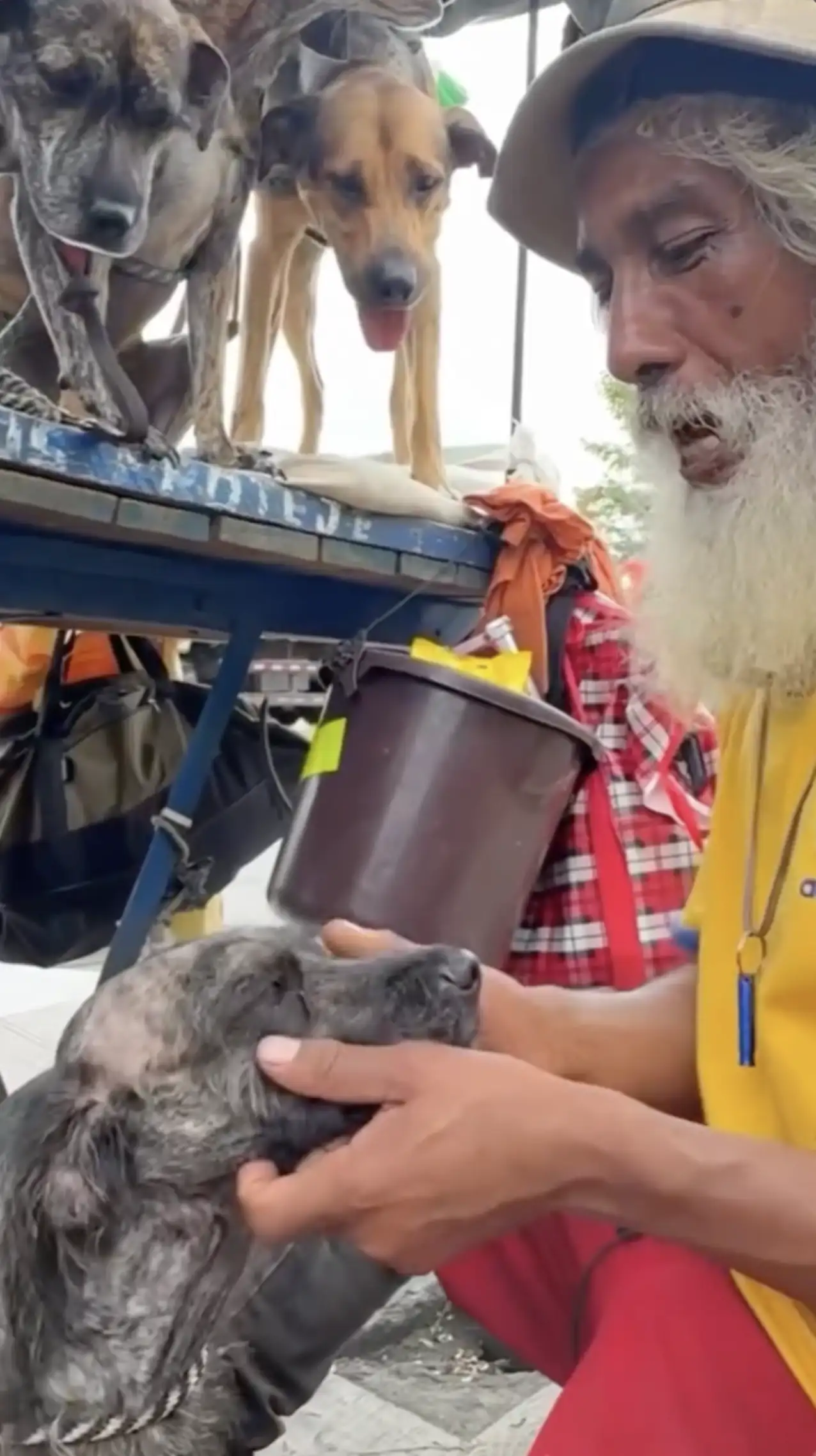
Despite not having a home of his own, Rubén, who goes by Noé, is dedicated to sharing his space and resources with every homeless dog in his Colombian city. Whether they’ve been left behind at a stop light or abandoned in an apartment, Noé believes in giving each dog he meets a second chance at love.
“They are living beings,” Noé said in an interview with IguanaTV. “They are everything to me.”
Noé’s pack is ever-growing, as he readily collects abandoned dogs of all ages and sizes. While it all started with just one dog, his furry family is now large enough to require a double-decker push cart.
Each dog has their own unique backstory, but they’re all loved by Noé just the same.
“This is Rocky. They left him tied up there at that traffic light,” Noé said. “These two girls are named Ears and Cheeks. I’ve had them since they were little. They were also abandoned.”
Rocky, Ears and Cheeks ride on the top level of the push cart with their siblings, a pit bull named Tyson and a German shepherd named Shakira. Below them, senior pups Tembleque, Parkinson and Morochito happily take in the world around them.
“These dogs down below are the oldest,” Noé said. “Little Morochito here was left for me while I was sleeping outside of [the store].”
The pups may have heartbreaking pasts, but their sadness has faded since being adopted by Noé. When they’re not actively traveling around the city with their beloved dad, the pack of dogs can usually be found enjoying a fresh meal made by Noé.
“I buy them milk, carrots and oats, and I combine them with ground meat and seeds,” Noé said. “I make them a hearty meal so that they eat well.”
Seeing the pups lap up their meals brings joy to Noé, even when he hasn’t eaten yet.
“They eat first,” Noé said. “My food is less important to me.”
Once the pups have finished eating, Noé usually snacks on an arepa and some coffee before heading off with his pack again. With his dogs by his side, Noé feels a sense of purpose and peace.
“The dogs keep me busy and give me a reason to wake up every day,” Noé said. “They don’t care if I’m bearded, toothless, dirty or clean. They only care that I’m by their side.”
This growing companionship is beyond fulfilling for Noé. Even on his most challenging days, Noé knows he can always lean on his beloved pack of rescued dogs for unconditional support.
“A dog’s love is the best there is,” Noé said.
ooOOoo
The two photographs are presented by INSTAGRAM/@IGUANATV. (And the article is published with the kind permission of The Dodo.)
One can’t do better than repeat that last sentence: “A dog’s love is the best there is,”.
Animal rights campaigners in France are celebrating after a wild boar facing the threat of death was allowed to stay with its owner.
The boar, named Rillette, was found in 2023 as a piglet by Elodie Cappé on her horse-breeding smallholding in Chaource, central France, after apparently being abandoned by its mother.
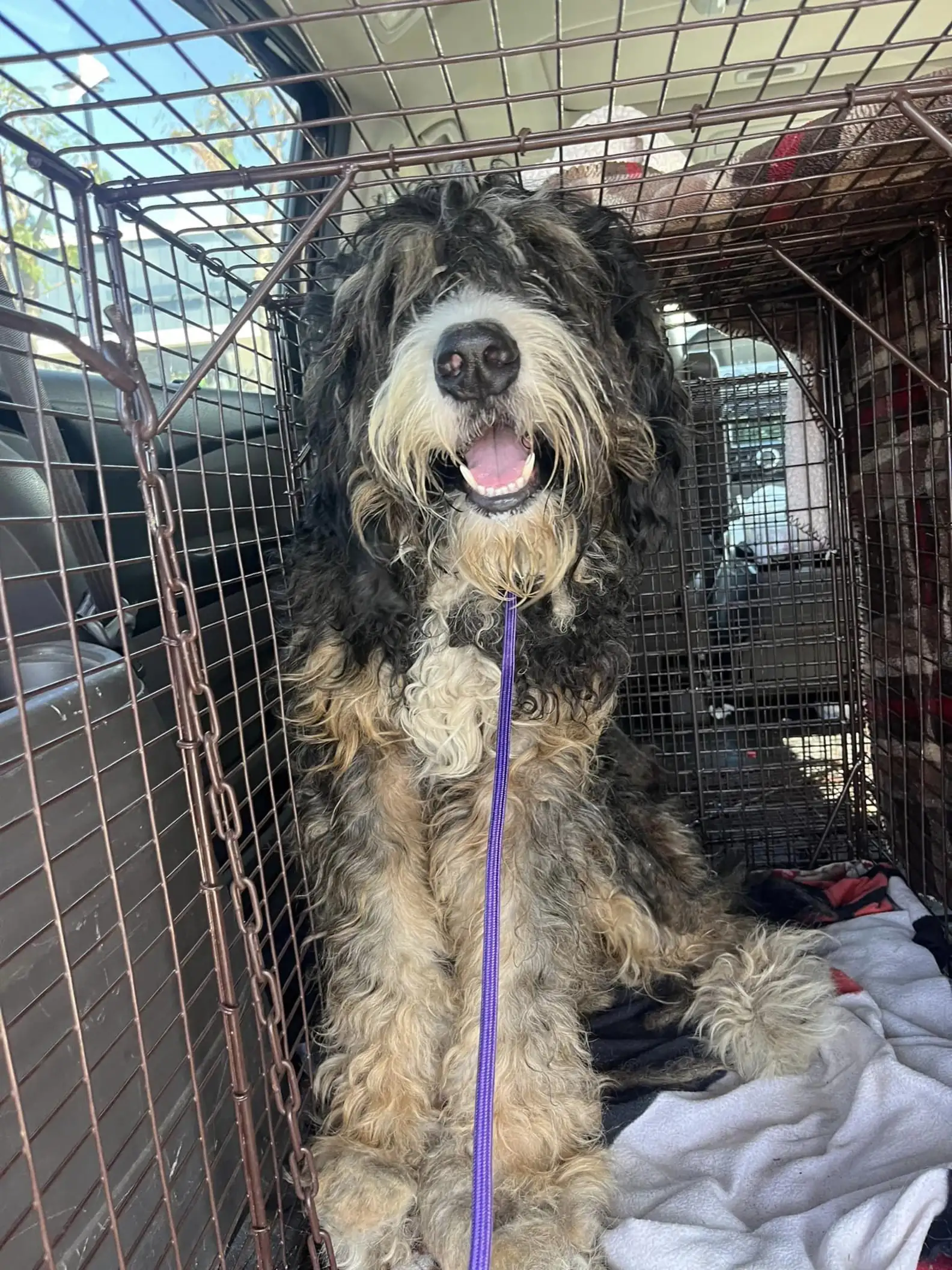
The other day, volunteer dog rescuer Mary Nakiso was driving through California’s Orange County when she passed someone cowering on the side of the street. The creature was large, hairy and alone. With a sinking feeling in her stomach, Nakiso slammed on her brakes to investigate.
As she approached the animal, Nakiso realized just how massive and afraid he was.
“He is literally 75 pounds and so big but so scared,” Suzette Hall, founder of Logan’s Legacy 29, wrote on Facebook.
Suzette Hall
The giant dog was petrified, which Nakiso soon learned was the result of being “thrown out” by his family a few minutes earlier.
“When he first got thrown out, he was so confused [and] running in circles in traffic,” Hall wrote. “A huge jeep with huge tires literally went over him …”
Suzette Hall
The pup, later named Benji, had no idea where his family had gone. He roamed the busy streets frantically, hoping to find his way home. After a while of running around in circles and dodging cars, Benji eventually disappeared.
Nakiso called Hall to notify her about Benji, and the two started monitoring local social media groups for any sightings of him. Later that day, someone posted about seeing a giant matted dog in their neighborhood.
Suzette Hall
Hall couldn’t make it back to the neighborhood fast enough due to traffic, so she messaged three more of her trusted friends who lived nearby.
The group of volunteers immediately agreed to help.
“I sent a message to Nuñez Aky, Yamileth and Karla,” Hall wrote. “When they got there, he was running back and forth so fast. So they waited for him to settle down.”
Suzette Hall
Hall stayed glued to her phone for updates while the team of volunteer rescuers hatched a plan to corner the flighty dog once and for all.
Then, she finally received the news she’d been hoping to hear all day.
“[B]ecause they are so amazing, they got him into a yard and shut the gate,” Hall wrote. “My heart was so happy. The fear and terror he had been through was over, and this big hunk of pure love was finally safe.”
Suzette Hall
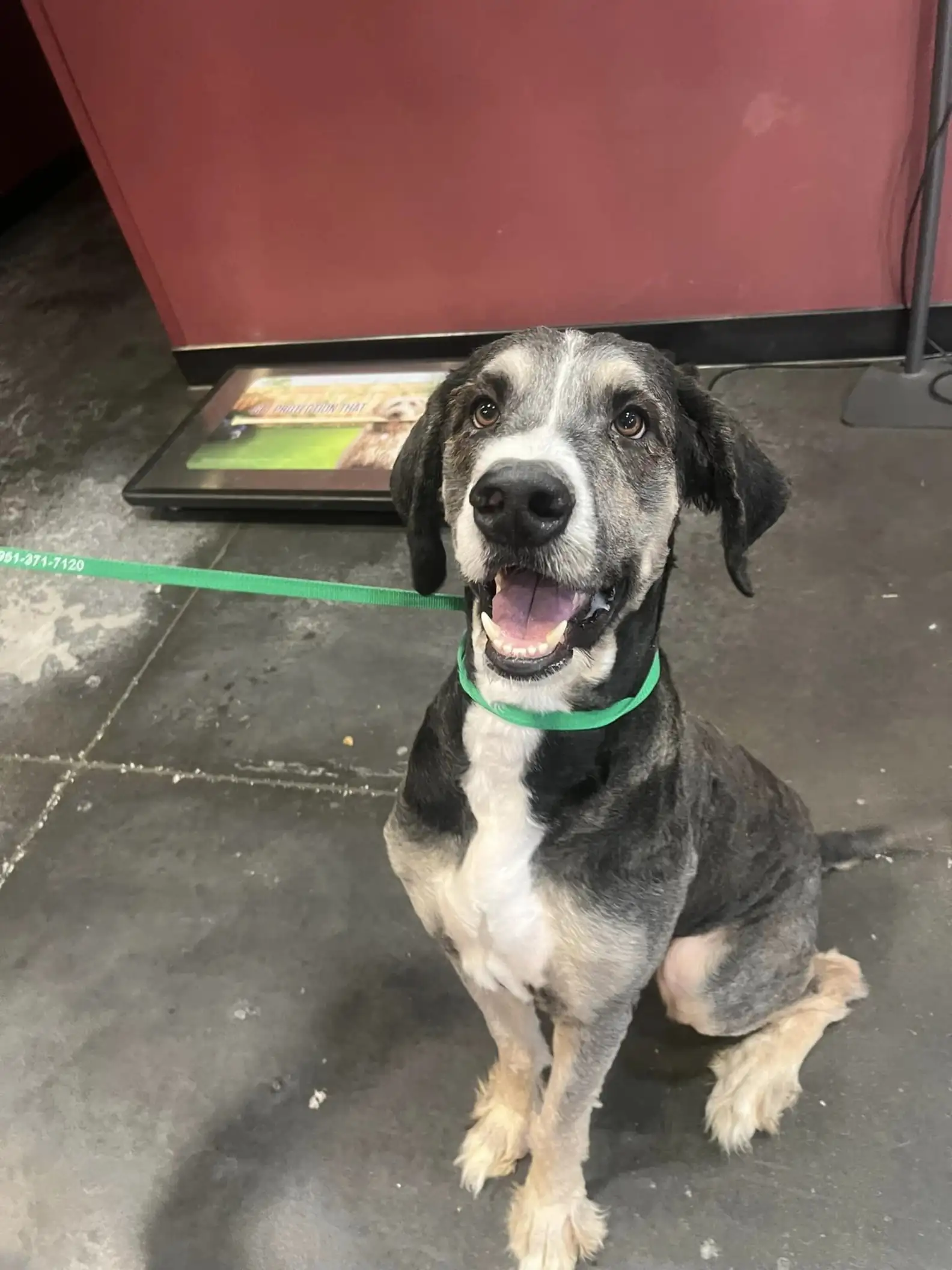
The rescuers showered Benji with love and praise before carrying him to their car. They drove him straight to Camino Pet Hospital, where the shaggy pup received a long-overdue makeover.
“All the layers of his past [have] been shaved away,” Hall wrote in a Facebook update. “He literally had dreadlocks.”
Suzette Hall
Benji’s makeover was just the first of many steps to get him the home of his dreams. He’s since been neutered, and after a few more days of healing, he’ll finally be able to meet his new foster family next week.
It’s hard to know what Benji’s life was like before he was rescued, but his future is certain thanks to Hall and her team of volunteers. As Hall sees it, Benji will soon receive all the love and attention he’s always deserved.
“Benji is the sweetest, most loving dog I have ever met,” Hall told The Dodo. “[He’s] truly a miracle.”
—-
You can inquire about adopting Benji by emailing Suzette Hall at Info@loganslegacy29.com.
To help pups like Benji get the care they need, you can donate to Logan’s Legacy 29 here.
ooOOoo
That is a most beautiful story and one that should inspire many readers to look after, and care for, dogs where ever they are.
Many congratulations to Suzette for rescuing Benji.
Dogs are so close to humans, as has been reported many times in many places. This guest post from Lorna explores the very latest in scientific thinking.
ooOOoo
Busting Myths: Do Dogs Really Understand Human Language?
By Lorna Dikoff
Dogs are often seen as more than pets. They are companions, loyal protectors, and, for many like me, family members.
Many people think dogs understand our words like we do. This idea has been around for a long time. But is it true?
Let’s look at what science tells us about how dogs communicate. Also, let’s think about what our bonds with dogs teach us. These bonds teach us about trust and loyalty. They also reveal a deeper form of connection.
The Science of Canine Communication
Dogs have been our companions for thousands of years. During this time, they have become very good at understanding human behavior.
In 2016, researchers in Hungary made an interesting discovery. They found that dogs process words and tone similarly to humans. Dogs use different parts of their brains to recognize words and emotional sounds.
But, this doesn’t mean dogs understand language like we do. Instead, they learn to connect certain sounds (words) with specific actions or results. For example, a dog might know that the sound of a leash means a walk is coming. They recognize patterns rather than understanding language.
So while dogs are good at figuring out what we do and say, they don’t understand language the same way humans do. They’ve learned to pick up on our signs, but in their own special way.
But does this mean they understand the full meaning behind those words? The answer is no.
Dogs are great at reading people. They watch our body language, listen to our tone, and look at our faces. Dogs pay more attention to these signs than to our words.
This doesn’t mean dogs are less smart. It shows that they excel in a different type of communication.
The Myth of Full Language Comprehension
People often think dogs understand human language. We want to believe our pets understand us like other people do. It’s a nice idea, but it’s not quite true.
Dogs can learn some words and follow orders. But they don’t understand language. They remember patterns and connect words with actions. It’s not the same as how we understand each other when we talk.
This myth doesn’t make our bond with dogs any less special. It actually shows something even more extraordinary. Dogs are great at connecting with us without words. They tune into our feelings and pick up on how we act. This makes our relationship with them pretty amazing.
Dogs don’t need words to sense when we are sad, anxious, or excited. Their ability to “read” our emotions is what makes their companionship so special.
Trust and Loyalty: The Real Language of Dogs
Dogs and humans have a special bond that is far more profound than language. It’s about trust and loyalty.
These things are at the heart of what we can learn from dogs. Dogs show us how to be honest and true. They teach us about connecting with feelings, not only with words.
Dogs don’t need a large vocabulary to express their loyalty or unconditional love. Instead, they show it through actions. They sit with us when we’re sad and guard us when we’re weak. And they always get super happy to see us, even if we’ve only been gone for a bit.
This speaks to a deeper truth that dogs teach us: communication isn’t only about words. It’s about the trust we build through consistent, reliable actions.
In a world where words can sometimes mislead or fall short, dogs show us a better way. Dogs remind us of the importance of honesty and integrity in our interactions.
The Lesson from Dogs
So, do dogs understand human language? The answer is no, at least not in the way we hope. But their understanding of us is something far more profound.
Dogs teach us that we don’t always need words to talk. They teach us that our actions often speak louder than language. Their loyalty, intuition, and emotional intelligence. makes our bond with them special, more than words can explain.
We often overcomplicate communication, but dogs keep it simple. They show up and act the same way every day.
This teaches us that real connections come from trust and love. Dogs prove that understanding each other is about more than using words.
About the Author:
Lorna is the founder of Furry Friends Advisor. She is a passionate and experienced long-time dog owner with a deep love for animals. Lorna’s commitment to understanding and caring for dogs led her to spend countless hours researching and learning about canine health, behavior, and care. When not immersed in writing for her site, she is pampering her French Bulldog name Lucy. Her mission is to give advice about dog care and nutrition accessible to everyone.
ooOOoo
Thank you, Lorna.
There is no question that a dog’s actions speak so much louder than words.
Trust and loyalty; they are the supreme qualities of dogs and it is a pity that in some quarters these qualities are not seen in humans.








 Learning from Dogs
.jpg)

