Category: Animal rescue

Another lucky aspect of living in Oregon

We have not lost our wolves.

Here is a partial list of the wolf situation in Oregon:

  • Return & Recovery: Wolves reappeared in Oregon around 2008, descendants of wolves reintroduced in Idaho, growing to many packs across the state.
  • Management: The Oregon Department of Fish and Wildlife (ODFW) manages wolves under the Oregon Wolf Conservation and Management Plan.
  • Zones: Management differs between eastern and western Oregon, with federal listing status changing, affecting management authority.
  • Conservation Efforts: Organizations like Oregon Wild advocate for strong wolf protections, habitat connectivity, and non-lethal conflict deterrence.

However, in eastern North America things are not so good; as this article from The Coversation explains:

ooOOoo

With wolves absent from most of eastern North America, can coyotes replace them?

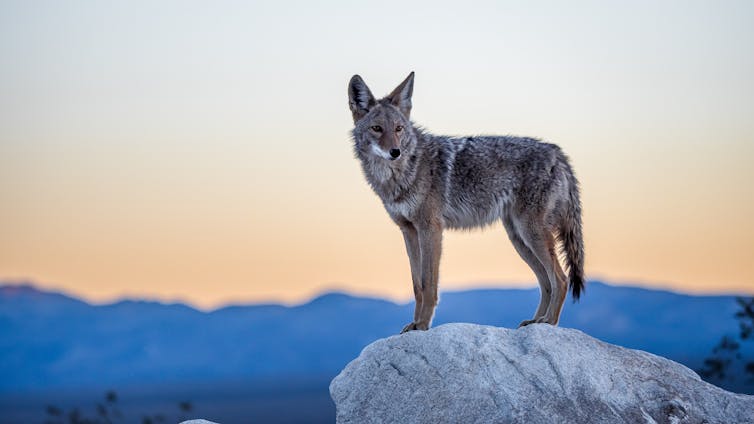
Coyotes have expanded across the United States. Davis Huber/500px via Getty Images

Alex Jensen, North Carolina State University

Imagine a healthy forest, home to a variety of species: Birds are flitting between tree branches, salamanders are sliding through leaf litter, and wolves are tracking the scent of deer through the understory. Each of these animals has a role in the forest, and most ecologists would argue that losing any one of these species would be bad for the ecosystem as a whole.

Unfortunately – whether due to habitat loss, overhunting or introduced specieshumans have made some species disappear. At the same time, other species have adapted to us and spread more widely.

As an ecologist, I’m curious about what these changes mean for ecosystems – can these newly arrived species functionally replace the species that used to be there? I studied this process in eastern North America, where some top predators have disappeared and a new predator has arrived.

A primer on predators

Wolves used to roam across every state east of the Mississippi River. But as the land was developed, many people viewed wolves as threats and wiped most of them out. These days, a mix of gray wolves and eastern wolves persist in Canada and around the Great Lakes, which I collectively refer to as northeastern wolves. There’s also a small population of red wolves – a distinct and smaller species of wolf – on the coast of North Carolina.

The disappearance of wolves may have given coyotes the opportunity they needed. Starting around 1900, coyotes began expanding their range east and have now colonized nearly all of eastern North America.

A map of central to eastern North America. Parts of southern Canada are marked as 'current northeast wolf range,' the northeast US is marked 'current coyote and historical wolf range,' the rest of the southern and eastern US is marked 'red wolf range' and to the west is marked 'coyote range ~1900.'
Coyotes colonized most of eastern North America in the wake of wolf extirpation. Jensen 2025, CC BY

So are coyotes the new wolf? Can they fill the same ecological role that wolves used to? These are the questions I set out to answer in my paper published in August 2025 in the Stacks Journal. I focused on their role as predators – what they eat and how often they kill big herbivores, such as deer and moose.

What’s on the menu?

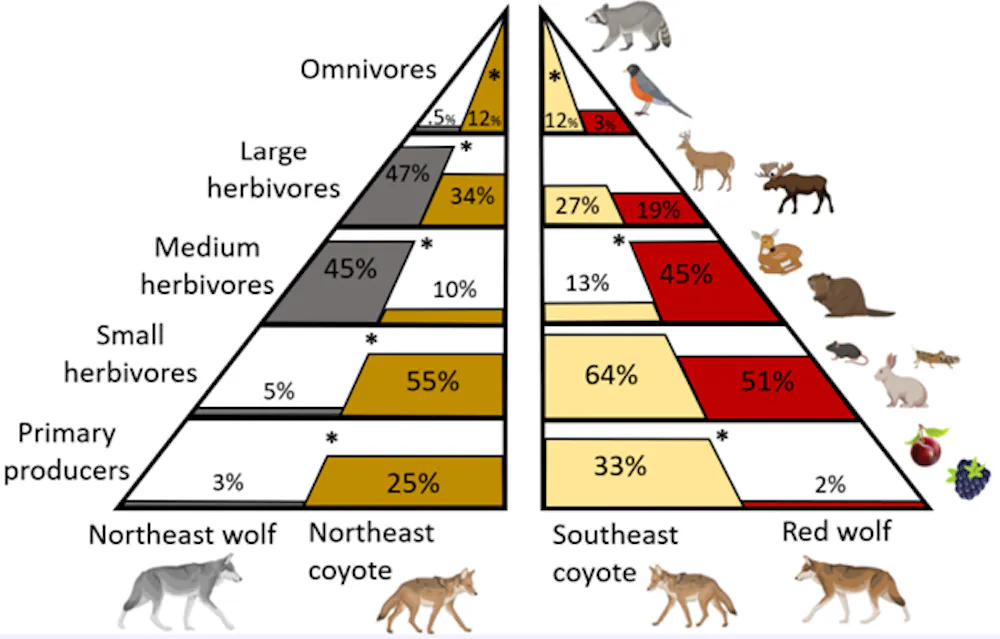
I started by reviewing every paper I could find on wolf or coyote diets, recording what percent of scat or stomach samples contained common food items such as deer, rabbits, small rodents or fruit. I compared northeastern wolf diets to northeastern coyote diets and red wolf diets to southeastern coyote diets.

I found two striking differences between wolf and coyote diets. First, wolves ate more medium-sized herbivores. In particular, they ate more beavers in the northeast and more nutria in the southeast. Both of these species are large aquatic rodents that influence ecosystems – beaver dam building changes how water moves, sometimes undesirably for land owners, while nutria are non-native and damaging to wetlands.

Second, wolves have narrower diets overall. They eat less fruit and fewer omnivores such as birds, raccoons and foxes, compared to coyotes. This means that coyotes are likely performing some ecological roles that wolves never did, such as dispersing fruit seeds in their poop and suppressing populations of smaller predators.

A diagram showing the diets of wolves and coyotes
Grouping food items by size and trophic level revealed some clear differences between wolf and coyote diets. Percents are the percent of samples containing each level, and stars indicate a statistically significant difference. Alex Jensen, CC BY

Killing deer and moose

But diet studies alone cannot tell the whole story – it’s usually impossible to tell whether coyotes killed or scavenged the deer they ate, for example. So I also reviewed every study I could find on ungulate mortality – these are studies that tag deer or moose, track their survival, and attribute a cause of death if they die.

These studies revealed other important differences between wolves and coyotes. For example, wolves were responsible for a substantial percentage of moose deaths – 19% of adults and 40% of calves – while none of the studies documented coyotes killing moose. This means that all, or nearly all, of moose in coyote diets is scavenged.

Coyotes are adept predators of deer, however. In the northeast, they killed more white-tailed deer fawns than wolves did, 28% compared to 15%, and a similar percentage of adult deer, 18% compared to 22%. In the southeast, coyotes killed 40% of fawns but only 6% of adults.

Rarely killing adult deer in the southeast could have implications for other members of the ecological community. For example, after killing an adult ungulate, many large predators leave some of the carcass behind, which can be an important source of food for scavengers. Although there is no data on how often red wolves kill adult deer, it is likely that coyotes are not supplying food to scavengers to the same extent that red wolves do.

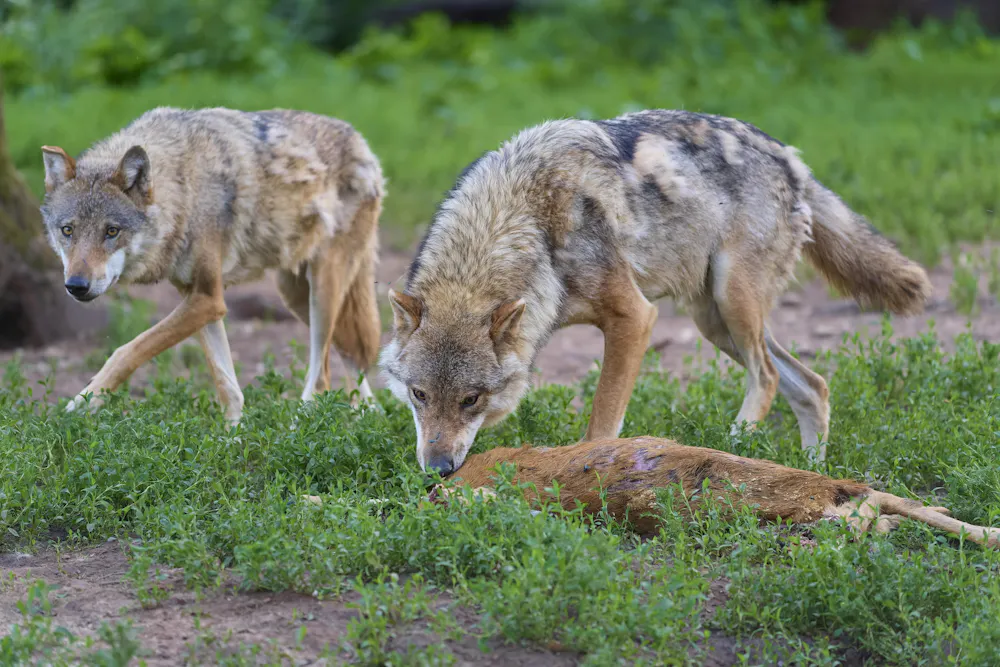
Two wolves walking through the grass. One is sniffing a dead deer on the ground.
Wolves and coyotes both kill a substantial proportion of deer, but they focus on different age classes. imageBROKER/Raimund Linke via Getty Images

Are coyotes the new wolves?

So what does this all mean? It means that although coyotes eat some of the same foods, they cannot fully replace wolves. Differences between wolves and coyotes were particularly pronounced in the northeast, where coyotes rarely killed moose or beavers. Coyotes in the southeast were more similar to red wolves, but coyotes likely killed fewer nutria and adult deer.

The return of wolves could be a natural solution for regions where wildlife managers desire a reduction in moose, beaver, nutria or deer populations.

Yet even with the aid of reintroductions, wolves will likely never fully recover their former range in eastern North America – there are too many people. Coyotes, on the other hand, do quite well around people. So even if wolves never fully recover, at least coyotes will be in those places partially filling the role that wolves once had.

Indeed, humans have changed the world so much that it may be impossible to return to the way things were before people substantially changed the planet. While some restoration will certainly be possible, researchers can continue to evaluate the extent to which new species can functionally replace missing species.

Alex Jensen, Postdoctoral Associate – Wildlife Ecology, North Carolina State University

This article is republished from The Conversation under a Creative Commons license. Read the original article.

ooOOoo

So there is a big difference between the Eastern seaboard and the Western States of the USA. We live in the forested part of Southern Oregon but I have never seen a wolf despite Alex Jensen writing that they inhabit this area.

The wolf is a magnificent animal, the forerunner of the dog. I would love to see a wolf!

Picture Parade Four Hundred and Ninety-Eight

Today, I am publishing a video.

That is a wonderful video!

Rejected by his mother, Richard found love and security with the most unlikely of friends — a guard dog who adopted him as one of his own.”

Richard’s social media:   / richardandtheguardians  

About Bark & Bond: At Bark & Bond, we believe that there is nothing more powerful — and simple — than the way a dog changes our routine. Whether it’s with a look full of expectation, an unexpected lick or just by being there, silent, sharing the same space.

Connections across the miles

This world of blogging opens up incredible connections!

Recently I had a ‘Like’ from someone that I hadn’t come across before. As is my response to such events, I went across to their blog site to thank them by adding a ‘Like’ to their blog site. Then I found it was about street dogs and I started reading their posts. I was blown away by the integrity of the author and he was blogging from Kabul!

I am only going to republish three of the stories today but will be coming back with more.

Panagah Amn

A humanitarian project in Kabul dedicated to building a safe shelter for stray and injured animals.

The shelter is in its early stages, and with your support, we can bring it to life. 

Our goal is to provide food, medical care, and protection.

Panagah Amn is a small but passionate initiative dedicated to helping stray and injured animals in Kabul, Afghanistan. Our shelter was born from a deep sense of compassion and responsibility toward the many dogs and cats suffering in the streets without food, medical care, or shelter.

We welcome support from individuals and organizations who share our vision. Together, we can build a safer world for all living beings.

Staying with their website, I want to share these pictures with you.

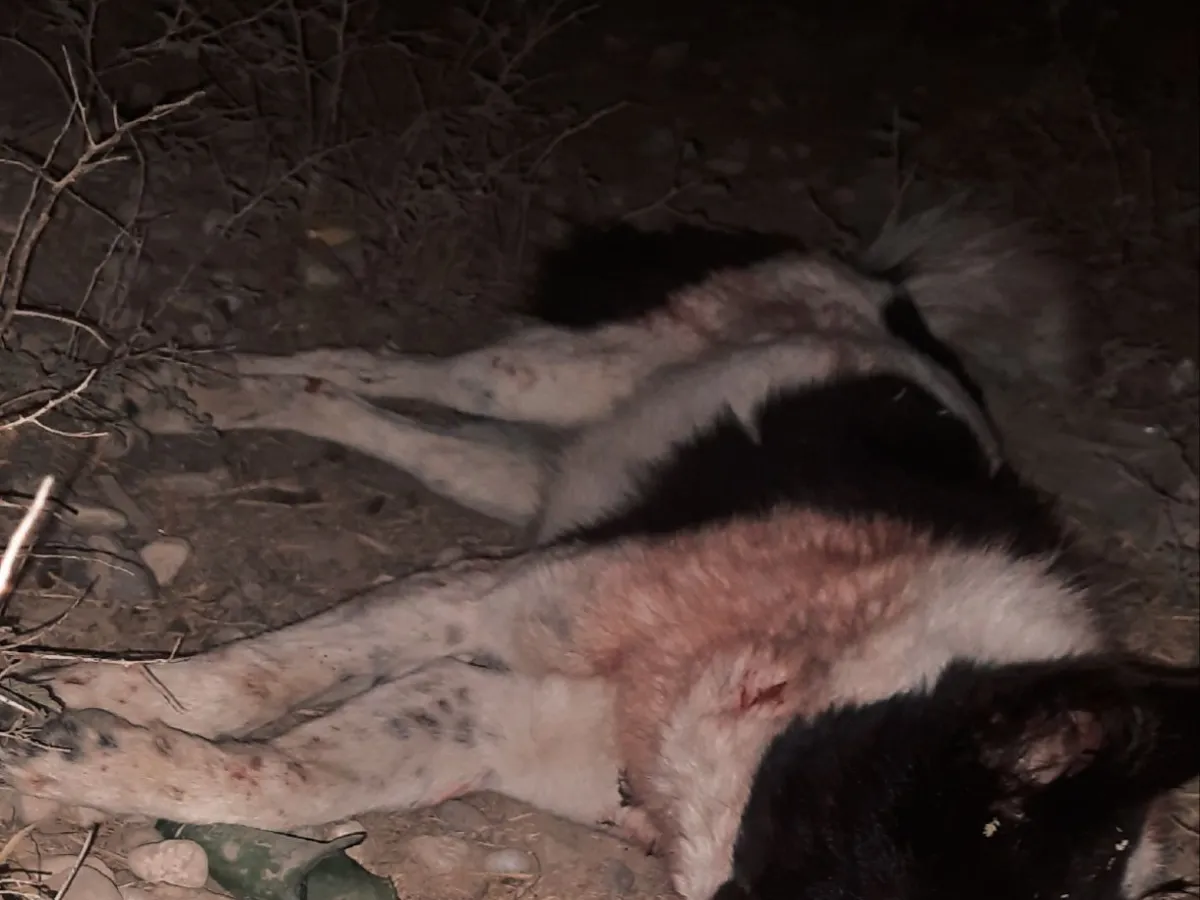
He Died Waiting for Kindness

He had no name…
Perhaps because no one had ever paused for even a moment to ask him:
“What is your name, silent little angel?”
The cold of the night had settled over the road, and the car lights passed one after another beside his blood‑stained body…
No one slowed down.
No one turned their head to see his pain.
As if he were invisible — like a dry leaf pushed aside by the wind.
But he was not invisible…
He felt the pain, he felt the fear, and with every fading breath, he swallowed the loneliness.
His body lay on the gravel, his eyes half‑open, as if he was still waiting…
Waiting for someone who, just once, would look at him with kindness.
When I arrived, the blood was still fresh…
If I had reached just 20 minutes earlier, maybe…
Maybe I could have saved him.
Maybe I could have whispered:
“You are not alone… I am here.”
But it was too late.
He had already chosen to leave the pain of this earth and return to the sky…
To the arms of the angels — where no cars would ever drive past his heart again.
No one was even willing to lift his tiny body from the road…
As if he had no worth.
As if a life filled with silence and waiting meant nothing.
But to me, he mattered.
I lifted him from the road…
Not as a stray dog, but as a soul who deserved to be farewelled with dignity.
I buried him…
With shaking hands, yet with a heart that wanted — at least once — for someone to be kind to him.
In that moment, he taught me something…
Despite his wounds, despite his pain, his eyes were still full of kindness.
His gaze seemed to say:
“I wish everyone were like you…”
But the truth is:
I wish everyone were like him non‑judgmental, gentle, with a heart that remained free of hatred, even in the final breath.

 If this story touched your heart… please don’t stay silent.
For him, it’s already too late…
But there are still hundreds of “him” breathing on our streets,
and each one needs just one kind human for their life to change.
Please…

 Be the voice of these silent angels.

oooo

I wish everyone was like you.

 It was Friday… As every week, I set out with an 8-kilogram bag of food to visit those whom the world has forgotten, yet I have never been able to forget them…
From afar, the scene I saw made my heart tremble. Little puppies ran toward me with excitement and hope, so happy as if the entire world had become kind to them with just this one meal. Some were so hungry they could barely run, yet with shining eyes, they looked at me, as if saying: “You came… today we are saved.”
Amid all the sounds, joy, and excitement, my eyes fell on one—a gaze silent yet screaming a thousand cries…
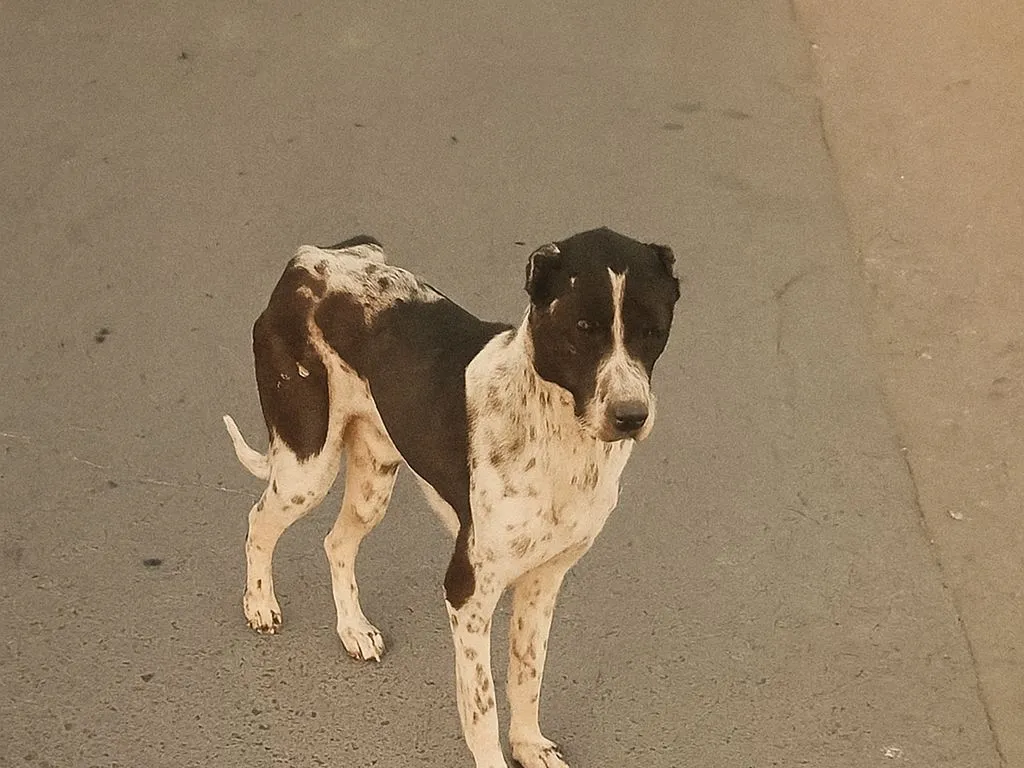
A dog, thin, wounded, and trembling… standing in the middle of the road, afraid, yet hopeful. Fear kept him from approaching… as if he had come close to kindness many times before, only to be met with stones, kicks, and cruelty. And he had every right to be afraid… truly.
As I stepped closer, I saw something no animal lover ever forgets: his ears were gone… both torn off. The scars on his head were still visible… and his leg was injured, probably struck by stones multiple times. Yet… despite all this pain, despite all the suffering… he was still calm. He didn’t bark, growl, or attack… he just looked.
He had been hurt by humans… yet he still had hope in them.
I gently placed the food on the ground. He took a step back… fearful, hesitant. Then, with utmost caution, he came forward, took a bite, and stepped back again, as if saying: “Forgive me… I’m not used to someone treating me kindly.”
I wished I could approach, clean his wounds, and show him that not all humans are cruel. But he ran away… not from me, but from memories that resembled “me.”
But that gaze… that final look that still lingers in my heart like a dagger… eyes full of tears, untold words, gratitude, and fear… as if saying: “Thank you… for a meal. Maybe today is not my last day.”
As he walked away, his legs trembled… not only from hunger, but from life… from loneliness… from being forgotten.
On my way back, this question kept turning in my mind like a painful melody:
Until when? Until when must voiceless animals suffer from human cruelty? Until when will every meal be their only hope for survival? Until when will we just watch?
In Kabul, there are hundreds of animals like him. Some die from hunger, some from stones thrown by children and adults, and some like him… with wounds never healed, yet when they see a morsel of food, gratitude shines in their eyes.
I am alone… but my dream is big.
I want to build a shelter: a place where no animal dies from hunger, cold, disease, or violence. A place where they can learn once more that humans can be kind.
But this is impossible without your support. We need a sponsor, a foreign donor, or a compassionate organization to take the first step. Perhaps you know someone… perhaps your introduction could save a life.
If you can help, collaborate, or want to get in touch with us, please contact us via the email on our website. You can be the hope for an animal’s tomorrow… with a subscription, a referral, or a small step of support.
Sometimes, saving the world is impossible… but saving “a world” for one animal is possible. And perhaps today, it is our turn to change the world for one of them.

oooo

 ooOOoo

Dogs are so precious. What some humans do is beyond Jean and me, and, thankfully many thousands of other people.

But that doesn’t alter the fact that stray street dogs exist.

I won’t pontificate but the message is clear.

Thank you, Dr. Mateullah Abrahemi.

Let me copy some more text about the founder:

Dr. Mateullah Abrahemi, the founder of Panagai Amn in Kabul, is a committed and compassionate advocate for stray animals, especially street dogs. With a deep belief in the right to life and welfare of these vulnerable beings, he strives to provide them with a safe shelter, food, medical care, and kindness.

His efforts are not limited to dreams and ideas; rather, he takes practical, well-planned steps to improve the living conditions of these animals. With valuable experience in animal care, Dr. Abrahemi has now launched the Panagai Amn project, aiming to expand his efforts into a comprehensive support center.

He meticulously handles financial and logistical planning, designs a multilingual website via WordPress, manages resources, produces video content, and builds international communication bridges to attract more support for the cause.

Throughout this challenging journey, when many of his requests for assistance from organizations remained unanswered or were met with rejection,

As previously mentioned, I am going to share these images on, I hope, a weekly basis.

Thank you, Mateullah.

What if we die before our pets?

We love our dogs and can never envisage being without one.

So what happens to them after the last one of us die?

I have just turned 81 and, although I am fit, think more seriously about this matter than I used to. Jean has no children and my son and daughter, from a previous marriage, are living in the U.K.

So an article from The Conversation caught my eye and I wanted to share it with you.

ooOOoo

Diane Keaton’s $5M pet trust would be over the top if reports prove true – here’s how to ensure your beloved pet is safe after you are gone

Allison Anna Tait, University of Richmond

Diane Keaton loved her dog, Reggie.

The award-winning actor, director and real estate entrepreneur frequently posted photos and video clips of the golden retriever on her social media accounts. After she died on Oct. 11, 2025, at 79, some news outlets reported that she left US$5 million of her estimated $100 million estate to her dog.

I’m a law professor who teaches about wills, trusts and other forms of inheritance law. Every semester, I teach my students how they can help clients provide for their pets after death. Because they, like many Americans, love their pets and want to know how to take care of them, this topic always piques their interest. https://www.youtube.com/embed/FYJGCvpJIV0?wmode=transparent&start=0 Diane Keaton was very open about her devotion to her dog, Reggie.

Writing pets into a will

An estimated 66% of all U.S. households include at least one pet. Many Americans consider their cats, dogs, tortoises or other animals to be part of their family, and their spending on those nonhuman relatives is immense. In 2024, they paid a total of about $152 billion for goods and services to feed and otherwise support their pets.

Taking good care of your pets can go beyond buying them treats and sweaters. It can include leaving clear directions to ensure their needs are met once you’re gone. There are several ways that you can do this.

The first is through your will. You can’t give your pet money directly in your will, because the law says that pets are property, like your books or your dishes.

You can, however, leave a bequest, the technical term for a gift to a person or a cause listed in a will, to someone who will be the animal’s caretaker. That bequest can include directions that the money be spent meeting the pet’s needs.

It’s worth it to also name an alternate or contingent caretaker in case the first person you name does not want to or cannot take on that responsibility, or they die before you or the animals you’ve provided for in the will.

Choupette’s life of luxury

German fashion designer, photographer and creative director Karl Lagerfeld, who died in 2019 at 85, was someone who made the mistake of leaving money directly to his fluffy Birman cat, Choupette. It worked out for Choupette, though.

The cat was, according to several reports, still alive in 2025 and eating meals out of the porcelain bowls that Lagerfeld bought for her. Choupette is cared for at great expense and in the utmost luxury by Françoise Caçote, the designer’s former housekeeper. The cat even had a 13th birthday party at Versailles.

Another pet owner who did right by her pet was the comedian, producer and red carpet interviewer Joan Rivers.

Rivers had two rescue dogs in Manhattan and two more dogs in California when she died in 2014 at age 81. Rivers had made provisions for their care in her will.

A petite woman holding a tiny dog stands next to three men on a TV set.
The late Joan Rivers, right, seen on the set of her short-lived talk show in 1987, planned ahead for her dogs’ care. Bettmann via Getty Images

Creating pet trusts

If you’d like an arrangement that’s more secure than a will, then you might want to opt for a pet trust, another celebrity favorite. These kinds of trusts were not possible until the 1990s, because pets were not considered true beneficiaries – meaning they couldn’t sue the trustee.

But in the 1990s, states began to change their rules to allow for pet trusts. Today, pet trusts are valid in the whole country, although the rules vary slightly from state to state.

To establish a pet trust, you or a lawyer must draw up a trust document that names two important people: a trustee and a caretaker. The trustee is the person who will manage the money you leave in trust. They will make distributions to the caretaker that you select.

You must also specify how the money is to be spent meeting the animal’s needs and who would get any money that could be left in the trust when the pet dies. Typically, these trusts take effect at the owner’s death, just like other provisions in a will.

Drafting a pet trust can be free, if you use an online template and get no legal guidance. The same thing might cost around $100 if you use an online service such as Legal Zoom that provides directions. More commonly, however, pet trusts are part of a broader estate plan, and costs range depending on how complicated your estate is.

When the rich go overboard

One of the most over-the-top pet trusts came from Leona Helmsley, the New York hotel and real estate mogul known widely as the “Queen of Mean.” She was famous for her pettiness and tough management style and for landing in prison for tax evasion.

When Helmsley died in 2007, she left her dog, a Maltese named Trouble who had reportedly bitten members of her staff, a $12 million trust fund. Most of Helmsley’s estate went to the Helmsley Charitable Trust, but she made individual gifts to several relatives, and the gift to Trouble was larger than any of those.

The grandchildren, upset that Trouble got more money than they did, took the case to court, where the probate judge was less than impressed by Trouble’s luxury lifestyle and knocked down the amount in trust to $2 million. The other $10 million flowed back to her family’s foundation, where the bulk of the estate went in the first place.

Lesson learned: Your dog can have a trust fund, but don’t go overboard.

Bequests for pets can be challenged – in which case it’s up to courts to determines how much they think is reasonable for the pet’s need. In Helmsley’s case, $12 million was found to be excessive. And maybe with good reason. Trouble still had a nice life with fewer millions. The dog died in December 2010 after several years in Sarasota, Florida, at a Helmsley-owned hotel.

Other pet owners who aren’t celebrities have used pet trusts as well, such as Bill Dorris, a Nashville businessman without any human heirs. He left his dog, Lulu, $5 million.

Pet-loving celebrities who loved all the pets

Finally, there’s a lesson to be learned from British fashion designer and icon Alexander McQueen, who was worth £16 million ($21 million) when he died in 2010 at the age of 40. McQueen left £50,000 ($66,000) in a trust for his two bull terriers so that they would be well cared for during the remainder of their lives.

McQueen also included a bequest of £100,000 ($132,000) to the Battersea Dogs and Cats Home in his will to help fund the care of some of the millions of other animals out there that need the basics of food and shelter.

Animal shelters, in the U.K., the United States and other countries, help rescue and protect animals, and these animals need more help than the Choupettes and Troubles of the world.

So, my advice is that you go ahead and create a pet trust for your cat. But don’t forget to give some money in your will – and ideally while you’re alive – to help the vast majority of the millions of companion animals who need new homes every year. None of them have trust funds.

What becomes of Reggie, Keaton’s golden retriever, and her estate remains to be seen. Keaton, who starred in hit movies such as “Annie Hall,” “Reds” and “The First Wives Club,” isn’t the first celebrity to leave millions of dollars to a pet. And it’s unlikely that she will be the last.

Allison Anna Tait, Professor of Law, University of Richmond

This article is republished from The Conversation under a Creative Commons license. Read the original article.

ooOOoo

Amending our Will to create a pet trust seems like a very good idea! And making sure there is money for the trust as well.

Picture Parade Four Hundred and Ninety-Three

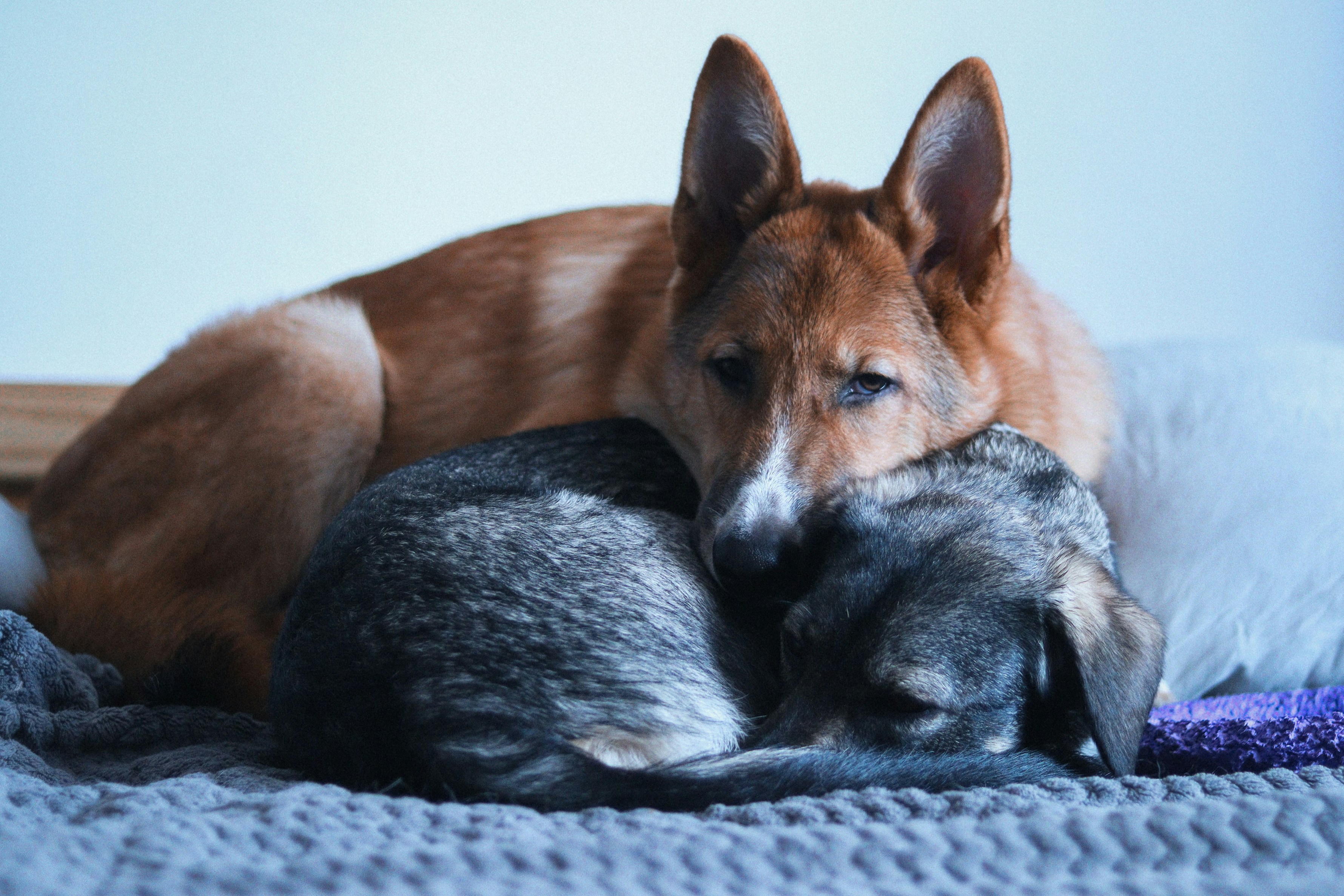
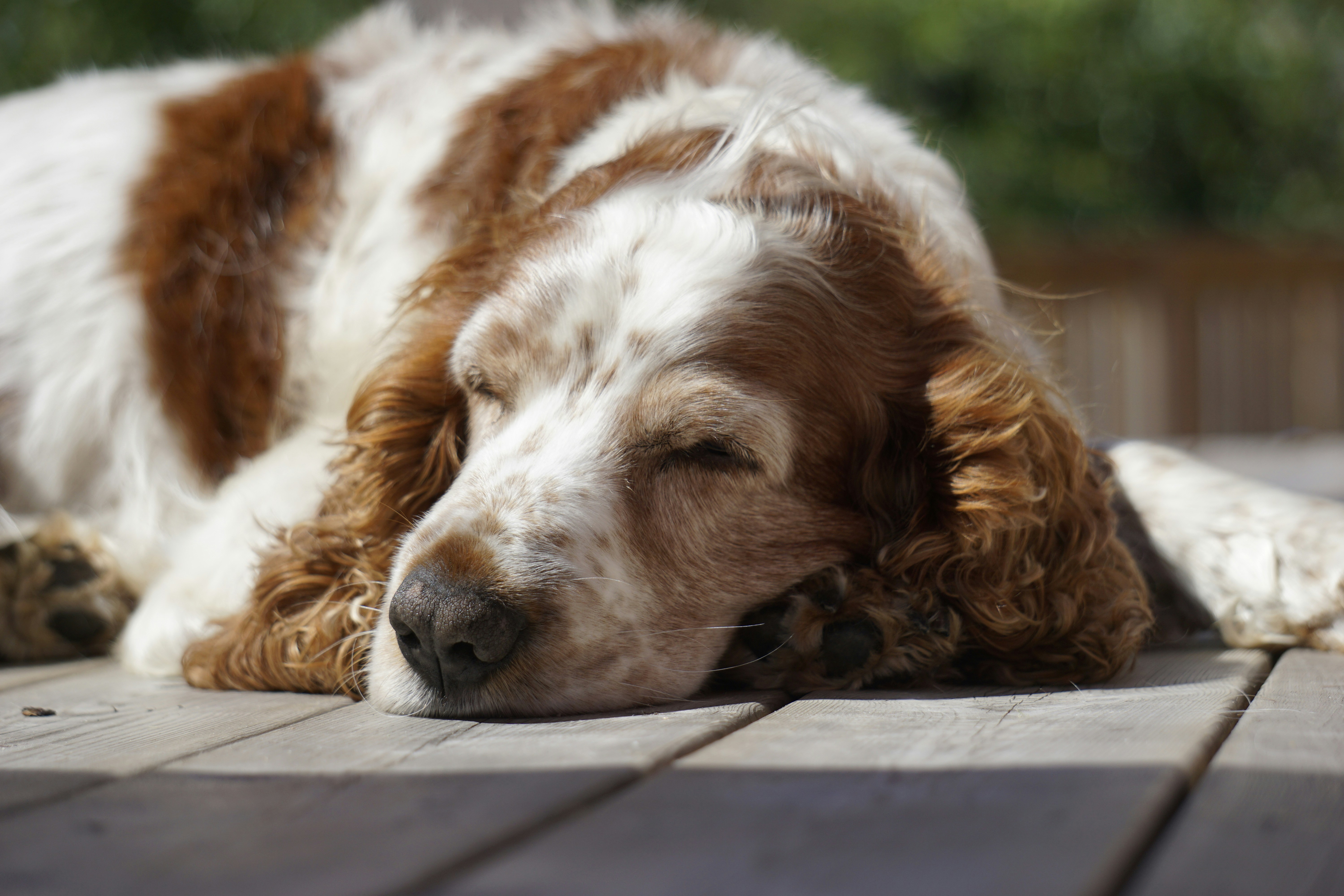
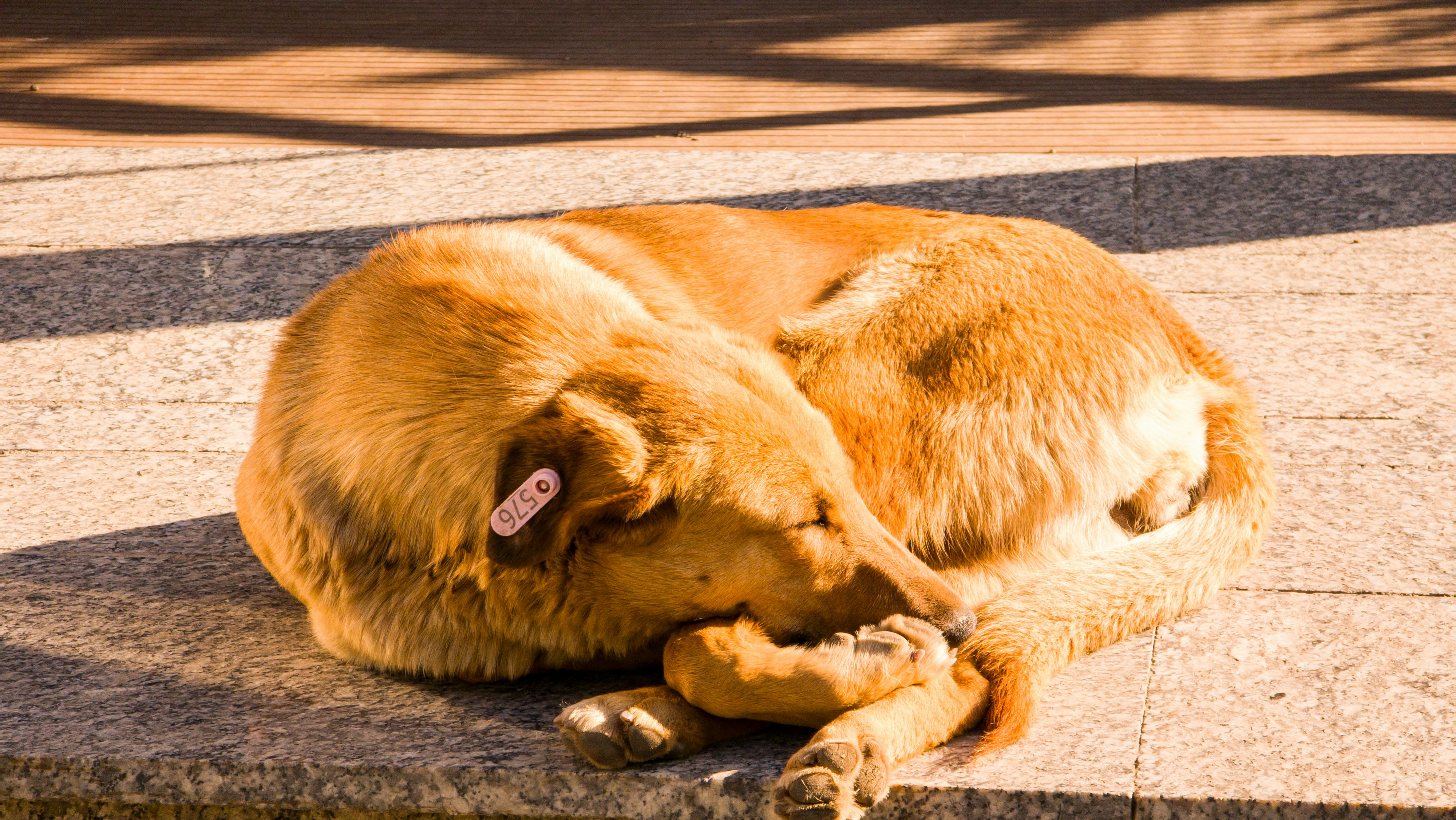
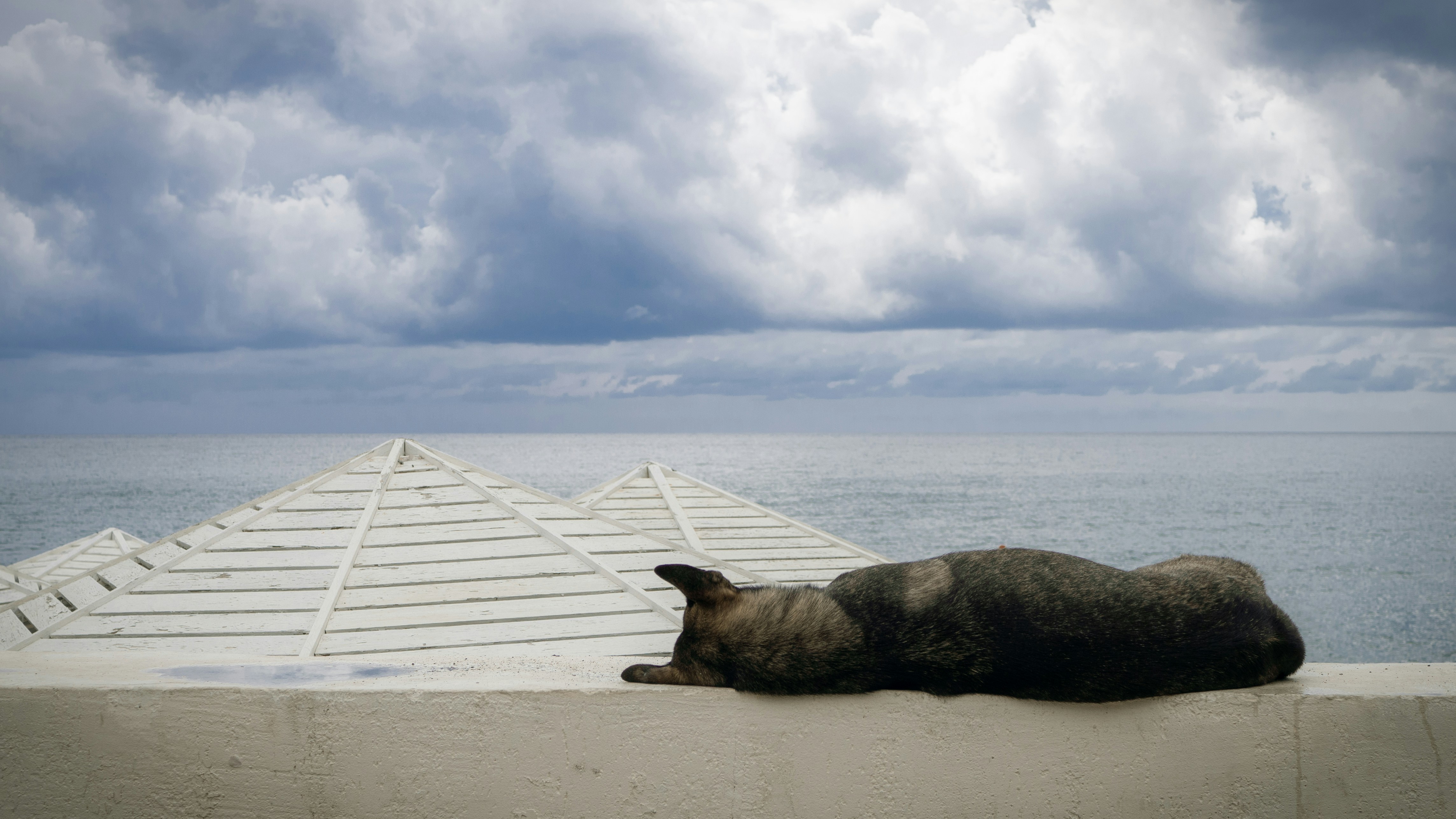
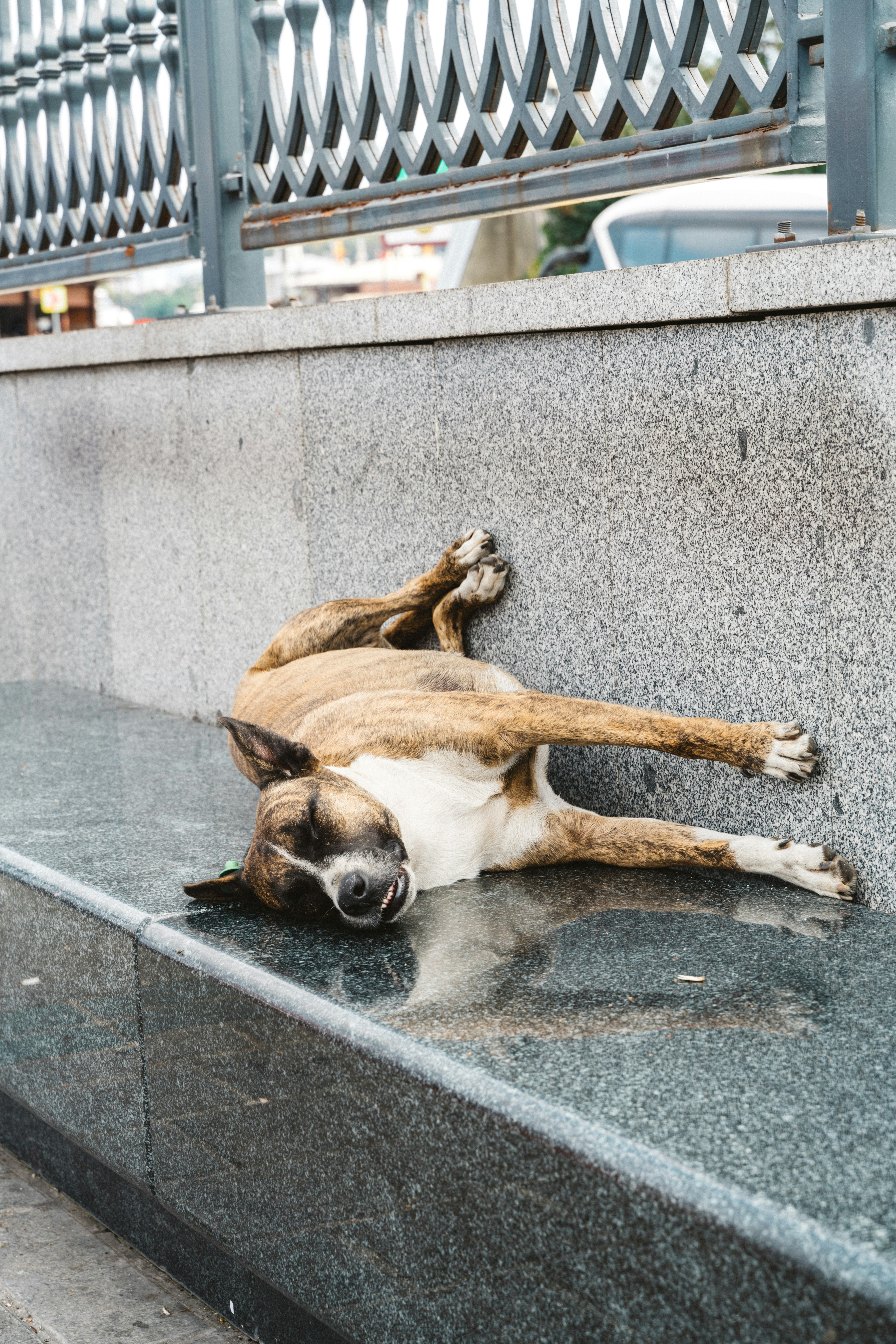
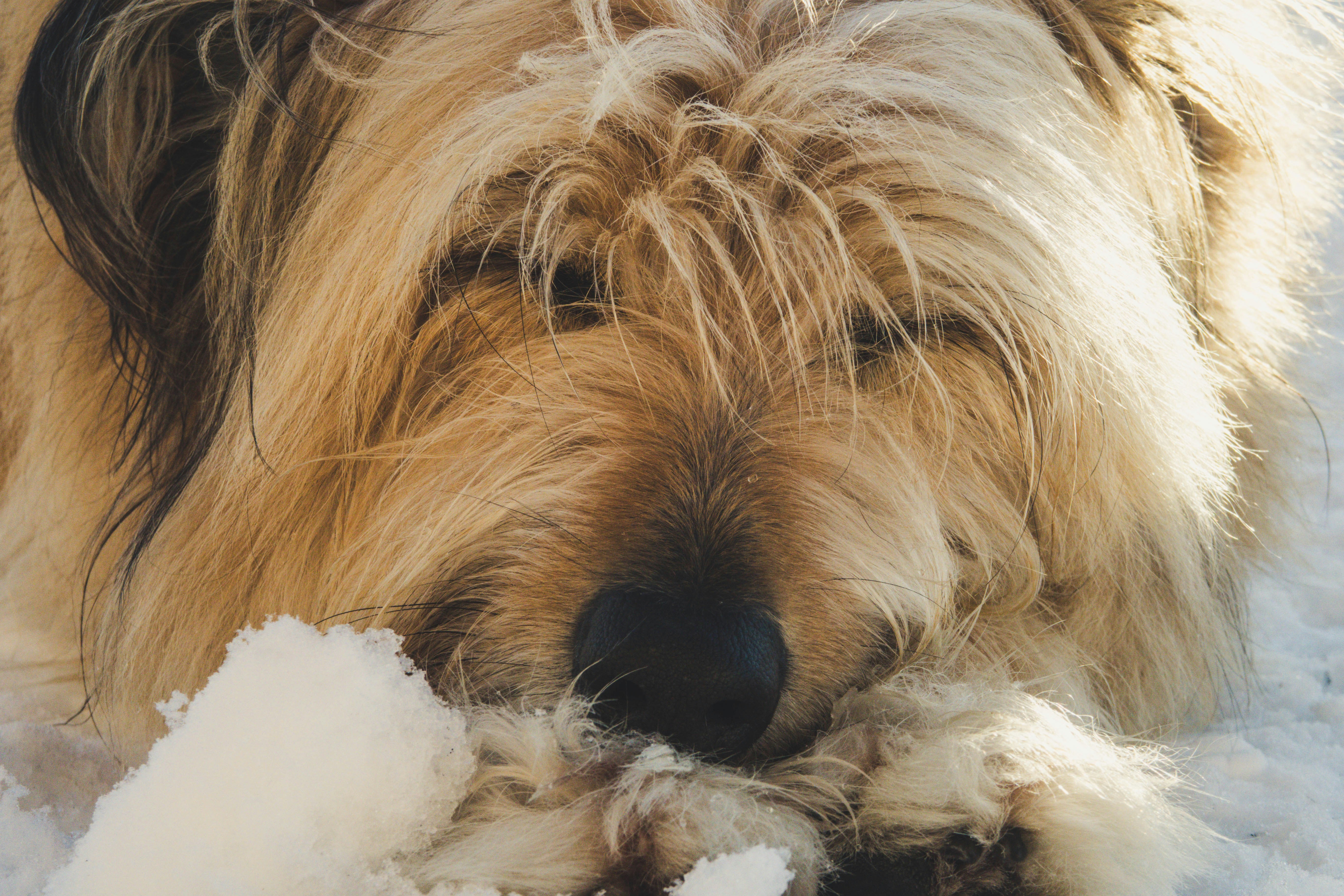
This time it is dogs sleeping, courtesy of Unsplash.

Photo by Allan on Unsplash

oooo

Photo by anotherxlife on Unsplash

oooo

Photo by Elin Wahlqvist on Unsplash

oooo

oooo

Photo by SPACEDEZERT on Unsplash

oooo

Photo by Büşra Salkım on Unsplash

oooo

Photo by Fabrizio Conti on Unsplash

oooo

Photo by Alessandro De Marco on Unsplash

It really is amazing how and where dogs go to sleep!

Thank you, Unsplash!

Wolf Mountain Sanctuary

Just watch this video!

“Look into their eyes and you can see their soul!”

Seven minutes of bliss!

More about Jane Goodall

An article published by The Conversation is offered today.

ooOOoo

Jane Goodall, the gentle disrupter whose research on chimpanzees redefined what it meant to be human

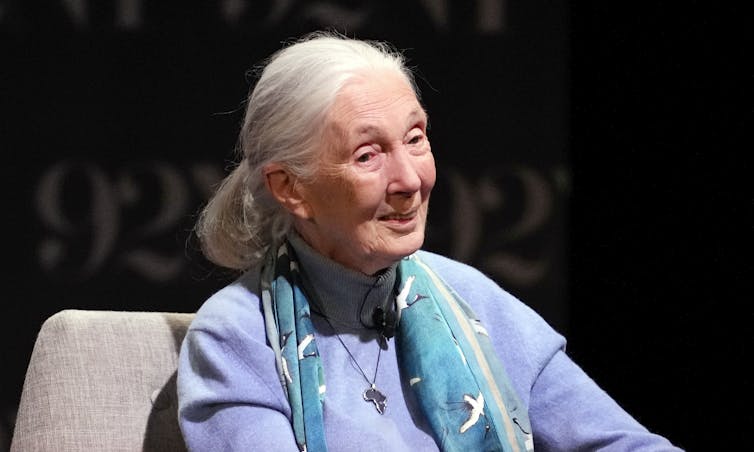
Jane Goodall appears on stage at 92NY in New York on Oct. 1, 2023.
Charles Sykes/Invision/AP

Mireya Mayor, Florida International University

Anyone proposing to offer a master class on changing the world for the better, without becoming negative, cynical, angry or narrow-minded in the process, could model their advice on the life and work of pioneering animal behavior scholar Jane Goodall.

Goodall’s life journey stretches from marveling at the somewhat unremarkable creatures – though she would never call them that – in her English backyard as a wide-eyed little girl in the 1930s to challenging the very definition of what it means to be human through her research on chimpanzees in Tanzania. From there, she went on to become a global icon and a United Nations Messenger of Peace.

Until her death on Oct. 1, 2025 at age 91, Goodall retained a charm, open-mindedness, optimism and wide-eyed wonder that are more typical of children. I know this because I have been fortunate to spend time with her and to share insights from my own scientific career. To the public, she was a world-renowned scientist and icon. To me, she was Jane – my inspiring mentor and friend.

Despite the massive changes Goodall wrought in the world of science, upending the study of animal behavior, she was always cheerful, encouraging and inspiring. I think of her as a gentle disrupter. One of her greatest gifts was her ability to make everyone, at any age, feel that they have the power to change the world. https://www.youtube.com/embed/rcL4jnGTL1U?wmode=transparent&start=0 Jane Goodall documented that chimpanzees not only used tools but make them – an insight that altered thinking about animals and humans.

Discovering tool use in animals

In her pioneering studies in the lush rainforest of Tanzania’s Gombe Stream Game Reserve, now a national park, Goodall noted that the most successful chimp leaders were gentle, caring and familial. Males that tried to rule by asserting their dominance through violence, tyranny and threat did not last.

I also am a primatologist, and Goodall’s groundbreaking observations of chimpanzees at Gombe were part of my preliminary studies. She famously recorded chimps taking long pieces of grass and inserting them into termite nests to “fish” for the insects to eat, something no one else had previously observed.

It was the first time an animal had been seen using a tool, a discovery that altered how scientists differentiated between humanity and the rest of the animal kingdom.

Renowned anthropologist Louis Leakey chose Goodall to do this work precisely because she was not formally trained. When she turned up in Leakey’s office in Tanzania in 1957, at age 23, Leakey initially hired her as his secretary, but he soon spotted her potential and encouraged her to study chimpanzees. Leakey wanted someone with a completely open mind, something he believed most scientists lost over the course of their formal training.

Because chimps are humans’ closest living relatives, Leakey hoped that understanding the animals would provide insights into early humans. In a predominantly male field, he also thought a woman would be more patient and insightful than a male observer. He wasn’t wrong.

Six months in, when Goodall wrote up her observations of chimps using tools, Leakey wrote, “Now we must redefine tool, redefine Man, or accept chimpanzees as human.”

Goodall spoke of animals as having emotions and cultures, and in the case of chimps, communities that were almost tribal. She also named the chimps she observed, an unheard-of practice at the time, garnering ridicule from scientists who had traditionally numbered their research subjects.

One of her most remarkable observations became known as the Gombe Chimp War. It was a four-year-long conflict in which eight adult males from one community killed all six males of another community, taking over their territory, only to lose it to another, bigger community with even more males.

Confidence in her path

Goodall was persuasive, powerful and determined, and she often advised me not to succumb to people’s criticisms. Her path to groundbreaking discoveries did not involve stepping on people or elbowing competitors aside.

Rather, her journey to Africa was motivated by her wonder, her love of animals and a powerful imagination. As a little girl, she was entranced by Edgar Rice Burroughs’ 1912 story “Tarzan of the Apes,” and she loved to joke that Tarzan married the wrong Jane.

When I was a 23-year-old former NFL cheerleader, with no scientific background at that time, and looked at Goodall’s work, I imagined that I, too, could be like her. In large part because of her, I became a primatologist, co-discovered a new species of lemur in Madagascar and have had an amazing life and career, in science and on TV, as a National Geographic explorer.
When it came time to write my own story, I asked Goodall to contribute the introduction. She wrote:

“Mireya Mayor reminds me a little of myself. Like me she loved being with animals when she was a child. And like me she followed her dream until it became a reality.”

In a 2023 interview, Jane Goodall answers TV host Jimmy Kimmel’s questions about chimpanzee behavior.

Storyteller and teacher

Goodall was an incredible storyteller and saw it as the most successful way to help people understand the true nature of animals. With compelling imagery, she shared extraordinary stories about the intelligence of animals, from apes and dolphins to rats and birds, and, of course, the octopus. She inspired me to become a wildlife correspondent for National Geographic so that I could share the stories and plights of endangered animals around the world.

Goodall inspired and advised world leaders, celebrities, scientists and conservationists. She also touched the lives of millions of children.

Two women face each other, smiling and holding a book
Jane Goodall and primatologist Mireya Mayor with Mayor’s book ‘Just Wild Enough,’ a memoir aimed at young readers. Mireya Mayor, CC BY-ND

Through the Jane Goodall Institute, which works to engage people around the world in conservation, she launched Roots & Shoots, a global youth program that operates in more than 60 countries. The program teaches children about connections between people, animals and the environment, and ways to engage locally to help all three.

Along with Goodall’s warmth, friendship and wonderful stories, I treasure this comment from her: “The greatest danger to our future is our apathy. Each one of us must take responsibility for our own lives, and above all, show respect and love for living things around us, especially each other.”

It’s a radical notion from a one-of-a-kind scientist.

This article has been updated to add the date of Goodall’s death.

Mireya Mayor, Director of Exploration and Science Communication, Florida International University

This article is republished from The Conversation under a Creative Commons license. Read the original article.

ooOOoo

That comment by Jane that was treasured by Mireya is so important. “The greatest danger to our future is our apathy. Each one of us must take responsibility for our own lives, and above all, show respect and love for living things around us, especially each other.

In memory of Jane Goodall

May she be remembered for a very long time!

There is much information on the web and elsewhere so all I want to do is to share a video of Jane.

For persons who would want to know more about Jane’s life there is an excellent piece on Wikipedia. Here it is!

Picture Parade Four Hundred and Ninety-One

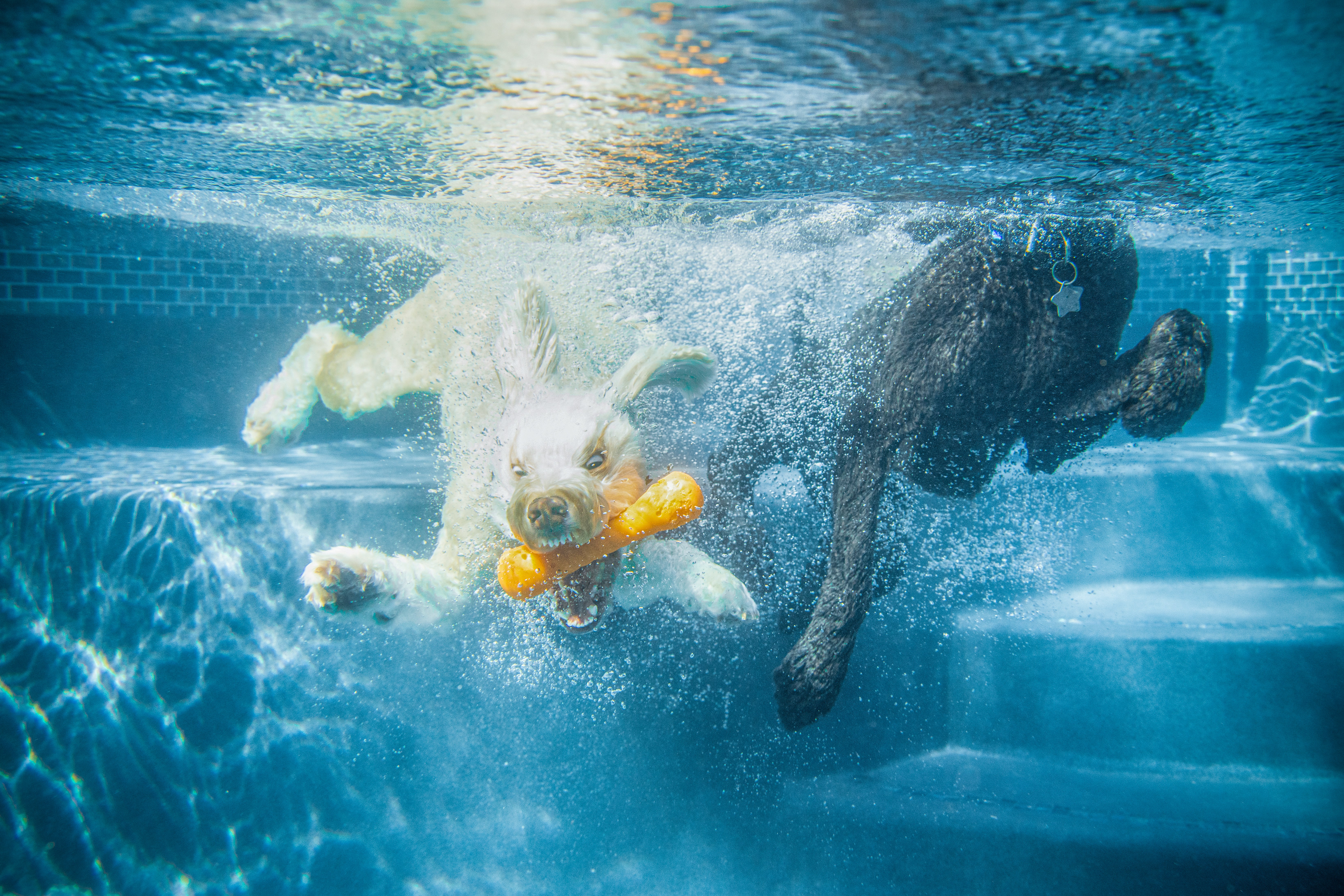
Yet more dog photos courtesy of Unsplash!

Photo by Anthony Duran on Unsplash

oooo

Photo by Sam Manickaraj on Unsplash

oooo

Photo by Reuben Mergard on Unsplash

oooo

Photo by Edoardo Cuoghi on Unsplash

oooo

Photo by Ayelt van Veen on Unsplash

oooo

Photo by Victor Chartin on Unsplash

oooo

Photo by Sisi on Unsplash

oooo

Photo by Chris Thomassen on Unsplash

My same feeling as last Sunday! Dogs are perfect.

More Bark & Bond.

🐶❤️ Because the love of a dog changes your day.

Thank you, John.