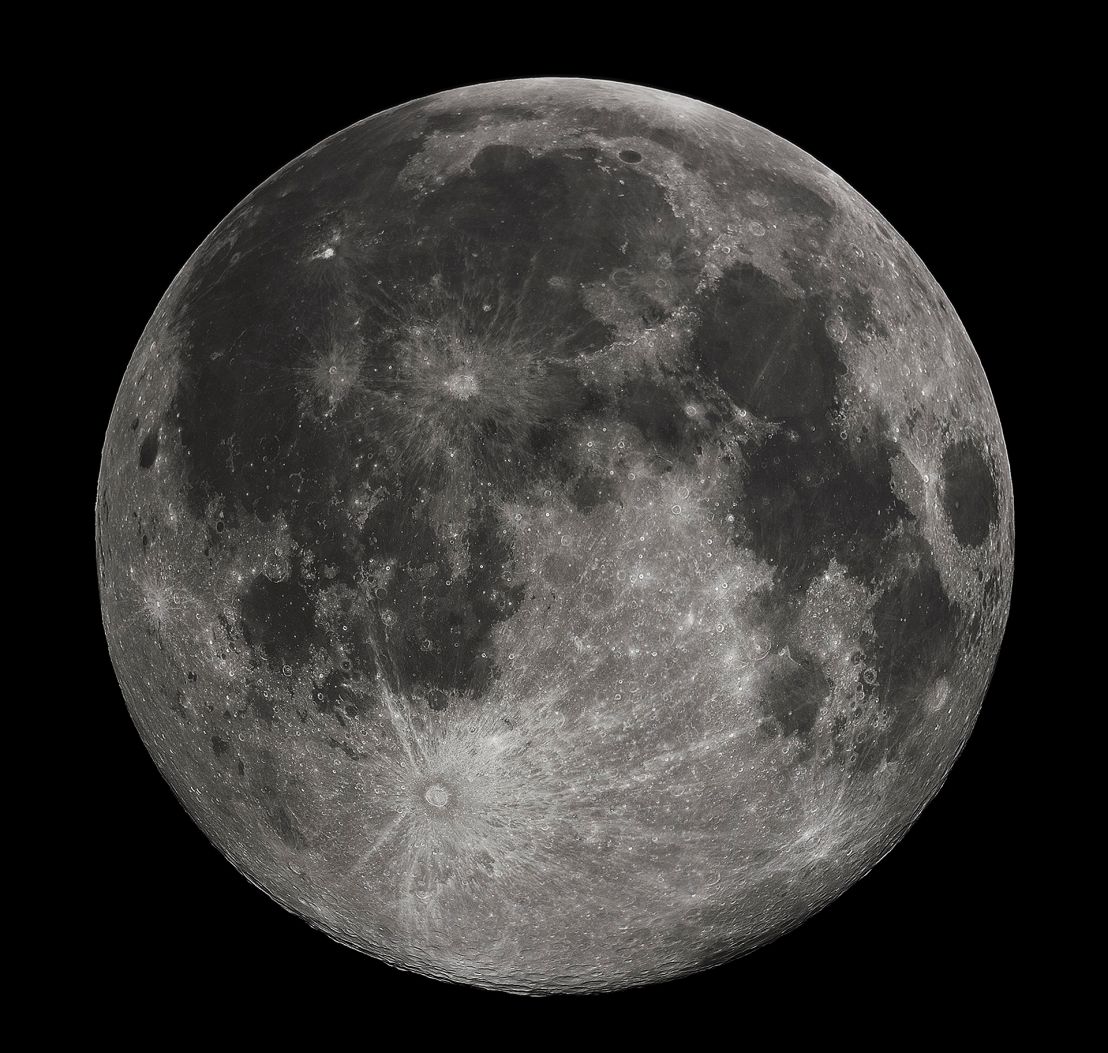
The Moon is an astronomical body orbitingEarth and is the planet’s only natural satellite. It is the fifth-largest satellite in the Solar System, and by far[13] the largest among planetary satellites relative to the size of the planet that it orbits (its primary). The Moon is, after Jupiter‘s satellite Io, the second-densest satellite in the Solar System among those whose densities are known.
The Moon is thought to have formed about 4.51 billion years ago, not long after Earth. The most widely accepted explanation is that the Moon formed from the debris left over after a giant impact between Earth and a hypothetical Mars-sized body called Theia. New research of Moon rocks, although not rejecting the Theia hypothesis, suggests that the Moon may be older than previously thought.[14]
The Moon is in synchronous rotation with Earth, and thus always shows the same side to Earth, the near side. Because of libration, slightly more than half (about 59%) of the total lunar surface can be viewed from Earth.[15] The near side is marked by dark volcanic maria that fill the spaces between the bright ancient crustal highlands and the prominent impact craters. After the Sun, the Moon is the second-brightest celestial object regularly visible in Earth’s sky. Its surface is actually dark, although compared to the night sky it appears very bright, with a reflectance just slightly higher than that of worn asphalt. Its gravitational influence produces the ocean tides, body tides, and the slight lengthening of the day.
The Moon’s average orbital distance is 384,402 km (238,856 mi),[16][17] or 1.28 light-seconds. This is about thirty times the diameter of Earth. The Moon’s apparent size in the sky is almost the same as that of the Sun, since the star is about 400 times the lunar distance and diameter. Therefore, the Moon covers the Sun nearly precisely during a total solar eclipse. This matching of apparent visual size will not continue in the far future because the Moon’s distance from Earth is gradually increasing.
Venus is the second planet from the Sun. It is named after the Roman goddess of love and beauty. As the second-brightest natural object in the night sky after the Moon, Venus can cast shadows and can be, on rare occasion, visible to the naked eye in broad daylight.[15][16] Venus lies within Earth’s orbit, and so never appears to venture far from the Sun, either setting in the west just after dusk or rising in the east a bit before dawn. Venus orbits the Sun every 224.7 Earth days.[17] With a rotation period of 243 Earth days, it takes longer to rotate about its axis than any other planet in the Solar System and does so in the opposite direction to all but Uranus (meaning the Sun rises in the west and sets in the east).[18] Venus does not have any moons, a distinction it shares only with Mercury among planets in the Solar System.[19]
Venus is a terrestrial planet and is sometimes called Earth’s “sister planet” because of their similar size, mass, proximity to the Sun, and bulk composition. It is radically different from Earth in other respects. It has the densest atmosphere of the four terrestrial planets, consisting of more than 96% carbon dioxide. The atmospheric pressure at the planet’s surface is 92 times that of Earth, or roughly the pressure found 900 m (3,000 ft) underwater on Earth. Venus is by far the hottest planet in the Solar System, with a mean surface temperature of 737 K (464 °C; 867 °F), even though Mercury is closer to the Sun. Venus is shrouded by an opaque layer of highly reflective clouds of sulfuric acid, preventing its surface from being seen from space in visible light. It may have had water oceans in the past,[20][21] but these would have vaporized as the temperature rose due to a runaway greenhouse effect.[22] The water has probably photodissociated, and the free hydrogen has been swept into interplanetary space by the solar wind because of the lack of a planetary magnetic field.[23] Venus’s surface is a dry desertscape interspersed with slab-like rocks and is periodically resurfaced by volcanism.
As one of the brightest objects in the sky, Venus has been a major fixture in human culture for as long as records have existed. It has been made sacred to gods of many cultures, and has been a prime inspiration for writers and poets as the morning star and evening star. Venus was the first planet to have its motions plotted across the sky, as early as the second millennium BC.[24]
I included these excerpts from WikiPedia because many will find them of interest and quite a few, including yours truly, actually learnt something!
We all who love dogs find that their lives are too short; by far! So it was incredible to read the other day of a Labrador who on April 24th, 2020 turned 20! The story was on the Golden Hearts website and thank goodness there is permission to share this with you.
Here it is:
ooOOoo
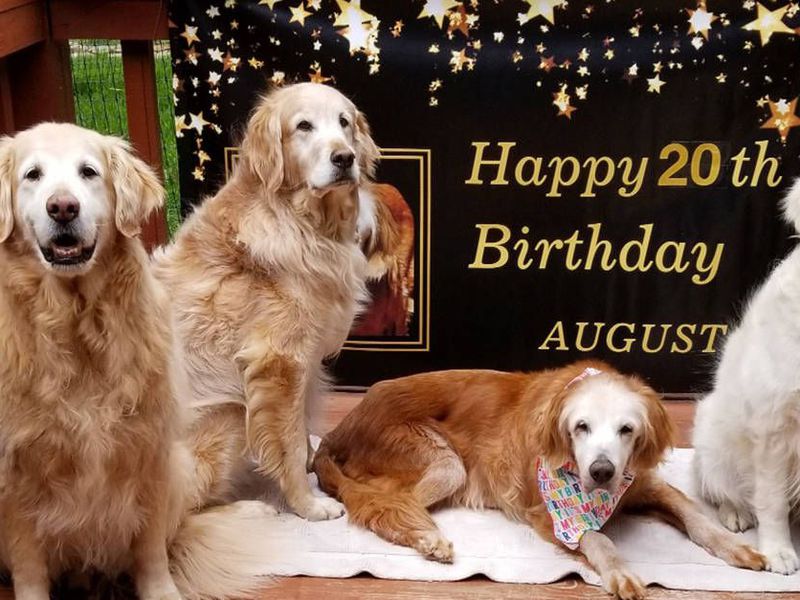
Augie and her three golden retriever “siblings” celebrate her 20th birthday in April (Steve and Jen Hetterscheidt, via Golden Hearts)
Meet The Oldest Golden Retriever: 20-Year-Old Augie
At 20 years old, Augie is the oldest golden retriever in history!
There are many accounts of 17 or 18-year-old goldens, and even a few stories about 19-year-old goldens, but Augie is the first golden retriever to ever reach the big two-oh.
In this article, we’ll dive into Augie’s story a little bit more, cover how old golden retrievers normally live to be, and talk about how you can help your golden live a long happy life.
Let’s go!
Meet Augie
On April 24, 2000, August (affectionately known as Augie) was born.
After being rehomed twice (due to no fault of her own), she eventually landed with Jennifer and Steve Hetterscheidt of Oakland, Tennessee, and it’s still unclear who the lucky ones are here.
Jennifer and Steve, who were active in their local golden retriever rescue organization when they got Augie, adopted her when she was 14 years old.
They figured that most people wouldn’t want such an elderly golden, but they had no idea of the upcoming journey they would be on with Augie.
They’ve taken her on RV trips all around the country, she’s got several canine and feline siblings, and she gets to play fetch in the pool.
On the other hand, Jennifer and Steve have been rewarded with over six years of love and loyalty from this wonderful (and now record-holding) golden.
The 20-Year-Old Golden Retriever
So how does a 20-year-old golden retriever celebrate her record-setting birthday?
With a dog-friendly carrot cake and some quality time with her golden retriever siblings, Sherman, Belle, and Bruce!
Her owner, Jennifer, says she’s surprisingly healthy.
She can still move around well (although she’s a bit shaky when she first gets up) and enjoys daily walks around the yard.
Since she was diagnosed with some kidney issues when she was 14, she now eats a mixture of wet and dry Hill’s Prescription Diet k/d, and takes some supplements for her kidneys and joints.
She also gets SQ fluids twice a week, which has helped her perk up quite a bit.
How Long Do Golden Retrievers Normally Live?
Augie is a very special girl, and she’s definitely not the norm.
After a few weeks of us feeding him the “best food for golden retriever puppies”, he stopped eating and became more lethargic.
We listened to what he was trying to tell us, we talked with our vet about it, and we decided to switch foods.
Right away he loved the new food, started eating more, and started getting his normal, crazy energy back.
Just because something is popular for many dogs, doesn’t necessarily mean that it’ll be good for your dog, so pay attention to them and how they’re feeling so you can work with your vet to keep them happy and healthy.
3. Feed your dog a quality dog food.
Yes, Walmart brand food may be cheaper at first, but you’ll probably end up paying more in vet bills down the road.
Not to mention, with a quality dog food, your dog will probably be happier and healthier for it.
Talk to your veterinarian, do your research, and feed your pup a quality food.
4. Groom your golden retriever regularly.
Keeping their nails, paws, coat, teeth, and ears clean will keep them looking their best, while also keeping them healthy.
Grooming them regularly can prevent ear infections, gum or teeth issues, or skin issues, which could all snowball into something worse if not taken care of.
5. Exercise your golden retriever regularly.
Most goldens are inclined to become obese, so regular exercise can prevent that, as well as keep their heart and muscles strong.
Even Augie gets regular exercise, and as Jennifer says, “Motion is lotion!” for those old bones.
How You Can Help Senior Golden Retrievers
One thing that amazes me is that Jennifer adopted Augie when she was 14 years old!
Most people don’t want to adopt an older golden retriever, fearing that their time here is limited, but that doesn’t mean these dogs can’t be wonderful companions for you.
Golden retriever puppies are tough, and there are many sweet senior goldens out there like Augie that need good, loving homes, so consider stepping up to the plate and adopting a golden, fostering goldens, or volunteering or donating to your local golden retriever rescue.
Below is a list of golden retriever rescues in every state, but also don’t forget to look at rescues in states nearby if you’re looking to rescue a golden.
Huge congratulations to Augie for being the world’s oldest golden retriever!
At 20 years old, she’s just about doubled the expected lifespan for golden retrievers and she’s still kicking.
She’s lived so long largely because she’s got great genetics, but also her owner, Jennifer, has done a great job of taking care of her and ensuring that they have a good relationship with Augie’s vet.
As Jennifer says, “We care for them as long as we have them, and love them forever.”
Do you have any questions about Augie, or about golden retriever lifespans?
The great thing about going away is the home-coming!
I’m speaking of coming back to one’s dogs. This theme of coming home to your dogs was prompted by something I read the other day on The Dodo newsletter. It was an article … well you read it rather than me explain it.
ooOOoo
Dogs Are So Excited When Mom Finally Comes Home From 8-Month Deployment
Photo Credit: Taryn Dennison
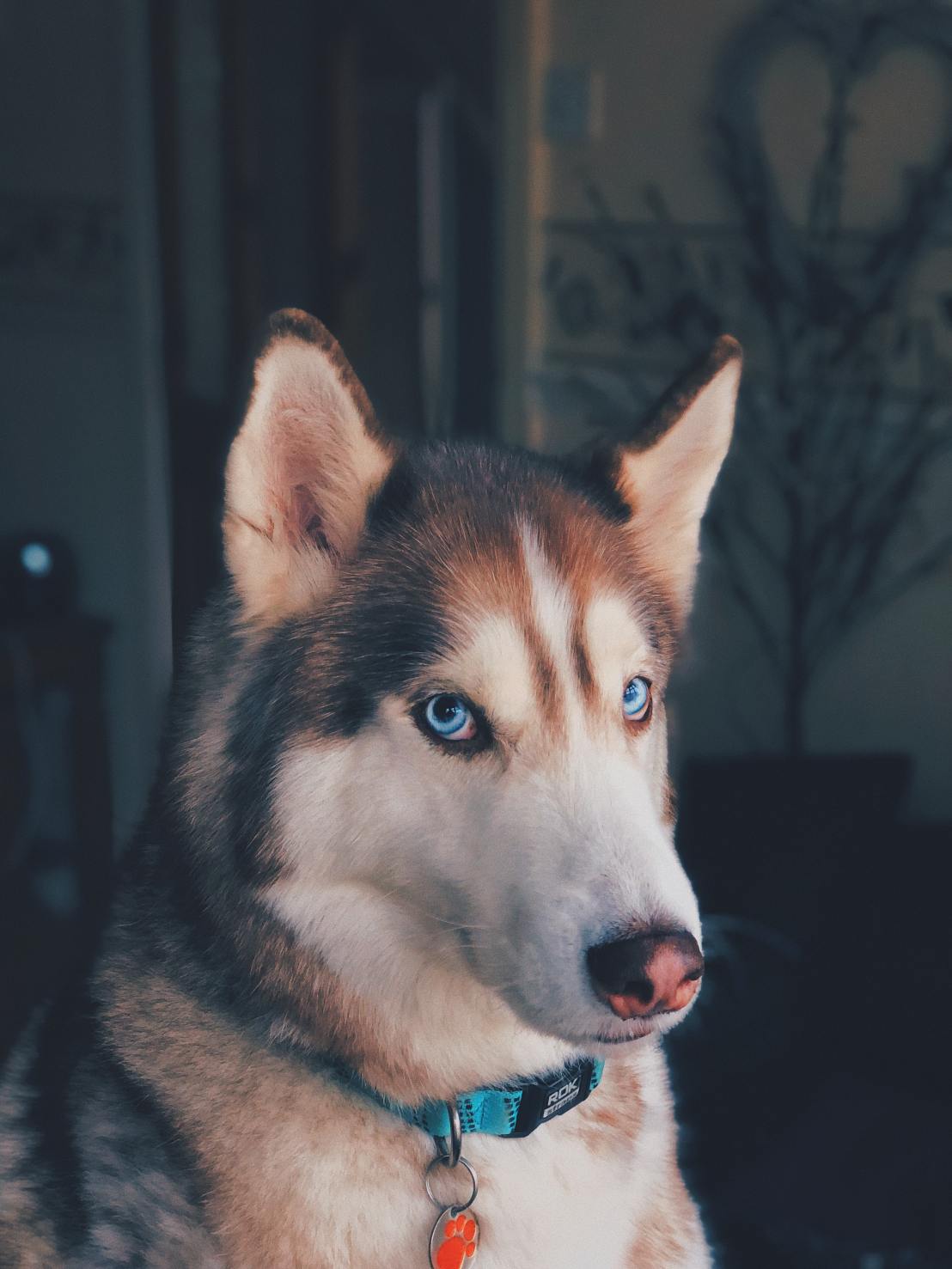
Bauer first met his mom when he was just a puppy, and ever since then they’ve been basically attached at the hip. Bauer follows his mom everywhere she goes and loves hanging out with her no matter what they’re doing.
“Bauer isn’t your typical husky, he doesn’t bark and he rarely howls,” Taryn Dennison, Bauer’s mom, told The Dodo. “He loves sleeping and when he’s awake he’s right next to you trying to get all the cuddles and pets he can or to get you to throw his toys.”
When Dennison found out she was going to be deployed, she knew it was going to be hard to leave Bauer behind. He stayed with her roommate and her roommate’s dog, Macie, and was cared for and loved so well, but everyone could tell that he missed his mom so much.
Photo Credit: Taryn Dennison
“Bauer didn’t understand why I was gone,” Dennison said. “I FaceTimed him a few times and he would run around my house trying to find me and then later he would end up laying down and falling asleep in front of my door.”
Finally, after eight long months apart, Dennison arrived home…and as soon as she walked in the door, Bauer completely lost it.
He was overwhelmed with joy and so thrilled that his mom was finally home, and couldn’t stop licking her and jumping all over her.
“I honestly thought he was going to pee on me because he was so excited,” Dennison said.
Photo Credit: Taryn Dennison
Even Macie was excited, especially when she saw how happy Bauer was, and both dogs jumped around Dennison as she sat on the floor with them. After so much time apart, she was so happy to finally be home with Bauer and the rest of her loved ones.
“Since I got home he’s been attached to my hip,” Dennison said. “I can’t even get up to go to the kitchen or the bathroom without him being right next to me. I wouldn’t change it for the world!”
Bauer missed his mom so much, but now that she’s home, he’s making sure he doesn’t take a single minute of being with her for granted.
ooOOoo
To keep up the theme for a little longer, here is a YouTube video of dogs and their returning owners.
I hope you enjoyed it.
Finally, Jean and I just need to go the shops in Grants Pass, about 20 minutes away, and when we return home, perhaps 1 or 2 hours later, we are greeted by all our dogs in a similar fashion. The vast majority of dogs offer unconditional, unbridled love! 😍
There was a recent post on The Conversation that was published for the kids among us. But I thought it would have an appeal far wider than just for our children, and it is republished here.
ooOOoo
Do dogs really see in just black and white?
By Nancy Dreschel
Associate Teaching Professor of Small Animal Science, Pennsylvania State University.
Do dogs really see in just black and white? – Oscar V., age 9, Somerville, Massachusetts
While most people see a full spectrum of colors from red to violet, dogs lack some of the light receptors in their eyes that allow human beings to see certain colors, particularly in the red and green range. But canines can still see yellow and blue.
Different wavelengths of light register as different colors in an animal’s visual system. Top is the human view; bottom is a dog’s eye view.
What you see as red or orange, to a dog may just be another shade of tan. To my dog, Sparky, a bright orange ball lying in the green grass may look like a tan ball in another shade of tan grass. But his bright blue ball will look similar to both of us. An online image processing tool lets you see for yourself what a particular picture looks like to your pet.
Animals can’t use spoken language to describe what they see, but researchers easily trained dogs to touch a lit-up color disc with their nose to get a treat. Then they trained the dogs to touch a disc that was a different color than some others. When the well-trained dogs couldn’t figure out which disc to press, the scientists knew that they couldn’t see the differences in color. These experiments showed that dogs could see only yellow and blue.
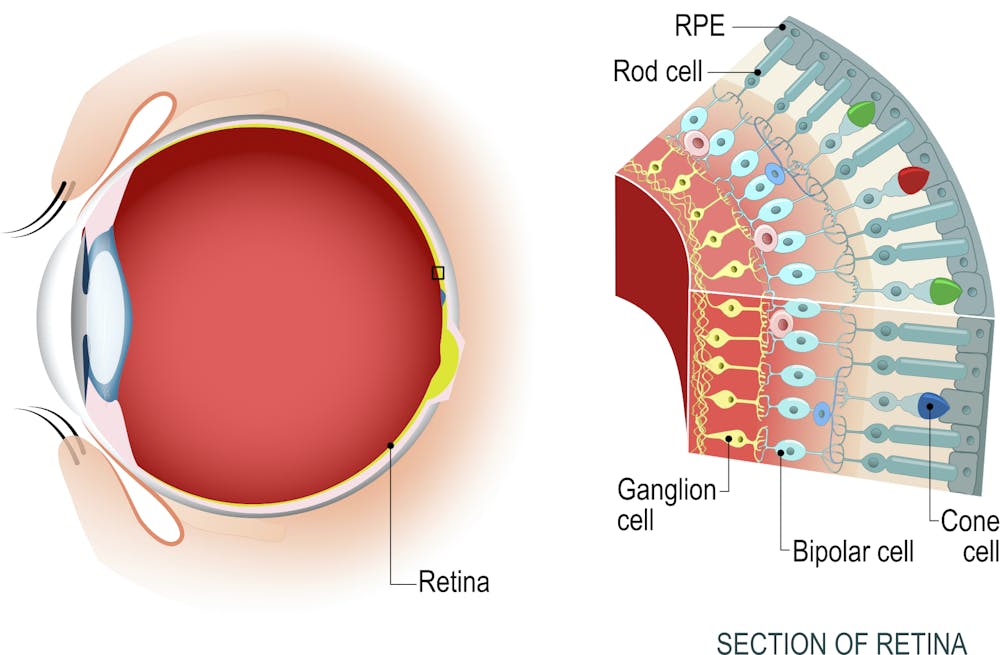
Light travels to the back of the eyeball, where it registers with rod and cone cells that send visual signals on to the brain.
Not only can dogs see fewer colors than we do, they probably don’t see as clearly as we do either. Tests show that both the structure and function of the dog eye leads them to see things at a distance as more blurry. While we think of perfect vision in humans as being 20/20, typical vision in dogs is probably closer to 20/75. This means that what a person with normal vision could see from 75 feet away, a dog would need to be just 20 feet away to see as clearly. Since dogs don’t read the newspaper, their visual acuity probably doesn’t interfere with their way of life.
There’s likely a lot of difference in visual ability between breeds. Over the years, breeders have selected sight-hunting dogs like greyhounds to have better vision than dogs like bulldogs.
But that’s not the end of the story. While people have a tough time seeing clearly in dim light, scientists believe dogs can probably see as well at dusk or dawn as they can in the bright middle of the day. This is because compared to humans’, dog retinas have a higher percentage and type of another kind of visual receptor. Called rod cells because of their shape, they function better in low light than cone cells do.
Dogs also have a reflective tissue layer at the back of their eyes that helps them see in less light. This mirror-like tapetum lucidum collects and concentrates the available light to help them see when it’s dark. The tapetum lucidum is what gives dogs and other mammals that glowing eye reflection when caught in your headlights at night or when you try to take a flash photo.
Dogs share their type of vision with many other animals, including catsand foxes. Scientists think it’s important for these hunters to be able to detect the motion of their nocturnal prey, and that’s why their vision evolved in this way. As many mammals developed the ability to forage and hunt in twilight or dark conditions, they gave up the ability to see the variety of colors that most birds, reptiles and primates have. People didn’t evolve to be active all night, so we kept the color vision and better visual acuity.
Even though Sparky might not be able to easily see that orange toy in the grass, he can certainly smell it and find it easily when he wants to.
ooOOoo
Trust me, the dog’s nose is “much more powerful”. Upwards of fifty million times more so, as I wrote about here.
Plus, living with so many dogs as we do, there are instances when all the dogs start barking, frequently when they are all in our bedroom getting ready for the night. Jean and I cannot hear a thing but the dogs can, and Jean and I don’t have a clue!
They are incredible creatures and humans are so lucky to have them around us.
This, again, is not about our beloved animals; in other words, this is not about our dogs.
But it is about something of supreme importance: The role of innovation. That’s innovation in all aspects of our human lives. Think of it as a process of innovation.
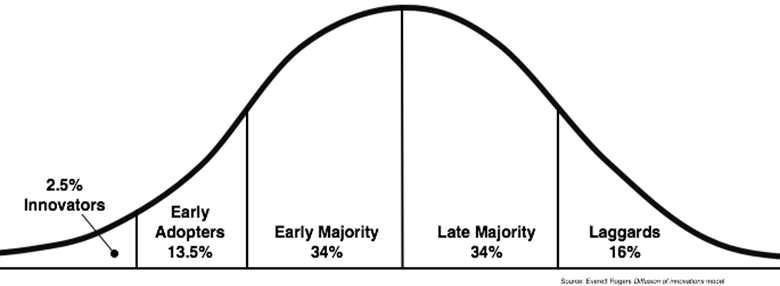
There was the Diffusion of Innovation (DOI) Theory developed by E.M. Rogers in 1962. There is a comprehensive explanation of DOI here, from where I take the following diagram, but before explaining, from that same site, the meanings behind the definitions, I would like to emphasize one important point: “It works better with adoption of behaviors rather than cessation or prevention of behaviors.“.
So here is that diagram:
Here are the meanings of those terms (my emboldening):
Adoption of a new idea, behavior, or product (i.e., “innovation”) does not happen simultaneously in a social system; rather it is a process whereby some people are more apt to adopt the innovation than others.
Researchers have found that people who adopt an innovation early have different characteristics than people who adopt an innovation later. When promoting an innovation to a target population, it is important to understand the characteristics of the target population that will help or hinder adoption of the innovation.
There are five established adopter categories, and while the majority of the general population tends to fall in the middle categories, it is still necessary to understand the characteristics of the target population. When promoting an innovation, there are different strategies used to appeal to the different adopter categories.
Innovators – These are people who want to be the first to try the innovation. They are venturesome and interested in new ideas. These people are very willing to take risks, and are often the first to develop new ideas. Very little, if anything, needs to be done to appeal to this population.
Early Adopters – These are people who represent opinion leaders. They enjoy leadership roles, and embrace change opportunities. They are already aware of the need to change and so are very comfortable adopting new ideas. Strategies to appeal to this population include how-to manuals and information sheets on implementation. They do not need information to convince them to change.
Early Majority – These people are rarely leaders, but they do adopt new ideas before the average person. That said, they typically need to see evidence that the innovation works before they are willing to adopt it. Strategies to appeal to this population include success stories and evidence of the innovation’s effectiveness.
Late Majority – These people are skeptical of change, and will only adopt an innovation after it has been tried by the majority. Strategies to appeal to this population include information on how many other people have tried the innovation and have adopted it successfully.
Laggards – These people are bound by tradition and very conservative. They are very skeptical of change and are the hardest group to bring on board. Strategies to appeal to this population include statistics, fear appeals, and pressure from people in the other adopter groups.
Now there’s a TED Talk that I hadn’t seen, and yet nearly 51 million people had! It came to me as an email from TED and yesterday, while we were sitting up in bed early in the morning, I watched it. It ‘spoke’ to me and I felt that I just had to share it with you.
Because so many of the problems that face our society today are global issues and if humans are to have a future on this planet then we need great leaders who will inspire us.
Now watch the following video, it’s just over 18 minutes long, but it says it all.
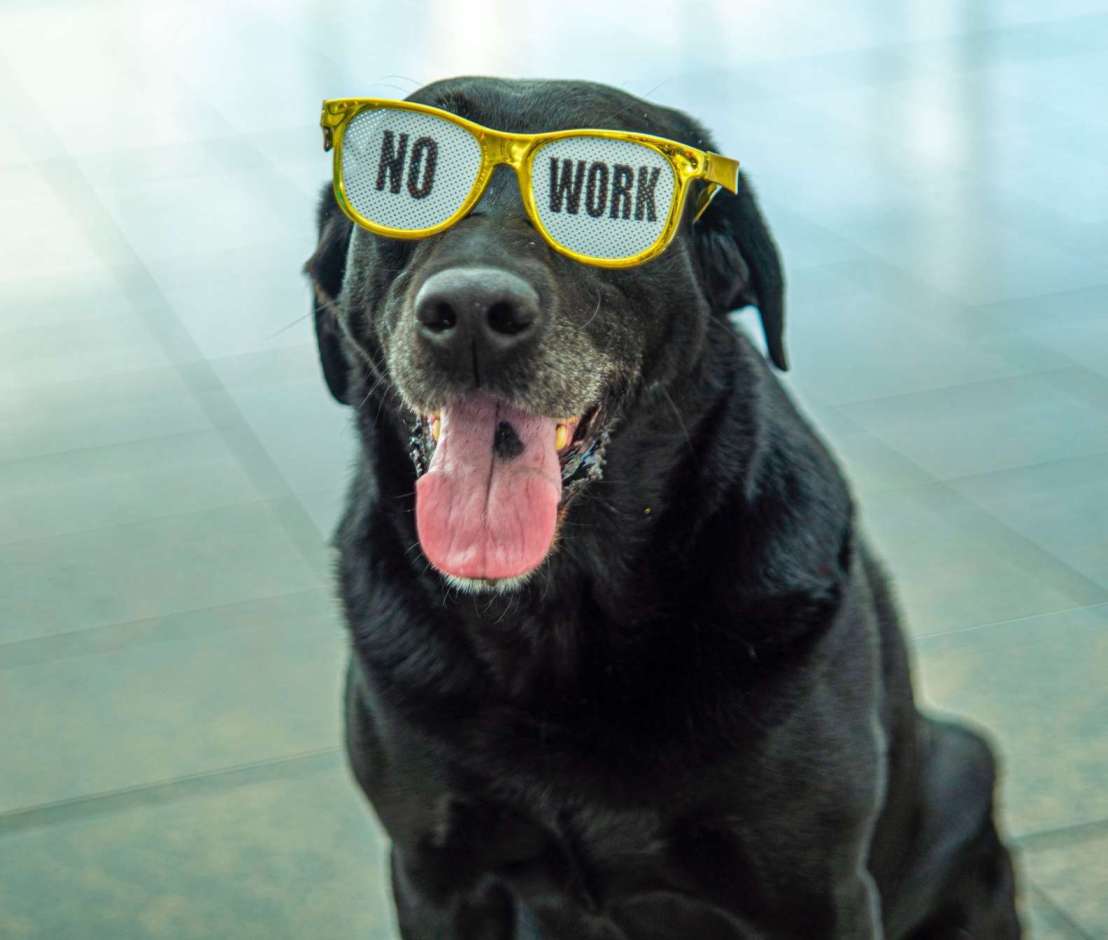
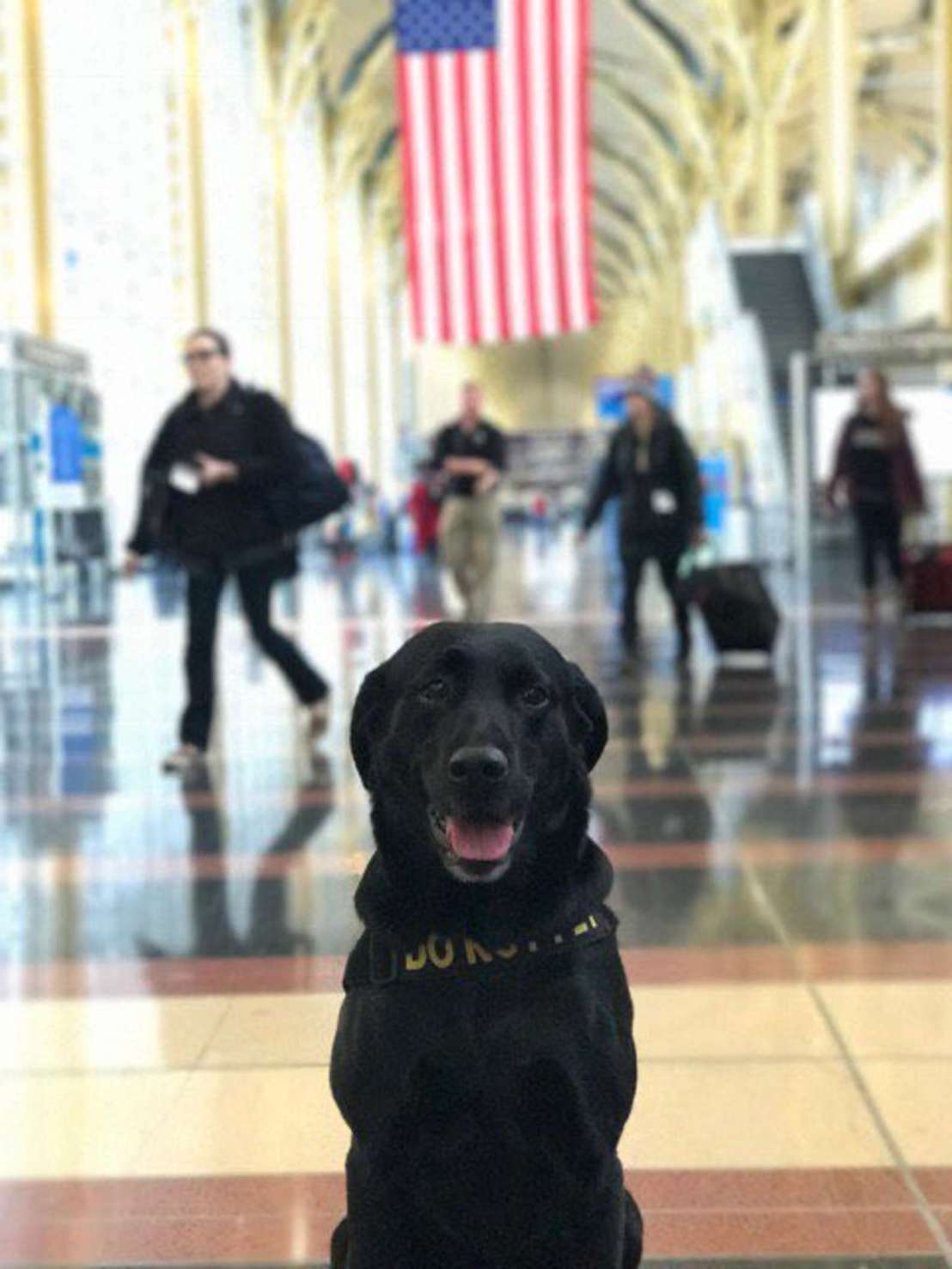
This is another story from The Dodo blogsite. And, yes, about a dog. But not any old dog; he used his sense of smell to protect us humans. He has, in my opinion, an unusual name but it is still his name: TTirado. TTirado was an explosive detection dog at Indianapolis Airport and after eight years of service he was retired.
Here’s the full story!
ooOOoo
TSA Detection Dog Gets A Huge Surprise Before He Retires
As an explosive detection canine, TTirado isn’t always allowed to play with tennis balls like normal pets. Tennis balls — his favorite toy — are used as a reward for a job well done at the Indianapolis Airport.
So when it came time for TTirado to retire after eight long years of service, his handler came up with the perfect way to celebrate — with a massive ball drop.
Keith Gray
“It’s a coveted item during their career,” Keith Gray, TTirado’s handler, told The Dodo. “They know that they have to work for it to get it and that’s what keeps them going and keeps their motivation up.”
Keith Gray
TTirado is top of the class when it comes to detection, and has passed every single evaluation and test. For TTirado, scent detection is a game, and he’s always been happy to go into work with his dad.
“He was the first dog that was assigned to me and the dog I kept my entire career,” Gray said. “He’s a black Lab, so he’s a fantastic, lovable pup. He’s been such a great dog to work with and I’ve learned so much from him over the years.”
Keith Gray
To surprise the pup on his special day, Gray ordered 200 tennis balls online and set up a special final search for him.
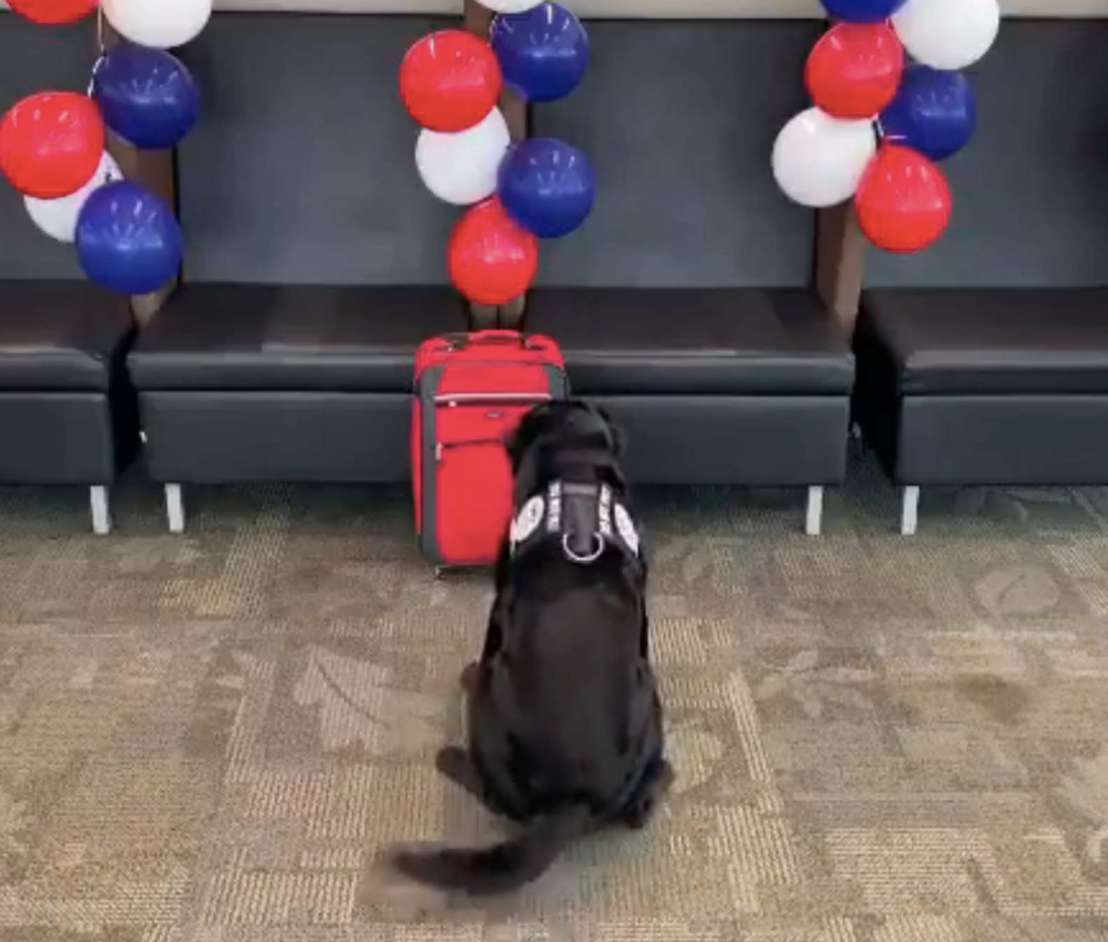
“We had a couple of handlers that were behind the scenes ready to drop the balls when he showed up,” Gray said. “The handlers knew what to do when the dog alerts, which is basically him coming around the corner, sniffing that bag like he’s supposed to and dropping his butt to sit down.”
Keith Gray
When TTirado signaled to his dad that he had found something, all 200 tennis balls dropped from the sky. TTirado was in heaven.
TTirado loves to play fetch, and everyone joined in throwing balls for the senior dog to chase.
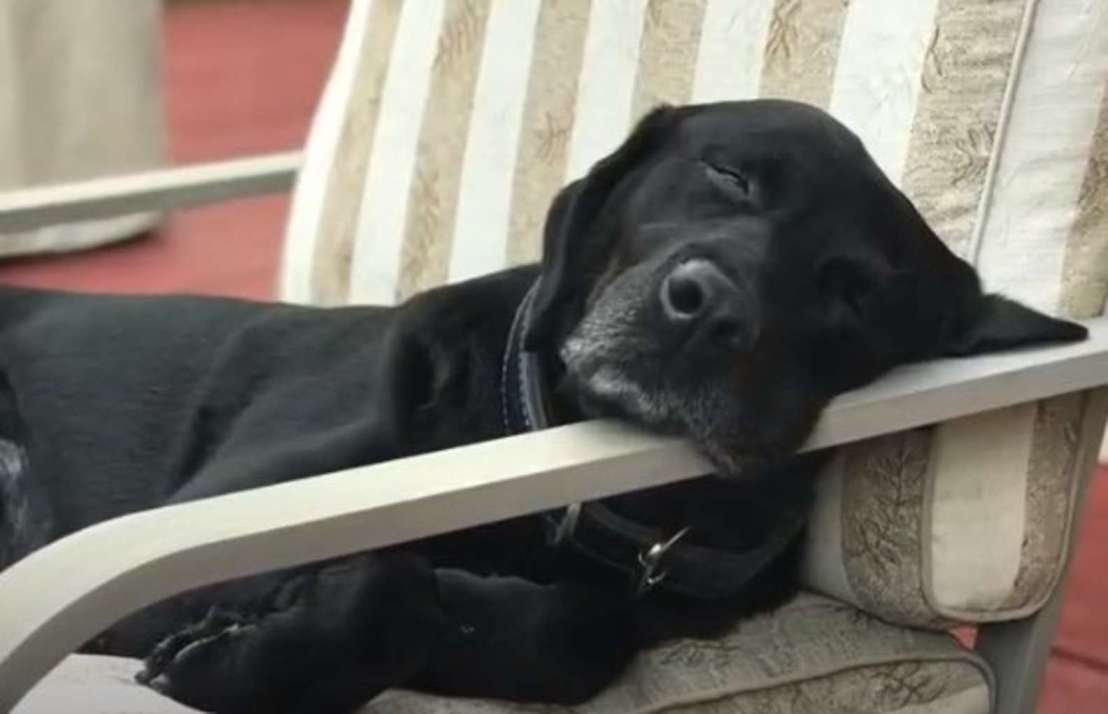
After putting in countless 40-hour workweeks, TTirado is finally learning to enjoy his retirement. While TTirado was always part of the family, Gray has officially adopted him and plans on taking the pup on lots of fun trips in the future.
But perhaps the biggest change for TTirado is that he gets to hang out on the couch with his favorite toy every single day: “Now that he’s retired, he can have all the toys and tennis balls he wants and play around with them at home,” Gray said.
ooOOoo
It’s a wonderful story about a great dog. TTirado, you have a fantastic retirement and may you live happily for a long time to come!
Here’s an article about a dog that thinks he is a cat!
Dogs are amazing animals. Not only have they been associated with humans for, literally, thousands of years, in the main they bond so very closely with us. I should add that the lucky ones do.
But they are also independent animals and show it.
Here’s an article from The Dodo that shows how Mako demonstrated his own uniqueness of spirit; by thinking he was a cat!
ooOOoo
Rescue Dog Is Totally Convinced He’s One Of The Cats
“Whenever Mako sees the boys on the counters or cabinets he hops up to join them.”
When Bethany Castiller and her family went to a local rescue to adopt a dog, Mako immediately made it very clear that he would be the one going home with them.
“We joke that we didn’t really pick him, he picked us,” Castiller told The Dodo. “When we went to the rescue shelter he had his back against the cage so we started petting him and he looked over his shoulder and gave direct eye contact and we just fell in love with the little guy.”
Bethany Castiller
The family had been hoping to adopt a dog who would get along with their cats at home, Pecan and Gizmo. The shelter assured them that Mako got along with cats really well — and they quickly realized it was probably because Mako totally thinks he’s a cat.
Though they can’t know for sure, everyone thinks that Mako was probably raised with cats, because all of his favorite things to do are classic cat activities. He doesn’t bark, he loves cat treats and he absolutely adores sitting on top of counters and cabinets, just like his cat siblings do.
Bethany Castiller
When they first caught Mako climbing on top of tables and counters, his family thought it was a little weird — but quickly accepted that that’s just who Mako is, and that they’d basically adopted another cat instead of a dog.
Bethany Castiller
“We went online and found a dog toy that looks like a cat one so we go to the backyard and he chases and jumps after it like the cats,” Castiller said. “He also likes to lay on the tables with my cats and look out the window at the birds with them. When he sees one of my cats lay on their backs for a tummy rub he comes over and does the same thing!”
Bethany Castiller
Mako is obsessed with his cat siblings and loves hanging out with them every chance he gets, and his family can’t help but laugh whenever they come into the room and find Mako on top of something right alongside the cats, just one of the gang.
“Whenever Mako sees the boys on the counters or cabinets he hops up to join them,” Castiller said. “He really just wants to be around the cats all the time. If he is not in the room with one of us humans, he’s with the cats.”
Bethany Castiller
Mako is definitely a little different and will always be way more into cat activities than typical dog ones — and his family wouldn’t have him any other way.
ooOOoo
So, what to make of this! Seriously, it goes to show how at one level we really don’t have a clue as to what a dog is thinking of. Yet they are still our very best of companions and the fact that many of you will read this and enjoy it just proves my case.
Now for something completely different.
The International Dark-Sky Association (IDA) held its first annual Capture the Dark photography competition during May 2020. The goal was to portray the meaning of the night for people around the world. Participants were invited to submit images in five categories: Connecting to the Dark, International Dark Sky Places, Impact of Light Pollution, Bright Side of Lighting, and Youth. In two weeks, IDA received nearly 450 submissions from people around the world. An international panel of judges made the final selections. The winning entries in each category are on this page.
I’m not going to show you all the winning entries; you can go onto the website if you wish to see them. But what I am going to share is the winning entry.
Jean-Francois Graffand captured this image at the Pic du Midi International Dark Sky Reserve in France. It’s the winner in the International Dark Sky Places category. The photo is titled Dark Night in Pyrénées Mountains.
We closed the first part of this interview with a look inside one of the rooms where dogs are worked on but not to the extent of requiring surgery.
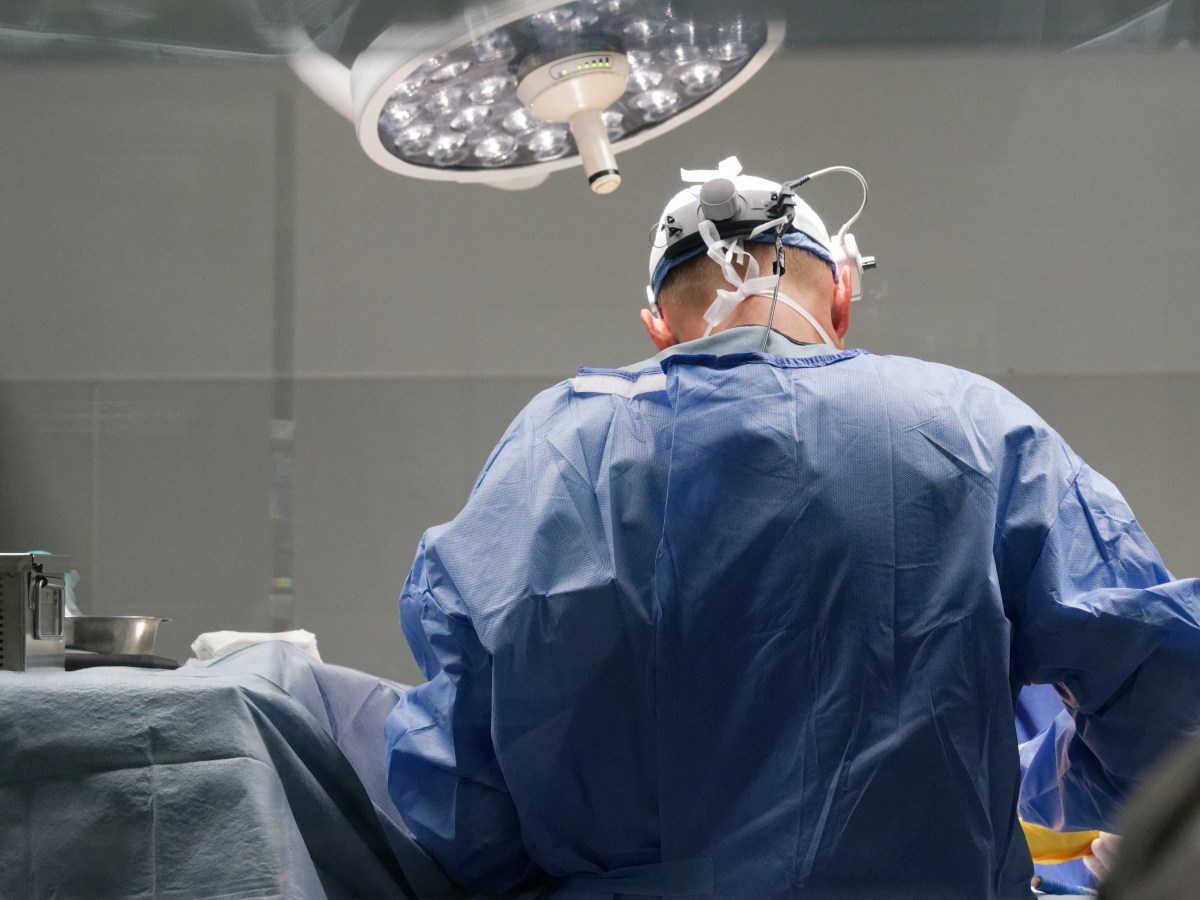
That is carried out in specialist surgical rooms. Here’s a surgeon working on a dog as we passed by outside in the corridor.
Photograph taken looking through the sealed porthole.
It is always busy with the peak being from the end of April through to October. The COVID19 pandemic has seen an enormous influx of new patients with the most critical being those dogs that have an urgent need for care.
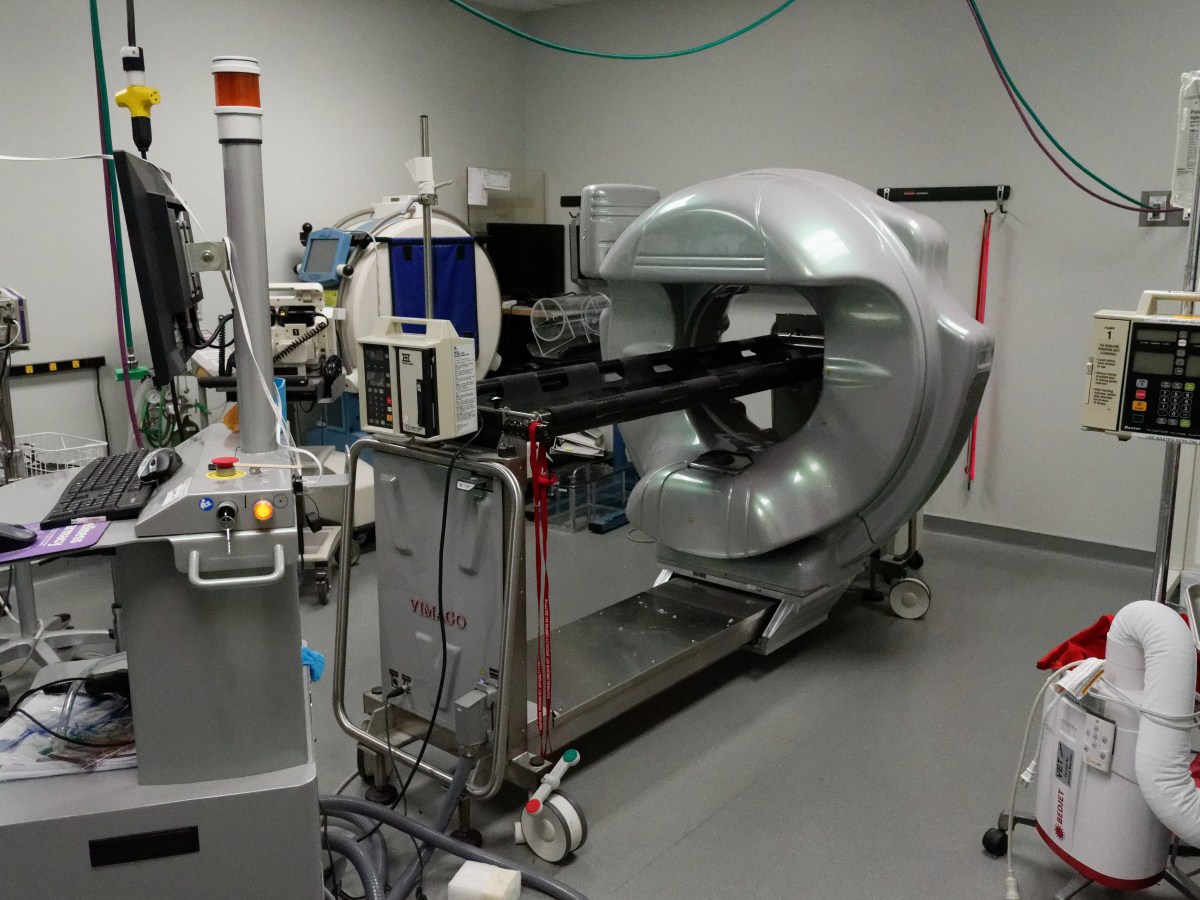
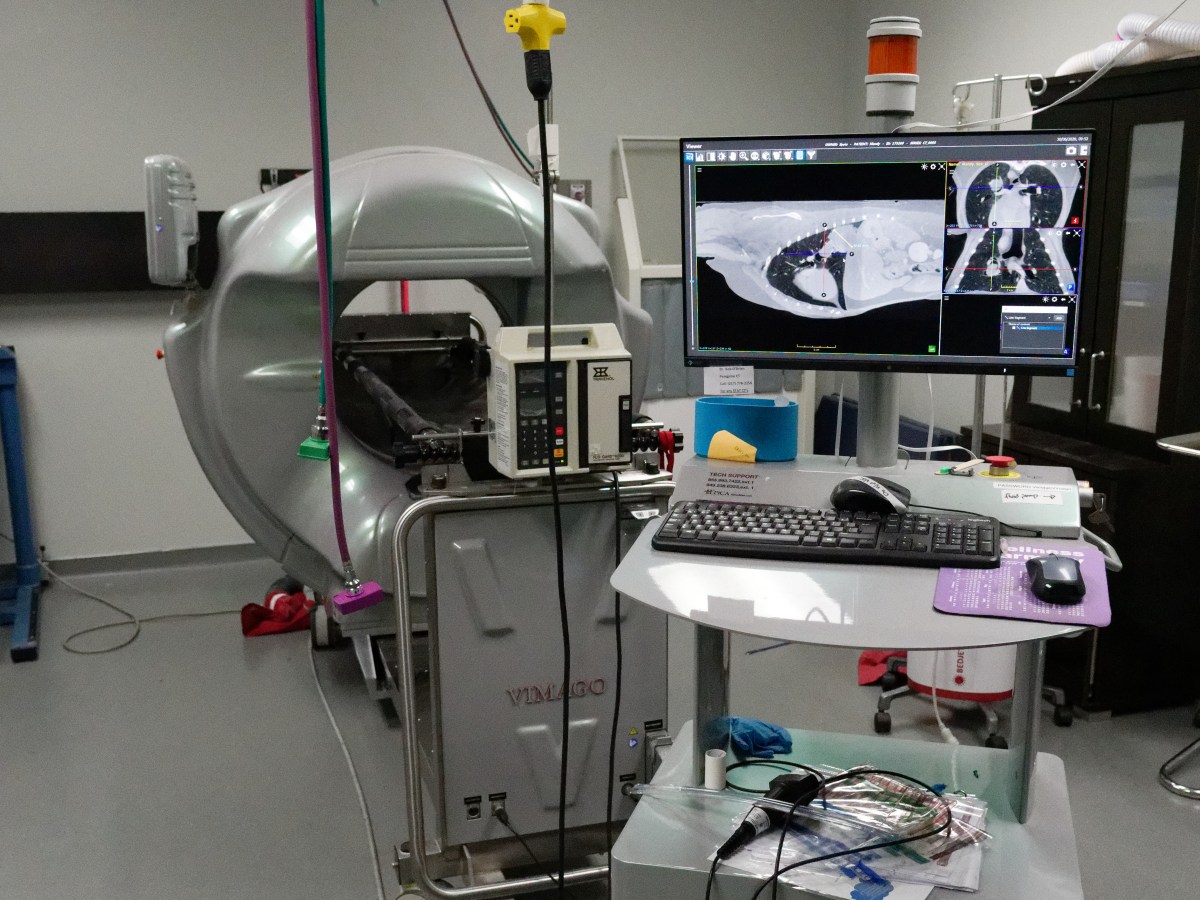
SOVC have also installed an MRI machine and here are two photographs of this incredible piece of equipment.
oooo
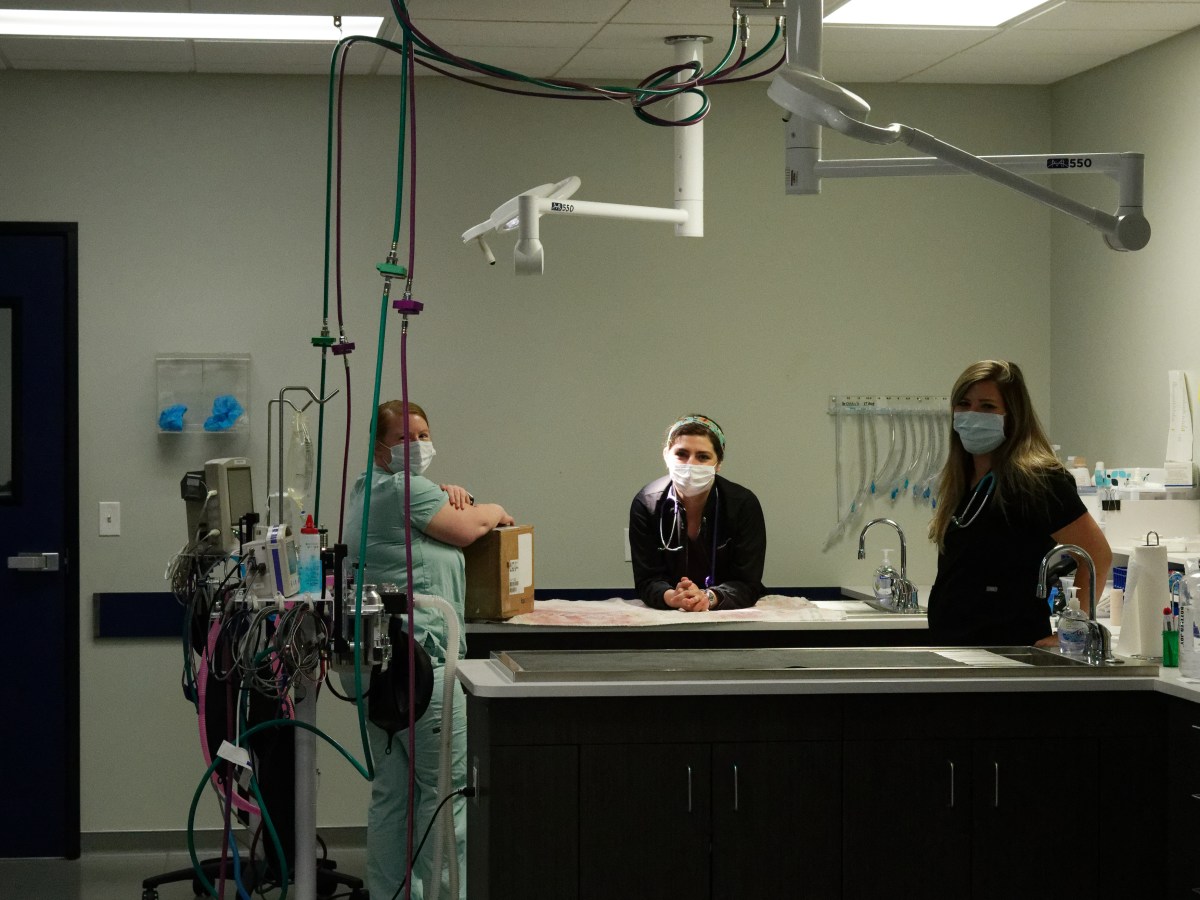
We were allowed to tour much of the inside of the building, under the care of Renee, and here is another photograph of another room with three staff looking back at the camera. (Names unfortunately not obtained.)
I also want to share the following photographs before rounding off my piece.
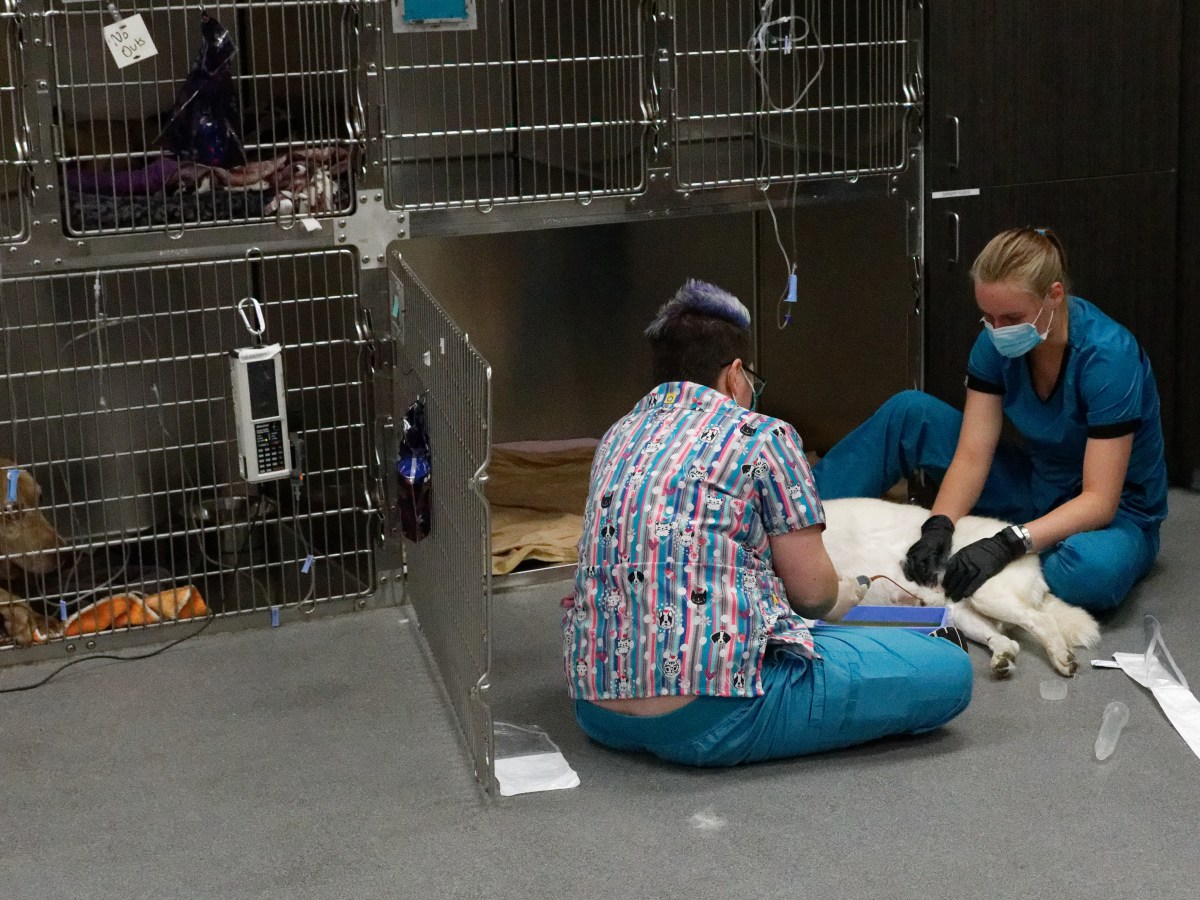
Another two staff attending to a dog.
oooo
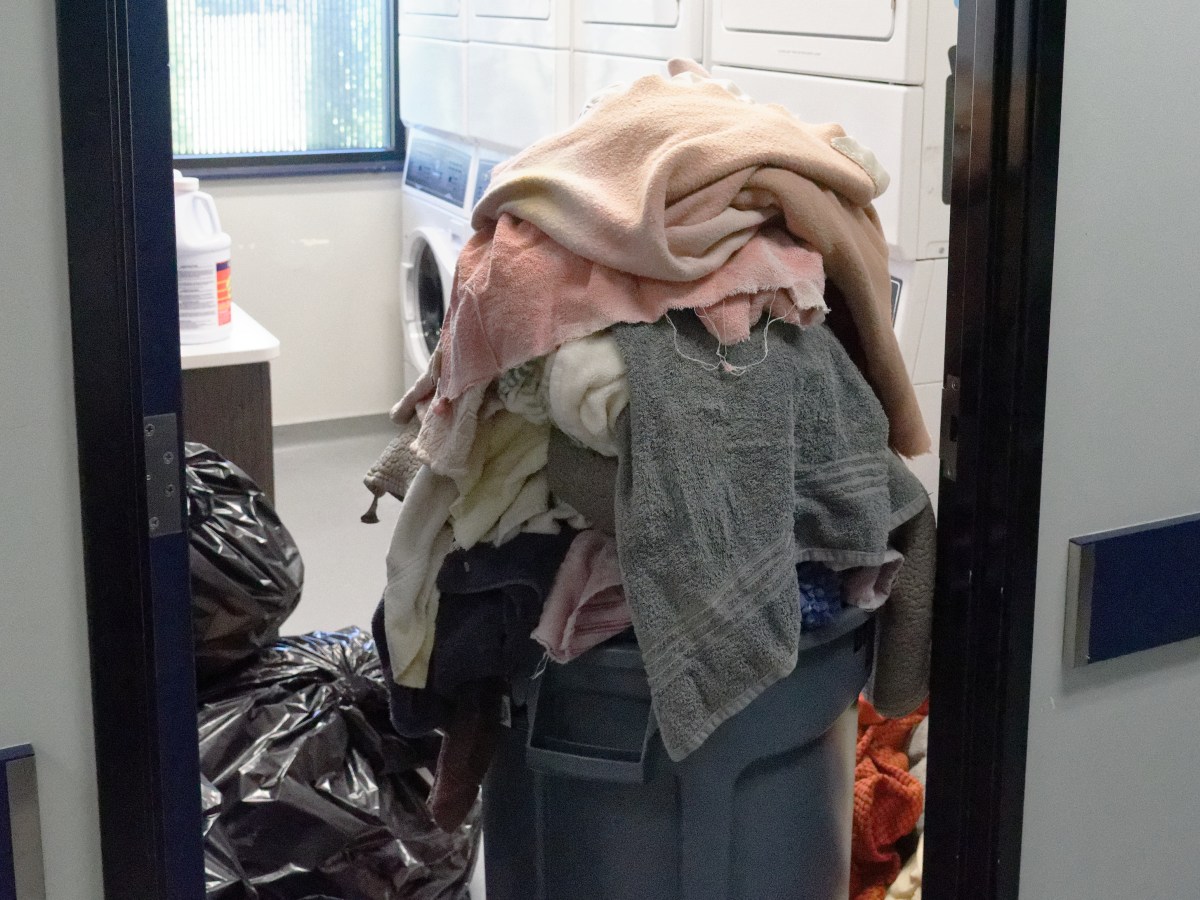
The one task that no-one seems to get on top of!
I started this post on the 2nd July with a statement that I wanted to explore in a little more detail the difference between dogs and humans, especially those humans who choose to become the veterinarian doctors of this world.
Dogs are pure in mind and most often loving towards us humans. They are intuitive and caring of us humans. I can no better support that statement than share the ‘Welcome’ page of my blog:
Beloved Pharaoh. Born: June 3rd., 2003 – Died: June 19th., 2017. A very special dog that will never be forgotten.
Dogs live in the present – they just are! Dogs make the best of each moment uncluttered by the sorts of complex fears and feelings that we humans have. They don’t judge, they simply take the world around them at face value. Yet they have been part of man’s world for an unimaginable time, at least 30,000 years. That makes the domesticated dog the longest animal companion to man, by far!
As man’s companion, protector and helper, history suggests that dogs were critically important in man achieving success as a hunter-gatherer. Dogs ‘teaching’ man to be so successful a hunter enabled evolution, some 20,000 years later, to farming, thence the long journey to modern man. But in the last, say 100 years, that farming spirit has become corrupted to the point where we see the planet’s plant and mineral resources as infinite. Mankind is close to the edge of extinction, literally and spiritually.
Dogs know better, much better! Time again for man to learn from dogs!
Veterinarian doctors are subject to enormous pressures.
Take this video as an example:
According to the CDC, the number of veterinarians who die by suicide is going up. With rising student debt, increasingly isolated offices, and pet owners with social media, the veterinary field is becoming high-risk. “Not One More Vet” CEO and veterinarian Nicole McArthur joins CBSN AM to explain why vets are struggling and how her company is trying to help vet-to-vet.
SOVC doctors note the end of an animal’s life on a ‘Blue sheet‘; a paper sheet. Renee herself worked one Christmas Day at SOVC and there were 11 Blue sheets that day. Indeed Renee had tears coming to her eyes when she spoke of that Christmas. It is a profession that faces daily challenges full of emotion as the CBS video explains. One can’t be in the profession without being fully committed, both heart and mind, and yet that means that one can’t easily put up defenses against one’s feeling.
I paused in my note taking to recall Pharaoh and couldn’t keep my eyes dry and yet he died 3 years ago and we have others that we care for and love.
I am going to finish by quoting the mission of SOVC, for I think it is very special.
Our Mission
The doctors and staff of Southern Oregon Veterinary Specialty Center recognize that there is a special bond between pets and their human family. (My italics) Our goal is to work as a team, with you and your family veterinarian, to help you make the best decisions for your pet’s medical care. We are dedicated to offering the highest level of medicine, to providing a compassionate environment to those pets entrusted to our care, and to treat each pet as we would our own.







 Nancy Dreschel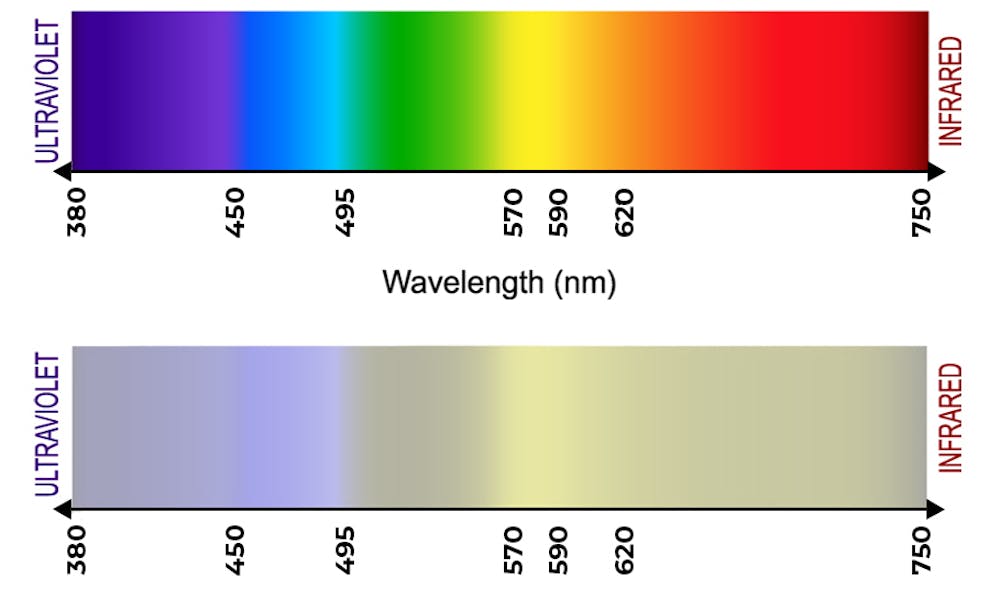






 Learning from Dogs