Back to Unsplash!
Because of guests coming for a meal last night I had to prepare today’s Picture Parade earlier on Saturday and that was before I had heard from Gary.

oooo

oooo

oooo

oooo

oooo

oooo

They are beautiful!
Dogs are animals of integrity. We have much to learn from them.
Author: Paul Handover
Back to Unsplash!
Because of guests coming for a meal last night I had to prepare today’s Picture Parade earlier on Saturday and that was before I had heard from Gary.
oooo
oooo
oooo
oooo
oooo
oooo
They are beautiful!
This story shows how we are connected to our dogs!
Jesse Lee, the dog, shows how one elderly man somehow connected with her. More later but first the story from The Dodo.
ooOOoo
Man Sees Tiny Speck On Cliff In The Distance And Immediately Knows It’s A Dog In Need
“He was funny because I couldn’t see her without my binoculars, and he said he knew the ‘dot’ was an animal because he’s never seen that dot there before.”
Published on the 16th December, 2021
An elderly man was having his morning coffee outside his motorcycle shop one day when he noticed something unusual on a cliff in the distance. He quickly concluded that the tiny speck he was seeing was actually a stuck animal in need of help, so he contacted the Humane Society of the Pikes Peak Region (HSPPR), and they sent two animal law enforcement officers to check it out.

The officers couldn’t see the dog without a little extra help, but the man never had any doubt that she was there and desperately needed help.
“He was funny because I couldn’t see her without my binoculars, and he said he knew the ‘dot’ was an animal because he’s never seen that dot there before,” Officer Kailie Barker told The Dodo.

The dog was stuck on a small ledge about 150 feet above a creek. They weren’t sure how long she’d been there and immediately started coming up with a plan to rescue her.
“It took two and a half hours total to be able to find out exactly where she was, how we were going to get to her, obtaining the equipment and formulating an exact plan,” Barker said.

The officers were able to obtain some climbing gear, and once they were ready, Barker rappelled down to the stuck dog — who was so excited that someone had finally come to help her.
“She was obviously very scared. She had her body pressed into the dirt, she was wagging her tail quickly and was trying to crawl towards us when she very first saw us,” Barker said. “The dirt kept sliding out from under her, but she kept trying. When I was down on the cliffside with her, she tried crawling towards me again. When I finally got to her, she kept licking my hands and face.”

Once the dog had been brought to safety, they read her collar and discovered that her name was Jessie Lee. They took her back to HSPPR, where the staff was able to find her family’s contact information. It turns out she had been missing for two weeks and was found only a few blocks away from her home. Her family had searched for her every single day and was absolutely overjoyed that someone had found her.

Luckily, Jessie Lee wasn’t injured after her ordeal and was able to head home to her family shortly after being rescued. It was the perfect happy ending, all thanks to the officers who rescued her — and the man who knew that tiny speck in the distance was actually a dog.
ooOOoo
(All photographs courtesy of the HUMANE SOCIETY OF THE PIKES PEAK REGION)
Time and time again men and women spot something that they know is a dog. Even though it is a tiny speck or a creature in the darkness.
It is this fundamental relationship that binds us humans to our dogs, whether we know them or not!
Jessie Lee was alright and, to repeat the closing sentence above: ‘It was the perfect happy ending, all thanks to the officers who rescued her — and the man who knew that tiny speck in the distance was actually a dog.‘
p.s. I was reading the draft article out to Jeannie yesterday evening and she said that I had previously published it, and not so long ago! Whoops!
Two events, by chance, lead me to today’s post.
The first was the closing paragraph in that guest post by Indiana Lee last Thursday. Let me quote him:
It’s already been said, but it’s worth saying again. A happy dog leads to a happy owner. That isn’t just a cute saying, either. People are literally known to live longer and have good mental health if they have a dog in their lives.
The second was a talk at our local (Grants Pass) Freethinker’s meeting, held on Saturday. Jerry had sent out an introduction a few days before and included in that were three videos that we were encouraged to watch.
One, in particular, was excellent. It is a talk by Robert Waldinger, and it is reproduced below.
What keeps us happy and healthy as we go through life? If you think it’s fame and money, you’re not alone – but, according to psychiatrist Robert Waldinger, you’re mistaken. As the director of 75-year-old study on adult development, Waldinger has unprecedented access to data on true happiness and satisfaction. In this talk, he shares three important lessons learned from the study as well as some practical, old-as-the-hills wisdom on how to build a fulfilling, long life.
YouTube
It is just under thirteen minutes long; please watch it!
Another wonderful selection of photos from Gary!
These came in early on Saturday and for a while leading up to that day I thought I wouldn’t be getting more from Gary. But then they were in and what a collection they are. Astounding and beautiful. It gives me ongoing pleasure to share them with you.

oooo

oooo

oooo
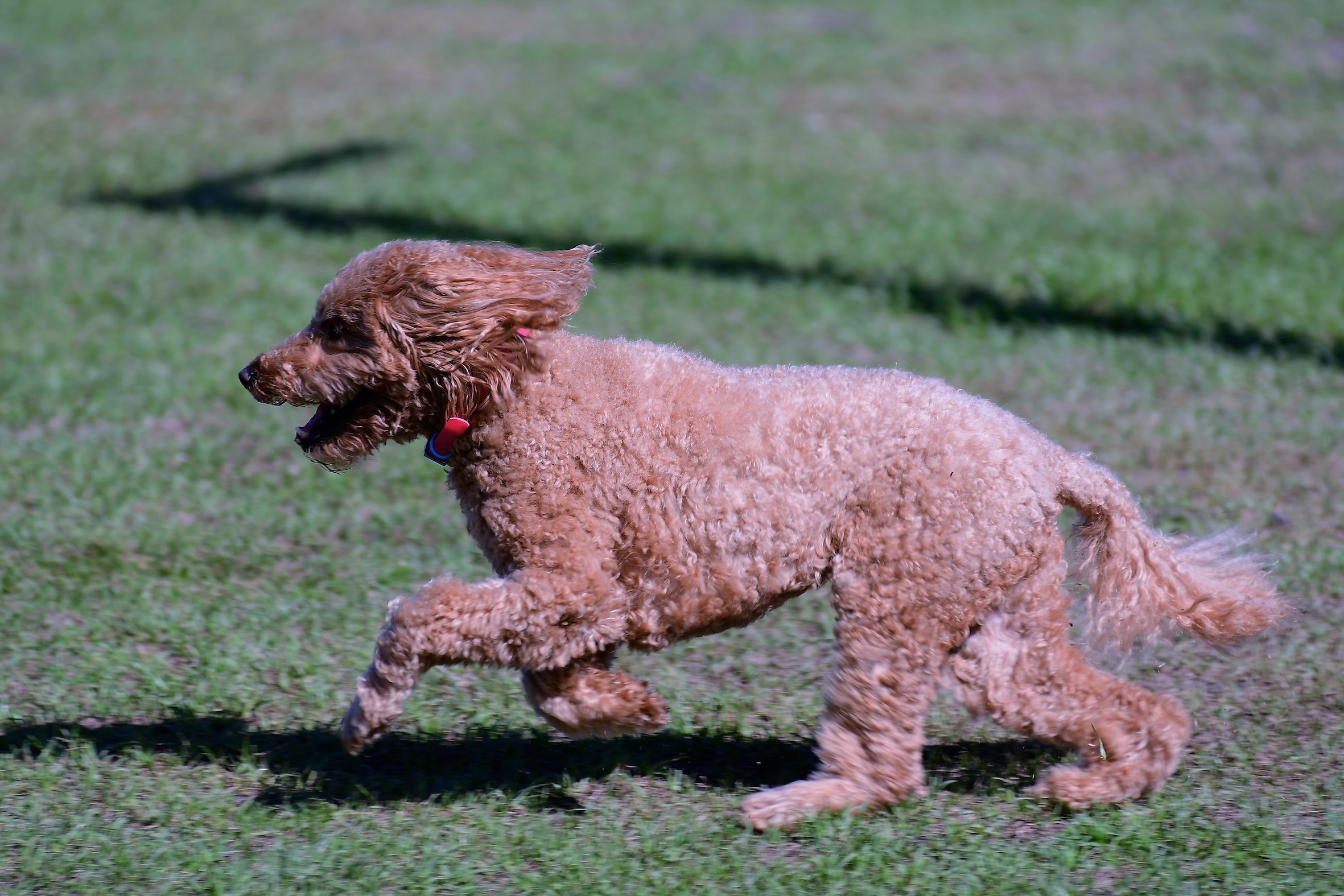
oooo
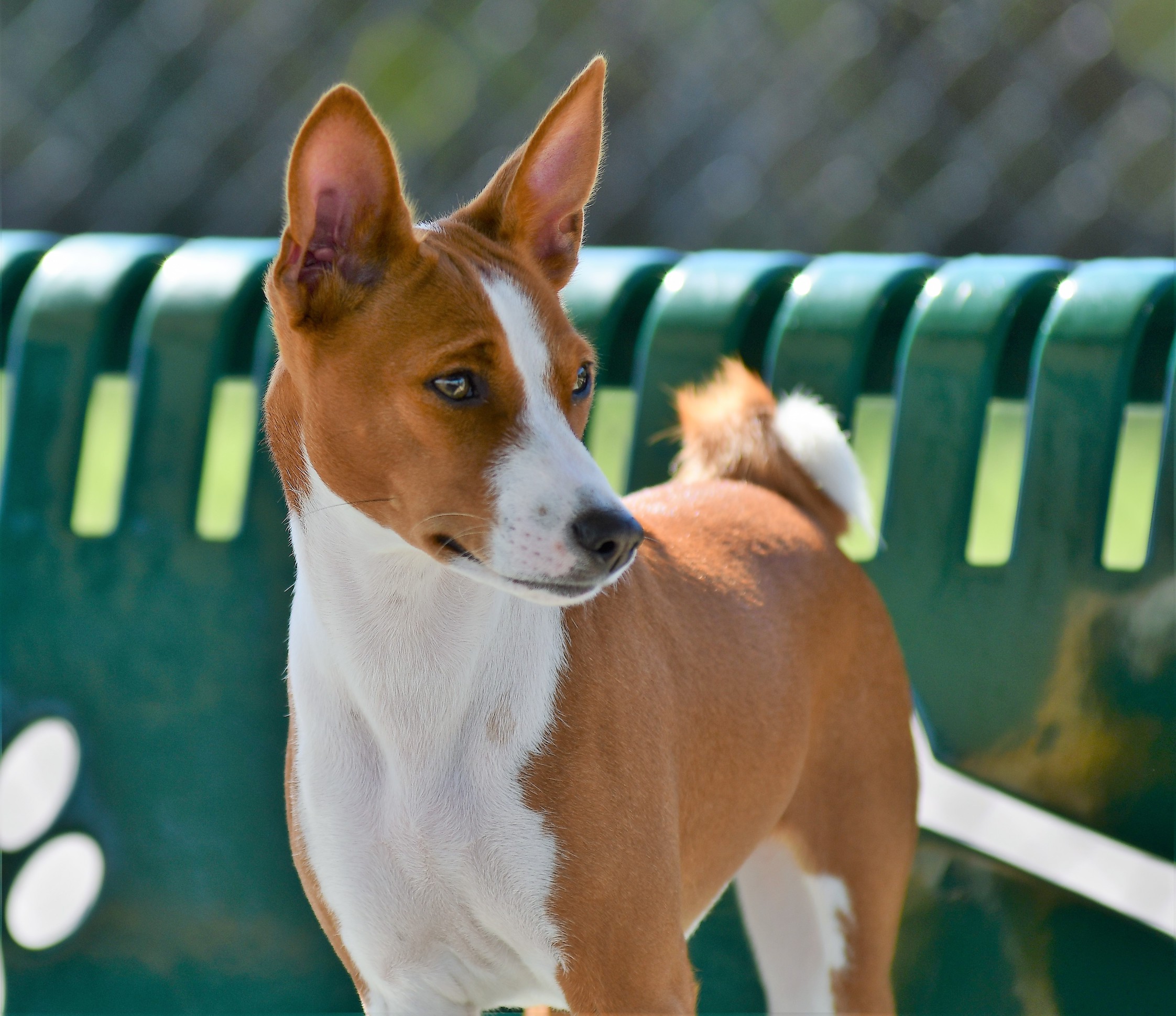
oooo

Just beautiful!
A lovely and very useful guest post from Indi!
I am afraid I was too busy to prepare a post for last Tuesday but no-one seemed to notice!
Today’s post is another one of the gorgeous guest posts from Indiana Lee. It is perfect!
ooOOoo
How to Keep Your Dog Happy and Healthy
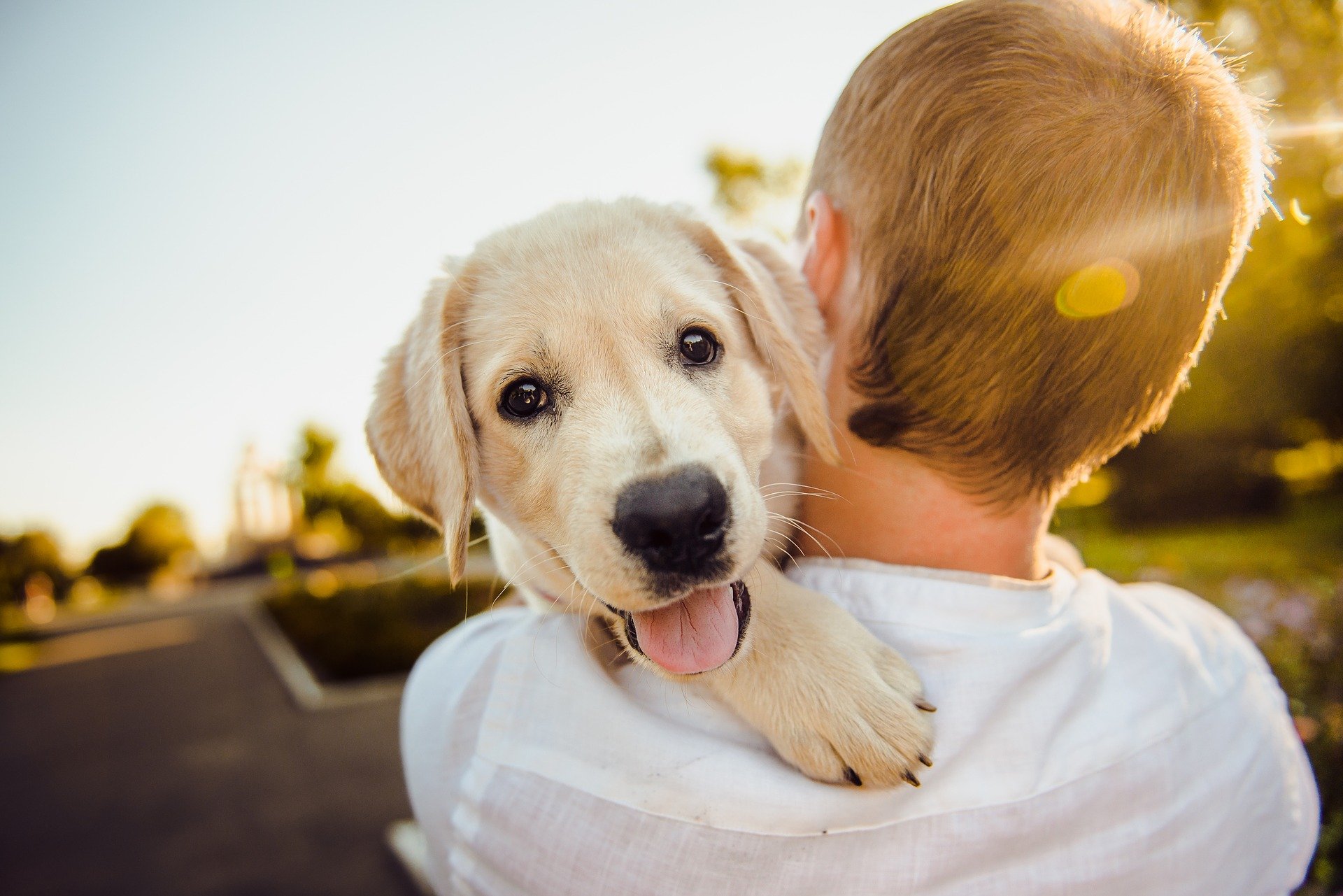
A happy dog typically equates to a happy dog owner. With 1.5 million U.S. households owning at least one pet and nearly a third of all pet owners hailing from the younger millennial generation, it goes without saying that many Americans want their dogs to be happy.
If a member of your family has four legs and some fur, you probably count yourselves amongst the ranks of pet owners looking to raise a happy pup. Here are some basic tips to make sure that you’re helping your canine get everything they need to live a comfortable, healthy, and fulfilling life.
Cover the Basics
Before you start thinking too outside of the box, it’s worth putting a little effort into ensuring that your pup has all of the basic elements required for daily life. This generally centers around three primary areas:
Once you’ve covered these basics, you can start to consider additional ways to cultivate health and happiness in your dog.
Provide Outside Access
One of the simplest-yet-most-impactful pleasures that you can give a dog is allowing them access to the outside on a regular basis. Some dogs will only want to take in Mother Nature for short stints at a time. Others will spend hours at a time outdoors, especially when the weather is nice.
If you can let your dog out regularly, plan on doing so. If you have a contained yard where they can wander without supervision, consider giving them a doggy door sized for them to comfortably fit through, too. That way they can control the number of times they head outside.
Designate Spaces
Along with outside access, make sure your dog has their own indoor space. Chances are, your happy pup will want to spend plenty of time in your company. However, just like humans, there are occasions when a dog needs some alone time.
The best way to facilitate this is to give them their own designated space. This could be the corner of a room. If you have more space, set up an entire pet room for them to occupy when they want to. This can give them the perfect retreat if they’re tired from a long day or even overwhelmed during a social gathering or a similar event hosted at your house.
Cultivating a Happy Dog and a Happy Home
It’s already been said, but it’s worth saying again. A happy dog leads to a happy owner. That isn’t just a cute saying, either. People are literally known to live longer and have good mental health if they have a dog in their lives.
ooOOoo
What a very useful article and that last paragraph is spot on. Jean and I have never been happier. Yes, we are not as young as we were (and that’s saying something) but having our dogs is perfect. So to Brandy, Pede, Cleo, Oliver and Sheena (and all the dogs that went before them) thank you!
Finally, thank you again to Indi.
More from Gary; they are wonderful!
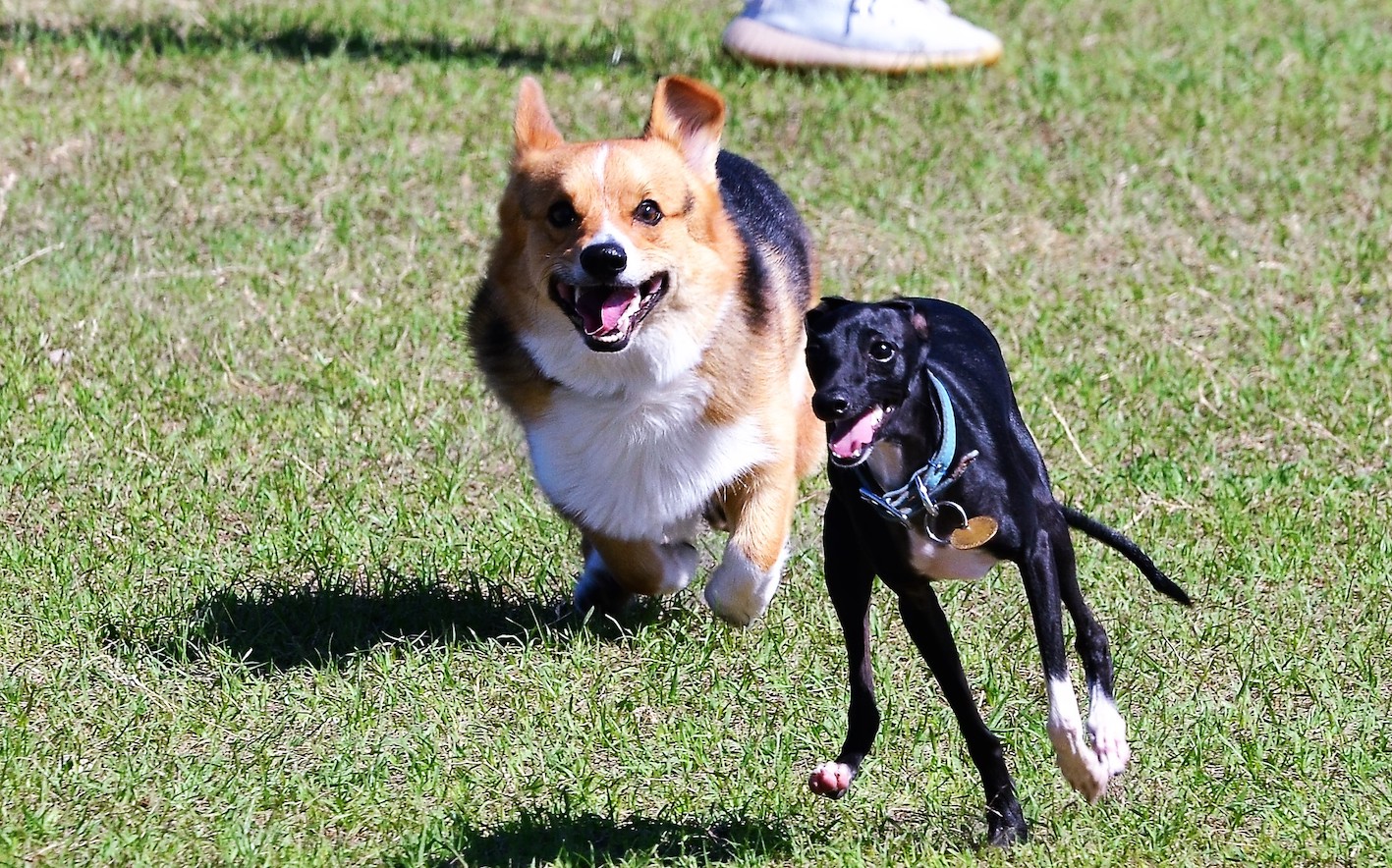
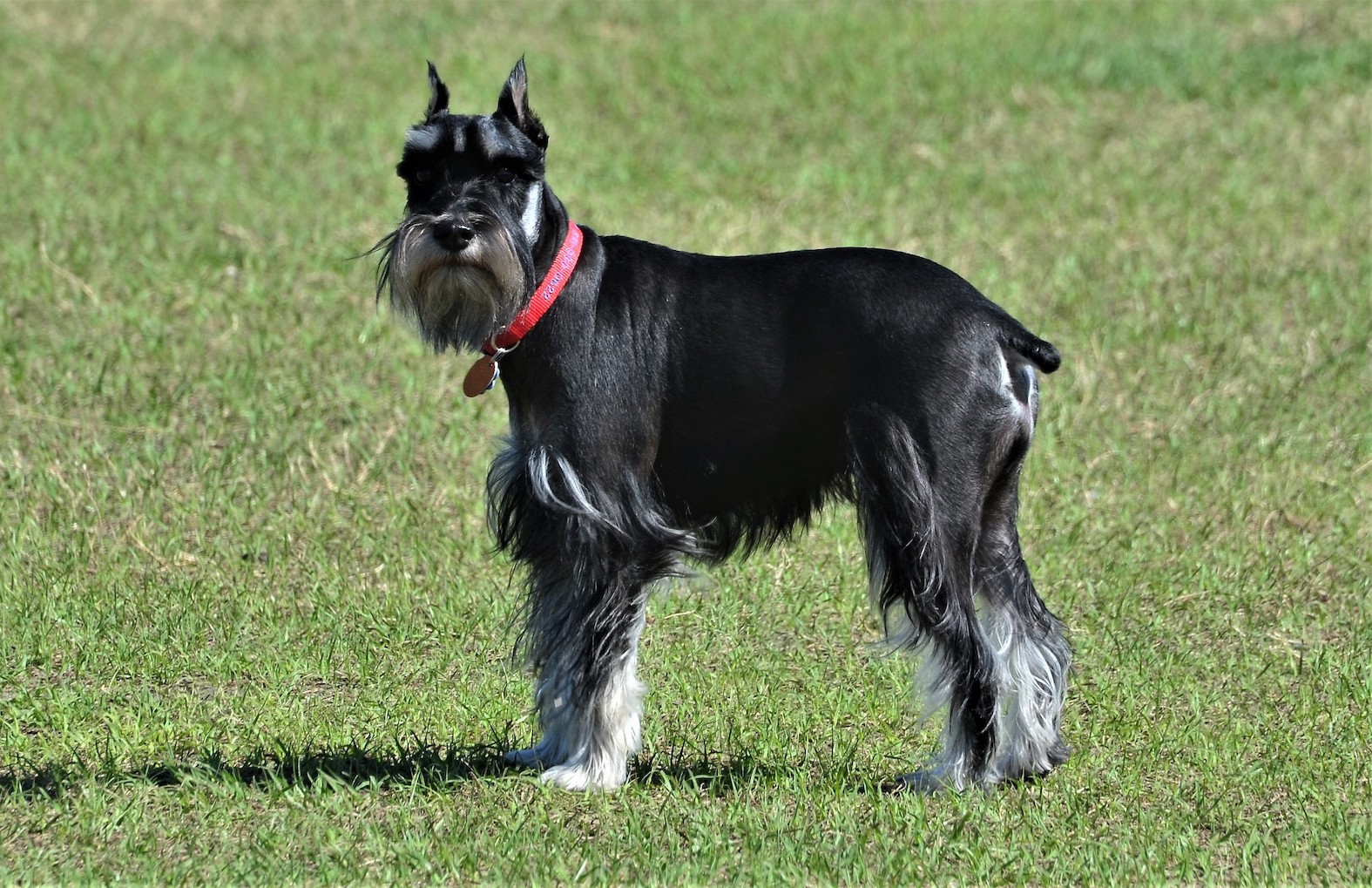
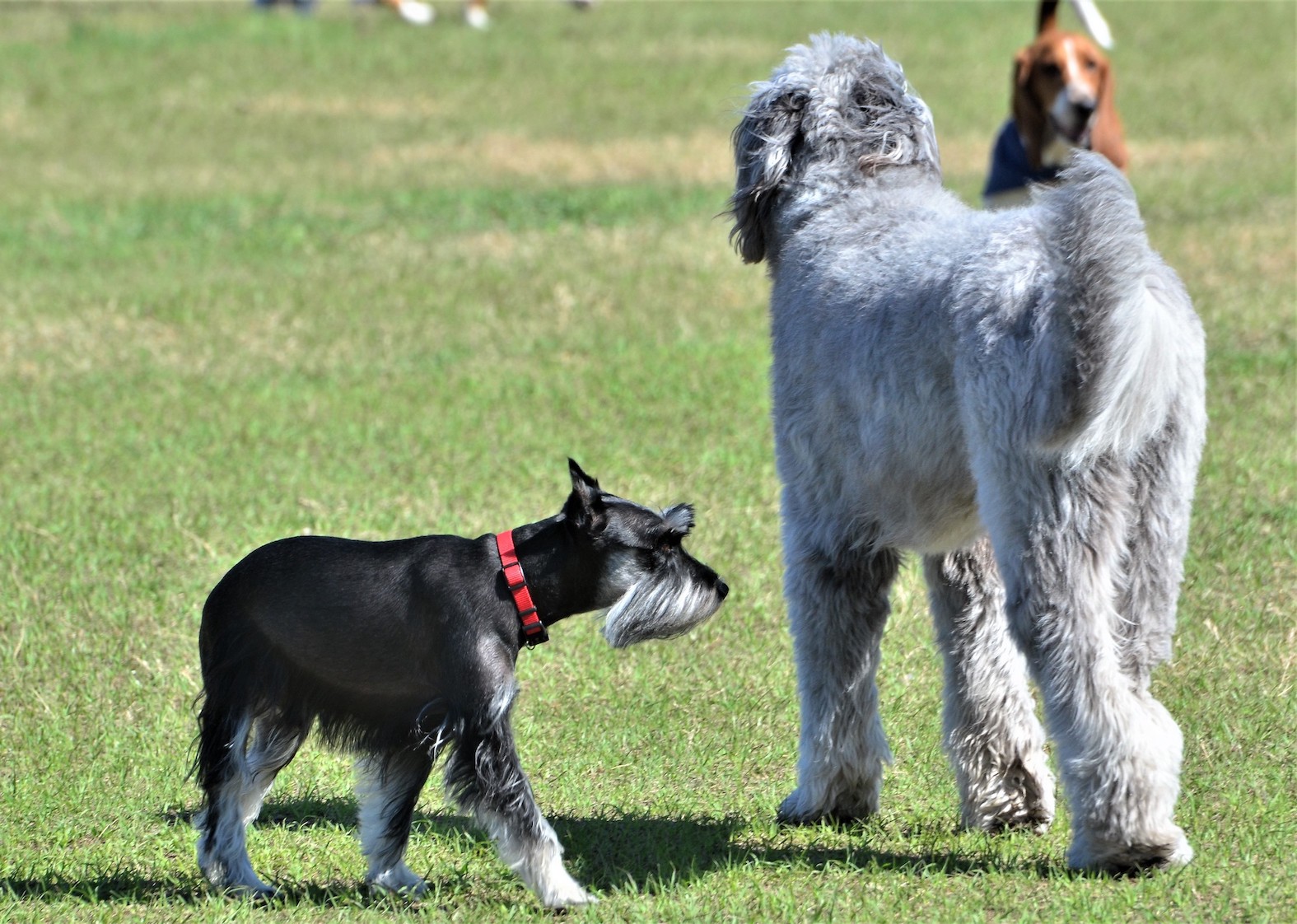
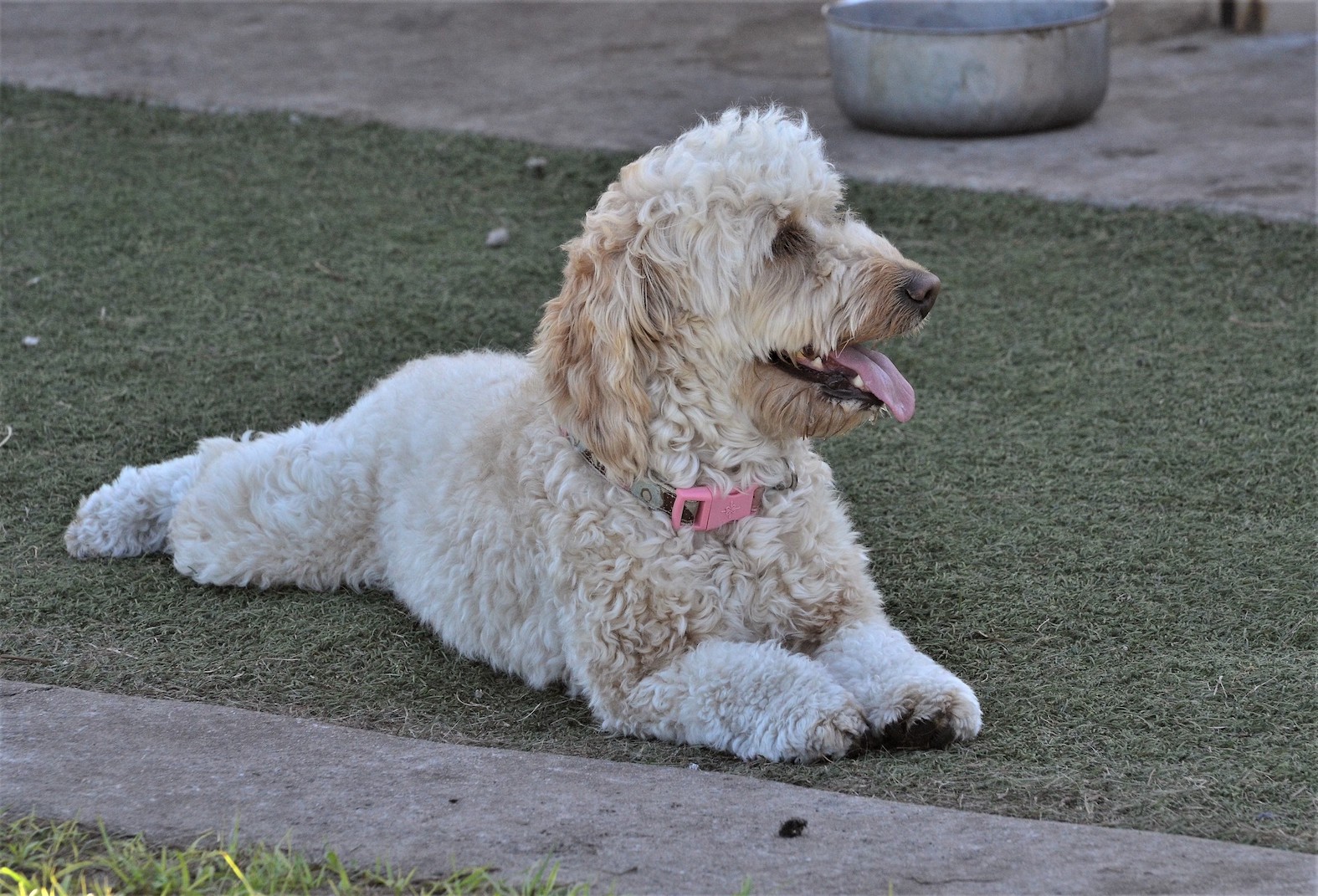
oooo

I really do not want these to end and I am sure that I am not the only one to say that!
What a precious dog this one is.
Margaret down in Tasmania recently sent me a link to a story about a surfing dog. It was remarkable and I am going to share it with you. (I hope that I am allowed to!)
The link was to a website called Goodness-Exchange.
Here is the story.
ooOOoo
The Surfing Therapy Dog Helping Those with PTSD and Autism
It’s no secret that dogs are capable of extraordinary things. We’ve seen them predict seizures, detect cancer, sniff out buried truffles, and assist in the conservation of some of our world’s most precious ecosystems. But can a canine heal a wounded soul? Grab your surfboard (and maybe some tissues) because we are about to introduce a dog named Ricochet who is sure to melt your heart and bring on the happy tears. This sweet golden retriever has multiple championship surfing titles under her collar, but it’s the way she uses her unique talents to help others that truly makes her so special.
As many remarkable stories do, Ricochet the Surf Dog’s story began where another journey ended. She was just a lil’ pup when she began training to become a service dog, where part of her training was balancing on a boogie board in a kiddie pool. In 2009 she took her first steps into the ocean, and just a short time later that year she won third place in the Purina Incredible Dog Challenge Surfing Dogs Competition!
Alas, the temptation to chase critters was too great for Ricochet to become a service dog, but her owner Judy decided to focus on what she could do instead.

2009 was a big year for Ricochet, as this was the year she made it clear to the rest of us what her purpose really was. One day out in the water, she decided to jump aboard the board of quadriplegic surfer Patrick Ivison, and it was at this moment that her owners discovered Ricochet’s true potential.
Surfing has been at the forefront of Ricochet’s work, but her true magic lies in the way that she intuitively adapts with each individual she interacts with. According to her owner,
“…It’s her mystifying ability to make immediate, heart-to-heart, soul-to-soul connections with strangers both in and out of the water.”
Ricochet makes deep connections with all types of people, but she is most sensitive to those with PTSD who have served in the military, and children with autism. In the video we’re about to watch by the Smithsonian Channel, you can see for yourself how Ricochet has an instant calming effect on Audrey Estrada, a military veteran who suffers from PTSD and an intense fear of the ocean.
Many of us suffer from invisible threats that intrude on our mental well-being. In the U.S. alone, 6% of the population have PTSD, that’s approximately 15 million adults each year. 2
It’s a condition that is often hard to explain to other humans, so it makes total sense that a dog would make the perfect confidant. They don’t judge you, they don’t talk back or tell your secrets, they simply feel you. And in turn, carrying the weight of it all feels less heavy.
Ricochet has had such a profound impact on people’s mental health, it’s enough to make one want to ask the doctor to prescribe an empathetic dog with a pink vest. But in addition to being an adorable floof of empathy and innocence, as of 2015, Ricochet is a certified therapy dog and level II Reiki healer!
Our wish for anything pure and good like Ricochet’s story, is that it will continue to fan out over humanity in the best way possible. And in this case, it really has.
Ricochet’s owner Judy started a non-profit called Puppy Prodigies that offers swimming lessons, canine assisted water rescue, dog training, and adaptive surfing! Click here to meet Aqua Dog Cori, a super cute female golden lab who was donated to the group and now uses her natural instinct to perform trained water rescues!
In addition to these programs, Puppy Prodigies also tackles the root of the problem that they see in many of the people they help by creating awareness for PTSD, anti-bullying campaigns, and mentorship programs. Learn more about these branches of their mission and learn how you can contribute by checking out their website here.
I hope you found this story as wonder-filled and inspiring as I did. It really made me think about the journeys that we find ourselves traveling, and the people we can help along the way if we look at our abilities through a lens of opportunity.
If you find yourself failing at something, or your plans didn’t turn out the way you had hoped, remember Ricochet. If a golden retriever can find it’s true purpose and have such a life-changing impact on others, I have full confidence that you can, too.
And when you do find it, stand sturdy and ride that wave of goodness!
ooOOoo
What a fantastic video that was. But there are many videos about Ricochet so if you want to stay with him then YouTube is as good as place to start as any.
But as we all know when it comes to dogs each dog is an individual with their own likes and dislikes. Their ability to understand us humans is magical as well. I swear that many of our dogs here at home can understand words spoken by Jean and me. Whether they interpret the words directly or associate the tones expressed with each phrase, rather like a musical sound, is beyond me. I am sure someone knows and if anyone has a link to the researcher who has discovered this about dogs then please let me know.
Nothing to do with the news, thank goodness!
So many times over the years dogs have provided the very best of tales. As The Dodo did once again in February of this year. Here is that story.
ooOOoo
Senior Rescue Dog Takes His Role As ‘Best Pup’ Very Seriously
“I think he was hoping each person would give him treats.”
By Caitlin Jill Anders, Published on the 11th, February, 2022
When Sophia Coleman showed up for her first date with her now husband, Josh, Rocky was the very first thing she saw. She immediately fell in love with the tiny senior rescue pup, and eventually she fell in love with Josh, too. Rocky has been there throughout their entire relationship, so when the pair began planning their wedding, they knew they wanted him to play a major role.
“We’ve had ups and downs in our relationship, and Rocky has always been there to remind us what true love is, so there was no question that he had to be a part of the wedding,” Coleman told The Dodo.
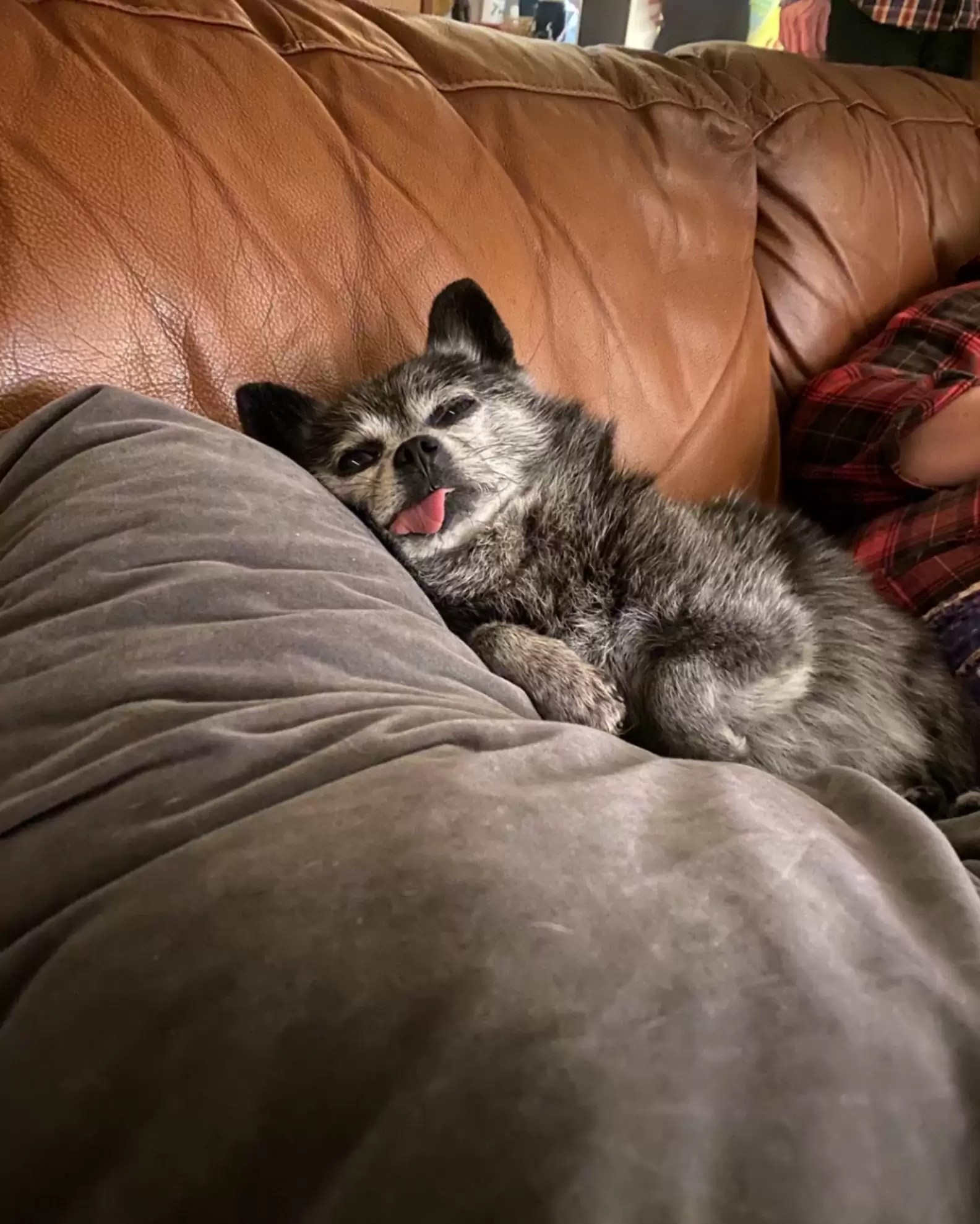
They decided that Rocky would hold two titles during the ceremony — “best pup” and ring bearer. They got him a little suit to wear, and between the suit and his permanent “blep” due to him missing some teeth, he looked absolutely perfect. Is there anything cuter than a dog with a tiny purple tie and his tongue sticking out? Probably not.
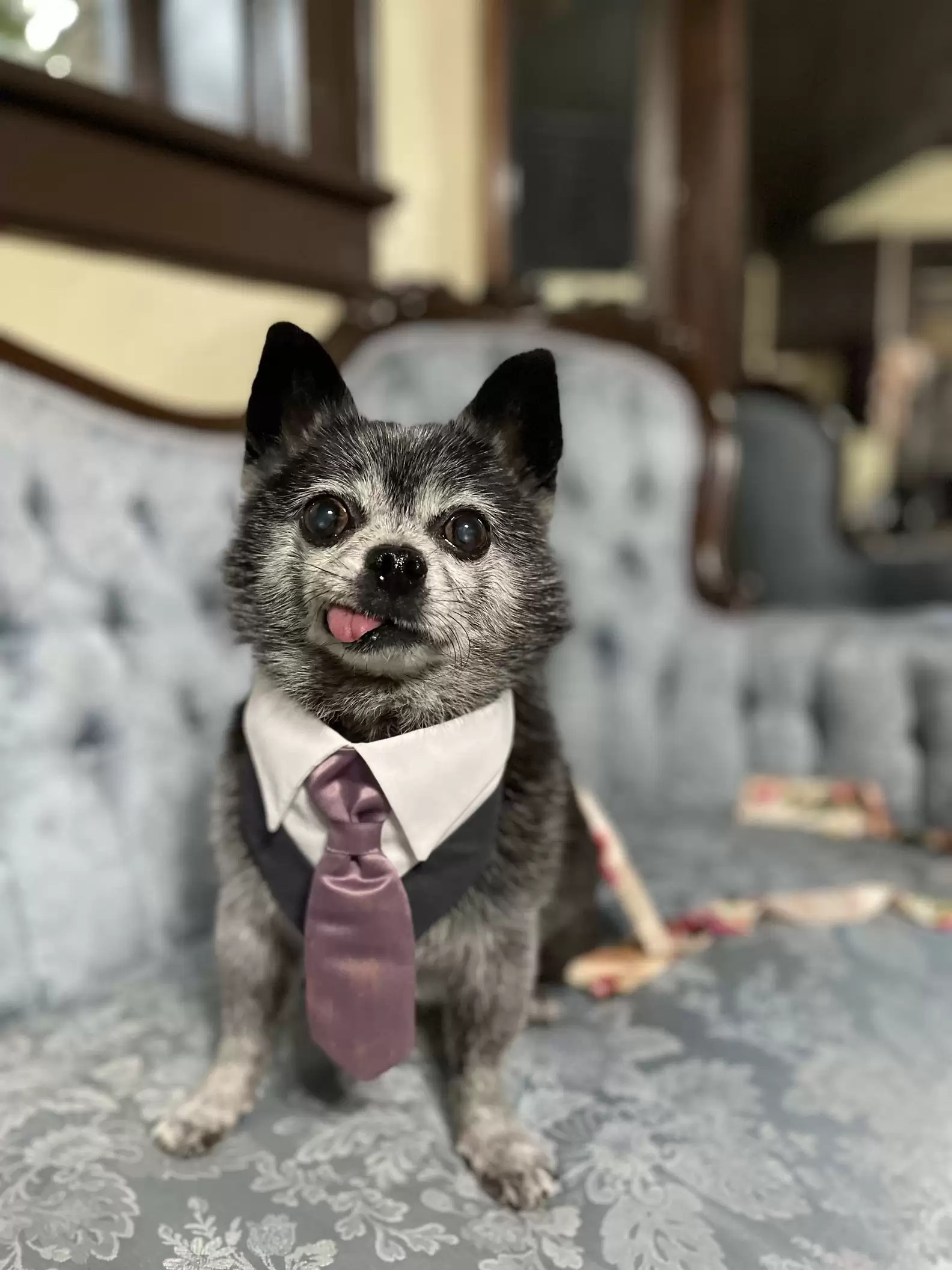
The plan was for Rocky to walk down the aisle as the ring bearer in front of all the wedding guests, which the couple didn’t think would be too much of a problem. Even though Rocky can be a grumpy old man sometimes, he absolutely loves people.
“He is quite the spunky little guy despite being 13 years old,” Coleman said.
When the day finally came, Rocky took his assignments very seriously … for the most part.

“It took a lot of coaxing and treats to get him to walk down the aisle in front of 80 people,” Coleman said. “He did great at the rehearsal when there were no guests in attendance, but during the actual ceremony, he was a little distracted by the guests! I think he was hoping each person would give him treats.”

Once Rocky had made it down the aisle, he stood by his parents’ side while they got married and was only minorly distracting. While everyone loved seeing the couple tie the knot, it’s possible they loved seeing Rocky up there with them even more.


Once the ceremony was over, so were Rocky’s responsibilities, and his parents retired him to the bridal suite to get some rest. Rocky, however, wasn’t super excited about that idea, and found a way to make a well-deserved appearance at the reception, too.

“He was still in the same building as the reception, but we thought it was best if he got some rest, plus we didn’t want anyone to trip over him,” Coleman said. “At one point, he did burst through the baby gate and made an escape when someone opened the bridal suite door. He immediately found my husband and I — he wanted to be by our sides the whole night!”
In the end, Rocky performed his roles the way he wanted to — and his parents wouldn’t have had it any other way.
ooOOoo
Dogs are so instinctive and there are levels to the dog that most are unaware of. Their ability to read the humans about them is beyond impressive and just underlines the nature of their love for us in an unconditional manner.
Long may it continue far into the future!
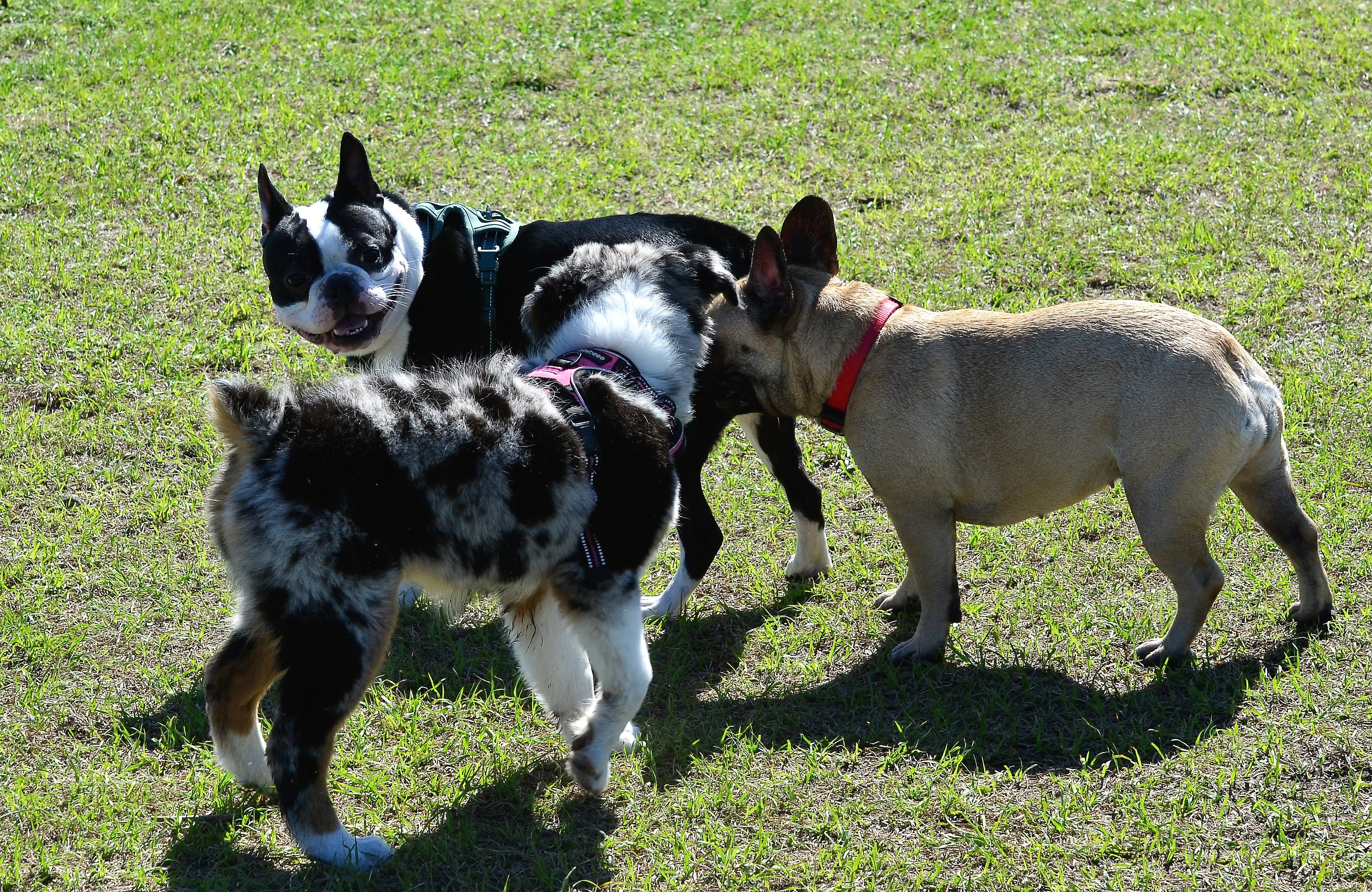
More great photographs from Gary Messinetti.

oooo

oooo
oooo

oooo

oooo

Hopefully more in a week’s time.
Thank you, Gary.
This is a beautiful story!
Wednesday was such a hectic day that I didn’t have time for a blog post and Thursday was almost as bad. As I say all too frequently, how did I ever have time to hold down a full-time job!
I saw this article on The Dodo back in late January and wanted to share it with you. It is yet another story about the ways that dogs come to the aid of us humans.
Here it is!
ooOOoo
By Mary “Watchdog Mary” Schwager
Published on the 27th January, 2022.
Was the moment Picaso raced over to help a girl having an anxiety attack a case of being in the right place at the right time? Or was it straight-up fate?
Last November, a Good Samaritan found the Plott hound mix running down a street in Charleston, West Virginia. He picked up the dog and dropped him off at the Kanawha-Charleston Humane Association.
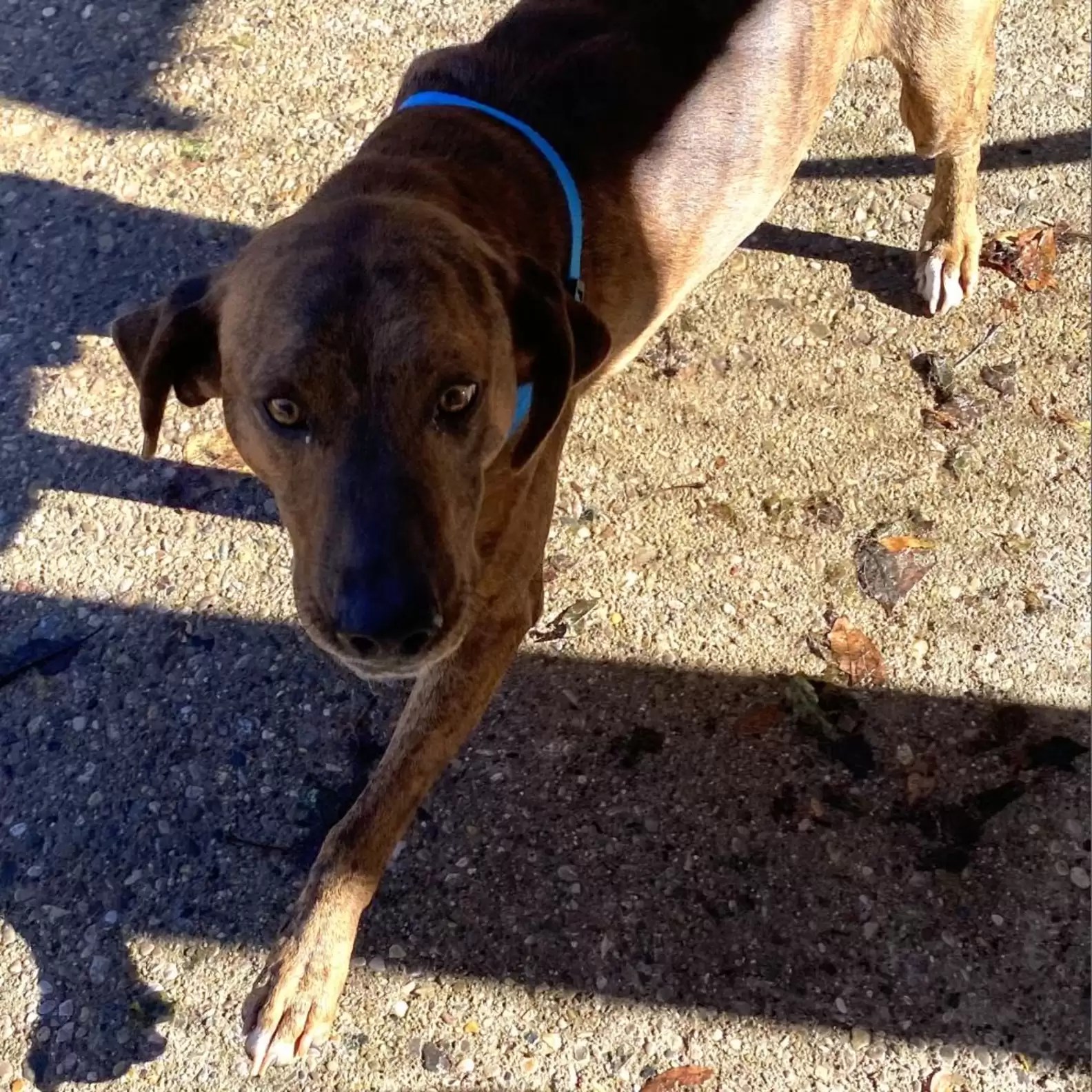
The staff originally named the dog Picasso after the artist. But a typo resulted in his name missing one “s” in the shelter’s computer system — so he became Picaso. He was not wearing a collar, did not have a microchip and no one claimed him.
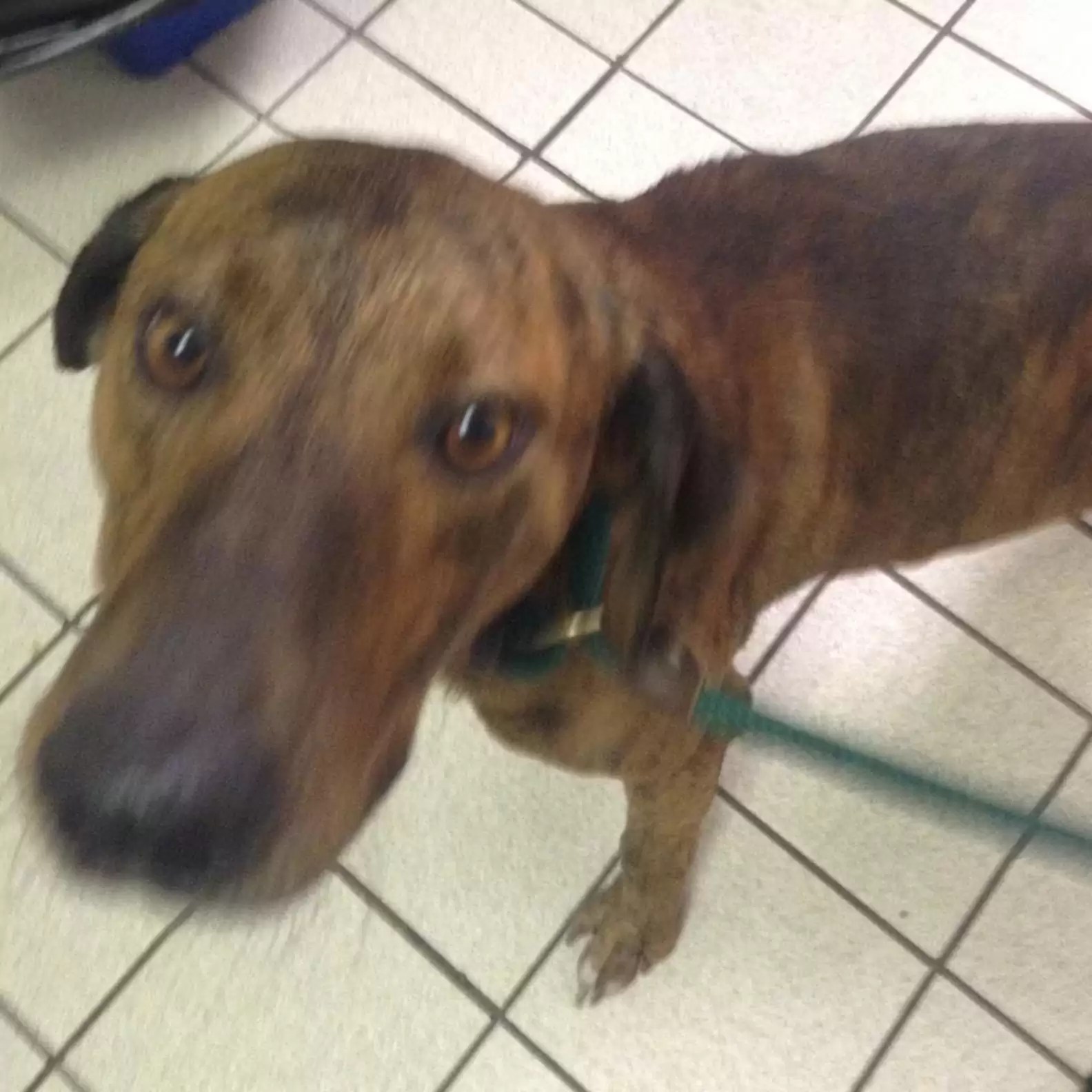
Picaso spent 19 days in the shelter, waiting for someone to adopt him.
Everyone noticed his kind and well-behaved nature. That’s what earned him a spot walking with other dogs who needed homes in a local holiday parade.
Kim Vigneau, a shelter volunteer, walked Picaso in the event. “When I first met him, he immediately hugged me,” Vigneau told The Dodo. “He loves to give hugs. He was so sweet. My goal that night was to get him adopted.”
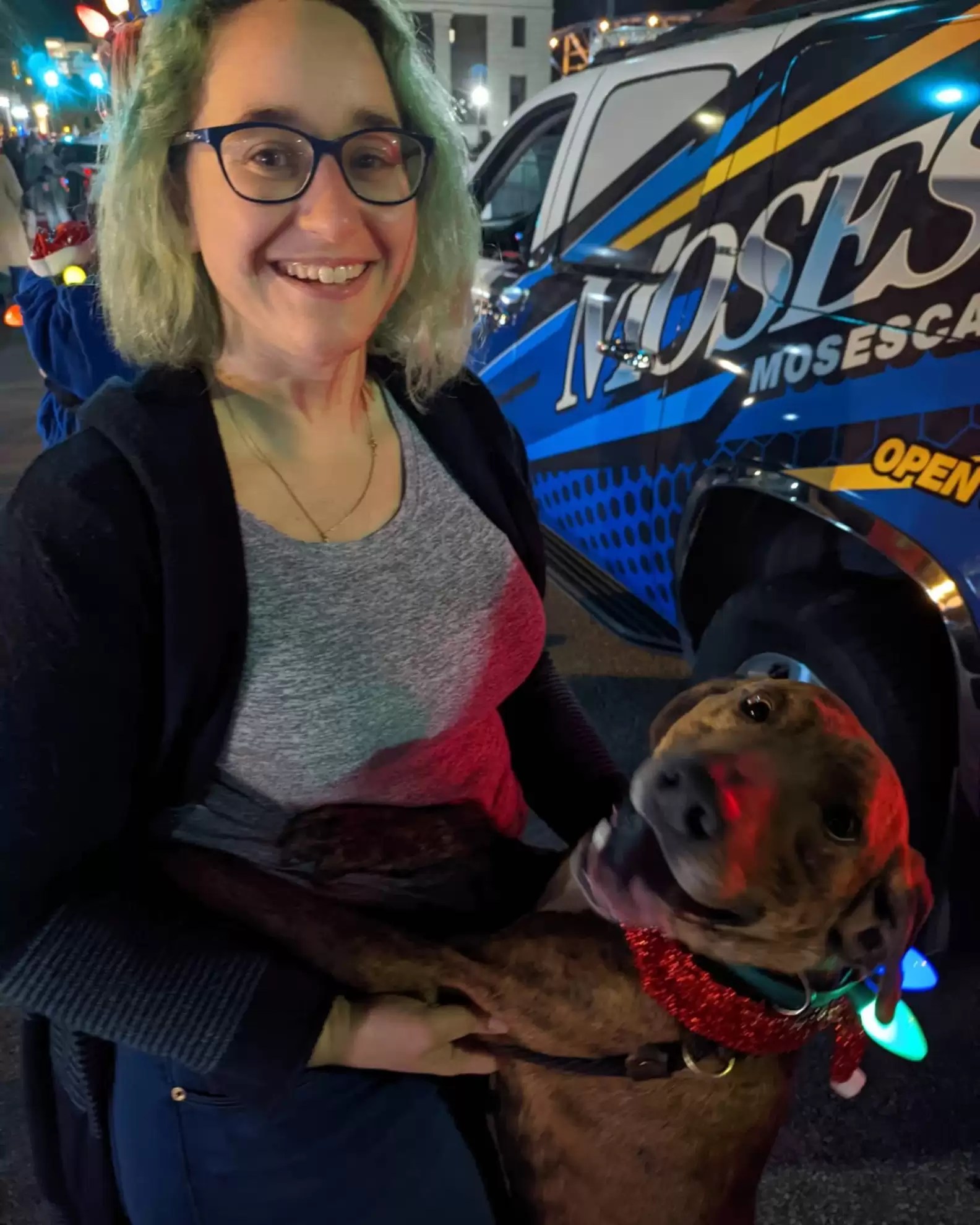
As Vigneau and Picaso wove their way past hundreds of parade-goers lining the streets, suddenly he was drawn to just one. “We were walking in the center of the road,” Vigneau said. “A girl was sitting on the curb. She looked like she was upset. Picaso took the initiative and pulled me right over to her. He put his head against hers and was physically supportive with his face. Then the girl smiled. I could tell by her body language he was helping her.”
The girl was 16-year-old Abby Ellis. Ellis battles postural orthostatic tachycardia syndrome (POTS), a health condition that impacts her blood flow and can cause her to faint. It also makes her nervous at times. The night of the parade, she had an anxiety attack. Her mother, Melissa Smoot, was trying to help Ellis when Picaso ran over.
“Abby’s head was down on her legs, and she was falling forward,” Smoot told The Dodo. “He managed to get his body underneath her and pushed her back. Then she started to come around. All I could think was Abby would have face-planted into the ground if that dog had not been there.”
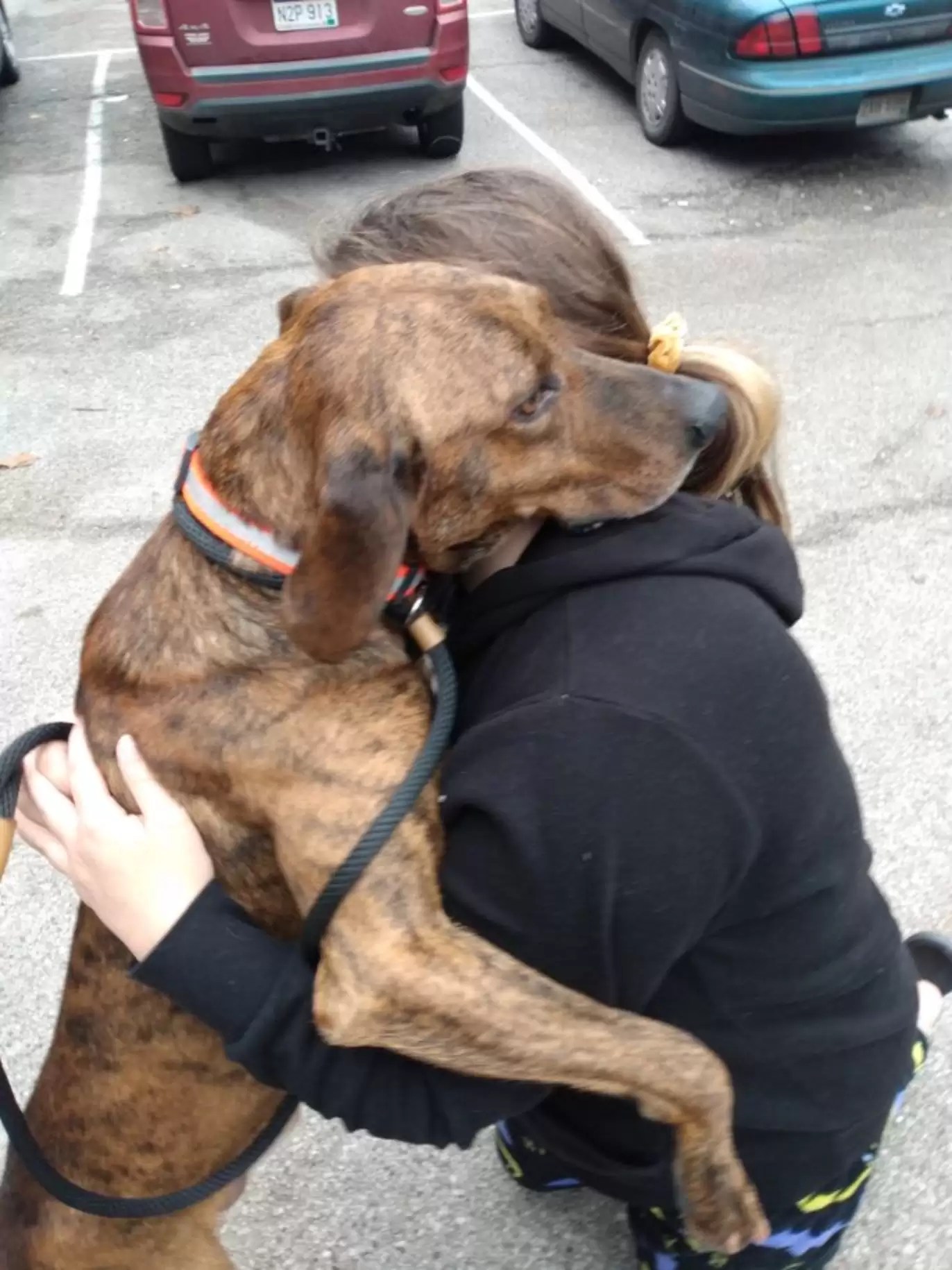
Ellis told The Dodo she remembers exactly when Picaso found her. “I felt his nose against mine,” she said. “I started to pet him. I felt safe. My mom asked his name.”
Smoot got the dog’s name, but at that moment, her goal was to get her daughter home. They left while Vigneau and Picaso stepped back into the parade. But Smoot could not get the dog out of her mind. The next day, Ellis went to the shelter, and there was no doubt Picaso remembered her.
Picaso ran right up to her. “He hugged me. I was really excited,” Ellis said.
That instant, Smoot knew Picaso was coming home with them. “Abby had been asking for a dog for over a year now,” Smoot said. “I kept praying, ‘Lord, just send me a sign that Abby is ready for a dog.’ Someone called this a God wink. It sure was. God winked at us and answered our prayers.”

And on his 20th day in the shelter, Picaso got adopted by Ellis and her family.
Vigneau succeeded in helping Picaso get a new home, but clearly, he picked his family. “It was amazing. I also have anxiety and know what it’s like to have an anxiety attack. I think it’s great everyone is talking about the topic,” Vigneau said.
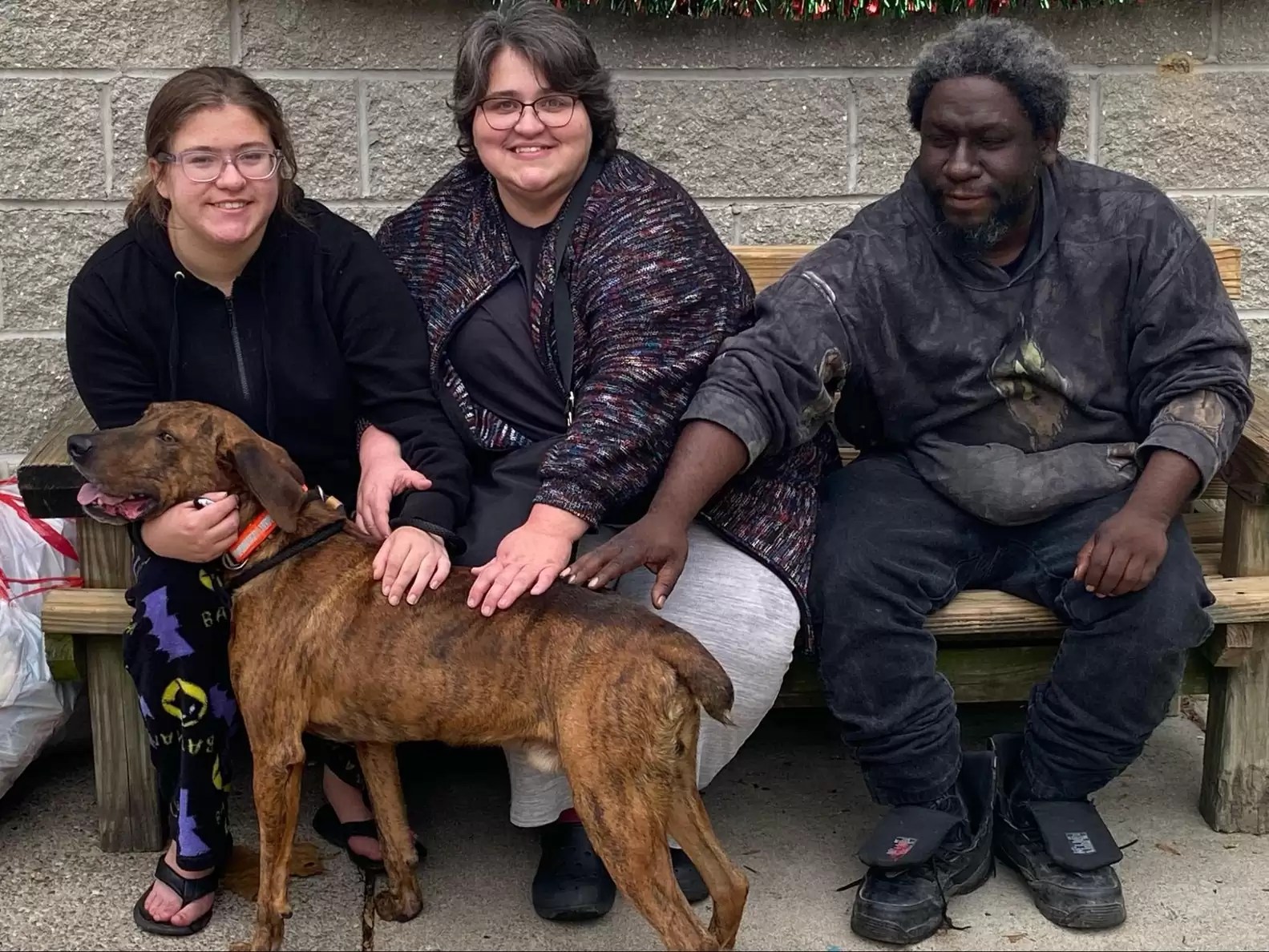
Smoot does not think they met Picaso simply by chance. Ellis doesn’t like crowds. But that night, she insisted on going to the parade.
“It was meant to be,” Smoot said.
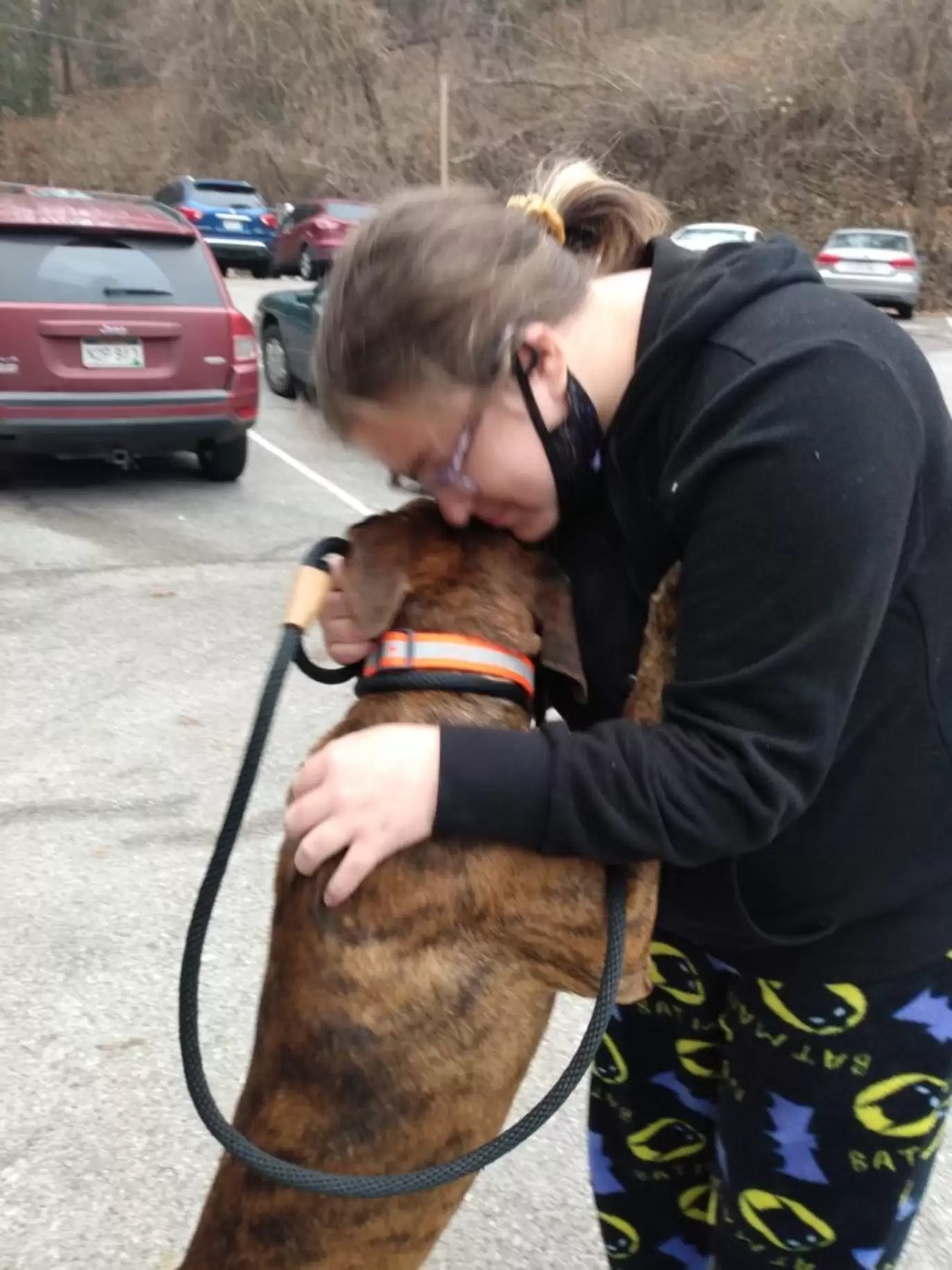
Ellis is thrilled she finally has a dog who not only loves her but appears to know exactly when she needs help.
“I’m just really happy he chose me,” she said.
ooOOoo
With so much in the world going pear shaped it is glorious to find that dogs never forget their caring humans.
Perfect!

