Author: Paul Handover

Things aviation and the ‘wow’ effect.

Some stunning pictures.

Of the six active authors on this Blog, four have been or still are pilots.  Of course, only young Bob Derham is a ‘real’ pilot having been an Air Transport pilot for almost as long as Pontious Pilate (sorry, that’s an awful pun!).

Anyway, there has been a growing collection of some incredible photographs from odd sources around the Web and it seemed time to share a few.

Here’s a wonderful picture of an F-15C Eagle Fighter circling over the Kennedy Space Centre in Florida with Shuttle Mission STS 108 on the launch pad.

011129-F-1279W-025

See more aviation pictures

Integrity in the making of films.

Creativity, Integrity and commercialism – are there conflicts?

This is guest post from Magnus Dennison.  Magnus is a Cinematographer who, together with his wife, Katja Roberts, runs a film production company in Newcastle-upon-Tyne in the North-East of England. Their company is called Meerkat Films.  Magnus writes about integrity in film making.

I am going to write about film producers who have made creative choices to ensure their films are commercial successes. My question is whether these films lose their integrity when the motivation for making them becomes financial.

A little about my background. I am an independent film producer working in the UK and don’t profess to be an expert on these matters; the views expressed here are simply my opinion.

I will start by presenting one of my favourite films: ‘The Lives of Others’ (2006) directed by Florian Henckel von Das_Leben_der_anderenDonnersmarck. The team has, in my opinion, made one of the most powerful films of the decade. But more interestingly, they have made many choices that have preserved the integrity of the story at the risk of reducing commercial viability.

It is obvious why they have done this; they are passionate about the artistry and the integrity of the film, more than the financial gain. The film is very slow paced and the tension builds so gradually you’re almost unaware of it until you are completely engrossed.

Read more of this guest post

Our new logo

A gift from a friend of the Blog

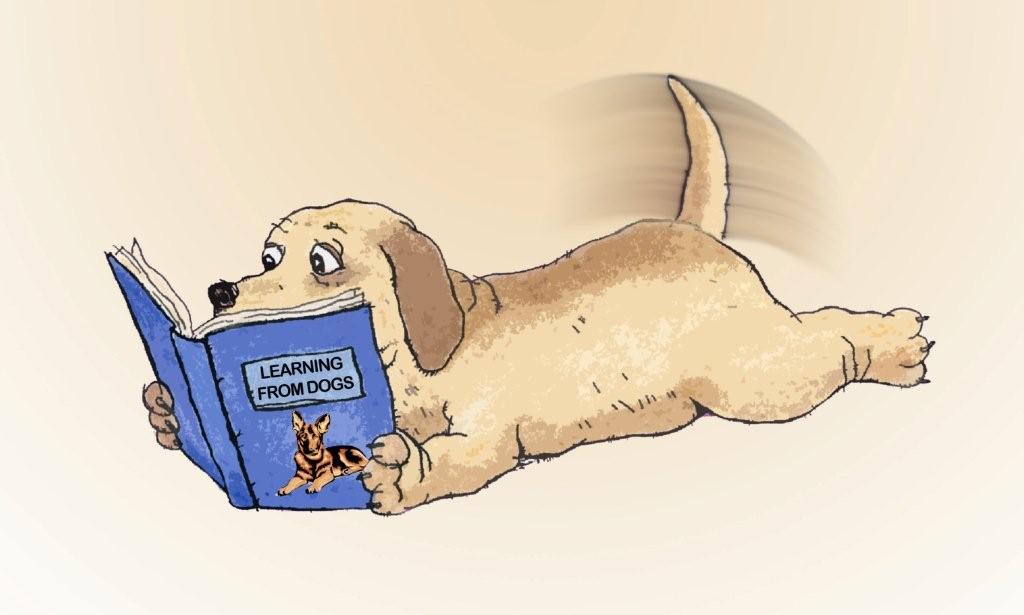
Some of you may have noticed that at the head of the right-hand column on the Blog we have a new image.  This arrived the other day and is from the ‘drawing board’ of Neil Kelly who is one of nature’s more creative fellows.  Anyway, here’s the image in a slightly larger format.  Thanks Neil!

learn

By Paul Handover

Setting the lead – for whooping cranes!

This makes me proud to be human!

Operation Migration

Index_8990

As their website explains:

Operation Migration has played a leading role in the reintroduction of endangered Whooping cranes into eastern North America since 2001. In the 1940s the species was reduced to just 15 birds.

Operation Migration is a founding partner of the Whooping Crane Eastern Partnership (WCEP), the coalition of non-profit organizations and government agencies behind the project to safeguard the endangered Whooping crane from extinction.

Want to get involved? Here’s how.

Remember the film ET? Just look at this next picture …

Continue reading “Setting the lead – for whooping cranes!” →

Climate warming – the argument continues

Alan Carlin’s response to Patrice Ayme.

Learning from Dogs is very grateful for having Alan and Patrice argue this very important issue through the medium of this Blog.  Because if there is one thing that has the power to overturn our way of life over the last 50 years, it is climate warming (as a result of man’s activities).

On the 26th October there was a Post published that contained Patrice’s reply to an earlier article containing Alan Carlin’s hypothesis.  Learning from Dogs invited Alan to reply to Patrice and this is his contribution.

With one exception the recent comments by Patrice Ayme are typical of what climate alarmists/warmists so often say when presented with serious climate science by skeptics.  They presumably do this in order to try to distract attention from their inability or unwillingness to respond to the scientific issues raised by skeptics or a desire to hide the weakness of their science.  They appeal to alleged authority; they attack the opposition, often personally–anything to avoid discussion of the science.

In this case, the only exception is Ayme’s weird contention that there should not be a tropospheric hotspot in the tropics IF the UN GHG hypothesis should be correct.  This is weird because there is actually rare agreement between most informed alarmists/warmists and skeptics that such a hot spot should be present IF the UN hypothesis is correct.  So his contention that it is an “absurdity” puts him at odds with his much favored UN reports and with his views on the science of warming.  For further information see Evans here (which is a link from the link I originally gave–but perhaps Ayme did not bother to read it before responding??)

As Evans points out this alleged hotspot predicted by the UN climate hypothesis is actually crucial to the UN hypothesis “because the same water vapor feedback that produces the hotspot in IPCC climate theory also doubles or triples the temperature increases predicted by the IPCC climate models.  If the IPCC climate modellers just turn down the water vapor feedback in their models enough so their theoretical signatures match the observed warming patterns, then the predicted temperature increases due to projected carbon emissions are greatly reduced and are no longer of much concern.”  So Ayme apparently did not realize that his statement that there should be no hotspot means that he believes that one of the crucial features of the UN climate hypothesis is wrong and hence that his views of the science are wrong.

I note that except for his weird statement on the hotspot, he makes no serious attempt to respond to or analyze my four fundamental scientific tests of the UN GHG hypothesis.

For a different view as to the objectivity (or lack thereof) of the IPCC see here.

Most of the remainder of Ayme’s comments are best ignored as attempts to distract readers from the fundamental (and telling) scientific tests discussed in my post.

Alan Carlin

By Paul Handover

Sunrise

Here in San Carlos, Mexico, we have good sunrises most mornings.  But this one made me grab my camera. The picture is unedited. Very simple things can provide a huge amount of pleasure.

Sunrise

Taken at 06:15 local time (GMT -7hrs)  Camera is a Panasonic Lumix DMC-FZ8

By Paul Handover

Understanding your Market, Part Three

Market research for sales people

Yesterday, in part two of this three-part Post, we looked at two real-life examples of how listening to your market works.  In this concluding part we examine some practical methods for sales people.  (By sales people I also include those who run their own business because there is no better sales person than the person who runs their own enterprise!)

  1. Empty your mind of all your pre-conceived ideas as to why your customers buy your product or service.
  2. Start off by listening to the reasons why a recent customer bought from you.  Ideally in person but if not, then by telephone.  Never by email!  I’ll leave it to you to think how you might do that – easy in practice.  Comment if you want to explore this aspect.
  3. Listen to sufficient number of customers so that you feel you have a representative view.  I guess what you are looking for is the Pareto relationship – what are the 20% of reasons/motives that generate 80% of your sales.  You should be able to end up knowing what are the differences that make the difference (between you and your competitors.)
  4. Just like Guy Watson of Riverford, knowing why a customer buys MUST also include knowing what use that customer is making of your product/service.
  5. Negotiate with as many customers as possible the opportunity to stay in touch – at whatever frequency makes sense to both sides. Again, think about how you stay in touch – personal visits may be unwieldy but phone usually is acceptable.  Not via email!
  6. Once you know why people become customers then you need to know what their experience is when they are accustomed to using your product or service.  This is key!  Think what you felt like when you bought your last car.  Full of the thrill of a new experience and the anticipation of enjoying your ‘smart’ decision.  Now think how you regard your car today after the reality of the cost of ownership, a few unplanned service issues and when it now feels much more like the utility vehicle that it really is.  If the original sales person doesn’t know how you feel today then there is no way that the sales person’s next sales proposition can be modified to keep you as a client.
  7. Staying in touch allows you to anticipate future needs of your customers – the key to all business success.
  8. Understanding your customers means that you can build loyalty – and loyal customers is the key to business LoyaltyEffectRevCoverprofitability.  If at all possible get hold of a copy of Prof. Fred Reichheld’s The Loyalty Effect.
  9. Use the relationships you build with your customers to seek their ideas as to what their future needs may be, how they would like to see your products and services evolve and who, and why,  they regard as your potential competitors.
  10. Finally, as in the first point, keep an open mind and never assume.  Remember the old ditty – if you assume you make an ‘ass’ out of ‘u’ and ‘me’.

By Paul Handover

How far can you push people?

Debt stress in Middle Class America – how may this play out?

On Saturday, October 24th Yves Smith of Naked Capitalism ran a Post on her Blog about an anonymous couple who were over their heads in debt.  (Yves has given me written permission to reproduce the Post.) The story of this couple then generated a huge response of comments. Read the comments, each and every one of them.

Then ask yourself abraham-lincoln-picturewhere this is all heading?  These comments may, almost certainly are, just be the tip of the iceberg.  Seems a long way from Lincoln’s Gettysburg address in which he was reputed  to have used the words: “… government of the people, by the people, for the people, shall not perish from the earth.”

Some days I worry; worry a lot!

The extract from Yves Post about this couple is reproduced below but far better is to go and read the whole Post and all the comments.

UPDATE: Since writing this Post Yves has published a further Post on the topic again generating a huge volume of comments.  That was Sunday, November 1st.  Then bright and early on November 2nd James Kwak of Baseline Scenario weighs in with his version, Do smart, hard-working people deserve to make more money? 150 comments (at the time of writing) for that one.  Interestingly, as the days have gone on the mood of the commentators has become more reflective and thoughtful thus partly negating the theme behind this Post.

Read the Post from Naked Capitalism

Understanding your Market, Part Two

Market research for sales people.

Yesterday, I started a Post on undertaking market research, from a practical point of view. It continues.

To me, there are very significant advantages in being a small business and one of the most important benefits is that it is so much easier to really know what your customers want.  Here’s a fascinating extract (p.139-140) from Malcolm Gladwell’s book Outliers.

In 1889, Louis and Regina Borgenicht boarded an ocean liner in Hamburg bound for America.  Louis was from Galacia, in what was then Poland.  Regina was from a small town in Hungary.  They had been married only a few years and had one small child and a second on the way ……

….. They had enough money to last a few weeks, at best.

…..Louis and Regina found a tiny apartment on Eldridge Street, on Manhattan’s Lower East Side, for $8 a month.  Louis took to the streets, looking for work.  He saw peddlers and fruit sellers and sidewalks crammed with pushcarts.  The noise and activity and energy dwarfed what he had known in the Old World.  He was first overwhelmed, then invigorated.  He went to his sister’s fish store on Ludlow Street and persuaded her to give him a consignment of herring on credit.  He set up shop on the sidewalk with two barrels of fish ….

….. By the end of the week, he had cleared &8.  By the second week, $13.  Those were considerable sums.  But Louise and Regina could not see how selling herring on the street would lead to a constructive business…..

….The answer came to him after five long days of walking up and down the streets of Lower East Side, just a he was about to give up hope.  He was sitting on an overturned box, eating a late lunch of the sandwiches Regina had made for him.  It was clothes. Everywhere around hi, stores were opening – suits, dresses, overalls, shirts, skirts, blouses, trousers, all made and ready to be worn.  Coming from a world where clothing was sewn at home by hand or made to order by tailors, this was a revelation.

Borgenicht took out a small notebook.  Everywhere he went, he wrote down what people were wearing and what was for sale – menswear, women’s wear, children’s wear.  He wanted to find a ‘novel’ item, something that people would wear that was not being sold in the stores.  For four more days he walked the streets.  On the evening of the final day as he walked toward home, he saw a half dozen girls playing hopscotch.  One of the girls was wearing a tiny embroidered apron over her dress, cut low in the front with a tie in the back, and it struck him, suddenly, that in his previous days of relentlessly inventorying the clothing shops of the Lower East Side, he had never seen one of those aprons for sale.

This is such a wonderful example of what understanding your market is all about. Louise was sufficiently smart to know that selling herrings, while lucrative in the short term, was not the long-term answer. He was sufficiently patient to watch and not jump to conclusions until the answer was clear. He was sufficiently tough to keep at it until he had his answer.

Now let’s jump back to Riverford Organics. Here are the words of Guy Watson.

a cooking odyssey Monday 26th October 2009

As you may have guessed, I am a vegetable bore. Twenty five years ago when I sowed my first leek I was fairly well adjusted but now my wife reckons I can turn any conversation to growing, cooking or eating veg within seconds. The box scheme was founded on the invigorating but dangerous assumption that my obsession was, at least partially, shared by customers.

This year I set out on a cooking odyssey to understand how others use or don’t use our vegetables. I cooked in village halls, in my bus, on the beach, in tents in Wales, on stage at WOMAD [World of Music, Arts and Dance, Ed] but most of all in customers’ homes. The experience has been fascinating (for a veg bore), frustrating (you are all so different) and humbling (there is life after vegetables).

My abiding impression is that most of you do share an enthusiasm for our veg, but that we need to make it easier for you to incorporate them into often busy lives. According to our customer survey last year only 5% of you find it really easy to use your box and 32% struggle. However fresh and tasty, local and minimally packaged, fairly traded and sustainably grown those carrots and beans are, if you are struggling to use them we will lose you in the end. (My underlining)

Our mission for the coming months is to make life with a box easier. There will be a few minor changes like less clods of mud but mostly we want to do this by cooking with you; both virtually and in person. We plan to team up with around 100 like-minded professional cooks who are inspired by our veg and on a par with our chef, Jane Baxter, when it comes to cooking them. They will work part-time with us and our customers, inspiring, teaching, demonstrating, creating recipes. We plan to run initiatives including affordable cookery classes and demos in homes, workplaces and community venues; lunch clubs, supper clubs and cooking clubs and a recipe exchange for customers. We have already run some pilot events and now we really want to get going.

get involved

Would you like to improve your cooking, help others improve theirs or do you know a cook who might want to work with us? If you’d like to get involved, email riverfordcooks@riverford.co.uk with your name, contact details, postcode and what you are interested in and we’ll let you know what is going on in your area.

The underlined sentence is the key. Without this insight, Guy would have had no way of knowing what was influencing his sales figures. And if sales were continuing to grow then this potential loss of business would have remained deeply hidden from sight. Only getting out there and mixing it with your customers revealed this problem, potentially a serious problem.

Tomorrow the concluding part of this three-part Post in which we examine some very practical ways of listening to the market.

By Paul Handover

Democracy and Marriage, Pt 2

A huge misunderstanding of democracy.

Yesterday, I covered the appalling lunacy that took place recently on British television.  This is the concluding part of my Post.

Nick Griffin and his party are gaining support because immigration in Britain has been overdone, and anything overdone is bad news. Moreover, many perceive that their own government has been involved in a campaign of nickgriffinblatant lying.

The average Brit is a staunch yeoman, solid as a rock, but he won’t take being lied to, nor patronised, nor flooded with immigrants of an alien culture who often show little wish to integrate and some of whom seem to be actively seeking the downfall of the west and the establishment of a single Islamic worldwide Caliphate.

Now these are megalomaniac dreams, but many before have had them: Genghis Khan and Hitler to name but two.

There is also a visceral dislike of certain Islamic practices seen as alien to an open, democratic society based on Human Rights, in particular the attitude to women.

Hence the growth of the BNP, which – despite the above arguments – remains a nauseatingly xenophobic and homophobic party.

BUT, and here’s the rub, it does – for better or worse, and thanks to the idiotic policies of the present Labour government – represent the views of a substantial and increasing minority of people.

Read more of this concluding part