Wonderful short film of the P-38 Lightning (thanks to Steve).
The Lockheed P-38 Lightning was a WWII American fighter aircraft. Equipped with droppable fuel tanks under its wings, the P-38 was used as a long-range escort fighter and saw action in every major combat area of the world.
A very versatile aircraft, the Lightning was also used for dive bombing, level bombing, ground strafing and photo reconnaissance missions.
The Lockheed team chose twin booms to accommodate the tail assembly, engines, and turbo superchargers, with a central nacelle for the pilot and armament. The nose was designed to carry two Browning .50 machine guns, two .30″ Brownings and an Oldsmobile 37 mm cannon.
The P-38 was the only American fighter aircraft in active production throughout the duration of American involvement in the war, from Pearl Harbor to VJ Day.
Music: Benny Goodman with Helen Forrest – ‘It’s Always You’.
Several times a week, I drop into Karl Denninger’s blog The Market Ticker. While frequently the articles are too technical for me, it’s still, nonetheless, possible to get the drift of Karl’s messages.
As his overall theme is strongly coincident with my own views on my pension investments, and which have served me proud over the last 10 years, especially the last 2 years, it’s natural that I like what Karl does.
But the point of this Post is to underline just how much time and effort Karl puts in to his work, all of which is free to the world at the click of a mouse.
Are there others who devote equal amounts of time to their Blogs and websites? Yes, many! And many of them are also heroes (and heroines!)
Of course, I have no doubt that The Market Ticker is part of Karl’s business strategy but, again, he could choose other ways to make his income without sharing, for free, so many valuable ideas.
Here are a couple of examples to underline my deep respect for this man. (Taken from Market Ticker on the 13th May.)
Transocean Deepwater Horizon Explosion-A Discussion of What Actually Happened?
The trouble with the way that the news is presented and consumed is that major events are delivered in ‘headline’ style and even something as terrible as the oil spill in the Gulf of Mexico is starting to compete with other, more current, news stories.
The other issue with news channels is that it is uncommon to be presented with a real insight into the human scale of massive catastrophes. Thank goodness for the web!
Drilling Ahead is a website that describes itself as A Social Network of Oil & Gas Professionals. Another website find courtesy of Naked Capitalism.
An Ill-fated Discovery
According to news accounts, at about 10 p.m. CDT last Tuesday, Deepwater Horizon was stable, holding an exact position in calm, dark seas about 45 miles south of the Louisiana coastline. Water depth in the area is 5,000 feet. The vessel manifest listed 126 souls on board.
Deepwater Horizon was finishing work on an exploration well named Macondo, in an area called Mississippi Canyon Block 252. After weeks of drilling, the rig had pushed a bit down over 18,000 feet, into an oil-bearing zone. The Transocean and BP personnel were installing casing in the well. BP was going to seal things up, and then go off and figure out how to produce the oil — another step entirely in the oil biz.
The Macondo Block 252 reservoir may hold as much as 100 million barrels. That’s not as large as other recent oil strikes in the Gulf, but BP management was still pleased. Success is success —
certainly in the risky, deep-water oil environment. The front office of BP Exploration was preparing a press release to announce a “commercial” oil discovery.
This kind of exploration success was par for the course for Deepwater Horizon. A year ago, the vessel set a record at another site in the Gulf, drilling a well just over 35,000 feet and discovering the 3 billion barrel Tiber deposit for BP. SoDeepwater Horizon was a great rig, with a great crew and a superb record. You might even say that is was lucky.
But perhaps some things tempt the Gods. Some actions may invite ill fate. Because suddenly, the wild and wasteful ocean struck with a bolt from the deep.
The Lights Went out;
and Then...
Witnesses state that the lights flickered on the Deepwater Horizon. Then a massive thud shook the vessel, followed by another strong vibration. Transocean employee Jim Ingram, a seasoned
offshore worker, told the U.K. Times that he was preparing for bed after working a 12-hour shift. “On the second [thud],” said Mr. Ingram, “we knew something was wrong.” Indeed, something was very wrong.
Within a moment, a gigantic blast of gas, oil and drilling mud roared up through three miles of down-hole pipe and subsea risers. The fluids burst through the rig floor and ripped up into the gigantic draw-works. Something sparked. The hydrocarbons ignited. In a fraction of a second, the drilling deck of the Deepwater Horizon exploded into a fireball. The scene was an utter conflagration.
Young Australian, Jessica Watson, is home safe and sound.
(Circumstances required that I had to prepare this Post well ahead of the confirmation that Jessica is back and as it happens, the chances are that when Jessica made it past the Sydney Heads finish line I was onboard a flight from Los Angeles to London.)
05-May-2010
The youngest person to sail around the world solo, non-stop and unassisted, 16 year old Australian Jessica Watson, is expected to complete her historic voyage, arriving back in Sydney to a hero’s welcome on Saturday 15 May.
Jessica left Sydney on 18 October 2009 and has so far overcome every challenge that Mother Nature has thrown at her to achieve her goal.
Jessica needs to cross the finish line at Sydney Heads to officially complete her voyage. She will then cruise down Sydney Harbour before disembarking at Sydney Opera House.
It is anticipated that Jessica will cross the finish line at approximately 11:30am and arrive at the Sydney Opera House around 12.30pm, the first time she will have set foot on land in almost seven months.
Readers of Learning from Dogs will know that we recognised Jessica’s brave and courageous voyage in a Post published on November 12th, 2009.
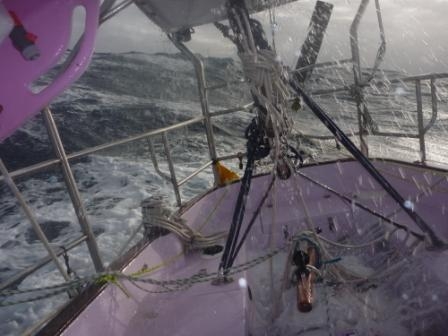
Soon memories such as this:
With the drogue trailing behind Ella's Pink Lady shaking off one wave with the next 10m monster coming up behind!
Day One for the new Prime Minister and his team has been good!
Less than 24 hours ago, I mused that maybe David Cameron and Nick Clegg represented something that the UK badly needs – a real positive change in Governing the country.
Spring shoot 1
Matthew Parris
Matthew Parris is an experienced reporter, columnist and a one-time Conservative Member of Parliament. Here’s what he said to the BBC a short while ago (at the time of writing this Post).
“I ought to be cynical, I ought to be saying it’s all going to end in tears, but I just sense something good and genuine in the air and it just might work,”
“You almost have a sense of two men staging a coup against the British political system,”
Spring shoot 2
It’s almost unknown for the Governor of the Bank of England to comment on political matters. The current Governor, Mervyn King, was recorded saying this today.
Guest author, Per Kurowski, on a rather sobering topic!
I do not know what worse, the arrogance of the regulators thinking they can squeeze out the risk in banking by imposing different and completely arbitrary capital requirements based on the opinions of some few human fallible credit rating agencies, or their childish innocence not knowing this creates systemic risks of gigantic proportions.
What I do know is that an amazing number of intelligent people have fallen for this absurd and extremely dangerous regulatory paradigm. Honestly… I am truly scared!
How could I not be with regulators who can authorize banks to leverage up 62.5 to 1 on public debts like Greece’s while at the same time placing a 12.5 to 1 ceiling on the lending to the small businesses and entrepreneurs whom we depend so much on for our jobs.
Better hope they don't need funding!
All those financial and regulatory experts who kept mum when they should have spoken out on the financial crisis about to happen are now, quite effectively, circling their wagons in order to promote the myth that no one knew. False many did! In order to benefit from the lessons we must learn, they should not be allowed to succeed.
On October 19, 2004, as an Executive Director of the World Bank (2002-2004) I presented a written formal statement at the Board and that included the following:
We [I] believe that much of the world’s financial markets are currently being dangerously overstretched through an exaggerated reliance on intrinsically weak financial models that are based on very short series of statistical evidence and very doubtful volatility assumptions.
And I was no investment banker, nor a regulator, nor an investor, and so to me it is clear that all of them, had they done their job right, should have known… and that this crisis should have been nipped in the bud much earlier, as
Per Kurowski
the real explosion in truly bad mortgages took off in 2004, when the SEC in April delegated the setting of the capital requirements for the investment banks to the Basel Committee, and the G10 in June approved Basel II.
In order to understand it all don’t follow the money… follow the AAAs. In case you missed “The Financial Crisis explained to dummies, non-experts and financial regulators” you can read it here.
By Per Kurowski
PS. I have put up a document that resumes most of what I said before and during my term as an Executive Director.
… David Cameron and Nick Clegg represent real positive change for the UK.
Another amazing day for British politics as Gordon Brown tendered his resignation to Her Majesty Queen Elizabeth II and in less than an hour the Queen asked David Cameron if he would form a Government.
That wonderful unwritten constitution dealing with a change of Prime Minister in such a beautiful and dignified manner.
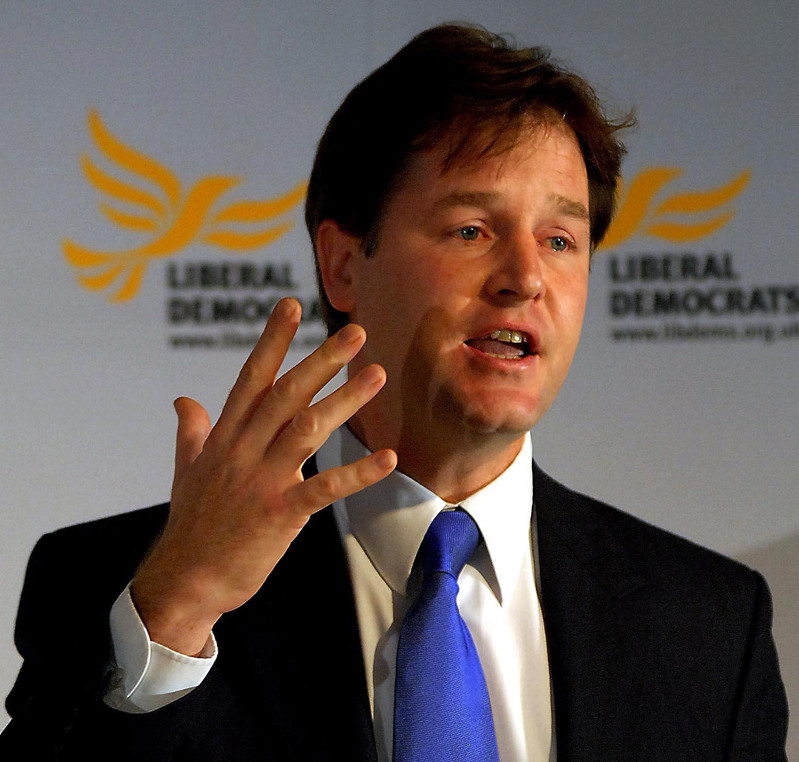
Nick Clegg
All I want to say is that these two men have my prayers and best wishes for delivering what so many millions want – a better and fairer way of running a modern democracy.
Learning from Dogs published its first Post on July 15th last year. Since then we have published another 549!
As you will know our standard pattern is to publish two Posts each working day and one per day over the week-ends, some 50 Posts each month.
Since the start of 2010 we have been running at over a 1,000 readers each week, and now regularly have over 2,000 readers a week. It’s a great vote of thanks for all the hard work put in by the authors. Thank you, dear reader!
Now this week I have to return to the UK until early June and that is going to make it much more difficult for me to spend time every day being Chief Cook & Bottlewasher for the Blog.
Thus, during this period, we will have to relax the target to publish two Posts every working day. Hopefully, we will be able to maintain a single Post each day.
However, what would be valuable is to hear just how your own interest in Learning from Dogs would be influenced, if at all, if we were to continue the lower number of Posts (i.e. one a day) after my return in June.
Any feedback, good or bad, will be welcome and much appreciated. Either by leaving a comment or by emailing the Blog at learningfromdogs (at) gmail (dot) com
Came across a relatively new Blog with the title The Fourteenth Banker. Caught my eye because of the similarity to the book written by Simon Johnson and James Kwak of Baseline Scenario fame. Here’s an extract from the ‘About’ piece of this new Blog.
In response to the comments of folks in the Congress and oversight regimes, I have created this blog as a home for bankers who need to speak out and do not have a central clearinghouse or a safe place to do so. Big banks now treat their employees like property, bought and owned. Typically employees must subject themselves to all sorts of potential sanctions, forfeitures of compensation, clawbacks and even lawsuits if they speak in ways we often have thought were protected speech. I am not talking about revealing confidential customer or proprietary information, I am talking about simply commenting on a company, management philosophy, making general observations or raising concerns. It makes one appreciate unions even if not historically supportive of unions. At least management and labor can have a debate. Not so in today’s large banks. Gag orders are written in the most intimidating way, included in Codes of Ethics, attached to incentive plans, posted on the company home pages. We should ask ourselves, what is the big secret?
Do support the Blog by calling by. Here’s a taste of what they are writing about:
This can only be called what it is. Delusion. Delusion about self, society, morality, values and anything else you can name. These are symptoms of a grave illness which is too common among those in power. In fact, the illness may be the requisite to power.
Here’s a novel idea, let the Public Sector live within its means!
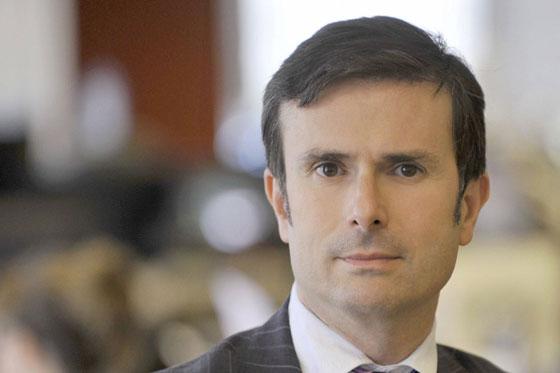
BBC Business Editor, Robert Peston
Robert Peston is the BBC’s Business Editor. I’ve read his Blog and listened to him on the Beeb for many years now. His latest Blog article hits the bulls-eye.
The smart solution would be to somehow depoliticise what’s known as fiscal consolidation, or the process of cutting spending and raising taxes such that the public sector can again live within its means.
Precisely!
A public sector that seeks not to burden society but to benefit it should not be an issue of party politics.