Author: Paul Handover

Breaking up the big banks

There are so many excellent Blogs out there that it is difficult at times to keep track of key articles.  But here’s one reproduced from Washington’s Blog.  It was published on the 30th April and sets out some powerful reasons why the so-called Too Big To Fail banks should, and must, be broken up.  It is reproduced with permission. Ed.

5 Reasons We Must Break Up the Giant Banks

As everyone from Paul Krugman to Simon Johnson has noted, the banks are so big and politically powerful that they have bought the politicians and captured the regulators.

But the giant banks are not only dangerous because they skew the political system. There are five economic arguments against the mega-banks as well.

Impaired Competition

Fortune pointed out last February that the only reason that smaller banks haven’t been able to expand and thrive is that the too-big-to-fails have decreased competition:

Growth for the nation’s smaller banks represents a reversal of trends from the last twenty years, when the biggest banks got much bigger and many of the smallest players were gobbled up or driven under…

As big banks struggle to find a way forward and rising loan losses threaten to punish poorly run banks of all sizes, smaller but well capitalized institutions have a long-awaited chance to expand.

So the very size of the giants squashes competition.

Less Loans, More Bonuses

Small banks have been lending much more than the big boys.

The giant banks which received taxpayer bailouts actually slashed lending more, gave higher bonuses, and reduced costs less than banks which didn’t get bailed out.

Lack of Transparency in Derivatives

Too Big!

JP Morgan Chase, Bank of America, Goldman Sachs, Citigroup, and Morgan Stanley together hold 80% of the country’s derivatives risk, and 96% of the exposure to credit derivatives.

Experts say that derivatives will never be reined in until the mega-banks are broken up.

Increased Debt Problems

As I pointed out in December 2008:

The Bank for International Settlements (BIS) is often called the “central banks’ central bank”, as it coordinates transactions between central banks.

BIS points out in a new report that the bank rescue packages have transferred significant risks onto government balance sheets, which is reflected in the corresponding widening of sovereign credit default swaps:

The scope and magnitude of the bank rescue packages also meant that significant risks had been transferred onto government balance sheets. This was particularly apparent in the market for CDS referencing sovereigns involved either in large individual bank rescues or in broad-based support packages for the financial sector, including the United States. While such CDS were thinly traded prior to the announced rescue packages, spreads widened suddenly on increased demand for credit protection, while corresponding financial sector spreads tightened.

In other words, by assuming huge portions of the risk from banks trading in toxic derivatives, and by spending trillions that they don’t have, central banks have put their countries at risk from default.

Now, Greece, Portugal, Spain and many other European countries – as well as the U.S. and Japan – are facing serious debt crises. See this, this and this.

By failing to break up the giant banks, the government is guaranteeing that they will take crazily risky bets again and again and again.

We are no longer wealthy enough to keep bailing out the bloated banks. We have serious debt problems. See this, this and this.

(Anyone who claims that Chris Dodd’s proposed “reform” legislation will prevent banks from getting bailed out again is wrong. If the giant banks aren’t broken up now – when they are threatening to take down the world economy – they won’t be broken up next time they become insolvent, either. And see this.)

Unfair Competition and Manipulation of Markets

Moreover, Richard Alford – former New York Fed economist, trading floor economist and strategist – recently showed that banks that get too big benefit from “information asymmetry” which disrupts the free market.

Nobel prize winning economist Joseph Stiglitz noted in September that giants like Goldman are using their size to manipulate the market:

“The main problem that Goldman raises is a question of size: ‘too big to fail.’ In some markets, they have a significant fraction of trades. Why is that important? They trade both on their proprietary desk and on behalf of customers. When you do that and you have a significant fraction of all trades, you have a lot of information.”

Further, he says, “That raises the potential of conflicts of interest, problems of front-running, using that inside information for your proprietary desk. And that’s why the Volcker report came out and said that we need to restrict the kinds of activity that these large institutions have. If you’re going to trade on behalf of others, if you’re going to be a commercial bank, you can’t engage in certain kinds of risk-taking behavior.”

The giants (especially Goldman Sachs) have also used high-frequency program trading which not only distorted the markets – making up more than 70% of stock trades – but which also let the program trading giants take a sneak peak at what the real (aka “human”) traders are buying and selling, and then trade on the insider information. See this, this, this, this and this. (This is frontrunning, which is illegal; but it is a lot bigger than garden variety frontrunning, because the program traders are not only trading based on inside knowledge of what their own clients are doing, they are also trading based on knowledge of what all other traders are doing).

Goldman also admitted that its proprietary trading program can “manipulate the markets in unfair ways”. The giant banks have also allegedly used their Counterparty Risk Management Policy Group (CRMPG) to exchange secret information and formulate coordinated mutually beneficial actions, all with the government’s blessings.

Again, size matters. If a bunch of small banks did this, manipulation by numerous small players would tend to cancel each other out. But with a handful of giants doing it, it can manipulate the entire economy in ways which are not good for the American citizen.

No wonder virtually every independent economist and financial expert is calling for the big banks to be broken up.

Some argue that it is logistically impossible to break up the behemoths. But if we broke up Standard Oil, we can break up the giant banks as well.

The Big Alienation

Uncontrolled borders and Washington’s lack of self-control

[This article appeared in the online version of the Wall Street Journal on May 1st. Copyright exists with the WSJ and it is reproduced below without permission. However, it seems to me to be such an insightful commentary on present conditions that the decision was taken to publish it on Learning from Dogs. Ed.]

By Peggy Noonan

Peggy Noonan

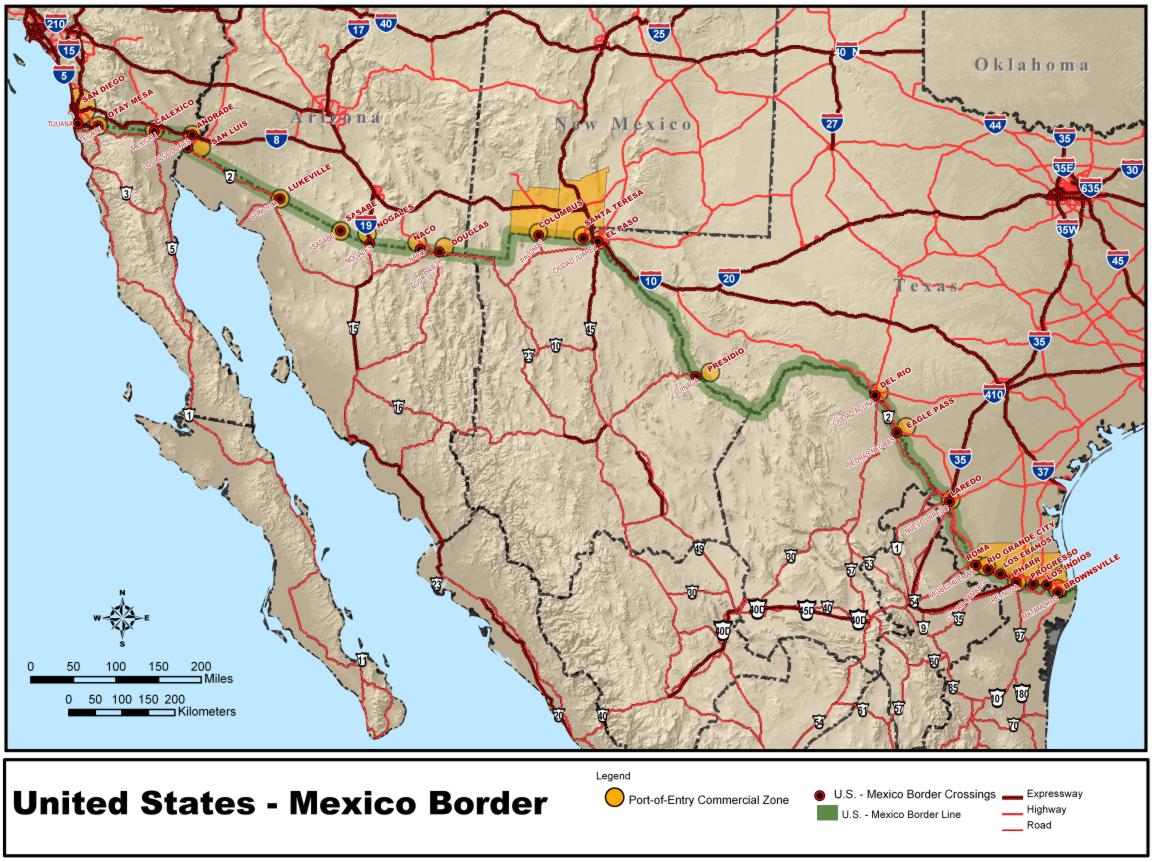
We are at a remarkable moment. We have an open, 2,000-mile border to our south, and the entity with the power to enforce the law and impose safety and order will not do it. Wall Street collapsed, taking Main Street’s money with it, and the government can’t really figure out what to do about it because the government itself was deeply implicated in the crash, and both political parties are full of people whose political careers have been made possible by Wall Street contributions. Meanwhile we pass huge laws, bills so comprehensive, omnibus and transformative that no one knows what’s in them and no one—literally, no one—knows how exactly they will be executed or interpreted. Citizens search for new laws online, pore over them at night, and come away knowing no more than they did before they typed “dot-gov.”

It is not that no one’s in control. Washington is full of people who insist they’re in control and who go to great lengths to display their power. It’s that no one takes responsibility and authority. Washington daily delivers to the people two stark and utterly conflicting messages: “We control everything” and “You’re on your own.”

All this contributes to a deep and growing alienation between the people of America and the government of America in Washington.

This is not the old, conservative and long-lampooned “I don’t trust gummint” attitude of the 1950s, ’60s and ’70s. It’s something new, or rather something so much more broadly and fully evolved that it constitutes something new. The right never trusted the government, but now the middle doesn’t. I asked a campaigner for Hillary Clinton recently where her sturdy, pantsuited supporters had gone. They didn’t seem part of the Obama brigades. “Some of them are at the tea party,” she said.

None of this happened overnight. It is, most recently, the result of two wars that were supposed to be cakewalks, Katrina, the crash, and the phenomenon of a federal government that seemed less and less competent attempting to do more and more by passing bigger and bigger laws.

Add to this states on the verge of bankruptcy, the looming debt crisis of the federal government, the likelihood of ever-rising taxes. Shake it all together, and you have the makings of the big alienation. Alienation is often followed by full-blown antagonism, and antagonism by breakage.

Which brings us to Arizona and its much-criticized attempt to institute a law aimed at controlling its own border with Mexico. It is doing this because the federal

The US-Mexico border

government won’t, and because Arizonans have a crisis on their hands, areas on the border where criminal behavior flourishes, where there have been kidnappings, murders and gang violence. If the law is abusive, it will be determined quickly enough, in the courts. In keeping with recent tradition, they were reading parts of the law aloud on cable the other night, with bright and sincere people completely disagreeing on the meaning of the words they were reading. No one knows how the law will be executed or interpreted.

Every state and region has its own facts and experience. In New York, legal and illegal immigrants keep the city running: They work hard jobs with brutal hours, rip off no one on Wall Street, and do not crash the economy. They are generally considered among the good guys. I’m not sure New Yorkers can fairly judge the situation in Arizona, nor Arizonans the situation in New York.

But the larger point is that Arizona is moving forward because the government in Washington has completely abdicated its responsibility. For 10 years—at least—through two administrations, Washington deliberately did nothing to ease the crisis on the borders because politicians calculated that an air of mounting crisis would spur mounting support for what Washington thought was appropriate reform—i.e., reform that would help the Democratic and Republican parties.

Both parties resemble Gordon Brown, who is about to lose the prime ministership of Britain. On the campaign trail this week, he was famously questioned by a party voter about his stand on immigration. He gave her the verbal runaround, all boilerplate and shrugs, and later complained to an aide, on an open mic, that he’d been forced into conversation with that “bigoted woman.”

He really thought she was a bigot. Because she asked about immigration. Which is, to him, a sign of at least latent racism.

The establishments of the American political parties, and the media, are full of people who think concern about illegal immigration is a mark of racism. If you were Freud you might say, “How odd that’s where their minds so quickly go, how strange they’re so eager to point an accusing finger. Could they be projecting onto others their own, heavily defended-against inner emotions?” But let’s not do Freud, he’s too interesting. Maybe they’re just smug and sanctimonious.

The American president has the power to control America’s borders if he wants to, but George W. Bush and Barack Obama did not and do not want to, and for the same reason, and we all know what it is. The fastest-growing demographic in America is the Hispanic vote, and if either party cracks down on illegal immigration, it risks losing that vote for generations.

But while the Democrats worry about the prospects of the Democrats and the Republicans about the well-being of the Republicans, who worries about America?

No one. Which the American people have noticed, and which adds to the dangerous alienation—actually it’s at the heart of the alienation—of the age.

In the past four years, I have argued in this space that nothing can or should be done, no new federal law passed, until the border itself is secure. That is the predicate, the commonsense first step. Once existing laws are enforced and the border made peaceful, everyone in the country will be able to breathe easier and consider, without an air of clamor and crisis, what should be done next. What might that be? How about relax, see where we are, and absorb. Pass a small, clear law—say, one granting citizenship to all who serve two years in the armed forces—and then go have a Coke. Not everything has to be settled right away. Only controlling the border has to be settled right away.

Instead, our national establishments deliberately allow the crisis to grow and fester, ignoring public unrest and amusing themselves by damning anyone’s attempt to deal with the problem they fear to address.

Why does the federal government do this? Because so many within it are stupid and unimaginative and don’t trust the American people. Which of course the American people have noticed.

If the federal government and our political parties were imaginative, they would understand that it is actually in their interests to restore peace and order to the border. It would be a way of demonstrating that our government is still capable of functioning, that it is still to some degree connected to the people’s will, that it has the broader interests of the country in mind.

The American people fear they are losing their place and authority in the daily, unwinding drama of American history. They feel increasingly alienated from their government. And alienation, again, is often followed by deep animosity, and animosity by the breaking up of things. If our leaders were farsighted not only for themselves but for the country, they would fix the border.

Peggy Noonan is a columnist for The Wall Street Journal whose work appears weekly in the Journal’s Weekend Edition and on OpinionJournal.com.

She is the author of eight books on American politics and culture. The most recent, “Patriotic Grace,” was published in October 2008. Her first book, the bestseller “What I Saw at the Revolution: A Political Life in the Reagan Era,” was published in 1990.

She was a special assistant to the president in the White House of Ronald Reagan. Before that she was a producer at CBS News in New York. In 1978 and 1979 she was an adjunct professor of journalism at New York University.

How big bankers became outlaws

[This is another Guest Post from Patrice Ayme which appeared on his Blog on the 28th April.  It has been slightly modified by me. Ed]


Celebrating Goldman Sachs, while acknowledging that it is far from being all their fault.

Point One: We are living in a state of law. Supposedly.

Point Two: That State is democracy, the rule of the demos, the people. It is not the rule of the bankers. Supposedly.

Point Three: Political leaders have recently given PRIVATE unelected individuals, the bankers, the means and the right to create money, the money everybody uses, through debt, ex nihilo, starting from PUBLIC funds  (Called, somewhat misleadingly, the fractional reserve banking system.)

Point Three contradicts the union of Point One and Point Two. Power is supposed to be exerted by the people, but money is power. Big bankers create money at will, with the complicity of the political leadership. So they create power at will.

Thus, the present system incites (big) MONEY CREATING BANKERS TO BECOME GANGSTERS, and then OUTLAWS.

It is as simple as that!

Thus one needs to get rid of the private fractional reserve PUBLICLY funded money creating system.  The situation has been rendered worse in the last decade by the blossoming of synthetic derivatives which are out-of-this-world bets which could not possibly be paid back.

Synthetic derivatives of derivatives transformed a 300 billion dollars loss in real mortgages into a potential exposure of 24,000 billion dollars, thanks to the leverage of the derivatives squared.

Then political leaders, accomplices with the bankers, offered to pay the 24,000 billion dollars, on behalf of taxpayers, leaving the economy in tatters.

Not all is lost: Goldman Sachs got its entire 2008 profit, 13 billion dollars, from taxpayers, through AIG, thanks to US politicians, and the USA loves a winner. Love and dove, there are still many a feather to pluck.

By Patrice Ayme

P.S. Synthetic derivatives are, mathematically and philosophically, a generalization of the license of the privately managed, publicly funded, fractional reserve system, thus proving further, if need be, how erroneous the latter can be.

P.P.S. The fractional reserve system ought to be kept, to provide the capital needed, simply it ought not to be anymore the province of a small private oligarchy gaming it.

Well done, Bill Moyers!

A giant of US television retires from the screen

One of the fascinating aspects of my new American life is seeing how loud the volume of dissent is from the American

Bill Moyers

people about the shenanigans on Wall Street and the Too Big To Fail banks.  There is an intensity and passion that I can’t see happening on the other side of the Pond.  Maybe this is the cultural legacy of a people that just a short time ago, relatively speaking, were opening up this giant country seeking a better way of life than the ‘old countries’.

This intensity and passion is why, in the end, I believe that the solution to the huge crisis that still awaits us will start from this side of the Atlantic.  But it will get a whole lot worse before it gets better, such is the complexity and depth of the fraud that is being visited on decent, ordinary folks in this and many other fine countries.

Bill Moyers of the Bill Moyers Journal on PBS is retiring.  He’s approaching 76 and that’s a grand age to be dealing with the workload and stress of a weekly television presentation.  His last Journal was broadcast on the 23rd April, a week ago today airing two really important topics.  My only regret is that I haven’t been here sufficiently long to view many more of his Journals.

William K Black

In that last broadcast on the 23rd, Bill had two key interviews.  In this Post, I want to bring to your attention his first report, which was an interview with William K Black, now an academic but, just as importantly, a former bank regulator.  William Black really understands what is going on in banking.

The interview is both fascinating and captivating because, well to me anyway, it explains in terms that us laymen can understand, exactly what is going on and why it is so terribly important that legislation and regulations are brought into force to stop this fraud ever happening again.

This interview has not yet made it’s way onto YouTube so I can only post the link to the Bill Moyers website.

But, please, if you care about what is happening to us in whatever country you live in, click on this link and watch the interview.

And if you want to watch the earlier interview that Bill Moyers had with William Black then here it is.

By Paul Handover

Happy Birthday, Hubble!

The Hubble Space Telescope (HST) has been in space for 20 years!

This week, twenty years ago, the HST was launched into orbit.  There’s much online if you want to read about it both on WikiPedia and on the Hubble web site so this post is going to offer just two items.

A beautiful picture

Nucleus of Galaxy Centaurus A

And an interesting audio slideshow tribute from the BBC – click here, introduced thus:

Take a look at some of the sights it has seen in that time with Professor Alec Boksenberg from the Institute of Astronomy in Cambridge – who was on the European team that helped build Hubble.

By Paul Handover (in awe of what is beyond our skies)

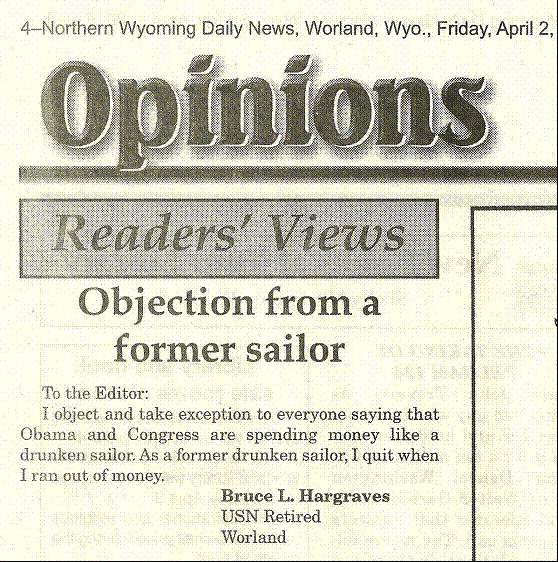
Drunken sailors

With thanks to one of our very regular followers, Gordon, for passing this on.

Well said, that sailor!

By Paul Handover

The beginning of the end for the Eurozone?

A fateful day for the eurozone

…. is how Gavin Hewitt recently headed up a post on his BBC Europe blog.  The headline caught my eye and then when I read the full article it seemed as yet another piece of western civilisation was sliding into chaos.  Maybe it’s my age!

Gavin Hewitt

Gavin Hewitt is the BBC’s Europe Editor and as you can see from his bio, Gavin is a very experienced reporter.  Here’s how this Eurozone article starts:

Friday [April 23rd, Ed] will be remembered as the day the euro needed rescuing. Sure it is Greece that has asked to be bailed out but it was still a day that the architects of the single currency had never envisaged. For when it came to it, there were no plans to save a euro member in trouble.

You see what I mean about grabbing one’s attention!

In fact the article is so powerful that I am going to run the risk of incurring the wrath of the BBC’s legal department by republishing it in full.

Here it is:

Read the rest of this article

Remarkable people: Prof James Lovelock

The father of Gaia

A week or so ago, the BBC under their Beautiful Minds series, screened a programme about James Ephraim Lovelock, more popularly known as Professor Jim Lovelock.

Prof. James Lovelock

(Picture taken from this article – in itself well worth reading.)

The programme demonstrated that Lovelock’s mind is more than beautiful, it is still capable, at 90 years of age, of thinking in ways that are very rare in today’s societies where conformity is such a powerful force.

As always, WikiPedia has an excellent reference on Prof. Lovelock and I encourage you to read it plus Lovelock’s own website which makes up in content what it may lack for presentation!

Luckily there is an extract from the BBC programme on YouTube – please watch this and reflect on exactly what Lovelock is saying.

And if you are up for more, then settle down for thirteen minutes and watch this next video.

James Lovelock is the Darwin of our times.

Now to put this into some context (this is me speaking as a layman!).

Please read the rest of this post

Skydiving stunt or utter madness?

From the Daily Mail (UK Newspaper) online

Just crazy!

A skydiver has pulled off an astonishing stunt by climbing out of a glider’s cockpit, crawling along the wing and then somersaulting underneath and stepping onto the wing of a second glider flying below.

Paul Steiner then moves back onto the main fuselage of the second glider while the first glider turns upside down and flies overhead so that he can reach up and hold the tail fin at 100mph, forming a human link between the two aircraft. He then leaps off and parachutes back to the ground.

The spectacular stunt, captured on YouTube, was carried out by the Red Bull skydive team 2,100 metres above the mountains in Styria, Austria. And they look mightily relieved as they returned to their airfield.

More incredible pictures here.

By Paul Handover

More on the SR-71, Part 2

The second part of the guest post by Captain Dave Jones. Ed.

Part One was yesterday which I introduced as follows:

The SR-71, a truly great aircraft

John’s couple of articles about the SR-71 here and here reminded me of the time that I was given an article by my instructor at Mojave. He was a military test pilot and ended up with NASA and he was one of a select few to fly the Blackbird as a civilian….a great chap to talk to…  I continue with Part 2

     The SR-71 was an expensive aircraft to operate. The most significant
cost was tanker support, and in 1990, confronted with budget cutbacks, the
Air Force retired the SR-71. The Blackbird had outrun nearly 4,000 missiles,
not once taking a scratch from enemy fire. On her final flight, the
Blackbird, destined for the Smithsonian National Air and Space Museum, sped
from Los Angeles to Washington in 64 minutes, averaging 2,145 mph and
setting four speed records. 

        The SR-71 served six presidents, protecting America for a quarter of
a century. Unbeknownst to most of the country, the plane flew over North
Vietnam, Red China, North Korea, the Middle East, South Africa, Cuba,
Nicaragua, Iran, Libya, and the Falkland Islands. On a weekly basis, the
SR-71 kept watch over every Soviet nuclear submarine and mobile missile
site, and all of their troop movements. It was a key factor in winning the
Cold War. 

 Read the final part of this great story