Author: Paul Handover

Scamp and other dog’s incredible sense of smell

Almost beyond a human’s ability to comprehend.

On the 24th June, I wrote a piece from the Extraordinary Animals series from the UK’s Channel Five TV station.  In particular, the article focussed on Scamp’s ability to detect when people in care were dying.

Scamp is a little Schnauzer who resides at The Pine nursing home in Canton, Ohio. Like many live-in pets at nursing homes, Scamp brings companionship to the residents but he also does more than that. Scamp seems to have a gift that tells him when the end is near for one of the residents and he loyally stays with them during their final hours.

Jim & Diane Walker

The first of the three YouTube videos, some ten minutes long, examined how Scamp knew that a patient was dying and how scientists Jim and Diane Walker believed it was due to the incredible sense of smell that dogs possess.  From The Examiner of June 1st, 2009,

An amazing scientist, Dr. James Walker of the Sensory Research Institute at Florida State University, documented the power of a dog’s nose in 2002. Using n-amyl acetate (nAA), Dr. Walker documented that a dog can detect chemicals at one ten-thousandth to one hundred-thousandth the concentrations that humans can. In other words, at a minimum, dogs can smell 10,000 times better than a human.

OK, back to that YouTube video.

If you didn’t watch it on the 24th, do watch it again.  Watch it this time to pick up just what Scamp is doing.  At minute 6:30 hear how Dr. Bob Andrysco describes how the sense of smell of a dog is 100,000 times more powerful than that of a human.

Then stay with the video until minute 9:20 when Jim & Diane Walker show how a dog can detect a substance as diluted as 2 parts in a trillion.  That is so diluted as to be beyond comprehension; well to a non-scientist like me!

As the presenter describes, “That’s the equivalent of a teaspoonful of sugar in ten billion cups of tea!”  To me that is utterly mind-boggling.  Let me try and demonstrate the power of 2 parts per trillion, which is the equivalent of 1 part per half-trillion (500,000 million). Half-a-trillion fluid ounces is 522,189,675.651 ft³ – just over 522 million cubic feet.  What does that volume look like?

Here’s the picture of twelve fluid ounces – you’ll just have to imagine what one fluid ounce would look like!

Standard Coke can = 12 fluid ounces

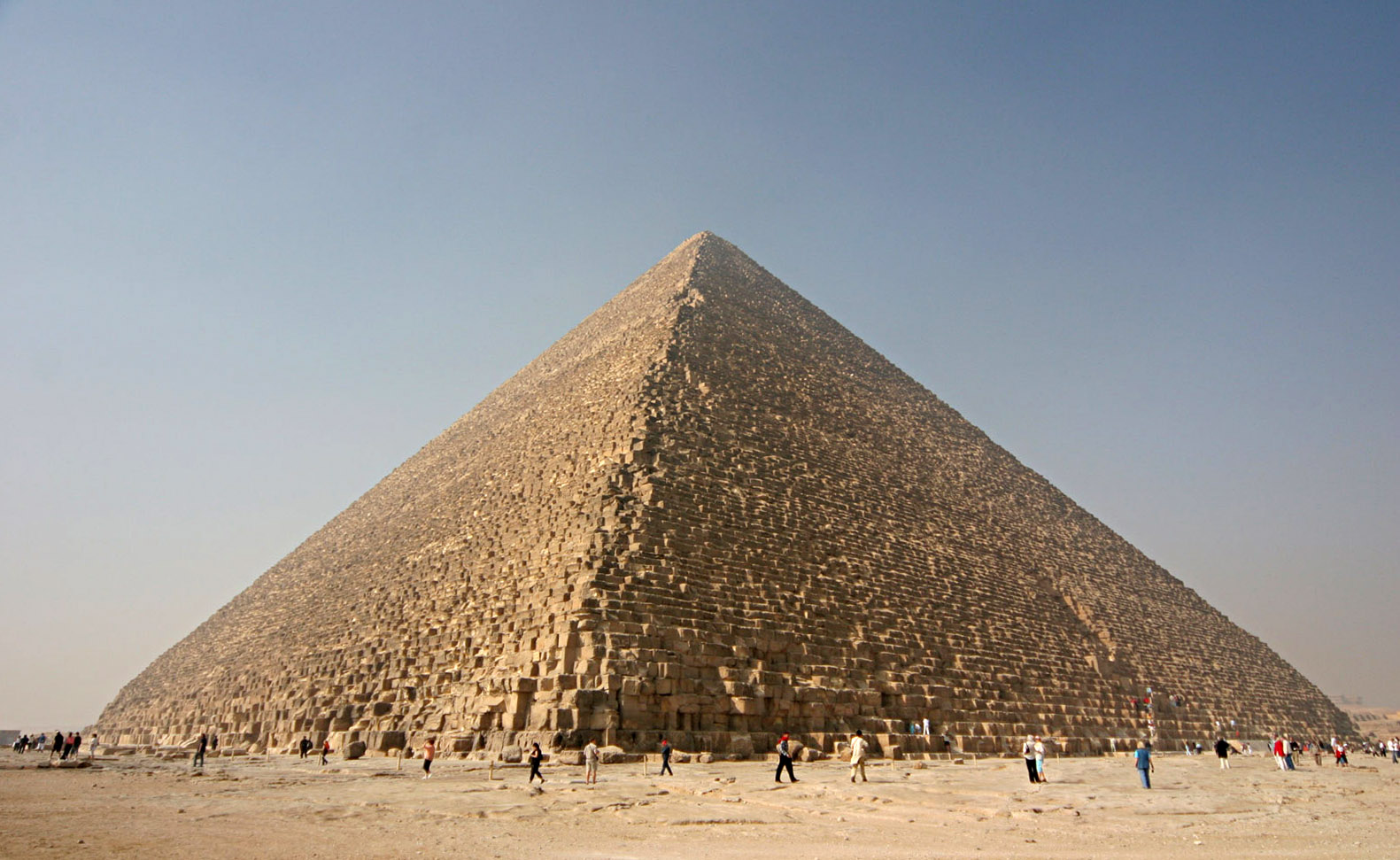
Here’s a picture of ninety million cubic feet – you’ll just have to imagine what five hundred and twenty-two million look like!

Great Pyramid of Giza = 90 million cubic feet

OK, last one from me to allow us all to really, really appreciate the magical ability of that dog’s nose.

Two parts per trillion is the equivalent of smelling that can of Coke (12 fluid ounces) in a volume the equivalent of seventy, yes seventy, Great Pyramids (6,264,000,000 cubic feet).

Think I need to lie down in a darkened room for a while!

Day of rest!

Apologies to all the readers of Learning from Dogs but it’s been a busy week since returning from the UK and it feels right to take the day off!

As Ralph Waldo Emerson said, “Let us be silent, that we may hear the whispers of the gods.”

Ralph Waldo Emerson

And spend a few moments watching this 

Lying is OK, that’s official! Duh!

I find this utterly unacceptable – here’s the story

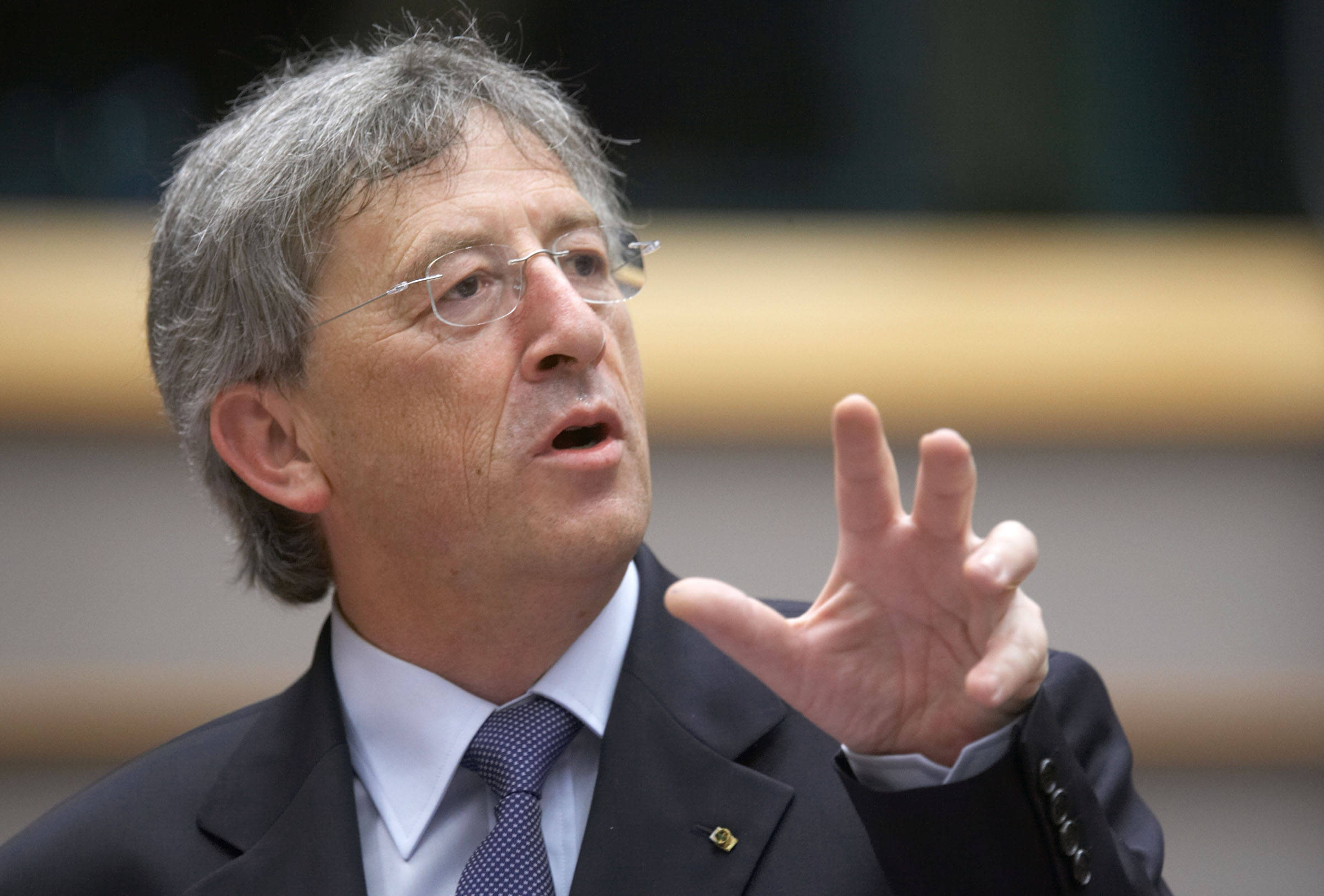
Jean Claude Juncker, lying for Europe!

I was talking to someone in the UK just a couple of days ago, Martin J., about investment matters and we were generally ‘slagging’ off the quality, or rather the lack of quality, of the statements of leading political persons in many fields of government.  Martin then made the statement that Jean Claude Juncker, the Prime Minister of Luxembourg, and the head of the Eurogroup council of eurozone finance ministers had recently stated that “When it becomes serious, you have to lie,”  I was staggered to hear this and asked Martin to supply the details.  Here they are.

Mr. Juncker’s remark had been widely reported and I have chosen the Wall Street Journal’s report to quote from in Learning from Dogs.

MAY 9, 2011, 10:54 AM ET

Luxembourg Lies on Secret Meeting

By Charles Forelle

Is lying considered an appropriate mode of communication for euro-zone leaders?

We have to wonder after a strange episode on Friday evening. Here’s what happened:

Just before 6 p.m., German news magazine Spiegel Online distributed a report saying that euro-zone finance ministers were convening a secret, emergency meeting in Luxembourg that evening to discuss a Greek demand to quit the euro zone.

Calls from reporters flooded in to Guy Schuller, the spokesman for Luxembourg Prime Minister Jean-Claude Juncker, the man who is the head of the Eurogroup council of euro-zone finance ministers.

In a phone call and text messages with two reporters for Dow Jones and the Wall Street Journal, Mr. Schuller repeatedly said no meeting would be held. He apparently said the same to other news outlets; at least one more moved his denials on financial newswires.

Of course, there was a meeting–although not, apparently, to talk about Greece quitting the currency, which would be an extreme step to say the least. Mr. Juncker even said a few words to reporters who had hustled to Luxembourg to stake out the gathering.

Anyway, do read the article in full here.

In that article there is a YouTube video in which Mr. Juncker says “When it becomes serious, you have to lie.”  You can hear it yourself, about 20 seconds into the video despite the sound level being a tad low.

So that’s official then!  Politicians have to lie!  Grand job.  Talking about jobs, don’t suppose Mr. Juncker will lose his.  Or that he will show that, deep down, he is an integrous man and resign his post.

Yes, of course we all understand that what high-profile people say can affect markets and that, at times, one must be careful in terms of what is said.  But lying?  Sorry, for me that will never, ever be acceptable!

What has this to do with dogs?  Simply, dogs don’t lie.

More on the unconditional love of dogs

Another example of the astounding bond between dog and man.

Regular supporters of Learning from Dogs will be aware that yesterday I wrote, under the heading of Paws of Love, about two examples of the most amazing bond that develops between the dog and man, one of them a very personal account.

Moving on.

We subscribe to the website, Top Documentary Films, and the other night we watched a 48-minute program about The Grim Reaper Dog.  The link to the TDF programme is here.  (It includes three separate films.)

Scamp

The Grim Reaper Dog is about Scamp, a little Schnauzer who resides at The Pine nursing home in Canton, Ohio. Like many live-in pets at nursing homes, Scamp brings companionship to the residents but he also does more than that. Scamp seems to have a gift that tells him when the end is near for one of the residents and he loyally stays with them during their final hours.

So if you want to watch the film in full within the TDF website, then go here.

If you want to watch it directly from YouTube then the three parts of the film are below – prepared to be amazed!  Or perhaps those of you who live emotionally close to a dog will just find the film as confirmation of what you already know!

and then here’s part 2

and concluding part

Paws of love

They are such wonderful, amazing creatures – man’s longest and best friend, the dog.

A couple of events caused me to be reminded about the preciousness of our relationship with the dog.  The first was coming across this article in The Boston Globe.  It is entitled, A friendly paw to a veteran and is all about how therapy dogs bring relief and joy to veterans.  Incidentally, the story was written by good friend to Learning from Dogs, Daniela Caride who has her own blog, The Daily Tail.  Here’s how that article opens,

NORTHAMPTON — Carter the Chesapeake Bay retriever, Sassy the Pomeranian, and Spyder the German shepherd spend most of their time playing, begging for treats, and getting belly rubs just like other pet dogs. But their unconditional love gains a purpose every time their owners take them to the hospital to visit veterans.

They are therapy dogs — canines trained to give affection to strangers — and they are becoming more popular in veteran facilities. An increasing number of dog owners are willing to volunteer at VA homes and hospices, where 6 million veterans get treated for acute and chronic health conditions. The service they provide is invaluable, health care specialists say.

Read the rest of it here.

The second event was coming across something that I wrote nearly three years ago.  Here it is in full.

The knowing eyes of your best friend

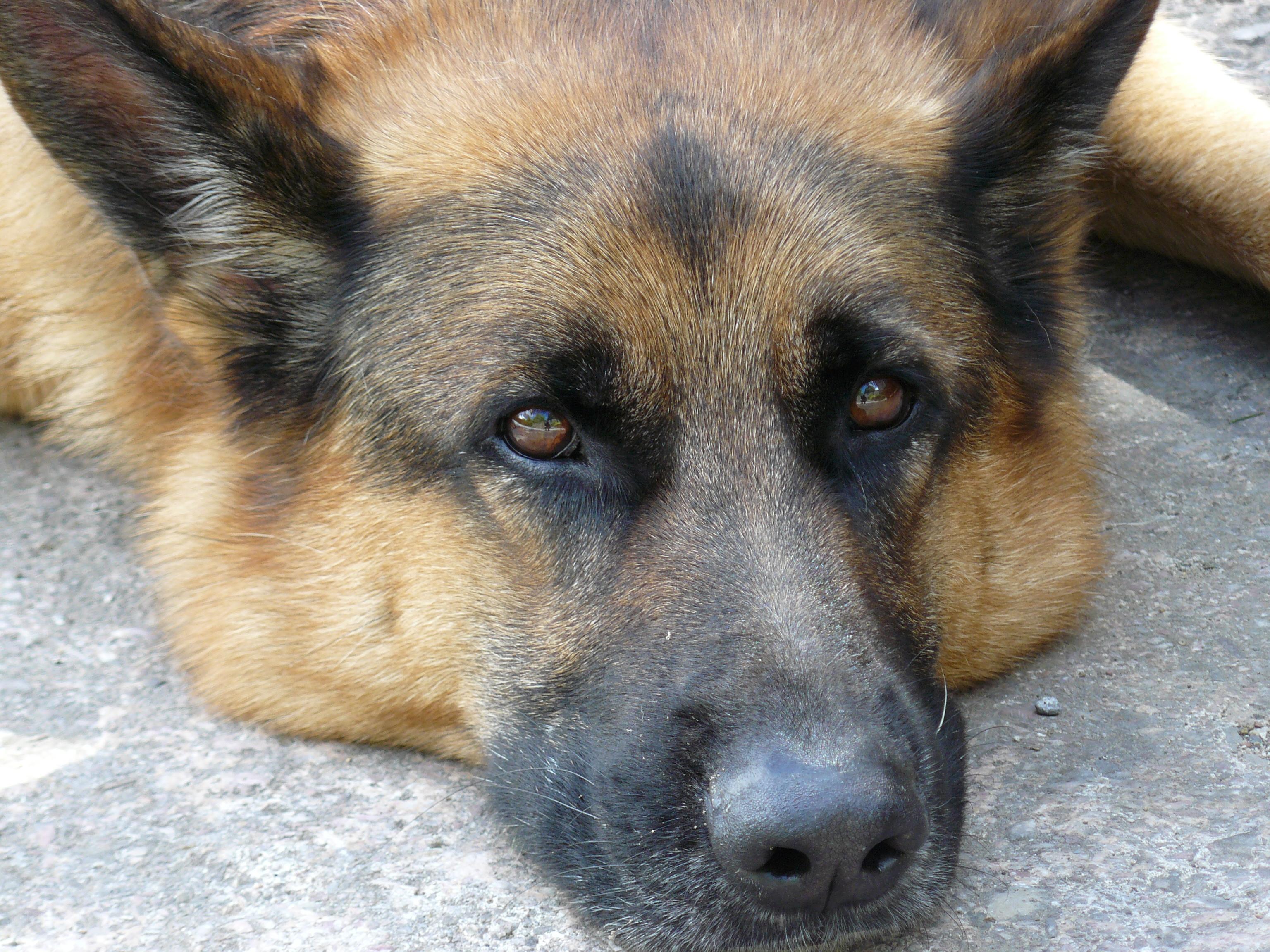
Pharaoh

(Based on an article sent to me, unfortunately from an unknown author, and modified to reflect the special relationship that I have with my 4 year old German Shepherd, Pharaoh. Paul Handover, 14 September, 2007.)

I am your dog and have something I would love to whisper in your ear. I know that you humans lead very busy lives. Some have to work, some have children to raise, some have to do this alone. It always seems like you are running here and there, often too fast, never noticing the truly grand things in life.

Look down at me now. While you sit at your computer. See the way my dark, brown eyes look at yours.

You smile at me. I see love in your eyes. What do you see in mine? Do you see a spirit? A soul inside who loves you as no other could in the world? A spirit that would forgive all trespasses of prior wrong doing for just a single moment of your time?  That is all I ask.  To slow down, if even for a few minutes, to be with me.

So many times you are saddened by others of my kind passing on. Sometimes we die young and oh so quickly, so suddenly that it wrenches your heart out of your throat. Sometimes, we age slowly before your eyes that you may not even seem to know until the very end, when we look at you with grizzled muzzles and cataract-clouded eyes. Still the love is always there even when we must take that last, long sleep dreaming of running free in a distant, open land.

I may not be here tomorrow. I may not be here next week. Someday you will shed the water from your eyes, that humans have when grief fills their souls, and you will mourn the loss of just ‘one more day’ with me. Because I love you so, this future sorrow even now touches my spirit and grieves me. I read you in so many ways that you cannot even start to contemplate.

We have now together. So come and sit next to me here on the floor and look deep into my eyes. What do you see? Do you see how if you look deeply at me we can talk, you and I, heart to heart. Come not to me as my owner but as a living soul. Stroke my fur and let us look deep into the other’s eyes and talk with our hearts.

I may tell you something about the fun of working the scents in the woods where you and I go. Or I may tell you something profound about myself or how we dogs see life in general. I know you decided to have me in your life because you wanted a soul to share things with. I know how much you have cared for me and always stood up for me even when others have been against me. I know how hard you have worked to help me be the teacher that I was born to be. That gift from you has been very precious to me. I know too that you have been through troubled times and I have been there to guard you, to protect you and to be there always for you. I am very different to you but here I am. I am a dog but just as alive as you.

I feel emotion. I feel physical senses. I can revel in the differences of our spirits and souls. I do not think of you as a dog on two feet; I know what you are. You are human, in all your quirkiness, and I love you still.

So, come and sit with me. Enter my world and let time slow down if only for a few minutes. Look deep into my eyes and whisper in my ears. Speak with your heart and I will know your true self. We may not have tomorrow but we do have now.

There is no question that one of the important aspects of life that we can surely learn from dogs is the ability to stay in the present as much as we can.  Easier to write than accomplish, of course.  But letting go of the past (because it’s gone) and making the best of today as opposed to worrying about the future (because that interferes in the joy of today) is still a powerful reminder of that we would do well to keep close to our heart.

Next ice age?

Uh, thought the great issue was global warming!

So just a day after the 2011 Summer Solstice, the sun is again a topic on this Blog.

Last Saturday’s issue of The Economist had amongst it’s leaders, a piece with the headline of Several lines of evidence suggest that the sun is about to go quiet.

Coincidentally I had seen, just a few hours previously, a similar story on the UK website The Register.  Let me quote a little from that item.

Earth may be headed into a mini Ice Age within a decade

Physicists say sunspot cycle is ‘going into hibernation’

By Lewis Page • Posted in Science, 14th June 2011 17:00 GMT

What may be the science story of the century is breaking this evening, as heavyweight US solar physicists announce that the Sun appears to be headed into a lengthy spell of low activity, which could mean that the Earth – far from facing a global warming problem – is actually headed into a mini Ice Age.

The announcement made on 14 June (18:00 UK time) comes from scientists at the US National Solar Observatory (NSO) and US Air Force Research Laboratory. Three different analyses of the Sun’s recent behaviour all indicate that a period of unusually low solar activity may be about to begin.

It was a moment’s effort to go to the US National Solar Observatory website (great website, by the way) and read that recent press release.  The press release link is here and it really is a ‘must read’ item.  Here’s just a flavour of what was written,

WHAT’S DOWN WITH THE SUN?
MAJOR DROP IN SOLAR ACTIVITY PREDICTED

A missing jet stream, fading spots, and slower activity near the poles say that our Sun is heading for a rest period even as it is acting up for the first time in years, according to scientists at the National Solar Observatory (NSO) and the Air Force Research Laboratory (AFRL).

As the current sunspot cycle, Cycle 24, begins to ramp up toward maximum, independent studies of the solar interior, visible surface, and the corona indicate that the next 11-year solar sunspot cycle, Cycle 25, will be greatly reduced or may not happen at all.

“This is highly unusual and unexpected,” Dr. Frank Hill, associate director of the NSO’s Solar Synoptic Network, said of the results. “But the fact that three completely different views of the Sun point in the same direction is a powerful indicator that the sunspot cycle may be going into hibernation.”

Spot numbers and other solar activity rise and fall about every 11 years, which is half of the Sun’s 22-year magnetic interval since the Sun’s magnetic poles reverse with each cycle. An immediate question is whether this slowdown presages a second Maunder Minimum, a 70-year period with virtually no sunspots during 1645-1715.

Hill is the lead author on one of three papers on these results being presented this week. Using data from the Global Oscillation Network Group (GONG) of six observing stations around the world, the team translates surface pulsations caused by sound reverberating through the Sun into models of the internal structure. One of their discoveries is an east-west zonal wind flow inside the Sun, called the torsional oscillation, which starts at mid-latitudes and migrates towards the equator. The latitude of this wind stream matches the new spot formation in each cycle, and successfully predicted the late onset of the current Cycle 24.

“We expected to see the start of the zonal flow for Cycle 25 by now,” Hill explained, “but we see no sign of it. This indicates that the start of Cycle 25 may be delayed to 2021 or 2022, or may not happen at all.”

As I said, the item is essential reading and the full release may be read here.  Another benefit of going to that NSO press release is that you will find another link to the full text and pictures.  The pictures are just stunning.  Here’s one of them.

The Sun viewed in visible light, at minimum phase (2006) and maximum phase (2001)

Seriously, if you are interested in learning more about our Sun and the nature of solar cycles, this strikes me as an excellent place to start.

However, let me close this article by returning to the final paragraphs of that NSO Press Release.  Here they are,

All three of these lines of research to point to the familiar sunspot cycle shutting down for a while.

“If we are right,” Hill concluded, “this could be the last solar maximum we’ll see for a few decades. That would affect everything from space exploration to Earth’s climate.”

In response to news inquiries and stories, Dr. Frank Hill issued a follow-up statement:

“We are NOT predicting a mini-ice age. We are predicting the behavior of the solar cycle. In my opinion, it is a huge leap from that to an abrupt global cooling, since the connections between solar activity and climate are still very poorly understood. My understanding is that current calculations suggest only a 0.3 degree C decrease from a Maunder-like minimum, too small for an ice age. It is unfortunate that the global warming/cooling studies have become so politically polarizing.”

Just take that last quotation from Dr. Frank Hill and ponder, “It is unfortunate that the global warming/cooling studies have become so politically polarizing.” [my italics].

That statement from Dr. Hill combined with my friend Dan’s posting of the 16th are food for thought.  More about this on Learning from Dogs soon.

Summer Solstice 2011

Let’s all pause for a moment (and my apologies for the late posting!)

The precise time of the summer solstice today is 17.16 Greenwich Mean Time (GMT/UTC).

Our sun, giver of life

In terms of local times that will be 10.16 here in Arizona and also in California, 13.16 in New York, 18.16 in London, and 03.16 (Wed) in Sydney, Australia, to pick just a few places.

What a year it has been so far!

So let’s just pause for a moment, as the Sun appears to pause, and put out our combined thoughts across this wonderful Planet Earth and pray for peace and tranquillity for all during the rest of this ‘interesting’ year.

The inadequacy of words

Alice and Mabel

Think you have had a bad day/week/month/year/life?  Want to see your life in perspective? Go here and reflect.  This is one very brave and incredibly inspiring young woman.

Those of you who see this and are in the UK, do read Alice’s Bucket List and help if you are at all able.  If not, just hold Alice and all her family, and Mabel, in your prayers.

Crazy, dangerous and very, very beautiful

I love taking photographs but this takes the cake!

(Note: there’s an option in WordPress to insert a ‘read more‘ link, the effect of which is to limit what you, dear reader, can see when you first come to a Blog article.  I prefer normally not to insert that link.  But for reasons that will soon be very obvious, it has to be used in this Post.)

Just watch this.

OK, more about this amazing man follows,

Continue reading “Crazy, dangerous and very, very beautiful” →

More from Lester Brown

The president of Earth Policy Institute presents his thesis on how best to save mankind.

Before turning to the theme of this Post, just a personal message.  I arrived back home in Payson, Arizona yesterday and, as much as I love the huge number of readers that now regularly visit Learning from Dogs, I love my dear wife rather more 😉  So for the next few days, please understand why this Blog will be tending to ‘republish’ the fine works of others, to lessen the creative load on yours truly.

Here’s the Lester Brown article that was recently published on the Earth Policy Institute website.

JUNE 09, 2011
Turning Toward the Sun for Energy

Lester R. Brown

One key component of the Plan B climate stabilization strategy is solar energy. Solar is even more ubiquitous than wind energy and can be harnessed with both solar photovoltaics (PV) and solar thermal collectors.

Solar PV—both silicon-based and thin film—converts sunlight directly into electricity. The growth in solar cell production climbed from an annual expansion of 38 percent in 2006 to an off-the-chart 89 percent in 2008, before settling back to 51 percent in 2009. At the end of 2009, there were 23,000 megawatts of PV installations worldwide, which when operating at peak power could match the output of 23 nuclear power plants. Germany, with an installed PV power generating capacity of almost 10,000 megawatts, is far and away the world leader in installations.

On the manufacturing front, the early leaders—the United States, Japan, and Germany—have been overtaken by China, which produces more than twice as many solar cells annually as Japan. World PV production has roughly doubled every two years since 2001 and exceeded 20,000 megawatts in 2010.

Historically, photovoltaic installations were small-scale—mostly residential rooftop installations. Now that is changing as utility-scale PV projects are being launched in several countries. The United States, for example, has under construction and development some 77 utility-scale projects, adding up to 13,200 megawatts of generating capacity. Morocco is now planning five large solar-generating projects, either photovoltaic or solar thermal or both, each ranging from 100 to 500 megawatts.

More and more countries, states, and provinces are setting solar installation goals. Italy’s solar industry group is projecting 15,000 megawatts of installed capacity by 2020. Japan is planning 28,000 megawatts by 2020. The state of California has set a goal of 3,000 megawatts by 2017. Solar-rich Saudi Arabia recently announced that it plans to shift from oil to solar energy to power new desalination plants that supply the country’s residential water. It currently uses 1.5 million barrels of oil per day to operate some 30 desalting plants.

With installations of solar PV climbing, with costs continuing to fall, and with concerns about climate change escalating, cumulative PV installations could reach 1.5 million megawatts (1,500 gigawatts) in 2020. Although this estimate may seem overly ambitious, it could in fact be conservative, because if most of the 1.5 billion people who lack electricity today get it by 2020, it will likely be because they have installed home solar systems. In many cases, it is cheaper to install solar cells for individual homes than it is to build a grid and a central power plant.

The second, very promising way to harness solar energy on a massive scale is a large-scale solar thermal technology, often referred to as concentrating solar power (CSP), that uses reflectors to concentrate sunlight on a liquid, producing steam to drive a turbine and generate electricity. One of the attractions of utility-scale CSP plants is that heat during the day can be stored in molten salt at temperatures above 1,000 degrees Fahrenheit. The heat can then be used to keep the turbines running for eight or more hours after sunset.

CSP first came on the scene with the construction of a 350-megawatt solar thermal power plant complex in California. Completed in 1991, it was the world’s only utility-scale solar thermal generating facility until the completion of a 64-megawatt power plant in Nevada in 2007.

Although solar thermal power has been slow to get under way, utility-scale plants are being built rapidly now, led by the United States and Spain. The United States has more than 40 solar thermal power plants operating, under construction, and under development that range from 10 to 1,200 megawatts each. Spain has 60 power plants in these same stages of development, most of which are 50 megawatts each. The American Solar Energy Societynotes that solar thermal resources in the U.S. Southwest can satisfy current U.S. electricity needs nearly four times over.

In July 2009, a group of 11 leading European firms and one Algerian firm, led by Munich Re and including Deutsche Bank, Siemens, and ABB, announced that they were going to craft a strategy and funding proposal to develop solar thermal generating capacity in North Africa and the Middle East. Their proposal would meet the needs of the producer countries and supply part of Europe’s electricity via undersea cable.

This initiative, known as the Desertec Industrial Initiative, could develop 300,000 megawatts of solar thermal generating capacity—huge by any standard. Caio Koch-Weser, vice chair of Deutsche Bank, noted that “the Initiative shows in what dimensions and on what scale we must think if we are to master the challenges from climate change.”

Even before this proposal, Algeria—for decades an oil exporter—was planning to build 6,000 megawatts of solar thermal generating capacity for export to Europe via undersea cable. The Algerians note that they have enough harnessable solar energy in their vast desert to power the entire world economy. This is not a mathematical error. The German government was quick to respond to the Algerian initiative. The plan is to build a 1,900-mile high-voltage transmission line from Adrar deep in the Algerian desert to Aachen, a town on Germany’s border with the Netherlands.

At the global level, Greenpeace, the European Solar Thermal Electricity Association, and the International Energy Agency’s SolarPACES program have outlined a plan to develop 1.5 million megawatts of solar thermal power plant capacity by 2050. For Earth Policy Institute’sPlan B to save civilization, we suggest a more immediate world goal of 200,000 megawatts by 2020, a goal that may well be exceeded as the economic potential becomes clearer.

The pace of solar energy development is accelerating as the installation of rooftop solar water heaters—solar thermal collectors on a smaller scale—takes off. This technology is sweeping China like wildfire, with an estimated 1.9 billion square feet of rooftop solar thermal collectors installed, enough to supply 120 million Chinese households with hot water. Other developing countries such as India and Brazil may also soon see millions of households turning to this inexpensive water heating technology. Once the initial installment cost of rooftop solar water heaters is paid back, the hot water is essentially free.

In Europe, where energy costs are relatively high, rooftop solar water heaters are also spreading fast. Systems typically pay for themselves in electricity savings within 10 years. In Austria, 15 percent of all households now rely on them for hot water. As in China, in some Austrian villages nearly all homes have rooftop collectors. And some 2 million Germans are now living in homes where water and space are both heated by rooftop solar systems.

The U.S. rooftop solar water heating industry has historically concentrated on a niche market—selling and marketing 100 million square feet of solar water heaters for swimming pools between 1995 and 2005. The industry was poised to mass-market residential solar water and space heating systems when federal tax credits were introduced in 2006. Led by Hawaii, California, and Florida, annual U.S. installation of these systems has more than tripled since 2005. The state of Hawaii requires that all new single-family homes have rooftop solar water heaters. California aims to install 200,000 solar water heaters by 2017, and New York State aims to have 170,000 residential solar water systems in operation by 2020.

With the cost of rooftop heating systems declining, many other countries will likely join Israel, Spain, and Portugal in mandating that all new buildings incorporate rooftop solar water heaters. Worldwide, Plan B calls for a total of 1,100 thermal gigawatts of rooftop solar water and space heating capacity by 2020.

Moving fast to harness the world’s enormous solar potential would bring a clear win for local economies and for the climate.

Adapted from World on the Edge by Lester R. Brown. Full book available online atwww.earth-policy.org/books/wote

There are a couple of videos well worth watching on YouTube, one that’s just under 10 minutes,

and a full-length one of 1 hr 7 minutes,