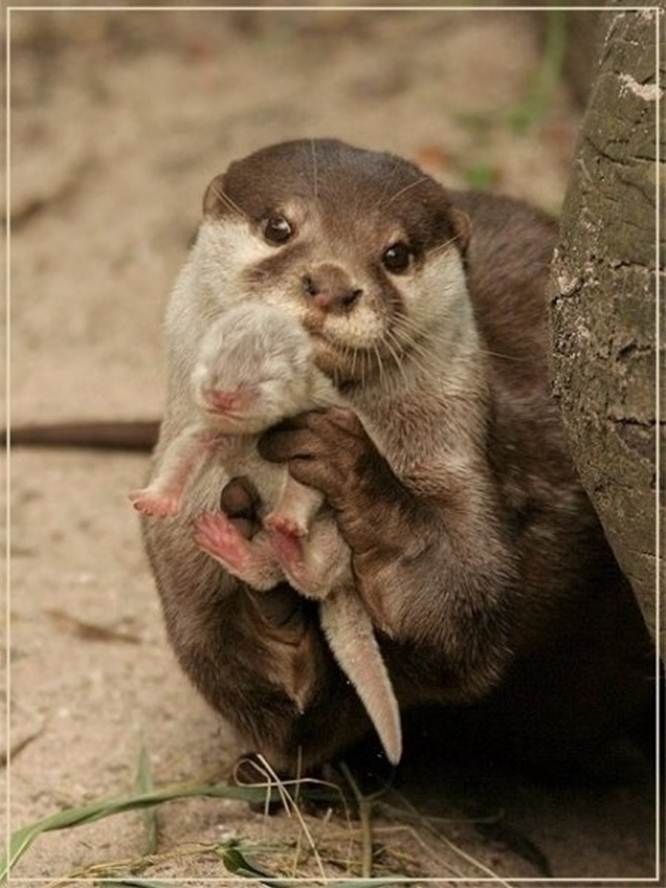
Author: Paul Handover

Nature taking a break!

“It would be fitting, I think, if among the last manmade tracks on earth would be found the huge footprints of the great brown bear.” Earl Fleming (American naturalist, 1958)

This particular item was brought to my attention by John and Janet Z., but I note it is widely distributed across the Web.  So without any more ado, just watch these wonderful pictures of a bear put together with some great backing music.  Just a couple of minutes long, it will deliver one of those ‘feel-good’ moments.

oo00OOO00oo

“When a pine needle falls in the forest, the eagle sees it;

the deer hears it, and the bear smells it.”

– an old First Nations saying 

Voices from the Beeline Café

The second guest post from John H.

John’s first guest contribution, Clarity of Thought, was published on the 20th September and attracted a collection of very thoughtful comments.  To give you a sense of that first contribution, it started thus,

The Passion of Enlightenment

Enlightenment includes deep grief and a passion to leave life a bit better than we found it. Enlightenment has little practical value in a growing and constantly consuming cultural demographic. Consumers tend to spiritually disconnect when faced by a need for change or when morality becomes inconvenient.

To set the scene for these musings from John, Highway 87 that runs South-North through Payson, where John lives, is called the Beeline Highway and there is, indeed, a Beeline Cafe in town.

Over to John now.

Voices from the Beeline Café

Americans are the best entertained and the least informed people on earth.

Combined commercial and investment banks have become a global casino.

No one can afford to run for political office without corporate approval.

—ooOOoo—

Political campaigns are celebrity theaters devoid of content or reality.

Climate change is a planetary constant exacerbated by human activities.

A twenty-four hour media drumbeat of fear encourages human divisiveness.

—ooOOoo—

Education, history and science are marginalized.

Facts are systematically denied.

People are confused.

—ooOOoo—

Global totalitarianism is immensely profitable.

Corporations do not care about democracy or humanity.

Economically stressed voters are disenfranchised by corporate government.

—ooOOoo—

The rule of law has lost equity and become the tool of oppressors.

Firefighters, policemen, nurses and clergy have become political pawns.

Corporate supported criminals control a majority of the nations of the world.

—ooOOoo—

We have lost the rudder of human morality.

Material well-being is considered the greastest good.

War is a highly profitable form of corporate enterprise.

—ooOOoo—

The flag and cross are employed to demonize opposition to corporate authority.

Politics worth supporting begin and end with service to God and nature.

God grant us each the grace to make a transformative difference.

—ooOOoo—

an old lamplighter

November 8th birthday update

The passing of an asteroid.

This has been very widely reported but not seen by me until a few moments ago.

Here’s how the BBC is reporting Asteroid 2005 YU55.

Giant asteroid to pass near Earth

Nasa’s Deep Space Network caught a glimpse of the asteroid on Monday

An asteroid that is 400m (1,300ft) wide will pass by the Earth on Tuesday, closer to it even than the Moon.

It poses no danger to the Earth and it will be invisible to the naked eye.

Asteroid 2005 YU55’s closest approach, at a distance of 325,000km (202,000mi), will be at 23:28 GMT. It is the closest the asteroid has been in 200 years.

It is also the largest space rock fly-by the Earth has seen since 1976; the next visit by such a large asteroid will be in 2028.

The aircraft-carrier-sized asteroid is darkly coloured in visible wavelengths and nearly spherical, lazily spinning about once every 20 hours as it races through our neighbourhood of the Solar System.

It will trace a path across the whole sky through to Thursday.

The NASA details may be found here.

And an interesting video on the passing of this rather large rock at 23:28 UTC today, November 8th.

Mid-week smile

November 8th happens to be my birthday so I’m taking a break!

Couple of pictures to give you a smile, wherever you are in the world.

I see no ships, only perishing hardships!

Seriously, wondering what these two guys are sighting on?  Click on the ‘more’ to reveal all!

Continue reading “Mid-week smile”

The potential for the USA!

A powerful ‘good news’ story.

I am republishing in full a recent report from the Earth Policy Institute.  It underlines how wringing our hands in the face of so much doom and gloom, while perfectly understandable, can hide the fact that mankind can and does change, frequently for the better.  This EPI report is a tad ‘dry’ but still a great read.  As an incentive, let me show you the final sentence, “If so, the United States could become a world leader in cutting carbon emissions and stabilizing climate.

Here’s the full paper.
NOVEMBER 02, 2011
U.S. Carbon Emissions Down 7 Percent in Four Years: Even Bigger Drops Coming
Lester R. Brown


Between 2007 and 2011, carbon emissions from coal use in the United States dropped 10 percent. During the same period, emissions from oil use dropped 11 percent. In contrast, carbon emissions from natural gas use increased by 6 percent. The net effect of these trends was that U.S. carbon emissions dropped 7 percent in four years. And this is only the beginning.

The initial fall in coal and oil use was triggered by the economic downturn, but now powerful new forces are reducing the use of both. For coal, the dominant force is the Beyond Coal campaign, an impressive national effort coordinated by the Sierra Club involving hundreds of local groups that oppose coal because of its effects on human health.

U.S. Energy-Related Carbon Dioxide Emissions, 1950-2010, with Projection for 2011

In the first phase, the campaign actively opposed the building of new coal-fired power plants. This hugely successful initiative, which led to a near de facto moratorium on new coal plants, was powered by Americans’ dislike of coal. An Opinion Research Corporation poll found only 3 percent preferred coal as their electricity source—which is no surprise. Coal plant emissions are a leading cause of respiratory illnesses (such as asthma in children) and mercury contamination. Coal burning causes 13,200 American deaths each year, a loss of life that exceeds U.S. combat losses in 10 years of war in Afghanistan and Iraq.

The campaign’s second phase is dedicated to closing existing coal plants. Of the U.S. total of 492 coal-fired power plants, 68 are already slated to close. With current and forthcoming U.S. Environmental Protection Agency air quality regulations on emissions of mercury, sulfur, and ozone precursors requiring costly retrofits, many more of the older, dirtier plants will be closed

In August, the American Economic Review—the country’s most prestigious economics journal—published an article that can only be described as an epitaph for the coal industry. The authors conclude that the economic damage caused by air pollutants from coal burning exceeds the value of the electricity produced by coal-fired power plants. Coal fails the cost-benefit analysis even before the costs of climate change are tallied.

In July 2011, New York Mayor Michael Bloomberg announced a grant of $50 million to the Beyond Coal campaign. It is one thing when Michael Brune, head of the Sierra Club, says that coal has to go, but quite another when Michael Bloomberg, one of the most successful businessmen of his generation, says so.

The move to close coal plants comes at a time when electricity use for lighting will be falling fast as old-fashioned incandescent light bulbs are phased out. In compliance with the Energy Independence and Security Act of 2007, by January 2012 there will be no 100-watt incandescent light bulbs on store shelves. By January 2014, the 75-watt, 60-watt, and 40-watt incandescents will also disappear from shelves. As inefficient incandescents are replaced by compact fluorescents and LEDs, electricity use for lighting can drop by 80 percent. And much of the switch will occur within a few years.

The U.S. Department of Energy projects that residential electricity use per person will drop by 5 percent during this decade as light bulbs are replaced and as more-efficient refrigerators, water heaters, television sets, and other household appliances come to market.

Even as coal plants are closing, the use of wind, solar, and geothermally generated electricity is growing fast. Over the last four years, more than 400 wind farms—with a total generating capacity of 27,000 megawatts—have come online, enough to supply 8 million homes with electricity. (See data.) Nearly 300,000 megawatts of proposed wind projects are in the pipeline awaiting access to the grid.

Cumulative Installed Wind Power Capacity in the United States, 1980-2011

Texas, long the leading oil-producing state, is now the leading generator of electricity from wind. When the transmission lines linking the rich wind resources of west Texas and the Texas panhandle to the large cities in central and eastern Texas are completed, wind electric generation in the state will jump dramatically.

In installed wind-generating capacity, Texas is followed by Iowa, California, Minnesota, and Illinois. In the share of electricity generation in the state coming from wind, Iowa leads at 20 percent.

With electricity generated by solar panels, the United States has some 22,000 megawatts of utility-scale projects in the pipeline. And this does not include residential installations.

Closing coal plants also cuts oil use. With coal use falling, the near 40 percent of freight rail diesel fuel that is used to move coal from mines to power plants will also drop.

In fact, oil use has fallen fast in the United States over the last four years, thus reversing another long-term trend of rising consumption. The reasons for this include a shrinkage in the size of the national fleet, the rising fuel efficiency of new cars, and a reduction in the miles driven per vehicle.

Fleet size peaked at 250 million cars in 2008 just as the number of cars being scrapped eclipsed sales of new cars. Aside from economic conditions, car sales are down because many young people today are much less automobile-oriented than their parents.

In addition, the fuel efficiency of new cars, already rising, will soon increase sharply. The most recent efficiency standards mandate that new cars sold in 2025 use only half as much fuel as those sold in 2010. Thus with each passing year, the U.S. car fleet becomes more fuel-efficient, using less gasoline.

Miles driven per car are declining because of higher gasoline prices, the continuing recession, and the shift to public transit and bicycles. Bicycles are replacing cars as cities create cycling infrastructure by building bike paths, creating dedicated bike lanes, and installing sidewalk parking racks. Many U.S. cities, including Washington, D.C., Chicago, and New York, are introducing bike-sharing programs.

Furthermore, when people retire and no longer commute, miles driven drop by a third to a half. With so many baby boomers now retiring, this too will lower gasoline use.

As plug-in hybrid and all-electric cars come to market, electricity will replace gasoline. Ananalysis by Professor Michael McElroy of Harvard indicates that running a car on wind-generated electricity could cost the equivalent of 80-cent-a-gallon gasoline.

With emissions from coal burning heading for a free fall as plants are closed, and those from oil use also falling fast—both are falling faster than emissions from natural gas are ramping up—U.S. carbon emissions are falling.

We are now looking at a situation where the 7 percent decline in carbon emissions since the 2007 peak could expand to 20 percent by 2020, and possibly even to 30 percent. If so, the United States could become a world leader in cutting carbon emissions and stabilizing climate.

Lester R. Brown is president of the Earth Policy Institute and author of World on the Edge.

Copyright © 2011 Earth Policy Institute

Your Sunday mystery.

Another brilliant Neil K. special.

Once you start watching, be sure to watch it all. You will NEVER get this one — until the end. 

More beautiful world.

More fabulous pictures.

This is how I introduced the first set of pictures on the 22nd October.

Regular readers will have seen that Cynthia S. has contributed some lovely items to Learning from Dogs. To be honest, if it wasn’t for the support of so many readers  and the contributions that regularly come to my in-box, I would have long ago stopped writing.  Anyway, a couple of weeks back Cynthia forwarded an email to me that had a series of the most beautiful nature photographs.  So I’m going to reserve showing these over a number of week-end days to serve as a very restful and peace-inspiring alternative to the crazy world that most of us ‘enjoy’ during the working week.

Here’s the first four pictures of those fabulous pictures,

“Be who you are and say what you feel….
Because those that matter…
don’t mind…
And those that mind… don’t
matter.”

Here are the next set of four.

The view from the window.

Perhaps ancient man is still alive and well in all of us.

Two delightful events have provided the fuel for today’s post which, I warn you, is much more the personal mental ramble than the usual daily post on Learning from Dogs.  So, health warning, continue reading at your own risk, or be safe and switch off now!

Before getting in to my perambulations, just a word of thanks to you for your support.  Last month, there were 31,291 viewers of Learning from Dogs and 71 of you have chosen to subscribe.  I am humbled by your interest.  Don’t ever hesitate to give me feedback or, if you prefer, comment to a specific post.

OK, to the theme of today.

On Wednesday I had an enjoyable lunch with a friend from here in Payson, Dennis L.  Sitting in the Crosswinds restaurant at Payson airport is one of the most beautiful eating spots in terms of the view from the window.  So it’s a very conducive place to relax and try put the world to rights!  Conversation ranged across a variety of topics but frequently touched on the lunacy of so many things to do with man, especially when it comes to the government of peoples.

Dennis and I also acknowledged that entering politics with a set of passionate ideals, as we were sure many persons did, would quickly run up against the skein of vested interests that must permeate governments from top to bottom.

Yes Minister was a satirical comedy written by Antony Jay and Jonathan Lynn that ran for many years.  It was extraordinarily funny, here’s a 3-minute clip,

That programme underlined, far better than anything else, how governments most probably work in reality.

Dennis and I were clear, as so many millions of other global citizens must be, that the complexity of commerce, politics, national interests, global finance, and more, had created ‘systems’ of decision making that were utterly disconnected with the needs of mankind having a long and stable future on the only finite home around, Planet Earth.

Then today (Thursday), Jean and I attended our regular weekly gardening course at the local college in Payson.  Today’s subject was Arizona’s Climate and the tutor, Mike C., was a professional climatologist and meteorologist.  It was fascinating, indeed, totally absorbing.  Mike’s graphs and slides about the climate, some showing data for the last 1,000 years, underlined the incredible complexity and interconnectedness of the processes that made up the global climate system.

Once again that use of the word ‘complexity’.  He confirmed that there was no scientific doubt that the world was warming as a result of changes to the Earth’s atmosphere, science certain most of it is caused by increasing concentrations of greenhouse gases produced by human activities such as deforestation and burning fossil fuels.

Mike closed the session with an interesting reflection.  He reminded the audience that mankind is still essentially wired, in evolutionary terms, to know how to react to an attacking tiger or similar wild beast, as in the fight or flee response, than know how to deal with such complex, despite intellectually obvious, threats as global climate change, rising sea levels and many other totally unsustainable practices.  Mike held the view that only when man had the threat in his face equivalent to that of the attacking tiger would there be a wholesale change.

On the home page of this blog, I write,

As man’s companion, protector and helper, history suggests that dogs were critically important in man achieving success as a hunter-gatherer.  Dogs ‘teaching’ man to be so successful a hunter enabled evolution, some 20,000 years later, to farming,  thence the long journey to modern man.  But in the last, say 100 years, that farming spirit has become corrupted to the point where we see the planet’s plant and mineral resources as infinite.  Mankind is close to the edge of extinction, literally and spiritually.

In the context of homo sapiens, Latin for “wise man” or “knowing man”, then we know that modern man, anatomically, originated in Africa about 200,000 years ago.  Modern man only evolved from hunter/gatherer to farmer around 10,000 years ago, a tiny proportion of H. sapiens existence and, in evolutionary terms, no time at all.

The DNA of the domesticated dog separated from that of the wolf around 100,000 years ago.  No one knows for sure when man and dog came together but there is archaeological evidence of dogs being buried in mens’ graves around 30,000 years ago.  That’s an association over a huge time period.

Dennis and Mike, between them, triggered in my mind something fundamental.  Perhaps modern society, with all it’s bizarre behaviours and so many totally illogical practises (especially, in terms of a long-term relationship with our planet), could be understood.  Understood from the perspective of our social behaviours, built so much on technology, having raced far on to the point where they are now practically out of sight of our instinctive evolutionary behaviours.  We really don’t know how to change those core behaviours.

In contrast, dogs have remained much more stable with regard to their evolutionary progress and their external world.  Consider that the last big change for the domesticated dog was the association with man and that is at least three times as long ago as man becoming farming man.  No wonder when we curl up with our dog it has echoes of a time thousands of years before we could even spell the word, ‘politician’.  Echoes of a stability that seems now so way beyond reach.

And the view from the window of the Crosswinds ……

Mogollon Rim, North of Payson, AZ., in Winter

All Watched Over by Machines of Loving Grace

Three very thought-provoking films

Over the last week we have watched all three 0ne-hour films made by the BBC, aired in 2011,  under the title of the heading of this post, All Watched Over by Machines of Loving Grace.  The films are available on the website Top Documentary Films, the direct link is here.  As that website explains,

A series of films about how humans have been colonized by the machines they have built. Although we don’t realize it, the way we see everything in the world today is through the eyes of the computers. It claims that computers have failed to liberate us and instead have distorted and simplified our view of the world around us.

1. Love and Power. This is the story of the dream that rose up in the 1990s that computers could create a new kind of stable world. They would bring about a new kind global capitalism free of all risk and without the boom and bust of the past. They would also abolish political power and create a new kind of democracy through the Internet where millions of individuals would be connected as nodes in cybernetic systems – without hierarchy.

2. The Use and Abuse of Vegetational Concepts. This is the story of how our modern scientific idea of nature, the self-regulating ecosystem, is actually a machine fantasy. It has little to do with the real complexity of nature. It is based on cybernetic ideas that were projected on to nature in the 1950s by ambitious scientists. A static machine theory of order that sees humans, and everything else on the planet, as components – cogs – in a system.

3. The Monkey in the Machine and the Machine in the Monkey. This episode looks at why we humans find this machine vision so beguiling. The film argues it is because all political dreams of changing the world for the better seem to have failed – so we have retreated into machine-fantasies that say we have no control over our actions because they excuse our failure.

Adam Curtis is a documentary film maker, whose work includes The Power of Nightmares,The Century of the SelfThe Mayfair SetPandora’s BoxThe Trap and The Living Dead.

As was eluded, the three films are deeply thought-provoking.  There is a ‘taster’ to the first film on YouTube, as below,

Adam Curtis, the film maker, has a blog site under the BBC Blogs umbrella.  The entry on that blog-site by Adam in connection with these films is here, and makes interesting reading.  It also includes a longer trailer than the one from YouTube, above.

Finally, there are comprehensive writings on all three films on the WikiPedia website here.  To give you a taste, here’s what was written about the third film,

The Monkey In The Machine and the Machine in the Monkey

This programme looked into the selfish gene theory which holds that humans are machines controlled by genes which was invented by William Hamilton. Adam Curtis also covered the source of ethnic conflict that was created by Belgian colonialism’s artificial creation of a racial divide and the ensuing slaughter that occurred in the Democratic Republic of the Congo, which is a source of raw materialfor computers and cell phones.

William Hamilton went to Kisangani in the Democratic Republic of the Congo while the Second Congo War was raging. He went there to collect Chimpanzee faeces to test his theory that HIV was due to a medical mistake. Unfortunately he caught malaria, for which he took aspirin, which caused a haemorrhage and he died. However his selfish gene theory lived on.

In 1960 Congo had become independent from Belgium, but governance promptly collapsed, and towns became battle grounds as soldiers fought for control of the mines. America and the Belgians organised a coup and the elected leader was assassinated, creating chaos. The Western mining operations were largely unaffected however.

Bill Hamilton was a solitary man, and he saw everything through the lens of Darwin’s theory of evolution. When he wanted to know why some ants and humans gave up their life for others, he went to Waterloo station and stared at humans for hours, and looked for patterns. In 1963 he realised that most of the behaviours of humans was due to genes, and looking at the humans from the genes’ point of view. Humans were machines that were only important for carrying genes, and that it made sense for a gene to sacrifice a human if it meant that another copy of the gene elsewhere would prosper.

In the 1930s Armand Denis made films that told the world about Africa. However, his documentary gave fanciful stories about Rwanda’s Tutsis being a noble ruling elite originally from Egypt, whereas the Hutus were a peasant race. In reality they were racially the same and the Belgian rulers had ruthlessly exploited the myth. But when it came to create independence, liberal Belgians felt guilty, and decided that the Hutus should overthrow the Tutsi rule. This led to a blood bath, as the Tutsis were then seen as aliens and were slaughtered.

So, all in all, this is a great personal recommendation and, it goes without saying, those of you that do watch the films and want to comment, would love to hear from you.

Deborah Stone

Final contribution to the Dog Pound Ball!

To be honest, I’m aware that the above sub-heading may be less than clear – a deliberate ploy to grab your attention!

On the 17th October, Learning from Dogs published a piece about Milly, a lovely dog who had been at the rescue centre for some three years – breaks your heart just to think about her.

Such a beautiful dog, and so many ways to help her.

There is a charity Ball for the benefit of the pound dogs, being held this coming Friday, the 4th, at Hellaby Hall, Rotherham, England.  Luckily now fully subscribed and, clearly, heading for a successful evening for all concerned, including the dogs!

One of the supporters of the event is a professional photographer who has worked with many notable businesses, such as Ford, Vidal Sassoon, Revlon, Marks & Spencer, Wilkinson Sword.

Her name is Deborah Stone.  Her website is here.

Deborah Stone

Deborah is offering a prize for the evening, consisting of a two hour studio session covering any particular category, (family, products, makeover, model shoot, publicity, dogs- whatever!) with the final images supplied on a DVD.

So loud applause from Payson, Arizona, for such a generous gift, and in their own way, from all the dogs that will be helped who will be saying ‘thank you, as well.

Deborah’s website is here.  If you need a professional photographer, why not give Deborah a call on +44 (0) 114 2348551 or email her at deb@deborahstone.co.uk

Finally, if you would like to send in a donation then please post a cheque, made out to Pound Dog Ball, to the following address:

c/o Jennifer Smith

Clumber Lodge,

50 Hemingfield Road

Wombwell, S73 0LY.

Or if you prefer an electronic donation, further details are:

Pound Dog Ball
A/C 31542265
Sort 40-45-29 (HSBC)

The account is a charity account, set up only for this event.  Once the money has been paid to the charities the account will be closed.

Thank you!