We had to put one of our dogs to sleep on Friday, not a GSD, but one of Jean’s rescued dogs from way back. At this moment in time (11am US Mountain Time, Saturday) I’m writing a piece about this wonderful dog that will appear tomorrow.
Thus not in the mood to post my usual light-hearted item for a Sunday. So I resorted to looking up an appropriate dog video on YouTube.
Came across this,
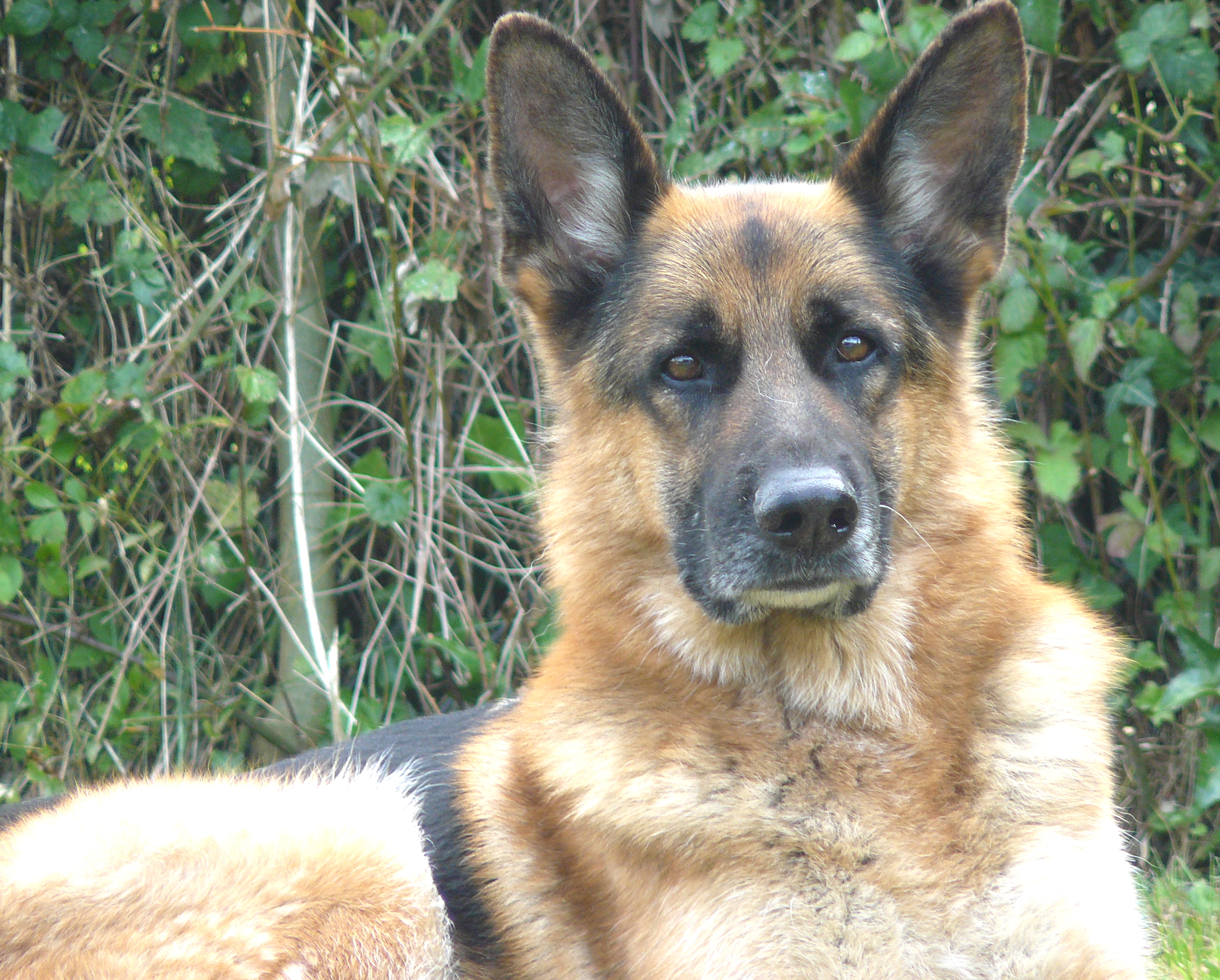
Of course, that reminded me of how precious our Pharaoh is and it only took a few moments to find a couple of earlier pics of him.
Here’s Pharaoh the day I collected him from GSD breeders Jutone‘s in Dartmoor, SW England. That’s Sandra Tucker, the owner of Jutone, with Pharaoh; the date being 12th August 2003 when Pharaoh was then just over 8 weeks old.
Sandra Tucker holding young Pharaoh
The next photograph was taken on the 11th March, 2008 at London’s Heathrow Airport. The occasion being the time that Jean came across to England from her home in Mexico. Jean came to see if the romance that had blossomed between us at Christmas in 2007 in San Carlos, Mexico was alive and well. Luckily, it was!
Jean meeting Pharaoh for the very first time!
Thus it came to pass that in September, 2008, Pharaoh and I travelled out from Devon, England to Mexico where we lived until February, 2010, when Jean and I, Pharaoh and 12 other dogs and 6 cats relocated to Payson, Arizona.
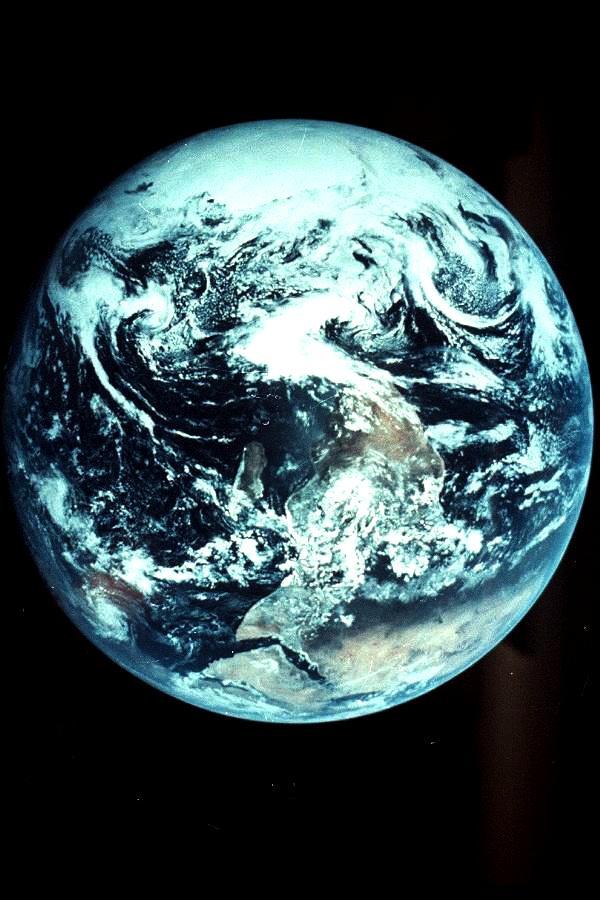
This was emailed to me a couple of weeks ago. Have no background information as to where the photograph was taken and, indeed, what type of bird it is! But, nonetheless, just a beautiful reminder of the wonderfully, precious planet that we all, and I mean all, live on.
Just a short note to say how very grateful I am for the number of readers who have signed up as subscribers over the last couple of weeks.
Many of you are already bloggers and very soon I’m going to find a way of linking Learning from Dogs to your blog. The obvious way would be to use the Blog Roll feature but methinks the list would be too long. I shall put my thinking cap on this aged head and see what would be an effective way of linking back to all those subscribers who also Blog. Feel free to add a comment if you have ideas.
Yesterday I received an email from 350.org as part of their mailing to all 350.org supporters. I have previously written a number of times, for example see here and here, about this proposed project and why it is so important to have it rejected.
Yesterday I published a lecture given in Melbourne by Britain’s eminent Astronomer Royal, Lord Martin Rees. Lord Rees concluded his lecture with the call for us to take better care of our own planet. He, like many others, recognises the unique place in history that we occupy. For the first time a single species is capable of exerting profound changes on the Earth’s natural and physical environments.
Over and over again, scientists are reporting the rise in climate temperature of Planet Earth and the implications thereof if we do not wakeup soon to changing our ways. The Keystone pipeline is a huge potential mistake!
Bill McKibben of 350.org
Anyway, to the letter issued by 350.org – note the link to send a message to President Obama works – please use it!
Direct threats from Big Oil over Keystone XL
01/05/12, 11:43am
Here’s the email that Bill McKibben just sent to US 350.org supporters who have been working on Keystone XL:
Just in case you thought there was anything subtle about the Keystone battle, you need to hear what the president of the American Petroleum Institute — the oil industry’s #1 front group — said yesterday: if the President doesn’t approve the project there will “huge political consequences.”
That’s as direct a threat as you’re ever going to hear in DC, and it shows just how mad you made the oil industry last year by exposing Keystone for the climate-killing danger it is. And the oil industry can obviously make good on their threats — they’ve got all the money on earth, and thanks to Citizens United they can use it without restriction in our elections. They’re not used to ever losing.So far the Obama administration is standing firm in the face of Big Oil’s bullying — the White House made it completely clear last month that if the oil industry and its harem in Congress forced a speeded-up review, it would lead to an outright rejection of the permit for the pipeline. We expect they’ll keep their word.
Here’s what I think we need to do.
1- Let the president know you’ve got his back when he rejects the pipeline. Tell him that addressing climate change is the key to our future, and that you’re glad he’s not bending.
2- Take the offensive against the oil industry. If they’re going to try and ram Keystone down our throats we’re going to try and take away something they hold dear, the handouts that Congress gives them each and every year. They’re the richest industry on earth, they’re doing great damage to the planet — and they expect us to pay for it with our tax dollars.
Can you send a quick note to President Obama covering those two key points?
President Obama: Thank you for opposing the rushed Keystone XL pipeline permit. Responding to climate change is critical to preserving our collective future, and I hope this is a first step towards the dramatic changes we need to avoid catastrophe. PS: Please take handouts for the fossil fuel industry out of next year’s budget. There are people in America who need that money more.
There’s lots more to be done, of course. In the slightly longer run, we’ve got to take on the greatest subsidy of all: the special privilege that Congress gives the fossil fuel industry to use the atmosphere as an open sewer into which to dump its carbon for free.But today — right now, in the face of this kind of straight-up bullying — it’s time to punch back. We’re nonviolent, but we’re not wimps.
A powerful lecture by the eminent Lord Martin Rees
Martin Rees at Jodrell Bank, 2007
I came across this interview a few days ago in connection with some book research that I was undertaking. Please don’t be put off by the 56 minute length because Martin Rees is one of the most pre-eminent cosmologists around today, as well as being the UK’s Astronomer Royal since 1995.
Make a promise to yourself to settle down sometime soon and watch the lecture, given at the University of Melbourne’s Medical School in 2010. And a warning! I going to pick up on some of the important points made by Martin Rees in a couple of posts next week.
Here’s how the lecture was reported by the Australian science website, SixOne Science,
Lord Rees in Melbourne
In a packed Sunderland Lecture Theatre in the University of Melbourne’s Medical School, Lord Martin Rees gave the inaugural Derek Denton Lecture in Science and the Arts. Lord Rees, an eminent and accomplished astrophysicist and cosmologist, is coming to the end of his five year tenure as the president of The Royal Society. The event even managed to attract or Prime Minister, Kevin Rudd, who entered without a noticeable entourage and with no fanfare, and the Governor of Victoria, Professor David de Kretser, a scientist himself.
The lecture was entitled “Life and the Cosmos”, a grand and sweeping title if ever there was one. It seemed like an impossible amount of material to cover in the allotted hour. However, Rees delivered an entertaining, humorous account of life from the big bang, through the formation of stars and galaxies, to the origins of life and perhaps the biggest crowd pleaser, the search for extra-terrestrial life. Most in the lecture theatre would not have learnt anything new, but this lecture was aimed at a general audience and the material was interesting enough to keep everyone interested for the hour despite being squashed into an ageing undergraduate lecture theatre complete with squeaky desks and a slightly musty smell. Perhaps Mr. Rudd was sufficiently uncomfortable to increase university funding, we can hope.
Whist this was predominately an overview of the subject material, Rees expressed some opinions about space exploration. He seemed torn between his human curiosity and the cost of human exploration. Given the advances in robotic exploration vehicles, Rees has difficulty in justifying the cost of sending humans on planetary exploration missions. Perhaps the best case for robotic exploration was made by the amazing photos he showed from the surfaces of Mars (photos) and Titan (photos), a moon of Saturn. Interestingly, Rees believes that if human exploration does proceed in the future it will be led by the Chinese or groups of private individuals. He also raised the issue of exploitation of other planets, something not often mentioned in the debate over human space travel. We need to decide if other bodies in our solar system are open for exploitation or if they should be preserved as wilderness, in a similar way to Antarctica. Given the pressures faced by places like Antarctica and the Amazon this will be an important debate should human exploration resume.
Rees concluded his lecture with the almost obligatory call for us to take better care or our own planet. He, like many others, recognises the unique place in history that we occupy. For the first time a single species is capable of exerting profound changes on the Earth’s natural and physical environments (although it might be argued that the first photosynthesizing cyanobacteria had a similarly singular influence by increasing the proportion of oxygen in the atmosphere). It is interesting to note that he does not see colonisation of other planets as a solution as the Earth is still the only known planet capable of sustaining us. Although he did discuss the likelihood of discovering Earth-like planets (pretty good given advances in technology). However, Rees did not paint an overly pessimistic picture and he generally came across as optimistic and enthusiastic about the future.
The organisers of the Derek Denton Lecture series should be commended for attracting such a high profile speaker for the first of the series. Hopefully the series will be successful, and if so may need to be moved to a bigger venue. If you want to see the lecture it will soon be available here. The next lecture of this series hasn’t been announced yet, it will be on the Arts, but you can check here for future public events at The University of Melbourne.
Something new for the New Year – stories about dogs!
Preface.
Before I met Jean in December 2007, she had been rescuing feral dogs in the Mexican beach town of San Carlos for many, many years. Over those years, Jean must have rescued and found homes for 60 dogs or more. In the month that I met Jean, she had 12 dogs and 6 cats at her home. Ten months later, September 2008, I flew out to be permanently with Jean with my German Shepherd, Pharaoh – that’s him on the home page of Learning from Dogs – taking the total up to 13 dogs.
When we moved up to Payson, Arizona in February, 2010 we brought all 13 dogs and 6 cats with us, much to the amazement of the US Immigration officers at the US-Mexican border town of Nogales! Indeed, our particular officer left his booth excitedly to explain to his colleagues that our dogs and cats represented a border crossing record!
So many of the dogs that have passed through Jean’s loving arms have stories to tell. Thus over the coming months, Jean and I will offer you, dear reader, those stories.
Here’s the first, written by ‘Dog Lady’ Jean about gorgeous, sweet Paloma who, despite her age (Paloma that is!), is alive and well here in Payson.
* * * * * * * * * * *
Paloma, December 29th 2011
Paloma
The old white dog padded down the dusty pavement. Sway-backed and dull-eyed, her teats, heavy with milk, grazed the ground. An anonymous creature in a cruel world. The pavement sizzled in the afternoon Mexican summer sun blistering her tired feet, but she could not hurry. She had to conserve her energy. Her pups were soon coming and finding a safe place to give birth to them was her priority. The beach that had been her home was not a good place. .. needed cool shelter. She would find it.
She was alone among a sea of human legs in this scruffy Mexican beach town. No-one noticed her plight. No-one cared. She was used to it. She had long been adept at finding dried fish, discarded tortillas, sometimes a tasty morsel thrown by a tourist sunning in front of the big hotel.
This would be her eighth litter and she was very tired. As a puppy she belonged to a family with small children. There were plenty of leftovers. But when she became pregnant they drove her to the beach, threw her out and left her to fend for herself.
Her babies were always beautiful. She had Labrador in her genes donating a coat that was pure white. Humans always took her pups; she could only ever hope their fate was always a better one than hers.
Anonymity. She had perfected the art; never make eye contact, move low to the ground, escape the stray kick with a quick sideways leap.
She remembered at the very end of the long beach there was a house with a pool. Plenty of water. Onward she padded.
The lawn surrounding the pool was moist with sprinklers and the hibiscus hedge close to the house made a safe nest. Soon she had dug into the damp earth a big enough hole to curl into; it was cool under the canopy of red flowers.
A human voiced shouted, “Carlos, get that dog out of the hedge.” Then the long hose filling that tempting pool was turned on her and a burst of water hit her in the face. She uttered a low growl. Carlos, the gardener, backed away, “Señor, the dog, she is having babies.”
The owner of the house turned abruptly and went inside. He picked up his phone, made a call to the local English lady who over the years had acquired the nickname ‘Dog Lady’. He practically shouted down the phone, “I have a dog in my hedge having pups. You had better do something about it or I shall dispose of them, and I won’t be pretty about it!”
‘Dog Lady’ was used to this. Had been many years since she took on the practically impossible task of rescuing Mexican feral dogs and she was well-known for never turning a dog away. In less than 15 minutes, she had walked to the fine house overlooking the beach and quietly looked under the hedge. As anticipated, the dog was incapable of being moved, her focus entirely now on the safe birth of her pups. With appropriate feminine wiles, the white dog’s human saviour persuaded the disgruntled owner to allow the mother dog a stay of a few days. ‘Dog Lady’ promised that she would take them away as soon as possible.
“She’s a mean and wild dog, you’ll never tame her,” came the angry response from the house owner.
‘Dog Lady’ just smiled and said nothing.
But every day she took food to the white dog then sat quietly close by on the grass reading her book. The white dog had just the one pup, which ‘Dog Lady’ called Solovino, the Spanish for ‘comes alone’. The mother dog she called Paloma, Spanish for ‘Dove’. Many white dogs in Mexico were called Paloma and maybe years earlier that was what the children named her as the name did seem to resonate with this gentle dog.
Patiently, ‘Dog Lady’ moved closer and closer until Paloma would take meat from her hand, rapidly followed by allowing her ears to be caressed. Ten days later, while Paloma was eating, ‘Dog Lady’ picked up the little Solovino and put him into her car. Paloma’s response was immediate; she frantically ran to her child, her mothering instinct so great that she leapt without hesitation into this strange vehicle. Paloma and Solovino were safe.
The house owner graciously admitted that he had been taught a lesson in empathy and how sorry he was for being so rude and cruel.
Back at ‘Dog Lady’s’ home, a quiet sanctuary for so many dogs over the past years, Paloma and Solovino were quickly settled into a cool room. Paloma soon utterly trusted her ‘Dog Lady’ human companion and became the tame and loving dog she always wanted to be. Her shining eyes embraced her new world and she even regained her figure! Solovino grew quickly and found a wonderful family home in Tucson, Arizona.
Now some 6 years after ‘Dog Lady’ rescued Paloma from under that hedge, she is a beloved part of the Handover family. Indeed, she travelled in peace in February 2009 with her twelve dog friends from her sanctuary in San Carlos, Mexico to this dog paradise in the Arizonan forest just outside Payson.
Over a week ago there was a fascinating and very thought-provoking BBC radio broadcast by Mr. John Gray, the political philosopher and author of the book False Dawn: The Delusions of Global Capitalism, .
Mr. John Gray
The BBC website then carried a further article by John Gray. But before quoting from that article, I do recommend that you put aside just 14 minutes to listen to that broadcast. If you click here you will be taken to the BBC podcast page for the Point of View series and then scroll down to the item that is headlined: The End, yet again? 26 Dec 2011.
There will see that a simple ‘right click & save target as’ allows you to download the audio file so you can listen at your pleasure.
Indeed, having listened to Point of View over the many years when living in England, I can thoroughly recommend them. Described on the website, “Weekly reflections on topical issues from a range of contributors including historian Lisa Jardine, novelist Sarah Dunant and writer Alain de Botton.”
Here are some extracts from the John Gray article that appeared on the BBC website.
A Point of View: The endless obsession with what might be
If we can stop thinking about what the future might bring and embrace the present for what it is, we would be a lot better off, writes John Gray.
It’s been some time now since history didn’t end. Twenty-odd years ago, when the Berlin Wall was coming down, there were many who believed that there would be no more serious conflicts.
The American writer Francis Fukuyama, who promoted the idea of the end of history in the autumn of 1989, declared that the chief threat in future would be boredom. A new era, different from any before, had arrived.
Of course it hadn’t. The end of the Soviet Union was followed by conflicts and upheavals of the sort that happen when empires fall apart – war in the Caucasus and economic collapse in Russia, for example.
In any realistic perspective the idea that a single event – however large – could mark the end of human conflict was absurd. But those who were seduced by the idea were not thinking in realistic terms.
They were swayed by a myth – a myth of progress in which humanity is converging on a universal set of institutions and values. The process might be slow and faltering and at times go into reverse, but eventually the whole of humankind would live under the same enlightened system of government.
When you’re inside a myth it looks like fact, and for those who were inside the myth of the end of history it seems to have given a kind of peace of mind. Actually history was on the move again. But since it was clearly moving into difficult territory, it was more comfortable to believe that the past no longer mattered.
Then later on in the article, John writes,
Life’s framework
The implication is that sudden shifts are relatively rare in history. But consider continental Europe over the past 70 years – until recently a normal human lifetime. Unless they were Swedish or Swiss, an ordinary European man or woman lived during that period under several quite different systems of government.
Nearly all of Europe, some of it democratic, succumbed for a time to Nazism or fascism. Half of Europe moved from Nazism to communism with only a brief interval of democracy. Most of that half, though not Russia, became functioning democracies after the end of the Cold War.
Not only have political forms changed during a normal lifetime, systems of law and banking have come and gone along with national currencies. The entire framework in which life was lived has changed not once, but several times. In any longer historical perspective discontinuities of these kinds are normal.
The article then concludes, thus,
We seem to be approaching one of those periods of discontinuity that have happened so often in the past. It may seem unthinkable that the European banking system could implode, or that a global currency like the euro could dissolve into nothing.
Yet something very much like that was the experience of citizens of the former Soviet Union when it suddenly melted down, and there is nothing to say something similar could not happen again.
For believers in progress it must be a dispiriting prospect. But if you can shake off this secular myth you will see there is no need to despair. The breakdown of a particular set of human arrangements is not after all the end of the world.
Surely we would be better off if we put an end to our obsession with endings. Humans are sturdy creatures built to withstand regular disruption. Conflict never ceases, but neither does human resourcefulness, adaptability or courage.
We tend to look forward to a future state of fulfilment in which all turmoil has ceased. Some such condition of equilibrium was envisioned by the American prophet of the end of history with whom I began.
As Fukuyama admitted, it’s not an altogether appealing vision. But living in fear of the end is as stultifying as living in hope of it. Either way our lives are spent in the shadow of a future that’s bound to be largely imaginary.
Without the faith that the future can be better than the past, many people say they could not go on. But when we look to the future to give meaning to our lives, we lose the meaning we can make for ourselves here and now.
The task that faces us is no different from the one that has always faced human beings – renewing our lives in the face of recurring evils. Happily, the end never comes. Looking to an end-time is a way of failing to cherish the present – the only time that is truly our own.
I have extracted more than perhaps I ought, and there was so much more to read than is presented here. So please go to the BBC website and read it in full; it’s a very powerful essay.
Finally, let me take you back to a piece that I wrote back in September about Transitions. I closed that piece thus,
There is significant evidence, real hard evidence, that the patterns of mankind’s behaviours of the last few decades cannot continue. Simply because mankind will go over the edge of self-extinction. Darwin’s evidence and all that! We have to accept that humans will see the bleedin’ obvious before it is too late. We have to keep the faith that our species homo sapiens is capable of huge and rapid change when that tipping point is reached, so eloquently written by Paul Gilding in his book, The Great Disruption, reviewed by me here. We have to embrace the fact that just because the world and his wife appears to be living in total denial, the seedlings of change, powerful change, are already sprouting, everywhere, all over the world.
So let’s welcome those changes. Let’s nurture those seedlings, encourage them to grow and engulf our society with a new richness, a new fertile landscape.
Let’s embrace the power of now, the beauty of making today much better and letting go of tomorrow.
For today, I am in charge of my life,
Today, I choose my thoughts,
Today, I choose my attitudes,
Today, I choose my actions and behaviours.
With these, I create my life and my destiny.
It’s very difficult to make predictions, especially when they involve the future!
Last Friday, the 30th December, I published an hour-long video interview, introduced thus,
Toxic botulism in animals linked to RoundUp
Dr Mercola recently interviewed Dr Don Huber, whose letter to the USDA warning that Monsanto’s RoundUp, a broad-spectrum “herbicide” that has been linked with spontaneous abortion in animals, continues to be ignored by food and environmental safety authorities. In this important hour-long discussion, Huber, a plant pathologist for over 50 years, explains how RoundUp is destroying our healthy soils by killing needed microorganisms.
For those of you who watched that interview, you may like to watch the first few minutes of a documentary made by Journeyman Pictures that shows how right can overcome might!
Percy Schmeiser has his own website here and from there you can go to a section where Percy speaks about his experiences.
Neil K. from South Devon sent me these, a little too late to put in my NY Post that came out yesterday. But they were too good to leave to next week-end so here they are. First Berlin.
Beginning with a countdown on a giant hourglass and a greeting from an “Android,” LG’s huge presentation took viewers on a thrilling 3D ride that included — among other things — whales, ice skaters, giant octopi and steaming jungles.