In fact the heading was taken from an email that came in from Bill McKibben’s 350.org yesterday. But before reproducing that email in full, let me take you back to the 6th January this year when I published a piece simply called Keystone XL pipeline. This is how that Post opened up,
Yesterday, I had published a lecture given in Melbourne by Britain’s eminent Astronomer Royal, Lord Martin Rees. Lord Rees concluded his lecture with the call for us to take better care of our own planet. He, like many others, recognises the unique place in history that we occupy. For the first time a single species is capable of exerting profound changes on the Earth’s natural and physical environments.
Over and over again, scientists are reporting the rise in climate temperature of Planet Earth and the implications thereof if we do not wakeup soon to changing our ways. The Keystone pipeline is a huge potential mistake!
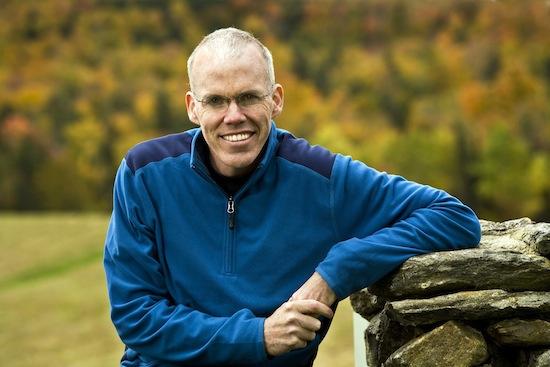
Bill McKibben of 350.org
Not easy to focus on a single sentence from Lord Rees but this one’s pretty direct, “For the first time a single species is capable of exerting profound changes on the Earth’s natural and physical environments.”
God only knows what money, power and influence is going on behind the scenes because no leader in their right mind ought to be supporting any major investment in the continuation of carbon-based energy. So it was with deep dismay that around 2pm US Mountain Time yesterday afternoon the following email arrived in my in-box. (Feel free to republish this Post, indeed please do so!)
Dear friends,
Earlier today, Barack Obama wrapped up his first trip to Oklahoma as President. He arrived just after a week of floods, capping off a winter that never came, which followed the hottest and driest summer Oklahoma had seen in thousands of years, perhaps ever.
But he wasn’t in Oklahoma to talk about these climate disasters. He was there to laud his administration’s fast-tracking of the southern leg of the Keystone XL tar sands pipeline. In his speech today, President Obama didn’t connect the dots between fossil fuel extraction, climate change, and the extreme weather that has reshaped so much of the American landscape this past year.
It’s a painful reminder that sometimes we must be leaders ourselves, before we can expect our elected officials to follow. It’s clearly up to us to connect the dots.
Today 350.org is launching a global day of action to call attention to these and other climate disasters, here on the same day as the President’s annoucement. Across the planet now we see ever more flooding, ever more drought, ever more storms. People are dying, communities are being wrecked — the impacts we’re already witnessing from climate change are unlike anything we have seen before.
If we’re going to do these communities justice, we need to connect the dots between these disasters and show how all of them are linked to fossil fuels. We’re setting aside May 5th for a global day of action to do just that: Connect the Dots between extreme weather and climate change.
Anyone and everyone can participate in this day. Many of us do not live in Oklahoma, the Philippines, or Ethiopia — places deeply affected by climate impacts. For those of us not in directly-impacted communities, there are countless ways to stand in solidarity with those on the front-lines of the climate crisis: some people will be giving presentations in their communities about how to connect the dots. Others will do projects to demonstrate what sorts of climate impacts we can expect if the crisis is left unchecked. And here in the US, it’s particularly important that we make the connections clear to our elected officials — beginning with President Obama.
However you choose to participate, your voice is needed in this fight — and you can sign up to host a local event here: www.climatedots.org/start
(For more general info about the day, check out our new website here: www.climatedots.org)
350.org has done giant global days of action before (over the last three years we’ve helped coordinate over 15,000 events in 188 countries) and they’re always beautiful moments when our movement stands together. This year we’ll use that same captivating tactic to draw attention to the struggles of our friends around the world — the communities already feeling the harsh impacts of climate change.
These will also be beautiful events, we’re sure. But they will also have an edge. It’s right that we get a little angry at those forces causing this problem. The fossil fuel industry is at fault, and we have to make that clear. Our crew at 350.org will work hard to connect all these dots — literally — and weave them together to create a potent call to action, and we will channel that call directly to the people who need to hear it most.
May 5 is coming soon; we need to work rapidly. Because climate change is bearing down on us, and we simply can’t wait. The world needs to understand what’s happening, and you’re the people who can tell them.
Please join us — we need you to send the most important alarm humanity has ever heard.
How fundamental reforms of environmental governance are urgently needed.
I must admit that as Post titles go, the one above is about as ‘weighty’ as it comes! But then again, one might argue as Ronald Firbank, a British novelist, was reputedly to have quoted, “The world is so dreadfully managed, one hardly knows to whom to complain! ”
One of the great assets of the part of the world where Jean and I live, namely Arizona, is the state university or to give it it’s proper title Arizona State University. The university has an important School of Sustainability and I subscribe to their regular newsletter. But it was Rob I. here in Payson who spotted a recent item and forwarded same to me. Thank goodness because it covered something of supreme relevance to the future.
Fundamental steps needed now in global redesign of Earth system governance
Leading experts from around the world, 4 from Pac-12 colleges, argue for immediate ambitious reforms
Some 32 social scientists and researchers from around the world, including Kenneth W. Abbott, a professor of international relations in ASU’s Sandra Day O’Connor College of Law and a Senior Sustainability Scholar in the Global Institute of Sustainability a Senior, are calling for fundamental reforms of global environmental governance to avoid dangerous changes in the Earth system.
Some 32 social scientists and researchers from around the world, including a senior sustainability scholar at Arizona State University, have concluded that fundamental reforms of global environmental governance are needed to avoid dangerous changes in the Earth system. The scientists argued in the March 16 edition of the journal Science that the time is now for a “constitutional moment” in world politics.
Research now indicates that the world is nearing critical tipping points in the Earth system, including on climate and biodiversity, which if not addressed through a new framework of governance could lead to rapid and irreversible change.
“Science assessments indicate that human activities are moving several of Earth’s sub-systems outside the range of natural variability typical for the previous 500,000 years,” wrote the authors in the opening of “Navigating the Anthropocene: Improving Earth System Governance.”
Reducing the risk of potential global environmental disaster requires the development of “a clear and ambitious roadmap for institutional change and effective sustainability governance within the next decade,” comparable in scale and importance to the reform of international governance that followed World War II, they wrote.
In particular, the group argued for the creation of a Sustainable Development Council that would better integrate sustainability concerns across the United Nations system. Giving a leading role to the 20 largest economies (G20) would help the council act effectively. The authors also suggested an upgrade of the UN Environment Program to a full-fledged international organization, a move that would give it greater authority and more secure funding
To keep these institutions accountable to the public, the scientists called for stronger consultative rights for representatives of civil society, including representatives from developing countries, NGOs, consumers and indigenous peoples.
“We should seek input from people closest to the ground, not just from the elites, not just at the 30,000-feet level,” noted Kenneth W. Abbott, a professor of international relations in ASU’s Sandra Day O’Connor College of Law. “Consultations should not take place only at the global scale, where the broadest policies are created, but also at local scales, smaller scales, all scales,” he said.
To improve the speed of decision-making in international negotiations, the authors called for stronger reliance on qualified majority voting. “There has to be a change in international negotiating procedures from the current situation, in which no action can be taken unless consensus is reached among all participating governments,” Abbott said.
The authors also called for governments “to close remaining regulatory gaps at the global level,” including the treatment of emerging technologies.
“A great deal of attention has been given to issues such as climate change, yet nanotechnology and other emerging technologies, which may bring significant benefits, also carry potential risks for sustainable development,” Abbott said.
Relying on research by Abbott and his colleagues at ASU’s College of Law, the authors wrote that emerging technologies “need an international institutional arrangement – such as one or several multilateral framework conventions” to support forecasting and transparency, and to ensure that environmental risks are taken into account.
“Working to make the world economy more green and to create an effective institutional framework for sustainable development will be the two main focal points at this summer’s United Nations Conference on Sustainable Development in Rio de Janeiro,” Abbott said. “This article was written to bring urgency to those discussions and to outline specific ‘building blocks’ for a more effective and sustainable Earth system governance system.”
The authors also argued for increased financial support for poorer nations. “More substantial financial resources could be made available through novel financial mechanisms, such as global emissions markets or air transportation levies for sustainability purposes,” they wrote.
Lead author Frank Biermann, of Free University Amsterdam and Lund University, Sweden, said, “Societies must change course to steer away from critical tipping points in the Earth system that could lead to rapid and irreversible change. Incremental change is no longer sufficient to bring about societal change at the level and with the speed needed to stop Earth system transformation.
“Structural change in global governance is needed, both inside and outside the UN system and involving both public and private actors,” said Biermann, who also is chair of the scientific steering committee of the Earth System Governance Project.
All 32 authors of the Science article are affiliated with the Earth System Governance Project, a global alliance of researchers and leading research institutions, specializing in the scientific study of international and national environmental governance. ASU’s Abbott is one of some 50 lead faculty of the Earth System Governance Project. Lead faculty are scientists of high international reputation who share responsibility for research on earth system governance. Additional information is at http://earthsystemgovernance.org.
Among the other authors of “Navigating the Anthropocene” are: S. Andresen, Fridtjof Nansen Institute, Norway; K. Bäckstrand, Lund University, Sweden; S. Bernstein, University of Toronto, Canada; M. M. Betsill, Colorado State University; H. Bulkeley, Durham University, U.K.; B. Cashore, Yale University; J. Clapp, University of Waterloo, Canada; C. Folke, Stockholm Resilience Centre Stockholm University and Beijer Institute, Royal Swedish Academy of Sciences, Sweden; A. Gupta, Wageningen University and Research Centre, Netherlands; J. Gupta, Free University Amsterdam and UNESCO-International Institute for Hydraulic and Environmental Engineering Institute for Water Education, Netherlands; P. M. Haas, University of Massachusetts at Amherst; A. Jordan, Tyndall Centre, University of East Anglia, U.K.; N. Kanie, Tokyo Institute of Technology and United Nations University Institute of Advanced Studies, Japan; T. Kluvánková-Oravská, CETIP, Slovak Academy of Sciences, Slovakia; L. Lebel, Chiang Mai University, Thailand;
And, D. Liverman, University of Arizona and Oxford University, U.K.; J. Meadowcroft, Carleton University, Canada; R. B. Mitchell, University of Oregon; P. Newell, University of Sussex, U.K.; S. Oberthür, Vrije University, Belgium; L. Olsson, Lund University, Sweden; P. Pattberg, Free University Amsterdam; R. Sánchez-Rodríguez, El Colegio de la Frontera Norte, Mexico, and University of California, Riverside; H. Schroeder, Tyndall Centre, University of East Anglia, U.K.; A. Underdal, University of Oslo, Norway; S. Camargo Vieira, Universidade de Itaúna, Brazil; C. Vogel, independent scholar, South Africa; O. R. Young, University of California, Santa Barbara; A. Brock, Free University Amsterdam; and R. Zondervan Lund University, Sweden.
In that first paragraph, it was reported that the March 16 edition of the journal Science carried the argument put forward by the scientists. Here the link to that argument which also includes a link to the full text from which I quote the abstract,
Policy Forum
Navigating the Anthropocene: Improving Earth System Governance
Science assessments indicate that human activities are moving several of Earth’s sub-systems outside the range of natural variability typical for the previous 500,000 years (1, 2). Human societies must now change course and steer away from critical tipping points in the Earth system that might lead to rapid and irreversible change (3). This requires fundamental reorientation and restructuring of national and international institutions toward more effective Earth system governance and planetary stewardship.
The full list of references including the author’s email address can be seen here.
One doesn’t have to be mad to live here, but it sure helps!
Jean and I had been kicking around the idea of having our own eggs. To the point where we had made enquiries at our local feed store, Payson Feed.
Chickens for sale!
Then the idea grew to the point where we started building our own chicken coop, then a couple of weeks ago we bought the heat lamp and feeders leading inevitably to yesterday morning when we picked up 5 little chicks.
Choosing the chicks in the store.
We planned to buy four chicks but, of course, came out with five! The five being four golden ‘cross-breds’ and one Buff Orpington Our plan had been to buy Rhode Island Reds but we were advised that cockerels could sometimes be bought unintentionally as when just a couple of days old, they couldn’t be identified from the hens, whereas the cross-breeds could be properly ‘sexed’.
Welcome to your new home!
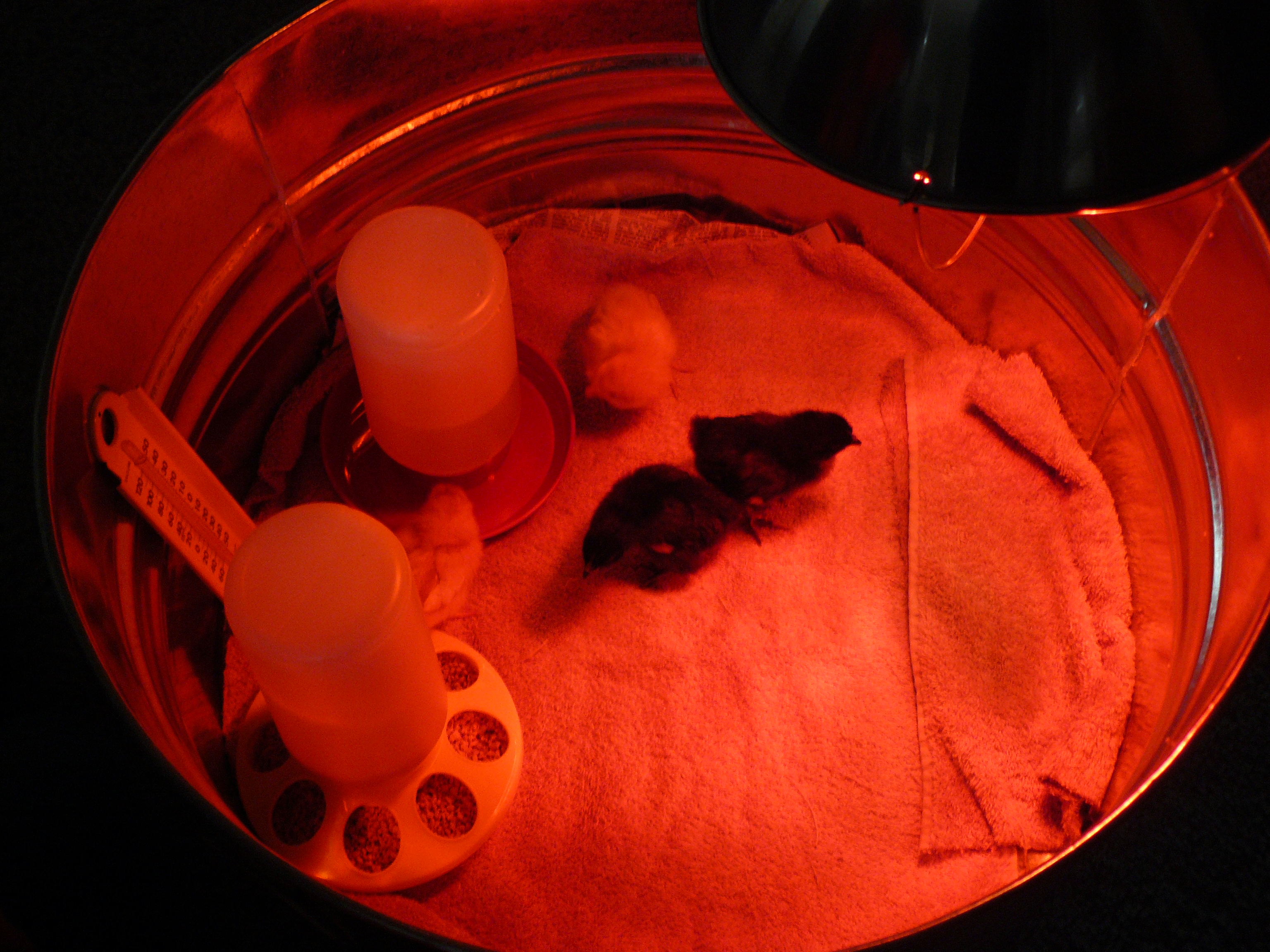
So shortly before mid-day yesterday, Jean was gently transferring our latest ‘pets’ into their new home in the guest bedroom, where they will be fed, watered and kept warm for the next 8 weeks or so before being moved to the chicken coop.
Home sweet home!
I have no doubt that before the week is out, Jean will have given them all names!
Very cute, even at two days old!
Why the title to this Post being ‘Then we were ten, plus chicks’?
Only that three weeks ago, I wrote about Casey joining our dogs and bringing the number of dogs to ten. (Oh, not forgetting the six cats and one fish.) No doubt, status reports on our young chicks will creep into Learning from Dogs from time to time!
Sue has been a wonderful supporter of Learning from Dogs for which I am very grateful. Sue is the author of the blog, Dreamwalker’s Sanctuary and I do recommend that you pop across there and read her wonderful Posts. Recently, I read a beautiful poem that Sue had written and not only did she give me permission to republish that Post but also offered the following introduction. Thank you, Sue. The rest is all Sue!
First my thanks go to Paul who continues to awaken our knowledge to the Earth and our environment and whose posts are in-depth and informative posts on subjects which we should all be immersed in.
For Planet Earth is our Home and she is dying. And we Humans are still in a slumber as to the destruction we have inflicted upon her.
Our Native American Brothers knew long ago that we have to balance nature and we should only take that which we need.. But we have used Greed as our cutting tools and we as a species have become out of balance with nature and ourselves.
Paul has kindly asked if he could re-blog my poem . This poem speaks of those changes we all feel is happening within our world. I firmly believe like the Native Americans that we are united in Consciousness and that extends to our Earth Mother. We are linked together As One.
…oooOOOooo…
The Winds Of Change
The Winds of Change.
The Winds of Change flow across our land
Sweeping us up like the grains of sand
Twisting us round to look in the mirror
Cutting us deep to make us consider…
~
Our past which holds so many stains
As Ego rules in a world full of pain
The winds of Change are here to uplift
It’s time for Humanity to embrace all her gifts
~
But before we fly along with the wind
Mankind is reaping all his sown sins
The Anger, the Hatred, the Greed and his Pride
Will no longer have any places to hide
~
For the Winds of Change a tornado will swirl
As into the Abyss the Material will hurl
A river so deep into Oceans will run
With all tears cried from when time first begun
~
A cleansing of hearts as each soul will cry
As the Winds of Change blows into our eyes
Eyes that will open as we come awake
And Mankind will realise he can no longer take
~
The road of discovery can often be hard
A lonely walk as the Winds they bombard
It strips us bare to reveal our true souls
In a journey we’ve walked from Millennia of old
~
And as our tears fall they wash us all clean
Of the lies of the Past and all that has been
The Winds of Change it whistles in our Hearts
Get ready to fly – for we’re soon to depart.
~~~
Many things are happening around our world right now, and for many we are all going through some personal changes.. Change is always hard, and painful, for we resist it as we cling onto that which is familiar. But without Change we do not grow, or progress..
Some of those Changes which are taking place around our Earth are bringing with it tears..
Tears we weep help cleanse our inner-most souls as we wash ourselves from within and we release our emotions.
So, too, our Earth Mother is getting ready for Change… her Winds too are blowing a warning, as she is releasing her tears as she lets them spill as rain..
Too long has she held them within…
We are One with Mother Nature… Watch her, as she is stirring..
Be Ready..
She is Changing, and as she does we will feel her shake, as her body sobs.
By sending out your love,
By loving your selves we are helping each other over these Changes..
We are helping Unite ourselves and Mother Earth once again in Harmony
~~~~
A tree knows how to bend in the wind, or it breaks and falls..
Water finds its path as it flows into ALL to find its own level
So too we must go within that flow and follow our hearts
We need to be that Oneness,
We need to stop hurting one another,
We need to breath in that Light of Love
And Share it in Unity of Oneness
This is the Time of Change
Let the Winds blow
Love into your
Hearts
Native American Indian Quote
“You must teach your children that the ground beneath their feet is the ashes of your grandfathers. So that they will respect the land, tell your children that the earth is rich with the lives of our kin. Teach your children what we have taught our children, that the earth is our mother. Whatever befalls the earth befalls the sons of the earth. If men spit upon the ground, they spit upon themselves.”
~ Unknown ~
A reflection of our unconscious minds – and the potential perils ahead.
Last Monday, March 12th, the BBC aired a programme under their excellent Horizon science series. This programme was entitled, Out of Control? Here’s how the programme was introduced,
We all like to think we are in control of our lives – of what we feel and what we think. But scientists are now discovering this is often simply an illusion.
Surprising experiments are revealing that what you think you do and what you actually do can be very different. Your unconscious mind is often calling the shots, influencing the decisions you make, from what you eat to who you fall in love with. If you think you are really in control of your life, you may have to think again.
The whole 60 minute programme was fascinating right from the start when Professor Nobre introduced the secret world of our unconscious mind. Professor Anna Nobre heads The Brain & Cognition Laboratory, a cognitive neuroscience research group at the Department of Experimental Psychology in the University of Oxford.
For starters, how much of your mind do you think is your conscious mind as opposed to your unconscious mind? Watch this clip and be amazed!
“Are you in control of your unconscious, or is it in control of you?”
So let me link how our mind works to something more relevant today than possibly any other aspect of life.
I’m thinking of the fundamental question that bothers me and, perhaps millions of others. That question being: “Why, with the overwhelming scientific evidence that man is critically threatening the planet’s biosphere upon which we all depend, is there not an equally overwhelming global commitment for change to a sustainable way of life?”
Take, for example, this compelling story.
Last Saturday the BBC News website published a report by Richard Black, the BBC’s Environment correspondent, that opened thus,
An eminent UK engineer is suggesting building cloud-whitening towers in the Faroe Islands as a “technical fix” for warming across the Arctic.
Scientists told UK MPs this week that the possibility of a major methane release triggered by melting Arctic ice constitutes a “planetary emergency“. [my emboldening]
The Arctic could be sea-ice free each September within a few years.
and later goes into this detail (do please read it all, it’s only a few minutes of quiet reading),
On melting ice
The area of Arctic Ocean covered by ice each summer has declined significantly over the last few decades as air and sea temperatures have risen.
For each of the last four years, the September minimum has seen about two-thirds of the average cover for the years 1979-2000, which is used a baseline. The extent covered at other times of the year has also been shrinking.
What more concerns some scientists is the falling volume of ice.
Analysis from the University of Washington, in Seattle, using ice thickness data from submarines and satellites, suggests that Septembers could be ice-free within just a few years.
Data for September suggests the Arctic Ocean could be free of sea ice in a few years
“In 2007, the water [off northern Siberia] warmed up to about 5C (41F) in summer, and this extends down to the sea bed, melting the offshore permafrost,” said Peter Wadhams, professor of ocean physics at Cambridge University.
Among the issues this raises is whether the ice-free conditions will quicken release of methane currently trapped in the sea bed, especially in the shallow waters along the northern coast of Siberia, Canada and Alaska.
Methane is a much more potent greenhouse gas than carbon dioxide, though it does not last as long in the atmosphere.
Several teams of scientists trying to measure how much methane is actually being released have reported seeing vast bubbles coming up through the water – although analysing how much this matters is complicated by the absence of similar measurements from previous decades.
Nevertheless, Prof Wadhams told MPs, the release could be expected to get stronger over time. “With ‘business-as-usual’ greenhouse gas emissions, we might have warming of 9-10C in the Arctic. That will cement in place the ice-free nature of the Arctic Ocean – it will release methane from offshore, and a lot of the methane on land as well.”
This would – in turn – exacerbate warming, across the Arctic and the rest of the world.
Abrupt methane releases from frozen regions may have played a major role in two events, 55 and 251 million years ago, that extinguished much of the life then on Earth.
Meteorologist Lord (Julian) Hunt, who chaired the meeting of the All Party Parliamentary Group on Climate Change, clarified that an abrupt methane release from the current warming was not inevitable, describing that as “an issue for scientific debate”.
But he also said that some in the scientific community had been reluctant to discuss the possibility.
“There is quite a lot of suppression and non-discussion of issues that are difficult, and one of those is in fact methane,” he said, recalling a reluctance on the part of at least one senior scientists involved in the Arctic Climate Impact Assessment to discuss the impact that a methane release might have.
Reams of other factual evidence shows that mankind may have only a few years left to stop the planet going into a runaway condition that would then extinguish much of the life on Earth!
So what’s stopping us?
Dr. Sharot
Well back to that Horizon programme. In the programme, Dr. Tali Sharot of University College London explains how we are all optimists despite the risks. I.e. our unconscious mind deliberately prevents negative information from affecting our conscious mind, our conscious judgment.
In an experiment, an individual is asked to guess the likelihood of a whole range of outcomes, 80 in all. Ergo, you see a gentleman guessing the likelihood of cancer as 18%, of a bone fracture as 10%, of Alzheimer’s as 2%, and so on.
In some cases he guessed a pessimistic probability, in others an optimistic probability. After each guess he was shown the correct probability. E.g. cancer 30% vs his estimate of 18%, for a bone fracture 34% vs his guess of 10%, and the risk in reality of Alzheimer’s is 10% versus his instinct of just 2%. I’ve just quoted his optimistic guesses, in many questions his guess was a pessimistic view, i.e. he guessed a higher likelihood than the statistical reality.
Then he was asked all 80 questions again, having seen the accurate probability compared to his intuitive guess.
So here’s the fascinating outcome.
Where his instinct was a negative guess versus the statistical probability then he adjusted his mind and was able to quote a more accurate figure the second time around. But where the reality was more pessimistic than his first guess, then that adjusted knowledge wasn’t retained. In other words, our beliefs only change when we can adjust to a more positive view of the future.
I just hope I have made that clear. Readers may like to view an article written by Dr. Sharot published in TIME Magazine in May, 2011, called The Optimism Bias or read the introduction to a lecture given in Seattle in June, 2011; “A sunny outlook doesn’t just make you a more pleasant companion: Tali Sharot argues that optimism is a tool for survival and happiness that gets us through hard times—even an economic recession. Sharot, author of The Optimism Bias, uncovers myths about optimism, illuminates the ways it can affect our lives, examines why optimism is necessary for us to function, and illustrates how the human brain is extremely adept at turning lead into gold.”
A summary of a publication, Sharot, T. (2011). The optimism bias. Curr Biol 21(23), R941-R945, reads,
The ability to anticipate is a hallmark of cognition. Inferences about what will occur in the future are critical to decision making, enabling us to prepare our actions so as to avoid harm and gain reward. Given the importance of these future projections, one might expect the brain to possess accurate, unbiased foresight. Humans, however, exhibit a pervasive and surprising bias: when it comes to predicting what will happen to us tomorrow, next week, or fifty years from now, we overestimate the likelihood of positive events, and underestimate the likelihood of negative events. For example, we underrate our chances of getting divorced, being in a car accident, or suffering from cancer. We also expect to live longer than objective measures would warrant, overestimate our success in the job market, and believe that our children will be especially talented. This phenomenon is known as the optimism bias, and it is one of the most consistent, prevalent, and robust biases documented in psychology and behavioral economics.
Our bias towards an optimistic future is a “tool for survival and happiness that gets us through hard times.” But if that ancient bias is preventing mankind from recognising just how close we may be to some form of ‘tipping point’ then this tool for survival may be our undoing.
But if on the other hand, we now unite in changing our ways, first by community then by town then by country our future is incredibly optimistic.
“A single candle may light a thousand others and they in turn many thousands more” – Buddha
Don’t worry, this is not going to be some chest-banging Post! I leave those for Monday to Friday. 😉 No, I just wanted to offer a couple of examples of the power of goodness and how making a positive difference is no more than wanting it. As Perfect Stranger commented last Tuesday, “A single candle may light a thousand others and they in turn many thousands more” – Buddha
The first example is about how a group of upstanding citizens rescue a school of dolphins that became stuck on a beach in Brazil.
The second example comes from closer to home. Ginger I. is a Board Member of the Humane Society of Central Arizona and is based at Payson. Jean has been a volunteer at the Society’s Thrift Store for some time and has got to know Ginger well.
Ginger recently emailed me this; it has already done the rounds of the WWW, and quite rightly so. It reminds me of the book Dogs Never Lie About Love, written by Jeffrey Masson, from which comes the following,
This ambiguity, which includes a certain ambivalence as well, has been memorialized in our speech, in our sayings, and in our tributes to and about dogs. Sir John Davies, in his epigram In Cineam (written in 1594), observed:
Thou sayest thou art as weary as a dog,
As angry, sick, and hungry as a dog,
As dull and melancholy as a dog,
As lazy, sleepy, idle as a dog.
But why dost thou compare thee to a dog?
In that for which all men despise a dog,
I will compare thee better to a dog.
Thou art as fair and comely as a dog,
Thou art as true and honest as a dog,
Thou art as kind and liberal as a dog,
Thou art as wise and valiant as a dog.
Ever since Madame Roland said in the eighteenth century “Plus je vois les hommes, plus j’admire les chiens” (The more I see of men, the more I admire dogs), generally what has been written about dogs tends to be positive. Sometimes it is even wonderful, as in William James’s statement “Marvelous as may be the power of my dog to understand my moods, deathless as is his affection and fidelity, his mental state is as unsolved a mystery to me as it was to my remotest ancestor.” Or it may be delicious, like Ambrose Bierce’s definition in his Devil’s Dictionary, “Dog, n. A kind of additional or subsidiary Deity designed to catch the overflow and surplus of the world’s worship.” Samuel Coleridge, in Table-Talk (May 2, 1830), was one of the first to note that “the best friend a man has in the world may turn against him and become his enemy. His son or daughter … may prove ungrateful. Those who are nearest and dearest to him … may become traitors to their faith…. The one absolutely unselfish friend that man can have in this selfish world, the one that never deserts him, the one that never proves ungrateful or treacherous, is his dog.”
Just read that last sentence again from Samual Coleridge as you look at the photograph below, “The one absolutely unselfish friend that man can have in this selfish world, the one that never deserts him, the one that never proves ungrateful or treacherous, is his dog.”
The final episode from the series of four 1-hour videos from National Geographic.
The first episode plus the introduction can be seen here, the second episode can be seen here while the third can be seen here.
I wasn’t quite sure what to expect from this last episode. The third episode had shown how good science could determine the deadly cause and effect of past times and enact critically important solutions. Well, the final episode had the same underlying theme. That despite the huge scale of change and transformation required by millions of people to restore the planet to health, it’s not impossible, not by a long chalk.
So I will close these past four Posts by thanking Dogs of Doubt for first bringing these videos to light. I truly hope that they have been for you as Perfect Stranger described them in his Post, “they explained so much that it is impossible not to recognize the changes we have made to our environment.” Nothing to add to that.
National Geographic – Strange Days on Planet Earth – Part 4 of 4 – Troubled Waters
The third of an unmissable series of four 1-hour videos from National Geographic.
The first episode plus the introduction can be seen here, the second episode can be seen here.
By now if you have watched the first two episodes, you will be aware of the huge commitment made by National Geographic and PBS in putting this production together. That’s a strong indicator to my mind that getting the message out there is being taken more and more seriously.
The third episode is called Predator and underscores an important element of the change process. That of properly understanding the nature of a problem before attempting a solution. This episode has some very positive messages, so do watch it.
National Geographic – Strange Days on Planet Earth – Part 3 of 4 – Predator
The second of an unmissable series of four 1-hour videos from National Geographic.
The background and introduction to the first episode was published yesterday. So I won’t natter on today saying more or less the same thing.
But I will add this thought.
The videos are tough viewing but compelling because they show the complexity and inter-relatedness of all forms of life on our Planet. It shows that the debate about climate change/global warming/call it what you will is not a simplistic do you or do you not believe mankind is at the root of the changes. No it’s a much more complex question about the threat to our whole biosphere, as Patrice Ayme so eloquently spelt out on March 2nd. These videos make that crystal clear.
Here’s the second episode,
National Geographic – Strange Days on Planet Earth – Part 2 of 4 – One Degree Factor





 Learning from Dogs