Author: Paul Handover

Picture parade twenty.

December is here!

Last Sunday I published a set of pictures from Dan Gomez showing a wonderful collection of clever things you can do with snow.  The post closed with a weather warning that Oregon was set to experience some wintery weather before the week was out.

Thus a small collection of photographs taken on our property last Friday afternoon offering proof that the snows did arrive.

Last Friday around 7am
Snow just starting. Last Friday around 7am

oooo

P1140104
Again, taken at 7am.

oooo

Looking down the driveway at 3pm last Friday.


oooo

Looking across to the South-East.


oooo

Nature's colours.
Nature’s colours.


oooo

Bummer Creek, looking downstream.

oooo

Bummer Creek, looking upstream from just above the flood irrigation dam.

oooo

Water flowing over the edge of the dam.

oooo

Merry Christmas from the BLM.

Finally, the picture above represents a delightful way to find your Christmas Tree, or Noble Fir in tree speak!  We discovered that if one goes to the local office of the Bureau of Land Management (BLM) you can purchase a $5 permit allowing one to go into the forests and cut your own Christmas Tree.  The red permit can be seen in the above photograph attached near the top of the tree.  So last Thursday we took our Jeep filled to the brim with blankets, spades and tow chains and other paraphernalia to allow us to safely drive some miles into the forest and 2 hours later had our tree.

oooo

Wherever you are in the world, you stay warm and dry this Winter.

Hugs for the Irish

It’s the way that you say it!

Sent in by Bob Derham – thanks Bob.

This is the Irish Medical Dictionary.

Now don’t knock it for because the Irish don’t take their medical terminology too seriously, they have the lowest stress rate!

Artery – The study of paintings
Bacteria – Back door to cafeteria
Barium – What doctors do when patients die
Benign – What you be, after you be eight
Caesarean Section – A neighbourhood in Rome
Cat scan – Searching for Kitty
Cauterize – Made eye contact with her
Colic – A sheep dog
Coma – A punctuation mark
Dilate – To live long
Enema – Not a friend
Fester – Quicker than someone else
Fibula – A small lie
Impotent – Distinguished, well known
Labour Pain – Getting hurt at work
Medical Staff – A Doctor’s cane
Morbid – A higher offer
Nitrates – Rates of Pay for Working at Night,
Normally more money than Days
Node – I knew it
Outpatient – A person who has fainted
Pelvis – Second cousin to Elvis
Post Operative – A letter carrier
Recovery Room – Place to do upholstery
Rectum – Nearly killed him
Secretion – Hiding something
Seizure – Roman Emperor
Tablet – A small table
Terminal Illness – Getting sick at the airport
Tumour – One plus one more
Urine – Opposite of you’re out

So now you know!

The book! Chapter Eighteen.

Learning from Dogs

Chapter Eighteen.

The day before Philip’s appointment with Jonathan, he suddenly realised that if they had set a time he hadn’t made a note of it.  He called Jonathan.

“Jonathan, it’s Philip.”

“Hallo Philip, is there a problem for tomorrow?”

“No, not at all. It’s just that if we made a time, I screwed up and didn’t note it down.”

He could hear Jonathan’s laugh over the phone. “Ah, and there I was thinking I hadn’t made a note of the time.  Luckily, I was going to be in all day so was pretty relaxed about when you came across.”

Philip replied, “Ah, that’s a welcoming attitude.  But how about me coming over early to mid-morning? How does that suit you?”

“Ten-thirty, Philip?”

“Done, I’ll see you at ten-thirty.” He was just about to ring off when he added, “Jonathan, I could leave Pharaoh here at the flat but as it’s not become home to him yet, would it be alright if I bring him with me?”

“Not a problem. Would be lovely to see him again.”

“Thanks Jonathan, see you in the morning.”


The room at Jonathan and Helen’s house was ideal.  Ideal, that is, for a large dog. However, just in case Pharaoh couldn’t settle, before leaving the flat Philip had stuck a couple of dog biscuits in his bag.  But there had been no need to worry because as soon he and Jonathan sat down and started to talk Pharaoh curled up behind Philip’s chair.

Jonathan opened the conversation by asking Philip, “Why don’t you tell me a little about your life, pick out the things that more often than not come to you when you think back over the years?”

Philip settled back in his chair and allowed his memory of the last fifty or so years to bubble up into his consciousness.  The key moments were easy to speak about.  His father’s death, his subsequent failure to get any decent exam results at school, then managing to enrol as a graduate electrical engineer at the Faraday House of Electrical Engineering so long as he passed two ‘A-levels’ within the first year; which he failed to do. So he had to leave Faraday House but, miracle of miracles, somehow managed to gain a commercial apprenticeship at the British Aircraft Corporation’s manufacturing plant in Stevenage.

A quiet snoring from Pharaoh showed that he was now solidly asleep. Philip guessed he had heard all this before!

He continued with this snapshot of his past years. Going on to recall how he loved so much his first year at BAC because all apprentices had to spend their first year learning a whole range of engineering skills: cutting, shaping, welding, riveting, and much more. He mused how those skills had given him confidence later on in life to tackle most construction projects; well small ones anyway.  Then on to the second year at BAC and the deadly boredom of the commercial office undertaking such gripping tasks as pasting typed amendments over the top of the pages of current Government contracts for hours upon hours.  Only made bearable by the kindness of Malcolm Hunt, who was his oversight manager.  Leading to Philip offering to cut Malcolm’s grass at his home in the Summer evenings because Malcolm had to constantly wear a neck brace due to severe problems with his upper spine. Then him meeting Malcolm’s lovely Scottish wife, Sadie, and often being invited to have an evening meal with them.

On to that fateful day when he was sitting at his desk, his desk next to Malcolm’s, when Malcolm said, “Philip, Sadie wondered if you could give her a call at work.” He passed Philip a slip of paper on which he had written down Sadie’s office number, a local Stevenage number. He had gone over to the main canteen where there was a public phone box in the lobby.

“Hallo, British Visqueen, how may I help you?”

“Yes, my name is Philip Stevens and I have been asked to call Mrs Sadie Hunt.”

It was but a moment before Philip heard Sadie’s lovely Scottish accent. “Philip, how nice of you to call.  Listen we have a vacancy in our sales office, the team that manage the sales of our polythene film products to UK companies, and I wondered if you would like to be interviewed for the vacancy?”

“Oh Sadie, thank you so much for thinking of me.  I would love to have a try at the position.”

“Well, that’s grand, Philip.  Both Malcolm and I were thinking that your present job was leaving you unfulfilled and something closer to selling would match your skills and personality.  I’ll arrange for the usual letter inviting persons to interview to be sent to you in tonight’s post.”

He became conscious that he had drifted away and looked up at Jonathan with some embarrassment.

“Whoops, got a bit carried away there, didn’t I.”

Jonathan replied gently, “You obviously got the job at British Visqueen.”

“Yes, I did and in a funny way that job set me up for life.  Of course, that’s only clear to me now looking backwards. But all my life I’ve loved the interaction that selling inevitably requires, and, without wanting to blow my own trumpet, I have been good at it.”

The hour with Jonathan flew by.  They agreed the next appointment for a week’s time and he and Pharaoh went out to the car and made their way back to the flat.

Despite that hour with Jonathan almost entirely taken up with him speaking of past times, it had still left its mark on him.  He was aware for much of the rest of that Friday that there was something about the atmosphere in Jonathan’s room that made him feel totally safe even though he had no idea as to how that had been achieved. That was fascinating, he pondered.  It was not as if he was a stranger to being one-on-one with another person nor disliked meeting and talking with others, far from it. But still it felt so different.  He looked forward to next Friday morning.


The morning was soon upon him and, again, much of that next session continued with him talking about the key events in his life, not just in his working life but, for example, the circumstances of his first marriage and how that failed.  By the end of the second session he was up to present times.


The third session, a further week on, started very differently because Jonathan started to talk about consciousness.  In particular about David R. Hawkins who, apparently, is an internationally renowned psychiatrist and researcher into human consciousness.  This all felt a little strange to Philip but as Jonathan showed him a chart, for want of a better term, of the different states of consciousness, a map of consciousness as the title described it, then it did start to fall somewhat into place.

Apparently, David Hawkins had found a way of measuring the human body’s reaction, using kinesiology, to a range of life’s circumstances. Leading to Dr. Hawkins proposing that those reactions were really a window into a person’s consciousness. Hawkins then went on to create a numerical value for those measurements and proposed a mid-way value.  Mid-way, as it were, between positive and negative human reactions. Philip found this fascinating from an intellectual perspective.  He still struggled to embrace the meaning and relevance of it as part of his counselling.  However, from what he had come to observe about Jonathan’s approach to psychotherapy he expected the emotional significance of this to appear pretty soon.

He tuned back into Jonathan explaining how those measurements of the body that scored above the mid-way level of 200 described a range of positive, strong levels of human consciousness and below a corresponding range of negative, weak levels. It was all a little baffling; he had to admit.

Jonathan could see that Philip was struggling a little with the whole idea of human consciousness having levels, let alone that those levels could be measured.

“Philip, think of it as two very broad categories.  From a mid-way level of 200 all the upper states of consciousness are described in the general terms of truth, integrity and supportive of life.  Whereas, from 200 and down those states of consciousness are described as false, lacking integrity and unsupportive of life.”

Jonathan paused and went on to add, “And did you know that the consciousness of dogs has been mapped?”

That brought Philip immediately to the edge of his seat, the suddenness of his reaction causing Pharaoh to open his eyes and lift up his head.

“Yes, the consciousness of dogs has been mapped as between 205 and 210.  They are creatures of integrity.”

Philip knew in that instant that something very profound had just occurred.  He slipped forward out of his chair, got down on his hands and knees, crawled behind his chair, and gave Pharaoh the most loving hug of his life.  Dogs are creatures of integrity.  Of course! So utterly and profoundly obvious. Wow, what a revelation.

He sat back up in his chair, now truly engaged in the subject. Jonathan continued to outline more of David Hawkins’ findings, closing their session by offering to lend Philip the Hawkins’ book Power vs Force.

“See you same time next Friday, Philip?”

“No question.  And thank you for a fascinating session.”


On the drive back to Diptford, Philip couldn’t take his mind off the idea that dogs were creatures of integrity and truthfulness.  What was that third quality that Jonathan had mentioned?  Ah, yes. Integrity, truthfulness and supportive of life. He had no doubt that all Nature’s animals could be seen in the same light but what made it so powerful in terms of dogs was the scale of the unique relationship between dogs and man.  A relationship that had been running for thousands upon thousands of years.

As he made himself his usual light lunch of a couple of peanut butter sandwiches and some fruit and then sat enjoying a mug of hot tea, he just couldn’t take his mind off what Jonathan had revealed.  Dogs are examples of integrity and truth.  No, examples is a pathetic word.  Dogs are beacons of integrity and truth.  Yes, that’s it.  Wow.

Then from a place that he knew not from where, it came to him.  Some day he would write about this. About these qualities of man’s best friend. How we should be comparing the integrity of dogs to this modern, dysfunctional world, a world that seems to be descending deeper and deeper into corruption, lies, greed, selfishness and depravity.  My goodness, how much there is for man to learn from dogs.

As that last thought passed across his mind, he was hit by a force, a force that was beyond question.  He would write not some time in the future but now.  Write about how we must, for the future sake of mankind, learn from dogs.

He shuffled his chair across to his computer, toggled it back to life and started looking at available internet domain names.  Bingo, it hadn’t been taken! Thus a few minutes later he was the registered owner of the domain name learningfromdogs.


Friday the 22nd came round as regular as clockwork and Philip, once again, was settled into his chair in Jonathan’s room. Pharaoh likewise settled in to the corner of the room behind his chair.  He had been looking forward to this next hour with Jonathan because so much had flowed from the revelations of last week’s session.

“Philip, when we had our first session and I asked you to relate the key life events that came to you, the first event you spoke of was the death of your father.  Tell me more about that time in your life.”

“To be honest, I don’t have clear memories of my father much before he died that year. He was a lot older than my mother, some eighteen years, and I had been the result of an affair between them; my father being married at the time.  They met when they were both members of an amateur orchestra in London during the height of the Second World War.  Apparently, my father had had two daughters with his wife and longed for a son.  I came along just six months before the end of the war.  At first, my father couldn’t decide to leave his wife leading to my mother eventually giving him an ultimatum that if he wished to continue to see his son then he would have to marry her.  So despite me being born in November 1944 it wasn’t until 1946 that my parents became married.”

He paused for a few moments, as if having to dip back to that December in 1956 was going to stir up pain.

“I had turned twelve-years-old in early November 1956.  Just finished my first term at Grammar School.  To be honest, I can’t recall when my father became ill and how long he had been bed-ridden. But on the evening of December 19th, after I had kissed my father goodnight and jumped into my bed in the room next door, my mother came in, closed my bedroom door, sat on the edge of my bed and told me that my father was very ill and may not live for much longer.

It clearly didn’t register with me at any significant emotional level because I went off easily to sleep. But when I awoke in the morning, I was told that my father had died during the night, the family doctor had attended and my father’s body had been removed from the house. I had slept through it all.”

Jonathan quietly looked at him.  Nothing was said; not for a long time. Philip was aware of a strange, yet peaceful, presence in the room.  Pharaoh softly stood up, came over and laid his head across Philip’s leg. All remained still and quiet in the room.  He lost any notion of the passing of time, no idea of how long it was when there was a gentle movement from Jonathan.

“What are you experiencing at this moment?”

“Jonathan, it’s strange but there’s almost a complete absence of feelings.  I’ve often tried to reflect on what I truly felt at the time or, indeed, what I feel all these years later whenever I am drawn back to that time.  But the best I have ever been able to come up with is that I was never able to say goodbye.  You need to know, Jonathan, that it was decided that because it would be too upsetting for me, I wasn’t even at the funeral and cremation thus reinforcing my sense of not saying goodbye to my father.”

Minutes passed afresh before Jonathan asked his next question. “Philip, you have a son and daughter.  What are their ages?”

“My son, William, is now thirty-five and my daughter, Elizabeth, thirty-four.”

Jonathan put his hands together fingers-to-fingers and lent his chin against them. “So your son would have been twelve in 1984.  That was when you were very busy running your own business, if I recall.”

Philip nodded in reply.

“So Philip let’s say that during that year of 1984 you had been diagnosed with some terminal illness, say cancer, as with your father.  You were given a life expectancy of six months or less. What thoughts come to mind?”

“You mean in the sense of what it would have meant for William and Elizabeth?”

Jonathan nodded.

“Wow, what a truly terrible thing to reflect upon.”

He idly stroked Pharaoh’s head as he tried to put himself in the position of knowing he was dying back when his children were eleven and twelve.

He looked up. “What comes to mind without any doubt is that I would have walked away from my business immediately. After all, very soon it wasn’t going to be my business.  My kids were still living at home, of course. I would have wanted to share every minute of my life with them. Try to let them understand as much about me, who I was, what I believed in, what made Philip Stevens the person he was.”

Jonathan almost breathed the next question into the air of the room, “Translate the circumstances of the death of your father across to your son experiencing the same circumstances from your death. What’s your reaction to that situation? Admittedly one we know didn’t take place, thank goodness.”

Philip felt the passion rise from within. He almost cried out,  “To know that I was terminally ill and to have that kept from my son and daughter; that’s terrible, it’s beyond comprehension. Then to compound it by having everything associated with my death and the disposal of my body kept secret from William and Elizabeth.”

He left the sentence unfinished before adding, the pain so clear in his voice, “It’s cruel beyond description.  My poor children wouldn’t have had a clue as to why they had been excluded. No, not excluded; denied. Denied from telling their father how much they loved him and, in turn, denied not hearing from their father how much he loved them. Denied for ever more.”

Jonathan allowed Philip’s anger to reverberate around the room.

“Is there one word that says it all to you? If so, what’s the one word that comes to you?” Jonathan asked.

Philip hardly hesitated. “Rejection.  Yes, that’s the word.”

He went silent as he turned that word over in his mind. “No, can’t better the word.  William and Elizabeth losing their father that way shouts out that their feelings weren’t even considered.  No-one in the lives had stopped to think about how these two very young people were dealing with the severe illness, let alone the imminent death, of their father. Their feelings were not cared for. And not caring means not loving.  Yes, that’s it.  They would see it as a total rejection of them by their father. Not unreasonably, I might add.”


There was a further silence in the room that lasted for, perhaps, five minutes or more.  Then Jonathan said, “Philip, we are not quite up to the hour but I’m going to suggest you just sit here quietly with Pharaoh.”

Jonathan looked at Pharaoh who still had his head across Philip’s leg and said, “I was going to say just let yourself out when you are confident of being OK to drive home.  But, of course, Pharaoh will be the one to make it clear when you may go home.  Bet you anything on that one.  Either way, I’ll be next door; very close by.”

He added, “Just let today settle itself in your consciousness just however it wants to.  Don’t force your thoughts either way, either dwelling on today or preventing thoughts naturally coming to the surface of your mind.  As we have discussed before, pay attention to your dreams.  Maybe have a notebook by your bedside so you can jot down what you have been dreaming about.  I’ll see you next Friday same time, if that’s alright with you.”

Jonathan left the room whereupon Philip quietly laid his face down on Pharaoh’s warm head and wept.  He knew beyond doubt that he had been released from a long, dark, emotional prison.

A few minutes later, he lifted his head, wiped his eyes, just as Pharaoh lifted his own head and indicated clearly that it was time to go. They left the house a few moments later.


When a crossroads is neither a roadway, nor a choice of pathways in the woods or fields, when that crossroads is in our minds, we seldom know it’s there or the choice we made to take one path and not the other until it’s long past.  Sometimes, the best one can do is to look for the tiniest clues as to where one is really heading.


Philip had read that in a book a few weeks back although, typically, could no longer remember the name of the book.  It had spoken to him in a way that he couldn’t fathom out at the time, yet carried sufficient strength and clarity for him to feel the need to jot it down on a sheet of paper.  He had been sorting papers out on his desk on the Sunday following that last session with Jonathan when he came across the sheet of paper.  Much more than the first time he read the words, when he reread them now they were laden brim-full of meaning.

Because, to his very great surprise, his sleep on both Friday and Saturday nights had not only been dream free but had taken him to a place of such sweet contentment that it was almost as though he had been reborn.  Alright, perhaps reborn was a little over the top, but there was no question that he was in an emotional place quite unlike anything he could ever recall.  Almost as if for the first time in his life he truly liked who he was.

Earlier on that Saturday morning when he had taken Pharaoh over to James’ woods, he called in on his sister and shared a cup-of-tea with her.  As he was leaving, Diana asked him if he was alright.  In  querying why she had asked, she said, “Oh, I don’t know. There’s something different about you that I can’t put my finger on.  A happiness about you that I haven’t seen in ages, possibly never seen in you.”

He wrapped his arms around Diana and gave his sister a long and deep hug. He softly said, “I miss our father at times, don’t you?”

She answered, “Oh, I miss him too, miss him so much at times.  He was such a wonderful, gentle man who lived for his children.  He loved all three of us more than anything else. To die at such a young age.”


As the week passed by, Philip became aware of a truth that had been hidden from him for practically the whole of his life. He couldn’t wait to share it with Jonathan.  Thus, as he drove across to Torquay on what was the last Friday of June, he was full of what he wanted to say.

Jonathan could tell that Philip was fit to burst. They had hardly sat down when Philip said, “Jonathan, it’s been an amazing week.  I’ve at last understood some fundamental aspects of my life.”

“That sounds very interesting, tell me more.”

“Well, when I realised that the consequence of the way my father’s death had been handled was to bury in my subconscious the idea, the false idea, of having been rejected, something struck me smack in the face. Namely, that it explained two ways in which I have behaved since being a teenager.”

Jonathan remained silent.

“The first thing that came to me was the reason why I have been so unfortunate in my relationships with women.  This is how I figured it out.  Whenever a woman took a shine to me, I would do everything to come over as a potentially attractive spouse. Rather than rationally wondering if this woman had the potential to be a woman I would fall in love with and love as a wife, I have been driven by such a fear of rejection, that I oversold myself and, inevitably, made poor long-term relationships; Maggie being the classic example.”

Philip’s excitement had him out of breath.  He took a lung-full of air and continued, “But the positive aspect of my fear of rejection is that throughout the whole of my business and professional life, I have been successful. Because I have always put the feelings of the other person above my own. I can’t tell you what a release this has been for me.”

“Philip, that’s a fabulous example of how when we really get to know the person we are it gives us a psychological freedom, a freedom to be the person we are, to feel happy with ourselves.”

Jonathan continued, “One thing I should mention is this.  It’s likely that what happened to you back in December 1956 is not necessarily hard-wired but certainly is a very deep-rooted emotional aspect of who you are.  This new-found awareness will be of huge value to you but that sensitivity to rejection is not going to disappear.  The difference is that you are now aware of it. Quite quickly you will spot the situations, as they are happening, that stir those ancient feelings around.  Then you will be able to notice those feelings without having them pulling behavioural strings. You will be fine; of that I have no doubt.”

4,139 words. Copyright © 2013 Paul Handover

Daisy offers a lesson for all.

A heart-rending, true story of a puppy. (Has a very happy ending!)

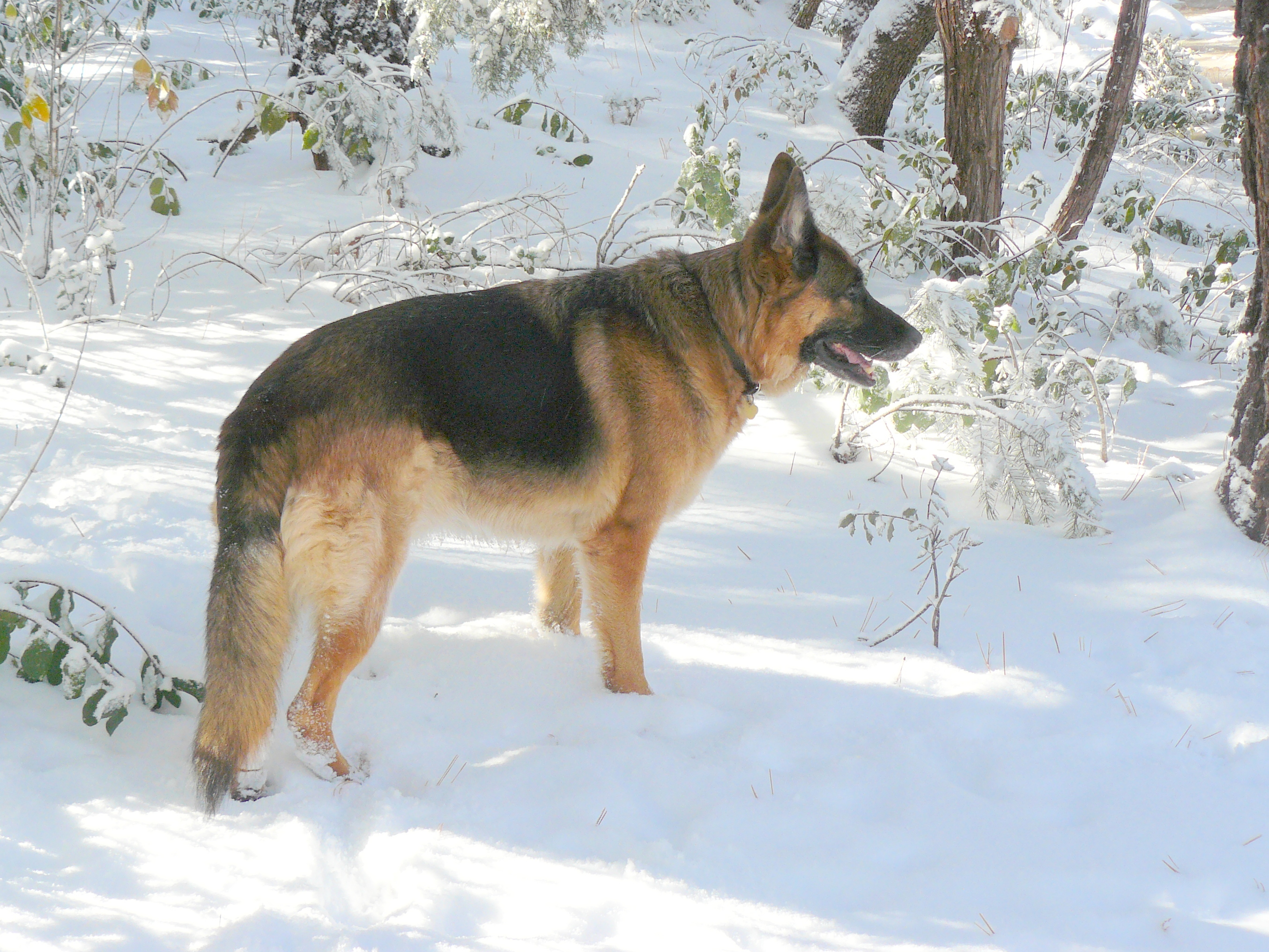
Those of you who have read today’s Chapter Eighteen of ‘the book’ will not have escaped the central role played by Philip’s German Shepherd: Pharaoh.

Well a few days ago the following video was sent to me by a good friend, Ginger, from our Payson days.  Won’t say anymore until you have watched it.

http://www.youtube.com/watch?v=IFPnwpkGioc

Tried hard to find the Facebook page but failed.  However, I did find this article on the Psychology Today website that not only refers to Daisy but offers more on the subject of animal emotions.

Animal Emotions

Do animals think and feel?
by Marc Bekoff – Professor Emeritus of Ecology and Evolutionary Biology at the University of Colorado, Boulder.

Daisy: The Injured Dog Who Believed She’d Walk Again and Did

Anthrozoology, also called human-animal studies (HAS), is a rapidly growing and expanding interdisciplinary field. A recent and comprehensive review of this wide-ranging discipline can be found in Paul Waldau’s book titled Animal Studies: An IntroductionMany of the essays I write for Psychology Today have something to do with anthrozoology in that they focus on the wide variety of relationships that humans establish with nonhuman animals (animals). Some essays also discuss what we can learn from other animals, including traits such as trust, friendship, forgiveness, love, and hope.

Often, a simple video captures the essence of the deep nature of the incredibly close and enduring bonds we form with other animals and they with us. As a case in point, my recent essay called “A Dog and His Man” showed a dog exuberantly expressing his deep feelings for a human companion he hadn’t seen for six months. Another essay titled “My Dog Always Eats First: Homeless People and Their Animals” dealt with the relationship between homeless people and the animals with whom they share their lives.

Daisy: An unforgettable and inspirational symbol of dedication and hope

I just saw another video called “Daisy – the Little Pup Who Believed” that is well-worth sharing widely with others of all ages. There is no way I can summarize the depth of five-month old Daisy’s resolve to walk again after she was injured or of the devotion of the woman, Jolene, who found her on the side of a road – scared, malnourished, unable to walk or wag her tail, the people who contributed money to help her along, or the wonderful veterinarians and staff at Barrie Veterinary Hospital in Ontario, Canada, who took care of her. You can also read about Daisy’s remarkable and inspirational journey here.

Please take five minutes out of your day to watch this video, read the text, listen to the song that accompanies it, and share it widely. I am sure you will get teary as you watch Daisy go from an injured little ball of fur living in a ditch on the side of a road with a broken spine to learning to walk in water to romping around wildly as if life had been that proverbial pail of cherries from the start.

I’ve watched Daisy’s journey many times and every single time my eyes get watery. Among the many lessons in this wonderful video is “stay strong and never give up”. Clearly dogs and many other animals can truly teach us about traits such as trust, friendshipforgiveness, love, and hope.

OOOO

Daisy - a lesson for all!
Daisy – a lesson for all!

Two closing thoughts.

When you next want a dog please, please think of those dogs who are in shelters.  They must be our first priority.

If there is ever a time when we humans need to learn from dogs the qualities of trust, friendship, forgiveness, love and hope, it is now!

Magic!

The old and the new.

Like thousands of others, Jean and I are regular viewers of the TED Talks.

So first the old. Here’s a reminder of the inspiring nature of mathematics; in this case Fibonacci numbers.

Published on Nov 8, 2013

Math is logical, functional and just … awesome. Mathemagician Arthur Benjamin explores hidden properties of that weird and wonderful set of numbers, the Fibonacci series. (And reminds you that mathematics can be inspiring, too!)

Now to the new. Innovation at its very best.

Published on Jul 11, 2013

The development of new medicine is problematic because laboratories cannot replicate the human body’s environment, making it difficult to determine how patients will respond to treatment. At TEDxBoston, Geraldine Hamilton demonstrates how scientists can implant living human cells into microchips that mimic the body’s conditions. These “organs-on-a-chip” can be used to study drug toxicity, identify potential new therapies, and could lead to safer clinical trials.

The book! Chapter Seventeen

Learning from Dogs

Chapter Seventeen

Adjusting back to Devon life upon his return from California could have been so much worse if Philip didn’t have that first meeting with Jonathan to look forward to.

The flight back to London had been uneventful and as soon as he had taken a taxi from Totnes Station across to Diana and John’s place, to pick up his car, he was off to Sandra’s to collect his beloved Pharaoh.

While that night flight home from Los Angeles was always a bit rough on the body, the morning arrival did allow most of a full day back in England.  The thought of waiting another day to see Pharaoh was unbearable.

As he pulled into Sandra’s parking area and opened the car door, the sound of the many dogs staying at Sandra’s kennels greeted his ears. He hadn’t even had time to close his door when Pharaoh came bounding across to him, tail wagging furiously. If ever a dog could put a smile on its face, and Philip had no doubt that dogs could smile, Pharaoh was wearing the biggest dog smile ever.

Philip sat on the ground and received a rapid succession of face licks. As soon as he stood up and opened both the car’s tail-gate and the door to the travel cage, Pharaoh gave one giant leap into the open cage, turned around and was indicating in very clear dog speak, ‘Dad, take me home, now!’.

He told Pharaoh to wait while he went across to settle up with Sandra.

“Did you have a good time in California?”

“Thanks Sandra, yes a great time.  Feel almost ready for what’s facing me these next few months.”

He paused before asking, “Tell me, Sandra, how’s Pharaoh been?”

“He was fine.  Same as he always is.  It’s almost as though he knows that he isn’t here for ever and that you will come back for him.  In fact, it must have been over half-an-hour ago that Pharaoh was telling me, in the way some dogs do, that you were on your way to collect him.”

“Wow! Sounds as though that was around the time I picked up the car from my sister’s place and starting heading your way.”

He continued. “Sandra, the reason I asked about how Pharaoh is with you is that I have been invited to spend next Christmas with good friends at their house in Northern Mexico.”

Sandra’s face showed that she was uncertain where Northern Mexico was.

“It’s a place called San Carlos, about a couple of hundred miles south of the border with Arizona but there’s a good airport quite close by.  What I have been thinking, Sandra, is that being away from Devon over the holiday period might stop me getting all caught up in the memories of last Christmas. But if I was to go, it would be for the thick end of a month and there’s no question of me going if Pharaoh wasn’t going to be happy and settled here with you.”

Sandra’s reply was immediate. “Philip, I’m usually very quiet over the Christmas period with most dog owners wanting their dogs with them at home, for obvious reasons.  So not only would I be able to give Pharaoh extra attention but during the day I could take him for a walk around our local woods and have him in the house as well.” Sandra hesitated before continuing, “Of course, I wouldn’t have him sleep in the house overnight, might start to confuse him as to whether or not this place was becoming his new home.  So, what I’m saying is that it wouldn’t be a problem for me or Pharaoh in the slightest.”

“Thanks Sandra, you are good to him, and to me.  Thank you so much.”

Philip was soon over at Upper Holsome Farm and as he parked up, about to let Pharaoh out and take his travel bags over to the flat, Liz came up to him.

“Thought it was you.  How was it? Did you have a good time?”

“Thanks, Liz.  Yes, it was a great time. Gave me a real break from the stuff of the last few weeks and months.

“So pleased to hear that.  I took the liberty of putting some fresh milk and bread in your refrigerator.  Thought you wouldn’t want the hassle of newly moving in and not having any food in the place.”

“Oh Liz, that was kind of you.  Yes, apart from going to collect his nibs”, Philip lifted the tail-gate of the car and opened Pharaoh’s cage. “I had no other thought than to get back here and rest up after what feels like two days of solid travelling.”

Pharaoh had a quick sniff of Liz’s outstretched hand and went off to check out all the new smells and scents around the place.

“Liz, while it’s in my mind, I’ve been invited to go and spend Christmas with good friends in Northern Mexico.  I’ve checked with Sandra over at the kennels and she is confident that Pharaoh will be happy with her.  Because, I’m thinking of being away about a month.” He immediately added, “Of course, I’m not asking for any rent relief for the month and I’m happy to have you use the flat if you are expecting guests over the Christmas period.”

“Philip, come on now! I’m not putting anyone else in the flat while you are paying me rent and having your things there.  When you have firm dates for your Christmas trip let me know; I’m sure you would have done so in any case.”

“Thanks Liz.”

With that, he took his belongings across to the flat, still familiar to him back from the time when he was living here before he and Maggie moved in to the Harberton barn.  For Pharaoh, however, it was another new place to check out.  He left him sniffing around the flat and went out to lock the car.  When he returned to the flat, less than two minutes later, and went into the bedroom, there was Pharaoh curled up in the bottom half of his open suitcase. As if to say that the next time Philip left Devon he’d better take his dog with him.  What a dog. What a relationship.

Later that evening, as the two of them were resting after both a human dinner and a dog supper, his mind came back to the relationship that he had with Pharaoh.  Of course, it was well known that dogs loved unconditionally.  But the phrase love unconditionally was too trite, too obvious.  What was the deeper meaning behind those words?  He went on to ponder that it must be so much more than that.  The closeness of the companionship, the easy way that Pharaoh signalled his feelings to Philip, the purity of those feelings. What was the word Jonathan had used about feelings?  Transparency. Of course! Yes, the transparency of Pharaoh’s feelings; that was it. He continued reflecting on the incredibly ancient relationship that had existed between dogs and man.  At least thirty-thousand years and, quite probably, as far back to Neanderthal times fifty-thousand years ago.

If only us humans could live so simply and straightforwardly as dogs.  For example, take how dogs live in the present for the vast majority of their lives.  Think what that would mean for humans if we stopped deliberating about the future in the way that most us do. Not so much deliberating about the future, more like worrying about the future. The fear that this must engender because the future is so often an uncertain one.

Philip was sure that if humans could live as fully engaged in the present, making the the best of each moment, as dogs so clearly do, then we would live a much more uncluttered life. Uncluttered in the sense of being unburdened by the many complex fears and feelings that we humans so often seem to have.  Let’s face it most of the time our fears never actually turn into reality.  Millions of people loving millions of dogs in the world, untold numbers of close relationships between people and dogs, and we are all missing the most profound lesson of all to be learnt from these wonderful animals.  That if we stopped obsessing about the future, turned down the noise of the outside world, we would have a chance of some silence and mental space. For it is only from that silence within us that we can become aware of ourselves. How that self-awareness allows us to better cope with the uncertainty around us, and more to the point, offers us greater happiness. Now that would have profound implications for society.

1,453 words. Copyright © 2013 Paul Handover

Oregon

A dip into this remarkable State.

Just fancied a change from two days of Democratic Deficit. So today’s post is a brief overview of the US State that Jean and I live in, together with our animals, the State of Oregon.

Now it’s easy to look up a Wikipedia reference to Oregon but what really caught my eye was as a result of a recent visit to the local Grants Pass office of the Bureau of Land Management.  We had gone there to purchase a $5 permit that allows us to go on to BLM land and harvest our own Christmas Tree!

In the Grants Pass office were a number of brochures of scenic attractions in Oregon and we picked up one describing the Rogue-Umpqua National Scenic Byway.  Just a quick browse reminded us of Oregon’s stunning and dramatic scenery. Just wanted to share some images.

Mount Thielsen

Mt. Thielsen
Mt. Thielsen

The Mount Thielsen trail is described here.

Crater Lake

At a depth of 1,932 feet Crater Lake is the deepest lake in the United States.  It was formed more than 7,500 years ago when the Mount Mazama volcano erupted and then collapsed back in on itself.

Crater Lake showing Wizard Island.

As Wikipedia describes the lake,

The lake partly fills a nearly 2,148-foot (655 m)-deep caldera[1] that was formed around 7,700 (± 150) years ago[2] by the collapse of the volcano Mount Mazama. Human interaction is traceable back to the indigenous Native Americans witnessing the eruption of Mount Mazama. There are no rivers flowing into or out of the lake; the evaporation is compensated for by rain and snowfall at a rate such that the total amount of water is replaced every 250 years. At 1,943 feet (592 m), the lake is the deepest in the United States, and the seventh[3] or ninth deepest in the world, depending on whether average or maximum depth is measured.[4]

Watson Falls

The base of Watson Falls.

The website EveryTrail describes Watson Falls:

Watson Falls is the third highest waterfall in Oregon at 272 feet. It is the most beautiful waterfall along the North Umpqua River Valley. You will cross a wooden bridge below the falls that will put you right into the lower rapids with an amazing view of the falls as they roar over the basalt lava cliffs ahead.

Someone who goes under the handle of HikingTheWest posted this video on YouTube about 6 weeks ago.

Oregon Caves

These caves are an Oregon National Monument with full details on the US National Park Service’s website.  That website explains:

Nestled deep inside the Siskiyou Mountains, the caves formed as rainwater from the ancient forest above dissolved the surrounding marble and created one of the world’s few marble caves. The highly complex geology found on the Monument contributes to the unusual and rare plants and animals found nowhere else but here.

A view of the inside of the caves.

There are many good videos of the Oregon Caves on YouTube so do have a browse if you want to.  This one caught my eye, especially as it was filmed in January, 2013..

Rogue River

The Rogue River
The Rogue River

Final sight for today, the Rogue River runs close by Grants Pass, our nearest town to where we live.  Again there is a Wikipedia entry from which one learns that, “Although the Rogue Valley near Medford is partly urban, the average population density of the Rogue watershed is only about five people per square mile (12 per km2).”

Just reflecting on that last paragraph, a simple calculation reveals that the State of Oregon has a population of around 3.9 million people with an land area of 98,300 square miles.  Thus the population density of Oregon is 39.6 persons per square mile.  To put that into perspective, our neighbouring Californians to the South enjoy a population density of 238 persons per square mile!

Jean and I are very lucky to be living in such a beautiful part of Southern Oregon.

More on that democratic deficit.

Improving democracy through deliberation.

Yesterday, I introduced the essay by George Monbiot, Why Politics Fails.  He opened his essay with the sub-heading: Nothing will change until we confront the real sources of power.

His last paragraph read:

So I don’t blame people for giving up on politics. I haven’t given up yet, but I find it ever harder to explain why. When a state-corporate nexus of power has bypassed democracy and made a mockery of the voting process, when an unreformed political funding system ensures that parties can be bought and sold, when politicians of the three main parties stand and watch as public services are divvied up by a grubby cabal of privateers, what is left of this system that inspires us to participate?

And who would disagree with those closing sentiments!

Then just four days ago there was an item on Permaculture News that continued where Mr. Monbiot left off.  It was an interview by Marcia Gerwin of Professor Lyn Carson that sets out a positive approach to correcting the widely-acknowledged issue so well articulated by George Monbiot.

Professor Lyn Carson, is a Professor at the University of Sydney.  As Professor Carson’s website Active Democracy explains:

Hi, I’m Lyn Carson, welcome to my website. I hope to provide easy access to information which individuals, groups or organisations can use to enhance citizens’ involvement in the activities of local, state or federal government.

I’m currently a professor with the Business Programs Unit at the University of Sydney, Australia. I’m researching in the fascinating area of community engagement and deliberative democracy. I’m teaching ‘critical thinking’ which will have resonance for those familiar with public deliberation.

Democracy, for me, is active, interactive, deliberative and genuinely representative of the wider population. It’s as valid to speak of a democratic personality (Gould, 1988) as it is to speak of a democratic workplace or a democratic society. We can enact in microcosm what we imagine for the level of nation state. We need not restrict our thinking to systems of government—we can do democracy at any time, any place.

Like C. Douglas Lummis, I see democracy as the antithesis of centralised power:

…democracy is one of those beautiful, absolute clear principles… that poses a maddening, tantalizing puzzle to humankind and launches us on the historic project of seeking to realize it in our collective life (Lummis, 1982).

I note the words of Frances Moore Lappé (2006): “To save the democracy we thought we had, we must take it to where it’s never been.” One way of saving democracy—or causing a democratic breakout (Blaug, 1999)—is to involve citizens in political decision making.

I’ve written numerous articles on public participation in decision making—from setting up citizens’ juries to improving community consultation in your local council. Go to Publications if you’d like to download some of my written works. Your feedback is warmly encouraged after you have roamed around this site.

Here is that article that was published on Permaculture News.

Marcin Gerwin: There are many people who are disappointed in the way the democratic system works. They see politicians arguing and making decision in the interest of their political parties rather than the common good. What is wrong with modern democracy?

Lyn Carson: The difficulties that relate to modern democracy probably start with the use of that term. We have begun to believe that the system of

Professor Lyn Carson

representative government that is pervasive in both the West and increasingly in other locations is actually a democracy. I think we do well to reflect on the origins of democracy, and how democracy was first conceived. We know it was a very different system. We also know that representative government was designed during periods of the French, the American and the English revolutions to perpetuate elites. It was certainly designed to ensure that those who had money, who had property — usually men in the early days — would have their power maintained. I think what we have are the remnants of that.

Democracy is a beautiful ideal in its true sense of people power or the ability for people to make decisions about their own destinies, about things that affect them. In locations where we’ve been able to replicate at least of some of the qualities of ancient Athens, which was the cradle of democracy, then I think we can say that democracy can take root and can actually deliver its promise. It may serve us better not to use the word, I would suggest, to describe what it is that we have, which is far from the notion of genuine democracy. If we call it representative government or even an oligarchy we might start to realise what it is that we have.

MG: I think politicians will not be happy to hear that. They like to present themselves as democrats and some of them don’t acknowledge that there is a problem with a political system.

LC: Scholars are increasingly using the term “democratic deficit” to describe what is happening in the world. There is a widening gap between the governed and those who are doing the governing. There is a crisis of trust, and a growing mistrust because of what is called short-termism — political parties, because of the system, have an eye on the next election and not on the long-term needs of either humans or the even bigger picture, the environment and planetary survival. What we try to create in deliberative democracy are circumstances where all of the voices are in the room, where we can create what we call a “miniature population” or “mini-public” that resembles the entire population so it can achieve what we call a descriptive representation.

At the moment we have representation in parliaments, but it’s not descriptive of the wider population. In Australian parliament there is an inordinate number of lawyers, policy advisers, unionists — usually male — and they don’t resemble the entire population. As deliberative democrats what we are trying to do is to tune into the wider population. We can’t ask the entire population constantly. We can certainly ask what their opinions are but we actually want their judgment, which can only be arrived through a process of very deep deliberation, through a lot of education, through a lot of sharing of information, experience and stories. We want to achieve a very different democratic space than anything that we see in parliaments.

MG: Do you think that mini-publics could be used for actual decision-making instead of public consultations only?

LC: In deliberative democracy we talk about three ideals. That’s the notion of inclusion, or representativeness — that’s the principle of the miniature population. The second ideal is deliberation — you need people to be able to really wrestle with the complexity of an issue, to be fully informed, to argue it out, to use reason, to use storytelling, including emotion. The third ideal is the notion of influence. It is incredibly important that it is attached to decision-making. The NewDemocracy Foundation, that I’m a director of, deals only with projects that have influence. We have continually proved that we can achieve representativeness and deliberation, but the most difficult to achieve is influence. And that’s because elected representatives don’t want to give up power. They believe that they have a mandate to govern and they are disinclined to do so.

But there have been some fantastic examples where elected representatives have done just that. We’ve had a premier of a state in Western Australia who promised to act on the decisions of mini-publics. As Minister for Planning and Infrastructure she stood by citizens’ recommendations. We’ve had a participatory budget in New South Wales with Canada Bay Council. The local government agreed to abide by its decisions. It was the only reason we agreed to be involved. So it is happening. It’s not happening enough, but it’s certainly possible. I would suggest that none of us should proceed with mini-publics anymore unless it has the imprimatur of the decision-maker. It’s a little wearisome to keep proving that we can do these robust processes and then have the decision-makers ignoring the recommendations.

MG: What does the participatory budgeting work like in Australia?

LC: In the case of Canada Bay people were randomly selected, we had a group of 40 who came together face to face over five weekends. They deliberated on the entire budget of the council, they listened to expert speakers, they spent many hours having discussions. They split into small working parties to consider different aspects of the budget and they worked hard to deliver their recommendations to council and it was considered in a council meeting.

MG: Five weekends is a lot of time. Did the citizens receive a compensation for being involved in participatory budgeting?

LC: They received compensation, but it was a very small amount, something like 50 dollars a day or a weekend. It’s not huge and people don’t actually need a lot of money. They don’t want the equivalent of their salary. It’s an honorarium, a way to say “we value your participation”.

MG: If it was possible to change the law, would you like to have the decisions made by mini-public binding just like those made in referendums?

LC: That’s certainly my dream and there’s no reason why it can’t be so. A couple of examples exist. In Denmark there was a Danish Board of Technology which routinely convened mini-publics and fed those recommendations into the parliament. The parliament had to say why it wasn’t going to abide by those recommendations. That’s in a way the closest we’ve come to it. There’s a law in Tuscany in Italy, it’s called the Tuscan Law 69 which had a trigger mechanism which said that if there was a controversial issue it had to go to a deliberative process and again the regional government had to say why it would not act on those recommendations.

If I had a dream it would be to say that we would routinely convene policy juries to consider issues like education, health, transport and so on. You wouldn’t want to do it for everything. The whole point is to use these processes when and where appropriate, otherwise you would be bogging down the decision-making process which is often working quite well just through the current mechanisms that we have. It’s only when controversy emerges or long-term decisions have to be made, or when politicians are reluctant to act.

MG: What about the referenda? Are they a good way of making decisions?

LC: I’m not a fan of referenda. The reason is that they lack the deliberative element. We’ve had many referenda in Australia. I think we’ve had 44 and 36 of them was unsuccessful. That’s because the issue tends to become very polarized unless it has bi-partisan support, from the two major parties. They are inevitably rejected by the population because it’s so easy to run a negative campaign. Australian governments provide a lot of information when there is a referendum. But this can be quite confusing and citizens need an opportunity to deliberate on them, as they do in Oregon with the Citizens Initiative Review, or to have serious discussions with other people. A referendum for me without that deliberative component is nothing more than an opinion poll. It’s absolutely destined to failure unless you have all the major parties supporting it.

The citizen-initiated referendum sounds good on the surface because there is a groundswell of support, but what I would like to see is the groundswell of support demanding a deliberative process and then letting that deliberative process make a decision instead of putting it to a referendum.

MG: For some people it may be hard to accept that only those who are chosen by lot are going to make a decision instead of everybody as in referenda.

LC: That’s going to vary from country to country. In Australia we have a great deal of faith in random selection because it’s fair. Everyone has an equal opportunity to be selected. We also have an independent Australian Electoral Commission that has earned public confidence and it could have oversight of such lotteries. As long as you have faith in the process there shouldn’t be a problem. The difficulty is that it is not a routine to do that, although in Australia it is quite a routine to do that through criminal juries — people are randomly selected to sit on those juries. So actually we understand that process and we have faith in it to make very binding decisions about whether or not someone is guilty or not guilty, whether they should go to jail for life. We actually give that power to citizens at the moment. If that process doesn’t exist in a country, then yes, it needs to become a routine in order for trust to develop.

OOOO

Wouldn’t be at all surprised to find that many, if not all, that read that interview had heads nodding in agreement.

Back on Lyn Carson’s website you can find an interesting selection of her publications.  I, for one, will be browsing through them.

The book! Chapter Sixteen.

Learning from Dogs

Chapter Sixteen

The glass doors swished apart and Philip walked out of the terminal building.  Dear old Bradley International here at LAX airport, almost an old friend, such a familiar transition from the tail-end of that long flight from England to arriving outside these terminal doors.  Never failed to amaze him how from the moment that the Captain announced that they would be commencing their descent into Los Angeles within the next five minutes, it all seemed to run so much more like a London tube train on tracks than this free-flying aeroplane so far up in the sky.  The start of the descent, the pinching of nose and air puffs to keep the ear-drums clear, the views of the Pacific Ocean and the horizon-to-horizon sprawl of greater Los Angeles, the thump as the landing-gear was lowered, the squeal of rubber on runway, the deceleration and the final taxi to the terminal gate. It all seemed so perfectly in order. This time was no exception.

Even the disembarking and passport control, collecting one’s luggage from the carousel and heading for the exit doors seemed so perfectly choreographed.

Then in stark contrast, the instant chaos of so many persons making so many decisions for the last lap of so many individual  journeys. As different as night from day when compared to the all their behaviours on board the airplane.

“Hey Stevens, hey over here!” came a familiar shout.  Danny was waving his arm in the air standing close to his car parked by the kerbside.

Gracious he hadn’t aged despite it being almost seven years since Philip had last seen him.  That was back in the Summer of 2000 when he had brought Maggie out to California just a few months after they had married.

Maybe Danny’s grey hair was perhaps just a little thinner than last time.  But in all honesty Philip wondered if he had aged as well these last years as Danny appeared to have done.  When he felt braver he would ask Danny the question!

The ride from LAX back to Danny’s home in Costa Mesa was the same as it always seemed, something so homely about the way that Danny manoeuvred in and out through the traffic.  Philip could remember the very first time he came out to Los Angeles to check out whether or not Danny’s company was an appropriate US West Coast distributor for him.  Way back in 1979.  Even practically thirty years ago how the volume of traffic and the number of traffic lanes on the freeway had been beyond anything he might have imagined.

Dear Danny, such a confident, well-assured person, so upright in stance and so upright in character.  Sure, Philip didn’t necessarily agree with him on a number of issues but his laid-back, Californian approach to life was always fun to be around.

On the drive home, Danny quizzed Philip about the whole business of Maggie being unfaithful; didn’t he have any idea as to what she was up to, the almost incredulous notion that Maggie had come with Philip on this romantic vacation to Turkey, had really loved up to Philip to reassure him how much she loved him, and all the time she was carrying the child of another man.

There was a pause in the flow of conversation.

“Philip, my friend, you know I always say that shit happens.  Take my word for it, you’re better off without her. Trust me.”

The plan was for Philip to spend a week with Danny and Georgie and then make his way North to spend a further week with Danny’s sister Lisa and her husband Don, before returning to LA in readiness for the flight back to the UK.

It turned out to be a week of great healing.  Very quickly Philip was made aware of how much he had needed the easy-going, worry-free days that Danny and Georgie were giving him.  It was just as a doctor might have ordered. Walks with Danny and his dog, Wendy, in the beautiful air of an early Californian morning, maybe a breakfast of toast and coffee down at Newport Beach, swimming and sun-bathing at Huntington Beach or along at the cosy little beach at Laguna, pre-dinner glasses of wine at one of the innumerable number of cosmopolitan bars, then dinner and then a night-time aperitif before bed.  All bound up in a wrapper of great conversation and wonderful camaraderie.

Before Philip was hardly aware of it, the morning dawned when he, borrowing one of Danny’s cars, would make the drive from Costa Mesa up to Los Osos to stay with Lisa and Don.

He had made this journey a few times before and always chose the slightly slower Highway 101 simply because the drive of around four hours brought back alive to him the history of California.  Like so many Brits, he had overlooked the fact that this part of North America was prominently Spanish not so far back in time. He could never remember historic dates even for his own country, let alone the Western coastal states of the USA, but he had this notion in his mind that it was only about one-hundred-and-fifty years ago when California became American.  In terms of British history that felt like yesterday; Queen Victoria was on the throne well before 1850.

Thus as Philip worked his way North, he passed so many place signs that either reinforced the earlier era of the Spanish missions, because the old Spanish names still existed, or reminded him that California’s brand image was a worldwide phenomenon, thanks to the studios of Hollywood.

Thus Long Beach, San Pedro, Calabasas, Malibu, Santa Barbara, Los Alamos, Santa Maria, San Luis Obispo and on up to Los Osos.

He mused about how it was so difficult to reconcile the vibrant, modern country that California now is, with the desperate treatment of the Native American population back in those days of the Spanish missions.  How a diverse, sophisticated and self-reliant people had been reduced by those missions to desperate peonage. How in the fifty years leading up to 1821, when Spanish rule finally ended, that Native American population fell by one third, to fewer than two-hundred-thousand persons.  What a strange lot we humans are; how very much we need to learn the values and integrity of our best friend: the dog.

Danny’s sister, Lisa was so much like Danny and yet, in so many ways so different. Lisa had always been generous with her care and attention for Philip and, as with Danny, he and Lisa went back far too many years to contemplate; he had met Lisa not long after meeting Danny back in 1979; the thick end of thirty years.

By the time he had arrived after his drive up from Costa Mesa it was well into the afternoon.  Don was pottering about the place and came over to welcome him. Shortly followed by Lisa coming out from the house, giving him a big hug and showing him to his guest room. Ten minutes later he had freshened up and went to find Lisa. She asked him what he wanted to do.

As he hadn’t met with Lisa and Don for equally as long as it had been with Danny, there was a significant amount of catching up to do on their respective lives over the last seven years.

But that could wait until dinner-time or later.

“Lisa, I tell you what I would love, and that’s a good walk.  How about you and I taking off for an hour’s walk?”

“Philip, that works for me.  Let me tell Don we’re going out for a walk.”

Lisa went across to a long, garage, entered by the side door, and was out moments later.

“Come on, jump in my truck and we’ll go across to the shores of Morro Bay.  In fact there’s a neat forest trail along the shoreline. We’ll take a couple of the dogs.”

Philip had forgotten that Lisa was a quite a dog person.

Ten minutes later, together with two very excited dogs, he and Lisa were making their way down from the parking lot to the edge of Morro Bay.

“What are the names of your two dogs, Lisa?”

“Pancho and Shilo.”

“How long have you had them?”

“Oh, quite a few years now.  They’re both rescue dogs.”

It was a lovely walk and Philip, seeing how much the dogs were enjoying the walk, once again missed his Pharaoh.  When they had been walking for some thirty minutes and it was about time to return to the car, they found old tree trunk on its side and decided to rest a while.  Within moments both the dogs were up against their legs, welcoming the head rubs that Philip and Lisa were giving them.

“So how you are feeling now that a few months have gone by?” Lisa asked, with obvious greater concern in her voice than the question belied.

“Oh, I don’t know, Lisa. To be honest, I’ve tried to put the whole last six months behind me, every bloody day of them, and just enjoy this magical trip out to California. But I know that there’s a pile of crap waiting for me when I get back home; just in a little under two weeks from now.”

A long sigh came from Philip as he paused, as if uncertain of whether or not he wanted to refresh the memory of that fateful day last December; that most terrible Christmas.

“Yep, I’ll have a divorce to plough through, get settled in my rental place, try and pick up a new social life and all the rest of it.  Just one consolation, though.”

“What’s that?”

“Well I shall be seeing a counsellor a few days after getting back to England.  Actually, he’s a lot more than a counsellor.”

Philip went on to explain how he had met Jonathan Atkins and the role reversal that Jonathan had agreed to.

“Thing is, Lisa, that I have this feeling, something I can’t bring to the surface, that Maggie’s unfaithfulness has hurt me way beyond the obvious ways I have been hurt.  I must try and get to the bottom of that because, again, I have this notion that if I don’t I won’t be able to move on, whatever moving on ends up meaning.  Here I am sixty-three at my next birthday and utterly lost in so many ways.”

They stood up and started heading back towards Lisa’s pick-up.  Philip’s feeling of disconnectedness hung over him for quite a while.  She seemed to sense that and left him to his own thoughts.

Just as the days staying with Danny had flown by so quickly, so did his time with Lisa and Don. On the last evening of his time with them, the evening of the 20th, he took them both out for a thank-you dinner at a local restaurant.  They were back in the house a little after 9pm.

“Philip, can I get you a drink?” Don asked.

“Don, I’m not sure.  I had more than enough over the meal and I was just thinking of the long drive South in the morning, me still not familiar with American roads, and whether I should call it a day, alcohol-wise.”

Lisa had come in to the room at that point and picked up on Philip’s words. “Say, I have some beautiful almond milk.  Would you like to try a glass of that? It’s very soothing on the mind.”

“Sounds like an idea, yes please.”

She returned with a glass of what looked like ordinary cow’s milk.  He took the glass and sniffed the liquid.  There was almost a complete absence of smell.  He took a small sip and was staggered.  It had the most beautiful smooth, soft texture and while there wasn’t a strong taste, it was by no means unpleasant.

“Hey, this is rather nice.”

The three of them sat in the living room, the daylight rapidly fading away through the doors that looked out over a well-manicured lawn.

“Philip,” Lisa said. “Did you know that Don and I have a house down in San Carlos, Mexico?”

“No, I had no idea.”

“Oh, I had thought Danny might have mentioned that.  It’s just that Don and I find the Winters up here in Northern California a bit too cold for our ancient bones and we tend to go down to Mexico around October or November time.”

“Whereabouts in Mexico is this place; did you say San Carlos?”

“It’s about a five-hour drive South from the Arizona border town of Nogales.  San Carlos is on the shores of the Bay of California looking West, just a few miles from the town of Guaymas and a little more than an hour’s drive South from Hermosillo where there’s a good international airport.”

She continued, “Philip, what are you doing for Christmas?”

“Oh gracious, Lisa, give me a break!” There was laughter in his voice.  “Haven’t even really got my mind around last Christmas.”

Lisa looked across at Don, “It’s just that Don and I were wondering that if Christmas in England was going to be a bit tough on you, what with memories of last Christmas and all that, then why don’t you come and spend Christmas with us down in Mexico.”

Don added, “Yes, Philip, we would really enjoy having you with us.  You could come and stay as short or as long a time as you wanted to.”

Philip went quiet.

He stood up and went across to shake Don’s hand then across to where Lisa was sitting and gave her a hug.

He sat back down again in the easy-chair.

“Do you know, I might just do that!”

2,314 words. Copyright © 2013 Paul Handover

The democratic deficit.

The widespread failure of politics.

With the NaNoWriMo book completed, it’s back to normal in terms of postings on Learning from Dogs. Subscribers will also be receiving in 30 minutes time Chapter Sixteen with subsequent chapters coming out on Monday, Wednesday and Friday for the next three weeks.

George Monbiot
George Monbiot

Next, I have long admired the writings of George Monbiot and today’s essay is a classic example of both his perception of the world around us and his clear and direct way of expressing same.  In these unsettling times we need observers, such as G. Monbiot, who will challenge what is happening in our societies and ask the questions we would all wish to ask. That George frequently reports for  the highly regarded Guardian newspaper is no surprise.

A couple of weeks ago, I wrote to George asking for permission to republish his essay on Why Politics Fails.  I was delighted not only to receive that permission but also a general permission to republish his essays, with one condition.  That is that they appear in digital format only and not in print.  Could I ask anyone who is thinking of reposting from Learning from Dogs to respect and honour that condition.  Thank you.

Finally, there have been a number of new subscribers during the month of November when I have been distracted by the NaNoWriMo event. It felt a good time again to explain to my newer followers why this blog for most of the time isn’t about dogs; well not directly.

I use the qualities of dogs as metaphors for the qualities that, to a great extent, appear to have been overlooked by man in the last 100 years or so.  Many of the behaviours of dogs that were of critical importance to the species before domestication are still very much in evidence in the family pet dog. I’m speaking of behaviours like unconditional love, living in the present, respecting boundaries, faithfulness, loyalty, honesty and forgiveness.  A group of behaviours that one could define in a single word: integrity.

Dhalia - domesticated but still the wild dog shows through.
Dhalia – domesticated but still the wild dog shows through.

So, hope that makes sense.  My posts predominantly illustrate both what is wrong with our 21st C. society and examples of how we can correct our ways.

OK, to George Monbiot.

oooOOOooo

Why Politics Fails

November 11, 2013

Nothing will change until we confront the real sources of power.

By George Monbiot, published in the Guardian 12th November 2013

It’s the reason for the collapse of democratic choice. It’s the source of our growing disillusionment with politics. It’s the great unmentionable. Corporate power. The media will scarcely whisper its name. It is howlingly absent from parliamentary debates. Until we name it and confront it, politics is a waste of time.

The political role of corporations is generally interpreted as that of lobbyists, seeking to influence government policy. In reality they belong on the inside. They are part of the nexus of power that creates policy. They face no significant resistance, from either government or opposition, as their interests have now been woven into the fabric of all three main parties.

Most of the scandals that leave people in despair about politics arise from this source. On Monday, for example, the Guardian revealed that the government’s subsidy system for gas-burning power stations is being designed by an executive from the company ESB, who has been seconded into the energy department(1). What does ESB do? Oh, it builds gas-burning power stations.

On the same day we learnt that a government minister, Nick Boles, has privately assured the gambling company Ladbrokes that it needn’t worry about attempts by local authorities to stop the spread of betting shops(2). His new law will prevent councils from taking action.

Last week we discovered that G4S’s contract to run immigration removal centres will be expanded, even though all further business with the state was supposed to be frozen while allegations of fraud are investigated(3). Every week we learn that systemic failures on the part of government contractors are no barrier to obtaining further work, that the promise of efficiency, improvements and value for money delivered by outsourcing and privatisation have failed to materialise(4,5,6). The monitoring which was meant to keep these companies honest is haphazard(7), the penalties almost non-existent(8), the rewards stupendous, dizzying, corrupting(9,10). Yet none of this deters the government. Since 2008, the outsourcing of public services has doubled, to £20bn. It is due to rise to £100bn by 2015(11). This policy becomes explicable only when you recognise where power really lies. The role of the self-hating state is to deliver itself to big business. In doing so it creates a tollbooth economy: a system of corporate turnpikes, operated by companies with effective monopolies.

It’s hardly surprising that the lobbying bill – now stalled by the Lords – offered almost no checks on the power of corporate lobbyists, while hogtying the charities who criticise them. But it’s not just that ministers are not discouraged from hobnobbing with corporate executives: they are now obliged to do so.

Thanks to an initiative by Lord Green, large companies have ministerial “buddies”, who have to meet them when the companies request it. There were 698 of these meetings during the first 18 months of the scheme, called by corporations these ministers are supposed be regulating(12). Lord Green, by the way, is currently a government trade minister. Before that he was chairman of HSBC, presiding over the bank while it laundered vast amounts of money stashed by Mexican drugs barons(13). Ministers, lobbyists – can you tell them apart?

That the words corporate power seldom feature in the corporate press is not altogether surprising. It’s more disturbing to see those parts of the media that are not owned by Rupert Murdoch or Lord Rothermere acting as if they are.

For example, for five days every week the BBC’s Today programme starts with a  business report in which only insiders are interviewed. They are treated with a deference otherwise reserved for God on Thought for the Day. There’s even a slot called Friday Boss, in which the programme’s usual rules of engagement are set aside and its reporters grovel before the corporate idol. Imagine the outcry if Today had a segment called Friday Trade Unionist or Friday Corporate Critic.

This, in my view, is a much graver breach of BBC guidelines than giving unchallenged airtime to one political party but not others, as the bosses are the people who possess real power: those, in other words, whom the BBC has the greatest duty to accost. Research conducted by the Cardiff school of journalism shows that business representatives now receive 11% of airtime on the BBC’s 6 o’clock news (this has risen from 7% in 2007), while trade unionists receive 0.6% (which has fallen from 1.4%)(14). Balance? Impartiality? The BBC puts a match to its principles every day.

And where, beyond the Green Party, Plaid Cymru, a few ageing Labour backbenchers, is the political resistance? After the article I wrote last week, about the grave threat the transatlantic trade and investment partnership presents to parliamentary sovereignty and democratic choice(15), several correspondents asked me what response there has been from the Labour party. It’s easy to answer: nothing.

Blair and Brown purged the party of any residue of opposition to corporations and the people who run them. That’s what New Labour was all about. Now opposition MPs stare mutely as their powers are given away to a system of offshore arbitration panels run by corporate lawyers.

Since Blair’s pogroms, parliament operates much as Congress in the United States does: the lefthand glove puppet argues with the righthand glove puppet, but neither side will turn around to face the corporate capital that controls almost all our politics. This is why the assertion that parliamentary democracy has been reduced to a self-important farce has resonated so widely over the past fortnight.

So I don’t blame people for giving up on politics. I haven’t given up yet, but I find it ever harder to explain why. When a state-corporate nexus of power has bypassed democracy and made a mockery of the voting process, when an unreformed political funding system ensures that parties can be bought and sold, when politicians of the three main parties stand and watch as public services are divvied up by a grubby cabal of privateers, what is left of this system that inspires us to participate?

www.monbiot.com

References:

1. http://www.theguardian.com/environment/2013/nov/10/gas-industry-employee-energy-policy

2. http://www.theguardian.com/society/2013/nov/10/planning-law-changes-help-bookmakers-minister

3. http://www.theguardian.com/business/2013/nov/08/g4s-expand-contract-freeze-government-work

4. http://www.theguardian.com/commentisfree/2013/aug/05/privatisation-public-service-users-bill

5. http://www.telegraph.co.uk/news/politics/9742685/Total-chaos-after-pet-dog-counted-on-translators-database.html

6. http://www.theguardian.com/society/2013/jul/22/disabled-benefits-claimants-test-atos

7. http://www.theguardian.com/society/2013/nov/07/government-outsourcing-problems-g4s-serco-a4e

8. http://www.theguardian.com/public-leaders-network/2013/jul/17/ifg-government-outsourcing-privatisation-skills

9. http://www.theguardian.com/commentisfree/2013/jan/09/financial-transparency-privatised-nhs

10. http://www.theguardian.com/commentisfree/2013/nov/04/rail-privatisation-train-operators-profit

11. http://www.theguardian.com/commentisfree/2013/feb/07/public-sector-outsourcing-shadow-state

12. http://www.theguardian.com/politics/2013/jan/18/buddy-scheme-multinationals-access-ministers

13. http://www.theguardian.com/business/2012/jul/24/lord-green-hsbc-scandal

14. http://downloads.bbc.co.uk/bbctrust/assets/files/pdf/our_work/breadth_opinion/content_analysis.pdf

15. http://www.theguardian.com/commentisfree/2013/nov/04/us-trade-deal-full-frontal-assault-on-democracy

oooOOOooo

I’m staying with this theme tomorrow when I want to discuss a recent interview with Lyn Carson who is a professor with the Business Programs Unit at the University of Sydney.  The interview is on the subject of Improving Democracy Through Deliberation.