Author: Paul Handover

The beauty of flight.

Not, perhaps, in quite the way you might be anticipating!

A couple of weeks ago, I forwarded an item to my son, an airline Captain for some years now, that I read on the Big Think website. It was an item called The Accidental Beauty of Flight Paths.

The Accidental Beauty of Flight Paths
by FRANK JACOBS NOVEMBER 5, 2014

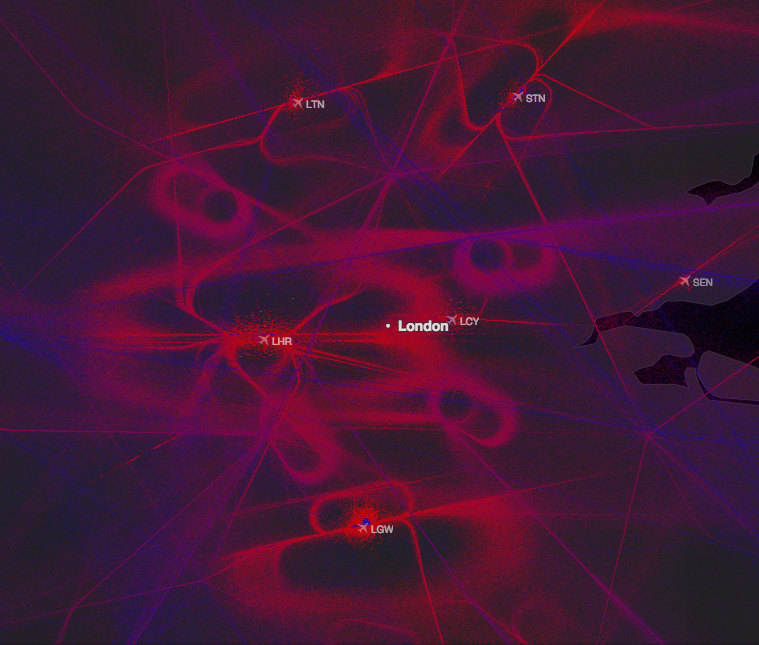
There is more between heaven and earth than bird migrations and weather fronts. These maps capture the poetic beauty of something utterly mundane and usually invisible: the flight patterns of the planes that bring us from airport A to airport B.

We live in the age of mass air travel. At any given moment, there are about 10,000 commercial planes airborne, carrying an estimated half a million passengers across the skies. We also live in the era of Big Data. Which means that the movements of those thousands of planes can be followed in real time on websites such as Plane Finder and Flightradar24.

London and the pretty holding patterns around its airports: Heathrow (LHR), Gatwick (LGW), City (LCY), Luton (LTN), Stansted (STN) and Southend-on-Sea (SEN).

You can read the full article here.

Alex, my son, then replied with a link to this item on the UK NATS website: Take a guided tour around UK airspace.

The skies above the UK have been brought to life like never before in a video showing a day of air traffic in less than three minutes.

Created from actual radar data showing over 7,000 flights, the video graphically illustrates the daily task facing air traffic controllers and the airspace features that help make it all work.


It finishes with an overview of the structure of UK airspace, highlighting the major air routes and showing how this ‘invisible infrastructure’ helps underpin the entire operation.

Matt Mills, NATS Head of Digital Communications, said: “We’ve made data visualisations in the past, but we wanted to now take people on a deeper journey into what makes UK airspace work and some of its important features.

Airspace might be the invisible infrastructure, but it is every bit as important as the airports and runways on the ground.

Created by air traffic management company, NATS, the video takes viewers on a unique tour of some of the key features of UK airspace – from the four holding stacks over London and the military training zones above Wales, to the helicopters delivering people and vital supplies to the North Sea oil and gas rigs.

It is a fascinating video.

The book! Part Three: Greed, inequality and poverty

Note:

I read this out aloud to Jeannie last night, as I do with every post that is published, and found this chapter really didn’t flow.  I’m making the mistake of including too many words of direct quotations, many of which are not easy to follow.

So just wanted to let you know that if this strikes you the same way, you are not alone! 😉

It is, of course, just the first draft, but nonetheless …. wanted you to read this first.

oooo

Greed, inequality and poverty

Just three words: greed; inequality; poverty.

Just three words that metaphorically come to me like a closed, round, wooden lid hiding a very deep, dark well. That lifting this particular lid, the metaphorical one, exposes an almost endless drop into the vastness of where our society appears to have fallen.

That this dark well, to stay with the metaphor, is lined with example after example of greed, inequality and poverty is a given.

One might conclude that examining any of those examples is pointless, not in terms of the reality of our world, but in terms of influencing the views of a reader. If you are a reader who is uncertain about the current levels of greed, inequality and poverty then it’s unlikely that a few examples, or a few hundred examples, are going to change minds. (One might argue that you wouldn’t be reading this book in the first place!)

Thus when I was digging around, looking for insight into how and why we, as in society, are in such times, I was looking for core evidence. Very quickly, it struck me that the chapter title really should simply have been: Inequality. Because inequality, by implication, is the result of greed and results in poverty.

In November, 2014, at the time I was drafting this book, a new report was issued by the Center of Economic Policy Research (CEPR) on the latest (American) Survey of Consumer Finances. It painted a picture very familiar to many: the rich becoming richer while those with less wealth are falling further and further behind.

David Rosnick of the CEPR, and one of the report co-authors, made this important observation:

The decline in the position of typical households is even worse than the Consumer Finances survey indicates. In 1989, many workers had pensions. Far fewer do now. The value of pensions isn’t included in these surveys due to the difficulty of determining what they are worth on a current basis. But they clearly are significant assets that relatively few working age people have now.

Sharmini Peries, of The Real News Network, in an interview with David Rosnick, asked:

PERIES: David, just quickly explain to us what is the Consumer Finance Survey. I know it’s an important survey for economists, but why is it important to ordinary people? Why is it important to us?

ROSNICK: So, every three years, the Federal Reserve interviews a number of households to get an idea of what their finances are like, do they have a lot of wealth, how much are their house’s worth, how much they owe on their mortgages, how much they have in the bank account, how much stocks do wealthy people own. This gives us an idea of their situations, whether they’re going to be prepared for retirement. And we can see things like the effect of the housing and stock bubbles on people’s wealth, whether they’ve been preparing for eventual downfalls, how they’ve reacted to various economic circumstances, how they’re looking to the long term. So it’s a very useful survey in terms of finding out how households are prepared and what the distribution of wealth is like.

PERIES: So your report is an analysis of the report. And what are your key findings?

ROSNICK: So, largely over the last 24 years there’s been a considerable increase in wealth on average, but it’s been very maldistributed. Households in the bottom half of the distribution have actually seen their wealth fall, but the people at the very top have actually done very well. And so that means that a lot of people who are nearing retirement at this point in time are actually not well prepared at all for retirement and are going to be very dependent on Social Security in order to make it through their retirement years.

PERIES: So, David, address the gap. You said there’s a great gap between those that are very wealthy and those that are not. Has this gap widened over this period?

ROSNICK: It absolutely has. As, say, the top 5 percent in wealth, the average wealth for people in the top 5 percent is about 66 percent higher in 2013, the last survey that was completed, compared to 1989. By comparison, for the bottom 20 percent, their wealth has actually fallen 420 percent. They basically had very little to start with, and now they have less than little.

PERIES: So the poorer is getting poorer and the richer is getting extremely richer.

ROSNICK: Very much so.

To my way of thinking, if in the period 1989 through to 2013 “the average wealth for (American) people in the top 5 percent is about 66 percent higher” and “for the bottom 20 percent, their wealth has actually fallen 420 percent” it’s very difficult not to see the hands of greed at work and a consequential devastating increase in inequality.

In other words, the previous few paragraphs seemed to present, and present clearly, the widening gap between the ‘haves’ and the ‘have-nots’, comparatively speaking, and that it was now time for society to understand the trends, to reflect on where this is taking us, if left unchallenged, and to push back as hard as we can both politically and socially.

I wrote that shortly before another item appeared in my email ‘in-box’ in the middle of November (2014), a further report about inequality that, frankly, emotionally speaking, just smacked me in the face. It seemed a critical addition to the picture I was endeavouring to present.

Namely, on the 13th October, 2014, the US edition of The Guardian newspaper published a story entitled: US wealth inequality – top 0.1% worth as much as the bottom 90%. The sub-heading enlarged the headline: Not since the Great Depression has wealth inequality in the US been so acute, new in-depth study finds.

The study referred to was a paper released by the National Bureau of Economic Research, Cambridge, MA, based on research conducted by Emmanuel Saez and Gabriel Zucman. The paper’s bland title belied the reality of the research findings: Wealth Inequality in the United States since 1913.

As the Guardian reported:

Wealth inequality in the US is at near record levels according to a new study by academics. Over the past three decades, the share of household wealth owned by the top 0.1% has increased from 7% to 22%. For the bottom 90% of families, a combination of rising debt, the collapse of the value of their assets during the financial crisis, and stagnant real wages have led to the erosion of wealth. The share of wealth owned by the top 0.1% is almost the same as the bottom 90%.

The picture actually improved in the aftermath of the 1930s Great Depression, with wealth inequality falling through to the late 1970s. It then started to rise again, with the share of total household wealth owned by the top 0.1% rising to 22% in 2012 from 7% in the late 1970s. The top 0.1% includes 160,000 families with total net assets of more than $20m (£13m) in 2012.

In contrast, the share of total US wealth owned by the bottom 90% of families fell from a peak of 36% in the mid-1980s, to 23% in 2012 – just one percentage point above the top 0.1%.

The report was not exclusively about the USA. As the closing paragraphs in The Guardian’s article illustrated:

Among the nine G20 countries with sufficient data, the richest 1% of people (by income) have increased their income share significantly since 1980, according to Oxfam. In Australia, for example, the top 1% earned 4.8% of the country’s income in 1980. That had risen to more than 9% by 2010.

Oxfam says that in the time that Australia has held the G20 presidency (between 2013 and 2014) the total wealth in the G20 increased by $17tn but the richest 1% of people in the G20 captured $6.2tn of this wealth – 36% of the total increase.

I find it incredibly difficult to have any rational response to those figures. I am just aware that there is a flurry of mixed emotions inside me and, perhaps, that’s how I should leave it. Nonetheless, there’s one thing that I can’t keep to myself and that this isn’t the first time that such inequality has arisen, the period leading up the the Great Depression of the 1930s comes immediately to mind, and I doubt very much that it will be the last.

Unless!

Unless the growing catalogue of unsustainable aspects of this 21st century, a few of which have been the focus of this Part Three, brings about, perhaps in many different ways, a force for change that is unstoppable.

But before that is explored in Part Four, there is the one final element of the greed, inequality and poverty theme of this chapter that must be aired; the issue of poverty.

Contrary to my anticipation, the figures for poverty trends can be read in many ways and don’t give a clear-cut uniform picture. Nevertheless, it does’t take a genius to work out that the future, especially for young people, could be alarming.

Today, the poor people are the young. Today, the young are heading into a future that has many frightening aspects.

Take the present population numbers, the mind-boggling scale of the use of energy in these times, not to mention the levels of debt across so many countries (on the 14th November, 2014, the Federal Debt of the USA was about $18,006,100,032,000), possible unsustainable global climate change trends, and is it any wonder that those born in the period 1928 to 1945 (I was born in 1944), the generation that has been called the Silent Generation, must be wondering what the future holds for their children and grandchildren and what they or anyone can do today and tomorrow, to prevent these future generations sinking into oblivion.

I came across a quotation from Simon Caulkin, the award winning management writer: “It’s all the product of human conduct!”

Yes, Simon is right. Only human conduct will find that sustainable, balanced relationship with each other and, critically, with the planet upon which all our futures depend. Yet, something nags at me; a half-conscious doubt that starts with the word ‘but!’ Not that it doesn’t all come down to human conduct; not a moment’s hesitation on that one. But there’s still that half-conscious doubt. A doubt that starts to take shape on the back of that wonderful quotation from Einstein: “Insanity: doing the same thing over and over again and expecting different results.

Then from that half-conscious place in one’s head comes another word. The word: Faith. Faith in us, as in faith in humanity. Faith that not only can we change our relationship with ourselves, with our communities and, above all, with our planet, but that we will. Faith that we, as in mankind, will embrace the many beautiful qualities of the animal that is so special to so many millions of us: our dogs. Not just embrace but pin our future on the premise that adopting the qualities of love, trust, honesty, openness and more, qualities that we see daily in our closest animal companions, is our potential salvation.

Thus comes the end of this set of depressing aspects of our 21st century. Time to move on in this story of learning from dogs and envelope ‘Of change in thoughts and deeds’; the title of the next section of this book. For we truly need a change to a better future.

1923 words Copyright © 2014 Paul Handover
There are dogs, and dogs, and Jesse!

As Dan said in the email to me that included the YouTube link ….

“If I ever get another dog, this is the one I want.”

It’s been watched over eleven million times, and no wonder!

The book! Part Three: Population and Energy.

Why a chapter on population and energy?

Because in a very real sense it is the measure of how many live on this planet and how much energy is used for our own purposes that brings into stark consideration the fundamental, inviolate rule: that we cannot sustain an existence that isn’t in balance with what our planet can provide for us. ‘Us’ of course meaning every living thing on the planet.

The story of our energy use is scary to the extreme. By using the term ‘our energy use’ I am offering it as a label, so to speak, for the number of people multiplied by the energy each person is using.

So, first let us start with global population.

The world did not reach a population of one billion until 1800. One hundred and twenty-three years later, in 1927, that global population figure passed two billion persons. That, in itself, isn’t remarkable. But what was remarkable was the continuing growth.

Thirty-three years later, in 1960, the global population reached three billion.
Twenty-four years later, in 1974, the population reached four billion.
Thirteen years later, in 1987, the world population is up to five billion.
Twelve years on, in 1999, up to six billion persons in the world.
Then just another thirteen years on for the population to reach, in 2012, seven billion.

Now that is not a cast-iron guarantee that the growth will continue on and on in a similar fashion. Recall that old saying, “I can predict anything except those matters involving the future!”

Indeed, the UN’s Economic & Social Affairs Department, in a report issued in 2013, under the title of World Population Prospects – 2012 Revision, offered in Figure 1. Population of the world, 1950-2100 (Page XV of the summary.), four possible outcomes, “according to different projections and variants.” Those being Medium; High; Low and Constant-fertility. Just to pick the extremes projected, a Constant-fertility growth would bring the global population in 2100 to twenty-eight billion persons, and a Low growth future delivering more or less today’s global population of seven billion persons.

What is the maximum carrying capacity of the planet? A number of estimates of the carrying capacity have been made with a wide range of population numbers. A 2001 UN report said that two-thirds of the estimates fall in the range of 4 billion to 16 billion (with unspecified standard errors), with a median of about 10 billion. More recent estimates are much lower, particularly if resource depletion and increased consumption are considered.

Now if seven billion people might be (and I do stress ‘might be’) more than Planet Earth can sustain today, then don’t even start to go to future population levels of the order of sixteen billion (High) or twenty-eight billion (Constant-fertility)!

However, this is a chapter on population and energy, not just population per se. Population growth is only one part of a complex energy nightmare. A huge nightmare. We must look at the other factor: our energy use. It is both a cause and a consequence of the population numbers.

The energy used by each person, measured in kilowatts on an annual basis, remained pretty constant right up to the middle of the Industrial revolution. For example, in 1800, the energy use per person was less than two kilowatts (A kilowatt is a thousand watts) of power a year. Today, that low figure from 1800 is almost beyond imagination in terms of the energy used today!

The Industrial revolution changed everything; irrevocably. By the end of that century, 1900, while the energy use per person was slightly up, the global population was steadily increasing; as explained a few paragraphs back. Thus the total energy being used in 1900 was the sum of energy used per person times the number of persons worldwide.

As it logically is the same total calculation used coming forward to the year 2000; where the energy use per person is up to three or four kilowatts a year (the chart being used was difficult to read precisely) and the population is now around seven billion! Seven billion people using three to four kilowatts of power produces a global use of energy of fifteen terawatts (The terawatt is equal to one trillion watts!) That’s fifteen trillion watts of energy!

Once more, looking into the future is challenging; to say the least. The awareness and uptake of solar electricity panels is expanding; the idea of cars being powered by other means than petroleum fuels is becoming a reality but the broader picture of total energy used across the world reveals an intense dependency of energy for some time. Indeed, we can use the UN’s forecast of population growth out to 2050 to construct a prediction of future energy needs, again on an energy per person energy equivalent.

This shows total global energy use peaking about now (2015), to the tune of 80 gigajoules per year (The equivalent of 22 megawatt-hours per year), of which 80 percent is from the use of fossil fuels, then slowly declining by 2050 to 30 gigajoules per year, of which nearly 70 percent would be from the use of non-fossil fuels.

Indeed, you may have heard about recent declines in energy consumption in both Europe and the US, but these declines have been more than offset by increases in energy consumption in China, India, and the rest of the “developing” world.

To put this into some form of historical perspective, using the assumptions chosen, the world per capita energy consumption in 2050 would be about equal to what the world per capita energy consumption was back in 1905.

Assuming we haven’t trashed the planet before then!

930 words. Copyright © 2014 Paul Handover

Never looking backwards!

“They didn’t bring us here to change the past!”

That quote is from the film Interstellar.  Last Thursday, Jean and me, with our neighbours Dordie and Bill, went into Grants Pass to watch the film.  Speaking for myself, even after three days have passed, I still haven’t settled on a clear opinion of the film. Don’t get me wrong, it was a magnificent production and held one’s attention for every minute of the three-hour performance.

All of which is a preamble for an insightful essay from George Monbiot published on November 11th and republished here with George’s kind permission.

ooOOoo

Better Dead Than Different

Our visions of the future are defined, like the film Interstellar, by technological optimism and political defeatism.

By George Monbiot, published in the Guardian 12th November 2014

“It’s like we’ve forgotten who we are,” the hero of Interstellar complains. “Explorers, pioneers, not caretakers … We’re not meant to save the world. We’re meant to leave it.” It could be the epigraph of our age.

Don’t get me wrong. Interstellar is a magnificent film, true to the richest traditions of science fiction, visually and auditorally astounding. See past the necessary silliness and you will find a moving exploration of parenthood, separation and ageing. It is also a classic exposition of two of the great themes of our age: technological optimism and political defeatism.

The Earth and its inhabitants are facing planetary catastrophe, caused by “six billion people, and every one of them trying to have it all”, which weirdly translates into a succession of blights, trashing the world’s crops and sucking the oxygen out of the atmosphere. (When your major receipts are in the US, you can’t afford to earn the hatred of the broadcast media by mentioning climate change. The blight, an obvious substitute, has probably averted millions of dollars of lost takings).

The civilisational collapse at the start of the film is intercut with interviews with veterans of the Dust Bowl of the 1930s. Their worn faces prefigure the themes of ageing and loss. But they also remind us inadvertently of a world of political agency. Great follies were committed but big, brave things were done to put them right: think of the New Deal and the Civilian Conservation Corps (1). That world is almost as different from our own as the planets visited by Interstellar’s astronauts.

They leave the Earth to find a place to which humans can escape or, if that fails, one in which a cargo of frozen embryos can be deposited. It takes an effort, when you emerge, to remember that such fantasies are taken seriously by millions of adults, who consider them a realistic alternative to addressing the problems we face on Earth.

NASA runs a website devoted to the idea (2). It claims that gigantic spaceships, “could be wonderful places to live; about the size of a California beach town and endowed with weightless recreation, fantastic views, freedom, elbow-room in spades, and great wealth.” Of course, no one could leave, except to enter another spaceship, and the slightest malfunction would cause instant annihilation. But “settlements in earth orbit will have one of the most stunning views in our solar system – the living, ever-changing Earth.” We can look back and remember how beautiful it was.

And then there’s the money to be made. “Space colonization is, at its core, a real estate business. … Those that colonize space will control vast lands, enormous amounts of electrical power, and nearly unlimited material resources. [This] will create wealth beyond our wildest imagination and wield power – hopefully for good rather than for ill.”(3) In other words, we would leave not only the Earth behind but also ourselves.

That’s a common characteristic of such fantasies: their lack of imagination. Wild flights of technological fancy are accompanied by a stolid incapacity to picture the inner life of those who might inhabit such systems. People who would consider the idea of living in the Gobi Desert intolerable – where, an estate agent might point out, there is oxygen, radiation-screening, atmospheric pressure and 1g of gravity – rhapsodise about living on Mars. People who imagine that human life on Earth will end because of power and greed and oppression imagine we will escape these forces in pressure vessels controlled by technicians, in which we would be trapped like tadpoles in a jamjar.

If space colonisation is impossible today, when Richard Branson, for all his billions, cannot even propel people safely past the atmosphere(4), how will it look in a world that has fallen so far into disaster that leaving it for a lifeless, airless lump of rock would be perceived as a good option? We’d be lucky in these circumstances to possess the wherewithal to make bricks.

Only by understanding this as a religious impulse can we avoid the conclusion that those who gleefully await this future are insane. Just as it is easier to pray for life after death than it is to confront oppression, this fantasy permits us to escape the complexities of life on Earth for a starlit wonderland beyond politics. In Interstellar, as in many other versions of the story, space is heaven, overseen by a benign Technology, peopled by delivering angels with oxygen tanks.

Space colonisation is an extreme version of a common belief: that it is easier to adapt to our problems than to solve them. Earlier this year, the economist Andrew Lilico argued in the Telegraph(5) that we can’t afford to prevent escalating climate change, so instead we must learn to live with it. He was challenged on Twitter to explain how people in the tropics might adapt to a world in which four degrees of global warming had taken place. He replied: “I imagine tropics adapt to 4C world by being wastelands with few folk living in them. Why’s that not an option?”(6)

Re-reading his article in the light of this comment, I realised that it hinged on the word “we”. When the headline maintained that “We have failed to prevent global warming, so we must adapt to it” (7), the “we” referred in these instances to different people. We in the rich world can brook no taxation to encourage green energy, or regulation to discourage the consumption of fossil fuels. We cannot adapt even to an extra penny of tax. But the other “we”, which turns out to mean “they” – the people of the tropics – can and must adapt to the loss of their homes, their land and their lives, as entire regions become wastelands. Why is that not an option?

The lives of the poor appear unimaginable to people in his position, like the lives of those who might move to another planet or a space station. So reducing the amount of energy we consume and replacing fossil fuels with other sources, simple and cheap as these are by comparison to all other options, is inconceivable and outrageous, while the mass abandonment of much of the inhabited surface of the world is a realistic and reasonable request. “It is not contrary to reason to prefer the destruction of the whole world to the scratching of my finger”, David Hume noted (8), and here we see his contemplation reified.

But at least Andrew Lilico could explain what he meant, by contrast to most of those who talk breezily about adapting to climate breakdown. Relocating cities to higher ground? Moving roads and railways, diverting rivers, depopulating nations, leaving the planet? Never mind the details. Technology, our interstellar god, will sort it out, some day, somehow.

George: this is a formula for the deferment of hard choices to an ever-receding neverland of life after planetary death.

No wonder it is popular.

www.monbiot.com

References:

1. http://www.cityprojectca.org/blog/archives/5392

2. http://settlement.arc.nasa.gov

3. http://settlement.arc.nasa.gov/

4. http://www.theguardian.com/science/2014/nov/01/sir-richard-branson-space-tourism-project-doubt

5. http://www.telegraph.co.uk/finance/economics/10644867/We-have-failed-to-prevent-global-warming-so-we-must-adapt-to-it.html

6. http://www.businessgreen.com/bg/james-blog/2337458/climate-adaptation-lobby-is-reckless-dangerous-and-partly-right

7. http://www.telegraph.co.uk/finance/economics/10644867/We-have-failed-to-prevent-global-warming-so-we-must-adapt-to-it.html

8. https://ebooks.adelaide.edu.au/h/hume/david/h92t/B2.3.3.html

ooOOoo

Do go and see Interstellar!

Picture parade seventy.

First set of wonderful dog pictures from neighbours, Jim and Janet!

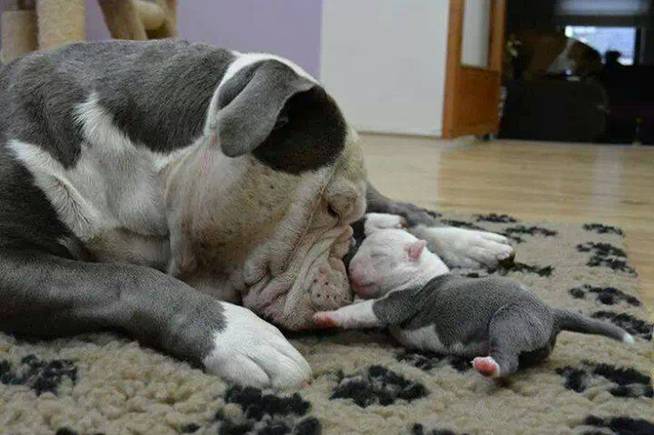
This is what being a loving parent is all about!

JG1

oooo

JG2

oooo

JG3

oooo

JG4

oooo

JG5

oooo

JG6

oooo

JG7

oooo

Difficult to pick a favourite!

Happy Sunday everyone! (And Happy Birthday to my dear sister, Eleanor, who lives in South Africa!)

Saturday sayings!

Courtesy of Bob Derham from back across the ‘pond’.

Sure you will love these just as much as Jean and I did!

ooOOoo

APHORISM: A SHORT, POINTED SENTENCE EXPRESSING A WISE OR CLEVER OBSERVATION, OR A GENERAL TRUTH.

  1. The nicest thing about the future is … that it always starts tomorrow.
  2. Money will buy a fine dog, but only kindness will make him wag his tail.
  3. If you don’t have a sense of humor, you probably don’t have any sense at all.
  4. Seat-belts are not as confining as wheelchairs.
  5. A good time to keep your mouth shut is when you’re in deep water.
  6. How come it takes so little time for a child who is afraid of the dark to become a teenager who wants to stay out all night?
  7. Business conventions are important … because they demonstrate how many people a company can operate without.
  8. Why is it that at class reunions you feel younger than everyone else looks?
  9. Scratch a cat …. and you’ll have a permanent job.
  10. No one has more driving ambition than the teenage boy who wants to buy a car.
  11. There are no new sins; the old ones just get more publicity.
  12. There are worse things than getting a call for a wrong number at 4 a.m. – like, it could be the right number.
  13. No one ever says “It’s only a game” when their team is winning.
  14. I’ve reached the age where ‘happy hour’ is a nap.
  15. Be careful about reading the fine print … there’s no way you’re going to like it.
  16. The trouble with bucket seats is that not everybody has the same size bucket.
  17. Do you realize that, in about 40 years, we’ll have thousands of old ladies running around with tattoos – and rap music will be the Golden Oldies!
  18. Money can’t buy happiness – but somehow it’s more comfortable to cry in a Rolls Royce than in an old banger.
  19. After 60, if you don’t wake up aching in every joint, you’re probably dead..
  20. Always be yourself because the people that matter don’t mind …. and the ones that mind don’t matter.
  21. Life isn’t tied with a bow … but it’s still a gift.

and REMEMBER …”POLITICIANS AND NAPPIES SHOULD BE CHANGED OFTEN AND FOR THE SAME REASON.”

ooOOoo

Have a wonderful week-end!

The book! Part Three: Materialism

Money has never made man happy, nor will it, there is nothing in its nature to produce happiness. The more of it one has the more one wants.” Thus, it is reputed, spoke Benjamin Franklin, one of the Founding Fathers of the United States and who in many ways could be regarded as “the First American”.

In my previous chapter on short-termism, I quoted from an article by Larry Elliot, Economics Editor of The Guardian newspaper. The closing paragraphs of that article read:

“The premise of the Global Commission on the Economy and Climate is that nothing will be done unless finance ministers are convinced of the need for action, especially given the damage caused by a deep recession and sluggish recovery.

Instead of preaching to the choir the plan is to show how to achieve key economic objectives – growth, investment, secure public finances, fairer distribution of income – while at the same time protecting the planet. The pitch to finance ministers will be that tackling climate change will require plenty of upfront investment that will boost growth rather than harm it.”

“ …. the plan is to show how to achieve key economic objectives ……. while at the same time protecting the planet.” [My italics]

That those two paragraphs and the phrase “key economic objectives” seem perfectly reasonable statements to me and, I don’t doubt, many, many others, illustrates how deeply we are entrenched in the money, or materialistic, world.

I have spent my whole life hearing the term ‘Gross Domestic Product’, or GDP as it is commonly described, and never ever stopped to wonder about the history of this well-known measure. Thus I was genuinely surprised to learn that the term is not yet one hundred years old, by some years. On the website Foreign Policy one finds a brief history of GDP: “One stat to rule them all.” It offers the following:

Out of the carnage of the Great Depression and World War II rose the idea of gross domestic product, or GDP: the ultimate measure of a country’s overall welfare, a window into an economy’s soul, the statistic to end all statistics. Its use spread rapidly, becoming the defining indicator of the last century. But in today’s globalized world, it’s increasingly apparent that this Nobel-winning metric is too narrow for these troubled economic times.

1937: Simon Kuznets, an economist at the National Bureau of Economic Research, presents the original formulation of gross domestic product in his report to the U.S. Congress, “National Income, 1929-35.” His idea is to capture all economic production by individuals, companies, and the government in a single measure, which should rise in good times and fall in bad. GDP is born.

1944: Following the Bretton Woods conference that established international financial institutions such as the World Bank and the International Monetary Fund, GDP becomes the standard tool for sizing up a country’s economy.

1959: Economist Moses Abramovitz becomes one of the first to question whether GDP accurately measures a society’s overall well-being. He cautions that “we must be highly skeptical of the view that long-term changes in the rate of growth of welfare can be gauged even roughly from changes in the rate of growth of output.”

1962: But GDP evangelists reign. Arthur Okun, staff economist for U.S. President John F. Kennedy’s Council of Economic Advisers, coins Okun’s Law, which holds that for every 3-point rise in GDP, unemployment will fall 1 percentage point. The theory informs monetary policy: Keep growing the economy, and everything will be just fine. [My italics]

Keep growing the economy and everything will be fine! Thank goodness we have unlimited resources on this planet! Please forgive my irony!

Management thinker Peter Drucker is often quoted as saying that “you can’t manage what you can’t measure” but my understanding was that the saying came from William Edwards Deming; October 1900- December 1993. Deming was fundamentally an American statistician although his bio reveals many other talents: engineer; professor; author; lecturer; and management consultant.

Irrespective of the origins of the saying, it misses one fundamental point! That is of being certain that what you wish to manage is being measured appropriately. Not measuring pears if you wish to manage apples!

Stay with this idea for a while longer.

There is an organisation known as the Social Progress Imperative. The organisation is described on their website, as follows:

THE IMPERATIVE
Numerous studies have found a high correlation between economic growth and a wide variety of social indicators, yet there is growing awareness that economic measures alone do not fully capture social progress.

The Social Progress Imperative’s mission is to improve the quality of lives of people around the world, particularly the least well off, by advancing global social progress. The Social Progress Index provides a robust, holistic and innovative measurement tool to guide countries’ choices to enable greater social progress and foster research and knowledge-sharing on the policies and investments that will best achieve that goal. Social progress is defined as the capacity of a society to meet the basic human needs of its citizens, establish the building blocks that allow citizens and communities to enhance and sustain the quality of their lives, and create the conditions for all individuals to reach their full potential.

The Social Progress Index is a tool that we hope will be widely used to inform and influence policies and institutions around the world. The Index is founded on the principle that what we measure guides the choices we make. By measuring the things that really matter to people — their basic needs, their food, shelter and security; their access to healthcare, education, and a healthy environment; their opportunity to improve their lives — the Social Progress Index is an attempt to reshape the debate about development.

…. what we measure guides the choices we make.” Pretty flippin’ obvious when you think about it! As is understanding the “things that really matter to people”!

Michael Green is the Chief Executive Office (CEO) of the Social Progress Imperative. He gave a TED Talk in November, 2014 that is introduced:

The term Gross Domestic Product is often talked about as if it were “handed down from god on tablets of stone.” But this concept was invented by an economist in the 1920s. We need a more effective measurement tool to match 21st century needs, says Michael Green: the Social Progress Index. With charm and wit, he shows how this tool measures societies across the three dimensions that actually matter. And reveals the dramatic reordering of nations that occurs when you use it.

As Michael Green said at the October, 2014 TED Global conference: “GDP is imperfect and incomplete: The world urgently needs a measurement revolution.”

If now writing about the BBC radio show, The Goon Show, suggests I have lost the plot, just hang in with me for a few more moments.

The Goon Show ran from 1951 to 1960 and was broadcast by what was then known as the BBC Home Service. It was hilariously funny and became a comedy legend. It starred Spike Milligan, Peter Sellers and Harry Secombe, not forgetting the wonderful narratives from Wallace Greenslade. The Goon Show was an integral part of my ‘education’ during my formative years; I was seven in November of 1951 and the radio was the source of news, current affairs, education, and humour. Spike Milligan was an outstanding actor in The Goon Show and became a comedy legend in his own right.

A quotation from dear, dear Spike seems a very fitting way to round off this chapter on materialism. Namely: “All I ask is the chance to prove that money can’t make me happy.

1,272 words. Copyright © 2014 Paul Handover

oooo

Now although it is not part of the book, I was so impressed by Michael Green’s TED Talk, that it now follows. You will love it!

Published on Nov 11, 2014
The term Gross Domestic Product is often talked about as if it were “handed down from god on tablets of stone.” But this concept was invented by an economist in the 1920s. We need a more effective measurement tool to match 21st century needs, says Michael Green: the Social Progress Index. With charm and wit, he shows how this tool measures societies across the three dimensions that actually matter. And reveals the dramatic reordering of nations that occurs when you use it.

The world according to Lilly

Our dear Lilly offers her special thoughts.

Preface: Lilly is reaching an amazing age for a dog; trully amazing. Lilly was featured back in February this year when we did a series of posts under the generic heading of Meet the dogs.

Yesterday, Jean thought it would be wonderful to hear it from Lilly; so to speak.

So these are Lilly’s words; as whispered to Jeannie!

oooo

The World According to Lilly

Surveying her domain.

I am sixteen years old! That’s one hundred and twelve people years!

So no-one is going to tell me what to do; especially those bratty young dogs I live with.

I refuse to eat canned dog food and expect Mum to cook fresh meat on a daily basis or I will stop eating and give her the moon eyes. (No real issue as Mum does understand my demands! 😉 ) The only dry food that passes my lips is ‘Canidae’. It’s not cheap but, hey, I’m worth it!

No dog is allowed to snag my food or I will bite their nose; and well the others know that! OK, maybe young Oliver can sneak a nibble or two off my bowl; he is rather cute!

I will only take a pill if it is camouflaged in the fresh marrow of a bone – Mum, bless her, thinks I don’t know it’s there! Ha!

When it’s raining, I refuse to go out. Period! To make Mum happy, sometimes I let her use this sheepskin-lined sling thing to help me tackle the deck steps but many times I can manage on my own – hey! I’m only sixteen! But I know that it makes Mum’s day if she sees herself being useful!

It’s been a good life. OK, I’m rather creaky now but determined to make seventeen. Who knows maybe even eighteen!

Give Dad a run for his money any day!  Golly, he has only just turned seventy in people years and to hear him natter on you would think he feels old!

Now where’s my bed …..

Not a bad life for an old dog! (I'm speaking of Dad!)
Not a bad life for an old dog! (I’m speaking of Dad!)

The book! Part Three: Short-termism

Our modern madness!

We live in an era that is addicted to short-termism. Largely, I’m bound to say, brought on by the financial services industry. Yet the influence of that same industry is enormous and percolates its way through most levels of most societies in most cultures and, without question, through the societies of most European and North American countries. One only needs to reflect on the critical importance of gaining and maintaining financial solvency for individuals. From having the creditworthiness to finance, and eventually pay off, a mortgage on a private dwelling, to accumulating a pension to provide some level of comfort in the ‘senior’ years and along the way managing to bring up children, have the odd vacation or two, and enjoy a small luxury or impulse purchase. So for the great majority of us it is practically impossible to live a life that doesn’t interact with banks, savings plans, building societies, pension providers, and often many other financial and investment companies.

Thus the financial services industry is an intimate part of the majority of the lives of private citizens in the ‘Western world’. Yet, ironically, my sense is that the majority of those same private individuals run their lives quite differently. I have in mind what might be called planning horizons.

Clearly buying a home is the most obvious example of long-term planning. But there’s a myriad of other involvements that we sign up to that require, nay demand, a long-term perspective. Having a family, studying for a degree or a post-graduate academic qualification, becoming an apprentice, driver’s licence, heavy goods vehicle (HGV) licence, saving for a pension, for a vacation, working in a company, or similar, with an eye on longer-term promotion and career advancement. I’ll stop there for I’m sure my point is clear!

In my trawl across the internet looking for supportive examples, I came across a paper published by the Aspen Institute called “Short-termism and US Capital Markets”. This institute declares on their website (in part) that “The Aspen Institute is an educational and policy studies organization based in Washington, DC. Its mission is to foster leadership based on enduring values and to provide a nonpartisan venue for dealing with critical issues.

This US-based institute published the paper on short-termism in view of “the serious consequences they see for both investors and society at large.” The report refers to research by JP Morgan that is highly critical of the present-day love affair with short-term results: “[the research] indicating that a focus on quarterly earnings in US companies in order to show short-term profits is leading public companies to defer spending on marketing research, product design and prototype development and this reduction in investment is causing problems.”

If there’s one relatively recent event (I use the word “recent” in relation to the period when writing this book) that shows, dramatically shows, the madness of short-termism then it has to be the financial crisis of 2008. (As an aside, the term financial crisis seems an inadequate phrase when one considers the full range of negative consequences that blasted into the faces of millions of people in 2008.)

The Boston College Law School held a symposium in 2011 that led to a paper being published by Kent Greenfield, Professor and Law School Research Fund Scholar at Boston. That paper is available to read online. It carries the title: The Puzzle of Short-Termism. I think a few quotations from that paper will underline the madness that came to light post-2008 and that appears to still be with us. The paper opens, thus:

INTRODUCTION

When pondering the question of the “sustainable corporation,” as we did in this symposium, one of the intractable problems is the nature of the corporation to produce externalities. By noting this characteristic, I am not making a moral point but an economic one. The nature of the firm is to create financial wealth by producing goods and services for profit; without regulatory or contractual limits, the firm has every incentive to externalize costs onto those whose interests are not included in the firm’s current financial calculus.

Not much further on, Prof. Greenfield writes:

The more difficult kind of externality to address—especially if our focus is on the sustainability of the corporation—is the future externality. What I mean here is the kind of cost that a corporation’s management can externalize to the future. From management’s perspective, the future is a much more attractive place to push off costs. Stakeholders who must bear such future costs will be less aware of those costs than current costs, and even if they do learn of such future costs, they will be less able to gain the attention of regulators.

Then he offers this stark analysis:

If one is worried about the sustainability of corporations from an environmental, social, or political perspective, the problem of “short-termism” has to be a central worry. This is because, at least according to many who have thought seriously about the topic, in the long run the interests of corporations conflate with those of society as a whole. (For the sake of this Essay I will assume this to be the case, though I have stated some disagreement elsewhere.) Short-termism is a problem whether we focus our attention on the sustainability of the corporation or the ethics of its management.

Short-termism is also costly economically, since the economy as a whole benefits when companies have a long-term strategy. The economy is a summation of the fortunes of the millions of companies and individuals that make it up; if most companies make decisions that prioritize the short-term at the expense of the long-term, we all suffer. A nation’s wealth grows more over time when companies invest for the future and maintain their viability as a going concern.

Just one more extract from the paper, that without the preceding extracts would not have carried the weight and gravity that struck me, and I hope strikes you, dear reader when you read the following:

The financial crisis of 2008 brought into sharp relief the economic costs of short-term management. Among the competing theories on the cause of the financial collapse—the over-dependence on derivatives, the overuse of leverage, the culture of greed and entitlement in the finance industry, just to name a few—a focus on the short term is an omnipresent narrative thread. If managers and financiers had taken a more long-term view of the health of their own companies and the fortunes of their investors, we might not have seen the myriad other problems come to such a head. The addiction to leverage, derivatives, and greed that caused the market to become a casino would only have been possible in a business culture where short-term gains are prioritized over long-term costs. What might have been assumed to be costs that would be suffered some time in the distant future are being absorbed now. John Maynard Keynes was wrong on this point: in the long run, we are not all dead.

So despite some naysayers, the problem of short-termism is very real. Shareholders hold their stocks, on average, for less than a year, and even less for small companies. Institutional investors have been said to be particularly bad on this front, acting “more as traders, seeking short-term gain.” Managers admit that they make decisions that harm the company in the long-term in order to meet short-term earnings expectations. In 2006, both the Conference Board and the Business Roundtable, two of the nation’s most prominent business organizations, issued reports “decrying the short-term focus of the stock market and its dominance over American business behavior.” And, let’s remember, that was two years before the collapse.

The paper really needs to be read in full, especially for any individual trying to understand the pros and cons of a wide range of personal investment decisions. If only, to use Prof. Greenfield’s words, “This is because, at least according to many who have thought seriously about the topic, in the long run the interests of corporations conflate with those of society as a whole.

I sense readers might be on the verge of giving up with this book because it ain’t nothing to do with dogs! There was a large part of me that agonised over what to include and what to leave out, not only with this chapter but with all the chapters in this section. Perhaps I might be forgiven for making another ‘sales pitch’ for this whole section! That is that if good, honest folk aren’t as fully aware of the major characteristics of this new century, as this author wasn’t before the research, we cannot develop the passion and zeal for saying and promoting, as far and wide as we can, that ‘enough is enough’!

One more quotation to round off the chapter.

The Guardian newspaper published an article in October 2013 written by Larry Elliott, the newspaper’s economics editor. It was entitled: Saving the planet from short-termism will take man-on-the-moon commitment.

We choose to go to the moon. So said John F Kennedy in September 1962 as he pledged a manned lunar landing by the end of the decade.

The US president knew that his country’s space programme would be expensive. He knew it would have its critics, but he took the long-term view. Warming to his theme in Houston that day, JFK went on: “We choose to go to the moon in this decade and do the other things, not because they are easy but because they are hard, because that goal will serve to organise and measure the best of our energies and skills, because that challenge is one that we are willing to accept, one we are unwilling to postpone, and one which we intend to win, and the others too.”

That was the world’s richest country at the apogee of its power in an age where both Democrats and Republicans were prepared to invest in the future. Kennedy’s predecessor, Dwight Eisenhower, took a plan for a system of interstate highways and made sure it happened.

Contrast that with today’s America, which looks less like the leader of the free world than a banana republic with a reserve currency. Planning for the long term now involves last-ditch deals on Capitol Hill to ensure the federal government can remain open until January and debts can be paid at least until February.

The US is not the only country with advanced short-termism. It merely provides the most egregious example of the disease. This is a world of fast food and short attention spans, of politicians so dominated by a 24/7 news agenda that they have lost the habit of planning for the long term.

Tough stuff!

That doesn’t get any easier to read and take in as one continues.

Politics, technology and human nature all militate in favour of kicking the can down the road. The most severe financial and economic crisis in more than half a century has further discouraged policymakers from raising their eyes from the present to the distant horizon.

Clearly, though, the world faces long-term challenges that will only become more acute through prevarication. These include coping with a bigger and ageing global population, ensuring growth is sustainable and equitable, providing resources to pay for modern transport and energy infrastructure, and reshaping international institutions so they represent the world as it is in the early 21st century rather than as it was in 1945.

Or possibly for society to really grasp? Larry Elliot’s closing words:

Another conclave of the global great and good is looking at what should be done in the much trickier area of climate change. The premise of the Global Commission on the Economy and Climate is that nothing will be done unless finance ministers are convinced of the need for action, especially given the damage caused by a deep recession and sluggish recovery.

Instead of preaching to the choir the plan is to show how to achieve key economic objectives – growth, investment, secure public finances, fairer distribution of income – while at the same time protecting the planet. The pitch to finance ministers will be that tackling climate change will require plenty of upfront investment that will boost growth rather than harm it.

Will this approach work? Well, maybe. But it will require business to see the long-term benefits of greening the economy as well as the short-term costs, because that would lead to the burst of technological innovation needed to accelerate progress. And it will require the same sort of commitment it took to win a world war or put a man on the moon.

Despite Mr. Elliot’s powerful plea, there might be a school of opinion, a growing school of opinion, that would argue fundamentally with the words of that plea. I’m referring to: “… the plan is to show how to achieve key economic objectives – growth, investment, secure public finances, fairer distribution of income – while at the same time protecting the planet.

The next chapter on Materialism explains why “key economic objectives” may be the last type of measurement our world now demands.

2,217 words. Copyright © 2014 Paul Handover