Sent across to me by Dordie, a close neighbour of ours.
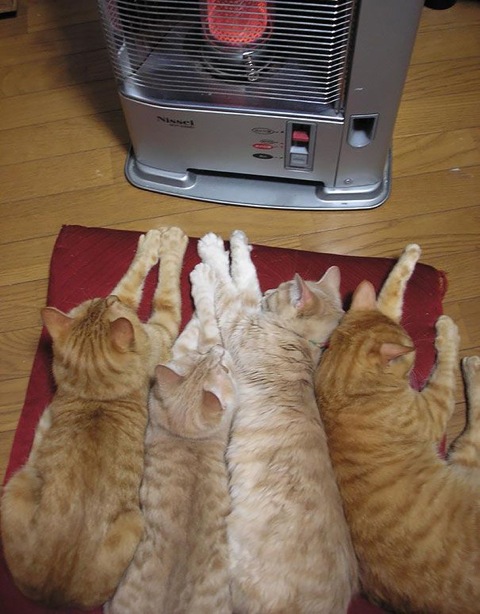
You all stay warm wherever you are – and here are some good ideas about so doing!
oooo
oooo
 oooo
oooo
 oooo
oooo
 oooo
oooo
 oooo
oooo
 oooo
oooo
 oooo
oooo
Heading into the end of the year now!
Dogs are animals of integrity. We have much to learn from them.
Author: Paul Handover
Sent across to me by Dordie, a close neighbour of ours.
You all stay warm wherever you are – and here are some good ideas about so doing!
oooo
oooo
oooo
oooo
oooo
oooo
oooo
oooo
Heading into the end of the year now!
Two views of teaching in the United Kingdom.
The title to today’s post may be a tad misleading, for it doesn’t offer a guide to both aspects of the post.
But first to what prompted the title.
Earlier yesterday, Neil Kelly, friend from my days when I was living in South Devon, sent me a link to a recent BBC News item. Here’s the story:
Maggie the dog made honorary primary school teacher
28 December 2015 Last updated at 04:31 GMT
A dog has become so successful in helping children to read, that she has become an honorary member of staff at a school in the West Midlands.
Please, please sign this petition to stop Beagle puppies being bred for slaughter!
Not going to add anything more than to republish in full a recent CARE2 Petition.
ooOOoo
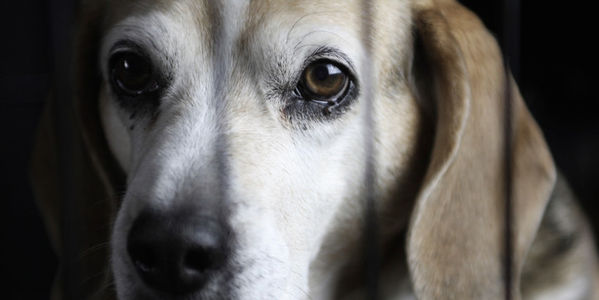 Stop the Beagle puppy animal testing breeding facility!
Unless we take action to stop it, a new puppy farm will open in the UK with the purpose of breeding beagles for animal testing experiments.
According to the National Anti-Vivisection Society, dogs taking part in scientific experiments are made to inhale toxic substances through masks, force feed through tubes, and are strapped in harnesses while being injected with drugs.
The facility is owned by a US firm and would be Britain’s second facility for breeding beagles specifically to be cut open and experimented on while still alive.
The other facility breeds 3,000 beagles for animal testing each year.
Dozens of celebrities have spoken out against this farm. Join Ricky Gervais, Queen guitarist Dr Brian May and Downton Abbey’s Peter Egan: sign this petition to demand the government stop the construction of a new cruelty-laden dog breeding facility.
ooOOoo
As at 09:30 PST yesterday, the target of 310,000 supporters of the petition was just short by 761 persons. Fingers and toes crossed that by the time this post is published the target will have been met. I know there are many caring readers of this blog who wouldn’t hesitate for a moment to sign the petition.
Thank you!

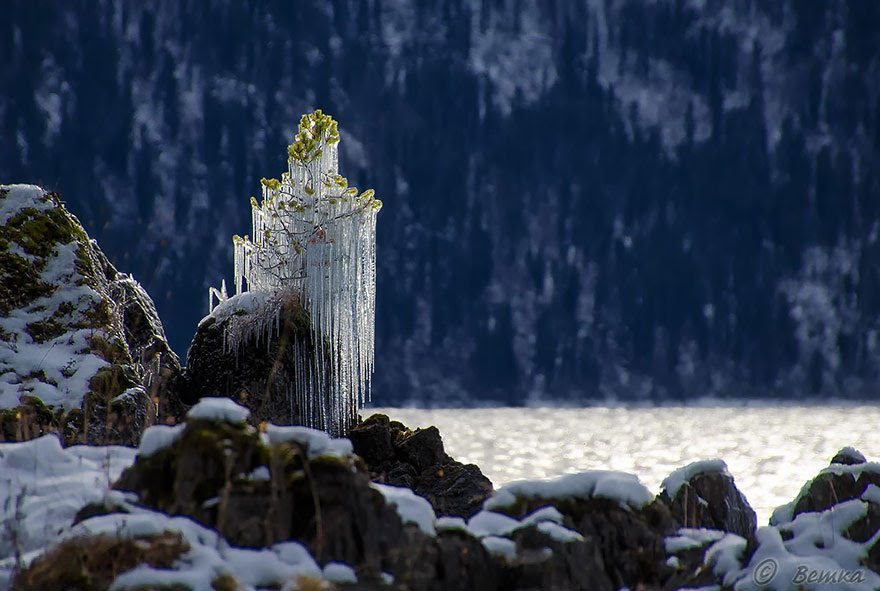
More of those fabulous ice photographs.
(The first set were published a week ago.)

oooo
 oooo
oooo
 oooo
oooo
 oooo
oooo
 oooo
oooo
And the last one this week is a photograph of the full moon taken Christmas Day evening shortly after 9pm PST.
Note: The next full moon to be seen on December 25th will not be until 2034!
 That’s the last Picture Parade for 2015. See you in the New Year!
Happy Boxing Day!
(the day after Christmas Day to those who are not familiar with the term!)
Sent to me by Julie Thomas-Smith.
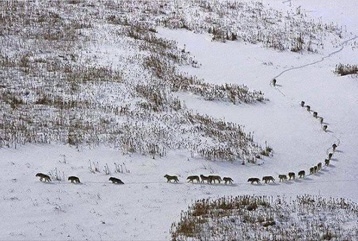
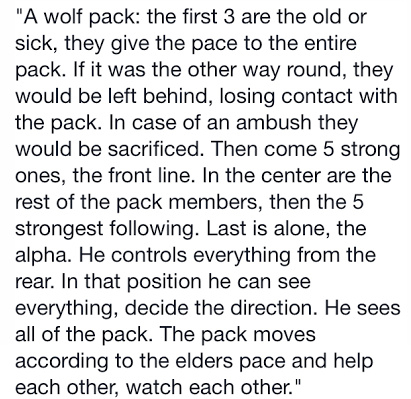 Always something to learn from our canines!
Happy Holidays!
(Apologies but I do not recall who posted this or sent me the link!)
oooo
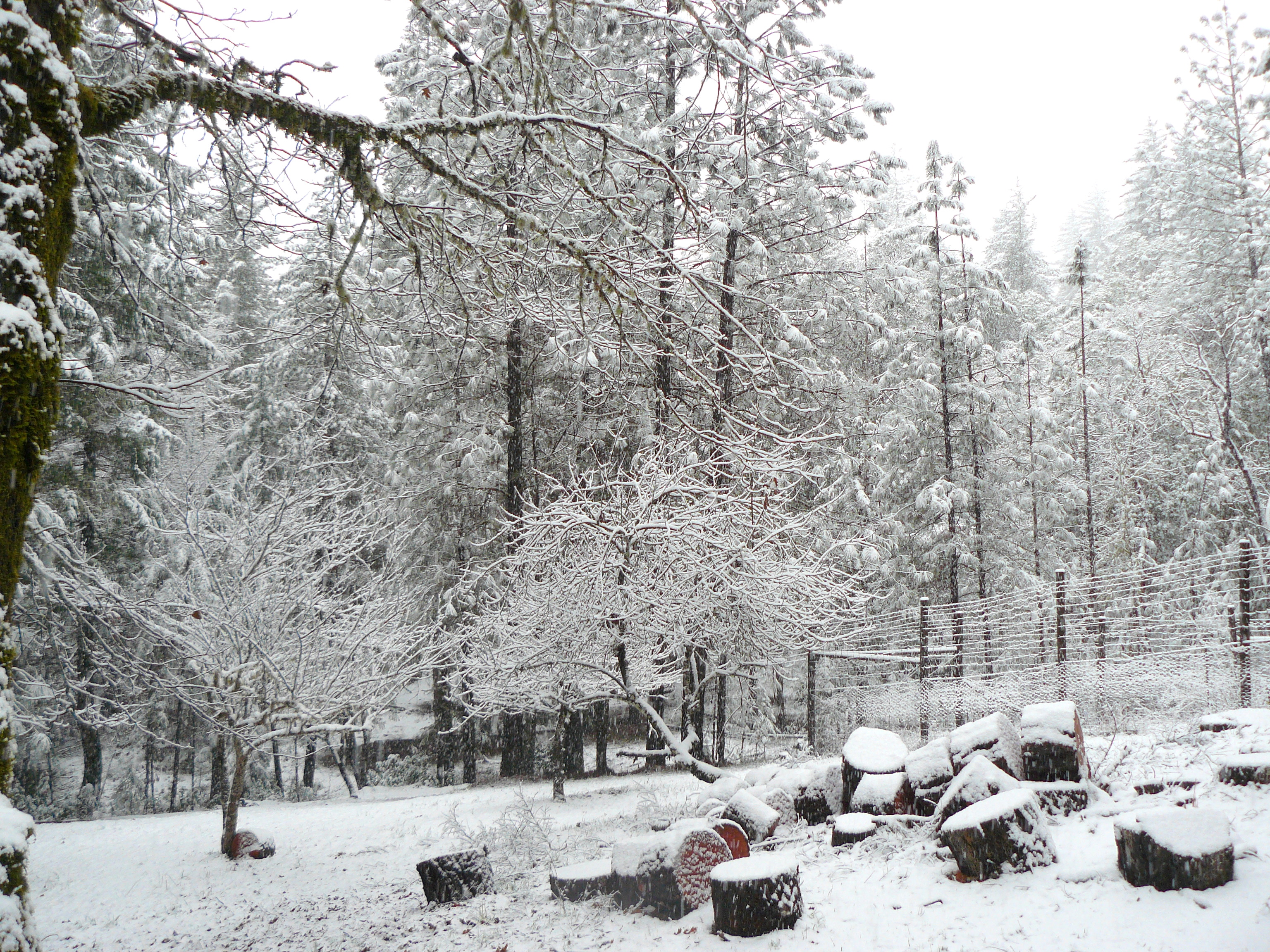
And just to show all of you that we are having a white christmas here in Oregon, some photos taken at home yesterday.

oooo

oooo
You all stay safe and have a wonderful festive season wherever you are in the world.
And thank you for all your interest and support.
You can blame John Zande for today’s post!
John left an intriguing question as a comment to yesterday’s post.
Oh to have a time machine!
Tell me, Paul, if you did have one, a time machine, what three moments in history would you visit?
It really grabbed Jean and me and we spent quite a few minutes during the day kicking around ideas. At first, it was easy just to do a web search on epic moments in history and see if any of them related to me. But that seemed too easy. So I have picked three that do connect with my life.
I was born on November 8th, 1944. I was born in North London (Acton). It was the period of the Second World War when the V2 rockets were landing all around. Take, for example, the incident just eleven days after my birth, when on the 19th November, 1944 a V2 landed in Wandsworth causing much damage and many fatalities around Hazlehurst Road and Garratt Lane. Spend a moment reviewing who died, and their ages, in that bombing.

So I was precisely six months old when the armistice was announced on May 8th, 1945. As Wikipedia describes it:
Victory in Europe Day, generally known as V-E Day, VE Day or simply V Day was the public holiday celebrated on 8 May 1945 (7 May in Commonwealth realms) to mark the formal acceptance by the Allies of World War II of Nazi Germany’s unconditional surrender of its armed forces.[1] It thus marked the end of World War II in Europe.
On 30 April, Adolf Hitler, the Nazi leader, committed suicide during the Battle of Berlin. Germany’s surrender, therefore, was authorised by his successor, Reichspräsident Karl Dönitz. The administration headed by Dönitz was known as the Flensburg Government. The act of military surrender was signed on 7 May in Reims, France and on 8 May in Berlin, Germany.
I would have loved to witness, by being in the crowd that day, the King and Queen acknowledging the end of the war in Europe.

Nevertheless, that day in May, 1945 has been memorable for me for all of my life. Because my mother, who is still alive today, aged 96, (still living in London but spending Christmas with my sister in Cape Town, by the way), held me in her arms and said aloud: “My dear Paul, you are going to live!” I grew up with those loving words deeply rooted within me.
2. Stonehenge – too many moons ago!
For reasons that I am not entirely clear about, I have always been fascinated by the stars. From the point of view of using the stars to help me navigate strange parts of the world, both on land and at sea. I grew up regarding Polaris, the North Star, almost as a companion. Later in my life when sailing solo from Gibraltar to The Azores, a distance of just under 1,150 nautical miles, on a Tradewind 33 yacht, despite having an early GPS unit it was backup to me using a sextant to maintain (some) awareness of my position.
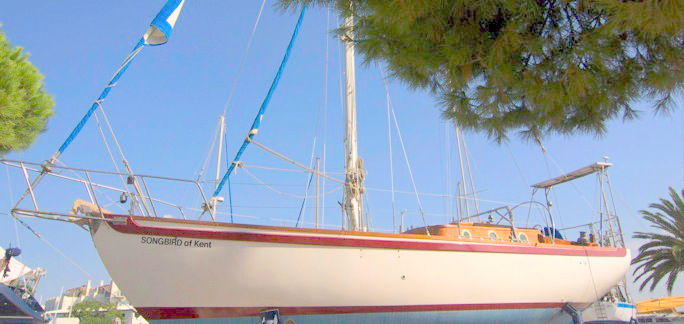
(Reminds me of a anecdote when I was crewing on a privately-owned East Coast Essex fishing smack. I was asking Bill, the owner, why he always laid his thumb on the position on the chart in response to the question, “Where are we?” Bill’s reply: “That’s as accurate as anyone can be!”)
In 1969, when I was driving across the desert plains of Australia, often with inhabited places more than a 150-mile radius away (the Simpson Desert especially coming to mind) the Southern Cross seemed to keep me grounded and remind me that I was making progress.
Back when I was living just outside Totnes in South Devon, my frequent drives up to London along the A303 took me past Stonehenge in Wiltshire.

THE EARLIEST MONUMENT
It is possible that features such as the Heel Stone and the low mound known as the North Barrow were early components of Stonehenge,[3] but the earliest known major event was the construction of a circular ditch with an inner and outer bank, built about 3000 BC. This enclosed an area about 100 metres in diameter, and had two entrances. It was an early form of henge monument.[4]
Within the bank and ditch were possibly some timber structures and set just inside the bank were 56 pits, known as the Aubrey Holes. There has been much debate about what stood in these holes: the consensus for many years has been that they held upright timber posts, but recently the idea has re-emerged that some of them may have held stones.[5]
Within and around the Aubrey Holes, and also in the ditch, people buried cremations. About 64 cremations have been found, and perhaps as many as 150 individuals were originally buried at Stonehenge, making it the largest late Neolithic cemetery in the British Isles.[6]
Taken from here.
I would have loved being present at Stonehenge when the builders finally were able to stand back and see the Sun “speak” to them at the first Solstice after that point in its construction.
It seems to me to be a most magical place yet Stonehenge offers a mathematical and rhythmic foundation to that magic.
3. First man into space – 12th April, 1961
It was, of course, Yuri Gagarin, who made the first complete orbit of Planet Earth in space.

I would have given anything to be in his seat (and suit). For to look out and see our planet as a small object in an enormous outer space would have to change one’s perception of almost everything; for evermore.

My wish for the New Year is that we recognise our place both in history and on our Planet Earth, and care for it as the sole, beautiful home that we have.
Now that global recognition would be a moment in history that I would want to experience before I die!
(Thanks John for inspiring me to jot down these thoughts!)
A remarkable look at the extraordinary history of the British Isles.
Now on first sight, any reasonable follower of my scribblings who lived outside Britain might wonder why this post was so focussed on one particular country, the country of my birth: Great Britain.
My justification, however, for including this George Monbiot essay is that many residents of many other countries, not just North Americans, have roots and family ties in GB. Plus, so typical of a Monbiot essay, the subject will be of interest to anyone, wherever they live in the world, who wonders about time before we shaped our environment. (I have converted some of the figures used in the essay within square brackets [ …] )
Could I also mention that from Thursday through to the end of the year, my posts in this place are going to be a mix of trivial, humorous and repeat posts. I need a bit of a break as much as you good people need a break from Learning from Dogs! 😉
Monbiot’s essay is republished here with the kind permission of George Monbiot.
ooOOoo
17th December 2015
Rewilding, hillwalking and the extraordinary history of these islands.
George Monbiot, interviewed by Dan Bailey for UKHillwalking.com, 11th December 2015
What would a natural upland habitat have looked like in Britain before humans started having the dominant influence?
This is a particularly interesting question, because we have two completely different baselines in Britain. The more recent one is the situation that prevailed after the ice retreated, and a temperate climate returned. I’m talking about parts of the Boreal and Atlantic stages, roughly between 9000 and 5000 years ago. It seems that during this period, Britain was more or less covered by closed canopy rainforest from top to toe. I’m using the term rainforest precisely: to denote forests that are wet enough to support epiphytes, plants that grow on other plants. Wherever you see polypody, the many-footed fern, growing along the branches of a tree, it’s a reminder that you are looking at rainforest fragment.
Hardly any land in this country would have been treeless at this time. With the exception of the summits of the Cairngorms, Ben Nevis and one or two other mountains, there is nowhere here that is too high for them to grow. Our bare and rocky hills are an artefact of deforestation, heavy grazing and the subsequent loss of soil.
But even that state arguably reflected the dominant influence of humans. To see what the land would have been like without them, you would have to go back to the previous interglacial period, the Eemian. At this time, the climate was almost identical to ours, but for some reason the people driven out by the previous ice age appear not to have returned to this country. At this stage, there was plenty of forest, but it seems that it was not continuous. The closed canopy rainforest was punctuated by more open forest, as well as wood pasture and savannah. Why? Because humans had not wiped out the dominant species. During the Eemian, Britain had a fairly similar collection of wildlife to the one we know today. You know: foxes, badgers, hedgehogs, deer, robins, jackdaws, elephants, rhinos, hippos, scimitar cats, hyenas and lions.
Ah yes, not the same in all respects. Like everywhere else on earth, we had a megafauna, and this shaped the ecosystem. The large herbivores were driven out of Britain by the ice, then driven to extinction in southern Europe about 30,000 years ago when modern humans arrived. (The hyenas and lions, incidentally, persisted throughout the ice age, hunting reindeer across the frozen tundra, and it seems that they survived here until about 10,000 years ago, when Mesolithic hunters turned up).
What does a typical British upland habitat look like now, and how does it differ from uplands in Mainland Europe?
In almost all other European countries (Ireland is an exception), the pattern of tree cover is what you would expect to see. The lowlands, where the land is worth farming, are largely treeless. The uplands, where the land is infertile and the climate is harsh, largely forested. This is why Europe has an average forest cover of 37%. In Britain, the lowlands are largely treeless, as you might expect, but the uplands are even barer. This peculiarity explains the fact that Britain has only 13% tree cover. Instead of a rich ecosystem in the hills, a mosaic of trees, scrub and glades (which is what would occur now, on our depleted soils, if the land were allowed to recover), the uplands are almost entirely treeless, and therefore remarkably poor in birds, insects and all the other lifeforms you might expect to find there. The parts of the country which would otherwise function as our great wildlife reserves – those places, in other words, where hardly anyone lives and there is almost no economic activity – have even less wildlife than the places that are intensely habited and farmed.
What are the people and processes responsible for keeping our hills bare in England and Wales? Who’s more to blame in Scotland?
In England and Wales, the cause is simply stated. Sheep, which originated in Mesopotamia, are wildly, disproportionately destructive. In many of our hills, they are kept at densities of no more than one per hectare or even less. But because they selectively browse out tree seedlings, they ensure that no recovery can take place. Even where remaining woods exist, they are often dying on their feet, because there are no young trees with which to replace the old ones. In terms of food production, upland sheep farming makes a minuscule contribution. It is hard to think of any industry where there is a higher ratio of destruction to production.
The denuding of our hills by sheep is supplemented by the burning of grouse moors, a fantastically destructive activity carried out for the benefit of a very small number of exceedingly rich people. These two activities ensure that in England and Wales there are scarcely any trees above around 200 m. [Ed: 656 feet]
Both are also important factors in Scotland, but in the Highlands the dominant cause of destruction is the deer stalking estates. By keeping the numbers of red deer very high, so that a banker waddling up the hillside in tweed pantaloons is almost guaranteed to make a kill, these estates have a similar effect to sheep farms. Like sheep, deer seek out the seedlings, and when their numbers rise above five or ten per square kilometre, they ensure that no forest can grow.
So why the difference between Britain and the rest of Europe? The answer seems to be the size of land holdings. Because, unlike most other European countries, Britain never had a successful revolution, we have, on one estimate, the second highest concentration of landholding in the world, after Brazil. This grants landowners inordinate power. It also leads to the situation I’ll describe in the next answer.
Where does subsidy farming come in?
People farming the uplands claimed to make their money by raising sheep. But in economic terms, sheep are ornamental. Sheep farming throughout our hills is a loss-making activity, and persists only as a result of public money, that takes the form of farm subsidies. We pay £3.6 billion [Ed: 5.33 billion US dollars] a year in this country to have our watersheds destroyed and our wildlife wiped out. The reason why the hills are kept bare here but not in the rest of Europe is that the landholdings in Britain are big enough to make subsidy harvesting a worthwhile activity: you are paid by the hectare. The more land you own, the more public money you receive. Some people take millions of pounds in these benefit payments every year. It’s extraordinary, when such restrictions are placed upon the ordinary recipients of social security, that this situation has not yet become politically explosive.
And culturally – how does our idealised view of the upland landscape feed into land management?
Our idealised, romanticised view of sheep farming, that bears almost no relationship to reality, but that is constantly drilled into our minds by programmes like Countryfile, makes it hard for us to see what is really going on. It’s because of this view that we fail to grasp a vast and obvious fact. That by denuding our hills, this economically-tiny industry has done more damage to our ecosystems and wildlife than all the building that has taken place in Britain.
Can you explain, in a nutshell, what you mean by re-wilding, and why you’d like to see it in the British hills?
Rewilding is the mass restoration of ecosystems and the re-establishment of missing species. I’m not arguing for the blanket rewilding of our hills by any means. But I believe that Britain would be greatly enriched, in terms of both wildlife and human experience, if significant areas were allowed to recover; if trees were allowed to grow in some of our denuded places, and some of the wonderful species we have lost were permitted to return. In particular, I’m thinking of beavers, boar, lynx, wolves and species that we retain in small numbers but that were once widespread, such as wildcat, pine martens, capercaillie, eagles and goshawks.
The other great benefit of allowing trees to return to the hills is the restoration of watersheds. In one study in Wales, the soil beneath woodland was found to absorb water at 67 times the rate of the soil beneath sheep pasture. The rain flashes off sheep pasture as if it were concrete, instantly causing floods downstream. Trees hold back the water and release it gradually, smoothing out the cycle of flood and drought.
Could you talk us through the stages of a habitat restoration process that could take a bare hillside and return it to woodland?
Many of our hillsides have been so thoroughly sheepwrecked that there are now no remaining seed sources. In these circumstances, we would need to plant islands of trees, using seed taken from the nearest surviving pockets of woodland in order to sustain local genetic diversity. Short of greatly reducing stocking levels or temporarily keeping herbivores off altogether, there is not a lot more that needs to be done. In some places, all that is required is temporary exclusion of grazing animals.
What is a trophic cascade, and how is this idea relevant in the British context?
A trophic cascade is an ecological process that tumbles from the top of the foodchain to the bottom. It turns out that in many places, large carnivores regulate the entire ecosystem; ecosystems that retain them behave in radically different ways to ecosystems from which they have been lost. This presents a powerful challenge to British models of conservation, as we have lost all our large carnivores here, with the result that ecological processes, and their dynamic and ever-shifting successional patterns, have been curtailed.
Critics sometimes suggest that proponents of re-wilding are advocating turning the clock back to an arbitrary point in history and then keeping things permanently fixed in this state. Is that fair?
It is precisely the opposite. Our current model of conservation fixes ecosystems at an arbitrary point and then keeps them in a state of arrested development through extreme management of the kind that everywhere else on earth we recognise as destruction, not protection: namely cutting, burning and grazing. There is no intelligible reason behind the choices that have been made by conservationists of the ecosystems and species they choose to maintain by these means. Rewilding, by contrast, has no fixed outcomes. It seeks to restore ecological processes by bringing back some of the key elements of ecosystems and the key drivers: species that trigger trophic cascades. To the greatest extent possible, it then seeks to stand back and allow natural processes to take their course.
What would a healthy population of deer look like? How about sheep – do you have a figure for environmentally supportable grazing densities?
In the infertile uplands, it is roughly 5 per square kilometre (in other words per 100 ha). [Ed: 247 acres] Beyond that point, there is almost no regeneration of trees.
The debate often seems to be framed in absolute terms – either we re-wild everywhere, and get rid of all the farmers and deer, or not at all. How big would be big enough to please you? Are you talking about re-foresting every hill, moor and mountain, from valley to summit?
The aim of the group Rewilding Britain, that I helped to found but do not run, is to allow natural ecological processes and key species to return to at least one million hectares (4.5%) of Britain’s land and 30% of our territorial waters over the next 100 years. It would like to see at least one large rewilded area to connect both land and sea – descending from the mountaintops to our coastal waters.
In somewhere as crowded as Britain are vast re-created wildernesses a viable prospect, or would it be more realistic to go for smaller scale projects in which re-wilding is just part of a mixed land use picture – projects such as Wild Ennerdale perhaps, where habitat restoration is being managed in conjunction with forestry, leisure, water extraction and livestock?
The British population is highly concentrated. Some parts of the country are exceedingly crowded; others remarkably empty. Most British uplands have a far lower population density than many parts of Europe in which wolves, lynx, bear and other species are found. Wolves have even been appearing in countries such as Belgium, the Netherlands and Denmark, where there is very little land that is unsuitable for intensive farming, and the rural population density tends to be much higher. Their arrival has been greeted by most sectors of society with delight.
Many hill-goers will recognise your picture of the degraded upland environment, but some may simply be making a different aesthetic judgement to you, valuing the barren wide open spaces for the experience they provide. If they just happen to prefer grass and heather landscape on some romantic level, and don’t much care about botany and wildlife, how might you seek to convert them?
I believe we should have both. At the moment those who value a wild, self-willed landscape have nowhere to turn in Britain. We have to travel abroad to find it and to experience magnificent encounters with wildlife. I believe this deprives us of the wonder and delight that can enhance our lives and of choice and freedom. We have nowhere in which to escape the order and control that governs all other aspects of our lives.
Hillwalkers and climbers have fought long and hard against vested landowning interests for our right to roam. There is a worry that conservation could be used to curtail these freedoms, and some evidence to support that concern. What place does public access on open upland have in a re-wilded landscape, and which would take precedence – amenity or conservation?
I was heavily involved in campaigns for the right to roam, through another group I helped to found, The Land Is Ours, and I would be dismayed by any scheme which sought to keep people out of the hills. I believe that rewilding and access are entirely compatible. While it may be necessary in some places temporarily to fence out grazing animals, the fencing required is no different from that which is already found across the uplands, and exactly the same arrangements can be made to cross it as are used today. My hope is that in some places, as a result of rewilding, in some places there will one day be no fencing at all: in other words it will mean better access than there is today.
On a related note, could public support for re-wilding have unintended consequences? Might it, for instance, be a gift to landowners and conservation bodies with priorities quite other than public access?
I would be surprised if there were no unintended consequences. But if problems arise, the policies should be modified. No good policy emerges from the egg mature and complete. It must be constantly assessed and adjusted to head off any problems that emerge.
What sort of reception have your ideas met from folk in rural communities such as hill farmers and shooting estate workers?
I think it’s fair to say that they have been mixed. There has been a fair bit of hostility from some farming and shooting groups, but also support from surprising quarters, including landowners’ representatives and a large number of individual farmers and estate owners. In the wider countryside, there is often strong support. We would do well to remember that farmers are a very small minority even of the rural population, though this often gets forgotten because of their powerful influence on policy.
Can you offer a fully thought-through transition from sheep farming and shooting to an alternative model for the rural economy, one in which rural residents still have a secure place in a re-wilded countryside? Can you understand people’s aversion to risking this?
I certainly can understand people’s concerns. But there is going to be a major transition in the countryside before long, with or without rewilding, when farm subsidies are either scrapped or greatly reduced, as they inevitably will be. When essential public services are being cut, giving €55 billion [Ed: 61 billion USD] a year from the public purse across the EU to landowners, while helping to destroy both human communities and ecological resilience is surely as unsustainable politically as it is environmentally. So what are farmers whose livelihood is sustained only as a result of farm subsidies going to do?
I have two proposals. The first is that we start campaigning for the retention of some subsidies, whose purpose would be changed to that of ecological restoration and the support of communities. Landowners and tenants would be paid to restore watersheds, woodlands, rivers and wildlife. It’s hard to see how else continued subsidies could remain publicly acceptable. Rewilding could be a way out for struggling rural communities.
The second proposal is to start investigating means by which rural people can enhance their livelihoods by enhancing the ecosystem. There are plenty of examples from around the world of eco-tourism and associated activities reviving communities by generating income and employment. Given that the traditional industries have manifestly failed to sustain jobs and incomes, in some cases it will not be hard to show the alternatives might work better. But more research is needed, and we have to remember that the same approach is not going to work everywhere. Different local circumstances demand different strategies.
“We have an incredibly narrow and restrictive vision of cultural heritage and cultural landscapes” – your words. What would a broader vision look like?
I would love to see rural culture becoming more inclusive. It’s often highly hierarchical, with the landowners and farmers sitting at the top of the pyramid, dictating policy. In some respects, democracy is a stranger to the countryside; the old, landed powers still wield disproportionate influence over the lives of others. But I don’t want to invent a new culture. I believe that democratisation and pluralism creates its own cultures, that will evolve and develop independently in different places. I’m calling on people to challenge cultural hegemony in the countryside – perhaps we could call it agricultural hegemony – and for a much wider range of voices to be heard.
Farming and shooting are supported by the current dominant countryside culture. But wouldn’t a shift to re-wilding simply be replacing this set of special interests with another, a sort of cultural colonisation of the countryside by urbanites?
That’s certainly not how I see it. And this has nothing whatever to do with the presumed urban-rural divide. Many of rewilding’s most ardent proponents live in the countryside, perhaps unsurprisingly. We are repeatedly told that the countryside is at war with the towns and vice versa. But I see no evidence of this. What I see is certain dominant interests in the countryside in conflict with other rural interests. And those dominant interests often have either one or both feet in the cities.
A few years ago there was an article in the Telegraph that sought to characterise authentic rural people. These people apparently don’t care about “newts, trees and bats”: such matters are of interest only in London. It described David Cameron as “at heart, a rural Tory”, who “still grumbles to his wife about what, for him, are ‘banned activities’ – notably shooting”. Authentic rural people, in other words, spend their adult lives in Notting Hill and drive out to their second homes for a shooting party at the weekend. People who live in the countryside and care about wildlife, on the other hand, are, “at heart”, Londoners. The rural-urban divide, as characterised in such papers, has nothing to do with location. It’s really about class.
What chance is there of significant progress being made in the current funding climate? You’ve recently written about the ‘toothless’ Environment Agency in this regard. Given the squeeze on public bodies would it be more effective to promote the out-sourcing of re-wilding to non-governmental organisations, private philanthropists and large corporate landowners such as water companies?
There is a real problem here. Government agencies are being gutted and re-centralised. Cameron’s devolution agenda is a con: he is even more of a micromanager than Tony Blair was. The current environment secretary, Liz Truss, has put her department’s head on the block, volunteering for early execution. Statutory bodies like the Environment Agency are now, in terms of what they can do, almost dead. But the crazy situation that prevails today might not – should not – last forever. It is true to say however, that we cannot rely on government alone to deliver these changes, whatever form a government might take.
Are our National Park Authorities a help or a hindrance?
At the moment, they are a real drag on progress. This is partly because of policy, such as the Lake District National Park’s application for World Heritage status, which, as currently framed, will ensure that destructive practices are locked in (and continue to contribute to flooding). And it’s partly because of the way they frame the issues. They go to great lengths to persuade us that current land management is not only compatible with the protection of nature, but actually essential to it! All their brochures and display boards and websites create the impression that these ecological disaster zones are rich and thriving ecosystems, so people are constantly misled and misdirected. They are led to believe that all is well in our national parks, that these wastelands, which are in most cases little more than sheep ranches, are magnificent wildernesses. Our national parks are a disgrace, a shame upon the nation, and park authorities with an ounce of intellectual honesty would recognise this and seek to address it.
Re-wilding seems to be moving up the agenda of the large conservation organisations, and gaining a space in the public discourse. Do you see grounds for optimism?
It certainly is. Before Feral was published, I visited all the principal conservation groups, and received responses that varied from mild interest to outright rejection. The change over the past three years has been astonishing. Rewilding appears to have moved from the fringe of the mainstream, and I’m delighted to see how these groups have begun to pick it up and engage with it. There’s still a long way to go, and plenty of daft practices still in play, but change among the conservation groups is certainly happening, albeit slowly. We will see rewilding in this country. The question is how far and how fast it will go.
ooOOoo
Much of my adopted country, the United States, is still wild and the Bureau of Land Management state that they manage “over 245 million surface acres ..”. However, to put that into perspective the area of the USA is 2.436 billion acres so the BLM managed area is just a fraction over 10%.
Finally, Monbiot refers to his book Feral. I have read it and can recommend it.

More details of his book may be found here.
This is much more than an issue for just Great Britain.
Is the moment of publishing this post.
I thought it would make a nice change to publish tomorrow’s post a little earlier than usual. To be precise to publish it on Dec. 22, at 04:48, Coordinated Universal Time (UTC). Or in our local Pacific Standard Time (PST) UTC-8 hrs or 20:48 Dec. 21., i.e. 20:48 on the evening of the 21st December. (I am seeing the exact time being declared as 04:48 or 04:49 UTC depending on what you read.)
Granted that the Northern Hemisphere tends to deliver the worst of the Winter weather after the shortest day, it still is good to know that for the next six months, the hours of daylight, in the Northern Hemisphere, will be increasing.
My inclination to write a post on the topic was greatly influenced by a most beautiful post over on Val Boyco’s blogsite. It was called And Winter Came. Here’s the video that Val included in her post.
Isn’t that a most beautiful few minutes!
Impossible to top that!
But I can continue including an informative item that was published over on Mother Nature News, and is republished here within the terms of MNN.
ooOOoo
From when it happens to why, here’s your crash course on the shortest day of the year.
By: Melissa Breyer, December 18, 2015

“A day without sunshine is like, you know, night,” quipped Steve Martin – and indeed, even a day with less sunshine can feel a bit dark. Our world depends on the light radiating from that big star we traipse around, and when it’s in short supply, we feel it. But if you count yourself amongst those who don’t love waking up before the sun rises and getting off work after it has set, things are about to lighten up. Hello, winter solstice!
Although winter is really just beginning, we can at least say goodbye to these short little days we’ve been suffering (and don’t let the door hit you on the way out). With that in mind, here’s a collection of curious facts to celebrate the long-awaited return to longer days.
1. There are actually two winter solstices every year
It’s sometimes easy to be hemisphere-o-centric, but the other side of the planet gets a winter solstice too. With the planet’s orbit tilted on its axis, Earth’s hemispheres swap who gets direct sun over the course of a year. Even though the Northern Hemisphere is closer to the sun during the winter, it’s the tilt away from the sun that causes cold temperatures and less light — which is when the Southern Hemisphere is toasty. So while our winter solstice is on Dec. 21 or 22, the Southern Hemisphere celebrates the same on June 21 or 22.
Here’s how that looks from space (kind of):
2. The winter solstice happens in the blink of an eye
Although the solstice is marked by a whole day on the calendar, it’s actually just the brief moment when the sun is exactly over the Tropic of Capricorn that the event occurs.
3. Which is why it happens on different days in the same year
What? Yes! In 2015, the solstice happens on Dec. 22, at 04:49 on the Coordinated Universal Time (UTC) time clock, the time standard that the world regulates its hours by. Which means any location that is at least five hours behind UTC should break out the party hats on Dec. 21. For example, in the United States the winter solstice happens on Dec. 21 at 11:49 p.m. Eastern Standard Time. The rest of the time zones can welcome longer days beginning on the 22nd.
4. It’s the first day of winter … or it’s not, depending on whom you ask
Meteorologists consider the first day of winter to be Dec. 1, but ask an astronomer — or just about anyone else — and they’ll likely answer that the winter solstice marks the start of the season. There are two ways to look at it: meteorological seasons and astronomical seasons. Meteorological seasons are based on the annual temperature cycle, explains NOAA, while astronomical seasons are based on the position of the Earth in relation to the sun.
5. It’s a time of gloriously long shadows
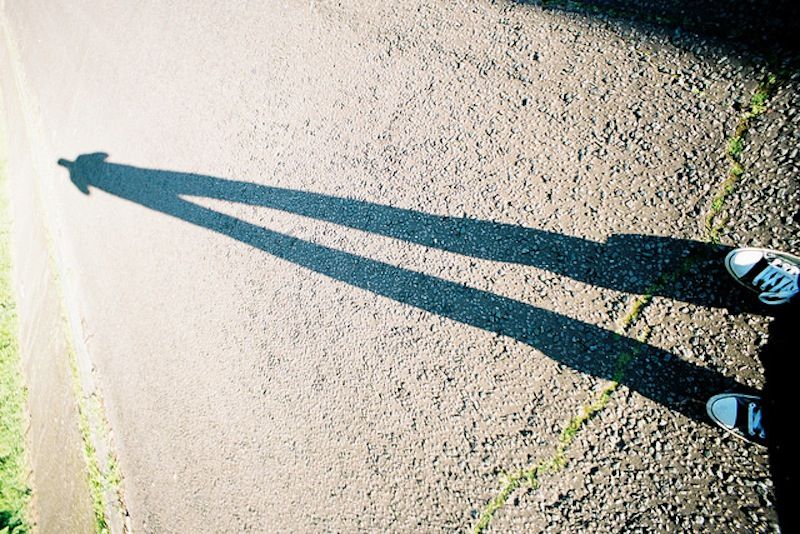
If you’re inclined to take pleasure in the little things, like shadows that seem cast from a funhouse mirror, then the winter solstice is the time for you. It’s now that the sun is at its lowest arc across the sky and thus, shadows from its light are at their longest. (Imagine a flashlight directly above your head and one hitting you from the side, and picture the respective shadows.) And in fact, your noontime shadow on the solstice is the longest it will be all year. Relish those long legs while you can.
6. Full solstice moons are rarer than blue ones
Since 1793, the full moon has only occurred on the winter solstice 10 times, according to the Farmer’s Almanac. The last one was in 2010, which was also a lunar eclipse! The next full moon on a winter solstice won’t be until 2094.
7. There’s a Christmas connection
Since Christ wasn’t issued a birth certificate, there’s no record of the date when he was supposed to have been born. Meanwhile, humans have been celebrating the winter solstice throughout history — the Romans had their feast of Saturnalia, early German and Nordic pagans had their yuletide celebrations. Even Stonehenge has connections to the solstice. But eventually Christian leaders, endeavoring to attract pagans to their faith, added Christian meaning to these traditional festivals. Many Christmas customs, like the Christmas tree, can be directly traced to solstice celebrations.
8. It’s a reminder to thank Copernicus

The word “solstice” comes from the Latin solstitium, meaning “point at which the sun stands still.” Since when has the sun ever moved?! Of course, before Renaissance astronomer Nicolaus Copernicus (aka “super smartypants”) came up with the ‘ol heliocentric model, we all figured that everything revolved around the Earth, sun included. Our continued use of the word “solstice” is a beautiful reminder of just how far we’ve come and provides a nice opportunity to give a tip of the hat to great thinkers who challenged the status quo.
And now go have some hot cocoa. Happy winter!
ooOOoo
Only one way to close. That is with this picture of the sun perfectly aligned with the stones at Stonehenge in Wiltshire, UK at the moment of the Winter Solstice.
Stay safe and warm wherever you are.
The next post from Learning from Dogs will be published at 00:00 PST Wednesday, 23rd December.
There’s more to this than initially meets the eye.
I’m back to another ScienceAlert article although this story has been widely reported including by our local newspaper, the Grants Pass Daily Courier. This is about in vitro fertilisation (IVF).
Now I am sure that I share with countless others a poor understanding of what IVF is. Here’s a Wikipedia extract:
In vitro fertilization or fertilisation (IVF) is a process by which an egg is fertilised by sperm outside the body: in vitro (“in glass”). The process involves monitoring and stimulating a woman’s ovulatory process, removing an ovum or ova (egg or eggs) from the woman’s ovaries and letting sperm fertilise them in a liquid in a laboratory. The fertilised egg (zygote) is cultured for 2–6 days in a growth medium and is then implanted in the same or another woman’s uterus, with the intention of establishing a successful pregnancy.
Obviously that applies to women.
A quick web search revealed that the IVF procedure is commonly used in livestock. Here’s a graphic example of that (literally):

All of which leads nicely in to the Science Alert story.
ooOOoo

Cutest science ever.
PETER DOCKRILL 11 DEC 2015
The world’s first litter of puppies born through in vitro fertilisation (IVF) represents the culmination of decades of research and has resulted in seven adorable pups called Cannon, Red, Green, Cornelia, Buddy, Kiwi and Ivy le Fleur.
But the achievement goes beyond almost intolerable cuteness. The researchers say successfully breeding puppies via IVF opens the door for saving endangered canid species and using gene-editing techniques to eradicate heritable diseases in dogs.
“Since the mid–1970s, people have been trying to do this in a dog and have been unsuccessful,” said Alex Travis, a reproductive biologist from Cornell University.
To develop the litter of pups, the researchers had to fertilise eggs from donor mothers with sperm from donor fathers in the lab, before transferring the embryos to a host female. 19 embryos were transferred to the host female in total, who gave birth to seven healthy pups.

Two of the pups came from a beagle mother donor and a cocker spaniel father donor, and the other five came from two pairings of beagle mothers and fathers.
The team had to overcome a number of challenges to make the process work. Picking the right time to collect mature eggs from the female oviduct proved difficult, as dogs’ reproductive cycles occur only twice per year typically. The researchers found delaying the egg collection by one day resulted in greater fertilisation than previous attempts.
An additional barrier was preparing the sperm for fertilisation, which is normally performed by the female tract. But the researchers found they could simulate these conditions by adding magnesium to the cell culture. “We made those two changes, and now we achieve success in fertilisation rates at 80 to 90 percent,” said Travis.
The researchers’ IVF process, described in PLOS One, will enable conservationists to store the semen and eggs of endangered canids and also help protect rare dog breeds.

“We can freeze and bank sperm, and use it for artificial insemination,” said Travis. “We can also freeze oocytes, but in the absence of in vitro fertilisation, we couldn’t use them. Now we can use this technique to conserve the genetics of endangered species.”
The IVF process should also lead to better genome-editing techniques in the future. This issue is particularly pertinent in light of the way that humans have bred dogs over many centuries. With the paired selection of mates for desired traits leading to detrimental genetic baggage due to inbreeding, this gives researchers a chance to eliminate diseases that certain breeds are now predisposed to.
“With a combination of gene-editing techniques and IVF, we can potentially prevent genetic disease before it starts,” said Travis.
We don’t always hear a lot about endangered canid species, but here are five candidates that this research will helpfully be able to help sooner rather than later.
ooOOoo
If you are like me and rarely follow the links in online stories then let me alert you to the last one. It’s an article in Scientific American that opens, thus:
The 5 Most Endangered Canine Species
By John R. Platt on May 9, 2013Domesticated dogs are some of the most popular animals on the planet, but their cousins in the wild aren’t always as beloved. For thousands of years humans have persecuted wolves, jackals, dingoes, foxes and other members of the family Canidae, pushing many species into or close to extinction. Here are five of the most endangered canine species and subspecies, three of which only continue to exist because a few people and organizations have taken extraordinary efforts to save them.
I don’t have copyright permission to offer more. So all I will do is to list the names of those five most endangered species:
Do go here and read the full article. And let’s not forget that our lovely dogs are not the full canine story.

 Learning from Dogs