Photos of theatre-loving dogs.
All taken from this post.

oooo
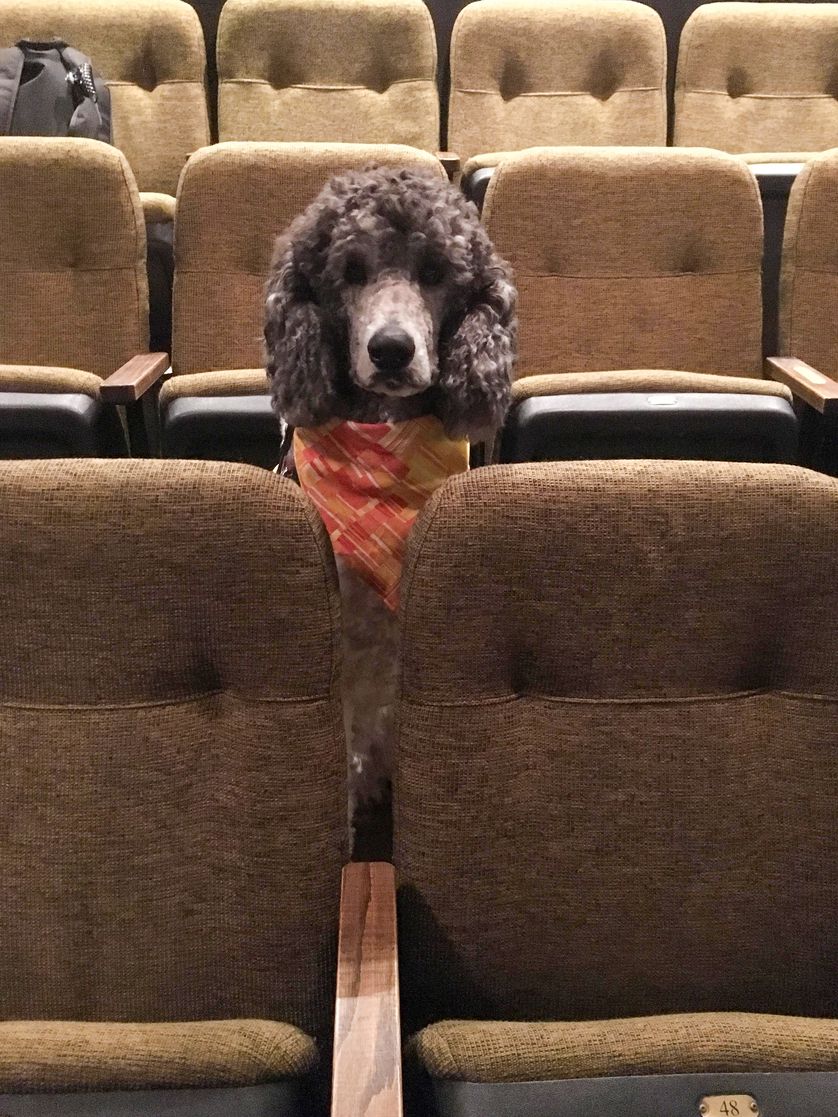
oooo
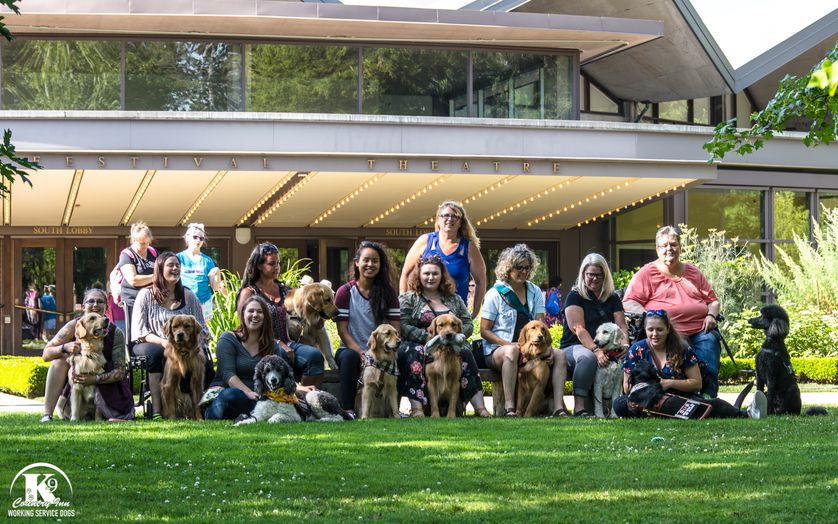
oooo
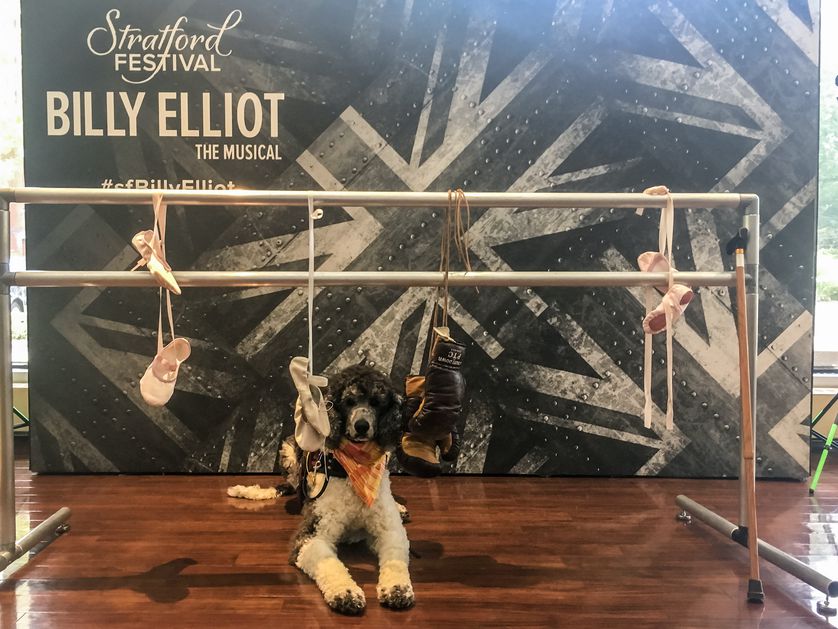
oooo
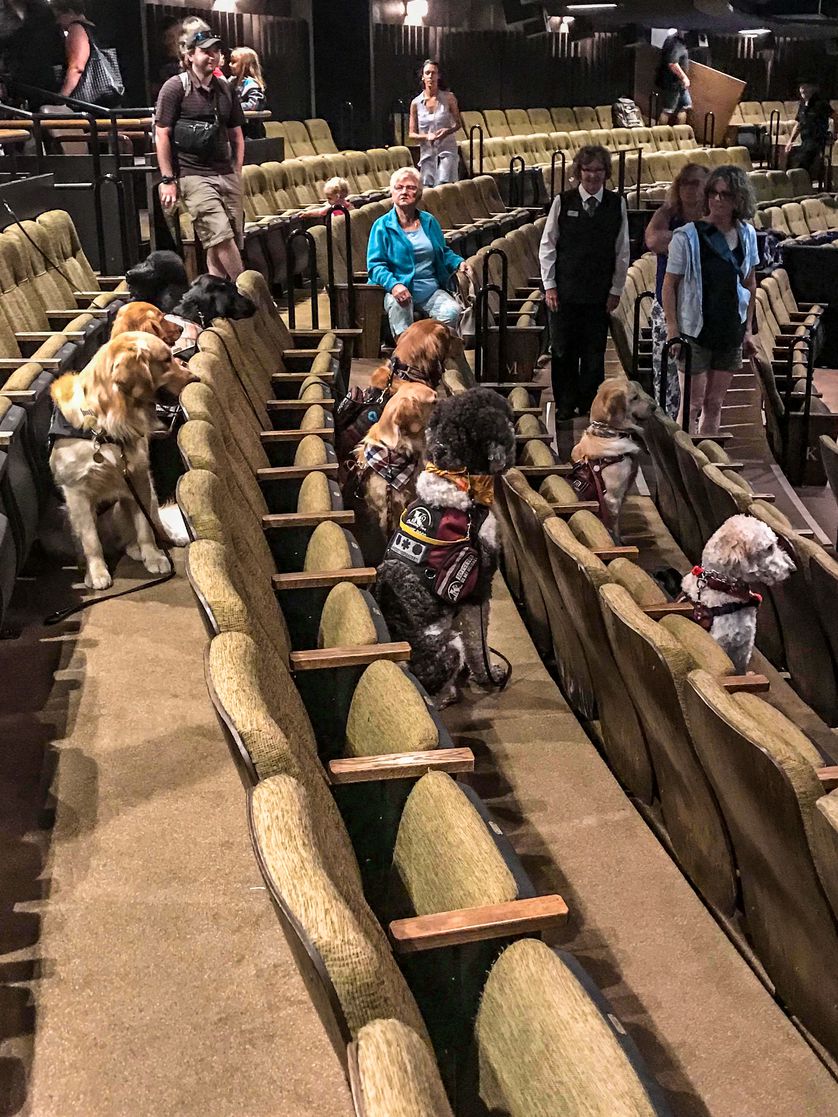
oooo

oooo
It just goes to show that there’s no end to the pleasure a dog gets!
Dogs are animals of integrity. We have much to learn from them.
Author: Paul Handover
Photos of theatre-loving dogs.
All taken from this post.
oooo
oooo
oooo
oooo
oooo
oooo
It just goes to show that there’s no end to the pleasure a dog gets!
More dog food contaminated with Salmonella.
There’s a continuing problem with Salmonella.
ooOOoo
September 3, 2019 — Dog Goods USA is expanding its recent recall to include all 30-packs of Berkley Jensen brand pig ear dog chews sold at BJ’s Wholesale Club stores due to possible contamination with Salmonella.

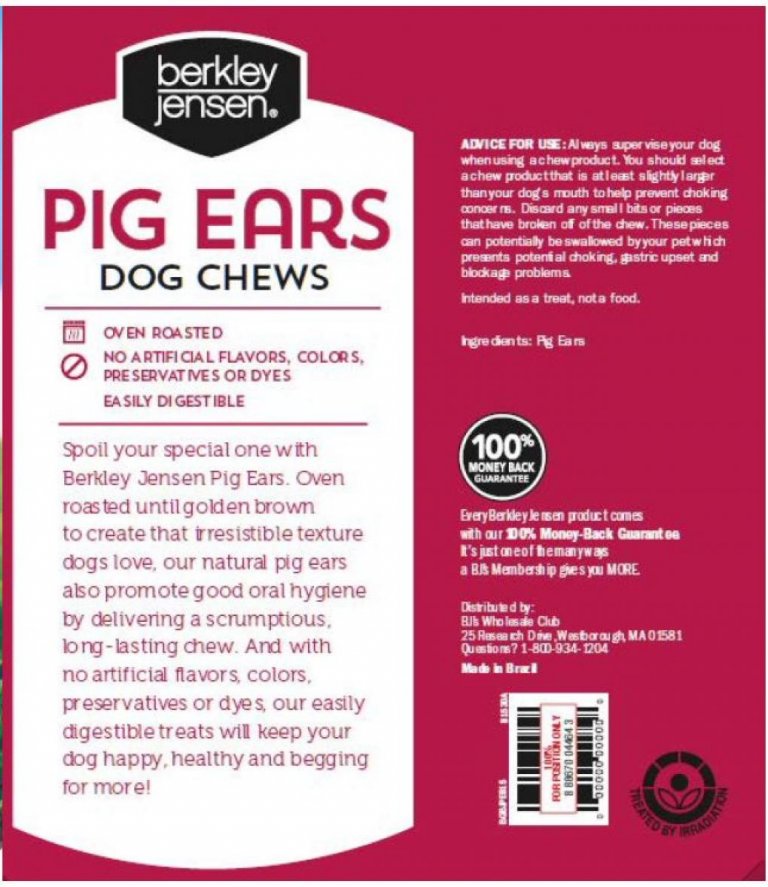
The previous recall is being expanded after testing by Rhode Island Department of Health found Salmonella bacteria in Berkley Jensen brand pig ear pet chews.
What’s Being Recalled?
Dog Goods USA LLC of Tobyhanna, PA, has been contacted by the FDA and is conducting a voluntary recall of the following products: non-irradiated bulk and packaged pig ears branded Chef Toby Pig Ears with the lot codes indicated below.
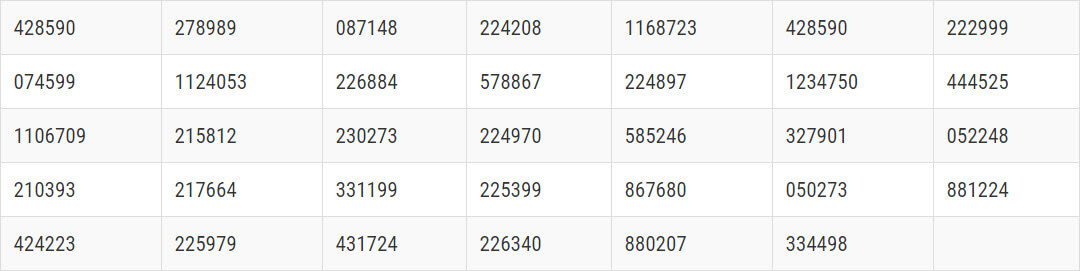
The affected products were distributed nationwide in retail stores.
What Caused the Recall?
According to the company, Dog Goods USA purchased the affected treats from a single supplier in Brazil from September 2018 through August 2019.
The U.S. Food and Drug Administration, together with the Centers for Disease Control and Prevention and State partners, is investigating a link between pig ear pet treats and human cases of salmonellosis.
About Salmonella
Healthy people infected with Salmonella should monitor themselves for some or all of the following symptoms: nausea, vomiting, diarrhea or bloody diarrhea, abdominal cramping and fever.
Rarely, Salmonella can result in more serious ailments, including arterial infections, endocarditis, arthritis, muscle pain, eye irritation, and urinary tract symptoms.
Consumers exhibiting these signs after having contact with this product should contact their healthcare providers.
Pets with Salmonella infections may be lethargic and have diarrhea or bloody diarrhea, fever and vomiting.
Some pets will have only decreased appetite, fever and abdominal pain.
Infected but otherwise healthy pets can be carriers and infect other animals and humans.
If your pet has consumed the recalled product and has these symptoms, please contact your veterinarian.
For more information and Salmonella and its symptoms and health risks, please refer to the following link: https://www.dfs.gov/animal-veterinary/news-events/fda-investigates-contaminated-pig-ear-pet-treats-connected-human-salmonella-infections.
Dog Goods Company Statement
The following statement has been provided by the company:
Dog Goods has also launched an internal investigation to determine, when and where the Products may have been contaminated.
To date, this internal investigation has not indicated any vulnerability in the company’s practices, including but not limited to the inspection, handling and storage of the Products.
Nonetheless, Dog Goods will continue to investigate the matter, collaborate fully with the FDA and the CDC, and provide further information to its customers and the public as appropriate.
What to Do?
Consumers who have purchased the products are urged to return them to the place of purchase for a full refund.
Consumers with questions may contact the company at 786-401-6533 from Monday to Friday, 9 AM ET through 5 PM ET.
U.S. citizens can report complaints about FDA-regulated pet food products by calling the consumer complaint coordinator in your area.
Or go to https://www.fda.gov/petfoodcomplaints.
Canadians can report any health or safety incidents related to the use of this product by filling out the Consumer Product Incident Report Form.
ooOOoo
Well, there are too many of these salmonella complaints if you ask me.
But it’s better to send out these FDA alerts than not to.
Again, please share as far and wide as you can.
A Vancouver, Washington dog survives a month in the wilderness.
Niko is a Vancouver family’s dog. He is also adventure partner to 16-year-old Caden Alt.
On July 26th, Niko went camping with Caden’s father, David Alt, in the Gifford Pinchot National Forest. Located in South-West Washington it encompasses well over a million acres.
But I’ll let the KGW-TV blogsite tell you the full story.
ooOOoo
By LINDSAY NADRICH, KGW-TV
VANCOUVER, Wash. (AP) — Niko, a Vancouver family’s dog, survived 31 days in the wilderness after getting hit by a car.
Niko is 16-year-old Caden Alt’s adventure partner.
“He’s always fun to have around,” Caden told KGW-TV. “He’s right there at your side walking around and yeah, he’s just awesome.”
On July 26, Niko went camping with Caden’s father, David Alt, in the Gifford Pinchot National Forest. Later that night, Niko wandered over to the road and got hit by a car. David ran from the campsite just in time to see Niko sprint off into the woods.
“A lady jumped out of the car immediately and said, ‘I don’t know how he could’ve survived that,'” he said.
He searched all night, but could not find Niko. He said it was devastating.
For the next 31 days, he and Caden spent as much time as they could going back to look.
“Every weekend we went up there, we searched, that was pretty hard, coming back every day not finding anything,” Caden recalled.
Then last weekend, they got a call from two men who had seen a post about Niko on Facebook and spotted him about 100 yards from where he disappeared.
“That was, just like, my heart dropped for a second, like, is this happening?” Caden asked.
The Good Samaritans canceled their own trip and drove Niko straight to Vancouver.
“So, yeah, my son and I were just crying, it was, it was unbelievable, yeah, and then of course when we’re in the driveway and they bring him up, Caden and I are crying, those two grown men are crying, four guys crying, it was great,” David said.
Niko lost about 15 pounds but is otherwise doing well.
“Skin and bones and one eye shut, he had lost 30% of his body weight, but he immediately was eating and drinking,” David said.
Niko seemed pretty happy to be back by Caden’s side.
“It’s been amazing,” Caden said. “I’m so glad to have him back. He’s not like perfect, energetic back up to himself, but he’s getting there, better every day. He’s just as cute as ever, the house is filled again.”
So what did Niko do for 31 days alone in the woods?
“As far as trying to recap, only Niko knows the story right, too bad he couldn’t tell it,” David said.
During the month Niko was missing, David and Caden said they got a lot of support from people on social media, as well as a lot of tips that helped with the search. They said they are so thankful for everyone who kept them going.
___
Information from: KGW-TV, http://www.kgw.com/
ooOOoo
And it was very easy to close with a photograph of Niko. (And apologies, I didn’t make a note of the journal that published the photo.)
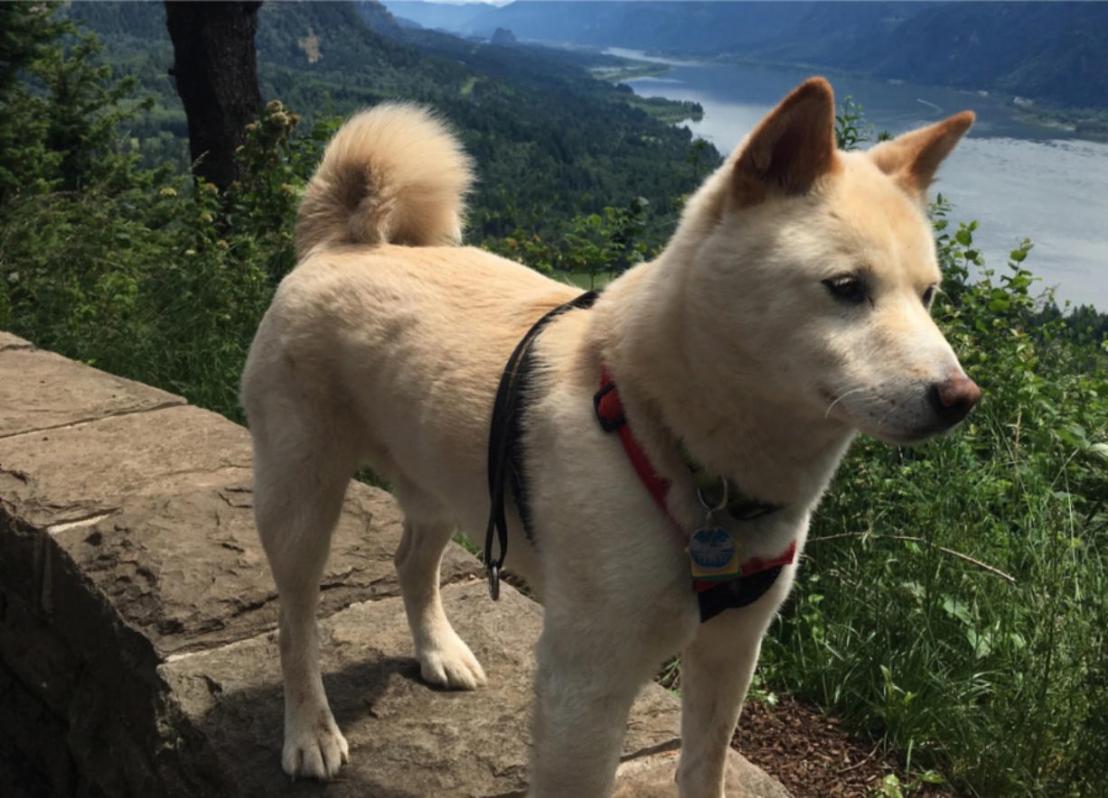
He is a gorgeous dog!
Another FDA warning about a dog food.
Specifically Aunt Jeni’s Home Made frozen raw pet food.
Here are the details.
ooOOoo
August 30, 2019 — The U.S. Food and Drug Administration is warning pet ownersnot to feed their pets certain lots of Aunt Jeni’s Home Made frozen raw pet food.
That’s because 2 samples collected during an inspection of the company’s product tested positive for Salmonella and/or Listeria monocytogenes.
FDA is issuing this warning since these lots of Aunt Jeni’s Home Made frozen raw pet food represent a serious threat to both human and animal health.
Because the products are sold and stored frozen, FDA is concerned that people may still have them in their possession.
No product images have been provided by the FDA or the company.
Which Products Are Affected?
The affected products include:
Aunt Jeni’s Home Made pet foods are sold frozen both online and through various retail locations. Lot codes are printed on the lower right corner of the front of each bag.
About Salmonella
Salmonella is a bacterium that can cause illness and death in humans and animals, especially those who are very young, very old, or have weak immune systems.
According to CDC, people infected with Salmonella can develop diarrhea, fever and abdominal cramps.
Most people recover without treatment. However, in some people, the diarrhea may be so severe that they need to be hospitalized.
In some patients, the Salmonella infection may spread from the intestines to the blood stream and then to other body sites unless the person is treated promptly with antibiotics.
Consult your health care provider if you have symptoms of Salmonella infection.
Pets do not always display symptoms when infected with Salmonella.
However, signs can include vomiting, diarrhea (which may be bloody), fever, loss of appetite and/or decreased activity level.
If your pet has these symptoms, consult a veterinarian promptly.
You should also be aware that infected pets can shed the bacteria in their feces and saliva without showing signs of being sick, further contaminating the household environment.
About Listeria
Like Salmonella, Listeria monocytogenes is another bacterium that can cause illness and death in humans and animals, especially those who are pregnant, very young, very old, or have weak immune systems.
According to CDC, listeriosis in humans can cause a variety of symptoms, depending on the person and the part of the body affected.
Symptoms can include headache, stiff neck, confusion, loss of balance, and convulsions in addition to fever and muscle aches.
Pregnant women typically experience only fever and other flu-like symptoms, such as fatigue and muscle aches.
However, infections during pregnancy can lead to miscarriage, stillbirth, premature delivery, or life-threatening infection of the newborn.
Pregnant women and their newborns, adults age 65 and older, and people with weakened immune systems are more likely to get sick with listeriosis.
Anyone with symptoms of listeriosis should contact a health care provider.
Listeria infections are uncommon in pets. However, they are still possible.
Symptoms may include mild to severe diarrhea, anorexia, fever, nervous, muscular and respiratory signs, abortion, depression, shock and death.
Pets do not need to display symptoms to be able to pass Listeria on to their human companions.
As with Salmonella, infected pets can shed Listeria in their feces and saliva without showing signs of being sick, further contaminating the household environment.
What to Do?
If you have any of the affected product, stop feeding it to your pets and throw it away in a secure container where other animals, including wildlife, cannot access it.
Consumers who have had this product in their homes should clean refrigerators and freezers where the product was stored.
Clean and disinfect all bowls, utensils, food prep surfaces, pet bedding, toys, floors, and any other surfaces that the food or pet may have had contact with.
Because animals can shed the bacteria in the feces when they have bowel movements, it’s important to clean up the animal’s feces in yards or parks where people or other animals may become exposed.
Consumers should thoroughly wash their hands after handling the affected product or cleaning up potentially contaminated items and surfaces.
U.S. citizens can report complaints about FDA-regulated pet food products by calling the consumer complaint coordinator in your area.
Or go to https://www.fda.gov/petfoodcomplaints.
Canadians can report any health or safety incidents related to the use of this product by filling out the Consumer Product Incident Report Form.
ooOOoo
There’s a great deal of useful information contained in this recall.
As always, please share as much as you can.
A massive cull of pet cats and dogs in the UK during WW11.
Out of the blue the other day Margaret from Tasmania sent me an email.
Hi Paul,
I happened to come across this rather sad but interesting story.
Thought you might like to read it.
Warm regards
– Margaret (from Tasmania)
The email contained a link to this very sad information.
ooOOoo
By Alison Feeney-Hart
BBC News Magazine
12th October, 2013

At the beginning of World War II, a government pamphlet led to a massive cull of British pets. As many as 750,000 British pets were killed in just one week. This little-discussed moment of panic is explored in a new book.
The cull came as the result of a public information campaign that caused an extraordinary reaction among anxious Britons.
In the summer of 1939, just before the outbreak of war, the National Air Raid Precautions Animals Committee (NARPAC) was formed. It drafted a notice – Advice to Animal Owners.
The pamphlet said: “If at all possible, send or take your household animals into the country in advance of an emergency.” It concluded: “If you cannot place them in the care of neighbours, it really is kindest to have them destroyed.”

The advice was printed in almost every newspaper and announced on the BBC. It was “a national tragedy in the making”, says Clare Campbell, author of new book Bonzo’s War: Animals Under Fire 1939 -1945.
Campbell recalls a story about her uncle. “Shortly after the invasion of Poland, it was announced on the radio that there might be a shortage of food. My uncle announced that the family pet Paddy would have to be destroyed the next day.”
After war was declared on 3 September 1939, pet owners thronged to vets’ surgeries and animal homes.

“Animal charities, the PDSA, the RSPCA and vets were all opposed to the killing of pets and very concerned about people just dumping animals on their doorsteps at the start of the war,” says historian Hilda Kean.
Battersea Dogs and Cats Home opened its doors in 1860 and survived both wars. “Many people contacted us after the outbreak of war to ask us to euthanise their pets – either because they were going off to war, they were bombed, or they could no longer afford to keep them during rationing,” a spokesman says.
“Battersea actually advised against taking such drastic measures and our then manager Edward Healey-Tutt wrote to people asking them not to be too hasty.”
But Campbell cites an Arthur Moss of the RSPCA who, “gloomily pronounced that the primary task for them all would be the destruction of animals”.
In the first few days of war, PDSA hospitals and dispensaries were overwhelmed by owners bringing their pets for destruction. PDSA founder Maria Dickin reported: “Our technical officers called upon to perform this unhappy duty will never forget the tragedy of those days.”
In Memoriam notices started to appear in the press. “Happy memories of Iola, sweet faithful friend, given sleep September 4th 1939, to be saved suffering during the war. A short but happy life – 2 years, 12 weeks. Forgive us little pal,” said one in Tail-Wagger Magazine.
The first bombing of London in September 1940 prompted more pet owners to rush to have their pets destroyed.
Many people panicked, but others tried to restore calm. “Putting your pets to sleep is a very tragic decision. Do not take it before it is absolutely necessary,” urged Susan Day in the Daily Mirror.
But the government pamphlet had sowed a powerful seed.
“People were basically told to kill their pets and they did. They killed 750,000 of them in the space of a week – it was a real tragedy, a complete disaster,” says Christy Campbell, who helped write Bonzo’s War.
Historian Hilda Kean says that it was just another way of signifying that war had begun. “It was one of things people had to do when the news came – evacuate the children, put up the blackout curtains, kill the cat.”
It was the lack of food, not bombs, that posed the biggest threat to wartime pets. There was no food ration for cats and dogs.
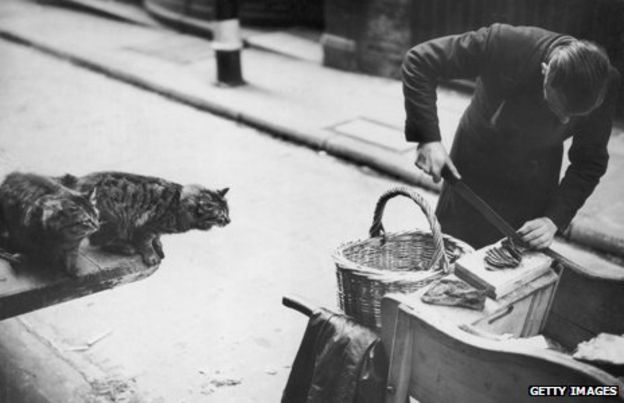
But many owners were able to make do. Pauline Caton was just five years old at the time and lived in Dagenham. She remembers “queuing up with the family at Blacks Market in Barking to buy horsemeat to feed the family cat”.
And even though there were just four staff at Battersea, the home managed to feed and care for 145,000 dogs during the course of the war.
In the middle of the pet-culling mayhem, some people tried desperately to intervene. The Duchess of Hamilton – both wealthy and a cat lover – rushed from Scotland to London with her own statement to be broadcast on the BBC. “Homes in the country urgently required for those dogs and cats which must otherwise be left behind to starve to death or be shot.”
“Being a duchess she had a bit of money and established an animal sanctuary,” says historian Kean. The “sanctuary” was a heated aerodrome in Ferne. The duchess sent her staff out to rescue pets from the East End of London. Hundreds and hundreds of animals were taken back initially to her home in St John’s Wood. She apologised to the neighbours who complained about the barking.

But at a time of such uncertainty, many pet owners were swayed by the worst-case scenario.
“People were worried about the threat of bombing and food shortages, and felt it inappropriate to have the ‘luxury’ of a pet during wartime,” explains Pip Dodd, senior curator at the National Army Museum.
“The Royal Army Veterinary Corps and the RSPCA tried to stop this, particularly as dogs were needed for the war effort.”
Ultimately, given the unimaginable human suffering that followed over the six years of the war, it is perhaps understandable that the extraordinary cull of pets is not better known.
But the episode brought another sadness to people panicked and fearful at the start of hostilities.
The story is not more widely known because it was a difficult story to tell, says Kean.
“It isn’t well known that so many pets were killed because it isn’t a nice story, it doesn’t fit with this notion of us as a nation of animal lovers. People don’t like to remember that at the first sign of war we went out to kill the pussycat,” she says.
Follow @BBCNewsMagazine on Twitter and on Facebook
Bonzo’s War: Animals Under Fire 1939 -1945 is written by Clare Campbell with Christy Campbell.
ooOOoo
Now there’s a little bit more information on the Duchess of Hamilton, namely:
The Duchess of Hamilton, 1878-1951
- Nina Mary Benita Douglas-Hamilton, notable animal rights campaigner
- Established animal sanctuary in a heated aerodrome in Ferne during war
- Founded Scottish Society for Prevention of Vivisection in 1911
It’s very difficult to make one’s mind up. As was written there were no food ration cards for pets.
But at the same time this huge pet cull was too much, too soon.
As was written, “The story is not more widely known because it was a difficult story to tell, says (Hilda) Kean.
“It isn’t well known that so many pets were killed because it isn’t a nice story, it doesn’t fit with this notion of us as a nation of animal lovers. People don’t like to remember that at the first sign of war we went out to kill the pussycat,” she says.”
It was a most interesting link albeit a very sad one.
The last republication of an earlier picture parade.
Over the last few weeks I have been republishing some picture parades where the photos were sent in by Margaret down in Tasmania. As before if you want to go back to the originals they start here.
OK, let’s get into this last set!
ooOOoo
The last set of those glorious photographs sent in by Margaret from Tasmania
“Animals and nature are insignificant for a man when the man is unworthy.”

oooo
“There is no better psychiatrist in the world than a puppy licking your face.“ – Woodrow Wilson

oooo
“Somewhere in the rain, there will always be an abandoned dog, that prevents you from being happy“ – Aldous Huxley

oooo
“The greatness of a nation and its moral progress can be judged by the manner in which its animals are treated“ – Mahatma Gandhi

oooo
“Many who have dedicated their life to love, can tell us less about this subject than a child who lost his dog yesterday“. – Thornton Wilder

oooo
“Dogs are not everything in life, but they make it complete“ – Roger Caras

oooo
“Just thinking that my dog loves me more than I love him, I feel shame.“ – Konrad Lorenz

oooo
“They will be our friends forever, always and always.”

oooo

oooo
That’s it, folks.
But I do have wonderful photographs for next Sunday albeit as different to these from Marg as one could imagine!
You all take care.
ooOOoo
They are really beautiful and the sayings are just as perfect.
Unfortunately next Sunday’s Picture Parade will not be a republication of a previous post.
And not just here!
This story comes from Mexico, a country renowned for being a hot place. Even in Northern Mexico it can be flipping hot (and that’s putting it nicely). Let’s face it I met Jeannie in San Carlos, Mexico in 2007. San Carlos is in the county of Sonora, just along the coast from Guaymas and about 270 miles South from Nogales on the Arizona border.
Anyway, back to the story which comes from The Dodo.
ooOOoo
“He came to us for help.”
BY STEPHEN MESSENGER
PUBLISHED ON THE 27th August, 2019.
Recently, on a scorching hot day in northern Mexico, Adolfo Pazzi Ahumada witnessed love in its purest form.
After noticing he was out of milk at home, Ahumada decided to brave the 104°F weather to make a quick stop at his local market. When he arrived, he saw sweet scene unfolding out front.
“A stray dog was being fed and getting water from the [store] clerk,” Ahumada told The Dodo. “Then I saw they let the dog inside.”

Once Ahumada entered the store, he decided to ask the clerk about the dog. Ahumada recounted that conversation to The Dodo: “He has been here the past [few] days. We suspect he was left behind by his owner. He came to us for help,” the clerk told Ahumada. “We could only provide him with food, water and some toys from the store that we paid with our money.”
But the shop’s kindness doesn’t end there.
“We let him inside because the temperature outside is really hell-like. We feel bad for him, but he looks happier around the store,” the clerk said.
Peeking down one of the aisles, Ahumada observed that firsthand:

The downtrodden dog had found people who cared.
In the time he’s been there, the dog has shown kindness to the clerks and customers in return. The store hopes perhaps a shopper will see fit to adopt him into their home.
Unable to be that person, Ahumada paid for his milk and bought a treat for the dog to enjoy after his nap — resting assured the pup was in safe and caring hands until that day comes.

“I felt bad for what the dog has passed through,” Ahumada said. “But he is now receiving the love he deserves.”
ooOOoo
I find myself staggered at what this dog has endured yet at the same time how very quickly he settled in at the store. Well done to all the staff at the OXXO store. It would have been so easy to let the dog suffer and in all probability die in the heat.
Please, let the sweet dog find a loving home as soon as possible!
Because they have the potential to be contaminated with Salmonella bacteria.
Yet another recall.
ooOOoo
August 27, 2019 — Brutus & Barnaby LLC of Clearwater, Florida, is recalling all size variations of its Pig Ears for Dogs because they have the potential to be contaminated with Salmonella bacteria.
What Products Are Recalled?
Bags of Brutus & Barnaby Pig Ears were distributed throughout all states via Amazon.com, Chewy.com, Brutusandbarnaby.com and the brick and mortar Natures Food Patch in Clearwater, Florida.
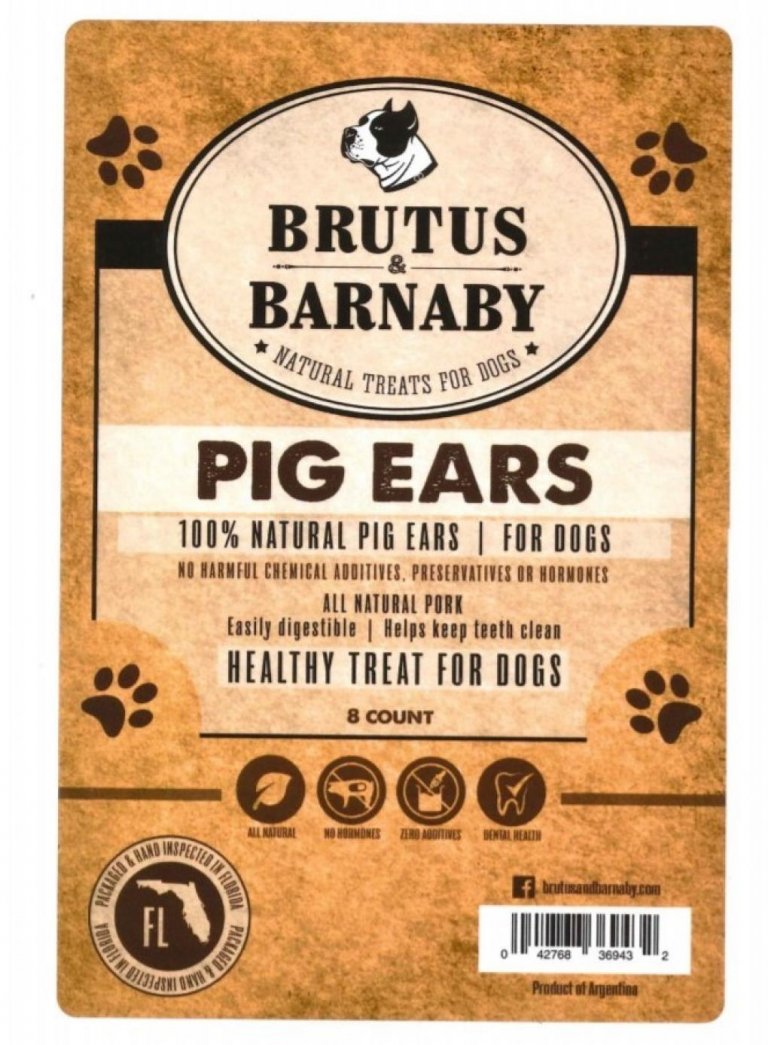
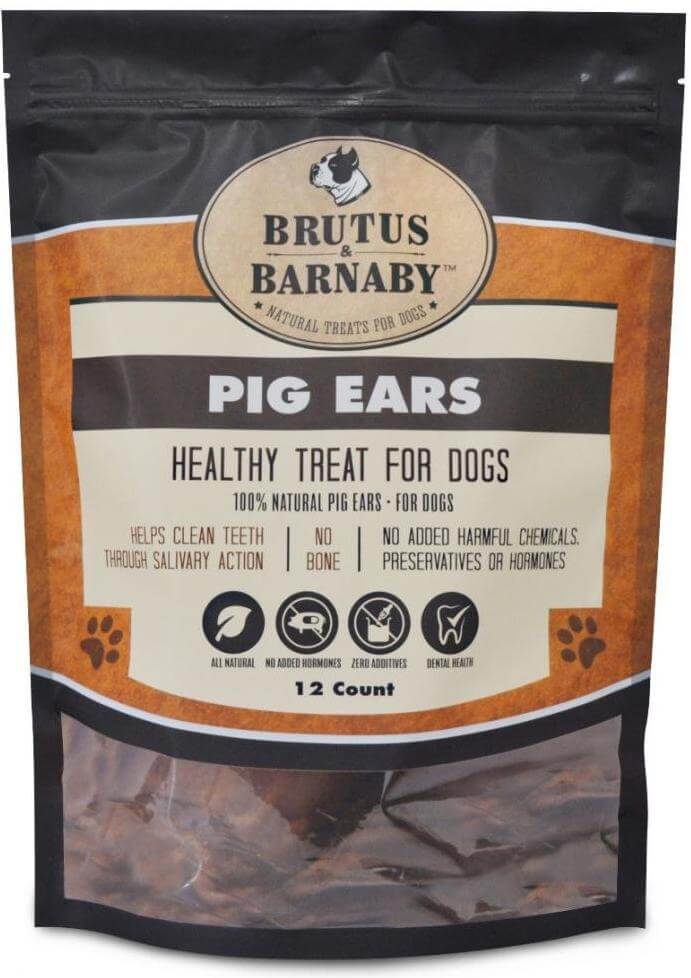

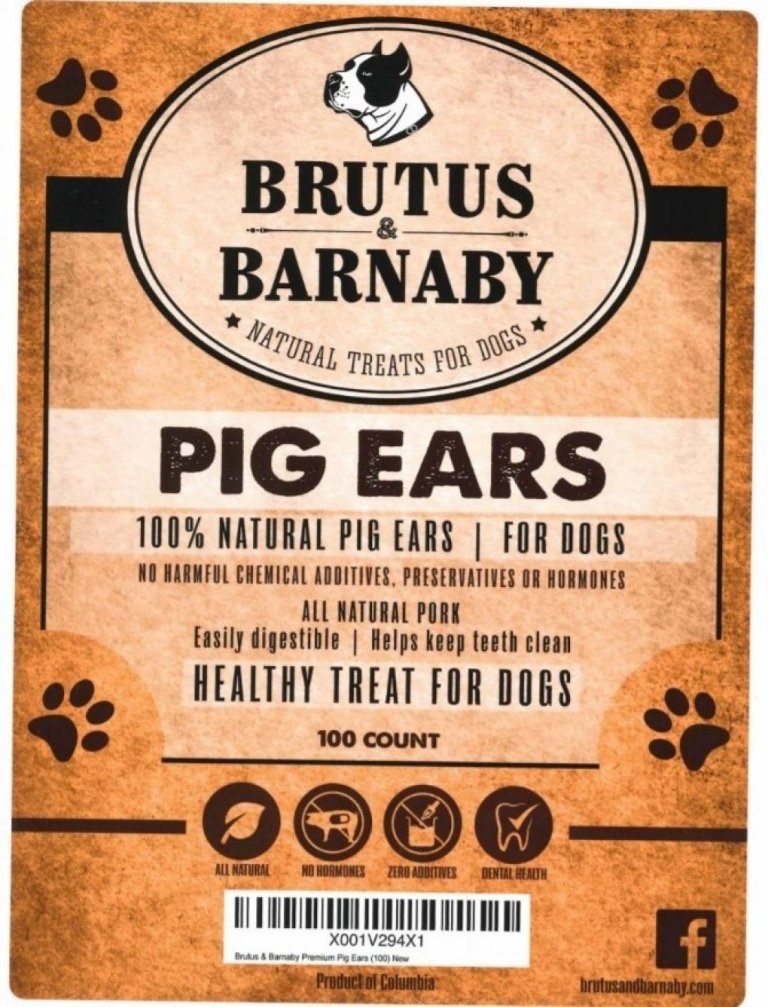
The product label is identified by the company’s trademarked logo and reads “Pig Ears 100% Natural Treats for Dogs”.
The affected products were available in 4 sizes:
Brutus & Barnaby has ceased the production and distribution of the product as FDA and the company continue their investigation as to what caused the problem.
About Salmonella
Salmonella can affect animals eating the products and there is risk to humans from handling contaminated pet products, especially if they have not thoroughly washed their hands after having contact with the products or any surfaces exposed to these products.
Healthy people infected with Salmonella should monitor themselves for some or all of the following symptoms: nausea, vomiting, diarrhea or bloody diarrhea, abdominal cramping and fever.
Rarely, Salmonella can result in more serious ailments, including arterial infections, endocarditis, arthritis, muscle pain, eye irritation, and urinary tract symptoms.
Consumers exhibiting these signs after having contact with this product should contact their healthcare providers.
Pets with Salmonella infections may be lethargic and have diarrhea or bloody diarrhea, fever, and vomiting.
Some pets will have only decreased appetite, fever and abdominal pain.
Infected but otherwise healthy pets can be carriers and infect other animals or humans.
If your pet has consumed the recalled product and has these symptoms, please contact your veterinarian.
What to Do?
Consumers who have purchased Brutus & Barnaby pig ears are urged to destroy any remaining product not yet consumed and to contact the place of purchase for a full refund.
Consumers with questions may contact the company at 800-489-0970 Monday through Friday, 9 am to 5 PM ET.
U.S. citizens can report complaints about FDA-regulated pet food products by calling the consumer complaint coordinator in your area.
Or go to https://www.fda.gov/petfoodcomplaints.
Canadians can report any health or safety incidents related to the use of this product by filling out the Consumer Product Incident Report Form.
ooOOoo
Once again, please share this as much as possible. One dog with salmonella is one dog too many!
Ninety-nine percent of the time it’s a match of dog and human.
Today, Tuesday, Jean and I went to visit one of the retirement homes in town. The woman who saw us at this particular one, Cindy, was a dog lover and had two dogs. But while we toured the home and saw this and that all three of us were much more interested in speaking about our dogs.
It came to mind while we were talking about our dogs, and remarking how we loved them and how life wouldn’t be the same without them, that dogs occupy a place in our hearts that is so special. Now it’s not unique; cats and horses to some are also special. (And there are some dog owners who don’t really endear themselves to their dogs.)
But there’s something about the dog that for most people is magical.
This came to mind when I was reading this post; something magical about the humble dog. Taken from The Dodo.
ooOOoo
She couldn’t stop smiling!
BY CAITLIN JILL ANDERS
PUBLISHED ON 16th August, 2019.
After Tricia Carter and her family lost their beloved dog Bailey back in November, it was hard to imagine another dog could ever take her place. But when Carter’s friend texted her pictures of a sweet pit bull/bulldog mix, just like Bailey, at their local shelter, she decided maybe her family was ready to adopt again.
“Once I saw pics, I couldn’t stop thinking about her and the next morning I went to the shelter,” Carter told The Dodo.
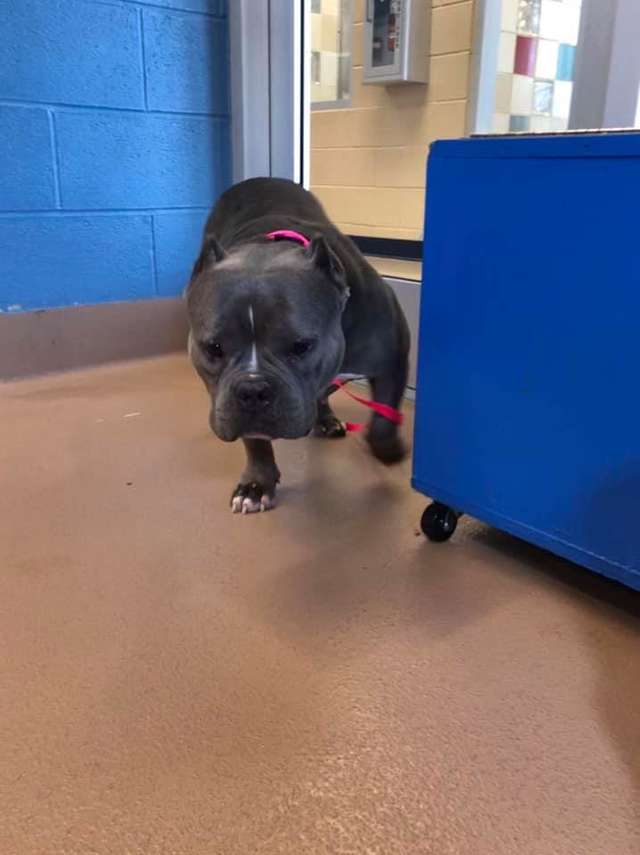
The shelter didn’t know much about the dog’s past except that she’d passed through more than one shelter, and that she was likely used for breeding by her previous owner and cast aside once she was no longer useful. The poor dog, named Lola, seemed defeated as she came out to meet Carter, but Carter could tell that she was so sweet and just needed to find the right family to love her.
“She had a very quiet, calm nature at the shelter,” Carter said. “Didn’t really react one way or another to other dogs, seemed to hang her head for the most part.”
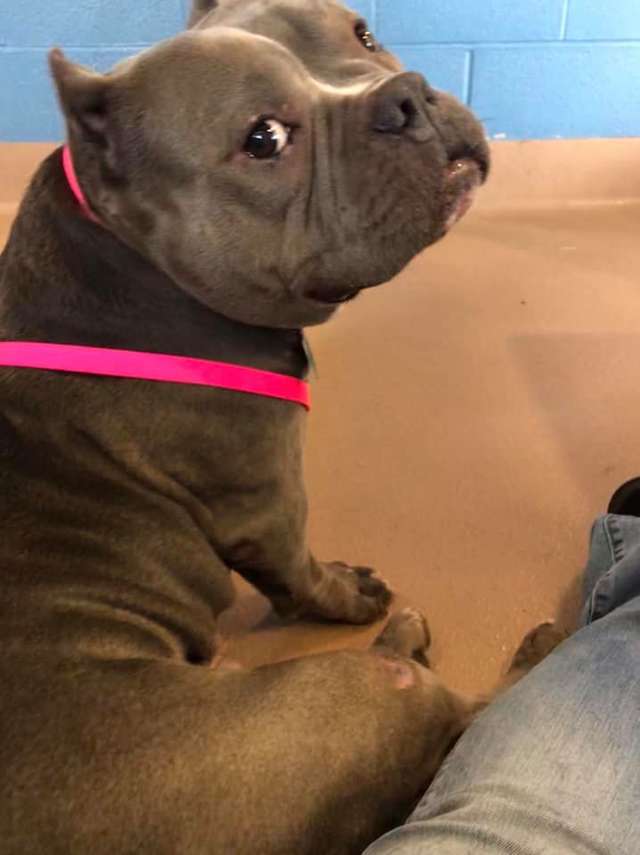
Poor Lola had already been adopted and returned to the shelter once before, and after meeting her, Carter knew she wanted to give her a chance. The official deciding factor would be if Lola got along well with her teenage son. Two hours later, Carter headed back to the shelter with her son — and as soon as the pair met, Lola’s demeanor completely changed. It was as if this was the person she had been waiting for all along.
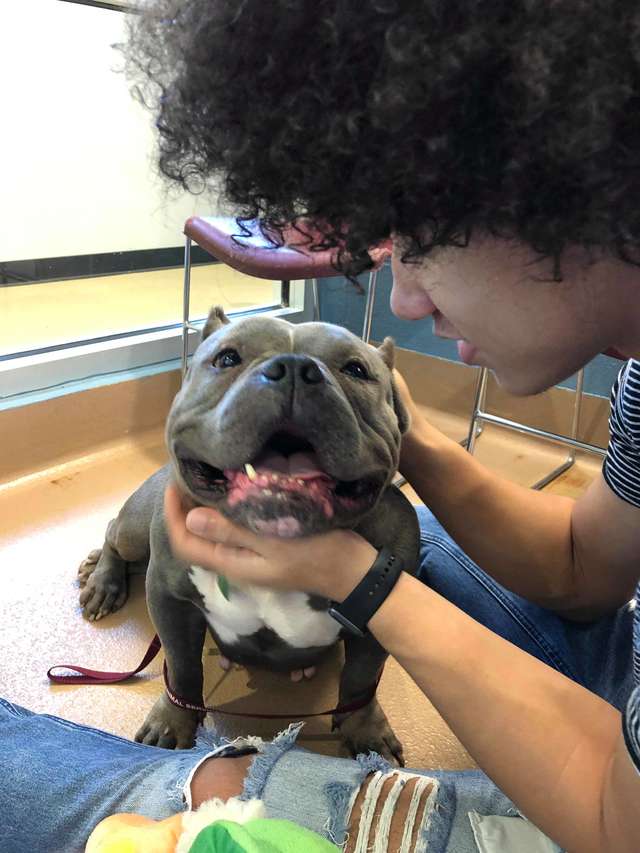
“The moment she looked into his eyes, they both fell in love,” Carter said. “She had the biggest grin and it hasn’t gone away since.”
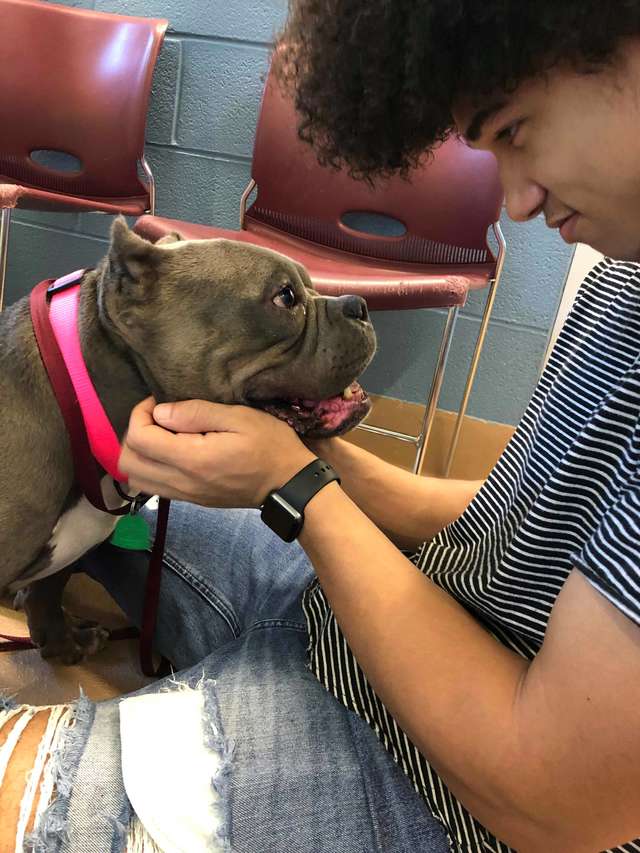
It was such a beautiful moment, and no one could believe how much the pair connected right away. Carter immediately made the adoption official, and sweet Lola couldn’t stop smiling the whole car ride home.
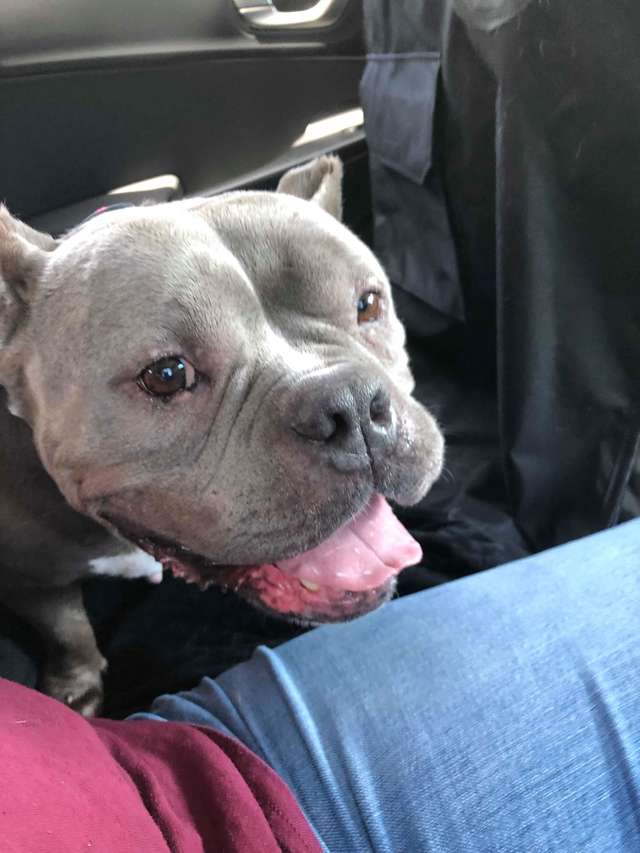
Lola arrived in her new home and settled in immediately, and slept the whole night with Carter’s son. The next day, her personality really started to shine through, and it was as if she knew she had finally found a place to stay forever.
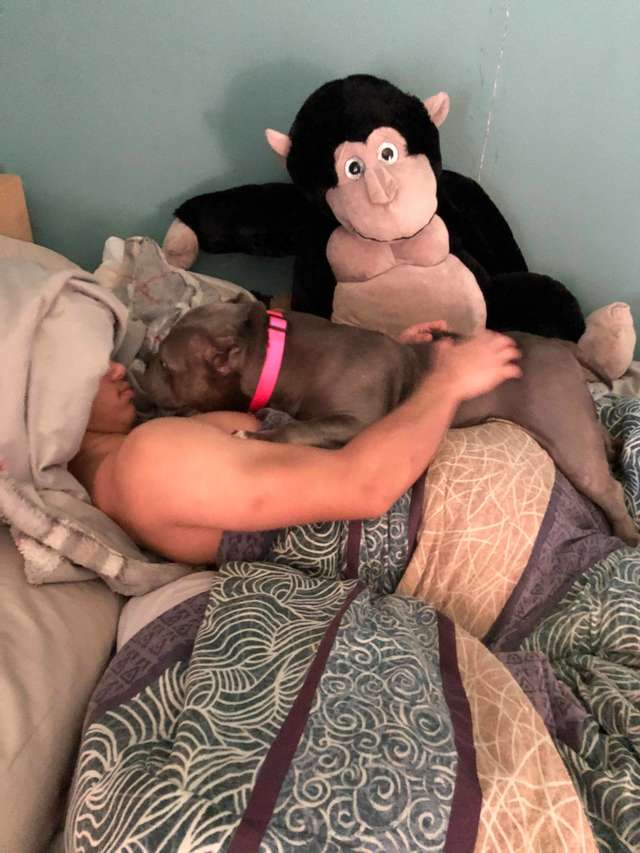
To this day, Carter’s son is still Lola’s absolute favorite person, and she spends most of her time snuggled up with him. She also loves playing with the family’s other two dogs, and seems to feel more like a part of the pack every day. At the shelter, poor Lola could barely lift her head, but now she’s found exactly where she belongs, and she’s never looking back.
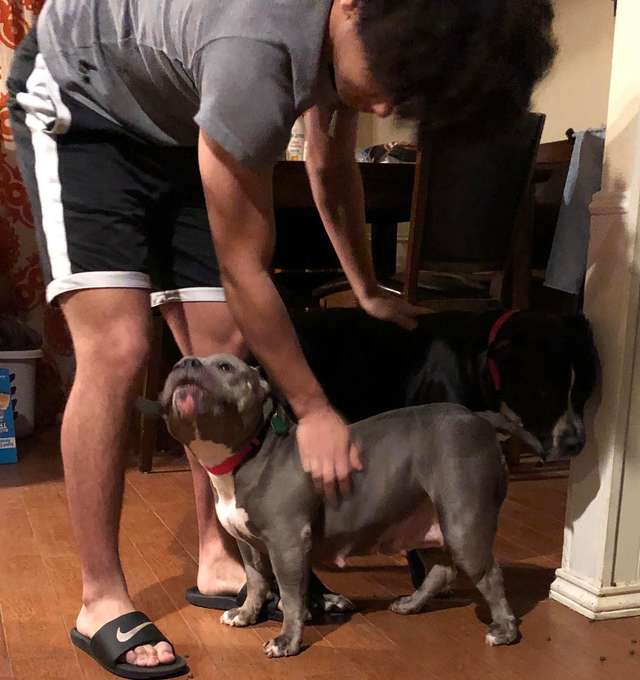
“She’s so happy and fun-loving — I can’t help but smile every time I’m around her,” Carter said. “No matter what her backstory might be, she’s a sweet girl who just wants to love, play and be loved.”
ooOOoo
And there’s something more to this story of love and friendship – we can only guess at what the dog is thinking.
For sure this dog is very happy, and shows it, but for an animal that for years and years has bonded so closely with us we really don’t understand what’s going on.
But it is still very beautiful!
A poem
The Atlantic was smooth under the night sky,
It made a very welcome difference.
Nights were hard on this solo sailor,
A quick scan of the horizon every twenty or thirty minutes and then back down to my bunk.
But what was that!
For the first time in ages there was a strange light off the starboard bow.
Impossible to gauge the distance.
Then I had it!
It was no ship’s light,
It was the edge of the rising moon.
My bunk below was forgotten in an instant.
The sight of the rising full moon was everything.
It rose seemingly rapidly and now cast its light over the ocean.
My ketch sailed in its golden light.
We seemed to sail on forever.
Now that’s coming on for thirty years ago,
But it is still clear in my mind.
Clear as if it was yesterday,
Reminded of it each full moon.
My ketch still sailing in its golden light.

The following is not Songbird but a much more appropriate photograph.

And the poem came to me just the other day. The memory of that full moon out in the Atlantic en-route to Plymouth from Gibraltar in 1991 will be with me for ever.

