At the start of the week, indeed last Tuesday, a pair of geese hatched a brood of goslings.
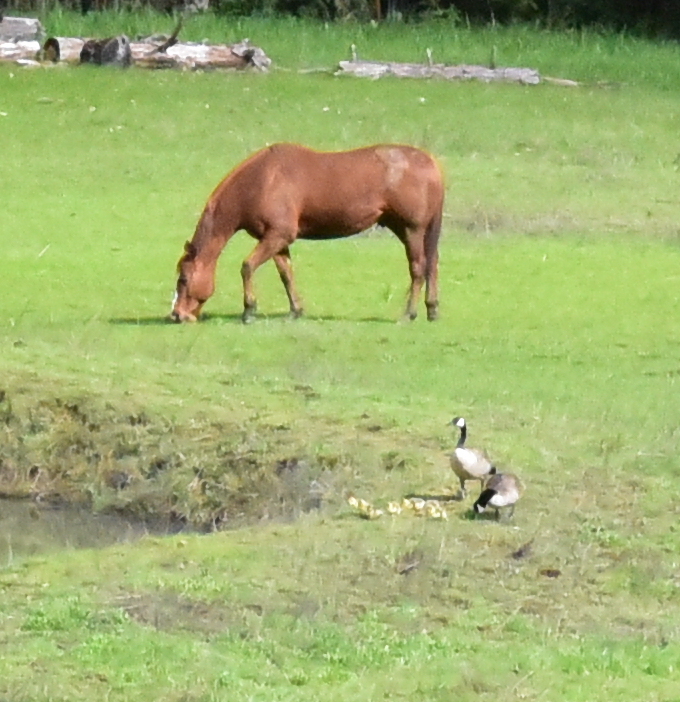
I tried very hard to take some photographs of them but they stayed their distance and all I got was the following. (These are cropped down from the original.)
They are at the limits of the camera lens.
This is the morning of birth, Tuesday 16th April, and the goslings are still in the nest underneath the mother’s belly.
oooo
oooo
Five or six goslings; it’s still too difficult to tell.
oooo
oooo
oooo
Nothing to do with dogs but I’m sure you enjoyed them! This is the second time that we have had a pair of geese build a nest, lay eggs and bring the goslings into the world. The last time was April 23rd, 2015. Pictures here!
For someone born on May 8th, 1926 he, perhaps, should be slowing down. But none of it. He is passionate about how we are endangering our planet. And having a public profile he is the right position to do something about it, albeit a warning statement.
Plus, he is not the only one doing something about it. For Extinction Rebellion are protesting in the London streets.
Sir David’s new programme lays out the science behind climate change, the impact it is having right now and the steps that can be taken to fight it.
“In the 20 years since I first started talking about the impact of climate change on our world, conditions have changed far faster than I ever imagined,” Sir David states in the film.
“It may sound frightening, but the scientific evidence is that if we have not taken dramatic action within the next decade, we could face irreversible damage to the natural world and the collapse of our societies.”
Speaking to a range of scientists, the programme highlights that temperatures are rising quickly, with the world now around 1C warmer than before the industrial revolution.
“There are dips and troughs and there are some years that are not as warm as other years,” says Dr Peter Stott from the Met Office.
“But what we have seen is the steady and unremitting temperature trend. Twenty of the warmest years on record have all occurred in the last 22 years.”
The programme shows dramatic scenes of people escaping from wildfires in the US, as a father and son narrowly escape with their lives when they drive into an inferno.
Scientists say that the dry conditions that make wildfires so deadly are increasing as the planet heats up.
Greenland is losing ice five times as fast as it was 25 years ago – Getty Images.
Some of the other impacts highlighted by scientists are irreversible.
“In the last year we’ve had a global assessment of ice losses from Antarctica and Greenland and they tell us that things are worse than we’d expected,” says Prof Andrew Shepherd from the University of Leeds.
“The Greenland ice sheet is melting, it’s lost four trillion tonnes of ice and it’s losing five times as much ice today as it was 25 years ago.”
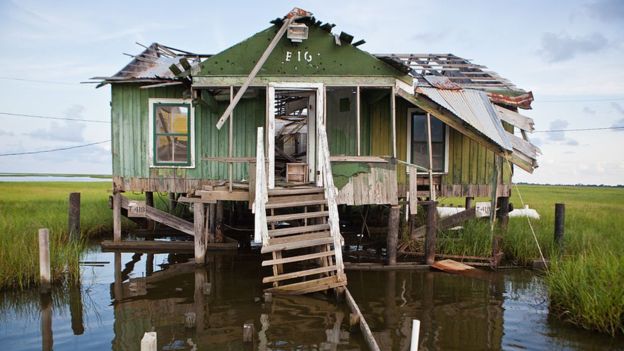
These losses are driving up sea levels around the world. The programme highlights the threat posed by rising waters to people living on the Isle de Jean Charles in Louisiana, forcing them from their homes.
“In the US, Louisiana is on the front line of this climate crisis. It’s losing land at one of the fastest rates on the planet – at the rate of of a football field every 45 minutes,” says Colette Pichon Battle, a director of the Gulf Coast Center for Law & Policy.
People are moving from parts of Louisiana in the US as a result of rising waters. – Julie Dermansky
“The impact on families is going to be something I don’t think we could ever prepare for.”
Hope rising
Sir David’s concern over the impacts of climate change has become a major focus for the naturalist in recent years.
This has also been a theme of his One Planet series on Netflix.
His new BBC programme has a strong emphasis on hope.
Sir David argues that if dramatic action is taken over the next decade then the world can keep temperatures from rising more than 1.5C this century. This would limit the scale of the damage.
“We are running out of time, but there is still hope,” says Sir David.
“I believe that if we better understand the threat we face the more likely it is we can avoid such a catastrophic future.”
The programme says that rapid progress is being made in renewable energy, with wind now as cheap as fossil fuels in many cases. It shows how technologies to remove and bury carbon dioxide under the ground are now becoming more viable.
But politicians will need to act decisively and rapidly.
“This is the brave political decision that needs to be taken,” says Chris Stark from the UK’s Committee on Climate Change.
Teenage campaigner Greta Thunberg has helped spark school strikes all over the world. – Getty Images.
“Do we incur a small but not insignificant cost now, or do we wait and see the need to adapt. The economics are really clear on this, the costs of action are dwarfed by the costs of inaction.”
The programme also highlights the rising generation of young people who are deeply concerned about what’s happening to the planet.
Swedish teenager Greta Thunberg explains that things can change quickly, despite the scale of the challenge on climate change.
“The first day I sat all alone,” she says, speaking of her decision to go on strike from school and sit outside the Swedish parliament to highlight the climate crisis.
“But on the second day, people started joining me… I wouldn’t have imagined in my wildest dreams that this would have happened so fast.”
Back to the delight of blogging with this republished post.
I’m having to be much more concerned about copyright, for obvious reasons. I am only going to republished items that I know to be free circulation or that I have specifically asked if is OK.
So I’m delighted to offer this post, and can confirm that it is republished with the kind permission of the author. Thank you!
ooOOoo
Wanderlust Wolves
A girl, 2 dogs and a quest for SNOW in Southern California.
March 14th, 2019
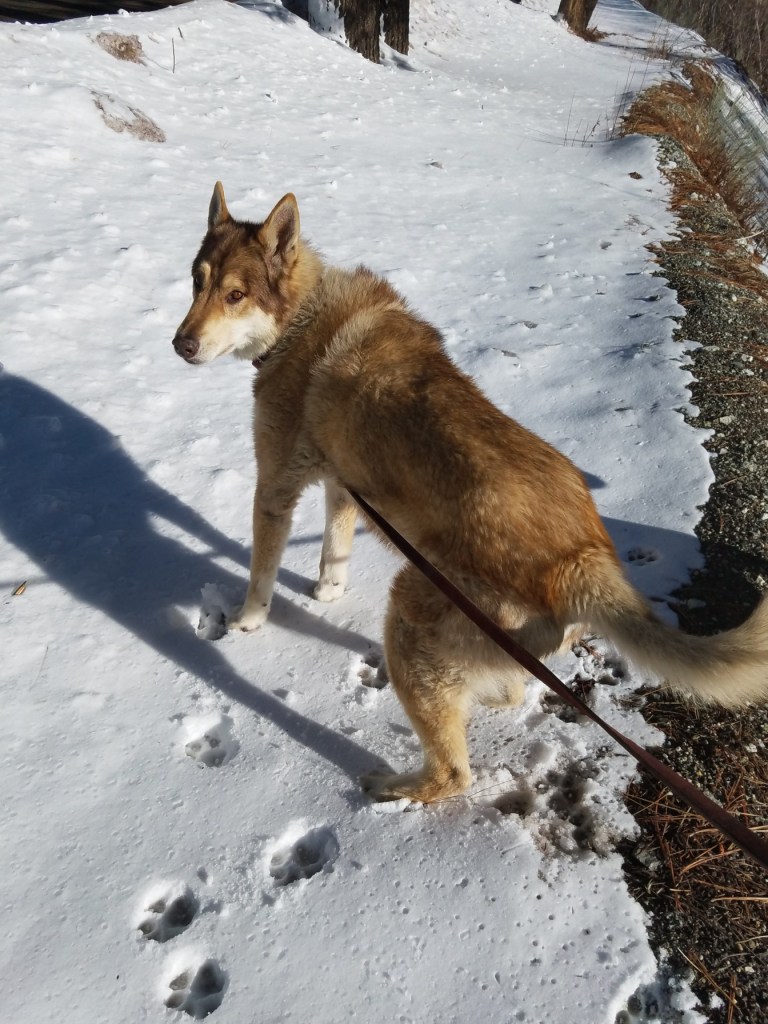
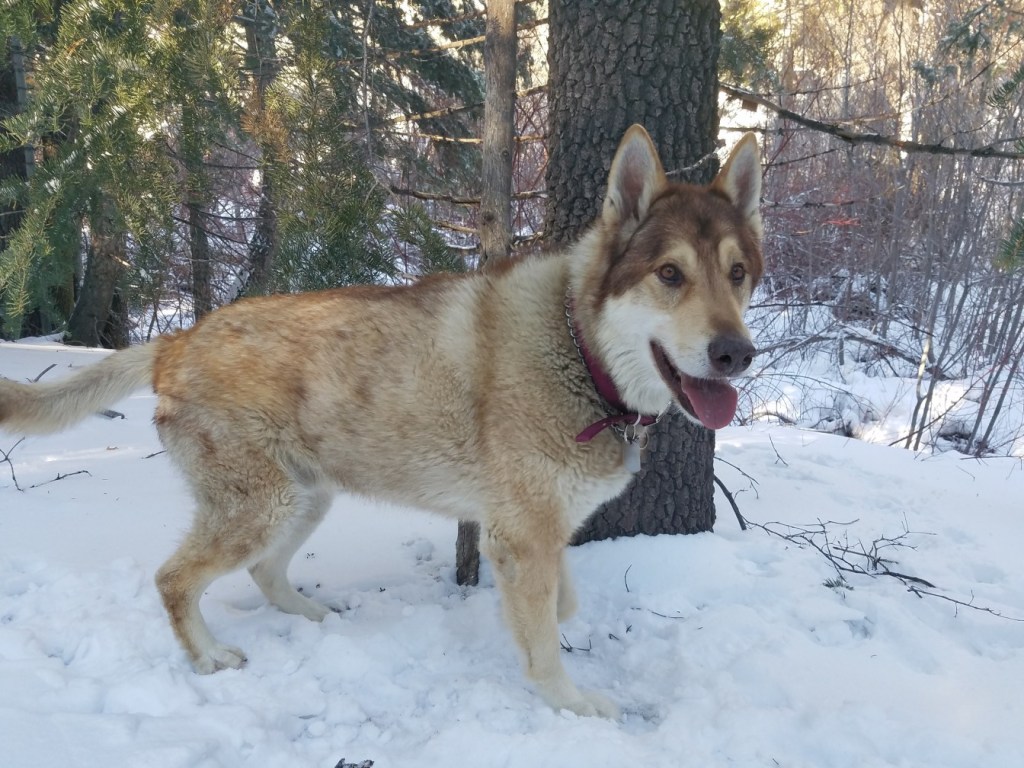
For the past 9 years, I have wanted nothing more than to take Beowolf to the snow. He’s a Wolfdog for crying out loud, the snow is where he thrives! Over the years as every opportunity that arisen to take Beowolf up to the snow something always came up. Car trouble, work obligation, lack of money, etc. Not to mention driving up to the snow alone is not ideal, I never felt like risking it, the Jeep although durable was no young buck and the heat was out! So I often tried to rely on friends, who all pretty much had the same excuses as me.
For the past 4 years since moving back down to SoCal, and living in view of mountains, I haven’t wanted to take a trip to the snow so badly! Every winter after a good rain at home, the next morning I look out my windshield on my way to work and can see the beautiful snow-capped mountains that surrounded my valley. I kept planning trips to go but again the same old excuses, on repeat.
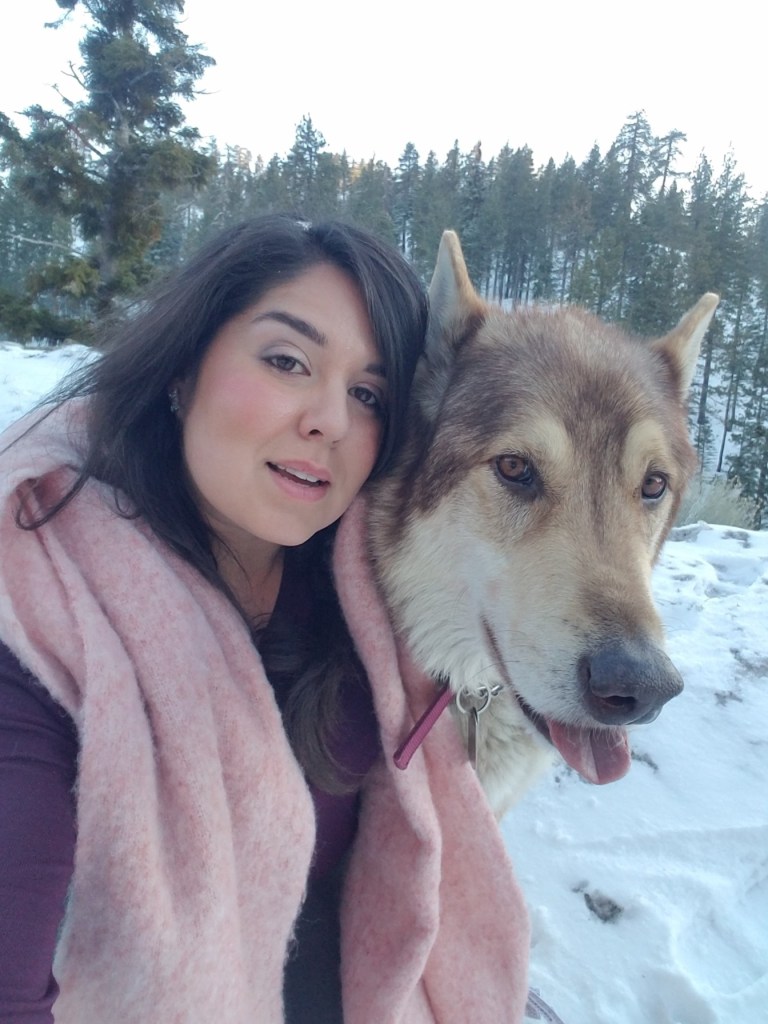
As of recent (6 months or so) I have adopted a new attitude… a F*** It attitude, no longer being too cautious to say or do something and that includes solo adventure trips. After all, the one thing I envy is travel and getting out of the everyday scene. Coming from someone who moves on faster than a butterfly migration, since childhood, staying in one place too long gives me an itch only I can scratch. I soon realized I can no longer rely on someone else to take me on an adventure. So I threw away the excuses and said, F*** it, pack your boots Beowolf and Valentine we’re going to the snow!
The first trip: Mountain High Resort, Wrightwood, CA.
I heard of this place from a co-worker and when I asked around I got pretty good feedback. It’s only 38 miles from where I live, and GPS said it was a 1.5-hour drive. DEAL! A friend was even going with me, so it was gonna be a great day trip! I rush ordered a jacket for Valentine and gathered up all my snow gear and awaited the weekend, I have a new (to me) Rav4 and just got a fresh oil change with a full tank so I felt good about the drive.
Saturday morning arrives and I jump out of bed blasting music as I get showered and ready for the day, hinting to Beowolf about what awaits him! Just as I finish my makeup and load everything into the Rav4, my phone dings. It’s my friend giving me the same excuse she always gives me but in the end, she cancels. The old me would be pissed, the old me would cancel the day and try and salvage doing something here, but that was the old me. The new me already knew my friend was going to flake because it was her habit, so I told myself no matter what I was making that drive. I text a few family members where I was going and loaded the dogs up. I stopped for snacks and then we were on our way, Mountain High here we come!
The first leg was mostly the 14 North going along Palmdale and it was a drive I made many times before, so I was used to it. Then it took me up toward Devil’s Punch Bowl, another place I’ve taken the dogs a few times. Then it took me down a new road, which after the recent rains it was flooded and so I got detoured only to find out that was Private Property. So I speed off hoping to force GPS to link me to one of the alternate routes I saw earlier, of course, it works.
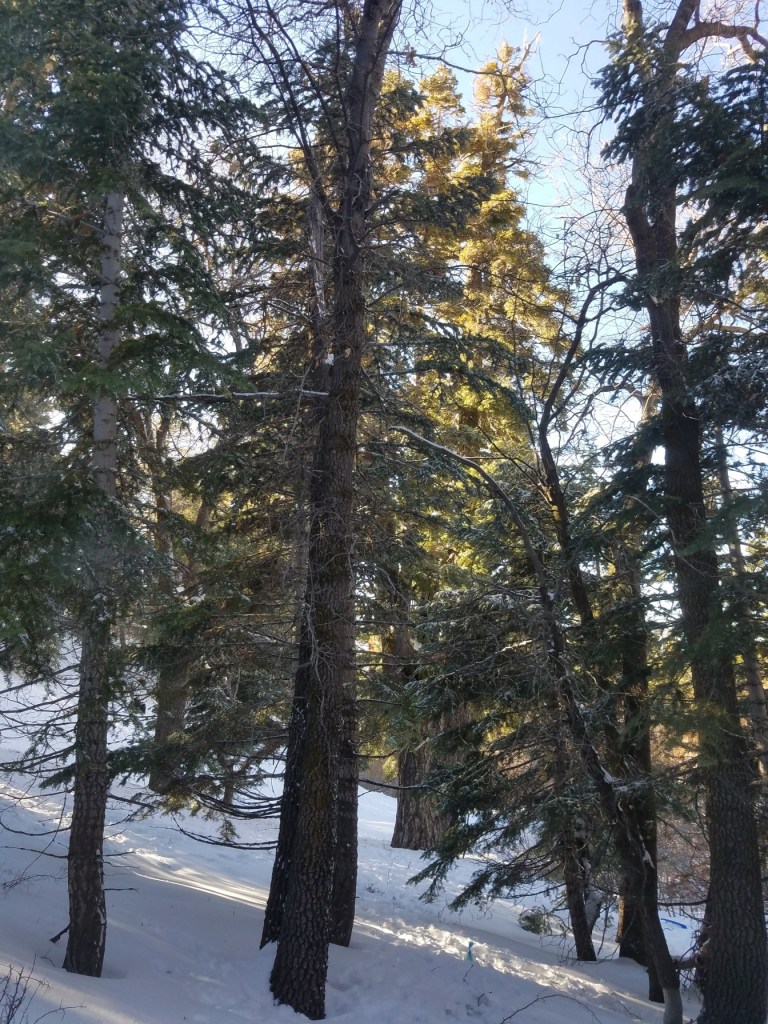
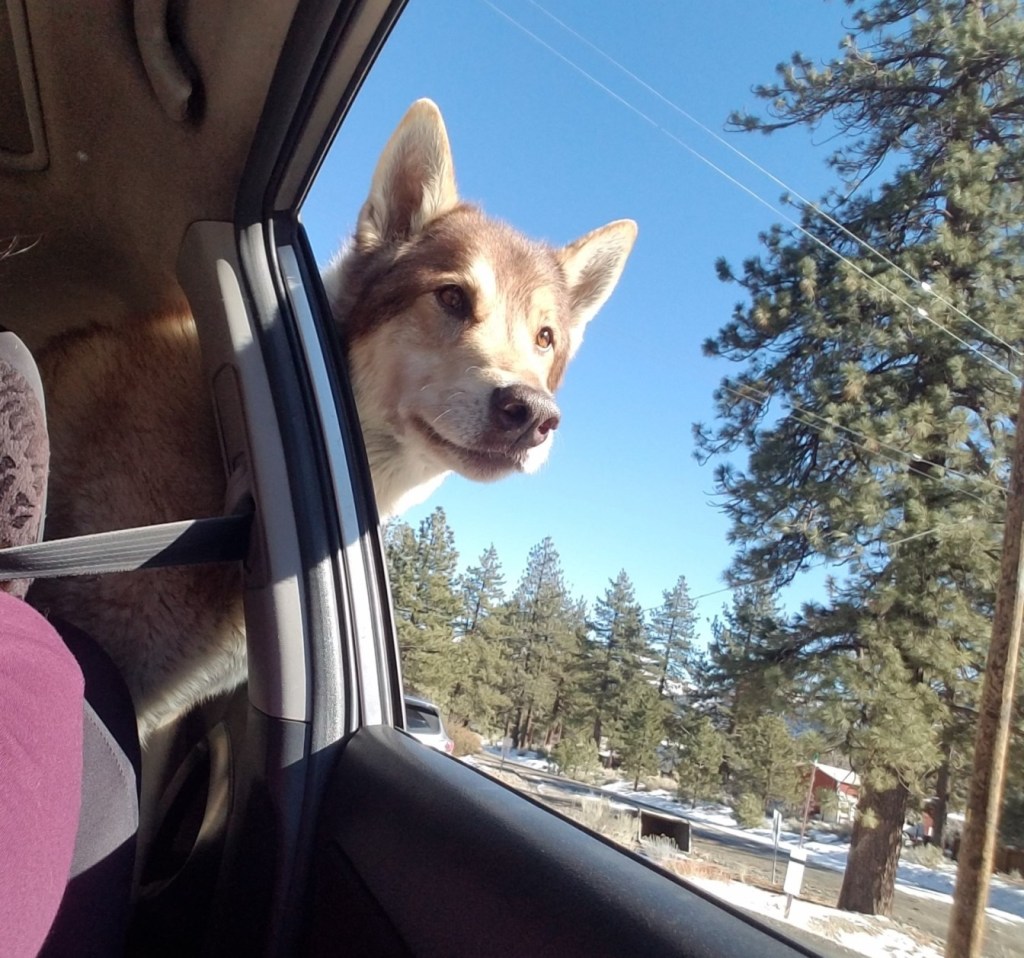
So I’m back on track, the Rav4 is feeling good, I’m excellent on gas and my music is on MAX! The rest of the drive was not only fun at some points, but beautiful, the dry desert suddenly became green lush mountains. The redwoods grew brighter the deeper we drove, it was breathtaking. As we entered the tourist housing section I rolled down the windows letting the crisp air in and the dogs stuck their heads out, Beowolf is so excited he can’t decide where to look. He’s used to hikes and trips, but he doesn’t really know what I have in store for him.
I pass through the small town and head into the mountain, as I start seeing large areas of snow we start easing into traffic. Blah. But you know what I didn’t care about it; the dogs were happy with their heads out the window, my tank is still almost full and I had my music on so I was fine. Eventually, we crawled by the resort that was packed and so it was time to find a parking spot further up the mountain. I drive maybe a mile from the resort and find a secluded area with loads of space to park and play, so I pull in and park it.
As I finish getting ready like 5 cars pull in behind me, really? Just as I was about to pull out the dogs and let them run, but no, so I leash them up and get them out. Beowolf doesn’t even know what to do! He’s so excited and poor Valentine is like whoa WTF. With nowhere for them to play safely, we must walk back down where the designated area is, the walk to the park was no picnic at all. Beowolf pulled as much as he could and Valentine pulled in the opposite way, I decided against putting on their pinchers, they had been doing so good with training I didn’t think I needed them. Big mistake, I hadn’t had to walk in the snow for years and the edge of the road was so crowded with people. I already had too much to carry and thanks to Beowolf I had a big bag of doo-doo dangling from me as well, I eventually led us along the crest of the hill where I can relax and give Beowolf some slack, I could finally walk and eventually fell into a groove.
When we got to the area to play there was a nice big space where nobody was, so I decided that was the perfect place to let the dogs off leash, well not Valentine.
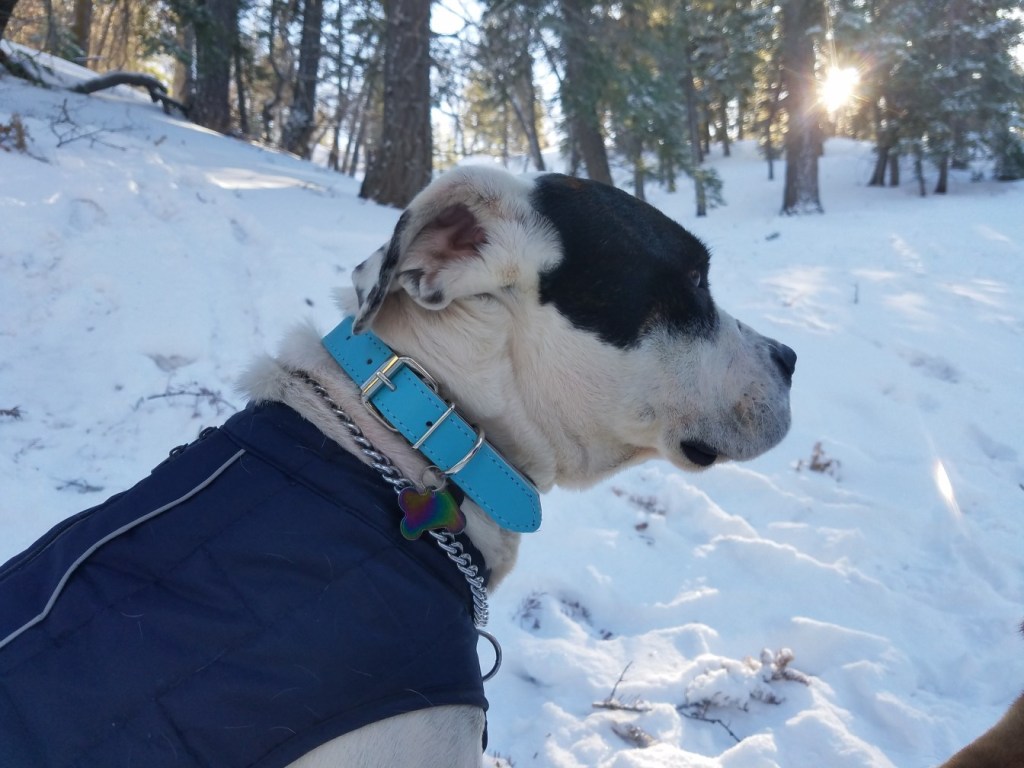
She was not having a good time at all, she was shivering despite the coat and I never factored in the way people would look to her in their big coats, not to mention the snow was deep and it was hard for her to move so she felt trapped. I kept her with me by my side while Beowolf ran around and sniffed and played.
He was so happy and so was I, it was so fulfilling getting over my own anxieties going places alone and driving in the snow to reach that place. Beowolf is already a sight when he runs loose, but against the beautiful backdrop, it made my heart so warm! I decided, in the end, it was worth going alone and I was going to take them out more. The walk back to the car was so much better, I decided to walk in the street, there was little traffic and my dogs have the training to heel alongside me so when a car came we just moved over and waited for them to pass. Took us 5 minutes to get back to the car.
Upon our arrival, every car that was parked around us before was gone! So I put Valentine away and let Beowolf run some more. Then we packed in the car and headed down the mountain, stopping once more to take some more pictures.
The drive home was even more spectacular. A very winding road leads Big Pine down the mountain which gives you captivating views with each turn, I don’t know about you, but I always loved driving and wanted to be a stunt driver for commercials. I felt like I was in a Rav4 commercial, listening to soothing music driving down the mountain and at sunset no less! All in all, it was a great day, I would totally go up for more trips, I saw more isolated areas that would be great places to stop next time too! I got amazing photos and Beowolf got to finally experience snow! We made it home at 5pm.
Overall I would rate my experience a 4.5/5.
ooOOoo
This author is relatively new to the game but if she continues like this then she will soon have plenty of followers.
Meantime, I’m thinking of how to feature a Picture Parade for Sunday!
Earlier yesterday I received a letter from a firm of lawyers Higbee & Associates. It was to advise me that, “Unlicensed Use Of Work Copyrighted By Paul Martinka.” and went on to detail how Paul Martinka had quite correctly was seeking compensation for my republishing a photograph without a license.
So, moving on!
It is going to change the blog quite a bit because I frequently republish material from other websites without formal permission.
So while I think through how to continue blogging there’s something you can do for me.
Let me know if I can republish your work. You can leave a comment to this blog or ask me to email you.
And offer me posts that I can use. Please!
Meantime I will ponder what to do!
P.S. That’s why you may have noticed quite a few posts have been taken down!
Dog owners spend US$240 a month caring for their pets, compared with $193 for cats, according to the 2017-2018 National Pet Owners Survey from the American Pet Products Association. The extra money goes primarily toward vet visits and kennel boarding, but dog owners also spend more lavishly on treats, grooming and toys.
And almost half of households own a dog, while just 38 percent have a cat. Generational trends suggest this divergence is likely to grow, as millennials are more likely to adopt a canine, while baby boomers tend to be cat lovers.
One reason suggested was that dog owners had stronger bonds to their pets, which prompted them to spend more on things like veterinary care.
My research uncovered a key factor indicating why dog owners feel more attached to their pets: Dogs are famously more compliant than cats. When owners feel in control of their pets, strong feelings of psychological ownership and emotional attachment develop. And pet owners want to be masters – not servants.
Like other marketing researchers, my work uses “willingness to pay” as an indicator of the economic, rather than emotional, value owners place on their pets. It shows – and compares – how much pet owners would pay to save their animal’s life.
Dog owners are willing to pay twice as much as cat owners for a life-saving surgery. AP Photo/Angie Wang
Who’s in control?
So I carried out three online experiments to explore the role of psychological ownership in these valuations.
In the first experiment, I asked dog or cat owners to write about their pet’s behavior so I could measure their feelings of control and psychological ownership. Participants then imagined their pet became ill and indicated the most they would be willing to pay for a life-saving surgery.
Dog owners, on average, said they would pay $10,689 to save the life of their pet, whereas cat owners offered less than half that. At the same time, dog owners tended to perceive more control and psychological ownership over their pets, suggesting this might be the reason for the difference in spending.
Of course, correlation is not causation. So in a second experiment, I asked participants how much they would be willing to pay to save their animal’s life after I had disturbed their sense of ownership. I did this by asking participants to imagine their pet’s behavior was a result of training it received from a previous owner.
As expected, disrupting their feelings of ownership eliminated the difference in valuation between dogs and cats.
Since pet owners like to control their animals, and since cats are less controllable than dogs, the third experiment went straight to the point: Does the owner value the dog or cat for its own sake or for its compliant behavior?
To find out, I again asked survey respondents to describe how much they’d be willing to pay to save their pet’s life, but this time I randomly assigned one of four scenarios: Participants were told they either own a dog, a cat, a dog that behaves like a cat, or a cat that behaves like a dog.
Participants reported they would pay $4,270 to save the life of their dog, but only $2,462 for their cat. However, this pattern was reversed when the pet’s behavior changed, with dog-behaving cats valued at $3,636, but cat-behaving dogs only $2,372.
These results clearly show that the animal’s behavior is what makes people willing to pay.
When cats act more like dogs, people say they’d spend more money on them. pixfix/shutterstock.com
Master or servant
These findings establish that psychological ownership is a driving factor in dog owners’ higher valuations.
People feel ownership because they perceive that they can control their pets’ behavior. This research even distinguishes the type of control that probably most stimulates ownership feelings: It’s not just physical control, such as being able to pick up an animal or drag it by a leash. Rather, it’s the animal’s voluntary compliance with its owner’s wishes.
No matter how cute and cuddly your kitties may be, they can’t compete with dogs when it comes to giving pet owners the sense of mastery they seek.
But then I saw another version of the same story on the BBC News site, from which I republish it in its entirety.
ooOOoo
First ever black hole image released
By Pallab Ghosh
Science correspondent, BBC News
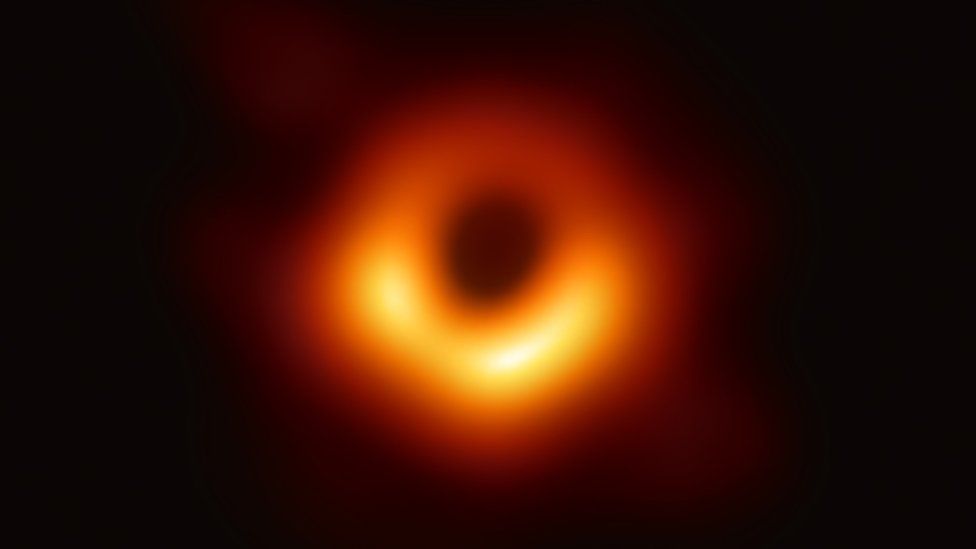
The first ever picture of a black hole: It’s surrounded by a halo of bright gas.
Astronomers have taken the first ever image of a black hole, which is located in a distant galaxy.
It measures 40 billion km across – three million times the size of the Earth – and has been described by scientists as “a monster”.
The black hole is 500 million trillion km away and was photographed by a network of eight telescopes across the world.
Details have been published today in Astrophysical Journal Letters.
Prof Heino Falcke, of Radboud University in the Netherlands, who proposed the experiment, told BBC News that the black hole was found in a galaxy called M87.
“What we see is larger than the size of our entire Solar System,” he said.
“It has a mass 6.5 billion times that of the Sun. And it is one of the heaviest black holes that we think exists. It is an absolute monster, the heavyweight champion of black holes in the Universe.”
The image shows an intensely bright “ring of fire”, as Prof Falcke describes it, surrounding a perfectly circular dark hole. The bright halo is caused by superheated gas falling into the hole. The light is brighter than all the billions of other stars in the galaxy combined – which is why it can be seen at such distance from Earth.
The edge of the dark circle at the centre is the point at which the gas enters the black hole, which is an object that has such a large gravitational pull, not even light can escape.
DR JEAN LORRE/SCIENCE PHOTO LIBRARY I have suspected that the M87 galaxy has a supermassive black hole at its heart from false colour images such as this one. The dark centre is not a black hole but indicates that stars are densely packed and fast moving.
The image matches what theoretical physicists and indeed, Hollywood directors, imagined black holes would look like, according to Dr Ziri Younsi, of University College London – who is part of the collaboration.
“Although they are relatively simple objects, black holes raise some of the most complex questions about the nature of space and time, and ultimately of our existence,” he said.
“It is remarkable that the image we observe is so similar to that which we obtain from our theoretical calculations. So far, it looks like Einstein is correct once again.”
But having the first image will enable researchers to learn more about these mysterious objects. They will be keen to look out for ways in which the black hole departs from what’s expected in physics. No-one really knows how the bright ring around the hole is created. Even more intriguing is the question of what happens when an object falls into a black hole.
What is a black hole?
A black hole is a region of space from which nothing, not even light, can escape
Despite the name, they are not empty but instead consist of a huge amount of matter packed densely into a small area, giving it an immense gravitational pull
There is a region of space beyond the black hole called the event horizon. This is a “point of no return”, beyond which it is impossible to escape the gravitational effects of the black hole
Prof Falcke had the idea for the project when he was a PhD student in 1993. At the time, no-one thought it was possible. But he was the first to realise that a certain type of radio emission would be generated close to and all around the black hole, which would be powerful enough to be detected by telescopes on Earth.
He also recalled reading a scientific paper from 1973 that suggested that because of their enormous gravity, black holes appear 2.5 times larger than they actually are.
These two previously unknown factors suddenly made the seemingly impossible, possible. After arguing his case for 20 years, Prof Falcke persuaded the European Research Council to fund the project. The National Science Foundation and agencies in East Asia then joined in to bankroll the project to the tune of more than £40m.
The eventual EHT array will have 12 widely spaced participating radio facilities
It is an investment that has been vindicated with the publication of the image. Prof Falcke told me that he felt that “it’s mission accomplished”.
He said: “It has been a long journey, but this is what I wanted to see with my own eyes. I wanted to know is this real?”
No single telescope is powerful enough to image the black hole. So, in the biggest experiment of its kind, Prof Sheperd Doeleman of the Harvard-Smithsonian Centre for Astrophysics, led a project to set up a network of eight linked telescopes. Together, they form the Event Horizon Telescope and can be thought of as a planet-sized array of dishes.
KATIE BOUMAN Information gathered is too much to be sent across the internet. Instead the data was stored on hundreds of hard drives which were flown to a central processing centre.JASON GALLICCHIO
Each is located high up at a variety of exotic sites, including on volcanoes in Hawaii and Mexico, mountains in Arizona and the Spanish Sierra Nevada, in the Atacama Desert of Chile, and in Antarctica.
A team of 200 scientists pointed the networked telescopes towards M87 and scanned its heart over a period of 10 days.
The information they gathered was too much to be sent across the internet. Instead, the data was stored on hundreds of hard drives that were flown to a central processing centres in Boston, US, and Bonn, Germany, to assemble the information. Prof Doeleman described the achievement as “an extraordinary scientific feat”.
“We have achieved something presumed to be impossible just a generation ago,” he said.
“Breakthroughs in technology, connections between the world’s best radio observatories, and innovative algorithms all came together to open an entirely new window on black holes.”
The team is also imaging the supermassive black hole at the centre of our own galaxy, the Milky Way.
Odd though it may sound, that is harder than getting an image from a distant galaxy 55 million light-years away. This is because, for some unknown reason, the “ring of fire” around the black hole at the heart of the Milky Way is smaller and dimmer.
One of the most remarkable things about this story is that it continues to validate the theories of Albert Einstein (1879-1955). That is doubly impressive.
I really should have written having a pet in your life because the following story is about cats and dogs. Plus, it’s been copied from The Guardian Newspaper so I fully expect that it will be taken down fairly soon.
But here goes!
ooOOoo
Sometimes a dog can be better for a patient than hospital
Suffering patients may need to just be asked ‘tell me about your pet’
Photograph: IJdema/Getty Images/iStockphoto
‘I wonder how often doctors are cognisant of the silent distress of patients who are separated from their pets?’
An elderly patient is admitted to hospital after a fall at home. He is stunned after the fall but, thankfully, uninjured. It takes him a few days to recover but as soon as he is able, he wants to go home. The physiotherapist wants to work with him, the social worker wants to examine his support system, but all he wants to do is go home. We feel he is not yet safe. He acknowledges that a worse event could happen but still, he wants to go home. Theories are posited as to why.
Maybe the concussion is worse than we first thought. Maybe he is cognitively impaired and unable to make decisions about his safety, in which case a state-appointed guardian may be needed. Maybe he doesn’t like the other patients, in which case he could be placated by moving him to another room. It is the beginning of a month of medical rounds for me and he is the handover without a plan.
He is sitting out of bed, dressed and sipping his tea. He looks up at a new face with interest.
“I am the specialist taking over your care,” I say.
“Look, love, please just let me go home. I’m begging you.”
Something about his desperation moves me and I am struck by the imbalance of power between me and my patient twice my age.
“I really want to, but help me understand why you’re so eager.”
I expect to hear about the incessant noise in the hospital, the bad food or the lack of clear communication but instead, to my complete surprise, tears start rolling down his face.
“It’s my cat. I want to see my cat.”
The cat is a link to the years he shared with his late wife. Now it snoozes in his wife’s chair and responds to his reminiscences, as if to say it knows he is hurting. In the twilight of his life, when his children are too busy to visit and the residents in his retirement village keep falling sick, his cat is the constant in his life.
“You can’t fix an old man,” he pleads. “But send me back to my cat.”
“I am going to do just that,” I say.
Outside, his story touches a nerve. People band together, set up community services and get him home quickly. In the end, he turns out to be a simple discharge. Reuniting an old man with his cat turns out to be the best medicine, which leaves me wondering how often doctors are cognisant of the silent distress of patients who are separated from their pets. Not often, I suspect.
The very next week, the distress of another patient announces itself loudly and heartbreakingly. She is 50, her dog was 18. She was divorced and lonely. He was old and slow. When her work turned her out and her friends moved on, the dog proved her anchor.
Amid all the shifting circumstances of her life, he never stopped loving her and greeting her with delight every morning. He needed nothing more than a walk and a few biscuits to send him into raptures of delight. Suddenly he fell very ill and the vet suggested the kindest thing to do was to let him go. So she did. Then she came home and took an overdose. How could she face life without her dog?
The postman spotted her through the window and called an ambulance. She was successfully resuscitated and now she is on the medical ward, awaiting psychiatric intervention. When I meet her she is pleasant and remorseful, particularly for being a burden on the overstretched mental-healthcare system.
A psych consult won’t help her, she pleads, another dog will. In fact, she has found just the right one and even thought of a name. She just hopes it won’t be gone before she is cleared. I tell her that all my sympathies still won’t add up to a hasty discharge because she really does need to see the psychiatrist. She begins to sob.
I have an insightful resident with me.
“Tell me about your dog,” she asks brightly. “I love dogs.”
The patient pulls out a photo from under her pillow.
“He is so happy,” I remark as I start jotting some notes.
“He was all I had. I went months without talking to people.”
Her loneliness will need attention but that’s a topic for another day, easy to identify but difficult to fix.
“What was his favourite thing to do?” the resident smiles, leaning forward.
“He loved to walk, even as an old thing.”
We go back and forth, the standard questions about headache, pain and immobility replaced by an interest in a departed dog that was the life of his owner.
It feels intuitively right but somehow misplaced, as if we are breaking some established protocol that says we should be asking about the number of pills she took and whether there was alcohol involved and what she would do if her new dog got sick. We should be checking her vitals, ensuring her bloods are fine, that the drug screen is clear. And watching our every word in case something inopportune brings her grief crashing back and we are to blame.
Except, in that moment, it is clear that while the medical questions have merit, the most important thing for this patient at this time is to cast them all aside and create a common understanding to make her feel less lonely in her experience. I count 10 minutes spent at her bedside. In those 10 minutes, we watch her mood lift and fresh hope enter her tone. There are people who love dogs, she thinks. There are people who understand my grief. Why, they are even interested in my old dog.
Our time is limited, and we must move on apologetically. With dry eyes and genuine gratitude, she says, “Thank you for asking about my dog. It’s the nicest thing anyone has done.”
Really? Could it be this simple?
Amid the trappings of modern medicine, it’s hard to believe that the inexpensive 10 minutes spent at her bedside might have proved to be the most useful and cathartic treatment of all. All her tests turned out fine. A day later, she is deemed safe for discharge and is overjoyed at the reprieve.
The next time we meet an upset patient, I suspect we will be tempted to ask the same question as always, “What’s the problem?”
But with a better history and a little luck, these experiences will shape a more nuanced approach to the suffering of patients. For many of them, the best question may be a request. “Tell me about your pet.”
ooOOoo
It’s both a beautiful story and a powerful one. It explains how for many people having a pet in their lives is more than a nice thing, it’s the reason for living.
Wonderful.
Thank you Margaret for sending me the link to this news item.
April 7, 2019 — Thogersen Family Farm of Stanwood, WA is voluntarily recalling raw frozen ground pet food because it has the potential to be contaminated with Listeria monocytogenes.
What’s Recalled?
The following 2-pound packaged varieties are included in this recall:
Coarse ground rabbit frozen raw pet food
Coarse ground mallard duck frozen raw pet food
Ground llama frozen raw pet food
Ground pork frozen raw pet food
Recalled product labels did not contain any lot identification, batch codes, or expiration dates.
Products were packaged in 2-pound flattened, rectangular clear plastic packages and stored frozen.
The front of each package contains one large white square label with the company name, product type and weight.
About Listeria
Listeria monocytogenes can affect animals eating the products and there is risk to humans from handling contaminated pet products, especially if they have not thoroughly washed their hands after having contact with the products or any surfaces exposed to these products.
Listeria monocytogenes infections can cause serious and sometimes fatal infections in young children, frail or elderly people, and others with weakened immune systems.
Although healthy individuals may suffer only short-term symptoms such as high fever, severe headache, stiffness, nausea, abdominal pain and diarrhea, Listeria infection can cause miscarriages and stillbirths among pregnant women.
Anyone experiencing these symptoms should immediately contact a health care provider.
Pets with Listeria monocytogenes infections may be lethargic and have diarrhea or bloody diarrhea, fever, and vomiting.
Some pets will have only decreased appetite, fever and abdominal pain.
Infected but otherwise healthy pets can be carriers and infect other animals or humans.
If your pet has consumed the recalled product and has these symptoms, please contact your veterinarian.
Recalled product labels did not contain any lot identification, batch codes, or expiration dates. Products were packaged in two pound flattened, rectangular clear plastic packages and stored frozen.
The front of the package contains one large white square label with the company name, product type and weight.
Where Was It Sold?
Thogersen Family Farm stated the affected products were either sold to individual customers or two retail establishments that have been notified.
Some of the product has not been distributed and held at the manufacturing location.
What Caused the Recall?
The recall is the result of samples collected by the Washington State Department of Agriculture and revealed the finished products contained the bacteria.
No illnesses have been reported to date.
What to Do?
Consumers who have purchased affected product should discontinue use.
For questions, consumers may contact the company at 360-929-9808.
U.S. citizens can report complaints about FDA-regulated pet food products by calling the consumer complaint coordinator in your area.
There is so much about dogs in general to be amazed at.
But the nose is something to really marvel at.
There are many sources of information about how incredible is the dog’s nose. For example, I am looking at the page on The Dogington Post that speaks of the dog’s nose.
Nature has provided dogs with a nearly perfect sense of smell. If you have a dog, you probably already know that your dog will smell something long before you can. In fact, the average dog has over 300 million olfactory receptors in their noses (compared to a relatively tiny six million for humans). That means, your dog’s sense of smell is over fifty times greater than your own!
smithsonian.com
April 1, 2019
Service dogs can offer vital assistance to those who suffer from epilepsy, helping to prevent injury and signal for help when a seizure episode occurs. Whether dogs can detect seizures before they happen is another, more complicated question; anecdotal reports suggests that they can, but the evidence is inconclusive, and it hasn’t been clear what signals might trigger dogs to anticipate an oncoming seziure. But as Megan Schmidt reports for Discover, a small and intriguing new study suggests that people with epilepsy emit a specific odor when they are having seizures—and dogs can be trained to detect it.The study’s very good subjects were five service dogs from Medical Mutts in Indianapolis, trained to respond to the bodily odors of people with diabetes, anxiety and epilepsy. To test the dogs’ seizure-detecting abilities, researchers recruited five patients with different types of epilepsy to collect sweat samples at various intervals: either during or right after a seizure, after moderate exercise and at random points in the day during calm activity. Seven samples from each patient were then placed in opaque cans, which the dogs were given a chance to sniff. Each dog underwent nine trials in total: five of those trials were repeat tests with the odor of one patient, and the rest were conducted with samples from the four remaining patients. The dogs had not been exposed to the patients’ scents prior to the experiment.
The results, the study authors write in Scientific Reports “were very clear: all dogs discriminated the seizure odor.” Some of the pooches had a better track record than others—the dogs correctly identified the seizure samples between 67 and 100 percent of the time—but all of their performances were “well above” the margins of chance, according to the researchers.
It’s not entirely surprising that dogs have super-powered noses when it comes to detecting human ailments. Our best animal buddies have been used to sniff out diseases like cancer and diabetes “with some success,” the researchers note. The new study, however, not only shows that dogs can smell seizures, but also offers the first known proof that different types of seizures are associated with common scents; the patients, after all, did not all have the same kind of epilepsy.
Granted, the study was small and limited in scope. It suggests that dogs can smell seizures as they happen, but the verdict is still out on whether the animals can detect seizures that are about to happen. Further research is also needed to determine precisely what bodily chemicals the dogs are smelling in the sweat of epileptic patients. But “[a]s far as implications go, the results are very exciting,” Tim Edwards, a behavioral analyst and senior lecturer at New Zealand’s University of Waikato, who was not involved in the study, tells Scientific American’s Emily Willingham. Perhaps understanding how dogs detect seizures can help pave the way for artificial intelligence technology that is able to do the same.
Additionally, the study authors maintain that their findings dispel the “belief that epilepsy and seizure types were too individual-specific for a general cue to be found.” And this, the researchers say, offers “hope” that people with epilepsy can be warned of oncoming seizures by their furry, faithful friends.
ooOOoo
Wouldn’t that be fabulous! That people with epilepsy could be warned of oncoming seizures. All as a result of a dog’s keen, very keen, sense of smell.
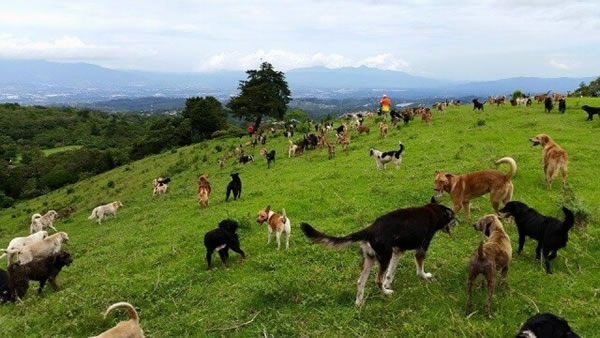
A non profit organization, founded by Lya Battle and Alvaro Saumet. During the last eight years we’ve been promoting well-being and respect for animals.
HOW WE DO IT?
Veterinarian: We take care of our mutts with deworming, sterilization and any other care they need. The cost of maintaining a dog healthy is $5 per month.
Shelter: Territorio is home for hundreds of doggies. We give them here a safe place to live, free of maltreatment, and full of love. The cost of providing a home is $11 per month for each of our unique specimens.
Food: Each mont we consume thousands of kilos of dog food, to keep our pack healthy. Giving a full small plate to each mutt cost us $20 per month.
There is much, much more on their website that I encourage you to go to. Here are some photographs of the dogs that they rescue.
oooo
oooo
oooo
oooo
oooo
oooo
There are a number of videos on YouTube to watch.
Here’s a short one.
And here’s a slightly longer one by National Geographic.
Finally, if you feel so minded here is the donate page. It’s a good cause and, for example, for just $36 you can sponsor one dog. That’s what Jeannie and I did.















 Learning from Dogs