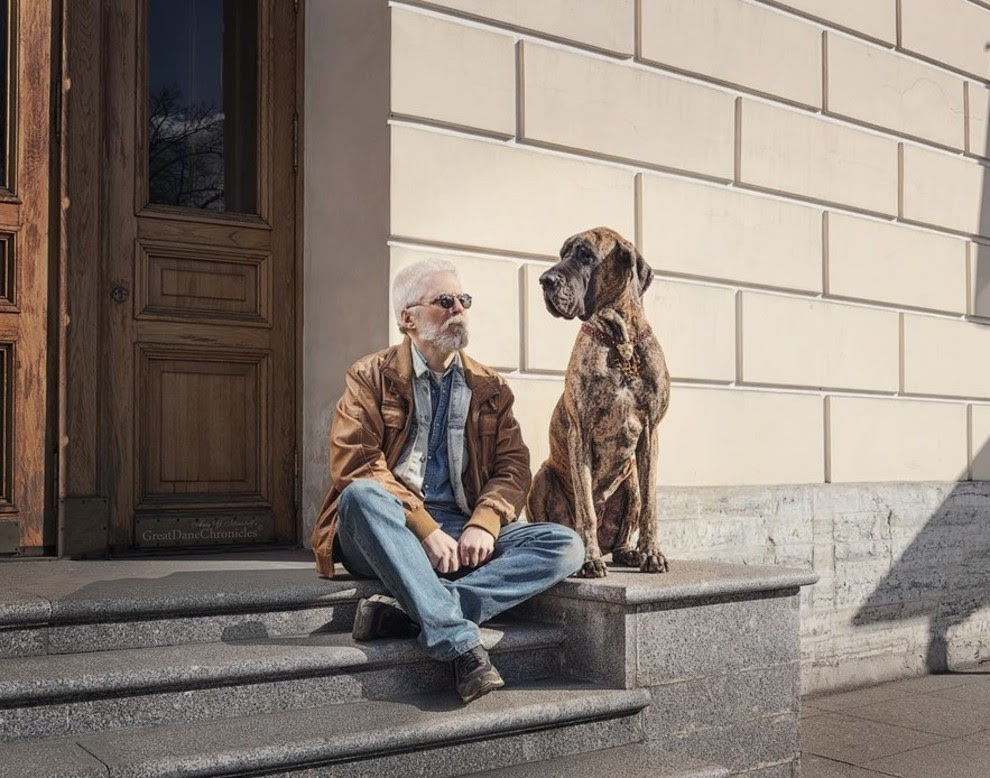
First some background to the pictures that are presented both today and in a week’s time.
Little Kids and Big Dogs
Andy Seliverstoff is a 58-year-old professional photographer from St. Petersburg, Russia. A few years ago some of Seliverstoff’s friends asked him to take photos of their daughter Alice in a park. They had their gigantic Great Dane, Sean, with them, so they decided to incorporate him into the photos. After seeing the results, he knew he was on to something special.
Seliverstoff did another shoot with a child featuring big dogs, and told BuzzFeed News that he was “deeply touched” by the work. That was four years ago and he’s been a dog photographer ever since.
The project has become his passion, which he chronicles in a book called “Little Kids and Their Big Dogs.“
All of the photos are taken in St. Petersburg. Its extensive parks and colder climate help create some spectacular shots.
Seliverstoff said the goal of the series wasn’t just to create beautiful pictures, but to capture the interaction between the children and the animals.
It’s not just the rescuing of people that matters.
Last Thursday, the 26th January, the BBC News website published a short video under the heading of: Italian avalanche survivors tell how they stayed alive.
A couple among the nine survivors of an Italian avalanche that devastated a mountain hotel say they survived nearly 58 hours buried beneath feet of snow by sucking on glass- and mud-filled ice, comforting each other and those nearby, and praying.
Now there’s no way I am belittling that survival; far from it. But 58 hours is a tad under 3 days.
After an avalanche buried central Italy’s luxury Hotel Rigopiano and its guests Wednesday, Jan. 18, rescue workers spent days digging in the snow in a desperate attempt to locate any survivors.
About 120,000 tons of snow, 16 feet deep, slammed into the hotel at 60 miles per hour. It took a while for emergency operators to believe the avalanche had occurred. The first man who called to report it was told that everything was fine at the hotel.
When they finally realized a disaster had in fact happened, first responders had to ski to the hotel, which took 12 hours. It took another day until the roads could be cleared with snowplows so emergency vehicles could finally get through.
Despite these circumstances, 11 survivors, including three children, were somehow able to keep themselves alive for over 40 hours by using their cellphones as flashlights to find water. The children, trapped in a game room, ate packets of Nutella and drank bottled water.
By Monday, rescuers were only pulling bodies from the snow and rubble. Discouraged and depressed, they were ready to give up hope.
The rescuers were told there were three puppies at the hotel. They had no idea where they were until they heard a noise in a boiler room inside what remained of the building. It was the three fluffy, white Abruzzo sheepdog puppies, only six weeks old, who had miraculously managed to survive both the avalanche and being stranded for five days.
“They just started barking very softly,” said Sonia Marini, one of the rescuers. “In fact, it was hard to find them right away because they were hidden. Then we heard this very tiny bark and we saw them from a little hole the firefighters had opened in the wall. We expanded the hole and we pulled them out.”
The puppies, born Dec. 4, had survived in an air pocket by eating snow, Walter Milan, the spokesman for Italy’s elite Alpine rescue squad, told the Daily Beast. They are the offspring of Nuvola (Cloud) and Lupo (Wolf), who lived at the hotel and were popular with guests.
Like their lucky litter, Nuvola and Lupo also survived the avalanche, according to a Facebook post by Martina Rossi, who was a bartender at the hotel.
Lupo e Nuvola, i pastori abruzzesi nati e cresciuti all’Hotel Rigopiano, non so come, sono riusciti a raggiungere la mia contrada, una frazione di Farindola (Villa Cupoli) sani e salvi. Questo non può di certo colmare il vuoto e la distruzione che attraversa un paese in ginocchio ancora speranzoso, nell’attesa soltanto di notizie positive, me in prima persona. Ma questi due bellissimi cagnoloni, rivedendoli, di certo sono riusciti a farmi tornare a battere il cuore, almeno per qualche secondo, riportando la speranza.
The three puppies raised the hopes and spirits of the rescuers. “If the puppies survived, humans could as well,” Milan told the Daily Beast. Firefighter Fabio Jerman agreed. “It’s an important sign of life, which gives us hope,” he said.
Sadly, no one else has been found alive. A week after the disaster, 24 bodies have been found and five people are still missing.
In addition to unusually heavy snowfall, the avalanche may have been caused by a series of earthquakes that struck the area the day before.
Last year, devastating quakes killed more than 300 people in Italy. Another fortunate four-legged survivor, a border collie pulled from the rubble two days after an earthquake struck in late October, is being trained to pay it forward as a rescue dog.
Together with helper Michael plus Jean supplying hot drinks and lunch I was outside from 08:00 until 15:00 (3pm PST in old money!).
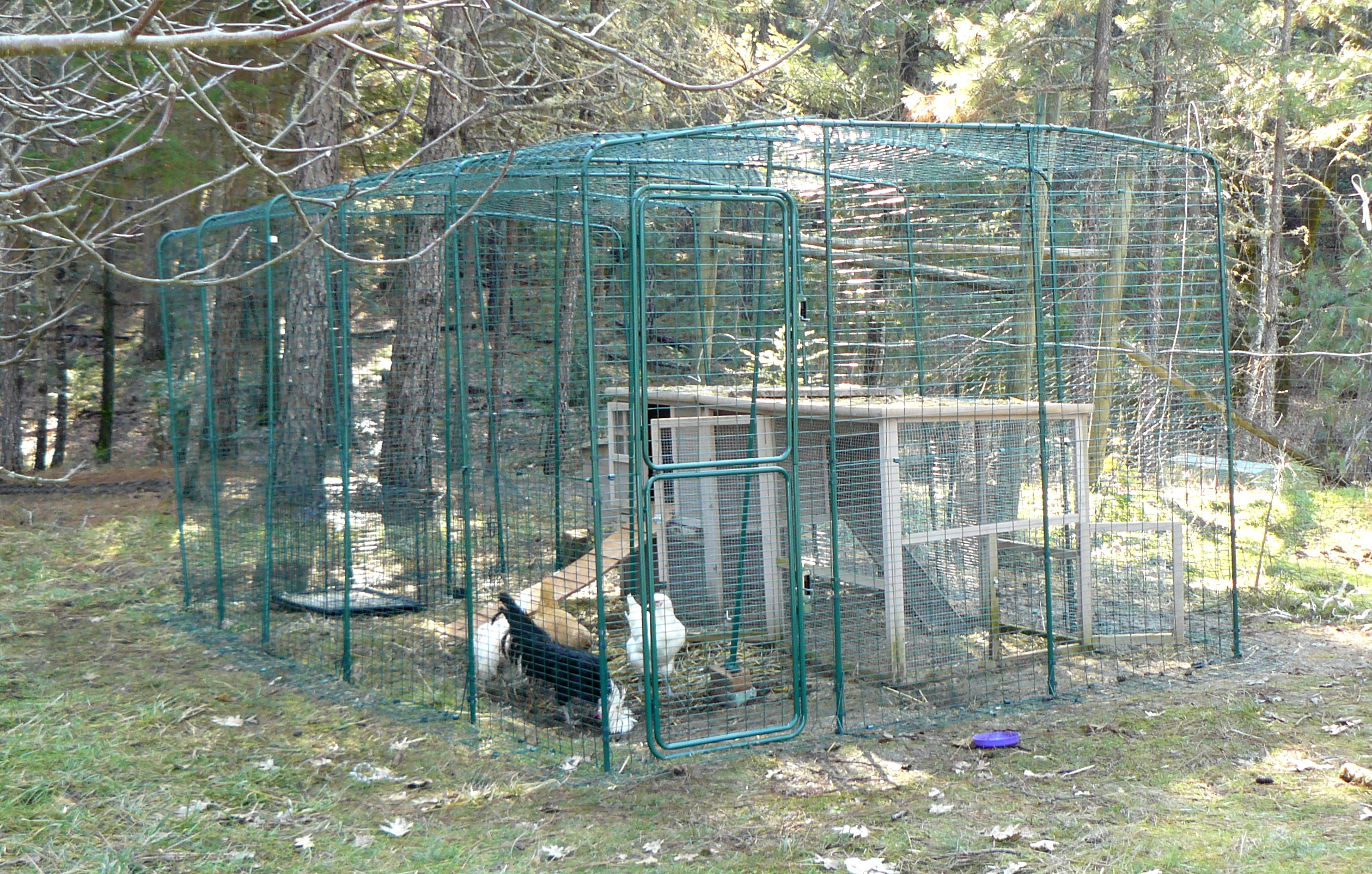
We were assembling a new chicken run.
The unit comes from the UK and is known as the Omelet range of pet houses. There is a USA website here and the particular run that Jean and I chose is from here. We particularly wanted a walk-in run.
It was all very straightforward but I am bound to tell you, dear folks, I am knackered!
I have a marvellous blogging friend in New Mexico who has Rufina, a chicken who was shot in the head, sealed in a plastic bag, placed in a freezer for 24hrs, and lived! (albeit now blind).
I have a framed poster of Rufina up in my living room, and even one her feathers perched in one of my many, many, many St. Francis’s
Then in response to me wanting to republish that story replied: “Contact her, she’s wonderful, and her pottery is to die for.”
So I did and, with Laura’s permission here is that story of this most remarkable chicken.
ooOOoo
The Undead Chicken
by Laura Bruzzese, June 24th, 2013
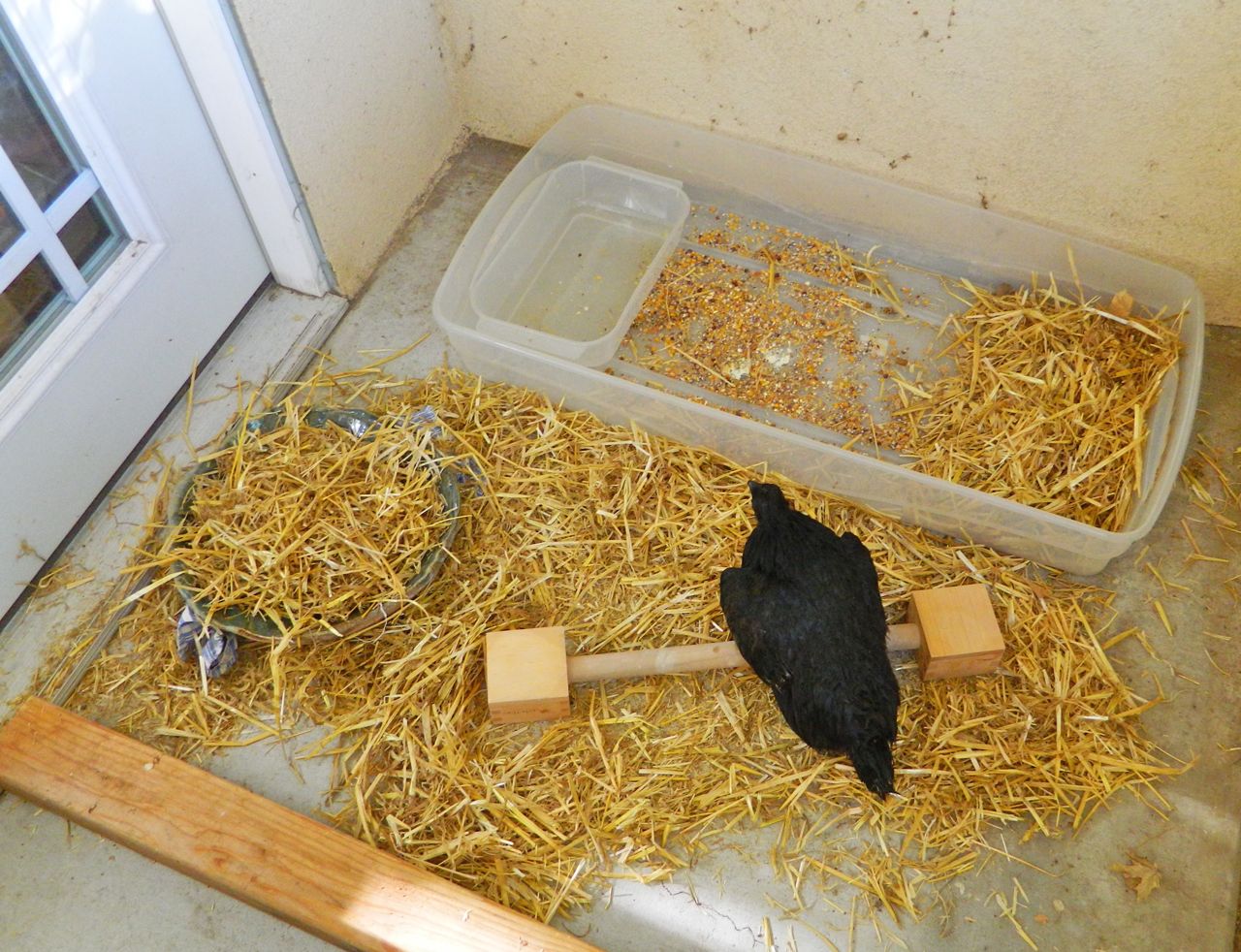
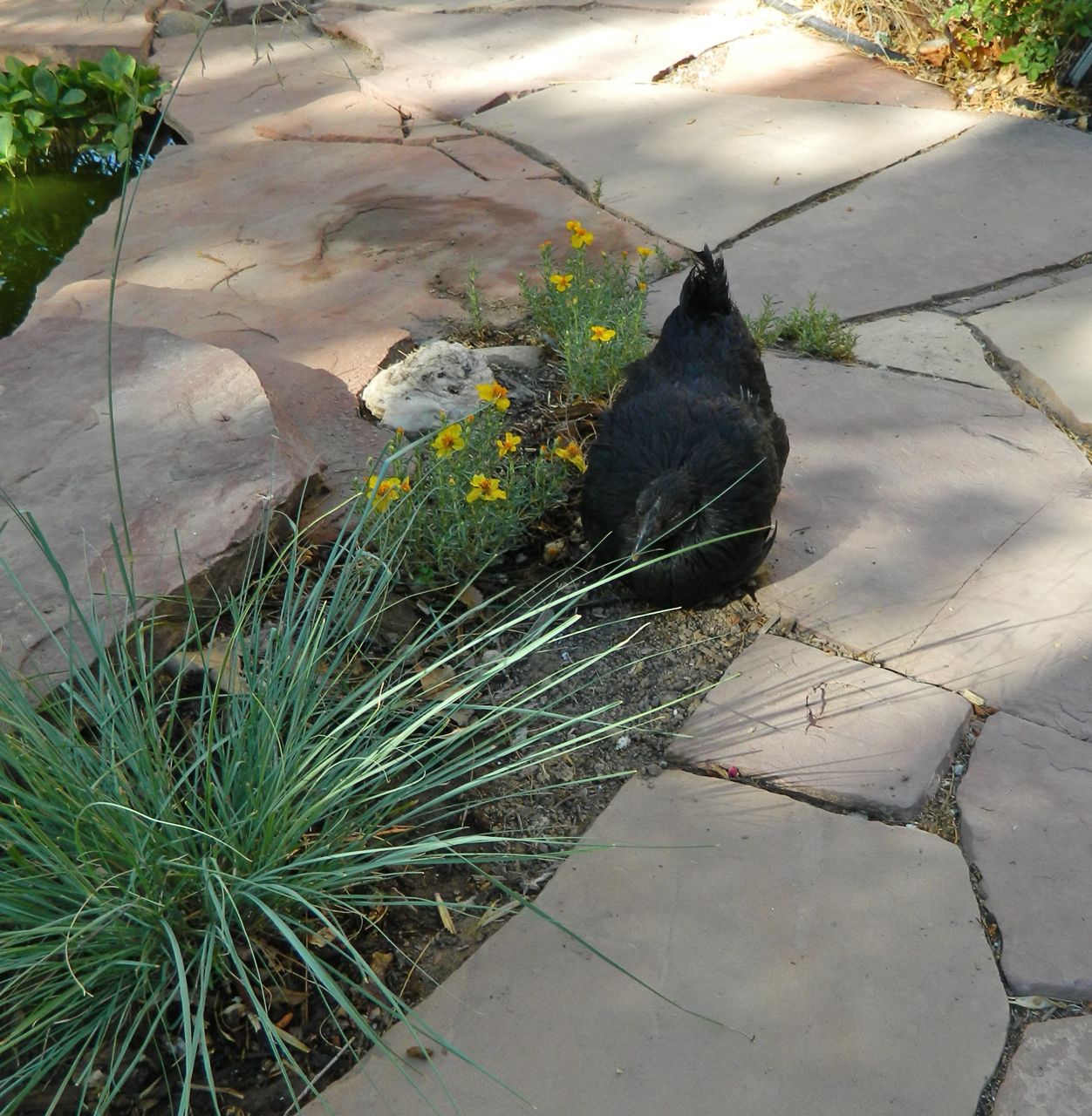
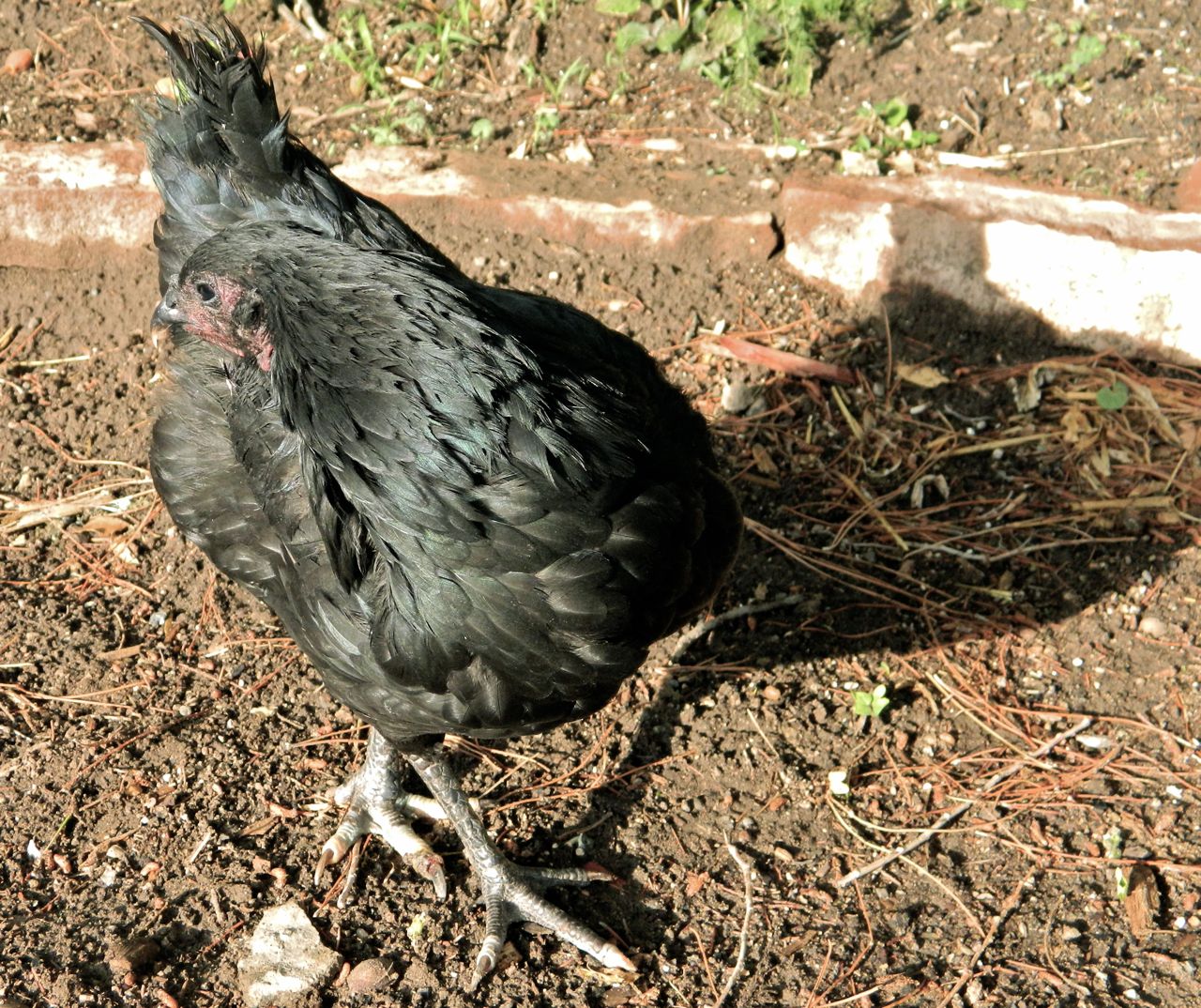
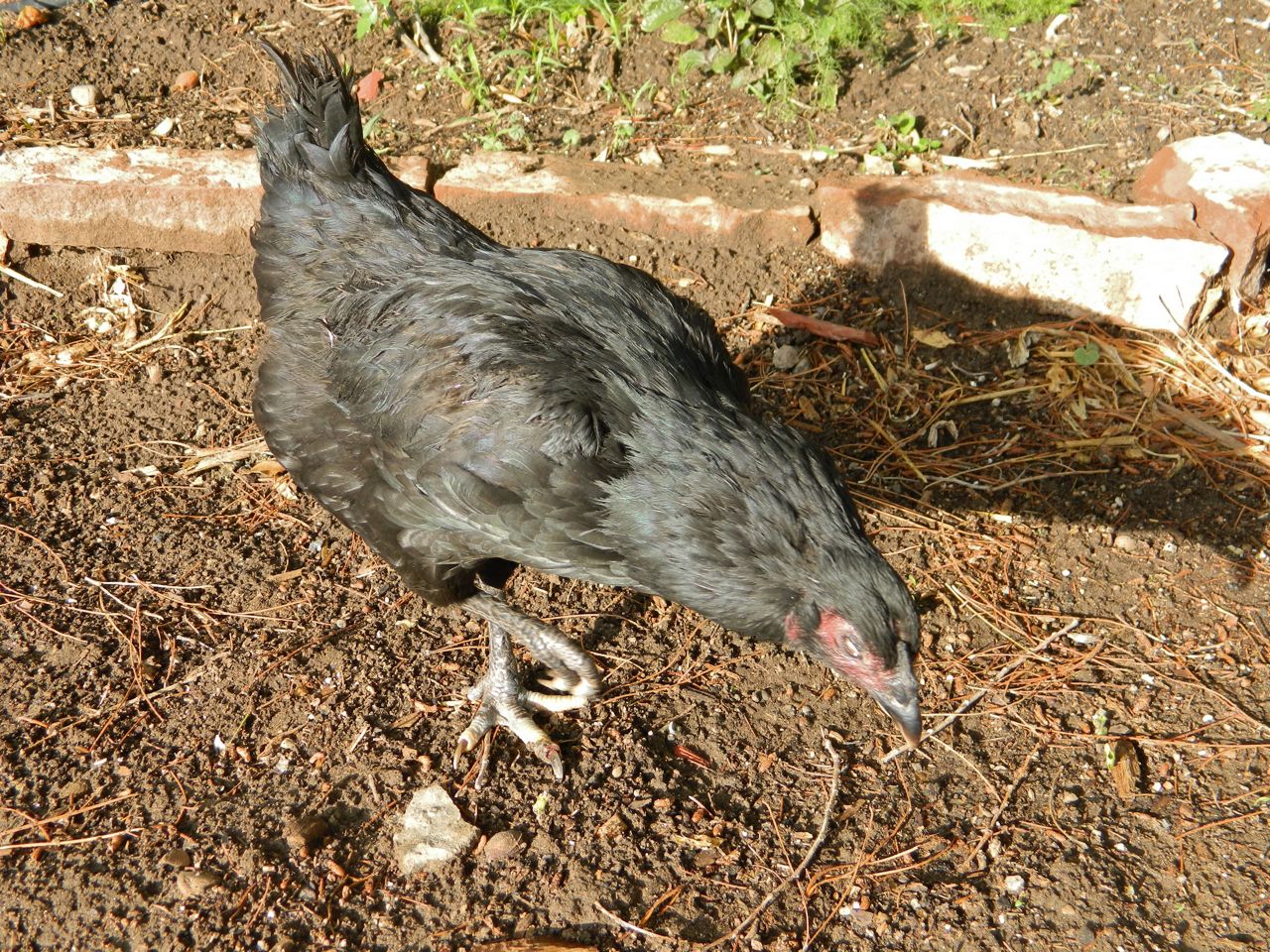
This is Rufina. She’s new to our household.
She’s quiet and doesn’t take up much space, mostly sits on her perch or in her ceramic nest all day. She moves around slowly. If you are really gentle, she lets you pick her up.
We sit by the pond together in the morning, before everyone else gets up.
Last Thursday, I answered a friend’s call on Facebook for someone to take this chicken. Isabella and I drove to my friend’s house in the South Valley, put her in a bin, and brought her home. I didn’t think she’d actually still be alive today.
My friend had posted this story Thursday morning:
The neighbor gave us fresh chickens last night for cooking up. He shot them in the head with gun and handed them over the fence. We bagged them and put in freezer for today. Evan gets home, opens freezer and one bird is perched fully alive, very cold, and pissed off.
Chase ensues… !! We now have a blind undead chicken in our yard.
Anybody want it?
I’m not sure why anyone would shoot chickens in the head.
But when I read the story, I couldn’t help but admire this chicken’s tenacity. She is courageous. She made her way out of a plastic bag inside a freezer and survived for thirty-six hours. After being shot in the head. I figured any animal that fought that hard to live deserved a little help, if only for a day or two.
The chicken hasn’t made any effort to eat like a normal chicken. Because, of course, she can’t see where to peck. (There isn’t much point in force-feeding a blind chicken.) But she does drink, so I’ve started blending up borrowed chicken food and water and giving her that. She seems content, grooming herself sometimes, showing no signs of pain or anxiety. And still, she will die.
But until then, we will enjoy each of her borrowed mornings by the pond, the sound of birds and running water, the sun on her feathers, expecting nothing.
I’m not sure why I have a blind, undead chicken in my studio. But here is one of my favorite poems, by Laura Gilpin.
The Two-Headed Calf
Tomorrow when the farm boys find this
freak of nature, they will wrap his body
in newspaper and carry him to the museum.
But tonight he is alive and in the north
field with his mother. It is a perfect
summer evening: the moon rising over
the orchard, the wind in the grass. And
as he stares into the sky, there are
twice as many stars as usual.
Now if you think that was remarkable then let me share what Laura posted a few weeks later, linked to via her Epilogue above.
ooOOoo
The Miracle of Re-Birth
by Laura Bruzzese, July 11th, 2013
Good news: it’s been three weeks since the attempted murder of Rufina, and she continues to dwell among the living!
After loads of eye care, foot washing, antibiotics, food and vitamins, she has gained weight and is learning to find food and water by herself. Her remaining eye looks normal again but is still blind (I was hoping for a miracle), and the place of its former pair seems to have reached its majority in terms of healing–no eye, but no skin, either. Just a weird, green spot surrounded by red skin that looks not unlike a tiny sun-dried tomato.
But that does not prevent her daily forays into the garden where she walks around with her head craned forward to “feel” where she’s going, and from exhibiting other persisting chicken qualities that seem to evidence a contented life.
I’m still surprised, and slightly in awe of this traumatized chicken who is satisfied to reside indefinitely on my studio porch. Shiny, happy chicken.
And so far, Velma the Rascally Whippet has not been the nuisance I was afraid she might be, but instead, a proud example of a bird-dog in defiance of her own natural instincts (save for one minor incident involving a tail feather. That was still attached to Rufina.). Perhaps Velma knows they are kindred spirits, she herself having survived a scary encounter with the Great Beyond earlier this year.
Thanks to everyone who has contributed free chicken advice, food, ER and vet consults, and even a couple of adorable, surprise chicks* (!) to keep Rufina company.
*Chicks will unfortunately be dispatched to some other venue because they are exploiting their sighted advantage: stealing food out of Rufina’s mouth, crowding the water dish, and mocking her by constantly blinking and sticking their tongues out. Also, they are filthy little creatures that walk in their own poop and then jump on me.
And finally, what’s in a name? When it became clear that chicken might live, I thought I should name her, and Rufina was the first thing that popped into my head. A few days later, I googled it to see what came up. This is what I found on Wiki:
Saints Justa and Rufina (Ruffina) (Spanish: Santa Justa y Santa Rufina) are venerated as martyrs. They are said to have been martyred at Hispalis (Seville) during the 3rd century.
Their legend states that they were sisters and natives of Seville who made fine earthenware pottery for a living, with which they supported themselves and many of the city’s poor. Justa was born in 268 AD, Rufina in 270 AD, of a poor but pious Christian family. During a pagan festival, they refused to sell their wares for use in these celebrations. In anger, locals broke all of their dishes and pots. Justina and Rufina retaliated by smashing an image of Venus.
The city’s prefect, Diogenianus, ordered them to be imprisoned. Failing to convince them to renounce their faith, he had them tortured on the rack and with iron hooks. This method also having failed, they were imprisoned, where they suffered from hunger and thirst.
They were then asked to walk barefoot to the Sierra Morena; when this did not break their resolve, they were imprisoned without water or food. Justa died first. Her body, thrown into a well, was later recovered by the bishop Sabinus. Diogenianus believed that the death of Justa would break the resolve of Rufina. However, Rufina refused to renounce her faith and was thus thrown to the lions. The lion in the amphitheatre, however, refused to attack Rufina, remaining as docile as a house cat. Infuriated, Diogenianus had Rufina strangled or beheaded and her body burned. Her body was also recovered by Sabinus and buried alongside her sister in 287 AD.
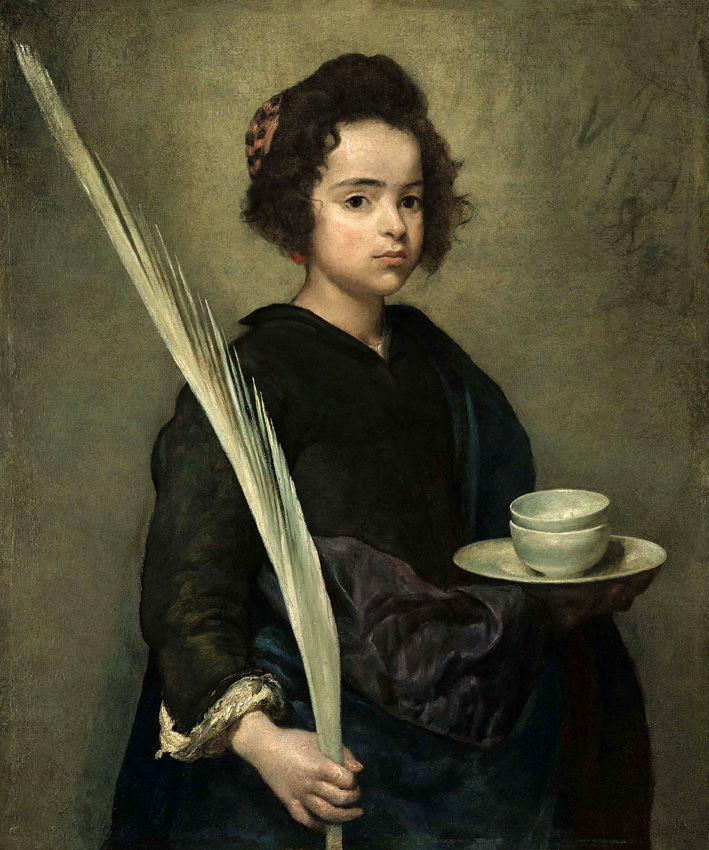
Saint Rufina, by Velázquez. See the likeness?? She’s even carrying a giant feather!
Just another name? Perhaps. Or: a dark-haired Spaniard and a Italian-New Mexican, two Christian potters separated by centuries, a saint, a chicken, and an ordinary human united in an extraordinary coincidence of the undead.
ooOOoo
Follow that!
Well I can’t but John Zande can.
For he was the first to leave a comment to Laura’s Rebirth post:
Here, i feel this song is in order. Listen carefully to the words, and who is singing them.
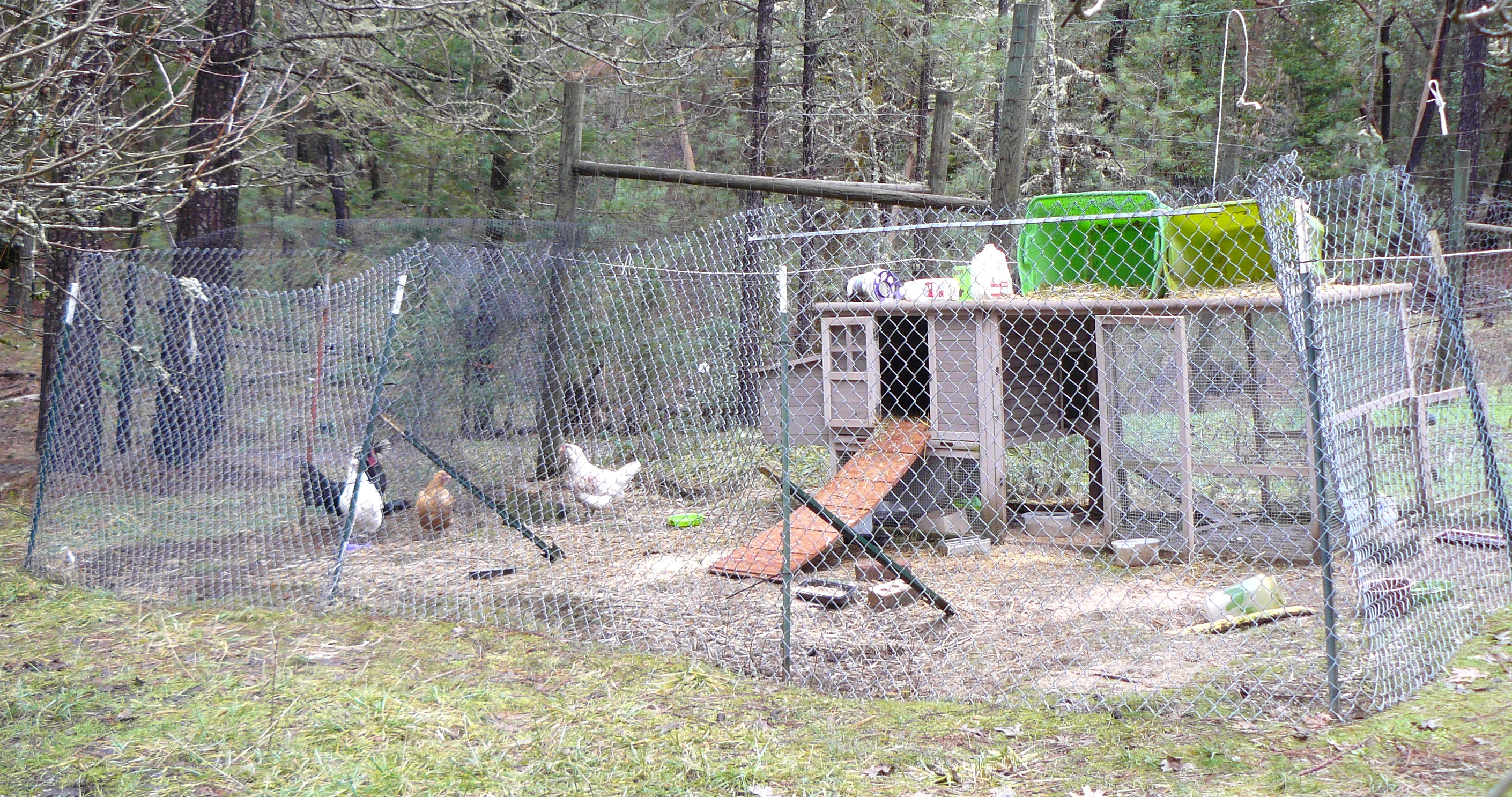
We have a rather run-down ‘home’ for our chickens close to the house. It was run-down before the snow fell and almost brought down the surrounding wire fence.
But, hopefully, this coming Thursday sees a new walk-in run being constructed for our birds so they are better protected.
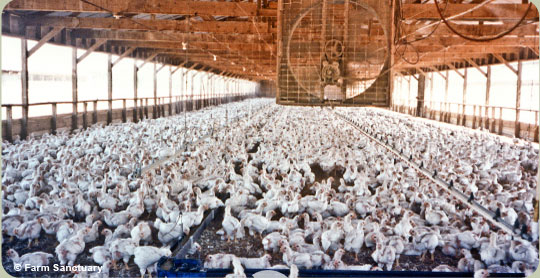
It’s time we started paying attention to chickens, one of the most misunderstood and ignored species on Earth.
There was a time when chickens were viewed as exotic, fascinating birds. Descendants of exotic Asian jungle fowl, they were revered for their ferocity and intelligence, and domesticated around 8,000 years ago, more for cockfighting than eating. But then, we humans began eating them in ever-larger quantities, until we reached the point where we are now, with 20 billion (mostly white) chickens living in dirty, crowded barns, awaiting slaughter.
Chickens have been a part of human lives for millennia, and yet they are one of the most misunderstood, if not ignored, species on Earth. Lori Marino, an American neuroscientist and animal intelligence researcher, wants to change this. She is intrigued by the fact that chickens are so rarely recognized for their cognitive abilities and frustrated that studies about birds almost always focus on other, less-domesticated species, like crows and parrots.
“Arguably even the scientific community has been influenced by public perceptions of chickens as cognitively simple… This asymmetry in the literature is likely a reflection of, as well as a contributor to, the disconnect scientists and the public have between chickens as commodities and who they actually are as individuals.”
Chickens deserve more attention, and here are some quirky, interesting facts to get you thinking about chickens less as food and more as fascinating co-inhabitants of our world. These come via Marino’s recent paper, “Thinking Chickens,” published online in Animal Cognition in January 2017.
1. Chickens are a sub-species of the red jungle fowl that hails from southeast Asia.
The red jungle fowl (galls gallus) inhabit the edges of fields, scrubland, and groves. Domestication was well established 8,000 years ago, but some records suggest it could have started as much as 58,000 years ago.
2. Domestic chickens are similar to their wild counterparts.
Despite the intense breeding and genetic manipulation of recent years, chickens have not been cognitively or behaviorally affected by domestication. This stands in contrast to dogs and wolves, for example, which have diverged significantly due to domestication. Nor have chickens become less aggressive toward predators through domestication, which is a common outcome; in fact, some chickens are more aggressive even than red jungle fowl.
3. A chicken’s beak is highly sensitive to touch.
The beak, with numerous nerve endings, is used to explore, detect, drink, preen, and defend. This also means that when a bird is de-beaked, as often happens in industrial farming, it experiences great pain, sometimes for months, which changes its behavior. Marino writes, “At the end of the beak is a specialized cluster of highly sensitive mechanoreceptors, called the bill tip organ, which allows chickens to make fine tactile discriminations.”
4. Chickens have finely tuned senses.
They can see long distance and close-up at the same time in different parts of their vision. They can see a broader range of colors than humans. They can hear at low and high frequencies at a variety of pressure levels. They possess well-developed senses of taste and smell. They can orient to magnetic fields, like many other birds.
5. Chickens are surprisingly good at math.
Three-day-old chicks are able to perform basic arithmetic and discriminate quantities, always opting to explore a set of balls with the greater number, even when an object was visibly transferred from one set to another. Five-day-old chicks have been found to track up to five objects.
“When they were presented with two sets of objects of different quantities disappearing behind two screens, they were able to successfully track which screen hid the larger number by apparently performing simple addition and subtraction.”
6. Chickens can exercise self-control.
In an experimental setting, chickens have been given the choice between 2-second delay with 6 seconds of access to food, versus a 6-second delay with 22-seconds of access to food. The hens waited for the longer reward, “demonstrating rational discrimination between different future outcomes while employing self-control to optimize those outcomes.” Self-control usually doesn’t appear in humans until four years of age.
These are just a few of the remarkable discoveries described in Marino’s study, a highly readable, entertaining paper. It’s an important reminder that chickens, arguably the most ubiquitous animals in our world, deserve far more respect than they currently receive. Hopefully this will lead to more people questioning the horrific conditions in which most of them are kept.
It’s easy to fall into the trap of looking for a humourous way to close today’s post. But a more responsible approach would be to repeat the words from the start of the article to serve as a reminder of trying, wherever possible, to think about the food we eat, especially when animals and birds have to be slaughtered to provide us with that food.
…. we reached the point where we are now, with 20 billion (mostly white) chickens living in dirty, crowded barns, awaiting slaughter.
But please don’t leave this page until you have watched the following video.
Published on Dec 3, 2014
After 22 years of raising chickens for Perdue, one brave factory farmer Craig Watts was at his breaking point and did something no one has done before. He invited us, as farm animal welfare advocates, to his farm to film and tell his story. Ask your supermarket for Better Chicken at http://better-chicken.org.
Delighted to introduce Kevin Davies and his guest post.
Regular followers of this place will know that whenever I can I do offer space for a guest blogger. I regret that so many of the persons that ask if I accept guest posts are trying to flog something to you all!
But not Kevin. Here’s a little about him, as supplied by Kevin.
Life can be quite boring without any pets in your life. They can make your day filled with joy, make you smile when you are sad.
My name is Kevin Davies and I am pet lover. The reason why I started this website (https://petloverguy.com) is that I want to share my experience which I have. I can’t imagine my life without pets.
I have always had them since I was little. The first one me and my family had was a cat. Her name was Jenny. She was a Siamese cat with ocean blue eyes, her head was brown with a little bit of white specks, and the rest of her body was white. She was always nice to me, sat in my lap every day and when I petted her she always purred. I lost Jenny when I was 8 and it made me so sad. Actually it still makes me sad and I have never forgotten about her.
ooOOoo
Should I Shave My Dog for the Summer?
by Kevin Davies
It’s a question I hear all the time from pet parents, especially those with relatively long-haired, thick-coated dogs. Should I shave my dog for the summer? Will it make him more comfortable?
Obviously, if your dog is a Poodle, a Shih Tzu, a Lhasa Apso, or another of the “non-shedding” breeds, it’s perfectly fine to shave your dog. But what about the other breeds that aren’t typically shaved for grooming purposes? Can shaving them during the summer months make them more comfortable or will it create problems for them? We’re talking primarily here about long-haired dogs. Chows are a good example though certainly not the only breed in question. The answer is not clear cut and, likely if you ask six different people, you’ll get six different opinions.
There are two lines of thought in this situation. The first line of thought is that the haircoat acts to trap the cooler hair next to the skin and keep the dog cooler. In other words, it works as insulation. The other line of thought is that the fur simply acts like a coat would for a human, making the dog warmer than is necessary.
Frankly, science doesn’t have all the answers to these questions. What we do know is that dogs loose excess heat primarily through panting rather than through the skin. So your dog won’t “sweat” off excess heat like people do, even if shaved. Of course, that doesn’t mean that shaving your dog might not still provide some welcome relief from the heat.
Obviously, there are differences between breeds when it comes to heat tolerance. Likely, there are differences between individual dogs as well. It’s been postulated that black absorbs heat whereas white reflects it. Therefore, dark colored dogs may be less tolerant to heat than lighter colored dogs. I’m not sure whether there’s any truth to that. There are no scientific studies that I know of to prove or disprove the theory. But, from a logical standpoint, it makes sense (to me, anyway).
What does all this mean to you, the dog owner? Should you shave your dog for summer?
I can’t give you a definitive “yes” or “no” answer. What makes sense to me is finding out what works best for your dog. Try shaving your dog and see if he seems more comfortable that way. The hair will grow back quickly for most dogs (more on that in a moment) and, if shaving doesn’t make your dog more comfortable, you don’t have to do it again.
How close should you shave your dog?
I worry about excess exposure to the sun, which may cause sunburn or even contribute to melanomas and other skin diseases. Therefore, I would leave enough fur to provide some protection rather than shaving your dog all the way down to the skin. How close should you trim? Leave perhaps 1/2 inch to an inch of hair length.
There’s one other thing that you should be aware of before you shave your dog though. In most cases, the hair will grow back perfectly normally after shaving. But, in a small number of cases, it may not. This may be remedied in some dogs with the administration of thyroid hormones and/or melatonin. However, not all dogs will respond favorably to these drugs either.
One last precaution: Even if your dog is shaved, you will still need to tailor your dog’s exercise to your individual dog’s situation. Hard exercise (i.e. marathon running, etc.) in hot temperatures is not appropriate for all dogs. Consider your dog’s physical condition and conformation and don’t overdo in the warm weather.
ooOOoo
Don’t know about you but we found that interesting.
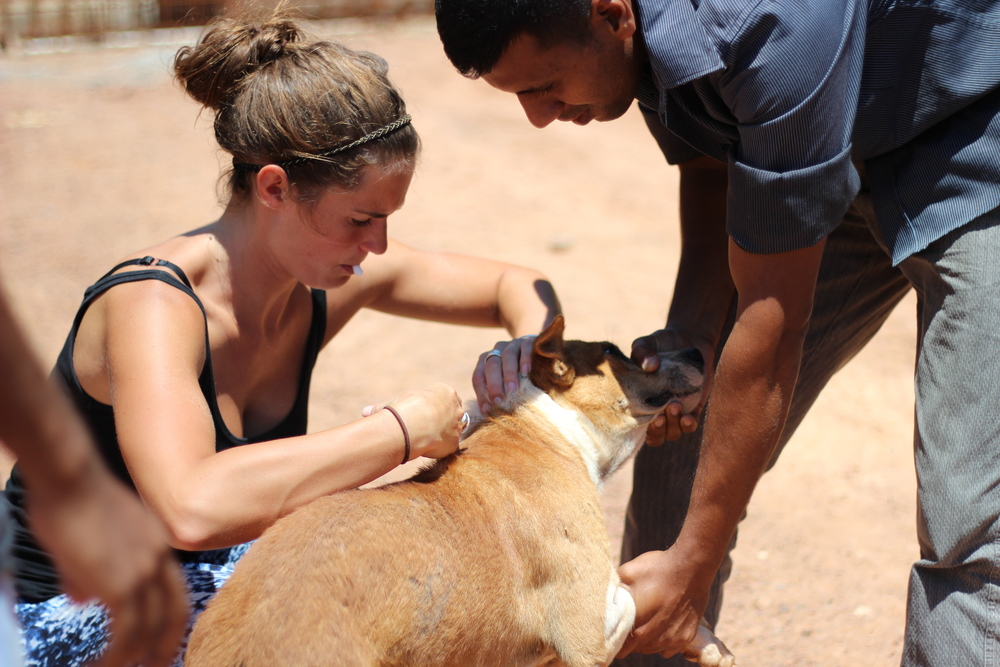
A vet has left behind her home in England to care for Sri Lanka’s street dogs.
Janey Lowes from Barnard Castle, County Durham, has spent the past two years caring for the neglected animals.
There are about three million street dogs on the island – about 60% of puppies born on the street do not survive to adulthood.
The 28-year-old set up charity WECare Worldwide to raise money to buy the equipment needed to treat the animals and to set up her own clinic in Talalla.
I am pleased that the video clip that was included in the BBC News story has found its way to YouTube.
Inevitably the charity WECare Worldwide has its own website: the home page is here. Then you can read on the charity’s ‘About’ page: (Note: CNVR is the acronym standing for catch-neuter-vaccinate-release.)
CNVR
CNVR is carried out as it is the most humane way to reduce roaming dog populations and reduce the number of unwanted puppies that are dumped on the streets at a very young age. It also allows the females that would inevitably spend their whole lives pregnant to only have to worry about number one when thinking about limited food resources and shelter options, which transforms their lives.
Vaccinating the dog population against Rabies is the most effective way to eliminate the disease in the human population. As an island nation, eradication of Rabies in the near future is a very real possibility and will change the future of both animals and humans here, allowing improved relationships between the two.
CNVR is the backbone of everything we are trying to achieve in Sri Lanka.
But that’s only one part of what they do. Again, as the website sets out:
We focus on 3 main areas here in Sri Lanka.
CNVR (catch-neuter-vaccinate-release)
Treatment of sick and injured animals
Education and training
I shall be making contact with the charity very soon .
Not only to pass on our respect and admiration for what she has accomplished but to see if there are other ways we can help them in what they are doing. I use the word ‘we’ to cover not only Jean and me but also all of you who are close to this blog and who, so frequently, show how much love you have for dogs!
WECare Worldwide will help by providing free veterinary treatment, alongside love, compassion and respectful care of the Ceylon dogs, who make up such a huge part of Sri Lankan heritage and culture, both in the past and the current day.
 oooo
oooo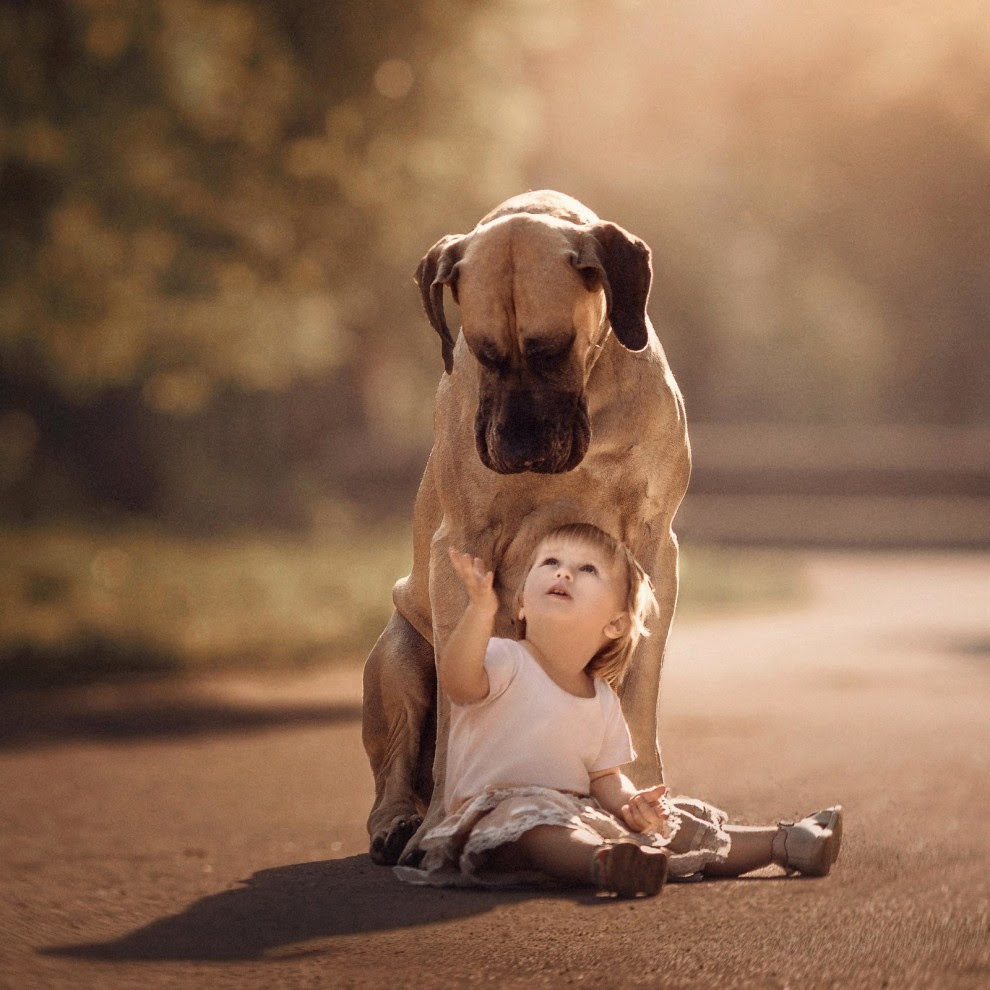 oooo
oooo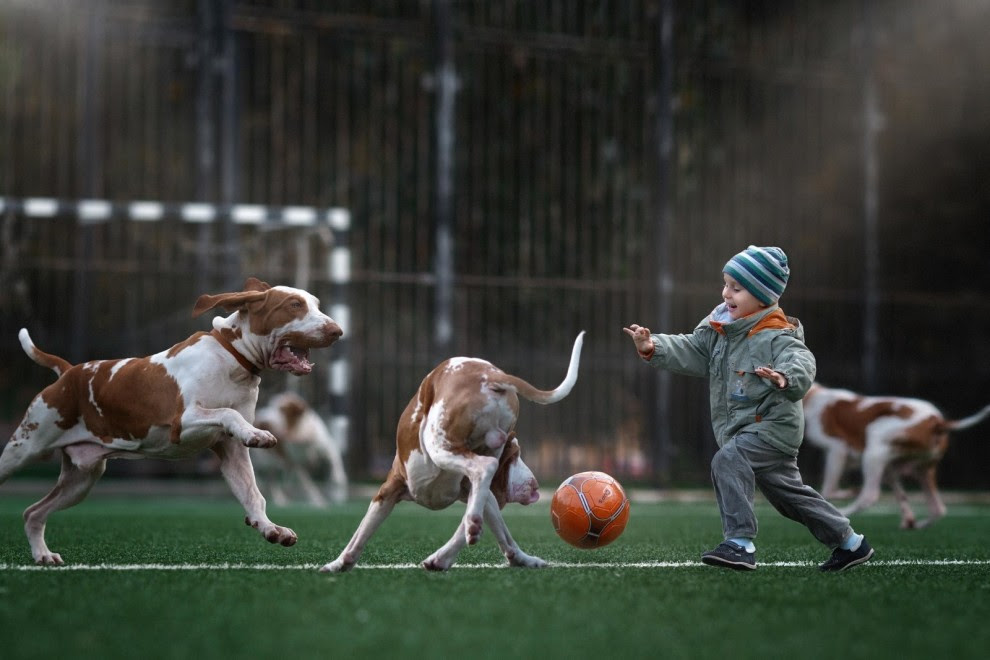 oooo
oooo oooo
oooo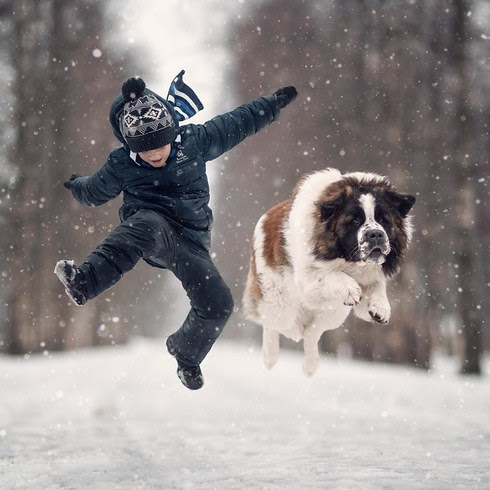 oooo
oooo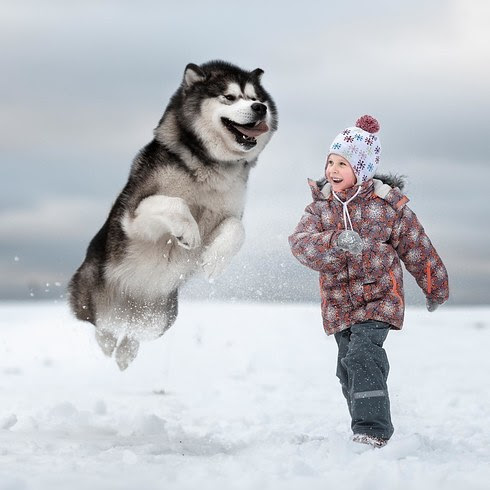 oooo
oooo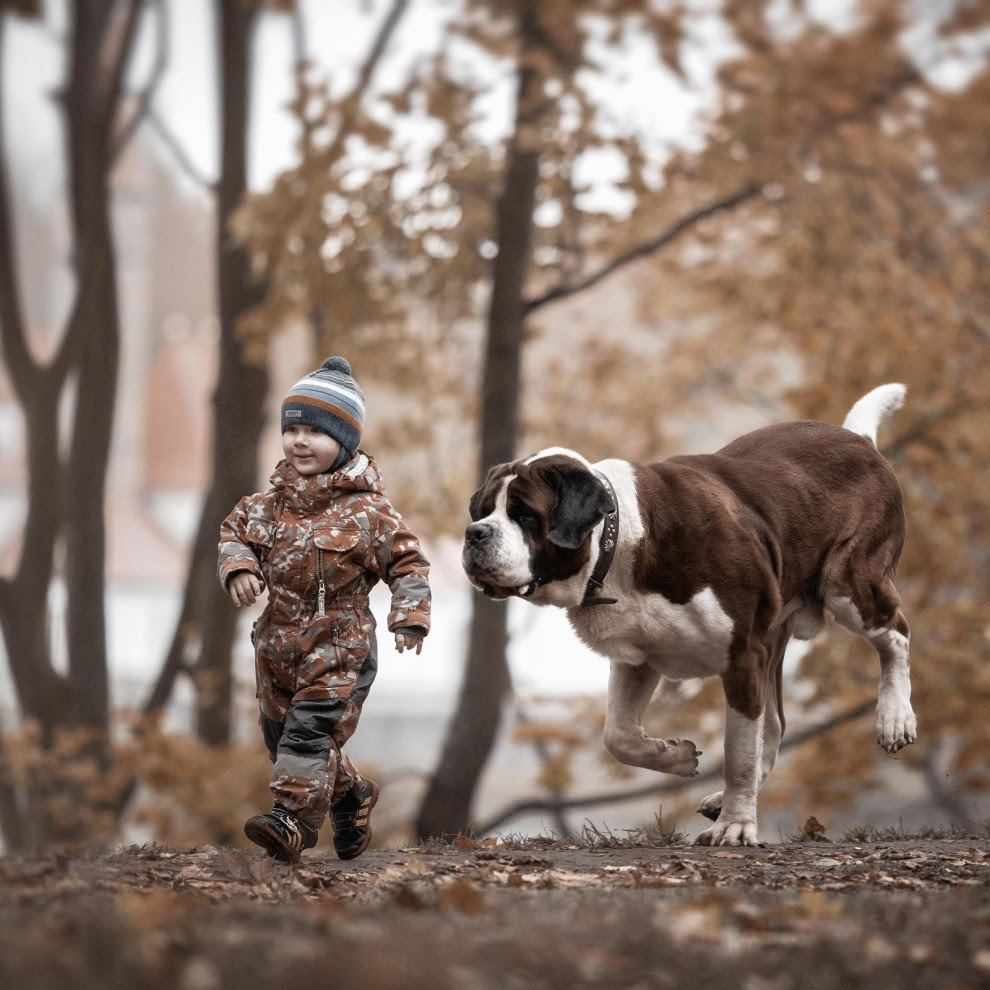 oooo
oooo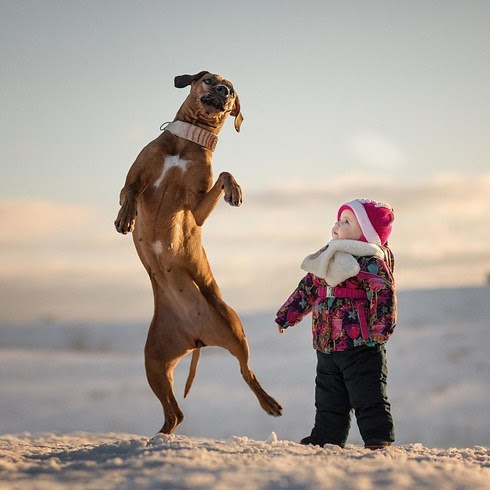 oooo
oooo





 Learning from Dogs