Year: 2015

And another dog food recall.

This one came in on the 12th December.

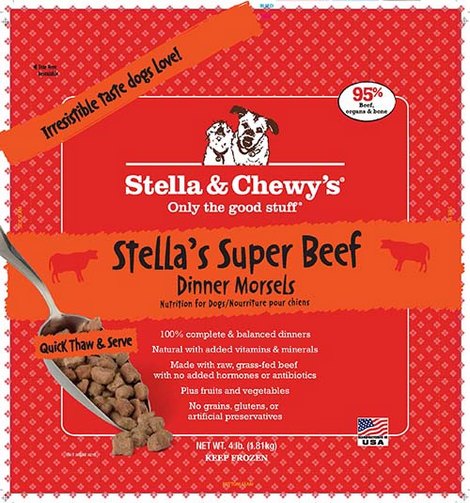
Stella and Chewy’s of Oak Creek, Wisconsisn, has announced it is voluntarily recalling select lots of its raw dog and cat food due to the possible presence of Listeria monoyctogenes bacteria.

To learn which products are affected, please visit the following link:
Stella and Chewy’s Dog and Cat Food Recall of December 2015

Please be sure to share the news of this alert with other pet owners.

Mike Sagman, Editor
The Dog Food Advisor

That link offers, in part:

December 11, 2015 — Stella and Chewy’s of Oak Creek, Wisconsin, has announced it is voluntarily recalling four of its products sold in the U.S. and Canada due to possible contamination with Listeria monocytogenes bacteria.
The recall affects a total of 990 cases — 964 cases in the U.S. and 26 cases in Canada.
What’s Recalled?
As a precautionary measure, Stella and Chewy’s is voluntarily recalling selected products from Lot # 165-15, which includes:

Please go here to read all the details if this is a concern for you.

The following is just one of the product images – view all of them here.

stella-chewys-1

Picture parade one hundred and twenty-seven.

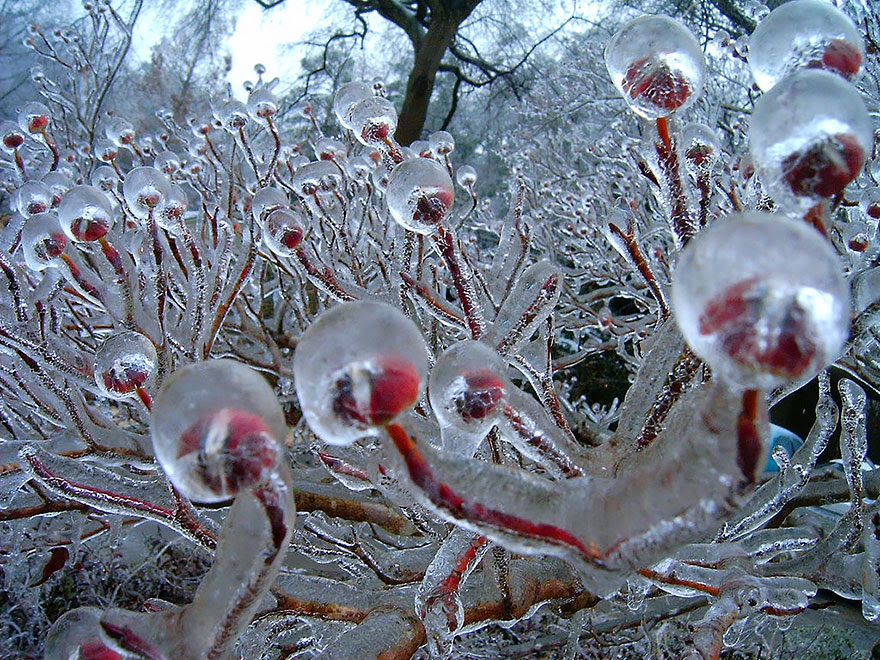
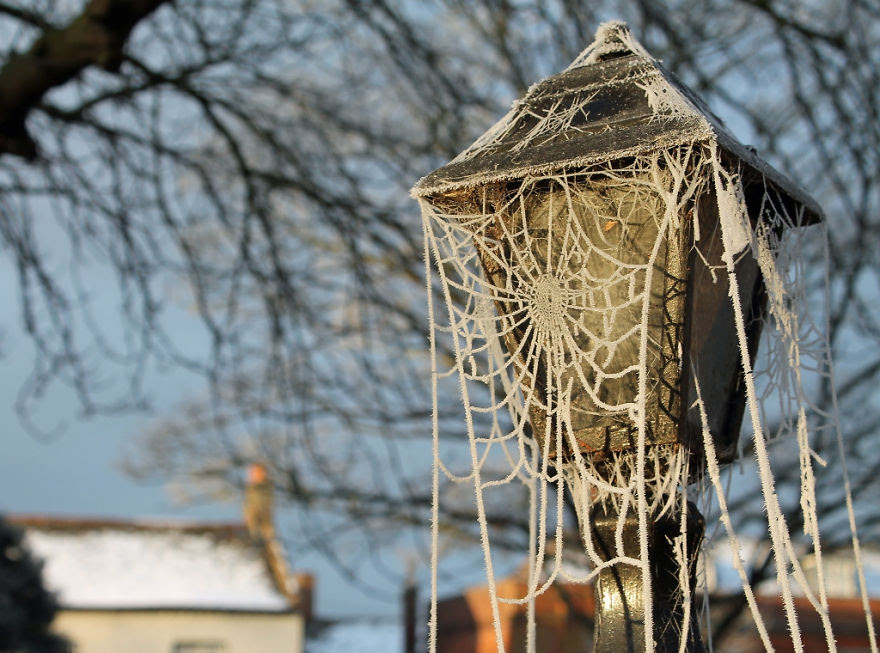
The most incredible and stunning photographs of ice!

Huge thanks to Dan Gomez for sending me these.

Ice1

oooo

Ice2

oooo

Ice3

oooo

Ice4

oooo

Ice5

oooo

Ice6

oooo

Ice7

oooo

Ice8

oooo

More to come for a future Picture Parade!

You all take care in these days running up to the Christmas festivities.

Friendship between dogs.

A remarkable report about how dogs share.

Apologies for the short intro but my internet connection is still not 100% and I didn’t want to fuss around and lose the window in which to present this fascinating article on ScienceAlert sent to me by Dan Gomez.

ooOOoo

DSCN55181_1024

Dogs give food to their ‘friends’ in first-of-its-kind study

Treats for everybody! But more for pals.
PETER DOCKRILL 17 DEC 2015

Voluntary acts of kindness and positive outward gestures without thought of reward are two of the more redeeming aspects of human society, but to what extent do these prosocial behaviours exist in other animals?

A new study by researchers in Austria suggests that dogs are prosocial among their own kind too, with an experiment involving the voluntary offering of food between the animals showing that dogs also understand the concept of giving.

“Dogs and their nearest relatives, the wolves, exhibit social and cooperative behaviour, so there are grounds to assume that these animals also behave prosocially toward conspecifics,” said Friederike Range, an ethnologist at the Messerli Research Institute. “Additionally, over thousands of years of domestication, dogs were selected for special social skills.”

But measuring prosocial behaviour in dogs isn’t easy, says Range, because they’re so very social with humans. It can be difficult to tell between seemingly prosocial acts and behaviours that could actually just be the dog obediently reacting to cues and unintended communications from researchers.

So to take people out of the equation as much as possible, Range and his colleagues conducted an experiment where two dogs were set up by themselves in cages side by side. One of the dogs, called the donor dog, had the ability to extend one of two trays toward a receiver dog, using its mouth to pull on a string.

One of these trays contained a treat, while the other was empty. The dogs had been trained over weeks to understand how the tray-pulling system worked, and the donor dog in each instance knew that it would receive nothing itself if it gave the treat to its fellow canine (other than the pleasure perhaps of knowing it had done a kindness to its counterpart).

The researchers found that dogs, in the absence of any ulterior motive, do indeed exhibit prosocial behaviour, by voluntarily giving food to other dogs. But, having said that, they can be accused of preferential treatment.

“Dogs truly behave prosocially toward other dogs. That had never been experimentally demonstrated before,” said Range. “What we also found was that the degree of familiarity among the dogs further influenced this behaviour. Prosocial behaviour was exhibited less frequently toward unfamiliar dogs than toward familiar ones.”

In other words, dogs look out for their friends more than they do random strangers, but the same could be said of our own prosocial behaviour. Humans have the capacity for kindness, but we demonstrate it more frequently with those with which we are more familiar.

The findings are reported in Scientific Reports, but now that we know dogs are prosocial, that of course means there are other puzzles for the researchers to solve. Why do dogs act this way? Is it a result of domestication, their cognitive complexity, or has it been shaped by the species’ reliance on cooperative activities, such as foraging together? As dog lovers, we can’t wait to hear the answers.

ooOOoo

What amazing creatures they are!

My Dog, My Mentor

A guest post from Julia Penner-Zook.

Three days ago I was within just a few minutes of queuing this for a blog release when the internet went down. So now that things are back (to normal?) it gives me very great pleasure to publish this guest post.

ooOOoo

My Dog, My Mentor.

We humans share the planet with an enormous variety of life forms. In fact, there are so many organisms in our world that scientists cannot agree even on an estimate of how many exist. Anywhere between two and 100 million, we are told. Those numbers are staggering, leaving me feeling small alongside all those with whom I share terrestrial space.

Today my thoughts come to rest on one specific type of world inhabitant––just one out of the multiple millions: the canine! The one who allegedly is man’s (and woman’s) best friend! I have had close contact with dogs since I was a young child, so it’s hardly surprising that I have a great deal of love and respect for them.

No longer are dogs simply farm animals or household pets. They rescue the lost and wounded after natural disasters, serve in combat, their keen sensitivities are used to detect disease in its early stages, their presence brings comfort to the ill or elderly, they accompany their seeingimpaired human counterpart, detect illegal and harmful substances in public places. In short, they frequently provide expertise and skill that exceed that of humans.

People are hesitant to admit this, always desiring to be on top. To be the best and the most developed. Since we seem to have great difficulty simply living alongside one another, we tend to keep score: higher/ lower; bigger/ smaller; better/ worse; superior/ inferior. One result of this scoring system is that we consider ourselves vastly superior to our animal sisters and brothers–– superior in intelligence, capacity for reason, emotion, creativity and relationship.

Carl Safina, marine conservationist, professor and author, challenges this notion of superiority, stating humans are not necessarily unique (or superior), but simply the most extreme: capable of the most compassion and the worst violence; possessing the greatest capacity for creativity and at the same time most able and willing to inflict destruction on one another and on other inhabitants of this planet.

Yet, animals do not respond in kind. Certainly, they will protect and defend themselves and their own, but humans display vastly more aggression. At times, animals choose to exhibit unsurpassed magnanimity towards humans.

Focusing this phenomenon on the family dog, it may surprise us that not WE but THEY seem to provide the greatest benefit in the human / canine relationship. If we are observant, we will be humbled by the fact that characteristics, effortlessly displayed in our pets, are the very same qualities we strive for and often fall short in attaining. Take gratitude, for example. My darling Maltese––gone since September 11, 2015––waited hours for his human to return home to love on, walk with and feed him. When I walked in the door, he did not unleash venom or aggression for having been left alone while I was away working. His tail wagging knew no bounds––he simply adored the moment he was again joined by his human.

But me? My mind would play all kinds of games when similarly “neglected”: It’s been weeks since I heard from her, it’s about time she called. I didn’t do anything to deserve this silence!

And then there’s unconditional love. What about the times I would become impatient with my furry family member? At times he was distracted on walks, simply delighted by all the sounds, smells and sights of the outdoors. But, I had a goal and a time limit, giving rise to frustration at his digressions. However, my dog wasn’t frustrated. On the contrary, he not only endured my impatient scolding––calls to move on, to hurry––but reciprocated with lavish love the very next moment. How did he do that?

Why is my dog, (whether instinctively or cognitively is actually irrelevant) capable of exhibiting the very virtue I strive for, fail at, attempt repeatedly, become frustrated over failing yet again? The list of virtues seems endless:

  • kindness,
  • patience,
  • resiliency,
  • forgiveness,
  • encouragement,
  • empathy,
  • sensitivity,
  • contentment,
  • the innate ability to live in the moment.

My furry family member expressed––indeed he lived them all.

And what about me? I exhibit these qualities periodically. Sporadically. Brokenly. With enormous, conscious effort.

In his final months, my small Maltese slowed down, had increasing difficulty with mobility, became disoriented, nearly blind and partially deaf. In a word: dependent. Yet his trust, courage and peace were astounding. In his final days he became quiet, hardly uttering a sound, yet the pictures of those days bear witness to his alertness and awareness. He knew!

Could it be that he was quiet because he was at peace with what had been and what was to come? I believe that because he had given all he had to give, in the best way he had been able to give it, he was able to quietly await and accept his departure as well.

What will it be like for me to grow old? Limited? Increasingly dependent? I don’t know! Will I know that the value of my existence is not tied with activity or productivity? Will I learn to live in the moment––grateful, at peace, content?

How will I face the imminent transition from this life to the next? I don’t know! Will my last days be characterized with peace? Absorbing and bestowing love? Satisfied with small things? Inwardly at rest?

These reflections will accompany me for years.

There are questions that are equally relevant––and perhaps more immediate:

  • How can I have a more sane understanding of my place in this expansive and exquisite terrestrial community?
  • What will enhance a sense of respect and appreciation for the dizzying variety of species I live alongside?
  • What will it take for me to continue growing and learning as a human?

These seem profound questions in light of growing disregard for human and animal life. It is not unlikely, however, that sharing space with dogs will help me grow into a more gracious and balanced person.

Here’s to our canine mentors!

© Julia Penner-Zook, 2015

ooOOoo

Beautiful words and thoughts. So perfect for a blog named Learning from Dogs.

Julia Penner-Zook is the author of Behind Each Face Her book was Released: June 2015.
Please visit her website: https://juliapennerzook.wordpress.com
Winter storms!

Apologies to you all!

Our internet service has been down, more or less the last several days.

It was restored some five minutes ago. Apparently down to the fact that our internet provider, Outreach Internet, had to purchase two snowmobiles to get access to the generators powering two of their masts!

The foul weather continues but fingers crossed so does our internet service.

Thus I hope Learning from Dogs returns to “normal service” starting with a new post at midnight PST tonight.

Nutro Dog Treats Recall

This was released on December 13th.

Dear Fellow Dog Lover,

MARS Petcare has issued a voluntary recall for select lots of Nutro Chewy dog treats due to possible mold.

To learn which products are affected, please visit the following link:
Nutro Dog Treats Recall of December 2015

Please be sure to share the news of this alert with other pet owners.

Mike Sagman, Editor
The Dog Food Advisor

That link further discloses:

December 12, 2015 — MARS Petcare has issued a voluntary recall of select lots of its Nutro dog treats due to potential mold.

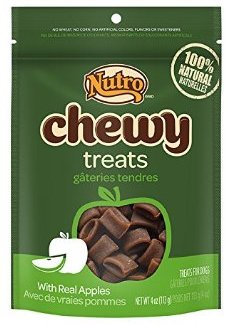
nutro-chewy-apple-treats

What’s Recalled?
The following product is affected by this recall event:
Nutro CHEWY Treats with Real Apples
Size: 4OZ
UPC: 7910511344
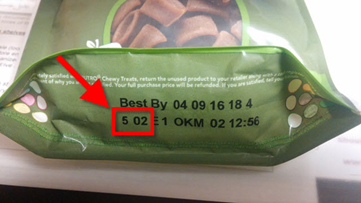
Lot Codes beginning with the following numbers and regardless of the Best By date:
4 50
5 02
5 03
5 05

Nutro-Chewy-Treats-Recall-December-2015

What to Do?
Consumers are asked to stop feeding this product to your pet and to bring any remaining Nutro 4 ounce Nutro Apple Chewy Treats affected by this recall to your nearest PetSmart for a full refund.
If you have questions about this voluntary recall, customers are invited to call Nutro Customer Service at 800-833-5330.

Hold this close!

As seen by Doranne Long over on Facebook.

Tommy Chong

This is just an interim post while I get my act together today (it’s 08:07am).

For yesterday morning, around 7am, we lost our internet service and it was only restored a couple of hours ago.

There’s an announcement from me coming out before the end of the day about my book and a way for anyone interested in reading a section to be able to download a few chapters.

More later!

Thanks Doranne for sharing that wonderful reminder.